


Community hub
Recent from talks
Contribute something
Nothing was collected or created yet.
Calder Highway
View on Wikipedia
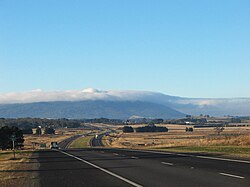
Calder Highway is a rural highway in Australia, linking Mildura and the Victoria/New South Wales border to Bendigo, in North Central Victoria. South of Bendigo, where the former highway has been upgraded to freeway-standard, Calder Freeway links to Melbourne, subsuming former alignments of Calder Highway; the Victorian Government completed the conversion to freeway standard from Melbourne to Bendigo on 20 April 2009.
Key Information


Calder Alternate Highway connects to Calder Highway at either end – just north of Ravenswood, and at Marong – and provides a bypass west of Bendigo.
Route
[edit]Calder Highway commences at the intersection with Silver City Highway in Curlwaa (officially a branch of Silver City Highway, yet sign-posted as Calder Highway) and crosses the Murray River into Victoria over the Abbotsford Bridge, then continues in a southeasterly direction as a two-lane, single carriageway rural highway through Merbein and intersects with Sturt Highway just outside the major regional town of Mildura, where widens to a four-lane, dual-carriageway road through southern Mildura and Irymple, in the state's north-west. It narrows back to a two-lane single carriageway road and continues in a southerly direction, meeting Mallee Highway at Ouyen, then in a south-easterly direction through Sea Lake, Wycheproof, Charlton and meeting the northern end of Calder Alternative Highway at Marong eventually to the western suburbs of Bendigo, where it widens to a four-lane, dual-carriageway road as it weaves through the rural city, intersecting with Loddon Valley Highway and meeting with Midland Highway, where it narrows back to a single carriageway road and shares a concurrency through south-western Bendigo, widening again to a dual carriageway through Kangaroo Flat to eventually meet the southern end of Calder Alternative Highway at an interchange in Ravenswood.
Calder Highway becomes Calder Freeway at the Ravenswood interchange and continues in southerly direction as a four-lane, dual-carriageway rural freeway which bypasses the towns along the highway's former alignment. Calder Freeway passes Harcourt - where the shared concurrency with Midland Highway ends, as it travels in a south-westerly direction to the major regional centres of Castlemaine, Ballarat, and Geelong - and continues in a south-easterly direction past Elphinstone, Kyneton, Woodend and Gisborne, to reach the western suburban fringe of Melbourne. It continues in a south-easterly, and then easterly, direction past Calder Park Raceway and Keilor, before eventually terminating at an interchange with Tullamarine Freeway at Airport West.
Within the urban section of Calder Freeway (between Kings Road and Tullamarine Freeway), the standard travel time, in each direction, is 10 minutes; 5 minutes between Kings Road and the Western Ring Road and 5 minutes between the Ring Road and Tullamarine Freeway.
Between Red Cliffs and Wycheproof the highway has a speed limit of 110 km/h.
History
[edit]The passing of the Country Roads Act of 1912[5] through the Parliament of Victoria provided for the establishment of the Country Roads Board (later VicRoads) and their ability to declare Main Roads, taking responsibility for the management, construction and care of the state's major roads from local municipalities. (Melbourne-)Bendigo Road was declared a Main Road over a period of months, from 30 December 1913 (Castlemaine via Harcourt to Ravenswood),[1] to 30 November 1914 (from Keilor through Diggers Rest to Gisborne, and from Woodend through Kyneton and Elphinstone to Castlemaine),[6] to 20 September 1915 (from Ravenswood to Bendigo);[7] (Ouyen-)Mildura Road from Ouyen to Hattah, and Wycheproof-Sea Lake Road from Wycheproof to Sea Lake were declared Main Roads on 14 December 1914;[8] and (Charlton-)Wycheproof Road between Charlton and Wycheproof was declared a Main Road on 28 May 1915;[9] Charlton-(Bridgewater-)Bendigo Road was declared a Main Road, between Bridgewater and Wedderburn to Charlton on 28 May 1915,[9] and between Bendigo and Bridgewater on 20 September 1915;[7] and (Ouyen-)Sea Lake Road was declared a Main Road, from Ouyen to Mittyack on 14 December 1914,[8] and between Mittyack and Sea Lake on 1 October 1921.[10]
The passing of the Highways and Vehicles Act of 1924[11] provided for the declaration of State Highways, roads two-thirds financed by the State government through the Country Roads Board. North Western Highway was declared a State Highway on 1 July 1925,[2][12] cobbled from a collection of roads from Melbourne through Kyneton, Castlemaine, Bendigo, Sea Lake and Ouyen to Mildura (for a total of 324 miles), subsuming the original declarations of Melbourne-Bendigo Road, Charlton-Bridgewater-Bendigo Road, Charlton-Wycheproof Road, Wycheproof-Sea Lake Road, Ouyen-Sea Lake Road and Ouyen-Mildura Road as Main Roads. North-Western Highway was renamed Calder Highway on 18 December 1928, after William Calder, chairman of the Country Roads Board from 1913–28.[13] In the 1959/60 financial year, another section from Elphinstone to Harcourt was added as a deviation bypassing Castlemaine, along the former Elphinstone–Harcourt Road[14] (already having been declared a Main Road by the Country Roads Board in 1937/38 financial year[15]); the previous alignments of Calder Highway from Elphinstone to Castlemaine, and Castlemaine to Harcourt, were subsumed into Pyrenees Highway and Midland Highway respectively. Calder Alternative Highway was declared in 9 May 1983, along the former Ravenswood–Marong Road.[16][17]
Originally, Calder Highway ran through northwestern Melbourne as an undivided highway, through Niddrie as Keilor Road and terminating in Essendon; traffic continued south along Mount Alexander Road to reach central Melbourne. Keilor Road – already heavily congested and supporting a tram line – was eventually bypassed by a freeway-standard road - the first section of Calder Freeway - in 1972 to terminate at a junction with Lancefield Road (later upgraded to Tullamarine Freeway), rejoining Calder Highway at the western end of Niddrie;[18] the freeway-standard was extended further west to East Keilor (the future location of the Western Ring Road interchange) in 1975, and to Keilor by the early 1980s, over time stretching west to ultimately become a project to convert the road to freeway standard all the way to Bendigo; the freeway upgrade has made sections of the original Calder Highway redundant, either subsumed into the new freeway or acting as local access roads.
Calder Highway was later signed National Route 79 in 1955[citation needed]; when Midland Highway was allocated State Route 149 in 1986, it shared it as a concurrency along Calder Highway between Harcourt and Bendigo. With Victoria's conversion to the newer alphanumeric system in the late 1990s this was altered to route A79 for the highway portion, and route M79 for the freeway portion into Melbourne (and the concurrency with Midland Highway was replaced with route A300); the New South Wales section was left unallocated when they switched to the alphanumeric system in 2013. Calder Alternative Highway was signed Alternative National Route 79 between Ravenswood and Marong, and was later replaced by route A790.
The Howard government broadened the criteria under which roads qualify for Commonwealth road funding by introducing Roads of National Importance program in the 1996–97 financial year[19] where such declarations were based on the recognition that roads outside the National Highway system also provide social benefits, and were funded jointly with the States and Territories usually on a 50:50 basis. As a major road link between Melbourne, Bendigo, and the state's northwest, supporting the region's primary manufacturing and tourism industries, Calder Highway was declared a Road of National Importance between Melbourne and Bendigo in December 1996.[20][21]
The passing of the Road Management Act 2004[22] granted the responsibility of overall management and development of Victoria's major arterial roads to VicRoads: in 2004, VicRoads re-declared the road as Calder Alternative Highway (Arterial #6200) between Ravenswood and Marong,[23] and in 2011 as Calder Highway (Arterial #6530) between the border with New South Wales at Yelta and the interchange with Calder Alternate Highway and Ravenswood Street in Ravenswood,[24] and as Calder Freeway (Freeway #1530) between Ravenswood and Tullamarine Freeway, Airport West.[25]
Timeline of construction
[edit]
 |
- 1950–54 – Calder Highway, straightening of the "Hattah deviation", a 21-mile (34 km) circuitous course through Hattah replaced by 14.6 miles (23.5 km) of straight alignment, south of Nowingi, started construction in 1950,[26] was delayed a year in 1952 due to lack of funds,[27] and eventually completed two years later in 1954.[28]
- 1972 – Calder Freeway, initial 1.2 miles (1.9 km) section of freeway with 3 lanes in each direction, from the Tullamarine Freeway/Lancefield Road intersection to Calder Highway at Niddrie, opened by Minister for Local Government, the Hon. A J Hunt MLC, 21 April 1972, at a cost of $3 million.[18]
- 1975 – Extended 2 km from The Avenue in Niddrie to Erebus Street in Keilor East, opened December 1974 at a cost of $2.5 million.[29]
- 1982 – Extended 3.8 km from Erebus Street to Arundel Road, Keilor, with two lanes each direction plus emergency stopping lanes, opened by Minister for Transport, the Hon S M Crabb MP, 18 May 1982, at a cost of $15.5 million.[30]
- 1984 – Keilor bypass, Bendigo-bound carriageway from Arundel Road to west of Oakbank Road, opened by Assistant Minister of Transport, the Hon Jack Simpson MP, 17 April 1984; the opening of this carriageway completed the bypass of Keilor. The cost of the entire bypass from Erebus Street to west of Oakbank Road was $30 million.[16]
- 1989 – Gisborne bypass opened 17 March 1989. The 6 km bypass cost A$25m.[31]
- 1990/1991 – Oakbank Road, Keilor North to Duncans Lane, Diggers Rest. 7.7 km of newly duplicated '2 lane carriageway' opened to traffic at a cost of A$14m. No exact date was given, however VicRoads Annual Reports cover the previous financial year.[32]
- 1991/1992 – 2 km of duplication completed at Ravenswood during 1991/1992 at a cost of A$1.3m.[33]
- 1993 – Diggers Rest bypass. $A32m 6.5 km bypass opened to traffic in July 1993, followed by the Vinyard Road interchange in November 1993.[34]
- 1994 – Ravenswood section. Duplication of the highway completed 'in 1994'[34]
- 1995 – Kyneton bypass opened to traffic in April 1995, at a cost of A$31m.[35]
- 1996 – Gap Hill section (Diggers Rest to Millett Road). Opened in May 1996, at a cost of A$32m.[36]
- 1998 – Gisborne South to Gisborne. 6 km completed at a cost of A$31 and opened to traffic on 3 April 1998.[37]
- 2000 – Gisborne to Woodend (Black Forest section). 6.8 km section opened to traffic on 17 March 2000. Completed at a cost of A$51m.[38]
- 2001 – Woodend bypass. 13.5 km bypass opened to traffic on 19 December 2001. The total cost of the project was A$85m.[39]
- 2003 – Carlsruhe section. 6.5 km section opened to traffic on 16 April 2003, at a cost of A$46m. This section completed the dual carriageways from Keilor to Kyneton.[40]
- 2005 – 2.5 km north of Kyneton completed in January 2005.[41]
- 2005 – Ravenswood. 6.5 km duplication south of Ravenswood completed in May 2005[41]
- 2008 – 15 km Malmsbury section opened in April 2008.[42]
- 2009 – Harcourt North to Elphinstone opened on 20 April 2009. This 19 km section cost A$404m and completed the duplication of the highway between Melbourne and Bendigo. The project was jointly funded by the state and federal governments.[43]
- 2012 – Kings Road interchange, opened in January 2012, at a cost of $62 million, jointly funded by state and federal governments.[44]
- 2018 – Ravenswood (Calder Highway, Calder Freeway and Calder Alternative Highway) interchange, reconstruction started May 2016 and completed in March 2018, at a cost of $86 million, jointly funded by state and federal governments.[45][46]
1969 Melbourne Transportation Plan
[edit]The Calder Highway between the Melton Highway and the Western Ring Road is shown in the 1969 Melbourne Transportation Plan as part of the F4 Freeway corridor, which extends past the Tullamarine Freeway and Bell Street to Templestowe.[citation needed]
Upgrades
[edit]Western Ring Road to Kings Road
[edit]In 2008, VicRoads completed the widening of the Calder Freeway from the Western Ring Road to Melton Highway. The road was widened from 2 lanes each direction to 3 lanes in each direction. The speed limit was reduced permanently from 100 km/h to 80 km/h.[47] The 80 km/h limit applies northbound from Keilor Park Drive to Melton Highway,[48] and southbound it applies from the Green Gully Road bridge to just prior to the Western Ring Road interchange. In October 2010, it was announced that as part of a year long trial, the speed limit on this section of freeway will be increased back to 100 km/h in off-peak times (8pm-5am), with 30 variable speed limits to be installed along the stretch of freeway[citation needed]. A further upgrade completed in 2012 resulted in a new interchange at Kings Road (the freeways's urban / metropolitan limits) and closure of three at grade intersections in the area. Despite these upgrades the 80 km/h speed limit remained in place.
Gallery
[edit]-
 Calder Highway, passing through Irymple.
 -
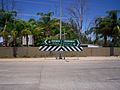 The end of Calder Highway at the intersection of Silver City Highway, in Curlwaa, New South Wales.
 -
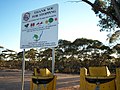 Fruit disposal bins and warning signs along Calder Highway, approaching the Fruit Fly Exclusion Zone near Mildura.


Major Intersections and Towns
[edit]| State | LGA | Location[3][24][25] | km[3] | mi | Destinations | Notes |
|---|---|---|---|---|---|---|
| New South Wales | Wentworth | Curlwaa | 0.0 | 0.0 |  Silver City Highway (B79) – Buronga, Wentworth, Broken Hill Silver City Highway (B79) – Buronga, Wentworth, Broken Hill | Northern terminus of highway |
| Murray River | 0.4– 0.6 | 0.25– 0.37 | Abbotsford Bridge | |||
| State border | 0.6 | 0.37 | New South Wales – Victoria state border | |||
| Victoria | Mildura | Yelta |  Calder Highway Calder Highway | Northern terminus of route A79 | ||
| Merbein | 11.3 | 7.0 |  Ranfurly Way (C256) – Mildura Ranfurly Way (C256) – Mildura | |||
| Mildura | 21.1 | 13.1 |  Sturt Highway (A20 west) – Renmark, Adelaide Sturt Highway (A20 west) – Renmark, Adelaide | Concurrency with route A20 | ||
| 23.8 | 14.8 | Sturt Highway (A20 east) – Mildura, Balranald, Sydney | ||||
| 25.9 | 16.1 |  Benetook Avenue (C255) – Buronga Benetook Avenue (C255) – Buronga | ||||
| Red Cliffs | 38.9 | 24.2 |  Millewa Road (C254) – Werrimull, Meringur Millewa Road (C254) – Werrimull, Meringur | |||
| 40.1 | 24.9 |  Kulkyne Way (C253) – Colignan Kulkyne Way (C253) – Colignan | ||||
| Hattah | 89.3 | 55.5 |  Hattah–Robinvale Road (C252) – Robinvale Hattah–Robinvale Road (C252) – Robinvale | |||
| Ouyen | 123.9 | 77.0 |  Mallee Highway (B12 east) – Piangil, Swan Hill, Balranald, Sydney Mallee Highway (B12 east) – Piangil, Swan Hill, Balranald, Sydney | Concurrency with route B12 | ||
| 124.0 | 77.1 | Mallee Highway (B12 west) – Pinnaroo, Murray Bridge, Adelaide | ||||
| 134.7 | 83.7 |  Sunraysia Highway (B220) – Birchip, Horsham, St Arnaud, Ballarat Sunraysia Highway (B220) – Birchip, Horsham, St Arnaud, Ballarat | ||||
| Buloke | Bimbourie | 194.0 | 120.5 |  Patchewollock–Sea Lake Road (C248) – Patchewollock Patchewollock–Sea Lake Road (C248) – Patchewollock | ||
| Sea Lake | 209.1 | 129.9 |  Robinvale–Sea Lake Road (C251) – Robinvale Robinvale–Sea Lake Road (C251) – Robinvale | |||
| 212.4 | 132.0 |  Sea Lake–Swan Hill Road (C246 east) – Swan Hill Sea Lake–Swan Hill Road (C246 east) – Swan Hill | Concurrency with route C246 | |||
| 212.8 | 132.2 | Birchip–Sea Lake Road (C246 west) – Woomelang, Birchip | ||||
| Dumosa | 273.7 | 170.1 |  Donald–Swan Hill Road (C261) – Swan Hill, Donald Donald–Swan Hill Road (C261) – Swan Hill, Donald | |||
| Wycheproof | 288.0 | 179.0 |  Birchip–Wycheproof Road (C268) – Birchip Birchip–Wycheproof Road (C268) – Birchip | |||
| 289.2 | 179.7 |  Boort–Wycheproof Road (C267) – Boort Boort–Wycheproof Road (C267) – Boort | ||||
| Wycheproof South | 295.0 | 183.3 |  St Arnaud–Wycheproof Road (C271) – St Arnaud St Arnaud–Wycheproof Road (C271) – St Arnaud | |||
| Charlton | 318.3 | 197.8 |  Borung Highway (C239) – Donald Borung Highway (C239) – Donald | |||
| 318.8 | 198.1 |  Charlton–St Arnaud Road (C272) – St Arnaud Charlton–St Arnaud Road (C272) – St Arnaud | ||||
| 320.1 | 198.9 |  Boort–Charlton Road (C266) – Boort, Kerang Boort–Charlton Road (C266) – Boort, Kerang | ||||
| Loddon | Wedderburn | 350.4 | 217.7 |  Boort–Wedderburn Road (C273 north) – Boort, Kerang Boort–Wedderburn Road (C273 north) – Boort, Kerang | Concurrency with route C273 | |
| 350.6 | 217.9 | Logan–Wedderburn Road (C273 south) – Logan, St Arnaud | ||||
| Bridgewater | 386.1 | 239.9 |  Bridgewater–Dunolly Road (C274 south) – Dunolly, Maryborough Bridgewater–Serpentine Road (C274 north) – Serpentine, Kerang Bridgewater–Dunolly Road (C274 south) – Dunolly, Maryborough Bridgewater–Serpentine Road (C274 north) – Serpentine, Kerang | |||
| 387.0 | 240.5 |  Bridgewater–Maldon Road (C282) – Maldon, Castlemaine Bridgewater–Maldon Road (C282) – Maldon, Castlemaine | ||||
| Greater Bendigo | Marong | 409.7 | 254.6 |  Calder Alternative Highway (A790) – Ravenswood, Calder Alternative Highway (A790) – Ravenswood,to  Wimmera Highway – St Arnaud, Horsham Wimmera Highway – St Arnaud, Horsham | ||
| Golden Square | 420.6 | 261.3 |  Golden Square–Long Gully Road (C323) – Golden Square, Long Gully Golden Square–Long Gully Road (C323) – Golden Square, Long Gully | |||
| Ironbark | 422.4 | 262.5 |  Loddon Valley Highway (B260) – Eaglehawk, Kerang Loddon Valley Highway (B260) – Eaglehawk, Kerang | |||
| 422.7 | 262.7 |  Eaglehawk Road – White Hills, Echuca, Shepparton Eaglehawk Road – White Hills, Echuca, Shepparton | ||||
| Bendigo | 423.6 | 263.2 | Don Street (A79 north) – Marong High Street (A79/A300 west, A300 east) – Bendigo city centre High Street (A79/A300 west, A300 east) – Bendigo city centre Myrtle Street (C331 south) – Quarry Hill, Flora Hill Myrtle Street (C331 south) – Quarry Hill, Flora Hill | Calder Highway continues north along Don Street, west along High Street Northern terminus of concurrency with route A300 | ||
| Golden Square | 426.2 | 264.8 |  Oak Street (C323 north, C353 south) – Long Gully, Quarry Hill Oak Street (C323 north, C353 south) – Long Gully, Quarry Hill | |||
| Kangaroo Flat | 428.2 | 266.1 |  Bendigo–Maryborough Road (C277) – Maryborough Bendigo–Maryborough Road (C277) – Maryborough | |||
| Ravenswood | 438.7 | 272.6 | Calder Alternative Highway (A790 northwest) – Marong, Mildura | Southern terminus of Calder Highway and route A79 Northern terminus of Calder Freeway and route M79 | ||
| Mount Alexander | Ravenswood South–Harcourt North boundary | 446.8 | 277.6 | Harmony Way – Harcourt, Elphinstone Fogartys Gap Road (west) – Maldon | At-grade intersection | |
| Barkers Creek–Harcourt boundary | 452.6 | 281.2 | Midland Highway (A300 south-west) – Castlemaine, Ballarat Victoria Road (north-east) – Harcourt | Southern terminus of concurrency with route A300 | ||
| Elphinstone | 465.1 | 289.0 |  Pyrenees Highway (B180) – Castlemaine, Metcalfe Pyrenees Highway (B180) – Castlemaine, Metcalfe | |||
| Macedon Ranges | Malmsbury | 479.8 | 298.1 |  Old Calder Highway (C794) – Malmsbury, Taradale, Elphinstone Old Calder Highway (C794) – Malmsbury, Taradale, ElphinstoneMalmsbury East Road (east) – Greenhill | ||
| Kyneton | 483.0 | 300.1 |  Burton Avenue (C793) – Kyneton Burton Avenue (C793) – Kyneton | At-grade intersection | ||
| 489.1 | 303.9 |  Edgecombe Road (C326 north) – Kyneton, Heathcote Edgecombe Road (C326 north) – Kyneton, Heathcote | ||||
| 491.1 | 305.2 | Bourke Street (C793 west) – Kyneton Trio Road (east) – Carlsruhe | Northbound exit and southbound entrance only | |||
| Carlsruhe | 496.2 | 308.3 | Springvale Road – Carlsruhe | |||
| Woodend North | 499.8 | 310.6 |  Macedon–Woodend Road (C792) – Woodend Macedon–Woodend Road (C792) – Woodend | Southbound exit and northbound entrance only | ||
| Woodend | 504.6 | 313.5 |  Lancefield–Woodend Road (C324) – Lancefield, Woodend Lancefield–Woodend Road (C324) – Lancefield, Woodend | |||
| Macedon | 511.9 | 318.1 | Macedon–Woodend Road (C792) – Macedon, Woodend | |||
| 518.0 | 321.9 |  Mount Macedon Road (C322 northeast) – Mount Macedon Macedon–Woodend Road (C792 northwest) – Macedon Mount Macedon Road (C322 northeast) – Mount Macedon Macedon–Woodend Road (C792 northwest) – Macedon | Northbound exit and southbound entrance only | |||
| Gisborne–New Gisborne boundary | 520.1 | 323.2 |   Station Road (C708 north, C791 south) – Riddells Creek, Melton Station Road (C708 north, C791 south) – Riddells Creek, Melton | |||
| Gisborne | 522.9 | 324.9 | Melbourne Road (C791 west) – Gisborne Emmeline Drive (east) – Gisborne East | |||
| Macedon Ranges–Hume boundary | Gisborne South–Sunbury boundary | 528.9 | 328.6 | Couangalt Road (west) – Gisborne South Mundy Road (east) – Sunbury | ||
| Hume–Melton boundary | Sunbury–Diggers Rest boundary | 533.9 | 331.8 |  Gap Road (C707) – Sunbury Gap Road (C707) – Sunbury | ||
| 538.9 | 334.9 |  Vineyard Road (C706) – Sunbury, Diggers Rest Vineyard Road (C706) – Sunbury, Diggers Rest | ||||
| Diggers Rest | 542.1 | 336.8 | Bulla–Diggers Rest Road – Bulla, Diggers Rest | |||
| Brimbank | Calder Park–Keilor North boundary | 545.4– 546.3 | 338.9– 339.5 | Holden Road (west) – Toolern Vale | Northbound exit and entrance only Northbound and southbound access to service centres | |
| 547.3 | 340.1 | Organ Pipes Road – Organ Pipes National Park | At-grade intersection | |||
| 548.1 | 340.6 | Calder Park Drive – Calder Park | Northbound exit and entrance only | |||
| Keilor North–Taylors Lakes boundary | 549.9 | 341.7 |  Kings Road (Metro Route 77) – Taylors Lakes, Deer Park, Laverton Kings Road (Metro Route 77) – Taylors Lakes, Deer Park, Laverton | |||
| Keilor North–Keilor Lodge boundary | 551.7 | 342.8 |  Sunshine Avenue (Metro Route 41) – Taylors Lakes Sunshine Avenue (Metro Route 41) – Taylors Lakes | Northbound exit and entrance only | ||
| Keilor | 552.8 | 343.5 |  Melton Highway (C754) – Taylors Lakes, Melton Melton Highway (C754) – Taylors Lakes, Melton | Partial Y interchange: northbound exit and southbound entrance only | ||
| 554.7 | 344.7 |  Green Gully Road (Metro Route 40 south) – Keilor, St Albans Green Gully Road (Metro Route 40 south) – Keilor, St AlbansArundel Road (north) – Tullamarine | Northbound exit and southbound entrance only | |||
| Keilor Park–Keilor East boundary | 557.0 | 346.1 |  Keilor Park Drive (Metro Route 39) – Keilor Park, Avondale Heights, Keilor Park Drive (Metro Route 39) – Keilor Park, Avondale Heights,to   Western Ring Road (M80) – Laverton North, Werribee, Avalon Airport Western Ring Road (M80) – Laverton North, Werribee, Avalon Airport | No northbound exit | ||
| 558.0 | 346.7 | Western Ring Road (M80) – Craigieburn, Seymour, Melbourne Airport | Partial turbine interchange Northbound exit to Western Ring Road southbound, northbound entrance from Western Ring Road southbound only Southbound exit to Western Ring Road northbound, southbound entrance from Western Ring Road northbound Access from northbound exit to Keilor Park Drive | |||
| Moonee Valley | Keilor East–Airport West boundary | 558.8 | 347.2 | Woorite Place – Keilor East, Airport West | Northbound exit and southbound entrance only | |
| Airport West–Niddrie boundary | 559.8 | 347.8 | Fullarton Road (south) – Niddrie McNamara Avenue – Airport West | Southbound entrance and exit only | ||
| 560.1 | 348.0 | Keilor Road – Niddrie | Northbound entrance and exit only | |||
| 560.5 | 348.3 |  Bulla Road (Metro Route 37) – Essendon Bulla Road (Metro Route 37) – Essendon | ||||
| Airport West–Niddrie–Essendon North tripoint | 560.9 | 348.5 |  Tullamarine Freeway (M2) – Flemington, Port Melbourne Tullamarine Freeway (M2) – Flemington, Port Melbourne | Southern terminus of freeway and route M79 at partial Y interchange | ||
| ||||||
See also
[edit]
External links
[edit]References
[edit]
- ^ a b "Victorian Government Gazette". State Library of Victoria. 28 January 1914. p. 320. Retrieved 14 June 2024.
- ^ a b "Victorian Government Gazette". State Library of Victoria. 8 July 1925. p. 2372. Retrieved 18 May 2025.
- ^ a b c "Calder Highway/Freeway" (Map). Google Maps. Retrieved 13 January 2022.
- ^ "Victoria's Regions". Regional Development Victoria. Victoria State Government. 11 August 2021. Retrieved 16 June 2022.
- ^ An Act relating to Country Roads State of Victoria, 23 December 1912
- ^ "Victorian Government Gazette". State Library of Victoria. 9 December 1914. pp. 5527–8. Retrieved 28 June 2024.
- ^ a b "Victorian Government Gazette". State Library of Victoria. 16 August 1915. pp. 3122–3. Retrieved 15 July 2024.
- ^ a b "Victorian Government Gazette". State Library of Victoria. 23 December 1914. p. 5856. Retrieved 1 July 2024.
- ^ a b "Victorian Government Gazette". State Library of Victoria. 9 June 1915. pp. 2028–9. Retrieved 11 July 2024.
- ^ "Victorian Government Gazette". State Library of Victoria. 9 November 1921. p. 3875. Retrieved 10 May 2025.
- ^ An Act to make further provision with respect to Highways and Country Roads Motor Cars and Traction Engines and for other purposes State of Victoria, 30 December 1924
- ^ "Country Roads Board Victoria. Twelfth Annual Report: for the year ended 30 June 1925". Country Roads Board of Victoria. Melbourne: Victorian Government Library Service. 31 December 1925. p. 3.
- ^ "Victorian Government Gazette". State Library of Victoria. 28 December 1928. p. 3439. Retrieved 3 November 2025.
- ^ "Country Roads Board Victoria. Forty-Seventh Annual Report: for the year ended 30 June 1960". Country Roads Board of Victoria. Melbourne: Victorian Government Library Service. 21 November 1960. pp. 7–8.
- ^ "Country Roads Board Victoria. Twenty-Fifth Annual Report: for the year ended 30 June 1938". Country Roads Board of Victoria. Melbourne: Victorian Government Library Service. 24 November 1938. p. 14.
- ^ a b "Road Construction Authority of Victoria. Annual Report for the year ended 30 June 1984". Road Construction Authority of Victoria. Melbourne: Victorian Government Library Service. 21 December 1984. pp. 10, 54.
- ^ "Victorian Government Gazette". State Library of Victoria. 30 June 1983. p. 1972. Retrieved 30 December 2021.
- ^ a b "Country Roads Board Victoria. Fifty-Ninth Report: for the year ended 30 June 1972". Country Roads Board of Victoria. Melbourne: Victorian Government Library Service. 1 November 1972. p. 5.
- ^ Australia Parliament House. "Commonwealth Road Funding Since 1990 (Updated 1 March 2004)". Parliament of Australia. Archived from the original on 19 May 2019. Retrieved 15 December 2021.
- ^ "VicRoads Annual Report 1996-97". VicRoads. Melbourne: Victorian Government Library Service. 27 August 1997. p. 16.
- ^ Department of Transport and Regional Services. "Roads of National Importance: Calder Highway". DOTARS. Archived from the original on 26 May 2004. Retrieved 15 December 2021.
- ^ State Government of Victoria. "Road Management Act 2004" (PDF). Government of Victoria. Archived (PDF) from the original on 18 October 2021. Retrieved 19 October 2021.
- ^ VicRoads. "VicRoads – Register of Public Roads 2024" (PDF). Government of Victoria. p. 910. Archived from the original on 19 June 2024. Retrieved 19 June 2024.
- ^ a b VicRoads. "VicRoads – Register of Public Roads 2024" (PDF). Government of Victoria. p. 928. Archived from the original on 19 June 2024. Retrieved 19 June 2024.
- ^ a b VicRoads. "VicRoads – Register of Public Roads 2024" (PDF). Government of Victoria. pp. 25–9. Archived from the original on 19 June 2024. Retrieved 19 June 2024.
- ^ "Country Roads Board Victoria. Thirty-Seventh Annual Report: for the year ended 30 June 1950". Country Roads Board of Victoria. Melbourne: Victorian Government Library Service. 4 December 1950. p. 10.
- ^ "Country Roads Board Victoria. Thirty-Ninth Annual Report: for the year ended 30 June 1952". Country Roads Board of Victoria. Melbourne: Victorian Government Library Service. 22 December 1952. p. 23.
- ^ "Country Roads Board Victoria. Forty-First Annual Report: for the year ended 30 June 1954". Country Roads Board of Victoria. Melbourne: Victorian Government Library Service. 25 October 1954. p. 18.
- ^ "Country Roads Board Victoria. Sixty-Second Annual Report: for the year ended 30 June 1975". Country Roads Board of Victoria. Melbourne: Victorian Government Library Service. 3 November 1975. p. 5.
- ^ "Country Roads Board Victoria. Sixty-Ninth Annual Report: for the year ended 30 June 1982". Country Roads Board of Victoria. Melbourne: Victorian Government Library Service. 30 November 1982. p. 1.
- ^ Road Construction Authority Victoria. Annual Report 1988-1989, Kew, Victoria: Road Construction Authority, Victoria, 1989. p. 46
- ^ VicRoads. VicRoads Annual Report, 1990–1991, Kew, Victoria: VicRoads, 1991, p. 37
- ^ VicRoads. VicRoads Annual Report, 1991–1992, Kew, Victoria: VicRoads, 1992, p. 42
- ^ a b Vicroads. Vicroads Annual Report 1993-94, Kew, Victoria: Vicroads, 1994, p. 16
- ^ Vicroads. Vicroads Annual Report 1994-95, Kew, Victoria: Vicroads, 1995, p. 9
- ^ Vicroads. Vicroads Annual Report 1995-96, Kew, Victoria: Vicroads, 1996, p. 15
- ^ Vicroads. Vicroads Annual Report 1997-98, Kew, Victoria: Vicroads, 1998, p. 33
- ^ Vicroads. Vicroads Annual Report 2000-01, Kew, Victoria: Vicroads, 2000, p. 27
- ^ Vicroads. Vicroads Annual Report 2001-02, Kew, Victoria: Vicroads, 2002, p. 33
- ^ Vicroads. Vicroads Annual Report 2002-03, Kew, Victoria: Vicroads, 2003, p. 13
- ^ a b Vicroads. Vicroads Annual Report 2004-05, Kew, Victoria: Vicroads, 2005, p. 33
- ^ VicRoads. VicRoads Annual Report 2007-08, Kew, Victoria: VicRoads, 2008, p. 35
- ^ VicRoads. VicRoads Annual Report 2008-09, Kew, Victoria: VicRoads, 2009, p. 41
- ^ "VicRoads Annual Report 2011-12". VicRoads. Melbourne: Victorian Government Library Service. 18 September 2012. p. 6.
- ^ Luke Donnellan, Minister for Roads and Road Safety, Government of Victoria (1 April 2016). "New Ravenswood Interchange moving ahead with CPB contractors". Archived from the original on 6 January 2017. Retrieved 6 January 2017.
{{cite web}}: CS1 maint: multiple names: authors list (link) - ^ "VicRoads Annual Report 2017-18". VicRoads. Melbourne: Victorian Government Library Service. 18 September 2018. p. 15.
- ^ "Freeway slowdown to ease traffic jams in Melbourne". Archived from the original on 12 June 2008. Retrieved 6 January 2017.
{{cite web}}: CS1 maint: bot: original URL status unknown (link) - ^ Google Streetview


Road infrastructure in regional Victoria | |||
|---|---|---|---|
| Freeways and dual carriageways | |||
| Main highways | |||
| Minor highways |
| ||
| Other roads | |||


