Hubbry Logo
Caldey IslandCaldey IslandMain
Open search
Caldey Island
Community hub
Caldey Island
logo
8 pages, 0 posts
0 subscribers
Be the first to start a discussion here.
Caldey Island
Caldey Island
from Wikipedia

Map of Caldey Island

Key Information

Caldey Ogham Stone, 6th century
Caldey Island Act 1990
Act of Parliament
Long titleAn Act to provide for the islands of Caldey and St. Margaret's in the county of Dyfed to be included in the district of South Pembrokeshire for the purposes of local, parliamentary and European elections and for the purposes of local taxation; to include those islands in the districts of the Pembrokeshire coroner and the Pembrokeshire Health Authority; and for connected purposes.
Citation1990 c. 44
Dates
Royal assent1 November 1990
Text of the Caldey Island Act 1990 as in force today (including any amendments) within the United Kingdom, from legislation.gov.uk.

Caldey Island (Welsh: Ynys Bŷr) is a small island near Tenby, Pembrokeshire, Wales, less than 1 mile (1.6 km) off the coast.[2] With a recorded history going back over 1,500 years, it is one of the holy islands of Britain. A number of traditions inherited from Celtic times are observed by the Cistercian monks of Caldey Abbey, the owners of the island.[3]

The island's population consists of about 40 permanent residents and a varying number of Cistercian monks,[4] known as Trappists. The monks' predecessors migrated there from Belgium in the early 20th century, taking over from Anglican Benedictines who had bought the island in 1906 and built the extant monastery and abbey but later got into financial difficulties.[5] Today, the monks of Caldey Abbey rely on tourism and making perfumes and chocolate.

The usual access to the island is by boat from Tenby Harbour, 2.5 miles (4.0 km) to the north. In the spring and summer, visitors are ferried to Caldey, not only to visit the sacred sanctuary but also to view the island's rich wildlife.[6] Following a rat eradication programme, red squirrels were introduced in 2016. Alongside rare breed sheep and cattle, the island has a diverse bird and plant life.

Name origins

[edit]

The island was named Ynys Bŷr after Saint Pyr, the sixth century saint,[7] and Pyr is named as abbot of the monastery around the year 500 in the Life of St Samson. This Welsh name has remained in use since medieval times, but the Old Welsh name of the island before St Pyr's day is unknown.[8]

Like those of many Welsh islands, Caldey's English name (sometimes spelled Caldy) derives from the Vikings. Kald ey translates as "cold island", with the name appearing as 'Caldea' in the early 12th century, and Kaldey or Caldey by 1291.[9]

History

[edit]

Pre-history

[edit]
Caldey Island monastery, reflected in the pond

Three caves have been discovered on the island and excavated to unearth archaeological finds: Nanna's Cave,[10] Potter's Cave (1950) and Ogof-yr-Ychen ("Ox cave", 1970).[11] In Nanna's Cave, human bones and shells were first found in 1911 and excavations continued in three more stages until the 1970s.[10] Potter's Cave was found in 1950 by a monk named James Van Nedervelde, and excavations, which continued until 1970, initially revealed stalagmites in which tools and animals were embedded. After removal of these finds, three human skeletons were found and carbon dated: two were dated to the Middle Stone Age and one to the Romano–British period. Also found were a few artefacts from the late Upper Paleolithic period. In Ogof–yr-Ychen, the bones of humans whose burials date between 7590 BC and 5710 BC were found.[12] Stable isotope ratio tests revealed that they lived on marine food.[11] A very few earlier neolithic bowls and shells have also been found in the caves. All the finds were carbon dated and have been preserved in the Abbey of Caldey Island or in Tenby Museum and Art Gallery.[10]

Recorded history

[edit]
Caldey Island Priory

A Celtic monastery was first established on the island in the sixth century, and the island thrived during the Middle Ages.[13][14] Following the Norman Conquest, Robert fitz Martin, Lord of Cemais, gave the island to his mother Geva.[15] In the 12th century, Caldey Priory (now a Grade I listed building[16]) was established by Tironensian monks as a daughter house of St. Dogmaels Abbey, and lasted to the Dissolution of the Monasteries in 1536.[17]

The north side of Caldey Island is made up of grey limestone, a desirable building material.[18] The 19th century seems to have been the height of limestone quarrying on the island; some of the limestone was taken to the Annery kiln in the district of Torridge in north Devon for processing.[19]

The current abbey was built in 1910 by Anglican Benedictine monks but financial problems beginning in 1925 led to the 1929 purchase of the property by Belgian Cistercians.[20] It is considered to be the most complete example of the Arts and Crafts style in the country, and was the largest project of John Coates Carter. At the time of building, the abbey was called "the greatest phenomenon in the Anglican community at the present time". The roofs are of white roughcast with red tiling, and the abbey church has five side-windows and on the south a "tapering" tower with primitive crenellations.

Caldey Island and St. Margaret’s Island have together formed an ecclesiastical district for as long as the locals can remember, with 20 Cistercian monks living at the monastery as of 2007.[21] The Census Reports of the County of Pembroke record it as an ecclesiastical district for administrative purposes.[22]

The Caldey Island Act 1990 added the island to Dyfed and South Pembrokeshire, and to Pembrokeshire parliamentary constituency.[23]

Child sexual abuse

[edit]

There have been many cases involving child sexual abuse linked to the island, over more than fifty years.[24] Father Thaddeus Kotik was found to have sexually abused six girls on the island between 1972 and 1987 in a 2017 civil court case.[25] In 2011 a fugitive charged with possessing indecent images of children was arrested at the abbey after living there for seven years.[26][27] Two other men, Father John Shannon and John Cronin, convicted of sexual offences involving children have also been linked to Caldey Island.[28] In 2017 Welsh Conservatives children's spokesman, Darren Millar, called for an independent inquiry into historical child sexual abuse on the island.[29] In April 2024 Caldey Abbey commissioned an independent review into the historical child sexual abuse, led by leading social worker and former assistant police and crime commissioner at South Wales Police, Jan Pickles OBE, which was completed, and published in December 2024.[30] The island now works with The Catholic Safeguarding Standards Agency (CSSA), and has appointed a safeguarding officer to ensure such events are not allowed to repeat and ensure the island is safe for visitors in the present and future.[31]

In December 2024, the abbot, Father Jan Rossey, apologised for the abuse and its cover-up. Monks have agreed to a 'no touch' policy for visitors and will report any accidental physical contact, as recommended by the independent review.[32]

Geography

[edit]

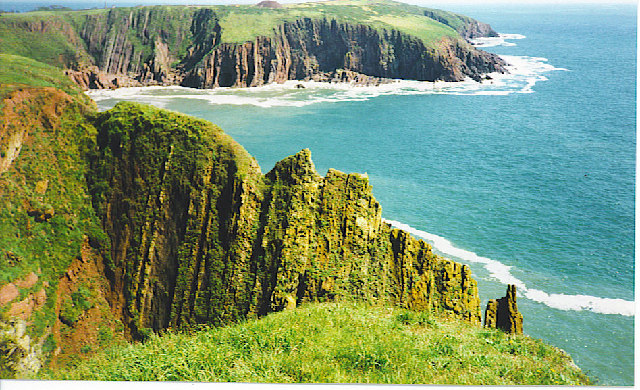
Caldey Island is about 1.5 miles (2.4 km) long and 1 mile (1.6 km) in width at its widest. It has an area of 538 acres (2.18 km2) and its highest elevation is 197 feet (60 m). The island lies in Carmarthen Bay on the northern side of the Bristol Channel in the county of Pembrokeshire, a little over 2.5 miles (4 km) south of Tenby on the mainland of southwest Wales.[5][20] It is separated from the mainland by Caldey Sound. A fleet of traditional wooden boats ferry passengers from Tenby to Caldey Island in the spring and summer months when the weather allows.[14] Boats depart roughly every twenty minutes from the harbour at high tide, while at low tide they depart from Castle Beach.[21]

Caldey Island consists of two islands which are separated at high tide: Caldey Island and Little Caldey Island. Little Caldey Island is also known as St Margaret's Island or St Margaret's Isle, and lies off the north-western point of Caldey Island. It acquired its name in the 17th century,[33] and is known for its seals and bird sanctuary.[5]

The island is mostly used for grazing.[citation needed]

Climate

[edit]

The average high and low temperatures for Caldey Island, along with wind speeds for each month of the year, are given in the following table. The absolute maximum temperature recorded is 33 °C (91 °F) in August and the absolute minimum recorded is −9 °C (16 °F) in February.[34]

Climate data for Caldey Island, Wales
Month Jan Feb Mar Apr May Jun Jul Aug Sep Oct Nov Dec Year
Mean daily maximum °C (°F) 8
(46)
8
(46)
10
(50)
12
(54)
15
(59)
17
(63)
20
(68)
20
(68)
17
(63)
14
(57)
11
(52)
8
(46)
20
(68)
Mean daily minimum °C (°F) 3
(37)
3
(37)
5
(41)
5
(41)
8
(46)
10
(50)
13
(55)
12
(54)
10
(50)
8
(46)
5
(41)
3
(37)
3
(37)
Source: Weatherbase [34]

Retrieved on 5 June 2013

Maximum Recorded Wind Speed[34]
Jan Feb Mar Apr May Jun Jul Aug Sep Oct Nov Dec
65 km/h 59 km/h 59 km/h 59 km/h 56 km/h 48 km/h 43 km/h 46 km/h 44 km/h 67 km/h 61 km/h 61 km/h
40 mph 37 mph 37 mph 37 mph 35 mph 30 mph 27 mph 29 mph 27 mph 42 mph 38 mph 38 mph

Wildlife

[edit]

Caldey Island is known for its flowers, many of which are rarely found in other areas of the United Kingdom. The island also has many species of birds that are prevalent in the summer months.[18] The country's largest colony of cormorants is located at St Margaret's Island.[21] Following a two-year rat eradication programme, red squirrels were introduced in 2016[35] and by 2018 were breeding successfully and there are now around 50 on the island.[36]

Economy and services

[edit]
Caldey Post Office and Museum

The island's economic activity is supported by tourism and the sale of chocolate.[4] The main income comes from tourism. The monastery opened an Internet shop in 2001 to sell products online.[37] Their lavender perfume is said to be "simply the best lavender soliflore on earth" by the perfume critic Luca Turin.[38]

Caldey Island provides a spiritual retreat that accommodates up to 750 guests a year. This facility is currently undergoing an extensive refurbishment and is due to be open again in Easter 2024.[13] The island has a functioning post office including a museum of the island's history.[39] The island has its own postage stamps and its own monetary unit named after the local fish, the dab.[20] There is a colonial-style tea shop on the green, and an underground reservoir near the lighthouse, supplied by a spring. This provides water to the gardens and the people.[40]

For handling emergencies, the island Land Rover is shared between the fire service, the coastguard, and the police. There is a volunteer fire service operated by the Mid and West Wales Fire and Rescue Service,[41] with access to two fire engines, one being a 4x4 rural firefighting unit that was airlifted to the island by the Royal Air Force.[42][43][44] The last reported major fire on the island was in 1940 when the monastery was damaged.[4]

The island has two cranes, one on Tenby Harbour the other on the island. These cranes are used to lift heavier items or livestock onto the boat to be transported to and from the island.

The island also has some basic farming equipment including two tractors, used for the upkeep of the land and transportation of heavy goods.

Landmarks

[edit]
Caldey Lighthouse

Tourist attractions on Caldey Island include the recently restored 13th-century church of St Illtyd,[45] an ogham cross from the sixth century, a Norman chapel, and Caldey Abbey, completed in 1910.[46]

Caldey Lighthouse was built in 1829. The light was intended to help coastal traffic trading limestone and coal to mid- and North Wales but the light also helped long-distance and North American traffic identify the Bristol Channel and avoid confusion with the English Channel.[citation needed] The lighthouse is a squat, round, brick-lined limestone tower of 17 m (56 ft), with walls 0.9 m (3 ft) thick at the base and 2 ft 6 in (0.76 m) thick at the top. The light stands 64 m (210 ft) above high-water mark. The lighthouse was automated in 1929. The former oil store for the lighthouse is a listed structure.[47] The lighthouse keeper's cottages that flank the lighthouse are two-storey, with hipped roofs, octagonal chimneys and a one-storey linking corridor. The cottages were built around 1868–70 by T. C. Harvey.

References

[edit]

Bibliography

[edit]
[edit]
Revisions and contributorsEdit on WikipediaRead on Wikipedia
from Grokipedia
Caldey Island is a small, privately owned island located approximately one mile off the coast of in , , measuring about 1.5 miles long and 1 mile wide at its broadest point. Owned by the Cistercian Order of the Strict Observance since 1929, it houses Caldey Abbey, a community established by monks from Scourmont Abbey in following the island's purchase after financial difficulties faced by the prior Anglican Benedictine inhabitants who converted to Catholicism in 1913. The island maintains a small permanent population of around 40, comprising the monks and a handful of lay residents, and sustains itself through on its roughly 450 acres of fertile land, crafts including perfumes and chocolates, and seasonal via boat from the mainland. Its defining characteristics include a continuous tradition of traceable to early Celtic settlements over 1,500 years ago, serene natural environment fostering contemplation, and restricted access preserving its religious character.

Etymology

Name Origins and Linguistic Evolution

The Welsh name for Caldey Island, Ynys Bŷr or Ynys Pyr, derives from the 6th-century saint and abbot Pyr (also known as Pyro), denoting "Pyr's Island" or "Island of the Spear" in interpretations linking byr to an Old Welsh term for spear, though primary association ties to the monastic founder. This nomenclature emerged with the establishment of an early Celtic monastery on the island circa 500 AD, as Pyr is attested as abbot in hagiographic traditions preserved in medieval Welsh sources. The English name "Caldey" stems from Kaldøy or Keld ey, translating to "cold island," reflecting Viking seafaring nomenclature during Norse raids and settlements in the region from the 9th to 11th centuries. This Norse form supplanted the indigenous Welsh designation in Anglo-Norman administrative records, with early attestations as Caldea appearing in 12th-century charters following the of . Linguistic evolution post-Conquest standardized "Caldey" in Latin and English documents, as seen in grants by Norman lords like Robert fitz Martin, who conveyed the island to Benedictine monks from Tours in the late , preserving the Norse-derived amid monastic Latin usage. No verified prehistoric Celtic etymologies predate the saint's association, with documentary evidence prioritizing medieval ecclesiastical and Viking influences over speculative .

History

Prehistoric Settlement and Early Christian Foundations

Archaeological evidence indicates human occupation on Caldey Island during the period, with human remains recovered from coastal caves such as Ogof-yr-Ychen. AMS radiocarbon dating of these remains confirms late use, approximately 7000–6000 , highlighting a coastal in southwest Britain supported by stable showing marine resource reliance. Flint tools and faunal remains from the site further attest to activities in these shelters. The transition to early Christian settlement occurred around the AD, coinciding with the arrival of in the region. Tradition attributes the founding of a monastic community to St. Pyr (or Pyro), a disciple of St. Illtud, who established hermitages focused on ascetic life and evangelism. This is corroborated by the Caldey Ogham Stone, a 1.7-meter pillar inscribed with both script and Latin, dated to circa 500–600 AD and housed in St. Illtud's Church, serving as direct epigraphic evidence of early Christian presence. The stone's inscriptions, including personal names, reflect Irish-influenced monastic practices typical of the period. By the 7th–8th centuries, the initial hermitages evolved into more structured monastic cells, marking a shift toward organized religious communities with implied agricultural sustenance, though direct palynological evidence specific to Caldey remains limited in published records. The persistence of these foundations laid the groundwork for enduring Christian on the island, distinct from later Norman influences.

Medieval and Reformation Disruptions

In the early 12th century, following the Norman conquest of Wales, Caldey Island became the site of a small priory established as a daughter house of St Dogmael's Abbey, which followed the Tironensian reform of the Benedictine rule originating from Tiron in Normandy. The priory's foundation is attributed to Geva, mother of Robert fitz Martin, to whom the island was granted around 1113, with the monastic community formalized circa 1131. Endowed with local lands, the priory supported a modest community, initially comprising a single monk, though numbers grew slightly to four by the 15th century and six by the early 16th. The priory saw gradual expansions during the 12th and 13th centuries, including the construction of a limestone and sandstone church dedicated to St Mary and St Illtud, measuring approximately 23.1 meters in length and featuring a simple nave without a tower. Additional monastic structures, such as a cloister, dormitory, refectory, and prior's lodging, were developed around a small courtyard, with some elements retaining possible pre-Norman layouts. Charters from the period, including the initial grant by Robert fitz Martin, provided tithes and revenues primarily from island resources, sustaining the community's agricultural and spiritual activities. The 's tenure ended with the under in 1536, when royal commissioners recorded only one resident monk and an annual income of £5, leading to its swift suppression. Post-dissolution, the buildings transitioned to secular use under private leases, serving as farm outbuildings and supporting quarrying operations on the island, while the persisted as a facility with minimal monastic continuity. This marked a shift from religious to economic exploitation, diminishing the site's monastic character until later revivals.

19th-Century Revival and 20th-Century Cistercian Establishment

In the late , amid the Anglo-Catholic revival influenced by the , interest grew in restoring monastic life within the , particularly drawn to sites with ancient Christian associations like Caldey Island's prehistoric and early medieval heritage. This movement emphasized liturgical renewal and communal prayer, prompting Anglican groups to seek isolated locations for Benedictine observance. In 1906, an Anglican Benedictine community led by Aelred Carlyle purchased Caldey Island from private owners, establishing a focused on restoring medieval ruins such as St. Illtyd's Church and the ancient priory structures. The monks, previously based at Painsthorpe in , relocated to the island to pursue a life of prayer, study, and manual labor under the Rule of St. Benedict, constructing a new abbey between 1910 and 1915 in Italianate style to designs by architect John Coates Carter. By 1913, doctrinal tensions within led the entire community to convert to Roman Catholicism, seeking fuller alignment with ; this corporate reception into the Church occurred on March 5, with sponsorship by Dom Bede Camm. Financial strains persisted post-conversion, culminating in the sale of the island in 1925 to the Cistercian Order of the Strict Observance (). A group of Cistercian monks from Scourmont Abbey in assumed residence in January 1929, adopting the island under Trappist discipline centered on poverty, contemplative prayer, and self-sustaining labor as prescribed by the Cistercian constitutions derived from St. Benedict's Rule. This transition marked the island's shift from Anglican to Catholic monastic continuity, preserving its role as a center of eremitic spirituality without major structural alterations to the existing .

Post-1925 Monastic Developments and Self-Sufficiency

Following the acquisition of Caldey Island by the Cistercian Order in 1925 amid financial distress of the prior Anglican Benedictine community, a group of monks from Scourmont Abbey in Belgium arrived on 6 January 1929 to restore monastic life under the Strict Observance, commonly known as Trappists. This establishment emphasized the core Trappist disciplines derived from the Rule of St. Benedict, including perpetual silence except during necessary communal recitation, strict enclosure limiting external contact, and manual labor as integral to spiritual formation and sustenance, thereby designating the island as private monastic property insulated from secular encroachments. These practices reinforced a contemplative routine of prayer, lectio divina, and physical toil, aligning with the Cistercian charism of simplicity and detachment from worldly dependencies. To achieve self-sufficiency, the monks prioritized agricultural labor, cultivating the island's arable land despite its rocky terrain and coastal limitations, in adherence to the Trappist tenet of (prayer and work) that mandates communities to sustain themselves through direct production rather than or endowments. Mid-20th-century developments included expansions in farming operations to support growing vocations, with numbers increasing notably from 1948 onward, enabling the community to maintain a stable population historically ranging from 20 to 40 professed without reliance on external funding. The priory was elevated to status on 15 September 1959, formalizing governance and underscoring institutional maturity amid these internal reforms. Land management focused on sustainable practices inherent to Cistercian agronomy, such as and rearing on the island's approximately 1.5 square miles, which preserved ecological balance while ensuring caloric for the enclave. stability was challenged by demographic shifts, with numbers dipping critically low in the early before partial recovery through new entrants, though recent decades have seen decline to around 10 members as of 2018 due to aging and fewer vocations, prompting adaptive measures in communal labor allocation without compromising . This resilience amid external pressures, including post-war reconstruction after a , highlights the community's commitment to isolation and autonomy, with empirical records showing consistent avoidance of debt through disciplined resource stewardship.

Geography and Environment

Physical Geography and Geology

Caldey Island lies approximately 1 offshore from the coast in Carmarthen Bay, with its closest point about 0.6 miles south of the mainland near . The island measures 1.5 miles (2.4 km) in length and up to 1 mile (1.6 km) across at its widest point, covering an area of roughly 3.8 km². Access to the island is primarily by boat from Tenby Harbour, though a tidal sandbank known as Priest's Way allows at low tide, spanning about 4 miles from the mainland. Geologically, Caldey Island features a division between in the eastern and southern portions and in the western areas, resulting in a varied split roughly down the middle. The forms prominent coastal cliffs rising 30-40 metres high around much of the rocky shoreline, interspersed with indented sandy bays such as Priory Bay and Bullum's Bay. This lithological contrast contributes to differential erosion patterns, with limestone areas exhibiting steeper cliffs and sandstone sections showing more subdued relief. The island's includes limited features, with freshwater primarily sourced from subterranean springs emerging in coastal areas, supporting historical self-sufficiency though reliant on rainfall recharge in the permeable aquifers. The highest elevation reaches approximately 60 metres above , providing panoramic views over Carmarthen Bay.

Climate Patterns

Caldey Island exhibits a temperate maritime climate typical of the southwest Welsh coast, moderated by the warming influence of the North Atlantic Drift, an extension of the , which prevents extreme temperature fluctuations. Winters are mild, with mean daily maxima of approximately 9°C and minima around 4°C during December to February, while summers remain cool, featuring maxima near 19°C and minima of about 12°C from to , according to 1981-2010 records from the nearby station. These conditions reflect empirical data from coastal monitoring sites, showing annual mean temperatures around 11°C. Precipitation totals average 1136 mm annually, with higher rainfall in winter months driven by prevailing westerly winds carrying moist Atlantic air over the island. Seasonal patterns include wetter, windier conditions from to , contributing to skies and occasional gales, while drier spells occur in late spring and early summer. The island's position in Bay exacerbates fog formation, particularly advection fog from warm currents meeting cooler coastal air, leading to reduced visibility that has historically challenged around the island's shores. These climate patterns, derived from post-1900 observations at and Caldy Island stations, demonstrate consistent variability without significant long-term shifts in the recorded period, underscoring the stabilizing role of oceanic influences on local .

Flora, Fauna, and Conservation Efforts

Caldey Island supports a diverse array of , including a (Halichoerus grypus) colony numbering approximately 100 individuals, with breeding occurring annually and pups observed on its shores. populations feature species such as razorbills (Alca torda), fulmars (Fulmarus glacialis), shags (Phalacrocorax aristotelis), cormorants (Phalacrocorax carbo), and various gulls, nesting on cliffs and contributing to stable counts facilitated by the island's isolation and restricted access. Terrestrial mammals include an introduced population of red squirrels (Sciurus vulgaris), with three released in 2016 and twelve more in 2017, now estimated at over 60 individuals following successful breeding and a monitored conservation program. Hedgehogs (Erinaceus europaeus) have also proliferated in the rat-free environment, while introduced birds such as black swans (Cygnus atratus), golden pheasants (Chrysolophus pictus), and peregrine falcons (Falco peregrinus) enhance , alongside rare-breed (Ovis aries). The island's flora includes coastal species adapted to its dunes and cliffs, such as sea campion (Silene uniflora) and rock samphire (Crithmum maritimum), alongside wildflowers noted for rarity in mainland Britain. Native tree planting supports habitats, particularly for squirrels, though the overall vascular plant list reflects a mix of cultivated and semi-natural elements rather than extensive endemics. Conservation efforts are primarily led by the resident Cistercian monks in collaboration with wildlife experts, emphasizing self-monitored programs without formal SSSI designation for the island proper—unlike adjacent St Margaret's Island. Key initiatives include complete rat eradication to protect ground-nesting s and enable puffin (Fratercula arctica) reintroduction attempts, habitat enhancements for butterflies and moths in partnership with Butterfly Conservation, and supplementary feeding for squirrels amid threats like squirrel pox. Limited visitor numbers and path restrictions mitigate erosion from , preserving through minimal development and active management, resulting in thriving introduced populations and sustained presence.

Monastic Community and Governance

Cistercian Order Structure and Practices

The monastic community at Caldey Abbey belongs to the Order of of the Strict Observance (OCSO), commonly known as , which enforces a rigorous application of the Rule of St. Benedict through 17th-century reforms initiated at to restore primitive Cistercian austerity. This framework mandates the principle, balancing communal prayer with manual labor as essential disciplines for spiritual formation and , distinguishing it from less stringent Benedictine observances by prohibiting private ownership and emphasizing in diet, clothing, and shelter. Central to practices is the full recitation of the Divine Office, comprising eight daily liturgical hours— (or Vigils), , Prime, , , None, , and —recited in choir to structure the day around praise of God, supplemented by personal contemplation and silence to cultivate interior detachment. Manual work, whether agricultural, artisanal, or maintenance-related, is prescribed not merely for sustenance but as a form of and obedience, aligning with the Cistercian Carta Caritatis emphasis on returning to manual toil as emulated by the early monks of Cîteaux in 1098. Doctrinally, the order prioritizes contemplative union with over apostolic or endeavors, viewing and withdrawal from worldly affairs as prerequisites for seeking divine presence in and fraternal charity, a shift from the more externally oriented Benedictine phases previously on Caldey before 1929. follows a paternalistic outlined in the OCSO constitutions, with an elected for life (or a renewable term in some cases) by the chapter of solemnly professed monks via requiring a two-thirds after up to three scrutinies, confirmed by the and the order's Father Immediate. The exercises tempered by regular consultation with a of senior monks (discreti), ensuring decisions align with the Rule and communal discernment. Upon solemn , monks vow stability—binding them irrevocably to Caldey 's community—alongside obedience and conversatio morum (conversion of life), reinforcing perpetual residence and fidelity to the site's charism amid the order's broader network of autonomous houses linked by the General Chapter. This of stability, rooted in Benedictine and amplified in Cistercian practice, counters monastic transience by demanding lifelong rootedness, historically enabling Caldey's restoration from Scourmont Abbey in 1929 as a fixed contemplative outpost.

Daily Life, Population, and Internal Governance

The monastic community of Caldey Abbey comprises a small number of Cistercian monks of the Strict Observance, estimated at around 20 as of the early , forming the core of the island's permanent of approximately 40 residents, which includes a limited number of lay workers supporting essential operations. The monks adhere to a disciplined horarium rooted in the Rule of St. Benedict, rising at about 3:30 a.m. for Vigils, followed by , private or study until mid-morning, manual labor such as farming or crafting goods like and , communal meals in silence, and further offices including and before retiring around 8 p.m. This routine emphasizes —prayer balanced with physical work—to sustain self-sufficiency, with and historically supplementing monastic production, though modern efforts focus on value-added items sold to visitors. Governance operates under the abbot's authority, as head of the autonomous house within the Order of of the Strict Observance, with the community convening in chapter meetings for collective discernment on internal matters per Benedictine tradition. Lay participation remains minimal, confined to roles like seasonal maintenance of prior to its automation in the late , ensuring the monks' contemplative focus while outsourcing non-essential tasks. Since the community's re-founding by from Scourmont Abbey on January 6, 1929, the number of professed monks has fluctuated modestly, reflecting broader challenges in Western such as an aging demographic—many current members over 60—and limited success in recruiting novices amid secular trends, resulting in a stable but small cohort insufficient for rapid expansion without external affiliations. This viability hinges on sustained self-reliance, with no significant influx of vocations documented beyond initial transfers and occasional conversions in the mid-20th century.

Spiritual and Cultural Contributions

The Cistercian monks of Caldey Abbey have sustained a continuous monastic presence on the island since , re-establishing the Reformed Cistercian () tradition in as the sole surviving community from the 13 pre-Reformation abbeys dissolved in 1536. This continuity traces back to the island's 6th-century Celtic Christian foundations under St. Pyr (Welsh: Ynys Bŷr), with historical ties to figures like St. Samson and St. David, evidenced by surviving inscriptions and the medieval priory ruins. While the modern order follows the strict Rule of St. Benedict—emphasizing contemplative silence, manual labor, and (prayer and work)—it honors the site's ancient heritage through daily liturgical offices, including vigil at 3:30 a.m. and at 6:30 a.m., fostering a disciplined spiritual rhythm amid broader secularization in Welsh society. The monks' practices, including lifelong vows of poverty, chastity, obedience, and periods of enforced silence from 7 p.m. to 7 a.m., model a vocational commitment that counters modern individualism, with the community—numbering around eight as of recent accounts—demonstrating resilience through new vocations despite historical declines in the 1980s. Visitors, numbering approximately 50,000 annually, engage via the four-mile Caldey Island Pilgrimage Way and silent observation of services from a designated balcony, reporting transformative experiences such as deepened faith and encounters with a palpable spiritual "energy" described as a "thin place" between earthly and divine realms. These encounters extend the monks' influence, as pilgrims apply learned disciplines like lectio divina (sacred reading) and meditation to secular contexts, preserving Celtic-era emphases on contemplative prayer within a Catholic framework. Culturally, the abbey contributes to Welsh heritage preservation by maintaining sites like the Old Priory and Arts and Crafts-era abbey church (built 1910), which embody over 1,500 years of Christian witness against Reformation-era disruptions and modern erosion of religious observance. However, the order's insularity—prioritizing and minimal external engagement—limits scalable societal impact, yielding primarily localized outcomes like personal spiritual renewals rather than widespread doctrinal reforms; yet this very exemplifies a countercultural vocational , attracting those disillusioned with secular and sustaining empirical monastic viability in a post-Christian .

Economy and Sustainability

Monastic Production and Self-Reliance

The Cistercian monks on Caldey Island maintain agricultural practices rooted in their order's emphasis on manual labor as a form of spiritual discipline, cultivating approximately 450 acres of fertile land suited to the island's mild Gulf Stream-influenced climate. Primary activities include herb cultivation for perfume production, which originated in the 1950s with initial sales of herb bunches to visitors, and vegetable growing in greenhouses to supply the community's needs. Pastures support a herd of prime beef cattle, providing meat for monastic use and limited export sales that fund maintenance without pursuing commercial expansion. These efforts align with the Cistercian vow of poverty by prioritizing subsistence over surplus, as transport constraints—such as boat limitations during tides and storms—restrict bulk exports of perishables like milk or grain, fostering restraint in scale. In addition to farming, the monks produce crafted goods like and , which supplement agricultural output to ensure communal self-reliance. Shortbread baking occurs in monastery ovens, contributing to income through modest sales that cover operational costs without incurring . Caldey Chocolate, a brand with over 50 years of production history, represents a post-subsistence initiated in the mid-20th century, yielding products sold locally and online to sustain the abbey amid logistical challenges. This shift from pure subsistence to targeted sales reflects a pragmatic response to isolation, enabling annual revenues sufficient for —estimated to support around 20-30 and lay staff—while adhering to vows that prohibit or overdevelopment of the island's 500 arable acres. Sustainability is evident in the community's zero-reliance on loans, achieved through diversified yet limited production that preserves land stewardship and prevents environmental strain from . By integrating field work with contemplative life, these activities causally reinforce the order's principle: outputs directly fund essentials like repairs and provisions, avoiding dependency on external economies and maintaining the island's ecological balance without expansive .

Tourism Management and Visitor Economy

Tourism to Caldey Island is strictly regulated to balance economic contributions with the preservation of its monastic character and natural enclosure, attracting approximately 50,000 visitors annually prior to the . Access is exclusively by ferry from Harbour, with services operating Monday to Saturday from to , typically every 20-30 minutes and permitting, at fares of £20 for adults and £10 for children. The island enforces vehicle-free policies, requiring all movement on foot or via limited internal tractors, while mandating respect for silence in sacred areas such as the Abbey Church and adherence to marked paths to minimize environmental disturbance. These measures, including closures on Sundays and prohibitions on drones without approval, prioritize the Cistercian monks' contemplative life over unrestricted access, limiting peak daily visitors to around 500 to avoid overcrowding. Revenue from visitor landings and related sales sustains the island's modest economy, funding monastic upkeep, restoration projects, and lay worker livelihoods without compromising principles. Funds support asset preservation, including conservation efforts like enhancement, though farming constraints—such as limited boat cargo capacity—underscore tourism's supplemental role. This approach yields benefits like cultural exposure to monastic traditions, fostering visitor appreciation for spiritual heritage, but poses risks of ecological pressure from foot traffic on sensitive habitats, mitigated through path restrictions and seasonal limits. Following the complete closure to visitors in 2020 due to the , Caldey reopened on May 1, 2021, after vaccinating its resident monks and implementing health protocols aligned with guidelines, such as capacity controls on ferries. These adaptations preserved economic viability by resuming timed access while upholding enclosure priorities, with no reported shift to higher volumes that could erode tranquility; visitor numbers have since stabilized around pre-pandemic levels amid broader Welsh tourism recovery.

Landmarks and Heritage Sites

Religious and Architectural Monuments

St. Illtud's Church, integral to the medieval priory complex, dates primarily to the 13th century with later alterations extending into the 15th century. The structure features distinctive pebble flooring sourced from adjacent beaches and a twisted , reflecting its enduring architectural character despite periods of disuse following the 16th-century . Within the church's sanctuary stands the Caldey Ogham Stone, a 1.7-meter-high inscribed pillar from the , bearing both Latin text and script originating from Irish traditions, evidencing early Christian presence on the island. The ruins of Caldey , a Benedictine foundation linked to St Dogmael's Abbey, encompass remnants of monastic buildings unoccupied since the Dissolution in 1536, showcasing layered medieval construction phases. Archaeological investigations have uncovered evidence of successive occupations, including early hermitage cells associated with 6th-century Celtic predating the Norman-era priory. The modern Cistercian , erected between 1910 and 1912 under the direction of Anglican who transitioned to the order in 1929, serves as the primary contemporary religious edifice, incorporating functional monastic design elements adapted for contemplative life. Preservation initiatives by the resident have included furnishing and glazing enhancements to St. Illtud's Church in the late 19th and early 20th centuries, with a significant refurbishment project in 2014 addressing structural integrity through targeted repairs.

Natural and Historical Features

Caldey Island consists primarily of , forming rugged cliffs and a network of sea caves along its southern and eastern coasts. These geological features, shaped by erosion from the , include notable sites such as Nanna's Cave, perched high on east-facing cliffs, which has served as a since . Excavations in caves like Potter's Cave (1950) and Ogof-yr-Ychen have revealed artifacts spanning the Old to Roman periods, including flint flakes, scrapers from Upper Palaeolithic and eras, worked antler, shale armlets, and bones of extinct species such as cave bears and giant oxen. ![Caldey Island Lighthouse][float-right] The island's southeastern tip features Caldey Lighthouse, constructed in 1829 by following an 1827 application from Carmarthen Bay traders to aid navigation for coastal and transport. Originally powered by gas, the 16-meter cylindrical tower was modernized in 1997, marking the end of manual operation. Complementing these are informal coastal paths tracing cliff edges, woodlands, and field boundaries, offering access to the island's periphery while integrating natural outcrops into the managed landscape. Access to the island varies with , with a sandbank emerging at low water from ’s Castle Beach, enabling landings via steps historically used for foot crossings, though now primarily boat-assisted due to swift tidal currents. Safe passage requires consulting tide tables, as the bank submerges rapidly; crossings occur from the harbor at high tide and beach at low, with approximate 20-minute boat times. Monastic oversight maintains these features, preserving geological integrity amid foot traffic while restricting access to sensitive cave interiors.

Controversies and Safeguarding Issues

Child Sexual Abuse Allegations and Historical Context

allegations on Caldey Island center on Father Thaddeus Kotik, a Cistercian at Caldey , who died in 1992. Survivor testimonies documented in a 2024 independent safeguarding review describe Kotik sexually assaulting boys and girls, including through grooming with sweets, chocolate, , and his pet tortoise to lure them to secluded spots such as beaches, woods, caves, and the abbey dairy for acts of fondling, digital penetration, , and exposure. The alleged abuse spanned from the late 1960s to 1992, with specific accounts dating to 1964 for one victim aged seven and continuing into the 1980s, such as a 1987 incident witnessed by another individual. Evidence from the review includes 17 direct victim statements detailing infections from assaults, spiritual manipulation via religious stories and faux communion, and befriending to gain trust, corroborated by records of child visits to the island. The Caldey Survivors Group has identified over 55 victims, while earlier police inquiries in 2017-2018 confirmed at least 12-20 cases, though numbers vary due to underreporting in the era. Complaints surfaced in the 1970s, including reports to Abbot Robert O’Brien about Kotik's inappropriate child interactions, prompting brief restrictions on his duties that were subsequently disregarded, allowing unsupervised access to persist. The offenses reportedly took place "in plain sight," with Kotik carrying children openly, hosting picnics, or abusing them during abbey tours and family stays, exploiting his monastic authority amid limited oversight. No criminal charges resulted, as Kotik's 1992 death precluded prosecution, compounded by investigative challenges from the pre-digital reporting era and delayed disclosures. In the historical context of pre-1990s monastic life on the island, vows of chastity and seclusion coexisted with unstructured visitor interactions lacking formal screening, enabling individual violations by Kotik—primarily isolated to him, though records note peripheral involvement of others—without implying endorsement across the Cistercian order's broader practices.

Institutional Responses, Reviews, and Reforms

In the 1980s and 1990s, Caldey Abbey made financial settlements with some victims of alleged abuse by monk Lawrence Soper without admitting liability, prioritizing confidentiality over public disclosure or reporting to statutory authorities. Similar out-of-court payments occurred in the for claims involving Soper, again without formal acknowledgment of wrongdoing or involvement of external oversight bodies. The independent Caldey Abbey Review, commissioned by Abbot Fr. Jan Rossey in April 2024 and authored by safeguarding consultant Jan Pickles, was published on December 1, 2024, and documented systemic institutional failures, including a "culture of secrecy and cover-up" that enabled abuse, heartless and hostile treatment of complainants by monks, and repeated non-reporting of allegations to police or social services despite legal obligations. The review highlighted leadership deficiencies under prior abbots, who dismissed complaints as unsubstantiated and prioritized monastic reputation, thereby exacerbating victim trauma through denial and isolation rather than supportive intervention. Following the review's release, Rossey issued a public apology on December 10, 2024, acknowledging the "great " inflicted on victims and expressing for the abbey's historical mishandling. Archbishop Mark O'Toole of also apologized that month, describing the abuses as "heart-breaking" and committing to accountability, though critics noted the apologies came decades after initial complaints surfaced publicly in 2017. In response, the abbey implemented immediate reforms, including a strict "no-touch" policy prohibiting physical contact with visitors, bans on monks providing pastoral advice or posing for photographs with children, and mandatory external safeguarding training; survivor representatives were integrated into oversight committees to ensure victim-centered policies. The Catholic Safeguarding Standards Agency announced a 2024 review of current practices at the abbey to verify compliance, while civil claims by additional survivors persisted into 2025, underscoring ongoing demands for fuller redress amid debates over the reforms' preventive efficacy versus historical delays in transparency.

References

Add your contribution
Related Hubs
User Avatar
No comments yet.