Hubbry Logo
Cardboard boxCardboard boxMain
Open search
Cardboard box
Community hub
Cardboard box
logo
8 pages, 0 posts
0 subscribers
Be the first to start a discussion here.
Cardboard box
Cardboard box
from Wikipedia
Cardboard Box
TypeContainer
InventorRobert Gair
Inception1890; 135 years ago (1890)
ManufacturerVarious
AvailableGlobally

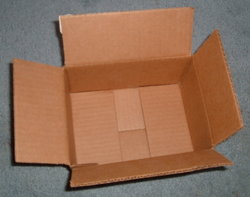
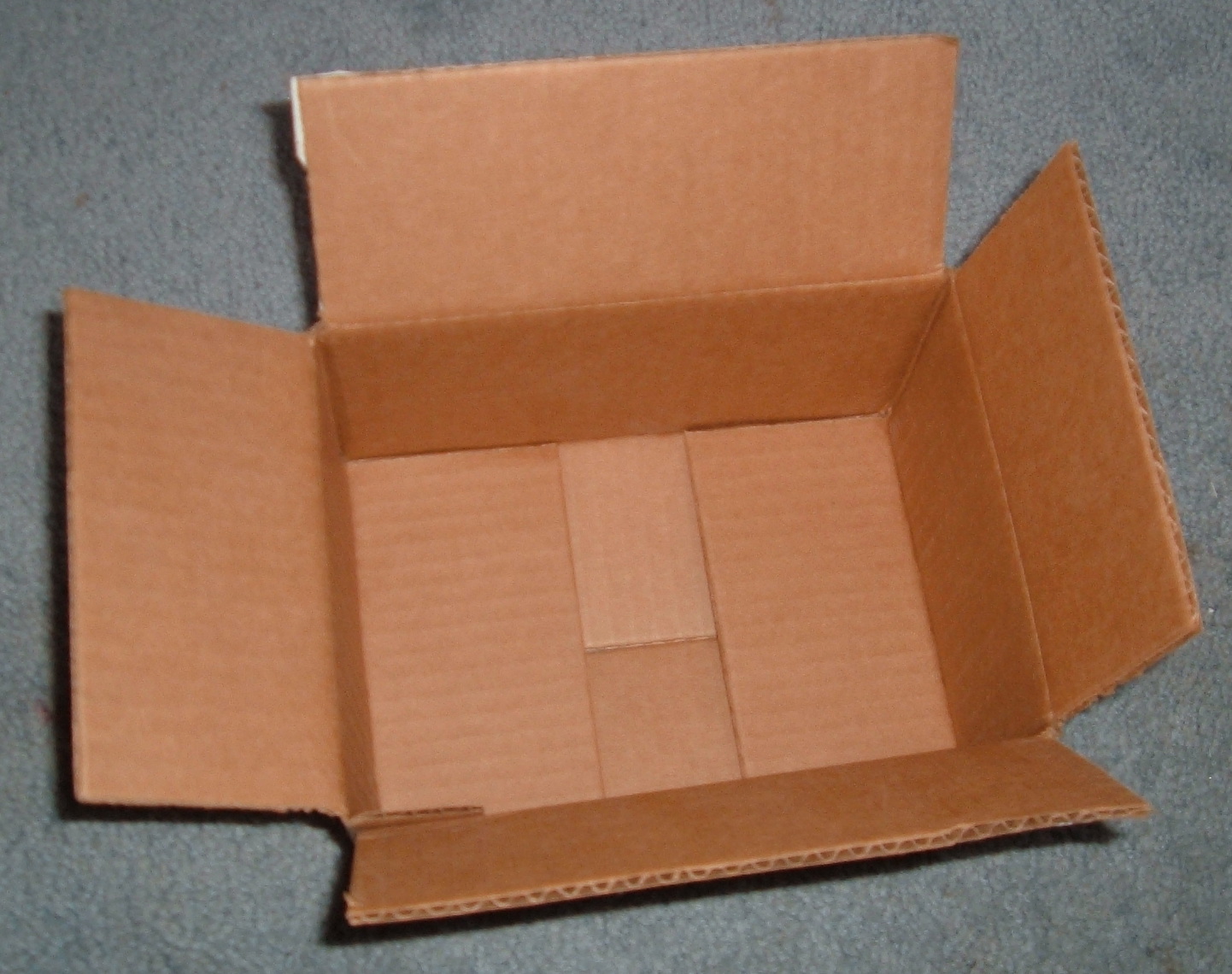
Cardboard boxes are industrially prefabricated boxes, primarily used for packaging goods and materials. Specialists in industry seldom use the term cardboard because it does not denote a specific material.[1][2] The term cardboard may refer to a variety of heavy paper-like materials, including card stock, corrugated fiberboard,[3] and paperboard.[4] Cardboard boxes can be readily recycled.

Terminology

[edit]

Several types of containers are sometimes called cardboard boxes:

In business and industry, material producers, container manufacturers,[5] packaging engineers,[6] and standards organizations,[7] try to use more specific terminology. There is still not complete and uniform usage. Often the term "cardboard" is avoided because it does not define any particular material.

Broad divisions of paper-based packaging materials are:

  • Paper is thin material mainly used for writing upon, printing upon, or for packaging. It is produced by pressing together moist fibers, typically cellulose pulp derived from wood, rags, or grasses, and drying them into flexible sheets.
  • Paperboard, sometimes known as cardboard, is generally thicker (usually over 0.25 mm or 10 points) than paper. According to ISO standards, paperboard is a paper with a basis weight (grammage) above 224 g/m2, but there are exceptions. Paperboard can be single- or multi-ply.
  • Corrugated fiberboard sometimes known as corrugated board or corrugated cardboard, is a combined paper-based material consisting of a fluted corrugated medium and one or two flat liner boards. The flute gives corrugated boxes much of their strength and is a contributing factor for why corrugated fiberboard is commonly used for shipping and storage.[8]

There are also multiple names for containers:

  • A shipping container made of corrugated fiberboard is sometimes called a "cardboard box", a "carton", or a "case". There are many options for corrugated box design. Shipping container is used in shipping and transporting goods due to its strength and durability, thus corrugated boxes are designed to withstand the rigors of transportation and handling.
  • A folding carton made of paperboard is sometimes called a "cardboard box". Commonly used for packaging consumer goods, such as cereals, cosmetics, and pharmaceuticals. These cartons are designed to fold flat when empty, saving space during storage and transport.
  • A set-up box is made of a non-bending grade of paperboard and is sometimes called a "cardboard box". Often used for high-end products, such as jewelry, electronics, or gift items. Unlike folding cartons, set-up boxes do not fold flat and are delivered fully constructed.
  • Drink boxes made of paperboard laminates, are sometimes called "cardboard boxes", "cartons", or "boxes". Widely used for packaging beverages like juice, milk, and wine. These cartons are designed to maintain the freshness of liquid products and are often used in aseptic packaging.

History

[edit]

The first commercial paperboard (not corrugated) box is sometimes credited to the firm M. Treverton & Son[9] in England in 1817.[10][11][12] Cardboard box packaging was made the same year in Germany.[13]

The Scottish-born Robert Gair invented the pre-cut cardboard or paperboard box in 1890 – flat pieces manufactured in bulk that folded into boxes. Gair's invention came about as a result of an accident: he was a Brooklyn printer and paper-bag maker during the 1870s, and one day, while he was printing an order of seed bags, a metal ruler normally used to crease bags shifted in position and cut them. Gair discovered that by cutting and creasing in one operation he could make prefabricated paperboard boxes. Applying this idea to corrugated boxboard was a straightforward development when the material became available around the turn of the twentieth century.[14]

Cardboard boxes were developed in France about 1840 for transporting the Bombyx mori moth and its eggs by silk manufacturers, and for more than a century the manufacture of cardboard boxes was a major industry in the Valréas area.[15][16]

The advent of lightweight flaked cereals increased the use of cardboard boxes. The first to use cardboard boxes as cereal cartons was the Kellogg Company.

Corrugated (also called pleated) paper was patented in England in 1856, and used as a liner for tall hats, but corrugated boxboard was not patented and used as a shipping material until 20 December 1871. The patent was issued to Albert Jones of New York City for single-sided (single-face) corrugated board.[17] Jones used the corrugated board for wrapping bottles and glass lantern chimneys. The first machine for producing large quantities of corrugated board was built in 1874 by G. Smyth, and in the same year Oliver Long improved upon Jones's design by inventing corrugated board with liner sheets on both sides.[18] This was corrugated cardboard as we know it today.

The first corrugated cardboard box manufactured in the US was in 1895.[19] By the early 1900s, wooden crates and boxes were being replaced by corrugated paper shipping cartons.

By 1908, the terms "corrugated paper-board" and "corrugated cardboard" were both in use in the paper trade.[20]

Crafts and entertainment

[edit]

Cardboard and other paper-based materials (paperboard, corrugated fiberboard, etc.) can have a post-primary life as a cheap material for the construction of a range of projects, among them being science experiments, children's toys, costumes, or insulative lining. Some children enjoy playing inside boxes.

A common cliché is that, if presented with a large and expensive new toy, a child will quickly become bored with the toy and play with the box instead. Although this is usually said somewhat jokingly, children certainly enjoy playing with boxes, using their imagination to portray the box as an infinite variety of objects. One example of this in popular culture is from the comic strip Calvin and Hobbes, whose protagonist, Calvin, often imagined a cardboard box as a "transmogrifier", a "duplicator", or a time machine.

So prevalent is the cardboard box's reputation as a plaything that in 2005 a cardboard box was added to the National Toy Hall of Fame in the US,[21] one of very few non-brand-specific toys to be honoured with inclusion. As a result, a toy "house" (actually a log cabin) made from a large cardboard box was added to the Hall, housed at the Strong National Museum of Play in Rochester, New York.

The Metal Gear series of stealth video games has a running gag involving a cardboard box as an in-game item, which can be used by the player to evade detection.

Housing and furniture

[edit]

Living in a cardboard box is stereotypically associated with homelessness.[22] However, in 2005, Melbourne architect Peter Ryan designed a house composed largely of cardboard.[23] More common are small seatings or little tables made from corrugated cardboard. Merchandise displays made of cardboard are often found in self-service shops.

Cushioning by crushing

[edit]

Mass and viscosity of the enclosed air help together with the limited stiffness of boxes to absorb the energy of oncoming objects. In 2012, British stuntman Gary Connery safely landed via wingsuit without deploying his parachute, landing on a 3.6-metre (12 ft) high crushable "runway" (landing zone) built with thousands of cardboard boxes.[24]

See also

[edit]

References

[edit]
Revisions and contributorsEdit on WikipediaRead on Wikipedia
from Grokipedia
A is a rigid fabricated from , which consists of a wavy fluted medium adhered between two flat sheets of linerboard to provide strength, cushioning, and for packaged items during shipping and storage. This enables the box to withstand compression and impacts while remaining lightweight and cost-effective compared to alternatives like or metal. boxes are produced in standardized sizes and custom variants, often featuring flaps for sealing and optional reinforcements for heavier loads. The modern cardboard box emerged in the mid-19th century after the patenting of corrugated paper in in 1856, initially used for stiffening hats and later adapted for as techniques advanced. By the early , innovations in folding and gluing processes allowed for scalable manufacturing, replacing bulkier wooden crates and enabling efficient global supply chains for consumer products. Today, the industry generates over $42 billion annually in the U.S. alone, with boxes serving as the primary medium for fulfillment, retail display, and industrial transport. Corrugated boxes are manufactured through a multi-stage process involving pulp refining into , corrugation via heated rolls, lamination of layers, and automated cutting, , and folding on high-speed machinery. Their environmental profile includes high recyclability, with U.S. rates exceeding 70% for corrugated material, though production demands significant , , and wood inputs derived from managed forests. Lifecycle assessments indicate reduced per unit over recent decades due to efficiency gains and increased recycled content, often comprising 70-100% post-consumer .

Terminology and Definition

Core Characteristics

A is a rigid manufactured from , defined as a thick paper-based material exceeding 0.25 mm in thickness, typically employed for storage, shipping, and product . The most common form utilizes , comprising a central fluted or wavy medium layer bonded between two flat linerboards, which imparts structural integrity and shock absorption. This composition derives from paper pulp, primarily wood fibers processed into containerboard grades such as kraft linerboard for the outer layers and semi-chemical medium for the . The corrugated structure enhances and rigidity while maintaining low weight, distinguishing it from non-corrugated used in lighter applications like cartons. profiles vary—A-flute for cushioning (4.7 mm height), B-flute for (2.5 mm), C-flute for balance (3.7 mm)—allowing customization for specific load requirements. Single-wall configurations feature one layer, supporting up to approximately 30 kg, whereas double- or triple-wall variants handle heavier loads exceeding 50 kg. Key physical properties include burst strength, measured via the Mullen test to assess resistance to rupture under pressure, and edge crush resistance, evaluating stacking durability. Cardboard boxes exhibit high recyclability, with fiber recovery rates often surpassing 80% in , though performance degrades with repeated cycles due to shortening. They remain sensitive to , which can compromise and strength if levels deviate significantly from optimal ranges. Cardboard boxes are primarily constructed from , a featuring a fluted (wavy) inner layer bonded between two flat linerboards, which imparts superior , cushioning, and stackability compared to solid used in folding cartons or rigid boxes. This structure enables cardboard boxes to withstand impacts and weights up to several hundred pounds per unit, depending on flute size (e.g., A-flute at 1/4 inch for maximum cushioning or E-flute at 1/16 inch for finer ), making them ideal for shipping and bulk storage. In distinction, paperboard cartons—such as those for cereals or pharmaceuticals—employ dense, multi-ply sheets without fluting, prioritizing printability and containment for retail display rather than transit , with thicknesses typically under 0.010 inches versus corrugated's 0.080–0.200 inches. Rigid paperboard boxes, often set-up or luxury variants, further diverge by using thicker, solid substrates (e.g., chipboard or binder's board) folded and glued into shape without corrugation, offering aesthetic appeal and minor rigidity for gifts or but insufficient stacking strength for , as they collapse under loads exceeding 50 pounds without reinforcement. Unlike these paper-based alternatives, which emphasize over protection, cardboard boxes prioritize structural integrity through the air-trapping flutes that distribute force and absorb shocks, a design validated by edge crush tests (ECT) standards where values range from 23–55 pounds per inch for common grades. Relative to non-paper materials, cardboard boxes excel in weight reduction—typically 20–50% lighter than equivalent wooden crates—facilitating lower shipping costs and emissions, though they yield to wood's superior tensile strength (e.g., crates bearing 1,000+ pounds statically) for hazardous or export shipments requiring heat treatment compliance. Plastic bins or totes, molded from or HDPE, provide reusability (up to 100 cycles) and moisture resistance absent in untreated cardboard, but their higher production energy (2–3 times that of ) and non-recyclability in mixed streams render them less sustainable for single-use e-commerce volumes exceeding 100 billion units annually. These distinctions underscore cardboard's niche in disposable, high-volume protection, balancing cost (under $1 per unit for standards) with environmental recoverability via 80–90% rates in developed markets.

History

Origins and Early Innovations

The earliest forms of rigid boxes constructed from emerged in the early , predating corrugated variants. In 1817, British industrialist Sir Malcolm Thornhill produced the first commercial boxes using single sheets of , marking an initial shift from wooden or rigid material for like hats and small items. These early boxes relied on manual assembly and glueing, offering lightweight alternatives to heavier wood but limited in strength for heavier loads. Corrugated paper, the foundational innovation enabling durable cardboard boxes, was patented in on December 12, 1856, by Edward G. Healy and Edward E. Allen, who developed a process to pleat paper into a wavy shape for use as a liner in tall hats, providing insulation and structure without added weight. This single-faced corrugation was adapted for protective packaging by 1871, when Albert L. Jones received U.S. Patent No. 124,406 for single-sided corrugated paperboard, consisting of a fluted sheet bonded to a flat liner to fragile items like bottles and ceramics during shipping. Jones's addressed the causal need for impact resistance through the air-filled flutes, which absorbed shocks better than flat , though initial applications remained niche due to production limitations. Further advancements in the 1870s refined corrugation for broader utility. In 1874, Oliver Long patented an improvement (U.S. Patent No. 150,588) adding a second flat liner to create double-faced corrugated board, enhancing rigidity and enabling the formation of enclosed boxes rather than mere liners. Concurrently, American printer Robert Gair accidentally discovered a die-cutting method in while producing bags, leading to the first pre-cut, flat-foldable cardboard cartons that could be efficiently assembled without manual folding, revolutionizing for consumer goods. These innovations laid the groundwork for corrugated boxes, with the first complete double-walled versions produced in 1894 by the Thompson-Norris Company in the U.S., initially for shipping fruits and . Early adoption was driven by empirical advantages in cost and weight reduction over wood crates, though scalability awaited mechanized manufacturing.

Industrial Adoption and Standardization

The adoption of corrugated cardboard boxes in industry began in earnest during the late , as manufacturers sought lighter and more cost-effective alternatives to wooden crates for shipping. By the , corrugated boxes started replacing wooden containers due to their reduced weight, which lowered transportation costs, and their recyclability, enabling efficient handling of goods like fruits and other perishables. This shift was driven by the Industrial Revolution's demand for scalable packaging solutions, with early production of entering commercial use in the 1880s following patents for machine production. Early 20th-century innovations further propelled industrial uptake, including the development of the first complete structures in 1894 and the introduction of double-walled corrugated variants by 1906, which enhanced durability for heavier loads. Industries such as glassware and rapidly adopted these boxes for their protective cushioning, while mass-production machinery allowed for consistent output, marking a transition from wooden to standardized paper-based alternatives. By the 1910s, wartime logistics during accelerated demand, with corrugated boxes proving essential for efficient distribution of munitions and provisions. Standardization efforts coalesced in the early to mid-20th century alongside industry growth, as associations and manufacturers established uniform dimensions, flap designs, and strength metrics to facilitate interoperability in supply chains. The Fibre Box Association, tracing its roots to corrugated's commercial origins in the 1870s, played a key role in promoting consistent manufacturing practices and performance testing by the mid-century, including early adoption of metrics like burst strength for . World War II intensified this process, with sectors like automotive and standardizing box specifications for global shipping, leading to lightweight yet robust designs that supported post-war economic expansion. These standards emphasized inside dimensions (length x width x height) and structural types, such as regular slotted containers, ensuring compatibility with automated handling equipment.

Post-War Expansion and Modern Developments

Following , the global economic recovery and surge in goods production propelled the widespread adoption of cardboard boxes for and shipping. In , the gross national product expanded more than ninefold over the subsequent three decades, driving demand for efficient, lightweight containers amid rising retail and distribution needs. Corrugated cardboard, prized for its durability and stackability, saw accelerated use in households for items like and shoes, transitioning from wartime utility to everyday applications. Aid initiatives, such as CARE packages distributed to war-torn regions containing essentials like meat and , further highlighted cardboard's reliability in bulk transport, with millions of units shipped starting in 1946. The period marked a boom in the corrugated industry, with expanded mill construction and production capacity to meet ballooning demand. New kraft mills proliferated to supply water-resistant , supplanting earlier semi-chemical processes and enabling corrugated board to dominate over wooden crates. By the , in box standardized designs, reducing costs and facilitating global trade expansion, as evidenced by the Container Corporation of America's network of plants from to . Industry revenues grew sharply, with one UK firm reporting an 80% increase in a single year as corrugated became integral to . In modern developments, has dramatically amplified cardboard box usage, with the sector estimated to account for over $20 billion in corrugated packaging value by the late 2010s, driven by shipping. Annual growth in the global market reached approximately 3.7% leading to 2023, projected to sustain through innovations like fit-to-product designs and on-demand box production that minimize material waste. imperatives have spurred lightweighting and recyclability enhancements, with U.S. output forecasted to rise nearly 1% annually to 53.6 million tons by 2029, supported by for customization and retail-ready formats. These advances address e-commerce's variable shipment sizes while aligning with regulatory pressures for reduced environmental impact.

Manufacturing

Raw Materials and Sourcing

The primary raw material for cardboard boxes, specifically , is containerboard consisting of layered products: linerboard for the outer surfaces and corrugated medium for the fluted core. These are produced from paper pulp derived from fibers, which provide the necessary strength and structure. Pulp originates from either virgin wood fibers or recycled paper fibers, often in combination to balance cost, strength, and availability. Virgin pulp is typically sourced from trees such as and , which yield longer fibers essential for tensile strength in box applications; hardwoods like may supplement for specific properties but are less dominant in corrugated production. In the United States, containerboard manufacturing incorporates a mix, with U.S. mills consuming a record volume of recycled fiber in 2024, reflecting industry trends toward higher secondary fiber use amid supply constraints on virgin materials. Recovered paper—sourced from like old boxes and industrial scraps—is processed via mechanical or chemical pulping to reintegrate s, comprising a substantial portion of inputs; for instance, new containerboard facilities added in 2023 utilized 100% recycled fiber in some cases. Sourcing of virgin fiber emphasizes wood from managed forests, where softwoods are harvested via chipping and processed through —a chemical method that removes for durable, brown-toned used in linerboard. Recycled sourcing involves collection systems, with U.S. cardboard recovery rates reaching 69-74% in 2024, feeding mills that de-ink and refine waste to produce test liner and medium grades. Adhesives, critical for layers, are predominantly starch-based, derived from corn or other starches, applied as water-borne formulations during corrugation for eco-compatible without synthetic additives in standard processes. Minor materials include water-based inks for printing, but these constitute less than 1% of total mass. Supply chains prioritize regional sourcing to minimize costs, with global trade in pulp logs and chips emerging from new suppliers in response to demand.

Production Processes

The production of corrugated cardboard boxes commences with the corrugation , where continuous rolls of linerboard and corrugating medium—derived from kraft pulp or recycled —are fed into a corrugator machine. The medium is preheated with to approximately 350°F (177°C) for flexibility, then passed between heated, gear-like corrugating rolls that form sinusoidal flutes, with common profiles including B-flute (about 0.042 inches or 1.07 mm high) for balanced strength and printability or C-flute (about 0.039-0.047 inches or 1-1.2 mm high) for greater cushioning. Starch-based , typically a carrierless formulation of unmodified starch, , caustic soda, and , is applied via a glue roll to the tips of the flutes at a controlled of 30-60 seconds on a Stein cup to ensure rapid bonding without machine stoppages. The fluted medium is then pressed against a single linerboard in the single-facer unit to create single-face web, followed by adhesion of a second linerboard in the double-backer section using heated belts and pressure rolls to cure the adhesive and produce single-wall board; double-wall or triple-wall variants add intermediate layers for enhanced rigidity. The resulting board, now rigid and up to 350 feet per minute in production speed, is slit lengthwise, scored for folding lines, and cut into large sheets perpendicular to the flutes. In the converting stage, these sheets or rolls are processed on specialized machinery such as flexo folder-gluers (FFGs) or rotary die-cutters to form box blanks. Flexographic applies inks for branding and barcodes directly inline, followed by creasing, slotting for flaps, and die-cutting for custom perforations or handles. The blanks are then folded along scores, with hot-melt or glue applied to seams, and either taped, stitched with wire staples, or left flat (knocked-down) for assembly at destination; regular slotted containers (RSCs), the most common type, require minimal end-user setup by taping bottom flaps. Quality metrics during converting include bond strength tested via peel tests exceeding 20 pounds per linear foot and dimensional accuracy to ±1/16 inch tolerances.

Quality Control and Testing Standards

Quality control in cardboard box manufacturing encompasses systematic inspections and standardized tests to verify material integrity, structural , and compliance with performance specifications, minimizing defects that could lead to failure during transport or storage. These processes typically include raw material evaluations for , content, and caliper using methods like those outlined in TAPPI T 410 for grammage and TAPPI T 412 for , ensuring consistency before corrugation. In-process checks monitor and flute formation, while final assembly inspections assess seam strength and dimensional accuracy to prevent issues like warping or . Structural testing focuses on load-bearing capacity through methods such as the Box Compression Test (BCT), which applies uniform vertical force to simulate stacking loads until failure, per ASTM D642, TAPPI T804, and ISO 12048, with results guiding safe stacking heights—typically expressed in kilonewtons for boxes up to 1 meter in height. The Edge Crush Test (ECT) evaluates corrugated board's resistance to edgewise compression by loading waxed-edge samples perpendicular to the flutes, standardized under ISO 3037 and TAPPI T 811, where values like 32 ECT indicate suitability for lighter loads and correlate with BCT outcomes via McKee's formula for predictive modeling. Burst strength testing, via ASTM D774 or ISO 2758, measures the hydraulic pressure required to rupture single or multi-ply board, providing an indicator of overall tensile resistance, though it is less predictive of stacking than ECT for modern lightweight designs. Additional assessments include the Ring Crush Test (TAPPI T 822) for linerboard stiffness and Cobb sizing tests (ISO 535) for water absorption resistance, critical for humid environments, with acceptance criteria often tied to end-use via Box Maker's Certificates declaring compliance with these metrics. European manufacturers adhere to FEFCO guidelines, including (GMP) standards renewed in 2006, emphasizing , , and defect rates below 1% for critical attributes like glue adhesion. Non-destructive methods, such as and drop simulations under ISTA protocols, further validate performance, ensuring boxes withstand real-world shocks without over-reliance on single metrics.

Types and Designs

Material-Based Classifications

Cardboard boxes are classified primarily by their material composition into two main categories: boxes and boxes. Paperboard boxes utilize solid sheets of heavy paper, typically no thicker than 0.010 inches, providing rigidity and lightness suitable for retail packaging. In contrast, boxes incorporate a fluted medium layer for enhanced strength and cushioning, making them ideal for shipping and heavy-duty applications. These distinctions arise from differences in manufacturing processes and structural design, with formed through pulping methods like kraft or semichemical, while corrugated involves adhering wavy medium to flat linerboards using adhesives. Paperboard, also known as cartonboard or boxboard, consists of single or multi-ply sheets without corrugation, often used for folding cartons that assemble via gluing or locking tabs. Common subtypes include solid bleached sulfate for premium printed packaging and clay-coated newsboard for economical options, both derived from virgin or recycled fibers pressed into smooth, printable surfaces. These materials support lightweight containment for products like cereals, , and pharmaceuticals, prioritizing and ease of display over structural robustness. Corrugated fiberboard, the dominant material for transport boxes, features one or more fluted mediums—wavy sheets of paper—sandwiched between flat linerboards, with the medium providing compression strength and the liners offering surface protection. Linerboards and mediums are typically containerboard grades such as kraft paper, which derives from strong wood fibers like pine, ensuring durability; recycled content can comprise up to 100% in some variants, though virgin kraft yields superior stiffness. Classifications within corrugated boxes depend on wall construction: single-face (one liner and exposed flutes for wrapping), single-wall (one medium between two liners, standard for most shipping), double-wall (two mediums for heavier loads), and triple-wall (three mediums for industrial freight up to thousands of pounds). Flute profiles further differentiate corrugated materials by height and density, influencing stacking strength and puncture resistance. A-flute (approximately 1/4 inch thick, 33 flutes per foot) offers maximum cushioning for fragile items, while C-flute (5/32 inch, 39 flutes per foot) balances strength and printability for general use, comprising about 80% of boards. Thinner profiles like E-flute (1/16 inch, 90 flutes per foot) suit retail displays, and B-flute (1/8 inch, 47 flutes per foot) excels in canned goods . These material variations enable tailored performance, with edge crush tests standardizing load-bearing capacities across types.

Structural and Functional Variations

Cardboard boxes feature structural variations primarily in their flap configurations, seam types, and overall assembly methods, which determine load capacity and assembly efficiency. Slotted-type boxes, the most prevalent, include the Regular Slotted Container (RSC) with all flaps of equal length that meet at the center when folded, allowing for taped or glued closure and suitable for general shipping due to balanced top and bottom strength. In contrast, the Full Overlap Container (FOL) employs flaps where outer ones overlap the full box width, enhancing for heavier or fragile contents by distributing weight more evenly across seams. Telescope designs consist of two trays—one for the body and one for the lid—that fit over each other, providing adjustable depth and superior stacking stability for variable volumes, often used in industrial packaging. Folder-type boxes, formed from a single sheet with hinged sides and flaps, offer simplicity for trays or open-top containers, minimizing material use while facilitating quick setup without adhesives. Rigid or setup boxes, typically made from thicker paperboard, maintain shape through glued corners and reinforced edges, prioritizing durability over foldability for premium or display applications. Functionally, these structures adapt to specific demands: perforations or tear strips in flaps enable easy access without tools, as in retail-ready designs, while hand holes or ergonomic cutouts improve handling in logistics. Seams vary from glued for permanence in high-volume production to stitched for repairable heavy-duty uses, with tape reinforcing dynamic stresses during transit. The FEFCO classification system standardizes these variations with codes—such as 0201 for basic slotted RSC—ensuring interoperability across manufacturers and optimizing for functions like ventilation via scored vents or insulation layering for temperature-sensitive goods. Such adaptations, verified through industry testing like edge crush and burst strength, directly correlate with real-world performance in compression and impact resistance.

Physical Properties

Strength and Load-Bearing Capacity

The strength of cardboard boxes, particularly those made from , is primarily evaluated through metrics such as the Edge Crush Test (ECT), which measures the board's resistance to compression in the edge direction, correlating strongly with stacking performance. Higher ECT values, typically ranging from 23 to 55 pounds per inch for common grades, indicate greater load-bearing potential before edge failure occurs. The Box Compression Test (BCT), standardized under ASTM D642, assesses the maximum vertical load a fully assembled can sustain until deformation or , simulating real-world stacking conditions. Load-bearing capacity varies significantly based on structural factors including wall configuration, flute profile, and linerboard . Single-wall boxes, often with a 32 ECT rating, typically support 20 to 95 pounds depending on dimensions and contents distribution, while double-wall variants with 44 ECT can handle 80 to 150 pounds under optimal conditions. Flute types influence this: B-flute (approximately 1/8 inch) provides balanced compression resistance, whereas C-flute (3/16 inch) offers superior cushioning but may reduce edge strength in oversized boxes. exposure, which softens fibers and reduces ECT by up to 20-30% at 10% humidity increase, and improper assembly seams further diminish capacity. Empirical testing reveals that BCT results often exceed ECT predictions by incorporating box geometry, with formulas like McKee's equation estimating compression strength as a function of ECT, caliper, and perimeter. For heavy-duty applications, triple-wall boxes achieve 200-1,000 pounds, but actual limits must account for dynamic factors like , which can halve static ratings per ISO 12048 stacking protocols. Industry guidelines recommend by 20-50% for safety in transit, prioritizing ECT over legacy Mullen tests for predictive accuracy in vertical loads.

Cushioning and Shock Absorption

Corrugated fiberboard in cardboard boxes achieves cushioning via the fluted medium layer, where sinusoidal arches compress under impact to dissipate kinetic energy through elastic and plastic deformation, reducing acceleration transmitted to contents. Energy absorption occurs mainly beneath the impact point, with adjacent regions contributing via load spreading and flute stability. Drop tests, standardized under protocols like ASTM D4169, evaluate performance by dropping packages from heights such as 91.4 cm, measuring peak G-forces with accelerometers; regression models predict impact strength with R²=94.1%, factoring in drop height, static stress, and thickness. For instance, A-flute boards (4.7 mm flute height) yield lower peak accelerations than B-flute under equivalent loads, as taller flutes permit greater deformation before densification. Thickness influences capacity, with 9–12 ply configurations optimal for static stresses of 15–19 g/cm², absorbing shocks effectively in fractional factorial experiments while avoiding excess material. Dynamic cushion curves plot peak acceleration against static stress, showing flatter slopes for partial loading (e.g., impact diameters 2.47–6.75 inches) versus full-area contact, with empirical formulas like G_m = 100/D^{1/4} (D in inches) approximating bottoming thresholds. Under concentrated loads, thinner resist via flat crush, but thicker ones risk punching shear and peripheral tensile , diminishing efficiency for small bearing areas (e.g., 4.9 sq in). Thus, integrates profile and layering to match expected hazards, often augmented by internal for fragile payloads.

Primary Uses

Packaging and Shipping Applications

Corrugated cardboard boxes dominate shipping applications due to their structural integrity provided by the fluted medium between liners, enabling resistance to compression and impact during transit. These boxes are widely employed for transporting durable , , and consumer products, often serving as secondary for bulk shipments. In , they facilitate efficient stacking on pallets, with the global corrugated box market projected to expand by USD 14.98 billion from 2024 to 2028, driven by demand. The regular slotted container (RSC), formed from a single sheet of corrugated board scored and slotted for folding, represents the most prevalent style for shipping, offering simplicity and cost efficiency for standard rectangular packages. Other variants, such as full overlap slotted containers (FOL), provide enhanced cushioning for heavier loads by increasing overlap on top and bottom flaps. Die-cut boxes, featuring custom shapes and perforations, are used when precise fit or additional features like handles are required, though they incur higher production costs compared to RSC. Strength standards ensure reliability in shipping; the edge crush test (ECT) measures stacking endurance, with single-wall boxes typically rated at 32 ECT to withstand vertical loads without collapse. Complementarily, the Mullen burst test assesses puncture resistance, where a 200# rating indicates the force in pounds per needed to rupture the box face, guiding selection for contents vulnerable to external pressure. These metrics, standardized under ASTM protocols, correlate with real-world performance: higher ECT values support taller stacks in warehouses, reducing damage rates in transit. In practice, corrugated boxes' lightweight nature—often under 1 pound empty for standard sizes—lowers freight costs while their durability protects against shocks, with industry data showing quarterly U.S. shipments reaching 96.3 billion square feet in Q2 , a 1.1% increase from the prior year. This versatility extends to custom sizing via rotary die-cutting, accommodating diverse products from apparel to machinery parts, thereby minimizing void space and filler needs in parcels. Overall, their adoption in supply chains reflects a balance of protective efficacy and economic viability, with North American consumption valued at USD 40.62 billion in .

Industrial and Commercial Roles

In industrial settings, particularly warehouses and distribution facilities, corrugated cardboard boxes support storage, , shipping, and order picking processes by providing stackable, protective containers for goods and components. These boxes, often in the form of bins made from 200#/ECT-32-B corrugated material, offer an economical means to organize parts while concealing dirt and enabling quick assembly through foldable, multi-piece . Their , lightweight nature, and space-efficient design minimize damage risk during handling and storage, making them suitable for extended inventory management. In , heavy-duty variants such as triple-wall corrugated boxes handle bulk materials and machinery parts, ensuring protection against impacts and environmental factors during production and interim storage. Industries like and rely on these boxes for intermediate containment, where resistance to moisture and contaminants preserves material integrity prior to final . Commercially, cardboard boxes are repurposed as retail display units, including point-of-purchase (POP) stands and counter displays, to showcase products and stimulate impulse purchases through customizable, eye-catching designs. The global display market, encompassing such cardboard applications, reached USD 5.2 billion in and is projected to grow at a 6.5% to USD 8.9 billion by 2033, driven by demand for cost-effective, sustainable solutions. These displays excel in versatility, accommodating small packaged on shelves or floors while integrating branding elements to enhance product visibility in retail environments.

Alternative and Secondary Uses

Furniture and Housing Solutions

Cardboard boxes, often reinforced through layering, gluing, and protective coatings like , serve as a low-cost for DIY furniture such as shelves, chairs, and tables, providing temporary when assembled into frames or silhouettes. These constructions leverage the inherent of corrugated cardboard, which can bear loads when multiple layers are bonded, though they remain susceptible to moisture damage without treatment and lack the longevity of traditional materials like wood or metal. Pioneering designs, including Frank Gehry's 1972 Wiggle Side Chair made from layered cardboard, demonstrate aesthetic and functional viability, influencing modern experimental furniture that prioritizes recyclability over permanence. In housing applications, cardboard excels in emergency and temporary shelters, particularly in disaster zones where rapid deployment and low cost are critical. Architect , awarded the 2014 Pritzker Prize, pioneered recyclable cardboard tube structures for refugee housing, using locally sourced paper tubes as columns, walls, and beams in projects like paper log homes following the 1999 Marmara earthquake in and the 2011 Tōhoku earthquake in , which housed thousands and emphasized dignity through modular, lightweight assembly. Recent innovations include the Transportable Emergency Cardboard House (TECH_04), deployable in under an hour for improved living conditions in crises as of 2022, and Australian prototypes tested in 2024 for post-flood and bushfire recovery, combining cardboard panels with timber for enhanced insulation and fire resistance. These solutions, while effective for short-term use—typically 6 to 24 months—rely on treatments for and pest resistance, as untreated cardboard degrades quickly in humid or exposed environments, limiting applicability to transitional rather than permanent housing.

Crafts, Entertainment, and DIY Projects

Cardboard boxes serve as a versatile, low-cost material for children's crafts, enabling the creation of structures such as playhouses, robots, and rockets through simple assembly with tape, markers, and recyclables. Educational organizations promote these projects to foster creativity, with examples including animal masks and race cars assembled from appliance boxes as of December 22, 2022. Similarly, cardboard kittens and other 3D sculptures can be crafted by cutting and gluing box sections, emphasizing and spatial skills as detailed in guides from May 18, 2024. In entertainment applications, cardboard facilitates interactive games and props, such as DIY arcade setups including pinball machines and claw games built with boxes, markers, and tape, suitable for home play as outlined on July 4, 2025. Cardboard automata, mechanical toys driven by cranks made from box flaps, cardboard tubes, and cardstock, demonstrate basic engineering principles and were documented in a Science Buddies activity on May 27, 2020. Simple games like football toss targets, formed by modifying empty boxes, provide family entertainment during events such as sports viewings. DIY projects extend to functional items like storage organizers, drawer dividers, and puzzle boards repurposed from shipping boxes, enhancing household utility without specialized tools. Advanced techniques include cardboard paper mache for durable sculptures, involving layering wet paper over box forms to create strong bases for art, as instructed by the Museum of Craft and Design. STEM-oriented DIYs, such as model or solar-powered stations from upcycled boxes, integrate concepts and were featured in Invent.org resources on January 1, 2022.

Environmental and Sustainability Aspects

Lifecycle Environmental Impact

The lifecycle environmental impact of cardboard boxes is assessed through cradle-to-grave analyses, which quantify , emissions, and waste across sourcing, , distribution, use, and disposal phases. Cardboard production primarily relies on recycled (often 70-90% in corrugated board), supplemented by virgin pulp from trees harvested in managed forests, reducing reliance on primary resources compared to non-renewable alternatives like plastics. Virgin pulp extraction can contribute to localized disruption if not certified sustainable, but empirical data from certified sources indicate net in regrowing forests exceeds emissions during growth phases. Manufacturing corrugated cardboard involves pulping, corrugation, and assembly, consuming energy (primarily and ) and for fiber processing. Per-ton production emits approximately 491-538 kg CO₂ equivalent, with a 50% reduction in per average U.S. box achieved from 2006 to 2020 through efficiency gains and higher recycled content. usage in pulping averages 20-50 cubic meters per , though modern closed-loop systems recycle 90-95% of , mitigating freshwater depletion. In distribution and use, cardboard's low (typically 0.5-1 kg per cubic meter for boxes) minimizes consumption, with lifecycle assessments showing 57-110% lower non-renewable use and respiratory health impacts compared to reusable containers over equivalent cycles. End-of-life impacts are favorably low due to high recyclability; in the U.S., old corrugated containers achieve 78-88% recovery rates, saving 40-70% versus virgin production and displacing . Non-recycled portions biodegrade in landfills within months under aerobic conditions, though anaerobic decomposition releases some . Comparative lifecycle data indicate cardboard boxes generate 0.94 kg CO₂e per kg cradle-to-grave, often outperforming single-use plastics in acidification and categories, though plastic reusables may edge out in depletion for high-cycle scenarios assuming perfect recovery logistics. These impacts are contingent on regional infrastructure; suboptimal systems inflate effective footprints by 15-20% via landfilling.

Recycling Processes and Efficiency

The recycling of cardboard boxes, primarily composed of , involves a multi-stage process designed to recover fibers for in new products. Collection occurs through curbside programs, commercial drop-offs, or dedicated streams, where boxes are flattened to maximize efficiency before to material recovery facilities (MRFs). At MRFs, initial sorting separates cardboard from other recyclables using manual labor and automated systems like optical scanners and air classifiers to remove contaminants such as plastics, tapes, and food residues. Baled cardboard is then shipped to paper mills, where it undergoes pulping: shredding into small pieces and mixing with to create a . This pulp is screened to eliminate non-fiber materials, followed by cleaning stages including hydrocyclones and flotation to remove inks, adhesives, and staples—processes that recover over 90% of fibers in high-quality streams. The cleaned pulp is refined, diluted further, and fed onto forming wires to produce continuous sheets, which are pressed, dried, and rolled into new or corrugated medium; this closed-loop system allows integration with virgin fibers to maintain strength. Efficiency metrics highlight substantial resource conservation. In the United States, the 2024 cardboard recycling rate reached 69-74% of available supply, equating to over 33 million tons recovered, primarily for domestic mill consumption—a figure adjusted for methodological consistency excluding exports. Recycling one ton of cardboard conserves approximately 17 trees, 7,000 gallons of , and 4,000 kilowatt-hours of compared to virgin production, with overall use reduced by up to 50% and by 90% due to bypassed pulping from wood chips. However, inherent limitations temper long-term efficiency. Cellulose fibers shorten and weaken with each cycle, limiting reuse to 5-7 times before downgrading to lower-grade products like tissue or insulation, necessitating virgin fiber blending to sustain structural integrity. Contamination from waxes, laminates, or mixed materials reduces yield by 10-20% in processing, increasing sorting costs and energy demands, while inconsistent local guidelines exacerbate collection inefficiencies.

Myths, Realities, and Criticisms of Green Claims

A prevalent green claim posits that cardboard boxes are inherently superior to plastic alternatives due to their biodegradability and renewability, yet this overlooks landfill dynamics where anaerobic conditions inhibit decomposition, resulting in minimal breakdown over decades and potential methane emissions from slow microbial activity. In the United States, approximately 56% of paper and cardboard waste is landfilled annually, representing untapped resource recovery and contributing to $4 billion in lost economic value from forgone recycling benefits. Recycling cardboard, by contrast, achieves rates of 69-74% in recent years, consuming 25-50% less energy and up to 99% less water than virgin production, though processes still require significant inputs and fiber quality degrades after multiple cycles. Another myth asserts that cardboard production drives , but U.S. forests have expanded through managed plantations where harvest rates support regrowth, with industry practices often certified under sustainable schemes like FSC, ensuring virgin fiber from replenished sources rather than old-growth stands. Claims of 100% recycled content as the sole sustainable path falter, as recycled fibers shorten with —typically viable for only 5-7 cycles—necessitating virgin inputs to maintain strength and quality in corrugated boxes, a reality acknowledged in lifecycle assessments. Critics note that environmental advocacy sometimes amplifies narratives without distinguishing managed from loss elsewhere, potentially biasing against despite empirical forest volume increases. Lifecycle analyses reveal cardboard's environmental profile is context-specific, outperforming in (by 57-110% in some reusable comparisons) when recycled, but lagging in transport efficiency due to higher weight, which elevates fuel use and emissions over distance. often exhibits lower overall impacts in and shipping scenarios, challenging blanket assertions of cardboard's universality as a "" substitute. Criticisms of green claims include accusations of greenwashing, where companies layer unnecessary over to evoke illusions without reducing total material use or emissions, as evidenced in consumer product studies. packaging faces parallel scrutiny for overlooking production's intensity, chemical treatments, and pressures in non-certified supply chains, with some analyses deeming it no net improvement over absent rigorous end-of-life . These discrepancies highlight how institutional biases, such as academia's frequent emphasis on 's visibility over 's systemic forestry data, can inflate or deflate claims without full causal accounting of supply chains and disposal pathways.

Economic and Innovative Developments

Market Dynamics and Global Production

The global market for corrugated cardboard boxes, a primary category within cardboard packaging, was valued at approximately USD 234 billion in 2024, with projections indicating growth to USD 367 billion by 2033 at a (CAGR) of around 5%. This expansion reflects steady demand from sectors including , food and beverage, and consumer goods, where cardboard boxes serve as lightweight, customizable shipping and storage solutions. Alternative estimates place the corrugated boxes segment at USD 171 billion in 2024, underscoring variability in market definitions but consistent upward trends driven by increases rather than . Key dynamics include the surge in , which has intensified demand for protective packaging to handle last-mile delivery stresses, contributing to higher box consumption per retail transaction despite efficiency gains in material use. Supply chain disruptions, such as those from shortages in pulp and production, have periodically elevated prices, with corrugated board costs fluctuating based on inputs and yields in major exporting regions. among producers emphasizes cost reduction through and integration, though overcapacity in some markets tempers pricing power. Global production is dominated by , accounting for over 50% of output in 2024, led by as the largest producer and consumer of corrugated boxes, with annual paperboard and packaging paper volumes exceeding those of all other nations combined. benefits from integrated supply chains proximate to and consumer exports, facilitating just-in-time . Leading companies include , , and , which control significant shares through from pulp to finished boxes, enabling scale efficiencies amid regional fragmentation. Worldwide corrugated board consumption is forecasted to approach 200 million tonnes by the mid-2020s, supported by export volumes rising 3% year-over-year in 2024. In the United States, the value of shipments for paperboard container manufacturing (NAICS 32221), which encompasses corrugated boxes and related products, reached $7,605 million (seasonally adjusted) in November 2025, according to data from the U.S. Census Bureau via FRED (Federal Reserve Economic Data). The not seasonally adjusted value for November 2025 was $7,031 million, following $8,131 million in October 2025 (not seasonally adjusted) and $7,567 million in October 2025 (seasonally adjusted). These monthly figures provide a current indicator of activity in the U.S. sector. In the early 2020s, manufacturers introduced fit-to-product (FtP) packaging systems, exemplified by Amazon's automated box-sizing technology, which customizes corrugated dimensions to individual items, reducing material waste by up to 30% in tested applications. Digital printing advancements enabled high-resolution, short-run customization on corrugated surfaces, allowing for personalized branding and variable data without traditional plates, with adoption accelerating post-2020 due to e-commerce demands. Smart packaging integrations emerged around 2022, incorporating QR codes, RFID tags, and sensors into cardboard structures for real-time tracking and tamper detection, enhancing efficiency in sectors like pharmaceuticals and perishables. corrugated designs, using advanced fluting techniques and recycled blends, achieved strength-to-weight ratios improved by 15-20% since 2020, supporting reduced shipping volumes and carbon emissions. Looking ahead, is projected to optimize box design and production by 2025, predicting material needs and automating die-cutting for minimal waste, amid an industry-wide shift toward reshoring and addressing aging through robotic integration. trends emphasize bio-based coatings and fully recyclable composites, driven by regulatory pressures, with global corrugated production expected to reach $205.7 billion by 2025 at a 3.8% CAGR, fueled by but tempered by raw material volatility. Retail-ready , featuring integrated displays and automation-compatible folds, is anticipated to dominate, prioritizing material reduction over elaborate designs to align with principles.

References

Add your contribution
Related Hubs
User Avatar
No comments yet.