Hubbry Logo
CarumCarumMain
Open search
Carum
Community hub
Carum
logo
8 pages, 0 posts
0 subscribers
Be the first to start a discussion here.
Carum
Carum
from Wikipedia

Carum
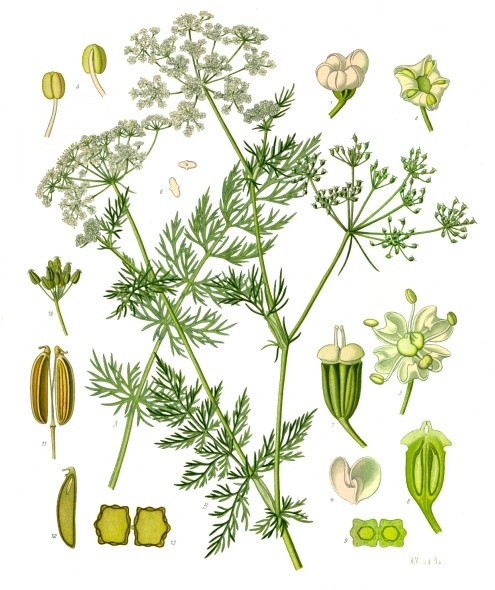
Carum carvi
Scientific classification Edit this classification
Kingdom: Plantae
Clade: Tracheophytes
Clade: Angiosperms
Clade: Eudicots
Clade: Asterids
Order: Apiales
Family: Apiaceae
Subfamily: Apioideae
Tribe: Careae
Genus: Carum
L.

Carum is a genus of flowering plants in the family Apiaceae, native to temperate regions of the Old World. A well-recognized species is caraway (C. carvi), the seeds of which are widely used as a spice.[1]

Species

[edit]

A total of 16 species are currently recognized:[2]

References

[edit]
[edit]
Revisions and contributorsEdit on WikipediaRead on Wikipedia
from Grokipedia
Carum is a of approximately 30 of biennial and herbs in the family , native to temperate regions of the . These plants are characterized by compound leaves, umbellate inflorescences with small flowers, and fruits, typical of the carrot family. The genus is currently considered polyphyletic, indicating that its species do not form a single evolutionary lineage, as revealed by molecular phylogenetic studies. The most economically significant species is Carum carvi, commonly known as , an herbaceous biennial native to , western , and . grows 15–150 cm tall, producing feathery leaves and pink to white flowers in umbels during its second year, followed by aromatic seeds that are harvested for culinary and medicinal uses. These seeds, rich in essential oils like and , are widely used as a in breads, cheeses, liquors, and traditional remedies for digestive ailments. Other in the genus also contribute to regional cuisines and , though less prominently than . Carum are often found in meadows, fields, and disturbed habitats, with some introduced outside their native range, including where they can escape cultivation and impact local ecosystems. Ongoing taxonomic revisions based on phylogenomics continue to refine the boundaries of the genus within the diverse family.

Taxonomy

Etymology

The genus name Carum is a New Latin form derived from the káron (κάρον), referring to or similar aromatic herbs in the family. This term appears in classical texts as a descriptor for plants valued for their culinary and medicinal uses, with roots possibly tracing to regional names in the ancient Mediterranean. The Greek káron is documented by Pedanius Dioscorides in his 1st-century CE work , where he describes karon as a well-known with urinary, warming, and properties, recommending it for digestive ailments. Similarly, references a plant called careum in Book XIX of his (ca. 77 CE), noting it as an exotic import bearing a name derived from , a region in Asia Minor whose inhabitants were known for cultivating such kitchen herbs. These classical usages influenced later herbalists, including Caspar Bauhin in the , who employed Carum in precursors. Carl Linnaeus formalized the genus Carum in Species Plantarum (1753), drawing directly from these historical sources and designating Carum carvi (caraway) as the type species. The name evolved through medieval Latin carvi, linked to Arabic al-karāwiyā, but the genus lacks distinct modern common names beyond those for individual species like caraway.

Classification

Carum is a genus of flowering plants classified within the kingdom Plantae, phylum Tracheophyta, class Magnoliopsida, order Apiales, family Apiaceae, subfamily Apioideae, and tribe Careae. The genus was established by in his in 1753, with Carum carvi designated as the type species. Current taxonomic estimates recognize approximately 20 to 30 species in Carum, primarily distributed in temperate and subtropical regions of the . Molecular phylogenetic studies have demonstrated that Carum, as currently circumscribed, is polyphyletic, with species distributed across multiple clades within the , indicating the need for taxonomic reclassification of some taxa. Key revisions include the transfer of certain species previously placed in Carum to related genera such as Bunium, based on morphological and molecular clarifying affinities, and the establishment of new genera like Berberocarum to accommodate North African species segregated from Carum sensu lato.

Description

Vegetative morphology

Carum species are typically biennial or perennial herbs in the Apiaceae family, growing to heights of 0.3–1 m with erect or ascending stems that are glabrous or sparsely pubescent. These stems are often cylindrical, robust, and branched, arising from a basal rosette in the first year for biennial species, facilitating establishment in temperate environments. The root systems feature taproots that are frequently thickened, aromatic, and or spindle-shaped, providing storage and anchorage; in certain like C. carvi, these roots develop into tuberous structures. Leaves are alternate, pinnate or bipinnate with sheathing petiole bases, and leaflets are lanceolate to ovate, 1–5 cm long, often and finely divided into lobes or segments for enhanced in open habitats. In such as C. caucasicum, basal leaves are oblong-elliptic and 1–2-pinnately compound with ovate terminal segments, while upper leaves diminish in size upward.

Reproductive structures

The reproductive structures of Carum species are characteristic of the family, featuring compound umbels as the primary type. These inflorescences are terminal, typically measuring 3-10 cm in diameter, and consist of 5-20 primary rays that support smaller secondary umbellules. Involucral bracts are usually absent or present in small numbers and leaf-like, while involucel bracts on the secondary umbels are often few or lacking. Flowers in Carum are small, hermaphroditic, and radially symmetrical, adapted for pollination within the family. Each flower has five minute sepals that are often obsolete or narrowly triangular, five obovate petals that are white or pinkish with a yellow or yellow-green midvein, and the petals curve inward at the apex. There are five stamens and an inferior composed of two carpels, each bearing a single style and stigma. The fruits of Carum are schizocarps that mature into oblong to ovate structures, 2-6 mm long, slightly laterally compressed, and glabrous. These dry fruits separate into two mericarps at maturity, each with five prominent, filiform ribs and 1-3 vittae (oil canals) in the furrows plus 2-4 on the commissure; the seeds within are often crescent-shaped, as seen in C. carvi. Flowering in Carum typically occurs during summer, from May to depending on the and geographic latitude, with biennial like C. carvi blooming in their second year.

Distribution and habitat

Geographic range

The genus Carum is native to the temperate and subtropical regions of the , encompassing a broad distribution across , , and . In , occur from the Mediterranean Basin, including countries such as , , , and , extending northward to (e.g., , Sweden, Finland) and the . North African representation is limited primarily to , with some extensions into and , particularly in the region. In , the range spans from the (Nepal, , ) and West Himalaya through (Kazakhstan, , , ) to (Russia's Altay, Amur, Buryatiya, and other regions) and eastward to parts of (e.g., , , ), , and . Diversity within Carum is particularly concentrated in , where multiple contribute to regional floristic richness, alongside notable in the (e.g., C. caucasicum in eastern and northwestern ) and the Apennines of (e.g., C. appuanum restricted to the Alpi Apuane). The genus comprises approximately 20–30 , with higher counts in these Asian and European montane areas reflecting adaptation to varied temperate climates. No Carum are native to tropical regions, underscoring the genus's restriction to cooler, seasonal environments. Several Carum species, notably C. carvi (caraway), have been introduced outside their native ranges through cultivation dating back to antiquity, facilitating spread as an escape from . In , C. carvi is established in (e.g., , New York) and parts of (e.g., , ), often in disturbed habitats. Introduced occurrences are also recorded in additional temperate zones, such as and select African regions like , as well as in the , including and parts of .

Habitat preferences

Carum species predominantly favor well-drained, loamy soils that are fertile and rich in or , enabling robust root development in temperate environments. These tolerate a range from slightly acidic to alkaline, typically between 4.8 and 7.6, with optimal growth in neutral to slightly alkaline conditions ( 6-8) that support availability without excess acidity. In terms of moisture, Carum thrives in moist to mesic conditions, commonly occurring in environments that provide consistent but not excessive water, such as meadows and grasslands, while avoiding waterlogged soils that could lead to . Established exhibit moderate , yet they perform best with even moisture levels to sustain growth and seed production, steering clear of arid extremes. The occupies a broad altitudinal gradient, from sea level to elevations exceeding 3,000 meters, with many adapted to montane and alpine meadows where cooler temperatures prevail. Carum associate with open, sunny exposures that maximize and production, though some tolerate light shade in edges or partially obscured grasslands. These preferences align with disturbed areas like arable fields and waste places across temperate and .

Ecology

Pollination and seed dispersal

Pollination in the genus Carum is primarily entomophilous, with serving as the main vectors for transfer. Flowers produce accessible and from the stylopodia, attracting a diverse array of pollinators including flies (particularly such as Melanostoma mellinum and Sphaerophoria scripta) and bees ( like ). These are drawn to the yellowish-white, umbrella-like compound umbels, which facilitate efficient visitation. While wind can contribute to transfer, experimental exclusion of reduces seed yield by 13–40%, depending on conditions, underscoring the dominance of biotic . Ecological traits are best documented for C. carvi; patterns in other species may differ due to the polyphyletic nature of the genus. Carum species, such as C. carvi, exhibit protandrous dichogamy, where anthers dehisce several days before stigmas become receptive, promoting despite self-compatibility. This temporal separation minimizes and enhances cross-pollination efficiency. Flowering in compound umbels shows overlapping across orders, with secondary umbels initiating bloom while primary umbellets remain in the female phase, thereby extending the receptive period and maximizing interactions. Individual florets last 7–15 days, with secretion peaking during the female phase to sustain visits. Seed dispersal in Carum relies mainly on abiotic mechanisms, as the fruits split longitudinally into two lightweight mericarps upon maturity. These mericarps, lacking specialized structures for long-distance travel, are primarily dispersed by , with shattering easily from the umbels and falling near the parent . Wind assists in carrying the small, dry mericarps short distances, particularly in open habitats. For biennial species like C. carvi, seed requires cold stratification to overcome physiological dormancy, involving 2 weeks of moist chilling at 4°C, achieving rates up to 64% under suitable conditions (20/10°C thermoperiod). Fresh seeds exhibit low germination without this treatment. Viability persists for 3–5 years when stored dry and cool, allowing delayed establishment in variable environments.

Biotic interactions

Carum species experience significant herbivory from various organisms, including , , and birds, which target both seeds and foliage. The seeds of Carum carvi, the most studied species in the genus, are palatable to vertebrates such as , contributing to post-dispersal that can limit in natural populations. , particularly and mites, feed on foliage and fruits, but Carum deploy chemical defenses through essential oils rich in and , which exhibit strong contact toxicity, fumigant effects, and repellency against these pests. Symbiotic relationships, particularly with arbuscular mycorrhizal fungi (AMF), play a key role in the of Carum species, enhancing uptake in nutrient-poor soils. Inoculation of Carum carvi with mixed AMF , such as those from Glomus and Rhizophagus genera, significantly improves height, branching, fresh and dry weights, and yield by facilitating and absorption, especially when combined with organic amendments like . These associations also boost volatile oil production, aiding fitness in marginal habitats like alpine meadows where is low. Carum species engage in competitive interactions with co-occurring plants, particularly grasses in meadow ecosystems, often mediated by allelopathic compounds. Root exudates and essential oils from Carum carvi inhibit germination and radicle elongation in grasses such as canary grass (Phalaris canariensis) and wheat (Triticum aestivum), with complete suppression observed at concentrations above 10 µl/ml due to monoterpenes like carvone disrupting seedling metabolism. In alpine meadows, Carum carvi competes intraspecifically for resources under low stress but shifts to neutral or facilitative interspecific interactions with unpalatable species like Carex praeclara under moderate resource limitation. Conservation threats to Carum populations primarily stem from by , which reduces plant density, height, and aboveground biomass in native ranges. In grazed alpine meadows on the Qinghai-Tibetan Plateau, Carum carvi exhibits decreased importance values and heightened mortality under severe , as palatable foliage is preferentially consumed, exacerbating population declines and altering structure. This disrupts symbiotic AMF associations and intensifies competitive pressures, threatening the persistence of Carum in semi-arid and mountainous habitats.

Species

Diversity and endemism

The genus Carum encompasses an estimated 20–30 accepted of flowering in the family , with the highest species diversity concentrated in and the Mediterranean regions of Europe. These species are predominantly herbaceous perennials adapted to temperate climates, exhibiting variation in growth habits and ecological tolerances that contribute to their regional richness. Endemism is a prominent feature within Carum, with several species confined to narrow geographic ranges that reflect historical isolation and habitat specialization. Notable examples include C. appuanum, which is strictly endemic to the (a subsection of the Italian Apennines), and C. lacuum, restricted to high-altitude habitats in . Such patterns underscore the genus's role in regional hotspots, where localized endemics often occupy rocky or montane environments vulnerable to environmental changes. Infrageneric groupings in Carum are informal and primarily based on fruit morphology—such as mericarp shape, ribbing, and vittae arrangement—and numbers, with a typical diploid count of 2n=18–20 across most taxa. These characters help delineate evolutionary lineages, though recent phylogenetic analyses have revealed the polyphyletic nature of the , suggesting potential revisions to its circumscription. Diversity within Carum faces threats primarily from habitat loss due to , , and shifts, leading to rare or threatened status for some based on IUCN assessments. For instance, C. foetidum is categorized as Near Threatened owing to declining populations in alpine meadows across .

Notable species

Among the approximately 20–30 species in the genus Carum, distributed primarily in temperate regions of the , a few are particularly notable for their morphological traits, geographic prominence, and human utilization. Carum carvi L., commonly known as , is a biennial native to western , , and , where it grows in disturbed areas and grasslands up to 2,500 m elevation. It forms a basal rosette of pinnately dissected leaves in the first year, with stems reaching 30–80 cm in the second, bearing compound umbels of white flowers. The fruits are crescent-shaped mericarps, 3–5 mm long, longitudinally ribbed with five prominent primary ribs and five secondary ones, and they possess a characteristic warm, pungent aroma attributed to and content, making C. carvi a key economic for production worldwide. Carum caucasicum (M.Bieb.) Boiss. is a montane endemic restricted to the , particularly in Georgia and , where it inhabits subalpine meadows above 1,500 m. This features broader, less dissected leaves and notably larger umbels (up to 10 cm diameter) compared to lowland Carum species, with ovoid fruits bearing thick, corky ribs; its limited distribution underscores regional biodiversity hotspots in the . Identification within Carum often hinges on leaf dissection—finely tripinnate in C. carvi versus bipinnate in C. caucasicum—and fruit rib structure, where primary ribs are filiform and equal in C. carvi but more winged or corky in montane species like C. caucasicum.

Uses and cultivation

Culinary and economic importance

The Carum holds culinary value primarily through its seeds, with Carum carvi () serving as the cornerstone species for spice applications worldwide. The aromatic seeds of C. carvi are harvested for their warm, anise-like flavor and are extensively used in baking, particularly in European rye breads where they are either mixed into the or sprinkled on top to add depth and crunch. These seeds also feature prominently in the flavoring of traditional liquors like aquavit and kümmel, as well as in sausages and other preserved meats, where they contribute earthy notes that balance richer profiles. In regional cuisines, C. carvi adapts to diverse traditions; for instance, it enhances Middle Eastern dishes through incorporation into spice blends and lamb or preparations, providing a subtle bitterness that complements savory elements. Meanwhile, other species contribute to South Asian flavors, with Bunium bulbocastanum (formerly classified as Carum bulbocastanum; black caraway or kala jeera) seeds adding a nutty, cumin-like taste to Indian curries, pilafs, and breads in northern regional recipes. Economically, C. carvi drives significant value in the sector, with seeds yielding 2-7% through , which is prized for its high content and employed in food flavorings, , and beverages. Cultivation spans (notably the , , and ), (including , , and ), and (such as and the ), where biennial or annual varieties are grown to meet demand, supporting a market valued at approximately USD 2.1 billion in 2024 and projected to exceed USD 2.9 billion by 2032. Non-carvi species like B. bulbocastanum see limited commercial trade, confined mostly to local markets for use in breads and mixes in and , with minimal global export volumes. The flavor profile of these seeds stems briefly from key phytochemicals like and in their volatile oils.

Medicinal and phytochemical properties

Carum species, particularly Carum carvi (), have been utilized in primarily for gastrointestinal ailments. The fruits and are employed as carminatives to alleviate , , and , often prepared as teas or infusions to relieve stomach spasms and promote digestion. In addition, has been traditionally used as an for , a , an expectorant, and a to support production in mothers. The profile of Carum carvi is dominated by essential oils, which constitute 3-7% of the weight and are primarily composed of S-carvone (typically 40-60%) and (20-50%), alongside minor components such as D and trans-dihydrocarvone. The seeds also contain fixed oils (10-18%), rich in petroselinic acid (30-43%), (34-37%), (15-25%), and (4-7%), as well as like derivatives and phenolic compounds contributing to activity. Leaves may include coumarins, though they are less studied compared to the fruits. Modern research has substantiated several traditional uses, highlighting antimicrobial and antioxidant properties of caraway essential oil, effective against pathogens like methicillin-resistant Staphylococcus aureus due to its and content. Clinical trials in the 2010s have demonstrated efficacy for (IBS); for instance, a 2015 showed that hot poultices with caraway oil applied for three weeks significantly reduced IBS symptom severity compared to . Similarly, a 2017 double-blind study reported improvements in IBS symptoms after four weeks of enteric-coated caraway oil capsules, with benefits attributed to its effects. Combinations with oil have also shown promise in managing functional dyspepsia. Caraway is (GRAS) for short-term medicinal use by regulatory bodies like the FDA, with no major reported in human studies at typical doses. Side effects are rare but may include mild gastrointestinal upset such as , burping, or , particularly with ; allergic reactions are possible in sensitive individuals. Animal toxicity studies confirm safety, with no adverse effects observed in rats at repeated oral doses up to 1,000 mg/kg over 28 days.

References

Add your contribution
Related Hubs
User Avatar
No comments yet.