Recent from talks
Nothing was collected or created yet.
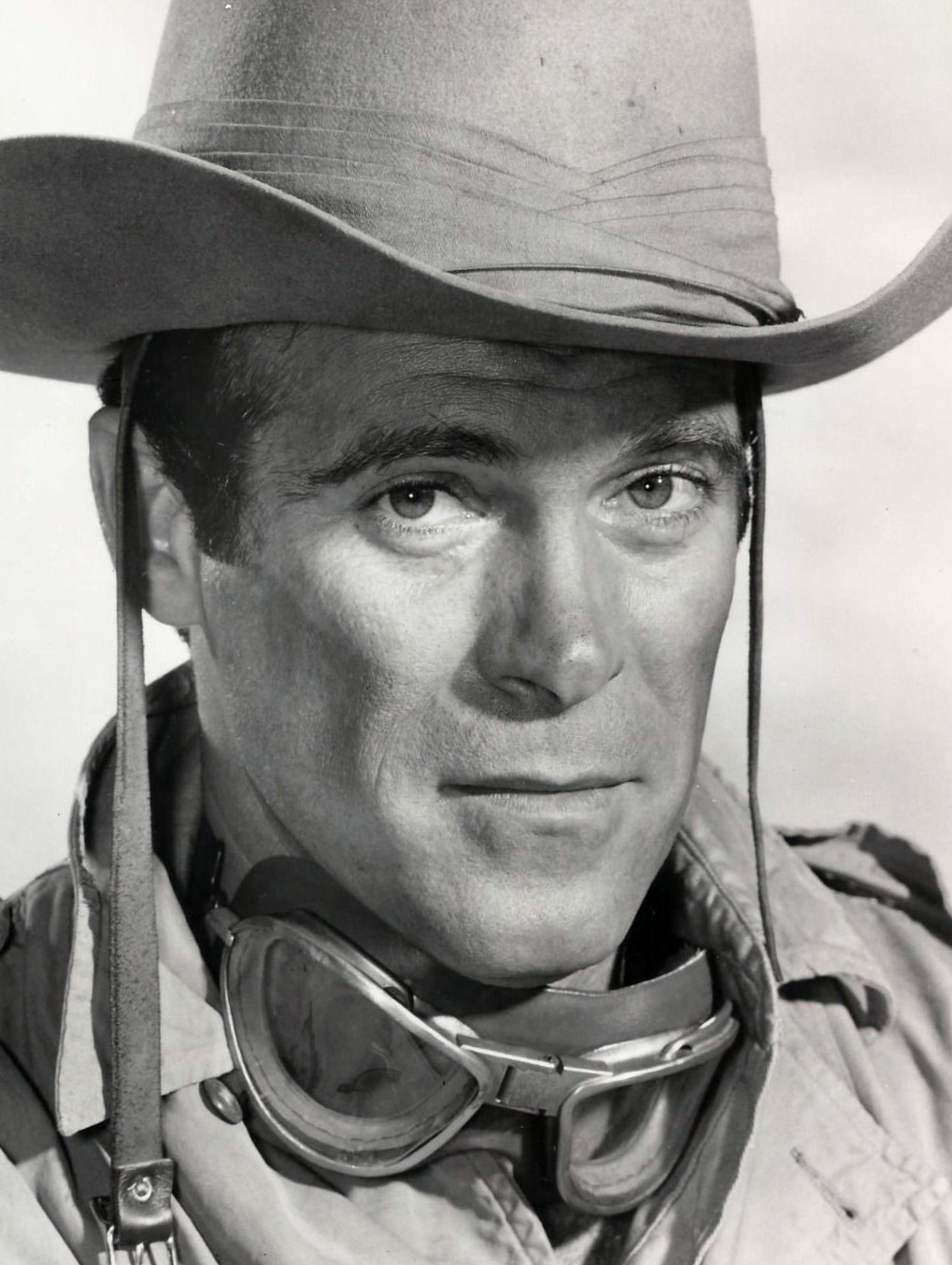
Christopher George
View on WikipediaChristopher John George (February 25, 1931 – November 28, 1983) was an American television and film actor who starred in the 1960s television series The Rat Patrol. He was nominated for a Golden Globe Award in 1967 as Best TV Star for his performance in the series. He was also the recipient of a New York Film Festival award as the Best Actor in a Television Commercial. George was married to actress Lynda Day George.
Key Information
Early life
[edit]Christopher George was born in Royal Oak, Michigan, on February 25, 1931, the son of Greek immigrants John George originally Georgiou (Greek: Ιωάννης Γεωργίου) and Vaseleke (Vassiliki) George (Greek: Βασιλική Γεωργίου).[1] His father was born in Thebes and his mother in Athens.[2]
George did not speak English until he was six years old, because his family only spoke Greek at home.[3] His father was a traveling salesman during his childhood. He accompanied his father on selling trips to cities such as Akron, New York City, Chicago, St. Louis, Memphis, and Detroit.[4]
From Michigan, the family moved to Mountain Lakes, New Jersey.[5] Once he began learning to speak English, his father enrolled him in Greek school in addition to his regular school so that he would not forget the Greek language. That was where George first became interested in acting; at Greek school they performed Greek plays and recited Greek poetry.[6]
When he was 14, he and his family moved to Miami, Florida.[1] As a child, he lived in the Coconut Grove section of Miami and attended Shenandoah Elementary School and Miami Senior High School. In school, he played soccer, football and baseball and ran track.[6] While in Florida, he used to hunt for alligators in the Everglades.[3] After obtaining his driver's license, he worked for his father, driving trucks between Miami and other cities along the Eastern seaboard.[7]
When he was young, George felt bound to become a priest in the Greek Orthodox Church, and his family prepared him for it; his brother Nick said that all through his childhood, Christopher was an altar boy and a choir boy and that his parents and the priest were trying to groom him to become a priest.[8] He served as an altar boy at St. Sophia Greek Orthodox Cathedral[9] in Miami.[10]
Military service
[edit]George enlisted in the United States Marine Corps (USMC) on October 13, 1948, at Jacksonville, Florida, at age 17. He lied about his age on his recruitment form by giving his year of birth as 1929, which then stuck with him for most of his adult life. He attributed his enlistment to being inspired by John Wayne, saying, "You know, he caused the enlistment of hundreds of kids in the Marines and I was one of them."[11] According to his military record at the National Personnel Records Center, he attended boot camp at Marine Corps Recruit Depot Parris Island, South Carolina, and graduated with a meritorious promotion to private first class on December 31, 1948.
His first duty station was Headquarters Squadron, Marine Corps Air Station Quantico, Virginia. In April 1950, he transferred to Aircraft Engineering Squadron 12 (AES-12), also located at Quantico. AES-12 maintained the aircraft for school pilots and also used them as a demonstration squadron for members of the United States Congress, demonstrating new rockets and bombs.[12] While assigned to AES-12, he rose to the rank of sergeant. He had forced landings in airplanes while he was in the Marines, and while stationed at Quantico, was very sick, lying in the hospital with "a 110-degree fever."[13]
While stationed at Quantico, George was a passenger in an aircraft flown by one of AES-12's officers[13] The weather was clear and sunny that day when both of the engines failed at approximately 8,000 feet (2,400 m) above the Carolinas. Both pilots worked to get the engines restarted, dipping to an altitude of about 1,000 feet (300 m) before they succeeded. Another time, an aircraft caught fire; he had to bail out, in the first parachute jump of his life.[14]
During the Korean War, George commanded a Marine Corps crash boat,[15] and served as gunner aboard the type of rescue aircraft used to fly wounded out of Korea.[16][17] He completed a three-year enlistment with the Marines and stayed for an additional year, before requesting an honorable discharge and returning home to Miami.[10] He left active service on August 29, 1952.
After that, as a sergeant in the Marine Corps Reserves, he joined Marine Fighter Squadron 142 (VMF-142) of the Marine Air Reserve Training Command, Marine Corps Air Station Miami, Florida. He also served in the 4th Supply Company, in Stockton, California. Finally, he reverted to inactive reserve status and was assigned to Headquarters, 6th MCR&RD (Marine Corps Reserve and Recruiting District), Atlanta, Georgia, until completing his enlisted service and receiving a discharge on September 3, 1956.
While in the Marine Corps, his superior officers encouraged him to apply for flight school and a commission; instead, he chose to receive a discharge so he could return to school.[18] He passed a high school equivalency exam.[6][19]
During the summer of 1976, he appeared in a recruiting film made for the Marine Corps Air Reserve.[20] On May 5, 2009, the Marine Corps flew a flag over the Iwo Jima Memorial in honor of his service in the Corps.[21]
Military awards
[edit]George earned the Marine Corps Good Conduct Medal and the National Defense Service Medal. These awards are documented in his official military personnel file available at the National Archives and Records Administration.
University education
[edit]After completing his enlistment, George attended the University of Miami[22] from 1953 to 1958, where he earned a Bachelor's in Business Administration degree from the school of business. He was a member of Sigma Phi Epsilon, along with his brother Nick, who also attended the University of Miami.[23]
Non-acting jobs
[edit]George held down a variety of jobs before he began acting for a living, including working as a private investigator and as a bartender in a Miami bar.[2] He owned and operated eateries and beer bars, one called the Dragnet Drive-In in Miami and another in Stockton, California.[22] The inn in Stockton where he worked for five months during a break from college had been owned by his late uncle for seven years and was off-limits to Marines.[2] He held black belts in karate and judo. He worked as a bouncer in tough restaurants and held a pilot's license.[24]
George was hired by a friend who owned a 110-foot converted Canadian gunboat and transported cargo through the Caribbean for two years.[22] Before graduating from the University of Miami, he had a job lined up with a big investment company; however he instead turned to acting after completing a vocational test battery that indicated that he should work in drama.[1]
Acting career
[edit]After graduating from college, George began acting in New York City, where he performed on the stage and in television commercials. His big break came when he was working as a bouncer at a New York waterfront bar and producer Robert Rafelson convinced him to begin an acting career.[25] He studied acting under Wynn Handman and landed roles in Off-Broadway productions of popular plays of the day.[1] Small theater productions in which he appeared while he was studying drama included All My Sons, The Moon Is Blue, Cat on a Hot Tin Roof, Stalag 17 and Who's Afraid of Virginia Woolf?[26] Under drama coach Wynn Handman, he landed a sixteen-week engagement in the play Mr. Roberts with actor Hugh O'Brian; parts in Shakespeare and Tennessee Williams works followed.[23][27]
His career took off after he made a 60-second TV commercial for shaving cream, where he played the young man in the "Good morning, Mr. Gray" shaving spot, and won the New York Film Festival Award for best actor in a commercial.[17][28] During this 1962 shaving-cream commercial, George played a groom lathering up before his first honeymoon night, with a line where he said, "It's all for you." The commercial earned him over $30,000.[19] He also appeared in roles on the television series Naked City and Bewitched.[26] While in New York City, George played in the Lemos Greek Repertory Theater because he could speak Greek fluently.[23]
He first appeared on the screen when he landed a role in the film In Harm's Way (1965), playing a dying sailor for 30 seconds.[29] This gave him his first opportunity to meet and work with John Wayne, who had been his boyhood idol and who would become a lifelong friend.[30] He first rose to prominence playing a supporting role in the Howard Hawks-directed Western film El Dorado (1966, released in 1967), also for Paramount Pictures starring both John Wayne and Robert Mitchum in the lead roles. George and Wayne became friends while shooting the film and would co-star in additional Westerns, including Chisum (1970) and The Train Robbers (1973). George had the lead in William Castle's spy-fi Project X released in 1968.
The Rat Patrol
[edit]From 1966 to 1968 over the course of two seasons and 58 episodes, George played the lead role of Sergeant Sam Troy on The Rat Patrol. The television series followed the exploits of four Allied soldiers who were part of a long range desert patrol group in the North African campaign during World War II.[31] Along with fellow Rat Patrol members, he appeared in the April 1967 Cherry Blossom Festival and Parade in Washington, D.C.[32] While starring in The Rat Patrol, Chris also served as an awards presenter at the 1966 Washington, D.C. local version of the Emmy Awards, hosted at the Washington, D.C. Sheraton Park Hotel.[33]
While filming a scene on January 4, 1967, George, as well as fellow cast members Justin Tarr and Gary Raymond, were injured when the Jeep Tarr was driving overturned on a dry lakebed at Rosamond, California as they made a tight turn.[34] George sustained a concussion, tearing something in his neck and injuring his back.[35] Doctors at Cedars-Sinai Medical Center in California were able to determine that his back had been badly sprained, not fractured, as they had initially feared.[36]
USO Tour in 1967
[edit]
George also joined actor Lawrence P. Casey on a USO tour of Vietnam, Japan and Thailand, which lasted for almost a month, starting on November 12, 1967 and going into December 1967.[37][38][39]
During the tour of Vietnam, he visited III Corps Headquarters at Bien Hoa Army Base and used the III Corps signal switchboard to place a telephone call to his girlfriend and future wife, Lynda Day.[40] While in Vietnam, he did not confine himself to the rear echelon, but instead pressed his escorts to allow him to go as far out into the field as they would permit; at one time, they were even pinned down by the Viet Cong.[25]
In November 1967, the USO and the Air Force sent him and several other Hollywood celebrities to visit a military hospital in San Antonio, where military personnel returning from Vietnam with serious burns were being treated.[41] The visit, to Brooke Army Medical Center in San Antonio, was arranged by Johnny Grant, a Hollywood radio personality who had taken troupes of performers to Vietnam; during the visit George and some of the actresses, including Lynda Day, spent over an hour with a wounded veteran who had been previously uncommunicative and got him to talk.[42]
Post-Rat Patrol
[edit]Following the cancellation of The Rat Patrol, George played the lead role in several genre films of the 1960s, including Tiger by the Tail (1968, released in 1970) co-starring Tippi Hedren. The Devil's 8 (1969) co-starring Fabian and Mickey Spillane's The Delta Factor (1970), directed by Tay Garnett who co-wrote the film with Raoul Walsh. He narrated a documentary about the careers of Craig Breedlove and Lee Breedlove, a husband-and-wife auto racing team, The Racers: Craig and Lee Breedlove (1968).[43]
In 1969-70, George made three television pilots; Lynda Day George said he was the only actor who sold all of his pilots,[44] one became a 1971 TV movie Escape. Producer Bruce Lansbury later produced The Magician.[45]
In September 1969, he portrayed Ben Richards in the television pilot movie for The Immortal which ran on the ABC Movie of the Week. The pilot is based on the science fiction novel The Immortals, by James Gunn. The film was picked up as a television series and ran for 15 episodes from 1970 to 1971. Although the series was cancelled mid-season, episodes were rerun by ABC in the summer of 1971. It was later shown in reruns on the Syfy channel.[46]
During this time, he played Dan August in the television film House on Greenapple Road (1970), which evolved into the television series Dan August starring Burt Reynolds. In addition, he starred in an unsold series pilot, Escape with Avery Schreiber and Huntz Hall, which ABC released in 1971 as a television movie. In it, he portrayed Robin Hood–like escapologist and nightclub owner Cameron Steele.[47]
He continued his television work throughout the 1970s with guest roles on many popular series, including Owen Marshall: Counselor at Law, Police Story, S.W.A.T., Charlie's Angels, and Fantasy Island. In 1973, he starred opposite Jim Brown in I Escaped from Devil's Island. He also surprised fans by posing nude for Playgirl magazine in the June 1974 issue.[48] In 1976, he played a supporting role as Lieutenant Commander Wade McClusky in the all-star World War II epic Midway. That same year, he played the lead role of Ranger Michael Kelly in the Film Ventures International independent film Grizzly. A thinly veiled Jaws clone, the killer animal horror/thriller film became one of the most popular films of George's career, earning more than $39 million at the box office.[49]
He followed that success with a busy string of horror, action, splatter and slasher B movies over the next seven years, including Dixie Dynamite (1976) co-starring Warren Oates; Day of the Animals (1977); City of the Living Dead (1980); Graduation Day (1981); Enter the Ninja (1981); Pieces (1982) and Mortuary (1983).[50][51]
Recruiting film for the United States Marine Corps Reserve
[edit]In the summer of 1976, prior to returning to MCAS Quantico for a visit, George traveled to Andrews Air Force Base in Maryland to appear in a recruiting video for the U.S. Marine Corps Air Reserves.[20] This video featured Marines assigned to Marine Fighter Attack Squadron 321 just returned from their annual training tour as reservists. The commander of the unit at the time was LtCol Charles McLeran.[52] It was filmed by the J. Walter Thompson advertising company and provided to recruiters in 1978. Archive records show that George was under contract with J. Walter Thompson for this work.[53]
Work with his wife
[edit]George co-starred with his wife Lynda (who became Lynda Day George following their marriage) in multiple television films, including Mayday at 40,000 Feet! (1976) and Cruise Into Terror (1978). They also worked together in episodes of The F.B.I. (1970), Mission: Impossible (1971), McCloud (1975), Wonder Woman (1976), Love Boat (1977), Vega$ (1978), and Christopher George's regular series The Immortal (1970). In addition, the Georges co-starred in the feature film, Day Of The Animals (1977). The many co-star roles came about because they had the same agent, who was aware that they enjoyed working with one another.[54]
One of his last film roles was a supporting role in the horror film Mortuary. Though George died on November 28, 1983, just two months after Mortuary was released in September 1983,[54] it was actually filmed in 1981, more than two years prior to his death.[55]
Personal life
[edit]George first met actress Lynda Day in New York where they were doing a fashion layout; she was modeling the bride's outfit and he was the groom.[56] They met again later and became friends when they starred together in the independent film The Gentle Rain (1966).[54] They appeared in supporting roles together four years later in Chisum starring John Wayne, where they fell in love.[57] On May 15, 1970, they were married in an Episcopal ceremony in a judge's chamber in Palm Beach, Florida.[25][58] They had two children together — a daughter, Casey and a son, Nicholas.[59][60] Nicholas was the child of Lynda and her first husband, Joseph Pantano, but the Georges successfully petitioned courts to have Nicholas recognized as Christopher's natural son.[54]
George's niece is Wheel of Fortune hostess Vanna White.[61] According to White, although George was not a biological relation of hers, her mother grew up with his family and, years later in Los Angeles, he and his wife took her under their wing.[62]
Death
[edit]George died of a heart attack at age 52 in the late evening of November 28, 1983, at Westside Hospital in Los Angeles.[63][64][59] After dinner at home with his wife, he felt sudden chest pains and was taken by ambulance to the hospital. He later went into cardiac arrest and was pronounced dead at 10:35 p.m., over three hours after he was admitted, while under the care and observation of his cardiologist, Dr. Pearl McBroom.[65][30]
Although several sources in the last two decades cite his Rat Patrol injuries as a contributing factor to his death, George was a frequent smoker of cigars, a heavy drinker, had known heart disease and had undergone coronary bypass surgery about five years prior to his death.[66]
A Greek Orthodox mnemósynon (Greek: μνημόσυνον) service was conducted at Westwood Memorial Park and a private funeral was held at Saint Nicholas Greek Orthodox Church in Northridge on December 1.[67]
On May 5, 2009, the Marine Corps flew a flag over the Iwo Jima Memorial in honor of his service in the Corps.[21]
Filmography
[edit]Film
[edit]| Year | Title | Role | Notes |
|---|---|---|---|
| 1965 | In Harm's Way | Sailor | Uncredited |
| 1966 | The Gentle Rain | Bill Patterson | |
| 1967 | El Dorado | Nelsen McLeod | Filmed in 1966 |
| 1968 | Project X | Hagan Arnold | |
| 1968 | Massacre Harbor | Sergeant Sam Troy | Feature film consisting of three Rat Patrol episodes |
| 1968 | Gavilan | Gavilan | Also known as Ballad of Gavilan |
| 1968 | Bandolero! | Mrs. Stoner's wagon driver | Uncredited |
| 1969 | The Thousand Plane Raid | Col. Greg Brandon | |
| 1969 | The Devil's 8 | Ray Faulkner | |
| 1970 | Tiger by the Tail | Steve Michaelis | Filmed in 1968 |
| 1970 | The Delta Factor | Morgan | |
| 1970 | Chisum | Dan Nodeen | |
| 1973 | The Train Robbers | Calhoun James | |
| 1973 | Bad Charleston Charlie | Lawyer | Uncredited |
| 1973 | I Escaped from Devil's Island | Davert | |
| 1973 | Pushing Up Daisies | Gas Station Attendant | Uncredited |
| 1974 | The Inbreaker | Roy MacRae | |
| 1976 | Grizzly | Ranger Michael Kelly | |
| 1976 | Dixie Dynamite | Sheriff Phil Marsh | |
| 1976 | Midway | Lieutenant Commander C. Wade McClusky | |
| 1977 | Day of the Animals | Steve Buckner | |
| 1977 | Whiskey Mountain | Bill | |
| 1978 | Questo si che è amore | Mike | |
| 1980 | The Exterminator | Detective James Dalton | |
| 1980 | City of the Living Dead | Peter Bell | Alternative title: The Gates of Hell Italian title: Paura nella città dei morti viventi |
| 1981 | Graduation Day | Coach George Michaels | |
| 1981 | Enter the Ninja | Charles Venarius | |
| 1982 | Angkor: Cambodia Express | MacArthur | |
| 1982 | Pieces | Lt. Bracken | Spanish title: Mil gritos tiene la noche |
| 1983 | Mortuary | Hank Andrews | Filmed in 1981 |
Television
[edit]| Year | Title | Role | Notes |
|---|---|---|---|
| 1965 | Bewitched | George | Episode: "George the Warlock" |
| 1966 | Thirteen Against Fate | Domb | Episode: "The Lodger" |
| 1966-68 | The Rat Patrol | Sgt. Sam Troy | 58 episodes |
| 1970-71 | The Immortal | Ben Richards | 16 episodes |
| 1970 | House on Greenapple Road | Lt. Dan August | TV film |
| 1970 | The F.B.I. | Peter Joseph Tenny | Episode: "Return to Power" |
| 1971 | Escape | Cameron Steele | TV film |
| 1971 | Mission: Impossible | Wendell Hoyes | Episode: "Nerves" |
| 1971 | Dead Men Tell No Tales | Larry Towers / Vic Jacobi | TV film |
| 1971-73 | Love, American Style | Peter / Chuck | 2 episodes |
| 1972 | Man on a String | Lieutenant Pete King | TV film |
| 1972 | The Heist | Joe Craddock | TV film |
| 1974 | The Wide World of Mystery | Episode: "A Beautiful Killing" | |
| 1974 | Owen Marshall, Counselor at Law | Cromwell | Episode: "The Break In" |
| 1974 | Thriller | Bernard Peel | Episode: "The Next Scream You Hear" (US title: "Not Guilty!") |
| 1974-75 | Police Story | Lt. Dutch Bennett / Doug Rollins | 2 episodes |
| 1975 | McCloud | Vincent Burns | Episode: "Sharks!" |
| 1975 | The Last Survivors | Duane Jeffreys | TV film |
| 1975 | S.W.A.T. | Harry / Bravo | 3 episodes |
| 1976 | Wonder Woman | Rojak | Episode: "Fausta, the Nazi Wonder Woman" |
| 1976 | Mayday at 40,000 Feet! | Stan Burkhart | TV film |
| 1978 | Cruise Into Terror | Neal Barry | TV film |
| 1978 | Vega$ | Nicky Trent | Episode: "Serve, Volley and Kill" |
| 1978-79 | The Love Boat | Ross Randall / Bud Pomeroy / Bill Wainwright | 4 episodes |
| 1978-82 | Fantasy Island | William Lowell / Dr. Greg Miller / Joe Beck / Jack Kincaid | 4 episodes |
| 1979 | Charlie's Angels | Chadway | Episode: "Terror on Skis" |
| 1979 | The Misadventures of Sheriff Lobo | Dandy Jim Brody | Episode: "The Day That Shark Ate Lobo" |
References
[edit]- ^ a b c d Misurell, Ed (November 12, 1966). "TV Cameos: Chris George, Career Rolls Into High Gear On Video". Cumberland Evening Times. p. 9. Retrieved April 18, 2023.
- ^ a b c Smith, Milburn (November 1967). "Chris George: I Married My Best Friend". Photoplay. Vol. 72, no. 5. pp. 38, 82. Retrieved April 18, 2023.
- ^ a b "Former Miamian Chris George has been at the Four Ambassadors Hotel in Miami to Plug his latest Film". BoxOffice. March 12, 1973. p. SE7.
- ^ Scheuer, Steven H. (March 26, 1967). "TV Mailbag". Winona Daily News. p. 7.
- ^ Fern, Evelyn (August 1967). "Article". TV-Radio Mirror. p. 54.
- ^ a b c Gregory, James (March 1967). "Christopher George of Rat Patrol: Why His Wife Thinks He's Perfectly Cast!". Screenland. p. 61.
- ^ "TV Mailbag". Bridgeport Sunday Post. p. C-18. March 26, 1967.
- ^ 'Efron, Edith (May 20, 1967). "Go to the Heart of Danger". TV Guide. pp. 10–12.
- ^ Archived 2020-08-12 at the Wayback Machine
- ^ a b Denis, Paul (March 1967). "Father, I want to become a priest". T.V. Picture Life. pp. 30, 58.
- ^ Wilson, Earl (November 17, 1971). "Actor Tells What John Wayne is 'Really Like". Galveston Daily News p. 5B.
- ^ "Korean War Educator: veteran's memoirs, James Albert Vittitoe". Retrieved January 15, 2009.
- ^ a b Kleiner, Dick (January 26, 1967). "Chris George in One Scrape After Another". The Edwardsville Intelligencer. Newspaper Enterprise Association. p. 11.
- ^ Albert, Dora (May 1967). "Chris George: I live on the brink of disaster". Screen Stories. p. 62.
- ^ "Welcome". U.S. Crash Boats. Retrieved January 14, 2017.
- ^ "Former Private Eye". The Port Arthur News. p. 9. February 1, 1973.
- ^ a b "Actor Christopher George dies at 52". The Washington Post. United Press International. December 1, 1983. p. B12. Retrieved April 18, 2023.
- ^ Winelander, Rodger (November 1966). "The Girl Who Haunts His Bachelor Home". TV Radio Show. p. 67.
- ^ a b Hano, Arnold (November 14, 1970). "A Most Unhappy Warrior". TV Guide. p. 28.
- ^ a b Gee, GySgt Don H. (July 9, 1976). "Marine-Turned-Actor Tours Quantico". The Sentry.
- ^ a b "Flag Honoring Christopher George flown by Marine Corps over Marine Corps Iwo Jima Memorial on May 5, 2009". flckr.com. 12 May 2009. Retrieved May 13, 2009.
- ^ a b c Dern, Marian. "Christopher George- Rat Patroller Par Excellence". Pasadena Star-News TV Week. Archived from the original on July 20, 2011. Retrieved October 20, 2008.
- ^ a b c Martin, Helen (February 1967). "I Saved My Brother's Life". Photoplay. p. 94.
- ^ "Former 'Rat' Is Signed For Film". The Fresno Bee. p. 15-TV. September 14, 1969.
- ^ a b c Reynolds, Lisa (November 1970). "Why We Waited So Long". Photoplay. p. 98.
- ^ a b "Rat Patrol". TV Star Parade. p. 51. November 1967.
- ^ Dunn, Bill (October 23, 1970). "TV Cameos: Christopher George, Series Deals With Problems of Immortality". Titusville Herald. p. 8.
- ^ "Where War is a Job: All Lathered Up for Rat Patrol". The Abilene Reporter-News. p. 7-D, August 10, 1966.
- ^ Byers, Bill (August 20, 1966). "ABC's Rat Patrol a Big Break for Chris George". The North Adams Transcript. p. 13.
- ^ a b Cozad, W. Lee (2006). More Magnificent Mountain Movies (The Silver Screen Years) 1940-2004 (First ed.). Rim of the World Historical Society. p. 254. ISBN 978-0-9723-3723-6.
- ^ "'The Rat Patrol' Episode List". TV.com. Retrieved July 6, 2007.
- ^ Laurent, Lawrence (April 8, 1967). "Radio and Television: Rat Patrol is in Town". The Washington Post and Times-Herald. p. C4.
- ^ Laurent, Lawrence (October 22, 1966). "Local 'Emmy' Fete Tonight". The Washington Post and Times-Herald. p. D21.
- ^ "Rollover of Jeep injures TV Stars". The Salt Lake Tribune. Associated Press. p. 6B.
- ^ Thomas, Bob (January 13, 1967). "Accident Almost Ends Rat Patrol". The Newport Daily News. Associated Press. p. 13.
- ^ Allen, Jeanne (May 1967). "Christopher George: The Girl Who Nursed Him Back To Health". TV Picture Life. p. 48.
- ^ Manners, Dorothy (December 25, 1967). "George Peppard Lived Like a Sultan in Rome". The Washington Post and Times-Herald. p. D11.
- ^ Scott, Vernon (February 22, 1968). "Swaggering 'Rat Patrol' Chief Rugged Individual in Real Life". Sheboygan Journal. United Press International. p. 21.
- ^ "An 'Interview' with Larry Casey of the Rat Patrol". Suncompass. Archived from the original on June 12, 2008. Retrieved 2008-12-15.
- ^ "Co A44/36th Signal Bn, 1st Signal Bde". The American War Library. Retrieved 2023-04-18.
- ^ "Hollywood Closeup: From Star to Saleslady" Waterloo Daily Courier. p. 8. November 24, 1967.
- ^ "Chris George, George Morris and the Man Who Came Back from the Dead". Photoplay. p. 59. April 1968.
- ^ "TV critic's choice". The Washington Post and Times-Herald. p. D10. June 22, 1968.
- ^ p.106 Etter, Jonathan Quinn Martin, Producer: A Behind-The-Scenes History of QM Productions and Its Founder McFarland 10 September 2008
- ^ p. 178 Tate, Marsha Ann & Houser, Earl What America Watched: Television Favorites from the Cornfields to the Cosmos, 1960s-1990s McFarland 11 January 2022
- ^ Kolbert, Elizabeth (December 24, 1993). "Any series can find immortality on cable". The Baltimore Sun. Retrieved March 16, 2018.
- ^ "Escape". Indiana Gazette. April 6, 1971. p. 26.
- ^ Playgirl History. Retrieved July 6, 2007 – via Bookrags.
- ^ "Grizzly (1976)". William Girdler. Retrieved April 18, 2023.
- ^ "The Unknown Movies, FVI: What You Didn't Know". Bad Movie Planet. Archived from the original on April 18, 2002. Retrieved July 6, 2007.
- ^ "City of the Living Dead". Eccentric Cinema. Archived from the original on July 28, 2012. Retrieved July 6, 2007.
- ^ "A History of Marine Fighter Attack Squadron 321" (PDF). US Marine Corps. Archived from the original (PDF) on 2009-09-11. Retrieved 2010-09-02.
- ^ "Inventory of the J. Walter Thompson Company. Legal Department Records, 1936-1979". Rubenstein Rare Book and Manuscript Library, Duke University.
- ^ a b c d Greenberger, Robert (March 2023). "Lynda Day George: Her Missions Were Possible". RetroFan. No. 25. United States: TwoMorrows Publishing. pp. 3–9.
- ^ Variety's Film Reviews: 1983-1984. Bowker. December 31, 1985. ISBN 978-0-8352-2798-8.
- ^ Pappas, Leona (November 15, 1970). "On the Air". San Antonio Express-News Sunday One. p. 15.
- ^ "Christopher George and his family". Archived from the original on November 7, 2012. Retrieved November 8, 2008.
- ^ Jackson, Ken (December 1970). "Chris George-Linda Day: Confessions of a Man Who's Had His Day!" Movie Mirror. p. 66.
- ^ a b "'Rat Patrol' star dies at age 52". The Bulletin. Bend, Oregon. United Press International. November 30, 1983. p. A7.
- ^ "Christopher George, 54, Dies; Appeared in TV's 'Rat Patrol'". The New York Times. December 1, 1983.
- ^ "Larry King Live: Pat Sajak and Vanna White Spell out the Secret to their Success". CNN. Archived from the original on September 28, 2020. Retrieved January 13, 2009.
- ^ "Vanna White:Biography". IMDb. Retrieved December 22, 2019.
- ^ "It was totally unexpected- Actor Christopher George dies at 54". Galveston Daily News. Associated Press. p. 4A. November 30, 1983.
- ^ "Christopher George dies in L.A. hospital". The Spokesman-Review. Spokane, Washington. November 30, 1983. p. 3.
- ^ "Actor succumbs to heart attack". Reading Eagle. Associated Press. November 30, 1983. p. 50.
- ^ "TV actor Christopher George dies of heart attack at age 54". Austin American-Statesman. Associated Press. November 30, 1983. p. A12.
- ^ "Rosary will be said tonight for actor Christopher George". United Press International. December 1, 1983.
External links
[edit]- Christopher George at IMDb
- Christopher George biography
- The Rat Patrol Classified Dossier
- Review of Grizzly by Scott Weinberg Archived 2006-05-26 at the Wayback Machine
- Review of City of the Living Dead by Troy Howarth
- Review of The Day of the Animals by William Simmons Archived 2007-08-07 at the Wayback Machine
- Independent Star News TV Week article: Christopher George- Rat Patroller Par Excellence by Marian Dern
- Christopher George in Vietnam during USO tour on website for Co A44/36th Signal Bn, 1st Signal Bde Bien Hoa Army Base, Vietnam - 1967/70
- Christopher George photo from Grizzly review article
- A Tribute to Christopher George
- Video of Christopher George in Bewitched as "George the Warlock", aired 22 April 1965
- Video of Christopher George in The Love Boat as Bill Wainwright, 13 May 1978 (Season 1, Episode 24) [permanent dead link]
- Video of Christopher George in Charlie's Angels episode "Terror on Skis" season 3, episode 16 Archived 2016-03-04 at the Wayback Machine
- After the location shooting for the film "Enter the Ninja" Christopher George shops with colleagues and Amapola in Manila, the Philippines
- Aircraft Engineering Squadron-12 (AES-12) website[permanent dead link]
Christopher George
View on GrokipediaEarly life and education
Family background and childhood
Christopher George was born on February 25, 1931, in Royal Oak, Michigan, to Greek immigrant parents John George (1889–1972) and Vaseleke George (née Nicholas, 1908–2003).[6][7] His father had been born in Thebes, Greece, and his mother in Athens, reflecting the family's strong ties to their ethnic heritage.[8] Growing up in a household where Greek was the primary language spoken, George did not learn English until he started school at the age of six, fostering his bilingual proficiency from an early age.[7][3] The George family experienced several relocations during his childhood, moving from Michigan to various locations including Mountain Lakes, New Jersey, before settling in Miami, Florida, when he was 14 years old.[9] These moves, driven by his father's pursuits in the restaurant industry, exposed young George to diverse environments and contributed to his adaptability.[10] In Miami, the family established roots in the Coconut Grove area, where George attended local schools and immersed himself further in American life while maintaining Greek traditions at home.[8] George's early exposure to Greek culture profoundly shaped his formative years, as he was raised on stories of legendary Greek heroes that ignited his imagination.[7] He participated in school plays and acted in Greek tragedies during his youth, experiences that sparked an initial interest in performance and the stage.[1] These cultural influences, combined with the bilingual household and frequent relocations, built a foundation of resilience and versatility that influenced his later path.[3]University education
Following his discharge from the United States Marine Corps in 1952, Christopher George enrolled at the University of Miami in 1953 to pursue higher education as part of his transition to civilian life.[3] He attended the institution for five years, focusing his studies on business administration.[8] George completed his bachelor's degree in business administration in 1958, marking a deliberate step toward building a stable professional foundation after his military service.[8] This academic pursuit reflected his structured approach to post-service reintegration, providing him with formal training in financial and managerial principles that would inform his early career choices.[1]Military service
Enlistment and active duty
Christopher George enlisted in the United States Marine Corps in 1948 at the age of 17, having left high school early and falsified his age on the recruitment form.[1] He completed basic training at the Marine Corps Recruit Depot Parris Island, South Carolina, where he earned a meritorious promotion to private first class by the end of 1948.[11] George's initial assignments were with the Headquarters Squadron at Marine Corps Air Station Quantico, Virginia, followed by service in Aircraft Engineering Squadron 12 (AES-12), also at Quantico.[12] He advanced to the rank of corporal during his active duty and later achieved the rank of sergeant.[11] From 1952 to 1954, he served with Marine Fighter Attack Squadron 142 (VMFA-142).[12] During the Korean War, George participated in combat operations as a member of the 1st Marine Division, performing duties that included skippering a Marine Corps crash boat and serving as a gunner on rescue aircraft used to evacuate wounded personnel from battle zones.[11] He also worked as a combat photographer, documenting the Demilitarized Zone (DMZ) during a year-long assignment toward the end of his Korean War service.[11] His service involved hazardous missions behind enemy lines, encompassing surveillance, demolition tasks, and photography under fire.[11] George sustained injuries during combat, including wounds from enemy action that required recovery periods, as well as incidents involving forced aircraft landings and a parachute jump.[11] He remained on active duty until August 1952, after which he transitioned to reserve obligations.[11] George received an honorable discharge from the reserves in 1956, concluding eight years of total service.[12] This military experience later enabled him to utilize the GI Bill for university education.[1]Awards and later honors
During his service in the U.S. Marine Corps, Christopher George was awarded the Marine Corps Good Conduct Medal for exemplary behavior, the National Defense Service Medal for his contributions during a period of national emergency, and the Purple Heart for wounds sustained in combat. These decorations recognized his dedication and reliability over his active duty period from 1948 to 1952. He attained the rank of sergeant prior to his honorable discharge, reflecting his leadership in aviation engineering and rescue operations during the Korean War.[11][12] George's military contributions extended to roles such as gunner on rescue aircraft evacuating wounded personnel and commander of a crash boat, as well as work in combat photography. His service in these high-risk capacities underscored his commitment to Marine Corps operations in Korea. Posthumously, the U.S. Marine Corps honored George's legacy with full military funeral rites following his death in 1983, including an honor guard at the Greek Orthodox Church in Westwood Village, Los Angeles. On May 5, 2009, the Corps flew a special ceremonial flag at full mast over the Iwo Jima Memorial in Arlington, Virginia, in tribute to his service; the flag was then presented to his family as a lasting symbol of recognition. Additionally, George participated in a Marine Corps Reserve recruiting film in 1976, leveraging his veteran status to promote enlistment and highlight the Corps' values.Career beginnings
Non-acting employment
After graduating from college in 1958, Christopher George supported himself through a series of varied civilian jobs in Miami.[1] He worked as a bartender in a local bar.[8] George also took employment with a private detective agency.[1] Additionally, he served as a bouncer in demanding restaurant environments.[8] He later took a position aboard a Caribbean cargo boat as a marine transporter.[1] These roles, including work in Florida tent shows, underscored his job-hopping amid economic pressures.[1]Initial forays into acting
After college, Christopher George relocated to New York City in the early 1960s to pursue a career in acting, following vocational testing that indicated potential in the field.[8] There, he performed in off-Broadway productions, including a 16-week run in the play Mr. Roberts.[8] George supplemented his early acting efforts with numerous television commercials, which provided both income and exposure. His breakthrough in this medium came in 1962 with a 60-second shaving cream advertisement where he portrayed a groom preparing for his honeymoon night, delivering the line "It's all for you!" to his bride.[8] This spot earned him the New York Film Festival Award for Best Actor in a Television Commercial.[1] In the mid-1960s, George continued building his portfolio through auditions and small guest appearances on television series, including roles in The Defenders, Bewitched, and daytime soap operas.[1] These minor parts, combined with his commercial work, helped him network within the industry, though his rugged looks and military background often led to typecasting considerations in early casting discussions. During this transitional period, he faced financial challenges and supported himself through non-acting jobs such as bartending and bouncing at nightclubs.[8]Acting career
Rise to fame with The Rat Patrol
Christopher George secured his breakthrough role as Sergeant Sam Troy in the ABC action-adventure series The Rat Patrol, which premiered on September 16, 1966, and ran for two seasons until 1968, comprising 58 episodes.[13] The casting capitalized on George's military background and rugged charisma, positioning him as the lead in a high-stakes WWII narrative after years of smaller television appearances.[14] The series centered on the exploits of a four-man Allied commando unit from the Long Range Desert Group, operating behind enemy lines in the North African campaign of 1942–1943 to disrupt Nazi forces.[15] George's portrayal of Troy emphasized a no-nonsense, resourceful leader who commanded jeeps armed with machine guns, driving daring raids against German armor and infantry in the vast desert terrain.[13] This character archetype, blending heroism with tactical cunning, resonated with audiences seeking escapist wartime thrills amid the era's Vietnam War backdrop. George's performance earned him a nomination for the Golden Globe Award for Best TV Star – Male at the 1967 ceremony, highlighting his emergence as a compelling television presence.[16] That same year, he joined co-star Lawrence Casey on a USO tour to Vietnam, Japan, and Thailand, performing for American troops from November 12 onward and drawing parallels between the show's desert warfare and contemporary military service.[17] The Rat Patrol garnered strong initial ratings success, ranking among ABC's top performers in the 1966–1967 season and nearly matching established hits like The Lucy Show in key weeks, thanks to its colorful visuals and relentless pacing that distinguished it from black-and-white WWII dramas.[18] However, viewership declined in the second season amid network shifts and formulaic repetition, leading to its cancellation.[19] Critically, the show was lauded for its energetic action sequences and youthful appeal but faced backlash for oversimplifying history, particularly its American-centric depiction of multinational Allied efforts in North Africa.[20] This role solidified George's status as an action star, propelling him into leading parts in films and further television projects by showcasing his ability to embody authoritative, battle-hardened protagonists.[14]Film work
Christopher George's entry into feature films began modestly with a brief uncredited role as a sailor in Otto Preminger's epic war drama In Harm's Way (1965), starring John Wayne and Kirk Douglas, marking his screen debut in a major Hollywood production.[21] This appearance was followed by a more prominent supporting role as the ruthless outlaw leader Nelse McLeod in Howard Hawks's Western El Dorado (1966, released 1967), where he shared the screen with John Wayne and Robert Mitchum; the film highlighted George's commanding presence as a villain and contributed to his growing reputation in action-oriented cinema.[22] The popularity of his television role in The Rat Patrol facilitated George's shift to leading and key supporting parts in films during the late 1960s and 1970s, often in genres emphasizing high-stakes adventure and heroism. He portrayed Detective James Dalton, a hardened cop entangled in urban crime and revenge, in the vigilante action thriller The Exterminator (1980), which exemplified his draw in gritty, low-to-mid-budget action fare.[23] In the horror genre, George starred as park ranger Michael Kelly in Grizzly (1976), a suspenseful tale of a massive bear rampaging through a national park, inspired by Jaws; despite mixed critical reception for its derivative plot—described by reviewers as a "blatant rip-off" yet entertaining—the film achieved significant commercial success, grossing approximately $39 million worldwide on a budget under $1 million and becoming the top independent release of the year.[24]) George's filmography in the 1970s increasingly featured ensemble war and disaster pictures, signaling a move toward B-movie territory amid fluctuating studio opportunities. He played Lieutenant Commander C. Wade McClusky, a pivotal dive bomber pilot, in the star-studded WWII spectacle Midway (1976), directed by Jack Smight, which dramatized the pivotal Battle of Midway; the film received praise for its authentic battle recreations and all-star cast, earning $18.6 million domestically despite a $10 million budget, though some critics noted its formulaic scripting.[25][26] Other representative B-movie efforts included his starring turn as an escaped convict in the adventure drama I Escaped from Devil's Island (1973) and as wildlife expert Steve Buckner in the eco-horror Day of the Animals (1977), where solar radiation drives animals to attack humans; these projects underscored his reliability in drive-in-style action and horror but often prioritized spectacle over depth. Throughout his film career, George's post-Rat Patrol success led to typecasting in rugged, macho protagonists or antagonists, limiting him to action-heavy roles that capitalized on his military background and physicality but rarely allowed for dramatic range, as noted in contemporary profiles of his trajectory from television stardom to genre filmmaking.[14] Box office results varied, with hits like Grizzly establishing his viability in exploitation cinema while larger productions like Midway provided visibility but highlighted the competitive challenges for supporting players in ensemble casts.[27]Television roles beyond The Rat Patrol
Following the success of The Rat Patrol, Christopher George took on the lead role in the science fiction series The Immortal, which aired on ABC from 1970 to 1971. In the show, he portrayed Ben Richards, a race car test driver who discovers that his rare blood type grants him immunity to all known diseases, effectively making him immortal, and forces him to evade those seeking to exploit his condition.[28] The series, consisting of 15 episodes, highlighted George's ability to blend action with dramatic tension in a man-on-the-run format reminiscent of The Fugitive.[29] Throughout the 1970s, George demonstrated his versatility through numerous guest appearances on prominent television series, often playing tough, charismatic characters in crime and action genres. Notable roles included the unstable ex-convict John Upton on Mission: Impossible in the 1971 episode "Nerves," where his performance added intensity to the espionage thriller. He also guest-starred as the shady Nicky Trent on Vega$ in the 1978 episode "Serve, Volley and Kill," involving a tennis pro under threat in Las Vegas.[30] Other appearances encompassed episodes of McCloud (such as "Sharks!" in 1970), Police Story, S.W.A.T., and Owen Marshall: Counselor at Law, showcasing his range in police procedurals and Western-tinged dramas.[31] By the late 1970s, George's opportunities for major television leads had waned, as he increasingly prioritized film projects.[1] He received no Emmy nominations or other significant TV awards for his post-1968 work, though his earlier Golden Globe nod for The Rat Patrol had established his television credentials.[2]Collaborations and special projects
Christopher George frequently collaborated with his wife, actress Lynda Day George, in various television projects throughout the 1970s, which highlighted their on-screen chemistry and contributed to their joint visibility in the industry. One early example was the 1970 TV movie The House on Greenapple Road, where George portrayed Lieutenant Dan August, a detective investigating a suburban murder, while Lynda Day George played supporting role Lillian Crane.[32] Their partnership extended to episodic television, including a guest appearance together in the episode "Return to Power" of The F.B.I. in 1970, where they portrayed characters entangled in a criminal scheme.[33] These collaborations continued in later productions, such as the 1976 disaster TV movie Mayday at 40,000 Feet!, in which George starred as FBI agent Stan Burkhart aboard a hijacked plane, with Lynda Day George as passenger Cathy Armello amid the escalating crisis.[34] They also shared scenes in the 1971 Mission: Impossible episode "Nerves," where George's guest role intersected with his wife's ongoing series regular character, Lisa Casey.[35] Additional joint efforts included the 1977 survival thriller Day of the Animals, featuring both in an ensemble cast facing ecological catastrophe, and the 1978 TV movie Cruise Into Terror, a horror-tinged ocean liner story. Beyond family partnerships, George engaged in notable ensemble collaborations with Hollywood icon John Wayne, which bolstered his presence in the Western genre. In Howard Hawks' 1966 film El Dorado, George played the antagonistic gunslinger Nelse McLeod opposite Wayne's sheriff Cole Thornton, earning praise for his intense portrayal that impressed Wayne enough to foster further opportunities.[22] This led to roles in Chisum (1970), as ranch hand Dan Nodeen in Wayne's historical Western about cattle baron John Chisum, and The Train Robbers (1973), where George appeared as Zeke opposite Wayne's lead in a quest for hidden gold.[36][37] George also leveraged his real-life U.S. Marine Corps service in special projects, including a 1976 recruiting film for the Marine Corps Air Reserve, where he narrated and appeared to promote enlistment, drawing on his military background to appeal to potential recruits. These professional alliances, particularly with high-profile figures like Wayne and through repeated pairings with Lynda Day George, sustained George's career momentum into the late 1970s, providing steady work in action-oriented films and TV amid shifting industry trends.Personal life
Marriage and family
Christopher George married actress Lynda Day George on May 15, 1970.[38] The couple first met as models at the Eileen Ford agency in New York and later co-starred in the 1966 film The Gentle Rain, where they developed their relationship further; they fell in love during the production of the Western Chisum in 1970.[38] Prior to this marriage, George had no prior documented marriages, though he was briefly linked romantically to actress Linda Cristal in 1968.[39] The union provided George with a stable family foundation amid his demanding acting schedule in Hollywood. The couple welcomed a daughter, Krisinda "Casey" George, on July 22, 1972, in Los Angeles.[38] George also adopted Lynda's son from her first marriage to Joseph Pantano, Nicholas "Nicky" George, integrating him into the family.[38] The Georges resided in Los Angeles, prioritizing family life while navigating their careers; Lynda later expressed in interviews a desire to shield their children from the entertainment industry's pressures.[40] George maintained strong connections to extended family, serving as the honorary uncle to game show host Vanna White, whose mother had grown up alongside George's family in South Carolina despite no direct biological tie.[41]Interests and philanthropy
George maintained strong ties to his Greek heritage, reflecting the cultural values instilled by his immigrant parents. He spoke only Greek at home until age six and was enrolled by his father in supplementary Greek school to ensure he retained fluency in the language.[8] There, he participated in performances of traditional Greek plays and recitations of Greek poetry, activities that helped preserve cultural traditions while fostering his early interest in performance.[42] George also engaged in philanthropy focused on supporting military personnel, drawing from his own service in the U.S. Marine Corps. In late 1967, he participated in a USO tour across Vietnam, Japan, and Thailand, entertaining and visiting troops at forward bases including Bien Hoa in Vietnam.[17] During the tour, he coordinated with fellow actor Lawrence Casey to boost morale among service members, including arranging personal communications for soldiers.[17]Death and legacy
Circumstances of death
On November 28, 1983, Christopher George suffered a massive heart attack at his home in Beverly Hills, Los Angeles, at the age of 52.[1] He was rushed to Westside Hospital, where medical staff attempted resuscitation for several hours, but he was pronounced dead later that evening.[1][5] His wife, actress Lynda Day George, was at his side during the ordeal.[1] George's health had been compromised by chronic issues, including a serious injury from a jeep accident on the set of The Rat Patrol in 1967 that led to long-term cardiac strain, as well as his history as a heavy smoker and drinker. The physical stresses of his acting career likely exacerbated these conditions.[43] Funeral arrangements included a Greek Orthodox rosary service held on December 1, 1983, at Westwood Memorial Park, followed by a private funeral on December 2 at St. Nicholas Greek Orthodox Church in Northridge.[44] As a U.S. Marine Corps veteran, George received full military honors during the proceedings.[45] He was buried at Westwood Village Memorial Park in Los Angeles.[45] The family issued brief statements through hospital spokespeople confirming the cause of death and expressing grief, with public announcements appearing in major outlets the following day; Lynda Day George later described the loss as a "horrifying experience" in interviews, noting her focus on their two children in the immediate aftermath.[1][5][46]Posthumous recognition and impact
Following his death in 1983, Christopher George received military honors reflective of his service in the United States Marine Corps, including an honor guard at his funeral. In a further tribute, on May 5, 2009, the Marine Corps flew a ceremonial flag at full mast over the Iwo Jima Memorial in Arlington, Virginia, to recognize his legacy as a fellow Marine and actor who portrayed military figures on screen.[8] George's role as Sergeant Sam Troy in The Rat Patrol (1966–1968) remains a cornerstone of his enduring impact on action-adventure television, with the series achieving lasting popularity through syndication and home video releases. Originally ranking 23rd in the 1966–1967 Nielsen ratings during its ABC run, the show has sustained fan interest, evidenced by its complete 58-episode collection issued by Shout! Factory and previous Saturday night airings on the Heroes & Icons (H&I) network, where viewers cite its nostalgic appeal to 1960s action thrills.[19] YouGov polling ranks The Rat Patrol as the 993rd most popular TV show of all time, underscoring its cultural footprint among classic war dramas.[47] As a Greek-American actor born to immigrant parents who spoke Greek at home, George's prominence in Hollywood during the 1960s and 1970s contributed to greater visibility for performers of Greek descent in mainstream entertainment, alongside contemporaries like Telly Savalas.[8] His rugged, heroic personas in action roles, from The Rat Patrol to later projects like The Immortal (1970–1971), helped shape the archetype of the charismatic military lead in television, influencing the fast-paced, jeep-mounted combat style seen in subsequent adventure series.[7] George's career trajectory in the 1970s, marked by a pivot to B-movies such as Grizzly (1976), Day of the Animals (1977), and Enter the Ninja (1981), exemplified broader industry shifts following the collapse of the classic studio system in the late 1960s. This era saw a surge in low-budget exploitation and horror films as Hollywood adapted to antitrust rulings, economic pressures, and audience demand for gritty, independent productions, with actors like George taking on versatile supporting roles to sustain their careers amid reduced big-studio opportunities.[48][49]Filmography
Feature films
Christopher George's feature film career spanned from 1965 to 1983, encompassing 23 theatrical releases across genres including Westerns, war dramas, action thrillers, and horror.[50]- 1965: In Harm's Way – Role: Sailor (uncredited); Director: Otto Preminger. War drama set during World War II.
- 1966: The Gentle Rain – Role: Bill Patterson; Director: Burt Balaban. Romantic drama filmed in Brazil.[51]
- 1966: El Dorado – Role: Nelse McLeod; Director: Howard Hawks. Action role opposite John Wayne in this Western.[22]
- 1968: Project X – Role: Hagen Arnold; Director: William Castle. Science fiction thriller involving espionage.[52]
- 1968: Tiger by the Tail – Role: Frank Taber; Director: R.G. Springsteen. Crime drama about a heist gone wrong.
- 1969: The Devil's 8 – Role: Ray Faulkner; Director: Burt Topper. Action film featuring car chases and revenge plot.
- 1969: The Thousand Plane Raid – Role: Brig. Gen. Elliott; Director: Boris Sagal. World War II aviation drama.
- 1970: The Delta Factor – Role: Lt. Forsythe; Director: Tay Garnett. Spy thriller based on a novel.
- 1970: Chisum – Role: Dan Nodeen; Director: Andrew V. McLaglen. Supporting role in Western opposite John Wayne.
- 1973: I Escaped from Devil's Island – Role: Davert; Director: William Witney. Adventure film inspired by real events.
- 1973: The Train Robbers – Role: Jesse; Director: Burt Kennedy. Western heist story co-starring John Wayne.
- 1974: The Inbreaker – Role: Roy MacRae; Director: Lee Frost. Crime thriller involving burglary.
- 1976: Grizzly – Role: Ranger Michael Kelly; Director: William Girdler. Horror film about a rampaging bear.
- 1976: Dixie Dynamite – Role: Sheriff Phil Marsh; Director: Lee Frost. Action-comedy with car stunts.
- 1976: Midway – Role: Lt. Cmdr. Wade McClusky; Director: Jack Smight. Historical war epic on the Battle of Midway.
- 1977: Day of the Animals – Role: Steve Buckner; Director: William Girdler. Survival horror due to ozone depletion.[53]
- 1977: Whiskey Mountain – Role: Al; Director: Al Adamson. Adventure film set in the mountains.
- 1980: City of the Living Dead – Role: Father Thomas (Peter Bell); Director: Lucio Fulci. Italian zombie horror film.
- 1980: The Exterminator – Role: Det. James Dalton; Director: James Glickenhaus. Vigilante action thriller.
- 1981: Graduation Day – Role: Coach George Michaels; Director: Herb Freed. Slasher horror set at a high school.
- 1981: Enter the Ninja – Role: Charles Venarius; Director: Menahem Golan. Martial arts action film.
- 1982: Angkor: Cambodia Express – Role: Chuck Morrison; Director: Dino Alderson. Action adventure in Southeast Asia.
- 1982: Pieces – Role: Lt. Bracken; Director: Juan Piquer Simón. Gory slasher thriller.
- 1983: Mortuary – Role: Hank Andrews; Director: Howard Avedis. Horror film involving a funeral home.
Television appearances
Christopher George's television appearances began with guest roles in the mid-1960s and included lead roles in two series, multiple TV movies, and over 20 guest spots on popular shows through 1983.[50]- 1965: Bewitched, Season 1, Episode 30: "George the Warlock" (aired April 22, 1965), role: George.[54]
- 1966: Thirteen Against Fate, Episode: "The Lodger" (aired June 19, 1966), role: Domb.[55]
- 1966–1968: The Rat Patrol (ABC series, 58 episodes), role: Sgt. Sam Troy.[13]
- 1970: House on Greenapple Road (TV movie, aired January 11, 1970), role: Lt. Dan August.[56]
- 1970–1971: The Immortal (ABC series, 15 episodes), role: Ben Richards.[29]
- 1971: Escape (TV movie, aired January 25, 1971), role: Cameron Steele.[57]
- 1971: Man on a String (TV movie), role: Lt. Pete King.[58]
- 1971: Dead Men Tell No Tales (TV movie, also known as Mission of the Shark), role: Larry Towers / Vic Jacobi.[58]
- 1972: The Heist (TV movie), role: Joe Craddock.[58]
- 1973: Thriller (Season 2, Episode 6: "The Next Scream You Hear," aired October 29, 1973), role: Bernard Peel.
- 1974: Owen Marshall: Counselor at Law, Season 3, Episode 19: "The Break-In" (aired March 2, 1974), role: Cromwell.
- 1974: Police Story, Season 1, Episode 14: "Cop in the Middle" (aired January 29, 1974), role: Doug Rollins.[59]
- 1974: The Men of the Dragon (TV movie, aired September 6, 1974), role: Jim Bramson.
- 1974–1975: Police Story, multiple episodes including Season 2, Episode 18: "The Execution" (aired February 25, 1975), role: Lt. Dutch Bennett.[60]
- 1975: The Last Survivors (TV movie), role: Duane Jeffreys.[58]
- 1975: S.W.A.T., Season 1, Episode 13: "Officer Needs Help" (aired December 18, 1975), role: Walt Pierce.
- 1976: Wonder Woman, Season 1, Episode 3: "Fausta, the Nazi Wonder Woman" (aired April 7, 1976), role: Rojak.[61]
- 1976: Mayday at 40,000 Feet! (TV movie, aired December 8, 1976), role: Stan Burkhart.[62]
- 1977: Something Is Out There (TV movie), role: Steve Buckner.[58]
- 1978: Fantasy Island, Season 1, Episode 6: "Lady of the Evening/The Racer" (aired February 25, 1978), role: Jack Kincaid.[63]
- 1978: Vega$, Season 1, Episode 3: "Centerfold" (aired October 4, 1978), role: Ben Slade.
- 1978: Cruise Into Terror (TV movie, aired February 26, 1978), role: Neal Barry.
- 1978: The Love Boat, Season 1, Episode 23 (aired May 13, 1978), role: Brian MacDonald.
- 1979: Fantasy Island, Season 2, Episode 6: "War Games/Queen of the Boston Bruisers" (aired October 28, 1978), role: Joe Beck.[64]
- 1979: Charlie's Angels, Season 3, Episodes 17–18: "Terror on Skis" (aired January 15 and 22, 1979), role: Chadway.[65]
- 1979: The Misadventures of Sheriff Lobo, Season 1, Episode 1: "The Day That Shark Ate Lobo" (aired September 18, 1979), role: Dandy Jim Brody.
- 1979: Centennial (miniseries, Episode 5: "The Sheepmen," aired October 17, 1979), role: Major Max Philpot.
- 1981: Fantasy Island, Season 4, Episode 22: "The Lady and the Monster/The Last Cowboy," role: William Lowell.
- 1982: Fantasy Island, Season 5, Episode 12: "The Magic Camera/Mata Hari/Valerie," role: Dr. Greg Miller.
- 1983: Murder in Coweta County (TV movie, aired April 11, 1983), role: Sheriff Larkin.[66]
