


Community hub
Recent from talks
Contribute something
Nothing was collected or created yet.
Cooperation
View on Wikipedia

Cooperation (now much less often written as co-operation in British English[1][2] and, with a varied usage along time,[3] coöperation) takes place when a group of organisms works or acts together for a collective benefit to the group as opposed to working in competition for selfish individual benefit. In biology, many animal and plant species cooperate both with other members of their own species and with members of other species with whom they have (symbiotic or mutualistic) relationships.[4]
Among humans
[edit]Humans cooperate for the same reasons as other animals: immediate benefit, genetic relatedness, and reciprocity, but also for particularly human reasons, such as honesty signaling (indirect reciprocity), cultural group selection, and for reasons having to do with cultural evolution.
Language allows humans to cooperate on a very large scale. Certain studies have suggested that fairness affects human cooperation; individuals are willing to punish at their own cost (altruistic punishment) if they believe that they are being treated unfairly.[5][6] Sanfey, et al. conducted an experiment where 19 individuals were scanned using MRI while playing an ultimatum game in the role of the responder.[6] They received offers from other human partners and from a computer partner. Responders refused unfair offers from human partners at a significantly higher rate than those from a computer partner. The experiment also suggested that altruistic punishment is associated with negative emotions that are generated in unfair situations by the anterior insula of the brain.[6]
It has been observed that image scoring, where a participant learns of their counterpart's prior behavior or reputation, promotes cooperative behavior in situations where direct reciprocity is unlikely.[7] This implies that in situations where reputation and status are involved, humans tend to cooperate more.
Many organisms other than apes, such as fish, birds, and insects exhibit cooperative behavior: teaching, helping, and self-sacrifice, and can coordinate to solve problems. The author Nichola Raihani argues that Earth is a history of teamwork, collective action, and cooperation.[8] Its a selfish behavior, working together towards solving a problem, because it yields success to engage cooperatively, typically this means work in effort towards solving a problem can often only ever be solved by a cooperative effort, for example for most individuals working cooperatively but especially within families has made cooperation behaviors be generally aggregated together to accomplish major problem solving for survival, like migration and success, particularly familial success. Democracy for instance was created because of three key traits; social comparison, engagement with collaboration, and wanting to be someone who shares, which all stems from the desire to not monopolize all resources but to gradually accept the divvying up of resources of collaboration (cliques, teams or greater communities).
When clients are watching and see the current interaction reacting badly, then sometimes everyone else who is waiting will stop watching or go elsewhere, thus they may provide a better service when a client can be made aware of their ability to exhibit cooperative behavior. This has been observed in generosity 'tournaments' or one-upmanship behavior among people, and among cleaner fish, and it's an example of costly behavior that engages in that is about a future underlying benefit that one can gain by gaining those clients, for human beings its particularly the case that unconditional generosity is a particular response which suggests perception of a sexual role advantage as underlining such behavioral choices amongst men when undergoing competitively this way in the presence of attractive females or online.[9]
Every human achievements are actually reliant on the cooperation efforts that have been created by others, from the cursory to the truly magnificent, whether its a mundane achievement or the greatest achievements, it relies on cooperation.[10] We're biologically geared to ensuring survival by social instincts like much of the food early human beings ate were hunted or gathered, these are aspects of cooperation that alone cannot be done. To avoid the problem of starvation we had to band together like our distant ancestors if we wish to continue existing. However primates largely lived on large salad bowls so they avoided such pressure, narrowing what they need as a evolutionary strategy. We had to not only cooperate to eat, we also readily need to learn other important life skills to be able continue this strategy and had to raise our children that couldn't survive without essential food.
Kin selection or related inclusive fitness theory is defined as a reproductive strategy that favors the success of an organism's relatives, even when it is not in an organism's own best interest, it's highly relevant to human social behavior, relationships and cooperation.
In the individual psychology of Alfred Adler, a definition of social instinct is; an innate drive for cooperation is what invariably leads individuals to inculcate social interest and the common good to help them achieve self-realization.[11]
Among other animals
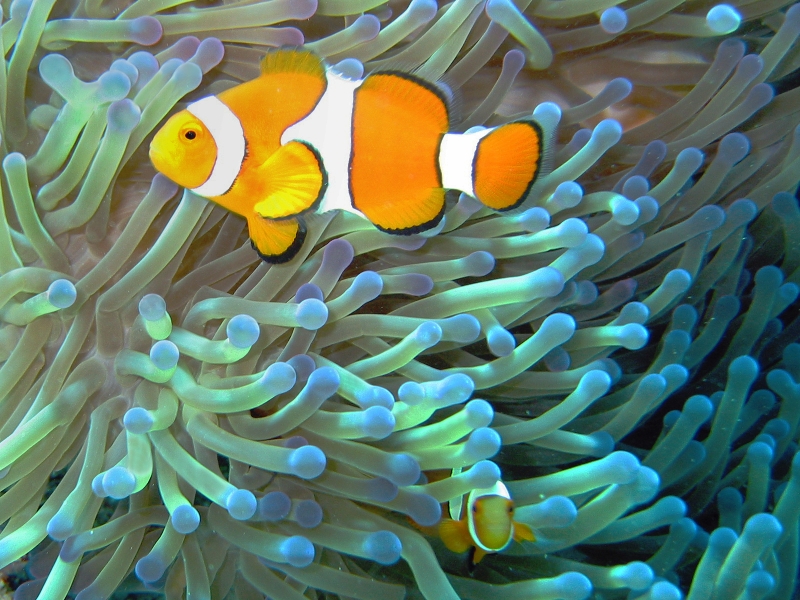
[edit]_(45663851145),_crop.jpg)
Cooperation is common in non-human animals. Besides cooperation with an immediate benefit for both actors, this behavior appears to occur mostly between relatives. Spending time and resources assisting a related individual may reduce an organism's chances of survival, but because relatives share genes, may increase the likelihood that the helper's genetic traits will be passed on to future generations.[12] The cooperative pulling paradigm is an experimental design used to assess if and under which conditions animals cooperate. It involves two or more animals pulling rewards towards themselves via an apparatus they can not successfully operate alone.[13]
Some researchers assert that cooperation is more complex than this. They maintain that helpers may receive more direct, and less indirect, gains from assisting others than is commonly reported. Furthermore, they insist that cooperation may not solely be an interaction between two individuals but may be part of the broader goal of unifying populations.[14]
Kin selection
[edit]One specific form of cooperation in animals is kin selection, which can be defined as animals helping to rear a relative's offspring in order to enhance their own fitness.[12][14]
Different theories explaining kin selection have been proposed, including the "pay-to-stay" and "territory inheritance" hypotheses. The "pay-to-stay" theory suggests that individuals help others rear offspring in order to return the favor of the breeders allowing them to live on their land. The "territory inheritance" theory contends that individuals help in order to have improved access to breeding areas once the breeders depart. These two hypotheses both appear to be valid, at least in cichlid fish.[15]
Studies conducted on red wolves support previous researchers'[14] contention that helpers obtain both immediate and long-term gains from cooperative breeding. Researchers evaluated the consequences of red wolves' decisions to stay with their packs for extended periods of time after birth. It was found that this "delayed dispersal," while it involved helping other wolves rear their offspring, extended male wolves' life spans. These findings suggest that kin selection may not only benefit an individual in the long-term in terms of increased fitness but in the short-term as well through enhanced chance of survival.[16]
Some research even suggests that certain species provide more help to the individuals with which they are more closely related. This phenomenon is known as kin discrimination.[17] In their meta-analysis, researchers compiled data on kin selection as mediated by genetic relatedness in 18 species, including the Western bluebird, Pied kingfisher, Australian magpie, and Dwarf Mongoose. They found that different species exhibited varying degrees of kin discrimination, with the largest frequencies occurring among those who have the most to gain from cooperative interactions.[17]
Cooperative systems
[edit]Cooperation is a process by which the components of a system work together to achieve the global properties. In other words, individual components that appear to be "selfish" and independent work together to create a highly complex, greater-than-the-sum-of-its-parts system. The phenomenon is generally known as 'emergence' and is considered an outcome of self-organization.[18] Examples:
- The components in a cell work together to keep it living.
- Neurons create thought and consciousness, other cells work together and communicate to produce multicellular organisms.
- Organisms form food chains and ecosystems.
- People form families, tribes, cities and nations.
- Atoms cooperate in a simple way, by combining to make up molecules.
Understanding the mechanisms that create cooperating agents in a system is one of the most important and least well understood phenomena in nature, though there has not been a lack of effort.[citation needed]
Individual action on behalf of a larger system may be coerced (forced), voluntary (freely chosen), or even unintentional, and consequently individuals and groups might act in concert even though they have almost nothing in common as regards interests or goals. Examples of that can be found in market trade, military wars, families, workplaces, schools and prisons, and more generally any institution or organization of which individuals are part (out of own choice, by law, or forced).[citation needed]
A cooperative system has been defined in organization studies as a complex of physical, biological, personal and social components which are in a specific systematic relationship by reason of the cooperation of two or more persons for at least one definite end.[19]
The prisoner's dilemma
[edit]The prisoner's dilemma is a model that demonstrates how, in certain conditions, members of a group will not cooperate even though cooperation would mutually benefit them all. It makes clear that collective self-interest is insufficient to achieving cooperative behavior, at least when an uncooperative individual who "cheats" can exploit cooperating group members. The prisoner's dilemma formalizing this problem using game theory and has been the subject of much theoretical and experimental research. The first extensive experimental studies were conducted in the early 1960s by Anatol Rapoport and Albert Chammah.[20] Results from experimental economics show that humans often act more cooperatively than strict self-interest, modeled as the Nash Equilibrium, would seem to dictate. While economic experiments require subjects to make relatively abstract decisions for small stakes, evidence from natural experiments for high stakes support the claim that humans act more cooperatively than strict self-interest would dictate.[21]
One reason may be that if the prisoner's dilemma situation is repeated (the iterated prisoner's dilemma), it allows non-cooperation to be punished more, and cooperation to be rewarded more, than the single-shot version of the problem would suggest. It has been suggested that this is one reason for the evolution of complex emotions in higher life forms.[22][23] Playing the iterated version of the game leads to a cascade of brain signals that relate the speed with which players reciprocate cooperation at subsequent rounds.[24]
In evolutionary biology, five mechanisms for the evolution of cooperation have been suggested: (i) kin selection, (ii) direct reciprocity, (iii) indirect reciprocity, (iv) spatial structure, and (v) group selection.[25]
See also
[edit]- Agreeableness
- Collaboration
- Cooperativeness (personality trait)
- Cooperative gameplay
- Dictator game
- Dunbar's number
- Game theory
- Management cybernetics
- Polytely
- Teamwork
- Faz'ah
Books
[edit]Notes
[edit]- ^ Pearsall, Judy, ed. (1998). The New Oxford Dictionary of Englsh. Oxford, England: Oxford University Press. p. 404. ISBN 9780198612636.
- ^ Marsh, David; Marshall, Nikki (2004). The Guardian Stylebook. London: Guardian Newspapers Ltd. p. 47. ISBN 9781843549918.
- ^ "coöperation - Accent marks in English?". groups.google.com - alt.usage.english. Newsgroup: alt.usage.english.
- ^ Kohn, Alfie (1992). No Contest: The Case Against Competition. Houghton Mifflin Harcourt. p. 19. ISBN 978-0-395-63125-6.
- ^ Fehr, Ernst (2002). "Altruistic punishment in humans" (PDF). Nature. 415 (6868). Macmillan Magazines Ltd: 137–40. Bibcode:2002Natur.415..137F. doi:10.1038/415137a. PMID 11805825. S2CID 4310962. Archived from the original (PDF) on 29 September 2011. Retrieved 20 July 2011.
- ^ a b c Sanfey, Alan G.; et al. (2003). "The Neural Basis of Economic Decision-Making in the Ultimatum Game" (PDF). Science. 300 (5626): 1755–8. Bibcode:2003Sci...300.1755S. doi:10.1126/science.1082976. PMID 12805551. S2CID 7111382. Retrieved 20 July 2011.
- ^ Wedekind, Claus; Milinski, Manfred (5 May 2000). "Cooperation Through Image Scoring in Humans". Science. 288 (5467): 850–852. Bibcode:2000Sci...288..850W. doi:10.1126/science.288.5467.850. ISSN 0036-8075. PMID 10797005.
- ^ Raihani, Nichola. "The Social Instinct: How Cooperation Shaped the World". www.nextbigideaclub.com. Retrieved 7 October 2022.
- ^ Raihani, Smith, Nicholas J., Sarah (2015). "). Competitive helping in online giving" (PDF). Current Biology. 25 (9): 1183–1186. doi:10.1016/j.cub.2015.02.042. PMID 25891407. S2CID 12523858. Retrieved 7 October 2022.
{{cite journal}}: CS1 maint: multiple names: authors list (link) - ^ Beilby, Max (17 September 2021). "The Social Instinct, by Nichola Raihani". www.darwinianbusiness.com. Retrieved 7 October 2022.
- ^ "APA Dictionary of Psychology - Social Instinct". www.dictionary.apa.org. American Psychological Association. Retrieved 7 October 2022.
- ^ a b Hamilton, W.D. (1964). "The Genetical Evolution of Social Behaviour". Journal of Theoretical Biology, 7, 1–16.
- ^ de Waal, Frans (2016). "Are We Smart Enough To Know How Smart Animals Are?" ISBN 978-1-78378-305-2, p. 276
- ^ a b c Clutton-Brock, T. (2002). "Breeding together: Kin selection and mutualism in cooperative vertebrates". Science, 296(5565), 69–72. doi:10.1126/science.296.5565.69
- ^ Balshine-Earn, S., Neat, F.C., Reid, H., & Taborsky, M. (1998). "Paying to stay or paying to breed? Field evidence for direct benefits of helping behavior in a cooperatively breeding fish". Behavioral Ecology, 9(5), 432–38.
- ^ Sparkman, A. M., Adams, J. R., Steury, T. D., Waits, L. P., & Murray, D. L. (2011). "Direct fitness benefits of delayed dispersal in the cooperatively breeding red wolf (Canis rufus)". Behavioral Ecology, 22(1), 199–205. doi:10.1093/beheco/arq194
- ^ a b Griffin, A. S., & West, S. A. (2003). "Kin Discrimination and the Benefit of Helping in Cooperatively Breeding Vertebrates". Science, 302(5645), 634–36. doi:10.1126/science.1089402
- ^ Mobus, G.E. & Kalton, M.C. (2015). Principles of Systems Science, Chapter 8: Emergence, Springer, New York
- ^ Barnard, Chester I. (1938). The Functions of the Executive. Cambridge, MA: Harvard University Press. OCLC 555075.
- ^ Rapoport, A., & Chammah, A. M. (1965). Prisoner’s Dilemma: A study of conflict and cooperation. Ann Arbor, MI: University of Michigan Press.
- ^ van den Assem, van Dolder, and Thaler (2012). "Split or Steal? Cooperative Behavior when the Stakes are Large". SSRN 1592456.
{{cite journal}}: Cite journal requires|journal=(help)CS1 maint: multiple names: authors list (link) - ^ Olsen, Harrington, and Siegelmann (2010). "Conspecific Emotional Cooperation Biases Population Dynamics: A Cellular Automata Approach".
{{cite journal}}: Cite journal requires|journal=(help)CS1 maint: multiple names: authors list (link) - ^ Harrington, Olsen, and Siegelmann (2011). "Communicated Somatic Markers Benefit the Individual and the Species".
{{cite journal}}: Cite journal requires|journal=(help)CS1 maint: multiple names: authors list (link) - ^ Cervantes Constantino, Garat, Nicolaisen, Paz, Martínez-Montes, Kessel, Cabana, and Gradin (2021). "Neural processing of iterated prisoner's dilemma outcomes indicates next-round choice and speed to reciprocate cooperation". Social Neuroscience. 16 (2): 103–120. doi:10.1080/17470919.2020.1859410. PMID 33297873. S2CID 228087900.
{{cite journal}}: CS1 maint: multiple names: authors list (link) - ^ Nowak, Martin A. (8 December 2006). "Five Rules for the Evolution of Cooperation". Science. 314 (5805): 1560–1563. Bibcode:2006Sci...314.1560N. doi:10.1126/science.1133755. ISSN 0036-8075. PMC 3279745. PMID 17158317.
References
[edit]- Herbert Gintis, Samuel Bowles, A Cooperative Species: Human Reciprocity and Its Evolution, Princeton University Press, 2011, ISBN 0-691-15125-3 (Reviewed in The Montreal Review)
- Tom R. Tyler, "Why People Cooperate: The Role of Social Motivations", Princeton University Press, 2011, ISBN 978-1-4008-3666-6
- Michael Tomasello, (2009), Why We Cooperate. MIT Press. ISBN 978-0-262-01359-8 (Reviewed in The Montreal Review)
- Raimo Tuomela, "Cooperation, a philosophic study", Philosophical Studies Series, Vol. 82 Kluwer Academic Publishers, 2000, ISBN 978-94-015-9594-0
- Robert Axelrod, The Complexity of Cooperation, Princeton Paperbacks, ISBN 0-691-01567-8
- Robert Axelrod, The Evolution of Cooperation, Basic Books, ISBN 0-465-02121-2
- Richard Dawkins (1990), The Selfish Gene, second edition – includes two chapters about the evolution of cooperation, ISBN 0-19-286092-5
- Herbert Gintis, Samuel Bowles, Robert T. Boyd, Ernst Fehr (eds.), Moral Sentiments and Material Interests: The Foundations of Cooperation in Economic Life (Economic Learning and Social Evolution). MIT 2005
- John McMurtry, "How Competition Goes Wrong." Journal of Applied Philosophy, 8(2): 200–10, 1991.
- Dennis Rivers, NewConversations.net, The Seven Challenges: A Workbook and Reader About Communicating More Cooperatively, fourth edition, 2005 – treats cooperation as a set of skills that can be improved.
- M.J. van den Assem, D. van Dolder and R.H. Thaler (2010). "Split or Steal? Cooperative Behavior When the Stakes are Large"
- MCQ quiz
External links
[edit]

 Media related to Cooperation at Wikimedia Commons
- An Operation of Cooperation, A book about cooperation and the benefits of this path, as opposed to working alone.
- Rheingold.com, The Cooperation Project: Objectives, Accomplishments, and Proposals. Howard Rheingold's project with Institute for the Future.
- Etra.cc Archived 11 March 2021 at the Wayback Machine, Cooperation platform for transport research (scientific)
- Imprology.com, The Far Games, a list of games using theatrical improvisation to encourage collaboration and distributed leadership


Cooperation
View on GrokipediaConceptual Foundations
Definition and Scope
Cooperation is defined in evolutionary biology as a social behavior in which one individual, the actor, incurs a fitness cost to confer a fitness benefit on another individual, the recipient, with the persistence of such behavior shaped by selection pressures that favor mechanisms mitigating exploitation by selfish actors.01499-6) This definition distinguishes cooperation from mutualism or by-product benefits, emphasizing deliberate costs that natural selection would otherwise erode unless counteracted by factors like relatedness, reciprocity, or punishment.[2] In quantitative terms, the actor pays a cost c while the recipient gains a benefit b, where b > c ensures potential net gains but requires safeguards against free-riding.[8] The scope of cooperation extends across biological scales, from intracellular gene interactions forming functional proteins to multicellular aggregation in slime molds and eusocial division of labor in ants, where non-reproductive castes support reproducers.[1] Beyond biology, it encompasses strategic interactions in game theory, where rational agents in repeated encounters, such as the iterated Prisoner's Dilemma, evolve cooperative equilibria through strategies like tit-for-tat—cooperate initially, mirror the opponent's last move—outperforming always-defect approaches in tournaments with 14 strategies across 200+ rounds.[4] In economics and political science, cooperation manifests in institutions like trade agreements or alliances, where parties align incentives to achieve collective outcomes unattainable individually, such as stable markets or defense pacts.[9] This broad purview underscores cooperation's role in emergent complexity, from cellular cohesion enabling organismal integrity to human-scale coordination yielding technologies and governance structures, though empirical studies reveal its fragility without enforcement mechanisms like reputation or sanctions.[10]Types of Cooperation
Sociologists classify cooperation according to the degree of direct interaction, consciousness of participants, and underlying motivations. Robert M. MacIver and Charles H. Page, in their analysis of social processes, delineate key categories that capture variations in human associative behavior.[11][12] Direct cooperation entails immediate, face-to-face coordination where participants physically collaborate toward shared immediate ends, often driven by instinctive or emotional ties rather than calculated deliberation. Examples include family members jointly harvesting crops or sports team members executing plays in unison, where the benefits accrue synchronously and proximity fosters mutual awareness. This form predominates in small-scale, intimate groups, as evidenced by ethnographic studies of hunter-gatherer bands where survival tasks like communal hunting rely on real-time synchronization.[13][14] Indirect cooperation, by contrast, involves coordinated actions without physical copresence, facilitated by specialization and division of labor, yielding deferred or systemic benefits. Participants contribute discrete parts to a larger whole, such as farmers producing grain that distant bakers transform into bread for urban consumers, as observed in pre-industrial trade networks documented in economic histories spanning from ancient Mesopotamia (circa 3000 BCE) to 19th-century industrial divisions. This type scales to complex societies, underpinning economic productivity; empirical data from labor economics show it correlates with GDP growth, where specialized roles amplify output by factors of 10-100 times over self-sufficient production.[12][15] Additional distinctions refine these based on motivational depth. Primary cooperation arises spontaneously from perceived similarities in interests or identity, unconscious of broader societal structures, as in tribal rituals or parental caregiving, where harmony stems from innate alignment rather than explicit agreement. Secondary cooperation is deliberate and instrumental, pursued rationally for defined objectives amid diverse participants, exemplified by contractual business partnerships or legislative alliances, where incentives like profit or policy gains enforce alignment; game-theoretic models, tested in laboratory experiments with over 10,000 participants since the 1980s, confirm higher cooperation rates under such goal-oriented frames compared to unstructured settings. Tertiary cooperation functions accommodatively, as a strategic response to potential conflict, prioritizing stability over enthusiasm, such as diplomatic truces or regulatory compromises that avert escalation; historical records, including the Treaty of Westphalia (1648), illustrate its role in resolving intergroup tensions through minimal mutual concessions.[14][11][13] These categories are not mutually exclusive and often overlap in practice, with empirical sociology emphasizing that cooperation's efficacy hinges on aligned incentives over mere intent, as unsupported by ideologically driven mandates that ignore causal self-interest.[16]Historical Development of the Concept
The concept of cooperation emerged in ancient Greek philosophy as integral to human social organization. Aristotle, in his Politics (circa 350 BCE), described humans as inherently political animals who form associations—from the household to the polis—for mutual benefit and self-sufficiency, emphasizing reciprocity and justice as foundations for communal living.[17] This view positioned cooperation not merely as instrumental but as essential to achieving eudaimonia, or human flourishing, through shared virtues and equitable exchange.[18] During the Enlightenment, social contract theorists formalized cooperation as a deliberate mechanism to mitigate conflict in the state of nature. Thomas Hobbes, in Leviathan (1651), argued that without a sovereign authority enforcing covenants, rational self-preservation drives perpetual war, necessitating mutual agreement to surrender rights for collective security and productive cooperation.[19] This contractual framework influenced later thinkers like John Locke and Jean-Jacques Rousseau, who envisioned cooperation as emerging from consent to protect natural rights or general will, though Hobbes's absolutist solution underscored the fragility of voluntary alliances absent coercion.[20] In economic thought, Adam Smith advanced a decentralized model of cooperation driven by self-interest. In The Wealth of Nations (1776), Smith illustrated how the division of labor fosters extensive societal coordination, with the "invisible hand" metaphor describing how individual pursuits unintentionally promote mutual prosperity through market exchanges, exceeding direct computation in scale.[21] This spontaneous order contrasted with deliberate planning, highlighting emergent cooperation via incentives rather than fiat. The 19th century saw practical institutionalization alongside evolutionary insights. The Rochdale Society of Equitable Pioneers, founded in 1844 by 28 weavers in England, established the first successful consumer cooperative, implementing principles like democratic control and patronage dividends to enable working-class mutual aid amid industrialization's hardships. Concurrently, Charles Darwin in The Descent of Man (1871) integrated cooperation into natural selection, positing that sympathies and moral instincts evolved because tribal groups exhibiting mutual support outcompeted less cohesive ones, extending biological mechanisms to human societies.[22] The 20th century brought mathematical rigor through game theory, crystallizing cooperation's tensions. Merrill Flood and Melvin Dresher devised the Prisoner's Dilemma in 1950 at the RAND Corporation, demonstrating how rational defection undermines joint gains despite mutual benefits from cooperation; Albert Tucker formalized its narrative.[23] This paradigm, later explored in Robert Axelrod's iterated tournaments (1984), revealed strategies like tit-for-tat as evolutionarily stable for fostering reciprocity, influencing analyses across disciplines.[5]Evolutionary Biology
Mechanisms Promoting Cooperation
Cooperation evolves in biological systems when mechanisms enable altruists to direct benefits toward other altruists or relatives, thereby enhancing the propagation of cooperative genes despite the short-term advantage of defection. In models like the Prisoner's Dilemma, where mutual cooperation yields mutual benefits but defection exploits cooperators, natural selection typically favors selfishness unless interactions are structured to reward reciprocity or relatedness. Mathematical analyses show that cooperation persists if the expected payoff for cooperators exceeds that for defectors, often through assortment—preferential clustering of like types.[2] A primary theoretical framework identifies five mechanisms promoting cooperation: kin selection, direct reciprocity, indirect reciprocity, network reciprocity, and group selection. Kin selection operates when individuals aid genetic relatives, as the shared genes benefit indirectly even if the actor pays a cost; this is quantified by Hamilton's rule (rB > C), where r is genetic relatedness, B the fitness benefit to the recipient, and C the cost to the actor, first proposed in 1964. Direct reciprocity evolves in repeated pairwise interactions, where strategies like tit-for-tat—starting with cooperation and then copying the partner's previous action—prove robust, as demonstrated in computer tournaments where it achieved the highest scores against diverse opponents.[24] Indirect reciprocity extends beyond dyads to reputations within groups, where individuals help those with observed cooperative histories to earn future aid, stabilizing cooperation if the probability of future interactions and discrimination accuracy suffice. Network reciprocity leverages spatial or graph-structured populations, where fixed neighbors allow cooperative clusters to form and expand locally, outcompeting defectors at boundaries if local benefits outweigh global mixing; simulations confirm this under moderate migration rates. Group selection posits that cooperative traits spread when groups of altruists outperform groups dominated by selfish individuals, particularly if intergroup competition exceeds intragroup variance, though its efficacy depends on migration and group fission rates.[2][25] These mechanisms often interact; for instance, network structure can amplify reciprocity by limiting cheater invasion. Empirical validation spans taxa, with kin selection explaining eusociality in haplodiploid insects like bees (relatedness asymmetry up to 0.75 for sisters), and direct reciprocity observed in grooming among primates where partners reciprocate within months. However, debates persist on their relative contributions, with critiques noting that weak assortment or high costs can undermine cooperation without additional safeguards like punishment.[26]Kin Selection and Inclusive Fitness
Kin selection refers to the evolutionary strategy whereby organisms preferentially aid genetic relatives, thereby increasing the propagation of shared genes. This mechanism, formalized by W.D. Hamilton in his 1964 papers, posits that natural selection favors traits enhancing the reproductive success of kin beyond that of the individual alone.[27] Inclusive fitness extends the classical Darwinian fitness concept by incorporating both an organism's direct reproductive output and the indirect benefits conferred to relatives, weighted by the degree of genetic relatedness.[28] Inclusive fitness is quantified as the sum of an individual's personal fitness effects plus the fitness effects on other individuals, devalued by the coefficient of relatedness r, which measures the probability that a gene in the actor is identical by descent to a gene in the recipient.[29] Hamilton's formulation resolves the apparent paradox of altruism—behaviors costly to the actor but beneficial to others—by demonstrating that such acts can evolve if they elevate the actor's inclusive fitness. For instance, in haplodiploid species like hymenopteran insects (ants, bees, wasps), sisters share 75% of their genes on average due to sex determination mechanisms, exceeding the 50% relatedness to their own offspring, which incentivizes workers to forgo personal reproduction in favor of rearing siblings.[30] The core condition for the evolution of altruism under kin selection is encapsulated in Hamilton's rule: rB > C, where r is the genetic relatedness between actor and recipient, B is the reproductive benefit to the recipient (in offspring equivalents), and C is the reproductive cost to the actor.[31] This inequality holds when the indirect fitness gains through kin outweigh the direct costs, predicting that altruism spreads if relatedness amplifies benefits sufficiently. Mathematical derivations in Hamilton's original work show that even low-benefit acts can evolve among close kin, as r approaches 1 for identical twins or full siblings.[27] Empirical support for kin selection derives from observations and manipulations across taxa, particularly in eusocial insects where sterile workers altruistically support the queen's brood. In fire ants (Solenopsis invicta), colonies with higher worker-queen relatedness exhibit greater worker policing of non-relatives' eggs, aligning with Hamilton's predictions.[30] Experimental alterations of relatedness in wasps and bees demonstrate reduced altruism when genetic ties are lowered, confirming causality rather than mere correlation.[30] Similarly, genomic studies in termites reveal sex ratio biases favoring kin selection equilibria, where investment skews toward the more related sex.[32] These patterns underscore kin selection's role in stable cooperation, though debates persist on its sufficiency without complementary factors like ecological pressures.[33]Reciprocal Altruism and Direct Reciprocity
Reciprocal altruism denotes a form of cooperation where an individual incurs a net fitness cost to benefit another unrelated individual, anticipating future reciprocation that offsets the initial cost. Robert Trivers introduced the concept in 1971, arguing that natural selection can favor such behavior under specific conditions: probabilistic repetition of dyadic interactions, individual recognition to track past actions, sufficient cognitive capacity for memory and discrimination between cooperators and defectors, and enforcement mechanisms like withholding future aid or punitive retaliation to deter cheating.[34] Trivers' model predicts that cheaters—those who accept benefits without reciprocating—will be punished through reduced future cooperation or aggression, stabilizing altruism in populations where the probability of future encounters (denoted as ) exceeds the cost-to-benefit ratio () of the altruistic act.[34] Direct reciprocity represents a core mechanism within reciprocal altruism, confined to pairwise interactions where the same donor-recipient pair exchanges benefits over time. In game-theoretic terms, it emerges in iterated social dilemmas like the Prisoner's Dilemma, where mutual cooperation yields higher long-term payoffs than repeated defection. Robert Axelrod and W.D. Hamilton's 1981 analysis of computer-simulated tournaments demonstrated that the "tit-for-tat" strategy—starting with cooperation and subsequently copying the opponent's last move—prevails due to its robustness: it rewards cooperation, punishes defection immediately, remains provocable to avoid exploitation, and is forgiving to restore mutual benefit after errors.[35] This strategy's success holds in populations with moderate interaction probabilities and low error rates, as defection spreads only if reciprocity enforcement fails; extensions show that even noisy environments favor "generous" variants that occasionally forgive to counteract mistakes.[36] Empirical evidence for direct reciprocity in non-human animals remains contested, with stronger support for symmetry-based exchanges (simultaneous or immediate trades) than delayed, calculated reciprocation requiring long-term bookkeeping. In vampire bats (Desmodus rotundus), roost-mates regurgitate blood meals to fasting individuals, with recipients 50% more likely to reciprocate within a week despite unrelatedness, correlating with pairwise feeding histories rather than group-level sharing; this aligns with direct reciprocity given bats' high nightly mortality risk and repeated roosting.[37] Primate grooming exhibits reciprocal patterns, as a meta-analysis of 36 studies across 14 species revealed a significant positive association between grooming bouts and received agonistic support, though causation is bidirectional and often proximate to conflicts rather than purely delayed reciprocity.[38] Laboratory experiments with Norway rats (Rattus norvegicus) in 2024 confirmed direct reciprocity, where rats opened doors to free trapped conspecifics who had previously helped them, using tit-for-tat-like rules even without kinship cues.[39] Critics note that many purported cases, such as cleaner fish-client interactions, better fit mutualism or punishment avoidance than true altruism, as clients punish cheating cleaners via ectoparasite rejection, with limited evidence of future-oriented reciprocity beyond immediate incentives.[40] Overall, while models robustly predict direct reciprocity's viability, field data suggest animals rely more on simple heuristics than complex accounting, constrained by cognitive limits.[41]Group Selection and Multilevel Selection Debates
Group selection theory proposes that natural selection can operate on groups of organisms, favoring traits that enhance group survival or reproduction even if they reduce individual fitness within the group, thereby potentially explaining the evolution of altruism. This idea gained prominence in the mid-20th century through works like V. C. Wynne-Edwards' Animal Dispersion in Relation to Social Behaviour (1962), which argued for traits such as population regulation benefiting the species or deme. However, it faced sharp criticism for conflating proximate mechanisms with ultimate selection pressures and for lacking mathematical rigor, as group-beneficial traits were seen as vulnerable to exploitation by selfish mutants within groups.[42] In Adaptation and Natural Selection (1966), George C. Williams contended that group selection requires implausibly low migration rates and high group extinction rates to overpower within-group individual selection, rendering it negligible in practice; he advocated focusing on individual-level adaptations via gene-centered explanations. Richard Dawkins reinforced this in The Selfish Gene (1976), portraying group selection as a misleading vehicle for understanding evolution, where genes are the primary replicators and altruism evolves via kin selection or reciprocity rather than group-level dynamics; he argued that positing group selection obscures the causal primacy of differential gene replication.[43] These critiques, emphasizing that between-group selection differentials are typically dwarfed by within-group variance, led to the theory's widespread dismissal by the 1970s, with alternatives like W. D. Hamilton's inclusive fitness (1964) providing sufficient mechanisms for cooperation without invoking groups. Multilevel selection (MLS) theory revived interest in group-level processes in the 1990s, formalized by David Sloan Wilson and Elliott Sober, who distinguished MLS-1 (focusing on trait-group models where group fitness emerges from individual interactions) from MLS-2 (contextual analysis partitioning total selection into within- and between-group components via the Price equation).[44] In their 1998 book Unto Others: The Evolution and Psychology of Unselfish Behavior, they argued that MLS accommodates both individual and group causation without contradiction, using the Price equation—Δz = Cov(w̄_g, z_g) + E[Cov(w_i|g, z_i|g)]—to show when between-group covariance in fitness and trait outweighs within-group effects, allowing group adaptations like cooperation to evolve. Proponents claim MLS better captures empirical realities in structured populations, such as microbial biofilms or eusocial insects, where spatial clustering amplifies group-level outcomes.[45] Critics maintain MLS is conceptually redundant, as all models reducible to inclusive fitness effects under the gene-centered view, with group benefits derivable from relatedness or assortment without invoking higher-level vehicles; for instance, Steven Pinker (2012) described group selection as explanatorily vacuous for human psychology, prone to post-hoc rationalizations ignoring defector invasions.[43] Dawkins echoed that MLS conflates statistical partitioning with causal efficacy, insisting genic selection suffices without "false allure" of group agency.[46] Defenders, including Wilson, counter that equivalence holds only under strict assumptions (e.g., no higher-level heritability), and MLS reveals adaptive hierarchies empirically, as in cases where cooperation persists despite low relatedness via group extinction-recolonization dynamics.[42] Empirical support for MLS has accumulated, with a 2024 bibliometric review identifying 280 studies across taxa—from bacteria to vertebrates—demonstrating multilevel gradients in traits like cooperation, where between-group selection strengths rival or exceed within-group in structured environments like metapopulations.[47] For example, in Pseudomonas aeruginosa swarming, MLS favors costly public-good production when group expansion benefits outweigh cheater costs, confirmed via experimental evolution.[48] In wild bird flocks, multilevel analysis reveals selection on social network traits enhancing group cohesion and survival.[49] While debates persist on whether MLS adds explanatory power beyond kin/group assortment models, its formal integration via Price partitioning has gained traction among researchers studying cooperation in viscous or culturally transmitted systems, though acceptance remains uneven due to entrenched individualist paradigms.[50][51]Cooperation in Non-Human Animals
Empirical Examples Across Taxa
In eusocial insects such as ants (Formica spp.), bees (Apis mellifera), and termites (Reticulitermes spp.), workers exhibit cooperative brood care, foraging, and nest defense, often sacrificing personal reproduction to support the reproductive output of closely related queens and siblings, with colonies achieving division of labor that enhances survival and resource exploitation.[33] This cooperation is underpinned by high genetic relatedness, averaging 0.75 in haplodiploid Hymenoptera, enabling inclusive fitness benefits despite individual sterility in workers.[33] Among birds, cooperative breeding systems involve non-breeding helpers provisioning nestlings, as documented in approximately 9% of avian species, including Australian fairy-wrens (Malurus spp.) and Mexican jays (Aphelocoma ultramarina), where helpers increase fledging success by 20-50% through food delivery and predator vigilance.[52] Empirical studies show helpers, often retained offspring, gain indirect fitness via kin aid or future territory inheritance, with ecological constraints like arid habitats promoting delayed dispersal.[53] Interspecific cooperation appears in greater honeyguides (Indicator indicator), which lead honey badgers (Mellivora capensis) to beehives, signaling via calls to access wax and larvae after the badger opens hives, yielding mutual caloric gains in savanna ecosystems.[1] In mammals, vampire bats (Desmodus rotundus) demonstrate reciprocal altruism through regurgitated blood sharing among roost-mates, with recipients up to 8 times more likely to receive aid from prior donors, even non-kin, tracked over months in wild and captive settings where failed foragers face starvation risks exceeding 60% without sharing.[54] Wolves (Canis lupus) employ pack-level coordination in hunting large ungulates like elk (Cervus canadensis), with groups of 4-8 individuals using relay pursuits and encirclement to achieve kill rates 1.5-2 times higher than solo efforts, as observed in Yellowstone National Park studies spanning decades.[55] Similarly, lion prides (Panthera leo) divide roles in stalking and ambushing prey such as buffalo (Syncerus caffer), with females cooperating in drives that boost success to 30% for herds versus under 10% for loners, per Serengeti field data.[56] Marine fish exhibit mutualistic cleaning symbiosis, as in bluestreak cleaner wrasses (Labroides dimidiatus) that remove ectoparasites from client species like parrotfish (Scaridae spp.), performing over 2,000 inspections daily per cleaner in coral reefs, with clients gaining health benefits while cleaners access protein-rich meals, though cleaners occasionally defect by mucus consumption, prompting client punishments like chasing.[57] This interaction persists due to repeated encounters and client choice, with experimental manipulations showing reduced client visits to cheating cleaners by up to 50%.[58]Factors Influencing Animal Cooperation
Ecological constraints significantly shape the prevalence of cooperation in animals, particularly in species exhibiting cooperative breeding. Limited availability of suitable breeding territories, known as habitat saturation, promotes philopatry and helping behavior by increasing the costs of independent reproduction. In the Seychelles warbler, territory quality and saturation directly determine whether subordinates remain as helpers rather than dispersing to breed alone, with helpers more common in saturated, high-quality habitats. Predation risk further influences cooperation by favoring the assortment of cooperative individuals; in Trinidadian guppies, elevated predation selects for spatial clustering of bold, prosocial phenotypes, enhancing group-level cooperative defenses. Resource distribution also modulates outcomes, with clumped or unpredictable resources driving mutualistic foraging or vigilance in groups like lions mobbing intruders.[59][60] Social structure and relationships exert strong effects on cooperative persistence. Strong dyadic bonds and familiarity facilitate reciprocity, as animals prioritize aid to long-term partners over strangers. Female chacma baboons, for example, form grooming alliances that predict mutual support in aggressive encounters, with recent grooming bouts increasing the likelihood of coalitionary defense. Network centrality within social groups amplifies cooperation's spread, as influential individuals model or enforce prosocial behaviors, observed in bottlenose dolphins where well-connected members engage in more coordinated foraging. However, tolerance for short-term imbalances in exchanges, common in long-term bonds, can limit strict contingency, allowing cooperation despite occasional defection in primates.[61][60] Cognitive capacities constrain or enable advanced forms of cooperation. Individual recognition and memory of past interactions allow contingent helping, as in pied flycatchers that reciprocate mobbing support against predators only with prior allies. Species with limited social cognition, such as many chimpanzees, struggle to detect or punish deception, tolerating inequity in experimental tasks and reducing enforcement of cooperation. Observational learning and social facilitation further promote coordinated actions, evident in northern bald ibises alternating leadership in V-formation flight to share aerodynamic benefits.[61][61][60] Individual variation in traits like boldness or motivation introduces heterogeneity that can stabilize or destabilize group cooperation. Consistent cooperators enhance group fitness in meerkats through shared pup-rearing, but mismatched types may lead to defection cascades in mixed populations. Hormonal profiles, such as oxytocin levels, correlate with prosocial tendencies in rodents and primates, influencing willingness to share resources.[62][1] These factors interact dynamically; for instance, harsh environments amplify the value of social bonds, while cognitive limits may necessitate ecological pressures to sustain cooperation without kin bias. Context-specific benefits, such as immediate survival gains in songbirds' helping during breeding, underscore that cooperation emerges where net fitness returns exceed solitary alternatives across taxa.[1][63]Comparisons to Human Patterns
Cooperation in non-human animals is typically confined to small groups of kin or repeatedly interacting individuals, whereas human cooperation routinely spans large-scale societies involving unrelated strangers and anonymous interactions.[64] [16] For instance, eusocial insects like honeybees exhibit high levels of altruism within colonies due to high genetic relatedness, but such extreme specialization is absent in human societies, where division of labor emerges through cultural and economic incentives rather than fixed castes.[2] In primates such as chimpanzees, collaborative hunting or grooming occurs mainly among familiar partners, limited by cognitive constraints on tracking relationships beyond a few dozen individuals.[16] Kin selection explains much animal cooperation, as seen in meerkats where subordinates guard against predators to benefit relatives, yielding inclusive fitness benefits when relatedness exceeds the cost-benefit ratio.[2] Humans also favor kin but extend reciprocity beyond family ties, using indirect mechanisms like reputation in networks of hundreds or thousands, facilitated by language and memory.[64] Direct reciprocity, effective in animal dyads such as vampire bats sharing blood meals with frequent roost-mates, falters in one-shot human encounters without additional safeguards, highlighting human reliance on evolved norms for broader application.[16] Enforcement differs markedly: animals primarily employ passive strategies like partner choice, as in cleaner fish switching to cooperative clients, with scant evidence of proactive punishment.[16] Humans, by contrast, deploy costly third-party punishment and ostracism to deter free-riders in public goods scenarios, sustaining cooperation in experiments even at personal expense, a behavior rarely documented across taxa.[16] This capacity correlates with advanced theory of mind and shared intentionality in humans, enabling joint goals absent in animal analogs where partners are treated more as means than collaborators.[16] These disparities suggest human cooperation evolved novel extensions of animal foundations, amplified by cultural transmission of norms that promote assortment among cooperators in expansive groups, contrasting the spatial or kin-clustered structures limiting non-human variants.[64] [2] While group selection debates persist for both, human multilevel dynamics incorporate cultural evolution, allowing stable large-scale alliances unseen in wild populations.[2]Human Cooperation
Psychological and Cognitive Underpinnings
Human cooperation relies on advanced cognitive capacities, including theory of mind (ToM), which enables individuals to attribute mental states to others and anticipate their behaviors in social exchanges. Empirical studies demonstrate that higher ToM ability correlates with increased cooperation in experimental games like the Prisoner's Dilemma, as participants with stronger ToM skills better predict partners' reciprocity and adjust strategies accordingly.[65] ToM develops early in ontogeny and supports joint intentionality, distinguishing human cooperation from that in other primates by facilitating coordinated actions toward shared goals.[66] Empathy, encompassing both emotional resonance and cognitive perspective-taking, serves as a proximate mechanism motivating prosocial acts that underpin cooperation. Neuroimaging evidence links empathy-related brain regions, such as the medial prefrontal cortex, to decisions favoring group benefits over individual gain, with empathetic individuals showing heightened neural responses to cooperative contexts.[67] Developmental research reveals that even preverbal infants exhibit spontaneous helping behaviors, suggesting an innate predisposition toward altruism that evolves into cooperative norms through cognitive maturation. For instance, 14-month-olds altruistically assist adults in goal-directed tasks and collaborate on joint activities without explicit rewards, indicating early-emerging mechanisms for mutual benefit.[68] A specialized cheater-detection mechanism, proposed as an evolved cognitive adaptation, enhances cooperation by enabling rapid identification of social contract violations, such as non-reciprocation in exchanges. Experimental paradigms, including Wason selection tasks reframed as social dilemmas, show humans perform significantly better at detecting potential cheaters—selecting cards that could reveal benefit acceptance without cost payment—compared to abstract logical violations, supporting domain-specific processing over general reasoning.[69] This module activates preferentially when cues signal predisposition to cheat, promoting vigilance in repeated interactions and sustaining reciprocal altruism.[70] Fairness intuitions, rooted in aversion to inequity, further cognitively scaffold cooperation, as evidenced by rejection of unfair offers in ultimatum games across cultures, even when self-costly. Infant studies confirm expectations of equitable resource distribution following collaborative efforts, with 17-month-olds anticipating rewards proportional to agents' contributions.[71] These mechanisms interact with prefrontal networks unique to humans, integrating reputation concerns and long-term reciprocity to scale cooperation beyond kin or dyads.[72] While intuitive processes like fast, automatic empathy drive initial cooperation, deliberate cognition modulates it under high stakes, though depletion of executive resources can increase defection.[73]Cultural Transmission and Norm Emergence
Cultural transmission in humans facilitates the propagation of cooperative behaviors through social learning mechanisms, distinct from genetic inheritance, allowing norms to adapt rapidly to environmental demands. Unlike genetic evolution, which operates slowly over generations, cultural transmission enables individuals to acquire cooperative strategies via imitation, teaching, and observation, often biasing learning toward successful or prevalent practices within groups. This process has been modeled as cumulative cultural evolution, where innovations in cooperation, such as shared resource management, build upon prior variants transmitted socially.[74] Key mechanisms include conformist bias, where learners preferentially adopt the most common behavior in a reference group, stabilizing cooperative norms even when individually costly. Empirical studies demonstrate that exposure to cooperative models increases prosocial actions; for instance, in economic games, participants who observe high cooperation rates from others conform to those levels, sustaining contributions in public goods scenarios. Success-biased transmission further amplifies this by favoring imitation of outcomes yielding higher payoffs, as seen in laboratory experiments where cooperative strategies spread when linked to group prosperity. Prestige bias, copying high-status individuals, also transmits cooperation, particularly in hierarchical societies where leaders model reciprocal aid.[75][76] Norm emergence arises iteratively through cultural processes, where repeated social interactions and learning lead to convergence on cooperative equilibria, often reinforced by third-party punishment or reputation tracking. Models of cultural group selection posit that groups enforcing cooperative norms via sanctions outcompete others, as evidenced by simulations showing the spread of parochial cooperation—aid to in-group members paired with hostility to outsiders. Field data from small-scale societies, such as hunter-gatherers, reveal that cultural transmission of norms like meat-sharing emerges from conformist pressures and teaching, correlating with survival advantages in variable environments. However, empirical tests of cultural group selection for cooperation yield mixed results, with some quantitative studies finding limited evidence for transmission beyond direct observation.[77][78][79] In large-scale societies, language and institutions amplify norm transmission, enabling abstract rules like "help strangers in need" to emerge and persist through storytelling and ritual. Gene-culture coevolution underscores this, with psychological adaptations for norm internalization—such as guilt and shame—evolving alongside culturally transmitted expectations, fostering ultrasociality. Experimental iterations of learning paradigms confirm that injunctive norms (what should be done) emerge from chained transmission, where learners infer and enforce cooperation to avoid disapproval. These dynamics explain historical shifts, like the expansion of cooperation beyond kin via moralizing religions, which culturally encoded norms of impartiality around 500 BCE in Eurasia.[80][81][82]Role of Institutions and Incentives
Institutions structure human cooperation by establishing rules, monitoring mechanisms, and enforcement procedures that align individual incentives with collective benefits, mitigating free-rider problems inherent in social dilemmas. Formal institutions, such as legal systems and contracts, reduce uncertainty and transaction costs, enabling cooperation at scale beyond kin or repeated interactions. For instance, secure property rights and impartial enforcement historically facilitated trade and economic growth by assuring participants of reciprocity and protection against defection.[83] Incentives within institutions often combine rewards for cooperative behavior and punishments for non-cooperation, with empirical evidence from meta-analyses of social dilemma experiments showing that such sanctioning mechanisms significantly elevate cooperation rates compared to no-sanction baselines. Institutions that implement both rewards and punishments outperform those relying solely on one, as they address diverse motivations and deter opportunism effectively.[84][85] In field settings, economic incentives like subsidies or fines have promoted cooperative resource management, though their efficacy depends on credible enforcement to avoid moral hazard.[86] Elinor Ostrom's research on common-pool resources demonstrates how polycentric institutions—decentralized, nested governance arrangements—sustain cooperation without relying on centralized authority or privatization. Her analysis of long-enduring fisheries, irrigation systems, and forests identifies design principles, including clearly defined boundaries, proportional sanctions, and participatory rule-making, which foster collective action by making contributions observable and defection costly.[87] These principles have been empirically validated across diverse contexts, countering Garrett Hardin's "tragedy of the commons" by showing that self-organized institutions can achieve sustainable outcomes when incentives are locally tailored and monitored by affected parties.[88] Theoretical models further illustrate coevolution between cooperation and institutions, where monitoring and punishment emerge endogenously to support larger groups, as seen in simulations of societal-scale dilemmas.[89] However, institutional failures, such as weak enforcement or misaligned incentives, can erode cooperation, as evidenced by historical cases where ambiguous property rights stifled investment and exchange until reformed.[83] Overall, robust institutions transform short-term self-interest into long-term cooperative equilibria by leveraging reputation, accountability, and adaptive incentives.[90]Game Theory and Mathematical Modeling
The Prisoner's Dilemma
The Prisoner's Dilemma is a foundational concept in game theory, modeling a scenario where two rational agents must independently choose between cooperation and defection, leading to outcomes that highlight the tension between individual self-interest and collective benefit. In the classic formulation, two prisoners are interrogated separately for a joint crime; each can either confess (defect) or remain silent (cooperate). If both remain silent, they receive minimal sentences (reward payoff R for both). If one confesses while the other remains silent, the confessor goes free (temptation payoff T) and the silent one receives a harsh sentence (sucker's payoff S). If both confess, both get moderate sentences (punishment payoff P). The structure satisfies T > R > P > S, with 2R > T + S to ensure mutual cooperation is preferable to alternating exploitation, and typically assumes one-shot play without communication.[5]| Player 2 \ Player 1 | Cooperate | Defect |
|---|---|---|
| Cooperate | R, R | S, T |
| Defect | T, S | P, P |