


Community hub
Recent from talks
Contribute something
Nothing was collected or created yet.
Carolina parakeet
View on Wikipedia
| Carolina parakeet | |
|---|---|

| |
| Mounted specimen in the Naturalis Biodiversity Center | |
Scientific classification 
| |
| Kingdom: | Animalia |
| Phylum: | Chordata |
| Class: | Aves |
| Order: | Psittaciformes |
| Family: | Psittacidae |
| Tribe: | Arini |
| Genus: | †Conuropsis Salvadori, 1891 |
| Species: | †C. carolinensis
|
| Binomial name | |
| †Conuropsis carolinensis | |
| Subspecies | |
|
C. c. carolinensis | |
| Synonyms | |
|
Psittacus carolinensis Linnaeus, 1758 | |
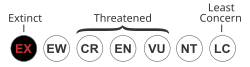

The Carolina parakeet (Conuropsis carolinensis), or Carolina conure, is an extinct species of small green neotropical parrot with a bright yellow head, reddish orange face, and pale beak that was native to the Eastern, Midwest, and Plains states of the United States. It was the only indigenous parrot within its range, and one of only three parrot species native to the United States. The others are the thick-billed parrot, now extirpated,[3] and the green parakeet, still present in Texas;[4] a fourth parrot species, the red-crowned amazon, is debated.[5][6][7]
The Carolina parakeet was called Maskowhinge in Powhatan , puzzi la née ("head of yellow") or pot pot chee by the Seminole and kelinky in Chickasaw.[8] Though formerly prevalent within its range, the bird had become rare by the middle of the 19th century. The last confirmed sighting in the wild was of the C. c. ludovicianus subspecies in 1910. The last known specimen, a male named Incas, perished in captivity at the Cincinnati Zoo in 1918,[9][10] and the species was declared extinct in 1939.
The earliest reference to these parrots was in 1583 in Florida reported by Sir George Peckham in A True Report of the Late Discoveries of the Newfound Lands of expeditions conducted by English explorer Sir Humphrey Gilbert, who notes that explorers in North America "doe testifie that they have found in those countryes; ... parrots". They were first scientifically described in English naturalist Mark Catesby's two-volume Natural History of Carolina, Florida and the Bahama Islands published in London in 1731 and 1743.
Carolina parakeets were probably poisonous – French-American naturalist and painter John J. Audubon noted that cats apparently died from eating them, and they are known to have eaten the toxic seeds of cockleburs.[11][12]
Taxonomy
[edit]
Carolinensis is a species of the genus Conuropsis, one of numerous genera of New World Neotropical parrots in family Psittacidae of true parrots.
The binomial Psittacus carolinensis was assigned by Swedish zoologist Carl Linnaeus in the 10th edition of Systema Naturae published in 1758. The species was given its own genus, Conuropsis, by Italian zoologist and ornithologist Tommaso Salvadori in 1891 in his Catalogue of the Birds in the British Museum, volume 20. The name is derived from the Greek-ified conure ("parrot of the genus Conurus" an obsolete name of genus Aratinga) + -opsis ("likeness of") and Latinized Carolina (from Carolana, an English colonial province[Note 1][13]) + -ensis (of or "from a place"), therefore a bird "like a conure from Carolina".
Two subspecies are recognized: The Louisiana subspecies of the Carolina parakeet, C. c. ludovicianus,[Note 2] was slightly different in color from the nominate subspecies, being more bluish-green and generally of a somewhat subdued coloration, and became extinct in much the same way, but at a somewhat earlier date (early 1910s). The Appalachian Mountains separated these birds from the eastern C. c. carolinensis.[14]
Evolution
[edit]According to a study of mitochondrial DNA recovered from museum specimens, their closest living relatives include some of the South American Aratinga parakeets: The Nanday parakeet, the sun conure, and the golden-capped parakeet. The authors note the bright yellow and orange plumage and blue wing feathers found in C. carolinensis are traits shared by another species, the jandaya parakeet (A. jandaya), that was not sampled in the study, but is generally thought to be closely related.[Note 3] To help resolve the divergence time, a whole genome of a preserved specimen has now been sequenced.[15][16][17] The Carolina parakeet colonized North America about 5.5 million years ago. This was well before North America and South America were joined by the formation of the Panama land bridge about 3.5 mya. Since the Carolina parakeets' more distant relations are geographically closer to its own historic range while its closest relatives are more geographically distant to it, these data are consistent with the generally accepted hypothesis that Central and North America were colonized at different times by distinct lineages of parrots – parrots that originally invaded South America from Antarctica some time after the breakup of Gondwana, where Neotropical parrots originated approximately 50 mya.

The following cladogram shows the placement of the Carolina parakeet among its closest relatives, after a DNA study by Kirchman et al. (2012):[16]
| Arini |
| |||||||||||||||||||||||||||||||||||||||||||||||||||||||||
A fossil parrot, designated Conuropsis fratercula, was described based on a single humerus from the Miocene Sheep Creek Formation (possibly late Hemingfordian, c. 16 mya, possibly later) of Snake River, Nebraska.[18] It was a smaller bird, three-quarters the size of the Carolina parakeet. "The present species is of peculiar interest as it represents the first known parrot-like bird to be described as a fossil from North America." (Wetmore 1926;[18] italics added) However, it is not completely certain that the species is correctly assigned to Conuropsis.[19]
Description
[edit]The Carolina parakeet was a small, green parrot very similar in size and coloration to the extant jenday parakeet and sun conure – the sun conure being its closest living relative.[20]
The majority of the parakeets' plumage was green with lighter green underparts, a bright yellow head and orange forehead and face extending to behind the eyes and upper cheeks (lores). The shoulders were yellow, continuing down the outer edge of the wings. The primary feathers were mostly green, but with yellow edges on the outer primaries. Thighs were green towards the top and yellow towards the feet. Male and female adults were identical in plumage, however males were slightly larger than females (sexually dimorphic only in size). Their legs and feet were light brown. They share the zygodactyl feet common to all the parrot family. Their eyes were ringed by white skin and their beaks were pale flesh colored. These birds weigh about 3.5 oz.,[Note 4] are 13 in. long, and have wingspans of 21–23 in.
Young Carolina parakeets differed slightly in coloration from adults. The face and entire body were green, with paler underparts. They lacked yellow or orange plumage on the face, wings, and thighs. Hatchlings were covered in mouse-gray down, until about 39–40 days old, when green wings and tails appeared. Fledglings had full adult plumage around 1 year of age.[21][22]Snyder & Russell (2002)
These birds were fairly long-lived, at least in captivity: A pair was kept at the Cincinnati Zoo for over 35 years.
Distribution and habitat
[edit]
The Carolina parakeet had the northernmost range of any known parrot. It was found from southern New York and Wisconsin to Kentucky, Tennessee, and the Gulf of Mexico, from the Atlantic Seaboard to as far west as eastern Colorado. It lived in old-growth forests along rivers and in swamps.[23][24] Its range was described by early explorers thus: the 43rd parallel as the northern limit, the 26th as the most southern, the 73rd and 106th meridians as the eastern and western boundaries, respectively, the range included all or portions of at least 28 states.[Note 5] Its habitats were old-growth wetland forests along rivers and in swamps, especially in the Mississippi-Missouri drainage basin with large hollow trees including cypress and sycamore to use as roosting and nesting sites.
Only very rough estimates of the birds' former prevalence can be made, with an estimated range of 20,000 to 2.5 million km2, and population density of 0.5 to 2.0 parrots per km2, population estimates range from tens of thousands to a few million birds (though the densest populations occurred in Florida covering 170,000 km2, so hundreds of thousands of the birds may have been in that state alone).
The species may have appeared as a very rare vagrant in places as far north as southern Ontario in Canada. A few bones, including a pygostyle found at the Calvert Site in southern Ontario, came from the Carolina parakeet. The possibility remains open that this specimen was taken there for ceremonial purposes.[25]
Behavior and diet
[edit]
The bird lived in huge, noisy flocks of as many as 300 birds. It built its nest in a hollow tree, laying two to five[26] (most accounts say two) 1.6 in (4.1 cm) round white eggs. Reportedly, multiple female parakeets could deposit their eggs into one nest, similar to nesting behavior described in the monk parakeet (Myiopsitta monachus).[27]
It mostly ate the seeds of forest trees and shrubs, including those of cypress, hackberry, beech, sycamore, elm, pine, maple, oak, and other plants such as thistles and sandspurs (Cenchrus species). It ate fruits, including apples, grapes, and figs (often from orchards by the time of its decline), and flower buds, and occasionally, insects.[23][28] It was especially noted for its predilection for cockleburs (Xanthium strumarium),[12] a plant which contains a toxic glucoside,[29] and it was considered to be an agricultural pest of grain crops.[30]
Extinction
[edit]The last captive Carolina parakeet, Incas, died at the Cincinnati Zoo on February 21, 1918, in the same cage as Martha, the last passenger pigeon, which died in 1914.[31] There are no scientific studies or surveys of this bird by American naturalists; most information about it is from anecdotal accounts and museum specimens, so details of its prevalence and decline are unverified or speculative.
Extensive accounts of the precolonial and early colonial have been given for prevalence of this bird. The existence of flocks of gregarious, very colorful and raucous parrots could hardly have gone unnoted by European explorers, as parrots were virtually unknown in seafaring European nations in the 16th and 17th centuries. Later accounts in the latter half of the 19th century onward noted the birds' sparseness and absence.[32]
Genetic evidence suggests that while populations had been in decline since the last glacial maximum, the lack of evidence of inbreeding suggests that the birds declined very quickly.[33]
The birds' range collapsed from east to west with settlement and clearing of the eastern and southern deciduous forests. John J. Audubon commented as early as 1832 on the decline of the birds. The bird was rarely reported outside Florida after 1860. The last reported sighting east of the Mississippi River (except Florida) was in 1878 in Kentucky. By the turn of the century, it was restricted to the swamps of central Florida. The last known wild specimen was killed in Okeechobee County, Florida, in 1904, and the last captive bird died at the Cincinnati Zoo on February 21, 1918. This was the male specimen, Incas, that died within a year of his mate, Lady Jane.[34] Additional reports of the bird were made in Okeechobee County, Florida, until the late 1920s, but these are not supported by specimens. However two sets of eggs purportedly taken from active nests in 1927 are in the collection of the Florida Museum of Natural History, and genetic testing could prove the species was still breeding at that time.[35][36] Not until 1939, however, did the American Ornithologists' Society declare the Carolina parakeet to be extinct. The IUCN has listed the species as extinct since 1920.
In 1937, three parakeets resembling this species were sighted and filmed in the Okefenokee Swamp of Georgia. However, the American Ornithologists' Union analyzed the film and concluded that they had probably filmed feral parakeets.[37] A year later, in 1938, a flock of parakeets was apparently sighted by a group of experienced ornithologists in the swamps of the Santee River basin in South Carolina, but this sighting was doubted by most other ornithologists. The birds were never seen again after this sighting, and shortly after a portion of the area was destroyed to make way for power lines, making the species' continued existence unlikely.[38]
About 720 skins and 16 skeletons are housed in museums around the world,[39] and analyzable DNA has been extracted from them.[20]
Reasons for extinction
[edit]The evidence is indicative that humans had at least a contributory role in the extinction of the Carolina parakeet, through a variety of means.[40] Chief was deforestation in the 18th and 19th centuries. Hunting played a significant role, both for decorative use of their colorful feathers, for example, adornment of women's hats, and for reduction of crop predation.[1] This was partially offset by the recognition of their value in controlling invasive cockleburs. Minor roles were played by capture for the pet trade and, as noted in Pacific Standard, by the introduction for crop pollination of European honeybees that competed for nest sites.[41]
A factor that exacerbated their decline to extinction was the flocking behavior that led them to return to the vicinity of dead and dying birds (such as birds downed by hunting), enabling wholesale slaughter.[40]
The final extinction of the species in the early years of the 20th century is somewhat of a mystery, as it happened so rapidly. Vigorous flocks with many juveniles and reproducing pairs were noted as late as 1896, and the birds were long-lived in captivity, but they had virtually disappeared by 1904. Sufficient nest sites remained intact, so deforestation was not the final cause. American ornithologist Noel F. Snyder[8] speculates that the most likely cause seems to be that the birds succumbed to poultry disease, although no recent or historical records exist of New World parrot populations being afflicted by domestic poultry diseases. The modern poultry scourge Newcastle disease was not detected until 1926 in Indonesia, and only a subacute form of it was reported in the United States in 1938. Genetic research on samples did not show any significant presence of bird viruses (though this does not solely rule out disease).[33]
See also
[edit]- Green parakeet, the other living U.S. parrot, found in southern Texas
- Monk parakeet, a prevalent feral parrot in the United States, often incorrectly presumed to be native
- Feral parrots, other non-native parrots in the United States
Notes
[edit]- ^ A reference to the 17th century English province of Carolana, called Florida by the Spaniards and La Louisiane by the French, a grant from King Charles I, which included the territory extending from the Atlantic Ocean to New Mexico, between the 30th and 36th parallels of latitude, which encompasses on the Atlantic Seaboard the modern states of North and South Carolina
- ^ ludovicianus, Latinized "of Louisiana", a reference to the Louisiana Territory of the early 19th century, which does not include the modern state of Louisiana.
- ^ Sun parakeet, golden-capped parakeet and jenday parakeet together with sulphur-breasted parakeet are collectively referred to as the Aratinga solstitialis complex; they are so closely related that they are considered by some authorities to be subspecies of A. solstitialis.
- ^ A notable conflict exists over the weight of this bird, with most references reporting 280 g (about 10 oz), but that would make the bird an improbable 2.5 times as heavy as the similarly sized, closely related Nanday parakeet, whose weight is given as 100–140 g (3.5–4.9 oz)
- ^ Alabama, Arkansas, Colorado, Florida, Georgia, Illinois, Indiana, Iowa, Kansas, Kentucky, Louisiana, Maryland, Mississippi, Missouri, Nebraska, New Jersey, New York, N. Carolina, Ohio, Oklahoma, Pennsylvania, S. Carolina, S. Dakota, Tennessee, Texas, Virginia, W. Virginia, Wisconsin
References
[edit]- ^ a b BirdLife International (2021). "Conuropsis carolinensis". IUCN Red List of Threatened Species. 2021 e.T22685776A195444267. doi:10.2305/IUCN.UK.2021-3.RLTS.T22685776A195444267.en. Retrieved 20 November 2022.
- ^ "Conuropsis carolinensis". explorer.natureserve.org. 2.0. Retrieved 31 March 2022.
- ^ "Thick-Billed Parrot Draft Recovery Plan Addendum". US Fish and Wildlife Service. Retrieved 27 December 2020.
- ^ Burgess, Harold H. (2007). "Green parakeet, The Texas Breeding Bird Atlas". txtbba.tamu.edu. Retrieved 27 December 2020.
- ^ Burgess, Harold H. (2006). "Red-crowned parrot, The Texas Breeding Bird Atlas". txtbba.tamu.edu. Retrieved 27 December 2020.
The Red-crowned parrot is a state-listed resident bird. They are both naturally occurring and escapees.
- ^ Shackelford, C., and C. Hanks. 2016. Red-crowned parrot conservation in Texas – Background and roost survey results for 2016: Texas Parks and Wildlife Department, Austin, Texas.
- ^ BirdLife International (2021). "Amazona viridigenalis". IUCN Red List of Threatened Species. 2021 e.T22686259A152441187. Retrieved 20 November 2022.
- ^ a b Snyder, Noel F.; Russell, Keith (2002). Poole, A.; Gill, F. (eds.). "Carolina Parakeet (Conuropsis carolinensis)". The Birds of North America. 667. Philadelphia, PA: The Birds of North America, Inc. doi:10.2173/bna.667.
- ^ Tallman, Dan A.; Swanson, David L.; Palmer, Jeffrey S. (2002). Birds of South Dakota. Midstates/Quality Quick Print. p. 181. ISBN 0-929918-06-1.
- ^ "The last Carolina Parakeet". John James Audubon Center at Mill Grove. 22 December 2015. Retrieved 30 October 2018.
- ^ Birkhead, Tim (2012). Bird Sense: What It's Like to Be a Bird. New York: Walker & Company. p. 123. ISBN 978-0-8027-7966-3.
- ^ a b Phillips, Kristin Elise. "Plumes of Poison". Audubon Magazine. Archived from the original on 28 January 2016. Retrieved 8 August 2015.
- ^ Coxe, Daniel (1722). A description of the English province of Carolana. London. ISBN 978-0-665-35450-2.
{{cite book}}: ISBN / Date incompatibility (help) - ^ Burgio, Kevin R.; Carlson, Colin J.; Tingley, Morgan W. (2017). "Lazarus ecology: Recovering the distribution and migratory patterns of the extinct Carolina parakeet". Ecology and Evolution. 7 (14): 5467–5475. Bibcode:2017EcoEv...7.5467B. doi:10.1002/ece3.3135. ISSN 2045-7758. PMC 5528215. PMID 28770082.
- ^ Gelabert, Pere; Sandoval-Velasco, Marcela; Serres, Aitor; Manuel, Marc de; Renom, Pere; Margaryan, Ashot; Stiller, Josefin; de-Dios, Toni; Fang, Qi; Feng, Shaohong; Mañosa, Santi (6 January 2020). "Evolutionary History, Genomic Adaptation to Toxic Diet, and Extinction of the Carolina Parakeet". Current Biology. 30 (1): 108–114.e5. Bibcode:2020CBio...30E.108G. doi:10.1016/j.cub.2019.10.066. hdl:10230/43920. ISSN 0960-9822. PMID 31839456.
- ^ a b Kirchman, Jeremy J.; Schirtzinger, Erin E.; Wright, Timothy F. (2012). "Phylogenetic relationships of the extinct Carolina Parakeet (Conuropsis carolinensis) inferred from DNA sequence data" (PDF). The Auk. 129 (2): 197–204. doi:10.1525/auk.2012.11259. S2CID 86659430. Archived from the original (PDF) on 19 September 2012. Retrieved 22 September 2012.
- ^ Bennu, Devorah (19 September 2012). "Extinct Carolina parakeet gives glimpse into evolution of American parrots". The Guardian. Retrieved 22 September 2012.
- ^ a b Wetmore, Alexander (1926). "Descriptions of additional fossil birds from the Miocene of Nebraska" (PDF). American Museum Novitates (211): 1–5. Archived (PDF) from the original on 12 June 2007.
- ^ Olson, Storrs L. (1985). "The fossil record of birds. Section VIII. K. Psittaciformes". In Farner, Donald S.; King, James R.; Parkes, Kenneth C. (eds.). Avian Biology. Vol. 8. New York: Academic Press. pp. 120–121. ISBN 0-12-249408-3.
- ^ a b Katz, Brigit (13 December 2019). "The extinction of this U.S. parrot was quick and driven by humans". Smithsonian Magazine. Retrieved 14 July 2023.
- ^ "Conuropsis carolinensis". NatureServe.org. c. 1998. Retrieved 19 August 2024.
- ^ Fuller, Errol (2001). Extinct Birds (Revised ed.). New York: Comstock. p. 150. ISBN 978-0-8014-3954-4.
- ^ a b Griggs, Jack L. (1997). American Bird Conservancy's Field Guide to All the Birds of North America. New York: HarperPerennial. ISBN 0-06-273028-2.
- ^ Battaglia, L.L.; Conner, W.H. (2018). "Old-growth and mature remnant floodplain forests of the southeastern United States". Ecology and Recovery of Eastern Old-Growth Forests. Washington, DC: Island Press/Center for Resource Economics. pp. 21–37.
- ^ Godfrey, W. Earl (1986). The Birds of Canada (revised ed.). National Museum of Natural History. p. 303. ISBN 0-660-10758-9.
- ^ Amrhein, Kelly (2006). Dewey, Tanya; Fraser, Ann (eds.). "Conuropsis carolinensis". Animal Diversity Web. Retrieved 26 May 2023.
- ^ Gnam, Rosemarie (5 April 2023). "Carolina Parakeet". Ecology Center. Retrieved 26 May 2023.
- ^ "Conuropsis carolinensis (Carolina parakeet)". Animal Diversity Web.
- ^ "Cocklebur (Xanthium strumarium L.)". University of Illinois at Champaign-Urbana: Veterinary Medicine Library. Archived from the original on 8 September 2015. Retrieved 8 August 2015.
- ^ "Carolina Parakeet: Removal of a "Menace"". All About Birds. 15 April 2008. Retrieved 25 January 2017.
- ^ "The last Carolina Parakeet". 22 December 2015.
- ^ Wright, Albert (July 1912). "Early Records of the Carolina Paroquet". The Auk. 29 (3): 343–363. doi:10.2307/4071042. JSTOR 4071042.
- ^ a b Katz, Brigit. "The Extinction of This U.S. Parrot Was Quick and Driven by Humans". Smithsonian Magazine. Retrieved 18 October 2021.
- ^ Snyder, Noel (June 2004). The Carolina Parakeet: Glimpses of a Vanished Bird. Princeton University Press.
- ^ Snyder, Noel (June 2004). The Carolina Parakeet: Glimpses of a Vanished Bird. Princeton University Press.
- ^ Webber, Tom. "Carolina Parakeet". Florida Museum.
- ^ Cokinos, Christopher (2009). Hope Is the Thing with Feathers: A Personal Chronicle of Vanished Birds. Penguin. p. 41.
- ^ McClung, Robert M. (1994). Lost Wild America: The Story of Our Extinct and Vanishing Wildlife. Linnet Books. ISBN 978-0-208-02359-9.
- ^ Luther, Dieter (1996). Die ausgestorbenen Vögel der Welt [The extinct birds of the world] (in German) (4th ed.). Heidelberg: Westarp-Wissenschaften. ISBN 3-89432-213-6.
- ^ a b "The last Carolina Parakeet". 22 December 2015.
- ^ Cokinos, Christopher (21 February 2018). "Happy Global Last Resort Day". Pacific Standard. Retrieved 18 January 2019.
Further reading
[edit]- Cokinos, Christopher (2009) Hope Is the Thing with Feathers: A Personal Chronicle of Vanished Birds (Chapter 1: Carolina Parakeet), Tarcher ISBN 978-1585427222
- Snyder, Noel (2004) The Carolina Parakeet: Glimpses of a Vanished Bird, Princeton University Press ISBN 978-0691117959
- Julian P. Hume, Michael Walters (2012) Extinct Birds (p. 186), Poyser Monographs ISBN 978-1408157251
External links
[edit]
- "Songbird Foundation Birds: Extinct Species Carolina Paroquet". Archived from the original on 24 September 2010.
- Species profile – World Parrot Trust
- Fact file – ARKive
- "Carolina Parakeet (Conuropsis carolinensis) and Passenger Pigeon (Ectopistes migratorius)" – Carolina Nature
- "Carolina Parakeet: Removal of a Menace" – Cornell Lab of Ornithology
- "The Extinct Carolina Parakeet" – Ivory Bill
- News – City Parrots
Carolina parakeet
View on GrokipediaTaxonomy
Classification and Etymology
The Carolina parakeet bears the binomial nomenclature Conuropsis carolinensis. It was first formally described by the Swedish naturalist Carl Linnaeus in the 10th edition of Systema Naturae published in 1758, under the original name Psittacus carolinensis, placing it among the broad category of parrots known at the time. The species was subsequently moved to the genus Conurus by René Primevère Lesson in 1831. In 1891, Italian zoologist Tommaso Salvadori established the monotypic genus Conuropsis for the species in his Catalogue of the Birds in the British Museum, separating it from other parrots based on distinctive morphological traits.[8][9] The etymology of Conuropsis derives from the Greek words "kōnos" (κόνος), meaning cone, and "opsis" (ὄψις), meaning appearance or likeness, alluding to the bird's long, wedge- or cone-shaped tail that resembles those of conure parrots.[10] The specific epithet carolinensis is a Latinized form honoring the Carolina colonies in North America, where the species was first observed and collected by European naturalists.[8] Historically, the Carolina parakeet was initially classified alongside South American conures in the genus Psittacus due to superficial similarities in plumage and body form.[11] Subsequent reclassifications in the 19th and 20th centuries recognized it as a distinct North American endemic, supported by detailed morphological analyses and later genetic studies revealing high divergence from South American congeners while confirming affinities with neotropical lineages. Within the family Psittacidae (true parrots), it is placed in the subfamily Arinae and tribe Arini, with its closest relatives among other neotropical parrots based on molecular phylogenetics.[11]Subspecies
The Carolina parakeet (Conuropsis carolinensis) is divided into two recognized subspecies: the nominate C. c. carolinensis, which occupied eastern regions, and C. c. ludovicianus, found in western areas. These subspecies were distinguished primarily through examinations of museum specimens, revealing morphological variations in size, plumage coloration, and head markings.[12][13] The eastern nominate subspecies, C. c. carolinensis, was characterized by its smaller body size, brighter yellow head, and more vibrant overall plumage, including vivid green feathers with prominent yellow and orange accents on the face and neck. In comparison, the western C. c. ludovicianus was larger, with paler green body plumage, a more subdued coloration throughout, an orange forehead, and reduced yellow extent on the head. These differences, noted in measurements of wing, bill, and tail lengths from specimens, reflect adaptations possibly tied to their respective environments, though genetic analyses confirm minimal divergence at the subspecies level.[12][13] Historically, C. c. carolinensis ranged across the eastern United States, from the southeastern coastal plains and Florida northward to the Great Lakes and as far as southern New York, favoring forested habitats east of the Appalachian Mountains. The C. c. ludovicianus subspecies inhabited the Midwest and Great Plains, extending from Illinois and Missouri westward to Texas, Nebraska, and Oklahoma, with little overlap between the two ranges as reconstructed from georeferenced sightings and specimen data. These distributions were mapped using historical records, highlighting the subspecies' separation by geographic barriers like the Appalachians.[14][15] Regarding extinction, C. c. ludovicianus disappeared earlier, with the last confirmed records from the late 19th century, while C. c. carolinensis persisted into the early 20th century, with the final wild sighting in 1904 and the last captive individual dying in 1918. A 2021 analysis of occurrence data, however, revised these timelines, indicating separate extinction events approximately 30 years apart: C. c. ludovicianus around 1914 and C. c. carolinensis around 1944, both occurring after previous estimates and linked to habitat loss and hunting pressures. This evidence derives from curated museum collections and contemporary accounts, underscoring the staggered decline of each subspecies.[16][17]Description
Physical Characteristics
The Carolina parakeet was a medium-sized parrot measuring 30–34 cm in length, with a wingspan of approximately 53–58 cm and a body weight of approximately 100 g (males slightly larger than females).[13][18] It possessed a slender build, characterized by a long, tapered tail that contributed to its agile flight and distinctive silhouette.[18] The bird's plumage was predominantly bright green on the body and wings, with lighter green underparts, while the head featured a bright yellow nape and cheeks transitioning to an orange-red forehead and face.[13] The beak was pale flesh-colored, and adults displayed a white bare periophthalmic ring surrounding the dark eyes.[18][13] Sexual dimorphism was minimal, with males slightly larger than females in overall size but no consistent differences in plumage coloration or pattern.[18][13] Juveniles exhibited duller overall plumage, with a predominantly green head showing reduced orange-red on the forehead and cheeks, gradually developing the brighter adult colors by their first breeding season.[13][18] Key morphological adaptations included a strong, hooked beak adapted for cracking hard seeds and nuts, and zygodactyl feet—two toes forward and two backward—for effective perching and climbing in forested environments.[18][13] Subspecies showed minor variations in color intensity, with the nominate C. c. carolinensis displaying more vibrant hues compared to the paler C. c. ludovicianus.[13]Vocalizations
The Carolina parakeet was renowned for its highly vocal nature, typical of psittacine birds, with flocks producing loud, unpleasant screams that could be heard from great distances, allowing observers to detect their presence long before sighting them.[19] Historical accounts from the 19th century describe the species' voice as loud, harsh, and grating, often filling the air with a cacophony during flight or when approaching food sources.[20] These vocalizations served primarily for flock coordination, enabling the birds to maintain contact while foraging in dense vegetation or migrating in large groups.[19] Alarm and distress calls were particularly notable, with wounded individuals emitting a mournful and piteous cry that drew nearby flock members to remain in the vicinity, heightening their vulnerability to predators or hunters—a behavior observed and documented by early naturalists.[21] Alexander Wilson noted in 1811 that the call of a caged parakeet could attract wild flocks, underscoring the communicative power of these sounds for social rallying.[22] Paul Wilhelm, Duke of Württemberg, described flocks in 1823 as "screaming parrots" flying noisily overhead, highlighting the intensity of their aerial vocalizations.[22] No audio recordings of the Carolina parakeet exist, as the species became extinct in 1918, leaving only written descriptions from 18th- and 19th-century observers like John James Audubon and Wilson to convey its acoustic profile.[19] These accounts emphasize that the parakeet's calls were distinct from other North American birds, often described as shrill and repetitive, which facilitated identification in eyewitness reports amid varied regional avifauna.[20] Captive individuals occasionally mimicked human words or environmental sounds, though this talent was not widespread.[20]Distribution and Habitat
Historical Range
The Carolina parakeet originally occupied much of the eastern United States, with a core range from Pennsylvania and the Ohio Valley southward to Florida and the Gulf Coast. The eastern subspecies (C. c. carolinensis) was primarily distributed east of the Appalachian Mountains and the Mississippi River, while the western subspecies (C. c. ludovicianus) occurred west of these barriers, extending to eastern Texas and Nebraska, with minimal overlap between the two and an overall range smaller than previously believed.[15][3][23] Rare vagrant records exist as far north as southern New England, the Great Lakes region, and southern Ontario, and westward to Colorado. Within this range, the species achieved highest densities in the bottomland hardwood forests of the Mississippi River Valley, where large flocks were commonly reported along riverine corridors, while occurrences were more sporadic and localized in the Appalachian Mountains and Atlantic coastal plains.[24][22][25] By the early 19th century, escalating habitat loss from widespread deforestation and conversion to agriculture had prompted a marked contraction of the range, forcing surviving populations to retreat primarily to southern and southeastern refugia.[26][27] Confirmed sightings in the Midwest ceased by the 1890s, with the final verified wild individuals noted in that decade, whereas unconfirmed reports lingered in Florida through the 1920s.[28][29][30] A 2017 study published in Ecology and Evolution, drawing on georeferenced specimen records from natural history collections worldwide, refined historical mapping of the range and revealed a more extensive Midwest distribution than earlier accounts suggested for the western subspecies, while identifying some peripheral records as likely erroneous or vagrant outliers.[23][15][31] The parakeet exhibited nomadic behavior in massive flocks that roamed irregularly to track seasonal abundances of fruits, seeds, and nuts, rather than following fixed migratory routes.[32][33]Habitat Preferences
The Carolina parakeet primarily inhabited mature bottomland hardwood forests, particularly those dominated by beech, oak, and hickory in upland areas, as well as cypress swamps and sycamore woodlands along river valleys.[34] These ecosystems provided the large, old-growth trees essential for nesting and roosting in natural cavities, with the birds showing a strong preference for undisturbed, floodplain environments in the Mississippi-Missouri drainage basin and similar riverine systems.[35] While their core range extended across the southeastern and midwestern United States, from subtropical lowlands in Florida to temperate zones as far north as Pennsylvania and the Ohio Valley and west to the Mississippi Valley and eastern Texas, the parakeets were notably absent from dense coniferous forests.[34] For foraging, the species utilized more open habitats such as woodlands, edges of prairies, and occasionally orchards or grasslands, where seed sources were accessible.[34] They exhibited tolerance for a broad altitudinal gradient, occurring from sea level in coastal plains to approximately 1,000 meters in the Appalachian foothills, adapting to varied climates without venturing into higher elevations.[14] The parakeets depended heavily on mast-producing trees and plants, including hickory nuts from Carya species and seeds from cockleburs (Xanthium strumarium), which influenced their distribution toward areas with reliable nut crops in fall.[34] Seasonal movements often brought flocks to agricultural margins during winter, seeking supplemental seeds in disturbed landscapes adjacent to their preferred forests. Early European settlers observed the parakeets' affinity for pristine, old-growth forests, noting that the birds avoided heavily modified areas but increasingly raided crops in cleared lands, sparking conflicts with farmers who viewed them as pests.[36] This preference for intact habitats underscored their vulnerability to landscape alterations, though the species persisted in remote swampy refugia into the early 20th century.[34]Behavior and Ecology
Social Structure and Behavior
The Carolina parakeet exhibited a highly gregarious social structure, traveling in large, noisy flocks that typically ranged from 100 to over 1,000 individuals, often subdivided into smaller family units for coordinated movement and protection.[37] These flocks demonstrated a loose dominance hierarchy influenced by age and body size, which supported cooperative behaviors such as shared vigilance and resource access without rigid territorial conflicts.[38] Daily routines revolved around communal roosting in tree cavities at dawn and dusk, where birds gathered in dense clusters for rest and preening, transitioning to midday nomadic flights in search of resources across their range.[21] Playful aerial displays, including synchronized wheeling and diving, were common during these movements, enhancing flock cohesion and allowing for social bonding through allopreening, where individuals groomed one another to strengthen pair and group ties.[39] Interactions within flocks included mobbing predators like hawks, with the entire group converging to harass threats through vocal alarms and rapid dives, a defense strategy that underscored their cooperative nature.[38] Historical observations, such as those by John James Audubon, vividly described these dynamics: flocks advanced in direct lines with wavering flight before rising en masse to wheel around potential sites, alighting simultaneously in a whirring mass, and departing in dense formations that produced a distinctive sound with their wings.[21] This nomadic, resource-tracking lifestyle reflected their adaptability to seasonal changes, with flocks exhibiting tight synchronization during communal roosts in hollow trees.[21]Diet and Foraging
The Carolina parakeet was primarily herbivorous, consuming a variety of seeds, fruits, nuts, and occasionally other plant materials. Its diet heavily featured seeds from plants such as cockleburs (Xanthium spp.), sunflowers, thistles, and grains, alongside fruits like apples, berries, grapes, figs, and mulberries, and nuts including acorns, hickory nuts, and beechnuts.[3][4][40] It also ate buds, flowers, and tree bark, particularly during winter months when other foods were scarce.[3][40] Foraging occurred in large, noisy flocks of 200 to 1,000 individuals, often on the ground or by climbing trees and shrubs to access food.[4][39] Birds would clip seeds and fruits directly with their strong beaks, sometimes tearing apart items like apples to reach the seeds inside, and hold larger pieces in their claws while feeding.[3] These communal foraging efforts allowed flocks to rapidly exploit food patches, depleting local resources quickly before moving on in their nomadic patterns.[39] Seasonal shifts in diet reflected availability, with an emphasis on high-energy mast (nuts and seeds) like acorns and hickory nuts in winter to sustain their active lifestyle, transitioning to abundant summer fruits and crops such as peaches and grains.[4][40] This opportunistic feeding on agricultural fields and orchards often led to conflicts with farmers, who viewed the parakeets as pests and persecuted them accordingly.[39] Nutritionally, the parakeet's preference for high-fat seeds and nuts provided essential energy for its flocking and migratory behaviors, while its reliance on toxic cocklebur seeds indicated specialized adaptations. Genomic analysis identified mutations in the SLC25A4 and SLC25A5 genes that likely enabled tolerance to carboxyatractyloside toxin in cockleburs, contributing to the birds' toxicity to predators and reduced predation risk.[12]Reproduction and Breeding
Much of the information on reproduction comes from sparse historical records and captive breeding attempts, with some details inferred from related parrots. The breeding season of the Carolina parakeet occurred primarily in spring, from March to June, triggered by the availability of abundant food resources like seeds and fruits that supported reproduction.[4][13] Within large communal flocks, the birds formed monogamous pairs that mated once annually.[3] Nesting took place in natural cavities within large dead snags or living trees, such as sycamores or beeches, with no evidence of constructed nests; the cavity floors were simply lined with wood chips or debris for basic cushioning.[41] Pairs laid clutches of 2-3 (sometimes up to 5) white eggs, based primarily on historical and captive records.[3][42][41] The female incubated the eggs for approximately 23 days, while the male remained nearby to guard the nest site and provision the female with food.[43] The chicks were altricial, hatching helpless and dependent on parents for feeding and protection.[44] Chicks fledged after approximately 18-19 days, with flock members occasionally providing communal assistance in rearing young through vigilance against predators.[4][3] Breeding success was reportedly high in undisturbed forest habitats, aided by synchronized colonial nesting that enhanced group defense.[41]Extinction
Timeline of Decline
The Carolina parakeet was historically abundant across its range in eastern North America, with large flocks often numbering in the hundreds to thousands of individuals, as documented by early naturalists such as John James Audubon in the early 19th century.[15] European records of the species date back to the 1530s, with descriptions appearing in accounts from explorers like those accompanying Hernando de Soto's expedition, noting vibrant green parrots in vast numbers amid the continent's forests.[28] The species thrived in expansive woodlands from the Midwest to the Southeast.[35] By the early 1800s, noticeable declines began, particularly in the Midwest, where rapid deforestation for agriculture fragmented habitats and reduced suitable areas for the western subspecies, Conuropsis carolinensis ludovicianus.[6] Naturalists like Audubon observed in 1832 that populations were already waning compared to earlier abundances, with flocks becoming smaller and less frequent in regions like Illinois and Ohio.[35] The ludovicianus subspecies, adapted to more open Midwestern prairies and riverine forests, saw its last confirmed sightings around the 1850s, though a 2021 analysis of museum specimens and historical records revised this to potential persistence until about 1914.[16] From 1860 to 1900, eastern populations of the nominate subspecies, C. c. carolinensis, became increasingly fragmented, confined to isolated pockets in the Southeast, including Florida's swamps.[17] Bounties were offered in states like Ohio during the 1880s to control perceived agricultural pests, further pressuring remaining groups.[39] By the 1890s, the species had become rare across its range.[28] In the early 1900s, sightings grew sporadic, with reports from Florida's Everglades and isolated Illinois woodlands, but no large flocks remained.[30] The last confirmed wild sighting occurred around 1910, likely of the ludovicianus subspecies.[17] The final captive individual, a male named Incas acquired by the Cincinnati Zoo in 1885, died on February 21, 1918, marking the end of the known population.[45] Following 1918, unconfirmed reports persisted, including flocks observed in Florida's Okeechobee region during the 1920s, though lacking specimens or photographs.[46] The 2021 study further revised timelines, suggesting the eastern subspecies may have survived until approximately 1944 based on re-evaluated specimen dates and anecdotal evidence, challenging earlier extinction narratives.[16] A 2025 update to georeferenced sighting and specimen data added 131 new records and 81 additional georeferenced ones, confirming occurrences up to 1944 and refining historical distributions without altering confirmed extinction dates.[47]Causes of Extinction
The extinction of the Carolina parakeet was driven primarily by anthropogenic factors, with habitat destruction playing a central role through extensive logging of old-growth forests that served as critical nesting and roosting sites.[48] By the late 19th century, deforestation for agriculture and timber had cleared vast swaths of the bird's preferred bottomland hardwood forests across the eastern United States, eliminating large sycamore and beech trees essential for cavity nesting.[49] This loss fragmented populations and exposed remaining flocks to increased vulnerability, as the parakeets relied on mature woodlands for shelter and foraging.[50] Direct human persecution accelerated the decline, as the birds were systematically hunted as agricultural pests and for commercial purposes. Farmers viewed large flocks as threats to fruit and grain crops, leading to widespread slaughter; historical accounts document vast numbers of parakeets killed in the 19th century through mass shootings that targeted roosting sites.[39] Additionally, the species' vibrant green and yellow plumage made it desirable for the millinery trade, with feathers harvested for women's hats, further incentivizing hunters and collectors.[48] These killings were often opportunistic and intensified after 1800, contributing to a rapid population crash without allowing recovery.[6] Disease emerged as a potential contributing factor, particularly susceptibility to introduced pathogens from European parrots and poultry, such as those causing psittacosis (Chlamydia psittaci). While direct evidence linking specific outbreaks to the parakeet's demise is limited, the introduction of non-native birds via the pet and aviculture trades likely exposed wild populations to novel infections, exacerbating mortality in already stressed flocks.[17] A 2019 genomic study of museum specimens confirmed no genetic bottleneck or inbreeding depression, ruling out chronic disease or gradual decline as primary drivers and instead pointing to acute human-induced pressures.[12] Secondary factors compounded these threats, including competition from invasive species like European honeybees (Apis mellifera), which occupied tree cavities needed for nesting after logging reduced natural hollows.[17] The parakeet's highly social structure also amplified losses, as surviving flock members would congregate around injured or dead individuals, drawing attention and enabling hunters to kill dozens or hundreds at once from a single site.[17] The synergistic interplay of these pressures—habitat loss isolating groups, relentless hunting decimating numbers, and opportunistic factors like disease and competition—resulted in a sudden population collapse rather than a protracted decline, as evidenced by the absence of genomic signatures of long-term demographic reduction.[12] This rapid extinction underscores how multiple human-mediated stressors can interact to eliminate even abundant species within decades.[16]Legacy and Research
Cultural and Historical Significance
The Carolina parakeet was first documented in European accounts during the late 16th century, with explorer Thomas Hariot describing parrots in the Carolinas in his 1588 report A Briefe and True Report of the New Found Land of Virginia, noting their vibrant green plumage and noisy flocks amid the region's woodlands.[20] Later naturalists, including Mark Catesby in his 1731 Natural History of Carolina, Florida, and the Bahama Islands, provided detailed illustrations and observations of the bird's social behavior and habitat, establishing it as a symbol of the American wilderness. By the 19th century, John James Audubon's iconic depiction in The Birds of America (plate 26, circa 1827) portrayed a flock of seven birds perched on a cypress branch, capturing their vivid yellow heads and orange faces while lamenting their perceived abundance, which would soon prove illusory.[51] These early representations in art and exploration literature framed the parakeet as an emblem of untamed North American biodiversity, influencing perceptions of the continent's natural riches. In Native American cultures, the Carolina parakeet held practical and symbolic value; tribes such as the Seminole referred to it as "puzzi la nee" or "head of yellow," and it was occasionally hunted for food, with its meat considered a delicacy despite the bird's occasional toxicity from dietary toxins. During the 19th century, the bird's economic role expanded through the pet trade, where live captures—often in the hundreds annually from Florida alone—supplied urban markets, though many perished in transit due to stress and disease.[37] Its bright feathers were also coveted for women's fashion, adorning hats and garments in the millinery industry; this demand contributed to widespread slaughter, with entire flocks targeted until the 1918 Migratory Bird Treaty Act imposed bans on commercial feather trade, though too late to save the species.[1] Post-extinction, the Carolina parakeet has become a poignant symbol of early American biodiversity loss, inspiring memorials such as the bronze sculptures in the Smithsonian's Once There Were Billions exhibit (2014), which features life-sized flocks alongside other vanished birds to highlight human impact on wildlife.[52] The Smithsonian Institution houses numerous preserved specimens, including mounts from the early 20th century, serving as enduring reminders of the species' former range. Its legacy extends to modern art and fiction, where it represents ecological regret; for instance, artist Laurel Roth Hope's Biodiversity Reclamation Suit: Carolina Parakeet (2009) uses the bird's image in wearable art to advocate for environmental restoration, while Ron Rash's short story "A Single Green Feather" (2024) weaves its extinction into narratives of Southern loss and memory.[53][54] The parakeet's disappearance galvanized early conservation awareness, influencing figures like William Temple Hornaday and the formation of protective societies in the early 1900s.[17]Modern Scientific Studies
Modern scientific studies on the Carolina parakeet (Conuropsis carolinensis) have advanced understanding of its biology and extinction through genomic, ecological, and chemical analyses of preserved specimens. In 2019, researchers sequenced the complete genome from a museum skin specimen, revealing relatively low genetic diversity compared to other parrots but no signs of inbreeding depression or a prolonged population bottleneck prior to extinction.[12] This analysis indicated a sudden demographic collapse, consistent with anthropogenic pressures rather than gradual genetic decline, and identified genomic adaptations for metabolizing toxic compounds in cocklebur seeds (Xanthium strumarium), a key dietary staple.[12] Ecological research has refined knowledge of the species' historical distribution and subspecies dynamics. A 2017 study utilized geographic information systems (GIS) to map the Carolina parakeet's range based on georeferenced historical sightings and museum specimens, correcting earlier overestimations by excluding vagrant records and revealing a more restricted core habitat in bottomland forests across the eastern and midwestern United States.[23] Building on this, a 2021 analysis in Bird Conservation International examined extinction timelines for the two recognized subspecies, estimating that the western subspecies (C. c. ludovicianus) disappeared around 1914 and the eastern nominate subspecies (C. c. carolinensis) in the late 1930s or mid-1940s—a timeline that contrasts with confirmed sightings ending in 1918 but may incorporate unconfirmed reports—highlighting regionally varying drivers of decline.[16] A February 2025 update to the georeferenced dataset of historical sightings and specimens (1564–1944) further refines these distribution models.[47] Insights into predator-prey interactions have emerged from dietary and biochemical studies. Research by the World Parrot Trust suggests that the Carolina parakeet's consumption of toxic cocklebur seeds may have rendered its flesh and potentially its feathers distasteful or unpalatable to predators, providing a chemical defense mechanism that could have influenced its ecological role.[13] This adaptation, supported by the 2019 genomic findings, underscores how specialized foraging may have buffered the species against natural predation but offered no protection from human hunting.[12] Specimen-based analyses have further clarified taxonomy and foraging ecology. DNA extracted from museum skins has confirmed the Carolina parakeet's placement as a distinct genus within the Neotropical parrots (tribe Arini), with phylogenetic divergence from South American relatives occurring around 5.5 million years ago.[12] Although stable isotope studies on bones remain limited due to scarce skeletal remains, analyses of feather and tissue chemistry from preserved specimens corroborate a diet dominated by seeds, fruits, and toxic plants, aligning with historical accounts of opportunistic foraging in forested riparian zones.[12] Ongoing research as of 2025 includes ecological modeling to identify habitat restoration analogs, leveraging updated georeferenced datasets of historical occurrences to simulate potential reintroduction sites under current climate conditions. These models emphasize bottomland hardwood forests as critical for analogous species conservation, informing broader efforts to restore ecosystems once occupied by the Carolina parakeet.De-Extinction Prospects
The Carolina parakeet has been identified as a leading candidate for de-extinction efforts due to its relatively recent extinction in the early 20th century, the availability of well-preserved specimens yielding viable DNA, and the potential to restore its ecological role in eastern North American forests, such as seed dispersal for certain plants. A 2018 analysis by researchers at the University of Connecticut highlighted the species as one of the top priorities for revival among recently extinct birds, emphasizing its ecological niche and the feasibility of genetic recovery from museum samples. This status is further supported by a 2017 ecological study that positioned the parakeet as an ideal target for de-extinction, given the completeness of historical distribution data and the absence of prolonged population bottlenecks that could complicate genomic reconstruction.[55][14] Advancements in biotechnology have made de-extinction conceptually viable for the Carolina parakeet, primarily through genome editing and cloning techniques. In 2019, scientists successfully sequenced the complete genome of the species from toe-pad samples of museum specimens, providing a high-quality reference for identifying key genetic traits, such as adaptations to a toxic diet including cockleburs. Proposed methods include using CRISPR-Cas9 to edit the genome of closely related living parrots, like the sun conure (Aratinga solstitialis), to incorporate Carolina parakeet-specific sequences, followed by surrogate parenting in eggs of those relatives to produce hybrid offspring that approximate the extinct bird's traits. This approach draws on the 2019 genomic data as a foundational blueprint, though it would result in proxies rather than identical recreations.[12] Current projects remain exploratory rather than operational, with discussions led by experts like Kevin Burgio in 2025 presentations emphasizing the parakeet's potential while noting the absence of dedicated funding or programs comparable to those for mammoths or dodos by companies like Colossal Biosciences. Academic interest persists, but no active initiatives have advanced to embryo creation or breeding trials as of late 2025. Challenges include ethical debates over reintroducing a species into altered ecosystems potentially lacking suitable habitat due to ongoing deforestation, technical issues like ensuring proper behavioral development without imprinting on surrogates, and the high costs that could divert resources from conserving endangered parrots like the scarlet macaw.[56] Prospects for successful de-extinction are considered low in the near term, with experts estimating that technological maturation and population establishment could take until the 2040s or beyond, if pursued. Even then, the focus may shift toward applying lessons from these efforts to bolster genetic diversity in threatened parrot species, rather than full revival, to maximize conservation impact.[56]References
- https://en.wikisource.org/wiki/Ornithological_Biography/Volume_1/Carolina_Parrot