Hubbry Logo
ThistleThistleMain
Open search
Thistle
Community hub
Thistle
logo
8 pages, 0 posts
0 subscribers
Be the first to start a discussion here.
Thistle
Thistle
from Wikipedia

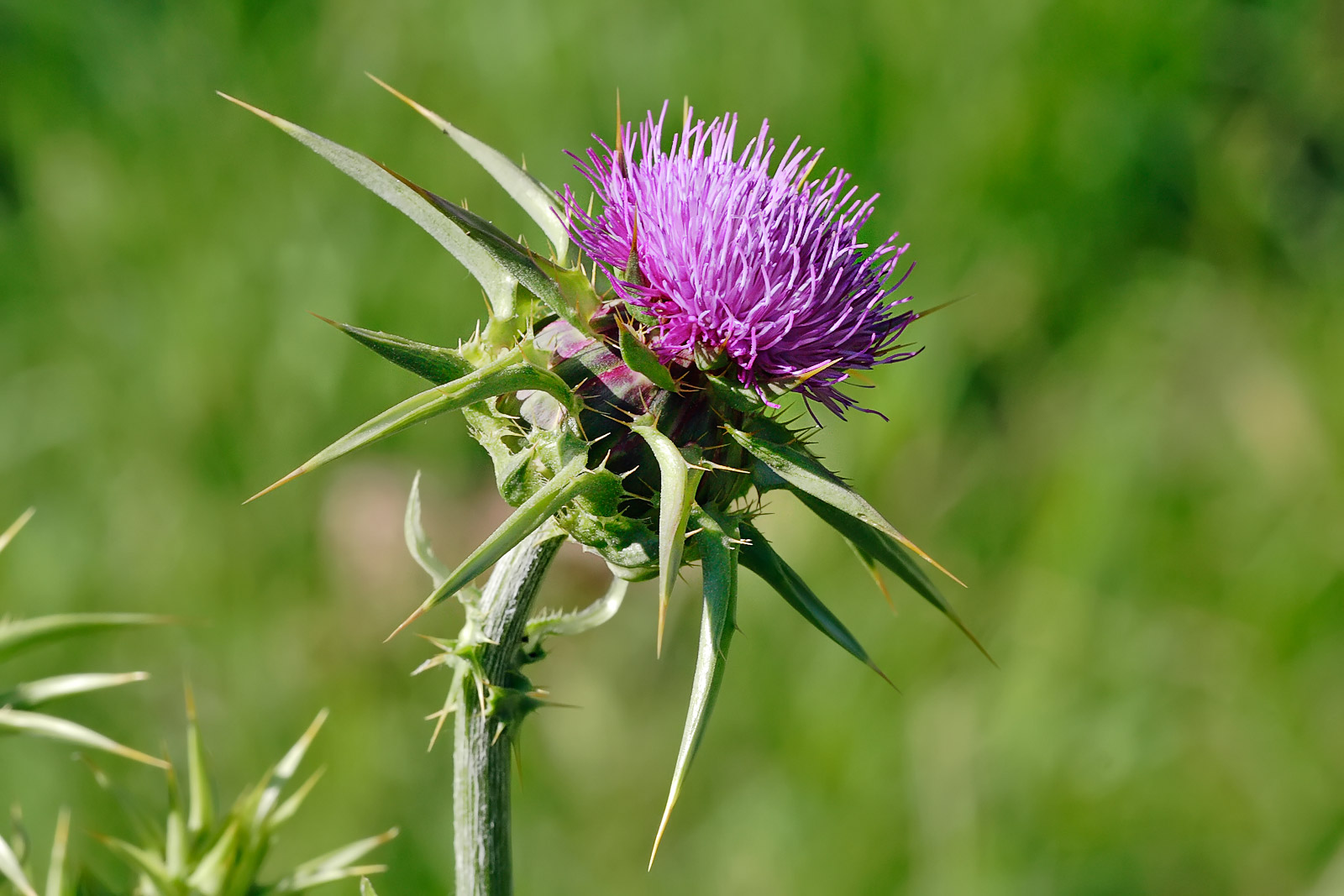
Milk thistle flowerhead
Cirsium arizonicum, showing arachnoid cobwebbiness on stems and leaves, with ants attending aphids that might be taking advantage of the shelter.

Thistle is the common name of a group of flowering plants characterized by leaves with sharp spikes on the margins, mostly in the family Asteraceae. Prickles can also occur all over the plant – on the stem and on the flat parts of the leaves. These prickles protect the plant from herbivores. Typically, an involucre with a clasping shape similar to a cup or urn subtends each of a thistle's flower heads. The typically feathery pappus of a ripe thistle flower is known as thistle-down.[1]

The spininess varies considerably by species. For example, Cirsium heterophyllum has very soft spines while Cirsium spinosissimum is the opposite.[2] Typically, species adapted to dry environments are more spiny.

The term thistle is sometimes taken to mean precisely those plants in the tribe Cardueae (synonym: Cynareae),[3] especially the genera Carduus, Cirsium, and Onopordum.[4] However, plants outside this tribe are sometimes also called thistles.

Biennial thistles are particularly noteworthy for their high wildlife value, producing copious floral resources for pollinators, nourishing seeds for birds like the goldfinch, foliage for butterfly larvae, and down for the lining of birds' nests.[5][6][7]

A thistle is the floral emblem of Scotland and Lorraine, as well as the emblem of the Encyclopædia Britannica.

Taxonomy

[edit]
Spear Thistle Cirsium vulgare in Scotland, 2007
Carduus nutans in the early morning light.
Thistledown, a method of seed dispersal by wind. The tiny seeds are a favourite of goldfinches and some other small birds.
Cirsium horridulum found in southeast Louisiana.

Genera in the Asteraceae with the word thistle often used in their common names include:[citation needed]

Plants in families other than Asteraceae which are sometimes called thistle include:

Ecology

[edit]
Six-spot burnet moths on a thistle flowerhead

Thistle flowers are the favorite nectar sources of the pearl-bordered fritillary, small pearl-bordered fritillary, high brown fritillary, and dark green fritillary butterflies.[8] Thistles and thistle-seed feeders provide important sustenance for goldfinches and the flowers are strongly favoured by many butterflies besides fritillaries such as the monarch, skippers, and the various types of tiger swallowtail. Hummingbirds will feed on the flowers of the biennial species, which feature large flowers, as compared with the perennial creeping thistle.[citation needed]

Some thistles, for example Cirsium vulgare, native to Eurasia, have been widely introduced outside their native range.[9] Control measures include Trichosirocalus weevils. A problem with this approach, at least in North America, is that the introduced weevils may affect native thistles at least as much as the desired targets.[10] Another approach towards controlling thistle growth is using thistle tortoise beetles as a biological control agent; through feeding on thistle plants, thistle tortoise beetles skeletonize the leaves and damage the plant.[11]

Thistles are important nectar sources for pollinators. Some ecological organizations, such as the Xerces Society, have attempted to raise awareness of their benefits to counteract the general agricultural and home garden labeling of thistles as weeds. The monarch butterfly, Danaus plexippus for instance, was highlighted as traditionally relying upon taller large-flowered thistle species such as Tall thistle, Cirsium altissimum, for its migration.[6] Although such organizations focus on the benefits of native thistles, certain non-native thistles, such as Cirsium vulgare in North America, may provide similar benefits to wildlife.[7]

Some prairie and wildflower seed production companies supply bulk seed for native North American thistle species for wildlife habitat restoration, although availability tends to be low. Thistles are particularly valued by bumblebees for their high nectar production. Cirsium vulgare was ranked in the top ten for nectar production in a UK plants survey conducted by the AgriLand project supported by the UK Insect Pollinators Initiative.[7] Bull thistle was a top producer of nectar sugar in another study in Britain, ranked third with a production per floral unit of (2323 ± 418μg).[5]

Uses

[edit]

Pliny and medieval writers thought it could return hair to bald heads and that in the early modern period it was believed to be a remedy for headaches, plague, cancer sores, vertigo, and jaundice.[12][13]

Cuisine

[edit]

In the Beira region, thistle flowers are used as rennet in cheese making. "Serra da Estrela" is not only the name of a mountain chain in this country, "Serra da Estrela" is also the name of one of the most appreciated cheeses made from sheep's milk.[14]

Economic significance

[edit]

Thistles, even if one restricts the term to members of the Asteraceae, are too varied a group for generalisation. Many are troublesome weeds, including some invasive species of Cirsium, Carduus, Silybum and Onopordum.[15] Typical adverse effects are competition with crops and interference with grazing in pastures, where dense growths of spiny vegetation suppress forage plants and repel grazing animals. Some species, although not intensely poisonous, affect the health of animals that ingest them.[16][17]

The genus Cynara includes the commercially important species of artichoke. Some species regarded as major weeds are sources of vegetable rennet used in commercial cheese making.[18] Similarly, some species of Silybum that occur as weeds are cultivated for seeds that yield vegetable oil and pharmaceutical compounds such as Silibinin.[19][20][21]

Other thistles that nominally are weeds are important honey plants, both as bee fodder in general, and as sources of luxury monofloral honey products.[15][22][23]

Culture

[edit]

Symbolism

[edit]

Scottish thistle

[edit]

The thistle has been the national emblem of Scotland since the reign of King Alexander III (1249–1286).[24][25] According to legend, an invading Norse army was attempting to sneak up at night upon a Scottish army's encampment. One barefoot Norseman stepped on a thistle and cried out in pain, thus alerting Scots to the presence of the invaders. Possibly, this happened in 1263 during the Battle of Largs, which marked the beginning of the departure of King Haakon IV (Haakon the Elder) of Norway who, having control of the Northern Isles and Hebrides, had harried the coast of the Kingdom of Scotland for some years.[26]

Reverse of a 1967 florin: thistles, shamrocks, leeks, & rose
Reverse of five pence: crowned thistle

The thistle was used on silver coins first issued by King James III in 1474 as a Scottish symbol and national emblem.[27][28] In 1536, the bawbee, a sixpence in the pound Scots, was issued for the first time under King James V; it showed a crowned thistle. Thistles continued to appear regularly on Scottish and later British coinage until 2008, when a 5p coin design showing "The Badge of Scotland, a thistle royally crowned" ceased to be minted, though it remains in circulation. The Most Ancient and Most Noble Order of the Thistle, the highest and oldest chivalric order of Scotland, has thistles on its insignia and a chapel in St Giles's Kirk, Edinburgh, dubbed the Thistle Chapel. The thistle is the main charge of the regimental badge of the Scots Guards, the oldest regiment in the British Army.

Both the Order of the Thistle and the Scots Guards use the motto Nemo me impune lacessit, the motto of the House of Stuart and referring to the thistle's prickly nature. Pound coins with this motto and a thistle were minted in 1984, 1989, and 2014. The combination of thistle and motto first appeared on the bawbee issued by King Charles II. In 1826, the grant of arms to the new National Bank of Scotland stipulates that the shield be surrounded by thistles and "thistle" is used as the name of several Scottish football clubs. Since 1960, a stylised thistle, also representing the Scottish Saltire, has been the logo of the Scottish National Party.[citation needed] The thistle is also seen as the logo for Scottish Rugby. Many businesses in Scotland choose this symbol to represent their organization.[29]

Since 2013, a different stylised thistle, crowned with the Scottish crown, has been the emblem of Police Scotland, and had long featured in the arms of seven of the eight pre-2013 Scottish police services and constabularies, the sole exception being the Northern Constabulary. As part of the arms of the University of Edinburgh, the thistle appears together with a saltire on one of the escutcheons of the Mercat Cross in Edinburgh. The coat of arms and crest of Nova Scotia ("New Scotland"), briefly Scotland's colony, have since the 17th century featured thistles. Following his ascent to the English throne, King James VI of Scotland & I of England used a badge consisting of a Tudor rose "dimidiated" with a Scottish thistle and surmounted by a royal crown.[30]

As the floral emblem of Scotland it appears in the Royal Arms of the United Kingdom thereafter, and was included in the heraldry of various British institutions, such as the Badge of the Supreme Court of the United Kingdom alongside the Tudor rose, Northern Irish flax, and Welsh leek. This floral combination appears on the present issues of the one pound coin. Beside the Tudor rose and Irish shamrock the thistle appears on the badge of the Yeomen of the Guard and the arms of the Canada Company. Issues of the historical florin showed the same flora, later including a leek.[citation needed]

The thistle is also used to symbolise connection with Scotland overseas. For example, in Canada, it is one of the four floral emblems on the flag of Montreal; in the US, Carnegie Mellon University features the thistle in its crest in honour of the Scottish heritage of its founder, Andrew Carnegie, and Annapolis, Maryland features the thistle in its flag and seal. The thistle is also the emblem of the Encyclopædia Britannica (which originated in Edinburgh, Scotland) and Jardine Matheson Holdings Limited (as the company was founded by two Scots).

Which species of thistle is referred to in the original legend is disputed. Popular modern usage favours cotton thistle (Onopordum acanthium), perhaps because of its more imposing appearance, though it is not native and unlikely to have occurred in Scotland in mediaeval times. The spear thistle (Cirsium vulgare), an abundant native species in Scotland, is a more likely candidate.[31][32] Other species, including dwarf thistle (Cirsium acaule), musk thistle (Carduus nutans), and melancholy thistle (Cirsium heterophyllum) have also been suggested.[33]

Thistle of Lorraine

[edit]
Coat of arms of Nancy, former capital of the Duchy of Lorraine

The thistle, and more precisely Onopordum acanthium, is one of the symbols of Lorraine, together with its coat of arms which displays three avalerions, and the Cross of Lorraine.[citation needed]

Lorraine is a region located in northeastern France, along the border with Luxembourg and Germany. Before the French Revolution, a large part of the region formed the Duchy of Lorraine. In the Middle Ages, the thistle was an emblem of the Virgin Mary because its white sap would bring to mind the milk falling from the breast of the Mother of God. It was later adopted as a personal symbol by René of Anjou, together with the Cross of Lorraine, then known as the Cross of Anjou. It seems through his book Livre du cuer d'amours espris that the Duke chose the thistle as his emblem not only because it was a Christian symbol, but also because he associated it with physical love.[34]

The thistle and the cross were used again by his grandson, René II, Duke of Lorraine, who introduced them in the region. The two symbols became hugely popular among the local people during the Battle of Nancy in 1477, during which the Lorrain army defeated Burgundy. The Duke's motto was "Qui s'y frotte s'y pique", meaning "who touches it, pricks oneself", with a similar idea to the Scottish motto "Nemo me impune lacessit". Nowadays the thistle is still the official symbol of the city of Nancy, as well as the emblem of the AS Nancy football team, and the Lorraine Regional Natural Park.[35][36]

Place names

[edit]

Carduus is the Latin term for a thistle (hence cardoon, chardon in French), and Cardonnacum is a Late Latin word for a place with thistles. This is believed to be the origin of name of the Burgundy village of Chardonnay, Saône-et-Loire, which in turn is thought to be the home of the famous Chardonnay grape variety.

References

[edit]
[edit]
Revisions and contributorsEdit on WikipediaRead on Wikipedia
from Grokipedia
Thistles comprise a diverse group of flowering plants primarily within the Asteraceae family, particularly genera such as Cirsium, Carduus, and Onopordum, characterized by herbaceous growth forms with spiny, prickly leaves featuring sharp marginal spines and capitula of tubular florets typically in shades of purple, pink, or white. These biennial or perennial species, often reaching heights of 0.5 to 2 meters, originate mainly from Eurasia and North Africa, with watery stem sap and feathery pappus aiding seed dispersal by wind. Ecologically, thistles serve as vital resources for wildlife; native varieties attract pollinators like bees and butterflies with abundant nectar, support bird seed consumption, and host specialist insects, though introduced species such as bull thistle (Cirsium vulgare) and Canada thistle (Cirsium arvense) are notorious invasives that outcompete crops and native flora through rhizomatous spread and allelopathy. Certain thistles, notably milk thistle (Silybum marianum), have documented hepatoprotective properties due to silymarin compounds, utilized in traditional and modern herbal medicine. In and , the thistle symbolizes resilience and defense, purportedly earning its status after Norse invaders were repelled when their bare feet encountered the spines during a nocturnal , with formal adoption as a royal emblem traceable to coinage under James III in 1470 and institutionalization in the .

Botanical Characteristics

Physical Features

Thistles, primarily in the genera Cirsium, Carduus, and Onopordum within the Asteraceae family, are herbaceous plants distinguished by their spiny foliage and composite inflorescences. Stems are typically erect and branched, ranging from 0.3 to 2 meters in height depending on species and conditions, often featuring longitudinal spines or wings formed by decurrent leaf bases. Leaves are alternate, sessile or clasping, and deeply lobed or pinnatifid with margins armed by sharp, rigid spines up to 1 cm long; upper surfaces are green and glabrous or sparsely hairy, while lower surfaces may be tomentose, imparting a whitish hue. Inflorescences consist of capitula with 50 to 200 tubular disc florets per head, colored , pink, or occasionally white, subtended by imbricate phyllaries that are often spine-tipped and form a cylindrical to ovoid involucre 2-5 cm long. Cypselae (fruits) are achenes, elongated and ribbed, topped by a pappus of feathery bristles 1-3 cm long that facilitate wind dispersal.

Reproductive Biology

Thistles, primarily in the genera Cirsium and Carduus of the Asteraceae family, exhibit primarily sexual reproduction through composite flower heads consisting of numerous tubular florets. Most species produce hermaphroditic flowers, though some like Cirsium arvense (Canada thistle) are dioecious, with separate male and female plants. Pollination is predominantly entomophilous, relying on insects such as bees and butterflies for cross-pollination, as observed in species like Cirsium palustre (marsh thistle), which is out-crossing and produces viable seeds via insect vectors. Following , thistles develop single-seeded cypselas (achenes) equipped with a pappus of feathery bristles, facilitating dispersal. A single flowering stem can yield hundreds to thousands of seeds; for instance, produces up to 1,500 seeds per stalk, with dispersal distances varying based on conditions but typically limited to tens of meters for many . Seeds remain viable in for several years, contributing to persistent populations. Vegetative reproduction occurs in certain perennial species, notably , which spreads via extensive horizontal rhizomes capable of regenerating new shoots from root fragments, enabling rapid clonal expansion independent of seed production. In contrast, biennial thistles such as (bull thistle) and (musk thistle) rely exclusively on seed propagation, lacking rhizomatous growth. This dual strategy in some taxa enhances invasiveness, particularly in disturbed habitats.

Taxonomy

Classification and Genera

Thistles comprise a polyphyletic group of flowering plants primarily within the family (Compositae), order , characterized by spiny or prickly foliage and capitula inflorescences, though the common name is most consistently applied to members of the tribe Cynareae (synonym Cardueae in broader circumscriptions). This tribe, part of the subfamily Carduoideae, includes approximately 70–80 genera and over 2,500 species worldwide, many of which exhibit thistle-like traits such as pappus bristles and spinose bracts. The classification emphasizes morphological features like spinulose leaves and cypselae with plumose pappi, distinguishing Cynareae from other tribes, though molecular phylogenies have refined subtribal boundaries since the 2000s. The core genera denoted as thistles include (plume thistles), with roughly 250 species of mostly biennial or perennial herbs native to temperate regions of the ; Carduus (plume-less thistles), encompassing about 100 Eurasian species often with simpler pappi; and Onopordum (cotton thistles), featuring around 50–60 species known for large, spiny rosettes and gray-cottony pubescence. Other notable genera are (milk thistles, ca. 2–3 species with variegated leaves and medicinal notoriety), (including the domesticated , C. scolymus, with ca. 10 species), and occasionally Echinops or , though the latter are sometimes distinguished as non-thistle due to less pronounced spininess. These genera share ecological roles as ruderal or disturbance-adapted plants but vary in levels (often polyploid) and breeding systems, with Cirsium species frequently exhibiting hybridization that complicates species delimitation. Taxonomic revisions, informed by (e.g., ITS and markers), have upheld Cynareae as monophyletic while reassigning some peripheral taxa, such as certain Sonchus species occasionally mislabeled as thistles due to superficial similarities. In , where ca. 60 Cirsium species occur natively, classification often relies on regional floras emphasizing capitulum structure and phyllary morphology for genus-level identification.

Etymology and Historical Naming

The English word thistle derives from þistel, attested before 1150, which stems from Proto-Germanic *þistilaz, likely connected to a meaning "to stick" or "pointed," reflecting the plant's characteristic spines and prickles. This etymon appears in early to denote prickly herbaceous plants of the family, particularly those in the tribe Cardueae, and has persisted in as thistel without significant alteration. In botanical taxonomy, the primary genus Cirsium—encompassing over 250 thistle species—originates from the kirsion or cirsos, referring to a swollen or varicosity, as thistles were reputed in classical medicine to treat such afflictions through their astringent properties. This nomenclature traces to the 1st-century pharmacologist Dioscorides, who documented thistle remedies for vascular swellings in , influencing Linnaean classification in the . Other thistle genera bear etymologies tied to morphology or lore: from Latin carduus for "thistle" itself, evoking its carding-like spines used historically in wool processing; and Onopordum, from Greek onos ("ass") and pordon ("flatulence" or "tail"), alluding to the plant's bur-like seeds or ass-ear-shaped leaves noted by in the 1st century CE. Historically, thistle naming emphasized regional utility, defensive spines, or symbolic roles rather than strict ; for instance, Cirsium vulgare was termed "spear thistle" in medieval for its lanceolate leaves, while "bull thistle" emerged in 19th-century American usage to distinguish robust forms from slimmer European variants. In , the thistle—likely Onopordum acanthium or Cirsium vulgare—gained emblematic status by the reign of King Alexander III (1249–1286), formalized as the national badge in by the , symbolizing resilience amid of repelling Norse invaders in 1263 via its pricking bare feet, though this tale lacks contemporary attestation and reflects later nationalist myth-making. Ancient Mediterranean texts, including those of (c. 371–287 BCE), grouped thistles under broad prickly composites (skolymos), prioritizing medicinal over taxonomic distinctions.

Recent Taxonomic Developments

In 2023, phylogenomic analyses of the Carduus-Cirsium group (subtribe Carduinae, Asteraceae) prompted the recognition of three new genera—Afrocarduus, Afrocirsium, and Nuriaea—for tropical African mountain thistles previously classified under Cirsium or related taxa, resolving their distinct evolutionary lineages through concatenated and coalescent-based phylogenies. This revision split Cirsium into four genera, elevating Cassini's historical subgenus Lophiolepis to generic status based on morphological and molecular synapomorphies, such as phyllary and achene traits. The study sampled 20 endemic African species, highlighting Nuriaea's placement outside the core Carduus-Cirsium clade. A 2024 critique challenged the of Lophiolepis relative to Cirsium, arguing that bootstrap support and alternative markers (e.g., nrITS, plastid regions) do not robustly justify the split, potentially favoring a broader Cirsium circumscription pending further genomic data. Concurrently, North American Cirsium phylogenies from 2023, incorporating divergence dating and biogeographic modeling, identified rapid radiations post-Pliocene, with no single morphological innovation driving diversification but evidence of in taxa like C. eatonii var. eriocephalum. Species-level revisions include the 2023 description of tukuhnikivatzicum, endemic to Utah's Bears Ears region, distinguished from C. eatonii by compact inflorescences, pubescent phyllaries, and phylogenetic clustering as a distinct lineage via nrITS and AFLP markers. In 2022, funkiae was named for populations, separated by leaf dissection and habitat specificity in the , supported by morphological comparisons amid ongoing cryptic diversity in alpine thistles. A 2025 analysis of East Asian sect. Nivulosa documented chromosome number variation (2n=2x=34 to 2x=36) correlating with phylogenetic splits, implicating dysploidy and hybridization in . These developments underscore thistles' taxonomic complexity, driven by hybridization, , and incomplete lineage sorting, with molecular tools increasingly resolving historical lumping.

Distribution and Habitat

Native Distributions

Thistles, encompassing species primarily in the genus Cirsium within the Asteraceae family, have native distributions centered in the temperate and Mediterranean regions of the Northern Hemisphere. The genus Cirsium, comprising approximately 250 species, originated predominantly in Eurasia and North Africa, with significant endemism in Europe where species like Cirsium vulgare (bull thistle) occur from the British Isles across western Asia to northern Africa. Similarly, Cirsium arvense (Canada thistle) is indigenous to southeastern Europe and the eastern Mediterranean basin, thriving in disturbed grasslands and meadows. In , around 60 Cirsium species are native, distributed from southward to Mexico and eastward across prairies, mountains, and coastal areas, including endemics like Cirsium discolor (field thistle) in the central and eastern United States. These native North American thistles often occupy diverse habitats such as wetlands, dry ridges, and serpentine soils, reflecting adaptations to regional climates. Related genera, such as Onopordum (e.g., O. acanthium, Scotch thistle), share native ranges in and western , particularly in arid steppes and rocky slopes. While the core native range emphasizes Old World origins for most cosmopolitan species, North American natives demonstrate independent evolutionary radiations, with no evidence of pre-colonial introductions from based on phylogenetic studies. Distributions are corroborated by records and floristic surveys, showing concentrations in Mediterranean climates for southern extents and boreal zones northward.

Introduced and Invasive Ranges

Several thistle species, primarily from the genera and , native to and , have been introduced to new continents through contaminated agricultural seeds, ballast, or accidental transport, establishing invasive populations that outcompete native flora in disturbed habitats. thistle (), originating in , , and (including regions from southeastern to China), was first documented in in the 1600s, likely via imported crop seeds, and now infests over 100 million acres across the U.S. and , designated as a in 43 U.S. states; it has also invaded , , southern Africa, and parts of , thriving in moist, disturbed sites like pastures, roadsides, and wetlands. Bull thistle (), native to (from Britain to ), western , and northern , reached by the early 1800s and has spread to all 50 U.S. states, most Canadian provinces, and territories, as well as and , where it invades open disturbed areas such as forest clearcuts, riparian zones, and grasslands, forming dense thickets that reduce forage quality. It is reported invasive in at least 22 U.S. states including , , and , with populations documented in all 39 Washington counties. Musk thistle (), from western and , northern , and western , was introduced to the eastern U.S. in the early 1800s (with some records from the 1900s in the Midwest) and now occupies millions of acres across over 40 U.S. states—concentrated in the Midwest, , and West—as well as southern , , , and , favoring alluvial soils in pastures, roadsides, and waste areas but adaptable to uplands. These introductions lack native herbivores and pathogens, enabling rapid expansion via wind-dispersed seeds that travel up to 100 km.

Ecology

Ecological Roles of Native Species

Native thistle in the genus fulfill critical roles in their indigenous ecosystems, primarily as and sources for pollinators and providers for granivorous birds. These support a diverse array of , including bees, , and moths, during late-season flowering periods that align with peak needs. Species such as Cirsium discolor (field thistle) attract butterflies, including monarchs (Danaus plexippus), which preferentially visit native thistles for their high-sugar nectar, more than other wildflowers. This nectar resource sustains migrating and resident pollinators, while the plants host larvae of specialist moths and butterflies, contributing to insect biodiversity. Additionally, thistle flowers draw generalist visitors like beetles, flies, and specialist bees adapted to Cirsium pollen. Post-flowering, thistle seed heads serve as a vital source for seed-eating birds, notably American goldfinches (Spinus tristis), which consume the nutrient-rich seeds in late summer and fall, aiding avian nutrition during breeding seasons. Native thistles also support herbivorous insects like grasshoppers and provide structure in grasslands and prairies, enhancing overall resilience without the competitive dominance seen in invasive congeners.

Interactions with Pollinators and Wildlife

Thistle inflorescences produce copious nectar and pollen, rendering them highly attractive to a diverse array of pollinators, including native bees, butterflies, moths, wasps, and hummingbirds. Species such as field thistle (Cirsium discolor) draw in sweat bees (Halictidae), bumblebees (Bombus spp.), and butterflies, which forage extensively on the tubular florets despite the surrounding spines. Native thistles, in particular, function as key late-season nectar sources for monarch butterflies (Danaus plexippus) and other lepidopterans, supporting migration and reproduction amid declining floral resources. Beyond , thistles interact with through seed and structural provisions. The tiny, plumed seeds serve as a staple diet for granivorous birds, notably American goldfinches (Spinus tristis), which extract them from maturing heads in late summer, aligning breeding cycles with peak seed production. Thistledown, the silky pappus attached to seeds for wind dispersal, is harvested by goldfinches and other small birds to line nests, providing insulation due to its buoyant, fibrous nature. Larval stages of certain moths and , including those in the genus Vanessa, consume thistle foliage and stems, establishing specialized herbivore-pollinator linkages within native ecosystems. These interactions underscore thistles' role in sustaining food webs, though overreliance on non-native species can disrupt local dynamics by outcompeting natives.

Environmental Adaptations

Thistles in the genus demonstrate physiological and morphological adaptations that facilitate persistence in disturbed, nutrient-poor, or fluctuating environments. Species such as field thistle (C. discolor) thrive in full sun to partial shade with average to dry , often establishing where competing vegetation is reduced, enabling colonization of open or anthropogenic habitats. Bull thistle (C. vulgare) exhibits seed germination tolerant of low water potentials compared to other thistles, supporting establishment in semi-arid or variably moist conditions. Prominent spines on leaves, stems, and involucral bracts constitute a key anti-herbivory adaptation, deterring mammalian grazers and protecting reproductive structures during seed maturation, as observed across Cirsium species in pastures and rangelands. These physical defenses, combined with tomentose or glabrous leaf surfaces in certain taxa, minimize tissue loss in exposed settings. Canada thistle (C. arvense) develops extensive horizontal rhizomes and deep vertical roots exceeding 3 meters, enhancing drought resistance by accessing subsurface water and allowing vegetative regeneration post-disturbance. However, seedlings of this species show low tolerance to prolonged drought or waterlogged, poorly aerated soils, underscoring stage-specific vulnerabilities. Reproductive adaptations further bolster environmental resilience; plumed pappus structures on achenes enable wind-mediated dispersal over distances, reducing reliance on local conditions for propagation, as in C. vulgare. The typical biennial lifecycle—featuring a low-growing rosette stage for resource accumulation and overwintering—permits survival through unfavorable seasons before bolting and flowering, a strategy adaptive to temperate climates with periodic disturbances. Marsh thistle (C. palustre) contrasts with lower drought tolerance, reflecting habitat-specific specialization in wetter meadows where leaf wilting occurs after extended dry periods. Overall, these traits contribute to Cirsium's broad habitat occupancy, from overgrazed prairies to forest edges, though invasiveness in non-native ranges often amplifies their success via reduced biotic pressures.

Invasiveness and Management

Invasive Species Profiles

Canada Thistle (Cirsium arvense)
Canada thistle, a perennial herb native to Europe and Asia, has become one of the most widespread invasive thistles in North America, infesting croplands, pastures, roadsides, and disturbed habitats. It grows 1-1.5 meters tall with smooth stems lacking spines, deeply lobed leaves with wavy margins and prickles, and small purple flower heads clustered at stem tips. The plant spreads aggressively via extensive horizontal rhizomes, forming dense monocultures that exclude native vegetation through competition for light, water, and nutrients; it also reduces forage yields by up to 50% in pastures and causes crop losses exceeding $250 million annually in the U.S. alone. Designated as noxious in 42 U.S. states, its dioecious nature—separate male and female plants—facilitates wind-dispersed seeds viable for up to 20 years, exacerbating long-term persistence.
Bull Thistle (Cirsium vulgare)
Bull thistle, a biennial or monocarpic perennial originating from , invades disturbed sites such as roadsides, pastures, and burned areas across the U.S., where it forms short-lived but dense stands. In its first year, it develops a basal rosette up to 1 meter wide with a deep ; the second-year flowering stem reaches 1-2 meters, featuring spiny, winged stems, coarsely lobed leaves with white midribs and marginal spines up to 1 cm long, and solitary to clustered reddish-purple flower heads 3-5 cm wide. Each plant produces 4,000-5,000 , dispersed by wind and viable for over a , enabling rapid colonization of nitrogen-rich, moist soils while outcompeting natives and reducing hay quality due to its unpalatability to . It thrives in full sun and tolerates a range of 5.5-7.5 but struggles in heavy shade or waterlogged conditions.
![Musk thistle inflorescence][inline]
Musk Thistle (Carduus nutans)
Musk thistle, a biennial herb from southern Europe and western Asia, was introduced to the U.S. in the early 1900s and now infests over 1.5 million acres, primarily in the Midwest and South, targeting pastures, rights-of-way, and overgrazed rangelands. Rosettes in the first year give way to erect stems 0.5-2 meters tall, with spiny, deeply lobed leaves and distinctive nodding, globe-shaped flower heads 4-7 cm across in pink-to-purple hues. A single plant can generate up to 120,000 seeds with a pappus for wind dispersal, remaining viable in soil for 10 years and spreading via water, machinery, or animals, leading to dense patches that displace native forbs and grasses. Its low palatability deters grazing, resulting in forage losses of 20-60% in infested pastures, and it alters fire regimes by increasing fuel loads from dead biomass. Listed as noxious in 39 states, it prefers disturbed, sunny sites with moderate moisture but adapts to drier conditions.

Ecological and Economic Impacts

Invasive thistle species, particularly (Canada thistle) and (musk thistle), exert significant ecological pressure by outcompeting native plants for light, water, and nutrients, often forming dense monocultures that diminish diversity in grasslands, prairies, and rangelands. This competitive dominance, coupled with potential allelopathic effects that inhibit neighboring plant growth, leads to reduced and altered community structures, threatening non-forested ecosystems such as barrens and wetlands. For instance, bull thistle () further exacerbates these impacts by depleting soil moisture and nutrients, hindering native species regeneration. These invasions disrupt habitats by lowering quality and availability, as thistles' spiny structures deter and their proliferation reduces palatable for herbivores. In restored grasslands, high thistle densities correlate with decreased floral and faunal diversity, amplifying instability. Native pollinators and may experience indirect effects through habitat homogenization, though some thistle species serve as temporary nectar sources amid broader declines. Economically, invasive thistles impose substantial costs on by reducing crop yields through direct competition and interference with harvesting equipment. Canada thistle, for example, forms persistent patches that lower productivity and rangeland carrying capacity, displacing desirable and necessitating ongoing . In row crops and grasslands, these weeds contribute to yield losses and increased operational expenses, with Canada thistle linked to widespread reductions in and production due to its early-season vigor. Musk thistle similarly degrades grazing lands, compounding economic burdens through diminished livestock productivity. Control efforts, including herbicides and mechanical methods, add further financial strain, particularly in infested regions of .

Control Strategies and Debates

Control of invasive thistles, such as Cirsium arvense (Canada thistle) and Carduus nutans (musk thistle), typically employs an integrated approach combining mechanical, chemical, cultural, and biological methods to deplete root reserves and prevent seed production, as these perennials propagate vegetatively and via wind-dispersed seeds. Mechanical strategies include repeated mowing or cutting at the rosette stage (typically late spring) every 3-4 weeks to exhaust carbohydrate stores in extensive root systems, which can extend 3-5 meters deep; studies indicate this alone may achieve biomass reductions comparable to herbicides in some pastures when sustained over multiple seasons, though regrowth persists without follow-up. Tillage disrupts roots but risks spreading fragments, limiting its use in non-crop areas. Chemical control relies on systemic broadleaf herbicides applied during active growth, such as 2,4-D amine (1-2 quarts per acre) or (0.06-0.12 pounds active ingredient per acre) in fall to target roots, achieving 80-95% initial shoot kill for C. arvense but requiring 2-3 annual applications over years due to incomplete root eradication. offers non-selective control in spot treatments, while combinations like plus 2,4-D suppress C. nutallii effectively at rates of 4-6 ounces and 11-17 ounces per acre, respectively. Cultural methods involve fostering competitive vegetation, such as seeding or forage grasses post-disturbance, which outcompetes thistles for light and nutrients, reducing infestations by up to 70% in pastures over time. Biological agents include host-specific insects like the musk thistle crown weevil (Trichosirocalus horridus) for C. nutans, which larvae bore into rosettes, stunting growth and reducing seed set by 50-90% in established populations, and the rust fungus Puccinia punctiformis for C. arvense, which induces galls and systemic infection to weaken plants, though field efficacy varies (20-60% suppression) due to environmental factors like humidity. High-intensity, low-frequency grazing with rotational systems has also curtailed C. arvense shoot density by stressing plants during bud formation. Debates center on balancing short-term against long-term and ecological risks; herbicides provide rapid, high-kill rates (e.g., 90%+ for targeted applications) but face for developing resistance in C. arvense populations, non-target damage to broadleaf crops or natives, and runoff , prompting calls for restricted use in sensitive habitats. Biological controls are advocated for permanence and minimal —offering cost savings after establishment (e.g., weevils self-perpetuate)—yet empirical data shows inconsistent impact without augmentation, such as inoculating at high densities, leading some researchers to argue they underperform standalone compared to integrated herbicide-biocontrol pairings. Non-chemical options like mowing or match herbicide success in meta-analyses for biomass reduction but demand intensive labor and monitoring, fueling discussions on scalability for large infestations versus preferences. Overall, evidence supports adaptive, site-specific integration over singular reliance, with understudied synergies (e.g., plus ) warranting further trials to optimize outcomes amid varying climates and land uses.

Human Uses

Medicinal Applications

Milk thistle (Silybum marianum), containing the active compound silymarin, has been employed traditionally for liver disorders including hepatitis, cirrhosis, and fatty liver disease. Clinical trials have yielded mixed results; a review of studies on patients with liver cirrhosis indicated trends toward improved survival in some subgroups, such as those with alcoholic cirrhosis, but no overall reduction in mortality or consistent histological improvements. Higher doses of silymarin failed to significantly lower serum ALT levels beyond placebo in chronic hepatitis C patients. Silymarin exhibits and properties in preclinical models, potentially mitigating liver and in conditions like non-alcoholic (NASH), though a randomized of 700 mg thrice daily for 48 weeks did not achieve significant reductions in NAFLD activity scores. Preliminary evidence suggests benefits for dyspepsia and blood sugar control in , but larger studies are required to substantiate these effects. Blessed thistle (Cnicus benedictus) is utilized traditionally as a bitter tonic to stimulate , increase , and treat , colds, and fever. It contains sesquiterpene lactones with purported and actions, yet clinical evidence remains scant, with systematic reviews highlighting insufficient high-quality trials to confirm . Historical uses include as a , though data on support is anecdotal. Other thistle species, such as creeping thistle (Cirsium arvense), show potential in vitro anti-inflammatory and antidiabetic properties from flavonoids and inulin, but human trials are lacking, limiting applications to exploratory or traditional contexts. Overall, while thistles offer bioactive compounds with pharmacological promise, rigorous evidence supports only adjunctive roles in liver support, with cautions for interactions and variable standardization in supplements.

Culinary and Nutritional Uses

Young roots of thistles such as (bull thistle) can be harvested, cleaned, and eaten raw or roasted similarly to potatoes, providing a starchy texture when cooked. Older taproots from first-year plants may be roasted for a coffee-like beverage or ground into after drying. Peeled young stems or flower stalks from species like nodding thistle () are tender and can be consumed raw in salads, dipped in dressings, boiled as a , or stir-fried after removing spines, offering a mild, artichoke-like flavor. Inner leaf midribs, once spines are trimmed, provide an edible, fibrous component suitable for raw or cooked preparations. Young flower heads, with spiny bracts removed, can be steamed or boiled akin to globe artichokes. Seeds from thistles, including milk thistle (Silybum marianum), yield edible oil after processing—approximately 3 pounds from 12 pounds of seeds—and can be ground into powder for addition to smoothies, oatmeal, or baked goods, imparting a nutty taste. While primarily medicinal, milk thistle leaves and roots have been used historically as a digestive tonic or appetite stimulant in food preparations. Nutritionally, thistle foliage, particularly Canada thistle (Cirsium arvense), averages 12.8% crude protein across growth stages, ranging from 8% in mature plants to 27% in young shoots, with high levels of fiber, phosphorus, magnesium, calcium, copper, and zinc—often exceeding values in common greens on a weight basis. Leaves and stems contain vitamins A, C, and K, plus minerals like potassium and iron, comparable to alfalfa in forage value without associated bloat risks for livestock, suggesting potential human benefits when prepared safely. Preparation requires caution to remove irritants, as raw consumption may cause digestive discomfort in some individuals due to fibrous spines or latex.

Industrial and Agricultural Applications

Milk thistle (Silybum marianum) seed oil, obtained as a byproduct following silymarin extraction in industrial processing, serves as a non-edible feedstock for biodiesel production. Research has shown that transesterification of this oil, facilitated by cosolvent methods such as methanol-tetrahydrofuran mixtures, yields biodiesel with properties meeting ASTM standards, including densities of 0.86–0.88 g/cm³ and viscosities of 4.5–5.2 mm²/s at 40°C, positioning it as a viable alternative to conventional vegetable oils. Optimized extraction techniques, such as enzyme-assisted solvent methods, enhance oil recovery rates up to 35–40% from seeds, supporting scalable industrial applications beyond medicinal derivatives. In agricultural contexts, extracts from creeping thistle () demonstrate potential as biopesticides. Systematic reviews of ethnobotanical and experimental data indicate insecticidal effects against pests like and fungicidal activity against pathogens such as species, attributed to bioactive compounds including and sesquiterpene lactones, offering a natural alternative for in . However, widespread adoption remains constrained by variability in efficacy and the plant's invasive nature, necessitating further field trials for practical deployment. Limited experimental efforts have also explored thistle stem fibers for cordage in low-scale applications, though no commercial production has been established due to processing challenges.

Cultural and Symbolic Importance

Heraldry and National Symbols

The thistle has been a prominent symbol in since at least the 13th century, during the reign of Alexander III, and is officially recognized as Scotland's national flower. It embodies resilience and defense, qualities attributed to its prickly nature, and has appeared in royal badges, coins, and emblems for over 500 years. A key legend traces the thistle's adoption as a to the on 2 October 1263, when invading Norse forces, advancing barefoot under cover of night, stepped on thistles and cried out in pain, alerting Scottish defenders who subsequently repelled the attack. This event, though possibly apocryphal, underscores the thistle's association with protection against invasion, a theme reinforced in Scottish . In heraldic tradition, the thistle features centrally in the , Scotland's highest chivalric order, revived in its modern form by King James VII in 1687, with roots potentially dating to James III (1460–1488) or earlier legends from 809. The order's insignia includes the thistle crowned, encircled by the motto ("No one provokes me with impunity"), and is limited to the and 16 knights or ladies appointed for outstanding contributions to or the . The thistle also appears in the royal badge of , on such as coins from James IV's reign (1488–1513), and in combined emblems like the badge dimidiating the thistle with the after 1603. Beyond Scotland, the thistle holds heraldic significance in the arms of , where it represents the emblem of the , integrated into the city's since the 14th century. In the , it serves as one of the plant badges alongside England's , Wales' , and Northern Ireland's , symbolizing regional identities in broader British .

Folklore and Mythology

In , the thistle is central to a dating to the 13th century during the reign of King Alexander III, recounting how it thwarted a Norse invasion. According to the tale, invaders under King of attempted a nocturnal surprise attack on a sleeping Scottish encampment near in 1263, but barefoot warriors stepped on thistles, causing involuntary cries of pain that alerted the Scots and enabled their victory. This event purportedly elevated the thistle to symbolic status, though the story lacks contemporary historical corroboration and likely emerged later as patriotic myth. Beyond , thistles feature in broader as protective charms against malevolent forces. In pagan and Celtic traditions, the plant's spines were believed to repel thieves, evil spirits, and ; carrying thistle or planting it near homes was thought to purify spaces and safeguard inhabitants. Culpeper's 1652 attributed thistle with virtues against venomous bites and plagues, reflecting medieval beliefs in its apotropaic powers, though these claims stem from rather than empirical validation. Symbolically, thistles embody resilience and defiance in Celtic lore, representing bravery, determination, and noble endurance amid adversity, qualities tied to their hardy growth in harsh terrains. In some traditions, the plant's appearance foretold rain or warded gloomy thoughts, underscoring its role in folk divination and mental fortitude rituals. These attributions persist in modern herbalism but derive from anecdotal lore, not controlled studies.

Place Names and Toponymy

Thistle-derived toponyms typically arise from the plant's prevalence in landscapes characterized by spiny vegetation, serving as descriptive markers in naming conventions. The English word "thistle" itself traces to þistel, denoting prickly herbaceous plants, and such terms often appear in topographic names for locales overgrown with thistles. In the United States, , exemplifies this pattern; located in County within Spanish Fork Canyon, the settlement was named for the abundant (Canadian thistle) in the valley. Founded in the as a Mormon pioneer outpost and later a vital railroad junction on the Denver and Rio Grande Western line, it peaked at around 650 residents by the before a catastrophic on April 14, 1983—triggered by heavy winter and —buried most structures under 15-20 meters of debris, rendering it a with only partial ruins and a relocated highway visible today. In , the French village of in , , originates from Cardonnacum, a compound of carduus (Latin for thistle, akin to the genus ) and the locative suffix -acum, signifying "estate or place of thistles." Documented since Roman times, the name reflects thistle-infested terrain, and the locality is posited as the cradle of the grape , though varietal dissemination occurred later via monastic propagation. Other instances include Thistle Island on Fourth Lake in , presumably named for local thistle growth, though etymological records are sparse; such names underscore thistles' role as ecological indicators in wetland or meadow environments. In Britain, thistle elements sporadically inform surnames like Thistlethwaite (from "thistle field" or "clearing"), which may echo lost or minor toponyms tied to agrarian landscapes.

References

Add your contribution
Related Hubs
User Avatar
No comments yet.