Hubbry Logo
Crew Return VehicleCrew Return VehicleMain
Open search
Crew Return Vehicle
Community hub
Crew Return Vehicle
logo
8 pages, 0 posts
0 subscribers
Be the first to start a discussion here.
Crew Return Vehicle
Crew Return Vehicle
from Wikipedia

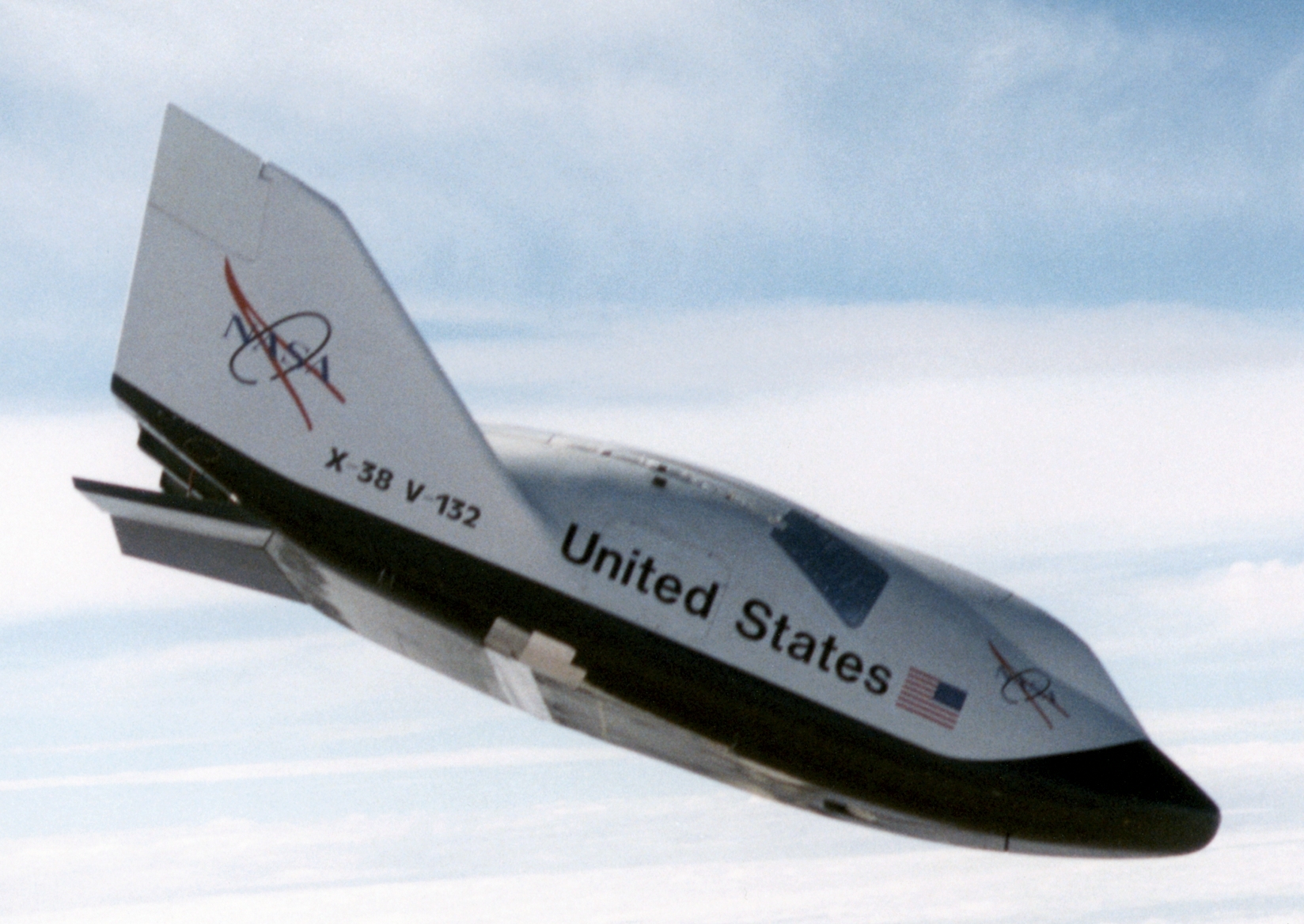
ISS Crew Return Vehicle – CRV (X-38 Prototype)

The Crew Return Vehicle (CRV), sometimes referred to as the Assured Crew Return Vehicle (ACRV), was a proposed dedicated lifeboat or escape module for the International Space Station (ISS). A number of different vehicles and designs were considered over two decades – with several flying as developmental test prototypes – but none became operational. Since the arrival of the first permanent crew to the ISS in 2000, the emergency return capability has been fulfilled by Soyuz spacecraft and, more recently, SpaceX's Crew Dragon – each rotated every 6 months.

In the original space station design, emergencies were intended to be dealt with by having a "safe area" on the station that the crew could evacuate to, pending a rescue from a U.S. Space Shuttle. However, the 1986 Space Shuttle Challenger disaster and the subsequent grounding of the shuttle fleet caused station planners to rethink this concept.[1] Planners foresaw the need for a CRV to address three specific scenarios:

  • Crew return in case of unavailability of a Space Shuttle or Soyuz capsule;
  • Prompt escape from a major time-critical space station emergency;
  • Full or partial crew return in case of a medical emergency.[2]

Medical considerations

[edit]

The ISS is equipped with a Health Maintenance Facility (HMF) to handle a certain level of medical situations, which are broken into three main classifications:

  • Class I: non-life-threatening illnesses and injuries (headache, lacerations).
  • Class II: moderate to severe, possibly life-threatening (appendicitis, kidney stones).
  • Class III: severe, incapacitating, life-threatening (major trauma, toxic exposure).

However, the HMF is not designed to have general surgical capability, so a means of evacuating a crew member in case of a medical situation that is beyond the HMF's capabilities is essential.[2][citation needed]

A number of studies have attempted to assess the medical risks for long-term space station habitation, but the results are inconclusive, as epidemiological data is lacking. It is, however, understood that longer periods in space increase the risk of serious problems. The closest estimates show an illness/injury rate of 1:3 per year, with 1% estimated to require emergency evacuation by means of a CRV. For an eight-person ISS crew, this results in an expected need for a CRV flight once every 4 to 12 years. These estimates have been partially corroborated by experiences on board the Soviet Union's Mir space station. In the 1980s, the Soviets had at least three incidents where cosmonauts had to be returned under urgent medical conditions.[2]

Because of its potential use as a medical evacuation method, the CRV design was required to address a number of issues that are not factors for a standard crewed space vehicle. Foremost of these are the g-loadings as influenced by reentry profiles and deceleration/landing methods upon patients with hemorrhagic shock issues. Patient security issues are more critical for injured astronauts than for uninjured personnel. Additionally, depending on the nature of the injury, it may be unlikely that the patient could be placed in an environmentally contained space suit or minicapsule, therefore the CRV needs to have the capability to provide a "shirt sleeve" environment. The ability to address air purity issues is included in this requirement, as air purity is especially critical in medical as well as toxic exposure situations.[2]

Early NASA concepts

[edit]
HL-20 Concept art

Dr. Wernher von Braun first brought up the concept of space lifeboats in a 1966 article,[3] and then later NASA planners developed a number of early concepts for a space station lifeboat:

Capsule systems

[edit]
  • The Station Crew Return Alternative Module (SCRAM) was a capsule which could hold up to six astronauts. Reentry heat protection was provided by the use of a heat shield designed for the NASA Viking Mars probe. Costing US$600 million, the primary drawback to this design was high g-loadings on landing, which were not ideal in the case of a medically necessitated evacuation.[1][2]
  • As a follow-on to the Viking-based concept, NASA considered a 1986 proposal by General Electric and NIS Space Ltd. for a commercially developed derivative of the U.S. Air Force blunt body Discoverer-type recovery capsule called MOSES, already designed for classified military projects, and initially were planned for up to four occupants, but the idea of scaling the capsule up to accommodate eight crew members was considered for a time before also being dropped.[1][4] However, g-loads of up to 8-g's make this vehicle unsuitable for critical medical situations.[2]
  • In 1989, NASA engineers patented a capsule-type ACRV concept.[5]

HL-20 PLS

[edit]

The HL-20 Crew Rescue Vehicle was based on the Personnel Launch System (PLS) concept being developed by NASA as an outgrowth of earlier lifting body research. In October 1989, Rockwell International (Space Systems Division) began a year-long contracted effort managed by Langley Research Center to perform an in-depth study of PLS design and operations with the HL-20 concept as a baseline for the study. In October 1991, the Lockheed Advanced Development Company (better known as the Skunk Works) began a study to determine the feasibility of developing a prototype and operational system. A cooperative agreement between NASA, North Carolina State University and North Carolina A&T University led to the construction of a full-scale model of the HL-20 PLS for further human factors research on this concept.[1][6] Of all the options, a lifting body presents the most ideal medical environment in terms of controlled environment as well as low g-loading during reentry and landing.[2] However, the price tag for the HL-20 project was US$2 billion, and Congress cut the program from NASA's budget in 1990.[1]

European Space Agency concepts

[edit]

As a part of their wide-ranging studies of potential human spaceflight programs, the European Space Agency (ESA) began a six-month, first-phase ACRV study in October 1992. Prime contractors for the study were Aérospatiale, Alenia Spazio and Deutsche Aerospace.[7]

The ESA studied several concepts for a CRV:

  • Apollo-type capsule: This would have been a scaled-up version of the 1960s Apollo capsule capable of carrying eight astronauts. A tower that sat on top of the capsule would contain a docking tunnel as well as the capsule's rocket engines, again similar to the Apollo configuration. The tower would be jettisoned just before reentry. Landing would be via deceleration parachutes and air bags.[7][8]
  • Also during Phase 1 studies, the ESA looked at a conical capsule known as the "Viking". Like the Apollo-style concept, it would have reentered base-first, but it had a more aerodynamic shape. The rocket engines for the "Viking" module were derivatives of the Ariane Transfer Vehicle. The design work continued until the end of Phase 1 in March 1995.[7][9]
  • A Blunt Biconic concept was studied in 1993–1994. This design was expected to be more maneuverable, but would have been heavier and more expensive.[7][10]

The ESA's US$1.7 billion ACRV program was cancelled in 1995, although French protests resulted in a two-year contract to perform further studies, which led to a scaled-down Atmospheric Reentry Demonstrator capsule, which was flown in 1997.[7][11] The ESA instead elected to join NASA's X-38 CRV program in May 1996, after that program finished its Phase A study.[7]

Lifeboat Alpha

[edit]

The idea of using a Russian-built craft as a CRV dates back to March 1993, when President Bill Clinton directed NASA to redesign Space Station Freedom and consider including Russian elements. The design was revised that summer, resulting in Space Station Alpha (later the International Space Station). One of the Russian elements considered as a part of the redesign was the use of Soyuz "lifeboats." It was estimated that using the Soyuz capsules for CRV purposes would save NASA US$500 million over the cost expected for Freedom.[12]

However, in 1995, a joint venture between Energia, Rockwell International and Khrunichev proposed the Lifeboat Alpha design, derived from the Zarya reentry vehicle. The reentry motor was a solid propellant, and maneuvering thrusters utilized cold gas, so that it would have had a five-year on-station life cycle. The design was rejected, though, in June 1996 in favor of the NASA CRV/X-38 program.[13]

X-38

[edit]

Besides referring to a generalized role within the ISS program, the name Crew Return Vehicle also refers to a specific design program initiated by NASA and joined by the ESA. The concept was to produce a spaceplane that was dedicated to the CRV role only. As such, it was to have three specific missions: medical return, crew return in case of the ISS becoming uninhabitable, and crew return if the ISS cannot be resupplied.[14]

CRV overview and concept development

[edit]

As a follow-on to the HL-20 program, the NASA intent was to apply Administrator Dan Goldin's concept of "better, faster, cheaper" to the program.[15] The CRV design concept incorporated three main elements: the lifting-body reentry vehicle, the international berthing/docking module, and the Deorbit Propulsion Stage. The vehicle was to be designed to accommodate up to seven crew members in a shirt-sleeve environment. Because of the need to be able to operate with incapacitated crew members, flight and landing operations were to be performed autonomously.[14] The CRV design had no space maneuvering propulsion system.[16]

NASA and ESA agreed that the CRV would be designed to be launched on top of an expendable launch vehicle (ELV) such as the Ariane 5.[16] The program envisioned the construction of four CRV vehicles and two berthing/docking modules. The vehicles and berthing-docking modules were to be delivered to the ISS by the Space Shuttle, and each would remain docked for three years.[14]

Depending on which mission was being operated, maximum mission duration was intended to be up to nine hours. If the mission was related to emergency medical return, the mission duration could be reduced to three hours, given optimum sequencing between ISS departure and the deorbit/reentry burn.[14] Under normal operations, the undocking process would take up to 30 minutes, but in an emergency the CRV could separate from the ISS in as little as three minutes.[17]

The CRV was to have a length of 29.8 ft (9.1 m) and a cabin volume of 416.4 ft3 (11.8 m3). Maximum landing weight was to be 22,046 lb (10,000 kg). The autonomous landing system was intended to place the vehicle on the ground within 3,000 ft (0.9 km) of its intended target.[14]

The Deorbit Propulsion Stage was designed by Aerojet GenCorp under contract to the Marshall Space Flight Center. The module was to be attached to the aft of the spacecraft at six points, and is 15.5 ft (4.72 m) long and 6 ft (1.83 m) wide. Fully fueled, the module would weigh about 6,000 lb (2721.5 kg). The module was designed with eight 100 lbf (0.44 kN)-thrust rocket engines fueled by hydrazine, which would burn for ten minutes to deorbit the CRV. Eight reaction control thrusters would then control the ship's attitude during deorbit. Once the burn was completed, the module was to be jettisoned, and would burn most of its mass up as it reentered the atmosphere.[17]

The cabin of the CRV was designed to be a "windowless cockpit", as windows and windshields add considerable weight to the design and pose additional flight risks to the spacecraft. Instead, the CRV was to have a "virtual cockpit window" system that used synthetic vision tools to provide an all-weather, day or night, real-time, 3-D visual display to the occupants.[18]

X-38 Advanced Technology Demonstrator

[edit]

In order to develop the design and technologies for the operational CRV at a fraction of the cost of other space vehicles, NASA launched a program to develop a series of low-cost, rapid-prototype vehicles that were designated the X-38 Advanced Technology Demonstrators.[19] As described in EAS Bulletin 101, the X-38 program "is a multiple application technology demonstration and risk mitigation programme, finding its first application as the pathfinder for the operational Crew Return Vehicle (CRV) for the International Space Station (ISS)."[14][20]

NASA acted as its own prime contractor for the X-38 program, with the Johnson Space Center taking the project lead. All aspects of construction and development were managed in-house, although specific tasks were contracted out.[20] For the production CRV, NASA intended to select an outside prime contractor to build the craft.[21]

Four test vehicles were planned, but only two were built, both atmospheric test vehicles. The airframes, which were largely built of composite materials, were constructed under contract by Scaled Composites. The first flew its maiden flight on March 12, 1998. The X-38 utilized a unique parafoil landing system designed by Pioneer Aerospace. The ram-air inflated parafoil used in the flight test program was the largest in the world, with a surface area of 7,500 sq ft (700 m2). The parafoil was actively controlled by an onboard guidance system that was based on GPS navigation.[22]

Controversy

[edit]

NASA's plans for the development program did not include an operational test of the actual CRV, which would have involved it being launched to the ISS, remaining docked there for up to three months, and then conducting an "empty" return to Earth. Instead, NASA had planned to "human rate" the spacecraft based on the results of the X-38's orbital testing. Three independent review groups, as well as the NASA Office of Inspector General, expressed concerns about the wisdom and safety of this plan.[21]

The rapid-prototyping method of development, as opposed to the approach of sequential design, development, test and engineering evaluation also raised some concerns about program risk.[20]

Funding issues

[edit]

In 1999, NASA projected the cost of the X-38 program at US$96 million (Space Flight Advanced Projects funds) and the actual CRV program at US$1.1 billion (ISS Program funds).[21] A year later, the X-38 costs had risen to US$124.3 million, with the increased cost being paid for by ISS funds.[20] Part of the increased cost was the result of the need to operationally test the CRV with at least one, and possibly more, shuttle launches.[23]

The ESA chose not to fund the CRV program directly, but instead decided to allow ESA-participating governments to fund the program individually, starting in 1999.[16] Belgium, France, Germany, The Netherlands, Italy, Spain, Sweden, and Switzerland all indicated that they would make substantial contributions.[14]

U.S. funding for the NASA/ESA CRV was never a settled issue. In the Fiscal Year (FY) 2002 funding bill, Congress recommended a funding amount of US$275 million, but made it clear that this was conditional:

[T]he Committee does not anticipate providing additional funds for this purpose unless it is made clear that the Administration and the international partners are committed to the International Space Station as a research facility. For this reason, the language included in the bill would rescind the $275,000,000 unless the Administration requests at least $200,000,000 for the crew return vehicle in the fiscal year 2003 NASA budget request.

Furthermore, funding of the CRV program was tied to Administration justification of the mission of the ISS:

By March 1, 2002, the President shall submit to the Committees on Appropriations of the House and Senate a comprehensive plan that meets the following terms and conditions: First, a clear and unambiguous statement on the role of research in the International Space Station program. Second, a detailed outline of the efforts being pursued to provide habitation facilities for a full-time crew of no less than six persons.... Third, the anticipated costs of the crew return vehicle program by fiscal year.... Fourth, the relative priority of the crew return vehicle development program in the context of the International Space Station. The Committee does not intend to provide any additional funds or approve the release of any of the $275,000,000 provided in this bill, until all conditions are fully satisfied.[24]

Cancellation

[edit]

On April 29, 2002, NASA announced that it was cancelling the CRV and X-38 programs, due to budget pressures associated with other elements of the ISS.[25] The agency had been faced with a US$4 billion shortfall, and so radically redesigned the scope of the ISS, calling the new version U.S. Core Complete. This scaled-down station did not include the X-38-based CRV. Although the FY 2002 House budget had proposed US$275 million for the CRV, this was not included in the final budget bill. House–Senate conferees, however, saw the need to keep the CRV options open, believing that NASA's redesign and consequent deletion of the CRV premature, and so directed NASA to spend up to US$40 million to keep the X-38 program alive.[26]

The CRV cancellation created its own controversy, with Congressman Ralph Hall (D-TX) taking NASA to task in an open letter[27] detailing three areas of criticism:

  • switching resources to a multipurpose Crew Transfer Vehicle might be more costly and time-consuming than completing the CRV project;
  • relying on Soyuz spacecraft for American astronauts beyond the contracted time frame might be subject to political restrictions;
  • questioning whether an independent cost-benefit analysis was conducted prior to NASA's decision.

NASA administrator Sean O'Keefe's responses did not satisfy Mr. Hall[28] but the decision stood.

Orbital Space Plane

[edit]

As a part of NASA's Integrated Space Transportation Plan (ISTP) which restructured the Space Launch Initiative (SLI), focus moved in 2002 to developing the Orbital Space Plane (OSP) (early on referred to as the Crew Transfer Vehicle, or CTV),[29] which would serve as both crew transport and as the CRV. In the restructuring, program priorities were changed, as NASA declared: "NASA's needs for transporting US crew to and from the Space Station is a driving space transportation requirement and must be addressed as an agency priority. It is NASA's responsibility to ensure that a capability for emergency return of the ISS crew is available. The design and development of an evolvable and flexible vehicle architecture that will initially provide crew return capability and then evolve into a crew transport vehicle is now the near-term focus of SLI."[29]

A Crew Transfer Vehicle/Crew Rescue Vehicle Study, conducted by the SLI program in 2002, concluded that a multi-purpose Orbital Space Plane that can perform both the crew transfer and crew return functions for the Space Station is viable and could provide the greatest long-term benefit for NASA's investment. One of the key missions for the OSP, as defined by NASA in 2002, was to provide "rescue capability for no fewer than four Space Station crew members as soon as practical, but no later than 2010." As a part of the flight evaluation program that was to explore and validate technologies to be used in the OSP, NASA initiated the X-37 program, selecting Boeing Integrated Defense Systems as the prime contractor.[30]

However, the OSP received heavy congressional criticism for being too limited in mission ("...the primary shortcoming of the OSP is that, as currently envisioned, it leads nowhere besides the space station")[31] and for costing as much as US$3 to $5 billion.

Then, in 2004, NASA's focus changed yet again, from the OSP to the Crew Exploration Vehicle (CEV), and the X-37 project was transferred to DARPA, where some aspects of technology development were continued, but only as an atmospheric test vehicle.[32]

Apollo-derivative capsule

[edit]

With the cancellation of the OSP, the Apollo capsule was once again looked at for use as a CRV, this time by NASA in March 2003. In the initial study of the concept, "the Team concluded unanimously that an Apollo-derived Crew Return Vehicle (CRV) concept, with a 4 to 6 person crew, appears to have the potential of meeting most of the OSP CRV Level 1 requirements. An Apollo derived Crew Transport Vehicle (CTV) would also appear to be able to meet most of the OSP CTV Level 1 requirements with the addition of a service module. The team also surmised that there would be an option to consider the Apollo CSM concept for a common CRV/CTV system. It was further concluded that using the Apollo Command Module (CM) and Service Module (SM) as an ISS CRV and CTV has sufficient merit to warrant a serious detailed study of the performance, cost, and schedule for this approach, in comparison with other OSP approaches, to the same Level 1 requirements."[33]

The study identified a number of issues with development of this option: "On the one hand, the Apollo system is well understood, and proved to be a highly successful, rugged system with a very capable launch abort system. Documentation would be very helpful in leading the designers. On the other hand, nearly every system would have to be redesigned, even if it were to be replicated. None of the existing hardware (such as CMs in Museums) was thought to be usable, because of age, obsolescence, lack of traceability, and water immersion. There would be no need for fuel cells or cryogenics, and modern guidance and communications would be lighter and less expensive. Although the flight hardware would be less expensive, and its impact on the Expendable Launch Vehicles would be minimal (it's just another axisymmetrical payload), the landing sites for the CRV may drive the Life Cycle costs high. By adding a Service Module (smaller than the one required to go to the Moon), orbital cross-range of 3000 to 5,000 ft/s (1,500 m/s), might be gained, and the number of landing sites radically reduced. If land landings can be added to the system safely, another major reduction in life cycle costs would result, because the team believed that the system could be made re-usable."[33]

Due to the capsule's aerodynamic characteristics, g-loadings are in the moderate range, (2.5 to 3.5g). From a medical perspective, though, the Apollo-type capsule presents several disadvantages. The Apollo capsule would have an internal atmospheric operating pressure of only 5 PSI, as opposed to the station's 14.5 PSI. In addition, a water landing on short notice presents some significant delays in capsule recovery.[2]

Soyuz

[edit]

With the cancellation of the X-38 and CRV programs in 2001, it was clear that the interim use of Soyuz capsules would be a longer term necessity. To make them more compatible with the needs of the ISS, Energia was contracted to modify the standard Soyuz TM capsule to the TMA configuration.[34][35] The main modifications involve the interior layout, with new, improved seats to accommodate larger American astronaut anthropometric standards.[36] A series of test drops of the improved capsule were made in 1998 and 1999 from an Ilyushin Il-76 cargo plane to validate the landing capabilities of the TMA.[37]

A Soyuz-TMA capsule was always attached to the ISS in "standby" mode, in case of emergencies. Operated in this configuration, the TMA had a lifespan of about 200 days before it has to be rotated out, due to the degradation of the hydrogen peroxide used for its reaction control system.[38] Because of this limitation, the vehicle is planned for a typical six-month changeout cycle. The first flight of the TMA to the ISS occurred on October 29, 2002 with the flight of the Soyuz TMA-1.[39]

Because the TMA was limited to three occupants, the ISS was also likewise restricted to that number of occupants, which drastically reduces the amount of research that can be done on board the ISS to 20 person-hours per week, far lower than what was anticipated when the station was designed.[40] With Expedition 20 in May 2009, the crew size of the ISS was increased from 3 to 6 persons with the simultaneously docked two Soyuz spacecraft.

The Soyuz TMA was succeeded by the Soyuz TMA-M over 2010–2012, and subsequently by the Soyuz MS in 2016.

Commercial Crew Development

[edit]

In 2008, NASA began administering a program (CCDev) to fund development of commercial crew transportation technologies. The program funded bids to develop specific technologies with awards when milestones were achieved. The first round of recipients in early 2010 included Boeing for its CST-100 capsule and Sierra Nevada Corporation for its Dream Chaser spaceplane. Further proposals submitted at the end of 2010 for a second round of funding included Orbital Sciences Corporation for its Prometheus spaceplane and SpaceX for developing a launch abort system for its Dragon spacecraft.

References

[edit]
[edit]
Revisions and contributorsEdit on WikipediaRead on Wikipedia
from Grokipedia
The Crew Return Vehicle (CRV), also referred to as the Assured Crew Return Vehicle (ACRV), was a initiative to develop an independent emergency spacecraft capable of evacuating up to seven astronauts from the (ISS) to Earth in scenarios such as medical emergencies, station failures, or unavailability of the . Intended as a docked "lifeboat" on the ISS, the CRV emphasized autonomous operation, with designs incorporating aerodynamics for controlled atmospheric reentry and precision landing via systems to minimize crew risk during return. Early concepts drew from prior research, including scaled-up versions of 1960s X-23 and X-24A vehicles, prioritizing reliability through uncrewed abort capabilities and rapid deployment. Development began in the late 1980s amid planning, evolving into the ISS era with the establishment of an ACRV Project Office at to address assured crew return requirements independent of shuttle logistics. The X-38 served as the primary technology demonstrator, conducting drop tests from B-52 aircraft starting in 1997 to validate deployment, gliding flight, and autonomous guidance systems, achieving four captive flights by 1999. Despite promising results in and landing technologies, the program faced challenges from evolving ISS assembly delays and shifting priorities toward reusable crew vehicles. The CRV effort was terminated in 2002 primarily due to congressional budget constraints, redirecting resources as committed Soyuz capsules to fulfill interim crew return needs for the ISS. This cancellation preserved advancements in and tech, influencing later programs like the Orion capsule, though it highlighted tensions between dedicated emergency systems and multi-role spacecraft in long-duration spaceflight architectures.

Purpose and Requirements

Medical and Operational Rationale

The operational rationale for an independent Crew Return Vehicle (CRV), also known as the Assured Crew Return Vehicle (ACRV), stemmed from the inherent vulnerabilities of relying solely on docked primary transport vehicles like Soyuz for emergency evacuations during operations. Historical incidents on Soviet stations, such as the 1985 medical evacuation from Salyut 7 due to cosmonaut Vladimir Vasyutin's prostate infection, forced the crew's premature return and temporary abandonment of the station, as the single docked Soyuz provided the only means of egress. Similarly, experienced multiple crises in the 1990s, including a February 1997 oxygen canister fire that filled modules with smoke, requiring crew to don emergency suits, and a June 1997 resupply vehicle collision that decompressed the module, underscoring the risks of station-wide failures where crew survival depended on the operational status of the docked return craft. NASA's safety analyses, informed by these precedents and probabilistic risk models estimating primary vehicle unavailability during extended missions, mandated a dedicated lifeboat capability to ensure prompt escape from time-critical emergencies like fires, toxic releases, or structural damage, independent of scheduled resupply or crew rotation vehicles. Medically, the CRV addressed the physiological toll of microgravity and the need for rapid repatriation of ill or injured personnel. Exposure to microgravity causes accelerated bone demineralization at rates of 1-2% per month in load-bearing skeletal regions, alongside , fluid shifts inducing spaceflight-associated neuro-ocular syndrome (SANS), and cardiovascular deconditioning that exacerbates upon reentry. Radiation risks from galactic cosmic rays and solar particle events further compound vulnerabilities, with acute exposures potentially triggering evacuation to minimize cumulative damage. For critical conditions like severe trauma, hemorrhage, or neurological events—where the station's Health Maintenance Facility offers only stabilization without surgical intervention—return within 24-48 hours is essential to access terrestrial definitive care, as delays elevate mortality per the "golden hour" principle adapted for spaceflight. This dual rationale drove the ACRV requirement in early 1990s studies, which evolved into (ISS) planning, specifying capacity for up to seven members to enable full-station evacuation while accommodating medical equipment, monitoring (e.g., ECG, ), and stabilization protocols to tolerate reentry G-forces of 2.5-3.5. The design prioritized ballistic reentry for immediacy, with provisions for in-flight interventions limited by volume, emphasizing pre-departure immobilization and to mitigate deconditioning effects during transit.

Technical Specifications and Design Criteria

The Crew Return Vehicle (CRV) was required to enable uncrewed autonomous docking to the (ISS) via standardized interfaces compatible with the station's docking ports, ensuring independent integration without reliance on crew intervention or visiting vehicles. Design criteria mandated a docked operational duration of up to 3 years, during which the vehicle would remain pressurized and powered, drawing from the station's electrical and data systems while maintaining independent for contingency activation. This extended standby emphasized passive reliability, with minimal active systems to minimize failure modes, informed by empirical data from prior docked spacecraft like the , which demonstrated sustained interface integrity over multi-week missions. Reentry specifications prioritized autonomous deorbit, attitude control, and guidance for a lifting reentry , contrasting with ballistic capsules by leveraging aerodynamic lift to achieve cross-range capabilities exceeding 1,000 km and reduced peak deceleration loads. The vehicle was to tolerate deceleration up to 7.5 g during , a threshold derived from physiological limits observed in Apollo missions (peak loads around 6-7 g) and Shuttle reentries (typically 1.5-3 g), balancing medical constraints against structural simplicity. Heat shield materials, validated through hypersonic testing, were selected for reusability potential, with empirical data confirming ablation resistance under peak heating rates comparable to Shuttle tiles but optimized for unpiloted precision. Landing systems incorporated drogue and main parachutes for initial deceleration, followed by either deployment for horizontal touchdowns or airbag-assisted vertical touchdowns, enabling recovery at diverse global sites including land or water. Post-landing design included rigidly mounted flotation collars for water recovery and egress hatches protected from reentry heating, prioritizing rapid crew extraction within hours. Trade-offs favored compact configurations—pressurized volumes constrained by launch fairings (e.g., Shuttle payload bay limits)—over expansive interiors, drawing reliability lessons from Apollo's compact capsules (effective for 3-4 crew) versus Shuttle's larger but maintenance-intensive orbiter, to achieve overall mission success probability exceeding 0.99. shapes were preferred for inherent stability without complex control surfaces, substantiated by subscale drop tests showing glide ratios of 3-4:1, though at the cost of higher development risk compared to proven ballistic designs.

Early Conceptual Development

NASA Initial Proposals

In the early 1990s, conducted preliminary studies for the Assured Crew Return Vehicle (ACRV), intended as a dedicated "lifeboat" for evacuating up to seven crew members from in emergencies, independent of the . These efforts, spanning 1991 to 1995, addressed post-Challenger concerns over Shuttle reliability by prioritizing designs that could be docked to the station and return crews autonomously via reentry. Key evaluations balanced simplicity against enhanced recovery options, drawing from legacy systems amid uncertainties in long-term infrastructure. Capsule configurations, adapted from the Apollo Command Module's proven ballistic reentry profile, emerged as a baseline for their low development risk, compact storability, and reliance on parachutes for ocean recovery. In contrast, the HL-20 , derived from the Personnel Launch System (PLS) concept rooted in prior research such as the X-24 series, was proposed for its potential to enable horizontal runway landings without , reducing dependence on sea-state conditions and expediting post-landing medical support. Wind tunnel testing at validated the HL-20's subsonic of approximately 3.6 to 4.2 with airfoil fins, providing cross-range maneuverability superior to capsules' near-zero lift trajectories while avoiding the thermal and structural demands of fully winged vehicles. Critics within highlighted the HL-20's higher complexity relative to capsules, including aerodynamic sensitivities and ground handling needs, though it avoided the maintenance-intensive wings of Shuttle-like orbiters. Early dismissal of fully winged ACRV variants stemmed from empirical lessons on lifecycle costs, as ballistic capsules required fewer unique systems—estimated at under $1 billion for development versus over $2 billion for advanced lifting bodies—foreshadowing debates over ambition versus feasibility in resource-constrained environments. These proposals underscored a pragmatic pivot toward hybrid reliability, informed by simulations showing capsules' faster integration but lifting bodies' operational advantages in nominal returns.

European Space Agency Contributions

In the early 1990s, the (ESA) pursued parallel development of an Assured Crew Return Vehicle (ACRV) to support (ISS) operations, initiating a six-month Phase 1 study in October 1992 with prime contractors , Alenia Spazio, and Deutsche Aerospace. This effort emphasized a reusable, highly automated capable of returning up to seven members in emergencies, functioning as a dedicated lifeboat with features for and autonomous reentry. The design prioritized capacity for full ISS complement evacuation and reusability to reduce long-term costs, reflecting ESA's interest in fostering independent European capabilities amid the cancellation of the Hermes shuttle program. ESA's independent ACRV program, initially budgeted at approximately $1.7 billion, faced escalating costs and was formally cancelled in late , though a subsequent two-year, $66 million study contract was awarded primarily to address political pressures from French stakeholders. This cancellation stemmed from budgetary constraints within ESA member states, limiting the scope to conceptual and preliminary engineering work rather than hardware development. Despite the setback, the studies produced valuable data on reentry technologies, , and operational requirements for return missions. Following the 1995 cancellation, ESA shifted toward collaborative frameworks with under broader ISS agreements, conducting joint studies on crew return concepts but refraining from dedicated prototyping due to persistent funding limitations. These efforts highlighted divergent priorities: ESA advocated for designs compatible with European launchers like to enhance autonomy and technology sovereignty, while emphasized seamless integration with U.S. systems and ISS architecture. The lack of convergence, evidenced by ESA's inability to commit substantial resources beyond studies, underscored challenges in aligning transatlantic goals, ultimately resulting in minimal European hardware contributions and reliance on -led initiatives for practical implementation.

X-38 Program

Concept Evolution and Prototype Development

The X-38 program originated in early at NASA's as a technology demonstrator for an assured return vehicle (CRV) to enable emergency evacuation from the , drawing on historical lifting-body aerodynamics from the X-24A configuration tested in the 1960s and 1970s. This wingless design prioritized autonomous reentry, gliding descent, and precision landing to accommodate up to seven members with minimal pilot input, evolving from subscale models and computational simulations into full-scale atmospheric prototypes. In 1996, NASA contracted Scaled Composites to fabricate two 80% scale test vehicles, V-131 and V-132, using fiberglass and graphite epoxy structures to validate aerodynamics and control systems. V-131 arrived at Dryden Flight Research Center in June 1997, initiating captive-carry flights from a B-52 mothership in July to gather data on stability at altitudes up to 45,000 feet. These efforts progressed to the first free-flight drop test of V-131 on March 12, 1998, confirming basic gliding performance and parachute deployment sequences. By early 1999, focus shifted to V-132 for integration, with the March 5 at Dryden successfully demonstrating steerable ram-air deployment at approximately feet, enabling guided descent and lakebed landing within meters of the target to simulate operational precision recovery. This milestone built hardware maturity toward a (V-201), incorporating advanced composites for the and thermal protection systems suited to hypersonic reentry profiles.

Testing and Technological Advancements

The X-38 program executed multiple atmospheric drop tests between 1997 and 2001, utilizing two prototype airframes (V-131 and V-132) released from a B-52 mothership at altitudes up to approximately 15 kilometers. These tests focused on validating autonomous , (GN&C) systems, as well as parafoil deployment for precision landing. A total of 15 flights were conducted across the prototypes, including free-flight drops that demonstrated stable reentry-like glides and uncrewed autonomy post-release from the carrier aircraft. Key achievements included successful demonstration of nonlinear dynamic inversion-based flight control laws, which enabled precise attitude control and reduced pitch oscillations during high-angle-of-attack maneuvers inherent to the design. This represented an advancement over prior systems by incorporating adaptive algorithms for unpiloted operations, achieving stable flight envelopes without mechanical backups. Eight dedicated tests further confirmed the feasibility of parafoil-guided landings, with objectives met in deploying steerable parafoils for accuracy within targeted zones despite environmental variables like wind. Technological innovations tested encompassed (SMA) actuators integrated into mechanisms such as resettable latches and deployment systems, providing high-force, low-mass solutions with response times under 100 milliseconds for tasks like parafoil rigging release. These SMA components offered quantifiable reliability gains, including over 1,000 cycles of actuation without degradation in evaluations, surpassing traditional pyrotechnic or hydraulic alternatives in compactness and storability for long-duration orbital missions. Flight data from these trials, including GN&C and aero-thermodynamic measurements, directly informed heritage technologies in later lifting-body vehicles, such as Sierra Space's , which adopted similar autonomous guidance profiles and body geometries refined from X-38 empirical results.

Funding Challenges and Political Controversies

The X-38 program encountered severe funding constraints primarily stemming from broader (ISS) cost overruns, which exceeded $4 billion in projected shortfalls over five years by early 2001, compelling to reallocate resources across initiatives. These overruns, attributed to design changes, contractor performance issues, and assembly delays under prime contractor , eroded fiscal reserves and prompted the Bush administration to propose -wide reductions in February 2001, including termination of non-essential programs to adhere to congressional cost caps on the ISS. The X-38, as a dedicated crew return vehicle, became a casualty of this fiscal pressure, with its single-mission focus deemed incompatible with demands for multi-role spacecraft amid tightening budgets. By the time of cancellation on April 29, 2002, the program had consumed approximately $510 million, yet required an additional $50 million and two years to finalize atmospheric of the V-140 . officials cited scope adjustments and evolving requirements—such as integrating more advanced and systems—as contributors to escalating costs, though these were compounded by agency-wide inefficiencies in cost estimation and program management, as highlighted in contemporaneous Government Accountability Office (GAO) reviews of 's enterprise-level practices. Internal debates weighed the vehicle's low-risk, glider-based design against higher development expenditures relative to reliance on foreign systems like Soyuz, but fiscal realism prevailed, redirecting funds toward versatile orbital platforms. Politically, the decision sparked backlash from congressional Republicans, including House Majority Leader , who in April 2002 testimony accused leadership of prioritizing bureaucratic expediency over scientific imperatives, arguing the cancellation exemplified misguided resource prioritization that undermined independent engineering progress. International partners, including contributions from the and for testing, expressed frustration over sunk investments and disrupted collaboration, viewing the abrupt end—despite nearing prototype milestones—as symptomatic of U.S. budgetary volatility rather than inherent program flaws. Critics attributed such outcomes to congressional earmarking practices that diverted appropriations toward district-specific projects, diluting focused funding for core goals, though no direct earmarks were tied explicitly to X-38 shortfalls in oversight records. This episode underscored systemic challenges in sustaining specialized hardware amid competing political and fiscal demands.

Cancellation and Immediate Aftermath

Administrator directed the cancellation of the X-38 program on April 29, 2002, primarily due to escalating budget pressures from (ISS) cost overruns and the need to reallocate funds to core station assembly tasks. The decision bypassed concerns over the program's advanced progress, as the X-38 was only $50 million and two years from completing its $510 million flight-test phase, which included successful atmospheric drop tests demonstrating parafoil deployment and gliding capabilities. In the immediate aftermath, phased out all X-38 work over 6 to 12 months, dispersing the 220-member , with 120 NASA civil servants reassigned to other programs and contractors facing layoffs or transfers to unrelated tasks. Program assets, including prototypes and test hardware, were redirected for storage or alternative research uses, such as aerodynamic studies at NASA centers, rather than preservation as a cohesive CRV development effort. This dispersal resulted in the loss of specialized accumulated over seven years, as team members with expertise in lifting-body reentry and autonomous landing systems were not retained in a unified . Critics within and partner organizations, including contributors, argued the termination was precipitate, ignoring empirical test data from multiple X-38 prototypes that validated key technologies like the system, which had successfully decelerated a full-scale from 35,000 feet. The rushed pivot to reliance on Russian Soyuz capsules for ISS crew return—limited to three-person capacity and geopolitical vulnerabilities—causally constrained immediate station operations, enforcing a seven-person crew limit to match return vehicle seats and delaying potential expansion amid ongoing Shuttle fleet uncertainties. This short-term gap in assured independent return capability heightened operational risks, as evidenced by subsequent ISS assembly halts tied to transportation dependencies.

Subsequent NASA Initiatives

Orbital Space Plane Program

The Orbital Space Plane (OSP) program emerged in early 2003 as NASA's primary initiative to fulfill post-Columbia Accident Investigation Board (CAIB) directives for independent crew transportation to the International Space Station (ISS), succeeding the cancelled X-38 Crew Return Vehicle effort. The CAIB report, released in August 2003, specifically recommended accelerating an alternative to the Space Shuttle for ISS crew transfer to mitigate reliance on a single launch system vulnerable to grounding. NASA responded by prioritizing OSP development within its Integrated Space Transportation Plan, targeting initial crew rescue capability from the ISS by 2008 and full operational crew transport (potentially including limited cargo) by 2010. In April 2003, the agency awarded $45 million study contracts each to Lockheed Martin, Boeing, and Northrop Grumman to evaluate designs, initially emphasizing evolved lifting-body architectures derived from X-38 concepts, with considerations for reusable winged vehicles to enable autonomous return and enhanced maneuverability. Program architects envisioned OSP as a cost-effective bridge beyond the Shuttle, with preliminary estimates pegging full development at around $11 billion over five years, though early funding focused on concept definition rather than hardware. Designs incorporated advanced thermal protection, autonomous docking, and abort capabilities across ascent phases, building on X-38 prototype data to prioritize reliability over Shuttle-scale reusability. However, fiscal realism prompted a strategic pivot by mid-2004: studies expanded to assess simpler ballistic capsule alternatives, acknowledging the engineering and budgetary risks of complex lifting-body or winged configurations amid stagnant agency appropriations and competing priorities. This evolution reflected recognition that winged vehicles demanded extensive validation for hypersonic reentry and cross-range landing, potentially exceeding timelines without proportional safety gains. The OSP faced mounting challenges from undefined performance requirements, which hindered contractor convergence on a baseline vehicle, and escalating cost projections that strained NASA's post-CAIB recovery budget. By 2005, President George W. Bush's January 2004 redirected resources toward lunar return via a new , rendering the ISS-centric OSP obsolete; the program was formally terminated, with its capsule-oriented studies folded into subsequent efforts. Analyses attributed the cancellation to overly optimistic initial scoping, inadequate risk assessment for novel , and failure to align with geopolitical shifts reducing Shuttle dependency, ultimately highlighting systemic difficulties in balancing innovation with verifiable affordability in .

Apollo-Derivative Capsule Concepts

In the aftermath of the Orbital Space Plane program's challenges, explored Apollo-derived capsule designs as a reliable alternative for the Crew Return Vehicle (CRV) to the (ISS). A 2004 top-level assessment determined that an Apollo-derived command module could fulfill core CRV functions, including of up to seven members, while satisfying most Level 1 requirements originally outlined for the OSP CRV, such as autonomous reentry and landing precision. This approach capitalized on the ballistic reentry profile's empirical success, as demonstrated by the Apollo program's seven manned missions, all of which achieved safe and without reentry failures. Subsequent 2005 trade studies under the Exploration Systems Architecture Study (ESAS) reinforced the preference for capsule configurations over winged or lifting-body designs for the (CEV, precursor to Orion), emphasizing reduced development risk and higher reliability due to heritage technologies from Apollo. Initial CEV concepts began as Apollo derivatives with a 5-meter , evolving through iterations that prioritized blunt-body shapes for their forgiving aerothermodynamics during high-speed reentry, contrasting with the unproven complexities of winged vehicles like the canceled X-38. These studies projected capsule development timelines of 3-5 years for CRV adaptation, far shorter than the 10+ years estimated for novel winged systems, owing to validated heat shields, parachutes, and recovery procedures. Despite these advantages in proven causal mechanisms—such as predictable deceleration via ablative heat shields and offset center-of-gravity for cross-range control—capsule concepts faced drawbacks in capacity (typically 4-6 for scaled designs versus OSP targets of 7) and limited upmass capability for ISS logistics. Proponents argued the heritage mitigated risks in emergency scenarios, where simplicity trumped versatility, but ultimately deferred dedicated CRV development by 2006, redirecting resources toward the broader CEV for lunar exploration and later commercial transport to address ISS needs. This shift reflected budgetary constraints and policy emphasis on private-sector innovation over government-led heritage vehicles.

Reliance on International and Existing Vehicles

Soyuz as Assured Crew Return Vehicle

Following the retirement of the and delays in developing a U.S. Crew Return Vehicle, entered into agreements with to utilize the Soyuz spacecraft as the primary assured crew return capability for the (ISS) starting in 2006. A Soyuz vehicle was maintained in a continuously docked configuration at the ISS, enabling emergency evacuation of up to three crew members to Earth via ballistic reentry if needed. This stopgap measure supported ISS operations through approximately 40 crewed Soyuz missions to the station between 2006 and 2020, all of which achieved successful dockings, on-orbit stays, and returns without loss of life. The Soyuz's empirical reliability during this period stemmed from its mature design, with proven launch escape systems that protected crews in anomalies, such as the October 2018 launch failure, where a booster separation issue triggered an abort two minutes after liftoff, resulting in a safe ballistic landing 20 km from the planned site for the two-person crew. Complementing this, the August 2018 detection of a 2-millimeter hole in the orbital module of the docked —causing a minor pressure drop—was addressed through on-orbit repairs with sealant and epoxy, allowing the crew to return safely months later without compromising the vehicle's lifeboat function. These incidents underscored the spacecraft's redundancy and abort capabilities, contributing to zero fatalities across ISS-related Soyuz operations in the timeframe. Despite these strengths, Soyuz dependence introduced significant drawbacks, including geopolitical risks that manifested after Russia's 2014 annexation of Crimea, when Roscosmos threatened to terminate seat sales and ISS cooperation, prompting U.S. Congressional scrutiny and ultimately leading to escalated prices for NASA astronauts. Soyuz seats, initially costing NASA around $20–40 million each in the mid-2000s, rose to $70–90 million per seat by the late 2010s due to such tensions and monopoly leverage post-Shuttle retirement. Furthermore, the vehicle's three-person capacity—versus the Shuttle's seven—restricted ISS crew rotations and expedition sizes to a maximum of six or seven when paired with limited visiting vehicles, hampering research productivity and necessitating careful scheduling. These limitations highlighted the interim nature of the arrangement, reliant on Russian manufacturing and launch infrastructure without domestic alternatives until 2020.

Limitations and Geopolitical Dependencies

The Soyuz spacecraft's role as the primary assured crew return vehicle for the (ISS) is constrained by its certified orbital lifetime of approximately 200 days when docked, after which degradation of components such as tanks and batteries compromises safe reentry capability, necessitating precise scheduling of replacements to avoid gaps in options. This limit stems from material decomposition in the harsh orbital environment, including atomic oxygen erosion and thermal cycling, which reduce the reliability of propulsion systems required for deorbit burns. Soyuz reentries are restricted to ballistic or nominal land landings on the Kazakh steppes, spanning over 1,000 kilometers of remote terrain, where post-landing recovery relies on helicopters from Russian and Kazakh forces, often facing delays from weather, dust storms, or navigation errors that can extend response times beyond one hour, thereby complicating urgent medical evacuations for injured or ill crew members. Ballistic descents, triggered by anomalies, impose peak decelerations of up to 8-9 g-forces—far exceeding nominal 4 g—exacerbating risks to crew health, as evidenced in historical cases like Soyuz 33's 1979 propulsion failure leading to uncontrolled high-g entry. The October 11, 2018, launch failure, caused by a booster separation sensor malfunction resulting in structural collision and emergency abort, grounded Russia's crewed flights for nearly two months, forcing to activate contingency protocols that included assessing extensions to the docked Soyuz TMA-08M's 200-day limit or temporary ISS crew reductions to three members, revealing the peril of singular dependency on a foreign prone to production halts. Similar vulnerabilities arose in 2011 following the Space Shuttle's July 21 retirement, when Soyuz technical issues, including a descent module crack on TMA-01M, delayed certifications and rotations, creating up to six-month risks in lifeboat availability amid supply chain bottlenecks tied to Russian . Geopolitically, U.S. reliance on Soyuz post-2011 exposed to leverage by , which raised per-seat prices from $47 million in 2011 to $90 million by 2020 amid tensions over the 2014 annexation, while threats of withdrawal during the 2022 invasion—coupled with sanctions on —heightened risks of abrupt service termination, potentially stranding crews without domestic alternatives until SpaceX's Crew Dragon certification in May 2020. This dependency amplified causal vulnerabilities in global supply chains, where delays from bilateral disputes or unilateral export controls could cascade into mission aborts, underscoring the strategic folly of ceding control over core infrastructure to a single adversarial provider.

Shift to Commercial Solutions

Commercial Crew Development Program

The (CCP) originated in early 2010 as 's strategic pivot toward private-sector partnerships for to the (ISS), following the Space Shuttle's retirement and the cancellation of in-house Crew Return Vehicle efforts. On February 1, 2010, initiated the Commercial Crew Development Round 1 (CCDev1), allocating approximately $50 million in American Recovery and Reinvestment Act stimulus funds to five companies—including , , and —to advance preliminary designs and technologies for crewed spacecraft. This marked a departure from prior government-centric models, aiming to foster competitive innovation through milestone-based funding rather than full development oversight. Subsequent phases built on this foundation, culminating in September 2014 when awarded two fixed-price contracts totaling $6.8 billion: $4.2 billion to for the CST-100 Starliner and $2.6 billion to for the Crew Dragon, with an initial target for certification and operational ISS missions by 2017. These contracts shifted to the contractors, incentivizing cost discipline and rapid iteration compared to cost-plus arrangements that had plagued earlier programs with overruns. By design, fixed-price structures allowed to procure transportation services akin to purchasing airline tickets, freeing agency resources for deeper space objectives while leveraging private capital and expertise. Key early milestones underscored the program's progress amid technical hurdles. SpaceX demonstrated integrated crew vehicle capabilities in 2012 under CCDev2, including propulsion and abort system validations that built toward full certification. Boeing's Starliner achieved its first Orbital Flight Test (OFT) on December 20, 2019, but encountered software anomalies and helium leaks in the propulsion system, delaying crewed qualification. These events highlighted variable execution risks in commercial development, yet the fixed-price model enforced accountability, with NASA withholding payments until milestones were met. Empirical outcomes validated the efficiency gains: SpaceX's Crew Dragon achieved per-seat costs of about $55 million for missions, versus $86 million per seat on Russian Soyuz flights prior to CCP operationalization. This reduction stemmed from reusable architectures, higher flight cadences, and competitive pressures absent in monopolistic or government-led , enabling to halve transportation expenses while restoring domestic launch sovereignty. Boeing's higher projected $90 million per seat reflected development challenges but still aligned with fixed-price incentives for eventual scale economies. Overall, CCP's market-oriented framework demonstrated causal advantages in cost control and velocity over bureaucratic alternatives, as evidenced by accelerated timelines for relative to legacy contractors.

SpaceX Dragon and Boeing Starliner Integration

The SpaceX Crew Dragon and Boeing CST-100 Starliner spacecraft, developed under NASA's , provide independent U.S. crew transportation to the (ISS), enabling them to serve as dedicated Crew Return Vehicles (CRVs) for emergency undocking and reentry of up to four astronauts. Both vehicles feature automated docking systems compatible with ISS ports, allowing rapid departure in contingencies such as station depressurization or , with onboard propulsion for deorbit burns and reentry via ablative heat shields. Unlike prior reliance on Russian Soyuz, these capsules restore domestic redundancy, though operational maturity differs significantly between the two. Crew Dragon demonstrated autonomous docking capability during its uncrewed Demo-1 mission on March 3, 2019, and first crewed docking on May 31, 2020, for Demo-2, using laser-based sensors and thrusters for precise alignment without manual intervention. By October 2025, had completed at least 10 operational crewed missions, including Crew-8, which splashed down off on October 25, 2024, after a 235-day stay, validating Dragon's role in routine and contingency returns. Dragon's crew module supports reusability, with capsules like Endeavour certified for up to five flights initially, and ongoing efforts to extend to 15 via post-flight inspections of parachutes, thrusters, and structure. In contrast, Boeing's Starliner faced certification delays following its Crew Flight Test in June 2024, where five of 28 thrusters failed during approach due to overheating and seal degradation from propellant valve issues, compounded by helium leaks in the propulsion system. The vehicle returned uncrewed on September 7, 2024, after deemed risks unacceptable for the crew, who transferred to a subsequent Crew Dragon for return in March 2025. As of October 2025, Starliner remains uncertified for operational flights, with the next test targeted no earlier than early 2026 pending resolution of propulsion anomalies. While designed for crew module reusability up to 10 missions via land-based recovery with parachutes and airbags—avoiding seawater corrosion—its service module is expendable, and no reflight data exists to confirm longevity. Key differences in CRV fulfillment include Dragon's proven in-orbit abort and reentry reliability across multiple missions, versus Starliner's unresolved thruster vulnerabilities that necessitated contingency reliance on SpaceX hardware during its debut. Dragon's escape engines enable powered aborts post-docking if needed, enhancing emergency egress, while Starliner's land landing offers potential for faster post-return refurbishment but lacks empirical validation. These capabilities collectively mitigate single-vehicle failure risks, though Dragon's operational tempo has borne the primary CRV burden to date.

Recent Operational Use and Reliability Data

In June 2024, astronauts Barry "Butch" Wilmore and Sunita "Suni" Williams launched aboard Boeing's Starliner Crew Flight Test from , marking the vehicle's first crewed mission to the (ISS). Persistent thruster malfunctions and helium leaks during the flight prompted to deem Starliner unsafe for crewed return, leading to an August 24, 2024, decision to return the spacecraft uncrewed on September 7, 2024, while stranding Wilmore and Williams aboard the ISS for an extended duration. This incident highlighted the nascent reliability challenges of Starliner, with its solo re-entry demonstrating nominal landing procedures but underscoring the absence of a certified for its crew. To resolve the stranding, utilized SpaceX's Crew Dragon as an assured crew return vehicle, integrating Wilmore and Williams into the Crew-9 mission roster for their return. Crew-9, comprising , Roscosmos cosmonaut Aleksandr Gorbunov, Wilmore, and Williams, undocked from the ISS on March 17, 2025, aboard the Crew Dragon Freedom capsule, executing a deorbit burn and splashing down off Florida's coast on March 18, 2025, after approximately 286 days for the Starliner astronauts. This operation validated Crew Dragon's role as a de facto CRV, enabling safe extraction without reliance on foreign vehicles like Soyuz, and demonstrated interoperability between commercial capsules under protocols. Empirical data from post-2020 operations affirm Crew Dragon's high reliability for crew returns, with all nine operational NASA-contracted missions (Crew-1 through Crew-9) achieving 100% success in launch, docking, and re-entry phases as of March 2025, including automated abort capabilities untested in flight but verified through ground simulations and prior pad aborts. In contrast, historical Soyuz data reveals variances, including a 2018 in-flight abort due to booster failure that safely separated the crew capsule but grounded flights for months, alongside earlier re-entry anomalies like the 2008 Soyuz TMA-1 parachute issue causing a 20g deceleration. These incidents, while not resulting in crew loss post-1971, illustrate single-vehicle dependencies absent in the U.S. commercial paradigm. The redundancy of operational Crew Dragon vehicles—multiple capsules in rotation—has mitigated single-point failures, as evidenced by the 2024-2025 Starliner contingency, where oversight ensured compatibility for cross-vehicle crew transfers without compromising safety margins. This approach contrasts with prior Soyuz exclusivity, reducing geopolitical risks while maintaining empirical standards through FAA and certifications.

Legacy and Critical Assessment

Technological Achievements and Knowledge Gains

The X-38 program advanced parachute technology through the development and testing of the largest ever deployed, with a surface area exceeding 2,000 square meters—more than one and a half times that of a 747's wings—for precision, low-speed of a seven-crew . This system underwent successful ground and aerial deployment tests, demonstrating reliable inflation and control under simulated reentry conditions, which provided empirical data on steerable parachute dynamics applicable to future autonomous systems. Atmospheric drop tests from NASA's B-52 aircraft validated the X-38's lifting-body aerodynamics, with at least seven progressively challenging flights culminating in the vehicle's highest, fastest, and longest test on December 13, 2001, reaching altitudes over 40,000 feet, speeds exceeding Mach 1 in simulated reentry profiles, and flight durations of several minutes. These unpiloted demonstrations generated datasets on stability, control, and thermal protection during hypersonic glide, enhancing NASA's understanding of unpowered reentry vehicles despite the program's cancellation after approximately $1 billion in expenditures. The CRV efforts also refined autonomous software, tested in real-time during drop flights to enable hands-off maneuvering from to , yielding algorithms for fault-tolerant that informed subsequent human-rated designs. Integrated risk assessments during development advanced probabilistic safety modeling by quantifying failure modes in reusable crew modules, producing methodologies incorporated into broader reliability frameworks. Though no operational vehicle resulted, the accumulated test data from subscale models, experiments, and flight prototypes—totaling hundreds of validation runs—remains a foundational for reentry vehicle engineering, as evidenced by its reuse in evaluating modern capsules like Orion.

Criticisms of Bureaucratic Inefficiencies

The X-38 program, initiated in 1995 as 's primary effort to develop an independent crew return vehicle for the , encountered substantial cost overruns and management shortcomings, culminating in its cancellation in April 2002 after expending over $1 billion without delivering an operational asset. Office of Inspector General reviews identified key deficiencies, including flawed cost projections, inadequate contingency planning, and failure to mitigate technical risks early, which inflated expenses and eroded program viability amid broader ISS budget pressures. These issues exemplified bureaucratic inefficiencies, where internal processes prioritized refinements over , leading to escalating expenditures without proportional progress. The program's successor, the Orbital Space Plane (OSP) initiative announced in 2003, replicated these patterns, with early cost estimates ballooning to $9–13 billion due to expansive requirements that shifted from a basic to a multifunctional crew transport system capable of supporting future exploration goals. Canceled in early 2004 to redirect resources toward the under the Bush administration's emerging space vision, the OSP consumed additional hundreds of millions in preliminary studies and contracts before yielding no flight hardware. Audits and congressional testimony attributed much of the failure to "requirements creep," wherein stakeholder inputs—ranging from enhanced reusability mandates to integration with evolving ISS architectures—compounded complexity without corresponding budget or adjustments, a recurring flaw in NASA's traditional acquisition model. Political influences further hampered execution, as congressional earmarks siphoned funds toward district-specific projects, diluting focus on core CRV needs, while 2002 budget reallocations to constrain ISS overruns and seed longer-term priorities like Mars exploration deferred urgent crew safety redundancies. This misalignment delayed independent U.S. return capabilities for over a decade, forcing reliance on foreign vehicles and exposing systemic vulnerabilities in centralized planning, where shifting policy directives override technical imperatives. In comparison, SpaceX's Crew Dragon progressed from NASA's Commercial Crew Transportation Capabilities award to full in November 2020—a span of six years—via milestone-based, fixed-price incentives that minimized scope expansions and accelerated iteration, delivering operational flights at costs far below equivalent government-led efforts and highlighting the drag of bureaucratic oversight on innovation.

Implications for Future Space Exploration Policy

The planned deorbit of the in 2030 underscores the urgency for independent return capabilities in successor (LEO) habitats, as the absence of a dedicated Crew Return Vehicle (CRV) exposed vulnerabilities during periods of Soyuz unavailability and geopolitical tensions. Future policy must prioritize multi-provider redundancy among commercial LEO destinations to mitigate single-point failures, drawing from that diversified transportation options, such as Dragon's operational successes, enhance mission assurance without relying on international dependencies. NASA's Commercial LEO Development (CLD) program exemplifies this shift, allocating resources to certify multiple private stations capable of independent egress, ensuring seamless transitions post-ISS. Critiques of historical mandates, such as the canceled Assured Crew Return Vehicle (ACRV) program, inform recommendations against prescriptive government-led development, which historically incurred delays and cost overruns without yielding operational vehicles. Instead, data from the validates a certification model emphasizing verifiable performance, as evidenced by Crew-10's safe return in August 2025 after 140 days on and Crew-11's launch on August 1, 2025, both utilizing Crew Dragon's near-perfect record. This approach has demonstrated higher reliability through iterative private-sector testing, contrasting with slower bureaucratic processes, and supports policies fostering competition to drive cost efficiencies and innovation in LEO sustainment. These lessons extend to deep-space initiatives like the Artemis Human Landing System (HLS), where policy should enforce rigorous probabilistic reliability analysis (PRA) grounded in flight-proven data rather than conceptual prestige. NASA's warnings of potential HLS delays highlight the risks of unverified systems, advocating selection criteria that reward providers with empirical track records, such as repeated successful crewed missions, to prioritize causal factors like and abort capabilities over untested architectures. This first-principles emphasis on demonstrated outcomes could accelerate sustainable lunar presence while avoiding the inefficiencies observed in prior CRV efforts.

References

Add your contribution
Related Hubs
User Avatar
No comments yet.