Hubbry Logo
Spanish nobility in CubaSpanish nobility in CubaMain
Open search
Spanish nobility in Cuba
Community hub
Spanish nobility in Cuba
logo
8 pages, 0 posts
0 subscribers
Be the first to start a discussion here.
Spanish nobility in Cuba
from Wikipedia
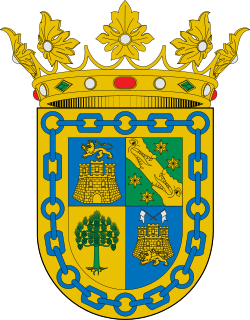
Coat of arms of Ducado de la Torre.

Cuban nobility encompasses all the individuals and families recognized in Cuba as members of the aristocratic class, hence possessing inheritance privileges.

History

[edit]

The 19th century Spanish Empire saw much of its power weakened by its rival countries (France and the United Kingdom), it also saw many of its colonies in America being influenced by the republican ideologies of the recently independent United States. In an effort to strengthen its holdings, the Spanish Crown decided to grant titles of nobility to much of the colonial aristocracy. This bestowing of royal grace made the recipients loyal to the Crown, and more assimilated to the Iberian titled nobility. No other Spanish colony received as many grants of noble titles as Cuba, a jewel of the late Spanish Empire.

The Cuban aristocracy had always attempted to create a second Paris or Madrid in its main cities of Havana, Matanzas and Santiago de Cuba. Elegant, richly decorated manors, governmental buildings, opera houses, play houses, palaces, etc. covered the streets of the capital. The Spanish Crown was not the only entity to award titles of nobility, the Catholic Church made use of its authority to also award titles in the island. Families, through marriage and inheritance, also bore European titles, such as those from France, Italy (including the former Kingdom of Naples and the Two Sicilies) as well as Germany.

The non-royal titles issued in Cuba follow the Spanish designation and resembled those of continental Europe. They were those of: Duke (Duque), Marquis (Marqués), Count (Conde), Viscount (Vizconde), Baron (Barón), Lord (Señor)—in that order of importance and social standing. The title of Grandee of Spain was usually annexed to another noble title but may also be bestowed on a person without a traditional noble title, in the last case the person would have Grandee of Spain written after his name; all Grandees are addressed as Excellency, the title being equal to that of a Duke and all Dukes are Grandees. Titles bestowed often had the name of a place in Cuba (e.g. Marqués de Pinar del Rio, Conde de Yumurí), the surname of the family (e.g. Marqués de Azpesteguia, Conde de Casa (house) Montalvo) or in remembrance of some Royal favor or deed (e.g. Marqués de la Gratitud, Marqués de la Real Proclamación).

After the Cuban War of Independence and Spanish–American War ended in 1898, many of these nobles stayed in the island, or moved to other former Spanish colonies, such as Puerto Rico; some returned to Spain. Although the new Republic of Cuba did not give itself the power to create and bestow new titles of nobility, it did not interfere with the already established tradition. Many families who possessed noble titles continued to use them, and the public respected their historical meaning and social position.

This all changed with the Cuban Revolution of 1959; soon the Communist government moved against these nobles, forcing many to return to Spain or into exile in the United States.[1]

The last pre-1898 nobleman to live in Cuba, Don Ignacio Ponce de León y Ponce de León, Marqués de Aguas Claras and Count de Casa Ponce de León y Maroto, died in Havana in 1973 leaving a remaining descendant.

Coat of Arms of Ducado de la Unión de Cuba.

List of noble titles bestowed by Spanish monarchs or inherited by Cubans

[edit]

References

[edit]

Literature

[edit]
  • Rafael Nieto y Cortadellas. Dignidades nobiliarias en Cuba. Madrid, 1954. 669 p.
[edit]
Revisions and contributorsEdit on WikipediaRead on Wikipedia
from Grokipedia
Spanish nobility in consisted of titled of Spanish descent who received hereditary honors from the Spanish Crown during the colonial period, beginning with the earliest grants in the late and expanding significantly amid the island's economic transformation in the 18th and 19th centuries. These titles, including marquisates, countships, and , were awarded to and creoles for administrative service, military contributions against movements, and wealth accumulation from sugar plantations reliant on enslaved labor. The class solidified through mayorazgos—entailed estates—and intermarriages among old families like the Silvas, who obtained the Marquisate of Guisa in 1774, leveraging their peninsular lineages and control over Havana's commerce and governance. Prominent examples include the Marquesado de Villalta, established in 1688 as the oldest noble dignity in Cuba, and the Dukedom of la Unión de Cuba, conferred on Miguel Tacón y Rosique in 1840 for his tenure as Captain-General from 1834 to 1838, during which he fortified Havana and suppressed conspiracies. Spanish emigrants, particularly Catalans, parlayed fortunes from sugar mills into titles such as the Marquisate of Comillas held by Antonio López y López, underscoring how colonial prosperity translated into aristocratic status. Following Cuban independence in 1898, the republican government repudiated noble titles, prompting many holders to relinquish them publicly or preserve them in exile, though some families continue to claim them under Spanish law. This nobility's legacy reflects the interplay of economic incentives, royal patronage, and imperial loyalty in shaping Cuba's stratified colonial society.

Origins in Colonial Cuba

Initial Grants and Criteria

The Spanish Crown's policy of granting noble titles to colonial elites in emerged in the early , primarily as a mechanism to reward loyalty, , and contributions to economic and defensive in a strategically vital but underdeveloped territory. Unlike earlier conquest-driven ennoblements in mainland America, Cuban grants emphasized binding local powerholders to the metropole amid persistent threats from , rival powers, and internal stagnation, with criteria centered on verifiable merits such as fortifications, establishing haciendas, or holding key administrative posts that bolstered imperial control. These incentives operated on the principle that hereditary honors would encourage sustained investment in peripheral colonies, where direct fiscal oversight was limited, thereby aligning elite self-interest with objectives over mere extraction. One of the earliest titles associated with Cuban settlement was the Marquesado de Villalta, created by Charles II in 1688 for Gonzalo de Herrera y Tapia, with subsequent holders establishing the lineage in through and landholding roles that supported colonial stability. A direct grant to a native came in 1721, when Philip V awarded the Condado de Casa Bayona to Captain José Bayona y Chacón, recognizing his service as alférez mayor, alcalde ordinario, and local leader in defending against incursions and administering justice in Santa María del Rosario. Bayona's title, formalized by real decreto on August 19 and despacho on September 19, exemplified the empirical threshold: proven command in defense and governance, often requiring personal expenditure on , rather than mere wealth or birthright. Such grants remained sparse until mid-century, limited to fewer than a dozen by 1750, as the Crown vetted petitions through the Council of Orders to ensure recipients demonstrated causal contributions to imperial resilience, such as repelling French or British threats during the . This selective approach reflected a realist : titles served as low-cost tools to foster elite dependence on royal favor, spurring private capital into haciendas and ports without straining metropolitan treasuries, though purchases or auctions occasionally supplemented pure merit in financially strained reigns like Philip V's.

Expansion During Economic Boom

The expansion of Spanish noble titles in gained momentum during the late 18th and early 19th centuries, aligning with the island's sugar revolution from approximately 1750 to 1850, when production shifted from a peripheral to a key economic asset for the Spanish Crown through large-scale, slave-labor plantations. This period saw output surge, with production reaching about 1.1 million arrobas by 1788, driven by post-Haitian Revolution migrations of planters and capital, which correlated with heightened Crown interest in rewarding colonial contributors to sustain imperial revenues. While early Bourbon monarchs like Felipe V (r. 1700–1746) initiated broader reforms favoring merit-based across the empire, grants specific to accelerated under successors like Carlos III and Carlos IV, peaking amid the 19th-century export booms as fiscal contributions from funded royal debts and . Criteria for these titles evolved from traditional and toward tangible economic merits, including investments in mills (ingenios), ports, and roads that enhanced export efficiency and tax yields, reflecting a pragmatic royal strategy to incentivize colonial development rather than pure favoritism. Between 1700 and 1833, the granted titles in explicitly for such "merits and services," often to entrepreneurs whose plantations generated substantial wealth; for instance, the Marquisate of Casa Peñalver was conferred in to a prominent in early operations, underscoring how plantation-scale production—tied to slave imports exceeding 300,000 Africans by mid-century—directly bolstered imperial finances. Similarly, the Marquisate of Arcos followed in 1792, amid rising metrics that positioned as Spain's premier producer. This merit-linked proliferation fostered a class of hacendados (large landowners) whose titles symbolized entrepreneurial alignment with monarchical interests, with families like the Peñalver leveraging revenues for royal loans and , thereby securing marquisates as incentives for sustained output. By the , as Cuba's dominated global markets post-Haitian , such grants had solidified a nexus between and aristocratic elevation, though the total number of Cuba-specific titles remained modest compared to peninsular ones, emphasizing quality of contribution over quantity.

Prominent Titles and Families

Dukedoms and Marquisates

The dukedom and marquisate constituted the highest strata of noble titles linked to under Spanish rule, conferred sparingly to incentivize administrative efficiency, fidelity, and in the colony. Dukedoms numbered fewer than five in direct connection to Cuban governance or residency, reflecting the Crown's deliberate restraint to preserve the prestige of these ranks while anchoring key figures to imperial interests. The Dukedom of la Unión de Cuba originated as a marquisate awarded to Miguel Tacón y Rosique for his governorship of from 1834 to 1838, marked by urban improvements such as the Tacón Fortress and aqueducts that bolstered Havana's defenses and infrastructure. Elevated to dukedom status by in 1847, the title symbolized the unification of Cuban provinces under centralized Spanish control, with succession passing to Tacón's descendants until the early . Francisco Serrano y Domínguez received the Dukedom of la Torre in 1862, shortly after his term as of (1859–1862), where he quelled insurgent activities and reformed fiscal policies to sustain colonial revenues. This grandeeship acknowledged his role in averting escalation toward movements. Marquisates proliferated more than dukedoms, often tied to specific locales or services. The Marquisate of Aguas Claras was instituted on 12 March 1833 by to Antonio Ponce de León y Maroto, associated with agrarian holdings and the family's residence completed around 1760. Other verified marquisates included the Marquisate of Guisa, established in 1774 for the family's foundation of the town and mayorazgo in eastern , leveraging mercantile roots for production. The Marquisate of San Felipe y Santiago, linked to Bejucal's lordship, persisted into the 1950s under the de la Cámara y lineage. Overall, elevated titles totaled under 20, prioritizing recipients with demonstrable ties to Cuban stability over broader distribution.

Lesser Titles and Inherited Lines

The lesser titles of the Spanish nobility in Cuba, encompassing countships (condados), viscountcies (vizcondados), and baronetcies (baronías), were granted primarily to colonial administrators, officers, and prosperous landowners whose contributions bolstered royal authority and , yet lacked the prestige or scale associated with dukedoms and marquessates. These titles numbered in the dozens historically, far outpacing the handful of higher peerages, and served to delineate a mid-tier that reinforced hierarchical by linking local elites to the crown without elevating them to status. Inheritance followed strict , favoring male heirs with entails (mayorazgos) tying titles to family estates, though female succession occurred in the absence of direct male lines, as evidenced by genealogical records of Cuban families. A prominent example is the Condado de Lagunillas, created on 8 June 1775 by King Charles III for de Zequeira y León (1729–1797), a native and cavalry lieutenant colonel who distinguished himself in military service against British incursions. The title passed through the Zequeira family line, reaching Juan Francisco Zequeira y Acosta (1770–1849) as the third holder, illustrating continuity among Cuban-born inheritors despite the colony's distance from . Similarly, the Condado de Casa Bayona, granted in the early , devolved through local lineages tied to wealth, with succession documented in family archives up to the ninth holder by the mid-20th century. Viscountcies and baronetcies, even scarcer, followed comparable patterns; the Vizcondado de Cuba, established 8 October 1857 by Queen Isabella II for military merits, highlighted service-based grants but saw limited local inheritance due to peninsular ties. Baronetcies, such as those held by figures like Claudio José Brindis de Salas in the , often rewarded artistic or administrative roles but remained subordinate in the . Intermarriage with peninsular Spanish nobility, as in the Zequeira alliances, preserved title validity and social prestige, with genealogical nobiliarios recording unions that imported old-world lineages to sustain colonial hierarchies amid geographic isolation. This practice underscored causal ties between familial strategy and title perpetuation, distinguishing lesser peers by their reliance on such networks rather than autonomous grandeur.

Socio-Economic and Political Role

Dominance in Plantations and Trade

Spanish noble families in Cuba, often descendants of early colonial settlers with distinguished lineages from Spain, held significant ownership of ingenios (sugar mills) and associated haciendas during the late 18th and 19th centuries, forming a core part of the island's economic elite. These families leveraged land grants, public offices, and trade privileges to amass vast estates; for instance, the Count of Casa Montalvo controlled approximately 5,500 caballerías (roughly 178,000 acres) by 1792, exemplifying the scale of aristocratic landholdings that underpinned sugar production. Similarly, the Marqués de Apezteguía owned the Constancia ingenio, which generated sugar output valued at one million pesos annually by the late 19th century, highlighting how titled proprietors dominated high-productivity operations. The prestige associated with noble titles, frequently awarded by the Spanish crown to reward economic contributions, encouraged sustained capital investment in land consolidation and infrastructure, as mayorazgos (entailed estates) preserved wealth across generations and incentivized expansion over fragmentation. This dominance propelled Cuba's integration into global trade networks, with sugar estates owned by noble lineages driving export surges that transformed the island's economy from subsistence to export-oriented monoculture between 1770 and 1820. By the early , sugar accounted for the majority of Cuba's exports, with aristocratic ingenios adopting steam-powered mills and rail infrastructure—often imported from the —to boost yields, as seen in the shift from average ingenio sizes of 134 acres in 1774 to over 670 acres by 1790. Trade volumes escalated dramatically, with over 3,600 ships entering Cuban ports by 1852, reflecting the economic multiplier effect of noble-led investments that elevated production and contributed to from under 200,000 in 1774 to 1.4 million by 1861. These developments positioned Cuba as the world's leading supplier by mid-century, with noble estates central to the capital inflows and technological adaptations that sustained competitiveness against rivals like . The labor system reliant on African slavery, integral to noble-owned plantations, provided the coerced workforce necessary for the crop's intensive cultivation and processing, enabling cost efficiencies that matched or undercut global competitors employing similar unfree labor models until the late 1880s. Cuban imports of approximately 800,000 slaves in the 19th century fueled ingenio expansion, as titled proprietors like those in the Montalvo lineage integrated slave labor with land control to achieve unattainable under free wage systems prevalent in less labor-abundant regions. This structure, while entailing high human costs, aligned with prevailing international norms in tropical commodity production—evident in contemporaneous , the U.S. South, and other islands—and underpinned the profitability that justified noble investments in , such as steam engines by the 1830s, ensuring Cuba's edge in export markets.

Influence on Governance and Military

Salvador José de Muro y Salazar, 2nd Marquis of Someruelos, exemplified noble influence as of from May 12, 1799, to 1812, a tenure marked by centralized Bourbon-era administration that consolidated fiscal oversight and military command under peninsular appointees of noble rank. His role integrated governance with defense, directing intendancy functions introduced in the 1780s to streamline revenue collection and suppress fiscal evasion amid growing sugar exports. Titled elites also permeated local bodies like Havana's , where by the late 18th century, a burgeoning of around 20 families—quadrupling from 1760—held regidor positions, advising on and while aligning with crown priorities. In military spheres, nobles as captains-general orchestrated defenses against pirate raids and slave unrest, with appointments rewarding prior loyalty in peninsular campaigns. Someruelos, for instance, fortified Havana's harbor post-British threats and commanded forces quelling the 1812 , executing leaders to avert broader revolt among free blacks and slaves. Such roles extended ' emphasis on professionalized armies, where nobles' hierarchical authority deterred insurrections; empirical records show registered fewer provincial uprisings in the than fragmented peers like New Granada, attributable to unified command under titled governors. Titles conferred for Cuban service, often to military officers suppressing threats, further incentivized fidelity, as seen in grants to defenders of key ports. This fusion of noble prestige with administrative and martial duties stabilized Spanish dominion, channeling elite resources into crown objectives without devolving power to untitled creoles, thereby mitigating volatility in a piracy-prone until economic strains escalated in the .

Positions During Independence Wars

Loyalist Nobles and Spanish Allegiance

During the Ten Years' War (1868–1878), segments of the Cuban nobility, particularly creole elites with extensive plantation holdings, aligned with Spanish authorities to counter insurgent forces. These loyalists organized and funded volunteer battalions, known as voluntarios, which supplemented regular Spanish troops in defending urban centers and rural against mambí guerrillas. Their contributions proved crucial in a conflict where deployed over 200,000 soldiers, many drawn from local loyalist ranks, ultimately forcing the insurgents to negotiate the Pact of Zanjón on February 10, 1878. Motivations for this allegiance stemmed from the preservation of socioeconomic privileges amid threats posed by the rebels' radical reforms. Insurgents, led by figures like , proclaimed the emancipation of slaves upon launching the revolt on October 10, 1868, directly endangering the labor-intensive sugar economy that underpinned noble wealth. Loyalist correspondence and Spanish decrees, such as those issued by Captain-General Francisco Serrano y Domínguez (later Duque de la Torre), emphasized safeguarding property and quelling "anarchic" disruptions, viewing independence as a pathway to instability akin to post-colonial turmoil in mainland . Serrano's in (1859–1862) prior to the war had already prioritized loyalist planters, setting a precedent for rewarding fidelity with administrative protections. This fidelity yielded tangible outcomes, including the postponement of Cuban independence until 1898, which facilitated an economic resurgence. Post-Zanjón, sugar production surged from approximately 500,000 metric tons in 1877 to over 1 million tons by 1894, buoyed by restored order and reinvested capital from loyalist estates. In recognition of such service, continued granting titles like dukedoms and marquisates to elites through 1866 and beyond, though specific post-war awards often intertwined with broader colonial rather than isolated acts. Absent this elite cohesion, empirical patterns from earlier Latin American independences suggest accelerated fragmentation and economic volatility, underscoring the causal role of noble allegiance in sustaining Spanish dominion.

Independence Supporters Among the Elite

Salvador Cisneros Betancourt, II Marqués de Santa Lucía (1828–1914), exemplified the rare titled elites who prioritized Cuban autonomy and independence over Spanish allegiance. Inheriting his marquisate in 1846 as a major Camagüey landowner, Cisneros abandoned his estates and privileges to join the Ten Years' War in 1868, later presiding over the Republic in Arms from 1895 to 1897 during the final independence campaign. Economic pressures, including Spain's restrictive tariffs that shielded peninsular manufacturers while burdening Cuban with high duties on and limited freedoms, fueled such disaffection more than ideological rupture. These policies exacerbated grievances by constraining trade with the , where Cuban sugar could access freer markets, prompting some families to covertly fund insurgent activities or join uprisings like the Little War of August 1879 to February 1880. Yet dual allegiances characterized many: initial manifestos from criollo elites emphasized and concessions over , reflecting a preference for negotiated as in the post-Zanjón autonomist initiatives, with full emerging only amid suppressed concessions. Post-1898, surviving noble titles endured as private inheritances, detached from , even as U.S. occupation intensified economic ties—sugar output rebounding from war-disrupted lows near 800,000 tons in 1900 to exceed 1.8 million tons by 1910, though fostering dependency on volatile American demand that later precipitated booms and busts.

Evolution in the Republican Era

Title Retention and Social Status

Following the establishment of the Cuban in 1902 under the , Spanish noble titles held no official legal standing, as the new republican framework emphasized equality and rejected hereditary privileges inherited from colonial rule. The U.S. from 1898 to 1902 similarly disregarded such distinctions, prioritizing administrative reforms over monarchical honors. Despite this, titled families maintained private usage of their designations within circles, where they served as symbols of lineage and inherited status rather than enforceable rights. In Havana's upper echelons, titles endured in social practices through the 1920s and into the 1930s, appearing in marriage announcements, salon invitations, and high-society directories that cataloged prominent families. For instance, publications like Habana Social referenced figures such as the Marqués de la Habana, integrating them into listings of influential residents alongside industrialists and landowners. Intermarriages among titled lineages, such as those involving the Marqués de Avilés in Vedado residences built around 1914, reinforced these networks, preserving exclusivity amid republican rhetoric. Such persistence reflected the underlying embedded in titles, which facilitated access to economic opportunities and informal alliances in the republic's and sectors, independent of state validation. By the , directories still enumerated residents bearing titles like the Marquesa de Almendares (Doña Ana María Valdés y Herrera) and Marquesa de Alta Gracia (Doña Amparo Alés y Quintana), indicating continuity in private recognition among approximately two dozen documented Cuban-held marquesates and dukedoms. This informal endurance waned with broader socioeconomic shifts, yet titles underscored how pre-republican hierarchies adapted through relational and reputational mechanisms rather than legal enforcement.

Titled Figures in Politics and Society

Salvador Cisneros Betancourt, II Marqués de Santa Lucía, emerged as a prominent titled figure in early republican Cuba, leveraging his noble status and independence war credentials to shape political discourse. Born in 1828 into a creole aristocratic family ennobled by the Spanish crown, Cisneros served as in Arms during the 1895-1898 war and transitioned into republican politics by opposing U.S. interventionism at the 1901 Constitutional Convention in , where he delivered a particular vote against the , arguing it undermined Cuban sovereignty. His advocacy highlighted the role of titled elites in defending national autonomy amid post-colonial transitions. In society, Cisneros exemplified how titled individuals fostered elite cohesion through involvement in veterans' affairs and public criticism of government policies. As a leader in the veterans' movement from 1900 to the early 1920s, he critiqued decisions on lands and the Villanueva railway project, pressing for equitable treatment of fighters and thereby stabilizing social transitions by bridging military legacies with republican governance. Such networks of noble descent, rooted in colonial , provided continuity in leadership, countering instability after the Platt Amendment's imposition in 1901 by reinforcing institutional legitimacy among the . Titled figures like Cisneros also contributed to broader societal roles, including that sustained cultural and charitable initiatives amid rapid modernization. Their events and affiliations helped integrate republican elites, empirically aiding by mitigating factionalism in the 1900s-1920s, as evidenced by sustained participation in assemblies and policy debates that preserved elite influence without formal abolition of titles until later decades.

Decline Under Revolution and Communism

Batista Period Continuities

During Fulgencio 's periods of influence from the 1930s to the 1950s, Spanish noble families in Cuba retained their colonial-era titles, estates, and socioeconomic positions with minimal disruption, as 's regimes emphasized stability and alliances with established elites rather than ideological purges or redistributive policies. Large landholdings, including those associated with titled families involved in sugar production, persisted without systematic expropriation, reflecting 's pragmatic approach to governance that accommodated property owners to sustain economic output. By the mid-1950s, approximately 74% of 's remained under large landowners, many of whom traced lineage to , avoiding early pressures that intensified only post-1959. These nobles often formed ties with U.S. investors and corporations dominating the , which accounted for over 80% of Cuba's exports in the and relied on stable local partnerships for mill operations and cane cultivation. Firms linked to aristocratic families benefited from quotas established under the 1934 Reciprocity Treaty and subsequent agreements, enabling continuity in production volumes that reached 5.5 million tons annually by 1957 without forced restructuring. Batista's administration, while implementing limited social programs like , refrained from aggressive land reforms until late-term political pressures, preserving noble influence in advisory capacities within economic councils and social networks that bridged old and emerging business interests. From a perspective valuing property rights continuity, this era represented a bulwark against radical disruptions, as Batista's pro-U.S. orientation and elite accommodations upheld legal frameworks from the 1940 Constitution—despite its partial suspension—prioritizing causal economic realism over egalitarian overhauls that could destabilize output-dependent revenues. Such alliances underscored nobles' adaptability, leveraging hereditary status for pragmatic engagement rather than ideological confrontation, until external dynamics shifted the landscape.

Castro Reforms and Expropriations

Following Fidel Castro's assumption of power on January 1, 1959, the revolutionary government enacted the First Agrarian Reform on May 17, 1959, which limited private landholdings to 30 caballerías (approximately 402 hectares or 993 acres) and expropriated larger estates, including numerous haciendas owned by descendants of who had accumulated vast sugar plantations during the colonial and republican eras. These reforms targeted latifundios controlled by families with noble titles, such as dukes and marquises, effectively dismantling their economic foundations without formally revoking aristocratic honors granted by Spanish monarchs. A second, more radical Agrarian Reform in October 1963 nationalized remaining private farms over 67 hectares, transferring them to state-run cooperatives and further eroding the de facto privileges associated with noble landownership, as production shifted to centralized planning that sidelined traditional agrarian expertise. The expropriations prompted mass flight among Cuba's upper classes, including titled families; between 1959 and 1962, approximately 200,000 to 250,000 individuals—predominantly white, affluent elites from and rural provinces—exiled to the , with many resettling in , particularly , where they preserved limited portable assets like jewelry or overseas investments before borders tightened. Refugee records indicate that noble lineages, such as branches of the Duque family tied to historic titles and or interests, evacuated with whatever liquid wealth they could, contributing to a brain drain of managerial talent from operations. By the early , over 300,000 exiles had been processed through U.S. programs, with elites forming a significant portion of the initial waves fleeing nationalizations that rendered their hereditary estates untenable. These reforms causally contributed to sharp declines in output, Cuba's economic backbone, as the exodus of experienced noble-affiliated overseers and owners disrupted specialized in milling and cultivation; production plummeted from 6.8 million metric tons in 1958 to 4.2 million tons by 1963, reflecting inefficiencies from inexperienced state administrators and disrupted supply chains rather than inherent pre-revolutionary flaws. The loss of this cadre's operational acumen, concentrated in families with generations of management, exacerbated mechanical breakdowns and yield shortfalls, setting the stage for chronic underperformance in export-dependent sectors.

Enduring Legacy

Architectural and Cultural Impacts

The Palacio del Marqués de Arcos, constructed in 1741 by Ignacio de Peñalver y Cárdenas—father of the first holder of the marquisate granted by the Spanish Crown in 1742—exemplifies the architectural legacy of ennobled families in . This residence, characterized by Doric columns on its facade and an Italianate interior staircase, occupies a prominent position in the Plaza de within . Preserved as one of Cuba's finest examples of 18th-century colonial residential architecture, it now functions as the Taller Experimental de la Gráfica, a workshop under of the Historian of Havana, highlighting the of noble properties into enduring cultural facilities. Beyond urban palaces, titled Spanish families invested in rural estates, including sugar haciendas that formed the backbone of colonial infrastructure. These properties, such as manor houses in the Valle de los Ingenios—designated a in 1999—featured integrated living quarters, processing mills, and worker barracks, reflecting substantial capital outlays that predated modern models. Though many fell into ruin post-1959, preserved remnants serve as precursors to contemporary sites, with archaeological features drawing visitors to explore colonial engineering and land management practices. By 1790, Cuba's approximately 20 titled nobles held vast land grants originally bestowed by Spanish monarchs, enabling constructions that outlasted regime changes and contributed to the island's tangible heritage. Culturally, these noble investments facilitated a fusion of Peninsular with local criollo elements, evident in the patronage of hybrid artistic forms like theater, which adapted Spanish court traditions to Cuban contexts from the onward. Such support extended to early salons in noble residences, where intellectual exchanges blended European refinement with emerging island identities, laying groundwork for institutions like the (founded 1728 under royal auspices but bolstered by elite contributions). This legacy persists in preserved sites that anchor Cuba's tourism sector, generating revenue through in areas like , where over 140 buildings from the noble era remain intact amid broader restoration efforts.

Controversies Over Inequality and Exploitation

Critics of the Spanish nobility in Cuba have highlighted their role in the island's slave-based economy, which concentrated wealth among a titled while entrenching racial and economic inequalities. Many noble families, such as those holding estates under grants from the Spanish crown, owned vast plantations that depended on imported African slaves, numbering over 370,000 by 1862, to fuel the "second " boom after Haiti's 1791 disrupted regional competition. This system amplified disparities, with noble planters capturing rents from exports—rising from 15,000 tons in 1800 to over 700,000 tons by 1860—while former slaves and rural laborers post-abolition in 1886 contended with low wages, landlessness, and literacy rates below 11% among in the . Left-leaning analyses, including those from Cuban revolutionary historiography, frame this as systemic exploitation, portraying nobility as beneficiaries of a colonial that prioritized accumulation over broad development. Counterarguments emphasize empirical contributions to growth, noting that noble investments—often involving personal risks in volatile markets, hurricanes, and imperial taxes—catalyzed Cuba's ascent as the ' sugar powerhouse, yielding output and (e.g., early railroads by the ) that outpaced peers like or . Without such hierarchical capital mobilization, aligned with global colonial norms where alternatives like smallholder models yielded stagnation in less centralized islands, Cuba's 19th-century GDP likely would have lagged, as evidenced by comparative stagnation in non-planter-dominated regions. Defenses from exile communities and economic historians rebut exploitation narratives by underscoring entrepreneurial agency: planters reinvested profits into mills and diversification, mitigating anarchic alternatives like post-slavery unrest, though biased sources often omit these causal drivers of prosperity. In contemporary debates, Castro-era portrayals depict pre-revolutionary elites, including residual noble lineages, as feudal exploiters justifying expropriations, yet exiles counter that such critiques ignore data on wealth creation—e.g., Cuba's top Latin American GDP ranking by 1900—and attribute enduring to policies rather than historical hierarchies. These views clash, with regime-aligned accounts privileging inequality critiques amid systemic academic biases toward anti-elite framings, while perspectives stress order and risk-taking as bulwarks against .

References

Add your contribution
Related Hubs
User Avatar
No comments yet.