



Community hub
Recent from talks
Contribute something
Nothing was collected or created yet.
Czech nobility
View on WikipediaCzech nobility (also Bohemian nobility; Czech: česká šlechta) consists of the noble families from historical Czech lands, especially in their narrow sense, i.e. nobility of Bohemia proper, Moravia and Austrian Silesia – whether these families originated from those countries or moved into them through the centuries. These are connected with the history of Great Moravia, Duchy of Bohemia, later Kingdom of Bohemia, Margraviate of Moravia, the Duchies of Silesia and the Crown of Bohemia, the constitutional predecessor state of the modern-day Czech Republic.
Noble titles were abolished by law (No. 61/1918 Sb. z. a n.)[1] in December 1918, shortly after the establishment of the independent Czechoslovak Republic. The public use of noble titles could be punished by a fine or imprisonment. During the period of Nazi occupation some sections of the law No. 61/1918 were abolished and the public use of noble titles was no longer punishable as a misdemeanor.[2] This did not last long, as the regulations from the Nazi period were abolished again after the liberation of Czechoslovakia in 1945. However shortly after the communist takeover the par of the law which made the public use of noble titles punishable was abolished again and the new law concerning the titles completely ignored the issue of noble titles, thus made their use possible at least in theory.[3] However, during the Nazi period, as well as the communist one, some individual representatives of Czech noble families were persecuted. After the Velvet Revolution in 1989, the property confiscated by the communists was returned to the families of former nobility or their relatives.
History
[edit]The beginnings of the Czech nobility can be seen in the time of the first Přemyslid princes and kings, i.e. in the 9th century. As a legally defined state of nobility in the Czech lands, it arose in the course of the 13th century, when members of noble families began to own newly built stone castles. The influence of the nobility rose rapidly, which became the cause of a strained relationship between the king and the nobility during the last Přemyslid kings and especially during the reign of John of Bohemia and his grandson, Wenceslaus IV at the turn of the 14th and 15th centuries.[4] After the burning of Jan Hus in 1415, Czech society and therefore the Czech nobility was divided into two groups - Catholic and Hussite (later Protestant). Both groups were at war with each other both during the Hussite Wars and long after them. After the end of the Hussite Wars and the rule of the Luxembourgers in the 1530s, the country was controlled by various noble associations. In 1452, they agreed on a land administrator, who became the noble George of Poděbrady. Five years later he was elected King of Bohemia, but disputes between the Catholic and Protestant nobility continued until the outbreak of the Thirty Years' War in 1618.[5]

The status of the nobility further increased in 1500, when the Vladislav land constitution was issued. In 1526, Ferdinand I of Habsburg was elected King of Bohemia. He, along with his successors, tried to reduce the influence of the nobility. This process was interrupted during the reign of Rudolf II in the years 1576-1611. In 1618, the Protestant part of the Czech estates started the Bohemian Revolt by throwing imperial officials out of the windows of Prague Castle. Czech Protestants were defeated in the Battle of White Mountain in 1620, and the following year 27 leaders of this rebellion were executed. Thus, the Catholic aristocracy definitively won over the Protestant aristocracy in Bohemia, but at the same time the absolutist monarchy won over the estate monarchy.
During the Thirty Years' War after the Battle of White Mountain, a large part of the Protestant nobility had their property confiscated. Many new noble families came to the Czech lands at this time, originally usually from Germany, Italy, Spain, Austria or Scotland. Of the old Czech noble families, for example, the Kinsky, Sternberg, Kolowrat, Czernin, Lobkowicz, Pernštejn or Lichtenstein families remained in Bohemia, while the Eggenberg, Bucquoy, Colloredo-Mannsfeld, Gallas, Piccolomini, Schwarzenberg and others arrived.[6]

From the 17th century, only the Catholic Czech nobility significantly participated in the functioning of the Habsburg Monarchy. Newly arrived families gradually identified with the Czech lands and often also with the Czech language. At the end of the 18th century, a period called Josephinism began. His representative, the Emperor and King Joseph II (1780-1790), initiated extensive reforms that significantly changed the position of the nobility and reduced the number of aristocratic privileges. Part of the modernization of the country was also the prioritization of German at the expense of Czech (the purpose was more efficient state administration).

During the 19th century, the Czech nobility was significantly involved in the process of national revival, the promotion of the Czech language and the emergence of modern Czech culture and society. Prominent representatives of the patriotic nobility were especially the Sternberg, Chotek, Schwarzenberg, Czernin, Kolowrat, Kinsky and Lobkowicz. In the second half of the 19th century, representatives of these and other families became involved in emerging parliamentary activity. The patriotically oriented nobles founded the Party of the Conservative Estate, cooperating with the Old Czech Party, another aristocratic political force was the Party of the Constitutionalist Estate. In the second half of the 19th century, the ranks of the Czech nobility were expanded by successful businessmen, politicians and artists, for example the Bartoň family, the founder of the Škoda Works Emil Škoda, the industrialist František Rienghoffer, the leader of the Old Czech Party František Ladislav Rieger, the composer Antonín Dvořák and the writer Jaroslav Vrchlický. The representatives of this so-called new nobility, however, usually remained outside the Czech aristocracy.[7]
After the First World War, the monarchy disappeared in the Czech lands and a republic was established. Most of the Czech nobility held monarchist positions, but remained loyal to the newly established Czechoslovak Republic. Some nobles even entered the service of the Czechoslovak Republic and worked in diplomacy (for example, representatives of the Lobkowicz, Schwarzenberg and others). The Czechoslovak Republic confiscated the property of the Habsburgs and Hohenbergs, and the Clam-Martinic family also lost their property. During the following years, the property was sold off and the Fürstenbergs, for example, left the country.[8]

 Count Zdenko Radslav Kinský (above), author of the idea of the Declaration of the Czech Nobility and Prince Karel VI. Schwarzenberg, author of the text of the Declaration
The turning point occurred in 1938. In response to the direct threat to the democratic state by Nazi Germany, the most important noble families issued a Declaration of the members of the old Czech families on the inviolability of the territory of the Czech state. During the audience with President Edvard Beneš, members of the Schwarzenberg, Lobkowicz, Kinsky, Kolowrat, Czernin, Sternberg, Colloredo-Mannsfeld, Parish, Dobrzenský, Strachwitz, and Belcredi publicly joined him. A similar statement was issued a year later, already in the occupied Protectorate of Bohemia and Moravia. In September 1939, the National Declaration of the Czech Nobility was drawn up, in which 85 of the most important Czech noblemen from 33 noble families declared their Czech nationality. The Nazis subsequently confiscated the property of these nobles, and some then lived through the war in house internment or in concentration camps. Some nobles managed to emigrate. Part of the nobles actively participated in the domestic resistance, for example the Bořek-Dohalský brothers were murdered in a concentration camp, Karel VI Schwarzenberg or Václav Norbert Kinský participated in the anti-Nazi uprising in 1945.[9]
In 1945, the properties of most Czech noble families were returned. However, there was a deportation of the majority of the population of German nationality, in which both the nobles who collaborated with the Nazis and the nobles who did not collaborate with the Nazis, but only claimed German nationality before the war, lost their property. For example, Trauttmansdorff, Windischgrätz, Clam-Gallas, Thurn-Taxis, Desfours, or one branch of the Kinsky, Czernin and Rohan families had to leave the Czech lands. Due to the growing influence of the communists in Czechoslovakia in the years 1945-1948, the return of some property was also withheld (the Colloredo-Mannsfeld case), or the unjust confiscation of the primogeniture property of the Schwarzenberg family (based on the Lex Schwarzenberg Act of 1947[10]). The Liechtenstein family is still suing the Czech Republic for seized property, as well as several other families labeled as Germans after the war.[11][12]
In 1948, there was a communist coup in Czechoslovakia. Subsequently, the property of all noble families was confiscated. A large part of the Czech nobility therefore emigrated (for example, the Schwarzenberg, Colloredo-Mannsfelds, Kolowrat, Hildprand, some Lobkowicz or Sternberg). The nobles who stayed at home (such as the Kinsky, Wratislav, Czernin, some Sternberg and Lobkowicz) were variously persecuted, for example they were prevented from studying, usually they were also evicted to unsuitable dwellings. Some members of the Czech nobility were imprisoned.

After the Velvet Revolution in 1989, properties seized by the communist regime were returned to their original owners. Members of the Czech nobility who emigrated abroad returned to their estates. Some subsequently returned to public life (for example, Karel Schwarzenberg as Minister of Foreign Affairs, Member of Parliament and Senator, Michal Lobkowicz as Minister of Defense and Member of Parliament, Tomáš Czernin as Senator). Other Czech nobles devote themselves, for example, to business, culture, science, the church, or knightly orders.[13]
Oldest noble families
[edit]The oldest founding families (numbering around twenty) of the Czech and Moravian nobility include:
List of important noble families
[edit]- Bavor of Strakonice
- Belcredi
- Berchtold of Ungarschitz
- Bibra
- Boskowicz
- Bořek-Dohalský
- Bruntálský of Vrbno
- Bubna of Litice
- Chorinský of Ledská
- Clary-Aldringen
- Colloredo-Mannsfeld
- Czernin
- Chotek
- Deym of Střítež
- Dobřenský of Dobřenice
- Dubá
- Berka of Dubá
- Jelení
- Hildprandt
- Harrach
- Hradec
- Hohenberg
- Kamenický of Kamenice
- Kinsky
- Colditz
- Kolowrat
- Kaunitz
- Krajíř of Krajek
- Kravaře
- Kunštát
- Lažanský of Buková
- Lichtenburg
- Liechtenstein
- Lanna
- Larisch-Moennich
- Lichnowsky
- Lipá
- Lobkowicz
- Martinic
- Nostitz
- Paar
- Pernštejn
- Pruskowski
- Piccolomini
- Poděbrady
- Přemyslid
- Rohan
- Ronovci
- Rosenberg
- Švihovský of Rýzmberk
- Slavata of Chlum
- Slavník
- Smiřický of Smiřice
- Schlick
- Schwarzenberg
- Sporck
- Sternberg
- Schwamberg
- Thun-Hohenstein
- Trčka of Lípa
- Tunkl of Brníčko
- Vítkovci
- Vlašim
- Vršovci
- Waldstein
- Wratislaw of Mitrovice
- Zajíc of Hazmburk
- Zedtwitz
- Zierotin
Gallery
[edit]-
 Saint Adalbert (c. 956–997), the second bishop of Prague and later a missionary among the Prussians is for his life and deeds honoured as a patron saint of three countries
 -
 Peter I of Rosenberg (?–1347), important politician and philanthropist, associated with the Book of Rosenberg, the oldest legal publication written in Czech
 -
 Jan Žižka of Trocnov and Kalich (c. 1360–1424), a small yeoman, later main commander of Hussite troops who thanks to his innovative tactics, although blind, didn't lose a single battle
 -
 George of Kunštát and Poděbrady (1420–1471), the only Bohemian lord who managed to gain the royal rank (via election), remembered especially for his proposal to create peaceful all-European union of Christian states
 -
 Vojtěch I of Pernštejn (1490–1534), aristocratic magnate and supreme court master
 -
 William of Rosenberg (1535–1592), an important statesman and philanthropist, a moderate representative of the Catholic nobility in the period before the Thirty Years' War
 -
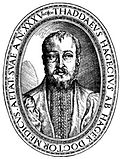 Hagecius (1525–1600), astronomer, naturalist and personal physician of Emperor Rudolph II, who invited Brahe and Kepler at Prague to scientific collaboration
 -
 Petr Vok of Rosenberg (1539–1611), the last descendant of powerful and wealth "viceroyal" Rosenberg family, benefactor of the oldest Protestant church Unity of the Brethren
 -
 Kryštof Harant of Polžice and Bezdružice (1564–1621), writer, military leader, diplomat, traveler and composer, one of the leaders of the Estates Protestant uprising of 1618, executed after the Catholic victory in the Battle of White Mountain
 -
 Albrecht Jan Smiřický of Smiřice (1594–1618), the wealthiest lord of its era, possible candidate to the Bohemian throne and one of main heads of the anti-Habsburg Bohemian Revolt
 -
 Heřman Czernin of Chudenice (1576–1651), traveler, diplomat and politician, highest provincial court master and chamberlain
 -
 Albrecht Václav von Wallenstein (1583–1634), famous military leader and politician during the Thirty Years War, the first holder of title generalissimo in history
 -
 Polyxena of Lobkowicz (1566–1642), née Pernštejn, most powerful and influential noblewoman of Early Modern Age in Czech history, her political engagement and intrigues have greatly helped forcible re-Catholization of Bohemia after 1620
 -
 František Antonín Sporck (1662–1738), important benefactor and visionary, founder of the hospital in Kuks
 -
 Václav Antonín of Kaunitz-Rietberg (1711–1794), statesman and diplomat, state chancellor of the Habsburg Monarchy, initiator of the Diplomatic Revolution
 -
 Josef I. Schwarzenberg (1722–1782), politician and philanthropist, founder of the Schwarzenberg Pension Institute for Employees
 -
 Jan Rudolf Czernin of Chudenice (1757–1845), patron and art collector, president of the Academy of Sciences, supreme chamber and hofmeister
 -
 Kašpar Maria of Sternberg (1761–1838), botanist, geologist, paleobotanist and founder of the Bohemian National Museum in Prague (1818)
 -
 Josef Václav Radetzky von Radetz (1766–1858), Austrian field marshal and viceroy of Lombardy–Venetia, called the "Saviour of the House of Habsburg" during the revolution year of 1848 in Italy
 -
 Karl Filip Schwarzenberg (1771–1820), diplomat and military leader, victor over Napoleon in the Battle of Leipzig
 -
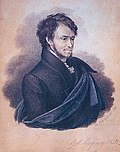 Jiří Buquoy de Longueval (1781–1851), economist, writer, politician, businessman, inventor, founder of the first nature reserve in Bohemia
 -
 František Antonín Kolovrat (1778–1861), politician, prime minister
 -
 Vilemína Zaháňská von Sagan (1781–1839), salon owner, writer, supporter of the writer Božena Němcová
 -
 Cardinal Bedřich Schwarzenberg (1809–1885), Archbishop of Salzburg and Prague, theologian, mountaineer, public figure, initiator of the completion of the St. Vitus Cathedral at Prague Castle
 -
![František Ladislav Rieger (1818–1903), politician, co-founder of the National Party, knighted for his merits[citation needed]](//upload.wikimedia.org/wikipedia/commons/thumb/3/39/Franti%C5%A1ek_L_Rieger.jpg/120px-Franti%C5%A1ek_L_Rieger.jpg) František Ladislav Rieger (1818–1903), politician, co-founder of the National Party, knighted for his merits[citation needed]
František Ladislav Rieger (1818–1903), politician, co-founder of the National Party, knighted for his merits[citation needed] -
![Emil Škoda (1839–1900), entrepreneur and engineer, founder of Škoda Works – one of the largest European industrial conglomerates of the 20th c., knighted for his merits[citation needed]](//upload.wikimedia.org/wikipedia/commons/thumb/0/02/Emil_Skoda.jpg/120px-Emil_Skoda.jpg) Emil Škoda (1839–1900), entrepreneur and engineer, founder of Škoda Works – one of the largest European industrial conglomerates of the 20th c., knighted for his merits[citation needed]
Emil Škoda (1839–1900), entrepreneur and engineer, founder of Škoda Works – one of the largest European industrial conglomerates of the 20th c., knighted for his merits[citation needed] -
![Antonín Dvořák (1841–1904), one of the most important Czech and European music composers, knighted for his merits[citation needed]](//upload.wikimedia.org/wikipedia/commons/thumb/1/12/Dvorak.jpg/120px-Dvorak.jpg) Antonín Dvořák (1841–1904), one of the most important Czech and European music composers, knighted for his merits[citation needed]
Antonín Dvořák (1841–1904), one of the most important Czech and European music composers, knighted for his merits[citation needed] -
 Bertha von Suttner (1843–1914), née Kinsky, peace activist and writer, the first woman awarded the Nobel Peace Prize (1905) and probably the most known noblewoman of Bohemian origin
 -
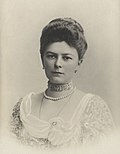 Žofie Chotková (Sophie, Duchess of Hohenberg) (1868–1914), wife of the heir to the Austrian throne Archduke Franz Ferdinand of Austria, assassinated in Sarajevo in 1914
 -
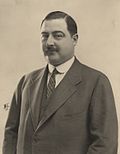 Alexander Kolowrat - Krakowský (1886–1927), car racer, aviator, owner of film studios and co-owner of the Laurin & Klement car company
 -
 Adolf Schwarzenberg (1890–1950), businessman, anti-Nazi
 -
 Jindřich Kolowrat-Krakowský (1897–1996), diplomat, politician, philanthropist, anti-Nazi
 -
 Zdeněk Bořek Dohalský (1900–1945), journalist and anti-Nazi resistance fighter, executed by the Nazis in 1945
 -
![Jiří Stránský (1931–2019),[citation needed] writer, screenwriter, translator](//upload.wikimedia.org/wikipedia/commons/thumb/4/43/Ji%C5%99%C3%AD_Str%C3%A1nsk%C3%BD_%282015%29.jpg/120px-Ji%C5%99%C3%AD_Str%C3%A1nsk%C3%BD_%282015%29.jpg) Jiří Stránský (1931–2019),[citation needed] writer, screenwriter, translator
Jiří Stránský (1931–2019),[citation needed] writer, screenwriter, translator -
 Karel Schwarzenberg (1937–2023), politician, businessman, philanthropist and fighter for human rights
 -
 František Kinský (born 1947), producer, moderator and regional politician
 -
 František Václav Lobkowicz (1948–2022), Roman Catholic priest, bishop of Ostrava-Opava
 -
 Tomáš Czernin (born 1962), businessman and politician, senator


.jpg)


.jpg)
_engraving_crop.jpg)


![František Ladislav Rieger (1818–1903), politician, co-founder of the National Party, knighted for his merits[citation needed]](https://en.wikipedia.org/wiki/File:Franti%C5%A1ek_L_Rieger.jpg)
![Emil Škoda (1839–1900), entrepreneur and engineer, founder of Škoda Works – one of the largest European industrial conglomerates of the 20th c., knighted for his merits[citation needed]](https://en.wikipedia.org/wiki/File:Emil_Skoda.jpg)
![Antonín Dvořák (1841–1904), one of the most important Czech and European music composers, knighted for his merits[citation needed]](https://en.wikipedia.org/wiki/File:Dvorak.jpg)


.jpg)


.jpg)
![Jiří Stránský (1931–2019),[citation needed] writer, screenwriter, translator](https://en.wikipedia.org/wiki/File:Ji%C5%99%C3%AD_Str%C3%A1nsk%C3%BD_(2015).jpg)


References
[edit]- ^ Exact wording of this "Law of 10 December 1918, which abolished the nobility, medals and titles" is available on the Czech Wikisource
- ^ "Nařízení vlády č. 220/1939 Sb., kterým se mění zákon ze dne 10. prosince 1918, č. 61 Sb. z. a n., jímž se zrušují šlechtictví, řády a tituly [Government Regulation No. 220/1939 Coll., amending the Act of 10 December 1918, No. 61 Coll., and subsequent amendments, abolishing nobility, orders and titles]". Zákony pro lidi. Retrieved 11 October 2025.
- ^ "Zákon č. 247/1949 Sb. o vyznamenáních a čestných uznáních [Act No. 247/1949 Coll. on decorations and honorary recognitions]". Zákony pro lidi. Retrieved 11 October 2025.
- ^ Loužecký, Jan Drocár a Pavel. "Historická šlechta – život po meči a po přeslici". historickaslechta.cz (in Czech). Retrieved 23 July 2022.
- ^ Mezník, Jaroslav (1990). Česká a moravská šlechta ve 14. a 15. století (in Czech). Prague: Historický ústav ČSAV.
- ^ Vokáčová, Petra (2014). Příběhy o hrdé pokoře: aristokracie českých zemí v době baroka (in Czech). Prague: Academia. ISBN 978-80-200-2364-3.
- ^ Županič, Jan (2006). Nová šlechta rakouského císařství (in Czech). Prague: Agentura Pankrác. ISBN 80-86781-08-9.
- ^ "Pár slov o české šlechtě v éře První republiky - Blog iDNES.cz". iDNES.cz (in Czech). Retrieved 23 July 2022.
- ^ Jelínková Homolová, Dita (2018). Šlechta v proměnách: osudy aristokracie v Československu v letech 1918–1948 (in Czech). Prague: Lidové noviny. ISBN 978-80-7422-520-8.
- ^ "Ústavodárné NS RČS 1946-1948, 65. schůze, část 2/5 (10. 7. 1947)". www.psp.cz. Retrieved 15 February 2025.
- ^ Kalenská, Renata. Připraven sloužit : rozhovor s Karlem Schwarzenbergem (in Czech). Prague: N media. ISBN 978-80-88433-02-6.
- ^ "Dědic Lichtenštejnska: Morava je náš druhý domov, majetkové spory překonáme - Seznam Zprávy". seznamzpravy.cz. 23 November 2019. Retrieved 23 July 2022.
- ^ "Modrá krev" (in Czech). Czech Television. Retrieved 23 July 2022.
- ^ "Historicka Slechta" (in Czech). n.d. Archived from the original on 4 May 2010.
Further reading
[edit]- von Dobrá Voda, Adalbert Král (1904). Der Adel von Böhmen, Mähren und Schlesien [Aristocracy of Bohemia, Moravia and Silesia] (PDF) (in German). Prag: I. Taussig. Retrieved 14 February 2016.
- von Meraviglia-Crivelli, Rudolf Johann (1886). Der böhmische Adel [Bohemian Aristocracy] (PDF) (in German). Nürnberg: Bauer und Raspe. Retrieved 14 February 2016.
- von Kadich, Heinrich Edlen; Blažek, Conrad (1899). Der mährische Adel [Moravian Aristocracy] (PDF) (in German). Nürnberg: Bauer und Raspe. Retrieved 14 February 2016.
- Blažek, Conrad (1887–1894). Der abgestorbene Adel der Provinz Schlesien und der O. Lausitz [Extinct Aristocracy of the Province of Silesia and Upper Lusatia] (in German). Vol. I–III. Nürnberg: Bauer und Raspe.
- Pilnáček, Josef (2010). Rody starého Slezska [Families of Ancient Silesia] (in Czech) (3rd ed.). Brno: Ivo Sperát. ISBN 978-80-904312-3-2.
Nobility by nation | |||||||||
|---|---|---|---|---|---|---|---|---|---|
(*) : state where monarchy still exists | |||||||||
| Africa |  | ||||||||
| Americas |
| ||||||||
| Asia |
| ||||||||
| Europe |
| ||||||||
| Oceania |
| ||||||||
Czech nobility
View on GrokipediaThe Czech nobility, encompassing the aristocratic families of Bohemia, Moravia, and Austrian Silesia within the Bohemian Crown, constituted a hereditary elite that dominated land ownership, governance, and military leadership from the 12th century onward.[1] Emerging amid feudal fragmentation under the Přemyslid dynasty, these nobles secured privileges through royal charters, enabling vast estates and influence in royal elections, as exemplified by the Hussite-era commander Jan Žižka and the elected king George of Poděbrady from the noble Kunštát-Poděbrady line.[2] Their role extended to patronage of arts and sciences, with families like the Rosenbergs funding cultural institutions and astronomers such as Tycho Brahe collaborating under noble auspices in Prague.[3] During the Habsburg era, following the Protestant nobility's defeat at the Battle of White Mountain in 1620, surviving Catholic loyalists—often of German descent—consolidated power through confiscated estates, enforcing re-Catholicization and linguistic Germanization while serving as imperial administrators, diplomats, and field marshals like Albrecht von Wallenstein.[4] This period marked peak economic dominance, with nobles controlling about 36% of Bohemian land by the late 19th century, yet sparking tensions with rising Czech nationalism amid industrialization.[5] Controversies arose from their alignment with Habsburg centralism against Bohemian state-rights traditions and, later, some families' flirtations with authoritarian ideologies amid interwar instability.[6] Noble titles and privileges were formally abolished by Czechoslovak Law No. 61/1918 shortly after independence, stripping legal status though many families retained cultural and economic legacies.[7]
Origins and Early Development
Premedieval Roots and Tribal Elites
The Celtic Boii tribe occupied the region of modern Bohemia from approximately the 4th century BCE until the 1st century CE, establishing early settlements evidenced by La Tène culture artifacts such as pottery and fortifications, which indicate hierarchical warrior groups controlling key territories amid conflicts with neighboring Germanic tribes.[8][9] Archaeological findings, including hillforts and weapon burials, suggest these elites derived authority from military prowess and tribute extraction rather than formalized land tenure, laying a precedent for proto-noble structures based on martial loyalty.[10] Slavic groups migrated into the depopulated Czech lands during the mid-6th century CE, following the collapse of Avar and Germanic dominance, with genetic evidence confirming a large-scale influx from Eastern Europe that replaced over 80% of prior ancestry by the 8th century.[11][12] These settlers organized into tribal confederations led by chieftains (kniazes or župans), who commanded warrior retinues for defense and raiding, controlling dispersed settlements without centralized land inheritance but through personal allegiance and spoils distribution.[13] In Bohemia and Moravia, such leaders managed eastern and northeastern districts amid ongoing instability, fostering early hierarchies where elite status hinged on organizing communal levies against external threats like nomadic incursions.[14] The 9th-century Great Moravia marked a shift toward hereditary patterns, as Mojmir I (r. ca. 830–846) unified Moravian tribes and Nitra, establishing a princely house with a council of noblemen advising on governance and military matters.[15] Archaeological elites at sites like Mikulčice reveal fortified residences and grave goods indicating stratified warriors who performed obligatory service, transitioning tribal loyalties into proto-feudal obligations for territorial defense against Carolingian and later Magyar pressures.[16] This model of elite land control via military retinues prefigured noble roles, rooted in causal necessities of survival rather than abstract feudal theory, though without enduring estates until later dynastic consolidations.[17]Formation under Premyslid Dynasty (9th-13th Centuries)
The nobility in Bohemia began to crystallize as a distinct hereditary class during the reign of the Přemyslid dukes in the 9th and 10th centuries, evolving from tribal warriors and retainers loyal to the ruling princes. Duke Bořivoj I (r. c. 870–889), the first historically attested Přemyslid ruler, initiated this process by baptizing in 884 or 885 and constructing early churches, such as at Levý Hradec, which rewarded ecclesiastical allies and integrated Christian elites into the power structure.[14] Loyal secular followers received land endowments as benefices, fostering feudal dependencies where service in war and administration secured hereditary tenure, though initially revocable by the duke.[1] This system tied noble status to proximity to the ducal court in Prague, transforming personal allegiance into land-based privileges amid expansion against neighboring tribes. Christianization accelerated noble formation by aligning Přemyslid dukes with the Western church, granting bishops and abbots lands that nobles administered or contested. Under Boleslav I (r. 935–967) and his successors, church foundations like the Prague bishopric (973) intertwined noble families with clerical patronage, as dukes endowed monasteries with estates managed by kin or vassals, solidifying alliances against pagan holdouts.[14] However, factionalism emerged among noble clans, exemplified by the Slavník dynasty's rivalry with the Přemyslids; in 995, Duke Boleslav II orchestrated the massacre of the Slavník family at Libice, eliminating a competing noble house aspiring to ducal power and consolidating Přemyslid dominance over Bohemia.[14] This event underscored how internal noble conflicts, often over land and influence, reinforced ducal authority while highlighting the fragility of early feudal ties. By the 11th to 13th centuries, noble autonomy grew through comital offices (comes or župan), district administrators appointed by dukes to collect tribute and maintain order, evolving into hereditary positions with judicial rights over estates.[1] Construction of early stone castles, such as those at Prague and Budejovice precursors, symbolized this shift, serving as fortified seats for nobles who held them as fiefs, granting local control while owing military aid to the duke. Under Přemysl Otakar I (r. 1198–1230), codified privileges formalized noble exemption from certain taxes and hereditary succession, marking the transition to a stratified feudal nobility integral to ducal governance.[14]Medieval Kingdom and Autonomy
High Middle Ages Expansion and Feudal Consolidation
The elevation of Bohemia to kingdom status under Přemysl Ottokar I marked a pivotal expansion of noble influence, as his coronation in 1198 by Philip of Swabia transitioned the duchy into a hereditary monarchy, confirmed by Frederick II's Golden Bull of Sicily in 1212, which secured royal independence from imperial oversight and exempted the Bohemian king from distant imperial diets.[18] This status upgrade empowered nobles through associated grants, including exemptions from certain tolls, rights to hereditary estates, and judicial autonomies over serfs, fostering feudal consolidation by tying land tenure to military service and local governance rather than direct royal control.[14] Feudal structures solidified economic stability, with nobles overseeing manorial systems that exploited serf labor for grain surpluses, enabling surplus extraction via demesne farming and supporting royal campaigns without excessive taxation that might provoke rebellion.[14] In territorial gains, nobles facilitated the incorporation of Silesia and Lusatia by the early 13th century under Ottokar I, managing the influx of German settlers for forest clearance and mining development, which boosted agricultural output and fortified border defenses through castle construction privileges.[14] This decentralized model mitigated risks of over-centralization, as local noble enforcement of peace pacts (landfrieden) maintained order amid dynastic disputes, contrasting with absolutist vulnerabilities seen elsewhere in Europe. Noble councils, comprising magnates and prelates, played a causal role in curbing royal absolutism by advising on policy and withholding feudal levies during perceived overreaches, as evidenced in assemblies that influenced succession and warfare under Wenceslaus I (1230–1253).[1] Such mechanisms ensured stability through balanced power-sharing, where nobles' veto on major decisions prevented fiscal exhaustion from endless expansions, prioritizing sustainable feudal hierarchies over unchecked monarchical ambitions.[1]Electoral Status and Conflicts (14th-15th Centuries)
The Golden Bull of 1356, issued by Holy Roman Emperor Charles IV—who ruled Bohemia from 1346 to 1378—formalized the electoral process for the imperial throne by designating seven prince-electors, including the King of Bohemia as the arch-cupbearer.[19][20] This enshrined the Bohemian monarch's pivotal role in imperial elections, elevating the kingdom's status within the Holy Roman Empire and indirectly empowering the nobility, whose dominance in the estates diet determined the selection of the Bohemian king through elective monarchy practices dating to the 12th century.[4] The bull's provisions, such as hereditary succession for electoral dignities and exemptions from imperial taxes, further entrenched noble privileges, fostering leverage in both domestic and imperial politics amid 14th-century conflicts over royal authority.[20] The Hussite Revolution (1419–1434), triggered by the execution of Jan Hus in 1415 and escalating after the First Defenestration of Prague in 1419, exposed deep divisions within the nobility along religious and social lines. Moderate nobles, particularly Utraquists advocating communion in both kinds (sub utraque specie) while preserving feudal hierarchies, initially allied with reformers against perceived ecclesiastical corruption, patronizing Hussite clergy in over 60% of parishes under noble advowson.[21] In contrast, radical Taborite factions drew support from lower classes and some lesser nobles pushing anti-feudal egalitarianism, leading to intra-Hussite conflicts that created temporary power vacuums, as seen in the collective noble governance without a king during Sigismund's failed crusades (1420–1431).[22][23] Noble participation incurred heavy losses, with hundreds of horsemen slain in key engagements like the Battle of Živohoště (1420) and subsequent crusader invasions, alongside executions of Catholic-aligned lords post-victories such as Vitkov Hill (1420).[24] Yet, the nobility's resilience manifested in land acquisitions from secularized church properties—monasteries razed and estates redistributed to Hussite supporters—offsetting casualties and reinforcing feudal structures.[25] The Utraquists' decisive victory over Taborites at Lipany in 1434 reasserted noble-led hierarchy, culminating in the Compactata of Basel (1436) that granted limited Utraquism while restoring monarchical stability under noble influence.[23] This period underscored the nobility's adaptability, transitioning from revolutionary allies to guardians of order amid religious strife.[21]Habsburg Integration and Transformation
Dynastic Union and Centralization (1526-1620)
Following the death of King Louis II Jagiellon at the Battle of Mohács on August 29, 1526, the Bohemian estates elected Ferdinand I of Habsburg as King of Bohemia on October 24, 1526, as the brother-in-law of the deceased monarch and claimant through marriage to Anna Jagiellon.[26] Ferdinand's election required him to sign an electoral capitulation affirming the traditional privileges of the estates, including the role of the Bohemian Diet in governance and taxation, thereby initially preserving noble autonomy within the framework of personal union with the Habsburg domains.[27] This arrangement allowed Czech nobles to retain significant influence over local administration and religious matters, contrasting with Habsburg efforts elsewhere to consolidate monarchical authority. Throughout the 16th century, Habsburg rulers pursued gradual centralization, introducing royal officials and seeking to standardize legal and fiscal practices across their territories, which met resistance from the nobility protective of feudal rights and diets.[26] Religious divisions intensified these tensions, as a majority of Bohemian nobles embraced Protestant confessions—Utraquism, Lutheranism, and Calvinism—following the Reformation's spread after 1517, viewing confessional pluralism as a bulwark against Catholic Habsburg uniformity.[28] Figures like William of Rosenberg exemplified moderate Catholic nobles who navigated these divides through diplomacy and patronage, yet Protestant lords, including the Rosenberg successors like Petr Vok, increasingly aligned with the Unity of the Brethren, leveraging religious identity to assert political independence amid Habsburg campaigns against Ottoman threats that demanded imperial cohesion.[29] Under Emperor Matthias (r. 1612–1619), escalating disputes over the Letter of Majesty (1609), which guaranteed Protestant rights, culminated in the Second Defenestration of Prague on May 23, 1618, when Protestant nobles seized the Old Castle in Prague and hurled Catholic governors Vilém Slavata and Jaroslav Borzita of Martinice from a window, symbolizing rejection of Habsburg interference in Bohemian confessional affairs.[30] This act precipitated the Bohemian Revolt, as the estates deposed Ferdinand II and elected Frederick V of the Palatinate as king on August 26, 1619, framing the uprising as defense of electoral rights and Protestant liberties against perceived absolutist encroachments.[31] Habsburg forces, reinforced by Catholic League troops under Johann Tserclaes, Count of Tilly, decisively defeated the rebel army led by Christian of Anhalt at the Battle of White Mountain on November 8, 1620, near Prague, shattering noble aspirations for restored autonomy and marking the effective subordination of Bohemia to centralized Habsburg rule.[32]Post-White Mountain Reconfiguration (1620-1780)
Following the Habsburg victory at the Battle of White Mountain on November 8, 1620, imperial authorities executed 27 prominent leaders of the Bohemian Revolt on June 21, 1621, in Prague's Old Town Square, including nobles, knights, and burghers who had opposed Ferdinand II.[33] [34] This public spectacle, conducted by executioner Jan Mydlář using multiple swords for efficiency, served as a deterrent against further rebellion. Subsequent confiscations targeted estates of participants, leading to the exile of approximately one-quarter of Bohemia's roughly 1,400 noble families—numbering several hundred—who emigrated primarily to Protestant regions in the decade after the defeat.[35] [36] The purge drastically altered the nobility's composition, replacing Protestant and native Czech houses with German-speaking Catholic loyalists from Austria and other Habsburg territories, thereby reducing indigenous Czech influence to a fraction of its pre-1620 dominance. Lands seized from exiles were redistributed to imperial supporters, exemplified by Albrecht von Wallenstein, who acquired extensive Bohemian properties through these mechanisms, consolidating wealth that funded his military enterprises.[37] In 1627, surviving nobles faced an ultimatum to convert to Catholicism or face exile, often administered under figures like Karl von Liechtenstein, effectively binding the remnant aristocracy to Habsburg absolutism and religious uniformity.[38] This reconfiguration prioritized loyalty over ethnic or confessional diversity, with new magnates like the Wallensteins and Eggenbergs receiving primacies in provincial governance. Enforced stability post-purge curtailed endemic revolts, enabling economic reorientation toward large-scale estate agriculture under intensified serfdom, which adapted to post-war depopulation by leveraging higher land-to-labor ratios for increased output on demesnes.[39] Habsburg fiscal demands, though burdensome, channeled noble revenues into Baroque patronage, fostering architectural and cultural revival—evident in commissions for churches and palaces—that signified recovery rather than unrelieved decline, as depopulated regions repopulated under centralized order.[40] This causal linkage between reconfiguration and prosperity underscores how suppressing factionalism permitted capital accumulation, countering interpretations emphasizing solely repressive dimensions by highlighting empirical rebounds in agrarian productivity and artistic output.Modernization and National Tensions
Reforms under Joseph II and Serfdom's End (1780-1848)
Joseph II's accession to sole rule in 1780 marked the intensification of enlightened absolutist policies in the Habsburg lands, including Bohemia and Moravia, where noble privileges faced direct challenges through decrees aimed at centralizing authority and rationalizing the economy. The Serfdom Patent of January 1, 1781, granted peasants personal freedom, including the right to marry without seigneurial consent, to relocate, and to seek employment off the estate, effectively dismantling hereditary bondage while preserving lords' property rights over land.[41] This reform applied across Bohemian Crown lands, where serfs constituted the majority of the rural population, but it provoked noble backlash by undermining the traditional labor coercion system that sustained estate economies. Complementing agrarian changes, the Edict of Toleration issued on October 13, 1781, extended civil rights to non-Catholics, permitting Protestants and Jews public worship and access to education and guilds, thereby eroding the Catholic nobility's monopolistic religious and social oversight in rural domains.[36] The Urbarial Patent of February 1789 further regulated landlord-peasant relations by standardizing hereditary tenures, capping corvée labor (robot) at three days per week, and fixing rents based on soil quality and farm size, while mandating noble estates to contribute a larger share of taxes to the state to offset peasant relief.[42] These measures shifted fiscal burdens onto the nobility, whose exemptions had previously shielded vast holdings; in Bohemia, where nobles owned approximately 40-50% of arable land, the reforms exacerbated indebtedness by increasing direct taxation on estates and reducing uncompensated peasant labor revenues.[43] Many noble families responded with resistance, including petitions and legal challenges framing the changes as threats to social order and property rights, though some adapted by diversifying into proto-industrial activities such as textile manufactories in regions like Liberec and Brno, leveraging state encouragement for economic modernization to mitigate agrarian losses.[44] Under Joseph II's successors, Leopold II and Francis II, partial retrenchments occurred—such as revoking some tax impositions in 1790—yet underlying pressures persisted, culminating in the full abolition of serfdom during the 1848 revolutions. The April 1848 decrees under Ferdinand I eliminated remaining feudal dues, personal dependencies, and robot obligations empire-wide, granting peasants full economic mobility and property rights over their holdings, which further diminished noble control over labor and accelerated the commodification of land.[45] This endpoint reflected the cumulative erosion of noble privileges initiated by Josephinism, as state-driven equalization of obligations compelled many Czech magnates to confront a transitioning agrarian economy marked by peasant enfranchisement and fiscal accountability.[46]19th-Century Nationalism and Germanization Pressures
The 19th-century Czech National Revival emerged amid intensifying Germanization pressures, where German served as the dominant language of administration, education, and high society in Habsburg Bohemia, prompting cultural and linguistic reassertion among Czech speakers. While the nobility largely spoke German due to historical assimilation, not all had fully abandoned Czech ties; some families actively patronized revivalist efforts, funding linguistic standardization, historical research, and institutions like the Bohemian National Museum to counter perceived cultural erosion. This challenges portrayals of the nobility as uniformly oppositional to Czech aspirations, as evidenced by noble involvement in preserving Slavic heritage against policies favoring German exclusivity.[47][48] Following the 1848 revolutions, the Bohemian Diet was reconstituted under the 1861 February Constitution, operating initially with bilingual elements but dominated by German-speaking nobles representing large estates, who prioritized Habsburg unity over ethnic parity. Czech deputies, supported by patriotic nobles, pushed for equal status of Czech in official proceedings and schools, as seen in advocacy aligned with leaders like František Rieger, though noble dominance often stalled reforms until the 1879 Taaffe administration recognized Czech alongside German in Bohemia. These efforts highlighted nobility's internal divisions, with Germanized branches resisting while Czech-leaning ones backed linguistic rights to mitigate administrative Germanization.[49][50][51] The Austro-Prussian War of 1866, with major battles in Bohemia such as Königgrätz on July 3, underscored noble loyalty to Austria, as many mobilized troops from their estates and contributed resources against Prussian forces, earning imperial gratitude manifested in Franz Joseph's Prague visit. The ensuing Ausgleich of 1867 formalized dualism with Hungary, denying similar autonomy to Bohemian lands and reinforcing centralized control in Cisleithania, which curtailed diet powers and fueled Czech federalist demands; nonetheless, noble landowners adapted by financing railways and factories, leveraging estate revenues for industrialization that employed over 100,000 in Bohemian mining and metallurgy by 1870.[52][53][47] Feudal legacies persisted post-1848 serf emancipation, with noble concentration of arable land—comprising about 40% of Bohemia under magnate control—delaying full peasant proprietorship and exacerbating rural inequities until 1920s reforms, yet this structure enabled cultural stewardship, as nobles endowed theaters and libraries sustaining Czech continuity against radical ideologies favoring wholesale aristocratic divestment. Such patronage, including support for over 50 Czech-language publications by mid-century, preserved elite-mediated national identity amid pressures for egalitarian upheaval.[54][55]Abolition and 20th-Century Disruptions
First Republic Title Ban (1918)
Following the declaration of Czechoslovak independence on October 28, 1918, amid the collapse of the Austro-Hungarian Empire, the Provisional National Assembly enacted Law No. 61/1918 Sb. z. a n. on December 10, 1918, formally abolishing all noble titles, hereditary orders, and the right to bear coats of arms within the new republic.[56] This legislation prohibited the use of such titles in official documents, public life, or private correspondence, with penalties for violations introduced in subsequent enforcement measures by 1920.[57] The ban reflected the revolutionary republican ethos championed by President Tomáš Garrigue Masaryk, whose long-standing opposition to Habsburg absolutism framed noble privileges as anachronistic barriers to egalitarian democracy, though Masaryk himself emphasized moral and cultural renewal over punitive class warfare.[58] The measure targeted the approximately 300-400 remaining noble families in Bohemia, Moravia, and Silesia—many of whom traced lineages to medieval Bohemian houses or Habsburg elevations—effectively stripping legal recognition of their status without immediate asset forfeiture.[59] This symbolic dismantling contrasted sharply with the wartime contributions of numerous nobles, who had served as officers in Austro-Hungarian forces or supported the empire's defense efforts, often contrasting with the exile activities of Czech nationalists like Masaryk's Czechoslovak National Council in Allied countries.[60] Despite such service, the ban embodied a post-imperial reckoning, prioritizing national rebirth over gratitude for loyalty to the defeated monarchy, yet it preserved private property rights, distinguishing it from the material expropriations that would follow under interwar land reforms and later regimes.[7] In practice, the law's enforcement was uneven, with some nobles retaining informal social prestige or foreign titles, but it marked a decisive break from feudal hierarchies, enabling the First Republic's emphasis on merit-based citizenship amid ethnic and class tensions inherited from the empire. Empirical records indicate no widespread resistance from affected families at the time, as many adapted by emphasizing entrepreneurial or cultural roles, underscoring the ban's primarily ideological rather than economically disruptive intent.[61]Nazi and Communist Eras Confiscations (1938-1989)
Following the German occupation of the Sudetenland in 1938 and the establishment of the Protectorate of Bohemia and Moravia on March 15, 1939, Nazi authorities confiscated properties from Czech nobles who resisted collaboration, such as those who refused to greet Adolf Hitler or opposed the regime.[7] These seizures targeted aristocratic estates viewed as centers of potential opposition, with families like the Schwarzenbergs facing asset forfeiture and internment for non-cooperation.[7] While some German-speaking nobles in border regions aligned with Nazi policies, gaining temporary privileges including the public use of titles previously banned under the First Republic, such accommodations were pragmatic rather than ideological restorations of feudal rights. After the war's end in 1945, President Edvard Beneš issued decrees that stripped citizenship and confiscated properties from approximately 3 million Sudeten Germans, including numerous noble families with historic holdings in Bohemia and Moravia's border areas.[62] These measures, ratified at the Potsdam Conference, affected ethnic German aristocracy regardless of individual wartime conduct, framing their estates as tainted by association with the occupation and leading to mass expulsions by August 1945.[63][64] Czech nobles of non-German descent regained some pre-occupation assets temporarily, but the decrees' ethnic focus overlooked the loyalty of many Sudeten houses to the pre-1938 Czechoslovak state, prioritizing collective retribution over nuanced assessments of allegiance. The communist coup of February 1948 initiated comprehensive nationalizations under the guise of land reform, seizing remaining noble estates across Czechoslovakia and effectively eliminating aristocratic landownership.[65] Prior to this, nobles held about 1.46 million hectares in large manors, representing roughly 10% of the country's agricultural land despite interwar reforms.[65] By the early 1950s, these properties—along with hundreds of castles and chateaus—were repurposed for state farms, museums, or administrative use, justified as dismantling feudal remnants but functioning as class-based eradication of traditional hierarchies that had stabilized rural economies.[66][58] This policy ignored the integration of many Czech noble families into the interwar republic's patriotic framework, treating inherited property as inherent counterrevolutionary threats.[67]Nobiliary Structure and Privileges
Titles, Ranks, and Hereditary Mechanisms
The hierarchy of titles within Czech nobility, encompassing the Bohemian, Moravian, and Silesian lands, followed a structured ranking aligned with Holy Roman Empire conventions, featuring princes (knížata or Fürsten), counts (hrabata or Grafen), barons (baroni or Freiherren), and knights (rytíři or Ritter).[68] Princes held the highest rank, often denoting sovereignty over extensive domains or imperial immediacy, while counts and barons managed regional estates with feudal obligations, and knights served as mounted warriors or minor landowners.[68] These distinctions emerged from medieval precedents but were codified under Habsburg oversight, with titles conferring legal precedence in diets, courts, and taxation exemptions.[38] Ennoblement processes originated in Premyslid-era grants (circa 9th–13th centuries), where dukes awarded hereditary status and lands to vassals for military service or loyalty, establishing early patrilineal lineages tied to fortified seats.[69] From 1526 onward, Habsburg emperors centralized authority, issuing patents via the Aulic Chancery in Vienna, which vetted petitions based on imperial service, Catholic adherence post-1620, or financial contributions.[70] After the 1620 Battle of White Mountain, accelerated ennoblements—over 200 documented cases by 1650—targeted loyalists to replace rebel estates, emphasizing bureaucratic review over feudal custom.[70] Meritocratic elevations, such as for military valor or administrative roles, supplemented birthright, with applicants submitting genealogies and heraldic proofs to the Bohemian Chancellery for approval.[71] Hereditary transmission adhered to primogeniture, prioritizing the eldest legitimate son for the principal title, estates, and entailments to avert fragmentation, a practice entrenched by the 13th century amid rising estate consolidation.[72] Younger sons received appanages or pursued ecclesiastical, military, or diplomatic careers, while daughters' dowries preserved alliances without diluting core holdings.[72] Legitimacy required matriculation in provincial matrices—official registries maintained from the 16th century—verifying descent against forged claims, with non-registration risking title forfeiture; by 1800, these records cataloged approximately 800–1,000 validated families across ranks.[71] This system underscored causal ties between verified lineage, service, and sustained influence, countering self-proclaimed nobility prevalent in less regulated eras.[73]Economic, Military, and Political Powers
The economic powers of the Czech nobility centered on dominion over vast agrarian estates, where peasants were bound to perform robot, the corvée labor system requiring unpaid work on lordly demesnes, which persisted until its formal abolition in 1848 amid the revolutionary upheavals across the Habsburg Monarchy.[74] This labor regime underpinned a feudal economy oriented toward surplus production, with noble estates exporting cereals—such as wheat and rye—to distant markets including Hamburg, thereby integrating Bohemia into broader European trade networks and generating revenues that reinforced aristocratic wealth. Nobles, through their representation in the Bohemian Diet, exerted influence over fiscal policies, including customs duties that protected domestic agriculture while facilitating selective exports, though such interventions often prioritized estate interests over broader economic liberalization.[75] Militarily, the nobility fulfilled hereditary obligations to furnish mounted knights and retainers for royal levies, a custom rooted in medieval feudal tenures that evolved under Habsburg rule into contributions to imperial armies.[75] In the early 16th century, such summons could mobilize thousands of cavalry from Bohemian estates, as seen in defensive mobilizations against Ottoman threats, providing a decentralized force essential for regional defense before the rise of standing armies.[76] This system linked landholding to martial service, incentivizing nobles to maintain private retinues and fortifications that deterred local disorders and supported Habsburg campaigns, though it also fostered rivalries when imperial demands clashed with estate autonomy. Politically, high nobles secured hereditary seats in the Curia Dominorum, the upper chamber of the Bohemian Diet, granting them veto power over taxation and legislation until the Diet's dissolution in 1918 with the empire's collapse.[77] This institutional entrenchment allowed aristocratic families to shape provincial governance, often mediating between crown imperatives and local interests, as in resisting centralizing reforms that threatened feudal privileges. These powers facilitated patronage networks wherein nobles dispensed protection, justice, and economic opportunities to dependents, fostering regional stability by embedding loyalty ties that mitigated centrifugal forces in a multi-ethnic crownland.[78] While critics, drawing from Enlightenment critiques and later Marxist historiography, highlight exploitative aspects like intensified robot demands post-Thirty Years' War that provoked uprisings such as the 1775 Bohemian revolt, empirical patterns indicate fewer large-scale peasant disturbances in pre-Habsburg Bohemia compared to the absolutist era's fiscal pressures, suggesting that decentralized noble authority—rooted in reciprocal obligations—contributed causally to order by aligning elite incentives with territorial defense and subsistence security over extractive centralization.[79]Key Families and Lineages
Ancient Bohemian and Moravian Houses
The ancient houses of Bohemia and Moravia emerged in the 10th and 11th centuries as warrior elites who supported the Přemyslid dukes in consolidating power amid tribal fragmentation, with genealogical continuity traceable through medieval charters and annals rather than egalitarian tribal councils. These clans ascended via military prowess and loyalty, receiving land grants that evolved into hereditary estates, as documented in early Premyslid-era donations. Primary evidence from Bohemian annals and charters counters notions of flat social structures, revealing a hierarchical ascent where retainers formalized noble status through service in campaigns against rivals and external threats.[80][81] The Vršovci (Wrsovci) represented one of the earliest prominent Bohemian clans, allied with Duke Boleslaus II against internal competitors, notably participating in the decisive assault on the Slavník stronghold at Libice on September 28, 995, which eradicated the rival dynasty and centralized Přemyslid authority. This event, recorded in contemporary annals, underscores the Vršovci's role as enforcers of ducal expansion, securing their lands in central Bohemia through such martial contributions. Their lineage persisted into the 11th century, influencing early noble networks before branching or subsuming under later houses.[82] The Slavník princes, active in the mid-10th century, controlled eastern Bohemian territories around Libice and posed a direct challenge to Přemyslid dominance, maintaining semi-independent princely status with ties to Polish and possibly White Croatian origins, as inferred from their distinct naming and regional strongholds. Led by Slavník, the house produced key figures like Adalbert (Vojtěch), bishop of Prague from 982, whose missionary efforts and martyrdom in 997 highlighted their ecclesiastical influence before their violent suppression. Archaeological and charter evidence from Libice excavations confirms their fortified base and economic autonomy, illustrating how such clans fostered state-building through competition that ultimately strengthened the ducal core.[82][81] Markvartic (Markvartici) origins trace to circa 1000 AD, evolving from Premyslid retainers into a foundational noble lineage with estates in northern Bohemia, as evidenced by 11th-12th century land confirmations linking them to early comital roles. Branches like the Vartembergs derived directly from this stock, perpetuating influence through intermarriages and administrative service. Their ascent exemplifies meritocratic patterns, where ducal grants for border defense solidified hereditary claims documented in royal charters.[83][81] In Moravia, ancient branches such as the Ostrorohové maintained continuity via land ties post-Great Moravia's fall, with 12th-century documents affirming their holdings around Olomouc and Brno as remnants of 9th-10th century elites integrated into Bohemian oversight. These houses contributed to frontier stabilization, holding fortified seats granted for warrior service against Magyar incursions, with genealogies preserved in Moravian charters emphasizing patrilineal inheritance over egalitarian redistribution. Empirical records from Premyslid expansions highlight their role in bridging Moravian tribal structures to feudal hierarchies.[81][80]Prominent Habsburg-Era Magnates
Following the Habsburg victory at the Battle of White Mountain on November 8, 1620, numerous Protestant estates in Bohemia were confiscated, redistributing vast lands to loyal Catholic magnates who bolstered imperial control through administrative, military, and diplomatic service.[84] These families, often of mixed Bohemian and German origins, pursued pragmatic alignment with the Habsburgs to secure economic dominance, including proto-industrial ventures like mining and early banking, while facing later critiques for accelerating German cultural influences amid Czech linguistic persistence in rural branches.[3] The House of Lobkowicz exemplified post-1620 resilience, retaining core Bohemian holdings like Roudnice nad Labem Castle through Catholic fidelity, with Polyxena of Lobkowicz (née Pernštejn, 1566–1642) wielding decisive influence at the imperial court to advance re-Catholicization efforts, including advocacy for Jesuit education and suppression of Protestant remnants.[85] Her strategic marriages and intrigues facilitated the family's accumulation of diplomatic roles, culminating in the 18th century with estates forming a second majorat by mid-century, supporting art collections that preserved over 250,000 items, including Beethoven manuscripts, as symbols of cultural patronage under Habsburg patronage.[84] Albrecht von Wallenstein (1583–1634), elevated from minor Bohemian nobility to Duke of Friedland, amassed unprecedented wealth—estimated at one-third of Bohemia's GDP by 1630—through military contracting during the Thirty Years' War, funding private armies of up to 100,000 men while introducing innovative logistics like mobile field hospitals.[86] Though his ambitions led to execution by imperial order on February 25, 1634, his financial prowess laid groundwork for magnate-led economic modernization, including land reclamation that boosted agricultural output by integrating confiscated domains into efficient estates.[87] The Kaunitz family, rooted in Moravian estates, rose via Wenzel Anton von Kaunitz-Rietberg (1711–1794), who as state chancellor from 1753 to 1792 orchestrated the Diplomatic Revolution of 1756, allying Habsburg Austria with France against Prussia, thereby securing Bohemian borders through calculated realpolitik.[88] His enlightened absolutist policies promoted noble involvement in reforms, such as commutation of serf labor on over 350 Bohemian estates by 1794, fostering proto-capitalist shifts while maintaining family influence in Viennese diplomacy until the monarchy's end. The Schwarzenberg lineage, transplanting from Franconia to Bohemia in the 17th century, solidified Habsburg loyalty post-1620 by acquiring domains like Český Krumlov, where Adam Franz (1652–1732) expanded coal mining and glassworks, generating revenues exceeding 1 million thalers annually by the 1720s and funding infrastructure like canals for economic integration.[89] Josef Adam Schwarzenberg (1722–1782) furthered philanthropy through pension institutes for estate workers, balancing modernization with social stability, though family branches retained Czech-speaking administrators, mitigating full Germanization claims despite courtly German dominance.[90]Enduring Legacy
Cultural and Architectural Impacts
The Czech nobility's patronage profoundly shaped the cultural and architectural landscape of Bohemia and Moravia, particularly through commissions that preserved and elevated artistic traditions within the Holy Roman Empire. In the Renaissance era, families like the Rožmberks (Rosenbergs) fostered humanism by funding architectural projects and cultural endeavors, exemplified by the construction of Kratochvíle Chateau in the late 16th century as an occasional residence blending Italianate influences with local styles.[91] This patronage extended to enhancements at Třeboň and Český Krumlov, where Rožmberk investments transformed medieval structures into Renaissance showcases, contributing to Bohemia's role as a hub for scholarly exchange before the Counter-Reformation intensified.[92] Post-1620, following the Battle of White Mountain and the subsequent re-Catholicization, noble families accelerated Baroque reconstructions, commissioning over 1,000 chateaus and castles that dominate the Czech architectural heritage today. The Liechtenstein family, for instance, expanded Lednice Chateau from a 13th-century Gothic fort into a sprawling Neo-Gothic complex by the 19th century, integrating landscaped gardens that formed part of the UNESCO-listed Lednice-Valtice Cultural Landscape spanning 200 square kilometers.[93] Similarly, early Baroque palaces like the Sternberg Palace in Prague, built between 1621 and 1630 for a Czech nobleman, marked the introduction of the style to Central Europe, with noble funding driving widespread adaptations of Italian and Austrian models to local contexts.[94] Noble collections further anchored cultural continuity, as seen in the Lobkowicz Library, amassed over centuries by the family and comprising 65,000 volumes, including 679 medieval manuscripts and 730 incunabula, which preserved rare texts and artworks through turbulent periods.[95] These initiatives causally linked noble wealth—derived from vast estates and imperial privileges—to Bohemia's prominence as a center of artistic patronage in the Empire, funding academies, theaters, and preservations that outlasted political shifts. Metrics of enduring impact include multiple UNESCO designations, such as the Historic Centre of Český Krumlov, directly tied to Rožmberk and later noble stewardship, underscoring how aristocratic investments mitigated decay risks inherent in egalitarian redistributions of the 20th century.[96]Modern Descendants and Restitution Debates
Following the fall of communism in 1989, descendants of Czech noble families have maintained visibility in public life, with several dozen lineages preserving their heritage through cultural, business, and political endeavors. The Schwarzenberg family, for example, produced Karel Schwarzenberg, who served as Czech Foreign Minister from 2007 to 2009 and from 2010 to 2013, advocating for European integration while managing family estates.[97][98] Similarly, the Kinsky family has pursued property restoration and heritage projects, including digital fundraising for castle preservation in the 2020s.[99] Post-1989 restitution efforts targeted properties seized during the communist era (1948–1989), with laws enacted in 1990 and 1991 enabling the return of real estate, farmland, and forests to pre-1948 owners or heirs, provided claims were filed by 1993.[100][101] For noble families, recoveries were partial, often limited to 10–20% of historic holdings, as many assets had been confiscated earlier under the Beneš Decrees (1945–1946), which nationalized estates of families deemed unreliable or of German affiliation without compensation.[66] Special legislation, such as the 1992 "Lex Schwarzenberg," restored over 20,000 hectares of forests to that family, but broader claims for pre-communist losses were generally denied, reflecting constitutional protections for the decrees. Ongoing debates center on expanding restitution to pre-1948 seizures, pitting arguments for historical justice and secure property rights against concerns over reviving social inequalities and fiscal burdens on the state.[102] Proponents, including affected families, cite European Court of Human Rights rulings—such as partial victories for Kinsky heirs in the 2010s—as evidence of violations in arbitrary confiscations, urging alignment with EU standards on ownership continuity.[103] Opponents, often invoking egalitarian principles prevalent in post-communist policy discourse, warn of elite resurgence and public resentment, as seen in resistance to full church property returns debated into the 2010s.[104] Empirical patterns from partial restitutions show privately held estates undergoing better maintenance and tourism development compared to state-managed ones, suggesting long-term ownership fosters stewardship incentives over bureaucratic neglect.[105] Litigation highlights restitution's limits, with noble claims frequently stalled by appeals to Beneš inviolability; for instance, a 2003 Děčín District Court dismissal of a Kinsky suit against the state was overturned in lower rulings but faced higher scrutiny, underscoring erosion of pre-1989 property claims amid national sovereignty assertions during EU accession.[106][107] These cases reveal tensions between EU-driven human rights norms and domestic protections for wartime measures, with critics of incomplete restitution arguing it perpetuates disincentives for investment in historic assets, while empirical data from restored sites indicate economic gains from private restoration over prolonged state litigation.[102][99]References
- https://en.wikisource.org/wiki/The_Czechoslovak_Review/Volume_1/F._L._Rieger