Hubbry Logo
Mexican nobilityMexican nobilityMain
Open search
Mexican nobility
Community hub
Mexican nobility
logo
8 pages, 0 posts
0 subscribers
Be the first to start a discussion here.
Mexican nobility
Mexican nobility
from Wikipedia

The Mexican nobility were a hereditary nobility of Mexico, with specific privileges and obligations determined in the various political systems that historically ruled over the Mexican territory.

A deputation of many members of the Mexican nobility, presenting the throne of the Mexican Empire to the future Maximilian I of Mexico in 1863. He was a descendant of prior Habsburg rulers of New Spain (Mexico).

The term is used in reference to various groups throughout the entirety of Mexican history, from formerly ruling indigenous families of the pre-Columbian states of present-day Mexico, to noble Mexican families of Spanish (as well as Mestizo) and other European descent, which include conquistadors and their descendants (ennobled by King Philip II in 1573), untitled noble families of Mexico, and holders of titles of nobility acquired during the Viceroyalty of the New Spain (1521–1821), the First Mexican Empire (1821–1823), and the Second Mexican Empire (1862–1867); as well as bearers of titles and other noble prerogatives granted by foreign powers who have settled in Mexico.

The Political Constitution of Mexico has prohibited the State from recognizing any titles of nobility since 1917. The present United Mexican States does not issue or recognize titles of nobility or any hereditary prerogatives and honors. Informally, however, a Mexican aristocracy remains a part of Mexican culture and its hierarchical society.

Indigenous Mexican nobility

[edit]

Pre-Columbian nobility

[edit]
Depiction of Weyi Tlahtoani, or Emperor Moctezuma II of the Mexica

The Mexica, Maya, Olmec, Zapotec, Mixtec, Purépecha, Tlaxcaltec, and many other Indigenous peoples of present-day Mexico developed strong hierarchical societies based on hereditary privileges and obligations which were passed down to individuals in regards to the historical roles played by their ancestors in politics, war and religion. Society was firmly divided between the ruling elites and the governed masses, often making use of specific royal titles like Tlatoani, Tlatoque or Cazonci, in reference to rulers and members of ruling families. The organization of members of noble families in military orders (as the eagle and jaguar warriors), as well as in political functions (as calpixques), derived in the establishment of a hereditary aristocracy with similar characteristics to those found in other parts of the World, often using titles like that of Pipiltin or Pilli in reference to individuals of noble lineage.[citation needed]

Indigenous nobles under Spanish rule

[edit]
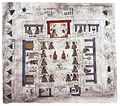
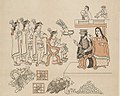
The "Lienzo de Tlaxcala" was commissioned by Tlaxcaltec rulers to demand the recognition of their privileges by the new regime.
Portrait of Don Juan Ixtolinque, Lord of Coyoacán under Spanish rule.

When the Spanish first arrived in present-day Mexico (1518), indigenous rulers and nobles headed the defense of their territories against the invaders, soon after signing peace treaties and alliances to ensure the survival of their people. In this process, many indigenous peoples ended up participating in the military conquests of the Spanish Empire, gaining recognition of their ancient privileges as well as earning new ones due to their merits in the conquest of the Americas. In accordance to Spanish tradition under the Habsburg dynasty, the Crown of Castile recognized the pre-existing social organization of the native peoples and assimilated their ancient elites to the new regime, often offering them the same conditions as nobles of Spanish extraction.[1] In this way, the Spaniards respected the native systems and added to them, sometimes resulting in many unions between Aztec and Spanish nobility.[citation needed] One example is the marriage between Agustin Moctezuma, cacique of Chilapa and a direct descendant from Moctezuma II. and several other Mexica kings, with María Antonia Guerrero Dávila, the heiress of the Mayorazgo of Guerrero, and aunt of the Marquesa de Villar del Águila.[2] To this day, Mexican aristocrats take pride not only in their noble Spanish ancestors but also in being descendants of the ancient kings of their country.[3]

During Spanish domain, indigenous nobles were referred to as caciques (term imported from the Antilles), maintaining political relevance as rulers of the repúblicas de indios (self-governed indigenous states), as well as receiving access to educational institutions (such as the Jesuit colleges and the Royal and Pontifical University of Mexico), as well as accessing Spanish institutions of organized nobility (like the Spanish military orders). At the time, religious convents were intended for specific social and ethnic groups, being the convents of indias cacicas some of the most privileged (such as the Corpus Christi convent in Mexico City). Nevertheless, the succession laws of Spanish tradition slowly permeated the Amerindian traditions, altering access to this elite class to patrilineal descendants of ancient rulers, in opposition to the mixed-lineal descent of their ancient traditions.[citation needed]

While numerous indigenous families and individuals were recognized as nobles by the Crown of Castile, certain populations who were specially active in the conquest and colonization of what was later known as the New Spain were also distinguished with collective nobility, this included the Tlaxcalan and Quauhquecholan peoples, who collectively gained the condition of hidalgos, a privilege that had only been received by the Basque people of the Iberian Peninsula. Many of these nobles resettled into western and northern Mexico to help pacify tribes there.[citation needed]

Some Amerindian nobles, like the Mixtec Villagómez family, were among the richest landowners in the New Spain, retaining their Mixtec identity, speaking the Mixtec language and even keeping a collection of valuable Mixtecan documents. Nevertheless, most indigenous nobles lost their privileges at the fall of the Spanish Empire,[4] losing all recognition, as with all Mexican nobles, with the birth of the modern Mexican Republic.[citation needed]

The "Lienzo de Quauhquechollan" depicts the conquest of Guatemala by the alliance between the Quauhquechollan rulers and the forces of Don Jorge de Alvarado.

The Imperial House of Moctezuma

[edit]
The coat of arms of the Dukes of Moctezuma de Tultengo (Grandees of Spain), Vicounts of Iluacán, and Marquesses of Tenebrón. It is made of the combined arms authorized by the Kings of Spain to certain lines of descent of Moctzeuma II on different dates.
Statue of Emperor Moctezuma II, carved into the Royal Palace of Madrid in Spain.

Amongst the descendants of the pre-Columbian rulers of present-day Mexico who received special distinctions under Spanish rule, none were more privileged than the descendants of Emperor Moctezuma II of the Mexica. The Emperor's son, Don Pedro de Moctezuma Tlacahuepan, formed a mayorazgo and settled in Seville, where his eldest grandson received the titles of Count of Moctezuma (later elevated to Duke of Moctezuma, Grandee of Spain, becoming part of the Spanish nobility), Viscount of Ilucán, Lord of Monterrojano, as well as the investiture as Knight of the Order of Santiago. In 1696, the husband of the 3rd Countess of Moctezuma was named Viceroy of the New Spain, being created Duke of Atrisco (or Atlixco) in 1704. Other historical members of the family include Doña Isabel de Moctezuma, Doña Francisca de Moctezuma, Princess of Ecatepec, Don Manuel Holgado-Moctezuma, 1st Marquess of Moctezuma, Doña María Isabel de Moctezuma, 1st Marchioness of La Liseda, Don Vicente de Moctezuma, 9th Marquess of Cerralbo, Don Pedro Tesifón de Moctezuma (knight of the Order of Santiago), Don Joaquín Gines de Oca Moctezuma y Mendoza (who received the Grandeza de España from Charles III of Spain), amongst others. It is noteworthy that the House of Moctezuma came to be counted with the great noble houses of Spain, establishing family relationships with them; as an example, from Doña María Isabel Francisca de Zaldívar y Castilla, a descendant of the Tlatoani as well as Pedro I of Castile. Only they and the Inca royal house (with the Borja-Loyola Inca) would come to have these strong levels of prestige in the high nobility of the Spanish Empire.[5] The modern-day Kingdom of Spain still legally recognizes all of these titles, despite the Mexican Republic opposing all recognition. In addition to the titles and other privileges the King Charles I of Spain (also Emperor Charles V of the Holy Roman Empire) offered the descendants of Emperor Moctezuma II a compensation of five-hundred ducats to be paid every year in perpetuity for the use by the capital city of water sources and lumber in their private estate in Mexico City. This payment was only interrupted in 1938 during the presidency of Abelardo L. Rodríguez, being contested until this day by the Countess of Miravalle and other notable descendants.[6] The present Ambassador of Mexico to the United States of America, Esteban Moctezuma,[7] is descended from this family.[8]

Nobility of the Viceroyalty of the New Spain

[edit]
Don Antonio de Saavedra Guzmán, the first American-born poet ever to be published, was an untitled Mexican noble.
The Hacienda of Proaño in Zacatecas applying the Patio process of silver extraction invented by Bartolomé de Medina, which made the mine owners of the New Spain some of the wealthiest people of the 17th and 18th century.
Portrait of the Fagoaga family whose eldest son became the 1st Marqués del Apartado, c. 1735.

Nobleza de Indias or "Nobility of the Indies"

[edit]

The Spanish conquest of present-day Mexico brought with it the implementation of its political, religious, economical and social system, which included the legal division of society between nobles and plebeians ("sociedad estamental", see Estates of the realm), a system which subsisted during the entirety of Spanish rule (in present-day Spain the distinction was only abolished at the second half of the 19th century). In addition to the pre-existing families belonging to ancient indigenous nobility, new ones were added, including European families whose nobility was pre-existing prior to their arrival to the Americas, and others whose nobility was gained through the available resources of the day, including participation in the conquest, founding and settling of the Indies and thus became the elite Hidalgos de Indias (as determined in the Ordenanzas de Segovia, promulgated by King Philip II in 1573).[9] In this process, the conquistadors, founders, first settlers, and all their male but also female descendants, received recognition of the same noble condition as their European and indigenous counterparts ("hijosdalgo y personas nobles de linaje y solar conoçido"),[9] forming a diverse and multicultural elite that has been known to historians as "Nobleza de Indias", or "Nobility of the Indies". Nobles from both ethnic extractions shared territorial, political and military power, and participated together in religious and public ceremonies, nevertheless, marriages between both groups where rare after the 16th century, with both units responding to different interests and unique set of traditions. In most cases, the "noble class" was formed by provincial hidalgos of Spanish extraction who held local political and military power, and whose fortunes varied greatly from one territory to another, depending on the local resources and opportunities for production and commerce.

The hacienda was the archetypical symbol of the power of the "Nobleza de Indias", although some even more privileged nobles also held ownership of urban palaces as well as extensive cattle-ranches and mines (at the 18th century, silver mines in the New Spain had surpassed the Peruvians as the most productive in the World). The intricacies of this society were described by Prussian scientist and explorer Alexander von Humboldt in his "Political Essay of the Kingdom of the New Spain".[10]

Portrait of "Don Juan Javier Joaquín Gutiérrez-Altamirano de Velasco y Castilla, Albornoz, López de Legazpi, Ortiz de Oraa y Navarra Luna de Arellano, Count of Santiago de Calimaya, Marquess of Salinas del Río Pisuerga, Perpetual and Hereditary Adelantado of Las Filipinas, etc.." by Miguel Cabrera, c. 1752 (Collection of the Brooklyn Museum)

Noble titles and knighthoods

[edit]

Most nobles had the status of hidalgos (untitled nobles), whilst a number no greater than one hundred and twenty individuals were granted higher-ranking titles of nobility during the three hundred years of Spanish rule known then as títulos de Castilla (or "titles of Castile"), including those of Viscount, Count, Marquess and Duke. The title of Señor (equivalent to Lord) was often used informally by holders of encomiendas, specially during the 16th century, although there is no proof that such a title was ever explicitly granted by the Crown. Knighthoods of Spanish military orders (Order of Santiago, Alcántara, Calatrava and Montesa) where also granted to members of the nobility, and were less rare at the end of the 18th century, although they could not be considered entirely common.[11] Knights of foreign orders of nobility (like the Order of Saint John or the Order of Christ) were also existent but even rarer than their Spanish equivalents.

The first title granted to a settler in the kingdom of New Spain was that of Marqués del Valle de Oaxaca (Marquess of the Valley of Oaxaca), received by conquistador Hernán Cortés, who was also knighted in the Order of Santiago. Subsequently, others received similar distinctions, including Don Rodrigo de Vivero, a Capitain-General who was made Conde del Valle de Orizaba); Don Pedro Tesifón de Moctezuma, made Conde de Moctezuma de Tultengo); and Don Agustín de Echeverz, governor of the Kingdom of Nuevo León, granted the title of Marqués de San Miguel de Aguayo), amongst many others.

The largest number of Novohispanic noble titles were created in the eighteenth century under the Spanish Bourbon monarchs and were added to by an influx of foreign nobles to Mexico.

The noble titles of New Spain were:

  • Marqués del Valle de Oaxaca (1529); Hernán Cortés and descendants
  • Marqués de Salinas de Río Pisuerga (1609); Altamirano de Velasco, Cervantes
  • Conde de Santiago de Calimaya (1616); Altamirano de Velasco, Cervantes
  • Marqués de Villamayor de las Ibernías (1617); Pacheco
  • Conde de Valle de Orizaba (1627); Rincón Gallardo
  • Conde de Moctezuma (1627) G.E.; Moctezuma de la Cueva
  • Marqués de San Miguel de Aguayo (1683); Echevers
  • Conde de Miraflores (1689); Garrastegui
  • Marqués de la Villa de Villar del Águila (1689); Urrutia
  • Conde de Miravalle (1690); Dávalos Bracamonte
  • Marqués de Santa Fe de Guardiola (1691); Padilla, López de Peralta, Cervantes
  • Marqués de Altamira (1704); Sánchez de Tagle
  • Marqués de las Torres de Rada (1704); Lorenz de Rada[12]
  • Marqués de Sierra Nevada (1708) ; Ruiz de Tagle
  • Marqués de Salvatierra (1708); Cervantes
  • Duque de Atrisco (1708); G.E.; Sarmiento, Romay-Sotomayor
  • Conde de Ledesma de la Fuente (1710)′
  • Marqués de Villa Hermosa de Alfaro (1711); Rincón-Gallardo
  • Conde de San Mateo de Valparaíso (1727); Landa y Escandón
  • Marqués de Acapulco (1728); de la Cerda
  • Marqués de San Clemente (1730); Busto
  • Marqués de las Salinas (1733); Pérez de Tagle
  • Conde de Revillagigedo (1749); Revillagigedo
  • Marqués de Rivascacho (1764); Cervantes
  • Conde de Regla (1768); Romero de Terreros, Rincón Gallardo
  • Marqués del Apartado (1772); Fagoaga, Campero
  • Conde de la Presa de Jalpa (1775); Cervantes
  • Marqués de San Cristóbal (1777); Romero de Terreros, Rincón Gallardo
  • Marqués de San Francisco (1777); Romero de Terreros
  • Marqués de Guanajuato (1798); Siles
  • Conde de Pérez Gálvez (1805); Pérez-Gálvez
  • Marqués de Guadalupe Gallardo (1810); Rincón-Gallardo
  • Marqués de Yermo (1810); Gabriel de Yermo and descendants (with the right to choose denomination)
  • Conde de Heras-Soto (1811); Heras Soto, García Pimentel

The nobility in the process of Independence

[edit]
The Declaration of Independence of the Mexican Empire

The process of Mexican independence, as well as others in the former Spanish Americas, was led by members of the local nobility. Initially, members of the provincial nobility such as Miguel Hidalgo, Ignacio Allende, and others, were amongst the first to form an insurrection against the Napoleonic control over Spain and its Empire. Nevertheless, other members of the nobility, like the future Emperor Agustín de Iturbide, Ignacio de Elizondo, the Count of Casa Rul, amongst others, led the resistance against the former insurrectionists. When the Spanish resistance to Napoleon gathered in the city of Cádiz in the year 1812 to form what would later be named as the Cortes of Cádiz, representatives were summoned from all points of the Empire to organize and fund the resistance (as well as to define the First Constitution of the Kingdom of Spain signed in 1812). This process also had prominent members of the New-Spanish nobility, such as Don José María Gutiérrez de Terán (who served as president of the Cortes), Don Octaviano Obregón (a grandson of the 1st Count of La Valenciana), Don Miguel Ramos (de Arreola) Arizpe (himself a descendant of Bartolomé de Medina), Don José Simeón de Uría y Berrueco (vice-president of the Cortes and defender of racial equality), Don José Miguel Gordoa (president of the Cortes, later bishop of Guadalajara), etc.

Almost ten years after the fall of the first insurrection, Agustín de Iturbide, then commander of the Spanish forces in central Mexico, led the definitive rebellion against Spanish rule, with the aid of many other titled and untitled nobles. Amongst the signers of the Mexican Declaration of Independence are Don Juan José Espinosa de los Monteros, the Marquess of Salvatierra de Peralta, Don José María Fagoaga (a nephew to the Marquess del Apartado), the Count of Heras Soto, Don Francisco Manuel Sánchez de Tagle (from the family of the Marquess of Altamira and the Count of San Mateo de Valparaíso), the Marquess of San Juan de Rayas, the Count of Santiago de Calimaya-Marquess of Salinas del Río Pisuerga, Don Juan Cervantes y Padilla (from the latter family), Don José Manuel Velázquez de la Cadena (from one of Mexico's prominent families), Don Nicolás Campero y Bustamante (related to the Counts of Alcaraz and Casa Flórez), the Count of Regla, the Marquess of San Miguel de Aguayo, Anastasio Ruiz de Bustamante (later president of Mexico), etc.

Carl Nebel's representation of an hacienda owner and his mayordomo.

Nobility of the First Mexican Empire

[edit]
Emperor Agustín I of Mexico (1822–1823)

The independence of the Mexican Empire from Spain happened as an emancipation of powers with a continuity of the precedent political, social, economical and religious system. The first treaty of independence, known as the Treaty of Córdoba, proposed the transferral of King Ferdinand VII of Spain from Europe to Mexico (with the title of Emperor of Mexico), emulating the transferral of Don Pedro IV of Portugal to Brazil a few months before, due to the rise of liberalism in the Iberian Peninsula. The King however, never embarked for Mexico, for which a regency was appointed, and after a social uprising, a new Emperor was sought and later proclaimed in the figure of Agustín de Iturbide. He was the military commander that, once a royalist, turned and led the process of independence (himself a member of the hidalgo class). The new Emperor recognized all pre-existing titles of nobility, as well as nobiliary conditions prescribed under Spanish law, and only granted a few princely dignities to members of his family (including his children and his father, who was proclaimed Prince of the Union), as well as three other titles of nobility, all of which were ratified by the Congress, such as that of Marqués de Samaniego del Castillo (which was already under application with the Spanish Crown). Knighthoods were also created, most notably, the Imperial Order of Guadalupe.

The fall of the First Mexican Empire was followed by the prohibition of use of titles of nobility, from the First Mexican Republic, action which was responded by many nobles with the junction of the prefix "ex" to their titles ("ex-marqués de..", "ex-conde de...", etc.).

The Imperial House of Iturbide

[edit]
The Arms of the House of Iturbide, with the Imperial Crown of Mexico as it’s crest.

The family of Emperor Agustin I had titles created for them such as Mexican Prince, Princess of Iturbide, and Prince of the Union. After the fall of the First Empire shortly after its rise, the imperial family was exiled from Mexico, residing firstly in Italy, and later, in the United States of America. The failed return of the ex-Emperor to Mexico was shortly ended after his arrival with his execution. The headship of the house passed then to his eldest son Don Agustín Jerónimo de Iturbide, who had been proclaimed Prince Imperial by the Mexican Congress of 1822. In 1855, a plan to restore the monarchy in Mexico, proclaimed Prince Agustín Jerónimo as the new Emperor of Mexico, but never came into effect.[13] In 1865, one year after the proclamation of the Second Mexican Empire under the House of Habsburg-Lorraine (see below), Don Agustín (son of Agustín Jerónimo), Don Salvador, and Doña Josefa de Iturbide were proclaimed Princes of Iturbide with the treatment of Highness, ranking just below the new Imperial Family, and put under the tutelage of the new Emperor (never adopted, contrary to popular belief).

Return to Exile

[edit]

The fall of the Second Mexican Empire, retook the Iturbide family to exile, where they've stayed ever since. During the Porfiriato, Agustín, Prince of Iturbide, Agustin I's grandson and Maximilian I's adopted son, who had graduated from Georgetown University, renounced his claim to the throne and title. He returned to Mexico and served as an officer in the Mexican army. But in 1890, after publishing articles critical of President Porfirio Díaz, he was arrested on charges of sedition and sentenced to fourteen months of imprisonment.[14] He returned to Georgetown University, as a professor of the Spanish and French languages, and died childless in 1925. Several branches still subsist, most notably through the other adopted son Salvador, being registered and recognized by the Almanach de Gotha.

Nobility of the Second Mexican Empire

[edit]
Emperor Maximilian I of Mexico (1864–1867) by Franz Xaver Winterhalter

The 19th century was a time of great political and military turmoil in Mexico, with repetitive wars against the Kingdom of Spain, the Kingdom of France and the United States of America, as well as internal wars provoked by the different visions that the ruling classes had over the ideal model of the new nation. After having lost more than half of its territory to the United States of America, and facing excruciating financial debt, some believed the restoration of a stable monarchy was the best option forward for the restitution of order in a country devoured by its irreconcilable differences. In 1859, Archduke Maximilian of Habsburg-Lorraine, the Viceroy of Lombardy-Venetia (brother to Emperor Franz Joseph of Austria) was first approached by Mexican monarchists led by José Pablo Martínez del Río—with a proposal to become the emperor of Mexico. The Habsburg family had ruled the Viceroyalty of New Spain from its establishment (see above).

The quest of restitution of the monarchy had begun long before, ever since the deposition of Emperor Agustín I by General Antonio López de Santa Anna (styled His Serene Highness by the Mexican Congress), who preferred, as many others the candidacy of a Bourbon or Habsburg prince (for their historical relation with the Spanish Empire), instead of that of a local provincial hidalgo. After many negotiations between Napoleon III, his Mexican supporters, and foreign powers, the candidacy of Maximilian was accepted and he arrived in Mexico in 1864.

Several members of the old Mexican nobility were enthusiastic about the monarchical restitution and even traveled to Miramar Castle to officially offer the Mexican crown to the Archduke and his wife Charlotte of Belgium (daughter of King Leopold I of the Belgians), who later was known as Carlota.

Portrait of Empress Carlota of Mexico, 1865, which hangs in Chapultepec Castle, Mexico City. She had many ladies-in-waiting from the Mexican nobility.

Contrary to his supporters expectations, the new emperor was a profound liberal, who did little to reinforce the powers of the conservatives, the Catholic Church, or the old Mexican nobility (which were his only supporters). During his short reign he re-established the Imperial Order of Guadalupe (which had also been active during the rule of López de Santa Anna), he also founded the Imperial Order of the Mexican Eagle (precedent to the present Order of the Aztec Eagle), and the Imperial Order of San Carlos (given to ladies of the Court and to foreign princesses). During his short lived Empire, the Imperial Court was filled with Austrian, German, French and Italian nobles (several of which stayed in Mexico after the fall of the Empire), who were sometimes at odds with the old Mexican nobles. He invited liberal politicians to his government and his court, and often gave them membership in the Imperial Orders, as well as appointing their consorts as ladies-in-waiting to the Empress. Although his Court implicitly recognised all pre-existing titles (as well as those of the foreigners who accompanied him), nothing was done to give them official status, and the only new titles which were created were those of the Princes Iturbide. The Emperor and Empress themselves did not have any offspring (although there were rumours of a miscarriage [citation needed]), which left the Imperial house without a direct successor.

Other notable Mexican noble families

[edit]

The direct lines of descent from the original nucleus of nobility, originating with the first conquistadors and encomenderos in the 16th century, mostly survived to this day only through matronymic connections. This is the case for example with the Cortés, Echeverz, Guerrero-Dávila, Sandoval and Vivero families.[15] Leading noble families active in 17th through 19th century politics, economy, clergy, arts and culture of Mexico included: De la Llamosa, Gómez de Cervantes, Romero de Terreros, de la Cámara or Cámara, Rincón-Gallardo, Riverol, Ríos, Pérez Gálvez, Rul, Vivanco, La Canal, Cañedo, Fernández de Jáuregui, Obando, Fernández de Córdoba, Gómez de Parada, Lara, Lorenz de Rada, Pérez de Salazar, Ruiz de Velasco, Valdivieso, De Haro y Tamariz, De los Ríos, Fagoaga, Echeverz, Dávalos de Bracamonte, Peón, Gutiérrez-Altamirano, Castañiza, Gómez de la Cortina, Urrutia, Velasco, Del Río, Moncada, Diez de Sollano, de Busto y Moya, Reynoso y Manso de Zúñiga, Capetillo, de la Parra, Villaseñor-Cervantes, Villaseñor-Jasso, López de Zárate, Camino, Caserta, Trebuesto, Ruiz de Esparza, García de Teruel, Espinosa de los Monteros, Vizcarra, Rábago, Sardaneta, Martínez del Río, Ozta, Azcárate y Ledesma, de la Torre Ledesma, Molina Flores, Vera Martinez y Cazarez, Samaniego del Castillo, Lemus, Mier, De la Maza, González de Betolaza, López de Peralta, Padilla, Diez-Gutiérrez, Flores-Alatorre, Cosío, Rivadeneyra, de la Cotera, de la Campa y Cos, Rodríguez Sáenz de Pedroso, Padilla, Rivascacho, Villar-Villamil, Rodríguez Rico, Sánchez de Tagle, Báez de Benavides, Cabrero, Hurtado de Mendoza, López-Portillo, García Pimentel, Meade, Sánchez-Saráchaga, Sainz-Trápaga, Villaurrutia, Errazu, Escandón, Heredia de la Pierre, Quintanar, Beovide, Alvarez de Medina, Sánchez de Aldana, Siles, Yermo, de Yturbe, de Béistegui, de Rivera, Zubaran-Capmany and Sánchez-Navarro, among others.[16]

Members of the Rincón Gallardo, Del Río, Fagoaga and Pimentel families (marqués de Guadalupe and marqués del Apartado) were active in Mexico City government, the ministry of Foreign Affairs, the Senate, the armed forces, and the Academia de la Lengua or the Sociedad de Geografía e Historia. Many journeyed and lived abroad, often doing so in Paris, London, and Madrid. Many men from these families studied at British public or private schools, as had been the custom since before independence.

Foreign nobility in Mexico

[edit]
Mexican author Elena Poniatowska is a direct descendant of Prince Kazimierz Poniatowski, brother of King Stanislaw II, last elective monarch of the Polish-Lithuanian Commonwealth.
Prince Rainier III of Monaco was the son of Mexican-French aristocrat Count Pierre de Polignac
Mexican born Don Ventura García-Sancho e Ibarrondo, 1st Count of Consuegra, Duke of Nájera, Grandee of Spain (jure uxoris)

Throughout the 19th century several Mexican individuals and their descendants received titles of nobility from foreign nations, including the Vatican, the Kingdom of Spain, and others. Additionally, many bearers of foreign titles have moved to Mexico during its long history.

Pontifical nobility

[edit]

Pontifical titles of nobility were granted by the Pope. These titles are sometimes known as títulos negros and include the titles of the marqués de Barrón, conde de Subervielle, conde del Valle (Fernández del Valle family), duque de Mier, amongst others. Many of these families were previously part of the Mexican and Spanish hidalgo class, while others proceeded from France or other countries.[17]

Spanish nobility

[edit]

Several titles which were in existence at the time of the Spanish rule over Mexico are still legally recognized to this day by Spain, although very few continued to be passed down following their prohibition in Mexico, falling in the hands of distant or obscure Spanish relatives who spend great sums for "rehabilitating" them through the 19th and 20th centuries.

Prince Hubertus von Hohenlohe-Langenburg has represented Mexico in the 1984, 1988, 1992, 1994, 2010 and 2014 Winter Olympics

In addition, a few Mexican families who permanently or temporarily settled in Spain after Mexican Independence continued to be granted distinctions and titles of nobility from the Spanish monarchs, such as the Duke of Regla (Grandee of Spain), Marquess of Morante, Duchess of Prim (Grandee of Spain), Marquess of Bermejillo del Rey, amongst others. Other Mexican individuals acquired their titles jure uxoris (through marriage), passing them down to their descendants, such as the Duke of Castro-Terreño (Grandee of Spain), Marquess of Montehermoso, Count of Triviana, Count of Echauz and Count of Ezpeleta de Veire (all held by the Mexican Sánchez-Navarro family). Mexican-born Don Ventura García-Sancho e Ibarrondo (1837–1914), both received the Spanish title of Count of Consuegra and became Duke of Nájera (Grandee of Spain), also Marquess of Aguilar de Campoo, amongst many other titles through marriage (passed down to his descendants).

Other members of Spanish nobility moved to Mexico for different reasons, taking their titles with them and bequeathing them to their Mexican descendants. These include the Duke of Sessa (Grandee of Spain), Count of Altamira, the Duke of Huete (Grandee of Spain), amongst many others.

French nobility

[edit]

Several members of the French nobility moved to Mexico at different times in history, including the descendants of Louis Jucherau de Saint-Denis, those of count Melchior de Polignac (through his marriage to Susana de la Torre y Mier, sister of Ignacio de la Torre y Mier), including their son Prince Pierre, Duke of Valentinois, and through him the present Princely House of Monaco.

Austrian nobility

[edit]

Archduke Felix of Habsburg and his wife Princess Ana Eugenia d'Arenberg settled in Mexico after the fall of the Austrian Empire in 1918, with most of their offspring remaining in Mexico ever since. Archduke Felix was the son of the last Emperor of Austria (Emperor Charles I of Austria) and great-grand nephew of Maximilian I of Mexico.

Italian nobility

[edit]

Members of the Italian nobility were present in Mexico as early as the 16th century, including a contingency of Genoese bankers that partially funded the Cortés Expedition (the Genoese represented one third of the troops of Cortés).[18] Princess Maria Beatrice of Savoy, daughter of the last King of Italy, Umberto II, also settled in Mexico after the fall of the Italian monarchy, having married Argentinian diplomat Luis Reyna-Corvallán in Ciudad Juárez. Other members of the Italian nobility include members of the Mapelli-Mozzi, Caravita di Sirignano, and many others. At the end of the 19th century, the Marquess of Grimaldi was one of the major landowners of the State of Veracruz.[19]

Polish nobility

[edit]

French-born Mexican author Elena Poniatowska (nicknamed The Red Princess) is the daughter of Prince Jean-Joseph Poniatowski and Mexican-born María Dolores Amor e Yturbe, herself a cousin of Carlos de Beistegui.

Current status

[edit]

At the beginning of the 20th century, the Mexican nobility – both titled and untitled – consisted of approximately 1.5% of Mexico's population, or approximately 200,000 people.[20] The Political Constitution of Mexico expressly prohibits the state from recognizing (or granting) any titles of nobility since 1917. Mexicans are also prohibited from accepting foreign distinctions without permission from the Congress of the Union.[21]

[edit]

See also

[edit]

Notes

[edit]
[edit]
Revisions and contributorsEdit on WikipediaRead on Wikipedia
from Grokipedia

Mexican nobility refers to the hereditary titled aristocracy formed mainly through grants by the Spanish Crown in the Viceroyalty of New Spain from the 16th to 19th centuries, augmented briefly by creations under the First Mexican Empire of Agustín de Iturbide and the Second Mexican Empire of Maximilian I, but rendered legally void by successive republican constitutions culminating in the 1917 prohibition on recognition of such titles.
The origins trace to rewards for conquest and administration, exemplified by the 1529 bestowal of the marquesado del Valle de Oaxaca on Hernán Cortés, encompassing vast estates in the former Aztec domains. Descendants of indigenous rulers, such as Aztec emperor Moctezuma II, received titles like the countship and eventual dukedom of Moctezuma de Tultengo to integrate pre-Hispanic elites into the colonial order. Between 1700 and 1810, the Crown issued at least 49 new titles in Mexico, often tied to substantial wealth from haciendas, silver mines, and trade, solidifying the nobles as the dominant economic and political class amid a stratified society.
At independence in 1821, this nobility largely aligned with royalist or conservative factions, resisting radical egalitarianism, though internal divisions emerged; Iturbide's short reign distributed titles to allies as incentives for loyalty, while Maximilian's regime, backed by French intervention, ennobled Mexican conservatives to bolster legitimacy, creating orders and peerages that dissolved with his 1867 execution. Article 12 of the 1917 Constitution enshrines the ban: "No titles of nobility, nor prerogatives and hereditary honors shall be granted in the United Mexican States," reflecting revolutionary disdain for feudal remnants and ensuring state neutrality toward private assertions of rank. Contemporary descendants preserve genealogies and arms, with some titles upheld by foreign sovereigns like Spain, but Mexico enforces the prohibition, viewing nobility as incompatible with republican equality under law.

Pre-Colonial and Indigenous Foundations

Mesoamerican Noble Structures

Mesoamerican noble structures exhibited hierarchical systems where elite classes derived authority from a combination of hereditary lineage and demonstrated prowess in warfare, , and , as documented in indigenous codices, stelae inscriptions, and archaeological remains of palaces and elite residences. These elites managed tribute extraction, military campaigns, and religious ceremonies, sustaining polities through alliances and conquests. Empirical evidence from sites like and reveals palaces and burial goods distinguishing nobles from commoners, with possible for warriors capturing enemies, though hereditary descent predominated among ruling dynasties. In Aztec society, the pipiltin nobility encompassed rulers (tlatoani), priests, and warriors who held privileges including exemption from personal tribute payments imposed on commoner macehualtin and ownership of private pillalli lands alongside communal calpullalli allotments organized by kin groups. Hereditary status linked to founding lineages provided baseline elite access, but merit-based elevation occurred through battlefield achievements, such as attaining ranks like cuauhpilli (eagle noble) via captive-taking, enabling commoners to join noble councils and receive land grants. The Codex Mendoza illustrates this structure through depictions of social strata and tribute flows, underscoring how noble merit in expansionist wars bolstered imperial control over subject altepetl (city-states). Archaeological findings of elite tecpan (palaces) in the Basin of Mexico corroborate these privileges, with nobles directing labor and resources without equivalent obligations. Among the Maya, ajaw (lords) and k'uhul ajaw (divine or holy lords) formed the apex of noble hierarchies in city-state polities, wielding divine kingship that legitimated rule over tribute networks and warfare, as recorded on stelae detailing accessions, victories, and captive rituals. Subordinate nobles, termed sajal, administered secondary centers, collecting tribute in goods like cacao and jade while leading military expeditions, evidenced by palatial complexes and iconography at sites such as Piedras Negras and . Inscriptions from the Classic period (c. 250–900 CE) highlight councils of ajaw advising on alliances and conflicts, with archaeological data from fortifications and weapon caches indicating noble orchestration of raids for status enhancement. This structure emphasized hereditary dynasties, yet ritual and martial success reinforced authority, as seen in genealogical texts linking rulers to deities. Tlaxcalan elites operated within a confederate framework of four principal altepetl (Ocotelulco, Tepeticpac, Tizatlán, and Quiahuiztlán), each governed by a tlatoani (ruler) advised by noble councils, fostering internal hierarchies resistant to Aztec domination through collective defense and alliances. Archaeological surveys at Tlaxcallan reveal dispersed elite residences and public architecture supporting this pluralistic governance, where noble lineages managed tribute from subordinate calpulli (clans) and coordinated warfare against imperial foes. This structure, blending hereditary leadership with merit in republican-style assemblies, is inferred from postclassic ceramics and settlement patterns indicating decentralized power among Teochichimec descendants, enabling sustained autonomy until European contact.

Key Indigenous Dynasties and Roles

The Aztec (ruler) embodied the apex of noble authority in , heading a hereditary dynasty that governed through a council of pipiltin (nobles) and (kin-based units), with 's accession in 1502 marking a period of intensified centralization. During his 18-year reign until 1520, orchestrated military campaigns that expanded the Triple Alliance's tribute network, extracting goods like cacao, feathers, and cotton from over 400 subject polities, thereby consolidating economic and ritual dominance. This structure relied on noble intermediaries to enforce loyalty and resource flows, ensuring the polity's stability amid seasonal agricultural cycles. In , the (Tarascan) Empire featured hereditary cazonci (kings) as supreme rulers, with the dynasty centered in Tzintzuntzan and extending control over approximately 75,000 square kilometers by the early . Cazonci like those preceding Tangaxoan II patronized , fostering specialized production of tools and ornaments that bolstered and capabilities, while repelling multiple Aztec expansion attempts through fortified defenses and organized armies. This resistance preserved Purépecha autonomy, with noble hierarchies managing tribute from diverse ethnic groups and ritual centers tied to solar calendars for agrarian coordination. Nobles across these dynasties fulfilled roles in warfare and to integrate with demonstrated competence, vital for maintaining order in tribute-dependent societies. Aztec pipiltin underwent rigorous training in schools, where noble sons learned martial tactics, astronomy for calendrical rituals, and administrative duties, allowing battlefield prowess to elevate status within the hereditary framework. Similarly, warfare merit systems rewarded captures and victories with land grants and , causally linking noble effectiveness to territorial defense and resource security against risks. In domains, noble oversight of craft guilds and military levies paralleled this, ensuring hereditary lines adapted through empirical selection to environmental and expansionary pressures.

Colonial Nobility in New Spain

Spanish Granting of Titles and Integration

The Spanish Crown initiated the granting of noble titles in immediately following the , with awarded the marquessate of the Valley of in 1529 as compensation for his conquest efforts, including extensive rights over 23,000 indigenous vassals. This title integrated Cortés into the Iberian nobility while tying his status to colonial economic exploitation through labor grants. Subsequent titles required royal approval, with the playing a key advisory and validation role by reviewing petitions for evidence of loyalty, , and contributions to the , ensuring alignment with Crown interests. By the 1530s, viceregal authorities extended equivalent privileges to allied indigenous caciques, such as Tlaxcalan leaders, granting them hidalgo-like exemptions from tribute to secure their incorporation into the colonial and facilitate elite alliances. Higher peerages emerged later, exemplified by the creation of the dukedom of Atrisco on April 17, 1708, bestowed by Philip V upon José Sarmiento y Valladares for viceregal service in , underscoring the Crown's strategy to reward administrative fidelity. Title proliferation stayed restrained until the late colonial era, with roughly 49 new grants issued in from to 1810, frequently linked to economic incentives like early encomiendas or patronage of operations that fused noble prestige with resource extraction for imperial benefit. These mechanisms merged peninsular and creole elites, embedding within 's networks while subordinating local power to royal oversight.

Indigenous Nobles Under Colonial Administration

The Spanish colonial administration in New Spain co-opted pre-existing indigenous elites, including caciques and tlatoque, to maintain social order and streamline governance by preserving local hierarchies as intermediaries between native communities and crown officials. This strategy emphasized continuity in indigenous rule, granting these nobles authority over tribute collection from macehuales (commoners) and limited judicial functions within repúblicas de indios, such as resolving intra-community disputes under Spanish oversight. Royal cédulas and legislation, including provisions from the of 1542, sought to safeguard indigenous nobles' privileges against encomendero encroachments, affirming their hereditary status and roles in native cabildos despite inconsistent enforcement across regions. By the mid-16th century, caciques in central retained exemptions from certain obligations and access to Spanish courts to defend communal lands, blending kinship-based authority with Iberian legal frameworks. Prominent examples include the nobles of Texcoco, led by the Ixtlilxochitl family, who leveraged genealogical records and historical chronicles to assert privileges in colonial administration. Fernando de Alva Ixtlilxochitl (c. 1578–1648), a descendant of pre-conquest rulers, held posts such as gobernador of Texcoco and documented indigenous histories in Spanish to validate noble lineages, facilitating the integration of native elite perspectives into viceregal records. These elites played a causal role in stabilizing colonial rule by mediating disputes and averting large-scale uprisings; in 17th-century central , intervention often defused tensions over labor drafts and land, as seen in where nobles balanced royal demands with community interests, contrasting with peripheral revolts like the 1680 where weaker elite co-optation enabled broader resistance. Data from archival cases indicate that indigenous lordships channeled approximately 20-30% of flows directly to Spanish treasuries via oversight, reducing evasion and fostering administrative efficiency without full peasant mobilization against the regime.

Socio-Economic Functions and Privileges

Titled nobles in amassed wealth through ownership of expansive haciendas and silver mines, which underpinned the viceroyalty's mercantile economy and generated substantial royal revenues via exports to . Miners among the nobility often reinvested profits into land, consolidating control over agricultural production of staples like and , thereby stabilizing food supplies and export commodities amid fluctuating indigenous labor availability. For example, Pedro Romero de Terreros, created Count of Regla in 1768, developed extensive silver operations in , including a 2,881-yard completed over thirty years during the , which enhanced ore extraction efficiency and contributed to New Spain's peak silver output exceeding 20 million pesos annually by the late 18th century. These economic functions were bolstered by privileges such as tax exemptions under the fuero militar and hidalguía, exempting nobles from personal tribute and certain alcabala duties, enabling for like systems and mills that sustained long-term . Nobles extended to religious missions and arts, funding expansions and educational endowments; Terreros, for instance, supported charitable foundations and buildings, preserving cultural institutions that outlasted colonial rule. Such investments empirically correlated with reduced regional instability, as networks integrated indigenous communities into wage labor, mitigating subsistence crises compared to the agrarian upheavals post-1821. Militarily, nobles discharged frontier defense obligations through commands, financing presidios that curbed Chichimec raids more effectively than the fragmented republican forces of the , where conflict deaths surged amid . Although scandals, including in royal treasury oversight during the 1760s Bourbon visitations, implicated some elites, aggregate silver remittances—totaling over 3.5 billion pesos from 1492 to 1810—demonstrate net contributions to imperial fiscal health and economic expansion, countering narratives of systemic exploitation with of value-added and facilitation.

Nobility During Independence and the First Empire

Noble Involvement in Independence Movements

The Mexican War of Independence from 1810 to 1821 revealed profound divisions among the creole elite, including those with noble pretensions or local aristocratic status, between loyalists to the Spanish crown and supporters of insurgency. While some creole military officers and landowners initially backed the royalist cause to preserve order and their socioeconomic positions, others defected due to grievances over restricted access to high offices and economic opportunities dominated by . For instance, , a captain from a wealthy criollo family in San Miguel el Grande with ties to provincial elite networks, joined Miguel Hidalgo's uprising shortly after the Grito de Dolores on September 16, 1810, providing military leadership to the early insurgent forces despite the movement's radical social demands that alienated many fellow elites. These fissures were not ideological purity but pragmatic responses to implemented from the 1760s onward, which centralized administrative control, expelled the in 1767, and curtailed local privileges through intendants, fostering resentment among creoles whose influence waned as peninsular Spaniards consolidated power. By the war's later phases, royalist creole officers increasingly shifted allegiances as Spain's Napoleonic occupation in 1808 undermined Bourbon legitimacy, prompting elite negotiations over independence terms rather than total rupture. , born in 1783 to a prosperous criollo family of Basque noble descent in , exemplified this transition; initially a who suppressed insurgents from 1810 to 1820, he pivoted in 1821 amid eroding privileges and formed alliances with former rebels. (Ejército Trigarante), established February 24, 1821, integrated approximately 16,000 royalist and insurgent troops under the Plan de Iguala, guaranteeing religion, independence, and union to appeal to conservative elites wary of Hidalgo-era radicalism. This coalition, driven by elite consensus rather than mass uprising, entered on September 27, 1821, formalizing independence through negotiated pacts that preserved creole privileges against full social upheaval. Such noble and elite fractures underscore that independence resulted from internal royalist defections and reform-induced discontent, not uniform opposition from a monolithic .

The Iturbide Dynasty and Imperial Titles

The Mexican Constituent Congress crowned as Emperor Agustín I on July 21, 1822, after widespread public support for his elevation to the throne earlier that spring amid the fragile post-independence order. On June 22, 1822, the Congress had decreed the hereditary establishment of the , designating Iturbide's eldest son, Agustín Jerónimo, as Prince Imperial and granting princely titles with the style of to other children, including Vicente Antonio de Iturbide y Huarte as Prince of Iturbide. These familial honors aimed to embed monarchical legitimacy within the creole elite, mirroring European dynastic models to foster loyalty and continuity following the 1821 independence from Spain. In the transitional period leading to the empire, the Soberana Junta Provisional Gubernativa granted on February 23, 1822, the title of Marqués de la Cadena to José Manuel Velázquez de la Cadena, accompanied by the vizcondado previo de Velázquez—a procedural viscountcy preceding the marquessate per Spanish tradition, normally canceled upon definitive title issuance unless explicitly preserved by the sovereign; this constituted the only non-Iturbide noble title created by Mexican authority after independence and is distinct from the Spanish condado de la Cadena granted by Felipe V in 1712. To consolidate power, Iturbide extended imperial titles beyond his kin primarily by confirming pending Spanish-era peerages, with new peerage-style titles created in limited instances for key military and creole supporters—such as the Marqués de la Cadena—to incentivize allegiance and integrate former and insurgent factions into the imperial structure. This served as a mechanism to co-opt influential families, providing hereditary privileges like fiscal exemptions and court precedence in exchange for political stability, though the exact count remained modest compared to colonial precedents. The strategy briefly formalized an elite consensus, averting immediate factional collapse by aligning conservative interests under a centralized . However, the dynasty's proved ephemeral due to acute fiscal strains from war debts and administrative inefficiencies, which left the unpaid and sparked mutinies, culminating in Iturbide's on March 19, 1823. All noble titles were subsequently abolished by law on May 2, 1826, regardless of origin. Despite these failures, the short-lived titles underscored a pragmatic effort to harness hereditary incentives for , temporarily bridging divides that later fueled conflicts and regional secessions.

The Second Mexican Empire

Maximilian's Creation of Mexican Nobility

During the Second Mexican Empire (1864–1867), I endeavored to establish a domestic as a cornerstone of his monarchical regime, aiming to secure loyalty from Mexican elites and legitimize Habsburg rule through ties to local historical lineages. Influenced by conservative invitations from Mexican notables in 1863, Maximilian viewed as a means to foster stability amid republican instability, which had seen over 30 changes in government since in 1821. His approach emphasized merit and service, granting titles to supporters who demonstrated allegiance, including military figures and former republicans who defected, thereby integrating proven administrators into a hierarchical structure modeled on European precedents. A key decree on September 16, 1865, exemplified this strategy by conferring the title of Prince de Iturbide, with the style of Highness, upon and , descendants of the emperor of the . This elevation blended creole imperial heritage with Maximilian's European sovereignty, positioning the Iturbides as heirs presumptive after the reigning house to underscore continuity and appeal to nationalist sentiments among conservatives. Such grants sought to create a that rewarded loyalty and service, contrasting with purely hereditary colonial titles, though the brevity of the empire limited their proliferation. Critics, particularly republicans, dismissed these creations as artifices of foreign imposition, given French backing for the intervention, yet the measures imported administrative expertise and hierarchical discipline absent in prior republican experiments, enabling temporary order in urban centers and economies. from the period indicates reduced disruptions in loyalist regions under this system, attributable to noble-led that incentivized local enforcement against insurgencies. While politically contested, this causal mechanism highlights how structured facilitated expertise transfer, addressing vacuums that plagued Mexico's post-independence republics.

European Noble Imports and Reforms

Ferdinand Maximilian of , upon accepting the Mexican crown on April 10, 1864, arrived in on May 28, 1864, with his wife Carlota, a Belgian princess, and an entourage of Austrian and Belgian officials to establish a court modeled on European monarchical traditions. This importation of Habsburg personnel aimed to instill administrative discipline and institutional frameworks from the , including court etiquette and ceremonial practices that emphasized aristocratic norms. French military and diplomatic advisors, aligned with Napoleon III's interventionist policy, supplemented the Austrian core, providing expertise in governance and security during the empire's formative phase. European nobles assumed key administrative roles, such as Prussian Prince Felix zu Salm-Salm serving as an and , facilitating the transfer of European and loyalty structures to forces. Intermarriages between imported nobles and elites were promoted to forge alliances, though such unions remained sporadic and primarily symbolic for binding conservative factions to the regime. These efforts sought to create a hybrid capable of sustaining imperial institutions amid ongoing republican . Reforms under European influence included the establishment of an imperial railway company to expand , drawing on Austrian principles to connect key regions and stimulate , with initial track laying advancing despite wartime disruptions. Maximilian's administration also pursued modernization of banking and land policies, upholding elements of prior liberal decrees to abolish peonage and encourage commercial , though implementation was curtailed by the empire's short duration until 1867. The reliance on European imports, however, engendered a cultural disconnect, as the court's Habsburg aesthetics and foreign personnel alienated broader Mexican society, intensifying liberal propaganda that depicted the regime as an alien imposition rather than a national restoration. This perception undermined domestic support, contributing to the empire's vulnerability against Benito Juárez's republican forces.

Decline, Abolition, and Republican Eras

Post-Independence Erosion of Titles

The Constitution of 1824 established a without provisions for recognizing or granting hereditary noble titles, effectively sidelining colonial-era in the new political framework by emphasizing elected offices and over inherited privileges. This omission reflected the independence-era rejection of monarchical structures, though existing titles retained informal social weight among elites until subsequent republican measures accelerated their diminishment. Antonio López de Santa Anna's centralist coups in the 1830s, including the suspension of the Constitution in 1834 and the imposition of the in 1836, targeted federalist-leaning elites by dissolving state legislatures and concentrating power, prompting waves of among prominent families opposed to the shift from . These actions, amid recurring pronunciamientos and civil strife, forced hundreds of creole landowners and former officials into in the United States or , eroding the cohesion and domestic influence of noble houses through property seizures and political marginalization. By 1846, the restoration of under the framework had not reversed this fragmentation, as ongoing instability continued to undermine aristocratic networks. The Liberal Reform Laws of the 1850s, culminating in the 1857 Constitution's Article 12, explicitly prohibited the recognition of noble titles, prerogatives, or hereditary honors, mandating equality before the law and barring any state conferral of . Under , the Lerdo Law of June 25, 1856, nationalized ecclesiastical and civil corporate properties not directly used for their functions, forcing sales that disrupted noble families' economic bases where they held leased church lands or estates, with over 5 million hectares disentailed by 1860 and often acquired by emerging capitalists rather than traditional aristocrats. This secularization, linked to the War of Reform (1857–1861), severed fiscal ties between nobility and institutional wealth, compelling asset liquidation amid and contributing to a causal decline in hereditary elites' landed dominance. Despite these pressures, some noble lineages adapted by diversifying into commerce and mining, preserving social prestige through intermarriage and urban investments; for instance, creole families transitioned hacienda revenues into early industrial ventures, sustaining influence in circles until the . Under (1876–1911), however, favoritism toward Científicos and foreign-linked entrepreneurs fostered crony networks that supplanted old aristocracy, as state concessions prioritized new oligarchs over titled holdouts, with Díaz's regime allocating railroad and mining monopolies to allies rather than hereditary claimants. This shift marked the near-complete erosion of noble titles' practical authority by 1910, reducing them to ceremonial vestiges amid republican consolidation.

Revolutionary Assault on Aristocratic Institutions

The Mexican Revolution (1910–1920) embodied an ideological crusade against aristocratic institutions, framing them as symbols of Porfirian and colonial inheritance that perpetuated inequality and obstructed agrarian reform. Revolutionary leaders, including and , promoted narratives of dismantling elite privileges to empower the peasantry, though this rhetoric aligned with broader anti-hierarchical sentiments rooted in liberal republicanism rather than empirical assessments of institutional stability. A cornerstone of this assault was Article 12 of the 1917 Constitution, which explicitly banned the granting of titles of nobility, hereditary prerogatives, or honors in Mexico and denied legal effect to those conferred by foreign powers, effectively nullifying any remaining aristocratic claims from the colonial or imperial eras. Zapata's Zapatista forces accelerated the process through direct land expropriations in Morelos, targeting hacendados—large estate owners whose ranks included descendants of creole nobles and peninsular titled families—who controlled vast tracts amassed during the Porfiriato; the 1911 Plan de Ayala demanded immediate restitution of "usurped" communal lands, resulting in the seizure of over 1,000 haciendas by 1914 and the redistribution of approximately 3 million hectares by revolutionary decree. These measures dismantled the socio-economic foundations of noble-linked elites, correlating with heightened instability as traditional mediating institutions vanished; revolutionary violence claimed an estimated 1–2 million lives, including targeted killings of landowners during factional purges, while real GDP per capita declined by 15–20% between 1910 and 1920 amid disrupted agriculture and capital flight, outcomes that diverged sharply from the viceregal era's sustained growth under aristocratic hierarchies. The abolition facilitated the entrenchment of caudillo rule, with military strongmen like Álvaro Obregón leveraging revolutionary legitimacy to seize power—Obregón's 1920 presidency marked the onset of a new elite stratum reliant on armed patronage rather than hereditary status—exacerbating factional conflicts that persisted into the 1920s. Contrary to claims of transformative equality, post-revolutionary data reveal the assault's limits: Gini coefficients hovered at 0.40–0.45 from 1910 through , with the top 1% capturing 20–25% of national by 1940, as new cadres replicated oligarchic concentrations under the guise of , underscoring how egalitarian pretexts often veiled opportunistic elite substitutions without addressing underlying power asymmetries. This pattern of institutional erosion, by privileging over established hierarchies, prolonged Mexico's vulnerability to authoritarian consolidation, as evidenced by the Institutional Party's (PRI) dominance from 1929 onward.

Notable Families and Hereditary Lines

Descendants of Moctezuma and Other Indigenous Houses

The lineage of Moctezuma II's descendants primarily traces through his daughter Isabel de Moctezuma (ca. 1509–1550), who survived the conquest and married Spanish captains Pedro Sánchez Farfán and Alonso de Grado, producing heirs who navigated colonial hierarchies by invoking indigenous royal status alongside Spanish legal protections. These heirs, documented in genealogical records from the Archivo de Indias, secured encomiendas, pensions, and noble exemptions, adapting Aztec noble customs—such as matrilineal inheritance claims—to viceregal courts to retain estates like those in Tacuba until the late 17th century. By the 18th century, branches intermarried with creole elites, yet preserved heraldic privileges, as evidenced by the ducal title of Moctezuma de Tultengo granted in 1865 to a direct line. The Spanish crown awarded annual pensions to verified Moctezuma descendants—initially 6,000 pesos in the 16th century, later reduced—acknowledging their pre-conquest sovereignty; Mexico's government upheld payments to families like the Acostas until 1934, when post-revolutionary reforms terminated them amid land redistributions. Genealogical continuity is empirically traceable today, with approximately 600–700 adult descendants in Mexico, many in professional fields; Esteban Moctezuma Barragán (b. 1949), a direct heir through Isabel's line, held cabinet posts including Secretary of Public Education (2018–2020) and ambassador to the United States (2021–2023), exemplifying adaptation without formal titles. Other indigenous houses, such as the Tlaxcalan nobility allied with Cortés in 1519, retained privileges like perpetual exemption from tribute and personal services, enshrined in the 1521 alliance terms and confirmed by royal decrees through the 18th century. Descendants litigated land rights under these fueros into the 19th century, as seen in disputes over communal holdings in Tlaxcala amid liberal reforms, preserving elite lineages tied to original caciques like Xicoténcatl the Elder. These houses contributed to national identity by safeguarding Nahuatl-language annals and codices—such as those compiled by noble kin like Chimalpahin (1570–ca. 1660)—documenting causal pre-colonial governance and migrations, which refute idealized mestizaje narratives by evidencing hybrid elite persistence over cultural erasure.

Creole and Peninsular Noble Clans

Creole noble clans in New Spain, comprising American-born descendants of Spanish settlers, accumulated substantial wealth through silver mining ventures during the eighteenth century, often securing hereditary titles from the Spanish crown in recognition of their economic contributions. The Fagoaga family, a prominent Creole lineage native to Mexico City, exemplified this trajectory by developing extensive mining operations in Zacatecas, which generated significant capital returns estimated between 1738 and 1781. Francisco Manuel Fagoaga, a key figure in the family, amassed his fortune from these mines and was elevated to the title of Marqués del Apartado in 1771. The Fagoagas also controlled Mexico's principal silver bank, facilitating trade and credit essential to the colonial economy, with their operations underscoring the integration of mining and finance among elite Creole houses. Peninsular clans, consisting of Spain-born individuals who relocated to the colonies, similarly leveraged enterprises to attain , blending Iberian origins with estates. Pedro Romero de Terreros, arriving from in 1731, revitalized the Veta Vizcaína silver deposits in and Real del Monte, amassing a fortune that prompted his ennoblement as the first Conde de Regla in 1768. This title reflected crown appreciation for his role in bolstering royal mercury supplies for amalgamation processes, vital to silver production. Romero de Terreros' holdings extended to haciendas and urban properties, forming a diversified estate that sustained familial influence amid fluctuating ore yields. Intermarriages among these Creole and Peninsular families preserved wealth and social cohesion, as evidenced by alliances that linked magnates and reinforced networks in and provincial centers. Such unions enabled the transmission of estates across generations, mitigating risks from market volatility and administrative reforms. While many clans faced asset erosion post-independence, their pivot to commerce, including persistent banking involvements, allowed select lineages like the Fagoagas to maintain economic prominence into the nineteenth and early twentieth centuries through diversified enterprises.

The Iturbide Pretenders

Agustín Jerónimo de Iturbide y Huarte (1807–1866), eldest son of Emperor Agustín I, became the titular head of the following his father's execution on 19 July 1824. Exiled from , the family initially sought refuge in before relocating to the , where Agustín Jerónimo resided during the 1860s, primarily in New York and . In September 1865, Emperor Maximilian I of the Second Mexican Empire adopted two grandsons of Agustín I—Agustín de Iturbide y Green (1863–1925), son of Prince Ángel de Iturbide, and Salvador de Iturbide y Marzán (1865–1921), grandson through Prince Salvador de Iturbide y Huarte—naming them heirs presumptive and princes of Iturbide to link his regime to Mexico's independence struggle. This adoption, formalized on 16 September 1865, faced vehement opposition from liberals under Benito Juárez, who rejected the monarchical restoration as illegitimate and tied to conservative and foreign interests, contributing to the empire's ultimate failure. Agustín Jerónimo died on 11 December 1866 in New York without surviving male issue, passing the dynastic headship to his brother Ángel (1820–1872) and later to the line descending from the adopted . The current pretender, (born 2 March 1944), inherits the claim through this branch, recognized in some genealogical compendia as uniting the Iturbide and Habsburg adoptions. Lacking legal validity in 's republican framework, these pretensions persist symbolically through family archives, commemorative events, and cultural advocacy in and the during the . Genealogical contentions center on the precedence of blood descent versus Maximilian's adoptions, with some purists favoring extinct direct lines over the surviving adoptive heirs, underscoring the fragility of dynastic legitimacy in Mexico's aborted imperial experiments aimed at stabilizing post-colonial governance.

Foreign Nobility's Enduring Presence

Spanish and Pontifical Titles in Mexico

Following independence in 1821, Mexico's successive constitutions, beginning with the charter, explicitly prohibited the official recognition or granting of hereditary titles of to uphold republican equality, though enforcement was limited to public use and did not erase private claims by Spanish-origin families. Spanish grandees who had acquired or influence in prior to separation continued to assert their titles informally within familial, ecclesiastical, and elite social networks, often leveraging them for prestige amid economic and charitable endeavors. The Romero de Terreros family, elevated to the Dukedom of Regla by King Charles III on , 1768, for mining magnate Pedro Romero de Terreros' contributions to silver production, retained status through vast holdings like the Real del Monte mines, which funded infrastructure and persisted as symbols of continuity despite republican strictures. Similar patterns appeared among holders of marquesates such as San Miguel de Aguayo, where descendants navigated post-independence instability by aligning with conservative factions. Pontifical honors from the Vatican provided an alternative avenue for distinction, bypassing national bans by emphasizing ecclesiastical merit over secular sovereignty, particularly during 19th-century tensions like the Reform War (1857–1861), when liberal anticlericalism prompted papal recognitions for loyalists. Popes such as Pius IX (1846–1878) conferred orders like the Supreme Order of Christ or knighthoods in the Order of Pius IX—established in 1847—to Mexican elites demonstrating fidelity amid expropriations of church property, tying awards to defense of Catholic institutions. These pontifical distinctions, often via bulls or brevets, reinforced hierarchies among devout aristocrats and clergy, with recipients including conservative politicians and philanthropists who viewed them as spiritual validations unassailable by republican law. Such titles, both Spanish and Vatican-derived, endured socially by facilitating charity networks, where noble pretenders coordinated aid through church-affiliated groups, empirically bolstering in eras of upheaval like the 1860s French intervention, without formal legal standing. This informal persistence underscored causal ties between pre-independence privileges and post-republican elite cohesion, as families parlayed hereditary claims into alliances that mitigated revolutionary disruptions.

French, Austrian, and Other European Influences

Some European personnel from non-Spanish contingents involved in the Second French Intervention remained in after the empire's collapse in 1867, integrating into local society despite the republican restoration. Among these were Polish soldiers, estimated at 2,000 to 3,000, who had been conscripted into French and allied forces during the campaign; a portion deserted or stayed post-defeat, contributing labor and expertise in regions like the and , though few held noble titles and no widespread land grants were documented. Austrian influence waned sharply after Maximilian's execution at on , , with most Habsburg-affiliated nobles and officers repatriating to amid political reprisals; surviving remnants were primarily low-ranking or non-titled individuals who assimilated without establishing hereditary lines. French Legitimist or Carlist exiles from contemporaneous European conflicts found limited refuge in , with no significant noble settlements recorded beyond transient military advisors. Italian nobles occasionally entered Mexican circles via marriages to creole families in the late , facilitating the acquisition of foreign titles by Mexican descendants, though these alliances were sporadic and did not form enduring noble houses. These scattered European presences exerted indirect effects on Mexico's institutions, particularly through military legacies carried into the (1876–1911). , shaped by combat against interventionist forces, professionalized the army by incorporating European tactical doctrines—drawing from French and Austrian models encountered during the 1860s—via officer training programs and the creation of dedicated academies in 1897 for infantry and naval instruction. Such reforms elevated discipline and organization, with lingering influences from ex-foreign legionnaires aiding in efforts against and Maya rebellions.

Legacy, Controversies, and Modern Continuity

Contributions to Stability and Culture

The nobility in colonial Mexico, encompassing both peninsular appointees and creole elites, extended patronage to educational and infrastructural developments that bolstered institutional continuity. Viceroys such as , who oversaw the founding of the Royal and Pontifical University of Mexico in 1551 via royal decree, leveraged noble networks to initiate higher learning centers focused on , , and arts, drawing on transatlantic resources to establish faculties that trained clergy and administrators. Private endowments from noble families supplemented royal funds, supporting colegios and seminaries that preserved among indigenous and elites, where alphabetic skills persisted in noble lineages despite broader colonial restrictions on . These efforts sustained functional rates in urban centers and communities, enabling administrative records and legal documentation that underpinned economic output in districts from the 16th to 18th centuries. Under viceregal governance, noble hierarchies contributed to political stability by mediating local disputes through audiencias and cabildos, resulting in fewer systemic revolts than the post-independence period; major uprisings like the 1810 Hidalgo rebellion were exceptions amid three centuries of relative order, enforced by elite loyalty to . In contrast, the 19th-century republics saw over 500 pronunciamientos—military declarations of grievances leading to coups—between 1821 and 1835 alone, escalating to cycles of civil war that fragmented authority and economic production until the . This aristocratic framework prioritized hierarchical allegiance over factional mobilization, correlating with sustained silver exports averaging 200 tons annually in the late colonial era versus erratic outputs amid 19th-century instability. Indigenous nobility, granted privileges post-conquest, preserved pre-Hispanic knowledge through collaborative ethnographies, notably the (completed circa 1577), where Nahuatl-speaking principales and tlacuilos from noble houses supplied pictorial and oral data on cosmology, governance, and rituals, ensuring empirical fidelity over interpretive biases. These accounts, vetted by bilingual indigenous elites trained in colonial schools, documented over 2,000 terms and societal structures with cross-verified details from multiple , providing a baseline for historical reconstruction that outlasted revolutionary-era simplifications of Aztec history as mere victimhood narratives. Such endeavors by surviving noble lines, including descendants of Texcocan and Tlaxcalan houses, maintained cultural repositories in lienzos and , fostering continuity in linguistic and artisanal traditions amid evangelization pressures.

Criticisms and Historical Debates

Critics of the colonial nobility have frequently cited the system, established in the early , as a mechanism of exploitation whereby Spanish grantees extracted tribute and labor from indigenous populations, often resulting in demographic collapse and coercive practices documented in reports from figures like . These abuses peaked in the decades following the 1521 conquest, with encomenderos leveraging assigned indigenous communities for personal gain, contributing to population declines estimated at over 90% in central by mid-century due to overwork, disease, and violence intertwined with the system. The Crown's response via the of 1542, issued by Charles V, aimed to mitigate these by banning of , prohibiting inheritance upon the grantee's death, and limiting labor demands, which accelerated the system's erosion in by transferring oversight to royal officials and fostering alternatives like the . Enforcement faced resistance, including the 1546 revolt led by encomenderos in that influenced partial suspensions in , yet the laws marked a causal shift toward centralized , reducing perpetual noble control over labor by the late . Such critiques often overlook continuities in labor coercion post-independence, where debt peonage on republican haciendas replicated encomienda-like dependencies through advances on wages that bound workers indefinitely, persisting into the with estimates of over 5 million peons by 1910—far exceeding colonial scales—absent the viceregal reforms that had curbed earlier extremes. This suggests exploitation stemmed more from agrarian structures than per se, as hacendados without titles enforced similar systems under liberal land policies that concentrated holdings. Historical debates contrast narratives of as a rigid oppressor—prevalent in post-revolutionary emphasizing caste hierarchies—with evidence of , including the granting of titles to elites and indigenous descendants, such as the 17th-century ennoblement of Moctezuma II's female-line heirs as counts, which integrated mixed-ancestry families into the via wealth and service. Permeability is quantified in late-colonial composition, where creole nobles increasingly derived from non-peninsular stock, with tax records showing mestizos comprising up to 20% of urban property holders by 1800, challenging monolithic claims through empirical ascent via and bureaucracy. Pro-abolition perspectives, aligned with 19th-century liberal reforms like the 1857 Constitution's elimination of hereditary privileges, argue they dismantled feudal remnants, but conservative analyses link this rupture to governance discontinuities, correlating the 1821 independence with over 50 regime changes by and the loss of viceregal institutions that had ensured administrative stability for three centuries. This institutional vacuum arguably facilitated dominance and, by the , the PRI's 71-year , where metrics of authoritarian consolidation—such as suppressed multipartism until 2000—trace to eroded counterweights like noble-mediated local autonomies, absent in data from prior monarchical continuity. Article 12 of the Political Constitution of the , promulgated on February 5, 1917, declares that no titles of , hereditary prerogatives, or honors shall be granted within the nation, and extends this prohibition to the recognition of such titles conferred by foreign governments. This constitutional ban, unaltered as of October 2025, eliminated any formal legal basis for in , precluding revivals or state-endorsed continuations of pre-revolutionary titles. citizens are likewise barred from accepting foreign distinctions without congressional authorization, a restriction enforced to uphold republican principles and prevent external influences on national . While Mexico does not recognize these titles, approximately 60 Spanish noble titles originally conceded in New Spain continue to exist today as Spanish titles, with succession handled under Spanish law and recorded in Spain’s official registers, such as the Ministry of Justice’s Guía Oficial de Grandezas y Títulos del Reino, and are recognized under Spanish institutions, as per the Diputación de la Grandeza y Títulos del Reino’s Guía de Títulos database. Current holders from Mexico-connected families include Justo Fernández del Valle y Cervantes (Duque de Regla and Marqués de Guadalupe-Gallardo), Adelaida Barón y Carral (Duquesa de Atrisco), Ana Sánchez-Navarro Quintana (Duquesa de Castro-Terreño), Jaime Rincón-Gallardo Ortiz (Conde de Regla), Ignacio Narro Etchegaray (Conde de Guadalupe del Peñasco), Leonor Mónica van der Vliet y Campero (Conde de Alcaraz), Rafael Tovar López-Portillo (Conde de Gustarredondo), and Manuel Campero y Jiménez (Marqués del Apartado). Examples include the Marqués de Acapulco, Duque de Atrisco, and Duque de Moctezuma de Tultengo. Descendants of Mexico's historical noble houses persist into the , often documenting their lineages through private genealogical records rather than legal claims. Notable among these are heirs of , with estimates placing between 600 and 700 living descendants in , including figures like Esteban Moctezuma Barragán, who served as Secretary of Public from 2018 to 2020 and traces his ancestry to the Aztec emperor via documented family lines. These individuals and families employ noble surnames in social and academic contexts—such as historical research or cultural associations—but derive no official privileges, land rights, or political authority from them, reflecting informal rather than institutionalized continuity. Monarchist advocacy, including sporadic petitions for restoring imperial or noble frameworks, remains confined to peripheral groups with negligible influence in contemporary Mexican politics. Such efforts, evident in niche discussions since the early 2000s, have failed to achieve broader traction amid entrenched and constitutional barriers. Families linked to former instead channel heritage preservation into non-political avenues, maintaining archives for genealogical verification and supporting tied to ancestral sites or estates, thereby sustaining without challenging state prohibitions.

References

Add your contribution
Related Hubs
User Avatar
No comments yet.