Hubbry Logo
DJ AMDJ AMMain
Open search
DJ AM
Community hub
DJ AM
logo
8 pages, 0 posts
0 subscribers
Be the first to start a discussion here.
DJ AM
DJ AM
from Wikipedia

Key Information

Adam Michael Goldstein (March 30, 1973 – August 28, 2009), known professionally as DJ AM, was an American DJ. Born in Philadelphia, Goldstein became interested in deejaying as a child after watching Herbie Hancock perform his 1983 single "Rockit". Goldstein developed a drug addiction as a teenager and was sent to the controversial rehabilitation center Straight, Incorporated. After he left the center, his drug problems became worse; he was addicted to crack cocaine for several years in his early twenties. After he attempted suicide in 1997, Goldstein became sober and later sponsored other addicts through Alcoholics Anonymous.

Goldstein began deejaying in clubs in Los Angeles and joined the band Crazy Town in 1999. He left the group in 2001 and focused on a career as a solo DJ. After he began dating Nicole Richie in 2003, his career skyrocketed. In 2006, he accepted a $1 million contract to perform weekly at Caesars Palace on the Las Vegas strip and was also charging upwards of $10,000 for private events. In 2008, Goldstein and Travis Barker formed the duo TRV$DJAM. Barker and Goldstein were the only two survivors of the 2008 South Carolina Learjet 60 crash, which killed the other four people on board.

Goldstein appeared as himself in several television series, contributed mixes to and portrayed a playable character in the video game DJ Hero, and filmed a cameo appearance for Iron Man 2. Goldstein hosted the 2009 MTV drug intervention series Gone Too Far; he stated he was struggling with his addiction during filming. On August 28, 2009, he was found dead in his New York City apartment from a drug overdose. The DJ AM Memorial Fund, an organization designed to help people struggling with drug addiction, was launched in his memory by his sister, and Iron Man 2, which was released in 2010, was dedicated to him.

Early life

[edit]

Adam Michael Goldstein was born on March 30, 1973, in Philadelphia.[1] His parents, Andrea and Herbert[2] – both of whom were Jewish[1] – had been unable to conceive children naturally, and they had adopted Goldstein's older sister Lara a year before his birth. Goldstein's mother left her husband temporarily after she caught him having extramarital sex with another man. During this time she had an affair herself, and she found out she was pregnant with Adam after returning to her husband. While heavily pregnant, she discovered her husband had been adulterous a second time, and then she angrily disclosed to him that he was not the biological father of her baby.[2]

Goldstein stated that his father had verbally abused him.[3][4] As an adult, he realized that this was likely due to resentment that Goldstein was not his biological son.[2] Goldstein witnessed his father openly using cocaine and marijuana throughout his childhood.[2] Goldstein said he began overeating as a way of dealing with anger and depression, becoming obese by the age of 10.[4] He also began drinking alcohol when he was 11.[2]

After watching Herbie Hancock perform "Rockit" with Grand Mixer DXT at the 26th Annual Grammy Awards in 1984, Goldstein became obsessed with deejaying, and realized that it was what he wanted to do for a career.[4] He attended the Quaker school Friends' Central.[5] When he was 14, Herbert was incarcerated for committing bank fraud, and his mother subsequently moved to Los Angeles with Goldstein and his sister.[4][6]

In Los Angeles, Goldstein associated with a crowd of heavy drug users. At 16, he approached his mother and asked for help with his drug problems. She arranged for him to attend Straight, Incorporated, a drug rehabilitation center that was later revealed to abuse patients. Goldstein disclosed that he was physically assaulted and spat on by staff while there. At one point, he escaped from the facility, but was arrested and brought back after being recognized at Knott's Berry Farm. While he was in rehab, his mother visited him and disclosed that Herbert was not his biological father, was homosexual, and was dying from HIV/AIDS.[2] Goldstein said that after he received this news he "exploded," attacking one of his counselors.[4] He was eventually indicted and dismissed from rehab for his treatment of younger patients shortly before his 18th birthday.[6][7] Herbert died the following year.[4][6]

After leaving rehab, Goldstein began attending raves and using MDMA and nitrous oxide. He also started deejaying; he broke into a friend's home while he was away for the weekend to practice on his turntables and eventually went on to practice freestyle deejaying every day for a whole summer.[2] Goldstein started using crack cocaine by the age of 20. He said that taking the drug and deejaying were "about all he did" for the next four years of his life.[4] He would often disappear from friends and family for days at a time.[2] In 1997, he attempted suicide; the gun jammed in his mouth as he pulled the trigger.[4][6]

Shortly afterwards, a friend encouraged Goldstein to become sober. He began attending Alcoholics Anonymous (AA) meetings, avoided his friends who still took drugs, and dedicated himself to working as a DJ. Goldstein relapsed after 90 days, but subsequently restarted the program.[4][8] People who complete the AA program are encouraged to sponsor other addicts through the recovery process;[9] Goldstein became a sponsor for several people.[2]

Career

[edit]
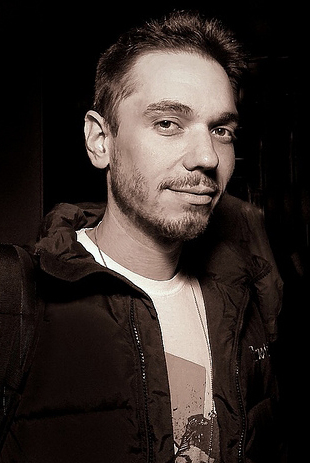
A black and white photo of a man with short dark hair, holding up military-style dog tags
Goldstein in February 2007

Goldstein's stage name, "DJ AM", stands for his first and middle names, Adam Michael.[10] After playing for his friends and at private parties for some time, Goldstein got his first paying job as a DJ at an unlicensed club in Los Angeles at the age of 21, where he earned $40 and a six-pack of beer for a night's work.[6] He worked there for two years.[2] A visiting promoter, impressed with Goldstein's performance, offered him a deejaying job at the Hollywood club The Dragonfly.[11]

Goldstein met Shifty Shellshock through the nightclub scene, and he was asked to join the rap/rock group Crazy Town in 1999. He contributed to their 2000 hit "Butterfly", which reached number one in several countries. According to bandmates Shellshock and Epic Mazur, Goldstein was the group's only sober member.[2] He quit in 2001 to escape the drug-related dysfunction plaguing the group.[12]

Goldstein's weight problems became progressively worse, despite years of dieting; in 2003, he weighed 324 lb (147 kg) and underwent gastric bypass surgery. The surgery was effective, and he lost more than 100 lb (45 kg) within a year.[4] After he began dating actress Nicole Richie in 2003, Goldstein's DJ career skyrocketed. Us Weekly editor Janice Min said that he was talented, but that the thing that set him apart from other deejays was that he dated Richie.[6]

As a result of the relationship, Goldstein appeared in a 2005 episode of Punk'd, where Richie was the subject of a practical joke,[13] and that same year he featured in an episode of The Simple Life, a reality TV show focusing on Richie and Paris Hilton.[14] Goldstein and Richie announced their engagement in February 2005,[15] but broke up in late 2006.[16] Goldstein was a guest DJ on an episode of The Ellen DeGeneres Show in May 2006.[17]

He was an avid sneakerhead, owning more than 1,000 pairs of sneakers by 2007.[6] This led to him being offered a cameo as himself purchasing a pair in the 2006 TV series Entourage episode "What About Bob?".[18][19] That same year, Goldstein also began working at Caesars Palace, becoming the resident DJ of their nightclub Pure.[12] He was contracted to the club for the year for $1 million, which was considered to be an unprecedented amount for a DJ at the time.[2] By 2007, he was also being paid between $10,000 and $25,000 per event as a solo DJ.[6]

Goldstein scratched on albums for Papa Roach, Will Smith, and Babyface. He played at private events for celebrities including Jennifer Lopez, Ben Stiller, and Leonardo DiCaprio.[20] Goldstein dated singer Mandy Moore for two months in 2007 and remained close friends with her after separating.[21] Later in 2007, he was romantically involved with model Jessica Stam.[6][22] Goldstein was also close friends with fellow DJ and producer Steve Aoki, who went on to praise him in his 2016 documentary I'll Sleep When I'm Dead.

Learjet 60 crash

[edit]

In June 2008, Goldstein and Travis Barker began collaborating under the name TRV$DJAM. They performed at the 2008 MTV Video Music Awards on September 7, 2008.[23] On September 19, after performing at a college event, he and Barker were aboard a Learjet 60 when it crashed upon takeoff in Columbia, South Carolina. The crash killed both crew members and the other two passengers, Barker's security guard and personal assistant, critically injuring Goldstein and Barker.[24] Goldstein suffered third-degree burns to his arm and parts of his head.[25][26]

Both he and Barker were transported to the Joseph M. Still Burn Center in Augusta, Georgia.[27] Moore flew to be by Goldstein's side,[28] and the media reported that they were dating again.[29] He was released on September 26, 2008,[30] and was expected to make a full recovery.[26][25] In December 2008, Goldstein filed a civil lawsuit against the plane's charter company, Learjet and Goodyear tires; the suit claimed negligence on the part of the pilots, and a manufacturing defect on part of the plane. He asked for damages for pain and suffering, mental anguish, disfigurement and loss of earnings.[31][32] The lawsuit was settled by his estate in 2010, a year after his death.[33]

Final year

[edit]

In December 2008, MTV reported that DJ AM would be making his first appearance with Barker since the two survived the plane crash. The duo performed at New Year's Nation's Los Angeles 2008 New Year's Eve Party.[34] That same month it was reported that Goldstein had split from Moore and was dating model Hayley Wood.[29] In April 2009, Goldstein left his position at Caesars Palace to become Rain Nightclub's regular Friday night DJ in the Palms Casino Resort, Las Vegas.[35]

Goldstein filmed a cameo for the movie Iron Man 2 in June 2009, appearing as himself deejaying at the birthday party of Tony Stark (played by Robert Downey Jr.). Jon Favreau, the film's director, said that he was a fan of Goldstein; the cameo was supposed to be filmed in one day but the crew and Downey Jr. took a liking to Goldstein and his stay on set extended to approximately one week. He set up turntables and gave Favreau tips on how to DJ in between takes.[36][37] Goldstein was involved with Activision's DJ Hero video game, contributing original mixes to and also appearing as a playable character.[38] Goldstein and Barker performed at an Electronic Entertainment Expo event promoting the game in 2009.[39]

A man in his mid-thirties. He has short dark hair and is wearing dark clothes.
Goldstein in June 2009

Goldstein was the host of Gone Too Far, a drug intervention reality show for MTV. He had approached MTV in mid-2008, pitching the idea of a reality show that focused on his life to Tony DiSanto. DiSanto said that such shows were declining in popularity, and instead suggested a drug intervention show to which Goldstein agreed.[40] The show was still in pre-production when Goldstein was injured in the plane crash. Following the crash, the show's producer Cheryl Sirulnick said she assumed the show would not go ahead, but Goldstein insisted on continuing.[2] Eight episodes were filmed; three days before his death, Goldstein tweeted that filming had been completed.[41]

Relapse

[edit]

In an interview with Glamour in 2008, Goldstein said that while he had been sober for nine years, he had to remind himself every day that he was still a drug addict, saying: "At any given moment, I'm five seconds away from walking up to someone, grabbing their drink out of their hand and downing it. And if I do that, within a week, tops, I'll be smoking crack."[4] Following the plane crash, Goldstein was prescribed painkillers and anti-anxiety medication. Celebrity doctor Drew Pinsky said it was those prescriptions which opened the "floodgates" to Goldstein's relapse.[42] A friend of his reached the same conclusion, saying: "I think the plane crash killed him, it just took a year for it to do it."[40] As a result of the plane crash, Goldstein developed a fear of flying, and continued taking anxiety medication to help deal with the regular flights his lifestyle required.[2]

Goldstein was struggling with his former addiction during the filming of Gone Too Far. He held a crack-pipe during one episode. BJ Hickman, an intervention expert who appeared in two episodes, noticed Goldstein "had a moment" holding the crack pipe, and later felt the need to call his sponsor. Goldstein later said of the experience: "I realized my palms were sweaty and I was like, wait a minute, this is not smart for me to be holding this."[40] In another episode, a police officer shows Goldstein confiscated drugs, including a bag of crack cocaine. Shortly thereafter, Goldstein leaves the building, informing the camera crew that he felt so tempted to consume the drugs that it was not safe for him to remain there.[2]

In the weeks before his death, Goldstein's behavior had been erratic and he had been missing appointments. His manager and sponsor were both so concerned that they flew to New York to visit him two days before his death. Goldstein refused to see his manager, but allowed his sponsor into his apartment, and consumed drugs in front of him.[43][44] He promised to check himself into a rehabilitation center following his scheduled gig at Rain Nightclub in Las Vegas that Friday. When he missed his flight and would not return phone calls, friends brought the police to his apartment.[43][45]

Death

[edit]

Goldstein was found dead in his New York City apartment on August 28, 2009.[46] Drug paraphernalia, including a crack pipe and a bag of crack, were found nearby.[1][47] The New York medical examiner subsequently determined that Goldstein's death was an accident caused by "acute intoxication" from a combination of cocaine, oxycodone, hydrocodone, lorazepam, clonazepam, alprazolam, diphenhydramine, and levamisole.[48] Goldstein's girlfriend, Hayley Wood, denied rumors that an alleged recent separation had contributed to his relapse, saying they had still been together at the time.[49]

After a memorial service, Goldstein was interred at Hillside Memorial Park Cemetery, a Jewish cemetery near Los Angeles, on September 2, 2009.[50] The following day, a memorial was held at the Hollywood Palladium. Among the hundreds of attendees were Nicole Richie, Travis Barker, Lindsay Lohan, Samantha Ronson, Eric Dane, Rebecca Gayheart, Scott Caan, and DJ Jazzy Jeff.[51][52] Wood made an emotional speech at the service, describing Goldstein as her soulmate.[53]

The scheduled debut air date for Gone Too Far had been October 5, 2009. After Goldstein's death, DiSanto acknowledged the possibility that placing Goldstein near other addicts helped contribute to his relapse.[40] After debating whether to air the show in the wake of his death, MTV decided to debut it on October 12.[54] His family stated: "It is our hope through airing this show that people will get to see the side of Adam that we knew and loved. The decision to air the show has been difficult, but we do this with the profound belief that it will inspire others to seek help".[55] Favreau also consulted people close to Goldstein about whether the footage of him in Iron Man 2 should still be used; they agreed unanimously it should remain. Favreau said that following his death, "there was never any doubt" the film would be dedicated to him.[37]

Legacy

[edit]

The DJ AM Memorial Fund, an organization designed to help people struggling with drug addiction, was launched in his memory. In November 2009, 800 pairs of Goldstein's sneakers were listed on eBay to raise funds for the organization.[56] In August 2010, the fund made a donation to the Los Angeles' Phoenix House Academy to help rehab patients develop musical talents.[57] Goldstein's sister Lara, who founded the fund, died from cancer in May 2011.[58][59]

In August 2011, several DJs paid tribute to Goldstein at the Vanity Nightclub in the Las Vegas Hard Rock Casino, helping raise money for the fund.[60] In May 2012, the eighth annual MusiCares benefit concert featured a special presentation commemorating the launch of the DJ AM Memorial Fund. Goldstein's mother, in conjunction with the fund, was reported to be assisting MusiCares in providing recovery services to addicts. Moby deejayed at the event in tribute to Goldstein.[61]

Goldstein posthumously won DJ of the Year at the 2009 BET Hip Hop Awards.[62] In October 2009 he was depicted in the South Park episode "Dead Celebrities", along with other celebrities who died in mid-2009.[63] Eminem, who nearly died from a methadone overdose in late 2007, paid tribute to Goldstein on the 2010 song "Talkin' 2 Myself", rapping: "Rest in peace to DJ AM/'cause I know what it's like/I struggle with this shit every single day."[64][65] On the cover of Blink-182's 2011 album, Neighborhoods, "DJ AM" can be seen written on one of the buildings, as a memorial.[66] Goldstein's death is also believed to have influenced the band's decision to retire their single, "Adam's Song", from their live performances until 2018.[67] Wolfgang Gartner and will.i.am pay tribute to DJ AM in their 2011 single "Forever," which includes a moment of silence for him.[68] Macklemore mentions DJ AM in his 2016 song "Drug Dealer," along with several other notable deaths from drug use.[69]

Footage of Goldstein and several other celebrities are featured in the documentary films Downtown Calling (2009),[70][71] and Electric Daisy Carnival Experience (2011).[72] A documentary film about Goldstein titled As I AM: The Life and Times of DJ AM, was announced at the EDMbiz Conference on June 20, 2013.[73] The film was directed by Kevin Kerslake and released in April 2015. Dennis Harvey of Variety called it an entertaining documentary, but thought, "there are some notable gaps left in the pic's posthumous understanding of DJ AM ... as its flashy surface doesn't always help us to understand the pure artistic soul he's depicted as here."[7]

Discography

[edit]

Filmography

[edit]
Television
Year Title Role Notes
2005, 2007 The Simple Life Himself 2005 episode "Zoo". 2007 episode "Welcome to Camp Shawnee" (archive footage)
2005 Punk'd Himself 1 Episode
2006 Entourage Himself 1 Episode
The Ellen DeGeneres Show Guest DJ (Himself) 1 Episode
2009 Gone Too Far Himself 8 Episodes, host, also as writer, creator
Film
Year Film Role Notes
2009 Downtown Calling Himself Documentary film
2010 Iron Man 2 Himself Feature film; released after his death (dedicated to his memory)
2011 Electric Daisy Carnival Experience Film Himself Documentary film
2015 As I AM: The Life and Times of DJ AM Himself Documentary film

References

[edit]
[edit]
Revisions and contributorsEdit on WikipediaRead on Wikipedia
from Grokipedia
Adam Michael Goldstein (March 30, 1973 – August 28, 2009), professionally known as DJ AM, was an American , remixer, and recognized for his hip-hop and genre-blending performances. Born in , , he rose to prominence in the late 1990s as a club DJ in and as a member of the rap-rock band , contributing to their 2000 platinum-selling hit "Butterfly." Goldstein's career accelerated in the 2000s through high-profile collaborations with artists including , , and , as well as partnerships like the mash-up project [TRVDJAM](/page/TRVDJAM](/page/TRVDJAM) with Blink-182 drummer . He commanded fees exceeding $25,000 for exclusive sets at celebrity events hosted by figures such as and , secured a $1 million annual contract for weekly performances at in , and co-owned nightclubs including LAX in Hollywood. In 2008, he released his solo mix album AM / PM and survived a catastrophic crash in alongside Barker, which killed four others and exacerbated his prior sobriety. Throughout his life, Goldstein battled severe drug addiction beginning in his teenage years, including stints in controversial rehabilitation programs and a decade-long struggle before achieving sobriety in 1997; however, the plane crash triggered a relapse involving prescription painkillers and cocaine, leading to his death from an accidental overdose of multiple substances including oxycodone, oxymorphone, hydrocodone, and cocaine. His passing at age 36 highlighted the perils of addiction amid fame, though his technical prowess influenced subsequent DJ culture.

Early Life

Childhood and Family Influences

Adam Michael Goldstein was born on March 30, 1973, in , , to Jewish parents Herbert and Andrea Goldstein, in a middle-class family that adopted his older sister Lara prior to his arrival. His parents divorced during his childhood, after which he was raised primarily by his single mother, Andrea, amid reports of from his father, who struggled with personal issues including secret and drug use. Herbert Goldstein later died from AIDS-related complications. At age 14, following the divorce, Goldstein relocated with his mother to , , marking a significant shift from his roots. In 's vibrant urban environment, he encountered a diverse local scene that influenced his early auditory interests, though family dynamics contributed to an unstable home life characterized by emotional strain rather than structured musical nurturing. As a child, Goldstein displayed an intense fixation on music after viewing Herbie Hancock's 1983 music video for "Rockit," which featured innovative and sparked his obsession with deejaying techniques. This early hyper-focus on blending sounds foreshadowed his technical aptitude, developed through personal experimentation amid limited formal guidance from family records and neighborhood influences blending hip-hop, rock, and emerging electronic elements in the city's cultural milieu.

Introduction to DJing and Early Influences

Goldstein's interest in DJing emerged during his elementary school years in , sparked by the groundbreaking scratching performance of Grand Mixer D.S.T. in Herbie Hancock's 1983 single "Rockit," which he witnessed on television. By around age 13 in the mid-1980s, he acquired his first turntables and immersed himself in the local hip-hop scene, practicing techniques such as , blending, and through self-directed experimentation on vinyl records. Lacking formal training, he honed these skills alongside guidance from peers, including learning basics from friend , while drawing inspiration from Philadelphia-based hip-hop DJs like and , whose innovative styles shaped the city's vibrant culture. Transitioning from a personal hobby, Goldstein began performing at private parties and for friends in the late 1980s and early 1990s, balancing these pursuits with everyday responsibilities amid a challenging family environment. His persistence paid off with the acquisition of professional-grade turntables, which became a staple of his setup—as symbolized by a tattoo on his arm—and allowed for more precise manipulation of records. By the mid-1990s, he secured his first paid club residency at age 21 in 1994 at the Boiler Room, an underground after-hours venue in , where he earned modest compensation of $40 plus beer per night, marking his entry into semi-professional work. This foundational period emphasized technical mastery over commercial aspirations, as Goldstein experimented with mixing hip-hop, pop, and punk elements reflective of his eclectic upbringing, laying the groundwork for his distinctive mash-up approach without reliance on established industry pathways.

Addiction Trajectory

Onset of Drug Use and Escalation

Adam Goldstein, known professionally as DJ AM, initiated drug experimentation in his mid-teens amid exposure to Philadelphia's burgeoning club and scenes, where substances like ecstasy and were prevalent among partygoers. By age 14, he described beginning daily use after early relocations tied to personal and familial influences, marking an early entry into habitual consumption rather than isolated incidents. These initial forays, driven by individual curiosity and social immersion in environments, quickly normalized polydrug involvement, with ecstasy facilitating extended social engagements and providing acute stimulation during late-night outings. Escalation accelerated in his late teens, as Goldstein transitioned from occasional use to more frequent cocaine intake, culminating in freebasing—smoking —by age 20 in 1993. For the subsequent four years, crack became his primary substance, consumed almost daily and dominating his routine to the exclusion of other pursuits, with deejaying gigs serving mainly as funding mechanisms for . from low-paying club appearances, often around $150 per night, were routinely exhausted on drugs, sometimes multiple sessions daily, fostering cycles of dependency where physiological tolerance demanded escalating quantities and frequency, independent of external enablers. This phase imposed tangible strains on his nascent career and personal life, confining him to underremunerated residencies in venues while accruing debt and relational fractures from withdrawal-induced isolation. Chronic crack use precipitated physical deterioration, including and cardiovascular stress inherent to abuse, reinforcing self-perpetuating patterns of acquisition—such as intermediary roles with dealers to offset costs—over sustained . Goldstein's choices within this milieu underscored a volitional deepening of , prioritizing immediate gratification amid accessible over long-term stability.

1997 Suicide Attempt and Initial Recovery

In 1997, at the age of 24, DJ AM—born Adam Goldstein—reached a in his struggles with and depression, culminating in a failed using a loaded pistol that jammed and failed to fire. This incident, occurring amid heavy use and weighing over 300 pounds, prompted an immediate recognition of his rock-bottom state, leading him to seek recovery independently rather than through formal medical intervention at the time. Following the attempt, Goldstein entered (AA), committing to its 12-step program and achieving that lasted over a decade until interrupted by later events. He actively participated by sponsoring other addicts, embodying the AA of one recovering individual aiding another, which reinforced his own adherence through and service. This self-directed involvement in AA, without reliance on celebrity rehab facilities, underscored his personal agency in confronting addiction's grip, though maintaining demanded ongoing vigilance against relapse triggers. The period of initial recovery correlated with a stabilization in Goldstein's professional pursuits, as sobriety freed cognitive and emotional resources previously eroded by drugs, allowing sharper focus on refining his DJ skills amid New York's club scene. Far from portraying recovery as seamless, accounts indicate it involved rigorous daily discipline via AA meetings and sponsorship duties, enabling career momentum without the distortions of intoxication, though underlying vulnerabilities persisted.

Professional Rise

Breakthrough in the Early 2000s

Following his exit from in 2001, Adam Goldstein, known as DJ AM, shifted focus to a solo career, building momentum in through club residencies and remix contributions for established artists such as and . These efforts, spanning roughly 2000 to 2003, marked his transition from rap-rock scratching to broader commercial DJing, leveraging his technical skills honed since relocating to as a teenager after his parents' around 1987. A key milestone came through his growing partnership with drummer , which began approximately three years before Blink-182's 2005 breakup, leading to joint performances as early as 2006 that fused live drumming with DJ sets. This collaboration, later formalized as [TRVDJAM](/page/TRVDJAM](/page/TRVDJAM) in 2008, amplified DJ AM's visibility by bridging hip-hop roots with rock elements, establishing him as a versatile figure in the evolving club scene. His approach prioritized meticulous transitions and genre fusion—blending hip-hop scratches with electronic and alternative tracks—over high-energy spectacle, earning acclaim for precision amid the era's rising demand for hybrid performances.

Key Collaborations and Commercial Success

DJ AM provided turntable scratches for several prominent artists, including , , and , which helped establish his technical credibility beyond club performances. These contributions appeared on commercial albums, integrating his hip-hop influenced style into mainstream pop and tracks, though specific track credits remain sparsely documented in public discographies. His work extended to similar guest appearances for Babyface and Shifty, broadening his production footprint in the late and early 2000s. These professional outputs fueled demand for his mixing expertise, culminating in high-profile commercial ventures. In 2003, DJ AM secured a pioneering residency at Body English nightclub in Las Vegas' Hard Rock Hotel, earning $3,500 per night and setting a precedent for DJs as headline acts in casino venues. By 2006, he signed a $1 million annual contract for weekly performances at Pure in , the largest such DJ deal in at the time, which ran for three years and underscored market validation of his mashup-driven sets blending rock, hip-hop, and pop. This financial milestone, yielding fees often exceeding $10,000 per gig elsewhere, enabled investments in advanced equipment and marked his transition to celebrity-level earnings independent of label-backed releases.

Live Performances and Industry Recognition

DJ AM's live performances emphasized high-energy sets that blended hip-hop, rock, and pop elements through precise , seamless mixing, and commanding stage presence, captivating audiences at clubs and festivals. His technique involved live mash-ups and , often incorporating unexpected track fusions to maintain crowd engagement, as evidenced by recordings from events like the 105.3 BFD Festival in in 2008. At venues such as Pure nightclub in , his sets were noted for delivering an intense, "pure energy" experience that drew packed houses. Prior to the 2008 plane crash, DJ AM commanded premium fees for sold-out club residencies and private elite gigs, reflecting peer and industry demand for his skill in audience interaction and technical prowess. In 2006, he secured a $1 million for weekly performances at in , underscoring his status as a top draw. By 2007, he was the highest-paid and most requested DJ among a roster managed by Pure Management Group, with solo event fees ranging from $10,000 to $25,000. This commercial peak highlighted his influence in elevating DJing's live spectacle, though formal awards were limited; his recognition stemmed primarily from booking success and acclaim for innovative routines, such as those in his Wonderwall tributes.

Personal Life

High-Profile Relationships

Goldstein began dating , daughter of singer and a personality, in 2004. The couple became engaged in February 2005 after approximately one year together. Their engagement ended in December 2005, followed by a brief reconciliation in March 2006 before a final split in May 2006. In early 2007, Goldstein started a relationship with actress and singer , whom he had known previously, after reconnecting at a New Year's Eve party in . The romance lasted about two months, concluding in March 2007 on mutual terms, after which they remained friends. Goldstein was romantically linked to model in 2007 and dated model Hayley Wood from 2008 until their breakup shortly before his death in August 2009. These relationships occurred amid his rising prominence in entertainment circles, with joint public appearances noted in media coverage.

Friendships and Social Circle

DJ AM cultivated a network of influential relationships in the music and entertainment industries, which amplified his career through collaborative opportunities and high-profile gigs. A pivotal friendship was with Blink-182 drummer , with whom Goldstein formed the DJ/producer duo [TRVDJAM](/page/TRVDJAM](/page/TRVDJAM) in 2008, blending techniques with live drumming for innovative performances that showcased their shared affinity for hip-hop and rock fusion. This partnership, rooted in mutual professional admiration, predated their September 2008 plane crash and highlighted how such bonds facilitated creative projects blending DJing with percussion. Goldstein's connections extended to prominent artists, including providing guest scratches for Will Smith's recordings and Madonna's tracks, which helped establish his technical reputation among mainstream musicians. He frequently DJed exclusive events for celebrities, such as Tom Cruise's dinner party, Russell Crowe's gatherings, and Steven Spielberg's son's bar mitzvah, embedding him in an elite Hollywood social stratum that offered lucrative bookings and exposure. These ties, often forged in ' vibrant venues like clubs and private parties, provided platforms for career advancement but also constant immersion in party-centric environments that tested his post-recovery . His social circle included other performers and industry figures, such as , fostering a sense of camaraderie across coasts from nightlife scenes where Goldstein's sets drew crowds. These relationships underscored network-driven success, with joint appearances and endorsements mutually elevating profiles in the pre-EDM boom era, though the high-pressure social demands occasionally blurred professional and personal boundaries.

The 2008 Plane Crash

Incident Details and Survival

On September 19, 2008, a Learjet Model 60 (registration N999LJ), operated by Global Executive Aviation, crashed shortly after takeoff from Runway 11 at Columbia Metropolitan Airport in Columbia, South Carolina, while en route to Van Nuys Airport in California. The aircraft carried six occupants: the two pilots, drummer Travis Barker, disc jockey Adam "DJ AM" Goldstein, and two additional passengers, Charles Chester Still and Christopher Michael Baker. During the takeoff roll, a main landing gear tire failed due to extreme under-inflation—measured post-crash at approximately 10-12 psi against a required 115-125 psi—resulting from inadequate maintenance inspections by the operator. This led to directional control loss, causing the jet to veer right off the runway, traverse an airport perimeter road, and impact an earthen berm approximately 4,300 feet from the runway threshold. The collision ruptured the aircraft's fuel tanks, igniting an intense post-impact fire that engulfed the and wings. The two pilots and two forward-seated passengers perished from impact forces and thermal injuries, with revealing no performance-impairing substances in the pilots. Goldstein and Barker, positioned in the aft cabin, survived by egressing through the overwing amid the flames; witnesses observed them crawling from the wreckage and extinguishing burning clothing on the ground. Goldstein sustained second- and third-degree burns covering about 25% of his body, concentrated on his arms, hands, and head, along with injuries. The (NTSB) investigation, finalized in April 2010, attributed the probable cause to the failure from deficient , compounded by the pilots' inability to maintain directional control on the remaining runway length after the . Contributing factors included the operator's failure to adhere to pressure monitoring protocols and the runway's insufficient overrun area, though no evidence supported pre-existing airframe defects or improper fueling. Both survivors received immediate emergency by ground ambulance to Joseph M. Still Burn Center in , approximately 70 miles away, where initial treatment stabilized their conditions.

Physical and Psychological Aftermath

Following the September 19, 2008, crash in , DJ AM (Adam Goldstein) sustained severe second- and third-degree burns primarily to his , arms, and upper body, requiring immediate hospitalization at the Joseph M. Still Burn Center in . He underwent skin graft procedures using tissue from his own and spent multiple hours in a hyperbaric oxygen chamber to aid healing and reduce infection risk. Pain from these injuries was managed through prescribed medications during his treatment, with medical assessments indicating a full physical recovery was anticipated, though healing from such burns could extend up to a year. Goldstein was discharged from the hospital on September 26, 2008, approximately one week after the incident, after stabilizing from the acute phase of his injuries. In subsequent interviews, he expressed profound gratitude for his survival, describing himself as "the luckiest man alive" and emphasizing relief that the four other passengers had died instantly without suffering. Psychologically, the trauma manifested early in symptoms consistent with post-traumatic stress, including vivid nightmares replaying elements of the crash, such as visions of burning figures aboard the aircraft, reported within weeks of the event. These disturbances reflected the intense of the and , though Goldstein publicly focused on resilience, crediting his prior experiences with adversity for aiding initial . No formal of PTSD was publicly detailed at the time, but the nightmares underscored the event's acute mental toll amid physical convalescence.

Relapse and Decline

Post-Crash Drug Resumption

Following the December 20, 2008, crash in , Adam Goldstein, who had achieved sobriety from addiction for 11 years prior, received prescriptions for painkillers to address injuries including abrasions and ongoing discomfort from the incident. These legitimate medications, intended for short-term relief, initiated a pattern where Goldstein transitioned from controlled use to dependency, a shift enabled by multiple prescribers providing opioids such as OxyContin and anti-anxiety drugs like Xanax amid his reported pain and emerging . By spring 2009, Goldstein's consumption escalated beyond prescriptions to include illicit alongside , reflecting a reactivation of his pre-sobriety addictive pathways compounded by post-traumatic stress from the crash that killed four others. Associates noted his of the severity, despite visible deterioration, as he prioritized professional commitments over sustained intervention, underscoring personal agency in overriding prior recovery tools forged during years of . Efforts to regain control included promises to enter rehabilitation facilities, such as one planned after a Las Vegas performance in August 2009, but these were undermined by continued access to drugs and incomplete follow-through, with Goldstein confiding in filming an MTV intervention series that his own struggles resurfaced amid exposure to addicts' narratives. Addiction specialist Dr. Drew Pinsky attributed the trajectory to the gateway effect of post-injury opioids, which interacted with Goldstein's history to erode self-imposed boundaries without external coercion, though multiple physicians' involvement facilitated unchecked supply. This resumption highlighted how acute trauma can exploit latent vulnerabilities, yet Goldstein's decisions—rooted in choice amid awareness of risks—prevented effective cessation before fatal escalation.

Events Leading to Overdose

In the spring and summer of 2009, Adam Goldstein, known professionally as DJ AM, resumed his performance schedule despite ongoing personal challenges, including travel for DJ gigs and filming an MTV reality series titled Gone Too Far, in which he supported individuals struggling with . He debuted a residency at the in on April 24, 2009, followed by appearances at events such as the in in June 2009 and the Bay Area's BFD Festival on June 6, 2009. These commitments often involved late-night sets, with Goldstein driving long distances between locations, such as a 12-hour trip after filming in . Publicly, Goldstein projected recovery and optimism. On July 27, 2009, he spoke at an event in , sharing his experiences with in a clip later highlighted for its candid reflection on . Two days later, on July 29, 2009, he told the that he felt "blessed" and "alive," crediting his survival of prior hardships and emphasizing his commitment to staying clean after years of . During filming for Gone Too Far, he attended daily recovery meetings, consulted his sponsor, and worked with a therapist, even as he confronted visible signs of , such as holding a crack pipe on camera while seeking accountability. Privately, however, Goldstein's condition deteriorated amid increasing isolation and substance use. In the weeks before his death, he missed professional appointments and exhibited erratic behavior, prompting concern from his West Coast manager and recovery sponsor. He arrived in over the weekend prior to August 28, 2009, retreating to his apartment for a period of seclusion. On the Wednesday before his death, his manager and sponsor flew to New York to intervene; the following morning, Goldstein admitted to them that he had relapsed, using and prescription pills in their presence, and pledged to enter a rehabilitation facility in after a scheduled performance. He ultimately missed his flight to that gig, remaining alone in the apartment. Friends noted his internal battles with depression and trauma, though specific interventions beyond the sponsor's involvement were not publicly detailed.

Death and Forensic Analysis

Circumstances of Discovery

On August 28, 2009, Adam Goldstein, known professionally as DJ AM, was found dead in his apartment in . A friend discovered his body that afternoon, prompting an immediate emergency response. officials reported that Goldstein was shirtless and positioned face down on his bed. At the scene, authorities observed including a crack pipe located near the body, along with multiple bottles of prescription pills such as Xanax. Additional prescription medications were scattered throughout the apartment. Resuscitation efforts by were unsuccessful, and Goldstein was pronounced dead at the location. Initial media coverage highlighted the presence of the paraphernalia, leading to early reports attributing the death to an apparent overdose rather than or other causes. Police conducted a preliminary investigation consistent with an accidental incident, with no evidence of foul play or intentional noted at the time.

Autopsy Findings and Prescription Drug Role

The chief , Ellen Borakove, announced on September 29, 2009, that Adam Goldstein's death was accidental, caused by acute intoxication from the combined toxic effects of and prescription medications, with no single drug reaching a fatal level alone but their interaction proving lethal. analysis confirmed the presence of , (primary active ingredient in OxyContin), , and (Xanax), alongside traces from painkillers like Percocet; the examiner noted that dosages varied but amplified respiratory suppression and . Autopsy findings included eight undigested 80 mg OxyContin tablets in Goldstein's stomach and a ninth pill lodged in his mouth, evidencing rapid, self-administered ingestion shortly before death, as the opioid's extended-release coating remained intact. Police recovered at least seven prescription bottles from his apartment kitchen counter, containing pain relievers (e.g., , ), anti-anxiety agents (e.g., Xanax), and sleep aids, many prescribed by different physicians within recent months, illustrating unchecked "doctor shopping" and fragmented prescribing that bypassed coordinated monitoring. This case highlights polypharmacy's inherent risks, where opioids like synergize with benzodiazepines such as Xanax to impair breathing and consciousness, compounded by cocaine's stimulant effects masking initial overdose symptoms; forensic points unequivocally to voluntary excess intake, absent any indicators of forced administration or defects in the drugs. The prevalence of such prescriptions—enabled by lax gatekeeping in the U.S. healthcare system during the late 2000s —facilitated access without sufficient risk assessment, contributing to the fatal outcome through cumulative self-dosing rather than isolated therapeutic use.

Legacy and Posthumous Recognition

Influence on DJ Culture and EDM

DJ AM's integration of mashup techniques, blending hip-hop acapellas with rock riffs and electronic beats, expanded the creative boundaries of DJ sets in the early , predating the broader EDM genre's mainstream surge. His performances, such as those fusing Oasis's "" with and layered samples, demonstrated precision in and phrasing that inspired a generation of DJs to prioritize technical skill over simplistic track playback. By bridging with rock and hip-hop, Goldstein elevated the DJ's role from background selector to central performer, influencing the performative spectacle seen in modern EDM acts like those at large festivals. This shift is evident in how subsequent producers, including early adopters of hybrid genres, adopted his approach to fusion, contributing to EDM's commercial viability by making club sets more accessible and crowd-engaging. His embrace of four-on-the-floor rhythms in mashups also foreshadowed EDM's emphasis on high-energy dance floors, though his style retained a party-centric focus that aligned with the era's club culture. While Goldstein's innovations legitimized DJing as a requiring meticulous preparation—often involving custom edits and vinyl manipulation—some analyses note that the emulation of his high-profile, celebrity-adjacent sets has amplified EDM's association with excess, potentially overshadowing purer technical in the genre. Nonetheless, his verifiable impact persists in the mashup-heavy routines of contemporary DJs, who cite his sets as benchmarks for seamless, narrative-driven mixing.

Memorial Fund and Philanthropic Efforts

Following Adam Goldstein's death on August 28, 2009, the DJ AM Memorial Fund was established shortly thereafter to support addiction recovery initiatives, particularly for individuals in the music industry. Initiated by Goldstein's mother, Andrea Gross, the fund partners with MusiCares, the Recording Academy's charitable arm, to finance treatment services and reduce stigma around among music professionals, irrespective of their financial means. A key partnership milestone occurred at the 8th annual MusiCares MAP Fund on May 24, 2012, where the fund's collaboration with MusiCares was formally presented, honoring Goldstein's own history of and advocacy for recovery. Prior to his death, Goldstein had engaged in recovery support, including plans for a television project aimed at assisting teenagers with drug and alcohol through interventions, reflecting his personal commitment to aiding others despite his relapses. The fund's tangible contributions include a donation to the Los Angeles branch of Phoenix House, a residential treatment facility, providing DJ equipment to young residents to foster interest in music as a recovery tool, extending Goldstein's legacy of linking creative pursuits with sobriety. Additional fundraising, such as a November 2009 eBay auction of Goldstein's sneaker collection, directed 100% of proceeds toward recovery charities supported by the fund. These efforts prioritize direct aid like equipment and treatment access over broad awareness campaigns, though documented outcomes remain limited to specific instances rather than large-scale grants or systemic reductions in industry rates.

Ongoing Tributes and Cultural Reflections

has maintained annual remembrances of DJ AM on , including a 2019 post on the 10th anniversary of his death describing him as a "brother" lost to overdose, and a 2023 Stories tribute featuring throwback photos on the 14th anniversary. These posts evoke personal grief tied to their shared survival of the 2008 plane crash but underscore the finality of Goldstein's accidental and . The 2015 documentary As I AM: The Life and Times of DJ AM, directed by , offers a examination of Goldstein's career highs alongside his persistent battles with , , and depression, portraying his arc as one of talent undermined by self-destructive patterns rather than inevitable triumph. Released six years after his death, the draws on interviews and archival footage to highlight how periods fueled his as a mash-up pioneer, yet relapses—exacerbated by post-crash —led to his demise, serving as a sobering to glamorized narratives of electronic music stardom. Later cultural reflections, such as the August 2024 episode of the Last Days Podcast dedicated to DJ AM's overdose, frame his story as a stark warning against excess, emphasizing the causal chain from early dependency through crash-induced prescriptions to fatal polydrug use despite prior long-term abstinence. Articles and discussions in outlets like ABC News similarly note that, even after 11 years of claimed , Goldstein's return to substances illustrated the fragility of recovery amid fame's temptations and physical trauma, prioritizing empirical lessons on addiction's mechanics over heroic myth-making. Absent major institutional commemorations or revivals in the , these tributes reflect a tempered reverence, acknowledging DJ AM's innovations in DJ culture while realistically confronting the overdose's preventability through stricter personal and medical safeguards against prescription escalation.

Creative Output

Discography Highlights

DJ AM's recorded output centered on mixtapes and remixes, showcasing his expertise in blending hip-hop, rock, and electronic elements through advanced and beat-matching. His work prioritized live-performance energy captured in studio mixes rather than conventional albums, with releases often distributed digitally or in limited physical editions. A key highlight was the [TRVDJAM](/page/TRVDJAM](/page/TRVDJAM) collaboration with , which fused DJ scratching with live drumming on hip-hop and punk tracks. Their debut mixtape, Fix Your Face, was released online on August 27, 2008, and later as a limited-edition CD featuring seamless transitions across genres. A second mixtape, Fix Your Face Vol. 2, documented their Coachella set from April 2009, emphasizing improvisational production techniques. Other notable contributions include the remix of Three 6 Mafia's "Stay Fly" in 2007, which incorporated rapid overlays, and a co-remix with of "Gladiator," highlighting his influence on crossover electronic productions. DJ AM's techniques, including lightning-quick scratches developed during 1990s DJ competitions, innovated hip-hop mixing by integrating diverse samples for high-energy sets.

Filmography and Media Appearances

DJ AM appeared as himself in cameo roles that highlighted his status as a prominent DJ, with limited formal credits. In the series Entourage, he featured in season 3, episode 11, "What About Bob?", which aired on November 11, 2007, where his character assists in obtaining limited-edition Nike Air Force 1 sneakers at a store. Goldstein provided the DJ performance at Tony Stark's birthday party in (2010), a scene filmed in April 2009 prior to his death; the film was released posthumously on May 7, 2010. He hosted the MTV reality series Gone Too Far, an eight-episode intervention program addressing drug addiction, which he developed and filmed between April and July 2009; with family approval, MTV premiered the series on October 12, 2009, shortly after his passing. Archival footage of Goldstein appeared in the documentary Downtown Calling (2009), which chronicled the music scene and included clips from his performances alongside other artists. Posthumously, extensive archival material from his career featured in As I AM: The Life and Times of DJ AM (2015), a documentary directed by that premiered at the Film Festival and explored his professional rise through interviews and performance excerpts.

References

Add your contribution
Related Hubs
User Avatar
No comments yet.