Hubbry Logo
Don LindDon LindMain
Open search
Don Lind
Community hub
Don Lind
logo
8 pages, 0 posts
0 subscribers
Be the first to start a discussion here.
Don Lind
Don Lind
from Wikipedia

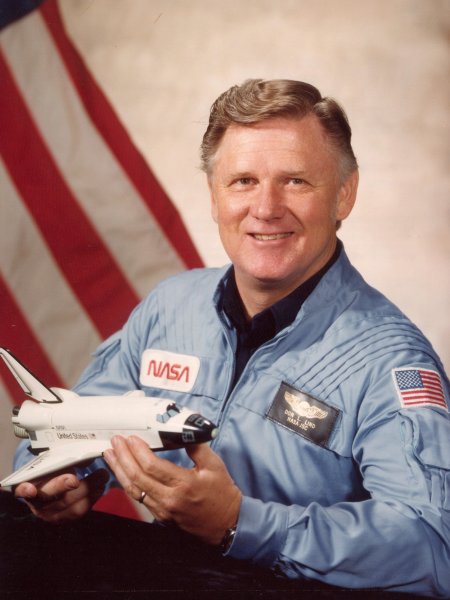
Don Leslie Lind[1] (May 18, 1930 – August 30, 2022) was an American scientist, naval officer, aviator, and NASA astronaut. He graduated from the University of Utah with an undergraduate degree in physics in 1953. Following his military service obligation, he earned a PhD in high-energy nuclear physics from the University of California, Berkeley in 1964.

Key Information

Lind was a Naval Aviator and attained the rank of commander in the United States Naval Reserve. After completing his doctorate, Lind worked at NASA's Goddard Research Center from 1964 to 1966. Selected with Astronaut Group 5 in 1966, he helped to develop the Apollo 11 EVA activities, and served as CAPCOM for the Apollo 11 and Apollo 12 missions. Lind was then assigned as backup pilot for Skylab 3 and Skylab 4 and would have flown on Skylab Rescue.

Lind was the payload commander on his only flight, STS-51-B, launched April 29, 1985. He designed an experiment to capture the Earth's aurora. The payload experiments consisted primarily of microgravity research and atmospheric measurement. The Orbiter Challenger completed 110 orbits before landing at Edwards Air Force Base, California.

Biography

[edit]

Early life and education

[edit]

Lind was born May 18, 1930, and raised in Midvale, Utah,[2][3] with his two sisters, Charlene and Kathleen. He attended Midvale Elementary School and graduated from Jordan High School in 1948. He was an Eagle Scout with the Boy Scouts of America, its highest rank.[4] He received a Bachelor of Science degree with high honors in physics from the University of Utah in 1953.[1]

As a Naval Aviator, Lind volunteered to take high-altitude photo emulsions of cosmic rays for the University of California, Berkeley during flights. This helped him enroll at Berkeley,[5][6] where Lind researched pion-nucleon scattering in the Lawrence Radiation Laboratory and earned a PhD in high-energy nuclear physics in 1964.[1] During a leave of absence from NASA, he conducted postdoctoral research at the Geophysical Institute of the University of Alaska Fairbanks from 1975 to 1976.[7]

[edit]

Upon completing his undergraduate education, Lind was initially drafted by the United States Army as a potential infantryman amid the Korean War; following "expert maneuvering," he instead enrolled at the United States Navy Officer Candidate School at Newport, Rhode Island.[8] After jokingly requesting flight training, Lind was unable to change his assignment and found that he enjoyed flying.[9] He received his Wings of Gold in 1955 at Naval Air Station Corpus Christi and served four years on active duty with the Navy at San Diego and aboard the carrier USS Hancock. Lind logged more than 4,500 hours of flight time during his naval and NASA careers, 4,000 of which were in jet aircraft.[1] He continued to serve in the United States Naval Reserve after completing his service obligation, attaining his terminal rank of commander in 1969.[10]

NASA career

[edit]

Pre-astronaut and selection

[edit]
Lind with Vance D. Brand (left) as a Skylab rescue crew

From 1964 to 1966, Lind worked at the NASA Goddard Space Flight Center as a space physicist.[5] He was involved in experiments to determine the nature and properties of low-energy particles within the Earth's magnetosphere and interplanetary space. Lind applied for NASA's third group of astronauts but did not have enough flight hours, and was too old for the fourth group[7] by 74 days, despite arguing that he would not have to learn to fly.[11] After the age restriction changed, he was among the fifth group, the "Original Nineteen", selected in April 1966.[6][12]

Lind was selected as a pilot with other "Original Nineteen" astronauts[11] in contrast to the fourth and sixth astronaut groups, which consisted of medical doctors and Ph.D. scientists who were not qualified pilots. However, he and Group 5 colleague Bruce McCandless II (the salutatorian of his United States Naval Academy class and the recent recipient of a master's degree in electrical engineering from Stanford University) were nonetheless treated as scientist-astronauts by NASA due to their academic training and lack of test pilot experience that Deke Slayton, Al Shepard and other NASA managers emphasized; among other factors, this would delay their progression in the flight rotation.[7][13]

Apollo

[edit]

Along with geologist-astronaut Harrison Schmitt, Lind helped to develop and demonstrate the flight plan for the Apollo 11 EVA (including the Apollo Lunar Surface Experiments Packages that would continue to relay data following the missions) and other tools used on the lunar surface.[5][14] He also served as a capsule communicator on the Apollo 11 and Apollo 12 missions. Schmitt, Lind and Owen Garriott were the only scientist-astronauts to receive advanced helicopter training, a key prerequisite for piloting the Apollo Lunar Module.[15] Due to standard crew rotations, it is believed that Lind would have followed Schmitt as the second scientist-astronaut Lunar Module Pilot on one of the canceled Apollo missions or projected long-range Apollo Applications Program lunar survey missions.[11][16]

Skylab

[edit]

Amid the gradual cancellation of the later Apollo missions and the devolution of the AAP into the Skylab program, Lind was formally reassigned to the latter effort in August 1969; according to Slayton, who noted Lind's disappointment, "with the cancellation of [Apollo] 20, I could see I just wasn't going to have a flight for him".[17] Together, Lind and Group 6 scientist-astronaut William B. Lenoir comprised the Earth Resources Group of the Skylab Branch Office.[10]

[On Skylab 3 and 4,] I was backing up two of the most depressingly healthy people you can imagine.[7]

Lind

Lind served as backup pilot alongside backup commander Vance D. Brand and backup science pilot Lenoir for Skylab 3 and Skylab 4, the second and third crewed Skylab missions; was on standby for a rescue mission planned when malfunctions developed in Skylab 3's Apollo Command/Service Module (ultimately thwarted due to Brand and Lind's resourcefulness in devising a solution in the simulators) and the proposed 20-day Skylab 5 mission (scrapped in favor of the more economical extension of Skylab 4 from 56 to 84 days); and may have flown as a pilot or science pilot on Skylab B.[7][18]

Astronauts knew little of why or how they were assigned to missions.[19][20] By the Skylab era, Lind was informally perceived as a "scientist-pilot" because of his doctorate.[21] According to David Shayler, Lind "could never understand why he was not on the [Skylab 4] crew as science pilot" due to his work on the mission's Earth resources package; this could be attributed in part to seniority and specialization, as all of the prime crew science pilots were drawn from Group 4. Additionally, Skylab 4 science pilot Edward Gibson (like Lind, an atmospheric physicist) had taken on a research program in solar physics and worked on the Apollo Telescope Mount while Lind was still on track to be assigned to a lunar mission.[11] Although he cross-trained with Lenoir and briefly proposed swapping positions with his crewmate, Lind elected to retain his original assignment due to the greater likelihood of the rescue mission (which could only accommodate the commander and pilot) amid the space program's dwindling flight opportunities.[18]

According to Michael Cassutt, in 1970, Lind "openly complained" to George Abbey (then technical assistant to Johnson Space Center director Robert R. Gilruth) about the perceived administrative machinations of Slayton and Shepard and Harrison Schmitt's assignment to Apollo 17.[22] However, Abbey—a close friend of Schmitt who would eventually oversee Astronaut Corps assignments as director of flight operations from 1976 to 1988—took umbrage at Lind's cooperation with a 1969 report in The Washington Post that exposed rampant dissatisfaction among the scientist-astronauts. He also alleged that Lind complained about "any and all subjects" related to the space program, associating him with a coterie of scientist-astronauts (including Story Musgrave) who perceived Abbey as a "faceless 'horse-holder' who had worked his way into a powerful job." Although Abbey could not forestall Lind's eventual flight, their acrimonious relationship played a key role in hindering the astronaut's progression in the flight rotation.[22]

When the Smithsonian Air and Space Museum received the unused Skylab B he "cried ceremonially in front of it", Lind later said; "I was ... in the right place at the wrong time".[23] He was reassigned to the Science and Applications Directorate in 1974, formally codifying his status as a scientist-astronaut.[10] In a 1976 memo, Chris Kraft implicitly characterized Lind as one of NASA's nine active scientist-astronauts in the context of the payload specialist program.[24]

Shuttle era

[edit]
The crew of the STS-51-B mission. Lind is at the far left

For the Space Shuttle program, Lind was reassigned as a mission specialist along with McCandless (who, unlike Lind, continued to train as a potential Space Shuttle orbiter pilot until 1983)[10] and the remaining Apollo-era scientist-astronauts. During this period, he was a member of the Astronaut Office's Operations Missions development group, responsible for developing payloads for the early Space Shuttle Orbital Flight Test (OFT) missions and the Canadarm.[7]

Lind finally flew as the lead mission specialist and de facto payload commander on STS-51-B (April 29 to May 6, 1985), logging over 168 hours in space. Due to Apollo-era managerial preferences, his contentious relationship with George Abbey, NASA budgetary problems and delays in the Space Shuttle program, Lind waited longer than any other continuously serving American astronaut for a spaceflight: 19 years.[6][7][25] STS-51-B's average age of 48.6 was the oldest for an American space mission.[19]

STS-51-B, the Spacelab-3 science mission, launched from Kennedy Space Center, Florida, on April 29, 1985. Following several delays, this was the first fully operational Spacelab mission. A space program aficionado has speculated that Lind's science-dominant assignment was a "reward... for sticking around so long," in contrast to the majority of early STS missions that were centered around routinized satellite deployments.[26] The seven-man crew investigated crystal growth, drop dynamics leading to containerless material processing, atmospheric trace gas spectroscopy, solar and planetary atmospheric simulation, cosmic rays, laboratory animals and human medical monitoring.[1]

With the help of his Alaska postdoctoral group, Lind developed and conducted an experiment to photograph the Earth's aurora. As the experiment used a camera already on the Shuttle, NASA only needed to purchase three rolls of film for $36; Lind described it as "the cheapest experiment that has ever gone into space."[7] After completing 110 orbits of the Earth, the Orbiter Challenger landed at Edwards Air Force Base, California, on May 6, 1985.[1]

Lind retired from NASA on the twentieth anniversary of his selection in 1986. For nine years thereafter, he served as a professor of physics and astronomy at Utah State University, until his retirement in 1995.[6]

Awards and honors

[edit]

Lind was a member of the American Geophysical Union, the American Association for the Advancement of Science, and Phi Kappa Phi. Lind was active in the Boy Scouts of America and earned the rank of Eagle Scout.[27] He was also awarded the NASA Exceptional Service Medal in 1974, and the NASA Space Flight Medal following his Challenger flight.[1]

Personal life

[edit]

Lind married Kathleen Maughan[6] of Logan, Utah, with whom he had seven children.[1] STS-51-B was two decades after son David's stomach aches from fear of appearing on television like the families of other astronauts, such as neighbors James Irwin and Edgar Mitchell. Kathleen said before the mission that "For our family, I think we're better off now without the publicity" as space travel became more common.[19]

Throughout his adult life, Lind served as a member of the lay ecclesiastical hierarchy of the Church of Jesus Christ of Latter-day Saints. He served as a missionary in the Northeastern United States before graduating from college (1950–52),[6][7] and after STS-51-B spoke in General Conference about his experience.[28] He and his wife Kathleen served as public affairs missionaries in the Europe West Area of the Church, as temple missionaries in the Nauvoo Illinois Temple, and, respectively, as a counselor and an assistant matron in the presidency of the Portland Oregon Temple.[29] During his Astronaut Corps service, Lind frequently spoke at LDS Church events throughout the United States.[30][31] Lind's wife Kathleen died on June 12, 2022.[32]

Lind died on August 30, 2022, in Logan, Utah, with many of his children and grandchildren at his bedside. His funeral was planned for September 10 in Smithfield.[33]

See also

[edit]

References

[edit]
[edit]
Revisions and contributorsEdit on WikipediaRead on Wikipedia
from Grokipedia
Don Leslie Lind (May 18, 1930 – August 30, 2022) was an American physicist, naval officer, aviator, and NASA astronaut renowned for his contributions to space science and his flight as a mission specialist on the Space Shuttle Challenger during STS-51-B in 1985. Born in Murray, Utah, Lind earned a B.S. in physics from the University of Utah in 1953 and a Ph.D. in high-energy nuclear physics from the University of California, Berkeley, in 1964. He served as a U.S. Naval Reserve commander and jet pilot, accumulating over 4,500 flight hours, including 4,000 in jets, after earning his wings in 1957. Selected as part of NASA's fifth astronaut group in 1966, Lind worked as a space physicist at NASA's Goddard Space Flight Center, researching low-energy cosmic ray particles, and contributed to the design of science packages and extravehicular activities for Apollo 11 while serving as capsule communicator (CAPCOM) for Apollo 11 and 12. As backup pilot for Skylab 3 and 4, Lind supported early space station missions and later developed payloads for the Space Shuttle program. His sole spaceflight, STS-51-B from April 29 to May 6, 1985, involved deploying the Spacelab-3 laboratory module to conduct over 15 experiments in materials science, life sciences, and plasma physics, including the first 3D video of an aurora. Lind retired from NASA in 1986 after 20 years of service and later joined the physics faculty at Utah State University. He received the NASA Exceptional Service Medal in 1974 for his scientific contributions. Married to Kathleen Maughan until her death in 2022, Lind was survived by their seven children, 22 grandchildren, and 28 great-grandchildren, and was an active member of The Church of Jesus Christ of Latter-day Saints.

Early Life and Military Service

Childhood and Education

Don Leslie Lind was born on May 18, 1930, in , to Leslie Ammaron Lind and Elizabeth C. Whitmore Lind. He grew up in the nearby community of Midvale, part of the greater area, within a family affiliated with The Church of Jesus Christ of Latter-day Saints. As a youth, Lind attended Midvale Elementary School and graduated from Jordan High School in Sandy, Utah, where he also achieved the rank of . Lind pursued higher education in physics, earning a Bachelor of Science degree with high honors from the in 1953. Following his undergraduate studies, he transitioned to naval service as an officer candidate. Lind continued his academic career at the , where he completed a in high-energy in 1964; his doctoral thesis focused on pion-nucleon scattering. During his graduate studies, he held a research position at the Lawrence Radiation Laboratory in Berkeley from 1957 to 1959, conducting experiments on high-energy particle interactions. Upon graduating from the University of Utah with a Bachelor of Science in physics in 1953, Don Lind was commissioned as an ensign in the U.S. Navy. His initial active duty service lasted four years, during which he was stationed at San Diego and later served aboard the aircraft carrier USS Hancock. In 1957, Lind began naval aviation training and received his wings as a naval aviator that same year. He accumulated over 4,500 hours of flying time, with approximately 4,000 hours in jet aircraft, and was selected for the U.S. Naval Test Pilot School but did not attend due to his NASA astronaut selection. Lind's assignments included operational piloting duties at the Naval Air Test Center in Patuxent River, Maryland, where he supported carrier-based operations. Lind's physics background contributed to his involvement in scientific aspects of flight experiments during his naval service. He advanced to the rank of in the U.S. Naval Reserve, reflecting his sustained commitment to .

NASA Career

Selection and Training

Don Leslie Lind was selected as an astronaut by in April 1966 as part of the agency's fifth astronaut group, known as Group 5 or the "Original Nineteen," consisting of 19 candidates chosen primarily for their expertise in piloting and scientific fields such as and space science. Lind, holding a Ph.D. in high-energy , was among the group's civilian scientists, reflecting NASA's shift toward incorporating advanced scientific knowledge for complex missions. Following selection, Lind underwent initial astronaut training at NASA's , which encompassed survival training in various environments, centrifuge tests to simulate high-g forces, and comprehensive familiarization with systems. His naval aviation experience facilitated quick adaptation to simulations during this phase. As part of his early duties, Lind contributed to the development of procedures for the Apollo command module, leveraging his technical background to refine operational protocols. Lind was subsequently assigned to the astronaut support office, focusing on operations and science integration, where he worked on early Space Shuttle concepts and payload integration efforts from 1966 to 1969. During this period, he also prepared for potential backup crew roles, drawing on his scientific expertise to inform mission planning and contingency strategies.

Apollo Program Involvement

Following his selection as an astronaut in 1966, Don Lind contributed significantly to the Apollo program's lunar landing efforts through his work in mission planning and ground support, spanning 1969 to 1972. As part of the astronaut office, he focused on developing extravehicular activity (EVA) procedures and tools for lunar surface operations, including testing spacesuits, scientific instruments, and deployment techniques to ensure safe and efficient astronaut activities outside the spacecraft. Lind's key contributions centered on the early lunar missions, particularly and Apollo 12. In early 1969, he collaborated with geologist-astronaut to simulate the deployment of the Early Apollo Scientific Experiments Package (EASEP) in a mock lunar terrain at NASA's Manned Spacecraft Center in . Wearing a training version of the Apollo spacesuit, Lind practiced installing a passive , ranging retro-reflector, and composition experiment, refining timelines and procedures for the scientific objectives of the first moon landing. This hands-on simulation directly informed the EVA planning for and Buzz Aldrin's historic moonwalk, with Lind later recalling, "I knew more about what Neil and Buzz were supposed to do on the first mission... than they did," due to his extensive testing of the required steps. He also assisted in developing contingency procedures for critical phases, such as the ascent stage, to address potential emergencies during surface operations. During the Apollo 11 and Apollo 12 missions, Lind served as capsule communicator () in Mission Control, relaying critical instructions to the crews and monitoring their activities in real time. His familiarity with the tested procedures allowed him to provide precise guidance, such as during post-landing communications and EVA support for Apollo 11, and throughout the Apollo 12 lunar landing and surface exploration. Lind's expertise extended to the later J-series missions (Apollo 15 through 17), where he contributed to enhancements for extended lunar stays, including optimized EVA timelines for rover traverses and the deployment of more complex scientific instruments like the Apollo Lunar Surface Experiments Package (ALSEP). These efforts built on his earlier simulations, emphasizing efficient instrument setup and sample collection to maximize scientific returns during the longer surface EVAs. His non-flight work during this period underscored the astronaut office's integral role in bridging , , and operations for the program's success.

Skylab Missions

Lind served as the backup pilot for , the second crewed mission to the launched in July 1973, alongside backup commander and backup science pilot William B. Lenoir. He retained this role for , the third and final crewed mission launched in November 1973 and lasting 84 days, again with Brand and Lenoir as backups. As backup pilot, Lind underwent intensive training, including full mission simulations in the Skylab mockup and crew interface procedures to ensure seamless support if called upon to replace the prime crew. Lind, along with , underwent training for the proposed Skylab Rescue mission to evacuate crews if needed, though it was never required. Drawing on his background in radiation physics, Lind contributed to the development of key experiments, notably designing the S230 magnetospheric particle composition experiment to measure isotopic abundances of low-energy particles in Earth's using collector foils deployed from the station's external truss. This work built on his prior research into cosmic rays and radiation belts, providing data on particle origins—such as primarily from the —and isotopic fractionation in , advancing understanding of the space environment's radiation hazards. He also supported preparations for observations, leveraging Skylab's advanced mount as the most sophisticated solar observatory to date at the time, and contributed to resources and human factors experiments by integrating scientific protocols for long-duration operations. During the Skylab 2, 3, and 4 missions from May 1973 to February 1974, Lind provided ground support from NASA's Mission Control, offering real-time advice on experiment execution and troubleshooting issues with workshop systems, such as attitude control anomalies affecting solar observations. His expertise aided in resolving Command and Service Module thruster problems during Skylab 3 by simulating scenarios and recommending procedural adjustments to maintain mission objectives. Following the missions' completion, Lind participated in post-Skylab data analysis from 1974 to 1975, contributing to reports evaluating the physiological and operational effects of long-duration on crew performance, including adaptations to microgravity and insights from S230 results. These analyses informed future programs by highlighting human factors like extended confinement and workload management in orbital habitats.

Space Shuttle Flight

Don Lind served as a and payload commander on the mission aboard the , which launched from Kennedy Space Center's Launch Complex 39A on April 29, 1985, at 12:02 p.m. EDT. The seven-day mission completed 110 orbits of Earth at an altitude of approximately 222 nautical miles, covering about 2.9 million miles before landing at in on May 6, 1985, at 9:11 a.m. PDT, for a total duration of 168 hours in space. Lind's primary responsibilities centered on the operation of the Spacelab 3 module, the first dedicated life sciences mission in the shuttle program, where he oversaw the activation, monitoring, and deactivation of experiments conducted around the clock by the crew's two-shift system. The mission featured 15 multidisciplinary experiments across materials science, fluid mechanics, atmospheric physics, life sciences, and astronomy, with 14 deemed successful; key life sciences studies examined animal metabolism using two squirrel monkeys and 24 rats in Research Animal Holding Facilities to assess physiological adaptations like cardiovascular function and motion sickness in microgravity. Additional investigations included plasma physics through the Geophysical Fluids Flow Cell experiment simulating planetary atmospheres and ultraviolet astronomy via Lind's personally designed auroral imaging study to capture three-dimensional video of Earth's aurora. He also managed in-flight activations for cosmic ray research, including the Ionization States of Solar and Galactic Cosmic Ray Heavy Nuclei (IONS) experiment, which analyzed heavy ion composition to study radiation effects on electronics and biology. Mission highlights included the successful deployment of the Northern Utah Satellite (NUSAT) from a Get Away Special canister as a calibration target, while an attempt to deploy the Global Low Orbiting Message Relay (GLOMR) satellite failed due to a canister door anomaly, requiring its return to . Lind's prior backup experience informed his efficient management of long-duration microgravity protocols. Following the landing, the crew conducted post-flight debriefs at NASA's , sharing insights on experiment performance and microgravity's impacts on biological and physical systems to guide future shuttle science missions.

Post-NASA Life

Academic and Educational Roles

Following his flight on in April 1985 and in January 1986, Don Lind retired from in April 1986, marking the twentieth anniversary of his astronaut selection. He relocated to Smithfield, , and joined the physics faculty at (USU) in nearby Logan as a professor of physics. From 1986 to 1995, Lind taught a range of courses at USU, including general physics for pre-medical students and non-physics science majors, as well as astronomy, astrophysics, and space physics. He incorporated insights from his NASA missions into classroom examples to illustrate concepts in space science and exploration history. Lind was recognized by colleagues and students as an excellent instructor who emphasized the practical applications of physics in space contexts. Lind mentored undergraduate students through personalized guidance, encouraging them to pursue excellence in and while stressing the importance of strong high school preparation in STEM fields. He participated in USU's programs, delivering guest lectures on his experiences to inspire interest in space exploration and related disciplines. These efforts extended his role as a motivator for young scientists, drawing on his career to promote educational reforms in math and curricula at elementary and secondary levels. During his tenure, Lind maintained brief involvement in USU's research initiatives, serving as for a key experiment on the (LDEF) satellite, which analyzed material degradation in space and informed educational discussions on mission simulations. He fully retired from USU in 1995 after nine years of service.

Advocacy and Later Contributions

Following his retirement from Utah State University in 1995, Don Lind continued his commitment to science advocacy through public speaking engagements at schools and youth conferences across Utah and beyond, where he highlighted the critical role of physics in advancing space exploration and inspiring the next generation of scientists. In these talks, spanning from 1995 until his health declined in the early 2020s, Lind drew on his astronaut experiences to motivate students, stressing that investments in scientific research today directly shape future societal progress. For instance, during the 19th Planetary Congress of the Association of Space Explorers in in October 2005, Lind joined fellow astronauts in visiting Utah school districts to encourage young people in STEM fields, stating, "We want to motivate young people, because the science and research we do this generation is the standard of living in the next generation." Lind contributed to Utah's STEM education landscape by serving in advisory capacities for local youth programs and museums focused on math, aviation, and space science, leveraging his expertise to foster hands-on learning opportunities. His prior teaching role at had established a strong network for these outreach efforts, enabling connections with educational institutions in . Additionally, he participated in NASA's projects, including a 2005 interview at the , where he reflected on the agency's evolution, shared insights from his career, and advocated for sustained initiatives amid shifting priorities.

Recognition and Legacy

Awards and Honors

Don Lind received the in 1974 for his outstanding contributions as a at the , including work on experiments studying low-energy particles in Earth's and interplanetary . Following his successful service as and payload commander on the mission aboard Challenger in April–May 1985, Lind was awarded the in recognition of his role in the flight's scientific objectives and overall success. In 2009, Lind was inducted into the U.S. Space Camp Hall of Fame in , honoring his pioneering work in space exploration and efforts to inspire future generations through education and outreach. In 2021, he received the Ordway Award for Sustained Excellence in Spaceflight History from the American Astronautical Society. Posthumously, following his death on August 30, 2022, Lind was inducted into the Utah Aviation Hall of Fame in 2023 at the Hill Aerospace Museum, celebrating his distinguished career and astronaut achievements as a native. Numerous obituaries upon his passing in 2022 served as tributes to Lind's legacy, highlighting his perseverance through multiple astronaut selections, his support roles, and his enduring impact on and from outlets including major news and space-focused publications.

Cultural and Scientific Impact

Don Lind's role as one of the few scientist-astronauts in NASA's early programs exemplified the integration of physics and interdisciplinary space research, particularly in and the effects of microgravity on biological systems. With a PhD in high-energy , Lind contributed to experiments at investigating auroras and interactions with Earth's atmosphere from 1964 to 1966. As payload commander on in 1985, he oversaw 3's diverse payload, including his experiment to create unique 3-dimensional video recordings of Earth’s aurora, advancing understanding of solar-terrestrial physics. The mission also featured life sciences investigations under his supervision, such as studies on frog embryology and rat vestibular function, which provided early data on microgravity's influence on and sensory adaptation—key to future long-duration spaceflight research. In Utah's scientific community, Lind inspired generations of youth toward STEM fields through his post-NASA academic career and public advocacy. After retiring from in 1986, he joined as a professor of physics and , teaching until 1995 and mentoring students in space-related research, including analysis of data from the satellite. As a native Utahn, he frequently spoke to schools and youth groups, emphasizing math and science proficiency as essential for aspiring astronauts, thereby fostering local interest in . His experiences were portrayed in documentaries covering the Apollo and eras, such as retrospectives on 's scientist-astronaut program, highlighting his bridge between military service, , and . Lind enriched the historical record of NASA's "" from the to through personal accounts and publications that captured the era's challenges and triumphs. His 2005 NASA oral history interview detailed contributions to Apollo mission planning, support, and Shuttle operations, offering insights into the scientist-astronaut selection process and long waits for flight assignments. The 1985 Don Lind, Mormon Astronaut, co-authored with his wife Kathleen, chronicled his 19-year journey to space, including faith amid professional hurdles. Additionally, his testimonies, such as articles and speeches on NASA's evolution, preserved the human element of these missions. Within the LDS community, Lind's work demonstrated the compatibility of scientific inquiry and religious faith, influencing views on their harmony during a period of rapid technological advancement. In his 1985 General Conference address, "The Heavens Declare the Glory of God," he shared how associating with "eminent " who were also faithful reinforced that scientific discoveries affirm divine creation, countering perceived conflicts between and . This perspective, drawn from his space observations, encouraged LDS members to embrace as complementary to . Lind's legacy endures in post-2022 commemorations that celebrate his 92-year span across military, , and educational realms. issued statements mourning his passing on August 30, 2022, recognizing his pivotal role in bridging Apollo-era planning and Shuttle-era execution. In , state-level honors included his 2023 posthumous induction into the Utah Aviation Hall of Fame at , acknowledging his aviator background and achievements as a model for the region's heritage. These retrospectives, including media tributes, underscore his enduring influence on interdisciplinary and STEM inspiration in .

Personal Life

Family and Relationships

Don Leslie Lind married Kathleen Maughan of , on April 1, 1955, in the , beginning a partnership that lasted 67 years until her death on June 12, 2022. The couple raised seven children—three sons (David, Douglas, and Daniel) and four daughters (Carol, Dawna, Kimberly, and Lisa)—in a close-knit environment shaped by frequent relocations tied to Lind's . After Lind's work at NASA's in , the family moved to , , in 1965 when he was selected as an , and later returned to Smithfield, , following his retirement in 1986. Throughout Lind's NASA tenure, which spanned over two decades, his family provided steadfast support amid the challenges of extended separations due to training, simulations, and mission preparations. Kathleen managed the household and children's needs during these periods, fostering resilience in the family unit despite the demands of astronaut life. Their shared religious practices as members of The Church of Jesus Christ of Latter-day Saints further strengthened family bonds. In retirement, the Linds settled into a fulfilling life in Smithfield, , where they enjoyed a close-knit household surrounded by their children, many of whom resided nearby in the state. Lind became a grandparent to 22 grandchildren and great-grandparent to 28 great-grandchildren, often engaging in family-oriented outdoor activities such as skiing in the Utah landscapes. This period emphasized the enduring familial ties that defined their personal lives.

Religious Beliefs and Community Involvement

Don Leslie Lind was raised in a devout family of The Church of Jesus Christ of Latter-day Saints in , where he developed an early interest in both faith and exploration, often climbing trees with his sisters while imagining travel. As a young man, he served a full-time mission for the Church in the States Mission, an experience that solidified his lifelong commitment to the faith. Throughout his life, Lind remained an active member of the Church, holding numerous leadership callings primarily in , including serving as a , bishop's counselor, singles branch president, high council member, and counselor in two mission presidencies. He reconciled his scientific career with his religious beliefs by viewing as a testament to divine creation, as expressed in his 1985 General Conference address, where he stated, "The heavens declare the glory of God," drawing from Psalm 19:1 and Doctrine and Covenants 88:47 to illustrate the compatibility of Mormon doctrine with scientific discovery. During his 1985 mission, he conducted a meeting in , kneeling in his sleep station to renew covenants, further integrating his faith into his professional life. In his post-retirement years, Lind contributed to Church community efforts, serving as a sealer in the for many years and participating in temple missionary service at the , as well as serving as a counselor in the Temple presidency. He supported LDS youth programs by speaking at numerous youth conferences and missionary firesides, inspiring young members with messages on faith and service, and earlier roles as a and Explorer advisor. His family briefly noted their shared participation in these Church activities, strengthening their collective devotion. The Church News in 2022 portrayed Lind as an exemplary "Latter-day Saint ," emphasizing his enduring and influence on others through his faithful example.

Death and Memorials

Don Leslie Lind died on August 30, 2022, in , at the age of 92, from natural causes. He was preceded in death by his wife, Kathleen Maughan Lind, who passed away on June 12, 2022. Lind was surrounded by many of his children and grandchildren at the time of his passing. Funeral services were held on September 10, 2022, at 11 a.m. in the Smithfield 17th Ward Chapel in , , with viewings the previous evening and morning. The services were attended by family members and members of the local LDS community. Lind was buried in Cemetery, with military honors provided. Following his death, issued a statement mourning the loss of the U.S. aviator and , highlighting his Ph.D. in and his selection as part of 's fifth group in 1966. media outlets covered his passing extensively, with the describing him as a "true Renaissance man" whose legacy spanned physics, aviation, education, and . Similarly, Church News emphasized his role as a devoted educator and pioneer in both and , noting his service as a physics professor at and his global sharing of LDS teachings. In 2023, Lind was posthumously inducted into the Utah Aviation Hall of Fame at the Hill Aerospace Museum, recognizing his contributions as a naval aviator and .

References

Add your contribution
Related Hubs
User Avatar
No comments yet.