Hubbry Logo
Duncan SheikDuncan SheikMain
Open search
Duncan Sheik
Community hub
Duncan Sheik
logo
8 pages, 0 posts
0 subscribers
Be the first to start a discussion here.
Duncan Sheik
Duncan Sheik
from Wikipedia

Key Information

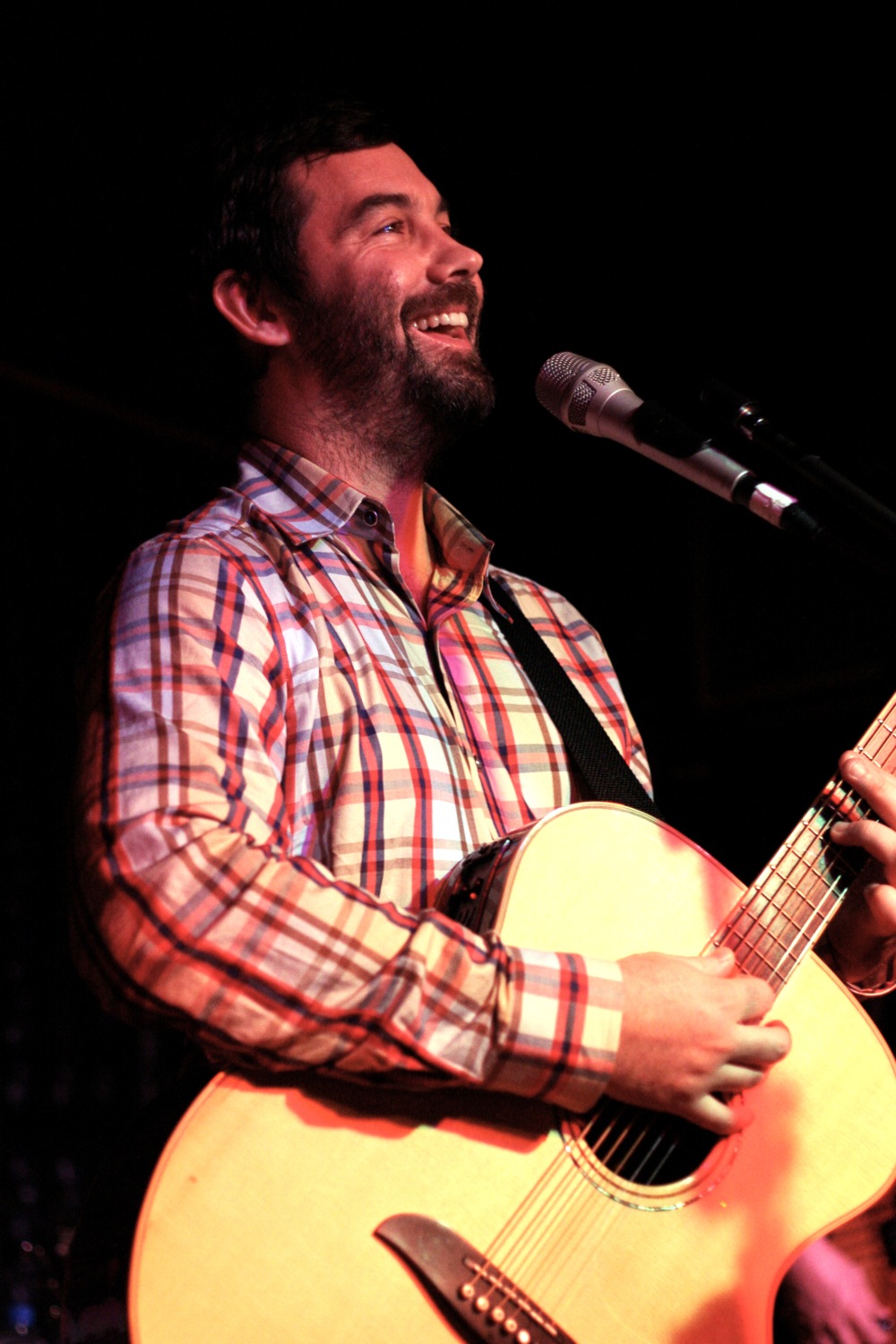
Duncan Sheik (born November 18, 1969) is an American singer-songwriter, composer, and actor. Sheik is known for his 1996 debut single "Barely Breathing", which earned him a Grammy Award nomination for Best Male Pop Vocal Performance. He has composed music for motion pictures and Broadway musicals, winning the 2007 Tony Awards for Best Original Score and Best Orchestrations for his work on the musical Spring Awakening.

Early life

[edit]

Sheik is a native of Montclair, New Jersey. Following his parents' divorce, he split time between his father's house in New Jersey and his mother's home in South Carolina.[1] He is the half-brother of Broadway actress Kacie Sheik.[2] Sheik's Juilliard-trained grandmother introduced him to the piano, and he later took up the electric guitar. By age 12, he was playing guitar with high school students in a cover band.[3] After graduating from Phillips Academy, Andover in 1988,[4] Sheik studied semiotics at Brown University;[5] while at Brown, he played guitar in a band with fellow Brown student Lisa Loeb. Following his graduation from Brown in 1992, he moved to Los Angeles.[3]

Career

[edit]

Early in his musical career, Sheik played guitar for other artists, including Liz and Lisa (with Elizabeth Mitchell and Lisa Loeb). Sheik also played on His Boy Elroy's 1993 album through his connections from a fellow Brown alum, Tracee Ellis Ross.[6]

Singer-songwriter

[edit]

In 1996, Sheik released his self-titled debut album, which was certified gold.[7] The album featured the hit single "Barely Breathing", which peaked at number 16[8] and remained on the Billboard Hot 100 for 55 consecutive weeks.[9] "Barely Breathing" also enjoyed Top 20 success on Adult Contemporary radio,[8] reached No. 2 on the Adult Top 40 charts,[8] and garnered Sheik a Grammy Award nomination for Best Male Pop Vocal Performance.[10]

In 1998, Sheik recorded "Embraceable You" for Red Hot + Rhapsody, a George Gershwin tribute to increase AIDS awareness, and also recorded "Songbird" for another tribute, Legacy: A Tribute to Fleetwood Mac's Rumours.[citation needed] Also in 1998, Sheik released Humming, an experimental follow-up with string arrangements.[citation needed]

Sheik sang a duet with singer Howard Jones on Jones' 2000 single entitled Someone You Need.[11]

Sheik released Phantom Moon, a Nick Drake-influenced album on which he collaborated with poet and writer Steven Sater, in 2001.[citation needed] The following year, Sheik released Daylight, a brighter, more modern-sounding album which included the singles, "On A High" and "Half-Life".[citation needed] After a four-year recording break, Sheik released White Limousine (2006), an album which included companion software on a DVD-ROM to remix individual tracks.[citation needed] In 2008, Sheik was a judge at the 7th annual Independent Music Awards.[citation needed]

In 2009 he released Whisper House, a concept album which provided the score for the musical of the same name.[12] The stage musical premiered at The Old Globe Theatre in San Diego in January 2010, after a workshop at Vassar College, produced by New York Stage and Film in 2009.[13][14]

In 2011, Sheik released Covers 80's, an album including covers of popular 1980s songs. Concert dates in support of the album were later canceled due to Sheik seeking treatment for alcohol addiction.[15] A remixed version of the album was released the following year.[16] Sheik released a new studio album entitled Legerdemain in October 2015.[17]

Composer

[edit]

In addition to being a singer-songwriter, Sheik has also composed music for plays, musicals, and movie soundtracks. He composed original music for the 2002 New York Shakespeare Festival production of Twelfth Night.[18]

In 2004, he composed the score for the film A Home at the End of the World. The AllMusic reviewer wrote: "...takes the sensitivity and tension of the film's plot and crafts incidental music and new songs that complement the movie well."[19] He composed the score for the 2005 film Through the Fire with Pete Miser.[20][21]

Sheik wrote the music for Spring Awakening (2006) in collaboration with Steven Sater. Written over a period of eight years, the musical, which premiered off-Broadway during the summer, opened on Broadway to critical acclaim later in the fall. The musical was based on the controversial German expressionist play The Awakening of Spring, written by Frank Wedekind. Sheik won the 2006 Tony Award for Best Orchestrations for his work on Spring Awakening,[22] and he and Sater won a Tony Award for Best Original Score.[23] In addition, Spring Awakening won the Tony Award for Best Musical[24] and a Grammy Award for Best Musical Show Album.[25] The guitar that Sheik used to compose songs for Spring Awakening was displayed at the New York Public Library for the Performing Arts at Lincoln Center.[26] As of 2012, Sheik was composing music for a feature-film adaptation of Spring Awakening, an adaptation almost a decade in the making.[27]

In 2012, Sheik wrote Alice By Heart, an adaptation of Lewis Carroll's Alice's Adventures in Wonderland, along with collaborator Sater. Directed by Jessie Nelson with musical direction by Lance Horne, the musical was workshopped at the Royal National Theatre and commissioned by the National Theatre Connections.[28]

Sheik wrote the music and lyrics to the 2013 musical adaptation of American Psycho,[29] which opened at the Almeida Theatre in London, and was later staged on Broadway in 2016.[30]

In 2013, Sheik wrote the music for the musical adaptation of the novel Because of Winn-Dixie, which premiered at the Arkansas Repertory Theatre.[31] Dixie was a collaboration with then-director John Tartaglia and Nell Benjamin, who wrote the book and lyrics.[31] The musical ran at the Goodspeed Opera House, East Haddam, Connecticut from July 2019 to September 2019, directed by John Rando.[32]

In 2015, Sheik wrote the musical thriller Noir with Kyle Jarrow. It premiered as part of New York Stage and Film's season in July to August 2015 at the Powerhouse Theater at Vassar College. Inspired by live radio plays and classic film noir, the musical was directed by Rachel Chavkin.[33][34][35]

In 2016 he prepared the music for the Shakespeare Theatre Company (Washington, D.C.) production of The Taming of the Shrew, described in The Washington Post as "an assortment of preexisting songs by singer-songwriter Duncan Sheik".[36]

Other work

[edit]

Sheik produced singer-songwriter Micah Green's 2000 debut album[37][better source needed] as well as his 2012 follow-up.[38][39][40][better source needed]

In 2000, Sheik wrote the foreword to The Way of Youth: Buddhist Common Sense for Handling Life's Questions, by Soka Gakkai International leader Daisaku Ikeda.[citation needed]

In 2006, Sheik recorded the song "A Purple Trail" for Other Songs and Dances, Vol. 1. In 2008, Sheik participated in Songs for Tibet: The Art of Peace, an initiative to support Tibet, Dalai Lama, and Tenzin Gyatso.[41]

Personal life

[edit]

Concert dates in support of Sheik's 2011 album Covers 80's were canceled when Sheik sought treatment for alcohol use disorder.[15] In a message to fans on his tumblr blog, Sheik noted that he had entered a treatment center on the same day his latest album was released and had told his staff, "My record is coming out and I’m checking in."[42]

Sheik has a daughter with his girlfriend, model Nora Ariffin.[43][44]

Sheik practices Nichiren Buddhism and is a member of the US branch of the worldwide Buddhist association Soka Gakkai International.[45]

Awards and nominations

[edit]

Discography

[edit]
Duncan Sheik discography
Studio albums9
EPs2
Live albums1
Compilation albums2
Singles23
Remix albums1

Albums

[edit]

Studio albums

[edit]
Year Album details Peak chart positions Certifications
(sales threshold)
US
[46]
US Heat
[47]
1996 Duncan Sheik 83 1
1998 Humming
  • Release date: October 6, 1998
  • Label: Atlantic, Rhino
  • Formats: CD, cassette, digital download, streaming
163
2001 Phantom Moon
  • Release date: February 27, 2001
  • Label: Nonesuch
  • Formats: CD, cassette, digital download, streaming
2002 Daylight
  • Release date: August 22, 2002
  • Label: Atlantic, Rhino
  • Formats: CD, cassette, digital download, streaming
110
2006 White Limousine
  • Release date: January 26, 2006
  • Label: Zoë
  • Formats: CD+DVD, digital download, streaming
2009 Whisper House 181
2011 Covers 80s
  • Release date: June 7, 2011
  • Label: Sneaky
  • Formats: CD, digital download, streaming
2015 Legerdemain
  • Release date: October 9, 2015
  • Label: Sneaky
  • Formats: CD, digital download, streaming
2022 Claptrap
  • Release date: August 26, 2022
  • Label: AntiFragile
  • Formats: Digital download, streaming
"—" denotes releases that did not chart

Live albums

[edit]
Year Album details
2020 Live at the Cafe Carlyle (New York, NY / 2017)
  • Release date: December 4, 2020
  • Label: Sneaky, Missing Pieces
  • Formats: Digital download, streaming

Remix albums

[edit]
Year Album details
2012 Covers 80s Remixed
  • Release date: November 6, 2012
  • Label: Sneaky
  • Formats: CD, digital download, streaming

Compilation albums

[edit]
Year Album details
2006 Brighter/Later: A Duncan Sheik Anthology
  • Release date: October 23, 2006
  • Label: Rhino
  • Formats: 2xCD, digital download, streaming
2007 Greatest Hits - Brighter: A Duncan Sheik Collection
  • Release date: March 6, 2007
  • Label: Rhino
  • Formats: CD, digital download, streaming

Extended plays

[edit]
Year Album details
2005 Rhino Hi-Five: Duncan Sheik
2011 Harvest (Music from the Motion Picture) (with David Poe)
  • Release date: May 3, 2011
  • Label: Harvest Film
  • Formats: Digital download, streaming

Singles

[edit]
Year Single Peak chart positions Album
CAN
[49]
US
[50]
US AC
[51]
US Adult
[52]
US Dance
[53]
US Pop
[54]
1996 "Barely Breathing" 12 16 19 2 10 Duncan Sheik
1997 "She Runs Away" 24
"Reasons for Living" 3
"Wishful Thinking" 103 Great Expectations (soundtrack)
1998 "Bite Your Tongue" Humming
1999 "That Says It All"
2001 "A Mirror in the Heart" Phantom Moon
2002 "On a High" 21 1 Daylight
"Half-Life"
2005 "White Limousine" White Limousine
"The Dawn's Request"
2008 "We're Here to Tell You" Whisper House
2009 "Earthbound Starlight"
"Play Your Part"
2012 "Shout" Covers Eighties Remixed
2013 "Lay Down Your Weapons" Non-album single
2020 "Barely Breathing 2020 'Dear 45'"
2021 "Better Things For Better Living"
(with Simon Kafka)
2022 "Experience" Claptrap
"Maybe"
"Something Happening Here"
"Chimera II"
(featuring Oora)
"There's No Telling"
"—" denotes releases that did not chart

Stage credits

[edit]

Film and television credits

[edit]
1996
1997
1998
1999
2000
  • "View from the Other Side", Friends
  • "A Body Goes Down", Jeff Buckley: Goodbye and Hello
  • "Now or Never", Boys and Girls
2002
2003
2004
2005
2007
2010
  • "Mama Who Bore Me", 90210
2012
  • "Barely Breathing", Glee
  • "Barely Breathing", Girls

See also

[edit]

References

[edit]
[edit]
Revisions and contributorsEdit on WikipediaRead on Wikipedia
from Grokipedia
Duncan Sheik (born November 18, 1969) is an American singer-songwriter and composer recognized for his pop-rock solo career and contributions to musical theater. His breakthrough came with the 1996 self-titled debut album, featuring the single "Barely Breathing," which peaked at number 16 on the Billboard Hot 100 and charted for a record 55 weeks, earning a Grammy nomination for Best Male Pop Vocal Performance. Sheik later achieved prominence in Broadway with the music for Spring Awakening (2006), a rock musical adapted from Frank Wedekind's play, co-created with lyricist Steven Sater; the production won Tony Awards for Best Original Score and Best Orchestrations, alongside a Grammy for Best Musical Show Album. Sheik's early influences included , leading him to study at before signing with . Subsequent albums like (1998) and Phantom Moon (2001) maintained his presence on adult alternative charts, while theater works such as (2016) and The Secret Life of Bees expanded his compositional range. His oeuvre reflects a blend of introspective and melodic structures, prioritizing artistic evolution over commercial replication.

Early Life

Family Background and Childhood

Duncan Sheik was born Duncan Scott Sheik on November 18, 1969, in . Following his parents' divorce, Sheik's childhood involved dividing time between his father's residence in and his mother's home in , where he primarily grew up in Hilton Head from through , often living with his mother and maternal grandparents in the Sea Pines area. He also spent significant early years, including summers, with his grandparents in . His mother was named Zonnie Sheik. Sheik was raised in a Catholic household. This environment, combined with his family's relocations between the Northeast and Southeast, exposed him to varied cultural influences during his formative years.

Education and Early Musical Influences

Sheik attended Andover, a preparatory school, before enrolling at , where he majored in , the study of signs, symbols, and their interpretation in communication. At , Sheik pursued music alongside his academic studies, gaining initial stage experience as a guitarist in a band featuring during his college years, though he lacked formal musical training and developed skills independently through practice and performance. He began experimenting with songwriting, focusing on personal compositions without pursuing commercial release, while honing guitar techniques that laid groundwork for his later work. Sheik's early musical influences drew from 1980s and early 1990s artists in pop and genres, including , , , and , whose atmospheric and introspective styles shaped his initial compositional approach before any professional output. These elements emphasized layered production and emotional depth, informing his self-directed exploration of melody and arrangement during this formative period.

Recording Career

Debut Album and Breakthrough Hit

Duncan Sheik signed with and released his self-titled debut album on May 20, 1996, blending introspective lyrics with melodic pop-rock arrangements that drew from alternative influences prevalent in the mid-1990s music landscape. The album's production emphasized Sheik's guitar-driven compositions and emotive vocals, positioning it as a counterpoint to the heavier sounds dominating airwaves, though its polished accessibility facilitated broader radio rotation. The lead single, "Barely Breathing," issued to radio in May 1996, marked Sheik's breakthrough, entering the on November 30, 1996, and peaking at number 16 on May 10, 1997, while achieving a then-record 55 consecutive weeks on the chart. This endurance stemmed from sustained adult contemporary and top 40 airplay, amplified by television appearances, rather than immediate blockbuster sales; the track also reached number 2 on the Adult Top 40 chart. The song's relatable theme of emotional suffocation in a faltering relationship resonated amid shifting listener tastes toward introspective alternative pop post-Nirvana's dominance, underscoring Sheik's craftsmanship in hooks and structure over raw aggression. "Barely Breathing" earned Sheik a Grammy for Best Male Pop Vocal Performance in , validating its artistic merit despite not securing a win, while the album itself attained in the United States for over 500,000 units shipped. Commercial traction relied on Atlantic's promotional push in a fragmented market, where radio programmers favored Sheik's tuneful restraint as a to grunge's intensity, though sales figures reflected steady accumulation rather than explosive debut peaks.

Subsequent Solo Albums and Stylistic Evolution

Following the success of his debut era, Sheik's subsequent solo albums shifted toward more introspective and experimental sounds, departing from mainstream pop accessibility. His third studio album, Phantom Moon, released on March 13, 2001, by , emphasized ambient folk arrangements with acoustic instrumentation and elliptical, poetic lyrics co-written with . Critics praised its subtlety and spiritual depth, influenced by Sheik's Buddhist practice, though it garnered limited commercial traction compared to earlier hits. Daylight, issued on August 27, 2002, continued this trajectory with lush orchestral elements and ambient acoustic ballads, co-produced by Sheik and . The album's elaborate arrangements highlighted Sheik's growing interest in atmospheric textures over radio-friendly hooks, receiving positive notes for musical sophistication but failing to replicate prior chart performance. By 2006, White Limousine on Zoe/Rounder Records introduced interactive elements via bundled remix software, allowing listeners to manipulate tracks, reflecting Sheik's embrace of digital experimentation amid declining industry sales for . Reviews noted its preservation of melodic core within challenging structures, blending folk-rock with electronic undertones, though some critiqued its lack of raw energy or simplicity. Later releases like Whisper House (2009) delved into concept-driven acoustic folk with ghostly themes of loss and mortality, incorporating orchestral swells for a haunting intimacy. This period solidified Sheik's evolution toward niche, artistically ambitious works prioritizing depth over broad appeal, as evidenced by sustained critical interest despite modest sales. In recent years, , self-released on August 26, 2022, via AntiFragile Music, exemplifies ongoing fusion of acoustic with electronic layers, yielding dense, reflective compositions that underscore Sheik's adaptation to streaming-era production. The album's philosophical and intricate highlight artistic maturation, maintaining output amid a landscape favoring viral hits over contemplative albums. Overall, Sheik's post-2000 discography traces a path from pop-adjacent accessibility to electronica-infused experimentation and orchestral nuance, prioritizing personal expression and technical innovation over commercial resurgence.

Production and Collaborative Recordings

Sheik produced the self-titled debut album of Micah Green, recorded over six months at his Warm Pod studio in New York, where both artists contributed instrumentation to create a rich acoustic sound featuring moody, melodic rock songs. The album, released on March 23, 2009, received airplay on AAA radio stations and praise for its introspective style. He later produced Green's follow-up album, I Know, I Know, I Know, released on August 28, 2012, which continued the collaborative approach with Sheik handling production duties. In 2007, Sheik served as producer and recording engineer for Chris Garneau's debut album Music for Tourists, overseeing sessions that incorporated Garneau's vocals, by Ben Kalb, and elements from a small on select tracks. The album blended arrangements with subtle electronic touches, earning reviews that noted its atmospheric production while critiquing its occasional formulaic tendencies. These efforts, primarily in indie and alternative folk circles, garnered limited mainstream attention but influenced emerging artists through Sheik's emphasis on intimate, layered soundscapes, distinct from the broader pop accessibility of his solo hits like "."

Theatrical Career

Entry into Musical Theater

Following the success of his debut album in and subsequent releases through the early , Duncan Sheik shifted focus toward musical theater around 1999, driven by an interest in integrating songs within narrative structures rather than isolated pop tracks. This pivot stemmed from his growing preference for the collaborative and story-driven demands of theater, which he later described as "the most interesting" creative outlet compared to recording standalone material. His early forays emphasized adapting melodic and lyrical elements to advance plot and character development, addressing perceived limitations in pop's emphasis on commercial hooks over sustained emotional arcs. Sheik's initial theater involvement began with a collaboration alongside librettist , producing music for Sater's play Umbrage, which premiered at HERE arts center in New York from February 11 to 28, 1999. This project marked his first substantive experiment in scoring for live dramatic performance, building on prior pop songcraft but prioritizing causal linkages between music, dialogue, and thematic progression. By 2002, Sheik contributed original music to a New York Shakespeare Festival production of , further honing techniques for embedding contemporary compositions within classical texts during workshops and rehearsals. These preparatory efforts included smaller commissions and developmental workshops, such as contributions to The Nightingale in 2003 and 2005, where Sheik explored atmospheric scoring to evoke psychological depth in from Hans Christian Andersen's tale. Such works reflected a deliberate move toward theater's capacity for holistic emotional immersion, contrasting the episodic nature of pop albums and enabling Sheik to pursue undiluted narrative causality through synchronized musical and dramatic elements. This phase laid groundwork for broader theatrical engagements without immediate commercial pressures, allowing experimentation unbound by radio-friendly constraints.

Spring Awakening: Composition and Impact

Duncan Sheik composed the music for the rock musical Spring Awakening in collaboration with , who provided the book and lyrics, adapting Frank Wedekind's 1891 German play Frühlings Erwachen that examines themes of adolescent , abuse, and rebellion in a rigid 19th-century society. The project originated from Sater's interest in Wedekind's work during their time at , evolving through workshops starting in 1999 and spanning seven years of development before its off-Broadway premiere in June 2006 and Broadway transfer in December. Sheik's compositional approach integrated contemporary rock elements, including spacious harmonies, insistent grooves, and melodies, to prioritize character and emotional over conventional narrative advancement in songs. This technique allowed tracks like "The Word of Your Body" to convey characters' unspoken desires and internal conflicts through rhythmic intensity and lyrical poetry, fostering a psychological bridge between performers and . The score's innovations contributed to Spring Awakening's empirical success, earning Sheik the 2007 Tony Award for Best Original Score Written for the Theatre alongside Sater. The Broadway production, directed by Michael Mayer, ran for 859 performances from December 10, 2006, to January 18, 2009, at the , recouping its $6 million capitalization through ticket sales boosted by Tony wins and online promotion. The original cast album, released in 2007, topped the Top Cast Albums chart following the , demonstrating commercial viability for rock-infused theater recordings. By employing an original rock score unbound to pre-existing pop catalogs, Spring Awakening played a causal role in revitalizing the rock musical genre on Broadway, injecting concert-like energy into dramatic storytelling and paving the way for subsequent productions that fused modern music with theatrical narrative. International adaptations followed, including a West End production in that secured four , extending the score's global reach and influence.

Other Major Musicals and Adaptations

Following the success of Spring Awakening, Sheik composed music for , a musical adaptation of Bret Easton Ellis's 1991 novel, with lyrics by Sheik and book by . The production premiered in London at the on December 3, 2013, before transferring to Broadway's , where it opened on April 21, 2016, and closed after 48 performances on June 5, 2016, due to mixed reviews and commercial underperformance. Sheik's score incorporated and rock elements to evoke the 1980s milieu, emphasizing the protagonist's psychological descent. An encore production was announced for Houston's Hobby Center in September 2025, signaling renewed interest. Sheik next provided music for The Secret Life of Bees, adapted from Sue Monk Kidd's 2001 novel, with book by and lyrics by Susan Birkenhead. Following a developmental workshop announced in April 2017, the world premiere occurred at the Atlantic Theater Company, running from May 7 to July 21, 2019. The score blended folk-infused pop-rock to underscore themes of sisterhood and civil rights-era resilience in 1960s , though critics noted its melodic strengths amid narrative pacing issues. A subsequent London production opened at the on April 4, 2023. Earlier efforts included The Nightingale, a rock musical adaptation of Hans Christian Andersen's with book and lyrics by , which underwent workshops starting in 2003 and a 2007 New York presentation. Planned for La Jolla Playhouse in 2012, development stalled amid a casting controversy over non-traditional ethnic representations for Chinese characters, prompting Sheik to reassess the production's approach. Concerts featuring material from the project occurred at on November 12, 2023, indicating ongoing refinement rather than full staging. Sheik's post-2020 output reflects continued adaptation of literary sources into pop-rock hybrids. , co-created with Sater and premiered in 2019 but with revisions into the 2020s, reimagines Lewis Carroll's as a quarantine-set tale. In development are Noir with book by Kyle , previewed in August 2025, and Memoirs of Amorous Gentlemen, an adaptation of Moyoco Anno's with Sheik's music and lyrics, slated for an industry reading in February 2025. These projects highlight Sheik's persistence amid production challenges, prioritizing melodic innovation over rapid commercialization.

Innovations in Musical Theater Scoring

Duncan Sheik's approach to scoring musical theater emphasizes songs that illuminate characters' inner psychological states and subtext rather than directly advancing the narrative plot, diverging from the convention in many traditional Broadway works where integrated songs propel action and dialogue. In a 2020 interview, Sheik explained his preference for music that functions akin to songs in film or television, "amplifying what’s happening in the story at that moment" to reveal "something about the inner life of the character" without explicit commentary or plot progression. This method, evident in Spring Awakening (2006), where songs often stand apart from the spoken scenes to underscore emotional undercurrents, challenges the expectation of seamless book-song integration seen in composers like , prioritizing psychological depth over dramatic momentum. Sheik innovates by fusing contemporary pop and rock elements with theatrical orchestration, blending electric guitars, drums, and synthesizers with acoustic instruments and winds to create hybrid scores that evoke modern emotional realism. For instance, Spring Awakening's score incorporates alt-rock structures and harmonies, earning the 2007 Tony Award for Best Original Score (shared with lyricist ) and Best Orchestrations, which recognized its novel adaptation of non-theatrical idioms to stage demands. Later works like Whisper House (2007) further this by emphasizing intimate acoustic and horn arrangements over bombastic ensembles, allowing subtle mood enhancement that mirrors indie rock's introspective quality while suiting chamber-scale productions. This causal shift broadens theater's sonic palette, enabling scores to draw from verifiable pop influences for authentic character expression, as opposed to era-specific show tunes, and has empirically influenced subsequent integrations of genre-blending in works by peers. Such techniques expand acceptable scoring practices by grounding emotional authenticity in first-principles of human experience—focusing on internal causality over external plot mechanics—evidenced by Spring Awakening's commercial run of over 700 performances and its role in normalizing rock-derived forms without diluting theatrical cohesion.

Personal Life and Beliefs

Religious Conversion to

Duncan Sheik was raised in a conservative Catholic family but began practicing at age 19, around 1988 or 1989, marking his shift away from Catholicism toward a dedicated engagement with the tradition's centered on chanting Nam-myoho-renge-kyo. This practice, affiliated with the (SGI), involves daily sessions of rhythmic chanting to foster clarity and resilience, which Sheik has maintained consistently for over three decades by the 2020s. Sheik has credited Nichiren Buddhist meditation with alleviating personal anxieties, including stage fright that hindered his early performances, by promoting a mindset of equanimity amid career fluctuations. In interviews, he described the practice as providing perspective on the impermanence of success and failure in the music industry, helping him navigate the post-"Barely Breathing" pressures without attachment to outcomes. This ongoing commitment influenced his songwriting, incorporating Buddhist motifs such as , desire, and non-attachment; for instance, his album Legerdemain—whose title evokes illusion and —reflects themes of perceptual detachment and broader existential viewpoints drawn from his practice, as Sheik noted deriving creative inspiration from Buddhist principles during its composition. By the mid-2010s, with approximately of , these elements had permeated his work without overt doctrinal promotion, emphasizing personal introspection over evangelism.

Relationships and Public Privacy

Sheik has maintained a notably private stance regarding his personal relationships, with scant public details emerging despite his prominence following the 1996 release of "Barely Breathing," which achieved No. 1 status on the for one week in May 1997. Unlike many contemporaries from that era's pop scene, Sheik has avoided tabloid-level scrutiny, prioritizing discretion over publicity in matters of romance and family. His primary long-term partnership is with model Nora Ariffin, with whom he first dated in 1999 before a hiatus during her to American Johan Nawawi from 2000 to 2007; they rekindled in 2011 and have remained together since. The couple welcomed a in the late , though her name and precise birth details have not been publicly disclosed, aligning with Sheik's overall reticence on family specifics. While Sheik referred to Ariffin as his "wife" in a 2019 post acknowledging , no formal announcement or records have surfaced in public domains, suggesting any union—if formalized—remains unpublicized. This approach to privacy extends to lifestyle choices, including residences tied to professional hubs like , where Sheik recorded material during the in a studio apartment and maintains visible ties through performances and . Absent high-profile entanglements or offspring beyond his daughter, Sheik's post-breakthrough trajectory reflects a deliberate shift toward over celebrity exposure, with no documented divorces, additional children, or publicized breakups.

Reception, Criticisms, and Controversies

Commercial and Critical Successes

Duncan Sheik's debut single "," released in 1996, marked a commercial breakthrough, charting for 59 weeks on the and holding the record for the longest single run on the chart until 2015. The track's extended airplay and radio success propelled his self-titled debut album to strong sales performance, contributing to his recognition as a pop artist with sustained chart presence. In musical theater, Sheik co-composed the score for Spring Awakening, which premiered on Broadway in 2006 and generated over $57 million in box office gross during its original run at the , reflecting robust audience demand over 783 performances. The production's financial viability extended to a 2015 revival, adding further revenue through its limited engagement. Critics have highlighted Sheik's melodic sophistication and ability to fuse pop, electronic, and elements, as noted in coverage of his transition from Billboard-charting hits to Broadway compositions. Reviews in outlets like emphasize his genre-blending approach, crediting it for innovative scoring that bridged mainstream appeal with theatrical depth. Sheik maintained commercial momentum into the 2020s with releases such as the live album Live at the Café Carlyle in 2020 and the studio album in 2022, demonstrating longevity in recording and influencing crossovers between and theater soundtracks.

Debates Over Thematic Content in Works

Spring Awakening, adapted by Duncan Sheik and from Frank Wedekind's 1891 play, has sparked debates over its explicit portrayal of , abuse, and rebellion in a repressive 19th-century German setting. The musical includes scenes and songs depicting , incestuous , , and , which some critics and audiences viewed as gratuitously shocking and potentially endorsing moral laxity by glamorizing youthful indiscretions through rock-infused music. In contrast, proponents argue that these elements faithfully amplify Wedekind's original intent to critique adult hypocrisy and societal repression, providing a raw, empathetic lens on the causal links between denied and tragic outcomes for teens, without prescribing behaviors but exposing their consequences. This tension underscores broader discussions on whether artistic provocation serves truth-telling or risks desensitizing viewers to real harms, with the production's reliance on such content for dramatic intensity drawing both acclaim for realism and calls for caution in youth-targeted stagings. In The Nightingale (2012), set in ancient and drawing from Hans Christian Andersen's fable, debates centered on casting choices that featured only two Asian-American actors amid a predominantly non-Asian ensemble, raising questions about authentic representation of Eastern cultural themes like , , and imperial excess. Asian-American theater advocates criticized the approach as perpetuating and marginalizing performers from the story's cultural , arguing it diluted the thematic by prioritizing a "universal" aesthetic over historical specificity, which they saw as a causal factor in ongoing underrepresentation. Sheik and collaborators defended the multi-ethnic casting as an artistic decision for broader accessibility, noting a prior all-Asian workshop felt mismatched to the revised narrative's stylized fable elements, though the backlash prompted public forums and apologies from the for unintended racial tensions, influencing subsequent revisions to balance universality with . These exchanges highlight the friction between interpretive freedom in adapting and demands for demographic fidelity, where deviations can alter audience perceptions of thematic authenticity without empirical evidence of diminished artistic impact.

Political Influences and Public Stances

Duncan Sheik has articulated left-leaning political perspectives, identifying himself as positioned "on the way left side of the spectrum" in a , while emphasizing a sense of responsibility to address issues through his rather than overt . His engagement includes performing at benefits for progressive causes, such as the 2004 Concerts for Change, and initiating humanitarian projects in and . Sheik has voiced support for gay marriage, dismissing opposing arguments as "stupid," and critiqued U.S. foreign policy and leadership under President , attributing the latter's decisions to a "fundamental misunderstanding" of human leadership informed by his Buddhist . These views manifested in his music, notably the 2006 album White Limousine, which featured overtly politicized lyrics addressing war and , including the title track's satirical reference to Bush's . Sheik collaborated on the play that year, drawing parallels between Roman and contemporary U.S. policy. Despite such content, the album retained appeal among some conservative listeners, suggesting Sheik's political expression did not dominate his broader artistic reception. In theatrical work, contemporary politics shaped elements of the 2017 musical The Secret Life of Bees, where Sheik drew inspiration from Kendrick Lamar's socially conscious hip-hop to infuse the score with reflections of the era's political climate, enhancing thematic relevance without overshadowing narrative craft. Sheik's public stances remain integrated into and occasional charitable efforts rather than sustained , with his career achievements attributable primarily to musical innovation over ideological advocacy.

Awards and Recognition

Major Wins

Duncan Sheik won two in 2007 for his contributions to the Broadway musical Spring Awakening: Best Orchestrations and Best Original Score Written for the Theatre (shared with lyricist ). These victories marked recognition for his innovative integration of pop-rock elements into theatrical scoring, bridging contemporary music styles with dramatic narrative. He also secured a Drama Desk Award for Outstanding Music for Spring Awakening in 2007, affirming the score's effectiveness in enhancing the production's emotional and thematic depth. Additionally, the original cast album of Spring Awakening earned Sheik a Grammy Award for Best Musical Theater Album in 2009, highlighting the enduring appeal and production quality of his compositions beyond live performance. These accolades represent empirical validations of Sheik's versatility, demonstrating cross-genre acceptance from pop songwriting to musical theater, as evidenced by peer-voted honors from industry bodies like the and .

Nominations and Honors

Sheik received a nomination for the Grammy Award for Best Male Pop Vocal Performance in 1998 for the single "Barely Breathing" from his self-titled debut album. In theater composition, he earned a Drama Desk Award nomination for Outstanding Music in a Play in 2014 for his score to the off-Broadway production of A Man's a Man. For the 2016 musical American Psycho, Sheik was nominated by the Outer Critics Circle for Outstanding Score (Written). These nominations across pop recording and stage works underscore peer recognition of Sheik's compositional versatility, spanning from late-1990s chart success to mid-2010s experimental theater adaptations.

Discography and Credits

Solo Albums

Duncan Sheik's eponymous debut studio , Duncan Sheik, was released in 1996 by and produced by . The achieved commercial success, certified gold by the RIAA for sales exceeding 500,000 units in the United States, and peaked at number 83 on the chart. His second studio album, , followed on October 6, 1998, also on , with production handled by Sheik and Hine. The release marked an initial shift toward more introspective songwriting with elements, diverging slightly from the debut's pop accessibility. Phantom Moon, released February 27, 2001, on , emphasized acoustic arrangements influenced by folk traditions. Daylight, issued in 2002 on Atlantic and co-produced by Sheik with , incorporated brighter, more elaborate production while retaining melodic pop structures. White Limousine appeared on January 24, 2006, via Zoë Records, blending with pop elements in a self-produced effort. The covers Covers 80s, released June 7, 2011, on Sneaky Records, reinterpreted 1980s tracks in acoustic and pop-rock styles. Later releases reflected a pronounced evolution toward electronic experimentation. Legerdemain, self-released on October 9, 2015, featured electronic music production recorded at Sneaky Studios. Claptrap, issued August 26, 2022, on AntiFragile Music, merged electronic and acoustic layers in 12 original tracks. A live , Live at the Cafe Carlyle, documented performances from 2017 and was released December 4, 2020, on Sneaky/Missing Pieces, distinct from studio efforts.

Singles and Extended Plays

Duncan Sheik's debut single "," released on November 30, 1996, by , achieved significant commercial success, peaking at number 16 on the US and maintaining a presence for 55 weeks. The track, available in various formats including and vinyl, featured no prominent B-sides but included radio edits and instrumental versions in promotional releases. Subsequent singles included "Reasons for Living" in 1997, which incorporated dance remixes by producers such as Johnny Vicious and reached number 3 on the US Billboard Dance Club Songs chart. This release, tied to the debut album, emphasized electronic mixes over standard B-sides. "," issued in 1997 for the film soundtrack, bubbled under the Hot 100 at number 103 and appeared as a promotional with album and radio versions. "On a High," the 2002 lead single from Daylight, topped the US Billboard Dance Club Songs chart and was released in formats including vinyl with house remixes by Jamie Myerson. Later digital singles, such as "Maybe" and "Something Happening Here" in 2022, represent standalone releases without notable chart performance or physical B-sides. Sheik's extended plays include the 1996 live recording At the Reservoir: A Live E.P., a limited release capturing acoustic performances of tracks like "The End of Outside," "In the Absence of Sun," and a non-album song "Rubbed Out," alongside "Barely Breathing." The 2008 tour-exclusive EsP EP featured selections from Whisper House and Covers 80s, distributed as a CD during fall performances. These EPs prioritized intimate or thematic compilations over broad commercial singles.

Theater and Media Compositions

Duncan Sheik began contributing original music to stage productions in the early 2000s, expanding into full musical theater compositions thereafter. His theater credits include for the New York Shakespeare Festival's in 2002. He provided music for The Nightingale in workshops during 2003 and 2005, with a full production in 2006. Sheik's major breakthrough in musical theater came with Spring Awakening in 2006, for which he composed the music and co-wrote lyrics with Steven Sater, adapting Frank Wedekind's play into a rock musical that premiered on Broadway. Other stage works include music for Nero (Another Golden Rome) in San Francisco in 2006, Guitar in 2004, Songs from an Unmade Bed in 2005, and Whisper House in 2010. In 2016, he composed music and lyrics for American Psycho, a musical adaptation of Bret Easton Ellis's novel with book by Roberto Aguirre-Sacasa, which debuted off-Broadway. Later projects encompass Alice by Heart (2019), The Secret Life of Bees (2019), Because of Winn-Dixie (2022 adaptation), Bob & Carol & Ted & Alice, and Noir. In media compositions, Sheik scored the 2004 film A Home at the End of the World, directed by Michael Mayer, contributing original instrumental tracks and songs such as "Something Somewhere" and "There's a Home." He collaborated with David Poe on the score for the short film Harvest, resulting in a five-track EP released in 2005 featuring songs like "Laugh Till I Cry" and "Buildings & Bridges." His compositions have appeared in soundtracks for television series including Beverly Hills, 90210 and American Dreams, though primarily as licensed tracks rather than bespoke scores.

References

Add your contribution
Related Hubs
User Avatar
No comments yet.