Hubbry Logo
search
logo
1986721

Elmshorn

logo
Community Hub0 Subscribers
Read side by side
from Wikipedia

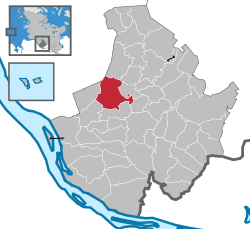
Elmshorn (German pronunciation: [ɛlmsˈhɔʁn] ; Low German: Elmshoorn) is a town in the district of Pinneberg in Schleswig-Holstein in Germany. It is 30 km north of Hamburg on the small river Krückau, a tributary of the Elbe, and with about 50,000 inhabitants is the sixth-largest town in the state of Schleswig-Holstein, Germany. It is the birthplace of writer and editor Hermann Schlüter (1851–1919), the mathematician Hermann Weyl (1885–1955) and the medievalist Heinz Woehlk (1944- ).

Key Information

Economy and industry

[edit]

Historically Elmshorn had many companies in the food industry. Including meat processing and sausage production, margarine production and cereal processing. Major surviving companies include Dölling-Hareico (meat processing/sausage production) and Kölln (cereal processing, mainly oats and muesli).

Twin towns – sister cities

[edit]

Elmshorn is twinned with:[2]

Education

[edit]

The private university NORDAKADEMIE Hochschule der Wirtschaft is situated in Elmshorn.[3]

Notable people

[edit]

The following people were born in Elmshorn (in order of year of birth):

See also

[edit]

References

[edit]
[edit]
Revisions and contributorsEdit on WikipediaRead on Wikipedia
from Grokipedia
Elmshorn is a town in the Pinneberg district of Schleswig-Holstein, northern Germany, situated approximately 30 kilometers northwest of Hamburg along the Krückau River, a tributary of the Elbe. With an estimated population of 52,939 as of November 2025, it ranks as the sixth-largest municipality in the state by population and functions as a key commuter hub in the Hamburg metropolitan region, benefiting from excellent rail and motorway connections.[1][2][3][4] The town's history dates back to its first documented mention in 1141 as "Elmeshorne," when it emerged as a small settlement that gradually developed into a medieval trading hub due to its strategic position on the Krückau River, which facilitated commerce and transportation.[5] Elmshorn endured significant setbacks, including a devastating fire in 1621 and the impacts of the Thirty Years' War, but experienced rapid industrialization in the 19th century following the establishment of a major railway junction, which spurred economic expansion in manufacturing and trade.[6] Today, remnants of this heritage are preserved in sites like the Elmshorn Industrial Museum, which documents the evolution of local industry, technology, and daily life through interactive exhibits on historical machinery and workshops.[7] Economically, Elmshorn serves as a vibrant mid-sized business center with fully developed industrial estates hosting small- and medium-sized enterprises alongside several internationally recognized companies, supported by a dedicated business development office that provides subsidies and advisory services to foster growth.[8] The town maintains a diverse educational infrastructure, including 23 kindergartens, 12 public schools, three private schools, a vocational school, and the Nordakademie—a university funded by industry—alongside a 475-bed regional hospital to support its 52,939 residents.[8] Culturally, Elmshorn offers a rich array of attractions and events, including the historic St. Nikolai Church, scenic riverside paths, and the annual Harbour Festival celebrating local traditions.[9] Since 1991, it has been a prominent venue for the Schleswig-Holstein Music Festival, featuring performances by national and international artists in its three theaters, six galleries, and four music schools, while the central Königsstraße and Weisse Villa provide pedestrian-friendly spaces for community gatherings.[8]

Geography

Location and landscape

Elmshorn is situated at coordinates 53°45′7″N 9°39′4″E in the Pinneberg district of Schleswig-Holstein, Germany.[10] The city lies approximately 30 kilometers northwest of Hamburg, positioning it as a key commuter hub within the Hamburg metropolitan region.[10] Its terrain spans an elevation range from a lowest point of 0.3 meters above sea level in the western marsh meadows to a highest point of 21.0 meters at the Butterberg in the Stadtpark Lieth.[10] This varied topography reflects Elmshorn's location at the transitional zone between the higher Geest upland to the east and the low-lying Seestermüher Marsch to the west, characterized by flat, fertile marshlands prone to tidal influences and flood risks managed through extensive dike systems. The city is traversed by the Krückau River, a tide-dependent tributary of the Elbe that flows through its center, contributing to the marshy landscape and supporting local agriculture focused on grassland and horticulture. This proximity to the Elbe, about 10 kilometers to the west, enhances the area's ecological significance, with the marshy terrain fostering wetlands that influence water management and biodiversity.[11] Administratively, Elmshorn covers an area of 21.36 km² and is divided into quarters including Mitte (the city center), Kaltenweide, Langelohe/Hainholz, Klostersande/Lieth, and Fuchsberg.[12][13] The region includes protected landscapes under the EU Flora-Fauna-Habitat (FFH) directives, such as parts of the Schleswig-Holsteinisches Elbästuar and Obere Krückau areas, which safeguard habitats along the river and marshes from development.[14] These reserves, encompassing nature protection zones within the Pinneberg district, cover significant portions of the city's outskirts and promote conservation amid the urban-rural interface.[15]

Climate

Elmshorn experiences a temperate oceanic climate (Köppen Cfb), characterized by mild temperatures, high humidity, and significant maritime influence from the nearby North Sea, resulting in frequent overcast skies and consistent precipitation throughout the year.[16] The annual average temperature is approximately 9.8°C, with moderate seasonal variations that prevent extreme heat or cold.[17] Precipitation totals around 825 mm annually, distributed relatively evenly but with higher amounts in autumn and winter, often leading to wet conditions that contribute to occasional flooding from the Krückau and other Elbe tributaries.[17] Summers are mild, with average highs reaching 22°C in July and rarely exceeding 25°C, while winters remain cool, with January highs around 4°C and lows seldom dropping below -5°C.[18] Windy conditions prevail year-round due to the town's proximity to the coast, with average speeds of 18 km/h and peaks up to 21 km/h in winter months like January.[18] This climate supports local agriculture by providing sufficient moisture and frost-free periods for crops like grains and vegetables, though excessive rainfall can lead to waterlogging in low-lying fields.[19] In urban planning, the region's vulnerability to flooding—exemplified by the severe 1962 North Sea storm surge that inundated parts of Elmshorn—has driven post-20th-century measures, including reinforced dikes along the Krückau and flood barriers to mitigate risks from Elbe overflows.[3] These adaptations enhance resilience against rising sea levels and intensified storms linked to broader North Sea weather patterns.[20]

History

Early history

Elmshorn's origins trace back to the 12th century as a settlement in the Duchy of Holstein, first documented in 1141 as "Elmeshorne" in a charter issued by the Archbishop of Hamburg, Adalbero of Hamburg-Bremen.[21] The name likely derives from Old Low German terms referring to a "corner of elms" or a bend in the landscape near elm trees, reflecting its position along the Krückau River, a navigable waterway that facilitated early regional trade and connected the area to Hamburg.[22] As part of the feudal structures under the counts of Holstein, the settlement operated within a manorial system where local lords managed agricultural lands and river-based commerce, with the St. Nikolai Church, constructed around 1350, serving as a central institution for the growing parish first recorded in 1362. During the medieval period, Elmshorn developed as a market town, benefiting from its strategic location in Holstein to support trade in goods like grain and livestock transported via the Krückau. The river's role in linking rural estates to urban centers like Hamburg underscored the area's economic integration under Holstein's feudal oversight, where counts and later dukes held authority over tolls and markets. By the late Middle Ages, the settlement had expanded around the church and river crossings, though formal market privileges are not explicitly dated prior to the 18th century; however, informal trading activities were evident from the 13th century onward, aligning with broader regional patterns in Holstein.[23] The 17th century brought significant upheaval, with Elmshorn suffering repeated devastation during the Thirty Years' War (1618–1648), as marauding troops plundered and burned parts of the town, exacerbating losses from concurrent plague outbreaks that decimated the population. Further destruction occurred in 1657 amid the Second Northern War, when Swedish forces under King Charles X Gustav overran Danish defenses at the nearby Kruckschanze fortress and torched the northern district, including areas around the St. Nikolai Church.[24] Rebuilding efforts in the late 17th century focused on fortifying river trade routes and restoring agricultural infrastructure, laying the groundwork for modest economic recovery under continued Holstein ducal rule. By the 18th century, pre-industrial activities began to diversify, with early whaling ventures emerging around 1715 as local men joined Hamburg-based expeditions to the Arctic, later leading to Elmshorn-owned ships by mid-century.[25] The leather industry also took root, tied to the region's marshy landscapes that provided willow bark and water for tanning; in 1746, the local shoemakers' guild received exclusive rights to operate tanneries, marking the start of organized production that utilized feudal-era water rights along the Krückau.[26] These trades, supported by the river's transport capabilities, highlighted Elmshorn's transition from agrarian feudal dependency to proto-industrial activity within Holstein's framework.

Industrial era and modern development

Elmshorn received its city rights on April 11, 1870, from the government in Schleswig, marking a pivotal moment that facilitated rapid urbanization and economic expansion.[27] This status, combined with the town's strategic location along the Krückau River and its railway connection established in 1844, spurred significant industrialization in the late 19th century, particularly in food processing, manufacturing, and shipbuilding. The harbor, initially a modest river port, underwent expansions during this period to support growing trade in whaling products, grain, and industrial goods, transforming Elmshorn into a key economic hub northwest of Hamburg.[28] By the end of the century, these developments had elevated the town from a rural settlement to a burgeoning industrial center, with factories focusing on leather processing and meat production driving population growth and infrastructure improvements.[29] The 20th century brought profound challenges, including the impacts of World War II, during which Elmshorn served as an industrial site for the Nazi war effort, leading to Allied bombings that destroyed significant portions of the city.[30] In a remarkable act of local resistance, an antifascist committee led by figures like Arthur Geissler orchestrated the town's self-liberation from Nazi control on May 3, 1945, eleven days before British forces arrived, by arresting remaining Nazi officials and declaring the city free to avert further destruction.[31] Post-war reconstruction was hampered by severe housing shortages and an influx of approximately 12,500 refugees by 1946, exacerbating the displacement of around 2,500 locals amid widespread ruins from bombings.[32] Elmshorn integrated into the newly formed state of Schleswig-Holstein in 1946 and, following the adoption of the German Basic Law in 1949, became part of the Federal Republic of Germany, enabling gradual rebuilding through federal aid and local initiatives.[33] In the post-1950s era, urban planning efforts emphasized Elmshorn's role as a commuter town to Hamburg, with expanded rail links via the S-Bahn facilitating daily workforce flows and residential development. This shift supported modern growth, including commercial zones and housing projects that accommodated ongoing population increases from economic ties to the metropolitan region. A notable recent event occurred on April 25, 2023, when fragments of the Elmshorn meteorite, classified as an H3-6-anomalous ordinary chondrite breccia, fell over the town; the largest recovered piece weighed 3.731 kg after impacting a garden, with 21 fragments totaling 4.277 kg collected shortly after.[34]

Demographics

Population

As of November 1, 2025, Elmshorn has a population of 52,939 inhabitants.[35] The population density stands at 2,478 inhabitants per square kilometer, based on the city's area of 21.3656 square kilometers.[35] The population has shown substantial growth over the past century and a half. In 1875, the resident population (ortsanwesende Bevölkerung) was recorded at 7,730.[36] By the end of 2023, this figure had risen to 50,728, reflecting steady expansion driven by industrialization, post-World War II refugee influxes, and ongoing commuter migration from nearby Hamburg.[37] Key historical milestones include 13,640 inhabitants in 1900 and approximately 35,215 by 1961, with notable acceleration in the mid-20th century due to territorial incorporations and demographic shifts following the war.[36] Recent census data from the Statistisches Amt Nord indicates an aging population structure, characterized by a natural decrease since 2020, as deaths (638 in 2024) have outpaced births (435 in 2024).[37] Net migration remains modestly positive (+61 in 2024), contributing to overall stability.[37] The 2022 census, adjusted for privacy, reported 51,248 residents, highlighting a minor uptick from 2021 before the recent plateau.[1] Elmshorn's settlement pattern features a predominantly urban core in its central quarters, such as the Altstadt and Bahnhofsvorstadt, accounting for the majority of residents, while suburban expansion has occurred in peripheral areas like Langenfeld and Elmshorn-Ahrenlohe, blending residential and semi-rural zones.[35] This urban-rural split supports the city's role as a commuter hub, with over 80% of the population concentrated in built-up districts.[1]

Religion and ethnicity

Elmshorn's religious landscape is historically dominated by Protestantism, stemming from the Lutheran Reformation that took hold in Schleswig-Holstein during the 16th century when the region, under Danish and later Prussian influence, transitioned from Catholicism to Lutheranism as the state religion.[38] The Evangelical Lutheran Church remains the largest denomination, with key institutions like the St. Nikolai-Kirche, a medieval structure rebuilt in the 18th century, serving as a central Protestant parish in the town center.[39] Roman Catholics form a minority, represented by the parish of St. Marien (Katholische Pfarramt St. Marien), which caters to the local Catholic community.[40] According to the 2022 census data, Protestants account for 15,246 residents (approximately 30% of the population), Roman Catholics for 3,228 (6%), and the remaining 32,775 (64%) report other religions, no affiliation, or unknown status, underscoring a trend of secularization that has accelerated since the early 2000s.[1] Muslim communities, though small, have grown with immigration, supported by mosques such as the As-Salâm Moschee, a Sunni place of worship established to serve diverse Muslim populations including Turkish and Arab congregants.[41] Other faith groups, including smaller Protestant free churches and non-Christian minorities, exist but represent marginal shares. Ethnically, Elmshorn is overwhelmingly German, with 80% of residents holding German citizenship as of 2022.[1] The foreign-born population has diversified since the 1960s guest worker programs, which brought significant numbers from Turkey, followed by inflows from Poland and Romania in the EU era, and more recently from Syria, Afghanistan, and Ukraine due to conflicts and asylum-seeking.[42] By late 2024, foreign nationals totaled 10,082 (nearly 20% of the population), with the largest groups being Turkish (21%), Syrian (21%), Ukrainian (13%), Afghan (12%), Polish (10%), and Romanian (7%).[42] Community organizations play a vital role in fostering religious and ethnic cohesion, including the Protestant St. Nikolai-Kirchengemeinde for Lutheran services and events, the Catholic St. Marien parish for sacramental and social activities, and Islamic centers like the DITIB-affiliated Türkisch-Islamischer Kulturverein and As-Salâm Moschee for prayer and cultural programs.[39][43][41] Integration efforts are supported by municipal initiatives such as the Ehrenamtliche Integrationsberatung, offering counseling on language, employment, and social services, and the city's Integrationskonzept 2.0, which involves community participation to address diversity challenges like language barriers and intercultural dialogue.[44][45] Overall trends indicate ongoing secularization, with non-religious affiliations rising to over 60% by 2022, alongside increasing ethnic diversity driven by labor migration in the mid-20th century and refugee arrivals since the 1990s, particularly the recent Ukrainian influx following the 2022 invasion.[1][42]

Government and international relations

Local government

Elmshorn's local government is led by the Oberbürgermeister, who serves as the chief executive responsible for directing the city administration, representing the municipality in legal matters, and making key executive decisions on daily operations and policy implementation. As of November 2025, the position is held by Volker Hatje, who has served since 2014 and was re-elected in 2019. Erik Sachse, an independent candidate nominated by the CDU and Greens, won the run-off election on October 19, 2025, with 55.3% of the vote against SPD candidate Arne Klaus. Sachse will assume office on January 1, 2026, succeeding Hatje.[46] The legislative body, the Stadtverordneten-Kollegium (city council), comprises 51 members elected every five years to handle budgeting, enact local policies, and provide oversight of the executive. In the May 14, 2023, communal elections, turnout was 42.6%, and seats were allocated proportionally with additional compensatory seats: the CDU secured 19 seats, the SPD 13, the Greens 10, the FDP 5, and Die Linke 4.[47] The council meets quarterly at minimum and is chaired by a Bürgervorsteher or Bürgervorsteherin elected from its members. The next council election is set for 2028.[48] Administratively, Elmshorn falls under the Pinneberg district (Kreis Pinneberg), which oversees broader regional coordination while the city manages its internal affairs. The municipality is divided into quarters (Stadtviertel), including Altstadt, Dellich, Langenfeld, and Seestermühe, each handling localized services like community planning and maintenance within the district framework.[49] Elmshorn's coat of arms, granted in 1928 and featuring a red shield with a silver three-masted sailing ship crossing blue and silver waves, symbolizes the town's historical ties to the Krückau River and its maritime past as a trading hub.[50]

Twin towns – sister cities

Elmshorn maintains twin town partnerships with four cities, established to promote international understanding, cultural exchange, and European integration. These relationships were initiated in the post-Cold War era to foster peace and cooperation across borders, beginning with Tarascon in France in 1987 and continuing through the 1990s and early 2000s.[51] The partnership with Tarascon, France, was officially established on May 5, 1987, following initial student exchanges that began in 1976 between local schools. It emphasizes youth programs, including annual school exchanges, visits by choirs and bands, and cultural events such as art exhibitions and participation in festivals like Elmshorn's Flora-Woche.[52] In 1990, Elmshorn formed a partnership with Wittenberge, Germany, to strengthen regional cooperation within the country. Activities include school partnerships, such as between Bismarckschule Elmshorn and Marie-Curie-Gymnasium Wittenberge, joint youth camps, and cultural exchanges like art exhibitions and festival visits.[53] The twin town link with Stargard, Poland, dates to 1993 and focuses on economic ties alongside cultural preservation, particularly through the Heimathaus Stargard in Elmshorn, which houses artifacts from former residents. It supports community activities and people-to-people exchanges to enhance European unity.[54] Since 2000, Elmshorn has partnered with Raisio, Finland, promoting cultural and educational exchanges through school programs, youth group visits, and economic delegations. Notable initiatives include annual youth center swaps and exhibitions of Finnish art in Elmshorn.[55] Across these partnerships, activities commonly involve annual visits, school and youth exchanges, and joint events aimed at cultural understanding and EU integration. Elmshorn does not host active consulates through these ties.[51]

Economy

Historical economy

Elmshorn's early economy was shaped by its location along the Krückau river, providing access to the Elbe and North Sea, as well as the surrounding Geest and marsh landscapes. In the 17th and 18th centuries, whaling emerged as a key sector, with local men from Elmshorn participating in expeditions primarily aboard Hamburg-based ships targeting Arctic waters for whales and seals; this activity intensified after the Napoleonic Wars, with Elmshorn shipowners fitting out vessels like the "Flora" for Grönland whaling until the last departure in 1872.[25] Complementing this maritime focus, leather tanning utilized marsh resources such as animal hides from local livestock, with the shoemakers' guild granted exclusive rights to operate tanneries as early as 1746; the Geest areas, characterized by sandy soils, supported agriculture centered on hardy crops like rye and potatoes, alongside animal husbandry that supplied raw materials for tanning.[26][56] The 19th century marked a pivotal shift following Elmshorn's elevation to city status on April 11, 1870, which spurred industrialization and a boom in food processing tied to the river's transport capabilities. Margarine production took off in the late 19th and early 20th centuries, exemplified by the establishment of the Westholsteinischen Margarine Werke in 1907, capitalizing on imported oils via the waterway; concurrently, cereal processing flourished, with the Krückau harbor serving as a vital hub for grain transshipment, handling up to 118,550 tons annually by the early 1900s.[57][58] The harbor's role extended beyond grains to general trade, including imports for emerging industries, while pre-World War II manufacturing expanded significantly, particularly in leather, where 12 factories employed over 600 workers by 1910—more than 500 in the largest operations—benefiting from proximity to Hamburg's port for raw material imports and exports. This growth transformed Elmshorn into a burgeoning industrial center, with shipbuilding and food sectors also contributing to employment for thousands.[59][60][61] World War I disrupted maritime and manufacturing trades through resource shortages and labor mobilization, while World War II brought severe destruction, including a major bombing raid on August 3, 1943, targeting the railway junction and industrial sites, which devastated factories and halted production.[62] Local trades like leather and food processing suffered heavy losses, but post-1945 recovery began swiftly amid the Allied occupation, with Elmshorn's self-liberation by anti-fascist groups in May 1945 enabling rapid reorganization; by the late 1940s, surviving industries such as cereal milling resumed operations, laying foundations for mid-20th-century rebuilding.[63]

Current industries

Elmshorn's economy is dominated by the food processing sector, which remains a cornerstone due to the presence of longstanding manufacturers. Peter Kölln GmbH & Co. KGaA, a major producer of oats, muesli, and related cereal products, maintains its headquarters and primary operations in the city, employing hundreds in processing and distribution activities.[64][65] The proximity to Hamburg has also fostered growth in services and logistics, leveraging excellent transport links for distribution and warehousing, with the sector benefiting from the metropolitan region's demand for efficient supply chains.[66][67] Among the city's prominent employers are ORLEN Deutschland GmbH, a key player in the energy sector operating over 600 fuel stations nationwide from its Elmshorn base, and Das Futterhaus, a specialized retailer and distributor of pet food and supplies with its headquarters here.[68][69] Other significant firms include Autoliv, focused on automotive safety systems (with plans to close its Elmshorn site by the end of 2025), and Jacobs Douwe Egberts, in coffee production, contributing to a diverse manufacturing base.[65][70] The unemployment rate in the surrounding Kreis Pinneberg stood at 5.5% in 2024, reflecting relative stability amid regional economic pressures.[71] Post-2000 trends show a pivot toward sustainable manufacturing, exemplified by ORLEN Deutschland's introduction of HVO100 renewable diesel at local stations and the city's conversion of its utility vehicle fleet to this low-emission fuel in 2025.[72] Elmshorn supports a commuter economy, with a substantial portion of its workforce—estimated at around 40% based on district patterns—traveling daily to Hamburg for employment in services and industry.[73] Innovations in the region include contributions to green energy initiatives, such as offshore wind park maintenance in Kreis Pinneberg, which supplies power to hundreds of thousands of households and aligns with broader biotechnology and renewable efforts in Schleswig-Holstein.[67][74]

Transport

Road and rail

Elmshorn is well-connected by major road networks, with the Bundesautobahn 23 (A23) providing direct access from Hamburg to the north, extending toward Flensburg and passing through the town's vicinity via the Elmshorn interchange.[75] The Bundesstraße 431 (B431) serves as a key federal road linking Elmshorn locally, facilitating connections to surrounding areas like Pinneberg and Hamburg's outskirts.[76] The town's rail infrastructure centers on Elmshorn station, a major junction where the Hamburg-Altona–Kiel railway meets the Marsh Railway (Marschbahn), enabling regional and long-distance travel northward.[77] Rail services arrived in 1844 with the opening of the Hamburg-Altona–Kiel line, which spurred significant economic and population growth in Elmshorn by improving trade and commuter links.[77] Today, the station handles over 12,000 passengers daily, ranking as the third-busiest in Schleswig-Holstein.[78] Frequent S-Bahn services operate on the S3 line from Elmshorn to Hamburg, with trains departing every 10 to 20 minutes during peak hours, covering the approximately 29-kilometer journey in under 30 minutes.[79] Post-2020 developments include planning for electrification of the Marschbahn line, with the project kicking off on May 12, 2025, by Deutsche Bahn; environmental surveys were ongoing as of October 2025 to replace diesel trains with electric overhead lines and enhance commuter capacity through the region.[80] Cycle paths are integrated into Elmshorn's urban planning as part of broader regional networks, including connections to the Hamburg–Elmshorn cycle superhighway, promoting sustainable mobility and linking residential areas to the railway station and key roads.[81]

Waterways and public transport

Elmshorn's waterways center on the Krückau River, which has historically served as a vital artery for the city due to its connection to the Elbe. The Krückau harbor, once a key freight transshipment point, facilitated commercial shipping and shipbuilding activities that shaped the local economy for centuries.[82] Commercial navigation on the Krückau persisted into the late 20th century but became increasingly limited after the 1950s as larger vessels shifted to direct Elbe routes, with professional shipping ceasing entirely in the late 20th century. Today, the harbor functions primarily as a leisure facility, hosting historic vessels like the Ewer Gloria, a traditional flat-keeled ship offering sailing and motorized tours along the Krückau and toward the Elbe for recreational purposes.[83] Public transport in Elmshorn relies heavily on an integrated bus network operated within the Hamburger Verkehrsverbund (HVV), which coordinates services across the region including connections to Hamburg. The local bus system includes several city and regional lines, such as 6501 and 6502, that link Elmshorn's quarters like Heidkoppelweg and Holstenplatz to the central station and extend to Hamburg's Dammtor area, with services running daily and frequencies up to every 30 minutes during peak hours.[84] These lines support commuter flows and intra-city travel, complementing rail options without overlapping intercity routes.[85] Electric buses, with 70 units delivered by the end of 2024 across Schleswig-Holstein counties including Pinneberg, integrate into the HVV network to support emissions-free operations targeted by 2032.[86] Cycling and walking form essential components of Elmshorn's mobility landscape, promoting sustainable local movement. The city maintains a dedicated bike path network, including designated cycle lanes and shared paths that facilitate access across neighborhoods and along the Krückau. The pedestrian-friendly city center features bridges like the Käpten-Jürs-Brücke, a bascule bridge over the Krückau opened in 2013, which provides safe crossings for foot and bike traffic even during vehicle maintenance closures, enhancing connectivity between the northern Wedenkamp and southern Westerstraße areas. Protective dikes along the Krückau further offer kilometers of scenic walking paths starting from the harbor, integrating natural recreation with urban navigation. Sustainability efforts in Elmshorn's transport emphasize electrification and regional linkages. As part of the Kreis Pinneberg initiative, the electric buses serve lines like those in Elmshorn to reduce environmental impact. Additionally, the system connects with regional Elbe ferries, such as those from nearby Glückstadt, allowing HVV ticket holders seamless access via bus to crossings like the FRS Elbfähre route, which operates every 30 minutes for broader mobility.[87]

Education

Primary and secondary schools

Elmshorn maintains a comprehensive system of primary and secondary education aligned with the Schleswig-Holstein state framework, serving approximately 6,429 students across its public schools as of 2023.[88] The city operates six primary schools (Grundschulen), providing compulsory education for children aged 6 to 10, with a focus on foundational skills and early integration of diverse learners. These include the Astrid-Lindgren-Schule, Friedrich-Ebert-Schule, Grundschule Hafenstraße, Grundschule Hainholz, Grundschule Kaltenweide, and Grundschule Klein Nordende-Lieth.[89] Enrollment in primary education has been increasing, for example, at the Friedrich-Ebert-Schule which grew from 439 to 467 students by the 2025 school year, with integrative programs supporting children with special needs through inclusive classrooms and dedicated support staff.[90][91] In addition to public schools, Elmshorn has three private schools: the Leibniz Privatschule, NEXT-Christliche Schule Elmshorn, and Waldorfschule, offering alternative educational options.[91] Secondary education encompasses two gymnasiums preparing students for university-track qualifications (Abitur) and three comprehensive schools (Gemeinschaftsschulen) offering pathways to both academic and vocational certificates up to grade 12. The gymnasiums are the Bismarckschule and Elsa-Brändström-Schule, each emphasizing rigorous academic curricula with extracurricular options in sciences and arts.[91][92] The Gemeinschaftsschulen—Anne-Frank-Gemeinschaftsschule, Boje-C.-Steffen-Gemeinschaftsschule, and Erich Kästner Gemeinschaftsschule—cater to a broader range of abilities, combining general, intermediate, and advanced tracks while promoting individualized learning plans.[93] Overall secondary enrollment shows a slight upward trend, driven by population growth from immigration, particularly in schools with high proportions of non-German-speaking students, such as Grundschule Hainholz.[88] Vocational training is provided through the Berufliche Schule des Kreises Pinneberg in Elmshorn (Europaschule), which offers dual apprenticeships and full-time programs tailored to local industries. Key offerings include training in nutrition and food-related trades (Gesundheit/Ernährung), such as Fachpraktiker im Lebensmittelhandwerk with focuses on bakery and butchery, alongside business and health sectors.[94][95] Logistics training is available regionally through apprenticeships in warehouse and supply chain roles, supporting Elmshorn's economic needs in distribution and commerce.[96] Special needs education is integrated across schools, with the city-run Förderzentrum am Dohrmannweg providing specialized support for learning disabilities from primary through secondary levels.[97] Facilities in Elmshorn's schools feature modern campuses equipped for digital learning, including projectors, laptops, and computer labs in every classroom, following state-wide digitalization efforts initiated in the 2010s; institutions like the Erich Kästner Gemeinschaftsschule have been designated as model digital schools.[98][99][100]

Higher education

The NORDAKADEMIE Hochschule der Wirtschaft, a private and state-recognized university of applied sciences, serves as the primary higher education institution in Elmshorn, with approximately 2,500 students enrolled across its programs.[101][102] Founded in 1992, it specializes in practical-oriented degrees in economics, engineering, and computer science, emphasizing the integration of academic theory with professional practice to prepare students for regional and global job markets.[103][101] The university offers dual bachelor's degree programs that alternate between classroom instruction and paid work placements at partner companies, fostering hands-on experience in fields such as industrial engineering and business administration; these programs typically span seven semesters and are funded by the collaborating firms.[104][105] Part-time master's degrees in areas like applied data science and international business are also available for working professionals, alongside further education courses and doctoral opportunities, all designed to align with the needs of northern Germany's economy.[106][107] Located at Köllner Chaussee 11 in Elmshorn's city center, the campus features modern facilities including a specialized academic library with extensive e-resources, research centers focused on digital transformation and e-learning, and on-site student dormitories accommodating up to 80 residents with amenities like Wi-Fi and en-suite bathrooms.[108][102] Student life is enriched by international exchange programs, such as Erasmus+ partnerships and semesters abroad at institutions like Mount Allison University in Canada or the College of Charleston in the US, promoting cross-cultural skills and global networking.[109][110][111] Through its close ties with over 1,000 partner companies and research initiatives in applied technologies, NORDAKADEMIE significantly contributes to regional innovation in Schleswig-Holstein, enhancing local economic development by producing graduates with high employability—many secure positions with their training firms immediately upon completion.[107][103] The institution's practice-integrated model has earned top rankings in national assessments for study conditions and career outcomes, underscoring its role in bridging education and industry needs.[105]

Culture

Landmarks and architecture

Elmshorn's architectural landscape reflects its evolution from a medieval settlement to an industrial town, with preserved Gothic and Baroque elements alongside early 20th-century industrial structures. The Nikolaikirche stands as the city's most prominent landmark, a Gothic brick hall church dedicated to Saint Nicholas, the patron saint of seafarers and fishermen.[112] Originally constructed by the mid-14th century, it was destroyed in 1657 by Swedish troops during the Northern Wars and rebuilt in 1660/61 in a Baroque style, with a southern annex added in 1733.[112] The church features a post-1660 altar with carvings depicting the Last Supper, a pulpit from 1642, and a unified Baroque interior including a gallery painted by August Oetken; a Neo-Gothic tower was added in 1880/81 by architect Hillebrandt of Hannover.[112] Facing demolition in 1908 due to structural decay, it was saved in 1912 through advocacy by the Schleswig-Holsteinischer Bund für Heimatschutz and has undergone restorations, including north-side work since 2015, maintaining its Baroque character.[112] As a listed cultural monument, it anchors the Alter Markt and symbolizes Elmshorn's historical core.[112] The Torhaus exemplifies Elmshorn's industrial heritage, constructed in 1918 as a connecting gateway between factory buildings for the leather manufacturer Erben des Johann Hinrich Strecker, one of the town's largest employers with 120 workers at the time.[113] This reinforced concrete structure, featuring an underpass linking the Buttermarkt to the city center, served varied roles including a homeless shelter in the 1920s and a city library in the late 1930s before facing demolition threats; it was renovated by the late 1970s and repurposed as a cultural venue.[114] Today, the ground floor houses the tourism information office and the Verkehrs- und Bürgerverein e.V., while the upper floor hosts rotating exhibitions in the gallery of the Kunstverein Elmshorn e.V., established in 1977.[114] Recognized for its historical value, the Torhaus bridges Elmshorn's working-class past with contemporary cultural use.[114] Other notable sites include the Skulpturengarten, a green space along the Krückau riverbank between Wedenkamp and Berliner Straße, established in 2000 as a cultural oasis featuring 12 sculptures by North German artists in traditional and contemporary styles.[115] One highlight is Thomas Karp's "Portato" (2000) in the adjacent Torhaus, a plastic and black diabase stone piece symbolizing the Krückau's sheet piling and waterways.[116] The historic harbor area preserves industrial-era structures around the Krückauhafen, Elmshorn's maritime heart, including the Ewer GLORIA, a traditional barge serving as a museum ship, and remnants of shipbuilding facilities that recall the town's 19th- and early 20th-century river trade.[117] In the Kaltenweide quarter, architecture blends historic villas—such as the circa-1900 Historicism-style residence of leather manufacturer Isaak Mendel at Kaltenweide 22—with later residential developments, though the area retains a mix of early industrial and suburban forms without prominent modern landmarks.[118] Elmshorn's landmarks are protected under the Schleswig-Holstein Denkmalschutzgesetz of 2014, which mandates preservation of cultural monuments through state oversight, subsidies for restoration, and restrictions on alterations to maintain historical integrity.[119] The city maintains a denkmalliste cataloging over 100 protected sites, including the Nikolaikirche and Torhaus, ensuring their role in the town's identity while allowing adaptive reuse.[120]

Arts and events

Elmshorn hosts a vibrant array of cultural festivals that draw both locals and visitors, emphasizing community participation and local traditions. The annual Flora-Woche, organized by the Verkehrs- und Bürgerverein Elmshorn, takes place over the last weekend of August and combines family-oriented activities with harbor festivities. Highlights include guided boat tours on the Krückau River, a family flea market, city round trips by carriage, and a fireworks display, culminating in the Hafenfest with traditional ships and entertainment along the waterfront.[121][122][123] During the winter season, the Lichtermarkt transforms the Alte Markt around St. Nikolaikirche into a festive illumination of lights, nostalgic carousels, and an ice rink, running from late November to Christmas Eve and attracting over 100,000 visitors annually. Stalls offer seasonal crafts, food, and gifts in a picturesque setting enhanced by the church's architecture and a towering Christmas tree.[124][125][126] Artistic institutions in Elmshorn provide spaces for both historical reflection and contemporary expression. The Stadttheater Elmshorn stages professional and amateur productions, including adaptations of popular German television series, fostering a lively performing arts scene.[127] The Kunstverein Elmshorn im Torhaus, housed in a former factory building, hosts year-round exhibitions of modern art, including painting, photography, and occasional concerts, alongside historical displays tied to the city's industrial past at the nearby Industriemuseum.[128][9] Complementing these, the Skulpturengarten along the Krückau River features 12 outdoor sculptures by northern German artists, blending traditional and contemporary works in a public green space established in 2000 for accessible art appreciation.[116][129] Local media supports the cultural landscape, with the Elmshorner Nachrichten serving as a key regional daily newspaper since 1851, covering arts events and community news through its publisher, the Schleswig-Holsteinische Zeitungsverlag. Elmshorn also maintains cultural ties to the television series Ein Herz und eine Seele, where the character Else Tetzlaff hails from the town, inspiring local theater productions by groups like the Theatermacher e.V.[130][131][132] Community-driven arts thrive through amateur groups such as the Theatermacher e.V., which performs satirical and classic plays, and the Kunstverein, promoting local talent. International influences arise from Elmshorn's twin towns—Raisio (Finland, since 2000), Stargard (Poland, since 1993), Tarascon (France, since 1987), and Wittenberge (Germany, since 1990)—which facilitate occasional exchanges in art and festivals.

Sports

Team sports

Football is a prominent team sport in Elmshorn, with FC Elmshorn von 1920 e.V. serving as the primary club. Founded on July 1, 2004, through the merger of football sections from local clubs FTSV Fortuna Elmshorn and Fortuna Langelohe, the club maintains roots tracing back to earlier local teams and boasts around 600 members, fostering strong community ties through youth and amateur programs.[133] As of the 2025/26 season, the club competes in the Bezirksliga Hamburg, part of the Hamburg Football Association, and has achieved success including winning the Landespokal Hamburg.[134] American football has gained traction in Elmshorn via the Elmshorn Fighting Pirates, established in 1992 as part of the broader Elmshorner MTV von 1860 e.V. sports association. The team progressed from the Regionalliga Nord, where it claimed the championship in 2017, to the GFL 2 (second tier of German American football) with a third-place finish in 2018, culminating in promotion to the top-tier German Football League (GFL) for the 2020 season following the GFL 2 North title in 2019. However, the team withdrew from the GFL in 2020 due to COVID-19 and restarted in lower divisions in 2021, climbing back to the GFL 2 North by 2025, where it finished 5th with an 8–4 record.[135][136] Training occurs at facilities integrated within the MTV complex, supporting both senior and youth squads, including a dedicated youth American football program backed by a promotional association.[135] Handball is actively pursued through the Elmshorner Handball Team (EHT), a collaborative effort formed on April 19, 2004, by the handball departments of Elmshorner MTV, FTSV Fortuna Elmshorn, and TSV Sparrieshoop. As of 2025, the men's first team competes in the Bezirksoberliga, while other men's teams play in lower divisions such as the Kreisliga; the women's squads participate in the Bezirksoberliga.[137][138] Youth development is robust, with teams spanning minis to A-Jugend in both genders, securing top placements in leagues like the Landesliga and participating in inclusive programs such as the Hamburger Freiwurf-Liga for unified teams.[138] Basketball clubs in Elmshorn, notably the Elmshorn Reapers under Elmshorner MTV, emphasize youth and regional competition. As of 2025, the Reapers field teams in the Stadtliga Hamburg, alongside youth squads from U12 to U18 in both boys' and girls' categories.[139] Development programs include holiday basketball camps for under-14s and beginners, as well as international youth tournaments like the Aarhus Basketball Festival and Limfjord Cup, promoting skill growth and team cohesion.[140] Equestrian events organized by the Holsteiner Verband, headquartered in Elmshorn, incorporate team elements through breeding and sport horse competitions. Annual Holsteiner Horse Days feature elite mare shows, stallion licensing, young horse performance tests, and auctions, drawing teams of riders and handlers for jumping and dressage evaluations that contribute to regional championships.[141] Local team sports achievements in Elmshorn include multiple Kreisliga and Bezirksliga titles across football and handball, alongside promotions in American football and handball to higher divisions. Youth development programs are integral, with clubs like FC Elmshorn, EHT, and Reapers offering structured training, camps, and tournaments to nurture talent from minis to senior levels, emphasizing community engagement and long-term athletic progression.[137][139]

Individual sports and facilities

Elmshorn offers a variety of facilities for individual sports, emphasizing recreational and personal fitness activities. The Badepark Elmshorn, a central aquatic center, features both indoor and outdoor pools, including a sports pool, a dedicated children's area, water slides, and wellness options like saunas, catering to swimmers of all ages and skill levels.[142] Originally opened in 1969 and renovated in 2015, the facility added a 110-meter super slide in 2022 to enhance recreational swimming experiences.[143] Indoor halls such as those at the Elmshorner MTV (EMTV) provide spaces for gymnastics, yoga, and fitness classes, while outdoor pitches and multi-use areas support activities like jogging and casual training.[144] Tennis enthusiasts in Elmshorn have access to the Lawn-Tennis-Club Elmshorn e.V. (LTC), founded in 1896, which maintains eight outdoor clay courts and three indoor courts, along with a clubhouse for players.[145] The club integrates modern technology like Wingfield for performance tracking, linking to the town's long-standing tennis heritage. Swimming clubs operate through local associations, often utilizing the Badepark for training, while equestrian centers such as the Reit- und Fahrverein von Elmshorn u. Umg. e.V. (RuFV), established in 1924, offer riding lessons, dressage, and jumping in indoor arenas and outdoor paddocks for riders with or without their own horses.[146] Recreational opportunities extend to the town's green spaces and waterways. Parks like the Stadtpark Liether Gehölz provide trails for jogging and cycling, with scenic paths along the Krückau River ideal for these activities and connecting to broader regional networks.[147] Community gyms and fitness centers, including CH Fitness & Saunaland and CrossFit Elmshorn, offer modern equipment, group classes, and personalized training, fostering health-focused routines.[148] For water-based recreation, the Krückau River supports kayaking through clubs like the Elmshorner Wanderpaddler e.V., founded in 1946, which organizes family-friendly tours and training sessions from local harbors.[149] Post-2020 developments reflect Elmshorn's commitment to health initiatives, including the addition of a padel court at the EMTV in recent years to promote racket sports accessibility, alongside ongoing support for organized and non-organized sports through municipal funding.[150] These enhancements, such as the Badepark's 2022 slide upgrade, aim to encourage physical activity amid regional wellness programs.[151]

Notable people

Arts and sciences

Hermann Schlüter (1851–1919), born in Elmshorn, Schleswig-Holstein, was a prominent socialist writer, historian, and editor who contributed significantly to the documentation of labor movements. As a teenager, he joined the left wing of German Social Democracy and assisted in publishing SPD newspapers and magazines before emigrating to the United States in 1889 due to political pressures.[152] There, he joined the editorial board of the New Yorker Volkszeitung and later Class Struggle, while authoring influential works such as The Beginnings of the German Labor Movement in America (1907) and Lincoln, Labor, and Slavery (1913), which analyzed proletarian history in the U.S. and England from a Marxist perspective.[152] His writings bridged European socialist thought with American labor struggles, earning praise from figures like Franz Mehring for their scholarly depth.[153] Anneke Kim Sarnau (born 1972), also from Elmshorn, is a versatile actress and musician known for her work in theater, film, and performance arts.[154] Trained at the State University of Music and Performing Arts Stuttgart, she has appeared in over 50 productions, including international films like The Constant Gardener (2005) and German television series such as Polizeiruf 110.[154] Sarnau's musical talents include proficiency in flute, piano, and saxophone, complemented by her alto voice in blues and musical genres; she has contributed to soundtracks and live performances, blending acting with vocal and instrumental elements.[155] In the sciences, Hermann Weyl (1885–1955), born in Elmshorn near Hamburg, stands as one of the 20th century's foremost mathematicians and theoretical physicists.[156] After studying at the University of Göttingen under David Hilbert, he became a professor at the Eidgenössische Technische Hochschule in Zürich in 1913, collaborating with Albert Einstein on relativity.[156] Weyl's seminal contributions include unifying Riemann surface theory in Die Idee der Riemannschen Fläche (1913) and developing a gauge theory in Raum, Zeit, Materie (1918) that linked electromagnetism and gravitation, influencing modern quantum field theory.[156] Fleeing Nazi persecution in 1933, he joined the Institute for Advanced Study in Princeton, where his 1928 book Gruppentheorie und Quantenmechanik applied group theory to quantum mechanics, shaping particle physics.[156] Heinz Woehlk (born 1944), another Elmshorn native, is a medievalist scholar specializing in literature and theater of the Middle Ages.[157] Holding a Ph.D. in medieval literature, he lectured for several years at the University of Colorado at Boulder, focusing on iconic stage portrayals and performances of medieval works like the 15th-century English morality play Wisdom.[158] His unpublished dissertation, "The Staging of Wisdom" (1977), examined historical productions and their cultural significance.[159] Woehlk later served as an advisor and professor emeritus, contributing to academic discussions on medieval drama until his retirement.[160] Among comic creators, Wilhelm Petersen (1900–1987), born in Elmshorn, illustrated the beloved hedgehog character Mecki for the magazine Hör Zu starting in 1953, producing weekly strips that entertained post-war audiences across Germany. A trained painter and professor at an art academy, Petersen alternated on the series with artists like Reinhold Escher, creating over 1,500 episodes that depicted Mecki's whimsical adventures until the 1980s. His illustrative style, rooted in decorative arts and drawing, extended to children's books and murals, though his earlier Nazi-era propaganda work overshadowed some legacy; Mecki remains a cultural icon of German comics.

Sports and politics

Michael Stich, a professional tennis player raised in Elmshorn, achieved international prominence by winning the men's singles title at the 1991 Wimbledon Championships, defeating Boris Becker in the final.[161] He also secured a silver medal in men's doubles at the 1992 Barcelona Olympics alongside partner Carl-Uwe Steeb.[162] Stich's career highlights include reaching the French Open final in 1996 and accumulating 10 ATP singles titles before retiring in 1997.[162] Heiko Hell, a freestyle swimmer affiliated with the Swim-Team Stadtwerke Elmshorn, represented Germany at the 2000 Sydney Olympics in the 400m and 1500m freestyle events, finishing 10th and 8th respectively.[163] He returned for the 2004 Athens Olympics, competing in the 400m freestyle and earning a bronze medal in the 800m freestyle at the 2002 European Championships.[164] Hell claimed nine German national titles in long-distance freestyle events between 1998 and 2008.[163] In equestrian sports, Herbert Blöcker, who spent over 30 years based in Elmshorn as a key figure in the Holsteiner Verband, won three Olympic medals: silver in team eventing at the 1976 Montreal Games on Albrant and at the 1992 Barcelona Games on Parani, plus bronze in individual eventing in 1972 on Sir Apan.[165] Blöcker's contributions extended to breeding and training Holsteiner horses, with the Herbert-Blöcker-Platz in Elmshorn named in his honor following his death in 2014.[166] On the political front, Brigitte Fronzek served as mayor of Elmshorn from 1996 to 2013, becoming the city's first female mayor after her election by the city council in 1995; she was reelected in 2001 and 2007 with strong support, including 83.2% in the latter.[167] As an SPD member, Fronzek focused on local development and joined the Mayors for Peace initiative in 2007 to promote nuclear disarmament.[168] Her successor, Volker Hatje, has been mayor since 2014 and Oberbürgermeister since 2023, overseeing initiatives like sustainable infrastructure projects with partners such as ORLEN Deutschland. Hatje, an independent, won the 2013 direct election against competitors.[169] Anka Feldhusen, born in Elmshorn in 1966, rose to prominence as a diplomat, serving as Germany's ambassador to Ukraine from 2019 to 2023, where she managed bilateral relations amid geopolitical tensions.[170] Prior roles included positions at the German Foreign Office and ambassadorships in Israel and Serbia, drawing on her studies in political science and Russian at the University of Kiel.[171] In regional politics, Jörg Nobis has represented the AfD in the Schleswig-Holstein Landtag since 2017, serving as the party's lead candidate in the 2022 state election and advocating on issues like immigration and economic policy.[172] His tenure includes committee work on internal affairs, reflecting influence from the Pinneberg district encompassing Elmshorn.[173]

References

User Avatar
No comments yet.