Hubbry Logo
Frasassi CavesFrasassi CavesMain
Open search
Frasassi Caves
Community hub
Frasassi Caves
logo
8 pages, 0 posts
0 subscribers
Be the first to start a discussion here.
Frasassi Caves
Frasassi Caves
from Wikipedia
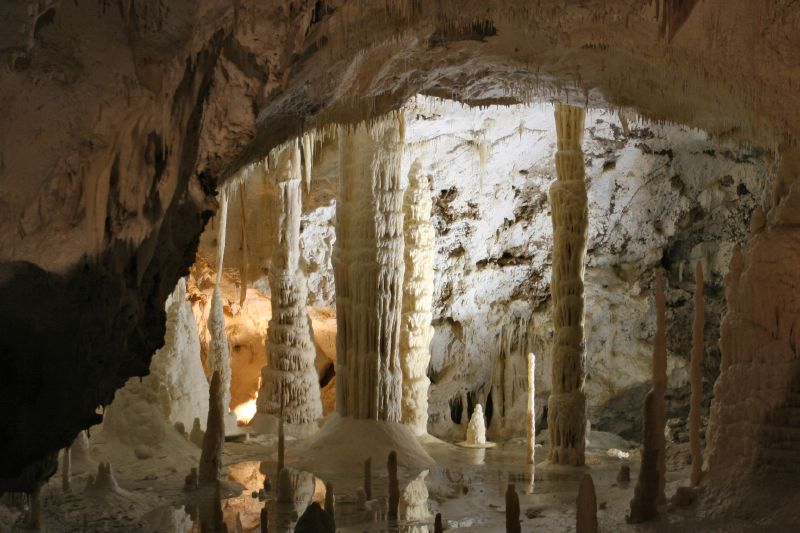
A column of stalactites and stalagmites

Key Information

The Frasassi Caves (Italian: Grotte di Frasassi) are a karst cave system in the municipality of Genga, Italy, in the province of Ancona, Marche. They are among the most famous show caves in Italy.

History

[edit]

An entrance to one of the Frasassi caves was discovered by a farmer on June 28, 1948. More entrances were found in the 1950s and 1960s by members of the Italian Mountaineering Club (Club Alpino Italiano) from the nearby towns of Jesi and Fabriano. In the 70’s more caves where discovered by a group of Ancona speleologists led by Giancarlo Cappanera on 25 September 1971,[2] are situated 7 kilometres (4 miles) south of Genga, near the civil parish of San Vittore [ce; sh; sr; tt] and the Genga-San Vittore railway station [it; hu] (Rome–Ancona railway). Rich in water, the cave system is particularly well endowed with stalactites and stalagmites.[3]

Near the entrance to the caves are two sanctuary-chapels: one is the 1029 Santuario di Santa Maria infra Saxa (Sanctuary of Holy Mary under the Rock) and the second is an 1828 Neoclassical architecture formal temple, known as Tempietto del Valadier.

Chambers

[edit]

The Frasassi cave system includes a number of named chambers, including the following:

  • Grotta delle Nottole, or "Cave of the Bats", named for the large colony of bats that lives within.[3]
  • Grotta Grande del Vento, or "Great Cave of the Wind", discovered in 1971, with approximately 13 kilometres (8.1 mi) of passageways.[3]
  • Abisso Ancona, or "Ancona Abyss", a huge space around 180 x 120 meters wide and near 200m tall.[3]
  • Sala delle Candeline, or "Room of the Candles", named for its plentiful stalagmites that resemble candles.[3]
  • Sala dell'Infinito, or "Room of the Infinite", a tall chamber with massive speleothem columns supporting the roof.[3]

Scientific experiments

[edit]

The cave has been used to conduct experiments in chronobiology. Among the cavers that have spent considerable amount of time inside the cave is the Italian sociologist Maurizio Montalbini. In 1986, he ventured into the Grotte di Frasassi beneath Italy's Apennine mountains. He survived on pills, powders, and other astronaut-like food while researchers monitored his health. His few luxuries were chocolate, honey, and plenty of tobacco, smoking nearly two packs of cigarettes a day. During his time underground, away from sunlight, Mr. Montalbini lost almost 30 pounds. He would stay awake for 50 hours at a stretch, then sleep for five. He spent his time reading and writing a novel titled "Where the Sun Sleeps." He reported enjoying his underground experience, aside from the occasional earthquakes."One cannot fight solitude, one must make a friend of it," he remarked after emerging 210 days later, although he believed it had only been 79 days.[4] He died in 2009.[5]

Penn State Research

[edit]

Penn State researchers, led by Professor Jennifer Macalady, a microbiologist, studies microbial biofilms in some of the planet's most hostile environments to understand the limits of life and how life started on Earth. Macalady, along with doctoral student Dani Buchheister, explored Italy's Frasassi cave system, sampling biofilms, referred to as "alien cave goo" due to its stringy dark nature, from underground lakes, including Lago Verde. Their research, featured in the December 2023 issue of National Geographic,[6] sought to uncover how microbes survive in extreme conditions without sunlight or oxygen, akin to early Earth. Key findings included that microbes can survive with minimal resources such as rocks and water, and that these biofilms may reflect the first metabolic processes on Earth.[7]

Sister caves

[edit]

Frasassi is partnered with several sister caves[8] around the world:

See also

[edit]

References

[edit]
[edit]
Revisions and contributorsEdit on WikipediaRead on Wikipedia
from Grokipedia
The Frasassi Caves (Italian: Grotte di Frasassi) are a large system located in the municipality of Genga, in the within Italy's region, near the Sentino River gorge. This subterranean network, formed primarily through hypogenic processes involving speleogenesis, extends over more than 40 kilometers of mainly subhorizontal passages organized into superimposed levels, featuring dramatic chambers, stalactites, stalagmites, deposits, and sulfidic waters. Discovered in 1971 after initial explorations dating back to 1948, the caves are renowned for their geological and biological significance, serving as a key site for studying active evolution, microbial ecosystems, and cycling, while also attracting over 400,000 tourists annually as of 2024 via guided paths that highlight formations like the massive Abyss Ancona chamber. Ongoing explorations, including diving projects, continue to reveal new passages. The caves' exploration began sporadically between the World Wars, but systematic efforts commenced in 1948 by the Marches Speleological Group of , leading to the discovery of the River Cave entrance on June 28 of that year by Mario Marchetti, Paolo Beer, and Carlo Pegorari. The major breakthrough occurred on September 25, 1971, when Rolando Silvestri of the same group entered the Big Cave of Wind, revealing the vast interconnected system; by December 8, 1971, links to the River Cave were confirmed by Fabriano’s .I. speleologists. In response to growing interest, the Consorzio Frasassi was established in late 1972 to manage protection and development, opening the site to public on , 1974, with an initial accessible path of about 800 meters through illuminated chambers. Geologically, the Frasassi Caves originated approximately 800,000 years ago during the Middle Pleistocene, following tectonic uplift that exposed Jurassic to karstification, with lower levels forming in the Middle and Upper Pleistocene up to approximately 200,000 years ago. The formation process involved the dissolution of by ascending sulfidic rich in (H₂S), which oxidized upon mixing with oxygenated waters, producing that enlarged passages and deposited crusts; this hypogenic mechanism, distinct from typical epigenic cave formation by , has created unique features such as rising grooves, cupolas, and relict blocks. The system's multiple superimposed levels reflect successive erosive cycles of the Sentino River, which historically flowed 200–300 meters higher, with vertical conduits connecting horizontal galleries developed along faults and fractures. Beyond their aesthetic appeal—with highlights including the 180-meter-long, 120-meter-wide, and 200-meter-high , the ethereal Hall of Candles, and crystalline lakes—the caves hold substantial scientific value as one of the world's premier examples of an active hypogenic system. Research here has advanced understanding of speleogenesis through isotopic analysis of and cosmogenic dating of sediments, while the sulfidic waters support microbial communities that cycle and influence global biogeochemical processes. Protected within a regional park, the site balances conservation with educational , offering speleological adventures and experiences to illustrate its evolutionary history from marine deposition 200 million years ago to the present subterranean wonder.

Geography and Geology

Location and Setting

The Frasassi Caves are situated in the municipality of Genga, in the , region, , within the . Their approximate coordinates are 43°24′03″N 12°57′43″E, and the entrance lies at an elevation of about 310 meters above sea level. The surrounding landscape consists of a dominated by formations, deep gorges, and rugged terrain typical of the Mount Frasassi ridge. The cave system is encompassed by the Parco Naturale Regionale di Gola della Rossa e di Frasassi, a regional natural park established to protect its unique geological and ecological features. It is in close proximity to the Sentino River, whose hydrological dynamics have shaped the local environment over millennia. As of recent surveys, the explored passages of the Frasassi Caves extend over more than 30 kilometers, forming one of Europe's most extensive networks, with a vertical depth reaching up to 400 meters. Above ground, the region features a temperate characterized by mild, wet winters and warm, dry summers. Within the caves, conditions remain stable year-round at approximately 14°C with relative near 100%.

Geological Formation

The Frasassi Caves represent a classic example of a hypogenic system, formed through speleogenesis rather than typical meteoric water dissolution. This process began in response to the tectonic uplift of the Apennines during the , around 20 million years ago, which exposed Jurassic-Cretaceous bedrock to karstification, with active cave development primarily during the Pleistocene to the present, beginning around 1.4 million years ago. The uplift, part of the compressive forming the northern Apennine fold-and-thrust belt, facilitated the migration of deep fluids necessary for hypogenic processes. The primary mechanism involves the ascent of (H₂S)-rich waters from deeper regional aquifers, which mix with oxygenated or air near the , oxidizing to form (H₂SO₄). This acid aggressively dissolves the surrounding , enlarging voids and creating characteristic hypogenic morphologies such as mazework passages, cupolas, and rising wall channels. The consists predominantly of the Formation, a fine-grained from the Upper to Lower periods (approximately 145–100 million years old), interspersed with marly layers that influence dissolution patterns; underlying units include the Calcare Massiccio Formation and overlying Scaglia Formation limestones. Dissolution rates can reach up to 85 mm per 1,000 years on walls, with crusts forming as a byproduct above the . The hydrological system connects the caves to deeper aquifers, with sulfidic waters rising along faults and mixing at sumps, while the nearby Sentino River maintains the and contributes to ongoing dissolution through seasonal fluctuations of less than 50 cm. Active sulfidic processes persist in unexplored lower levels, where H₂S oxidation—both abiotic and microbially mediated—continues to drive cave enlargement at rates of 0.9–80 μmol m⁻² s⁻¹. This ongoing activity underscores the caves' status as a living hypogenic system, with relict features like deposits evidencing multiple phases of activity over the past 2–3 million years.

History

Early Exploration

The Marche Speleological Group of was formed in 1948, marking the start of systematic surveys in the Frasassi area by local speleologists and geologists. This initiative followed sporadic pre-war investigations by natural science researchers but gained momentum in the immediate postwar period, focusing on the landscape of the Sentino Valley. A pivotal early event occurred on June 28, 1948, when group members Mario Marchetti, Paolo Beer, and Carlo Pegorari discovered the entrance to the River Cave (Grotta del Fiume), providing initial access to the underground system. Geologists involved from the outset recognized the high potential of the region, attributed to the massive limestone formations exposed in the Frasassi Gorge along the Sentino Valley, which suggested extensive subterranean development. During the 1950s and 1960s, efforts expanded through collaborations with the Italian Alpine Club (C.A.I.) cave groups from Jesi and Fabriano, involving mapping of peripheral cavities and geological assessments that hinted at connections to larger systems. For instance, in 1966, Maurizio Borioni identified a 1 km ramification within the River Cave, advancing understanding of its extent. These activities faced significant challenges, including limited equipment and techniques available in the postwar era, disruptions from recovery, and the rugged, steep terrain of the Apennine karst plateau that hindered access and prolonged surveys.

Discovery and Development

The Frasassi Caves were discovered on September 25, 1971, by members of the Gruppo Speleologico Marchigiano of the Club Alpino Italiano (CAI) , when speleologist Rolando Silvestri identified a small entrance emitting a strong draft in the Grotta Grande del Vento area near Genga, . This breakthrough followed earlier efforts by the same group, including a July 1, 1971, widening of a narrow passage known as the Strettoia del Tarlo by Armando Antonucci, Mauro Coltorti, Mauro Brecciaroli, Mario Cotichelli, Massimo Mancinelli, Giampiero Rocchetti, and Roberto Toccaceli, which revealed approximately 5 kilometers of previously unknown passages adorned with ancient animal footprints. The discovery marked a pivotal moment in Italian , transforming the site from a suspected system into one of Europe's largest known cave networks. Initial mapping progressed rapidly after the 1971 breakthrough, with speleologists exploring over 1 kilometer of passages within the first few weeks. On December 8, 1971, speleologists from the C.A.I. Fabriano group confirmed the link to the River Cave by exploring the "Fabriano Conduit," establishing the system's extent at approximately 13 kilometers. These efforts involved collaborative mapping by CAI groups from and nearby regions, establishing a foundational understanding of the cave's morphology without relying on prior superficial explorations. Development for research and public access began shortly after discovery, with the formation of the Consorzio Frasassi in late 1972 by the Genga Town Council and Province to oversee protection, utilization, and infrastructure. Between 1974 and 1979, engineering teams constructed a 223-meter artificial for safe entry, installed approximately 600 meters of elevated walkways, and fitted electric lighting systems to illuminate key passages, enabling controlled access while preserving the environment. The caves officially opened to the public on September 1, 1974, attracting 3,000 visitors on the first day and establishing the Consorzio as the primary manager in partnership with regional authorities. Ongoing surveys have continued into the , with the Deep Frasassi Project, led by speleologist Simone Villotti and supported by the Gruppo Speleologico Jesi and DAN Europe, conducting diving probes into submerged sumps such as the Swiss Lake and Nameless Lake to map previously inaccessible flooded sections. These expeditions, using sidemount rebreathers and line-laying techniques, have extended knowledge of the system's hydrological connections, contributing to over 30 kilometers of total mapped passages while emphasizing non-invasive exploration methods.

Physical Description

Major Chambers

The Frasassi Caves constitute a complex branching network centered on a main trunk that parallels the underground path of the Sentino River, featuring distinct upper dry levels and lower aquatic zones connected by tubes, large rooms, and vertical shafts. The system spans approximately 25–35 km of passages organized across six to eight superimposed horizontal levels at elevations between 200 and 500 m above , reflecting successive erosive cycles of the overlying river. Interconnections between levels and branches occur via underground rivers, water-filled sumps, and narrow, tortuous crawls, with some passages as tight as 30 cm in requiring specialized progression techniques. Among the key chambers, the Abyss stands as the largest, with a exceeding cubic meters and recognized as one of Europe's most expansive underground voids, characterized by towering walls, broken floor blocks, and an immense scale that evokes a subterranean . The Hall of Candles, also known as Sala delle Candeline, features classic passages with cupola ceilings and clusters of slender, white stalagmites rising like flickering candles from a calm subterranean lake, their surfaces encrusted with dogtooth spar crystals that mark ancient water levels. Other notable spaces include the Grotta dei Cristalli, with its passages lined in shimmering crystalline deposits, and the Sala dei Pagliai, named for its formations resembling haystacks amid broader gypsum-encrusted environments like Sala Duecento. The overall cave system encompasses a total well over 1 million cubic meters, underscoring its vast scale. Accessibility varies significantly across the network: the primary tourist route covers a 1.5 km equipped walkway through select chambers like the Abyss, suitable for general visitors with minimal physical demands. In contrast, extended sections demand technical expertise, including rope climbs up to 30 m, squeezes through narrow conduits, and in sumps like those at Swiss Lake or the Branch of the Angels, often requiring sidemount gear and hours of approach. Mapping of the caves has evolved considerably since their discovery in 1971, beginning with rudimentary hand sketches by early explorers and progressing to detailed traditional surveys using tape, compass, and clinometer. Modern techniques now incorporate 3D laser scanning and SLAM for high-precision digital models, enabling interactive representations of the intricate layout and supporting ongoing geological analysis; recent applications as of 2023 include SLAM scanning revolutionizing cave mapping.

Speleothems and Features

The speleothems in the Frasassi Caves primarily consist of calcite formations created through the precipitation of from dripping through the overlying . Stalactites form as cylindrical structures on cave ceilings, where each passing drop deposits a ring of as degasses. Stalagmites develop on the floor beneath, rising from the splash points of these drops and sometimes growing to giant proportions in large chambers like the Big Cave of Wind. Columns result when stalactites and stalagmites merge, exhibiting varied colors and shapes influenced by impurities in the seepage . Flowstones occur where sheets across surfaces, producing smooth, cascading deposits that encrust walls and floors around drop impact zones. Due to the cave system's hypogenic origins involving speleogenesis, unique morphologies appear in lower, sulfidic zones, including crusts formed by the oxidation of gas rising from . These crusts, up to several centimeters thick, support the growth of large prismatic crystals through diagenetic processes from precursors. In areas near the , replacement of leads to floor mounds and euhedral crystal formations, with thick deposits resembling glaciers up to 5 meters high and exceeding 1000 cubic meters in volume. Rimstone dams, built by or in shallow pools, further diversify the mineral landscape in these active hypogenic environments. Aesthetic highlights among these features include the Hall of Candles (Sala delle Candeline), a chamber along the tourist path where numerous thin, delicate stalagmites create a dense field resembling flickering candle flames under artificial lighting. Crystallized small lakes, formed by precipitation in shallow depressions, offer reflective surfaces that mirror surrounding stalactites and flowstones, amplifying the cave's otherworldly visual appeal in chambers like those near the entrance pathway. Calcite speleothem growth in such karst systems proceeds at average rates of 0.1 to 1 mm per year, modulated by water chemistry, including dissolved CO₂ levels that control , and environmental factors like drip interval. These deposits remain fragile, susceptible to even minor vibrations or humidity changes, yet active growth is observable in dripping areas, highlighting ongoing deposition processes. The overall diversity encompasses a wide array of and varieties, from simple draperies to complex crystalline aggregates, contributing to the caves' status as a showcase of karst .

Scientific Significance

Biological Research

The Frasassi Caves host a unique subsurface ecosystem sustained by chemoautotrophic that oxidize sulfur compounds in cave waters, a discovery emerging from initial biological explorations in the that highlighted the role of these microbes in supporting life independent of . These form the base of a in the cave's aphotic, sulfidic zones, where from deep aquifers mixes with oxygen, enabling . Key studies by researchers at Penn State University, ongoing since the mid-1980s, have focused on microbial mats in these sulfidic environments, revealing dense biofilms dominated by filamentous bacteria such as Thiothrix spp. and epsilonproteobacteria. These investigations, led by geomicrobiologist Jennifer Macalady, have identified novel sulfur-oxidizing species and elucidated niche differentiation among microbial populations, with mats exhibiting varied morphologies like undulating filaments or pendulous "snottites" in acidic pools ( 0–1). The research demonstrates how these mats drive biogeochemical cycles, including , in the cave's isolated . The cave's dark, nutrient-poor conditions foster specialized ecological niches, where microbial biofilms provide for higher trophic levels, including fungi and . Fungal communities, often relatives of species, thrive in organic-rich deposits like biovermiculations, acting as decomposers or symbionts. diversity includes troglobitic such as blind spiders (Porrhomma frasassianum) and cave beetles, alongside amphipods and isopods that graze on biofilms or host endosymbiotic , with over 20 endemic taxa documented in sulfidic habitats. This chemosynthetic ecosystem serves as an analog for potential subsurface or Europa, where similar dark, energy-limited environments might rely on geochemical reactions rather than ; for instance, microbial-mineral interactions in the caves produce detectable biosignatures like altered deposits that could inform extraterrestrial searches. Recent metagenomic surveys in the 2020s have uncovered hotspots in sumps and biofilms, identifying over 50 distinct microbial taxa, many endemic, including involved in sulfur cycling and previously unknown phylotypes in stratified lake communities. These findings highlight the caves' role in revealing evolutionary adaptations in extremophiles, with ongoing analyses linking microbial diversity to local geochemical gradients.

Geological and Chemical Studies

The Frasassi Caves have been a focal point for sulfuric acid speleogenesis research, with in-situ measurements revealing hydrogen sulfide concentrations ranging from <2 to 600 μM in groundwater, alongside sulfate (SO₄²⁻) levels that increase downstream due to oxidation processes. These observations, combined with isotopic studies of sulfur (δ³⁴S values for dissolved sulfide and sulfate around -20 to -10‰), confirm the hypogenic origin of the cave system, where ascending H₂S-rich waters react with oxygen at the water table to produce sulfuric acid that dissolves limestone. Pioneering isotopic analyses in the 1990s and 2000s, including those by Galdenzi and Maruoka (2003), demonstrated fractionations up to 10-15‰ during sulfide oxidation, supporting models of chemolithotrophic processes driving cave enlargement without surface recharge. Atmospheric studies in the Frasassi system utilize the caves as a natural for tracing ventilation and proxies, with continuous monitoring of CO₂ levels fluctuating seasonally from near-atmospheric (400 ppm) to over 4,000 ppm in poorly ventilated zones, influenced by external air exchange. (²²²Rn) concentrations have been measured via detector tubes and automated stations since the 2000s, serving as indicators of air circulation patterns and potential seismic precursors, while particles—primarily sulfates and carbonates—have been quantified to assess deposition rates on speleothems. These parameters highlight the cave's role in modeling subsurface-atmosphere interactions, with data integrated into broader studies. Chemical sampling of cave waters has documented circumneutral pH values of 6.3 to 7.4 in active sulfidic zones, with sulfate concentrations reaching 500-1,000 mg/L in springs emerging from the aquifer, reflecting ongoing H₂S oxidation and gypsum precipitation. Analysis via ion chromatography and titration methods shows these springs as key outlets for hypogenic fluids, with low oxygen (<10 μM) and conductivity of 1,500–3,500 μS/cm underscoring the reducing environment. International collaborations, such as those under the EU-funded geoeducation initiatives and the , have advanced understanding of cave evolution through joint fieldwork since the . These efforts incorporate to simulate dissolution rates, estimating corrosion at 68-119 mm/ka in turbulent flows, based on tablet experiments and . Recent studies as of 2024–2025 have examined sources and cycling, revealing gradients influencing oxidizers, and identified an air-fall layer in nearby Grotta dei Baffoni, aiding paleoenvironmental reconstruction. Instrumentation deployed since the 1980s includes portable microsensors for real-time H₂S profiling (resolution ~1 μM), spectrometry for isotopic and analysis, and hydrological sensors monitoring flow rates and water levels in streams like the Sentino River . These tools, installed in networks like that of Grotta Grande del Vento, enable long-term data collection on geochemical gradients, with upgrades in the adding automated loggers for precise .

Tourism and Management

Visitor Access and Tours

Public access to the Frasassi Caves was first granted on September 1, 1974, following the completion of infrastructure to accommodate visitors, and the site has been managed by the Consorzio Frasassi, a established by the Municipality of Genga and the . The caves operate year-round with guided tours available daily, except on closure dates including December 4 and 25, and from January 7 to 30; limited access resumes on January 1 with tours starting from 14:30. The standard guided tour follows a 1.5 km illuminated pathway, lasting 75 minutes, and passes through prominent chambers such as the vast Abyss and the delicate Hall of Candles, where slender stalagmites resemble flickering candles reflected in shallow pools. Groups of up to 50 visitors depart every 10 minutes, enabling a capacity of approximately 300 people per hour while maintaining controlled access to protect the environment. Tickets for the standard tour cost €20 for adults, with reduced rates of €14 for children aged 6-14 and free entry for those under 6; family discounts are available through combined packages, and reservations can be made online to avoid queues, especially in peak season. Visitors park at the San Vittore delle Chiuse lot, from which a free shuttle service transports them to the cave entrance, a journey of about 1 km; the site recommends arriving 15-30 minutes early for groups or reservations. For more adventurous visitors, speleological tours offer immersive experiences beyond the standard path, including the Route—a 2-hour moderate trek with climbs and narrow passages for €35—and the —a 3-hour challenging option involving slides and drifts for €45, both requiring reservations and suitable only for fit participants aged 8 and older. These tours emphasize expert guidance on safe navigation and highlight the caves' unique formations. Educational programs integrate and into the visits, with professional guides providing insights into processes and subterranean ecosystems during standard tours, supplemented by a free multilingual AudioGuide app for self-paced learning on formations and . Specialized workshops and school programs further explore these topics, drawing on the site's scientific to foster understanding among over 70,000 students annually. The Frasassi Caves attract over 300,000 visitors annually, including a record 298,000 in 2023—surpassing pre-pandemic levels of 278,810 in 2019—with over 320,000 from January to August 2024 and approximately 200,000 during summer 2025. Digital enhancements, including the 2022 launch of the iFrasassi app with virtual reality modules for remote exploration and a 3D interactive museum featuring geological simulations, have broadened accessibility and engagement for global audiences.

Conservation Measures

The Frasassi Caves are protected as part of the Parco Naturale Regionale Gola della Rossa e di Frasassi, established by Marche Regional Law No. 57 on September 2, 1997, to safeguard the area's formations, subterranean ecosystems, and , including rare species such as the and Moehringia papulosa. Key threats to the caves include lampenflora growth induced by artificial lighting, which forms green mats of algae and cyanobacteria that degrade speleothems and alter microbial habitats; buildup from visitor exhalation, with concentrations fluctuating by several hundred parts per million in response to group sizes in chambers like the Grotta Grande del Vento; and risks of due to the system's rapid subsurface water flow, potentially introducing contaminants from agricultural or urban activities in the surrounding Apennines. To address these, management strategies implemented by the Consorzio Frasassi, which has overseen the site since its public opening in 1974, include periodic treatment of lampenflora with to remove growths without long-term harm to the cave environment; strict visitor flow controls and stations to limit CO2 spikes and track air quality; and protocols to minimize impacts on through park-wide land-use restrictions. Conservation efforts integrate ongoing scientific research, such as biodiversity assessments of sulfidic zones and climate monitoring, to guide adaptive policies and protect sensitive microbial communities. In the 2020s, successful initiatives have focused on reducing artificial light exposure in less-visited areas, curbing lampenflora proliferation and preserving endemic habitats, as demonstrated by collaborative public projects that enhanced while supporting over 300,000 annual visitors.

Sister Caves

The Frasassi Caves share characteristics with in , such as sulfidic, chemoautotrophic ecosystems that rely on from rather than . These isolated underground environments, both featuring low-oxygen conditions and microbial communities driving , have fostered scientific comparisons since Movile's discovery in 1986. Comparative microbial studies between the two caves, including analysis of the sulfur-oxidizing bacterium Candidatus Thiovulum stygium, have revealed genomic and metabolic differences between cave and marine strains while highlighting their adaptations to sulfidic habitats. Shared protocols for conservation emphasize minimal disturbance to fragile populations and microbial mats. These comparisons contribute to understanding hypogenic cave formation—where dissolution shapes the landscape—and serve as analogs for detecting life in extreme extraterrestrial environments like Mars or Europa.

Comparable Karst Systems

The Frasassi Caves share hypogenic characteristics with several European systems, particularly in their development through ascending dissolution and associated sulfidic environments. in , one of Europe's largest cave systems at over 24 kilometers in length, exemplifies large-scale tourist-accessible similar to Frasassi's extensive passages and chambers, though Postojna's formations are primarily epigenic with less emphasis on active hypogenic processes. In , regional sulfidic features akin to Frasassi's are evident in the thermal caves of Acquasanta Terme, , where hypogenic speleogenesis driven by H2S-rich waters has produced active dissolution zones and microbial habitats in anticlines. Internationally, the Frasassi Caves find analogs in North American hypogenic systems formed by speleogenesis. Carlsbad Caverns in , , developed through the mixing of from underlying hydrocarbons with oxygenated , resulting in vast chambers and passages that parallel Frasassi's scale and acidity-driven morphology, though Carlsbad's process concluded millions of years ago. , also in and part of the same national park, features deep hypogenic mazes with ramiform patterns and spongework dissolution, attributed to rising from sources, mirroring Frasassi's maze-like networks but extending to greater depths over 500 meters. These comparable systems exhibit shared traits such as high microbial diversity supported by chemolithoautotrophic communities in sulfidic zones and ongoing or recent active dissolution, yet Frasassi stands out for its exceptional as a combined with persistent hypogenic activity. For instance, while Lechuguilla hosts diverse biofilms, Frasassi's shallower, ventilated passages allow direct observation of these processes without specialized equipment. Such caves contribute to cross-site research on climate change impacts on systems, including alterations in chemistry and , as seen in 2020s European studies analyzing temperature trends in alpine aquifers. These investigations, often funded by initiatives, highlight vulnerabilities like increased CO2 fluxes in hypogenic environments, providing broader context for Frasassi's role in monitoring subterranean responses. Unlike formal partnerships, these comparables have inspired shared exploration techniques, such as tracer studies for mapping hypogenic flow paths.

References

Add your contribution
Related Hubs
User Avatar
No comments yet.