Hubbry Logo
Mark SkousenMark SkousenMain
Open search
Mark Skousen
Community hub
Mark Skousen
logo
8 pages, 0 posts
0 subscribers
Be the first to start a discussion here.
Mark Skousen
Mark Skousen
from Wikipedia

Key Information

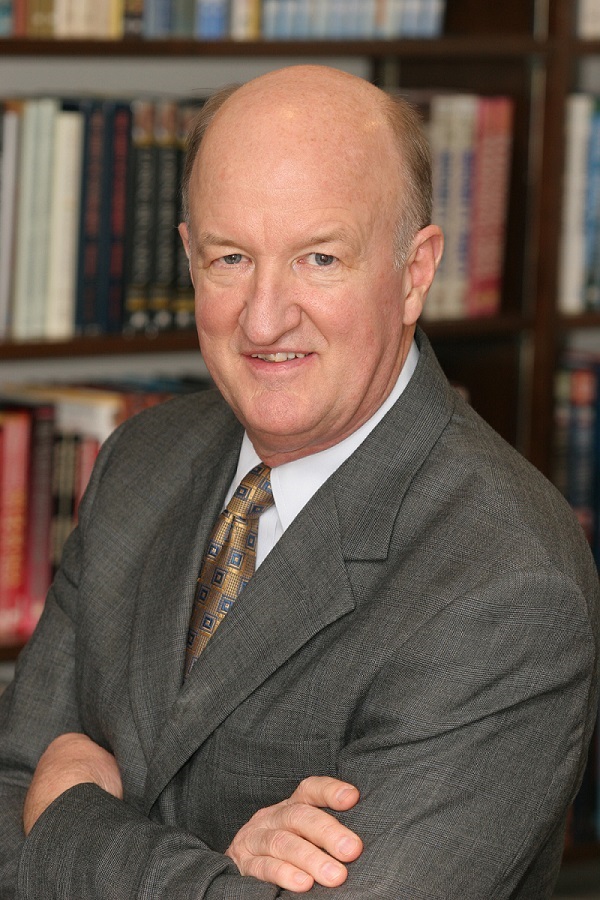
Mark Andrew Skousen (/ˈskzən/; born October 19, 1947) is an American economist and writer. He currently teaches at Chapman University,[1] where he has been a Presidential Fellow since 2014, and the Doti-Spogli chair in free enterprise at the Argyros School of Business and Economics since 2022.[2]

Early life, education and family

[edit]

Skousen was born on October 19, 1947, in San Diego, California, and grew up in Portland, Oregon. Conservative political commentator and survival strategist Joel Skousen and linguist Royal Skousen are his older brothers. He is the nephew of W. Cleon Skousen, the political conservative and activist. Mark Skousen earned his B.A. and Master's degree in economics from Brigham Young University and his PhD in economics from George Washington University in 1977.

Skousen is a member of the Church of Jesus Christ of Latter-day Saints.[3] He has five children with his wife Jo Ann.

Career

[edit]

Skousen was an economic analyst for the CIA from 1972 to 1975.[4] He later worked as a consultant for IBM and Hutchinson Technology, and other companies.[5] He was a columnist for Forbes magazine from 1997 to 2001, and has contributed articles to The Wall Street Journal as well as to various libertarian periodicals. He has been a speaker at investment conferences and [6] has lectured for think tanks.[7] From 2008 to 2010 he was a weekly contributor on CNBC's Kudlow & Company and has also appeared on C-SPAN Book TV and Fox News. Skousen has been the editor of the Forecasts & Strategies financial newsletter since 1980. He also is the editor of four trading services (Five Star Trader, Low-Priced Stock Trader, Fast Money Alert, and TNT Trader.) and publishes the Investor CAFÉ weekly electronic newsletter.

Mark Skousen, Oren Cass, Kimberly Clausing, Jason Furman, Richard Burkhauser at AEA 2025

Academia

[edit]

Skousen has lectured on economics and finance at Columbia Business School,[8][failed verification] Barnard College, Mercy College, Rollins College,[9] and Chapman University.[10] In April 2005, distance education provider Grantham University renamed its online School of Business "The Mark Skousen School of Business."[11][12] He currently teaches at Chapman University.[1] In 2014, Skousen was named the Presidential Fellow at Chapman and has been elevated to the Doti-Spogli chair in free enterprise[2] at Chapman University's Argyros School of Business and Economics in 2022.

Foundation for Economic Education

[edit]

Skousen served as president of the libertarian economic think tank The Foundation for Economic Education (FEE) from 2001 to 2002. Skousen's brief tenure as president of FEE ended on a controversial note when he resigned in late 2002 at the request of the organization's board of trustees. During his tenure at FEE, Skousen launched a non-partisan, libertarian conference, then titled "FEEFest," which premiered in Las Vegas in 2002. After Skousen left the presidency at FEE, the conference continued as "FreedomFest," first under the purview of Young America's Foundation, and later, under Skousen's own direction and ownership.[4]

Economics

[edit]

Skousen is a proponent of Gross Output (GO), an economic concept used to measure total economic activity in the production of new goods and services in an accounting period. Skousen highlighted the concept in his work, The Structure of Production in 1990,[13] and publishes his research and updates about the topic on the https://grossoutput.com/ website.

Written works

[edit]

Academic books

  • The Structure of Production (New York University Press, 1990) ISBN 0-8147-7895-X
  • Economics on Trial (Irwin McGraw Hill, 1991; 2nd edition, 1993) ISBN 1-55623-372-8
  • Dissent on Keynes, editor (Praeger Publishing, 1992) ISBN 027593778X
  • Puzzles and Paradoxes in Economics, co-authored with Kenna C. Taylor (Edward Elgar, 1997) ISBN 1840640499
  • Economic Logic (Capital Press, 2000, 2008, 2011, 2014). ISBN 1621572226
  • The Making of Modern Economics (M. E. Sharpe Publishers, 2001, 2009) ISBN 0765622270
  • The Power of Economic Thinking (Foundation for Economic Education, 2002) ISBN 1572462019
  • Vienna and Chicago: Friends or Foes? A Tale of Two Schools of Free-Market Economics (Capital Press, 2005) ISBN 0895260298
  • The Completed Autobiography by Benjamin Franklin, compiled and edited by Mark Skousen (Regnery Books, 2006) ISBN 0895260336
  • The Big Three in Economics: Adam Smith, Karl Marx and John Maynard Keynes (M. E. Sharpe, 2007) ISBN 0765616947
  • EconoPower: How a New Generation of Economists Is Transforming the World (Wiley & Sons, 2008) ISBN 0470138076
  • High Finance on a Low Budget (Bantam Books, 1981, Dearborn, 1993), co-authored with Jo Ann Skousen ISBN 079312557X
  • The Complete Guide to Financial Privacy (Simon & Schuster, 1983) ISBN 0932496113
  • The Investor's Bible: Mark Skousen's Principles of Investment (Phillips Publishing, 1992)
  • Secrets of the Great Investors, editor, audio tape series, narrated by Louis Rukeyser (Knowledge Products, 1997, 2006) ISBN 078616526X
  • The New Scrooge Investing (McGraw Hill, 2000) ISBN 9780071355001
  • Investing in One Lesson (Regnery Publishing, Inc, 2007) ISBN 1596985224
  • Maxims of Wall Street (Skousen Publishing, Inc 2011) ISBN 1596982985
  • A Viennese Waltz Down Wall Street (Laissez Faire Books, 2013) ISBN 1621290921
  • The Greatest American: Benjamin Franklin, the World’s Most Versatile Genius (Republic Book Publishers, 2025) ISBN 978-1645721000

Academic journal articles

Articles in edited volumes

References

[edit]
[edit]
Revisions and contributorsEdit on WikipediaRead on Wikipedia
from Grokipedia
Mark Andrew Skousen (born October 19, 1947) is an American economist, investment advisor, university professor, and author recognized for his contributions to Austrian economics, free-market advocacy, and macroeconomic measurement. He holds a Ph.D. in from and has taught at institutions including and , where he serves as Presidential Fellow and Doti-Spogli Endowed Chair in Free Enterprise. Skousen is the editor of the award-winning Forecasts & Strategies investment newsletter since 1980 and founder of FreedomFest, an annual conference promoting libertarian ideas and since 2007. His scholarly work emphasizes the structure of production over conventional GDP metrics; in The Structure of Production (1990), he advocated for Gross Output (GO) as a comprehensive indicator of total economic activity, including intermediate goods, which the began publishing quarterly in 2014 following his persistent promotion. This innovation highlights business spending's role in growth, contrasting with GDP's focus on final output and consumer welfare. Author of over 25 books, Skousen's The Making of Modern Economics (2001, 6th ed. 2024) traces economic thought from Adam Smith to the Austrian school, earning the Choice Book Award for Outstanding Academic Title, while Economic Logic integrates supply-side analysis into textbook economics. In 2018, Steve Forbes awarded him a "Triple Crown in Economics" for excellence in investing, authorship, and event organization via FreedomFest. Ranked among the top 20 most influential living economists, Skousen critiques mainstream Keynesian policies, favoring sound money, deregulation, and entrepreneurial incentives grounded in empirical production data.

Early Life and Education

Family Background and Upbringing

Mark Skousen was born in 1947 in , , to Leroy B. Skousen, a lifelong member of The Church of Jesus Christ of Latter-day Saints who worked as an FBI agent and attorney, and Helen Skousen, a convert to the faith and direct descendant of . The family relocated shortly thereafter to , where Skousen was raised as the third oldest of 11 children in a large household of Danish ancestry that stressed thrift, savings, and free-market economics. His older brothers included Royal Skousen, a linguist, and , a conservative political commentator and survival strategist. Portland provided an intellectually stimulating environment that nurtured Skousen's early passions for , outdoor activities, and politics within a devout Mormon family setting. In 1964, when Skousen was 17, his father succumbed to at age 46, prompting his mother to relocate the 10 surviving children to for better access to . Thereafter, his uncle , a former FBI agent, police chief, and prolific author on constitutional topics, assumed a fatherly role, offering guidance that shaped Skousen's later scholarly interests in and American principles.

Academic Training and Influences

Skousen earned a degree in from in 1971, working his way through college to support his studies. Following a two-year Mormon mission in , he obtained a degree in from the same university in 1972. He completed his formal academic training with a Ph.D. in from in 1977. At , Skousen encountered early exposure to free-market economics through faculty members, including one who had studied under and emphasized works like . This environment fostered his interest in classical liberal economic thought, bridging with broader critiques of interventionism. Skousen's intellectual development drew significantly from the Austrian school, particularly its focus on the time structure of production as articulated by and subsequent thinkers like and . He later explored syntheses between Austrian and traditions in works examining their shared free-market foundations amid theoretical rivalries. These influences informed his rejection of Keynesian paradigms in favor of production-oriented analyses, evident in his emphasis on and capital theory over management.

Professional Career

Initial Positions and Government Service

After earning his bachelor's degree in economics from in 1971, Skousen began his professional career as an economic analyst for the (CIA). He served in this role from 1972 to 1975 at the agency's headquarters in , focusing on economic intelligence analysis. Skousen's CIA position represented his entry into government service, where he applied his training in to assess international economic trends and their implications for U.S. . Specific details of his contributions remain classified, consistent with the agency's operational protocols, but the role provided foundational experience in applying economic principles to real-world policy and intelligence contexts. In 1975, Skousen departed the CIA to pursue opportunities in the , including editing the Inflation Survival Letter, marking the transition from his initial government position to financial publishing and advisory work. This early government tenure, spanning three years, distinguished his career trajectory by bridging analysis with subsequent libertarian-leaning economic advocacy.

Academic Roles and Teaching

Skousen earned his Ph.D. in from in 1977. He has held adjunct and visiting teaching positions at multiple institutions, focusing on , , and business courses. Early in his career, Skousen served as an adjunct professor of and at in . He later taught at Mercy College. From 2001 to 2002, he instructed and classes at , , and . He returned to and for additional teaching in and during the 2004–2005 academic year. At Grantham University, Skousen held the Benjamin Franklin Chair of Management, leading to the renaming of its as the Mark Skousen School of Business in 2005. Since 2014, he has been a and the Doti-Spogli Endowed Chair of Free Enterprise at the Argyros School of Business and Economics at , where he lectures on topics including . In 2019, he received Chapman's "My Favorite Professor" award for his teaching.

Organizational Involvement and Think Tanks

Skousen served as president of the , the oldest free-market in the United States, from September 2001 to November 2002. During his tenure, he focused on promoting educational programs in and individual liberty, aligning with FEE's mission to advance free enterprise principles. His leadership emphasized outreach to younger audiences through seminars and publications, though his brief term ended amid internal transitions at the organization. Skousen founded and produces FreedomFest, an annual conference described as the world's largest gathering of free minds, held since in locations such as and Palm Springs. The event, which attracts approximately 2,000 attendees including economists, policymakers, and leaders, operates independently and non-partisan, without affiliation to any political party or . It features debates, lectures, and networking on topics like , markets, and , positioning itself as a platform for persuasion over coercion in advancing libertarian ideas. Beyond leadership roles, Skousen maintains ongoing involvement with libertarian organizations by frequently contributing articles, speeches, and policy forums to think tanks such as the , where he has advocated for alternative economic metrics like Gross Output. He also supports and writes for groups including , , and the Mt. Pelerin Society, a classical liberal association founded by F.A. Hayek. These engagements reflect his commitment to supply-side and Austrian economic perspectives, often critiquing mainstream paradigms through op-eds and events hosted by these institutions.

Economic Contributions

Development of Gross Output Metric

Mark Skousen first advocated for gross output (GO) as a primary macroeconomic indicator in his book The Structure of Production, where Chapter 6 posits GO as the foundational metric for national income accounting, capturing total sales value across all production stages rather than GDP's focus on final goods and . He argued that GDP, by emphasizing consumption and net output, obscures the intermediate production processes that drive , drawing on Austrian school insights into and supply-side dynamics to elevate GO as a measure of the "make" . Skousen's framework positioned GO at approximately double GDP in scale—for instance, U.S. GO reached $31.3 trillion in Q3 compared to GDP's $17.6 trillion—highlighting business investment's outsized role, often 50% of total output. Skousen's development of GO stemmed from critiques of post-World War II accounting shifts, where GDP supplanted earlier comprehensive measures like those computed by in , which included gross output data but prioritized net aggregates for welfare analysis. In The Structure of Production, Skousen integrated historical data from the (BEA) and input-output tables, demonstrating GO's utility in revealing production bottlenecks and phases more accurately than GDP, which he contended fostered misconceptions about consumer-driven growth. His approach emphasized empirical validation through BEA's existing intermediate input statistics, repurposing them to construct a "top-line" aggregate that aligns with reporting. Through persistent advocacy, including op-eds and conferences, Skousen influenced policy adoption; the BEA began quarterly GO releases in April 2014, enabling real-time analysis that showed, for example, GO growth outpacing GDP during recoveries but signaling slowdowns earlier, as in Q4 2019. This official integration validated Skousen's thesis that GO complements GDP by quantifying B2B transactions, which constitute over half of U.S. economic activity, thus providing a fuller picture of supply-chain contributions without double-counting via value-added adjustments. Subsequent works, such as his 2017 Schumpeter Lecture, refined GO's application for policy, arguing it counters Keynesian demand-side biases by spotlighting producer activity.

Advancements in Production Theory

In The Structure of Production, published in 1990, Skousen developed a comprehensive framework for understanding through the lens of supply-side factors, emphasizing the role of and intermediate production stages over final consumption. He critiqued mainstream Keynesian models for focusing excessively on and , arguing instead that sustainable growth originates from upstream in producer goods, drawing on Austrian capital theory while extending it with empirical and diagrammatic tools. This work positioned production as a temporal, multi-stage process, where distortions in —such as artificially low interest rates—lead to malinvestment and business cycles, aligning with but refining Böhm-Bawerk's roundabouts of production. Skousen introduced a four-stage model of production to illustrate the economy's vertical : raw materials extraction, fabrication of capital , of , and final retail distribution. This model, supported by input-output data, demonstrated that transactions constitute the majority of economic activity—often over 50% of total spending—rendering GDP, which excludes intermediate outputs to avoid double-counting, an incomplete measure of productive effort. By advocating Gross Output (GO) as a complementary metric, Skousen highlighted how GO captures the full scope of production, revealing that intermediate stages drive expansion more than final demand, thus validating of markets over Keynesian demand deficiencies. To enhance pedagogical clarity, Skousen proposed new diagrams, including a macro model linking profit-and-loss statements to and a "natural" rate of interest hypothesis that equilibrates saving and across production stages without relying on intervention. These tools addressed gaps in neoclassical production functions, which often treat capital as a homogeneous aggregate, by incorporating and heterogeneous capital goods, leading to policy implications favoring tax cuts on to elongate production structures. In the 2015 revised edition, he updated the framework with post-2008 statistical evidence, showing GO's superiority in tracking recoveries driven by rather than spending. This synthesis bridged classical, Austrian, and supply-side traditions, influencing subsequent critiques of expenditure-based metrics and underscoring production's causal primacy in wealth creation.

Syntheses of Economic Schools

Mark Skousen has advocated for a synthetic approach to economic theory that emphasizes the structure of production across multiple stages, integrating classical, Austrian, and supply-side perspectives to counter the demand-focused Keynesian paradigm. In The Structure of Production (1990), he constructs a macroeconomic model inspired by François Quesnay's Tableau Économique (1758) and Eugen von Böhm-Bawerk's capital and interest theory, portraying the economy as a circular flow of goods through time-intensive production processes rather than mere aggregate spending. This framework synthesizes pre-Keynesian supply-side insights—such as Jean-Baptiste Say's law of markets—with Austrian emphasis on heterogeneous capital and intertemporal coordination, arguing that sustainable growth requires prioritizing upstream investment in capital goods over downstream consumption. Skousen's synthesis extends to reconciling free-market schools, as detailed in Vienna & Chicago, Friends or Foes?: A Tale of Two Schools of Free-Market Economics (2005), where he compares the Austrian school's methodological individualism and theory—rooted in malinvestment from monetary expansion—with the Chicago school's empirical and . While acknowledging divergences, such as Austrians' rejection of stabilization versus Chicagoans' advocacy for rule-based growth, Skousen posits the schools as allies in defending , with Austrian micro-foundations complementing Chicago's macro-policy prescriptions. He critiques both for underemphasizing production stages but suggests their integration yields a robust defense against interventionism, evidenced by shared influences from classical liberals like . Further bridging occurs in Skousen's exploration of Austrian-Keynesian overlaps, as in his 2015 article "Linking Austrian and Keynesian Economics: A Variation on a Theme," where he adapts Austrian capital theory to incorporate Keynesian concerns about and investment volatility, proposing a "stage-by-stage" multiplier that accounts for production bottlenecks rather than simplistic demand multipliers. This synthesis challenges pure 's neglect of supply constraints while retaining Austrian skepticism of fiscal stimulus, aligning with Skousen's broader promotion of Gross Output (GO) metrics—introduced in his works since 1990—to measure total economic spending, including , thus revealing business investment's outsized role (often 50% of GO versus 10-15% of GDP). Such integrations prioritize empirical validation through national accounts data, as adopted by the U.S. in 2014 for quarterly GO releases, over ideological silos.

Critiques and Philosophical Stance

Rejections of Keynesian and Mainstream Paradigms

Skousen has consistently rejected for its emphasis on management and fiscal stimulus as primary tools for achieving , arguing that such approaches distort market signals and fail to address underlying production incentives. In his 1991 book Economics on Trial: Lies, Myths, and Realities, he systematically debunks Keynesian tenets, such as the notion that deficits during recessions are self-liquidating or that consumption drives long-term growth, asserting instead that these policies crowd out private and exacerbate without resolving . He draws on empirical evidence from the 1970s in the United States, where Keynesian fine-tuning correlated with simultaneous high and , contradicting the trade-off that underpinned mainstream policy prescriptions. As editor of Dissent on Keynes: A Critical Appraisal of (1992), Skousen compiled critiques from free-market scholars, contributing a chapter titled "This Trumpet Gives an Uncertain Sound: The Free-Market Response to ," in which he faults early libertarian and Austrian economists for mounting an insufficiently unified opposition to Keynes's The General Theory (), allowing its demand-side paradigm to dominate postwar policy. The volume contends that Keynesian theory rests on fallacious assumptions, including an underestimation of savings' role in and an overreliance on static equilibrium models that neglect entrepreneurial dynamics and time structure of production. Skousen highlights how nations adopting Keynesian frameworks, such as the U.S. under successive administrations from the 1960s onward, experienced rising public debt—reaching $5.7 trillion by 1992—while export-oriented economies like and , emphasizing supply-side reforms, achieved superior growth rates averaging 4-5% annually in the same period. Skousen's critique extends to mainstream , which he views as a compromised integration of Keynesian aggregates into Walrasian general equilibrium frameworks, ignoring real-world capital heterogeneity and business cycle causes rooted in monetary expansion and malinvestment. In articles such as "Pulling Down the " (2001), he dismantles the iconic diagram for oversimplifying expenditure flows by conflating intermediate production with final output, thereby promoting consumption bias over investment-led growth; he contrasts this with his advocacy for gross output metrics that reveal spending's 50% share of U.S. economic activity, a figure obscured in GDP data influenced by Keynesian priorities. By 1997, in "Keynesianism Defeated," Skousen declared the paradigm's empirical discrediting amid the collapse of central planning and the U.S. shift toward under Reagan, where real GDP growth averaged 3.5% annually from 1983-1989 following tax cuts that prioritized supply incentives over demand stimulus. These rejections stem from Skousen's commitment to prioritizing supply-side factors, such as savings, , and sound money, over interventionist manipulation, which he argues empirically correlates with boom-bust cycles rather than stability. While mainstream sources often defend adapted Keynesianism via or new classical tweaks, Skousen maintains these are salvages of a fundamentally interventionist error, as evidenced by persistent fiscal imbalances in countries adhering to such models into the .

Emphasis on Supply-Side and Austrian Principles

Skousen has long championed , contending that productive business investment, rather than consumer demand, constitutes the primary engine of economic growth. In his 1990 book The Structure of Production, he critiques traditional GDP measures for underemphasizing intermediate production stages and B2B spending, proposing instead a focus on total output to reveal supply-side dynamics. This advocacy culminated in the U.S. adopting Gross Output (GO) as an official statistic in 2014, a development Skousen described as a "supply-side victory" that better captures the economy's intermediate inputs and activity, which exceed final consumption by roughly double in magnitude. Integrating Austrian principles, Skousen emphasizes the structure of capital and multi-stage production processes, drawing from thinkers like and Böhm-Bawerk to argue that economic cycles stem from distortions in capital allocation rather than fluctuations. He applies this framework to refute Keynesian "" notions, asserting that savings and investment fuel supply-side expansion without inherent paradoxes, as evidenced by historical data showing business spending's leading role in recoveries. In Vienna & Chicago, Friends or Foes? (2005), Skousen reconciles Austrian qualitative analysis of and with Chicago school's empirical rigor, advocating a unified free-market approach that prioritizes incentives for production over fiscal stimulus. Skousen's supply-side Austrian synthesis underscores policy implications, such as tax cuts on to elongate production structures and mitigate malinvestment, aligning with Reagan-era reforms he has praised for empirical in output growth. He critiques mainstream paradigms for ignoring these upstream factors, noting that GO data from onward empirically validates supply-side volatility as a better predictor than GDP. This stance extends to investment advice, where he applies to favor assets tied to capital-intensive sectors over consumer-driven ones.

Debates Within Libertarian Economics

Mark Skousen has actively engaged in discussions reconciling the Austrian School (often associated with ) and , two traditions central to libertarian economic thought, by highlighting their methodological and theoretical divergences while advocating for synthesis. In his 2005 book Vienna & Chicago, Friends or Foes?, Skousen analyzes differences in theory—Austrians attributing booms and busts to artificial credit expansion distorting , versus Chicagoans emphasizing excessive growth—and , where Austrians favor hard money like and Chicagoans accept regimes with steady growth rules. He posits these schools as allies against interventionism, critiquing Austrian for underemphasizing empirical quantification and Chicago empiricism for sidelining subjective value theory, proposing a unified framework incorporating both and data-driven validation. Skousen's advocacy for the gross output (GO) metric as a superior alternative to GDP has sparked among libertarians on measuring economic activity, challenging Austrian reservations about aggregates while aligning with supply-side emphases on production over consumption. Traditional Austrian critiques, as articulated by figures like , view GDP's expenditure approach as obscuring intertemporal distortions in the structure of production; Skousen counters that GO—total sales value including —reveals business-to-business transactions omitted in GDP, providing a more comprehensive gauge of supply-side dynamics without endorsing Keynesian demand stimuli. Adopted by the U.S. in 2014 for quarterly data starting from 1947, GO has gained traction, with supporters like praising its policy implications for highlighting intermediate spending's role in growth, though some purist libertarians question reliance on government statistics. Through FreedomFest, which Skousen co-founded in , he has facilitated debates on foundational libertarian economic figures and principles, fostering contention between constitutional minarchists and anarcho-capitalists on market institutions. Panels have addressed topics like the gold standard's viability versus , with Skousen defending a 100% reserve system against critiques of rigidity, arguing it prevents fractional reserve-induced cycles without prohibiting competing currencies. In a 2017 Soho Forum debate moderated by Gene Epstein, Skousen argued against the resolution that is unequivocally the father of free-market , contending Smith's mercantilist leanings and dilute his libertarian credentials compared to later synthesizers like . These forums underscore Skousen's role in promoting empirical and historical scrutiny over ideological purity in libertarian economics.

Published Works

Major Theoretical Books

The Structure of Production (1990), Skousen's foundational theoretical work, develops a comprehensive model of the production process integrating stages from raw materials to final consumer goods, drawing on Austrian capital theory and critiquing neoclassical aggregates like GDP for overlooking intermediate production. The book advocates measuring economic activity through gross output (GO) to capture supply-side dynamics, arguing that GDP understates business spending and distorts analysis by focusing solely on final demand. Revised editions in 2007 and 2015 incorporate empirical validations, including the U.S. Bureau of Economic Analysis's adoption of GO statistics in 2014 as evidence supporting Skousen's framework over Keynesian demand-side metrics. Economic Logic (first edition 1997; sixth edition 2024), presented as a unified , employs a profit-and-loss as the starting point for , linking firm-level decisions to macroeconomic aggregates in a manner consistent with Austrian principles of subjective value and . It rejects the Keynesian aggregate supply-demand (AS-AD) model, proposing instead a cross-of-gold emphasizing time of production and capital flows to explain , , and growth without relying on fiscal multipliers. The text integrates financial markets and monetary theory, using historical data such as post-2008 recovery patterns to illustrate how interventions prolong malinvestments, and includes comparative output measures to highlight GO's superiority in tracking total economic activity. The Making of Modern Economics (2001; third edition 2015), a historical analysis of economic thought, traces paradigms from and classical economists through Marx, Keynes, and modern schools, contending that Keynesianism's dominance since the 1940s has led to policy errors like chronic deficits and inflation by prioritizing consumption over production incentives. Skousen privileges supply-side and Austrian contributions, using biographical details and primary texts to argue for a "stage-by-stage" production model rooted in , which posits supply creates its own demand via . The work critiques empirical claims of Keynesian successes, such as post-WWII growth, by attributing them to deferred supply adjustments rather than , and warns against neoclassical equilibrium models for ignoring real-world entrepreneurial discovery.

Investment and Practical Guides

Skousen has produced several publications focused on practical strategies, emphasizing thrift, , and supply-side economic principles applied to . These works advocate for cost-conscious approaches, such as minimizing fees and leveraging tax advantages, while critiquing speculative excesses in mainstream investing. In Scrooge Investing: The Bargain Hunter's Guide to More Than 120 Things You Can Do to Cut the Cost of Investing (1995, ), Skousen outlines strategies for thrifty investing, including selecting no-commission brokers, deferring taxes on gains, and accessing free research services to enhance net returns without high-risk maneuvers. The updated edition, The New Scrooge Investing: The Bargain Hunter's Guide to Thrifty Investments, Super Discounts, Special Privileges, and Other Money-Saving Tips (2000, McGraw-Hill), expands to over 150 tips, incorporating post-1990s market developments like online trading platforms and emphasizing long-term value over short-term speculation. Investing in One Lesson (2007, ) distills Skousen's four decades of market experience into a foundational guide, covering techniques from and contrarian strategies to , while warning against over-reliance on efficient market theory and promoting disciplined, principle-based decision-making informed by Austrian economics. The book integrates personal anecdotes, such as early successes in futures, to illustrate practical applications like portfolio diversification and timing entries based on economic cycles rather than random walks. Earlier works like High Finance on a Low Budget (1981, , co-authored with others) provide accessible advice for novice investors on building wealth through low-cost mutual funds, , and , reflecting Skousen's advocacy for supply-side incentives in personal . Complementing these , Skousen's Forecasts & Strategies, launched in 1980, delivers monthly recommendations on equities, bonds, and alternative assets, with a track record of outperforming benchmarks through emphasis on undervalued sectors and macroeconomic forecasting.

Public Activities and Advocacy

Founding and Leading FreedomFest

Mark Skousen founded FreedomFest in 2002 as an annual gathering designed to bring together advocates of individual liberty, free markets, and to discuss and debate foundational ideas. As producer, Skousen has shaped the event's structure, selecting themes, speakers, and formats to foster among economists, philosophers, entrepreneurs, and policymakers in a non-partisan setting. The emphasizes celebrating "great books, great ideas, and great thinkers," with sessions spanning , , , and . From 2007 onward, FreedomFest was held annually in until 2022, establishing it as a flagship libertarian-leaning event that included keynote addresses, panel debates, and specialized forums. In 2011, under Skousen's oversight, the program expanded to incorporate the Anthem Libertarian Film Festival, directed by his wife Jo Ann Skousen, which screens films promoting themes of freedom and individual rights. Notable speakers have included and , reflecting Skousen's focus on high-profile voices aligned with supply-side and Austrian economic perspectives. The event paused in 2020 due to COVID-19 restrictions but resumed in 2021 in Rapid City, South Dakota, near Mount Rushmore, symbolizing American foundational principles. Subsequent editions shifted locations, including Rapid City again in 2023 and Palm Springs, California, in 2025 under the theme "Oasis of Liberty," adapting to logistical challenges while maintaining Skousen's vision of an "oasis" for free minds. Skousen's leadership has sustained the conference's emphasis on persuasion over coercion, drawing from classical liberal traditions to counter prevailing interventionist paradigms.

Market Forecasting and Newsletters

Skousen launched Forecasts & Strategies in 1980 as his flagship monthly newsletter, providing subscribers with economic analysis, and recommendations, and strategies informed by Austrian and economics. The publication emphasizes theory, trends, and forecasts to guide decisions, often favoring supply-side growth sectors while advocating low-risk, high-gain approaches such as diversified portfolios like the "Flying Five," which Skousen claims has outperformed the broader market over a decade. Notable forecasts attributed to Skousen in the newsletter include the success of policies in 1981, a warning of the 1987 market crash, the fall of the in 1989, a doubling of the in 1995, and the Dow Jones Industrial Average reaching 10,000 by 2009. In addition to Forecasts & Strategies, Skousen edits several specialized trading services, including Fast Money Alert, which recommends stocks and options using proprietary technical indicators for short-term gains; Five Star Trader, focusing on "smart beta" stocks selected via five core principles and claiming compounded returns of 15.2 times initial investment; TNT Trader, identifying repeatable stock patterns from 45 years of historical data; Low-Priced Stock Trader, targeting undervalued small-cap stocks with potential for doubling or tripling; and High-Income Alert, seeking high-yield dividend investments in undervalued sectors like banking and biotech. These services integrate Skousen's market forecasting with tactical trading, often highlighting volatility opportunities and pattern-based entries derived from long-term data analysis. Skousen also publishes Skousen Investor CAFÉ, a free weekly electronic delivering commentary on current market conditions, economic developments, and political influences on investments, serving as an accessible extension of his broader outlook. Across these publications, Skousen's approach prioritizes empirical over mainstream Keynesian models, frequently updating forecasts on commodities like and silver based on supply-demand dynamics and shifts.

Recent Campaigns for Free Trade

In March 2025, Mark Skousen launched the MEGA (Make Economics Great Again) campaign, a nationwide initiative aimed at promoting free enterprise, sound money, and as foundational to American prosperity. The effort sought to counter perceived economic misinformation by emphasizing unrestricted international exchange, arguing that tariffs and distort markets and harm consumers. Skousen planned to advance these goals through speaking engagements, opinion pieces, and direct outreach to policymakers, business leaders, and the public. Central to the MEGA campaign was Skousen's critique of then-President Trump's tariff policies, which he described as risking , retaliatory barriers, and slowed growth. In early 2025 statements, Skousen highlighted how unilateral tariffs on imports from , , and had already provoked international responses, potentially escalating into broader conflicts. By April 2025, he warned investors that inconsistent tariff impositions could stifle economic expansion and strain global partnerships, positioning as essential for fostering higher-wage jobs and consumer benefits. These arguments drew on empirical observations of prior disruptions, such as reduced gross output growth linked to escalating barriers. Skousen's advocacy extended to public commentary, including features in international outlets like The European, where he analyzed the inflationary pressures from protectionist measures. Through his newsletters and events tied to FreedomFest, he reiterated that aligns with classical liberal principles, enabling innovation and efficiency without government intervention. The campaign gained traction amid 2025 economic debates, with Skousen urging a shift from political slogans like MAGA toward evidence-based prioritizing open markets.

Reception, Controversies, and Impact

Awards and Professional Recognition

In 2018, Mark Skousen received the inaugural Triple Crown in Economics from , recognizing his contributions to economic theory through innovations like the structure of production model, to via works such as The Making of Modern Economics, and to education as founder of FreedomFest and developer of teaching tools like Economic Frictions. The award, presented at the FreedomFest conference in on July 11, highlighted Skousen's integration of Austrian and supply-side principles in practical scholarship. At , where Skousen holds the Doti-Spogli Endowed Chair of Free Enterprise, he was honored with the My Favorite Professor Award in 2019, the institution's highest faculty appreciation distinction, based on student nominations for his engaging lectures and mentorship in and . Skousen's investment newsletter Forecasts & Strategies, edited since 1980, has garnered professional acclaim for its long-term performance, including consistent outperformance of benchmarks through recommendations in equities, commodities, and alternative assets, though specific competitive awards for the publication remain undocumented in primary records. In 2024, Skousen was titled America's Economist at a Las Vegas event, a designation celebrating his public advocacy for free-market policies, later marked by a one-year statement in March 2025 critiquing protectionist trade measures. This recognition underscores his role in bridging academic economics with investor guidance and libertarian outreach.

Criticisms from Opposing Ideologies

Mainstream economists have faulted Skousen's advocacy of Austrian economics for exhibiting a pronounced ideological bias against neoclassical principles. In a 1990 review of his book Economics on Trial: Lies, Myths, and Realities, an economist at the Federal Reserve Bank of Minneapolis described Skousen's critique of textbook orthodoxy as overly iconoclastic, noting his assertion that "the core of neoclassical economics is unsound" would prompt disagreement from nearly every paragraph among Fed staff. The reviewer highlighted Skousen's "insulting tone to the gatekeepers of economic orthodoxy" as likely to alienate academics, despite occasional alignments on topics like banking stability, and questioned his preference for attacking existing texts over authoring a comprehensive alternative. Heterodox economists aligned with Georgist traditions have similarly contested Skousen's historical narratives for privileging Austrian and libertarian perspectives at the expense of alternative schools. Mason Gaffney, a proponent of land value taxation, critiqued the edition of The Making of Modern Economics for exaggerating the school's centrality, such as attributing the "discovery" of exclusively to without evidencing its novelty beyond classical precedents. Gaffney identified inconsistencies in Skousen's methodology, such as endorsing ' a priori deductions while decrying David Ricardo's for similar deductive traits, and accused Skousen of misrepresenting Ricardo's contributions to rent theory and capital valuation. Additionally, Gaffney objected to Skousen's curt dismissal of Henry George's single-tax proposals as "too extreme," arguing it lacked substantive and devolved into ridicule, including a personal allegation of conspiratorial thinking on Gaffney's part. Critics from these perspectives have portrayed Skousen's emphasis on free-market absolutism and rejection of interventionist frameworks as narrowing economic discourse into a binary of libertarian virtue versus statist error, sidelining institutional and distributional analyses favored in progressive or reformist ideologies. Such views align with broader mainstream reservations about Austrian economics' resistance to empirical aggregation and policy activism, though specific rebukes of Skousen remain tied to his interpretive histories rather than quantitative refutations.

Influence on Policy and Education

Skousen has held teaching positions in and at institutions including , , Mercy College, and . At , where he serves as Presidential Fellow since 2014, he was appointed the Doti-Spogli Endowed Chair in Free Enterprise in 2022 and developed a course examining foundational texts on free enterprise and their societal impacts. In 2005, Grantham University renamed its School of Business the Mark Skousen School of Business and appointed him the Chair of . He authored the Economic Logic, first published in 2000 with subsequent editions in 2014 and 2016, emphasizing market-oriented principles. Skousen's educational efforts extend to public forums; he founded FreedomFest in 2007 as an annual conference promoting libertarian and free-market ideas across disciplines, attracting policymakers, academics, and advocates until its iteration concluded in 2019. recognized Skousen's contributions to economic , alongside and , as a "triple crown in economics" in 2018. In policy spheres, Skousen served as president of the , the oldest free-market , from 2001 to 2002. His advocacy for influenced the U.S. to begin publishing Gross Output—a comprehensive measure of total economic activity—quarterly alongside GDP starting in 2014, marking the first new national macroeconomic statistic since the 1940s and derived from concepts in his 1990 book The Structure of Production. In March 2025, he launched the MEGA campaign to promote and classical financial principles amid concerns over . Skousen has consistently supported policies through affiliations with think tanks such as the .

References

Add your contribution
Related Hubs
User Avatar
No comments yet.