



Community hub
Recent from talks
Contribute something
Nothing was collected or created yet.
Gillette
View on Wikipedia
 | |
| Product type | Safety razors, shaving supplies, personal care products |
|---|---|
| Owner | Procter & Gamble |
| Country | United States |
| Introduced | September 28, 1901[1] |
| Markets | Worldwide |
| Previous owners | The Gillette Company |
| Tagline | "The Best a Man Can Get" (1989–2019, 2023–present) "The Best Men Can Be" (2019–2023) |
| Website | gillette |

Gillette is an American brand of safety razors and other personal care products including shaving supplies, owned by the multi-national corporation Procter & Gamble (P&G). Based in Boston, Massachusetts, United States, it was owned by The Gillette Company, a supplier of products under various brands until that company merged into P&G in 2005. The Gillette Company was founded by King C. Gillette in 1901 as a safety razor manufacturer.[2]
Under the leadership of Colman M. Mockler Jr. as CEO from 1975 to 1991,[3] the company was the target of multiple takeover attempts from Ronald Perelman[4] and Coniston Partners.[3] In January 2005, Procter & Gamble announced plans to merge with the Gillette Company.[5]
The Gillette Company's assets were incorporated into a P&G unit known internally as "Global Gillette". In July 2007, Global Gillette was dissolved and incorporated into Procter & Gamble's other two main divisions, Procter & Gamble Beauty and Procter & Gamble Household Care.[6] Gillette's brands and products were divided between the two accordingly. The Gillette R&D center in Boston, Massachusetts, and the Gillette South Boston Manufacturing Center (known as "Gillette World Shaving Headquarters"), still exist as functional working locations under the Procter & Gamble-owned Gillette brand name.[7] Gillette's subsidiaries Braun and Oral-B, among others, have also been retained by P&G.
History
[edit]Inception and early years
[edit]


.jpg)
The Gillette company and brand originate from the late 19th century when salesman and inventor King Camp Gillette came up with the idea of a safety razor that used disposable blades. Safety razors at the time were essentially short pieces of a straight razor clamped to a holder. The blade had to be stropped before each shave and after a time needed to be honed by a cutler.[8] Gillette's invention was inspired by his mentor at Crown Cork & Seal Company, William Painter, who had invented the Crown cork. Painter encouraged Gillette to come up with something that, like the Crown cork, could be thrown away once used.[9][10]
While Gillette came up with the idea in 1895, developing the concept into a working model and drawings that could be submitted to the Patent Office took six years. Gillette had trouble finding anyone capable of developing a method to manufacture blades from thin sheet steel, but finally found William Emery Nickerson, an MIT graduate with a degree in chemistry. Gillette and other members of the project founded The American Safety Razor Company on September 28, 1901. The company had issues getting funding until Gillette's old friend John Joyce invested the necessary amount for the company to begin manufacturing.[11][9][10] Production began slowly in 1903, but the following year Nickerson succeeded in building a new blade grinding machine to relieve bottlenecked production. During its first year of operation, the company had sold 51 razors and 168 blades, but the second year saw sales rise to 90,884 razors and 123,648 blades. The company was renamed to the Gillette Safety Razor Company in 1904 and it quickly began to expand outside the United States. In 1905 the company opened a sales office in London and a blade manufacturing plant in Paris, and by 1906 Gillette had a blade plant in Canada, a sales operation in Mexico, and a European distribution network that sold in many nations, including Russia.[9][12]
First World War and the 1920s
[edit]Due to its premium pricing strategy, the Gillette Safety Razor Company's razor and blade unit sales grew at a modest pace from 1908 to 1916. Disposable razor blades still were not a true mass-market product, and barbershops and self-shaving with a straight razor were still popular methods of grooming. Among the general U.S. population, a two-day stubble was not uncommon. This changed once the United States declared war on the Central Powers in 1917; military regulations required every soldier to provide their own shaving kit, and Gillette's compact kit with disposable blades outsold competitors whose razors required stropping. Gillette marketed their razor by designing a military-only case decorated with U.S. Army and Navy insignia and in 1917 the company sold 1.1 million razors.[13]

In 1918, the U.S. military began issuing Gillette shaving kits to every U.S. serviceman. Gillette's sales rose to 3.5 million razors and 32 million blades. As a consequence, millions of servicemen got accustomed to daily shaving using Gillette's razor. After the war, Gillette utilized this in their domestic marketing and used advertising to reinforce the habit acquired during the war.[13]
Gillette's original razor patent was due to expire in November 1921 and to stay ahead of an upcoming competition, the company introduced the New Improved Gillette Safety Razor in spring 1921 and switched to the razor and blades pricing structure the company is known for today. While the New Improved razor was sold for $5 (equivalent to $88 in 2024) – the selling price of the previous razor – the original razor was renamed to the Old Type and sold in inexpensive packaging as "Brownies" for $1 (equivalent to $18 in 2024). While some Old Type models were still sold in various kinds of packaging for an average price of $3.50, the Brownie razors made a Gillette much more affordable for the average person and expanded the company's blade market significantly. From 1917 to 1925, Gillette's unit sales increased tenfold. The company also expanded its overseas operations right after the war by opening a manufacturing plant in Slough, near London, to build New Improved razors, and setting up dozens of offices and subsidiaries in Europe and other parts of the world.[15]
Gillette experienced a setback at the end of the 1920s as its competitor AutoStrop sued for patent infringement. The case was settled out of court with Gillette agreeing to buy out AutoStrop for 310,000 non-voting shares. However, before the deal went through, it was revealed in an audit that Gillette had been overstating its sales and profits by $12 million over a five-year period and giving bonuses to its executives based on these numbers. AutoStrop still agreed to the buyout but instead demanded a large amount of preferred stock with voting rights. The merger was announced on October 16, 1930, and gave AutoStrop's owner Henry Gaisman controlling interest in Gillette.[16]
1930s and the Second World War
[edit]
The Great Depression weakened Gillette's position in the market significantly. The company had fallen behind its competitors in blade manufacturing technology in the 1920s and had let quality control slip while over-stretching its production equipment in order to hurry a new Kroman razor and stainless steel blade[17] to market in 1930. In 1932, Gillette apologized for the reduction in blade quality, withdrew the Kroman blade, and introduced the Blue Blade (initially called the Blue Super Blade) as its replacement.[18] Other Gillette introductions during the Depression years were the Brushless Shaving Cream and an electric shaver that was soon discontinued due to modest sales.[19]
In 1938 Gillette introduced the Thin Blade, which was cheaper and about half the weight of the Blue Blade, even though it cost almost as much to manufacture. The Thin Blade became more popular than the Blue Blade for several years during the Second World War due to high demand of low-cost products and the shortage of carbon steel.[20] Beginning in 1939, Gillette began investing significant amounts on advertising in sports events after its advertising in the World Series increased sales more than double the company had expected.[21] It eventually sponsored a radio program, the Gillette Cavalcade of Sports, which would move to television as well as that medium expanded in the late 1940s.[22] While the Cavalcade aired many of the notable sporting events of the time (the Kentucky Derby, college football bowl games, and baseball, amongst others) it became most famous for its professional boxing broadcasts.
Though competition hit Gillette hard in the domestic market during the Great Depression, overseas operations helped keep the company afloat. In 1935 more than half of Gillette's earnings came from foreign operations and in 1938 – the worst of the Depression years for Gillette, with a mere 18 percent market share – nearly all of the company's $2.9 million earnings came from outside the United States. AutoStrop's Brazilian factory allowed Gillette to start expanding into the Latin America. In England the Gillette and AutoStrop operations were combined under the Gillette name, where the company built a new blade manufacturing plant in London. In 1937, Gillette's Berlin factory produced 40 percent of Germany's 900 million blades and retained a 65 to 75 percent share of the German blade market.[23]
The Second World War reduced Gillette's blade production both domestically and internationally. As a result of the war, many markets were closed off, German and Japanese forces expropriated the company's plants and property, and Gillette's plants in Boston and London were partially converted for weapons production. In 1942, the War Production Board ordered Gillette to dedicate its entire razor production and most blade production to the U.S. military. By the end of the war, servicemen had been issued 12.5 million razors and 1.5 billion blades. Gillette also assisted the U.S. Army in military intelligence by producing copies of German razor blades for secret agents venturing behind German lines so that their identities wouldn't be compromised by their shaving equipment. The company also manufactured razors that concealed money and escape maps in their handles, and magnetic double-edge blades that prisoners of war could use as a compass.[24]
Recovery from the war and diversification
[edit]During the post-war years, Gillette began to quickly ramp up production by modernizing its major manufacturing plants in the United States and England, expanding the capacity of several foreign plants, and re-opening plants closed during the war. The company opened a new plant in Switzerland and began manufacturing blades in Mexico City. Sales rose to $50 million in 1946 and in 1947 Gillette sold a billion blades. By 1950, Gillette's share of the U.S. blade market had climbed to 50 percent.[25] During the 1950s, the company updated and in some cases moved some of its older European factories: the Paris factory, for example, was moved to Annecy.[26]
_(30521266125).jpg)
In 1947 Gillette introduced the Gillette Super Speed razor and along with it the Speed-pak blade dispenser the company had developed during the war. The dispenser allowed the blade to be slid out of the dispenser into the razor without danger of touching the sharp edge. It also had a compartment for holding used blades.[27][28]
In 1948 Gillette bought the home permanent kit manufacturer The Toni Company[29] and later expanded into other feminine products such as shampoos and hair sprays. In 1955 the company bought the ballpoint pen manufacturer Paper Mate[27][30] and in 1960 they introduced Right Guard aerosol deodorant. Gillette bought the disposable hospital supplies manufacturer Sterilon Corporation in 1962.[31]
Television advertising played a big part in Gillette's post-war growth in the United States. The company began TV advertising in 1944 and in 1950 it spent $6 million to acquire exclusive sponsorship rights to the World Series for six years. By the mid-1950s, 85 percent of Gillette's advertising budget was used for television advertising. The company also advertised the Toni product line by sponsoring the TV show Arthur Godfrey and His Friends and the 1958 Miss America contest and its winner.[32][33]
Although Gillette's immediate priority after the war was satisfying U.S. demand and later diversifying its domestic business, the company pursued expansion in foreign markets that showed potential for growth, such as Latin America and Asia. However, the Cold War restricted Gillette's operations in many parts of the world and closed entire markets the company would have otherwise entered in Russia, China, Eastern Europe, Near East, Cuba, and parts of Asia. More and more countries demanded local ownership for foreign enterprise in exchange for continued operation or entry into their markets. Outside the U.S. and European markets, Gillette spent time and money building manufacturing facilities and distribution networks in anticipation that the markets would eventually be opened up and nationalistic restrictions lifted. Some of Gillette's joint ventures included a 40 percent Gillette 60 percent Malaysian mini-plant operation that began production in 1970, and an Iranian manufacturing plant with 51 percent government ownership. The Iran plant was one of Gillette's largest and most modern factories until the Iranian Revolution of 1979 when Ayatollah Khomeini rose into power and American businesses were targeted as enemies of the new government, forcing Gillette to abandon the operation and withdraw from the country.[34]
Super Blue and the Wilkinson shock
[edit]In 1960, Gillette introduced the Super Blue blade, the company's first coated blade, and the first significantly improved razor blade since the Blue Blade of the 1930s. The new blade was coated with silicone and in Gillette's laboratory testing produced much more comfortable and close shaves by reducing the blade's adhesion to whiskers. Super Blue was a success and sold more than the Blue Blade and Thin Blade combined. By the end of 1961, Gillette's double edge blade market share had risen to 90 percent and the company held a total razor blade market share of 70 percent.[35]
In 1962, roughly two years after the introduction of the Super Blue blade, Wilkinson Sword introduced a coated razor blade made from stainless steel. According to users, the blade stayed sharp about three times longer than the best carbon steel blades – including Gillette's. Wilkinson's introduction took Gillette by surprise and the company struggled to respond as its smaller rivals, Schick and the American Safety Razor Company, came out with their own stainless steel blade. However, during the development of the silicon coating for the Super Blue blade, Gillette had also discovered the method of producing coated stainless steel blades that Wilkinson Sword was using and managed to patent it before Wilkinson did. The English company ended up having to pay royalties to Gillette for the stainless steel blades it brought to market.[36]
Gillette hesitated in bringing its own stainless steel blades to market as Super Blue had been a huge success and replacing it with a longer-lasting blade would have reduced profits. The company had originally planned to enjoy high profits from the Super Blue while developing a better stainless steel alloy. Gillette eventually brought the Gillette Stainless blade to market in August 1963, about a year after Wilkinson's stainless blades. As a result of the affair, Gillette's share of the double-edge blade market dropped from 90 percent to about 70 percent.[36]
Two years after the introduction of the Gillette Stainless blades, the company brought out the Super Stainless blades – known in Europe as Super Silver – that were made from an improved steel alloy. Gillette also introduced the Techmatic, a new type of razor that used a continuous spool of stainless blade housed in a plastic cartridge.[37][38]
The success of the coated Super Blue blades marked the start of a period when chemistry became as important as metallurgy in Gillette's blade manufacturing. The Super Blue's coating was a result of teamwork between the Gillette's British and American scientists.[39] As a result of the Wilkinson ordeal, Gillette's then-chairman Carl Gilbert increased the company's spending on research and development facilities in the U.S., championed the building of a research facility in Rockville, Maryland, and encouraged further expansion of R&D activities in England.[40]
Trac II: The move to cartridge razors
[edit]
.jpg)
The development of Gillette's first twin-blade razor began in early 1964 in the company's Reading laboratories in England when a new employee, Norman C. Welsh, experimented with tandem blades and discovered what he called the "hysteresis effect"; a blade pulling the whisker out of the hair follicle before cutting it, and enabling a second blade to cut the whisker even shorter before it retracted back into the follicle. For six years afterwards, Welsh and his colleagues worked on a means of utilizing the hysteresis effect, almost exclusively concentrating on what would later be known as the Atra twin-blade system. The Atra razor featured two blades set in a plastic cartridge with edges that faced each other. Using the razor required the user to move it in an up-and-down scrubbing motion, and whiskers were cut on both the up and down strokes. Another twin-blade system with blades set in tandem, codenamed "Rex", also existed, but it had too many technical problems and was behind Atra in development.[41]
In consumer tests, the Atra razor had outperformed existing razor systems, but Gillette's marketing executives feared the razor would meet resistance among shavers due to the unfamiliar scrubbing motion required to use it. Even though the Atra project was so far along in mid-1970 that packaging and production machinery was nearly ready for a full market introduction, Gillette decided to start a development drive to finish Rex instead as it did not require learning a new way to shave. The project succeeded, Atra was abandoned, and Gillette announced the first twin-blade razor – now renamed to Trac II – in the fall of 1971. The Trac II captured the premium shaving market and came out in time to counter Wilkinson Sword's Bonded Blade system that utilized single-blade cartridges.[42]
The challenge of disposables
[edit]In 1974, the French Société Bic introduced the world's first disposable razor. The razor was first brought to the market in Greece, where it sold well, after which it was introduced to Italy and many other European countries. Gillette hurried to develop their own disposable before Bic could bring their razor to the United States. Gillette designed a single-blade razor similar to Bic's but soon abandoned the concept in favor of a razor that was essentially a Trac II cartridge molded into a blue plastic handle. Gillette introduced this disposable as the Good News in 1976, about a year before Bic's razor reached the United States, and managed to establish market leadership once Bic and other competitors came to market. Good News was released under various names in Europe and was equally and sometimes even more successful than Bic's razor. Gillette quickly brought its razor to markets Bic hadn't yet reached, such as Latin America where the razor was known as Prestobarba.[43]
In Latin America, Gillette used a so-called cannibalization strategy by selling the razor in several market segments: along with the heavily advertised Prestobarba, the razor was also sold under different names – such as Permasharp II in Mexico and Probak II in Brazil – and sold for at least 10 to 15 percent less. The less expensive variants were differentiated from the blue Prestobarba by manufacturing them from yellow plastic with handle less ergonomically comfortable, and in addition, they were not advertised or eventually had negative marketing[44] aimed at promoting the sale of the most profitable products in Gillette's razors line. The strategy was successful and later market arrivals were unable to gain a major foothold. Once the approach proved to be a successful one, Gillette's subsidiaries in Russia, Poland, and multiple Asian and Near Eastern markets began utilizing the same strategy.[45]
While Gillette managed to retain market leadership against Bic and other competitors, the popularity of disposable razors, their higher production cost compared to cartridges, and price competition eroded the company's profits. Gillette had at first hoped that disposables would take no more than 10 percent of the total razor and blades market, but by 1980, disposables accounted for more than 27 percent of the world shaving market in terms of unit sales, and 22 percent of total revenue.[46][47] John W. Symons began steering Gillette into a different direction after becoming the director of Gillette's European Sales Group in 1979. Despite Gillette's strong sales and a large share of the European razor and blades market – 70 percent, which was higher than in the United States – cash flow was declining. In Symons's view, the issue was Gillette's attempt to compete with Bic in the disposables market, which was eating into the sales of its more profitable cartridge razors. Symons reduced the marketing budget of disposables in Europe and hired the advertising agency BBDO's London branch to create an ad campaign to make Gillette's blade and razor systems – such as Contour – more desirable in the eyes of men. The new marketing strategy, combined with cutting costs and centralizing production increased profits. In 1985, Gillette's profits in the European market were $96 million, while two years previously they were $77 million.[48]

In 1980, Gillette introduced Atra – known in Europe as Contour – a twin-blade razor with a pivoting head. The razor became a best-seller in the United States during its first year and eventually became a market leader in Europe.[49]
Acquisitions and takeover attempts
[edit]In 1984, Gillette agreed to acquire Oral-B Laboratories from dental care company Cooper Laboratories for $188.5 million in cash.[50] Revlon Group's Ronald Perelman offered to purchase 86.1 percent of Gillette for $3.8 billion in 1986, valuing the company at $4.1 billion.[51] Gillette also bought back Revlon's stake in the company for $558 million.[52] Revlon made two additional unsolicited requests to purchase Gillette for $4.66 billion and $5.4 billion in June and August 1987, respectively, both of which were rejected by Gillette's board of directors.[53][54][55]
In 1988, Coniston Partners acquired approximately 6 percent of Gillette.[56] Hoping to acquire four directors' seats and pressure Gillette to sell, Coniston forced a proxy vote in April. The companies filed suits against one another, resulting in a settlement in August. Gillette repurchased approximately 16 million shares for $720 million and Coniston agreed not to purchase many Gillette shares, participate in proxy contests, or otherwise seek control of the company for three years.[57][58]
In 1989, Warren Buffett's Berkshire Hathaway purchased $600 million worth of Gillette convertible preferred shares. Buffett filled a vacant seat on the company's board and agreed not to sell his stake "except in a change of control or if insurance regulators force a sale of the stock in the event Gillette's financial condition falters", reducing the chances of a takeover.[59] During late 1989 and early 1990, Gillette launched the new product Sensor with a $175 million marketing campaign in 19 countries in North America and Western Europe.[60][61]
Early to mid-1990s
[edit]In 1990, Gillette attempted to purchase Wilkinson Sword's U.S. and non-European operations. The Department of Justice prevented the sale of Wilkinson's U.S. assets to prevent a significant reduction in competition by eliminating one of the top four blade suppliers when Gillette already controlled approximately half of the nation's razor market.[62][63] Gillette launched the Series line of men's grooming products, including scented shaving gels, deodorants, and skin-care items, in 1992.[64][65] The company's SensorExcel launched in Europe and Canada in 1993,[66] followed by the United Kingdom and United States in 1994.[67] In 1996, Gillette launched several new products for women and teenage boys, including the SensorExcel for Women, a moisturizer, a shaving gel, and a body spray.[68]
Beginning of the Razor Wars
[edit]The company launched the new shaving system Gillette Mach3 in 1998, challenging the twin-blade system which dominated the market by introducing a third blade. Gillette promoted the product, which took five years to develop and was protected by 35 patents, with a $300 million marketing campaign.[69][70] The Mach3 and replacement cartridges cost 35 percent more than the SensorExcel razor.[71] By 1999, Gillette was worth US$43 billion, and the brand value of Gillette was estimated to be worth US$16 billion. This equated to 37% of the company's value.[72] In 2000, Gillette's board fired CEO Michael Hawley; he was replaced by former Nabisco CEO James M. Kilts in early 2001.[73][74] In 2003, Schick-Wilkinson Sword introduced the Quattro, a four-blade shaving system, increasing the company's market share to 17 percent. Gillette claimed the Quattro infringed on the Mach3 patents.[75] Gillette's efforts were unsuccessful, but the company maintained approximately two-thirds of the global wet-razor market as of mid-2005.[76]
Procter & Gamble acquisition to present
[edit]In 2005, Procter & Gamble announced plans to acquire Gillette for more than $50 billion, which would position P&G as the world's largest consumer products company.[77] The deal was approved by the Federal Trade Commission.[78][79] Gillette introduced the world's first 5-blade razor, called the Fusion, during 2005–2006, marking the company's first launch after the P&G acquisition.[80] By 2010, the Fusion was the world's highest selling blade and razor brand, reaching $1 billion in annual sales faster than any prior P&G product.[81] Gillette's Fusion ProSeries skincare line, launched in 2010, included a thermal facial scrub, a face wash, a lotion, and a moisturizer with sunscreen.[82][83] The Gillette Fusion ProGlide Styler for facial hair grooming was introduced in 2012, with André 3000, Gael García Bernal, and Adrien Brody serving as brand ambassadors.[84][85]
In 2015, the company launched a subscription service called Gillette Shave Club[note 1] and later filed a lawsuit against Dollar Shave Club for patent infringement.[88][89] The Dollar Shave Club lawsuit was criticized for revealing flaws in Gillette's own patents[90] and as a perceived attempt to drive away an upstart competitor; the lawsuit was dropped two months later after Dollar Shave Club filed a countersuit.[91]
In 2019, the company partnered with TerraCycle to create a U.S. recycling program for blades, razors, and packaging for any brand.[92] In 2020, Gillette announced a commitment to reduce the use of virgin (unrecycled) plastics by 50 percent by 2030 and maintain zero waste to landfill status across all plants.[93]
Product history
[edit] | This section needs additional citations for verification. (February 2017) |
Double-edged safety razors
[edit]
The first safety razor using the new disposable blade went on sale in 1903.[7] Gillette maintained a limited range of models of this new type razor until 1921 when the original Gillette patent expired.[2] In anticipation of the event, Gillette introduced a redesigned razor and offered it at a variety of prices in different cases and finishes, including the long-running "aristocrat". Gillette continued to sell the original razor but instead of pricing it at $5, it was priced at $1, making a Gillette razor truly affordable to every man regardless of economic class. In 1932 the Gillette Blue Blade, so-named because it was dipped in blue lacquer, was introduced. It became one of the most recognizable blades in the world. In 1934 the "twist to open" (TTO) design was instituted, which featured butterfly-like doors that made blade changing much easier than it had been, wherein the razor head had to be detached from the handle.
Razor handles continued to advance to allow consumers to achieve a closer shave. In 1947, the new (TTO) model, the "Super Speed", was introduced. This was updated in 1955, with different versions being produced to shave more closely – the degree of closeness being marked by the color of the handle tip.
In 1955, the first adjustable razor was produced. This allowed for an adjustment of the blade to increase the closeness of the shave. The model, in various versions, remained in production until 1988.[94]
.jpg)
The Super Speed razor was again redesigned in 1966 and given a black resin coated metal handle. It remained in production until 1988. A companion model the, "Knack", with a longer plastic handle, was produced from 1966 to 1975. In Europe, the Knack was sold as "Slim Twist" and "G2000" from 1978 to 1988, a later version known as "G1000" was made in England and available until 1998. A modern version of the Tech, with a plastic thin handle, is still produced and sold in several countries under the names 7 O'clock, Gillette, Nacet, Minora, Rubie, and Economica.
Discontinued products
[edit]- Techmatic was a single blade razor introduced in the mid-1960s. It featured a disposable cartridge with a razor band which was advanced by means of a lever. This exposed an unused portion of the band and was the equivalent of five blades. This product line also included the Adjustable Techmatic.
- Trac II was the world's first two-blade razor, debuting in 1971.[95] Gillette claimed that the second blade cut the number of strokes required and reduced facial irritation. This product line also included the Trac II Plus.
- Atra (known as the Contour, Slalom, Vector in some markets) was introduced in 1977[2] and was the first razor to feature a pivoting head, which Gillette claimed made it easier for men to shave their necks. This product line also included the Atra Plus, which featured a lubricating strip, dubbed Lubra-Soft.
- Good News! was the first disposable, double-blade razor, released in 1976.[96][97] Varieties included the "Original", the "Good News! Plus", and the "Good News! Pivot Plus".
- Custom Plus was a series of disposable razors that came in many varieties: the "Fixed Disposable razor", the "Pivot Disposable razor", the "Custom Plus 3 Sensitive Disposable", and the "Custom Plus 3 Soothing Disposable". Fusion Power Phenom was released in February 2008. It had a blue and silver color scheme.[98] Other discontinued variants include the Fusion Power Gamer.
- Body was a 3 blade razor in care of the man's body introduced in 2014. However, the Gillette Body was discontinued in 2018.
Current products
[edit]- Gillette Sensor debuted in 1990,[99] and was designed by Dieter Rams.[100] It was the first razor to have spring-loaded blades. Gillette claimed the blades receded into the cartridge head, when they make contact with skin, helping to prevent cuts and allowing for a closer shave.[101] This product line also includes the Sensor Excel,[102] the Sensor 3, and the Sensor 3 Cool.[103][104]
- Blue II is a line of disposable razors, rebranding the old brand Good News!. In Latin America, it was marketed as the Prestobarba. Another product in the line is the Blue 3, a line of three-blade disposable razors, cheaper than Sensor 3.
- Mach3 – the first three-blade razor, introduced in 1998,[105] which Gillette claims reduces irritation and requires fewer strokes. In 2016,[106] P&G upgraded the Gillette Mach3 razor: This product comes in disposable, sensitive and "turbo" variants as well.[107][108]
- Venus is a division of razors for women created in 2000. Products include Venus Divine, Venus Vibrance, Venus Embrace, Venus Breeze, Venus Spa Breeze and Venus ProSkin Moisture Rich.
- Gillette Fusion is a five-bladed razor released in 2006. The Fusion has five blades on the front and a single sixth blade on the rear for precision trimming.[109][110] Its marketing campaign was fronted by the sports stars Roger Federer, Thierry Henry, and Tiger Woods.[111][112] Razors in this product line include Fusion Power, Fusion ProGlide Shield, Fusion ProGlide, Fusion ProGlide Power,[113] and Fusion ProGlide with FlexBall Technology.[98][114] The ProGlide FlexBall has a handle that allows the razor cartridge to pivot.[115]
- Gillette All-Purpose Styler, released in 2012, is a waterproof beard trimmer that can cut four different lengths.[116]
- Treo is the first razor designed for caregivers to shave seniors and people with disabilities, was introduced in 2017.[117] The product was named one of the best inventions of 2018 by Time,[118] and later exhibited at the Consumer Electronics Show (CES) in 2020.[119][120]
- SkinGuard is a razor designed for people with sensitive skin, introduced during 2018–2019.[121]
- In 2019, the company launched the first heated razor, mimicking a hot towel shave.[122] The prototype was showcased at CES and later named one of the best inventions of 2019 by Time.[123] The heated razor received mixed reviews, with reviewers, including professional barbers, describing the design as flawed and the $200 price tag as overpriced.[124][125]
- King C. Gillette Beard Care Line came out in May 2020 named for the company's founder and offers beard care products including a Complete Men's Beard Kit, a double-sided safety razor, shave gel, beard and face wash, balm and oil.[126]
- Planet KIND Skincare Line launched in February 2021 as a new sustainable shaving and skincare brand, featuring a razor, shave cream, moisturizer and face wash. The razor is constructed from 60 percent recycled plastic and refills are designed with five blades that can each be used for up to a month. Planet KIND partnered with recycling company TerraCycle to design a program through which you can recycle the razor and blades.[127]
-
 Gillette Sensor Excel
 -
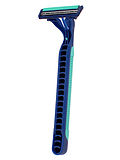 Gillette Blue II razor, circa 2007
 -
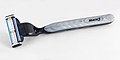 Gillette Mach3 razor, circa 2015
 -
 Gillette Fusion ProGlide Power


Criticism and controversy
[edit] |
In 2005, an injunction sought by rival Wilkinson Sword was granted by the Connecticut District Court which determined that Gillette's product claims were both "unsubstantiated and inaccurate" and that the product demonstrations in Gillette's advertising were "greatly exaggerated" and "literally false". While advertising in the United States had to be rewritten, the court's ruling does not apply in other countries.[128]
Gillette was fined by Autorité de la concurrence in France in 2016 for price fixing on personal hygiene products.[129]
In January 2019, Gillette began a new marketing campaign, "The Best Men Can Be", to mark the 30th anniversary of the "Best a Man Can Get" slogan. The campaign was introduced with a long-form commercial entitled "We Believe", and aimed to promote positive values among men – condemning acts of bullying, sexism, sexual assault, and toxic masculinity. While the campaign received praise for its acknowledgement of current social movements and for promoting positive values of masculinity, it also faced a negative response – including from right-wing critics[130] – being called left-wing propaganda, accusatory towards its customers, and misandrist and there were calls for boycotts of Gillette.[131][132][133][134][135]
Marketing
[edit]
Gillette first introduced its long-time slogan, "The Best a Man Can Get", during a commercial first aired during Super Bowl XXIII in 1989.[134] In 2024, singer Tom Grennan sang the song for a UK advert, and released it as a single.
The company has sponsored Major League Baseball (MLB),[136] the 2010 Gillette Fusion ProGlide 500, and the Olympic Games,[137][138] and has naming rights to Gillette Stadium in Foxborough, Massachusetts, home venue for the National Football League's New England Patriots and Major League Soccer's New England Revolution.[139][140] Athletes such as Roger Federer,[141] Tiger Woods,[142] Shoaib Malik,[143] Derek Jeter,[144] Thierry Henry,[145] Kenan Sofuoğlu,[146] Park Ji-sung,[147] Rahul Dravid,[148] Raheem Sterling,[149] Karl-Anthony Towns,[150] and Michael Clarke have been sponsored by the company,[151] as well as video gaming personality Dr Disrespect.[152]
In November 2009, Gillette became the subject of a proposed boycott in Ireland due to its endorsement by French soccer player Thierry Henry; his undetected handball foul during a FIFA World Cup qualifying match contributed to a game-winning goal by France, eliminating Ireland from contention.[153] The following month, expanding upon the controversy, media outlets observed a "curse" associated with top athletes who endorse Gillette, also citing Tiger Woods (who became the subject of an infidelity scandal in late 2009), and Roger Federer losing in an upset to Nikolay Davydenko during the 2009 ATP World Tour Finals.[154]
Since its opening in 2002, Gillette has held naming rights to Gillette Stadium in nearby Foxborough, home of the New England Patriots of the National Football League and the New England Revolution of Major League Soccer. The original agreement lasted through 2017; in 2010, P&G negotiated a 15-year extension, lasting through 2031.[155]
Since the 1990s, the company has used a marketing list to send a free sample of a Gillette razor in promotional packages to men in celebration of their 18th birthday. The campaign has occasionally resulted in the samples accidentally being sent to recipients outside of the demographic, such as a 50-year-old woman.[156][157]
In 2019, Gillette and Twitch partnered to form the esports group Gillette Gaming Alliance, as well as the Bits for Blades campaign which gave Twitch Bits (the site's digital currency) to those who purchased Gillette products online. The 2019 team had eleven streamers, each representing a different country,[158] and the 2020 team had five streamers including DrLupo.[159][160] During 2020–2021, Gillette enlisted NFL players Saquon Barkley, Ashtyn Davis, Jalen Hurts, Cole Kmet, and Tua Tagovailoa as brand ambassadors.[161][162]
Gillette became the jersey sponsor of the New England Revolution in 2025.[163]
In science
[edit]In laser research and development, Gillette razor blades are used as a non-standard measurement as a rough estimate of a particular laser beam's penetrative ability; a "four-Gillette laser", for example, can burn through four blades.[164]
In music
[edit]A Gillette razorblade was used as a tool to achieve a certain sound by the English rock band The Kinks. Kinks member Dave Davies became "really bored with this guitar sound – or lack of an interesting sound" so he purchased "a little green amplifier ...an Elpico" from a radio spares shop in Muswell Hill,[165] and "twiddled around with it", including "taking the wires going to the speaker and putting a jack plug on there and plugging it straight into my AC30" (a larger amplifier), but did not get the sound he wanted until he got frustrated and "got a single-sided Gillette razorblade and cut round the cone [from the center to the edge] ... so it was all shredded but still on there, still intact. I played and I thought it was amazing."[166] The sound was replicated in the studio by having the Elpico plugged into the Vox AC30. It was this sound, courtesy of a Gillette razor blade that became a mainstay on many of The Kinks early recordings, including "You Really Got Me" and "All Day and All of the Night".[167]
Operations in Canada
[edit]In late 1988, Gillette announced plans to eliminate manufacturing operations in Montreal and Toronto. The Canadian unit's executive offices remained in Montreal, with administrative, distribution, marketing, and sales operations continuing in both cities. Approximately 600 employees in Canada were laid off as part of the global restructuring,[168] which followed a $720 million share repurchase and sought to "rationalize worldwide production".[169] As of 2005, Gillette was not producing products in Canada and employed approximately 200 people in Edmonton, Mississauga, and Montreal.[170]
Notes
[edit]References
[edit]- ^ Srinivasan, R. (2014). Case Studies in Marketing: The Indian Context. PHI Learning Pvt. Ltd. ISBN 978-8120349964. Archived from the original on September 2, 2021. Retrieved October 17, 2020.
- ^ a b c "Gillette in His Early Days the Inventor of the Razor and the Company He Build Survived Many Close Shaves with Financial Ruin. But His Fame Never Translated into a Personal Fortune". money.cnn.com. April 1, 2003. Archived from the original on November 25, 2020. Retrieved October 23, 2019.
- ^ a b Fowler, Glenn (January 26, 1991). "Colman M. Mockler Jr. Dies at 61, Gillette's Top Executive Since 70's". The New York Times. ISSN 0362-4331. Archived from the original on September 4, 2020. Retrieved September 18, 2019.
- ^ "Gillette chairman dies of heart attack". UPI. Archived from the original on August 9, 2020. Retrieved September 18, 2019.
- ^ "Procter & Gamble Acquires Gillette". www.cbsnews.com. January 28, 2005. Archived from the original on August 3, 2020. Retrieved September 18, 2019.
- ^ "P&G 2007 Annual Report" (PDF). Procter & Gamble. August 23, 2007. pp. 32–33. Retrieved November 10, 2023.
The businesses that previously comprised the Gillette GBU will now be included within the Beauty and Household Care GBUs.
- ^ a b "Gillette history". gillette.com. Archived from the original on August 4, 2019. Retrieved August 22, 2014.
- ^ McKibben 1998, p. 5.
- ^ a b c McKibben 1998, pp. 7–8.
- ^ a b Gillette 1918.
- ^ "Gillette Blade". National History of American History. Smithsonian Institution. Archived from the original on October 29, 2019. Retrieved October 29, 2019.
- ^ McDonough, John; Egolf, Karen (June 18, 2015). The Advertising Age Encyclopedia of Advertising. Routledge. ISBN 9781135949068 – via Google Books.
- ^ a b McKibben 1998, pp. 18–20.
- ^ "Gillette U.S. Service Razor Set". National Museum of American History. Archived from the original on November 11, 2020. Retrieved October 27, 2019.
- ^ McKibben 1998, pp. 20–21.
- ^ McKibben 1998, pp. 29–30.
- ^ Adams 1978, p. 141.
- ^ McKibben 1998, pp. 29–33.
- ^ McKibben 1998, p. 34.
- ^ McKibben 1998, p. 35.
- ^ McKibben 1998, pp. 36–39.
- ^ Cross, Mary (2002). A Century of American Icons: 100 Products and Slogans from the 20th-Century Consumer Culture. Greenwood Press. pp. 101–02. ISBN 978-0313314810. Retrieved September 4, 2020.
- ^ McKibben 1998, pp. 34–35.
- ^ McKibben 1998, pp. 39–40.
- ^ McKibben 1998, pp. 40–45.
- ^ McKibben 1998, p. 61.
- ^ a b McKibben 1998, pp. 44–45.
- ^ Waits 2014, p. 466.
- ^ McKibben 1998, The legend of the "Which twin has the Toni?" advert between pages 52 and 53.
- ^ "A Permanent Contribution When Gillette bought a hot startup in an effort to diversify, it got something even better: the entrepreneur behind the product". money.cnn.com. April 1, 2003. Archived from the original on July 2, 2009. Retrieved August 3, 2020.
- ^ McKibben 1998, pp. 54–55.
- ^ McKibben 1998, pp. 49–52.
- ^ "Gillette Co. | AdAge Encyclopedia of Advertising – Advertising Age". May 20, 2015. Archived from the original on May 20, 2015.
- ^ McKibben 1998, pp. 61–66.
- ^ McKibben 1998, pp. 53–54.
- ^ a b McKibben 1998, pp. 56–58.
- ^ McKibben 1998, p. 58.
- ^ Waits 2014, p. 468.
- ^ McKibben 1998, p. 53.
- ^ McKibben 1998, p. 59.
- ^ McKibben 1998, pp. 67–68.
- ^ McKibben 1998, pp. 67–69.
- ^ McKibben 1998, pp. 97–98.
- ^ Vitor Belfort e Lutadores UFC: Vai Amarelar - Advertising where the Probak II product from Gillette's low-cost disposable razors line is treated with negative marketing in order to promote the Prestobarba brand, a product sold at a higher price by Gillette.
- ^ McKibben 1998, pp. 336–37.
- ^ McKibben 1998, pp. 98–99.
- ^ Gillette and the men's wet-shaving market Archived 2020-08-09 at the Wayback Machine, p. 2
- ^ McKibben 1998, pp. 114–17.
- ^ McKibben 1998, p. 96.
- ^ "Gillette Will Buy Cooper's Oral-B". The New York Times. April 5, 1984. Archived from the original on February 15, 2018. Retrieved February 9, 2021.
- ^ Cole, Robert J. (November 15, 1986). "Gillette Soars $10 as Wall Street Expects Fight with Revlon". The New York Times. Archived from the original on February 3, 2018. Retrieved February 9, 2021.
- ^ Belkin, Lisa (November 25, 1986). "Gillette Deals Ends Revlon Bid". The New York Times. Archived from the original on June 16, 2019. Retrieved February 9, 2021.
- ^ Ziegler, Baart (June 19, 1987). "Gillette Rejects Revlon Bid". The New York Times. Archived from the original on September 2, 2021. Retrieved February 9, 2021.
- ^ Jahn, George (August 24, 1987). "Gillette Rejects Third Takeover Bid By Revlon". Associated Press. Retrieved February 9, 2021.
- ^ Cowan, Alison Leigh (August 18, 1987). "Revlon Asks to Bid For Gillette". The New York Times. Archived from the original on November 5, 2017. Retrieved February 9, 2021.
- ^ Cole, Robert J. (February 12, 1988). "Battle Begins For Control Of Gillette". The New York Times. Archived from the original on January 30, 2018. Retrieved February 9, 2021.
- ^ Kennedy, Dana (August 2, 1988). "Gillette and Coniston Reach Settlement Over Proxy Fight". The Washington Post. Archived from the original on September 2, 2021. Retrieved February 9, 2021.
- ^ Cowan, Alison Leigh (August 2, 1988). "Gillette and Coniston Drop Suits". The New York Times. Archived from the original on May 25, 2015. Retrieved February 9, 2021.
- ^ Cowan, Alison Leigh (July 21, 1989). "Gillette Sells 11% Stake To Buffett". The New York Times. Archived from the original on December 19, 2017. Retrieved February 9, 2021.
- ^ Ramirez, Anthony (October 4, 1989). "Gillette Challenge to the Disposables". The New York Times. Archived from the original on August 7, 2020. Retrieved February 9, 2021.
- ^ Ramirez, Anthony (February 25, 1990). "A Radical New Style for Stodgy Old Gillette". The New York Times. Archived from the original on September 4, 2015. Retrieved February 9, 2021.
- ^ Rowley, James (January 10, 1990). "Justice Plans Antitrust Lawsuit to Halt Gillette-Wilkinson Deal". The Washington Post. Archived from the original on August 27, 2017. Retrieved February 11, 2021.
- ^ Labaton, Stephen (March 27, 1990). "Gillette In Accord on Antitrust Suit". The New York Times. Archived from the original on May 25, 2015. Retrieved February 11, 2021.
- ^ "Company News; Gillette Displays New Line Of Male Skin-Care Products". The New York Times. Associated Press. September 23, 1992. Archived from the original on May 26, 2015. Retrieved February 11, 2021.
- ^ "Gillette Bets Cool Cash on Upscale Toiletry Launch". Chicago Tribune. September 21, 1992. Archived from the original on September 2, 2021. Retrieved February 11, 2021 – via Bloomberg Business News.
- ^ Vainblat, Galina (July 6, 1993). "Gillette aims new razor at carving market share Analysts question need for product". The Baltimore Sun. Archived from the original on June 22, 2021. Retrieved February 11, 2021.
- ^ "New Shaving System: Gillette Co. has launched..." Los Angeles Times. October 14, 1994. Archived from the original on September 2, 2021. Retrieved February 11, 2021.
- ^ Shoebridge, Neil (October 7, 1996). "Gillette takes a gamble on women and teenage boys". Australian Financial Review. Archived from the original on September 2, 2021. Retrieved February 11, 2021.
- ^ Canedy, Dana (April 15, 1998). "Gillette Unveils Its Mach3 Razor as Stock Backs Off". The New York Times. Archived from the original on May 27, 2015. Retrieved February 11, 2021.
- ^ "Gillette spends $750 million to make Mach3 Huge covert operation for new production line of three-blade razor". The Baltimore Sun. August 17, 1998. Archived from the original on June 21, 2021. Retrieved February 24, 2021.
- ^ "Gillette sets Mach3 launch". CNN Money. April 14, 1998. Archived from the original on July 27, 2019. Retrieved February 11, 2021.
- ^ Jane Pavitt (2000). Brand New. ISBN 069107061X[page needed]
- ^ Herper, Matthew (October 20, 2000). "Focus On The Forbes 500s: Gillette Fires CEO". Forbes. Archived from the original on September 2, 2021. Retrieved February 24, 2021.
- ^ "Gillette taps Nabisco CEO". CNN Money. January 22, 2001. Archived from the original on February 25, 2021. Retrieved February 24, 2021.
- ^ Teather, David (August 14, 2003). "It's Mach3 versus Quattro as Gillette crosses swords with Schick". The Guardian. Archived from the original on August 26, 2021. Retrieved February 24, 2021.
- ^ "It's a cut-throat market". Marketing Week. June 23, 2005. Archived from the original on August 26, 2021. Retrieved February 24, 2021.
- ^ "P&G Agrees to Buy Gillette In a $54 Billion Stock Deal". The Wall Street Journal. January 30, 2005. Archived from the original on April 11, 2021. Retrieved March 5, 2021.
- ^ "P&G Cleared For Gillette Buy". Forbes. September 30, 2005. Archived from the original on September 2, 2021. Retrieved March 5, 2021.
- ^ "FTC Consent Order Remedies Likely Anticompetitive Effects of Procter & Gambles Acquisition of Gillette". Federal Trade Commission. September 30, 2005. Archived from the original on February 12, 2021. Retrieved March 6, 2021.
- ^ "Gillette unveils 5-bladed razor". CNN Money. CNN. September 14, 2005. Archived from the original on February 27, 2021. Retrieved March 5, 2021.
- ^ Wohl, Jessica (May 13, 2010). "Art of Shaving says new Gillette blade sales solid". Reuters. Archived from the original on January 6, 2017. Retrieved March 4, 2021.
- ^ Evans, Matthew W. (March 9, 2010). "Gillette Launching Men's Fusion ProSeries". Women's Wear Daily. Archived from the original on November 24, 2020. Retrieved March 4, 2021.
- ^ Baker, Rosie (February 12, 2010). "P&G launches Gillette Fusion ProGlide Series". Marketing Week. Archived from the original on December 1, 2020. Retrieved March 4, 2021.
- ^ Martin, Peter (February 14, 2021). "The New Shaver to Consider Using Today". Esquire. Archived from the original on January 19, 2021. Retrieved March 4, 2021.
- ^ "Gillette taps Benjamin, Brody and Bernal for ProGlide Styler ads". Los Angeles Times. January 23, 2012. Archived from the original on February 25, 2016. Retrieved March 4, 2021.
- ^ Green, Dennis (May 9, 2017). "Gillette just made an unprecedented change to be more like its competitors". Business Insider. Archived from the original on September 18, 2018. Retrieved March 4, 2021.
- ^ Thomas, Lauren (May 9, 2017). "Gillette one ups Dollar Shave Club with on-demand razor ordering service where you text to order". CNBC. Archived from the original on January 25, 2021. Retrieved March 4, 2021.
- ^ "Gillette files patent lawsuit against Dollar Shave Club". The Denver Post. December 17, 2015. Archived from the original on April 30, 2017. Retrieved March 4, 2021.
- ^ Harwell, Drew (December 18, 2015). "Gillette's lawsuit could tilt the battle for America's beards". The Washington Post. Archived from the original on December 19, 2015. Retrieved March 4, 2021.
- ^ Spiegel, David (December 18, 2015). "The nick in Gillette suit against upstart Dollar Shave Club". CNBC. Archived from the original on September 18, 2020. Retrieved March 6, 2021.
- ^ Milosavljević, Marija. "How Gillette's Ad Helped Dollar Shave Club". W3 Labs. Archived from the original on January 20, 2021. Retrieved March 6, 2021.
- ^ Peters, Adele (March 15, 2019). "You can now send Gillette your old razors to have them recycled". Fast Company. Archived from the original on April 10, 2021. Retrieved March 4, 2021.
- ^ Anderson, Deonna (October 27, 2020). "Gillette plans to shave use of virgin (unrecycled) plastics by 50% by 2030". GreenBiz. Archived from the original on February 12, 2021. Retrieved March 4, 2021.
- ^ "Vintage Gillette Adjustable Double Edge Razors". GilletteAdjustable.com. Archived from the original on December 24, 2017. Retrieved March 12, 2017.
- ^ Tiffany, Kaitlyn. "The absurd quest to make the "best" razor". Vox. Archived from the original on October 31, 2020. Retrieved September 18, 2019.
- ^ Cutler, Rodney (September 11, 2007). "The Grooming Awards Hall of Fame: Gillette Good News". Esquire. Archived from the original on February 24, 2021. Retrieved January 7, 2021.
- ^ Tobias, Andrew (July 12, 1976). "Gillette's New Ploy: Throwing Away the Razors to Sell the Blades". New York. 9 (28). New York Media, LLC: 55. ISSN 0028-7369. Archived from the original on September 2, 2021. Retrieved January 7, 2021.
- ^ a b "Gillette Unveils Newest Members of Its Gillette Young Guns Lineup" (Press release). Gillette. February 11, 2008. Archived from the original on September 7, 2012. Retrieved February 15, 2008.
- ^ "Manufacturing can thrive but struggles for respect". Reuters. December 14, 2011. Archived from the original on August 9, 2020. Retrieved September 18, 2019.
- ^ "Dieter Rams designed one of Gillette's most successful razors". arun.is/blog/gillette. August 12, 2019. Retrieved March 22, 2024.
- ^ "Gillette Ups the Razor Ante. Again". Boston.com. April 29, 2014. Archived from the original on January 28, 2021. Retrieved January 7, 2021.
- ^ Shoebridge, Neil (October 23, 1995). "Gillette's better-blade plan has profits rising smoothly". Australian Financial Review. Archived from the original on January 29, 2021. Retrieved January 7, 2021.
- ^ Selwood, Daniel (February 20, 2018). "Gillette counters falling sales with packaging overhaul". The Grocer. Archived from the original on January 29, 2021. Retrieved January 20, 2021.
- ^ Utroske, Deanna (March 27, 2018). "P&G launches 5 new Gillette razors to keep pace with men's grooming preferences". Cosmetics Design. Archived from the original on October 29, 2020. Retrieved January 20, 2021.
- ^ Tiffany, Kaitlyn (December 11, 2018). "The absurd quest to make the "best" razor". Vox. Archived from the original on October 31, 2020. Retrieved September 18, 2019.
- ^ Brunsman, Barrett. "P&G upgrades Gillette razor for first time in nearly a decade". Cincinnati Business Courier. Archived from the original on July 26, 2016. Retrieved September 18, 2019.
- ^ Day, Eliza (May 9, 2020). "10 Best Razors for Men Who Like a Close Shave". The Trend Spotter. Archived from the original on December 31, 2020. Retrieved January 7, 2021.
- ^ Koeppel, Dan; Redman, Justin (December 21, 2020). "The Best Men's Razors (for Any Face)". The New York Times. Archived from the original on January 4, 2021. Retrieved January 7, 2021.
- ^ Null, Christopher (October 23, 2007). "Gillette Fusion Power Phantom". Wired. Archived from the original on January 29, 2021. Retrieved January 21, 2021.
- ^ "Gillette Fusion Power Phantom". Thrillist. February 16, 2007. Archived from the original on January 29, 2021. Retrieved January 21, 2021.
- ^ "Gillette Ups the Razor Ante. Again". Boston.com. April 29, 2014. Archived from the original on January 28, 2021. Retrieved January 7, 2021.
- ^ Gilbert, Sarah (July 15, 2016). "Did Gillette's Fusion ad doom Tiger Woods?". AOL. Archived from the original on January 28, 2021. Retrieved January 21, 2021.
- ^ Byron, Ellen (February 12, 2010). "P&G Razor Launches in Recession's Shadow". The Wall Street Journal. Archived from the original on January 28, 2021. Retrieved January 21, 2021.
- ^ Eisen, Sara (May 1, 2014). "Gillette hopes for a swivel in sales from new razor". CNBC. Archived from the original on November 25, 2020. Retrieved October 23, 2019.
- ^ "Gillette's New Razor Is Everything That's Wrong With American Innovation". Intelligencer. April 18, 2014. Archived from the original on November 12, 2020. Retrieved October 23, 2019.
- ^ Foster, Megan (June 3, 2020). "The best 22 grooming gifts for dad". NBC News. Archived from the original on May 10, 2021. Retrieved May 5, 2021.
- ^ Brunsman, Barrett J. (October 17, 2017). "P&G rolls out first-of-its-kind razor". Cincinnati Business Courier. Archived from the original on September 2, 2021. Retrieved March 4, 2021.
- ^ Cooney, Samantha. "Best Inventions: A Razor Built for Assisted Shaving: Gillette Treo". Time. Archived from the original on March 12, 2021. Retrieved March 4, 2021.
- ^ Takahashi, Dean (January 13, 2020). "How tech is catering to the elderly and caregivers". VentureBeat. Archived from the original on March 2, 2021. Retrieved March 4, 2021.
- ^ Brunsman, Barrett J. (August 9, 2019). "P&G begins selling first razor for people who can't shave themselves". Cincinnati Business Courier. Archived from the original on September 2, 2021. Retrieved March 4, 2021.
- ^ Brunsman, Barrett J. (December 18, 2018). "I Tried It: P&G's new razor the best from Gillette yet". Cincinnati Business Courier. Archived from the original on December 30, 2020. Retrieved March 4, 2021.
Procter & Gamble Co.'s new Gillette SkinGuard razor for men with sensitive skin has begun hitting store shelves and will continue rolling out in the U.S. and Europe into early 2019, backed by a heavy investment in advertising.
- ^ Meyersohn, Nathaniel (May 2, 2019). "Gillette is selling a $200 luxury razor that heats up to 122 degrees". CNN Business. CNN. Archived from the original on January 8, 2021. Retrieved March 4, 2021.
- ^ Lang, Cady. "Best Inventions: A Closer Shave: Heated Razor by GilletteLabs". Time. Archived from the original on January 22, 2021. Retrieved March 4, 2021.
- ^ Koeppel, Dan (July 5, 2019). "We Tried the Gillette Heated Razor. It's Not So Hot". The New York Times. Archived from the original on February 2, 2021. Retrieved March 6, 2021.
- ^ Bray, Hiawatha (May 12, 2019). "In need of a spark, Gillette brings the heat". The Boston Globe. Archived from the original on November 2, 2019. Retrieved March 6, 2021.
- ^ Kumar, Naveen (May 5, 2021). "18 beard grooming products that experts love". CNN. Archived from the original on May 11, 2021. Retrieved May 5, 2021.
- ^ Malin, Zoe (April 5, 2021). "New & Notable: Latest products from Nike, Old Navy and more". NBC News. Archived from the original on May 10, 2021. Retrieved May 5, 2021.
- ^ "Truth in advertising" Archived 2020-12-26 at the Wayback Machine, Gizmag; accessed August 22, 2014.
- ^ "Huge price-fixing fine is upheld". The Connexion. October 28, 2016. Archived from the original on February 9, 2017.
- ^ "Gillette's Ad Is More Conservative Than Critics Think". National Review. January 17, 2019. Archived from the original on December 23, 2020. Retrieved January 17, 2019.
- ^ "Gillette faces talks of boycott over ad campaign railing against toxic masculinity". ABC News. January 16, 2019. Archived from the original on November 8, 2020. Retrieved January 16, 2019.
- ^ Green, Dennis (January 14, 2019). "Gillette chastises men in a new commercial highlighting the #MeToo movement – and some are furious". Business Insider. Archived from the original on October 31, 2020. Retrieved January 14, 2019.
- ^ "Gillette released an ad asking men to 'act the right way.' Then came the backlash". Boston.com. January 14, 2019. Archived from the original on December 25, 2020. Retrieved January 15, 2019.
- ^ a b "Gillette Asks How We Define Masculinity in the #MeToo Era as 'The Best a Man Can Get' Turns 30". Adweek. January 14, 2019. Archived from the original on December 24, 2020. Retrieved January 15, 2019.
- ^ "Gillette's new take on 'Best a Man Can Get' in commercial that invokes #MeToo". Advertising Age. January 14, 2019. Archived from the original on December 24, 2020. Retrieved January 15, 2019.
- ^ Lefton, Terry (April 12, 2018). "Gillette exits role as MLB's oldest sponsor". New York Business Journal: April 12, 2018. Archived from the original on September 2, 2021. Retrieved January 26, 2021.
- ^ Bearne, Suzanne (May 14, 2012). "Gillette kicks off Olympics coaching campaign". Marketing Week. Archived from the original on September 2, 2021. Retrieved January 26, 2021.
- ^ Brayson, Johnny (August 4, 2016). "This Olympics Commercial Has A Powerful Message". Bustle. August 4, 2016. Archived from the original on September 28, 2016. Retrieved January 26, 2021.
- ^ "CMGI Field is now Gillette Stadium". CNN Money. CNN. August 5, 2002. Archived from the original on February 2, 2021. Retrieved January 26, 2021.
- ^ "Gillette naming rights extended". ESPN. September 22, 2010. Archived from the original on March 3, 2016. Retrieved January 26, 2021.
- ^ Murray, Tom; Rogers, Taylor Nicole (June 7, 2020). "Roger Federer is the world's highest-paid athlete for the first time ever. Here's how he earned $106 million last year". Business Insider. Archived from the original on January 27, 2021. Retrieved January 26, 2021.
In 2007, he was signed by Gillette, starring in a number of ads for the company.
- ^ "Gillette will not renew Tiger Woods". Reuters. December 23, 2010. Archived from the original on February 2, 2021. Retrieved January 26, 2021.
- ^ Thangaraj, Stanley; Burdsey, Daniel; Dudrah, Rajinder (2015). Sport and South Asian Diasporas: Playing through Time and Space. Routledge. p. 29. ISBN 978-1317684299. Archived from the original on September 2, 2021. Retrieved January 26, 2021.
For instance, in an ad for Gillette razors, both Dravid and Malik seem reserved and dignified. This popular campaign, in which Gillette filmed identical segments of celebrity athletes strutting in black outfits, shaving, and giving each other knowing glances, presents both Dravid and Malik as antic-free and suave.
- ^ Reidy, Chris (July 11, 2011). "Gillette pays tribute to Derek Jeter". Boston.com. Archived from the original on February 3, 2021. Retrieved January 26, 2021.
New York Yankee star Jeter has long been a pitch-man for Gillette, the Boston-based razor-blade brand.
- ^ Parsons, Russell (November 20, 2009). "Gillette stands by Henry despite handball". Marketing Week. Archived from the original on February 3, 2021. Retrieved January 26, 2021.
- ^ Güncelleme, Son (March 19, 2008). "Dünya Şampiyonu Türk Sporcu, Gıllette Fusıon'un Reklam Filminde Yer Aldı". Haberler.com (in Turkish). March 19, 2008. Archived from the original on February 7, 2021. Retrieved January 26, 2021.
- ^ Castles, Duncan (May 22, 2011). "Park Ji-sung's philosophy is simple – there is no 'I' in football". The National. Archived from the original on September 2, 2021. Retrieved January 26, 2021.
- ^ Sen, Debarati S. (June 19, 2014). "Rahul Dravid recounts his first shave with his father at a Gillette event in Mumbai". The Times of India. Archived from the original on June 23, 2014. Retrieved January 26, 2021.
- ^ Delahunty, Stephen (February 11, 2020). "Watch: Raheem Sterling helps Gillette launch 'Made of What Matters' campaign". PRWeek. Archived from the original on January 25, 2021. Retrieved January 26, 2021.
- ^ Amay, Joane (July 1, 2019). "NBA All-Star Karl-Anthony Towns Gives Us an Inside Look Into His Style Game". Ebony. Archived from the original on January 20, 2021. Retrieved January 26, 2021.
KAT, a Gillette celebrity brand ambassador, is also known for his off-court style prowess.
- ^ "Gillette won't renew contract with Woods". The Sydney Morning Herald. December 24, 2010. Archived from the original on September 2, 2021. Retrieved January 26, 2021.
The brand, owned by Procter & Gamble Co, used Woods, Roger Federer, Lionel Messi, Australian cricket vice-captain Michael Clarke and dozens of other athletes as part of its three-year "Gillette Champions" marketing campaign.
- ^ Jarvey, Natalie (January 10, 2019). "CAA Signs Twitch Streamer DrDisrespect (Exclusive)". The Hollywood Reporter. Archived from the original on January 11, 2019. Retrieved January 15, 2019.
- ^ Ronay, Barney (November 19, 2009). "Hands-on Thierry Henry becomes public enemy numéro un". The Guardian. ISSN 0261-3077. Archived from the original on August 11, 2020. Retrieved January 15, 2019.
- ^ "'Kennett Curse' has nothing on these". Courier Mail. September 18, 2013. Archived from the original on December 26, 2020. Retrieved January 15, 2019.
- ^ "Naming-rights deal extended through 2031". Boston.com. September 22, 2010. Archived from the original on November 29, 2020. Retrieved January 15, 2019.
- ^ Maheshwari, Sapna (July 16, 2017). "Welcome to Manhood, Gillette Told the 50-Year-Old Woman". The New York Times. ISSN 0362-4331. Archived from the original on November 9, 2020. Retrieved January 15, 2019.
- ^ "Retail's new niche: Aging baby boomers". The Gazette. Archived from the original on August 10, 2020. Retrieved January 15, 2019.
- ^ Brunsman, Barrett J. (March 28, 2019). "P&G drafts video game team to boost brand with esports fans". Cincinnati Business Courier. Archived from the original on September 2, 2021. Retrieved March 9, 2021.
- ^ Takahashi, Dean (February 11, 2020). "Gillette and Twitch round up esports influencers in gaming alliance". VentureBeat. Archived from the original on January 26, 2021. Retrieved March 9, 2021.
- ^ Stam, Aleda (October 30, 2020). "How brands are getting into the Twitch game". PRWeek. Archived from the original on January 15, 2021. Retrieved March 9, 2021.
When Gillette renewed its Gillette Gaming Alliance this year, the brand continued its Bits for Blades program, where Twitch users who buy Gillette products can enter a unique promo code at checkout and receive Twitch Bits in return.
- ^ "NFL Playbook: Tracking How Brands Are Marketing Around an Uncertain Season". Ad Age. January 4, 2021. Archived from the original on March 2, 2021. Retrieved March 9, 2021.
- ^ Lefton, Terry (January 25, 2021). "Super Bowl LV in Tampa: Hospitality reality". Tampa Bay Business Journal. Archived from the original on January 26, 2021. Retrieved March 13, 2021.
Gillette is hoping to do something on social media with its quintet of NFL endorsers: New York Giants running back Saquon Barkley, New York Jet safety Ashtyn Davis, Philadelphia Eagles quarterback Jalen Hurts, Chicago Bears tight end Cole Kmet and Miami Dolphins quarterback Tua Tagovailoa.
- ^ "New England Revolution add Gillette as official jersey sponsor | MLSSoccer.com". mlssoccer.
- ^ Rachel Zurer (December 27, 2011). "Three Smart Things About Lasers". Wired. Archived from the original on November 11, 2020. Retrieved May 21, 2015.
- ^ "Dave's Guitars and the Green Amp". davedavies.com. Archived from the original on April 25, 2016.
- ^ Hunter, Dave (January 1999). "The Kinks Guitar Sound". Voxes, Vees And Razorblades. The Guitar Magazine. Archived from the original on July 12, 2015 – via davedavies.com.
- ^ Erlewine, Stephen Thomas. "The Kinks". Biography. All Music. Archived from the original on June 2, 2012. Retrieved July 29, 2019.
- ^ "Gillette Plans to Phase Out Canada Plants". Chicago Tribune. November 24, 1988. Archived from the original on September 2, 2021. Retrieved October 22, 2020.
- ^ Burns, John F. (November 24, 1988). "Canada Girds for Action on Trade Bill". The New York Times. Archived from the original on January 8, 2021. Retrieved October 22, 2020.
- ^ McKenna, Barrie; Galt, Virginia (January 29, 2005). "P&G cuts mega-deal with Gillette". The Globe and Mail. Archived from the original on October 29, 2020. Retrieved October 29, 2020.
Bibliography
[edit]- Adams, Russell (1978). King C. Gillette: The Man and His Wonderful Shaving Device. Little, Brown & Co. ISBN 978-0-316-00937-9.
- Gillette, King Camp (February 1918). "Origin of the Gillette Razor". The Gillette Blade. Boston: Gillette Safety Razor Company.
- McKibben, Gordon (1998). Cutting Edge: Gillette's Journey to Global Leadership. Harvard Business School Press. ISBN 0875847250.
- Waits, Robert K. (2014). A Safety Razor Compendium: The Book. Lulu.com. ISBN 978-1312293533.
Further reading
[edit]- Rodriguez, Ginger G.; Salamie, David E.; Shepherd, Kenneth R. (2005) [previous versions of the article in the volume 3 and 20]. Grant, Tina (ed.). "The Gillette Company". International Directory of Company Histories. 68. Farmington Hills, Michigan: St.James Press (Thomson Gale): 171–76. ISBN 1558625437.
External links
[edit]
Gillette
View on GrokipediaHistory
Founding and Early Development (1895–1920s)
King Camp Gillette conceived the safety razor with disposable blades in 1895, inspired by the inconvenience of sharpening traditional straight razors during his work as a traveling salesman.[10] He pursued the concept of a thin, replaceable steel blade held in a holder to enable safe, convenient shaving without frequent honing.[11] After years of refinement, Gillette filed a patent application in late 1900 or early 1901, receiving U.S. Patent 775,134 on November 15, 1904, for the razor design featuring a clamped blade with two sharpened edges.[12] On September 28, 1901, Gillette incorporated the American Safety Razor Company in Boston, Massachusetts, with initial capital of approximately $5,000 and stock issuance to fund development.[13] The company renamed to Gillette Safety Razor Company in 1902 to leverage Gillette's name for branding.[14] Critical to execution, Gillette recruited MIT-trained engineer William Emery Nickerson in 1901 to engineer the precise machinery for mass-producing the delicate blades from sheet steel, overcoming technical challenges that had deterred prior investors.[15] Boston investor John Joyce, a longtime associate of Gillette, provided essential funding to initiate manufacturing, enabling the venture despite skepticism about disposable consumables.[14] Production commenced in 1903 at a small facility in South Boston, yielding modest initial output: 51 razors and 168 blades sold that year.[1] Sales accelerated in 1904 to 90,884 razors and 123,648 blades following patent issuance and targeted marketing to emphasize safety and disposability over straight razors or early fixed-blade alternatives.[1] By 1905, output reached 250,000 razor sets and nearly 100,000 dozen-blade packages, with the company paying its first dividend and expanding to a larger plant.[16] International outreach began with a London sales office in 1905, followed by manufacturing in Paris, Berlin, and other sites by 1909, capitalizing on growing demand for hygienic personal grooming.[1] Through the 1910s and into the 1920s, Gillette solidified market dominance via aggressive distribution and blade replacement emphasis, with U.S. sales surpassing 1 million razors annually by the decade's end; Joyce acquired significant shares from Gillette in 1910 amid internal disputes over control.[14] Subsidiaries emerged in Canada and the UK in the early 1920s, supporting export growth amid post-World War I economic recovery and rising consumer adoption of at-home shaving.[17] The model's profitability stemmed from low razor costs paired with recurring blade purchases, establishing a template for consumable-driven revenue.[1]Expansion Amid Global Conflicts (1930s–1950s)
During the Great Depression, Gillette faced declining profits as consumers shifted toward cheaper bargain blades, marking the company's lowest earnings since 1915.[1] To counter this, the firm introduced the Gillette Blue Blade in 1930, utilizing an advanced strip-processing method to enhance quality and durability.[1] International operations remained robust, with the Berlin factory producing 40% of Germany's 900 million blades in 1937 and capturing 65-75% of the domestic blade market. Advertising efforts pivoted to radio in the 1930s, including sponsorship of sports broadcasts, which helped restore the budget under new management by 1938.[1][18] Product innovation continued with the launch of Gillette Brushless shaving cream in 1936, targeting brushless shaving preferences.[1] By 1939, a $100,000 investment in World Series radio rights yielded sales exceeding estimates fourfold, demonstrating the efficacy of sports-tied marketing.[1] World War II redirected nearly all razor and blade production to military contracts, with Gillette also manufacturing fuel-control units for aircraft carburetors.[1] Foreign production and sales declined due to conflict, but surging domestic output compensated, sustaining overall growth.[1] The company initiated television advertising in 1944 and expanded its "Gillette Cavalcade of Sports" program from radio to TV in 1942, covering events like boxing and baseball to maintain brand visibility.[1] Postwar demand propelled record sales through 1957, fueled by pent-up civilian needs and international recovery.[1] Expansion included a new plant in Switzerland and blade manufacturing in Mexico City, alongside diversification via the 1948 acquisition of Toni Company for home permanents and the 1955 purchase of Paper Mate for ballpoint pens.[1] In 1950, Gillette invested $6 million in exclusive six-year World Series sponsorship rights, amplifying TV reach. Sales rose 15% in 1954, driving net income to a record $26.1 million, up 39% from 1953.[19]Diversification and Technological Shifts (1960s–1980s)
In the 1960s, Gillette advanced razor blade technology with the introduction of the Super Blue blade in 1960, featuring a proprietary coating that reduced friction and improved durability over previous stainless steel blades.[1] This innovation addressed ongoing challenges in blade sharpness retention amid growing competition from stainless steel alternatives. Concurrently, the company launched Right Guard aerosol deodorant in 1960, marking its entry into the antiperspirant market as the first aerosol product of its kind and diversifying revenue beyond shaving products.[20] The mid-1960s saw further technological progress with the Techmatic razor in 1967, the first to employ a continuous band of blades that advanced automatically, eliminating the need for manual cartridge replacement and aiming to simplify shaving routines.[21] Diversification accelerated through acquisitions, including Braun AG in 1967, which provided access to the European electric shaver market and broadened Gillette's portfolio into powered grooming devices.[1] In 1970, the acquisition of S.T. Dupont enabled the U.S. introduction of the Cricket disposable lighter, expanding into consumer durables and leveraging Gillette's manufacturing expertise in small, precise components.[1] The 1970s brought pivotal shifts in razor design, exemplified by the Trac II twin-blade system launched in 1971, which positioned two parallel blades in a single cartridge for a closer shave by reducing skin irritation compared to single-blade systems.[22] Gillette reorganized into specialized divisions that year, including Safety Razor and Toiletries, reflecting its growing emphasis on non-razor personal care lines like Right Guard, which by 1966 held 26% of the deodorant market.[23] Disposable razors entered the fray with Good News in 1976, offering affordable, single-use options that captured demand for convenience and spurred volume sales in emerging markets.[24] By the late 1970s and into the 1980s, Gillette introduced the Atra razor in 1977, featuring a pivoting head that adapted to facial contours for enhanced precision and comfort, building on Trac II's cartridge foundation. Diversification continued with Dry Idea deodorant in 1978, developed at a cost of $118 million and quickly securing a quarter of the market share through innovative non-aerosol formulations amid regulatory shifts away from aerosols.[1] These efforts, including divestitures of underperforming units like Buxton in 1977, underscored a strategic pivot toward high-volume, core consumer goods while maintaining dominance in grooming innovation.[1]Corporate Battles and Innovation Era (1990s–2000s)
In 1991, Alfred Zeien assumed the role of president and chief executive officer at Gillette, succeeding Colman Mockler Jr., and led the company through a period of aggressive expansion and refocus on core grooming products. Under Zeien's leadership, Gillette's annual sales doubled from approximately $3 billion to $10 billion by 1999, while its market capitalization increased from $6 billion to $63 billion.[25] The company emphasized global product standardization and leadership in shaving systems, divesting non-core assets such as stationery brands while acquiring Duracell in 1996 for $1.7 billion to bolster its battery segment, though this later proved tangential to its primary razor business.[26][27] The Sensor razor, introduced in 1990 after a decade of research and $200 million in development costs, marked a pivotal innovation with its twin blades mounted on independent springs for improved facial contour adaptation, driving significant market share gains and setting the stage for subsequent cartridge advancements.[28][22] This system outperformed prior models like Atra by reducing irritation and enhancing closeness, contributing to Gillette's dominance amid intensifying "razor wars" with competitors such as Schick and Bic, where rapid iteration in blade technology became essential to maintain pricing power in the razor-and-blades model.[1] By 1998, Gillette launched the Mach3, the first three-blade cartridge razor, following over $750 million in R&D and extensive global testing; it featured microfin technology to stretch skin and progressive blade spacing for smoother cuts, quickly capturing over 40% of the U.S. market within a year and reinforcing Gillette's innovation edge.[22] Zeien's strategy of simultaneous worldwide rollouts minimized cannibalization risks and maximized economies of scale, though it required substantial upfront marketing investments exceeding $200 million.[22] In the early 2000s, following Zeien's retirement in 1999, James Kilts took over as CEO in 2001, implementing cost-cutting measures including the elimination of over 5,000 jobs and streamlining operations to address stagnating stock performance and competitive pressures.[29] Kilts' tenure saw earnings growth resume with double-digit increases and a 50% stock rise by 2004, alongside innovations like the women's Venus line in 2000, which introduced a triple-blade system tailored for sensitive skin.[30][21] Despite these advances, Gillette faced challenges from private-label disposables and emerging rivals eroding premium segment margins, prompting heightened R&D spending—reaching 8-10% of sales—to sustain technological superiority through products like the vibrating M3Power in 2004.[31][32] The era underscored Gillette's reliance on continuous blade multiplicity and ergonomic refinements to counter commoditization threats, with corporate strategies prioritizing razor system exclusivity patents and aggressive patent enforcement to protect recurring blade revenues.[1]Procter & Gamble Era and Recent Challenges (2005–Present)
In 2005, The Procter & Gamble Company (P&G) acquired The Gillette Company in a transaction valued at $57 billion, announced on January 28 and completed on October 1, following regulatory approvals including from the U.S. Federal Trade Commission.[33][34] The deal integrated Gillette's grooming portfolio, including razors, blades, and batteries, into P&G's operations, creating synergies in distribution, marketing, and R&D that initially boosted combined revenues.[35] Post-acquisition, Gillette launched the Fusion five-blade system in late 2005, followed by enhancements like the Fusion ProGlide in 2010, featuring improved lubrication and reduced tugging for closer shaves.[4] These innovations sustained Gillette's dominance in multi-blade cartridges, with P&G leveraging its scale to expand global market penetration.[36] However, from the early 2010s, Gillette faced intensifying competition from direct-to-consumer (DTC) brands like Dollar Shave Club, which offered subscription models with lower-priced, simpler razors, eroding Gillette's U.S. market share from approximately 70% in 2010 to 54% by 2016.[37] This decline stemmed from consumer shifts toward value-oriented alternatives amid stagnant innovation in core products and the razor-and-blades model's vulnerability to online disruption, prompting P&G to acquire Dollar Shave Club for $1 billion in 2016 to counter the threat.[38] Sales volumes for Gillette razors fell steadily, with U.S. unit sales dropping six consecutive years through 2016, exacerbated by broader grooming market saturation and preferences for electric or disposable options.[39] The 2019 "We Believe: The Best Men Can Be" advertising campaign, which depicted scenarios of male aggression and bullying to critique "toxic masculinity," sparked significant backlash from male consumers who viewed it as an indictment of traditional masculinity, leading to boycott calls and social media campaigns like #BoycottGillette.[8] While P&G initially reported no immediate sales impact, subsequent data showed a $350 million revenue drop in the six months following the ad's release, contributing to broader grooming segment weakness.[40][41] By 2023-2024, P&G recorded an $8 billion non-cash impairment charge on Gillette's brand value and up to $2.5 billion in restructuring costs, reflecting persistent market share erosion and writedowns tied to underperforming assets.[42][43] Recent efforts include price reductions of up to 20% on razors to regain volume and investments in heated razors like the Heated Razor launched in 2022, alongside digital subscriptions.[44] In fiscal year 2025, P&G's grooming segment, including Gillette, reported organic sales growth, with first-quarter 2026 volumes up 1% and overall sales increasing 5%, driven by premium products amid stabilizing competition.[45][46] Despite these gains, Gillette's global market share remains pressured, holding about 14% of the razors segment as of 2024, underscoring ongoing challenges in a fragmented industry.[47]Product Development
Origins of Safety Razors
The concept of safety razors predates Gillette, with early attempts to mitigate the dangers of straight razors emerging in the 18th century. In 1762, French inventor Jean-Jacques Perret patented a design featuring a straight razor blade with a wooden guard or comb-like structure along one edge to protect the skin from cuts. [48] This innovation aimed to make at-home shaving safer but retained the need for frequent stropping and honing, limiting widespread adoption. Subsequent developments included the Kampfe Brothers' Star Safety Razor in 1880, which introduced a guarded blade mechanism and marked the first safety razor produced in quantity, though it still required blade sharpening. [10] King Camp Gillette, born in 1855, conceived the modern safety razor while employed at the Crown Cork & Seal Company, seeking a product that could be sold cheaply initially but generate ongoing revenue through consumable refills. [15] By 1895, Gillette envisioned thin, disposable double-edged blades that could be mass-produced from stamped steel, discarding the need for sharpening. [49] To realize this, he partnered with engineer William E. Nickerson in 1901, who developed the necessary heat-treatment process to make the blades strong yet flexible. [15] They formed the American Safety Razor Company (later renamed Gillette Safety Razor Company), with initial production of razors beginning in 1903. [10] Gillette received U.S. Patent 775,134 on November 15, 1904, for his T-shaped razor handle and clamping mechanism that securely held the disposable blade between two plates, exposing only the cutting edges. [12] This design revolutionized shaving by combining safety, convenience, and disposability, enabling affordable at-home use without professional skills. [49] Initial sales were modest—51 razors and 168 blades in 1903—but the model's emphasis on razor-and-blades economics laid the foundation for Gillette's dominance. [50] Unlike predecessors, Gillette's razor prioritized interchangeable, low-cost blades, shifting the industry from durable tools to consumable systems. [51]Evolution to Cartridge and Disposable Systems
Gillette's shift from double-edge blade safety razors to cartridge systems commenced with the Trac II, launched in 1971 as the first twin-blade shaving system featuring a disposable cartridge that snapped onto a reusable handle.[3] This design, developed from research beginning in 1964 at Gillette's Reading laboratories in England, allowed for closer shaves by enabling two blades to cut whiskers in succession without requiring users to replace individual blades manually.[3] In 1976, Gillette extended the cartridge concept to fully disposable razors with the Good News, the company's inaugural twin-blade disposable model, which combined handle and cartridge into a single-use unit for convenience and affordability.[52] The following year, the Atra (also marketed as Contour) introduced the first pivoting head on a twin-blade cartridge, enhancing adaptability to facial contours and reducing nicks.[3] Further refinements in the 1990s included the Sensor system in 1990, which incorporated twin blades suspended on independent springs for better skin conformance, followed by the addition of a lubricating strip in the Sensor Excel variant.[3] The Mach3, debuted in 1998, advanced to three blades with optimized spacing and a progressive lubricating strip, claiming up to 15% fewer nicks and cuts based on internal testing.[3] Disposable variants paralleled these innovations, with models like the Blue II offering twin blades in a low-cost format. By the early 2000s, the Fusion system in 2005 integrated five blades, a precision trimming edge, and enhanced lubrication, solidifying multi-blade cartridges as the dominant format while maintaining the razor-and-blades economic model.[3] These evolutions prioritized incremental improvements in shave closeness, comfort, and manufacturing efficiency, though independent studies have questioned the marginal benefits of additional blades beyond two or three.[53]Key Discontinued Products
The Gillette Techmatic, introduced in 1965, featured a continuous spooled band of stainless steel blade material that advanced automatically after each stroke, eliminating the need to handle individual blades.[3] This single-edge system aimed to simplify shaving but was discontinued by the early 1970s as Gillette shifted focus to twin-blade cartridge designs amid consumer preference for closer shaves.[54] The Trac II, launched in 1971 as Gillette's first twin-blade cartridge razor, used two parallel stainless steel blades for improved cutting efficiency over single-blade predecessors.[3] Production of Trac II handles and cartridges ceased in the early 2010s, replaced by pivoting-head systems like the Atra, with remaining stock sold through secondary markets.[55] The Atra, introduced in 1977, incorporated a pivoting head that followed facial contours for a smoother glide, building on Trac II's twin-blade foundation.[3] It was phased out around 1990-1993 in favor of advanced spring-mounted blades in the Sensor line, though compatible generic cartridges remained available post-discontinuation.[56] Gillette's Super Speed line of double-edge safety razors, produced from the 1930s through the 1980s in models like the Red Tip and Black Tip variants, represented a pinnacle of adjustable mechanical razors before cartridge dominance.[57] These were discontinued as disposable cartridge systems gained market share for convenience, ending widespread double-edge production by the late 1980s.[58]Current Product Portfolio and Recent Launches
Gillette's current product portfolio centers on manual razors, disposable razors, blade refills, and grooming accessories, with offerings segmented by gender and specific needs such as sensitive skin or premium features. The men's lineup features the Fusion5 razor system, equipped with five precision blades and a lubrication strip to reduce friction, with the Power variant including battery-powered vibrations for better glide; Gillette does not produce traditional dry electric razors such as classic foil or rotary models, but its Power razors incorporate battery-powered micro-vibrations to enhance manual shaving, which some view as entry-level electric options. the Mach3, utilizing three progressively sharper blades for efficient cutting; the SkinGuard, engineered with two advanced blades positioned to trim hair while minimizing skin contact to prevent irritation; and the ProGlide Shield, incorporating a protective layer to shield skin during shaving.[59] Complementary skincare-related grooming products include shaving creams and gels, aftershave balms, face washes, and moisturizers, which support the shaving process by preparing skin, reducing irritation, and providing post-shave care.[60] The premium GilletteLabs collection includes razors with exfoliating bars for pre-shave skin prep and the Heated Razor, which warms to 122°F to mimic a hot towel experience and enhance blade glide.[61] Complementary products encompass trimmers like the All-Purpose Styler for beard and body grooming, and the Intimate Pubic Trimmer with SkinFirst technology for gentle hair removal.[59] For women, the Venus brand dominates with razors such as the Extra Smooth Sensitive, featuring five densely packed blades and a water-activated moisture strip, and the ComfortGlide series with added ribbon of lubricant for prolonged glide.[62] Venus also offers disposable options and electric trimmers tailored for body and pubic hair. Grooming extensions include the King C. Gillette line for beard care, with adjustable combs and detailing tools, and body washes formulated for post-shave hydration.[63] Recent launches emphasize customization and partnerships. In July 2025, GilletteLabs introduced Official NFL Licensed Razors, available for 12 teams with integrated team logos and colors on handles, targeting sports enthusiasts for seasonal retail availability. Earlier, in March 2025, Gillette Venus released the MoistureGlide Razor as part of lineup upgrades, featuring an advanced moisture strip infused with hyaluronic acid to deliver 10 times more moisture versus prior models, alongside limited-edition designs for skin-focused shaving.[64] These developments reflect ongoing refinements to address diverse consumer preferences, including irritation reduction and thematic branding.[65]
Business Model and Operations
The Razor-and-Blades Pricing Strategy
The razor-and-blades pricing strategy, also known as the razor-razorblade model, involves selling a durable initial product (such as a razor handle) at or below cost to drive adoption, while generating the majority of profits from high-margin, recurring purchases of complementary consumables (such as replacement blades).[66] This approach creates customer lock-in and long-term revenue streams, as users must repurchase the consumable to continue using the base product.[66] Gillette popularized the model in the early 20th century, adapting it to capitalize on the disposable blade invention, though its implementation evolved over time in response to competition and patents.[67] King Camp Gillette conceived the disposable blade concept around 1901, leading to U.S. Patent No. 775,134 granted on November 15, 1904, for a safety razor with thin, replaceable steel blades.[49] Initially, from 1903 to 1921 during the patent protection period, Gillette did not employ a low-price razor strategy; instead, it sold complete razor sets—including the handle and an initial supply of blades—at premium prices, such as $5 for a set with 12 blades, implying a high handle cost of about $4, while additional blades cost $1 per dozen.[68] Early sales reflected this: in 1903, Gillette sold 51 razors and 14 dozen blades; by 1904, 91,000 razors and 10,000 blade packs; and in 1905, 277,000 razors and 99,000 blade packs, with profits sustained through high pricing and enforcement against discounters.[68] This contradicted the later myth of Gillette originating loss-leader razors from inception, as the firm prioritized protecting its monopoly pricing during the patent era.[68][67] Following patent expiration in 1921, intensified competition prompted Gillette to introduce lower-priced razors, such as the $1 Brownie model, while offering premium handles at $5 to segment the market and match rivals' offerings.[67] Blade pricing remained at $1 per dozen until 1924, when pack sizes were reduced to 10 blades, effectively increasing the per-unit cost; razor set sales surged to 4,248,069 units that year.[68] Without proprietary locking mechanisms tying blades to handles, Gillette succeeded by leveraging brand loyalty, World War I government contracts for standardized razors, and incremental innovations, demonstrating the model's viability even against generic blade entrants.[67][68] In the modern era, particularly after cartridge systems like the 1971 Atra and subsequent multi-blade designs, Gillette refined the strategy by subsidizing handles (often sold at low or negative margins) while charging premium prices for proprietary blades, such as $10–$40 per pack, yielding gross margins exceeding 60% in some periods.[69] Blades and refills dominate revenue; for instance, in Gillette's Indian operations as of recent financials, they accounted for 47.7% of total revenue, compared to 26.8% from manual razors.[70] This has sustained profitability, contributing to the company's $57 billion acquisition by Procter & Gamble in 2005, though it has faced antitrust scrutiny, including a 1990 U.S. Justice Department settlement over exclusive distribution practices for blades.[71][72] The model's effectiveness relies on barriers like patents and consumer habits, but competition from generics and direct-to-consumer brands has pressured blade pricing in recent years.[66]Acquisitions, Mergers, and Takeover Defenses
In 1984, Gillette acquired Oral-B Laboratories from Cooper Laboratories for $188.5 million in cash, expanding into oral care products including toothbrushes and expanding its personal care portfolio beyond razors.[73] In 1996, Gillette purchased Duracell International Inc. for approximately $7 billion in stock, gaining entry into the alkaline battery market and leveraging its distribution network to boost Duracell's global sales, though the deal later faced criticism for overpayment as Duracell's market share eroded against competitors like Energizer.[74] These acquisitions diversified Gillette's revenue streams, with Duracell contributing significantly to earnings growth initially, though integration challenges emerged due to differing business models—disposables for razors versus commoditized batteries.[27] Gillette faced multiple hostile takeover attempts in the mid-to-late 1980s amid the era's corporate raiding wave. In 1986, Revlon acquired a 14% stake and pursued a takeover, prompting Gillette to negotiate a standstill agreement limiting Revlon's ownership and future bids without board approval.[75] By 1988, Coniston Partners accumulated about 6% of Gillette's shares and launched a proxy contest to install four directors, arguing for asset sales to unlock shareholder value; Gillette countered with lawsuits alleging misleading proxy materials, a $300 million share repurchase program to deter accumulation, and defensive tactics including standstill pacts with ten potential acquirers.[76][77] The proxy fight concluded in settlement, with Coniston withdrawing its nominees after Gillette's board repurchased shares and agreed to consider strategic alternatives, costing Coniston millions in legal fees without gaining control.[78] To bolster defenses against such threats, Gillette adopted a shareholder rights plan, known as a poison pill, in the late 1980s, which would dilute an acquirer's stake by issuing discounted shares to other shareholders upon a hostile trigger, making takeovers prohibitively expensive.[79] This tactic, combined with seeking "white knight" allies and greenmail payments to raiders, repelled four major bids during the decade, preserving independence while critics argued it entrenched management at shareholders' expense.[80] These measures reflected Gillette's strategy of prioritizing long-term innovation over short-term asset stripping demanded by activists. In 2005, Procter & Gamble announced its acquisition of Gillette for $57 billion in an all-stock transaction—P&G's largest deal—valued at about $0.975 per Gillette share plus assumption of debt, integrating Gillette's grooming brands with P&G's consumer goods empire to achieve cost synergies estimated at $1-1.2 billion annually through supply chain and marketing efficiencies.[33] The merger, approved by shareholders and regulators after divestitures to address antitrust concerns, closed on October 1, 2005, with Gillette CEO James Kilts receiving a $165 million payout that drew shareholder lawsuits alleging excessive compensation, though courts upheld it as tied to performance incentives.[81] Post-merger, P&G retained core Gillette brands like razors while spinning off Duracell to Berkshire Hathaway in 2016 for $1.8 billion in cash and stock, citing strategic focus on higher-margin disposables.[35]Global Manufacturing and Market Position
Gillette razor and blade production occurs across a network of specialized manufacturing facilities operated by Procter & Gamble, with key sites in the United States, Europe, Latin America, and Asia. In the United States, operations include two plants in Massachusetts; as of October 2023, manufacturing shifted from the historic South Boston site—known as Gillette World Shaving Headquarters—to a expanded 150-acre campus in Andover, where groundbreaking for a 200,000-square-foot facility integrating blade, razor, aerosol, and chemistry production occurred in April 2025.[82][83] In Poland, the Łódź facility stands as the world's largest razor manufacturing plant, focusing on high-volume production.[84] Mexico's Planta Milenio, a 1,130,000-square-foot sustainable site, handles manufacturing, packaging, and shipping of blades and razors for global distribution, marking P&G's first fully sustainable plant in Latin America.[85] Additional major production occurs in Germany, including a large blade factory in Berlin, and in Pakistan at a plant in Karachi's Bin Qasim Port.[86][87] This distributed network supports efficiency, regional supply chains, and adaptation to local demands while adhering to P&G's sustainability standards. Gillette holds a commanding position in the global razor market, distributed in over 200 countries and territories through partnerships with retailers and distributors.[88] As the flagship brand in P&G's grooming segment—which encompasses razors, blades, and related appliances—Gillette drives the segment's leadership, with P&G reporting more than 45% global market share in grooming as of fiscal year 2025.[89] The brand dominates cartridge and multi-blade systems, though its share has eroded from historical peaks above 70% due to competition from lower-cost disposables, direct-to-consumer alternatives like Dollar Shave Club, and shifts toward electric shavers and body grooming trends.[90] In 2023, the global razor market was valued at approximately USD 18.5 billion, with cartridge razors—Gillette's core category—accounting for a significant portion amid steady demand for premium products.[91] P&G's grooming segment contributed about 8% to the company's total net sales in recent years, underscoring Gillette's role in sustaining profitability through innovation and brand loyalty despite market pressures.[92]Financial Performance and Competitive Dynamics
Following the 2005 acquisition of Gillette by Procter & Gamble for $57 billion, the combined entity's grooming segment, dominated by Gillette's razors and blades, generated annual net sales of approximately $6-7 billion in subsequent years, representing about 8-10% of P&G's total revenue.[93] This integration yielded initial cost synergies exceeding $1 billion annually through supply chain efficiencies and shared R&D, though the segment faced headwinds from maturing markets and shifting consumer behaviors, such as reduced shaving frequency amid the 2010s beard trend.[94] By fiscal year 2019, P&G recorded an $8 billion after-tax goodwill impairment on the Gillette shave care business, attributed primarily to accumulated foreign currency devaluations since acquisition but exacerbated by competitive pricing pressures and volume declines.[95] Grooming segment organic sales fell 3% in fiscal 2017 and continued soft in early 2019, reflecting U.S. price cuts to counter rivals and a 2-3% drop in blade unit volumes.[94][96] Recent performance has stabilized with modest growth driven by premium innovations and selective pricing. In fiscal year 2024, grooming organic sales rose 7%, fueled by Latin American pricing and volume gains in male grooming; net sales approximated $6.7 billion as 8% of P&G's $84 billion total.[97][98] Fiscal 2025 saw 1% organic growth amid appliance softness, while first-quarter fiscal 2026 delivered 3% organic sales increase and 1% volume rise from higher-price new products like advanced Fusion variants.[99][45] Profit margins in the segment trended upward modestly from 21.9% in 2020, supported by operational efficiencies despite flat overall category demand.[100] Gillette maintains leadership in the global razor market, holding roughly 14% share in shaving products as of 2024, with top players (including Schick and Philips) collectively at 40%.[47][101] Competitive dynamics intensified post-2012 from direct-to-consumer subscription models like Dollar Shave Club (acquired by Unilever for $1 billion in 2016) and Harry's, which captured share via lower prices and convenience, prompting Gillette's responsive launches like the on-demand Gillette On Demand service in 2019 and price adjustments.[102] Private labels and BIC disposables further erode premium cartridge volumes, though the overall market grows at 3-4% CAGR to $15.7 billion by 2030, favoring multi-blade systems where Gillette excels via patents and brand loyalty.[103] P&G counters through R&D investments in superior blade coatings and ergonomic designs, sustaining volume despite e-commerce shifts.[104]Marketing and Advertising
Early Branding and Slogan Development
Gillette's initial branding in the early 1900s revolved around founder King Camp Gillette, whose portrait was prominently featured on razor blades, packaging, and instructions to embody the product's innovative promise and personal guarantee.[58] The brand highlighted the safety razor's disposable blade system, positioning razors as low-cost, one-time purchases to drive recurring blade sales, a strategy rooted in the 1901 patent and first production run in 1903.[58] Early logos incorporated phrases such as "No Honing, No Stropping," underscoring the elimination of tedious straight-razor maintenance and appealing to men seeking efficiency over barbershop risks like infections.[58] [105] Advertisements from 1905 onward employed direct appeals, including 30-day trial offers and comfort assurances backed by Gillette's signature, to encourage adoption among straight-razor users skeptical of the new technology.[58] These campaigns targeted print media, contrasting the Gillette razor's safety and simplicity against outdated methods, with copy like "Something had to take the place of the old-fashioned razor" in 1907 promotions.[106] By the 1910s, branding evolved to emphasize global reach, adopting the slogan "Known The World Over" alongside the Diamond & Arrow logo, reflecting expansion into 145,000 retail outlets and U.S. Army contracts that equipped millions of soldiers, thereby embedding the brand in military culture.[58] Slogan development paralleled product diversification, such as the 1915 Milady Décolleté razor for women, marketed via national campaigns to normalize underarm shaving as hygienic and modern.[107] [58] In the 1920s, branding incorporated endorsements from figures like baseball star Honus Wagner in 1910 print ads, extending to "The New Improved" razor lines with varied styles to segment consumer preferences.[108] [58] This era solidified Gillette's reputation for reliability through benefit-focused messaging rather than abstract ideals, laying groundwork for later taglines by prioritizing empirical advantages like sharpness and durability over unproven claims.[109]
Iconic Campaigns and Consumer Loyalty Building
Gillette's "The Best a Man Can Get" campaign, debuted in a 30-second commercial during Super Bowl XXIII on January 22, 1989, established a enduring brand identity centered on product superiority and masculine efficacy.[110][4] The advertisement depicted everyday men achieving smooth shaves with Gillette razors, underscoring themes of reliability and peak performance that aligned with consumer expectations for grooming essentials. This messaging, sustained through consistent television spots and print ads over subsequent decades, cultivated loyalty by positioning Gillette as synonymous with uncompromised quality, evidenced by the brand's retention of roughly 70% global market share in razors and blades by the 2020s.[111] Complementing the slogan's longevity, Gillette invested heavily in athlete endorsements and sports sponsorships to deepen emotional ties with male demographics. The "Gillette Champions" program, launched in the early 2000s and featuring high-profile figures like Roger Federer, Tiger Woods, and Lionel Messi, portrayed shaving as integral to the discipline and precision of elite competitors.[112][113] These partnerships, including multimillion-dollar deals tied to events like the Olympics and UEFA Champions League, amplified visibility and credibility, with endorsements credited for incremental sales lifts through reinforced associations of sharpness and control. For instance, signing football stars in 2013 aimed explicitly to counteract declining blade sales amid shifting grooming trends, yielding measurable upticks in brand preference among younger consumers.[112] Such campaigns extended beyond mere promotion to loyalty mechanisms, leveraging recurring blade purchases inherent to the razor-and-blades model. By framing Gillette products as enablers of personal bests—mirroring athletes' pursuits—advertising sustained habitual repurchase rates, with data indicating sustained volume despite competitive pressures from disposable alternatives. This approach, rooted in aspirational narratives rather than novelty, underpinned Gillette's operational resilience, as repeat customers prioritized perceived durability and closeness over price fluctuations in blade refills.[113][111]Shifts in Advertising Approach and Outcomes
In the late 2010s, Gillette, under Procter & Gamble, shifted its advertising from emphasizing product performance and traditional masculine ideals—such as athletic endorsements and the longstanding "The Best a Man Can Get" slogan—to incorporating social commentary on issues like bullying and sexual harassment, exemplified by the January 2019 "We Believe: The Best Men Can Be" campaign.[114][115] This approach aimed to align the brand with contemporary cultural movements, including #MeToo, by depicting scenarios of male misbehavior and calling for improvement, while pledging donations to nonprofits addressing sexism.[116][117] The campaign generated polarized responses, amassing over 68 million YouTube views but attracting 1.4 million dislikes compared to 77,000 likes, alongside widespread social media criticism accusing the brand of alienating its core male demographic through perceived lectures on "toxic masculinity."[118] Procter & Gamble executives acknowledged mixed consumer reactions, with the ad's release coinciding with a 3% organic sales decline in the grooming segment for the fiscal second quarter ending December 2018, though company statements attributed this partly to broader competitive pressures like direct-to-consumer rivals.[119] Independent analyses estimated short-term revenue impacts, including potential losses exceeding $350 million within six months due to boycotts and reduced loyalty among traditional customers.[40] By 2024, Gillette reverted toward its foundational messaging, launching campaigns that refreshed the "The Best a Man Can Get" tagline with contemporary executions focused on product efficacy and everyday male experiences, aiming to rebuild authenticity amid ongoing market share erosion to cheaper alternatives.[41] This adjustment reflected a broader strategic pivot to consumer-centric narratives over overt social advocacy, prioritizing engagement with younger demographics through digital channels while mitigating backlash risks.[120][111] Overall, the 2019 shift highlighted tensions between brand relevance pursuits and customer retention, contributing to a reevaluation of advertising that favored proven equity over experimental cultural positioning.[121]Controversies and Criticisms
Product Quality and Safety Claims
In June 2019, Gillette recalled approximately 87,000 units of its Venus Simply3 disposable razors sold in the United States, along with about 2,700 units in Canada, due to a manufacturing defect that caused blade misalignment and elevated the risk of lacerations during normal use.[122] The product had been distributed nationwide at food, drug, and mass merchandise stores from January to May 2019 for between $6 and $10 per package.[122] Consumers were instructed to cease use immediately and contact Gillette for a prepaid return label and replacement voucher; the company reported one instance of a cut but no further injuries.[122] Class action lawsuits filed against Gillette in 2005 in the United States and Canada alleged false advertising related to the performance of its M3Power razors, specifically claiming that the battery-powered vibration feature failed to deliver the promised closer and more comfortable shave compared to manual razors, based on independent testing showing negligible differences.[123] Gillette settled these cases in 2010 for $7.5 million, offering eligible class members cash refunds, rebates, or free replacement razors such as the Fusion model, without admitting liability or wrongdoing.[124] A similar 2009 suit accusing deceptive claims about the Fusion Power system's superiority over its manual counterpart was dismissed by a U.S. District Court in 2011, with the judge ruling that the plaintiff's evidence did not sufficiently demonstrate consumer deception.[125] These legal challenges highlight disputes over Gillette's marketing assertions of enhanced shaving efficacy through technological features, though settlements and dismissals reflect procedural resolutions rather than validated defects in core product quality. No major regulatory findings or additional recalls have substantiated broader safety failures beyond the 2019 incident, and Gillette maintains that its razors meet industry standards for blade alignment and material durability.[122]The 2019 "We Believe" Campaign Backlash
The "We Believe: The Best Men Can Be" advertisement, released digitally on January 13, 2019, as part of Gillette's broader "We Believe" campaign, depicted scenarios of male bullying, sexual harassment, and catcalling, urging men to confront such behaviors among peers in alignment with the #MeToo movement.[9][43] The 1-minute-48-second spot repurposed Gillette's longstanding slogan "The Best a Man Can Get" to emphasize accountability for "toxic masculinity," featuring diverse actors and ending with the tagline questioning whether men could be better.[126][127] The ad rapidly amassed over 2 million views within 48 hours and more than 28 million shortly thereafter, but elicited widespread backlash, particularly from conservative commentators and men's rights advocates who accused it of portraying men as inherently flawed or promoting anti-male propaganda.[128] On YouTube, it garnered approximately 713,000 dislikes alongside likes, fueling social media campaigns like #BoycottGillette and calls to switch to competitors such as Harry's or Dollar Shave Club.[126] Critics, including figures like Piers Morgan, argued the ad alienated core male customers by lecturing rather than celebrating masculinity, with some labeling it as virtue-signaling amid broader cultural debates on gender roles.[7][129] Procter & Gamble (P&G), Gillette's parent company, defended the campaign as a fulfillment of corporate responsibility to address societal issues, with a spokesperson stating it aimed to spark conversation without expecting universal agreement.[128][130] P&G executives, including CFO Jon Moeller, initially reported no noticeable short-term sales disruption, attributing any grooming segment pressures to broader market factors like competition from direct-to-consumer rivals rather than the ad alone.[131][96] However, P&G's fiscal 2019 grooming net sales declined by $352 million to $6,199 million from $6,551 million the prior year, coinciding with the ad's timing and subsequent boycott efforts, though analysts noted a pre-existing downward trend in razor sales due to shifting consumer preferences and DTC alternatives.[40] While some studies linked the controversy to heightened brand awareness among younger demographics, the backlash highlighted risks of politicized advertising in polarizing consumers and potentially eroding loyalty among traditional buyers.[8][132]Economic Impacts and Strategic Responses
The release of Gillette's "We Believe: The Best Men Can Be" advertisement on January 13, 2019, prompted widespread consumer backlash, including boycott campaigns on social media platforms, with critics accusing the brand of alienating its male customer base through depictions of "toxic masculinity."[7] Procter & Gamble (P&G), Gillette's parent company, initially stated that sales remained stable in the immediate aftermath, attributing early metrics to unchanged purchase intent among 69% of surveyed Americans prior to the campaign's full rollout.[133] However, the grooming segment, dominated by Gillette razors and blades, recorded net sales of $6.199 billion for fiscal year 2019 (ending June 30, 2019), down from $6.551 billion the prior year—a 5% decline equivalent to $352 million.[134] This downturn occurred amid preexisting competitive pressures from direct-to-consumer rivals like Dollar Shave Club and Harry's, which eroded Gillette's U.S. market share from approximately 70% in 2010 to 47-54% by 2019, with the ad's controversy accelerating defection according to some analyses.[135] On July 30, 2019, P&G announced an $8 billion non-cash impairment charge on the Gillette shave care business, reducing its goodwill value and contributing to a quarterly net loss; executives cited structural industry shifts, such as subscription-based models and foreign exchange impacts, rather than the ad explicitly, though the timing aligned with heightened post-campaign scrutiny.[136] Global grooming market share for the segment fell 0.4 percentage points in the first quarter of fiscal 2020, driven by high-single-digit volume declines in North America.[137] In response, P&G defended the campaign as a deliberate effort to engage younger consumers and foster brand relevance amid #MeToo discussions, with executives describing it as a "societal impact" success despite financial headwinds.[130] No immediate reversal of the "purpose-driven" marketing strategy occurred; instead, Gillette followed with initiatives like the "#IfOnlyIKnew" video series in January 2019, extending themes of male accountability without apology.[130] P&G committed to ongoing investments in product innovation and supply chain efficiencies to counter market share erosion, expressing long-term confidence in Gillette's portfolio while acknowledging broader grooming industry challenges. By fiscal 2020, segment sales stabilized somewhat but continued a gradual downward trajectory, prompting later restructuring charges, including a $1-1.5 billion provision in 2023 for Gillette operations.[42]Technological Innovations
Patents and Engineering Milestones
![Gillette Atra patent illustration][float-right] The core innovation establishing Gillette's dominance in safety razors was King C. Gillette's US Patent 775,134, granted on November 15, 1904, which detailed a razor featuring a thin, disposable double-edged steel blade clamped securely between two plates to expose only a narrow cutting edge, thereby reducing nicks and enabling frequent replacement without honing.[138][139] This design shifted shaving from reusable straight razors requiring maintenance to a convenient, low-risk system, with production commencing in 1903 prior to formal patent issuance.[49] Facing patent expiration in 1921, Gillette introduced engineering refinements in the New Improved razor, optimizing blade angle and head stability for smoother performance and less skin irritation through iterative adjustments to the T-shaped frame and clamp mechanism.[140] Subsequent milestones included the 1950s adjustable razors, such as models allowing user-controlled blade exposure via a dial mechanism, enhancing versatility for different beard densities.[1] In 1971, the Trac II marked a pivotal cartridge-era advancement as the first dual-blade system, with two parallel stainless-steel blades mounted in a disposable unit that improved whisker capture efficiency and reduced tugging, supported by patents on cartridge retention and alignment.[140] The 1977 Atra (US Patent 3,871,073) introduced a pivoting head responsive to facial contours, enabling bidirectional shaving strokes and minimizing pressure inconsistencies, as illustrated in its engineering diagrams depicting spring-loaded articulation.[141][142] The late 1990s brought the Mach3 in 1998, a three-blade razor backed by over 35 patents covering refined blade spacing, microfin skin-gliding strips, and spring-mounted cartridges for closer cuts with fewer passes, developed through five years of metallurgical and ergonomic testing.[140] These milestones collectively advanced razor engineering from basic safety features to multi-blade, adaptive systems prioritizing precision and comfort via proprietary blade coatings and pivot dynamics.[143]Materials and Design Advancements
Gillette's initial razor design, patented in 1901, utilized thin double-edge blades made from stamped carbon steel, which were sharpened on both sides for reusability until dulling, paired with handles combining metal and ivory for durability and grip.[11] [144] These early blades were susceptible to rust due to their high-carbon composition, limiting longevity in humid conditions.[145] By the 1960s, Gillette advanced blade materials with the introduction of stainless steel in the Super Stainless line in 1963, followed by commercial rollout in 1965, enhancing corrosion resistance and edge retention compared to carbon steel predecessors.[146] [147] Coatings emerged concurrently, starting with silicone on the 1960 Super Blue Blade for reduced friction, evolving to platinum-chromium films overlaid with polytetrafluoroethylene (PTFE, or Teflon) in later processes to minimize drag and protect the edge during micro-cleaning manufacturing.[147] [148] Modern iterations, such as those in the King C. Gillette double-edge system, employ platinum-coated stainless steel for precision and durability.[149] Handle materials progressed from early metal-ivory composites to plated alloys like nickel, gold, silver, and rhodium on brass or aluminum bases in mid-20th-century models for aesthetic and corrosion resistance.[150] By 1966, the Super Speed redesign incorporated black resin-coated metal for improved ergonomics and lightness. Contemporary handles integrate thermoplastic elastomers for tactile grip and water channeling to prevent slippage.[151] Design innovations focused on blade multiplicity and adaptive mechanisms. The 1920 New Improved model introduced adjustable blade exposure for customized aggression.[140] The 1971 Trac II pioneered twin-blade cartridges for sequential cutting, reducing passes.[140] The 1985 Atra Plus added a lubricating strip infused with polymers to ease glide and soothe skin.[140] Subsequent advancements included the 1990 Sensor's spring-mounted heads with microfin combs for contouring and residue clearance, the 1998 Mach3's three progressively spaced, independently flexing blades on a pivoting frame, and the 2005 Fusion's five anti-friction blades with a precision trimmer. [140] These evolutions prioritized closer shaves via enhanced geometry and motion, such as FlexBall technology in later models for multi-directional pivoting.[152]| Innovation | Year | Key Feature |
|---|---|---|
| Trac II | 1971 | Twin-blade cartridge system[140] |
| Atra Plus | 1985 | Integrated lubricating strip[140] |
| Mach3 | 1998 | Triple blades with pivoting head[140] |
| Fusion | 2005 | Five blades plus trimmer[153] |
Influence on Grooming Industry Standards
Gillette's 1903 launch of the first system safety razor, featuring a reusable handle and disposable double-edge blades, established foundational standards for modern wet shaving by prioritizing safety, convenience, and affordability over traditional straight razors.[153] This innovation reduced injury risks associated with blade sharpening and handling, enabling widespread at-home grooming and diminishing dependence on professional barbers.[143][154] The double-edge blade design became the de facto industry benchmark, influencing razor manufacturing norms toward thin, sharp, replaceable edges clamped securely to minimize skin contact.[153] Gillette's patents and production techniques standardized blade durability and edge retention, with early sets priced accessibly at around $5 for silver-plated versions, broadening grooming accessibility across socioeconomic groups.[155] Competitors adopted similar safety mechanisms, solidifying the shift from reusable straight razors to disposable systems as the prevailing standard by the early 20th century.[143] Subsequent advancements, including the 1971 Atra adjustable cartridge and multi-blade iterations like the 1998 Mach3 with three progressively angled blades, redefined performance benchmarks for closeness, reduced irritation, and ergonomic handling.[156] These features—such as spring-mounted blades for contour adaptation and lubrication strips—prompted industry-wide emulation, elevating expectations for razor glide and efficiency.[157] Gillette's ongoing R&D investment, exemplified by the Fusion line's six-blade configuration, has maintained its position as a technological pacesetter, with razors facilitating approximately 1 billion daily shaves globally.[158][156] The razor-and-blades business model, pioneered by Gillette, institutionalized recurring revenue streams through low-cost handles paired with high-margin consumables, influencing pricing and supply chain standards across grooming and beyond. This approach not only dominated market share in premium segments but also normalized premium pricing for superior engineering, as seen in post-launch gains for products like Fusion.[159] Overall, Gillette's emphasis on empirical blade geometry and materials science has shaped grooming standards toward precision and user-centric design, sustaining its leadership in a $56 billion male grooming sector.[158][157]References
- https://commons.wikimedia.org/wiki/File:Gillette_Atra_patent_illustration.png