




Google Fiber
View on Wikipedia
Google Fiber, Inc., sometimes stylized as GFiber, is a fiber broadband Internet service operated by Alphabet Inc.[2][3] servicing a growing number of households in cities in 19 states across the United States.[4] In mid-2016, Google Fiber was estimated to have about 453,000 broadband customers.[5]
Key Information


The service was first introduced in 2012 in the Kansas City metropolitan area, growing to include twenty Kansas City area suburbs within three years.[6] Initially proposed as an experimental project,[7] Google Fiber was announced as a viable business model in December 2012, when Google executive chairman Eric Schmidt stated "It's actually not an experiment, we're actually running it as a business", at The New York Times' DealBook Conference.[8]
Google Fiber announced expansion to Austin, Texas, and Provo, Utah, in April 2013, and subsequent expansions in 2014 and 2015 to Atlanta, Charlotte, Research Triangle, Nashville, Salt Lake City, and San Antonio.[9] GFiber resumed expansion and by early 2024, GFiber also served Huntsville (Alabama), Maricopa County (Arizona), Des Moines and West Des Moines (Iowa), Omaha (Nebraska) among others.
In August 2015, Google announced its intention to restructure the company, moving less central services and products into a new umbrella corporation, Alphabet Inc. As part of this restructuring plan, Google Fiber would become a subsidiary of Alphabet and would possibly become part of the Access and Energy business unit.[10]
In October 2016, all expansion plans were put on hold, and some jobs were cut.[11] Google said it would continue to provide Google Fiber service in the cities where it was already installed. Since then, GFiber acquired Webpass to add presence in 5 additional states. In March 2022, Google Fiber announced it would bring high speed internet to the Des Moines, Iowa, metro area, making it the first expansion in five years.[12][13] GFiber has resumed very active expansion in several new states.
In August 2022, Google Fiber announced it would expand into 22 metro areas in five states (Arizona, Colorado, Idaho, Nebraska, and Nevada), including previously announced expansions into Mesa, Arizona, and Colorado Springs, Colorado, based on where it felt speeds were lagging.[14] It also announced additional investment in North Carolina.[15] CNET characterized this an example of fast fiber winning the broadband wars.[16] In October 2023, Google Fiber rebranded to GFiber and announced plans to begin offering 20Gig internet and Wi-Fi 7 hardware in the near future.[17]
On March 12, 2026, the company announced it would be merging with Astound Broadband. The combined company will be majority-owned by investment company Stonepeak. The transaction is expected to close by the end of 2026.[18][19]
Services
[edit]

Google Fiber offers three symmetrical speed internet options as of January 2025. They are called Core, Home, and Edge.
Google Fiber in the past offered five options, depending on location: Fiber 1 Gig, 2 Gig, 5 Gig, 8 Gig and an option for home phone service. All speed tiers included one terabyte of storage on Google Drive service.
| Plan | Core | Fiber 2 Gig (legacy) | Home | Fiber 5 Gig (legacy) | Edge |
|---|---|---|---|---|---|
| Internet bandwidth (download) | 1 Gbit/s | 2 Gbit/s | 3 Gbit/s | 5 Gbit/s | 8 Gbit/s |
| Internet bandwidth (upload) | 1 Gbit/s | 1 Gbit/s (2 Gbit/s select markets) | 3 Gbit/s | 5 Gbit/s | 8 Gbit/s |
| Construction fee | None | None | None | None | None |
| Monthly recurring cost | $70 | $100 | $100 | $125 | $150 |
| Storage included | None | 1TB Google Drive | None | 1TB Google Drive | None |
| Hardware included | Multi-Gig Wi-Fi 6E router
Up to 1 Mesh Extender |
Wi-Fi 6 router
1 Mesh Extender |
Multi-Gig Wi-Fi 6E router
Up to 2 Mesh Extenders Battery Backup (optional) |
Wi-Fi 6 router
Includes up to 2 Mesh Extenders |
Multi-Gig Wi-Fi 6E router
Up to 2 Mesh Extenders Battery Backup |
New updated plans and speeds were unveiled in early 2025.[21] 1TB free Google Drive was discontinued.

Google also offers free Google Fiber Internet connectivity in each of its markets to select public and affordable housing properties.[22]
Google Fiber participated in the FCC's Affordable Connectivity Program with discounted rates until its cancellation in June 2024.[23]
In February 2020, Google Fiber stopped offering TV service directly to new customers. Instead, during the sign-up process for Google Fiber, customers are presented with promotions for three virtual MVPD services: sister company YouTube TV, as well as FuboTV and (later) Philo. TV service was maintained for existing clients until early 2022.[24][25]
Distribution
[edit]To avoid underground cabling complexity for the last mile, Google Fiber relies on aggregators dubbed Google Fiber Huts.[26]
From these Google Fiber Huts, the fiber cables travel along utility poles into neighborhoods and homes, and stop at a Fiber Jack (an optical network terminal or ONT) in each home.[27]
The estimated cost of wiring a fiber network like Google Fiber into a major American city was $1 billion in 2016.[28][29]
First city selection process
[edit]The initial location was chosen following a competitive selection process.[30] Over 1,100 communities applied to be the first recipients of the service.[31][32] Google originally stated that they would announce the winner or winners by the end of 2010; however, in mid-December, Google pushed back the announcement to "early 2011" due to the number of applications.[33][34][35]
The request form was simple, and some have argued that it was too straightforward.[36] This led to various attention-getting behaviors by those hoping to have their town selected.[36] Some examples are given below:
- Greenville, South Carolina, utilized 1,000 of their citizens and glow sticks to create "The World's First and Largest People-Powered Google Chain".[37] From an aerial view, the title "Google" was colorfully visible.
- Topeka, Kansas, temporarily renamed itself "Google".
- A small plane bearing a banner reading "Will Google Play in Peoria, IL?" flew over the Google campus in Mountain View, California.[38]
- The mayor of Duluth, Minnesota, jokingly proclaimed that every first-born child will be named either Google Fiber or Googlette Fiber.[39]
- The city of Rancho Cucamonga, California, dubbed their city, "Rancho Googlemonga".[40]
- One of the islands in Sarasota, Florida, was temporarily renamed "Google Island".[36]
Municipalities and citizens also uploaded YouTube videos to support their bids. Some examples:
- A YouTube video in support of Sarasota, Florida, used the Bobby McFerrin song "Don't Worry, Be Happy".[36] A video for Sarasota was uploaded through Facebook's video service.[36]
- Comedian and United States Senator Al Franken made a YouTube video to support the bid of Duluth, Minnesota.[41]
- Ann Arbor, Michigan, has its own YouTube channel[42] featuring a David Letterman-style Top Ten list delivered by town VIPs such as Mayor John Hieftje and University of Michigan President Mary Sue Coleman. Ann Arbor also held a city-wide GoogleFest,[43] kicking off with a gathering of hundreds of participants dancing and chanting "Ann Arbor Google Fiber, ain't Nothing any finer."[44]
Operating locations
[edit]In 2011, Google launched a trial in a residential community of Palo Alto, California.[45] On March 30 of the same year, Kansas City, Kansas, was selected as the first city to receive Google Fiber.[6] In 2013, Austin, Texas, and Provo, Utah, were announced as expansion cities for Google Fiber on April 9 and 17 respectively.
- Texas
- Austin
- San Antonio
- Utah
- Logan
- Provo
- Salt Lake City
- Washington
- Seattle
- Nebraska
- Bellevue
- Omaha
- North Carolina
- Charlotte
- The Triangle
- Wilmington (upcoming as of 2026)
- Nevada
- Las Vegas (launched March 2026)
- South Carolina
- Fort Mill
- Tega Cay
- Tennessee
- Franklin
- Murfreesboro
- Nashville
- Smyrna
- Illinois
- Chicago
- Idaho
- Pocatello
- lowa
- Council Bluffs
- Des Moines
- Norwalk (upcoming as of 2026)
- West Des Moines
- Kansas/Missouri
- Kansas City
- Lawrence (upcoming as of 2026)
- Jefferson City
- Colorado
- Adams County (upcoming as of 2026)
- Broomfield County (upcoming as of 2026)
- Douglas County (upcoming as of 2026)
- Denver
- Golden (upcoming as of 2026)
- Lakewood
- Westminster
- Wheat Ridge (upcoming as of 2026)
- Florida
- Miami
- Georgia
- Atlanta
- Alabama
- Huntsville
- Arizona
- Chandler
- Mesa
- Queen Creek
- Tempe (upcoming as of 2026)
- California
- Oakland
- Orange County
- San Diego
- San Francisco
Stanford University
[edit]- In summer 2011, Google launched a free trial of its forthcoming fiber service in one residential community near Stanford University in Palo Alto, California.[45]
Kansas City, Kansas, and Kansas City, Missouri
[edit]
Google found that affluent neighborhoods in Kansas City signed up for the faster service while those in poorer neighborhoods did not sign up for even the free option. In response to this digital divide, Google sent a team of 60 employees to the underserved areas to promote the Google Fiber service. Additionally, Google offered micro-grants to community organizations that want to start up digital literacy programs in Kansas City.[46]
The following are chronological announcements of service in the Kansas City metropolitan area. Neighborhoods are said to be selected based on demand:[47]
- Kansas City, Kansas – On March 30, 2011, Kansas City, Kansas, was selected from over 1,100 applicants to be the first Google Fiber community.[6]
- Kansas City, Missouri – On May 17, 2011,[48] Google announced the decision to include Kansas City, Missouri, thus offering service to both sides of the state line. The network became available to residents in September 2012.
- Olathe, Kansas – On March 19, 2013, Google announced that the project would be expanded to Olathe.[49]
- North Kansas City, Missouri – On April 19, 2013, Google announced that they were to begin a 20-year lease on dark fiber in the existing LiNKCity fiber network in North Kansas City.[50] The original news article was incomplete, and later articles clarified the lease.[51] Independent of Google's network, the system in North Kansas City will also be upgraded to gigabit capacity and managed by a local company based out of North Kansas City.
- Shawnee, Kansas – May 2, 2013[52]
- Raytown, Missouri – May 3, 2013[53]
- Grandview, Missouri – May 7, 2013[54]
- Gladstone, Missouri – May 13, 2013[55]
- Raytown, Missouri – May 22, 2013[56]
- Lee's Summit, Missouri – June 21, 2013[57]
- Mission, Kansas – June 27, 2013[58]
- Prairie Village, Kansas – August 5, 2013 [59]
- Leawood, Kansas – August 19, 2013[60] – (cancelled July 24, 2014)[61]
- Merriam, Kansas – August 26, 2013[62]
- Roeland Park, Kansas – September 3, 2013[63]
- Mission Hills, Kansas – September 9, 2013[64]
- Fairway, Kansas – September 9, 2013[64]
- Lenexa, Kansas – September 17, 2013[65]
Google placed deployment in Overland Park, Kansas, on indefinite hold in October 2013, following delays by the City Council over concerns about whether an indemnification clause that Google required might force the city to repair any damage caused by the project.[66] As of July 2014, Overland Park's City Council had voted on a deal that would allow for Google Fiber. Soon after, the city appeared on Google Fiber's website.[67]
Austin, Texas
[edit]- On April 9, 2013, it was announced that Austin, Texas, would become a Google Fiber City.[68]
- On October 15, 2014, it was announced that Austin signups for Google Fiber would start in December 2014.[69]
- On December 3, 2014, Google started taking registrations from residents and small businesses.[70]
- The Google Fiber store in Austin was closed by 2023; however, the buildout continued in the city.
- 5 Gig launched in the Austin Market on August 21, 2023.[71]
-
 Google Fiber store entrance, Austin
 -
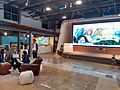 Google Fiber store, Austin
 -
 Google Fiber store, Austin
 -
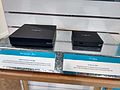 TV box and Network box at Google Fiber store, Austin


Utah
[edit]- Provo, Utah – On April 17, 2013, it was announced that Provo would become the third Google Fiber City.[72] Expansion of Google Fiber service to Provo, Utah will be accomplished through an agreement[73] with the City of Provo to allow Google to acquire the existing fiber network known as "iProvo". The agreement will allow Google to purchase the iProvo network for $1, while requiring Google to upgrade the aging network to gigabit capacity, offer free gigabit service to 25 local public institutions, and offer 5 Mbit/s service to every home in the city for free after a $300 activation fee.[74][75]
- Salt Lake City - On March 24, 2015, Google announced that Google Fiber would expand into Salt Lake City, Utah. Service became available for signup on August 24, 2016.[76]
- Millcreek: On July 14, 2020, Google announced that Google Fiber would expand into Millcreek, Utah, to serve its first Millcreek customers in early 2021.[77] On December 28, 2021, Google posted a blog article reflecting on the year 2021. In this article, they mentioned that the following cities had begun offering service sometime in 2021: Millcreek, South Salt Lake, Holladay, and Taylorsville.[78]
- South Salt Lake: On February 25, 2021, Google announced that Google Fiber would expand into South Salt Lake, Utah.[79] By July 26, 2021, Google had announced that construction was underway and expected to be completed by early 2022.[80] On December 28, 2021, Google posted a blog article reflecting on the year of 2021. In this article, they mentioned that the following cities had begun offering service sometime in 2021: Millcreek, South Salt Lake, Holladay, and Taylorsville.[78]
- Holladay: On March 11, 2021, Google announced that Google Fiber construction had begun in Holladay, Utah. Plans to allow Google Fiber expansion to the city were initially approved in November 2020. Construction is expected to conclude in early 2022.[81] On December 28, 2021, Google posted a blog article reflecting on the year 2021. In this article, they mentioned that the following cities had begun offering service sometime in 2021: Millcreek, South Salt Lake, Holladay, and Taylorsville.[78]
- Taylorsville: On April 22, 2021, Google announced that Google Fiber would expand into Taylorsville, Utah.[82] By July 26, 2021, Google had announced that construction was underway and expected to be completed by early 2022.[80] On December 28, 2021, Google posted a blog article reflecting on the year of 2021. In this article, they mentioned that the following cities had begun offering service sometime in 2021: Millcreek, South Salt Lake, Holladay, and Taylorsville.[78]
- Sandy - On May 5, 2021, Google announced that Google Fiber would expand into Sandy, Utah. The initial timeline was to complete an "initial footprint" within two years.[83] On March 22, 2022, Google announced that it had begun offering service in Sandy and North Salt Lake.[84]
- North Salt Lake - On July 26, 2021, Google announced that Google Fiber would expand into North Salt Lake, Utah. Construction efforts were expected to begin soon after, with a completion date sometime in early 2022.[85] On March 22, 2022, Google announced that it had begun offering service in Sandy and North Salt Lake and that it was approved to begin construction in White City, Draper, Riverton, Springville, West Bountiful, and West Jordan.[84]
Charlotte, North Carolina
[edit]On July 12, 2016, sign-ups opened in Highland Creek.[86]
On October 4, 2016, sign-ups opened in Prosperity Village.[87]
Atlanta
[edit]In the original announcement of 2015, the following areas were announced:[88]
- Avondale Estates
- Brookhaven
- Castleberry Hill
- College Park
- Decatur
- East Point
- Hapeville
- Sandy Springs
- Smyrna
- Vine City
In August 2016, sign-ups were opened.[89]
Research Triangle, Raleigh–Durham, North Carolina
[edit]In the original announcement of 2015, the following areas of the Research Triangle of Raleigh–Durham, North Carolina were announced:[88]
On September 13, 2016, sign-ups opened.[90]
Nashville, Tennessee
[edit]The areas initially announced in February 2015 were:[88]
As of December 2016, construction is underway.[91] Sign-ups are open.
As of August 2017, Google Fiber announced that the Sylvan Park neighborhood in West Nashville had Google Fiber service officially operating, making Nashville a city with Google Fiber service.[92]
Huntsville, Alabama
[edit]On February 22, 2016, Google announced that Google Fiber would expand into Huntsville, Alabama.[93] Google Fiber announced it would start offering high-speed Internet, TV and telephone service in north Huntsville on May 23, 2017.[94] On April 2, 2018, Huntsville Utilities continues to build fiber in Southeast Huntsville, which has been turned over to Google Fiber to service.[95]
West Des Moines, Iowa
[edit]Google Fiber announced it would start offering high-speed Internet, TV, and telephone service in northeast West Des Moines on March 22, 2021.[96]
Announced future locations
[edit]Utah
[edit]- Woods Cross: On July 26, 2021, Google announced that Google Fiber would expand into Woods Cross, Utah. This service will be available to Woods Cross City residents in the spring of 2022.[97]
- South Jordan: On October 8, 2021, Google announced that Google Fiber would expand into South Jordan, Utah. The goal is to have "service in some areas in early 2022".[98]
- Springville: On October 20, 2021, Google announced that Google Fiber would expand into Springville, Utah. Construction is expected to begin in spring 2022 and last through 2023.[99]
- Riverton: On December 14, 2021, Google announced that Google Fiber would expand into Riverton, Utah. Construction is expected to begin in the second half of 2022, and they expect "to start serving customers in Riverton in late 2022 or early 2023."[100]
- Draper: On February 2, 2022, Google announced that Google Fiber would expand into Draper, Utah. Infrastructure construction will begin in spring 2022 with an estimated completion time of one year.[101]
- West Jordan: On February 24, 2022, Google announced that Google Fiber would expand into West Jordan, Utah. Construction is slated to begin later in 2022, with the first West Jordan customers expected to come online around early 2023.[102]
California expansion
[edit]On January 27, 2015, Google announced that Google Fiber would expand into additional markets:[88]
San Antonio, Texas
[edit]On April 14, 2016, Google sent a blast email to early adopters of Google Fiber announcing that they were indeed behind the visible construction across San Antonio, Texas.[103] A few details were given about the vast extent of the construction that was being undertaken, Google was in the process of deploying about 4,000 linear miles (6,500 km) of fiber-optic cable throughout San Antonio.[104] In advance of the imminent deployment of the new fiber network the direct competitors of Google Fiber, AT&T U-Verse, Time Warner Cable, and Grande Communications, dropped prices and increased the speeds of their networks. San Antonio, the seventh-largest city in the nation, was the largest project that Google Fiber had taken on to date.
On August 5, 2015, expansion into San Antonio was announced.[105] As of December 2016, construction was underway.[106] However, in January 2017, construction was halted pending concerns about the placement of Google Fiber huts in city parks.[107][108] Mayor Ivy Taylor expressed commitment to working with Google to address community concerns and allow the project to continue.[109]
As of May 9, 2019, Google Fiber had micro-trenched 600 miles of fiber in San Antonio neighborhoods. City staff said the majority was on the far Northwest and Northeast sides, including the pilot area in the Westover Hills neighborhood. After closing service in Louisville, Kentucky, the company said it learned from its challenges and refined its micro-trenching program to go deeper. According to the company, its Louisville microtrenching was as shallow as two inches. City staff said San Antonio's trenching depth was 6–8 inches.[110]
Closed and former locations
[edit]Louisville, Kentucky
[edit]In April 2017, Google announced that Google Fiber would start construction in Louisville, Kentucky.[111] Google Fiber got the service to sections of Louisville in five months after it first announced that it would be coming to the city—faster than it had ever deployed before—by using shallow trenching.[112][113] In February 2019 Google announced it would shut down service on April 15.[114] Before departing, Google Fiber service was criticized for disruptive infrastructure installations and poor workmanship.[115] Google agreed to pay $3.8 million for clean up.[116]
Possible future expansion
[edit]2014
[edit]In February 2014, Google announced it had "invited cities in nine metro areas around the U.S.—34 cities altogether—to work with us to explore what it would take to bring them Google Fiber."[117]
The remaining metropolitan areas where Fiber has not yet begun constructing are: Phoenix, Portland, San Antonio and San Jose.[117] Of these, the following have yet to be selected by Google for fiber deployments:[118]
- Arizona – Phoenix, Scottsdale, Tempe. These plans were put on hold in October 2016.[11]
- California – These plans were put on hold in October 2016.[11]
- Oregon – Portland, Beaverton, Hillsboro, Gresham, Lake Oswego, Tigard These plans were put on hold in October 2016.[11]
On April 15, 2014, Google began polling business users on their need for gigabit service, saying they would be "conducting a pilot program where we'll connect a limited number of small businesses to our network".[119]
2015
[edit]On September 10, 2015, Google tweeted[120] that it was exploring the possibility of adding Irvine and San Diego, California, as future expansion cities.
On October 28, 2015, Jill Szuchmacher, Google Fiber Director of Expansion, announced ongoing negotiations with local governments in Jacksonville, Florida, Tampa, Florida, and Oklahoma City, Oklahoma. Szuchmacher stated that Google is interested in the installation of Google Fiber networks in each of the cities and that construction could take up to eighteen months once the project is underway.[121] In October 2016, those plans were put on hold.[11]
On December 8, 2015, the Seattle City Council's Director of Communications replied to a tweet indicating that the city was in the process of applying for Google Fiber service.[122] On December 8, 2015, Jill Szuchmacher said the company will work with Chicago city leaders to collect information and study factors that could affect construction of Google Fiber.[123]
2016
[edit]On June 14, 2016, Jill Szuchmacher said the company will work with Dallas mayor Mike Rawlings to try to bring another hub to Texas.[124]
In October 2016, all expansion plans were put on hold, and some jobs were cut.[11] Google Fiber will continue to provide service in the cities where it is already installed.
2017
[edit]In 2017 Google Fiber launched in three new cities: Huntsville, Alabama; Louisville, Kentucky; and San Antonio, Texas.[113] It also began to heavily rely on shallow trenching, a new method of laying cables that cuts a small groove in the street or sidewalk, lays the fiber in that groove, and backfills it with a special epoxy, to expedite the construction process.[112] In at least one case, cables were buried too shallow and were ripped up by repaving.[125]
Acquisition of Webpass
[edit]On June 22, 2016, Google Fiber bought Webpass, an Internet service provider that has been in business for 13 years and specializes in high-speed Internet for business and residential customers. They have a large presence[clarification needed] in California and specifically the Bay Area as well as San Diego, Miami, Miami Beach, Coral Gables, Chicago, Denver, and Boston. The deal closed in October 2016.[126][127]
Technical specifications
[edit]
Google Fiber provides an Internet connection speed of up to eight gigabits per second (8,000 Mbit/s) for download and eight gigabit per second (8,000 Mbit/s) upload.[128] Google Fiber says its original 1 Gbit/s download service allows for the download of a full movie in less than two minutes.[129]
The GFiber Nutrition Label was created in anticipation of the FCC requiring all internet providers to display their product info in a standardized format.[130] With the FCC requirement of consumer labels, all internet providers will be required to be more transparent with their fees, promotional pricing, typical speeds, and latency.[131]
Prohibition of servers
[edit]When first launched, Google Fiber's terms of service stated that its subscribers were not allowed to create any type of server: "Your Google Fiber account is for your use and the reasonable use of your guests. Unless you have a written agreement with Google Fiber permitting you do so, you should not host any server using your Google Fiber connection, use your Google Fiber account to provide a large number of people with Internet access, or use your Google Fiber account to provide commercial services to third parties (including, but not limited to, selling Internet access to third parties)."[132]
The Electronic Frontier Foundation criticized the practice, noting the ambiguity of the word "server" which might include such standard application protocols as BitTorrent, and Spotify, as well as the effect of and on IPv6 adoption due its lack of NAT technical limitations on network servers, but also noted similar prohibitions from other ISPs such as Comcast, Verizon, Cox, and AT&T.[133]
In October 2013, the acceptable use policy for Google Fiber was modified to allow "personal, non-commercial use of servers".[134][135]
April Fools' hoaxes
[edit]On April Fools' Day 2007, Google hosted a signup for Google TiSP offering "a fully functional, end-to-end system that provides in-home wireless access by connecting your commode-based TiSP wireless router to one of the thousands of TiSP Access Nodes via fiber-optic cable strung through your local municipal sewage lines."[136]
On April Fools' Day 2012, Google Fiber announced that its product was an edible Google Fiber bar instead of fiber-optic Internet broadband. It is stated that the Google Fiber bar delivers "what the body needs to sustain activity, energy, and productivity."[137]
On April Fools' Day 2013, Google Fiber announced the introduction of Google Fiber to the Pole. The description provided was "Google Fiber to the Pole provides ubiquitous gigabit connectivity to fiberhoods across Kansas City. This latest innovation in Google Fiber technology enables users to access Google Fiber's ultrafast gigabit speeds even when they are out and about." Clicking on the "Learn more" and "Find a pole near you" buttons displayed a message reading "April Fool's! While Fiber Poles don't exist, we are working on a bunch of cool stuff that does. Keep posted on all things Fiber by checking out our blog."[138]
The April Fools' Day 2014 prank was an announcement of Coffee To The Home, using a spout on the fiber jack where the service enters the customer's home to deliver customized coffee drinks.[139]
On April Fools' Day 2015, Google Fiber announced Dial-Up Mode for people who prefer slower Internet. It reaches speeds up to 56k and helps people get back to real life more often.[140]
For the 2016 April Fools' Day joke, Google Fiber announced it was "exploring 1 billion times faster speeds".[141]
Reactions
[edit]Time magazine has claimed that, rather than wanting to actually operate as an Internet service provider, the company was hoping to shame the major cable operators into improving their service so that Google searches could be done faster. Google has neither confirmed nor denied this claim.[46]
AT&T and other Internet service providers have launched their own gigabit services since Google Fiber was revealed. Some cable subscribers have also had their speeds increased without additional costs.[142]
According to a Goldman Sachs report, Google could connect approximately 830,000 homes a year at the cost of $1.25 billion a year, or a total of 7.5 million homes in nine years at a cost of slightly over $10 billion.[143]
In January 2014, a bill was introduced in the Kansas Legislature (Senate Bill 304, referred to as the "Municipal Communications Network and Private Telecommunications Investment Safeguards Act"), which would prevent Google Fiber from expanding further in Kansas using the model used in Kansas City.[144][145] The bill proposes: "Except with regard to unserved areas, a municipality may not, directly or indirectly:
- Offer to provide to one or more subscribers, video, telecommunications, or broadband service; or
- purchase, lease, construct, maintain, or operate any facility for the purpose of enabling a private business or entity to offer, provide, carry, or deliver video, telecommunications, or broadband service to one or more subscribers."
By February 2014, Senate Bill 304 (SB304) had lost momentum in the Kansas state senate, and the bill's sponsor, Kansas Cable Telecommunications Association (KCTA), indicated that it was doubtful that it would continue to pursue the legislation in the current legislative session.[146]
See also
[edit]- Google WiFi, Google's municipal wireless network
- Project Loon, Google's research project aiming to provide Internet access to rural and remote areas via high-altitude balloons
- List of multiple-system operators
Notes
[edit]References
[edit]- ^ "Alphabet hires Time Warner Cable executive to lead Access and Google Fiber". February 6, 2018. Archived from the original on March 5, 2018. Retrieved March 4, 2018.
- ^ Wakabayashi, Daisuke (October 25, 2016). "Google Curbs Expansion of Fiber Optic Network, Cutting Jobs". The New York Times. Archived from the original on November 12, 2020. Retrieved March 25, 2017.
- ^ "Google Fiber Inc". OpenCorporates. June 15, 2010. Retrieved August 20, 2023.
- ^ Helft, Miguel (March 21, 2010). "Hoping for Gift From Google? Go Jump in the Lake". The New York Times. Archived from the original on June 9, 2017. Retrieved March 25, 2017.
- ^ Baumgartner, Jeff (September 9, 2016). "Google Fiber 'Very Pleased' with TV Sign-Ups". Multichannel News. Archived from the original on February 25, 2018. Retrieved March 25, 2017.
- ^ a b c Medin, Milo (March 30, 2011). "Ultra high-speed broadband is coming to Kansas City, Kansas". Official Google Blog. Archived from the original on December 23, 2017. Retrieved March 25, 2017.
- ^ Ingersoll, Minnie; Kelly, James (February 10, 2010). "Think big with a gig: Our experimental fiber network". Official Google Blog. Archived from the original on November 29, 2016. Retrieved March 25, 2017.
- ^ Copeland, Michael V. (December 12, 2012). "Eric Schmidt Says Google Fiber Won't Stop With Kansas City". Wired. Archived from the original on April 23, 2019. Retrieved March 25, 2017.
- ^ Brodkin, Jon (August 5, 2015). "Google Fiber plans service in San Antonio, its biggest city yet". Ars Technica. Condé Nast. Archived from the original on May 17, 2017. Retrieved March 25, 2017.
- ^ Bergen, Mark (November 30, 2015). "Meet Access, the Google Unit That's Taking On Comcast and the Rest of the Cable Biz". Recode. Vox Media. Archived from the original on April 10, 2019. Retrieved March 25, 2017.
- ^ a b c d e f Brodkin, Jon (October 26, 2016). "Google Fiber division cuts staff by 9%, "pauses" fiber plans in 11 cities". Ars Technica. Condé Nast. Archived from the original on December 23, 2020. Retrieved March 25, 2017.
- ^ Clayworth, Jason (April 5, 2022). "Google Fiber is coming to Des Moines". Axios. Archived from the original on August 11, 2022. Retrieved August 11, 2022.
- ^ Porter, Jon (August 11, 2022). "Google Fiber isn't dead, it's expanding". The Verge. Archived from the original on August 11, 2022. Retrieved August 11, 2022.
- ^ Dave, Paresh (August 10, 2022). "Exclusive: Google Fiber plans 5-state growth spurt, biggest since 2015". Reuters. Archived from the original on August 10, 2022. Retrieved August 10, 2022.
- ^ "Google Fiber expanding in NC markets, too | WRAL TechWire". wraltechwire.com. August 10, 2022. Archived from the original on August 11, 2022. Retrieved August 11, 2022.
- ^ Shankland, Stephen. "While You Weren't Watching, Fiber Broadband Leapfrogged DSL and Cable in Much of the World". CNET. Archived from the original on August 11, 2022. Retrieved August 11, 2022.
- ^ "Google Fiber Blog: GFiber Labs announces first project: 20 Gig with Wi-Fi 7". Fiber Blog. Retrieved October 27, 2023.
- ^ "GFiber and Astound to Combine". Broadband Breakfast. March 12, 2026. Retrieved March 12, 2026.
- ^ "Google Fiber Blog: GFiber and Stonepeak's Astound to combine, creating a leading independent broadband provider". Fiber Blog. Retrieved March 12, 2026.
- ^ "Google Fiber | Gigabit Fiber Optic Internet". fiber.google.com. Retrieved October 27, 2023.
- ^ "Google Fiber Blog: New products tailored for how you live online". Fiber Blog. Retrieved January 22, 2025.
- ^ Swanson, Erica (July 15, 2015). "Bringing Internet access to public housing residents". Official Google Fiber Blog. Archived from the original on December 4, 2020. Retrieved March 25, 2017.
- ^ "Affordable Connectivity Program". Google Fiber. Retrieved October 30, 2025.
- ^ Li, Abner (February 4, 2020). "Google Fiber no longer offering traditional TV plan for new customers". 9to5Google. Archived from the original on November 30, 2020. Retrieved September 30, 2020.
- ^ "Alternatives to Google Fiber TV". Reviews.org. February 28, 2022. Archived from the original on May 17, 2022. Retrieved June 18, 2022.
- ^ "Construction stages - Google Fiber Help". support.google.com. Retrieved October 27, 2023.
- ^ Hack, Rachel (April 4, 2012). "A Construction Update". Official Google Fiber Blog. Archived from the original on November 12, 2020. Retrieved March 25, 2017.
- ^ Bergen, Mark (May 11, 2016). "Google Fiber is the most audacious part of the whole Alphabet". Recode. Vox Media. Archived from the original on April 4, 2019. Retrieved March 25, 2017.
- ^ Bray, Hiawatha (June 23, 2016). "Could Google's purchase of a wireless company boost Boston's Internet?". The Boston Globe. Archived from the original on October 19, 2017. Retrieved March 25, 2017.
- ^ Malik, Om (February 11, 2010). "How Much Will Google's Fiber Network Cost?". Gigaom. Archived from the original on December 20, 2019. Retrieved March 25, 2017.
- ^ Rao, Leena (March 27, 2010). "The Final Tally: More Than 1100 Cities Apply For Google's Fiber Network". TechCrunch. AOL. Archived from the original on January 9, 2021. Retrieved March 25, 2017.
- ^ Blodget, Henry (March 28, 2010). "Google: 1,100 Cities Want Us To Build Them Huge Fiber Networks". Business Insider. Axel Springer SE. Archived from the original on August 21, 2019. Retrieved March 25, 2017.
- ^ Medin, Milo (December 15, 2010). "An update on Google Fiber". Official Google Blog. Archived from the original on September 14, 2017. Retrieved March 25, 2017.
- ^ Anderson, Nate (December 15, 2010). "Google delays its 1Gbps fiber announcement". Ars Technica. Condé Nast. Archived from the original on September 29, 2020. Retrieved March 25, 2017.
- ^ L. Flatley, Joseph (December 16, 2010). "Google Fiber's 1Gbps ISP 'test community' selection delayed until 2011". Engadget. AOL. Archived from the original on September 11, 2017. Retrieved March 25, 2017.
- ^ a b c d e Van Buskirk, Eliot (March 11, 2010). "Al Franken Jokes, But Google Fiber Is No Laughing Matter". Wired. Archived from the original on November 9, 2020. Retrieved March 25, 2017.
- ^ "Greenville Feels Lucky". Archived from the original on February 1, 2014. Retrieved January 28, 2014.
- ^ Helft, Miguel (March 26, 2010). "Cities Rush to Woo Google Broadband Before Friday Deadline". blog. The New York Times. Archived from the original on January 28, 2021. Retrieved April 10, 2010.
- ^ Silver, Curtis (March 10, 2010). "I, Google". Wired. Archived from the original on September 19, 2020. Retrieved March 25, 2017.
- ^ Murphy, David (March 7, 2010). "The 5 Strangest City Pitches for Google's New Fiber-Optic Service". PC Magazine. Ziff Davis. Archived from the original on January 5, 2018. Retrieved March 25, 2017.
- ^ "Al Franken YouTube video". Youtube.com. March 10, 2010. Archived from the original on December 15, 2021. Retrieved February 20, 2014.
- ^ "Ann Arbor YouTube channel". Youtube.com. Archived from the original on January 16, 2021. Retrieved February 20, 2014.
- ^ "자동차보험료비교견적사이트". www.AAGoogleFest.com. Archived from the original on September 7, 2011. Retrieved January 4, 2018.
- ^ Reed, Tina (March 26, 2010). "Ann Arbor 'mob' makes another case to attract Google Fiber". AnnArbor.com. Archived from the original on March 3, 2016. Retrieved April 10, 2010.
- ^ a b "Google Fiber Goes Live Near Stanford". anandtech.com. August 22, 2011. Archived from the original on November 26, 2020. Retrieved September 5, 2011.
- ^ a b Gustin, Sam (September 14, 2012). "Google Fiber Issues Public Challenge: Get Up To Speed!". Time. Retrieved May 26, 2013.
- ^ Google Gets Into the Cable TV Business, for Real Archived September 18, 2012, at the Wayback Machine, All Things Digital, July 26, 2012.
- ^ Medin, Milo (May 17, 2011). "Everything's up to date in Kansas City". Official Google Fiber Blog. Archived from the original on October 25, 2020. Retrieved March 25, 2017.
- ^ Hack, Rachel (March 19, 2013). "Google Fiber is coming to Olathe, Kansas". Official Google Fiber Blog. Archived from the original on November 24, 2020. Retrieved March 25, 2017.
- ^ Farivar, Cyrus. "North Kansas City leases network to Google Fiber". Kansas City Business Journal. Archived from the original on January 28, 2021. Retrieved April 19, 2013.
North Kansas City will lease two paths of its LINKCity fiber-optic data network to Google Fiber. The City Council approved a 20-year agreement Tuesday worth $3.2 million.
- ^ Vockrodt, Steve (May 7, 2013). "Google Fiber bails out North Kansas City's fiber-optic misfire". The Pitch. Archived from the original on May 14, 2013. Retrieved May 14, 2013.
'This doesn't mean we're delivering Google Fiber service to the city of North Kansas City,' Google spokeswoman Jenna Wandres says. 'It just means we're using their fiber as a pass-through to get to surrounding areas.'
- ^ Hack, Rachel (May 2, 2013). "Welcome, Shawnee, Kansas!". Official Google Fiber Blog. Archived from the original on November 12, 2020. Retrieved March 25, 2017.
- ^ Canon, Scott (May 3, 2013). "Raytown latest city promised Google Fiber". Kansas City Star. Archived from the original on January 16, 2021. Retrieved May 3, 2013.
- ^ Hack, Rachel (May 7, 2013). "Grandview, Mo. — our newest Fiber community". Official Google Fiber Blog. Archived from the original on November 12, 2020. Retrieved March 25, 2017.
- ^ Hack, Rachel (May 13, 2013). "Another local expansion into Gladstone, Mo". Official Google Fiber Blog. Archived from the original on January 21, 2021. Retrieved March 25, 2017.
- ^ Hack, Rachel (May 22, 2013). "Raytown, Mo. approves Google Fiber". Official Google Fiber Blog. Archived from the original on November 11, 2020. Retrieved March 25, 2017.
- ^ Hack, Rachel (June 20, 2013). "Fiber for Lee's Summit". Official Google Fiber Blog. Archived from the original on January 21, 2021. Retrieved March 25, 2017.
- ^ Hack, Rachel (June 26, 2013). "Mission, Kansas: from the Santa Fe Trail to the information speedway". Official Google Fiber Blog. Archived from the original on November 12, 2020. Retrieved March 25, 2017.
- ^ "Prairie Village approves deal for Google Fiber" Archived January 29, 2021, at the Wayback Machine, Jonathan Bender, Kansas City Star, August 5, 2013. Retrieved September 18, 2013.
- ^ Hack, Rachel (August 19, 2013). "Leawood, Kansas Approves Fiber". Official Google Fiber Blog. Archived from the original on November 12, 2020. Retrieved March 25, 2017.
- ^ "error". KSHB.com. Archived from the original on May 15, 2016. Retrieved January 4, 2018.
- ^ Hack, Rachel (August 26, 2013). "Fiber for Merriam, Kansas". Official Google Fiber Blog. Archived from the original on January 22, 2021. Retrieved March 25, 2017.
- ^ Hack, Rachel (September 3, 2013). "Rolling into Roeland Park, Kan". Official Google Fiber Blog. Archived from the original on November 12, 2020. Retrieved March 25, 2017.
- ^ a b Hack, Rachel (September 9, 2013). "Fiber's coming to Mission Hills and Fairway". Official Google Fiber Blog. Archived from the original on January 22, 2021. Retrieved March 25, 2017.
- ^ Hack, Rachel (September 17, 2013). "Bringing Fiber to Lenexa, Kan". Official Google Fiber Blog. Archived from the original on November 11, 2020. Retrieved March 25, 2017.
- ^ Canon, Scott; Bhargava, Jennifer (October 25, 2013). "Momentary stall in Overland Park puts Google Fiber on long hold". Kansas City Star. McClatchy. Archived from the original on September 22, 2016. Retrieved January 23, 2014.
- ^ "Overland Park reaches deal to bring in Google Fiber". KMBC. Archived from the original on November 19, 2020. Retrieved July 24, 2014.
- ^ Medin, Milo (April 9, 2013). "Google Fiber's Next Stop: Austin, Texas". Official Google Blog. Archived from the original on September 14, 2017. Retrieved March 25, 2017.
- ^ "Google Announces December Fiber Signups for South Austin". kut.org. October 15, 2014. Archived from the original on November 11, 2020. Retrieved October 15, 2014.
- ^ "Google Fiber goes live in Austin". Rapid TV News. December 3, 2014. Archived from the original on January 25, 2021. Retrieved December 3, 2014.
- ^ "Google Fiber Blog: Keeping Austin Wired! 5 Gig now available in Austin as Google Fiber continues growth and investment across Central Texas". Fiber Blog. Retrieved August 22, 2023.
- ^ Lo, Kevin (April 17, 2013). "Google Fiber—On the Silicon Prairie, the Silicon Hills, and now the Silicon Slopes". Official Google Fiber Blog. Archived from the original on November 11, 2020. Retrieved March 25, 2017.
- ^ "Asset Purchase Agreement" (PDF). Archived from the original (PDF) on December 12, 2019. Retrieved April 26, 2013.
This Asset Purchase Agreement... ...between Google Fiber Inc., a Delaware corporation ('Purchaser'), and Provo City Corporation, a Utah municipal corporation ('Seller').
- ^ "Network Services Agreement" (PDF). Archived from the original (PDF) on October 9, 2022. Retrieved April 26, 2013.
terms and conditions upon which Google Fiber will provide high speed broadband Internet access services to the City and certain residents of Provo, free of charge.
- ^ "Google Fiber Pricing Provo". Archived from the original on January 28, 2021. Retrieved February 14, 2015.
- ^ Brodkin, Jon (August 24, 2016). "Google Fiber hits Salt Lake City, now available in seven metro areas". Ars Technica. Condé Nast. Archived from the original on November 8, 2020. Retrieved March 25, 2017.
- ^ "Google Fiber is Coming to Millcreek, UT". Archived from the original on September 30, 2020. Retrieved September 17, 2020.
- ^ a b c d "Looking back on an interesting year". December 28, 2021. Archived from the original on April 26, 2022. Retrieved April 26, 2022.
- ^ "Google Fiber coming to South Salt Lake". ABC4 Utah. February 25, 2021. Archived from the original on May 6, 2021. Retrieved May 6, 2021.
- ^ a b "One hot summer in the Salt Lake Valley". July 26, 2021. Archived from the original on February 26, 2022. Retrieved February 25, 2022.
- ^ "Google Fiber Comes to Holladay Tweet". March 11, 2021. Archived from the original on February 26, 2022. Retrieved February 25, 2022.
- ^ "Google Fiber coming to Taylorsville". April 22, 2021. Archived from the original on February 26, 2022. Retrieved February 25, 2022.
- ^ "Google Fiber coming to another Salt Lake County city". May 5, 2021. Archived from the original on May 5, 2021. Retrieved May 6, 2021.
- ^ a b "Things to watch on the Wasatch Front". March 22, 2022. Archived from the original on May 6, 2022. Retrieved April 26, 2022.
- ^ "City of North Salt Lake City Council Meeting". July 26, 2021. Archived from the original on February 26, 2022. Retrieved February 25, 2022.
- ^ GFiber [@googlefiber] (July 12, 2016). "Hello, Charlotte. #googlefiber has arrived. Sign-ups now open in Highland Creek. Learn more" (Tweet) – via Twitter.
- ^ GFiber [@googlefiber] (October 4, 2016). "Hello, Prosperity Village. Google Fiber has arrived. Check your address" (Tweet) – via Twitter.
- ^ a b c d Kish, Dennis (January 27, 2015). "Google Fiber is coming to Atlanta, Charlotte, Nashville and Raleigh-Durham". Official Google Fiber Blog. Archived from the original on January 21, 2021. Retrieved March 25, 2017.
- ^ "Google Fiber hits Atlanta, and you can (maybe) get it". Curbed.com. August 10, 2016. Archived from the original on October 27, 2020. Retrieved January 4, 2018.
- ^ "Lauren K. Ohnesorge (September 12, 2016). It's Here: Where Google Fiber is starting its Triangle service - Triangle Business Journal". Archived from the original on January 6, 2018. Retrieved October 27, 2016.
- ^ "Fiber is coming to Nashville – Sign up for updates". Google.com. December 7, 2016. Retrieved January 4, 2018.
{{cite web}}: CS1 maint: deprecated archival service (link) - ^ Siner, Emily. "One Nashville Neighborhood Finally Gets Google Fiber, But There's High-Speed Competition". NashvillePublicRadio.org. Archived from the original on December 5, 2018. Retrieved January 4, 2018.
- ^ Szuchmacher, Jill (February 22, 2016). "Working with Huntsville to connect more people". Official Google Fiber Blog. Archived from the original on January 16, 2021. Retrieved March 25, 2017.
- ^ Roop, Lee (May 23, 2017). "Google Fiber starts serving Huntsville customers today". al.com. Archived from the original on November 12, 2020. Retrieved June 5, 2019.
- ^ "Fiber Installation Check-in from Huntsville Utilities". huntsvilleal.gov/. City of Huntsville. April 2, 2018. Archived from the original on January 16, 2021. Retrieved June 5, 2019.
- ^ McIntosh, Marcus (March 25, 2022). "West Des Moines has a new high speed internet option". KCCI. Archived from the original on April 22, 2022. Retrieved May 4, 2022.
- ^ "Woods Cross Google Fiber FAQ" (PDF). July 26, 2021. Archived (PDF) from the original on February 26, 2022. Retrieved February 25, 2022.
- ^ "South Jordan to get Google Fiber". South Jordan. October 8, 2021. Archived from the original on October 11, 2021. Retrieved October 11, 2021.
- ^ "Google Fiber Coming to Springville in 2022". October 20, 2021. Archived from the original on October 20, 2021. Retrieved October 20, 2021.
- ^ "Google Fiber Expanding To Riverton, Utah". December 14, 2021. Archived from the original on July 14, 2022. Retrieved July 14, 2022.
- ^ "Google Fiber expanding to another Utah city (Draper)". ABC4 Utah. February 2, 2022. Archived from the original on February 26, 2022. Retrieved February 25, 2022.
- ^ "Google Fiber expanding to another Utah city (West Jordan)". ABC4 Utah. February 24, 2022. Archived from the original on February 26, 2022. Retrieved February 25, 2022.
- ^ "Gigabit Internet Service in San Antonio, TX | Google Fiber".
- ^ "Google Fiber is coming to San Antonio – Sign up for updates". fiber.google.com. Archived from the original on January 21, 2021. Retrieved April 17, 2016.
- ^ Strama, Mark (August 5, 2015). "Everything's faster in Texas: Google Fiber is coming to San Antonio". Official Google Fiber Blog. Archived from the original on November 8, 2020. Retrieved March 25, 2017.
- ^ "Fiber is coming to San Antonio – Sign up for updates". Google.com. December 7, 2016. Retrieved January 4, 2018.
{{cite web}}: CS1 maint: deprecated archival service (link) - ^ Flahive, Paul (January 12, 2017). "San Antonio Pushes Pause on Google Fiber Deployment". Texas Public Radio. Archived from the original on November 11, 2020. Retrieved January 4, 2018.
- ^ Zielinski, Alex (January 13, 2017). "City Stalls Google Fiber Rollout, Blames Google". SACurrent.com. San Antonio Current. Archived from the original on October 24, 2020. Retrieved January 4, 2018.
- ^ Gonzales, Charles (January 12, 2017). "City halts huts for Google fiber; mayoral candidates weigh-in". KSAT 12. Graham Media Group. Archived from the original on January 16, 2021. Retrieved January 4, 2018.
- ^ Flahive, Paul (February 8, 2019). "Google Fiber Says Goodbye In Kentucky, But Soldiers On In San Antonio". tpr.org. Texas Public Radio. Archived from the original on November 12, 2020. Retrieved June 5, 2019.
- ^ Shafer, Sheldon S. (April 26, 2017). "Google Fiber confirms it will wire Louisville". Courier-Journal. Archived from the original on February 21, 2023. Retrieved July 7, 2017.
- ^ a b Forrest, Conner (October 20, 2017). "Google Fiber is using a secret weapon to outpace AT&T and other gigabit competitors". TechRepublic. Archived from the original on July 1, 2020. Retrieved January 3, 2018.
- ^ a b Krauth, Olivia (December 11, 2017). "How Google Fiber turned 2017 into its comeback year". TechRepublic. Archived from the original on January 21, 2021. Retrieved January 3, 2018.
- ^ Google Fiber is leaving Louisville in humiliating setback Archived November 12, 2020, at the Wayback Machine. The Verge. February 7, 2019.
- ^ Leskin, Paige (February 7, 2019). "Google Fiber is shutting down its super-high speed internet service in Louisville after residents complained that it left exposed cables in the streets". TechInsider, A Part of Business Insider. Archived from the original on January 21, 2021. Retrieved February 10, 2019.
- ^ Brodkin, Jon (April 16, 2019). "Google Fiber exits Louisville, pays city $3.8M to clean up the mess it left". Ars Technica. Archived from the original on November 7, 2020. Retrieved April 17, 2019.
- ^ a b Medin, Milo (February 19, 2014). "Exploring new cities for Google Fiber". Official Google Blog. Archived from the original on December 14, 2020. Retrieved March 25, 2017.
- ^ "The future of Fiber". February 19, 2014. Archived from the original on September 9, 2018. Retrieved February 20, 2014.
- ^ "Google Fiber – Questionnaire for small business". Archived from the original on March 5, 2017. Retrieved April 15, 2014.
- ^ GFiber [@googlefiber] (September 10, 2015). "We're exploring bringing a super fast network to Irvine, Louisville & San Diego. Learn more" (Tweet) – via Twitter.
- ^ "Google Fiber begins negotiations to lay super-fast Internet network in Jacksonville". jacksonville.com. Archived from the original on January 21, 2021. Retrieved October 29, 2015.
- ^ Toledo, Rob (December 8, 2015). "Seattle City Council Applies for Google Fiber". Exstreamist.com. Archived from the original on November 8, 2020. Retrieved January 4, 2018.
- ^ Sky, Blue (December 8, 2015). "Google Fiber superfast Internet service may come to Chicago". chicagotribune.com. Archived from the original on April 15, 2019. Retrieved February 24, 2016.
- ^ Szuchmacher, Jill (June 14, 2016). "Exploring Dallas for Google Fiber". Official Google Fiber Blog. Archived from the original on November 8, 2020. Retrieved March 25, 2017.
- ^ Finley, Jeremy (June 29, 2018). "Google fiber thrill turns to apprehension for neighbors". WSMV. Archived from the original on July 2, 2018. Retrieved July 2, 2018.
Five months later, the News4 I-Team found that in six neighborhoods in Nashville, the lines were buried so close to the surface that they were torn apart during repaving and customers lost service for days.
- ^ Russell, Jon (June 22, 2016). "Google Fiber is buying high-speed internet provider Webpass". TechCrunch. AOL. Archived from the original on November 8, 2020. Retrieved March 25, 2017.
- ^ Brodkin, Jon (October 3, 2016). "Google Fiber is now a fiber and wireless ISP". Ars Technica. Condé Nast. Archived from the original on January 21, 2021. Retrieved March 25, 2017.
- ^ "Google Fiber". Archived from the original on March 25, 2013. Retrieved June 4, 2015.
- ^ "Google Wants To Expand Its Ultrafast Internet In USA". What is USA News. February 21, 2014. Archived from the original on January 5, 2018. Retrieved September 12, 2013.
- ^ "GFiber Nutrition Label - Google Fiber Help". support.google.com. Retrieved October 27, 2023.
- ^ "Broadband Consumer Labels". Federal Communications Commission. Retrieved October 30, 2025.
- ^ Singel, Ryan (July 30, 2017). "Now That It's in the Broadband Game, Google Flip-Flops on Network Neutrality". Wired. Archived from the original on December 20, 2020. Retrieved March 25, 2017.
- ^ Auerbach, Dan (August 12, 2013). "Google Fiber Continues Awful ISP Tradition of Banning 'Servers'". Electronic Frontier Foundation. Archived from the original on November 11, 2020. Retrieved August 14, 2013.
- ^ Fenley, John (October 15, 2013). "Google Fiber has changed its terms of service and now allows servers for non-commercial use". GoogleProtest.com. Archived from the original on October 17, 2013.
- ^ Brodkin, Jon (October 15, 2013). "Google Fiber now explicitly permits home servers". Ars Technica. Condé Nast. Archived from the original on December 23, 2020. Retrieved March 25, 2017.
- ^ "Welcome to Google TiSP". April 1, 2007. Archived from the original on January 8, 2021. Retrieved August 6, 2014.
- ^ "Introducing the Google Fiber Bar" (video). Google. April 1, 2012. Archived from the original on December 15, 2021. Retrieved May 5, 2013 – via YouTube.
- ^ "Google Fiber to the Pole" (video). Google Fiber. March 31, 2013. Archived from the original on December 15, 2021. Retrieved August 6, 2014 – via YouTube.
- ^ "Introducing Coffee to the Home" (video). Google Fiber. April 1, 2014. Archived from the original on December 15, 2021. Retrieved April 1, 2014 – via YouTube.
- ^ "Introducing Dial-Up Mode" (video). Google Fiber. April 1, 2015. Archived from the original on December 15, 2021. Retrieved April 1, 2015 – via YouTube.
- ^ Takácsi, Pál (April 1, 2016). "Exploring 1 billion times faster speeds". Official Google Fiber Blog. Archived from the original on January 21, 2021. Retrieved March 25, 2017.
- ^ "AT&T aims to beat Google Fiber".
- ^ "Google Fiber Could Reach 8 Million Homes By 2022" Archived November 12, 2020, at the Wayback Machine, Elise Ackerman, Forbes, June 14, 2013. Retrieved September 2013.
- ^ "Senate Bill No. 304: An Act enacting the municipal communications network and private telecommunications investment safeguards act" (PDF). Kslegislature.org\accessdate=2015-06-04. Archived (PDF) from the original on January 21, 2021. Retrieved January 31, 2014.
- ^ "Kansas To Nix Expansion of Google Fiber and Municipal Broadband - Slashdot". Tech.slashdot.org. January 31, 2014. Archived from the original on March 16, 2018. Retrieved February 20, 2014.
- ^ Brodkin, Jon (February 20, 2014). ""It's dead": Kansas municipal Internet ban was "stabbed, shot, and hanged"". Ars Technica. Condé Nast. Archived from the original on January 27, 2021. Retrieved March 25, 2017.
External links
[edit]
- WebPass (Acquired)
| Subsidiaries |
| ||||||||||||||
|---|---|---|---|---|---|---|---|---|---|---|---|---|---|---|---|
| People |
| ||||||||||||||


Google Fiber
View on GrokipediaHistory
Inception and Motivations (2010–2012)
Google announced its plans for an experimental ultra-high-speed broadband network on February 10, 2010, via posts on its official public policy and corporate blogs.[7][8] The initiative, later known as Google Fiber, targeted the deployment of fiber-optic networks capable of delivering up to 1 gigabit per second (Gbps) download and upload speeds—more than 100 times faster than the average U.S. residential broadband connection at the time, which hovered around 5 megabits per second (Mbps).[7][9] Google specified that the trial would cover at least 50,000 individuals, with potential expansion to up to 500,000 people across one or more U.S. metro areas, including free service to 18,000–20,000 households and businesses, as well as public Wi-Fi hotspots.[8][10] The primary motivations stemmed from Google's interest in experimenting with next-generation internet infrastructure amid widespread criticism of stagnant U.S. broadband speeds and limited competition from incumbent providers like cable and telecom companies.[7] Company executives emphasized testing the technical feasibility, business model viability, and user behavior associated with gigabit-level access, including how consumers might utilize bandwidth for emerging applications such as high-definition video streaming, cloud computing, and interactive services.[8][11] Google also aimed to promote an open-access model, allowing multiple service providers to offer content and applications over the network, thereby encouraging innovation and reducing reliance on walled-garden ecosystems controlled by traditional ISPs.[7] This aligned with broader advocacy for the U.S. National Broadband Plan, released earlier in 2010 by the Federal Communications Commission, which highlighted the need for faster infrastructure to boost economic productivity and global competitiveness.[12] Following the announcement, Google launched the "Google Fiber for Communities" website in July 2010 to solicit applications from interested municipalities, counties, or states, evaluating factors such as community support, existing fiber availability, and regulatory environment.[13][14] By March 2010, the company had refined its criteria to prioritize areas with strong local partnerships and minimal deployment barriers.[14] In December 2010, Google selected Kansas City, split between Missouri and Kansas, as the first trial site after a competitive process involving over 1,100 expressions of interest from 36 states.[15] Construction began in 2011, with initial services launching in select neighborhoods by early 2012, marking the transition from experiment to operational rollout while validating the core motivations through real-world data on adoption and usage patterns.[11][4]Initial Deployments and City Selection (2012–2015)
Google initiated its fiber-optic broadband project in February 2010 by announcing plans to build a high-speed network in one or more U.S. metropolitan areas, inviting communities to submit applications demonstrating strong demand, supportive local policies, and efficient deployment conditions. Over 1,100 communities applied, and on March 30, 2011, Google selected Kansas City, Kansas, as the first site, followed by Kansas City, Missouri, on May 17, 2011, due to factors including robust community engagement, access to utility infrastructure, and regulatory cooperation.[16][17] Deployments in Kansas City began with construction in select "fiberhoods," neighborhoods requiring at least 250 pre-registrations per 1,000 homes to prioritize build-out, a model aimed at gauging demand and managing costs. Google Fiber service officially launched on July 26, 2012, offering 1 Gbps symmetric internet speeds to early subscribers in these areas, marking the project's first commercial rollout.[18][19] Expansion accelerated in 2013 with announcements for Austin, Texas, in early April, followed by Provo, Utah, on April 17, where Google acquired the existing municipal iProvo fiber network to expedite deployment. These selections emphasized cities with pre-existing fiber infrastructure or proactive local partnerships, diverging from the initial broad application process toward targeted evaluations of permitting efficiency and market potential.[20][21] By 2014, Google shifted to assessing broader metro regions, announcing interest in 34 cities across eight states in February, using a public checklist to evaluate franchise agreements, pole attachment access, and construction timelines. In January 2015, it confirmed expansions to four southeastern metro areas—Atlanta (9 cities), Nashville (9 cities), Charlotte (4 cities), and Raleigh-Durham (5 cities)—selecting them for favorable regulatory climates and high demand signals, with deployments slated to begin later that year. This period's city choices reflected a pragmatic focus on scalable, low-friction environments amid rising incumbent provider resistance.[22][23][24]Expansion Pause and Strategic Shifts (2016–2021)
In October 2016, Google Fiber announced a pause on expansions into new cities, halting early-stage planning in approximately eight locations including San Antonio and Charlotte.[25][26] This decision accompanied the layoff of about 130 employees, roughly 9% of the division's workforce, and the resignation of CEO Craig Barratt.[27][28] The move stemmed from escalating deployment costs, particularly street trenching and permitting delays, which had exceeded initial projections and slowed timelines in existing markets.[25][29] Alphabet, Google's parent company, cited the need to refine business strategy, product offerings, and infrastructure techniques to achieve greater efficiency before resuming broader rollouts.[30][29] As part of strategic adjustments, Google Fiber acquired Webpass, a San Francisco-based provider of high-speed internet via fixed wireless and Ethernet, in late 2016.[31] Webpass targeted multi-dwelling units (MDUs) in dense urban areas, delivering gigabit speeds through rooftop antennas and building wiring without extensive underground fiber deployment, thereby reducing capital outlays compared to citywide trenching.[32][33] This acquisition enabled experimentation with hybrid models blending wireless access for the "last mile" with fiber backhaul, shifting emphasis from comprehensive municipal builds to high-density, lower-risk sites like apartments and offices.[34][33] During 2017–2019, the division prioritized densification within served areas, such as Kansas City and Austin, while scaling back video services and streamlining operations under Alphabet's Access unit, which oversaw broader connectivity initiatives.[5] By 2018, Alphabet CFO Ruth Porat stated the pause would persist until deployment technologies advanced at least tenfold in cost-effectiveness, underscoring a commitment to innovation over aggressive growth.[35] Through 2021, Google Fiber maintained focus on operational stability in its core footprint—spanning about 20 markets with over 4 million homes passed—while exploring partnerships for conduit access and incremental builds in select MDUs, avoiding large-scale greenfield projects amid persistent economic and regulatory challenges.[5][36] This period marked a transition from disruptive expansion to pragmatic refinement, influenced by the capital-intensive nature of fiber infrastructure and competitive pressures from incumbent providers.[37][5]Resumed Growth and Recent Developments (2022–Present)
In August 2022, Google Fiber announced plans to expand into five new states—Arizona, Colorado, Idaho, Nebraska, and Nevada—targeting 22 metro areas to resume growth following the prior expansion pause.[38] This initiative marked a strategic shift toward broader geographic coverage, with initial construction beginning in cities such as Mesa, Arizona; Omaha, Nebraska; and Lakewood, Colorado, by late 2022.[39] In 2023, the company signed agreements to enter more than 25 additional cities, accelerating deployments in regions like Idaho, Kansas, and Utah.[40] Technological enhancements accompanied the territorial growth, including the launch of symmetrical 5 Gbps and 8 Gbps internet tiers in early 2023, priced at $125 and higher per month respectively, aimed at supporting multi-device households and high-bandwidth applications.[41] By February 2024, Alphabet, Google Fiber's parent, sought external investors to fund further scaling, hiring an investment bank to explore equity sales amid competitive pressures from established ISPs.[42] Service activations gained momentum, with Lakewood, Colorado, receiving live deployments on September 4, 2024, as the first full fiber-to-the-building network in the state, and Nebraska establishing its inaugural Google Fiber office in Omaha that April to oversee regional operations.[43][44] Into 2025, expansions continued without reliance on public subsidies in select markets, such as additional Denver-area communities in Colorado announced in August.[45] New service rollouts included Fort Mill and Tega Cay, South Carolina, by May, while upcoming launches targeted Jefferson City, Missouri, and Las Vegas, Nevada, in 2025, alongside Tempe, Arizona, in 2026.[46][47] Product updates in January and February introduced lifestyle-tailored plans emphasizing stability and efficiency for residential and business users.[48][49] These developments reflect Google Fiber's focus on private capital and incremental market penetration to challenge incumbent broadband providers.Services and Features
Core Internet Offerings
Google Fiber's core internet service delivers fiber-to-the-premises connectivity with symmetrical upload and download speeds, enabling high-bandwidth applications without throttling or data caps.[50] Standard residential plans include the Core 1 Gig tier, providing up to 1,000 Mbps (1 Gbps) in both directions for $70 per month, suitable for households with multiple devices streaming 4K video or conducting remote work.[1] Higher-tier options, such as the Home 3 Gig plan at $100 per month offering up to 3,000 Mbps (3 Gbps) symmetrically, and the Edge 8 Gig plan at $150 per month with up to 8,000 Mbps (8 Gbps), target users requiring extreme throughput for data-intensive tasks like large file transfers or professional content creation.[1] These speeds are achieved via passive optical networks (PON) technology, which supports low latency typically under 10 milliseconds to major internet exchange points.[51] All plans include complimentary equipment, comprising a multi-gigabit Network Box for optical network termination and Wi-Fi 6E or Wi-Fi 7 access points (such as Nest Wifi Pro) to distribute coverage throughout the home, eliminating rental fees common among cable providers.[1] Installation is provided at no upfront cost, involving direct burial or aerial fiber drops to the premises, with professional technicians configuring the setup to achieve advertised wired speeds.[52] Unlimited data usage is standard, contrasting with metered plans from competitors, and service operates without annual contracts, allowing month-to-month flexibility.[1] In select experimental markets under Google Fiber Labs, a 20 Gig plan has been tested, delivering up to 20,000 Mbps symmetrically via advanced multi-gigabit PON upgrades, though this remains non-standard and limited to trial participants as of 2025.[53] For low-income eligibility under programs like the Affordable Connectivity Program (discontinued in 2024 but with lingering subsidized tiers), a 300 Mbps symmetrical option exists at reduced rates, bundled with basic Wi-Fi equipment.[54] Actual speeds may vary by location due to network provisioning and device capabilities, with Google Fiber guaranteeing uptime via service level agreements and offering credits for outages exceeding thresholds.[1] Independent tests confirm consistent real-world performance near advertised maxima on wired connections, outperforming DSL or cable alternatives in jitter and packet loss metrics.[55]Bundled TV and Additional Services
In February 2020, Google Fiber discontinued its proprietary linear television service for new subscribers, shifting focus to high-speed internet as the core offering while recommending third-party live TV streaming services compatible with its network.[56] Existing subscribers retained access temporarily, but service ended in select markets by late 2021, such as Nashville on October 31, 2021, with full phase-out for legacy users by April 2022 in areas like Kansas City.[57][58] Google Fiber now partners with streaming providers including YouTube TV, fuboTV, DIRECTV STREAM, and Sling TV, allowing customers to select packages based on channel lineups—typically 90–290+ channels encompassing locals, news, and sports—priced from approximately $73 to $170 monthly as of 2025, independent of Fiber internet fees.[59][60] These services operate on a month-to-month basis with no contracts, enabling flexible subscriptions and cancellation, and leverage Google Fiber's gigabit-plus speeds for buffer-free viewing across multiple devices without data limitations or equipment rentals.[61] Users must supply their own streaming device, smart TV, or compatible hardware, as no dedicated set-top boxes are provided.[62] Complementing these, Google Fiber provides GFiber Phone as an optional VoIP add-on for $10 monthly plus taxes, offering unlimited calling within the United States and Canada, along with features such as caller ID, voicemail, call waiting, and three-way calling; international calls incur per-minute rates starting at $0.01.[63][64] Introduced in 2016, the service integrates directly with the Fiber network box and requires no separate hardware beyond a standard phone or adapter.[65] Other supplementary options include a $10 monthly battery backup for the network box to maintain connectivity during power outages and Wi-Fi features like Priority Room Optimization for enhanced coverage in high-demand areas, available on select multi-gigabit plans.[62] Google Fiber also supports integration with Google Nest devices for smart home functionality, though Nest Aware subscriptions for camera storage and alerts are billed separately via Google accounts rather than bundled directly.[62]Pricing and Contract Structures
Google Fiber provides month-to-month internet service without requiring annual contracts or imposing early termination fees.[66][67] The service features three primary residential tiers, each offering symmetrical upload and download speeds with unlimited data and no overage charges.[50]| Plan Name | Maximum Speed | Monthly Price |
|---|---|---|
| Core | 1 Gbps | $70 |
| Home | 3 Gbps | $100 |
| Edge | 8 Gbps | $150 |