Hubbry Logo
Questioned document examinationQuestioned document examinationMain
Open search
Questioned document examination
Community hub
Questioned document examination
logo
8 pages, 0 posts
0 subscribers
Be the first to start a discussion here.
Questioned document examination
from Wikipedia
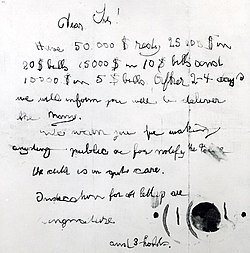
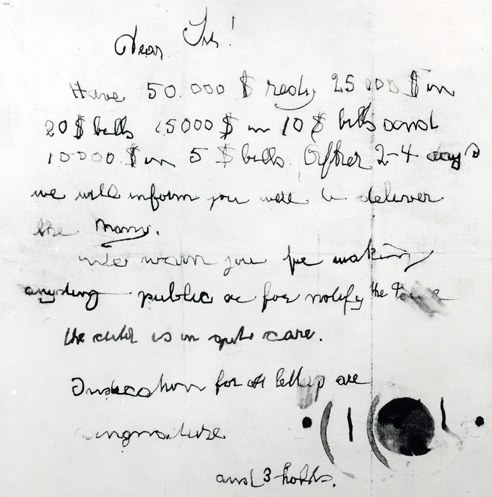
Ransom note left at the site of the Lindbergh kidnapping

In forensic science, questioned document examination (QDE) is the examination of documents potentially disputed in a court of law. Its primary purpose is to provide evidence about a suspicious or questionable document using scientific processes and methods. Evidence might include alterations, the chain of possession, damage to the document, forgery, origin, authenticity, or other questions that come up when a document is challenged in court.

Overview

[edit]
The printer used to print a document can be forensically established using the Machine Identification Code.

Many QDE involve a comparison of the questioned document, or components of the document, to a set of known standards. The most common type of examination involves handwriting wherein the examiner tries to address concerns about potential authorship.

A document examiner is often asked to determine if a questioned item originated from the same source as the known item(s), then present their opinion on the matter in court as an expert witness. Other common tasks include determining what has happened to a document, determining when a document was produced, or deciphering information on the document that has been obscured, obliterated, or erased.

The discipline is known by many names including "forensic document examination", "document examination", "diplomatics", "handwriting examination", or sometimes "handwriting analysis", although the latter term is not often used as it may be confused with graphology. Likewise a forensic document examiner (FDE) is not to be confused with a graphologist, and vice versa.

Many FDEs receive extensive training in all of the aspects of the discipline. As a result, they are competent to address a wide variety of questions about document evidence. However, this "broad specialization" approach has not been universally adopted.

In some locales, a clear distinction is made between the terms "forensic document examiner" and a "forensic handwriting expert/examiner". In such cases, the former term refers to examiners who focus on non-handwriting examination types while the latter refers to those trained exclusively to do handwriting examinations. Even in places where the more general meaning is common, such as North America or Australia, there are many individuals who have specialized training only in relatively limited areas. As the terminology varies from jurisdiction to jurisdiction, it is important to clarify the meaning of the title used by any individual professing to be a "forensic document examiner".

Scope of document examination

[edit]

A forensic document examiner is intimately linked to the legal system as a forensic scientist. Forensic science is the application of science to address issues under consideration in the legal system. FDEs examine items (documents) that form part of a case that may or may not come before a court of law.

Common criminal charges involved in a document examination case fall into the "white-collar crime" category. These include identity theft, forgery, counterfeiting, fraud, or uttering a forged document. Questioned documents are often important in other contexts simply because documents are used in so many contexts and for so many purposes. For example, a person may commit murder and forge a suicide note. This is an example where a document is produced directly as a fundamental part of a crime. More often a questioned document is simply the by-product of normal day-to-day business or personal activities.

For several years, the American Society for Testing and Materials, International (ASTM) published standards for many methods and procedures used by FDEs. E30.02 was the ASTM subcommittee for Questioned Documents. These guides were under the jurisdiction of ASTM Committee E30 on Forensic Sciences and the direct responsibility of Subcommittee E30.02 on Questioned Documents. When the ASTM Questioned Document subcommittee was disbanded in 2012 the relevant standards moved under the Executive Subcommittee E30.90; however, those standards have all been withdrawn over time.[1] Those standards, as well as links to updated versions of the documents, are presently available on the SWGDOC (The Scientific Working Group for Document Examiners) website.[2]

In 2015, the AAFS Standards Board (ASB) was formed to serve as a Standards Developing Organization (SDO). The ASB is an ANSI-accredited subsidiary of the American Academy of Forensic Sciences and the Forensic Document Examination Consensus Body within the ASB has published several relevant Standards.[3]

One of those is the Scope of Expertise in Forensic Document Examination document[4] which states an examiner needs "discipline specific knowledge, skills, and abilities" that qualifies them to conduct examinations of documents to answer questions about:

  1. the source(s) of writing;
  2. the source(s) of machine-produced documents;
  3. the source(s) of typewriting, impressions, and marks;
  4. the associations of materials and devices used to produce documents;
  5. the genuineness and authenticity of documents;
  6. the detection and decipherment of alterations, obliterations, and indentations, and;
  7. the preservation and restoration of legibility to damaged or illegible documents"[4]

Some FDEs limit their work to the examination and comparison of handwriting; most inspect and examine the whole document in accordance with this standard.

Types of document examined

[edit]

Documents feature prominently in all manner of business and personal affairs. Almost any type of document may become disputed in an investigation or litigation. For example, a questioned document may be a sheet of paper bearing handwriting or mechanically-produced text such as a ransom note, a forged cheque, or a business contract. It may be material not normally thought of as a "document"; FDEs define the word "document" very broadly, as any material bearing marks, signs, or symbols intended to convey a message or meaning to someone. This includes, for example, graffiti on a wall, stamp impressions on meat products, and covert markings hidden in a written letter.

Historical and noteworthy cases

[edit]

Pre-1900

[edit]
  • The Howland will forgery trial (1868)
  • Although the crimes were committed before the discipline of document examination was firmly established, the letters of the Jack the Ripper case have since been examined in great detail
  • The Dreyfus Affair (1894), involving non-FDE Alphonse Bertillon, although professional comparisons exonerating Dreyfus were ignored
  • The James Reavis (Baron of Arizona) land swindle trial about forged documents involved in a Spanish barony and land grant (1895)
  • The Adolf Beck cases (1896 and 1904) where handwriting expert Thomas H. Gurrin repeated an erroneous identification

1900-2000

[edit]

Post-2000

[edit]

Candidacy

[edit]

A person who desires to enter a career of forensic document examination must possess certain traits and abilities. Requirements for the "Trainee Candidate" (Standard Guide for Minimum Training Requirements for Forensic Document Examiners) are listed in ASTM (E2388-11)[5] which has been moved to SWGDOC[6] (G02-13).

First and foremost, "an earned baccalaureate degree or equivalent from an accredited college or university" is required as it gives the aspirant a scientific background with which to approach the work in an objective manner, as well as bestowing necessary biological, physical, and chemical knowledge sometimes called upon in the work.

Second, excellent eyesight is required to see fine details that are otherwise inconspicuous. To this end, the aspirant must successfully complete:

  • a form discrimination test to ensure that the aspirant is able to tell apart two similar-appearing yet different items,
  • a color perception test, and
  • near and distant visual acuity tests "with best corrected vision within six months prior to commencement of training."

Desirable skills also include knowledge of paper, ink, printing processes, and handwriting.

Training

[edit]

There are three possible methods of instruction for an aspiring document examiner:

  1. Self-education is the way the pioneers of the field began, as there was no other method of instruction.
  2. Apprenticeship has become the widespread way many examiners are now taught. This is the method that is recommended by ASTM in Standard E2388-11[5] and SWGDOC G02-13.[6] To conform with these standards such training "shall be the equivalent of a minimum of 24 months full-time training under the supervision of a principal trainer" and "the training program shall be successfully completed in a period not to exceed four years". The training program must also include an extensive list of specific syllabus topics outlined in the relevant Standards.
  3. College and university programs are very limited, due in part to the relatively limited demand for forensic document examiners. It also relates to the need for extensive practical experience, particularly with respect to handwriting examination. It is difficult to include this degree of practical experience in a normal academic program.

There are some distance learning courses available as well. These are taught through a virtual reality classroom and may include an apprenticeship program, a correspondence course, or both.

A trainee must learn how to present evidence before the court in clear, forceful testimony. Fledgling examiners in the later stages of training can get a glimpse into the legal process as well as a better sense of this aspect of their work through participation in a mock trial or by attending court hearings to observe the testimony of qualified examiners. These are guidelines and not requirements.

Examination

[edit]

Examination types

[edit]

Examinations and comparisons conducted by document examiners can be diverse and may involve any of the following:

Principle of identification

[edit]

The concept of 'identification' as it is applied in the forensic sciences is open to discussion and debate.[7] Nonetheless, the traditional approach in the discipline of forensic document examination is best expressed as follows:

"When any two items possess a combination of independent discriminating elements (characteristics) that are similar and/or correspond in their relationships to one another, of such number and significance as to preclude the possibility of their occurrence by pure coincidence, and there are no inexplicable disparities, it may be concluded that they are the same in nature or are related to a common source (the principle of identification)."[8]: 84 

The evaluation of such characteristics is now predominantly subjective though efforts to meaningfully quantify this type of information are ongoing. Subjective evaluation does not mean that the results of properly conducted comparisons will be unreliable or inaccurate. To the contrary, scientific testing has shown that professional document examiners (as a group) out-perform lay-people when comparing handwriting or signatures to assess authorship.[9]

However, this type of subjective analysis depends greatly upon the competence of an individual examiner.

It follows that

  1. an examiner should follow appropriate case examination protocols carefully and evaluate all possible propositions,
  2. an examiner should be properly trained and their training should include adequate testing of their abilities,
  3. the formal case examination procedure should incorporate some form of secondary review (ideally, independent in nature) and
  4. every examiner should make every effort to demonstrate and maintain their competency through professional certification and ongoing proficiency testing.

Handwriting examinations

[edit]

The examination of handwriting to assess potential authorship proceeds from the above principle of identification by applying it to a comparison of samples of handwritten material. Generally known as ACE-V, there are three stages in the process of examination.[8]

As Huber and Headrick explain in their text, these are as follows:[8]: 34 

  1. Analysis or Discriminating Element Determination:

    The unknown item and the known items must, by analysis, examination, or study, be reduced to a matter of their discriminating elements. These are the habits of behaviour or of performance (i.e., features or characteristics and, in other disciplines, the properties) that serve to differentiate between products or people which may be directly observable, measurable, or otherwise perceptible aspects of the item.

  2. Comparison:

    The discriminating elements of the unknown, observed or determined through analysis, examination, or study, must be compared with those known, observed, or recorded of the standard item(s).

  3. Evaluation:

    Similarities or dissimilarities in discriminating elements will each have a certain value for discrimination purposes, determined by their cause, independence, or likelihood of occurrence. The weight or significance of the similarity or difference of each element must then be considered and the explanation(s) for them proposed.

  4. Optionally, the procedure may involve a fourth step consisting of verification/validation or peer review.

The authors note further that "This process underlies the identification of any matter, person, or thing, by any witness, whether technical, forensic, or not." As such, it is not a formal method, but rather the elements that go into the method.

ASTM published a standard guide for the examination of handwriting titled "E2290-07a: Examination of Handwritten Items" which was withdrawn in 2016.[10] At that time, it was published as the SWGDOC Standard for Examination of Handwritten Items.[11] This was superseded in 2022 by the Academy Standards Board document Standard for Examination of Handwritten Items.[12] Some of the guides listed under "Other Examinations" below also apply to forensic handwriting comparisons (e.g., E444 or E1658).

An alternative guide for the examination of handwriting and signatures has been developed by the Forensic Expertise Profiling Laboratory (School of Human Biosciences, La Trobe University, Victoria, Australia).

The European Network of Forensic Science Institutes has also published a 'Best Practice Manual for the Forensic Handwriting Examination'.[13]

Other examinations

[edit]

Aside from E2290 mentioned above, many standard guides pertaining to the examination of questioned documents were published by ASTM International.[1] They include the following:

  • E0444-09 Scope of Work Relating to Forensic Document Examiners (Withdrawn 2018)[14]
  • E2195-09 Terminology: Examination of Questioned Documents (Withdrawn 2018)[15]
  • E1658-08 Terminology: Expressing Conclusions of Forensic Document Examiners (Withdrawn 2017)[16]
  • E1422-05 Standard Guide for Test Methods for Forensic Writing Ink Comparison (Withdrawn 2014)[17]
  • E1789-04 Writing Ink Identification (Withdrawn 2013)[17]
  • E2285-08 Standard Guide for Examination of Mechanical Checkwriter Impressions (Withdrawn 2017)[18]
  • E2286-08a Standard Guide for Examination of Dry Seal Impressions (Withdrawn 2017)[19]
  • E2287-09 Standard Guide for Examination of Fracture Patterns and Paper Fiber Impressions on Single-Strike Film Ribbons and Typed Text (Withdrawn 2018)[20]
  • E2288-09 Standard Guide for Physical Match of Paper Cuts, Tears, and Perforations in Forensic Document Examinations (Withdrawn 2018)[21]
  • E2289-08 Standard Guide for Examination of Rubber Stamp Impressions (Withdrawn 2017)[22]
  • E2291-03 E2291-03 Standard Guide for Indentation Examinations (Withdrawn 2012)[23]
  • E2325-05e1 Standard Guide for Non-destructive Examination of Paper (Withdrawn 2014)[24]
  • E2331-04 Standard Guide for Examination of Altered Documents (Withdrawn 2013)[25]
  • E2388-11 Minimum Training Requirements for Forensic Document Examiners (Withdrawn 2020)[5]
  • E2389-05 Standard Guide for Examination of Documents Produced with Liquid Ink Jet Technology (Withdrawn 2014)[26]
  • E2390-06 Standard Guide for Examination of Documents Produced with Toner Technology (Withdrawn 2015)[27]
  • E2494-08 Standard Guide for Examination of Typewritten Items (Withdrawn 2017)[28]

All withdrawn standards listed above have been taken over and are presently available on the SWGDOC (The Scientific Working Group for Document Examiners) website, including links to updated versions of the documents.[2]

Not all laboratories or examiners use or follow ASTM guidelines. These are guidelines and not requirements. There are other ASTM guides of a more general nature that apply (e.g., E 1732: Terminology Relating to Forensic Science). Copies of ASTM Standards can be obtained from ASTM International.

ANSI/ASB Standards and Guides for Questioned Documents are being published to replace previous ASTM/SWGDOC documents. As of 2023-12-25, the following have been published:[29]

  • ANSI/ASB STANDARD 011 | QUESTIONED DOCUMENTS Scope of Expertise in Forensic Document Examination[30]
  • ANSI/ASB STANDARD 035 | QUESTIONED DOCUMENTS Standard for the Examination of Documents for Alterations[31]
  • ANSI/ASB STANDARD 044 | QUESTIONED DOCUMENTS Standard for Examination of Documents for Indentations[32]
  • ANSI/ASB STANDARD 070 | QUESTIONED DOCUMENTS Standard for Examination of Handwritten Items[33]
  • ANSI/ASB STANDARD 117 | QUESTIONED DOCUMENTS Standard for Examination of Stamping Devices and Stamp Impressions[34]
  • ANSI/ASB STANDARD 127 | QUESTIONED DOCUMENTS Standard for the Preservation and Examination of Charred Documents[35]
  • ANSI/ASB STANDARD 128 | QUESTIONED DOCUMENTS Standard for the Preservation and Examination of Liquid Soaked Documents[36]
  • ANSI/ASB STANDARD 172 | QUESTIONED DOCUMENTS Standard for Examination of Mechanical Checkwriter Impressions and Machines[37]

Organization of scientific advisory committees (OSAC) Registry includes standards for Questioned Documents on the OSAC Registry.[38][39]

  • ANSI/ASB Standard 011, Scope of Expertise in Forensic Document Examination. 2022. 1st. Ed.[40]
  • ANSI/ASB Standard 044, Standard for Examination of Documents for Indentations. 2019. 1st. Ed.[41]

Common tools of the trade

[edit]

Professional organizations

[edit]

Links are provided below

Dedicated to questioned document examination

[edit]
  • American Society of Questioned Document Examiners (ASQDE): USA and Canada
  • Australasian Society of Forensic Document Examiners Inc. (ASFDE Inc): Australia/Asia (formerly the Australian Society of Forensic Document Examiners)[42]
  • Associación Professional de Peritos Callígrafos de Cataluña (Spain)
  • European Network of Forensic Handwriting Experts (ENFHEX within ENFSI)
  • European Document Experts Working Group (EDEWG within ENFSI)
  • Southeastern Association of Forensic Document Examiners (SAFDE): Southeast USA
  • Southwestern Association of Forensic Document Examiners (SWAFDE): Southwest USA
  • Gesellschaft für Forensische Schriftuntersuchung (GFS): Frankfurt (Germany)
  • National Association of Document Examiners (NADE)
  • Association of Forensic Document Examiners (AFDE)
  • The International Association of Document Examiners (IADE)
  • The Scientific Association of Forensic Examiners (SAFE)
  • Sociedad Internacional de Peritos en Documentoscopia (SIPDO): Spain, Latin América

General forensic science associations with QDE sections

[edit]

Academic/research groups with interest in QDE

[edit]

Certification

[edit]

Due to the nature of certification, there are many bodies that provide this service. Most provide certification to individuals from a particular country or geographic area. In some places, the term accreditation may be used instead of certification. Either way, in the present context, it refers to the assessment of an examiner's competency and qualifications by an independent (third-party) organization of professionals.

Certifying bodies

[edit]

Forensic Science Society (UK)

[edit]

The Forensic Science Society (UK) provided its members, not limited to UK residents, with the opportunity to obtain a Professional Postgraduate Diploma in forensic disciplines, including Questioned Document Examination, and to use the postnominal 'FSSocDip'.[44] The program was accredited by the University of Strathclyde.

American Board of Forensic Document Examiners

[edit]

The American Board of Forensic Document Examiners, Inc. (ABFDE) provides third-party certification for professional forensic document examiners from Canada, Mexico, the United States of America, Australia and New Zealand.[45] The ABFDE is accredited by the Forensic Specialties Accreditation Board.[46]

Board of Forensic Document Examiners

[edit]

The US Board of Forensic Document Examiners (BFDE) provides certification of forensic document examiners. The BFDE is accredited by the Forensic Specialties Accreditation Board, which does not have any international affiliations.[46]

See also

[edit]

Notes

[edit]

References

[edit]
[edit]
Revisions and contributorsEdit on WikipediaRead on Wikipedia
from Grokipedia
Questioned document examination (QDE), also termed forensic document examination, constitutes a specialized branch of dedicated to scrutinizing documents whose authenticity, origin, or integrity is contested, particularly within criminal investigations and civil litigation. In Brazil and other Portuguese-speaking countries, the equivalent field is known as perícia grafotécnica (also known as análise grafotécnica forense), with a primary focus on verifying the authenticity of signatures and documents. This discipline encompasses the comparative analysis of , signatures, typewritten or printed text, indentations, and physical alterations like erasures, obliterations, or additions to ascertain authorship, detect forgeries, or identify fabrication techniques. Examiners rely on principles of individual variation in writing habits and material properties, employing tools such as stereomicroscopes, electrostatic detection apparatus for indented writing, and chemical reagents for differentiation. The field's systematic foundations trace to the early , pioneered by figures like , whose 1910 treatise Questioned Documents codified methods for handwriting comparison based on class and individual characteristics, influencing modern practice amid the rise of formalized forensic labs in the 1920s. Notable applications include high-profile cases such as the , where ransom note analysis aided attribution efforts, underscoring QDE's role in linking suspects to communications. Over time, advancements in , from to , have expanded capabilities for non-destructive analysis of inks, papers, and printing processes. Despite its evidentiary contributions, QDE has encountered scrutiny regarding methodological reliability, with empirical studies revealing examiner error rates in blind proficiency tests and calls for enhanced foundational validity under standards like Daubert, prompting ongoing research into quantitative metrics and human factors to bolster objectivity. Proponents emphasize its parallels to other disciplines, supported by case-specific successes, yet critics highlight the paucity of large-scale, population-based databases for probabilistic assessments, reflecting broader debates in on empirical rigor versus experiential expertise.

Definition and Fundamentals

Core Principles of Identification

The core principles of identification in questioned document examination rest on the scientific premise that constitutes a unique, habitual reflecting an individual's neuromuscular coordination, which cannot be replicated identically by another person. This principle of individuality asserts that no two skilled writers produce handwriting that matches in all significant features, a finding corroborated by large-scale databases such as those maintained by the U.S. Secret Service and FBI, encompassing hundreds of thousands of samples demonstrating distinct patterns across writers. Identification thus proceeds through systematic comparison of a questioned document against multiple known exemplars from the alleged author, evaluating both class characteristics—shared traits like general letter forms influenced by regional or educational training—and subclass or individual characteristics, such as idiosyncratic formations, pen pressure inconsistencies, or proportional distortions unique to the writer. A companion principle is natural variation, recognizing that even a single writer's output exhibits a range of fluctuations due to factors like physical condition, writing speed, emotional state, or fatigue, yet remains bounded within recognizable limits that do not alter core habits. Examiners must distinguish this intra-writer variability from inter-writer differences or signs of , where forgers often produce unnatural line quality, hesitations, or patched strokes exceeding a genuine writer's threshold—for instance, an unskilled individual cannot mimic fluid without detectable artifacts. Fundamental discordances in pivotal elements, such as baseline alignment, letter slant, or connector fluency, preclude identification, while consistent agreement in multiple significant traits supports it, adhering to standards that emphasize probabilistic rather than absolute certainty. These principles underpin conclusions categorized as identification (probable authorship), elimination (different writer), or inconclusive (insufficient basis), with examiners required to document the quantity and quality of compared features to ensure reproducibility. Supporting examinations may integrate , such as ink dating via chemical or paper fiber matching, to corroborate temporal or material authenticity, though handwriting identification remains the cornerstone for authorship disputes. Questioned document examination (QDE) differs fundamentally from , which analyzes to infer traits rather than to determine authenticity or . Graphology relies on subjective interpretations of features like slant or pressure to assess character, but lacks empirical validation and is not admissible in courts as . In contrast, QDE employs objective, comparative methods—such as measuring stroke formations, letter proportions, and execution speed—against known exemplars to establish authorship or detect alterations, grounded in and statistical probabilities. Unlike , which examines linguistic content including , , , and stylistic idiosyncrasies to attribute authorship or detect deception in text, QDE prioritizes physical and material attributes of the document itself. might analyze phrasing in a ransom note for regional speech patterns, but QDE investigates tangible elements like composition, fibers, indentations from underlying writing, or erasure traces. While both disciplines may address disputed texts, QDE does not interpret semantic meaning and focuses on non-linguistic forensic traces verifiable through or chemical testing. QDE also contrasts with , which recovers and analyzes electronic data from devices, metadata, or file systems to trace origins or manipulations in formats. tools extract timestamps, edit histories, or embedded code from files like PDFs, whereas traditional QDE targets physical documents or printed outputs, assessing printer defects, toner distribution, or signature even when digitized. Emerging overlaps exist in hybrid cases, such as verifying digital signatures via pixel-level anomalies, but QDE maintains specialization in document-specific authenticity questions rather than broader cyber artifact reconstruction. Distinctions from or analysis lie in scope: while QDE may incorporate chemical tests for ink dating or paper aging, it integrates these within a holistic context, not isolating molecular components as primary trace evidence in non-document crimes. This specialization ensures QDE addresses legal disputes over document integrity, such as wills or contracts, through multidisciplinary but document-centric protocols.

Historical Development

Early Origins and Pioneers

The practice of examining questioned documents traces its origins to ancient Roman jurisprudence, where protocols for detecting were established as early as the third century during the reigns of and Antoninus, involving comparisons of handwriting and seals to verify authenticity. By the sixth century, the Justinian Code formalized guidelines for judicial proceedings, permitting judges to summon skilled scribes or experts to compare disputed writings against known samples and provide testimony on their genuineness, marking an early systematic approach to document authentication in legal contexts. In during the , advancements emerged through individual practitioners who applied graphological and comparative methods to high-profile cases. Charles Chabot (1815–1882), an English expert in handwriting, conducted pioneering examinations, notably investigating the authorship of the anonymous "Letters of Junius" in 1868–1871, where he employed direct comparisons of letter formations, proportions, and habitual peculiarities to attribute writings, publishing his findings and techniques that influenced subsequent forensic practices. Chabot's work, often as part of firms specializing in disputed signatures, represented one of the earliest professional engagements in questioned document analysis, predating formalized training. In the United States, early judicial recognition of handwriting expertise appeared in cases like Sauve v. Dawson in 1812, involving verification of a on a , though systematic testimony gained traction later. The Supreme Court's 1887 decision in Bell v. Brewster affirmed as a reliable identification method, allowing based on comparative of exemplars. Daniel T. Ames, a instructor turned examiner, contributed foundational texts like "Ames on " in 1900, detailing detection techniques and case studies from his practice. These efforts culminated in the foundational work of (1858–1946), who began systematizing document examination in the late through empirical observation of variations and published "Questioned Documents" in 1910, establishing principles for scientific that elevated the field from ad hoc comparisons to a structured discipline. Osborn's advocacy for standardized methods and courtroom admissibility, informed by cases like the 1900 Molineaux poisoning trial involving multiple handwriting experts, laid the groundwork for professional organizations and modern forensics.

20th Century Milestones and Standardization

Albert S. Osborn's publication of Questioned Documents in 1910 established foundational principles for scientific handwriting identification, including the use of standards of comparison and systematic analysis of individual characteristics, which courts increasingly accepted as expert evidence by the early . The 1929 revised edition expanded on these methods, incorporating advancements in and examination, and by that year, standardized protocols for document analysis had emerged in U.S. practice. The 1932 Lindbergh baby kidnapping case exemplified the practical application of these techniques, with forensic document examiners analyzing 14 ransom notes for handwriting traits such as letter formation, patterns, and phrasing, ultimately linking them to suspect Bruno Richard Hauptmann through consistent similarities identified by multiple experts, including those from the established that year. This high-profile trial underscored the evidentiary value of document examination, prompting greater institutional investment in forensic capabilities. Professional standardization advanced with the founding of the American Society of Questioned Document Examiners (ASQDE) on September 2, 1942, by 15 practitioners dedicated to annual knowledge-sharing meetings and research dissemination to ensure consistent methodologies across the field. In 1977, the American Board of Forensic Document Examiners (ABFDE) was formed to certify qualified examiners via rigorous testing of skills in , signatures, and alterations, addressing variability in practitioner competence. Technological and procedural standardization progressed mid-century, with the 1978 introduction of the Electrostatic Detection Apparatus (ESDA) enabling non-destructive visualization of indented writings, complementing traditional and chemical tests. ASTM International's Committee E30 on Forensic Psychophysiology, through its questioned documents subcommittee, issued early standards on examination procedures and reporting by the 1980s, promoting uniformity in handling typewriters, inks, and erasures amid evolving document types like photocopies. These efforts collectively elevated questioned document examination from analysis to a disciplined forensic subspecialty by century's end.

Late 20th and 21st Century Advances

The late 20th century saw the development of the Video Spectral Comparator (VSC), a pivotal instrument for non-destructive forensic analysis of documents, enabling examiners to visualize ink differences, erasures, and security features across , visible, and spectra. Introduced in the by Foster + Freeman, the VSC facilitated real-time imaging and comparison without altering the document, addressing limitations of earlier microscopic and chemical methods. By the , enhancements like the VSC2000 incorporated advanced for detecting alterations in inks and paper, improving discrimination in cases involving overlapping writings or obliterations. Advances in ink analysis during this period included refined chromatographic techniques such as (TLC) and (HPLC), which allowed for detailed profiling of solvents and dyes to establish relative age through evaporation rate differences. These methods, building on databases like the U.S. Secret Service's library established in the but expanded digitally in the 1980s–1990s, enabled probabilistic dating within 1–2 years for ballpoint s written post-1970. Computer-assisted systems also emerged for quantitative comparison, reducing subjectivity by measuring stroke dynamics and pressure variations via digitized tablets. In the , has provided high-resolution spectral signatures across hundreds of wavelengths, allowing non-invasive differentiation of visually similar inks and detection of forgeries or alterations on substrates. Studies from the demonstrated its efficacy in revealing hidden layers or chemical discrepancies, with applications in distinguishing printed versus handwritten elements. Digital document forensics expanded to address electronic manipulations, incorporating metadata extraction, for compression artifacts, and printer identification via patterns in outputs. Machine learning algorithms, particularly convolutional neural networks (CNNs), have augmented traditional examination since the 2010s, achieving over 90% accuracy in verification and authorship attribution through feature extraction of slant, connectivity, and pressure. reviews highlight their integration for objective cross-comparisons in international cases, though expertise remains essential for contextual interpretation. Emerging techniques like terahertz imaging enable sub-micrometer surface profiling for concealed indentations or inks, offering potential for non-contact of layered documents.

Scope and Applications

Types of Questioned Documents

Questioned documents refer to any written, printed, typed, or otherwise produced materials whose authenticity, authorship, origin, or integrity is in dispute, often in legal or investigative contexts. These include items suspected of forgery, alteration, or misrepresentation, examined to determine genuineness through forensic techniques. Examples encompass a broad spectrum, from personal correspondence to official records, reflecting the diverse applications in criminal investigations, civil disputes, and historical verifications. Handwritten documents form a primary category, such as anonymous threatening letters, suicide notes, or ransom demands, where examiner focus on individual writing characteristics like letter formation, slant, and pressure patterns to identify or exclude authors. These often arise in cases involving extortion or homicide, as seen in historical instances like the 1932 Lindbergh baby kidnapping, where ransom notes were scrutinized for handwriting idiosyncrasies. Signatures on legal instruments represent another frequent type, including those on wills, contracts, deeds, checks, and mortgages, analyzed for , tracings, or natural variations against known exemplars. Forged signatures may exhibit tremors, hesitations, or disproportionate proportions, distinguishing them from genuine executions. Altered or obliterated documents, such as those with erasures, additions, or chemical treatments to conceal original content, are examined using , chemical tests, or to reveal underlying impressions or inks. This category includes modified official records like identification cards, passports, or notes suspected of counterfeiting through discrepancies or anomalies. Machine-produced or printed documents, encompassing typewritten letters, photocopies, printer outputs, stamps, and seals, undergo scrutiny for device-specific artifacts, such as wear, toner distribution, or indentation patterns from indentations on underlying sheets. These are common in cases involving fabricated contracts or duplicated official forms. Unusual questioned items, like blood- or soil-stained writings or indented impressions from pad writings, extend the scope to trace evidence integration, where electrostatic detection aids in recovering invisible grooves from overlying documents. Such examinations support broader forensic linkages in crime scenes.

Common Examination Scenarios

Questioned document examinations frequently address suspected forgeries in financial instruments, such as checks and contracts, where handwriting analysis determines if signatures match known exemplars. These cases often involve white-collar crimes, with examiners comparing questioned signatures against requested exemplars to identify simulations or tracings indicative of . In civil litigation, disputed wills or deeds undergo for alterations or authorship inconsistencies, potentially invalidating documents if evidence of obliterations or indentations reveals tampering. In corporate settings, questioned document examination supports compliance programs and fraud prevention efforts by verifying the authenticity of signatures and documents in business transactions, contracts, and financial operations. In Brazil, this practice is known as perícia grafotécnica and is commonly applied in extrajudicial contexts by companies, financial institutions, and law firms to authenticate documents and mitigate risks of fraud in commercial activities. Anonymous letters, including threats or demands, represent another prevalent scenario, particularly in criminal investigations like homicides or robberies. Examiners evaluate habits, letter formations, and proportional spacing to link the document to a , though challenges arise from disguised writing or limited exemplars. Ransom notes in cases, such as the 1932 Lindbergh incident, have historically prompted detailed analysis of paper type, composition, and linguistic patterns to trace origins or authorship. In suspicious deaths, suicide notes are commonly examined to distinguish genuine expressions from fabrications potentially staged in homicides. Forensic document experts assess natural writing flow versus hesitant strokes suggesting , alongside material examinations for sequence of entries. Typewritten or printed documents, including altered official records or , involve identification of machine defects, ink dating, or photocopy artifacts to establish authenticity. These scenarios underscore the discipline's role in both criminal prosecutions and civil disputes, relying on comparative and instrumental methods for objective conclusions.

Methodological Approaches

Handwriting and Signature Analysis

Handwriting analysis in questioned document examination determines authorship by comparing questioned writings to known exemplars, based on the principle that each individual's exhibits unique, habitual characteristics that remain relatively consistent despite natural variations. Examiners assess features such as letter formation, connections between characters, proportions, slant, alignment, spacing, pen pressure, line quality, and writing speed, distinguishing class characteristics (common to groups of writers) from individual characteristics (unique habits). Empirical studies validate the reliability of trained examiners, with error rates ranging from 0.32% to 5.85% for handwritten texts, outperforming lay comparisons. The process follows standardized procedures, such as those outlined by the Scientific Working Group for Forensic Document Examination (SWGDOC), beginning with evaluation of document sufficiency, originality, and naturalness versus or . Comparable portions of questioned and known writings are examined side-by-side using and controlled lighting to identify similarities or differences in , , patching, or tremors indicative of or . Known exemplars must be contemporaneous, non-requested samples to reflect natural habits, with at least 20-30 examples recommended for robust comparison. Signature analysis applies similar principles but emphasizes stylized elements like , initial and terminal , overall fluency, and , as genuine signatures are executed rapidly with smooth, tapered reflecting . Forged signatures often exhibit blunt beginnings and ends, pen lifts, retouching, or unnatural pressure distribution due to slower execution and tracing. and influence identifiability; simple signatures require more exemplars, while complex ones offer more individual traits for discrimination. Conclusions are expressed using standardized terminology, such as "identification" (writer is the same), "elimination" (different writer), or "inconclusive" when evidence is insufficient, with documentation of all observations to support transparency and peer review. Factors like age, illness, or intoxication can affect variation, requiring consideration of range within genuine writings.

Material and Process Examinations

and examinations in questioned document examination focus on the physical composition and production methods of documents to assess authenticity, detect alterations, and establish origins or timelines. These analyses typically begin with non-destructive techniques, progressing to destructive methods only when necessary and authorized, prioritizing preservation of . Forensic document examiners evaluate substrates like , inks, toners, and printing defects using standardized protocols to identify class characteristics (common to a group) and individualizing features (unique to a source). Paper examination involves non-destructive assessments of physical and to determine type, condition, and potential modifications. under transmitted light reveals watermarks, fibers, and surface texture, while measurement of thickness (to 0.02 precision) and weight (to 0.001 g) aids in matching known exemplars. (UV) examination (315–380 nm long-wave or 100–280 nm short-wave) detects variations indicating contamination or bleaching, and (IR) analysis (780 nm–1 ) highlights differences for age estimation or alterations. Opacity tests and feature checks further corroborate authenticity, with interferences like storage degradation noted. Ink analysis distinguishes formulations, sequences, and relative ages through comparative optical and chemical methods. Initial and lighting reveal stroke sequences in overlapping inks or erasures, while (TLC) separates components for composition matching. Advanced techniques like (LIBS) provide elemental profiles non-destructively, aiding discrimination in financial or cases. Dating relies on evaporation rates or stabilization, though limited to post-1970s ballpoint inks due to formulation changes; comparative exams across documents assess consistency. Process examinations identify reproduction methods such as electrophotography (toner-based printing) via class traits like toner distribution and fusing patterns. For toner documents, magnification detects device-specific defects—voids, smudges, or alignments—linking to photocopiers or printers; typestyles and successive artifacts (e.g., mark doubling) inform dating or generation counts. Printing process differentiation (, intaglio, inkjet) uses fine detail observation under varied illumination to spot plate wear or inkjet droplet patterns, excluding non-printed origins. Additional materials, such as seals or staples, undergo similar scrutiny for matching impressions or timelines, integrating with overall authenticity determinations.

Digital and Electronic Document Forensics

Digital and electronic document forensics constitutes a specialized extension of questioned document examination, focusing on the , alteration detection, and provenance tracing of non-physical files such as PDFs, documents, emails, and scanned images. This discipline applies scientific principles to digital artifacts, leveraging computational to identify manipulations that may not be evident through alone, thereby supporting legal determinations of authenticity in disputes involving contracts, wills, or evidentiary records. Unlike traditional , it emphasizes verifiable digital traces over human variability, with examiners preserving through forensic and write-blocking to prevent . Metadata analysis forms a foundational technique, extracting embedded attributes like creation and modification timestamps, author names, geolocation data, and originating software versions from file headers or properties. For instance, inconsistencies between a document's stated creation date and its internal edit history—such as layered changes in PDF objects—can signal post hoc alterations, as metadata may retain residual traces even after superficial edits. Tools process these elements to reconstruct timelines, revealing whether a file was backdated or sourced from unauthorized devices, with applications in verifying electronic contracts where disputes arise. Hash value computation provides a mathematical of a document's content, using algorithms like or SHA-256 to generate unique digests that alter predictably with even minor changes, such as pixel-level edits in embedded images. In forensic workflows, examiners acquire bit-for-bit copies of originals, compute baseline hashes, and compare them against suspects to confirm integrity or detect tampering, ensuring admissibility under standards requiring unaltered . This method's reliability stems from its sensitivity to content modifications, though it requires complementary analysis for contextual interpretation. Digital signature verification employs asymmetric , where a sender encrypts a document's hash with their private key, allowing recipients to decrypt and match it using the corresponding public key, thus attesting to both origin and unchanged state since signing. Forensic scrutiny extends to certificate validity, checks via CRLs or OCSP, and detection of spoofing through key mismatch or timestamp discrepancies, critical in cases of forged electronic approvals. Electronic signatures captured via tablet digitizers may incorporate dynamic biometric , such as and patterns, analyzable for akin to ink-based methods, though static images limit such depth. Advanced techniques include models trained on document artifacts to classify production tools or detect synthetic generations, as in identifying customized digital forgeries through anomalies or compression artifacts. Content —examining layered elements in formats like DOCX or PDF—uncovers hidden revisions or embedded indicative of manipulation. Challenges persist with anti-forensic tools that scrub metadata or emulate legitimate hashes, underscoring the need for multi-method validation and adherence to protocols like those from NIST for tool testing, ensuring empirical robustness over reliance on single indicators.

Tools and Technologies

Traditional Examination Equipment

Magnifying glasses, or loupes, serve as fundamental tools for initial , enabling examiners to scrutinize minute details such as stroke pressure, hesitations in , or subtle alterations like erasures and overwritings. These handheld devices typically provide 2x to 10x magnification and are essential for non-destructive preliminary before more advanced . Comparison microscopes facilitate simultaneous side-by-side viewing of questioned documents against exemplar samples, allowing forensic document examiners to detect discrepancies in class characteristics (e.g., letter formations, slant, and spacing) or printing alignments. These instruments, often equipped with adjustable stages and binocular eyepieces, were pivotal in early 20th-century cases, such as handwriting authentication in investigations, by enabling precise overlay comparisons without digital enhancement. Stereomicroscopes, including stereo-zoom variants, offer low-power (up to 100x) three-dimensional for examining document surfaces, indentations from underlying writing (via oblique ), and disruptions in paper or erasures. According to European Network of Forensic Science Institutes guidelines, such is the principal requirement for handwriting examinations, supporting qualitative assessments of natural writing variations versus simulated forgeries. Measuring instruments, including rulers, , protractors, and overlay grids, quantify spatial elements like baseline alignment, letter proportions, and interline spacing to identify mechanical anomalies in typewritten or printed documents. These tools, used since the foundational work of in the early , provide empirical metrics for determining if deviations exceed natural tolerances, as in detecting forged signatures through inconsistent proportions. Basic lighting setups, such as adjustable oblique, transmitted, and lamps, reveal latent features like watermarks, chemical erasures, or ink differentiations not apparent under standard illumination. light, employed historically to expose fluorescent properties in inks or papers, aids in distinguishing original from added entries, while transmitted light highlights perforations or repair attempts. These non-intrusive methods prioritize direct observation, minimizing reliance on chemical tests that could alter evidence.

Modern Instrumental Techniques

Modern instrumental techniques in questioned document examination employ advanced spectroscopic, imaging, and microscopy methods to analyze inks, papers, printing processes, and alterations non-destructively or with minimal sample preparation. These approaches, including , infrared (FTIR) spectroscopy, and (HSI), enable detailed chemical and physical characterization that surpasses traditional visual and microscopic examinations. Such methods facilitate ink differentiation, age estimation, and detection of forgeries by identifying unique spectral signatures. Raman spectroscopy provides molecular fingerprints for inks and pigments, allowing non-destructive identification of components like dyes in ballpoint pens or iron gall inks without substrate interference. In forensic applications, it differentiates blue inks on documents with , achieving high classification accuracy for questioned samples. FTIR spectroscopy complements this by analyzing ink vehicles and paper coatings in reflection or attenuated total reflection modes, useful for gel pens and fiber-tip inks. (XRF) and (LIBS) offer of inks, revealing compositions in historical manuscripts or modern prints. Hyperspectral imaging captures data across hundreds of spectral bands to distinguish inks, reveal overwritten or hidden text, and classify technologies with up to 98% accuracy in controlled studies. It excels in deciphering faded or altered documents by exploiting subtle reflectance differences invisible to the . Terahertz imaging, utilizing sub-millimeter waves, enables non-contact 3D mapping of layered structures, detecting indentations or concealed content in sealed documents without damage, as demonstrated in archival analysis adaptable to forensic contexts. (OCT) quantifies pen pressure variations in , aiding authenticity assessments. Scanning electron microscopy (SEM) coupled with energy-dispersive () examines ink morphology and elemental makeup at micrometer scales, identifying additives like in pigments. Gas chromatography-mass spectrometry (GC-MS) targets volatile components in inkjet inks for origin determination. These techniques, often integrated with chemometric tools like , enhance discrimination power but require validation against known standards to account for instrumental variability and substrate effects. Standards from bodies like SWGDOC guide their application in casework, emphasizing non-destructive prioritization.

Professional Requirements

Education and Training Pathways

Individuals pursuing careers in questioned document examination typically begin with a in a relevant field such as , chemistry, , or , providing foundational knowledge in scientific principles and analytical methods essential for document analysis. Advanced academic programs, including master's degrees focused on forensic document examination, offer structured coursework in handwriting analysis, ink and paper examination, and , often without a thesis requirement to emphasize practical preparation. Specialized training follows formal education and consists of 2 to 3 years of full-time apprenticeship under experienced examiners in government laboratories, private practices, or dedicated training facilities, where trainees conduct supervised casework, learn instrumentation use, and develop proficiency in report writing and courtroom testimony. Professional standards, such as those outlined by the Scientific Working Group for Forensic Document Examination (SWGDOC), specify minimum training components including extensive exposure to varied document types, error rate studies, and peer review processes to ensure competence. Dedicated training programs include the 2-year certification-oriented course at the School of Forensic Document Examination, emphasizing handwriting analysis and forensic techniques, and interactive online modules covering comprehensive document examination protocols. Apprenticeships prioritize hands-on experience, with trainees analyzing thousands of documents to build skills grounded in empirical comparisons rather than subjective interpretation. Overall, the pathway demands 6 to 7 years from bachelor's completion to operational proficiency, reflecting the field's reliance on rigorous, evidence-based skill acquisition to minimize errors in high-stakes forensic applications.

Certification Processes and Standards

The American Board of Forensic Document Examiners (ABFDE) serves as the principal certifying body for forensic document examiners in , establishing rigorous standards to ensure practitioner competence. Certification as a Diplomate requires a baccalaureate degree, completion of at least 24 months of full-time training in a recognized forensic under the supervision of a qualified principal trainer possessing a minimum of five years of post-training experience, and successful passage of a multi-phase examination process including credentials review, written tests, practical case-based evaluations, and oral boards. Training must encompass core competencies such as evidence handling, handwriting analysis, and examination, instrumentation use, and preparation, with evaluations via written exams, practical exercises, and documented casework. The Scientific Working Group for Forensic Document Examination (SWGDOC) outlines minimum standards adopted by major professional bodies, mandating a structured program not exceeding four years in duration to prevent prolonged apprenticeships that could compromise skill standardization. These standards emphasize supervised proficiency in examinations of questioned , signatures, typewriting, indentations, alterations, and digital prints, alongside proficiency testing and mechanisms to validate examiner reliability. The American Society of Questioned Document Examiners (ASQDE) endorses these SWGDOC guidelines as foundational for while promoting adherence to ethical codes that prohibit unsubstantiated opinions and require of all analytical steps. Beyond initial certification, ABFDE mandates periodic recertification through , case portfolio reviews, and re-examinations to maintain high integrity standards amid evolving forensic technologies. Internationally, while no unified global certification exists, bodies like ASQDE accept qualified members from diverse jurisdictions adhering to equivalent standards, such as those from for document examination practices, though North American credentials predominate in cross-border legal contexts due to their established empirical validation. Alternative certifications, such as the Certified Forensic Document Examiner (CFDE) from the Scientific Association of Forensic Examiners (SAFE), require exam passage but lack the same breadth of peer-reviewed training oversight as ABFDE. In Brazil, the discipline is known as perícia grafotécnica (forensic graphotechnical analysis), and professionals (peritos grafotécnicos) frequently provide specialized services in verifying the authenticity of signatures and documents, particularly in corporate compliance contexts for fraud prevention and document verification. While no niche-exclusive freelance platforms exist for this field, peritos can offer services online or seek partnerships through general Brazilian freelance sites such as Workana, 99Freelas, and GetNinjas. Such partnerships may be established directly with compliance departments or law firms via these platforms or through professional networks.

Organizations and Oversight

Key Professional Associations

The American Society of Questioned Document Examiners (ASQDE), founded on September 2, 1942, by 15 forensic document examiners, serves as the oldest and largest professional organization dedicated to advancing the field through research dissemination, annual conferences, and peer collaboration. Its nonprofit structure emphasizes sharing empirical findings on handwriting analysis, ink examination, and document authentication, fostering standards independent of governmental oversight. Membership includes practicing examiners from , private practice, and academia, with a focus on maintaining scientific rigor amid evolving forensic challenges. The American Board of Forensic Document Examiners (ABFDE), established in 1977 with initial funding from the U.S. Department of Justice and sponsorship from the American Academy of Forensic Sciences, functions as the preeminent certifying body for qualified practitioners. It administers rigorous examinations assessing knowledge in document analysis techniques, requiring candidates to demonstrate two years of supervised casework and ongoing proficiency testing for diplomate status. With fewer than 120 active diplomates primarily in the U.S. and , the ABFDE prioritizes objective validation over volume, accrediting its process through the Forensic Specialties Accreditation Board to ensure competence in court-admissible examinations. Other notable associations include the Association of Forensic Document Examiners (AFDE), formed in 1986 to support examiners in private and public sectors through publications like the Journal of Forensic Document Examination, which has issued peer-reviewed articles on forensic techniques since 1987. Internationally, the International Association of Document Examiners (IADE) emphasizes continuous education and training programs for examiners worldwide, originating from efforts to standardize skills amid varying national practices. The Board of Forensic Document Examiners (BFDE) provides an alternative independent certification pathway, open to qualified applicants without affiliation biases, evaluating expertise via comprehensive testing. These bodies collectively uphold professional integrity, though certification remains voluntary and not universally mandated for testimony admissibility.

International and Research Bodies

The European Network of Forensic Science Institutes (ENFSI) operates the European Document Examination Working Group (EDEWG), which facilitates the exchange of information, expertise, and support on technical issues in document examination, including the promotion of quality standards and harmonization across European laboratories. ENFSI has developed best practice manuals for examination, outlining procedures for comparing questioned handwritten documents to determine common origin, with editions updated as of 2023 to incorporate peer-reviewed protocols for feature analysis and reporting. These manuals emphasize empirical validation through intra- and inter-laboratory exercises, addressing variability in examiner conclusions based on dynamics and static features. Interpol coordinates international forensic efforts in questioned document analysis, publishing periodic reviews of technical advances, such as the 2019–2022 report covering research in ink dating, printer forensics, and digital document authentication, drawing from global casework data submitted by member states. It delivers specialized training to forensic document examiners worldwide on detecting fraudulent security features in passports, visas, and banknotes, emphasizing non-destructive techniques like UV examination and microscopic analysis to combat identity-related crimes. Interpol's reviews highlight causal links between document alterations and criminal patterns, such as cross-border rings, while noting challenges in standardizing error rates across jurisdictions. The United Nations Office on Drugs and Crime (UNODC) supports global through guides like the 2011 manual for developing forensic examination infrastructure, which details phased techniques from basic visual inspection to advanced spectral analysis for verifying authenticity in legal and border contexts. UNODC organizes international collaborative exercises in security examination, involving over 50 participants annually to test proficiency in identifying alterations, with 2022 exercises focusing on sourced questioned items to benchmark laboratory performance against empirical benchmarks. These initiatives prioritize evidence-based protocols over subjective interpretation, addressing gaps in developing regions where resource limitations inflate false positive rates in handwriting comparisons. For research, the International Graphonomics Society (IGS) advances empirical studies on motor control and variability, providing data-driven models for forensic applications, such as quantifying intra-writer inconsistencies through kinematic analysis of and metrics. IGS conferences and publications, spanning decades, integrate biomechanical research with forensic needs, validating tools like digital tablets for replicating questioned signatures under controlled conditions, though forensic adoption lags due to admissibility concerns over non-traditional metrics. This body emphasizes first-principles modeling of graphic movements to reduce reliance on anecdotal expertise, with studies showing entropy measures predict detection accuracy at 85-90% in controlled datasets.

Empirical Validation and Case Studies

Notable Historical Cases

One of the most prominent historical applications of questioned document examination occurred in the 1932 and murder of Jr., where 14 ransom notes demanded payment for the child's return. Forensic document examiners, including , analyzed the in these notes against samples from suspect Bruno Richard Hauptmann, identifying consistent class and individual characteristics such as letter formations and pen pressure. Eight experts testified at Hauptmann's 1935 trial that he authored the notes, contributing to his conviction for and murder, though the case later faced scrutiny for potential in the analysis. In the 1983 Hitler Diaries scandal, forger produced 60 volumes purporting to be Adolf Hitler's personal writings, initially authenticated by historian but subjected to forensic scrutiny. Document examiners identified anomalies in , including inconsistent stroke widths and letter proportions deviating from known Hitler samples, prior to chemical analysis revealing modern paper and ink. This case highlighted the limitations of initial visual authentication, as and microscopic examinations confirmed the , leading to Kujau's conviction for . The in 1985 involved dealer creating a purported 1830 letter from Martin Harris describing Joseph Smith's encounter with a "white salamander," which deceived Mormon historians and the Church of Jesus Christ of Latter-day Saints. Forensic document examiners detected the through ink cracking patterns indicating recent application, discrepancies in historical paper aging, and handwriting comparisons to Hofmann's known writings, despite initial endorsements by some experts. This examination, combined with investigations, exposed Hofmann's broader scheme, resulting in his guilty plea to murder and charges.

Contemporary Applications and Outcomes

Contemporary applications of questioned document examination include forensic analysis in succession and disputes, where examiners authenticate disputed wills and codicils through handwriting comparison, dating, and indentation detection. In the Kenyan case In re Edith Wanjiku Gitao (Deceased) on June 4, 2025, the court mandated forensic document examination of wills dated November 15, 2010, and June 21, 2000, to resolve allegations of amid conflicting claims, demonstrating the technique's role in clarifying testamentary intent via physical and chemical . Similar applications occur in financial investigations, such as check alterations and forged contracts, where analysis reveals inconsistencies in composition or patterns, supporting in civil and criminal proceedings. Advancements in digital-era scrutiny have expanded QDE to customized questioned digital documents, including those generated from databases for purposes like insurance claims or identity verification, employing methods such as pixel-level and metadata extraction to identify tampering. A 2025 study outlined protocols for examining such documents, highlighting their prevalence in versatile schemes and the need for database-specific techniques to trace alterations post-generation. In international contexts, QDE supports anti-counterfeiting efforts, with and enabling non-destructive analysis of currency, passports, and seals, as reviewed in Interpol's 2019–2022 forensic , which documented enhanced trace recovery in cross-border cases. Outcomes of these applications often yield actionable , such as linking serial frauds through consistent document anomalies, as in forensic intelligence frameworks that shift from individual source attribution to across cases. In fraud detection, successful examinations have exposed schemes in and , providing courts with empirical grounds for rulings that recover assets or impose penalties, though admissibility depends on examiner adherence to standards like those from the Scientific Working Group for Forensic Document Examination. Empirical reviews indicate high utility in validating or invalidating documents under dispute, contributing to resolutions in over 80% of analyzed challenges where contradicts digital records, per practitioner case compilations.

Criticisms and Limitations

Reliability and Error Rate Studies

A 2016 report by the President's Council of Advisors on Science and Technology (PCAST) critiqued the foundational validity of feature-comparison methods in , including handwriting analysis in questioned document examination, for lacking large-scale, blind-testing black-box studies that demonstrate reproducible low error rates across diverse conditions. The report emphasized that prior research often relied on small samples, non-representative items, or designs prone to contextual bias, failing to establish error rates under realistic casework conditions. Subsequent empirical studies have provided data on examiner performance. A 2022 black-box study involving 34 forensic document examiners and over 6,000 pairwise comparisons reported false positive rates of 3.1% for non-mated pairs and false negative rates of 1.1% for mated pairs, with examiners reaching conclusions in 94% of cases. This study, conducted under blinded conditions with items simulating casework variability, suggested high accuracy when examiners issued definitive opinions, though inconclusive findings were more common for dissimilar or limited samples. A 2024 systematic review of 17 studies on forensic identification aggregated absolute error rates for experts at 0.32% to 5.85% across handwritten texts and signatures, yielding a mean of 2.84% (standard deviation 2.33%), compared to 11.43% to 63.2% for laypersons. The review highlighted lower errors in signature comparisons (mean 1.49%) versus free-text , attributing variability to factors like sample quality and examiner experience. Limitations persist in interpreting these rates. Analyses indicate that excluding inconclusive results—often 20-50% of evaluations—may underestimate true error probabilities; Bayesian models adjusting for non-response in black-box designs estimate effective false positive rates up to 8.4% or higher. Additionally, a 2020 study found examiners susceptible to , with exposure to potentially misleading contextual information increasing erroneous "match" conclusions by up to 15% in simulated cases. A investigation into influencing factors reported expert error rates of approximately 4-6% under controlled conditions, rising with degraded or limited exemplars, underscoring the method's dependence on . These findings collectively affirm moderate reliability in controlled settings but reveal vulnerabilities to real-world variables, prompting calls for standardized error estimation incorporating inconclusives and bias controls.

Cognitive Bias and Subjectivity Issues

Questioned document examination depends heavily on examiners' perceptual and interpretive skills in comparing features, such as stroke formation and letter proportions, which introduce inherent subjectivity due to individual variations in and . Inter-examiner disagreement rates in blind proficiency tests have ranged from 5% to 15% for authorship conclusions, reflecting this variability rather than purely objective metrics. Unlike automated systems, human analysis lacks standardized quantitative thresholds for many qualitative assessments, allowing personal heuristics to influence outcomes. Cognitive biases, including —where examiners unconsciously favor evidence aligning with initial expectations—and contextual bias from extraneous case details, can distort judgments. For instance, exposure to information suggesting a document's suspicious origin has led trainees to shift conclusions, with one experiment showing 50% opting for "non-identical" authorship under neutral context versus higher uncertainty or positive matches when primed with incriminating details. Content-related bias arises when the semantic meaning of questioned text influences feature perception, as examiners may subconsciously prioritize similarities if the fits expectations of . Empirical studies quantify impacts on error rates, with black-box simulations yielding false-positive rates of approximately 3.1% for non-matching pairs among experienced examiners, though real-world contexts may elevate this through unblinded exposure. A review of proficiency tests reported overall error rates averaging 2.84% (range 0.32–5.85%) for handwritten items, but noted that subjective from accumulated experiential assumptions contributes to inconsistencies beyond random error. While one study found no significant from knowing whether a case was prosecution- or defense-commissioned, critics argue such controls overlook subtler influences like institutional pressures or prior case outcomes. Mitigation strategies include linear sequential unmasking, where examiners receive minimal contextual data initially, and techniques like inverted comparisons to suppress content-driven subconscious cues. Protocols from bodies like the Scientific Working Group for Forensic Examination recommend blinding to non-essential , yet adherence varies, and residual subjectivity persists in discretionary reporting scales (e.g., "probably identical"). These measures reduce but do not eliminate risks, as human fundamentally resists full objectivization without advanced instrumentation. In the United States, the admissibility of questioned document examination (QDE) evidence, particularly handwriting analysis, is governed by Federal Rule of Evidence 702 and the , which mandates that expert testimony be based on reliable principles and methods, including , peer-reviewed validation, known error rates, and general acceptance in the relevant . Courts have frequently scrutinized QDE for its reliance on experiential judgment rather than purely empirical, quantifiable metrics, leading to challenges over subjectivity and potential cognitive biases, such as contextual influences from case information that may affect examiner conclusions. While black-box proficiency tests demonstrate low false-positive error rates for trained examiners—ranging from 0.32% to 5.85% in comparative studies—critics argue these do not fully address real-world variability or blind testing deficiencies, prompting motions to exclude under reliability prongs. Notable exclusions highlight these vulnerabilities. In United States v. Saelee (2001), a federal district court in barred hand-printing comparison testimony, ruling it unreliable due to the absence of established error rates, lack of standardized protocols, and subjective interpretive elements that failed Daubert scrutiny, emphasizing that QDE's foundational validity remained unproven in controlled, population-based studies. Similarly, in Barnett v. American Heritage (undated federal ruling), the court partially excluded printing comparison evidence, citing insufficient empirical support for the examiner's methods and potential for over-reliance on non-scientific analogies. These decisions underscore broader post-2009 critiques of forensic disciplines, including QDE, for inadequate statistical foundations and inter-examiner disagreement rates, though subsequent research has shown expert accuracy exceeding 95% in simulated cases when mitigating contextual bias through blinding. Despite occasional exclusions, QDE testimony remains admissible in most jurisdictions, including under state Frye standards requiring general acceptance, as courts weigh its practical utility against perfectionist scientific ideals; for instance, courts have upheld it post-Daubert, citing historical precedent and field-specific validation efforts. Challenges persist internationally under analogous standards, such as the UK's emphasis on training, but U.S. federal trends favor case-by-case gatekeeping rather than blanket rejection, with examiners increasingly required to disclose proficiency testing results and error rate data from sources like collaborative exercises to bolster reliability arguments. Legal scholars note that while academic critiques—often amplified in law reviews since —highlight QDE's non-falsifiable elements, empirical proficiency data counters claims of inherent unreliability, though courts remain cautious amid evolving demands for probabilistic reporting over categorical identifications.

Future Directions

Technological Innovations

Technological innovations in questioned document examination have introduced non-destructive imaging techniques and computational tools that enhance the detection of alterations, ink compositions, and authorship traits. Hyperspectral imaging captures spectral data across hundreds of wavelengths to differentiate inks and reveal overwritten text without physical contact. This method analyzes chemical compositions by identifying unique spectral signatures of pigments, enabling examiners to determine if inks were applied contemporaneously or at different times. Studies demonstrate its efficacy in forgery detection by chunking document colors and inks at the pixel level for optical property examination. Terahertz imaging employs electromagnetic waves in the terahertz range for contactless inspection of handwritten or sealed documents, penetrating non-conductive materials like to visualize hidden content or indentations. This technique supports non-destructive 3D , useful for legacy documents where traditional methods risk damage, by revealing layered structures and subsurface features. algorithms applied to terahertz images further improve denoising and resolution, facilitating the extraction of concealed information without altering evidence integrity. Artificial intelligence and machine learning have automated handwriting and signature analysis, reducing subjectivity in forensic comparisons. Convolutional neural networks classify signatures with accuracies exceeding 90%, distinguishing genuine from forged exemplars by learning patterns in stroke dynamics and pressure variations. Tools like GraphoMatch utilize these models to match questioned writings against known samples, providing probabilistic assessments of authorship. Such systems process large datasets to detect anomalies in digital or scanned documents, enhancing efficiency in high-volume caseloads. Advancements in and analysis incorporate spectroscopic methods, such as , for precise dating and origin determination, complementing traditional . Automated platforms, including thermal ribbon analysis for printed counterfeits, integrate with these technologies to streamline examinations of modern documents. These innovations collectively improve evidential reliability while preserving document integrity.

Needs for Enhanced Empirical Rigor

Questioned document examination, particularly analysis, has historically depended on examiners' experiential judgments rather than robust empirical foundations, leading to calls for rigorous validation studies that employ controlled simulations of genuine and forged documents to establish baseline error rates. A 2015 report emphasized the scarcity of empirical data supporting the validity and reliability of signature identification, noting that foundational assumptions about 's physiological uniqueness require testing through large-scale experiments with diverse populations to quantify intra- and inter-writer variability. Similarly, a 2022 Proceedings of the study on forensic comparisons, involving over 5 years of , demonstrated high accuracy in controlled settings but underscored the necessity for expanded datasets to generalize findings beyond limited samples, including variations in writing conditions like fatigue or illness. To mitigate subjectivity, enhanced rigor demands double-blind proficiency testing and inter-examiner reliability assessments, as current practices often lack , resulting in variability across practitioners. The National Institute of Standards and Technology's 2021 report on human factors in handwriting examination highlighted the need for peer-reviewed protocols that incorporate statistical models for feature discrimination, such as stroke dynamics and pressure patterns, validated against known to derive probabilistic likelihood ratios rather than binary conclusions. Furthermore, systematic reviews of existing methodologies, as proposed in literature, are essential to identify gaps in empirical support, prioritizing studies that control for contextual biases and employ ground-truth datasets simulating real-world forgery attempts. Quantitative advancements, including machine learning-assisted feature extraction, should complement human analysis but require empirical benchmarking against traditional methods to ensure they reduce false positives, which studies estimate at 5-15% in tasks under ideal conditions. Guidelines for validity assessment, such as those outlined in a 2023 Forensic Science International: Synergy article, advocate for repeatable experiments measuring across global examiner pools to address cultural differences, thereby elevating the discipline's scientific credibility for legal applications. Without such enhancements, persistent criticisms of risk undermining admissibility in courts, as evidenced by challenges under Daubert standards.

References

Add your contribution
Related Hubs
User Avatar
No comments yet.