Hubbry Logo
Half-lifeHalf-lifeMain
Open search
Half-life
Community hub
Half-life
logo
8 pages, 0 posts
0 subscribers
Be the first to start a discussion here.
Half-life
Half-life
from Wikipedia
Number of
half-lives
elapsed
Fraction
remaining
Percentage
remaining
0 11 100
1 12 50
2 14 25
3 18 12 .5
4 116 6 .25
5 132 3 .125
6 164 1 .5625
7 1128 0 .78125
n 12n 1002n

Half-life (symbol t½) is the time required for a quantity (of substance) to reduce to half of its initial value. The term is commonly used in nuclear physics to describe how quickly unstable atoms undergo radioactive decay or how long stable atoms survive. The term is also used more generally to characterize any type of exponential (or, rarely, non-exponential) decay. For example, the medical sciences refer to the biological half-life of drugs and other chemicals in the human body. The converse of half-life is doubling time, an exponential property which increases by a factor of 2 rather than reducing by that factor.

The original term, half-life period, dating to Ernest Rutherford's discovery of the principle in 1907, was shortened to half-life in the early 1950s.[1] Rutherford applied the principle of a radioactive element's half-life in studies of age determination of rocks by measuring the decay period of radium to lead-206.

Half-life is constant over the lifetime of an exponentially decaying quantity, and it is a characteristic unit for the exponential decay equation. The accompanying table shows the reduction of a quantity as a function of the number of half-lives elapsed.

Probabilistic nature

[edit]
Simulation of many identical atoms undergoing radioactive decay, starting with either 4 atoms per box (left) or 400 (right). The number at the top is how many half-lives have elapsed. Note the consequence of the law of large numbers: with more atoms, the overall decay is more regular and more predictable.

A half-life often describes the decay of discrete entities, such as radioactive atoms. In that case, it does not work to use the definition that states "half-life is the time required for exactly half of the entities to decay". For example, if there is just one radioactive atom, and its half-life is one second, there will not be "half of an atom" left after one second.

Instead, the half-life is defined in terms of probability: "Half-life is the time required for exactly half of the entities to decay on average". In other words, the probability of a radioactive atom decaying within its half-life is 50%.[2]

For example, the accompanying image is a simulation of many identical atoms undergoing radioactive decay. Note that after one half-life there are not exactly one-half of the atoms remaining, only approximately, because of the random variation in the process. Nevertheless, when there are many identical atoms decaying (right boxes), the law of large numbers suggests that it is a very good approximation to say that half of the atoms remain after one half-life.

Various simple exercises can demonstrate probabilistic decay, for example involving flipping coins or running a statistical computer program.[3][4][5]

Formulas for half-life in exponential decay

[edit]

An exponential decay can be described by any of the following four equivalent formulas:[6]: 109–112  where

  • N0 is the initial quantity of the substance that will decay (this quantity may be measured in grams, moles, number of atoms, etc.),
  • N(t) is the quantity that still remains and has not yet decayed after a time t,
  • t½ is the half-life of the decaying quantity,
  • τ is a positive number called the mean lifetime of the decaying quantity,
  • λ is a positive number called the decay constant of the decaying quantity.

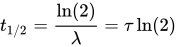
The three parameters t½, τ, and λ are directly related in the following way:where ln(2) is the natural logarithm of 2 (approximately 0.693).[6]: 112 
Half-life and reaction orders

[edit]

In chemical kinetics, the value of the half-life depends on the reaction order:

Zero order kinetics

[edit]

The rate of this kind of reaction does not depend on the substrate concentration, [A]. Thus the concentration decreases linearly.

The integrated rate law of zero order kinetics is:

In order to find the half-life, we have to replace the concentration value for the initial concentration divided by 2: and isolate the time:This t½ formula indicates that the half-life for a zero order reaction depends on the initial concentration and the rate constant.

First order kinetics

[edit]

In first order reactions, the rate of reaction will be proportional to the concentration of the reactant. Thus the concentration will decrease exponentially. as time progresses until it reaches zero, and the half-life will be constant, independent of concentration.

The time t½ for [A] to decrease from [A]0 to 1/2[A]0 in a first-order reaction is given by the following equation:It can be solved forFor a first-order reaction, the half-life of a reactant is independent of its initial concentration. Therefore, if the concentration of A at some arbitrary stage of the reaction is [A], then it will have fallen to 1/2[A] after a further interval of Hence, the half-life of a first order reaction is given as the following:

The half-life of a first order reaction is independent of its initial concentration and depends solely on the reaction rate constant, k.

Second order kinetics

[edit]

In second order reactions, the rate of reaction is proportional to the square of the concentration. By integrating this rate, it can be shown that the concentration [A] of the reactant decreases following this formula:

We replace [A] for 1/2[A]0 in order to calculate the half-life of the reactant A and isolate the time of the half-life (t½):This shows that the half-life of second order reactions depends on the initial concentration and rate constant.

Decay by two or more processes

[edit]

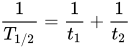
Some quantities decay by two exponential-decay processes simultaneously. In this case, the actual half-life T½ can be related to the half-lives t1 and t2 that the quantity would have if each of the decay processes acted in isolation:
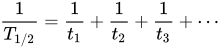
For three or more processes, the analogous formula is: For a proof of these formulas, see Exponential decay § Decay by two or more processes.
Examples

[edit]

There is a half-life describing any exponential-decay process. For example:

  • As noted above, in radioactive decay the half-life is the length of time after which there is a 50% chance that an atom will have undergone nuclear decay. It varies depending on the atom type and isotope, and is usually determined experimentally. See List of nuclides.
  • The current flowing through an RC circuit or RL circuit decays with a half-life of ln(2)RC or ln(2)L/R, respectively. For this example the term half time tends to be used rather than "half-life", but they mean the same thing.
  • In a chemical reaction, the half-life of a species is the time it takes for the concentration of that substance to fall to half of its initial value. In a first-order reaction the half-life of the reactant is ln(2)/λ, where λ (also denoted as k) is the reaction rate constant.

In non-exponential decay

[edit]

The term "half-life" is almost exclusively used for decay processes that are exponential (such as radioactive decay or the other examples above), or approximately exponential (such as biological half-life discussed below). In a decay process that is not even close to exponential, the half-life will change dramatically while the decay is happening. In this situation it is generally uncommon to talk about half-life in the first place, but sometimes people will describe the decay in terms of its "first half-life", "second half-life", etc., where the first half-life is defined as the time required for decay from the initial value to 50%, the second half-life is from 50% to 25%, and so on.[7]

In biology and pharmacology

[edit]

A biological half-life or elimination half-life is the time it takes for a substance (drug, radioactive nuclide, or other) to lose one-half of its pharmacologic, physiologic, or radiological activity. In a medical context, the half-life may also describe the time that it takes for the concentration of a substance in blood plasma to reach one-half of its steady-state value (the "plasma half-life").

The relationship between the biological and plasma half-lives of a substance can be complex, due to factors including accumulation in tissues, active metabolites, and receptor interactions.[8]

While a radioactive isotope decays almost perfectly according to first order kinetics, where the rate constant is a fixed number, the elimination of a substance from a living organism usually follows more complex chemical kinetics.

For example, the biological half-life of water in a human being is about 9 to 10 days,[9] though this can be altered by behavior and other conditions. The biological half-life of caesium in human beings is between one and four months.

The concept of a half-life has also been utilized for pesticides in plants,[10] and certain authors maintain that pesticide risk and impact assessment models rely on and are sensitive to information describing dissipation from plants.[11]

In epidemiology, the concept of half-life can refer to the length of time for the number of incident cases in a disease outbreak to drop by half, particularly if the dynamics of the outbreak can be modeled exponentially.[12][13]

See also

[edit]

References

[edit]
[edit]
Revisions and contributorsEdit on WikipediaRead on Wikipedia
from Grokipedia
The half-life, symbolized as t1/2t_{1/2}, is the time required for a to reduce to half its initial value in a process of . The concept originated in the study of , where it is the time required for one-half of the nuclei in a sample of a particular radioactive to undergo . This duration is a fixed characteristic property of each radioactive , independent of the amount of material or external conditions such as or . For example, the half-life of is approximately 5,730 years, while that of is about 4.5 billion years. The process of follows an exponential law, where the number of undecayed nuclei NN at time tt is given by N=N0(12)t/t1/2N = N_0 \left( \frac{1}{2} \right)^{t / t_{1/2}}, with N0N_0 as the initial number and t1/2t_{1/2} as the half-life. After each successive half-life interval, the remaining radioactive material halves again, leading to a predictable decline over multiple periods. This probabilistic nature means that individual atoms decay randomly, but large samples exhibit statistically reliable behavior. The concept of half-life was first introduced by physicist Ernest Rutherford in 1900 while studying the radioactivity of thorium compounds, where he observed the exponential decay of "thorium emanation" (now known as thoron, or radon-220). Rutherford's work, published in the Philosophical Magazine, marked the initial quantification of decay rates and laid the foundation for understanding nuclear stability. Later collaborations with Frederick Soddy further refined these ideas, leading to the transformation theory of radioactivity. Half-life plays a crucial role across various scientific disciplines, including physics, chemistry, , , , and . Applications include for determining the age of geological and archaeological materials, for and using short-lived isotopes, and radiation safety assessments for managing .

Fundamental Concepts

Definition and Basic Principles

The half-life of a quantity subject to decay is defined as the time interval required for that quantity to decrease to half of its initial value. This concept serves as a key measure of the decay rate in processes where the rate is proportional to the current amount present. The term "half-life" was first introduced by physicist in 1907, specifically in reference to the decay of radioactive substances, where he observed that the activity of compounds halved over consistent time periods. Over time, the concept has been generalized to describe any process, such as the diminution of unstable chemical concentrations or the fading of certain biological populations, providing a standardized way to quantify persistence or transience across diverse systems. Intuitively, half-life can be likened to a where a community's size halves repeatedly due to outward migration every fixed period, illustrating how the measure captures the steady of a resource without implying uniform loss at each step. Half-lives are typically expressed in units of time, ranging from seconds for short-lived isotopes to billions of years for long-lived ones, depending on the process. This deterministic timeframe arises from what is inherently a probabilistic decay mechanism, where individual events occur randomly but aggregate to predictable halving.

Probabilistic Nature

The probabilistic nature of half-life arises from the inherent quantum indeterminacy governing processes, where the exact moment of decay for an individual atom or nucleus cannot be predicted with certainty. According to , decay events, such as , occur via quantum tunneling, in which a particle escapes a potential barrier with a probability that defies classical . This randomness stems from the wave-like behavior of particles, making the decay time rather than fixed; thus, the half-life represents a statistical average applicable only to large ensembles of atoms, where the follows predictable patterns. Radioactive decay adheres to Poisson statistics, modeling the process as a series of independent, random events with a constant probability rate per unit time. In this framework, the probability that a given nucleus survives without decaying up to time tt is conceptually tied to an exponential form, P(t)=eλtP(t) = e^{-\lambda t}, where λ\lambda is the decay constant, reflecting the memoryless property of the process—past survival does not influence future decay likelihood. For a large , this leads to the observed exponential reduction in the number of undecayed nuclei, with the half-life emerging as the time scale over which half the ensemble decays on average. The half-life is closely related to but distinct from the mean lifetime [τ](/page/Tau)[\tau](/page/Tau), which is the average time an individual nucleus persists before decaying, given by τ=t1/2ln21.443t1/2\tau = \frac{t_{1/2}}{\ln 2} \approx 1.443 t_{1/2}. While the mean lifetime provides a direct measure of expected duration, the half-life is preferred for its intuitive , as it corresponds to the time for the activity to halve, facilitating easier interpretation and application in fields like nuclear safety and dating without requiring logarithmic calculations. Experimentally, half-lives are verified through counting statistics using detectors like Geiger-Müller counters, which record decay events as discrete pulses from . By measuring the number of counts over successive time intervals for a sample of known initial activity, researchers apply Poisson statistics to analyze the variance in counts, which equals the mean for random events, allowing estimation of the decay constant and thus the half-life via least-squares fitting to the exponential curve; this method accounts for and detector efficiency to ensure statistical reliability.

Mathematical Descriptions

Formulas in Exponential Decay

In first-order processes, such as , the number of undecayed entities N(t)N(t) at time tt follows the law N(t)=N0eλtN(t) = N_0 e^{-\lambda t}, where N0N_0 is the initial number and λ\lambda is the decay constant representing the probability per unit time that a single entity decays. This law arises from the dNdt=λN\frac{dN}{dt} = -\lambda N, which integrates to the exponential form, reflecting the proportional decrease in the population over time. The half-life t1/2t_{1/2} is the time required for the number of entities to reduce to half the initial value, so N(t1/2)=N0/2N(t_{1/2}) = N_0 / 2. Substituting into the decay law gives N02=N0eλt1/2\frac{N_0}{2} = N_0 e^{-\lambda t_{1/2}}, which simplifies to 12=eλt1/2\frac{1}{2} = e^{-\lambda t_{1/2}}. Taking the natural logarithm of both sides yields ln(12)=λt1/2\ln\left(\frac{1}{2}\right) = -\lambda t_{1/2}, or ln(2)=λt1/2-\ln(2) = -\lambda t_{1/2}, so t1/2=ln(2)λt_{1/2} = \frac{\ln(2)}{\lambda}. Since ln(2)0.693\ln(2) \approx 0.693, this approximates to t1/20.693λt_{1/2} \approx \frac{0.693}{\lambda}. The mean lifetime τ\tau, defined as the average time an individual entity survives before decaying, relates to the decay constant as τ=1λ\tau = \frac{1}{\lambda}. This follows from the exponential survival probability, where the expected lifetime is the integral of the survival function, yielding the reciprocal of λ\lambda. The half-life and mean lifetime are connected by t1/2=ln(2)τ0.693τt_{1/2} = \ln(2) \cdot \tau \approx 0.693 \tau, indicating that, on average, entities decay after about 1.443 half-lives. Graphically, the decay curve of N(t)N(t) versus tt is a smooth exponential, starting at N0N_0 and asymptotically approaching zero, with each half-life interval halving the quantity. On a semi-logarithmic plot of lnN(t)\ln N(t) versus tt, the curve linearizes to a straight line with slope λ-\lambda, where the half-life corresponds to the time interval for the line to drop by ln(2)0.693\ln(2) \approx 0.693 units vertically, facilitating experimental determination of λ\lambda.

Half-Life Across Reaction Orders

In , the half-life of a reaction—the time required for the concentration of a reactant to decrease to half its initial value—varies significantly depending on the reaction order, unlike the constant half-life characteristic of . For zero- and second-order reactions, the half-life depends on the initial concentration, leading to non-constant decay patterns that reflect the underlying rate laws. This dependence arises from the integrated rate laws derived from the differential rate equations for each order. For zero-order kinetics, where the rate is independent of reactant concentration (rate = k), the integrated rate law is [A]t=[A]0kt[A]_t = [A]_0 - kt. Setting [A]t=[A]0/2[A]_t = [A]_0 / 2 yields the half-life expression t1/2=[A]0/(2k)t_{1/2} = [A]_0 / (2k), showing that the half-life is directly proportional to the initial concentration [A]0[A]_0. As a result, higher initial concentrations lead to longer half-lives, and the reaction proceeds at a constant rate until the reactant is nearly depleted. A classic example occurs in enzyme-catalyzed reactions under Michaelis-Menten kinetics when substrate concentration greatly exceeds the Michaelis constant ([S]Km[S] \gg K_m), saturating the enzyme and approximating zero-order behavior with respect to substrate. In first-order kinetics, as discussed in the context of , the half-life remains constant and independent of concentration, given by t1/2=ln(2)/k0.693/kt_{1/2} = \ln(2) / k \approx 0.693 / k, where kk is the rate constant; this stems from the integrated rate law ln([A]t/[A]0)=kt\ln([A]_t / [A]_0) = -kt. For second-order kinetics, typically involving a single reactant in a rate = k[A]2k[A]^2 process or bimolecular reactions, the integrated rate law is 1/[A]t=kt+1/[A]01/[A]_t = kt + 1/[A]_0. The half-life is then t1/2=1/(k[A]0)t_{1/2} = 1 / (k [A]_0), indicating an inverse proportionality to the initial concentration—lower [A]0[A]_0 results in longer half-lives. This behavior is observed in reactions like the dimerization of , where the second-order rate constant k=5.76×10²Lmol1min1k = 5.76 \times 10^{-2} \, \mathrm{L \, mol^{-1} \, min^{-1}} and initial concentration [A]0=0.200M[A]_0 = 0.200 \, \mathrm{M} yield a half-life of approximately 86.8 minutes.

Decay via Multiple Processes

In cases where a radioactive undergoes decay through multiple parallel pathways, such as alpha emission and occurring simultaneously, the overall decay rate is determined by the combined effect of all modes. The total decay constant, denoted as λtotal\lambda_{\text{total}}, is the sum of the individual partial decay constants for each pathway: λtotal=λi\lambda_{\text{total}} = \sum \lambda_i, where λi\lambda_i represents the decay constant for the ii-th mode. This total rate governs the exponential depletion of the parent , leading to an effective half-life of t1/2=ln2λtotalt_{1/2} = \frac{\ln 2}{\lambda_{\text{total}}}. The branching ratio for each decay mode ii, defined as bi=λiλtotalb_i = \frac{\lambda_i}{\lambda_{\text{total}}}, quantifies the of decays proceeding via that pathway and remains constant regardless of the nuclide's abundance. The partial half-life for mode ii, t1/2,i=ln2λit_{1/2,i} = \frac{\ln 2}{\lambda_i}, corresponds to the time it would take for half of the nuclides to decay if only that mode were active; it relates to the overall half-life by t1/2,i=t1/2bit_{1/2,i} = \frac{t_{1/2}}{b_i}, making partial half-lives longer than the total for branches with bi<1b_i < 1. This framework applies specifically to simultaneous parallel processes from the parent nuclide, distinct from sequential decay chains where subsequent transformations occur in series after the initial decay. A representative example appears in the thorium decay series with bismuth-212 (212Bi^{212}\text{Bi}), which undergoes parallel beta decay (64.06% branching ratio) to polonium-212 and alpha decay (35.94% branching ratio) to thallium-208, with an overall half-life of 60.55 minutes. The total decay constant is λtotal=ln260.550.01146min1\lambda_{\text{total}} = \frac{\ln 2}{60.55} \approx 0.01146 \, \text{min}^{-1}. For the beta branch, λβ=0.6406×λtotal0.00734min1\lambda_{\beta} = 0.6406 \times \lambda_{\text{total}} \approx 0.00734 \, \text{min}^{-1}, yielding a partial half-life of t1/2,β=ln20.0073494.5t_{1/2,\beta} = \frac{\ln 2}{0.00734} \approx 94.5 minutes. Similarly, for the alpha branch, λα=0.3594×λtotal0.00412min1\lambda_{\alpha} = 0.3594 \times \lambda_{\text{total}} \approx 0.00412 \, \text{min}^{-1}, giving t1/2,α168.4t_{1/2,\alpha} \approx 168.4 minutes. These calculations illustrate how the effective half-life shortens due to the additive rates of parallel pathways.

Extensions and Variations

Non-Exponential Decay

In scenarios where the decay process does not follow exponential kinetics, the half-life becomes time-dependent because the decay rate varies with time, often due to heterogeneity in the system or interactions that alter the probability of decay events. This contrasts with standard exponential decay, where the half-life remains constant, and arises in disordered or complex environments where individual components experience different local conditions. Power-law decay, characterized by the form N(t)tαN(t) \propto t^{-\alpha} where α>0\alpha > 0 is an exponent determined by the system's disorder, is prevalent in glasses and other amorphous materials. In these systems, the slow, algebraic tail reflects the influence of rare regions or hierarchical constraints that delay relaxation, preventing a fixed decay rate and thus a constant half-life. For instance, in quenched disordered spin systems, the persistence probability follows a power-law form P(t)tθP(t) \propto t^{-\theta}, with θ\theta varying based on the disorder strength, leading to ultra-slow dynamics near critical points. Another common non-exponential form is the stretched exponential, or Kohlrausch-Williams-Watts function, given by ϕ(t)=exp[(t/τ)β]\phi(t) = \exp\left[ -(t/\tau)^\beta \right], where 0<β<10 < \beta < 1 and τ\tau is a characteristic time scale. This empirical description captures relaxation in disordered solids and glasses, where spatial inhomogeneities cause a broad distribution of relaxation times, resulting in an effective half-life that shortens initially and then lengthens as the decay transitions from faster-than-exponential to slower-than-exponential behavior. The time-dependent rate w(t)=β(t/τ)β1/τw(t) = \beta (t/\tau)^{\beta-1} / \tau underscores this variability, often observed in dielectric relaxation or luminescence quenching processes. Examples of non-exponential decay include trap-limited recombination in solid-state materials, such as dye-sensitized nanocrystalline oxides, where electrons are captured in a distribution of trap states, leading to dispersive and power-law or stretched-exponential recombination kinetics rather than a uniform rate. In , quantum mechanical effects can lead to subtle non-exponential deviations in , such as in the decay of 8Be, where long-time tails arise from interference in the survival probability, though these effects are typically negligible on macroscopic timescales. Defining the half-life in non-exponential decay poses challenges, as the traditional metric—the time for the to reach 50% of its initial value—yields only an instantaneous or average value without predictive constancy for subsequent halvings. Researchers often resort to effective half-lives based on specific time windows or fitting parameters like α\alpha or β\beta, but this requires careful analysis of the underlying distribution of rates to avoid misinterpretation of the dynamics.

Effective Half-Life in Combined Systems

In systems where a substance undergoes multiple removal processes, such as combined with biological elimination, the effective half-life accounts for the combined influence of these rates, resulting in a shorter overall persistence than either process alone. This concept is particularly relevant when physical decay interacts with additional clearance mechanisms, like or , leading to a net removal rate that is the sum of the individual rates. The effective half-life, denoted t1/2,efft_{1/2,\text{eff}}, is derived from the model, where the population N(t)N(t) follows N(t)=N0e(λphys+λbiol)tN(t) = N_0 e^{-(\lambda_\text{phys} + \lambda_\text{biol})t}, with decay constants λphys=ln2t1/2,phys\lambda_\text{phys} = \frac{\ln 2}{t_{1/2,\text{phys}}} and λbiol=ln2t1/2,biol\lambda_\text{biol} = \frac{\ln 2}{t_{1/2,\text{biol}}}. Thus, the effective decay constant is λeff=λphys+λbiol\lambda_\text{eff} = \lambda_\text{phys} + \lambda_\text{biol}, yielding the harmonic mean formula: 1t1/2,eff=1t1/2,phys+1t1/2,biol\frac{1}{t_{1/2,\text{eff}}} = \frac{1}{t_{1/2,\text{phys}}} + \frac{1}{t_{1/2,\text{biol}}} or equivalently, t1/2,eff=t1/2,physt1/2,biolt1/2,phys+t1/2,biol.t_{1/2,\text{eff}} = \frac{t_{1/2,\text{phys}} \cdot t_{1/2,\text{biol}}}{t_{1/2,\text{phys}} + t_{1/2,\text{biol}}}. This derivation assumes independent exponential processes and is fundamental in dosimetry for calculating radiation exposure from internalized radionuclides. In radiation dosimetry, the effective half-life is essential for estimating the integrated dose from radionuclides in the body, as it determines the duration of internal exposure. For iodine-131 (131^{131}I) used in thyroid therapy for hyperthyroidism, the physical half-life is approximately 8 days, while the biological half-life in the thyroid is about 6 days; the effective half-life is thus around 3.4 days, significantly reducing the residence time compared to either process alone. This adjustment ensures accurate prediction of absorbed dose, with regulatory models like those from the International Commission on Radiological Protection (ICRP) incorporating it to limit patient and public exposure. The principle extends to engineering contexts, such as pharmacokinetic modeling in , where the effective half-life combines metabolic degradation and renal clearance to predict plasma concentration decay. For instance, in , the elimination half-life of a reflects the net rate of these processes, guiding dosing regimens to maintain therapeutic levels without accumulation. This combined approach is analogous to reactor design in , where half-life under flow and reaction conditions optimizes process efficiency. A numerical example illustrates the calculation for a thyroid tracer like 131^{131}I: with a physical half-life of 8 days and biological half-life of 6 days, t1/2,eff=8×68+6=48143.43 days.t_{1/2,\text{eff}} = \frac{8 \times 6}{8 + 6} = \frac{48}{14} \approx 3.43 \text{ days}. This value, shorter than the physical half-life, highlights how biological processes accelerate overall clearance in practical applications.

Applications Across Disciplines

In Physics and Nuclear Science

In nuclear physics, the half-life of radioactive isotopes characterizes the time required for half of a sample to decay, reflecting the probabilistic nature of quantum tunneling through the nuclear potential barrier. This parameter is crucial for understanding nuclear stability and processes like fission and fusion. Radioactive half-lives span an enormous range, from the ultrashort mean lifetime of the top quark—approximately 5×10255 \times 10^{-25} seconds, corresponding to a half-life on the order of 3.5×10253.5 \times 10^{-25} seconds due to its weak decay dominated by the large Cabibbo-Kobayashi-Maskawa matrix element—to the extremely long half-life of uranium-238 at 4.47 billion years, enabling its use as a chronometer for Earth's geological history. Measuring half-lives depends on the timescale: for short-lived nuclides (milliseconds to days), direct beta counting detects decay events using gas proportional counters or scintillation detectors to track the exponential decrease in activity over time. For longer-lived isotopes where decay rates are too low for practical counting, techniques like quantify parent-daughter isotope ratios, while (AMS) achieves attomole sensitivity by ionizing and accelerating atoms to separate isotopes based on mass-to-charge ratios. These methods have refined half-life values to uncertainties below 0.1% for many nuclides, aiding precise modeling of nuclear . Nuclear stability is strongly influenced by the neutron-to-proton ratio (N/), which for stable light nuclei is near 1 but rises to about 1.5 for heavy elements to counterbalance repulsion; deviations from the "band of stability" on the N-Z plot lead to modes that adjust the ratio, with half-lives shortening dramatically farther from stability due to increased decay probabilities. For instance, proton-rich nuclei (low N/Z) favor or , while neutron-rich ones (high N/Z) undergo beta-minus decay, with empirical trends showing half-lives dropping from years to microseconds as imbalance grows. A key application is radiometric dating, where the known half-life allows age determination from the decay product accumulation; for example, carbon-14's half-life of 5730 years dates organic archaeological materials up to roughly 50,000 years by measuring the ^{14}C/^{12}C ratio via AMS, revolutionizing fields like paleontology without relying on detailed decay chain analysis.

In Chemistry and Kinetics

In chemical synthesis, the half-life serves as a key metric for monitoring reaction progress, especially for first-order reactions where it remains constant regardless of the initial reactant concentration. This constancy allows chemists to reliably predict the time needed for a reaction to reach a desired extent of completion, facilitating efficient process design and scale-up. Catalysts significantly influence the half-life in by providing an alternative reaction pathway with a lower , thereby increasing the rate constant and reducing the time required for the reactant concentration to halve, while leaving the unchanged. This acceleration is essential in synthetic chemistry, where catalysts like enzymes or metal complexes shorten half-lives from hours to minutes, enhancing productivity without shifting the position of equilibrium. Industrial processes often leverage half-life concepts to optimize reaction conditions, as seen in the decomposition of used for disinfection, where the reaction exhibits second-order kinetics with respect to concentration and a half-life on the order of minutes under atmospheric-like pressures. In such systems, initial levels around 1-2 mg/L result in half-lives of about 20-30 minutes at ambient temperatures, allowing for effective inactivation before significant loss. The dependence of half-life arises from the , which governs the exponential increase in the rate constant kk with rising : k=Ae[Ea](/page/Activationenergy)/[R](/page/Gasconstant)Tk = A e^{-[E_a](/page/Activation_energy) / [R](/page/Gas_constant)T}, where AA is the , [Ea](/page/Activationenergy)[E_a](/page/Activation_energy) the , [R](/page/Gasconstant)[R](/page/Gas_constant) the , and TT the absolute . Consequently, for a reaction where t1/2=ln(2)/kt_{1/2} = \ln(2)/k, higher temperatures drastically shorten the half-life; for example, a 10°C increase can halve the half-life in many systems by roughly doubling the rate constant. This relationship is critical in industrial kinetics for controlling reaction rates through thermal management.

In Biology and Pharmacology

In biology and pharmacology, the biological half-life, also known as the elimination half-life, refers to the time required for the concentration of a substance, such as a or , in the body or plasma to decrease by half through processes like and . This concept is central to , where it helps predict how long a remains active and influences dosing regimens to maintain therapeutic levels while minimizing toxicity. For instance, the elimination half-life of aspirin (acetylsalicylic acid) is approximately 15-20 minutes, primarily due to rapid in the liver and plasma, though its active metabolite, , has a longer half-life of about 2-3 hours. Similarly, caffeine exhibits a biological half-life of around 5 hours in healthy adults, varying from 1.5 to 9.5 hours based on individual , mainly via hepatic enzymes. Several physiological factors influence the of substances. Age-related changes, such as reduced hepatic flow and renal function in older adults, can prolong half-lives, leading to higher accumulation and increased of adverse effects. Genetic variations in drug-metabolizing enzymes, like polymorphisms in CYP450 genes, can significantly alter half-lives; for example, poor metabolizers of certain substrates may experience extended exposure times compared to rapid metabolizers. Diseases affecting elimination organs also play a key role; in renal failure, the half-life of renally excreted drugs is often prolonged due to decreased , necessitating dose adjustments to avoid toxicity. While many substances follow , biological systems often exhibit non-exponential kinetics due to multi-compartment models that account for distribution phases. In these models, an initial distribution half-life reflects rapid equilibration between plasma and tissues, followed by a terminal half-life representing slower elimination from deeper compartments, such as in or organs. This biphasic behavior is common for lipophilic drugs, where the terminal phase dominates long-term persistence in the body.

In Medicine and Environmental Science

In medicine, the half-life of radionuclides plays a crucial role in diagnostic imaging and targeted therapies, balancing effective visualization or treatment duration with minimized patient radiation exposure. Technetium-99m (Tc-99m), with a physical half-life of 6 hours, is the most widely used isotope for single-photon emission computed tomography (SPECT) scans, enabling the assessment of organ function in areas such as the heart, bones, and thyroid while allowing rapid clearance from the body. Similarly, iodine-131 (I-131), possessing a half-life of 8.06 days, is administered orally for thyroid cancer treatment, where its beta emissions destroy malignant cells and its gamma emissions facilitate imaging to monitor uptake and efficacy. Radiation dose calculations in these applications rely on the of cumulated activity, which quantifies the total number of radioactive disintegrations over time and informs exposure estimates. For a following , the cumulated activity A~\tilde{A} is given by A~=0A(t)dt=A0t1/2ln2,\tilde{A} = \int_0^\infty A(t) \, dt = \frac{A_0 t_{1/2}}{\ln 2}, where A0A_0 is the initial activity and t1/2t_{1/2} is the effective half-life (incorporating both physical decay and biological elimination). This integral, part of the Medical Internal Radiation Dose (MIRD) schema, underpins models to predict in target organs, ensuring therapeutic benefits outweigh risks. In , half-life determines the persistence of contaminants and tracers in ecosystems, influencing remediation strategies and biogeochemical modeling. , a , exhibits a half-life of 2 to 15 years in , where microbial degradation slowly converts it to metabolites like DDE and DDD, leading to long-term in food chains and groundwater contamination risks. (C-14), with a half-life of 5,730 years, serves as a natural tracer in the global , enabling scientists to track the exchange of CO₂ between the atmosphere, oceans, and , including the dilution effects from emissions lacking C-14. Bioremediation processes leverage microbial activity to accelerate the degradation of persistent pollutants like polychlorinated biphenyls (PCBs), reducing their environmental half-lives compared to natural attenuation. In enhanced bioremediation setups, such as those involving bioaugmentation or phytoremediation, PCB half-lives in contaminated soils can decrease to 1.3 to 5.6 years, depending on congener composition, microbial consortia, and site conditions, facilitating faster cleanup of legacy industrial sites.

References

Add your contribution
Related Hubs
User Avatar
No comments yet.