Hubbry Logo
Grappling holdGrappling holdMain
Open search
Grappling hold
Community hub
Grappling hold
logo
8 pages, 0 posts
0 subscribers
Be the first to start a discussion here.
Grappling hold
Grappling hold
from Wikipedia

A grappling hold, commonly referred to simply as a hold that in Japanese is referred to as katame-waza (固め技 "grappling technique"), is any specific grappling, wrestling, judo, or other martial art grip that is applied to an opponent. Grappling holds are used principally to control the opponent and to advance in points or positioning. The holds may be categorized by their function, such as clinching, pinning, or submission, while others can be classified by their anatomical effect: chokehold, headlock, joint-lock, or compression lock. Multiple categories may be appropriate for some of these holds.

Key Information

Clinch hold

[edit]

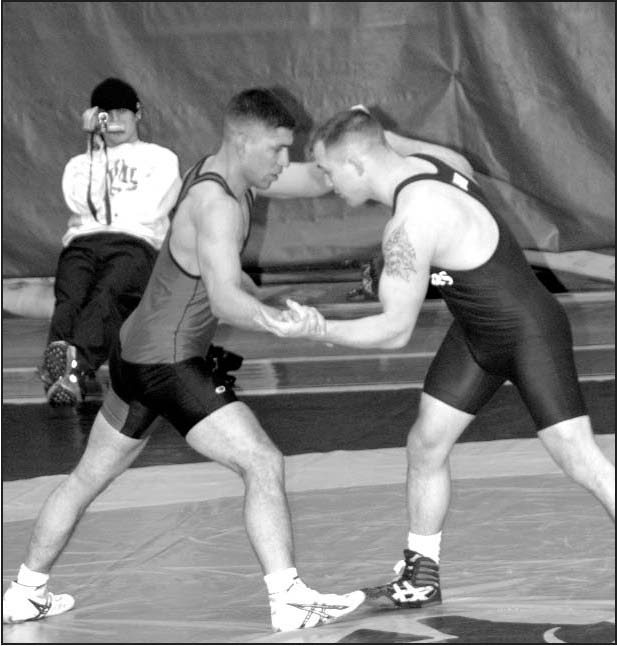
A clinch hold (also known as a clinching hold) is a grappling hold that is used in clinch fighting with the purpose of controlling the opponent. In wrestling it is referred to as the tie-up. The use of a clinch hold results in the clinch. Clinch holds can be used to close in on the opponent, as a precursor to a takedown or throw, or to prevent the opponent from moving away or striking effectively. Typical clinch holds include:

Pinning hold

[edit]
Two soldiers in a "crude north–south position"

A pinning hold (also known as a hold down and in Japanese as osaekomi-waza, 抑え込み技, "pinning technique") is a general grappling hold used in ground fighting that is aimed to subdue by exerting superior control over an opponent and pinning the opponent to the ground. Pinning holds where both of the opponent's shoulders touch the ground are considered winning conditions in several combat sports.

An effective pinning hold is a winning condition in many styles of wrestling, and is known as simply a "pin". Pinning holds maintained for 20 seconds are also a winning condition in judo. Pinning holds are also used in submission wrestling and mixed martial arts, even though the pinning hold itself is not a winning condition. The holds can be used to rest while the opponent tries to escape, to control the opponent while striking, a tactic known as ground and pound, or to control an opponent from striking by pinning them to the ground, also known as lay and pray.

Submission hold

[edit]
An armbar submission hold.

In combat sports a submission hold (colloquially referred to as a "submission") is a grappling hold that is applied with the purpose of forcing an opponent to submit out of either extreme pain or fear of injury. Submission holds are used primarily in ground fighting and can be separated into constrictions (chokeholds, compression locks, suffocation locks) and manipulations (joint locks, leverages, pain compliance holds). When incorrectly used, these techniques may cause dislocation, torn ligaments, bone fractures, unconsciousness, or even death.

Common combat sports featuring submission holds are:

List of grappling holds

[edit]

The same hold may be called by different names in different arts or countries. Some of the more common names for grappling holds in contemporary English include:

Joint locks

[edit]

Joint lock: Any stabilization of one or more joints at their normal extreme range of motion

Armlocks

[edit]

Armlock: A general term for joint locks at the elbow or shoulder

Leglock

[edit]

Leglock: A general term for joint locks at the hip, knee, or ankle

Chokeholds and strangles

[edit]

Clinch holds

[edit]

Compression locks

[edit]

Pain compliance

[edit]
  • Chin lock: An arm hold on the chin that hurts the chin.
Bas-relief of a headlock at the Bayon temple (12th/13th century). A Khmer soldier puts a Cham soldier in a headlock.

Pinning hold

[edit]
  • Cradle: Compress opponent in a sit-up position to pin shoulders from side mount
  • Staple: Using the opponent's clothing to help pin them against a surface

Other grappling holds

[edit]
  • Banana Split: A flexibility-based grappling submission
  • Grapevine: Twisting limbs around limbs in a manner similar to a plant vine
  • Harness: A hold that encircles the torso of an opponent, sometimes diagonally
  • Headlock: Circling the opponent's head with an arm, especially from the side; also called a rear Chancery
  • Hooks: Wrapping the arm or leg around an opponent's limb(s) for greater control
  • Leg scissors: Causes compressive asphyxia by pressing the chest or abdomen
  • Scissor: Places the opponent between the athlete's legs (like paper to be cut by scissors)
  • Stack: Compresses the opponent in a vertical sit-up position (feet up) to pin their shoulders to mat

See also

[edit]

References

[edit]
[edit]
Revisions and contributorsEdit on WikipediaRead on Wikipedia
from Grokipedia
A grappling hold is a fundamental technique in grappling-based and combat sports, involving the use of one combatant's limbs to seize, lock, or immobilize an opponent in order to control their movement, achieve a dominant position, or force a submission. In , these are formally classified as katame-waza (grappling techniques) and encompass 32 standardized methods developed by the Kodokan Institute, divided into three primary categories: osaekomi-waza (10 pinning or holding techniques to maintain control on the ground), shime-waza (12 strangulation techniques that restrict blood flow or airflow to the head), and kansetsu-waza (10 joint-locking techniques that hyperextend or compress joints to compel surrender). These holds are executed primarily during ne-waza (groundwork) phases of competition, where the objective is to score via sustained pins (osaekomi) lasting 20 seconds or secure a submission through taps or referee intervention. Grappling holds extend beyond judo to other disciplines, such as (BJJ), where they form the core of submission strategies, including armbars, chokes, and leg locks applied to force an opponent to "tap out" without causing permanent injury when executed properly. In freestyle and under (UWW), holds emphasize pins and positional dominance for scoring, while the UWW's discipline integrates throws, pins, and submissions from diverse wrestling traditions to promote technical versatility. Similarly, in sambo and (MMA), these techniques allow fighters to transition from stand-up to ground control, highlighting their role in close-quarters combat without strikes. Historically, grappling holds trace roots to ancient combat systems, but their modern codification began with Jigoro Kano's in the late , influencing global sports by prioritizing leverage and technique over brute strength. Today, they are trained for , competition scoring, and athletic development, with rules varying by organization to ensure safety—such as prohibiting certain spinal locks or neck cranks in amateur settings.

Fundamentals

Definition and Purpose

A grappling hold is a technique employed in and combat sports wherein one utilizes their limbs or body to , lock, or position an opponent, thereby exerting physical control to immobilize or dominate them. This form of control contrasts with striking methods, such as punches or kicks, by prioritizing sustained restraint over immediate impact. The primary purposes of grappling holds encompass establishing positional dominance, enabling transitions to offensive maneuvers like strikes or takedowns, accumulating points through control in competitive formats, and compelling submission via or vascular restriction in disciplines emphasizing taps. In (MMA), for instance, holds facilitate ground control to set up follow-up attacks or force an opponent to yield, aligning with the overarching goal of victory through , submission, or decision. Unlike throws, which involve dynamic unbalancing to reposition the opponent, grappling holds focus on prolonged mechanical advantage through leverage rather than transient force, distinguishing them as tools for ongoing tactical superiority. In self-defense scenarios, these holds provide a means to neutralize threats without escalating to lethal measures; in sport grappling such as wrestling, they secure pins or near-falls for scoring; and in MMA, they integrate with striking to overwhelm adversaries. Grappling holds encompass categories like clinch holds for upright control and submission holds for terminating engagements, underscoring their versatility across contexts.

Historical Development

The earliest evidence of grappling holds appears in ancient Egyptian tomb paintings, such as those in the dating to approximately 2000 BCE, which depict sequences of wrestling techniques including throws, pins, and joint manipulations integral to organized combat sports. These illustrations from the Middle Kingdom (c. 2055–1650 BCE) show wrestlers employing holds to control opponents, reflecting a structured form of unarmed fighting used for military training and entertainment among the elite. In , grappling holds became a core element of , a no-holds-barred introduced to the in 648 BCE, combining wrestling and striking with minimal restrictions beyond prohibitions on and . Historical accounts from the period describe pankration competitors using submission holds and ground control to subdue foes, influencing later martial traditions across the Mediterranean. During the medieval and Renaissance eras, European wrestling styles evolved to incorporate similar techniques; for instance, glíma, an Icelandic form brought by Viking settlers around the CE, emphasized upright with belt grips and throws, maintaining cultural significance through the medieval period. In feudal , originated in the early 16th century during the as a battlefield art for and further developed during the (1603–1868), focusing on joint locks, chokes, and throws to disarm armed opponents, with more than 2,000 schools (ryū) documented by the end of the period. The modern codification of grappling holds accelerated in the 19th and 20th centuries, beginning with in the and , where Lancashire-style catch-as-catch-can matches in the late 1800s popularized ground-based submissions and pins in carnival and professional circuits. In 1882, Jigoro Kano founded Kodokan judo in , synthesizing traditional into a safer, that emphasized efficient throws and holds for physical and . developed in the early 1900s when , a judoka, immigrated to and taught grappling principles to the , adapting them for prolonged and leverage-based submissions. Key events further propelled the evolution of grappling holds, including wrestling's inclusion as a core event at the first modern in in 1896, which standardized Greco-Roman and later freestyle variants with pinning and hold regulations. The rise of (MMA) following the inaugural (UFC) event in 1993 highlighted the effectiveness of grappling holds, as demonstrated by Gracie's victories using submissions, leading to widespread refinement and integration of these techniques in hybrid combat sports worldwide.

Principles of Application

Body Mechanics and Leverage

Effective grappling holds rely on precise body mechanics to generate and maintain control, with the hips, core, and base serving as foundational elements for stability. The hips provide rotational power and mobility, enabling practitioners to drive movements like sweeps or escapes, while the —encompassing the abdominals, obliques, and lower back—transfers force efficiently between upper and lower body segments. A stable base, achieved through wide foot placement and positioning, prevents displacement during dynamic exchanges, as seen in wrestling holds where ground reaction forces at the hips and legs can exceed 11,000 N during lifts. , formed by extending limbs (e.g., forearms or ) to create angular barriers, maintain space against an opponent's pressure, while bridges—involving explosive hip elevation—disrupt balance and facilitate position recovery by leveraging the . Leverage in grappling amplifies force application through mechanical advantages derived from angles and physics principles. Fulcrums, such as the elbow in joint manipulations or the neck in chokes, allow torque to be concentrated. Force vectors are directed to manipulate an opponent's center of gravity, shifting it outside their base to induce imbalance; for instance, trunk extensor endurance enables sustained pressure, with elite practitioners exhibiting 18% higher isometric holds (81.33 seconds vs. 68.85 seconds) to counter submissions. In clinch holds, upright leverage exploits vertical angles to redirect momentum, while joint locks apply torque via perpendicular force lines for efficient control. A positioning underpins hold application, prioritizing dominant setups that facilitate transitions and attacks. Guard positions, where the bottom practitioner uses legs to control , form a defensive foundation but allow sweeps; mount, with the top athlete straddling the , offers superior offensive leverage through bodyweight distribution; and , lying perpendicular across the opponent, immobilizes hips and for setup stability. These positions integrate and hip drive to maintain hierarchy, ensuring the top grappler dictates the pace. Training emphasizes drills to build these mechanics, focusing on , , and fluid transitions. Grip exercises, such as towel pull-ups or thick-bar deadlifts, enhance static and dynamic holding capacity essential for control, targeting endurance over raw power. drills, like low-stance squats paired with plyometric jumps, promote balanced loading (requiring 1.5–2.5 times bodyweight squat strength) to simulate base maintenance under load. Transition drills, including shrimp-to-bridge sequences, refine hip escapes and framing under resistance, fostering seamless shifts between guard, mount, and while optimizing force vectors.

Risk Factors and Safety

Grappling holds pose significant risks of due to the direct application of force to , blood vessels, and the spine. Common injuries include joint hyperextensions, such as elbow dislocations resulting from armbars, which overload the medial structures through progressive hyperextension. Vascular damage from chokes often involves compression, leading to decreased cerebral blood flow and rapid if not released promptly. Spinal risks arise from neck cranks, which can cause cervical sprains, whiplash-like injuries, or vertebral artery dissections in severe cases, particularly in grappling. Compression locks may also result in nerve damage through sustained pressure on neural tissues. Several risk factors exacerbate these dangers, including improper technique, which places undue stress on vulnerable areas during hold application or resistance. Opponent resistance and practitioner further heighten likelihood by compromising control and reaction times, with often stemming from or inadequate recovery. Risks are notably higher in unsanctioned fights compared to regulated sports, where the absence of oversight amplifies the potential for unchecked force and delayed medical response. Safety protocols in organized grappling mitigate these hazards through standardized measures. Tap-out systems, involving physical or verbal signals of submission, allow immediate release of holds to prevent escalation to or structural damage, as enforced in UFC competitions. Referees intervene to stop contests when a fighter is compromised, assessing conditions alongside ringside physicians who conduct medical checks for ongoing safety. Organizations like the IBJJF implement rules prohibiting high-risk holds, such as heel hooks in gi competitions, to reduce knee and ligament injuries, with violations leading to disqualification. In MMA organizations like the UFC, heel hooks are permitted but referees monitor submissions closely to ensure safety. Injury prevention emphasizes proactive strategies to build resilience and awareness. Thorough warm-ups, following protocols like the RAMP method (raise, activate, mobilize, potentiate), enhance circulation, mobility, and neuromuscular control, reducing strain during dynamic movements. Protective gear, including mouthguards and supports, provides additional safeguarding against impacts and hyperextensions. Progressive training, starting with basic holds and gradually introducing advanced techniques under supervision, fosters proper form and minimizes exposure to fatigue-related errors.

Primary Categories

Clinch Holds

Clinch holds are standing grappling techniques employed in upright positions to establish control over an opponent at close range, typically involving grips such as , overhooks, or collar ties to manipulate posture, disrupt balance, and neutralize strikes or attempts. An secures an arm beneath the opponent's armpit for leverage, while an overhook wraps around from above to counter or trap the limb; collar ties, meanwhile, grasp the back of the neck or head to pull downward and break posture. These holds emphasize body positioning and leverage to maintain dominance without immediately transitioning to the ground, allowing fighters to dictate the pace of engagement. Key techniques within clinch holds vary by discipline but share the goal of upright control. In , the clinch integrates striking, such as knee strikes to the body or thighs, often from a double where both hands cup the opponent's head with palms facing the back of the hands and elbows pressing collarbones to off-balance them. Wrestling employs the double , using both hands on the neck without , dropping elbows into the chest to prevent penetration and set up offensive sequences like or shots. grips, such as high collar or sleeve-lapel combinations, facilitate throws by dominating posture from the clinch, enabling techniques like o soto gari or through precise kuzushi (off-balancing). Strategically, clinch holds serve to facilitate "dirty boxing," where short punches, elbows, or forearms are delivered in close quarters to frustrate and wear down the opponent while maintaining control, often transitioning to ground positions via takedowns like single or double legs. In sports like , clinch-based throws score points based on amplitude and control, awarding 2 to 5 points for executing upper-body lifts or suplexes that expose the opponent's back to the mat. These holds also link briefly to broader body mechanics by exploiting leverage for posture breaks, setting up potential submissions without direct . Variations in clinch holds distinguish "dirty" clinches, which incorporate strikes like knees or punches for damage, from "clean" clinches focused solely on positional control and throws. Environmental differences further adapt techniques: in gi-based arts like , grips leverage fabric for collar ties and sleeve control, enhancing hold security, whereas no-gi environments, common in MMA or wrestling, prioritize underhooks, overhooks, and body locks for frictionless, speed-oriented .

Pinning Holds

Pinning holds in grappling are ground-based techniques designed to secure dominant top positions, thereby restricting the opponent's ability to move, escape, or while allowing the top grappler to score points or prepare further offensive maneuvers. The primary objective is to maintain control over the opponent's posture and hips, often by applying body weight strategically to immobilize key areas such as the shoulders or . These holds emphasize positional dominance rather than immediate submission, enabling the top player to wear down the opponent over time or transition to more aggressive attacks. Key examples of pinning holds include the side mount, also known as kesa-gatame in judo, where the top grappler lies perpendicular across the opponent's chest, securing one arm under the opponent's neck and using the legs for base to prevent bridging escapes. Another common position is the north-south, in which the top player aligns their head toward the opponent's feet, draping the body over the torso to compress the upper body and limit arm usage for defense. Additionally, control of the turtle position in wrestling involves the top grappler encircling the opponent's back from behind, using grips like the seatbelt to flatten the hips and prevent the bottom player from regaining guard or standing. Full mount and back control further exemplify this category, with the full mount straddling the torso for comprehensive coverage and back control hooking the legs inside the opponent's thighs to isolate the upper body. The mechanics of pinning relies heavily on to maximize on the opponent's s or hips while maintaining balance to counter resistance. In effective pins, the top grappler drives their chest or into the opponent's , distributing 70-80% of body weight downward through the contact points to immobilize the scapulae or , often achieved by keeping the elbows tight and hips low to avoid creating space for escapes. For instance, in , a pin—or fall—is officially recognized when both scapulae are in continuous contact with the for two seconds in folkstyle competitions, emphasizing the need for sustained to meet this criterion. This weight application not only pins but also disrupts the opponent's breathing and leverage, making recovery more difficult. Pinning holds serve both defensive and offensive applications, particularly in styles like freestyle and folkstyle wrestling, where they can stall an opponent's momentum or facilitate transitions to higher-scoring positions. Defensively, pins like the side mount allow the top player to neutralize threats by controlling the hips, preventing guard recovery while conserving energy. Offensively, positions such as back control from full mount enable seamless shifts to submissions without relinquishing dominance, a tactic prevalent in freestyle where pinning combinations score exposure points leading to falls. In folkstyle, these holds are integral for accumulating near-fall points by holding the shoulders near the , rewarding sustained control over mere takedowns. Overall, pinning emphasizes leverage and timing, rooted in wrestling traditions, to dominate without exposing vulnerabilities.

Submission Holds

Submission holds in grappling are techniques designed to target an opponent's vulnerabilities, such as joints, airways, or pressure points, compelling them to submit via a tap-out, verbal concession, or referee intervention to avoid or . Unlike pinning holds, which primarily aim to maintain positional control and score points without necessarily forcing an immediate yield, submission holds intend to terminate the engagement decisively by applying pain, mechanical disadvantage, or restricted vital functions. These holds emphasize precision and leverage to exploit anatomical weaknesses, making them a core offensive tool in submission-based arts like (BJJ). Submission holds generally fall into three broad categories: vascular and air restrictions, which impede blood flow or breathing; joint hyperextensions, which overextend limbs or articulations beyond safe ranges; and compressions, which apply direct pressure to muscles, nerves, or bones to induce pain or dysfunction. Joint locks represent a key subcategory within hyperextensions, focusing on isolating specific articulations like elbows or knees. In (MMA), particularly under (UFC) rules, submissions account for approximately 19.8% of fight endings across 3,123 analyzed bouts from 1993 to 2023, with choking techniques comprising 65.5% of those finishes and the rear-naked choke being the most prevalent at 32.7%. This rate highlights their effectiveness in elite competition, though it has declined over time due to evolving defensive strategies and rule emphases on striking. Strategically, submission holds are often integrated into sequences originating from established pins or clinch positions to maximize control before escalation. For instance, from top pins like mount or , practitioners transition into chokes or arm locks once posture is broken; similarly, clinch ties can set up standing guillotines or trips leading to ground-based submissions. Common counters include stacking, where the defender elevates and compresses the attacker's legs to neutralize lower-body locks, or peeling, which involves systematically removing grips to escape upper-body entanglements like armbars. These integrations rely on fluid transitions to prevent escapes, underscoring the importance of positional dominance as a prerequisite. Safety protocols, such as immediate release upon a tap, are universal to mitigate risks like damage or asphyxiation. Rules governing submission holds vary by discipline, with BJJ competitions under the (IBJJF) permitting most categories, though certain advanced techniques like heel hooks are restricted by belt level and gi/no-gi formats to ensure participant safety. In contrast, high school wrestling under National Federation of State High School Associations (NFHS) rules prohibits chokes and any maneuvers restricting breathing or circulation, classifying them as illegal holds that endanger the or , with penalties escalating from points deductions to disqualification. These variations reflect differing emphases: BJJ prioritizes submission as a primary win condition, while focuses on pins and takedowns to minimize injury risks among adolescents.

Joint Lock Techniques

Armlocks

Armlocks are grappling techniques that apply targeted pressure to hyperextend, hyperflex, or hyperrotate the joints of the , primarily the , , and , forcing submission through pain or structural compromise. These holds leverage the body's biomechanical vulnerabilities, where the is isolated for hyperextension in straight armbars, the undergoes forced internal in kimuras or Americanas, and the experiences pronation or supination stress in double wrist locks. The elbow-targeted straight armbar, also known as juji-gatame in judo, operates by fixing the opponent's forearm while driving the upper arm perpendicular to the joint line, creating hyperextension that risks ligament tears or dislocation if resisted. Execution begins with isolation of the target arm through grips on the wrist and elbow, followed by posture control to prevent escape, and concludes with a bridging hip elevation to extend the elbow fully against the attacker's body as a fulcrum. Variations like the rear-naked armbar initiate from back control, where the attacker traps the arm behind the opponent's head before transitioning to extension, while triangle armbar setups from closed guard involve first encircling one leg around the opponent's arm and neck to off-balance them, then isolating the limb for the same extension finish. Shoulder locks such as the (gyaku-ude-garami) and Americana (ude-garami) bend the arm into an "L" shape and apply torque via a figure-four grip, forcing the into extreme external or internal rotation that strains the and glenohumeral ligaments. In the , the attacker secures the behind the opponent's back while controlling the , then rotates the outward; the Americana mirrors this from but drives the hand toward the ground for inward pressure. Double wrist locks target the radiocarpal by trapping both wrists in a crossed configuration and twisting to over-pronate or supinate, often as a quick standing or ground finish when arms are extended. In (BJJ), armbars are frequently applied from the guard position, where the defender lies on their back and uses leg control to isolate and extend the while maintaining elevation for leverage. Judo's ude-garami emphasizes the bent- variation for both standing and ground applications, often transitioning from throws to pin the opponent before finishing the lock. Common counters include hiding the targeted by tucking it to the chest or bridging explosively to disrupt the attacker's base and create space for escape. Effectiveness data from BJJ competitions underscores armlocks' prevalence, with armbars comprising about 17% of total submissions and a 30% success rate among attempted arm attacks at the 2019 IBJJF Championships, reflecting their reliability in elite gi events.

Leglocks

Leglocks are submission techniques in that target the lower body's joints, primarily applying , hyperextension, or compression to force compliance through pain or structural compromise. These holds manipulate the , ankle, or , often from entangled positions like , and have gained prominence in modern no-gi (BJJ) and (MMA) due to their effectiveness against mobile opponents. Unlike upper-body locks, leglocks exploit the legs' and leverage challenges in ground control, requiring precise entry and control to avoid counters. The knee joint is a common target for leglocks, with techniques like heel hooks and kneebars applying rotational or extension pressure to the ligaments and capsule. Heel hooks twist the knee internally or externally by gripping the heel and rotating the foot, straining structures such as the lateral collateral ligament (LCL) and potentially causing tears without significant initial pain feedback. Kneebars hyperextend the knee by isolating the lower leg against the attacker's body, similar to an armbar but adapted for the femur-tibia alignment. Ankle locks, such as the straight ankle lock (also known as ), compress the and dorsiflex the foot to target the ankle joint, while hip flexion locks, like certain Americana variations on the leg, overextend the hip socket to compromise the . Key techniques include the straight ankle lock, which can be applied step-by-step from an open guard position: first, secure the opponent's by shooting in for a single- entry or pulling guard to isolate one ; second, wrap your arm around the ankle with your hand gripping the foot's top (shoelaces grip), tucking the elbow tight to prevent escape; third, step your near over the opponent's to control the line, then slide your far arm under the calf for a figure-four grip if needed; fourth, pivot your hips to align chest-to-foot, arching the back to apply pressure on the until tap. From the 50/50 guard—a mutual entanglement where both fighters' interlock at the and ankles—entries to leglocks involve shifting hips to off-balance the opponent, such as driving forward to transition into an outside for a hook attack or inverting to secure a . The rolling hook, popularized in no-gi contexts, starts from a or prone position: grip the with one hand and the toes with the other, then roll backward explosively while pulling the foot to the mid-motion, often catching opponents during attempts. Leglocks have seen rising popularity in no-gi BJJ and MMA, where their speed and surprise factor shine, though heel hooks were banned in (IBJJF) gi divisions and for all belts below in no-gi until rule updates in allowed them for adult and black belts in no-gi competitions. In contrast, wrestling traditions emphasize straight ankle locks as legal submissions, focusing on linear extensions rather than rotational risks. This evolution reflects a shift toward comprehensive lower-body attacks. Defenses against leglocks prioritize disrupting control and relieving pressure, such as stacking—where the attacked fighter drives their hips upward while folding the body to compress the attacker's position and break the hold—or breaking the figure-four grip by prying the attacker's interlocking hands or legs with elbow strikes to the . Heel hooks pose high injury risks, often involving tears like ACL or MCL ruptures due to the technique's rapid application without proportional pain warning. Proper mitigates these dangers, emphasizing controlled entries and immediate taps.

Vascular and Air Restriction Techniques

Chokeholds

Chokeholds, also referred to as air chokes in contexts, function by applying direct pressure to the trachea, or windpipe, thereby restricting to the lungs and inducing asphyxiation through oxygen deprivation. This mechanism creates intense air hunger and discomfort, prompting submission to avoid prolonged hypoxia, which differs from vascular techniques that target flow. When fully applied with sustained force, such holds can lead to within 10-20 seconds, though the exact duration varies based on the defender's resistance and the attacker's leverage. Prominent variants include the , a frontal application where the attacker's arm wraps around the opponent's neck from the front, positioning the across the trachea for compression while securing the head with the bicep. This hold is frequently set up during defensive reactions to failed attempts, such as when a wrestler shoots for a double-leg and the opponent sprawls, allowing the top fighter to trap the head and arm. Side-oriented options like the D'Arce choke involve threading one arm under the opponent's armpit and across the neck, with the attacker's driving into the trachea for added air restriction, often transitioning from or positions. The von Flue choke, a related side variant, utilizes the opponent's own to pinch against the windpipe after a failed attempt, emphasizing leverage over arm strength. Another key example is the north-south choke, executed from the north-south position where the attacker drapes an arm over the opponent's face and bridges to compress the neck against the trapped , blocking the airway while controlling the posture. In (MMA), chokeholds contribute significantly to submission victories, accounting for approximately 15.5% of all fight-ending outcomes in (UFC) history through 2020, with many finishes blending air and vascular elements for efficiency. In , the hadaka-jime (naked strangle) serves as a foundational air-restricting technique, applied bare-handed from the rear or side to crush the trachea without gi assistance, though modern interpretations often incorporate blood flow cutoff. Gi-based grappling enhances these holds through lapel grips, such as wrapping the collar around the neck for amplified tracheal pressure in techniques like the cross-collar choke, whereas no-gi environments demand tighter arm positioning and body weight to achieve similar restriction, making setups more reliant on speed and timing. Effective counters to chokeholds emphasize immediate defensive postures, such as tucking the chin tightly to the chest to shield the trachea and inserting the jaw as a barrier against the compressing limb. Expanding the posture by framing against the attacker's hips or arms can also alleviate pressure, creating space to escape or reverse position, with practitioners trained to tap early as a measure. Due to their potential for rapid lethality through sustained asphyxiation, chokeholds faced historical bans in certain wrestling styles; for instance, catch-as-catch-can competitions prohibited after 1892 to mitigate risks of permanent or , shifting focus toward pins and locks.

Strangles

Strangles, also known as blood chokes, are grappling techniques that restrict blood flow to the by compressing the carotid arteries and jugular veins on both sides of the , leading to and rapid loss of consciousness. This bilateral vascular compression reduces , causing symptoms such as , vision loss, and syncope within 5-10 seconds, significantly faster than air restriction methods that require 10-20 seconds or more to induce . The primary physiological mechanism involves not only reduced oxygen delivery but also stimulation of the , triggering a vagal response that results in and , exacerbating the hypoxic effect. Common strangle techniques include the rear-naked choke (RNC), arm-triangle choke, and anaconda choke, each executed from dominant positions to isolate the neck. In the RNC, the attacker secures with hooks in the opponent's legs for control, slides one arm deep under the chin across the neck with the bicep and forearm applying pressure to the carotid arteries, and secures a "seatbelt" grip by threading the other arm over the opposite shoulder to clasp the choking arm's bicep, then squeezes while expanding the elbows and leaning back. The arm-triangle choke begins from or mount, where the attacker threads one arm under the opponent's neck and through the far armpit, trapping the head and the near arm in a figure-four configuration with the other arm over the shoulder, then rolls or squeezes to compress the arteries against the shoulder. The anaconda choke is a dynamic variation of the arm-triangle, initiated from a front headlock or position, where the attacker wraps the arm under the neck, secures the head and arm, and performs a gator roll to the side to tighten the compression while maintaining control of the posture. Strangles are foundational submissions in (BJJ) and (MMA), particularly from where the RNC serves as a high-percentage finisher due to the attacker's positional dominance and the technique's reliability against resisting opponents. In , known as shime-waza, these holds trace their origins to samurai practices designed for armored combat, emphasizing efficient incapacitation; techniques like kataha jime (single-wing strangle) highlight vascular targeting for quick yields. Gi variants enhance grip security, such as integrating collar grips into strangle setups for added leverage, though no-gi executions like the RNC remain versatile across disciplines. Effective defenses against prioritize preventing the initial grip through hand fighting—actively peeling or blocking the attacking arm at the or —and framing the body by posting a or against the attacker's or to create and disrupt leverage. Tucking the chin and turning into the choking arm can further alleviate pressure on the carotids. Medically, when released promptly upon submission, strangles pose minimal risk of long-term damage in controlled environments, with recovery typically occurring within seconds as blood flow restores and transient symptoms resolve; a pilot study on repeated applications in submission found no significant changes in carotid intima-media thickness or biomarkers, supporting an acceptable safety profile for healthy practitioners.

Other Submission Methods

Compression Locks

Compression locks are a category of grappling submissions that apply direct pressure to compress muscles or soft tissues against underlying bones, inducing intense pain through irritation or muscle ischemia without causing structural damage to or restricting flow or . This mechanism primarily targets the neuromuscular , where the compression crimps or crushes muscle fibers, leading to rapid submission due to unbearable discomfort rather than mechanical failure of ligaments or bones. Unlike locks, which hyperextend or twist articulations, compression locks focus on soft tissue deformation, making them effective for controlling opponents while setting up other attacks. The pain arises from the entrapment or pinching of peripheral nerves within the compressed area, such as those branching from the brachial plexus in upper body applications, or from the sustained pressure that limits blood supply to the muscle, causing ischemic pain. For instance, in upper limb compressions, the technique forces the muscle belly against the bone, compressing underlying neural structures and triggering reflexive tapping without long-term skeletal harm. This distinguishes them from vascular techniques, emphasizing localized tissue stress over systemic effects. Common examples include the bicep slicer, applied from positions like the guard or armbar setup, where the attacker's shin or drives the opponent's bicep muscle against the , often during defenses. The calf slicer, frequently executed from knee-on-belly or open guard, uses the attacker's leg to fold the defender's calf over the shin , compressing the . These holds are versatile, deployable from dominant positions like knee-on-belly or transitional guards, allowing attackers to maintain control while inflicting pain. In (BJJ) competitions under (IBJJF) rules, compression locks like bicep and calf slicers are legal only for brown and black belt competitors, restricted for white, blue, and purple belts to prevent injury among less experienced practitioners. This graduated approach prioritizes safety, with no-gi formats often allowing broader application. In (MMA), compression locks are increasingly utilized as alternatives to joint manipulations, offering quick finishes without risking illegal moves in gloved contexts, though they remain niche due to the sport's emphasis on strikes. Despite their effectiveness, compression locks have limitations as finishing holds due to their reliance on rather than inevitable mechanical compromise. Defenders can escape by relaxing into the pressure to reduce muscle tension or by framing to alleviate the crush, increasing the technique's vulnerability compared to more secure options. This higher escape potential makes them better suited as setup tools or aids rather than primary finishers in high-stakes scenarios.

Pain Compliance Holds

Pain compliance holds are grappling techniques that apply targeted pressure to sensitive anatomical areas, such as nerves, joints, or soft tissues, to elicit immediate submission through discomfort rather than structural damage. These holds prioritize rapid control in non-lethal scenarios, focusing on superficial induction to de-escalate confrontations without causing lasting . Common targets include pressure points on digits, as well as skin stretches involving finger or manipulation, which exploit the body's natural vulnerabilities for quick compliance. Key techniques encompass wrist locks, such as the nikyo (second teaching) in , which involves pronating and extending the to compress radial nerves and induce sharp , often adapted for restraint purposes. Variations like the technique, a rotational lock emphasizing downward pressure, are frequently employed in to control suspects by leveraging without full hyperextension. Thumb presses and small manipulations, including finger locks that isolate and bend individual digits, further exemplify these methods by targeting clusters for immediate immobilization. In Chinese martial arts like , similar applications involve seizing and twisting extremities to disrupt an opponent's balance and will to resist. These holds find primary application in and policing, where they facilitate restraint during s or confrontations, allowing practitioners to maintain control while minimizing escalation to higher force levels. In (BJJ), techniques like wrist or finger locks are occasionally integrated into scenarios for positional dominance, though modern training emphasizes transitioning to non-pain-based controls to reduce injury risks to both parties. They are less prevalent in competitive sports due to regulations prohibiting , which could lead to excessive harm. Historically, such methods trace back to traditional systems, where they served as tools for restraint tactics. Ethically, pain compliance holds underscore the principle of minimal force, requiring practitioners to apply only enough pressure to achieve compliance and release immediately upon submission. Risks include potential escalation if the subject resists under the influence of adrenaline or substances, which may diminish response, necessitating backup tactics like positional control. Training protocols in and stress awareness and precise execution to avoid unintended injuries, such as nerve damage or fractures from over-application.

Variations Across Martial Arts

In Wrestling and Folkstyles

In folkstyle wrestling, the dominant form in collegiate competitions governed by the NCAA, grappling holds primarily serve to achieve pins and control rather than submissions, with scoring emphasizing takedowns, escapes, reversals, and near-falls. A near-fall occurs when both of an opponent's shoulders are held within four inches of the mat or touch the mat for two seconds, awarding 2, 3, or 4 points depending on the duration of exposure (2 points for 2 seconds, 3 points for 3 seconds, and 4 points for 4 or more seconds), and common techniques include the half nelson—where one arm threads under the opponent's armpit to control the head and far arm—and the cradle, which encircles the head and one leg to expose the back. These holds, such as the near-side or far-side cradle, are executed from top positions to maintain control and accumulate points without forcing a tap out, as submissions are not scored or permitted under folkstyle rules. Freestyle wrestling, an Olympic style allowing attacks on the entire body, integrates grappling holds into dynamic transitions from standing clinches to ground control, often combining takedowns like the double leg or ankle pick with pinning combinations. Leg laces, where the top wrestler hooks both legs around one of the opponent's ankles to prevent escapes and expose the back, are a staple for turns and near-falls, frequently following a takedown to score additional points through criteria positions. Suplex setups from the clinch involve underhooks or overhooks to lift and arch the opponent backward onto their back, rewarding exposure with two points for each instance where the opponent's back is held in the danger position near the mat. Ankle picks, a low-level single-leg variant, initiate these sequences by grabbing the ankle while controlling the upper body, leading to sprawls or direct pins. Greco-Roman wrestling, another Olympic variant, restricts holds to the upper body above the waist, prohibiting leg attacks or defenses to emphasize throws and upper-body clinches, which differentiates it from freestyle by banning techniques like leg laces or ankle picks. Common holds include arm throws and gut wrenches from par terre positions, where the top wrestler uses control to turn the opponent without lower-body involvement, scoring two points for exposures. This upper-body focus demands superior and power, as evidenced by studies showing Greco-Roman wrestlers outperforming freestyle athletes in isometric upper-body strength and speed. Under Olympic rules for both freestyle and Greco-Roman, passivity penalties enforce active use of holds by awarding one point to the opponent if a wrestler avoids engagement for 30 seconds, prompting strategies that integrate aggressive clinch work and quick transitions to avoid warnings or point deductions. This rule, introduced to promote offensive , influences hold application by penalizing defensive stalling during setups like suplexes or laces. The evolution of these holds in 20th-century wrestling drew heavily from , a Lancashire-originated style that spread to America via carnival circuits in the late 19th and early 20th centuries, introducing submission-like controls adapted into pin-focused techniques like the half nelson in collegiate folkstyle. Pioneers such as blended catch elements with American grappling, influencing Olympic styles through professional exhibitions that popularized upper-body throws in Greco-Roman. In modern training, wrestlers increasingly incorporate crossovers to enhance ground control and transitions, such as using BJJ guard passes to complement leg laces, improving overall pinning efficiency without shifting to submission emphasis.

In Judo and Brazilian Jiu-Jitsu

In Judo, grappling holds form a core component of katame-waza, the grappling techniques officially recognized by the Kodokan and International Judo Federation (IJF). These are divided into osaekomi-waza (hold-downs), such as kesa-gatame, where the practitioner pins the opponent to the mat by controlling the upper body and restricting movement for at least 20 seconds to score ippon. Shime-waza encompass strangulation techniques like hadaka-jime, applying pressure to the neck to induce submission, while kansetsu-waza include joint locks such as ude-garami, targeting the elbow for ippon via tap-out. Ippon can thus be achieved through a sustained hold or immediate submission, emphasizing control and efficiency in ground fighting after throws. Brazilian Jiu-Jitsu (BJJ) adapts and expands upon Judo's ground techniques, prioritizing positional dominance and submissions in prolonged engagements. Practitioners focus on guard passing to transition from the opponent's closed guard to dominant positions like full mount, where attacks such as armbars or chokes become viable. From mount or , back takes enable the (RNC), a blood choke executed by encircling the neck from behind to compress the carotid arteries, often considered BJJ's most reliable submission. The belt system progresses from white (fundamentals of positions and escapes) through blue, purple, brown, and black, with each level requiring demonstrated mastery of holds, transitions, and defenses to advance. Key differences between and BJJ in grappling holds stem from their emphases: Judo integrates ground work as a follow-up to throws, with matches typically lasting 4-5 minutes and prioritizing quick pins or submissions, whereas BJJ centers on extended in 10-minute rounds to wear down larger opponents. Both utilize the for grips—Judo's heavier uniform supports explosive throws and scarf holds like kesa-gatame, while BJJ's lighter gi facilitates intricate and collar controls in guards—but BJJ competitions allow no-gi variants that shift reliance to underhooks and body locks. The Gracie family's challenge matches in the 1990s, where BJJ practitioners like defeated opponents from various in no-holds-barred formats, demonstrated the efficacy of these holds and propelled BJJ's integration into (MMA), influencing rulesets like those in early UFC events.

References

Add your contribution
Related Hubs
User Avatar
No comments yet.