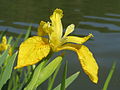
Iris pseudacorus
Iris pseudacorus
Main page
1945262

Iris pseudacorus

logo
Community Hub0 subscribers
Read side by side
from Wikipedia

Iris pseudacorus
Scientific classification Edit this classification
Kingdom: Plantae
Clade: Tracheophytes
Clade: Angiosperms
Clade: Monocots
Order: Asparagales
Family: Iridaceae
Genus: Iris
Subgenus: Iris subg. Limniris
Section: Iris sect. Limniris
Series: Iris ser. Laevigatae
Species:
I. pseudacorus
Binomial name
Iris pseudacorus
L., 1753
Synonyms[2]
List
    • Acorus adulterinus Ludw. (1755)
    • Iris acoriformis Boreau (1857)
    • Iris acoroides Spach (1846)
    • Iris bastardii Boreau (1857)
    • Iris curtopetala Redouté (1811)
    • Iris flava Tornab. (1887)
    • Iris lutea Ludw. (1755)
    • Iris pallidior Hill (1756)
    • Iris paludosa Pers. (1805)
    • Iris palustris Gaterau (1789)
    • Iris palustris Moench (1794)
    • Iris pseudacorus subsp. acoriformis (Boreau) K.Richt. (1890)
    • Iris pseudacorus subsp. bastardii (Boreau) K.Richt. (1890)
    • Iris sativa Mill. (1768)
    • Limnirion pseudacorus (L.) Opiz (1852)
    • Limniris pseudacorus (L.) Fuss (1866)
    • Moraea candolleana Spreng. (1824)
    • Pseudo-iris palustris Medik. (1790)
    • Vieusseuxia iridioides Redouté (1811)
    • Xiphion acoroides (Spach) Alef. (1863)
    • Xiphion pseudacorus (L.) Schrank (1811)
    • Xyridion acoroideum (Spach) Klatt (1872)
    • Xyridion pseudacorus (L.) Klatt (1872)

Iris pseudacorus, the yellow flag, yellow iris, or water flag, is a species of flowering plant in the family Iridaceae. It is native to Europe, western Asia and northwest Africa. Its specific epithet pseudacorus means "false acorus", referring to the similarity of its leaves to those of Acorus calamus (sweet flag), as they have a prominently veined mid-rib and sword-like shape. However, the two plants are not closely related.

Description

[edit]
Flower bud
Seeds

This herbaceous flowering perennial plant grows to 100–150 cm (39–59 in), or a rare 2 m (6 ft 7 in) tall, with erect leaves up to 90 cm (35 in) long and 3 cm (1.2 in) broad. The flowers are bright yellow, 7–10 cm (2.8–3.9 in) across, with the typical iris form. The fruit is a dry capsule 4–7 cm (1.6–2.8 in) long, containing numerous pale brown seeds.

I. pseudacorus grows best in very wet conditions, and is common in wetlands, where it tolerates submersion, low pH, and anoxic soils. The plant spreads quickly, by both rhizome and water-dispersed seed. It fills a similar niche to that of Typha and often grows with it, though usually in shallower water. While it is primarily an aquatic or marginal plant, the rhizomes can survive prolonged dry conditions.

Large I. pseudacorus stands in western Scotland form a very important feeding and breeding habitat for the endangered corncrake.

I. pseudacorus is one of two iris species native to the United Kingdom, the other being Iris foetidissima (stinking iris).

Nectar production

[edit]

The plant was rated in second place for per day nectar production per flower in a UK plants survey conducted by the AgriLand project, which is supported by the UK Insect Pollinators Initiative. However, when number of flowers per floral unit, flower abundance, and phenology were taken into account, it dropped out of the top 10 for most nectar per unit cover per year, as did all plants that placed in the top ten, with the exception of common comfrey, Symphytum officinale.[3]

Cultivation

[edit]

It is widely planted in temperate regions as an ornamental plant,[4] with several cultivars selected for bog garden planting. The following cultivars have gained the Royal Horticultural Society's Award of Garden Merit:[5]

  • 'Roy Davidson'[6]
  • 'Variegata'[7] (it has leaves that are edged with deep white stripes[8])

Other cultivars known include Alba (with pale cream flowers) and Golden Fleece (with dark yellow flowers).[8]

Invasive species

[edit]

In some regions (including the US and South Africa)[9] where it is not native, it has escaped from cultivation to establish itself as an invasive aquatic plant which can create dense, monotypic stands, outcompeting other plants in the ecosystem. Where it is invasive, it is tough to remove on a large scale. Even ploughing the rhizomes is often ineffective. It has been banned in some areas but is still widely sold in others for use in gardens.[10]

Iris pseudacorus is reported as invasive in Connecticut, Delaware, Maryland, New Hampshire, New Jersey, North Carolina, Oregon, Tennessee, Virginia, Vermont, Washington, Wisconsin, and West Virginia.[11]

US Spread
State/Province First Observed
IL 2009
IN 1982
MI 1932
MN 2008
NY 1882
OH 2013
PA 1954
VT 1909
WI 2005

Relationship to fleur-de-lis

[edit]

According to Pierre Augustin Boissier de Sauvages, an 18th-century French naturalist and lexicographer, the name fleur-de-lis applied to the heraldic symbol may be related to Iris pseudacorus rather than to a lily, based on the shape and yellow colour of the flower.[12]

Toxicity and uses

[edit]

The plant's roots and leaves are poisonous.[13]

This plant has been used as a form of water treatment since it can take up macronutrients (such as nitrogen and phosphorus) through its roots,[14] and is featured in many AS Level Biology practicals as its ability to grow in low pH levels makes it a useful indicator.[citation needed]

It can also withstand high salinity levels in the water.[15]

[edit]

See also

[edit]

References

[edit]
[edit]
Revisions and contributorsEdit on WikipediaRead on Wikipedia
from Grokipedia
Iris pseudacorus L., commonly known as yellow flag iris or paleyellow iris, is a perennial rhizomatous herbaceous plant in the family Iridaceae.[1][2] Native to Europe, western Asia, and northwest Africa, it features stiff, erect, sword-shaped leaves up to 3 feet (90 cm) tall and bright yellow flowers, 3-4 inches (7.6-10 cm) across with darker veining, that bloom from late spring to early summer on upright stems.[1][3] The plant spreads aggressively via thick rhizomes and buoyant seeds, forming dense monocultures in shallow freshwater wetlands, marshes, and riverbanks.[4][2] While valued historically for ornamental gardening and its tolerance of wet conditions, I. pseudacorus is widely regarded as invasive outside its native range, particularly in North America, where it displaces native flora and alters habitats by reducing biodiversity and impeding water flow.[5][6] It has been utilized in ecological restoration for erosion control and phytoremediation, such as removing heavy metals from wastewater, owing to its robustness in nutrient-rich, low-oxygen environments.[2][7]

Taxonomy and Etymology

Classification

Iris pseudacorus is a species of flowering plant classified in the kingdom Plantae, phylum Streptophyta, class Equisetopsida, subclass Magnoliidae, order Asparagales, family Iridaceae, genus Iris, and species Iris pseudacorus L.[8] The binomial name was established by Carl Linnaeus in his 1753 work Species Plantarum, where it was described as a perennial herbaceous plant with yellow flowers, distinguishing it from the morphologically similar but blue-flowered Iris germanica.[9] This classification aligns with the Angiosperm Phylogeny Group IV system, which places the Iridaceae family in Asparagales based on molecular phylogenetic evidence, including DNA sequence data from plastid genes rbcL and matK, resolving it as a monophyletic clade sister to other asparagoid families.[8] Earlier classifications, such as those in the Cronquist system, erroneously placed it in Liliales under Liliopsida, but these have been superseded by cladistic analyses confirming its position in Asparagales due to shared synapomorphies like inferior ovaries and septal nectaries.[9] No subspecies are currently recognized in major taxonomic databases, though infraspecific variation exists in rhizome morphology and flower size across its native range; such variants are treated as ecotypes rather than formal taxa pending further genetic studies.[8] The species is accepted as distinct from congeners like Iris versicolor based on chromosome number (2n=24) and rhizome oil composition, with pseudacorus characterized by higher irone content.[9]

Naming and Synonyms

The binomial name Iris pseudacorus was established by Carl Linnaeus in the first edition of Species Plantarum published on 1 May 1753.[10][11] The genus name Iris originates from the Greek ἶρις (íris), referring to the rainbow and the mythological messenger goddess Iris, in allusion to the wide spectrum of flower colors observed across the genus.[12] The specific epithet pseudacorus derives from the Greek prefix ψευδής (pseudes, "false") combined with Acorus, the genus name for sweet flag (Acorus calamus), reflecting the superficial resemblance of its upright, sword-shaped leaves to those of sweet flag, though lacking the latter's aromatic properties.[13] Accepted botanical synonyms include the heterotypic names Iris acoroides Spach (1838) and Iris acoriformis Boreau (1857), which were proposed based on minor morphological variations but later subsumed under I. pseudacorus following taxonomic revisions emphasizing consistent diagnostic traits such as rhizome structure and floral morphology.[14] A homotypic synonym is Xiphion pseudacorus (L.) Schrank (1820), reflecting an earlier generic reclassification.[15] No major nomenclatural disputes persist in contemporary floristic treatments, as I. pseudacorus L. remains the conserved basionym under the International Code of Nomenclature for algae, fungi, and plants.[16]

Morphology and Life Cycle

Physical Description

Iris pseudacorus is a perennial herbaceous plant in the Iridaceae family, characterized by its rhizomatous growth habit and erect stature reaching 40 to 150 cm in height.[17][7] The plant emerges from stout, creeping rhizomes that are pinkish, freely branching, and 1 to 4 cm in diameter, enabling vegetative spread.[17][2] Basal leaves are numerous, sword-shaped, flat, and glaucous green, typically 50 to 90 cm long and up to 4 cm wide, with parallel veins and entire margins.[18][19] Flowering stems are unbranched, glabrous, and 50 to 100 cm tall, often equaling or shorter than the leaves, bearing 2 to 10 flowers in a terminal umbel-like inflorescence.[4] The flowers are showy and bright yellow, measuring 7 to 9 cm across, with three upright inner sepals (standards) and three reflexed outer sepals (falls) that may feature brown or purple veins at the base.[20][4] Each flower consists of six perianth segments, and blooming occurs from May to July in temperate regions.[2] After pollination, fruits develop as 6-angled, dehiscent capsules, 5 to 9 cm long, containing numerous ellipsoid seeds embedded in gelatinous aril.[4] The plant requires 3 years to reach reproductive maturity from rhizome establishment.[4]

Reproduction and Growth

Iris pseudacorus reproduces vegetatively via rhizomes and sexually via seeds. Rhizomes grow horizontally underground, producing new shoots and roots that form clonal colonies, with fragments capable of regenerating independent plants even after disturbance.[17][21] Vegetative spread dominates in established populations, enabling radial expansion and formation of dense stands comprising hundreds of ramets from a single genet.[21][4] Sexual reproduction occurs through insect-pollinated flowers that develop into capsules containing numerous seeds with buoyant arils, facilitating hydrochorous dispersal over long distances. Seeds exhibit high viability and dormancy, germinating after 14–30 days under favorable moist conditions, though seedling establishment is less common than vegetative propagation in many habitats.[22][23] As a perennial herbaceous geophyte, Iris pseudacorus exhibits seasonal growth, with rhizomes persisting through winter and producing new leaves and inflorescences in spring. Plants require approximately three years from establishment to reach reproductive maturity and first flowering. Growth is rapid in saturated soils, with rhizomes extending outward to support vigorous clonal proliferation, often forming monocultures in suitable wetland environments.[21][24][25]

Native and Introduced Ranges

Native Distribution

Iris pseudacorus is native to Europe, excluding Iceland, where it occurs across nearly all countries from Scandinavia to the Mediterranean.[26] It extends into western Asia, including the Caucasus Mountains and regions such as Azerbaijan, and into northwest Africa, particularly Algeria and Mediterranean coastal areas.[26][4] This distribution reflects its adaptation to temperate climates with wet, nutrient-rich soils, spanning latitudes from approximately 30°N to 65°N.[4] In Europe, the species is widespread in countries including Austria, Belarus, Belgium, Bulgaria, Czech Republic, Denmark, Estonia, Finland, France, Germany, Greece, Hungary, Ireland, Italy, Latvia, Lithuania, Netherlands, Norway, Poland, Portugal, Romania, Russia, Slovakia, Spain, Sweden, Switzerland, Turkey, Ukraine, and the United Kingdom.[7] Asian occurrences include temperate zones in Turkey and the Caucasus, while African presence is limited to northern riparian and wetland zones in Algeria and possibly Morocco.[4][27] Fossil records and herbarium data indicate long-term stability in this range, with no evidence of pre-historic extensions beyond these boundaries.[4]

Introduction and Spread

Iris pseudacorus was introduced to North America primarily as an ornamental garden plant valued for its bright yellow flowers and wetland adaptability. Cultivation records date back to at least the late 18th century, with Thomas Jefferson planting it at Monticello in Virginia before 1771.[28] Escapes from gardens occurred by the mid-1800s in areas such as New England, leading to naturalized populations along waterways and marshes.[26] The earliest documented wild occurrence in Canada was in Newfoundland in 1911, followed by Ontario in 1940, after which it proliferated across wetlands in both Canada and the United States.[29][30] Introductions to Australia and New Zealand, also for ornamental and erosion-control purposes, occurred in the early 20th century, resulting in established invasive populations in temperate wetlands.[7][24] In non-native regions, I. pseudacorus spreads aggressively through both vegetative and sexual reproduction, forming expansive monoclonal stands. Thick, tuberous rhizomes grow radially at rates sufficient to produce clonal patches encompassing hundreds of flowering stems, enabling rapid colonization of open wetland substrates.[21] Rhizome fragments, which remain viable after detachment, float and establish new colonies downstream or in adjacent habitats, while human-mediated transport—such as via contaminated equipment or deliberate planting—accelerates long-distance dispersal.[25] Seeds, produced in dehiscent capsules, germinate widely under moist conditions and contribute to secondary spread, particularly in disturbed sites, though vegetative propagation dominates in saturated environments.[31] Empirical observations document its expansion displacing native species; for instance, by 1970, I. pseudacorus had formed monotypic stands along California's Merced River, excluding cattails (Typha spp.) and altering marsh structure.[20] In the Great Lakes basin, it invades freshwater and brackish shorelines, with densities reaching thousands of stems per hectare in unmanaged areas, exacerbating habitat homogenization.[21] Similar patterns occur in Australian wetlands, where it outcompetes indigenous flora through shading and resource monopolization, though quantitative spread rates vary with hydrological disturbance.[32] Climate suitability models predict further potential range expansion in temperate zones under warming scenarios, contingent on water availability.[9]

Ecological Interactions

Habitat Requirements

Iris pseudacorus primarily inhabits wetland ecosystems, including marshes, swamps, riparian zones, floodplains, and the edges of ponds, streams, and rivers, where it occupies depressions with persistent moisture.[4][21] It frequently establishes in nutrient-rich, nitrogen-abundant soils and can tolerate anoxic conditions, enabling vigorous growth in saturated or periodically flooded environments.[2][21] The species accommodates a broad soil pH range from 3.6 to 7.7, with preferences for acidic to neutral conditions averaging around 6.0, and it performs optimally in fertile, wet substrates that retain high moisture levels.[2][4] It requires full sun to partial shade for best growth, though it can persist in semi-shaded light woodland settings, and demands constant soil moisture or standing water, often in areas with high humidity.[3][4] In its native and introduced ranges, Iris pseudacorus shows adaptability to both open and partially forested wetlands, but it favors undisturbed, sunny riparian habitats that support its emergent macrophyte lifestyle.[4][7]

Pollinator and Faunal Relationships

Iris pseudacorus flowers are primarily cross-pollinated by bumblebees (Bombus spp.), which access nectar by passing between the stamens and outer perianth segments, thereby transferring pollen from their bodies.[2][33] In its native European range, Bombus pascuorum is the most frequent visitor, alongside other bumblebee species such as B. paganus, B. fervidus, and B. pensylvanicus, as well as long-tongued flies that enter the floral tube.[2][21] These pollinators are attracted to the nectar rewards, with observations confirming effective pollen transfer during foraging.[4] Beyond pollination, faunal interactions with I. pseudacorus are limited due to its toxicity from irisin and other glycosides, which deter most mammalian herbivores including livestock, deer, and rodents; wildlife generally avoids consumption, reducing grazing pressure but also its value as forage.[34][2] The caterpillars of the iris borer moth (Macronoctua onusta) feed on the plant's leaves and rhizomes, representing one of few documented herbivorous insects tolerant of its chemical defenses.[33] Muskrats (Ondatra zibethicus) occasionally utilize rhizomes and stems for den construction in wetland habitats, though this does not involve consumption.[35] Contact with the plant can cause skin irritation in wildlife due to glycoside exudates, further limiting direct associations.[21] In aquatic systems, I. pseudacorus shows no significant impact on macroinvertebrate abundance or diversity based on paired-site comparisons in streams.[36]

Human Uses and Cultivation

Historical and Ornamental Cultivation

Iris pseudacorus has been cultivated as an ornamental plant since at least the 18th century in North America, with Thomas Jefferson documenting its growth at Monticello in Virginia before 1771.[28] The species was valued for its vibrant yellow flowers and ability to thrive in wetland environments, leading to its intentional planting in gardens across the continent.[21] By the early 20th century, it was widely introduced for horticultural purposes in the United States and Canada, often escaping cultivation to form naturalized populations.[7] In its native European range, Iris pseudacorus has long been incorporated into garden designs, particularly in aquatic and marginal settings where its showy blooms enhance water features.[4] Historical associations, such as its resemblance to the fleur-de-lis emblem adopted by French royalty from the 12th century onward, indicate early aesthetic appreciation, though direct evidence of widespread cultivation predating modern horticulture is limited.[37] Specific instances include plantings in Montana in 1925 by specialized iris gardeners, highlighting its appeal in ornamental landscaping.[38] Ornamental cultivation emphasizes its tolerance for shallow water and full sun, allowing propagation via rhizome division in spring or fall.[2] Despite its popularity in water gardens for erosion control and visual impact, contemporary practices recommend containment to prevent invasiveness, as the plant's aggressive spreading via rhizomes can dominate natural habitats.[26] It remains available in nurseries for controlled environments, prized for flowers that bloom from May to July.[39]

Phytoremediation and Medicinal Applications

Iris pseudacorus exhibits potential in phytoremediation, particularly for heavy metal uptake and organic pollutant degradation in wetland environments. Studies have demonstrated its capacity to accumulate cadmium (Cd) in roots and shoots, with biomass and chlorophyll content affected by exposure levels up to 100 mg/kg soil, outperforming Phragmites australis in some hydroponic setups.[40] It also facilitates zinc-mediated immobilization of Cd, enhancing rhizosphere stabilization in contaminated sediments.[41] In petroleum-contaminated soils, root metabolic profiling revealed upregulated pathways for hydrocarbon degradation, achieving up to 40% total petroleum hydrocarbon removal over 90 days in pot experiments.[42] The species supports remediation of pharmaceutical residues, such as furosemide, with removal efficiencies reaching 70-80% in hydroponic systems over 21 days, attributed to root adsorption and microbial interactions enhanced by arbuscular mycorrhizal fungi.[43] For mixed contaminants like oxytetracycline, copper, and zinc in sediments, Iris pseudacorus achieved 50-60% reduction in bioavailable fractions through rhizofiltration, though less effective than Canna indica for certain metals.[44] Emerging applications include microplastic uptake from aquatic systems, with roots sequestering polystyrene particles at rates comparable to Lythrum anceps, and phosphate removal in constructed wetlands via adsorption to rhizome exudates.[45][46] These capabilities stem from its robust rhizome system and tolerance to anoxic conditions, though efficacy varies with pollutant bioavailability and co-contaminants.[47] Medicinal applications of Iris pseudacorus derive primarily from traditional uses of its rhizomes, which contain iridoids, flavonoids, and phenolics yielding astringent, cathartic, and emetic effects when fresh.[13] Historical records note root preparations for toothache relief via vasoconstrictive action and as emmenagogues, though empirical validation remains limited to in vitro assays.[48] Modern pharmacological studies identify antibacterial compounds, including isoflavones, inhibiting Gram-positive bacteria like Staphylococcus aureus at MIC values of 64-128 μg/mL, alongside cytotoxic activity against cancer cell lines via apoptosis induction.[49] Anti-inflammatory potential arises from root extracts suppressing TNF-α and IL-6 in LPS-stimulated macrophages, linked to polyphenolic fractions, though human trials are absent.[50] Antioxidant assays confirm moderate DPPH scavenging (IC50 ~50 μg/mL), supporting traditional freckle treatment claims through melanin inhibition, but systemic toxicity from irisin restricts internal use.[51] Overall, while rhizome-derived orris oil finds perfumery application, medicinal claims rely on preliminary data without large-scale clinical evidence, and ingestion risks rhabdomyolysis from iridoid glycosides.[52][53]

Invasiveness and Environmental Impacts

Mechanisms of Invasion

Iris pseudacorus invades non-native wetlands primarily through a combination of vegetative reproduction via rhizome fragments and sexual reproduction via seeds dispersed by water. Rhizomes form dense, tuberous networks that expand radially, producing large clonal populations of up to several hundred flowering shoots per patch, with fragments detaching during floods or disturbances and remaining viable for months to establish new colonies downstream.[21][54][55] Seed production contributes significantly to long-distance dispersal, with each flower capsule yielding numerous large, buoyant seeds that float for extended periods—often weeks to months—and spread via hydrochory along waterways, facilitating invasion of riparian and marsh habitats. Seeds exhibit high viability and germinate optimally in moist, exposed soils rather than fully submerged conditions, allowing establishment in disturbed or fluctuating water-level environments typical of invaded wetlands.[56][9][57] Initial introductions often occur via deliberate planting as an ornamental in gardens or for erosion control, after which escaped propagules exploit human-disturbed sites with altered hydrology, such as ditches and stormwater ponds, to initiate invasions. Once established, the plant's rapid rhizomatous growth enables it to form impenetrable monocultures that suppress native species through shading and resource competition, though empirical evidence attributes spread more to prolific reproduction than to biochemical allelopathy. Rhizome longevity exceeds 10 years in some cases, sustaining persistent clonal expansion even after flowering declines.[9][55][25]

Empirical Assessments of Effects

In a study of an abandoned urban pond in Poland, the establishment of Iris pseudacorus led to significant reductions in native vascular plant species richness, with the number of species decreasing markedly in quadrats where I. pseudacorus coverage exceeded 50%.[58] This effect was attributed to competitive exclusion, as higher densities of the invader correlated with lower abundances of semi-wetland natives, though graminoids showed partial resilience.[59] Field assessments in tidal wetlands revealed contrasting impacts on plant diversity between native European ranges and invaded North American sites. In invaded areas, I. pseudacorus colonization reduced overall species richness and evenness, particularly among subordinate natives, while in native ranges, it had neutral or facilitative effects on community diversity.[60] These differences suggest context-dependent outcomes, potentially driven by evolved competitive traits in introduced populations, though long-term monitoring is needed to confirm causality beyond correlation.[61] Aquatic faunal studies in invaded streams, such as Crow Creek in the northern Great Plains, found no observable effects of dense I. pseudacorus stands on fish or macroinvertebrate community composition, abundance, or diversity, despite dominance along banks.[36] This indicates that while the plant alters riparian vegetation structure, it does not propagate negative cascading effects to benthic or pelagic communities in all systems, challenging assumptions of uniform trophic disruption.[62] Quantitative competition experiments under varying salinity levels demonstrated that introduced I. pseudacorus outcompetes native irises like Iris mississippiensis in biomass allocation and clonal growth, exacerbating displacement in brackish wetlands.[63] However, such effects are modulated by environmental stressors, with salinity above 10 ppt limiting invader performance and potentially mitigating invasion intensity in coastal margins.[64]

Management and Control Strategies

Integrated Pest Management (IPM) approaches are recommended for controlling Iris pseudacorus, emphasizing prevention, mechanical removal, herbicide application, and long-term monitoring to address its persistent rhizomes and prolific seed production.[65][66] Prevention strategies include avoiding intentional planting in natural areas, cleaning equipment and boots to prevent seed and rhizome spread, and promptly removing small infestations before they expand.[25][67] Mechanical control is suitable for small populations, involving hand-pulling or digging out entire rhizomes from moist soil, ideally during the growing season when plants are detectable but before seed set.[66][68] For partially submerged plants, cutting all foliage and stems at or below the waterline can reduce biomass, though repeated applications over multiple years are necessary to exhaust rhizome reserves, as fragments may resprout.[69] Tools like shovels or aquatic weed cutters are effective in accessible wetlands, but disposal of removed material requires drying and burning or deep burial to prevent regeneration, as viability persists in fragments.[70][65] Chemical control relies on aquatic-labeled herbicides applied to foliage or cut stems, with glyphosate formulations (e.g., Rodeo or Aquamaster) and imazapyr being most effective when targeted during active growth from late spring to early fall.[71] Foliar spraying at rates of 2-5% solution achieves 80-90% initial kill, but follow-up treatments are required for regrowth, and applications must comply with permits in aquatic sites to minimize non-target impacts.[65][67] Cut-stem methods, where herbicide is applied immediately to freshly severed surfaces, enhance precision in dense stands but demand careful timing to avoid seed dispersal.[72] No biological control agents are approved or developed for I. pseudacorus in North America.[21][73] Long-term success hinges on annual monitoring and integrated combinations of methods, as single interventions often fail against established mats that can span hectares and regenerate from dormant buds.[66][25] Restoration with native wetland species post-control aids in preventing reinvasion, though I. pseudacorus persistence requires vigilance for at least 3-5 years.[65][70]

Toxicity and Risks

Chemical Composition

Iris pseudacorus tissues, particularly rhizomes and leaves, contain diverse secondary metabolites, predominantly polyphenolic compounds such as flavonoids, isoflavonoids, and phenolic acids. Metabolic profiling via UPLC-ESI-MS/MS has identified over 40 compounds in methanolic extracts from Egyptian and Japanese specimens, including phenolic acid derivatives like caffeic acid hexoside and O-galloyl hexose, as well as flavonoids encompassing flavanols (e.g., proanthocyanidin dimer), flavonols (e.g., quercetin, kaempferol-O-glucuronide, isorhamnetin), flavones (e.g., apigenin and luteolin derivatives), and flavanones (e.g., hesperetin). Isoflavonoids such as genistein, tectorigenin, and irisolidone predominate in rhizomes, while xanthones like mangiferin and neomangiferin are more characteristic of aerial parts.[74] Solvent extractions from leaves and rhizomes yield additional specifics, including flavonoids like apigenin, luteolin, vitexin, isovitexin, orientin, iso-orientin, and vicenin-II; phenolic acids such as gallic acid, protocatechuic acid, and catechol; and glycosides including β-sitosterol-3-O-glucoside and mangiferin. Rhizomes also feature chlorogenic acid, neochlorogenic acid, and isoflavones like 5,6-dihydroxy-7,8,3′,5′-tetramethoxyisoflavone. These compounds contribute to the plant's biochemical diversity, with flavonoids and phenolics showing higher concentrations in rhizomes compared to aerial tissues in comparative analyses.[75][51][74] Polysaccharide complexes, comprising neutral and acidic fractions, have been isolated from the species, with total polysaccharide content reaching up to 12.5% in dry aerial parts, primarily as glucans, arabinoxylans, and pectic substances. Glycosides, including those responsible for toxicity, are present throughout the plant, though specific irisin-like structures (pentaphenylbenzene rhamnosides) characteristic of related Iris species are implied by general glycoside reports but not uniquely quantified here.[76][9]

Effects on Humans and Wildlife

Iris pseudacorus, commonly known as yellow flag iris, contains resins and glycosides that can cause skin irritation and blistering upon contact in humans.[21][77] Ingestion of any plant part leads to low-severity poisoning symptoms, including salivation, vomiting, drooling, lethargy, and diarrhea, with the highest toxin concentration in the rhizomes.[3][70] While rarely fatal, these effects underscore the need for caution during handling or removal.[78] In wildlife and domesticated animals, the plant's glycosides render all parts toxic, particularly to grazing species such as cattle, pigs, and livestock, causing severe gastrointestinal distress and potential death if consumed in quantity.[70][79] Pets like dogs and cats exhibit similar responses to ingestion, including drooling, vomiting, diarrhea, and lethargy, though herbivores often avoid it due to its unpalatability.[80][81] The plant provides no nutritional value to native wildlife and can irritate skin or mucous membranes in species encountering it in aquatic habitats.[82][21] In invaded ecosystems, this toxicity contributes to reduced foraging opportunities for herbivores and waterfowl by displacing edible vegetation.[82]

Cultural and Symbolic Role

Heraldic and Symbolic Associations

Iris pseudacorus, known as the yellow flag iris, has been proposed as the botanical inspiration for the heraldic fleur-de-lys, a stylized floral emblem featuring three petals that symbolized French royalty from the Merovingian dynasty onward.[83] [84] This connection stems from a legend surrounding Clovis I, king of the Franks, who in 496 AD reportedly spotted three yellow irises in a river while seeking a safe crossing before the Battle of Tolbiac, interpreting them as a divine sign of victory; the motif later appeared on his shield and evolved into the fleur-de-lys on French coats of arms.[83] [85] While the exact origin remains speculative, the plant's upright yellow blooms with prominent falls align morphologically with the emblem's form more closely than a true lily, supporting claims in heraldic scholarship that it represents Iris pseudacorus rather than Lilium candidum.[86] [84] In regional symbolism, Iris pseudacorus serves as the official emblem of the Brussels-Capital Region in Belgium, where legend holds that its flowers guided John I, Duke of Brabant, to victory in the 12th century by revealing a hidden path during the Battle of Worringen in 1288.[83] The yellow iris also carries broader symbolic connotations of ardor, passion, and flame in European folklore, distinct from the purple iris's associations with wisdom or the rainbow goddess Iris in Greek mythology.[87] [88] These meanings derive from its vibrant yellow hue evoking fire and its wetland habitat symbolizing resilience, though such interpretations vary by cultural context and lack uniform empirical validation beyond anecdotal traditions.[87]

References

User Avatar
No comments yet.