Hubbry Logo
James ChurchwardJames ChurchwardMain
Open search
James Churchward
Community hub
James Churchward
logo
8 pages, 0 posts
0 subscribers
Be the first to start a discussion here.
James Churchward
James Churchward
from Wikipedia

James Churchward

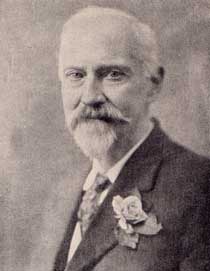
James Churchward (27 February 1851 – 4 January 1936) was a British writer, inventor, engineer, and fisherman.

Churchward is most notable for proposing the existence of a lost continent, called "Mu," in the Pacific Ocean. His writings on Mu are considered to be pseudoscience.[1][2][3][4]

Life

[edit]

Churchward was born in Bridestow, Okehampton, Devon at Stone House to Henry and Matilda (née Gould) Churchward. James had four brothers and four sisters. In November 1854, his father Henry died and the family moved in with Matilda's parents in the hamlet of Kigbear, near Okehampton. Census records indicate the family moved to London when James was 18, after his maternal grandfather George Gould died. His younger brother Albert Churchward (1852–1925) became a Masonic author.

Churchward went out to Southeast Asia, becoming a tea planter in Sri Lanka. He immigrated to the US in the 1890s. In Churchward's biography, entitled My Friend Churchey and His Sunken Continent, he was said to have discussed "Mu" with Augustus Le Plongeon and his wife in the 1890s.

In the United States, Churchward patented NCV (nickel, chrome, vanadium) steel, which was used to manufacture armor plating to protect ships during World War I. He also developed other steel alloys. After a patent-infringement settlement in 1914, Churchward retired to his 7+ acre estate on Lake Wononskopomuc in Lakeville, Connecticut, to think more about questions he had from his Pacific travels. At the age of 75, he published The Lost Continent of Mu: Motherland of Man (1926). He claimed this proved the existence of a lost continent, called Mu, in the Pacific Ocean.

Claims and hypothesis

[edit]

According to Churchward, Mu "extended from somewhere north of Hawaii to the south as far as the Fijis and Easter Island." He claimed Mu was the site of the Garden of Eden and the home of 64,000,000 inhabitants – known as the Naacals. Its civilisation, which flourished 50,000 years before Churchward's day, was technologically more advanced than his own. He said the ancient civilisations of India, Babylon, Persia, Egypt, and the Mayas were the decayed remnants of Mu's colonies.

Churchward claimed to have gained his knowledge of this lost land after befriending an Indian priest, who taught him to read an ancient dead language (spoken by only three people in all of India). The priest disclosed the existence of several ancient tablets, written by the Naacals. He allowed Churchward to see these records after initial reluctance. His knowledge remained incomplete, as the available tablets were mere fragments of a larger text. Churchward claimed to have found verification and further information in the records of other ancient peoples.

His writings attempt to describe the civilisation of Mu, its history, inhabitants, and influence on subsequent history and civilisations.

Churchward claimed that the ancient Egyptian sun-god Ra originated with the Mu; he claimed that "Rah" was the word which the Naacals used for "sun", as well as for their god and rulers.

Scientific rebuttal

[edit]

Alfred Metraux undertook research on Easter Island in the 1930s, and in 1940 published a monograph on Easter Island which includes a rebuttal of the hypothesis that Easter Island was a remnant of a sunken continent. In the second half of the twentieth century, improvements in oceanography, in particular understanding of seafloor spreading and plate tectonics, have left little scientific basis for claims of geologically recent lost continents such as Mu.

American science writer Martin Gardner wrote that Churchward's books contain geological and archaeological errors and are regarded by scholars as a hoax.[1] The archaeologist Stephen Williams, in Fantastic Archaeology (1991), described his writings as pseudoscience. Williams has written that Churchward's "translations are outrageous, his geology, in both mechanics and dating, is absurd, and his mishandling of archaeological data, as in the Valley of Mexico, is atrocious."[5]

Gordon Stein in Encyclopedia of Hoaxes (1993) has noted that Churchward's claims have no scientific basis. According to Stein "it is difficult to assess whether Churchward really believed what he said about Mu, or whether he was knowingly writing fiction."[6]

Brian M. Fagan has written that Churchward's evidence for Mu was made from "personal testimonials, false translations, notably of tablets from Mesoamerica, and spurious reconstructions from archaeological and artistic remains. Although it has attracted some following, it has never received scholarly or scientific support."[2]

[edit]

Churchward is mentioned in fiction in the short stories "Through the Gates of the Silver Key" by H. P. Lovecraft, "Out of the Aeons" by Lovecraft and Hazel Heald, and The Fitzgerald Contraction by Miles J. Breuer. Churchward and the lost island of Mu also appear in Philip K. Dick's Confessions of a Crap Artist.

The British anarchist situationist band KLF, also known as the Justified Ancients of Mu Mu, often refer to Mu Mu land and were inspired by The Illuminatus! Trilogy, and much of their work was Discordian in nature.

Churchward's writings are a key influence for the plot of the anime series RahXephon.

Churchward's writings were satirised by occult writer Raymond Buckland in his novel Mu Revealed, written under the pseudonym "Tony Earll" (an anagram for "not really").

In James Rollins' novel Deep Fathom, Churchward is the great-grandfather of character Karen Grace, who takes part in revealing the mystery of Mu.

Churchward's writings are used as a source for the following books and video games:

The lost continent of Mu is referenced in Daniel Pinkwater's teen novel Alan Mendelsohn, Boy From Mars (1979).[citation needed]

UK-based electronic music record-label Planet Mu has released three compilation albums with titles copied from Churchward's own books: The Cosmic Forces of Mu (2001), Children of Mu (2004), and Sacred Symbols of Mu (2006).[citation needed]

The 1940s-60s US comic strip, Alley Oop by Vic Hamlin,features the inhabitant of two adjacent primitive kingdoms: 'Moo' & Lem', obviously both derived from Lemuria.

Works

[edit]
  • Fishing Among the 1,000 Islands of the St. Lawrence (1894)
  • A Big Game and Fishing Guide to Northeastern Maine (1897)

Books about Mu

[edit]
  1. The Lost Continent of Mu, the Motherland of Men (1926)
  2. The Children of Mu (1931)
  3. The Sacred Symbols of Mu (1933)
  4. Cosmic Forces of Mu (1934)
  5. Second Book of Cosmic Forces of Mu (1935)

Posthumous publications

[edit]
  • The Books of the Golden Age (written in 1927 but first published 1997)
  • Copies of Stone Tablets Found by William Niven at Santiago Ahuizoctla Near Mexico City, a booklet of "thirty-some" pages, written in 1927 but first published in 2014 where it was included in the book The Stone Tablets of Mu by James Churchward's great-grandson Jack Churchward

Footnotes

[edit]

References

[edit]
[edit]
Revisions and contributorsEdit on WikipediaRead on Wikipedia
from Grokipedia
James Churchward (27 February 1851 – 4 January 1936) was a British , , and self-proclaimed best known for promoting pseudoscientific theories about the lost continent of Mu, which he claimed was the ancient motherland of humanity located in the . Born in Bridestow, , , Churchward purportedly served in the for thirty years, including postings in where he allegedly befriended a who introduced him to ancient tablets describing Mu as a vast empire destroyed by cataclysm around 12,000 years ago. His theories, influenced by earlier works on Mayan by , posited that Mu was home to 64 million inhabitants of a superior white race who spread civilization worldwide before its volcanic demise, with survivors founding empires in , , and the . Churchward supported his claims by interpreting stone tablets discovered in by archaeologist William Niven as script, though these assertions were never independently verified and are widely regarded by scholars as fabrications lacking geological or archaeological evidence. In the 1920s and 1930s, Churchward authored a series of books popularizing his ideas, including The Lost Continent of Mu, the Motherland of Man (1926), The Children of Mu (1931), The Sacred Symbols of Mu (1933), and Cosmic Forces of Mu (1934), which blended mythology, linguistics, and speculative history to argue that Mu's symbols and writings underpinned global ancient cultures. After retiring from engineering and fishing pursuits in the United States, he spent his later years in New York and California, where he died of a heart attack in Los Angeles at age 84. Despite their lack of academic credibility—critics noted errors in geology, archaeology, and chronology—Churchward's works influenced 20th-century occult literature, New Age movements, and fiction exploring sunken continents, though modern science dismisses Mu as a myth unrelated to plate tectonics or human origins.

Biography

Early Life

James Churchward was born on 27 February 1851 at Stone House in Bridestow, , , , to Henry Churchward and Matilda Churchward (née Gould). He was one of nine children in a middle-class family with ties to the local Masonic community. Churchward's formal education is unclear; some accounts claim attendance at and the at Sandhurst, though he was largely self-taught in and several languages, reflecting his early interest in technical and scholarly pursuits. By 1861, as recorded in the , the ten-year-old Churchward was living with his maternal grandparents, the Goulds, at Northcott's Cottage in the Kingsbarns area of , . At age 18, around 1869, he moved to seeking work opportunities in a growing industrial hub, gaining initial exposure to British colonial literature and artifacts from and that later influenced his worldview. This period preceded his transition to in India.

Military and Professional Career

Churchward enlisted in the in the 1870s and served as a cavalry officer with the in , where he was stationed at various outposts, including areas near ancient ruins. After his military service, he launched a tea planting venture in Ceylon (present-day ) during the 1880s, an endeavor that deepened his engagement with Eastern cultures and exposure to local artifacts. In the 1890s, Churchward immigrated to the and settled in New York, where he built a career as an inventor and businessman. His most notable contribution was the development of the Non-Corrosive Vacuum (NCV) steel process in the 1910s, a method involving , chrome, and alloys that produced bullet-resistant, non-corrosive suitable for armor plating and shipbuilding during . The process was patented under related inventions, including a self-hardening alloy of iron and (U.S. No. 845,756, 1907) and a production method (U.S. No. 1,069,387, 1913). These innovations achieved significant commercial success, prompting Churchward International Company to file a $6,000,000 infringement against major firms like the in 1910. Profits from his patents enabled Churchward to retire in 1917 to Lakeville, Connecticut.

Later Years and Death

In December 1871, Churchward married Mary Julia Stephens in Kensington, London, with whom he had several children, including son Alexander James Churchward, born on September 18, 1872, in Ceylon. The family, including additional children, relocated to the United States in 1889, settling initially in various locations before moving to Mount Vernon, New York, in 1910. By 1917, Churchward had retired to , where he owned 7.22 acres of property on Lake Wononskopomuc, purchased in 1914 and sold in 1925; his income from inventions enabled this comfortable retirement. His lifestyle in Connecticut involved hobbies such as —reflecting his lifelong interest as an avid fisherman—and writing non-Mu related works, alongside lecturing on various topics. In the 1930s, Churchward's health declined due to heart issues. He died on January 4, 1936, in , , from heart disease at the age of 84. At the time of his death, Churchward received limited public recognition beyond niche circles interested in his theories, with his funeral held on January 11, 1936, in , and burial at in ; he was survived by a nephew, Howard Kersey. His estate included unpublished manuscripts later managed by Churchward & Co., Inc., and his books continued to sell modestly in the years following his death.

Development of the Mu Hypothesis

Influences and Sources

James Churchward's development of the Mu hypothesis was profoundly shaped by a claimed encounter during his in , where he gained access to ancient temple records. In 1868, while assisting with famine relief efforts as a young British officer, Churchward befriended a —referred to as a —of a temple college, who entrusted him with the translation of ancient stone tablets inscribed in the language. According to Churchward, these tablets, preserved in the temple for generations, originated from the lost continent of Mu and detailed its history, , and cataclysmic destruction; the taught him the Naacal script over several months before the tablets were reportedly lost in a temple fire. During his extensive time in Asia, Churchward encountered ideas from the Theosophical Society, which had established branches in India and Ceylon by the 1880s. He was particularly influenced by Helena Blavatsky's writings, such as The Secret Doctrine (1888), which described ancient "root races" and a sunken Pacific landmass known as Lemuria, predating modern humanity by millions of years. Churchward later equated this Lemuria with his concept of Mu, incorporating Blavatsky's notions of cyclical civilizations and esoteric evolution into his framework, though he positioned the Naacal tablets as a more direct, empirical source. After retiring from the military and settling in , Churchward immersed himself in and occult literature, drawing parallels between Masonic symbols and the ancient glyphs he studied. His brother, Albert Churchward, a prominent Masonic scholar and author of The Signs and Symbols of Primordial Man (), further fueled this interest by exploring universal symbolism across cultures, which James extended to inscriptions. In the United States, where he resided from the early , Churchward amassed a personal collection of artifacts from his global travels, including stone tablets unearthed by William Niven in in 1921, which he interpreted as corroborating evidence of Mu's influence on Mesoamerican civilizations. Churchward's pseudohistorical ideas built upon earlier explorers and writers who speculated on lost worlds. He acknowledged Augustus Le Plongeon's work on Mayan ruins in , where Le Plongeon, in Queen Moo and the Egyptian Sphinx (1896), identified "Mu" as the original homeland of civilization, translating Mayan texts to claim it as a Pacific precursor to . Churchward referenced this directly, for instance, noting that "Le Plongeon and others have written that this refers to the creation of man" in discussions of symbolic origins. Similarly, Ignatius Donnelly's Atlantis: The Antediluvian World (1882) served as a key precursor, with Churchward echoing Donnelly's assertions of transoceanic —such as Egyptian influences in the Americas—while relocating the cradle of humanity to the Pacific rather than the Atlantic.

Core Elements of the Theory

James Churchward proposed that Mu was a vast lost located in the , extending from north of to south of and [Easter Island](/page/Easter Island), and from west of the to east of and Burma, encompassing nearly half the ocean's expanse and comparable in size to , measuring approximately 5,000 to 6,000 miles east-west and 3,000 miles north-south. This landmass, which Churchward described as the "Motherland," supported a of 64 million inhabitants at its peak and served as the cradle of an advanced that flourished over 50,000 years ago. The Naacals, a priestly brotherhood of a white race originating from Mu, were the primary creators and custodians of this civilization's knowledge, including its sciences, religions, and arts, which they preserved in sacred writings such as the Seven Inspired Writings inscribed on clay tablets. Mu's society was highly organized and hierarchical, divided into ten distinct tribes unified under a single government ruled by a divine known as Ra Mu, who held the dual role of emperor and high priest of the "Empire of the Sun." This structure emphasized , with worship centered on a single symbolized by the Sun () and governed by universal laws that promoted harmony and ethical conduct, as detailed in the Naacals' inscriptions. The featured seven sacred cities and advanced infrastructure, reflecting a sophisticated culture that Churchward claimed surpassed contemporary societies in technological and spiritual achievements. According to Churchward's hypothesis, Mu met its end approximately 12,000 years ago (around 10,000 B.C.) through a catastrophic event involving massive volcanic eruptions, earthquakes, and the collapse of underground gas chambers, which tore the continent apart and submerged it into a "fiery abyss" beneath the Pacific waters. This disaster, foretold by Ra Mu, resulted in the deaths of most inhabitants but allowed a portion of the population, including Naacals, to escape as refugees, establishing colonies across the globe in regions such as , , , and the South Sea Islands, where they disseminated Mu's cultural and religious legacy.

Specific Claims on Ancient Civilizations

Churchward asserted that the Naacals, a priestly group originating from Mu, migrated eastward to establish and influence ancient civilizations worldwide after the continent's partial submersion. He claimed they first traveled to and then to , where they founded the Vedic civilization by imparting the "Seven Sacred Inspired Writings," which formed the basis of Hindu religion and philosophy. From , the Naacals proceeded to , where they oversaw the construction of the pyramids and introduced advanced engineering and religious doctrines, with being colonized by Mayas who had arrived via . Additionally, Churchward described Naacal migrations to the Maya lands in , where survivors from Mu's western regions sailed eastward through to Yucatan, carrying sacred knowledge that shaped Mayan society and architecture. To support these connections, Churchward pointed to symbolic evidence he believed persisted as remnants of Mu's culture across global sites. He interpreted sun symbols—such as rays, circles, and the Egyptian god —as universal representations of Mu's "Empire of the Sun," appearing in Polynesian ruins, Indian inscriptions, and to signify the Deity's attributes and the lost continent's monotheistic faith. Rishi circles, depicted as central suns encircled by twelve divisions symbolizing heavenly gates and virtues, were claimed to originate from Mu's seven sacred cities and appear in Uighur, Naga, and South American artifacts, illustrating shared cosmogonic principles. Megalithic structures further evidenced this diffusion; Churchward linked Easter Island's giant statues, topped with sun-like hats and bird motifs representing creative forces, to Mu's engineering prowess, while Stonehenge's stone alignments were seen as echoes of Mu's astronomical and religious monuments built by dispersed Naacals. Churchward placed Mu's civilization chronologically before all known ancient societies, estimating its flourishing over 50,000 years ago and its final sinking around 12,000 years ago due to volcanic activity and earthquakes, which prompted the dispersal of its people. He described Mu as home to 64 million inhabitants organized into ten principal tribes, with 64,000,000 souls lost in the cataclysm—a figure commemorated in ancient texts like the Egyptian —and survivors who Churchward speculated may have formed 17 colonies, based on his interpretation of symbols on the Great at Tiahuanaco, seeding global cultures. These tribes, he argued, carried forward Mu's superior knowledge, preserved in Naacal tablets that detailed , monotheistic , and feats surpassing modern capabilities, including mystical forces like fire-walking and insights into creation and the soul.

Publications

Books on Mu

Churchward's primary works on the lost continent of Mu were produced during his retirement following a 1914 patent settlement, allowing him to dedicate time to exploring ancient mysteries for a general readership rather than academic circles. His first book, The Lost Continent of Mu: Motherland of Man, published in 1926, introduces the concept of Mu as the original cradle of civilization in the , drawing on purported ancient tablets from that Churchward claimed to have translated with the aid of a temple priest. The volume outlines basic claims about Mu's advanced society, its cataclysmic destruction around 12,000 years ago, and its role as the source of global migrations and , supported by interpretations of archaeological sites and legends from , , and . In The Children of Mu, released in 1931 by Ives Washburn, Churchward expands on the societal structure of Mu, portraying it as a highly organized with a hierarchical priesthood and advanced that emphasized and spiritual wisdom. The book details early migrations from Mu to , the , and beyond after the continent's submersion, with a particular focus on the Naacals—a priestly brotherhood who preserved and disseminated Mu's knowledge through inscriptions and oral traditions preserved in Indian and Burmese temples. It uses these elements to argue for Mu's influence on the founding of ancient civilizations like those of the Maya and early . The Sacred Symbols of Mu, published in 1933 by Ives Washburn, shifts attention to symbolic evidence, analyzing hieroglyphs, emblems, and motifs found worldwide—such as the Egyptian , Celtic crosses, and Polynesian petroglyphs—as derivations from Mu's unified religious iconography. Churchward includes numerous illustrations of the tablets and comparative drawings to demonstrate how these symbols encode Mu's cosmological beliefs, including creation myths and the "Sacred Four" forces of the , positing them as proof of a shared prehistoric origin rather than independent developments. Churchward's later volume, Cosmic Forces of Mu, published in 1934 by Ives Washburn, delves into Mu's scientific and spiritual principles, describing how its inhabitants understood universal laws governing , energy, and divine forces through a blend of empirical and esoteric . This work portrays Mu's and cosmology as harmonious with natural cosmic rhythms, influencing later religions' views on creation and . A , Cosmic Forces of Mu: Volume Two, published by Ives Washburn in 1935, continues these themes by applying them to Earth's geological history and , reinforcing Mu as the root of all scientific and mystical knowledge.

Other Writings

Prior to his publications on the lost continent of Mu, James Churchward produced several practical works focused on recreational fishing, drawing from his experiences in North America and promoting rail travel to prime angling locations. His first known book, Fishing Among the 1,000 Islands of the St. Lawrence, was published in 1894 by the New York Central and Hudson River Railroad Company. This 56-page guide detailed fishing opportunities in the St. Lawrence River region, emphasizing game species such as pike, black bass, and muskellunge, along with techniques, recommended tackle, scenic descriptions, and maps of optimal spots. Illustrated by Churchward himself, the work served as a promotional tool for railroad excursions while showcasing his expertise as an angler and civil engineer. In 1898, Churchward authored A Big Game and Fishing Guide to Northeastern for the Bangor and Aroostook Railroad Company. The guide offered practical advice for hunters and anglers visiting 's wilderness areas, including recommendations for fly rods, lines, and destinations like Grand Lake Stream, highlighting the region's transformation into a premier fly-fishing hub amid late-19th-century industrial expansion. It reflected his firsthand knowledge of big-game pursuits and coastal fishing from travels in the United States and . Churchward also contributed short fiction to periodicals, such as the story "Indian Joe, A Tale of the ," published in Recreation Magazine in March 1895, which incorporated elements of regional adventure and outdoor life. During the , amid his career, Churchward wrote on industrial innovations, including applications of his patented NCV (nickel-chrome-) alloyed , which he developed for shock-resistant uses like naval armor plating. His contributions appeared in trade journals, discussing hardening processes and material toughness derived from compositions blending with precise ratios of (1-3.5%), (0.5-2.5%), (0.05-1.5%), and (0.15-1%). These pieces totaled around a dozen minor publications, often self-published or in specialized outlets, underscoring his pre-pseudohistorical interests in and practical .

Posthumous Works

Following Churchward's death in , re-editions of his seminal work The Lost Continent of Mu appeared in the late and continued through the , often with minor textual updates and illustrations overseen by his family to maintain fidelity to the original 1926 and 1931 versions. These editions, such as the Paperback Library printing, preserved Churchward's core theories on the lost Pacific continent while incorporating subtle clarifications drawn from his notes, without altering the fundamental narrative. In 1997, The Books of the Golden Age: The Sacred and Inspired Writings of Mu was published for the first time, compiled from manuscripts Churchward had completed around 1927 but left unpublished during his lifetime. Assembled by members of his family, including contributions from his god-daughter Joan Griffith, the volume explores Mu's religious influences on global civilizations, presenting transcribed ancient texts and symbolic interpretations as direct extensions of Churchward's earlier Mu hypothesis. A 2014 publication, The Stone Tablets of Mu, edited by Churchward's great-grandson Jack E. Churchward, draws on surviving fragments of James Churchward's unpublished notes and translations of purported ancient tablets, offering additional claims about Mu's technological and cosmological . This work integrates James's original sketches and partial drafts with editorial annotations to contextualize the material, emphasizing its roots in his lifetime research on Pacific . These posthumous releases typically feature prefaces by family members, such as Jack Churchward's introductions that detail the manuscripts' and Churchward's methods, but they introduce no major new discoveries beyond what appears in his original Mu books. The 1990s and 2010s saw heightened interest in these compilations amid movements, with editorial efforts highlighting their relevance to alternative history and . Sales of Churchward's works experienced a resurgence post-2000, facilitated by distribution and revivals in literature, as publishers like Ozark Mountain reissued them for modern audiences.

Reception and Legacy

Scientific Critiques

Churchward's hypothesis of a sunken Pacific continent known as Mu has faced extensive criticism from geologists, who argue that it contradicts established principles of . Developed in the , theory demonstrates that continents drift across the Earth's surface on lithospheric plates but do not sink wholesale into the ocean due to volcanic activity or earthquakes, as Churchward proposed. Seismic mapping and ocean floor drilling since the 1970s have revealed no remnants of a large continental mass in the Pacific basin, only volcanic island chains formed by hotspot activity and zones. Early critiques, such as Alfred Métraux's 1940 analysis of , highlighted the stability of the ocean floor by noting that the island's statues and platforms are positioned along the current coastline, inconsistent with a recent submergence of a vast landmass. Archaeological examinations further undermine Churchward's claims, particularly his reliance on nonexistent Naacal tablets as primary evidence for Mu's advanced civilization. These tablets, which Churchward asserted were ancient records from detailing Mu's history, have never been verified or located by independent scholars, leading to accusations of fabrication. Gordon Stein, in his encyclopedia, described Churchward's assertions about the tablets as lacking any scientific basis and emblematic of pseudohistorical hoaxes. Moreover, Churchward's interpretations of sites like Mayan ruins and Easter Island script misrepresent their cultural contexts; for instance, carbon places Mayan developments around 2000 BCE, far later than Churchward's timeline of Mu's 50,000-year-old empire, and remains undeciphered without links to a Pacific super-civilization. Historical and chronological inconsistencies in Churchward's narrative have also drawn sharp rebuttals. His proposed timeline for Mu's cataclysmic destruction around 12,000 years ago conflicts with and stratigraphic evidence from global sites, which show no synchronized worldwide cultural collapse or technological regression at that period. , in his 1957 critique, labeled Churchward's works a "deliberate " riddled with fabricated translations and a mishmash of geological and archaeological errors, noting that the alleged Naacal script bore no resemblance to known ancient languages. Linguistic analyses reinforce this, as Churchward's purported Naacal terms fail to align with Proto-Polynesian or Indo-European roots, rendering his etymological claims implausible. In contemporary scholarship, Churchward's theory is universally classified as pseudoscience. Modern geological studies confirm that the Pacific Ocean floor consists primarily of oceanic crust composed of basalt, with no evidence of large continental fragments that would support the existence of a sunken continent like Mu. Genetic studies of Pacific populations support Austronesian migrations from Asia around 5,000 years ago, contradicting Churchward's claims of a much earlier unified mother culture. These findings, combined with the absence of corroborating artifacts, solidify the dismissal of Mu as a product of speculative invention rather than empirical history.

Cultural Impact

Churchward's theories on the lost continent of Mu have permeated 20th- and 21st-century fiction, notably influencing horror and speculative literature. In H.P. Lovecraft's collaborative story "Through the Gates of the Silver Key" (1934, with E. Hoffmann Price) and his revision of Hazel Heald's "" (1935), Mu appears as a sunken Pacific realm tied to ancient cosmic horrors, echoing Churchward's depictions of a cataclysmic downfall of an advanced civilization. This integration helped embed Mu within the , where lost continents symbolize forbidden knowledge and eldritch antiquity. Similarly, Philip K. Dick's novel (written 1959, published 1975) directly references Churchward and Mu as part of a character's eccentric obsessions with , portraying the theory as a lens for exploring and alternative realities. In music and New Age literature, Churchward's ideas inspired creative revivals and esoteric reinterpretations. The British electronic band (formerly The JAMs), active in the late 1980s and 1990s, drew heavily from Mu in their name—Justified Ancients of Mu Mu—and album concepts, blending Churchward's lost continent with Robert Anton Wilson's Illuminatus! Trilogy to evoke chaotic, mythical narratives in tracks like "" (1991). New Age author has sustained Churchward's legacy through introductions to reprints of The Lost Continent of Mu (e.g., 2006 edition) and his own works like Lost Cities of and Arabia (1988), where he expands on Mu as a cradle of ancient wisdom, influencing 1980s–2020s pseudohistorical narratives. Churchward's Mu trope extended to visual media, shaping , games, and fringe theories. The 2002 anime series , created by Yutaka Izubuchi, incorporates Mu as a pivotal lost civilization influencing global myths and advanced technology, directly inspired by Churchward's 1926 book to explore themes of cyclical destruction and rebirth. While not always explicitly credited, Mu-like appear in video games such as the series (e.g., , 2008), where submerged Pacific realms house ancient artifacts, perpetuating tropes of forgotten super-civilizations. Churchward's ideas also fed into ancient astronaut hypotheses, with Erich von Däniken's Chariots of the Gods? (1968) and later works indirectly echoing Mu's advanced society through interpretations of global megaliths as extraterrestrial legacies. In the 21st century, Churchward's theories thrive in digital esotericism and wellness culture. Podcasts like Earth Ancients (episodes circa 2020s) and The Inbetween (2025 episode on Atlantis and Mu) discuss Mu as a spiritual origin point, attracting listeners interested in alternative history. YouTube channels, including analyses from 2021–2024 (e.g., "The LOST CONTINENT of MU" by History Hit), have amassed views exploring Churchward's claims, often linking them to modern mysticism. Theosophical revivals in 2010s wellness movements, such as Lemurian crystal healing and Mu-inspired meditation retreats, reinterpret Churchward's Naacal priests as enlightened guides, blending his narrative with New Age practices for personal transformation.

References

  1. https://en.wikisource.org/wiki/Author:James_Churchward
Add your contribution
Related Hubs
User Avatar
No comments yet.