


Community hub
Recent from talks
Contribute something
Nothing was collected or created yet.
Jim Hutton
View on Wikipedia | This article needs additional citations for verification. (September 2014) |

Key Information


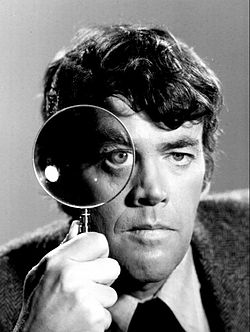
Dana Scott James Hutton (May 31, 1934 – June 2, 1979) was an American actor in film and television best remembered for his role as Ellery Queen in the 1970s TV series of the same name, and his screen partnership with Paula Prentiss in four films, starting with Where the Boys Are. He was the father of actor Timothy Hutton.
According to Stephen Vagg of Filmink Hutton "seemed on the verge of becoming a star for many years without ever quite getting there... it’s kind of a mystery why it didn’t happen."[1]
Early life
[edit]Hutton was born on May 31, 1934, in Binghamton, New York, the son of Helen and Thomas R. Hutton, an editor and managing editor of the Binghamton Press.[2] Hutton's parents divorced while he was an infant, and he never knew his father. In 1938, Hutton and his mother moved to Albany, NY. [3] During his childhood, he enjoyed sports and playing games with his friends. Hutton was expelled from five high schools and a boarding school due to behavior problems, but had excellent grades and test scores. After starting his school newspaper's sports column, he earned a scholarship in journalism from Syracuse University in 1952.[4] He was expelled from Syracuse after driving a bulldozer through a bed of tulips near the library while drunk.[5]
Hutton then enrolled at Niagara University, where he began pursuing an acting career.[6] He performed in summer stock in Connecticut and La Jolla, and won state oratory competitions.[7]
In 1955, he moved back to New York, where he became, in his own words, a "beatnik".[4] He struggled to find acting work. Worried about being able to make ends meet, he joined the military.
Military service
[edit]Hutton served in the United States Army from 1956 to 1959, and starred in over 40 Army training films before going to West Berlin to serve in special services. Hutton founded the American Community Theater by spearheading the renovation of theaters abandoned during World War II. He established the first English-speaking theater in Berlin.[2] "They turned out to be the kickiest two years of my life", he later said.[5]
Hutton was performing in live theater in West Germany, playing Captain Queeg in a production of The Caine Mutiny Court Martial, while with the Army, when he was spotted by American film director Douglas Sirk. Sirk offered him a small role in a film, A Time to Love and a Time to Die (1958), if he could get leave to join the unit in Nuremberg.[8][9] Hutton made his debut in the film as a neurotic German soldier who commits suicide. Universal Pictures saw footage and expressed interest in offering him a long-term contract.[4] While in Germany, Hutton also had a small role in Ten Seconds to Hell (1959).[1]
When Hutton left the Army, he moved to Hollywood, but discovered the offer from Universal had expired.[8] He got an agent, though, and started doing auditions.[4]
Acting
[edit]Early television roles
[edit]One of his earliest roles was on the TV show The Big Attack (1956–57) in episode one, "Big Slim".[10][better source needed] His first notable screen appearance was in the episode "And When the Sky Was Opened" of The Twilight Zone (1959), in which he co-starred with Rod Taylor. He also guest-starred on episodes of Father Knows Best and Tate.[citation needed]
In 1959, he appeared on stage at the La Jolla Playhouse in Look Homeward Angel alongside Miriam Hopkins.[11]
Metro-Goldwyn-Mayer
[edit]Hutton auditioned for Metro-Goldwyn-Mayer (MGM) executives Al Tresconi and Ben Thau. They were impressed enough to offer him a long-term contract.[4] "But after that, they didn't seem to know what to do with me", he said. "I don't fall easily into a mold and they tried different things."[4]
MGM put him in The Subterraneans (1960), a drama about "beatniks".[7] The film was a big flop, but Hutton was then cast in a teen comedy for the same studio, Where the Boys Are (1960), where he appeared alongside a number of young players under contract to the studio, including George Hamilton, Connie Francis, Yvette Mimieux, and Paula Prentiss.[12] The movie was a huge success.
Due to his tall, gangly frame and the absent-minded quality of his delivery, Hutton was viewed as a successor to James Stewart. Hutton was romantically teamed in the film with Prentiss, in part because they were the tallest MGM contract players of their time (Hutton at 6 ft 5 in [196 cm] and Prentiss at 5 ft 10 in [178 cm]), and public feedback being positive, MGM decided to make them a regular team, along the lines of William Powell and Myrna Loy.[13]
Hutton appeared with Prentiss in The Honeymoon Machine (1961) supporting Steve McQueen, which was a hit. They made Bachelor in Paradise (1961) starring Bob Hope and Lana Turner, which lost money. Hutton and Prentiss were given top billing in The Horizontal Lieutenant (1962), which was a box-office disappointment.[14] "We're not being thrown into films together to play the same parts", said Hutton. "Paula and I have spent too much time and money on our careers, and if teaming together happens to go hand and glove with advancing our careers, then fine."[13] According to Filmink Hutton "was a screen natural: tall, affable, intelligent, slightly gangly, innocent but not dim, with a deep speaking voice, and superb comic timing – he was like a new James Stewart or Jack Lemmon, ideal for boys next door, gawky love interests, and/or junior officers/executives."[1]
Hutton and Prentiss were announced for Away from Home to be shot in Mexico by producer Edmund Grainer,[15] but the film appears to have not been made. Neither was another announced for them, And So To Bed, to be written and directed by Frank Tashlin.[16]
Hutton was meant to play a role in How the West Was Won (1962), a soldier who tries to desert and fights with George Peppard,[17] but Russ Tamblyn ended up playing the role.[citation needed]
In February 1962, Prentiss and Hutton made the exhibitors list of the top 10 "stars of tomorrow" alongside Hayley Mills, Nancy Kwan, Horst Bucholz, Carol Lynley, Dolores Hart, Juliet Prowse, Connie Stevens, and Warren Beatty.[18]
MGM tried Hutton in a comedy-drama with Jane Fonda, Period of Adjustment (1962), directed by George Roy Hill. It was a hit at the box office. MGM announced they would reteam him with Prentiss in Follow the Boys[19] but he was not in the final film; Prentiss' love interest was played by Russ Tamblyn.
Hutton did some stage acting at the La Jolla Playhouse in Write Me a Murder in 1962.[20] He was Connie Francis's leading man in Looking for Love (1964) (in which Hamilton, Mimieux, and Prentiss had cameos).[21] The movie was not a success. He was going to be Sandra Dee's leading man in The Richest Girl in Town[22] but was replaced by Andy Williams for the final film, which became I'd Rather Be Rich.
Hutton, tired of playing in comedies, refused scripts from MGM for 15 months before the studio eventually released him from his contract.
Columbia
[edit]After leaving MGM, Hutton signed a one-year contract with Universal and received an offer to make a Western film at Columbia Pictures, Major Dundee,[23] which was directed by Sam Peckinpah, and Hutton played the third lead after Charlton Heston and Richard Harris, an ineffective officer. Filming took place in Mexico. He followed it with another expensive Western, The Hallelujah Trail (1965) with Burt Lancaster, directed by John Sturges for United Artists.[24] Both films were financial disappointments, although Dundee's reputation has risen in recent years.[according to whom?]
Hutton was the male juvenile in Never Too Late (1965) with Paul Ford and Connie Stevens, at Warner Bros.[5]
"The Major Dundee and Hallelujah Trail parts were good", he said in an interview around this time, "but they were peripheral. I'm ready for a take charge part. In all immodesty, I don't believe there are many guys my age who can play comedy. Jack Lemmon is the master, but who among the younger guys can you think of? A lot of them can clown and laugh at their own jokes."[5]
Hutton made a pilot for a sitcom about a travelling salesman, Barney, written and directed by Shelley Berman for Screen Gems,[25] but it was not picked up. He made a cameo in The Trouble with Angels,[26] and was the second male lead in Walk, Don't Run (1966), a comedy with Samantha Eggar and Cary Grant (in Grant's last feature-film appearance) at Columbia. Director Charles Walters noted that Hutton was Grant's personal choice for the role. "Cary identifies with Hutton", he said.[27] The success of this film had Hutton given the lead in Columbia's comedy Who's Minding the Mint? (1967), but it was not widely seen. He was announced for the lead in A Guide for the Married Man[28] but when the script changed, he ended up asking to be released from it.[29]
In November 1966, Hutton signed a nonexclusive, two-year deal with 20th Century Fox.[30] However, he did not appear in any Fox films.
John Wayne
[edit]In July 1967, Hutton signed to appear in the John Wayne war drama, The Green Berets, in which Hutton played a Special Forces sergeant in a mix of comedy and drama, with a memorable booby trap death scene.[31]
In 1968, Hutton appeared with Wayne in Hellfighters, playing the role of Greg Parker. The movie was loosely based on the career of oil-well firefighter Red Adair.[32] Filmink argued around this time "The winds of Hollywood were changing, and Hutton had become unfashionable... in the minds of producers and directors, Hutton was associated with early sixties Hollywood rather than late sixties Hollywood. Because, from then on, he worked almost exclusively on television."[1]
Return to television
[edit]In the early 1970s, Hutton began working almost exclusively in television, guest-starring on such shows as The Psychiatrist; Love, American Style (several times), and The Name of the Game. He was in two TV movies, the thriller The Deadly Hunt (1971) and a war film, The Reluctant Heroes of Hill 656 (1971).[33]
Hutton played Erle Stanley Gardner's small-town district attorney hero, Doug Selby, in They Call It Murder (1971), a TV movie that was a pilot for a proposed series that never came about. He also co-starred with Connie Stevens in Call Her Mom (1972), another TV movie that was a pilot for a series that was not picked up.[34] He tried three failed sitcom pilots, Wednesday Night Out, Call Holme, and Captain Newman, M.D. (the latter, written by Richard Crenna, not to be confused with the like-named 1963 movie).[35][36]
Hutton starred in Don't Be Afraid of the Dark (1973) and The Underground Man (1974) and episodes of Marcus Welby, M.D., The Wide World of Mystery, and Ironside.[37] His last theatrical film was Psychic Killer (1975) directed by Ray Danton. "Much of my career downfall was my own fault," he said around this time.[38]
Ellery Queen
[edit]Hutton had not auditioned since Period of Adjustment, but agreed to do it for the role of fictional amateur detective Ellery Queen in the 1975 made-for-television movie and 1975–1976 television series, Ellery Queen. Hutton's co-star in the series (set in 1946–1947 New York City) was David Wayne, who portrayed his widowed father, an NYPD homicide detective. Ellery, a writer of murder mysteries, assisted his father as an amateur, each week solving an "actual" murder case. Near the end of each story, before revealing the solution, he would "break the fourth wall" by giving the audience a brief review of the clues and asking if they had solved the mystery. "It's the first opportunity I've had in a long time to show people I can give a good performance," he said.[38] It ran for 23 episodes.[1]
One of Hutton's memorable television appearances was appearing as a guest star in the 1977–1978 third-season premiere of the Norman Lear sitcom One Day at a Time. The episode, titled "The Older Man", was a four-part story arc in which Hutton portrayed Dr. Paul Curran, a 42-year-old veterinarian who falls in love with 17-year-old Julie Cooper (played by Mackenzie Phillips).[39]
Final years
[edit]Hutton's final performances included roles in Flying High, $weepstake$, and The Wonderful World of Disney (The Sky Trap).[40]
His last television role was in an unsold pilot called Butterflies, based on the BBC2 sitcom of the same name. It was broadcast on NBC in August 1979, about two months after Hutton had died.[41]
Personal life
[edit]Hutton married a teacher named Maryline Adams (née Poole) in December 1958. They divorced in February 1963. They had two children: a daughter, Heidi (born 1959), and a son, Timothy (born 1960). Timothy also became an actor and appeared with his father in a summer-stock production of Harvey.[42] Hutton was married to Lynni M. Solomon from March 1970 to December 1973 when they divorced; they had daughter Punch Hutton (former deputy fashion editor of Vanity Fair).[43] Beginning in 1964, Hutton had an intermittent 15-year relationship with actress and model Yvette Vickers.[44][1]
Death
[edit]On June 2, 1979, Hutton died of liver cancer, two days after his 45th birthday[45] and a month after being diagnosed. He was cremated and his ashes were interred at the Garden of Roses area of Westwood Village Memorial Park.[46]
Appraisal
[edit]Filmink argued Hutton "had talent, charisma, affability and appeared in some popular movies" but "didn’t always have the best material and some films that might have taken him to the next level underperformed at the box office" and never enjoyed "a game-changing movie in a different genre that could change the way people thought about him" and "seemed to have particularly poor luck getting a hit TV series (a medium that suited him) or really top flight directors." Further more he "was overly associated with one sort of genre – light comedy – and a particular style of that light comedy – tail end golden era Hollywood, with its glossy photography, contract stars and sexual conservatism. So, his place in modern day light comedy was taken by newer actors."[1]
Filmography
[edit]
Film[edit]
|
Television[edit]
|
References
[edit]- ^ a b c d e f g Vagg, Stephen (August 20, 2025). "Not Quite Movie Stars: Jim Hutton". Filmink. Retrieved August 20, 2025.
- ^ a b Shay, Jack Edward (2012). Bygone Binghamton. AuthorHouse. pp. 431–432. ISBN 9781467065078. Retrieved April 10, 2015.
- ^ https://www.imdb.com/name/nm0001380/
- ^ a b c d e f Hopper, H. (January 21, 1962). "THE LUCKIEST GI". Chicago Daily Tribune. ProQuest 183096856.
- ^ a b c d Champlin, C. (August 1, 1965). "'Hallelujuah trail's jim hutton: Add one more to the ad libbers". Los Angeles Times. ProQuest 155281060.
- ^ Peterson, Bettelou (April 3, 1990). "What Happened To Jim Hutton". Deseret News. Retrieved January 29, 2017.
- ^ a b Tinee, M. (November 12, 1961). "Young jim hutton owner of long term film contract". Chicago Daily Tribune. ProQuest 183061527.
- ^ a b "Jim Hutton Started as a Starving Actor". Los Angeles Times. January 21, 1962. p. B4.
- ^ R. L. (December 16, 1960). "Luck found 'em prepared". The Washington Post and Times-Herald. ProQuest 141237477.
- ^ "The Big Attack - Combat Heroes of WWII: Big Slim". IMDb.[unreliable source?]
- ^ Hopper, H. (June 28, 1962). "Looking at hollywood". Chicago Daily Tribune. ProQuest 183190093.
- ^ E. A. (October 19, 1960). "MOVIE PRODUCER CITES STAR POWER". New York Times. ProQuest 115144155.
- ^ a b Alpert, Don (July 16, 1961). "Jim and Paula: Shades of Powell, Loy?". Los Angeles Times. p. N4.
- ^ Vagg, Stephen (August 12, 2025). "Not Quite Movie Stars: Paula Prentiss". Filmink. Retrieved August 12, 2025.
- ^ Hopper, H. (October 5, 1961). "Looking at hollywood". Chicago Daily Tribune. ProQuest 183038632.
- ^ Hopper, H. (October 20, 1961). "Paula prentiss and hutton star again". Los Angeles Times. ProQuest 167966147.
- ^ HEDDA HOPPER (May 6, 1961). "Looking at hollywood". Chicago Daily Tribune. ProQuest 182908311.
- ^ Scheuer, P. K. (February 2, 1962). "Manulis to produce film on alcoholics". Los Angeles Times. ProQuest 168065251.
- ^ Scheuer, P. K. (May 23, 1962). "Is french riviera a location threat?". Los Angeles Times. ProQuest 168134172.
- ^ Scheuer, P. K. (June 20, 1962). "'Pajama tops' will be done as movies". Los Angeles Times. ProQuest 168037350.
- ^ Hopper, H. (August 28, 1963). "Jane darwell gets film and TV roles". Los Angeles Times. ProQuest 168389056.
- ^ Hopper, H. (October 22, 1963). "Looking at hollywood hope's dodgers sign at pre-series prices". Chicago Tribune. ProQuest 179294055.
- ^ Hopper, H. (January 14, 1964). "Looking at hollywood". Chicago Tribune. ProQuest 179367906.
- ^ Hopper, H. (May 23, 1964). "Looking at hollywood". Chicago Tribune. ProQuest 179465674.
- ^ "SHELLEY BERMAN SIGNS NEW PACT". New York Times. January 19, 1965. ProQuest 116774185.
- ^ Briggs, A. (September 21, 1965). "Two signed for 'paris'". Los Angeles Times. ProQuest 155298108.
- ^ "'Walk, don't run' sets fast pace". Los Angeles Times. January 11, 1966. ProQuest 155363333.
- ^ Martin, B. (August 8, 1966). "'Married' chooses hutton". Los Angeles Times. ProQuest 155520123.
- ^ Martin, B. (September 19, 1966). "MOVIE CALL SHEET". Los Angeles Times. ProQuest 155564229.
- ^ Martin, B. (November 15, 1966). "MOVIE CALL SHEET". Los Angeles Times. ProQuest 155603266.
- ^ Martin, B. (July 24, 1967). "Hutton joins 'berets' cast". Los Angeles Times. ProQuest 155765538.
- ^ Martin, B. (February 20, 1968). "MOVIE CALL SHEET". Los Angeles Times. ProQuest 155832354.
- ^ Beigel, J. (October 1, 1971). "'The deadly hunt' familiar". Los Angeles Times. ProQuest 156787948.
- ^ Smith, C. (February 17, 1972). "New pilots star TV war-horses". Los Angeles Times. ProQuest 156941537.
- ^ Smith, C. (September 4, 1972). "Crenna takes film route in TV return". Los Angeles Times. ProQuest 156983594.
- ^ Haber, J. (March 20, 1972). "It's nervous time again in TV circles". Los Angeles Times. ProQuest 156886877.
- ^ Thomas, K. (May 8, 1974). "TV MOVIE REVIEW". Los Angeles Times. ProQuest 157438490.
- ^ a b Lewis, J. (August 17, 1975). "Jim hutton". Chicago Tribune. ProQuest 169366268.
- ^ Smith, C. (July 30, 1978). "VALERIE BERTINELLI". Los Angeles Times. ProQuest 158674104.
- ^ Thomas, K. (May 12, 1979). "'Sky trap' airs sunday on 'world of disney'". Los Angeles Times. ProQuest 158900560.
- ^ "Sexes battle in comedies". Syracuse Herald-Journal. July 29, 1979. p. 17M.
- ^ Gritten, David (February 8, 1983). "Riding on Taps, Teens and Talent". People. Time Inc. ISSN 0093-7673. Retrieved January 30, 2017.
- ^ "Longtime Vanity Fair Deputy Editor Punch Hutton Departs Condé Nast". Women's Wear Daily. December 2016. Retrieved January 30, 2017.
- ^ Anton, Mike (June 4, 2011). "Alone in life, Yvette Vickers is somewhat less alone in death". The Los Angeles Times. Archived from the original on March 31, 2013. Retrieved January 30, 2017.
- ^ "Actor Jim Hutton dies of liver cancer at age 45". The Chicago Tribune. June 4, 1979. p. 15. Retrieved January 30, 2017.
- ^ Oliver, M. (June 4, 1979). "Actor jim hutton dies of cancer". Los Angeles Times. ProQuest 158903843.
External links
[edit]
- Jim Hutton at IMDb

Jim Hutton
View on GrokipediaEarly life
Childhood and family background
Jim Hutton was born Dana James Hutton on May 31, 1934, in Binghamton, New York, into a modest family.[10][2] His parents, Helen Ryan and Thomas R. Hutton, a newspaper editor and managing editor of the Binghamton Press, divorced when he was an infant, resulting in minimal contact with his father, whom he saw only twice before the elder Hutton's death; this separation contributed to an erratic family life, characterized by instability.[2][11][12] This restless upbringing manifested in behavioral challenges during his adolescence, leading to expulsions from five high schools and one boarding school due to rebellious actions, though he consistently demonstrated strong academic aptitude through high grades and test scores.[7][11][13] Hutton's early exposure to entertainment came through participation in local theater during his youth, fostering an initial fascination with performance amid his otherwise turbulent home life.[11]Education and early interests
Hutton entered Syracuse University in 1952 on a journalism scholarship earned after launching his high school newspaper's sports column, but his burgeoning interest in acting soon derailed his studies, resulting in the loss of his scholarship.[2] He was expelled as a sophomore following a drunken prank in which he drove a bulldozer through a bed of tulips near the campus library.[2] Following this setback, he transferred to Niagara University, where he again lost academic scholarships due to poor performance amid excessive partying.[2] He faced expulsion from Niagara as a junior after additional pranks, including draining a campus pond and dropping his pants during an awards dinner on a bet.[2] These repeated academic failures highlighted his restless and rebellious nature, rooted in a high school history marked by attendance at multiple institutions.[2] In the mid-1950s, during summer breaks, Hutton immersed himself in amateur theater through summer stock productions, paying $12.50 weekly at Ivoryton, Connecticut, to sweep stages in exchange for understudy opportunities and small roles. He also participated in productions in La Jolla, California, and won state oratory competitions, experiences that firmly sparked his commitment to performing arts.[2] Hutton's early hobbies, such as sports journalism and public speaking, underscored his outgoing personality and affinity for engaging audiences, traits that aligned with his emerging theatrical pursuits.[2] Ultimately, these academic disappointments and amateur stage forays convinced him to abandon higher education for a full-time acting career, leading him to relocate to New York in 1955 for odd jobs while auditioning.[2]Military service
Enlistment and basic training
At the age of 22, Jim Hutton enlisted in the United States Army in 1956, motivated by financial instability and the inability to sustain a living through acting after his college experiences.[13] This decision came amid a pattern of restlessness, including academic expulsions due to behavioral challenges, prompting him to seek the structure and discipline offered by military service.[13] Hutton's basic training immersed him in the rigorous physical and hierarchical demands of army life, which provided the stability he had lacked in civilian pursuits and began to channel his performative talents.[2] Assigned to special services early in his enlistment, he starred in over 40 training films aimed at educating and entertaining recruits, marking his initial foray into military entertainment.[2] These experiences fostered personal growth, as performing under military oversight built Hutton's confidence and honed his acting skills within a disciplined framework, ultimately proving beneficial to his future career in show business.[13]Overseas posting and theatrical involvement
Following basic training, Hutton was stationed in West Berlin as part of his U.S. Army service in Germany during the late 1950s, a period marked by intense Cold War tensions in the divided city. Assigned to special services, his duties involved entertaining and supporting American troops amid the geopolitical standoff between East and West. This overseas posting immersed him in the unique atmosphere of Berlin, a frontline symbol of ideological conflict, where U.S. forces maintained a precarious presence to counter Soviet influence.[1][14] In West Berlin, Hutton founded the American Community Theater, the first English-speaking stage company in the city, to provide cultural outlets for service personnel and American expatriates. He personally led efforts to renovate an abandoned World War II-era theater, transforming it into a venue for live performances that boosted morale among isolated troops. Hutton directed and starred in multiple productions, including five plays staged specifically for military audiences, blending his emerging dramatic talents with his service obligations. These efforts not only filled a cultural void in the American enclave but also honed his skills in front of diverse, international crowds.[1][14][2] One such performance, in a production of The Caine Mutiny Court-Martial, drew the attention of acclaimed director Douglas Sirk, who was scouting locations nearby. Impressed by Hutton's commanding presence and natural charisma, Sirk arranged for him to audition, marking the transition from military theater to professional opportunities and ultimately leading to his first screen test for a major studio film. This encounter highlighted how Hutton's Berlin experiences bridged his military role with his acting ambitions, exposing him to the broader world of cinema amid the city's multicultural and tense environment.[1][14]Acting career
Early roles and breakthrough
Following his honorable discharge from the U.S. Army in 1959, after serving from 1956 and utilizing his remaining military leave for acting opportunities, Jim Hutton signed a contract with Universal Pictures.[2] His film debut came earlier that year during active duty, in the war drama A Time to Love and a Time to Die (1958), directed by Douglas Sirk, where he played the small role of Hirschland, a young German soldier; the studio's positive response to his performance during the 22-day shoot prompted the offer.[2][1] Hutton's initial post-discharge roles highlighted his emerging screen presence in supporting parts. In Ten Seconds to Hell (1959), a thriller directed by Robert Aldrich and set in post-war Berlin, he appeared uncredited as a workman at a bomb site, drawing on his recent military experiences abroad. He followed this with a more prominent turn as Adam Moorad in The Subterraneans (1960), an adaptation of Jack Kerouac's novel directed by Ranald MacDougall, where his portrayal of a young writer amid bohemian life demonstrated his versatility beyond military-themed projects. Hutton achieved his breakthrough in Where the Boys Are (1960), a MGM comedy-drama about college students on spring break in Fort Lauderdale, directed by Henry Levin. Cast as TV Thompson, a laid-back and affable fraternity pledge opposite newcomer Paula Prentiss as his love interest, Hutton's natural charm established his signature "boy-next-door" persona, which would define his early stardom and lead to immediate pairings with Prentiss in subsequent films.[1] Concurrent with these cinematic efforts, Hutton began appearing in television, securing his first notable guest spot as Major William Gart in the Twilight Zone episode "And When the Sky Was Opened" (1959), a science fiction tale of astronauts grappling with reality's fragility, directed by Douglas Heyes.[15] This role, one of his earliest on-screen credits outside film, showcased his ability to convey unease and vulnerability, further solidifying his transition from stage and military productions to professional acting.[16]Studio contracts and film work
Following his breakthrough in Where the Boys Are (1960), Jim Hutton secured a long-term contract with Metro-Goldwyn-Mayer (MGM) in 1960, spanning until 1965 and marking the height of his studio-bound film career. This period saw him primarily cast in light-hearted comedies that capitalized on his easygoing, boy-next-door charm, often pairing him with co-star Paula Prentiss in four films that defined his early persona. In The Honeymoon Machine (1961), Hutton portrayed a scheming Navy lieutenant using a computer to rig casino odds, a role that drew critical notice for his comedic timing despite the film's modest box office earnings of approximately $1.2 million in domestic rentals.[13] Hutton's MGM output continued with Bachelor in Paradise (1961), where he played a magazine writer investigating suburban scandals, contributing to the film's commercial success with over $3 million in rentals and praise for his affable interplay with stars like Lana Turner. However, not all projects fared as well; The Horizontal Lieutenant (1962), his first lead as a bumbling Army officer in Hawaii, was a critical and financial disappointment, grossing under $2 million amid complaints of formulaic scripting. A brighter spot came in the more dramatic Period of Adjustment (1962), adapted from Tennessee Williams' play, where Hutton's portrayal of a troubled Korean War veteran opposite Jane Fonda earned acclaim for adding emotional depth to his repertoire, helping the film achieve surprise profitability with $2.5 million in rentals.[13] After his MGM contract ended amid frustrations with repetitive roles—leading him to hold out for 15 months before gaining release—Hutton transitioned to freelance work across studios, including several projects with Columbia Pictures from 1965 to 1967 that blended comedy and Western genres. In Major Dundee (1965), a Sam Peckinpah-directed Civil War adventure, he supported Charlton Heston as a Union lieutenant, though the film's troubled production and $2.5 million in rentals marked it as a box office underperformer. Other notable efforts included the epic comedy The Hallelujah Trail (1965), the family dramedy Never Too Late (1965), the nun-school satire The Trouble with Angels (1966) featuring a brief but memorable appearance as a rival school principal, and the Olympic-set romantic comedy Walk, Don't Run (1966), his final major lead opposite Cary Grant, which succeeded commercially with $7.5 million in gross earnings and highlighted his reliable screen likability.[2][17][18] Throughout these years, Hutton's typecasting in breezy comedies often constrained his access to deeper dramatic parts, despite occasional ventures like Period of Adjustment and Major Dundee that showcased his versatility. Critics consistently lauded his warm, unpretentious presence as a key asset, with reviews noting how it elevated ensemble casts and light fare, though the era's shifting tastes toward edgier cinema limited his stardom to supporting and lead roles in mid-tier productions.[13]Key collaborations and genre shifts
One of Jim Hutton's most notable partnerships was with Paula Prentiss, with whom he appeared in four films during the early 1960s, showcasing their lanky, affable chemistry in romantic comedies. Their collaboration began with Where the Boys Are (1960), where Hutton played Prentiss's love interest in a spring break tale, establishing them as a "splendid team" of tall, geeky leads. This was followed by The Honeymoon Machine (1961), in which Hutton's performance overshadowed co-star Steve McQueen; Bachelor in Paradise (1962), where they outshone Bob Hope and Lana Turner in a suburban satire; and The Horizontal Lieutenant (1962), Hutton's first lead role in a World War II comedy that underperformed at the box office despite their rapport.[13] In the late 1960s, Hutton shifted toward action and war genres through collaborations with John Wayne, reflecting the era's cinematic response to the Vietnam War. He portrayed Sergeant Petersen in The Green Berets (1968), a pro-intervention film directed by Wayne and Mervyn LeRoy that romanticized U.S. Special Forces efforts amid growing domestic controversy over the conflict, with Hutton's character meeting a dramatic end in a punji trap. Later that year, Hutton reunited with Wayne and director Andrew V. McLaglen in Hellfighters (1968), playing an oil-well firefighter in a role inspired by real-life hero Red Adair, blending adventure with family drama to mark Hutton's pivot from lighthearted fare.[19][20] Hutton continued exploring genre variations in comedic and horror roles later in his career. In Who's Minding the Mint? (1967), he led a farce as a U.S. Mint worker who accidentally destroys $50,000 and assembles an eccentric crew—including Milton Berle and Walter Brennan—to replace it, earning praise for his "really funny" everyman charm in the heist setup. By 1975, amid career slowdowns, he ventured into horror with Psychic Killer, portraying Arnold Masters, a wrongfully imprisoned man who uses astral projection for revenge after his release, in a supernatural thriller that highlighted his versatility beyond comedy.[21][22] Despite these efforts, Hutton struggled against typecasting as a comedic lightweight, leading to perceived stagnation by the late 1960s. He attempted dramatic turns, such as in Looking for Love (1964), a musical flop opposite Connie Francis where he played a supportive lead, but such roles failed to elevate his status. In a 1975 interview, Hutton reflected on being "typed in light comedy" from early successes, noting how it limited opportunities and contributed to his shift toward television as film offers dwindled.[13]Television transition and series lead
As film opportunities diminished in the late 1960s, Jim Hutton shifted his focus to television in the early 1970s, providing a more consistent outlet for his talents after a period of career uncertainty.[2] This transition began with guest appearances on popular series, including an episode of Marcus Welby, M.D. in 1974 where he portrayed George in "The Mugging," and a role as Matt in an installment of Ironside during its final season. He also appeared as Mike in the 1971 episode "The Savage Eye" of The Name of the Game, demonstrating his ability to fit into ensemble-driven procedural formats. Hutton further solidified his television presence through made-for-TV movies that highlighted his range across genres. In 1971, he starred as district attorney Doug Selby in They Call It Murder, a mystery adaptation of an Erle Stanley Gardner novel involving a complex investigation into a gambler's death and an insurance scam.[23] The following year, he played Professor Jonathan Calder in the comedy Call Her Mom, a pilot about a fraternity hiring a waitress as housemother, which infused lighthearted social commentary on women's liberation.[24] His dramatic chops were evident in 1973's horror film Don't Be Afraid of the Dark, where he portrayed skeptical husband Alex Farnham opposite Kim Darby's terrorized Sally in a haunted mansion tale.[25] This was followed by 1974's The Underground Man, in which he appeared as Stanley Broadhurst in a detective story based on Ross Macdonald's novel, involving kidnapping and murder probes led by Peter Graves.[26] A pivotal moment came in 1975 when Hutton landed the lead role of amateur sleuth Ellery Queen in NBC's Ellery Queen series, which ran for one season through 1976 and adapted the classic mystery novels by Frederic Dannay and Manfred B. Lee. Set in 1947 New York City to evoke a nostalgic noir atmosphere, the show featured Hutton as the witty, pipe-smoking detective collaborating with his father, Inspector Richard Queen (David Wayne), to solve intricate whodunits with fair-play clues presented directly to viewers.[27] Critics praised Hutton's portrayal for capturing the character's intellectual charm and absent-minded demeanor, with New York Times reviewer John J. O'Connor noting the series as a smart standout amid mediocre fall programming, commending its clever scripting and engaging family dynamic.[28] The format's interactive style, culminating in Ellery's dramatic reveal to assembled suspects, revitalized Hutton's career by offering steady employment and a platform for his understated humor.[27] Television's episodic structure enabled Hutton to explore diverse roles post-Ellery Queen, underscoring his versatility in blending mystery, drama, and occasional levity. He guest-starred in multiple episodes of the sitcom One Day at a Time during its 1977–1978 third season, playing Dr. Paul Curran in the four-part arc "The Older Man," where his character pursued teenager Julie Cooper (Mackenzie Phillips) in a story mirroring the show's themes of generational romance. Overall, this medium shift provided Hutton with reliable work opportunities unavailable in declining film prospects, allowing him to excel in suspenseful procedurals like Ellery Queen while tackling emotional depth in medical dramas and domestic comedies.[2]Personal life
Marriages and children
Hutton's first marriage was to Maryline Adams (née Poole), a teacher and book illustrator, on December 15, 1958.[2] The couple had two children during their marriage: a daughter, Heidi, born in September 1959, and a son, Timothy, born on August 16, 1960.[2] They divorced on February 20, 1963, when Timothy was three years old; following the divorce, Timothy lived primarily with his mother but maintained a close relationship with his father.[29] Hutton's second marriage was to Lynni M. Solomon on March 30, 1970. The union produced one daughter, Rebecca (also known as Punch), born in 1971. They divorced in December 1973. Post-divorce co-parenting arrangements allowed Hutton to remain involved in his children's lives, providing emotional support amid his acting commitments; for instance, he and Timothy toured together in a stage production of Harvey, fostering their shared interest in performing arts.[30] Hutton's relationship with his son Timothy was particularly notable, marked by mutual encouragement in their acting pursuits. Timothy, inspired by his father's career, made his uncredited film debut as a child alongside Hutton in Never Too Late (1965) and later followed him into the profession. Tragically, Timothy won the Academy Award for Best Supporting Actor for his role in Ordinary People (1980) shortly after Hutton's death, dedicating the honor to his father in his acceptance speech with the words, "I wish he was here."[30][31][29]Other relationships and lifestyle
In the 1960s, Jim Hutton entered into a long-term, intermittent romantic relationship with actress and model Yvette Vickers, which lasted approximately 15 years beginning in 1964.[32] The couple, often described by Vickers as soulmates, shared an intense but tumultuous connection marked by periods of fervor and separation, with frequent discussions of marriage that never materialized.[33] They spent considerable time together in Malibu, engaging in beach walks and deep conversations, while navigating the vibrant Hollywood social scenes where their appearances together contributed to Hutton's image as a charismatic figure amid the industry's elite gatherings.[33] Hutton maintained close professional and social ties with contemporaries in the entertainment world, notably forming a strong on-screen and off-screen rapport with actress Paula Prentiss through their collaborations in four films between 1960 and 1962.[13] Their partnership, characterized by a shared "tall geek" charm in romantic comedies, extended to casual industry associations that highlighted Hutton's easygoing nature among peers.[13] During the peaks of his career, Hutton resided in Los Angeles, immersing himself in a lifestyle of heavy socializing within Hollywood circles, often alongside partners like Vickers.[33] His habits included reported heavy drinking, which Vickers noted worsened over the years and aligned with his portrayal as a hard-drinking Irish Catholic man—funny and chauvinistic yet deeply insecure and childlike in vulnerability.[33] Industry peers recalled anecdotes of his laid-back, charming personality, such as his self-effacing humor that endeared him during social events, reinforcing a public image of affable nonchalance without delving into personal excesses.Later years and death
Final projects and health decline
In the late 1970s, following his lead role in the television series Ellery Queen, Jim Hutton continued to appear in guest spots on various shows, marking a shift toward episodic television amid fewer leading opportunities.[34] He portrayed Paul Mitchell in the pilot episode of the CBS comedy Flying High in 1978, a series centered on flight attendants navigating romantic and professional mishaps.[34] The following year, Hutton guest-starred as David in episode seven of the NBC anthology * *, a drama exploring the lives of lottery winners and their dilemmas.[34] Hutton's television work extended to family-oriented programming, including a role as Joe Reese in the Wonderful World of Disney episode "The Sky Trap," which aired on May 13, 1979, and depicted a young man's glider adventure uncovering a smuggling operation in Arizona.[34] This appearance highlighted his versatility in adventure narratives, drawing on his earlier dramatic roles. His final professional engagement was in the unsold NBC pilot Butterflies (1979), an American adaptation of the British sitcom, where he played Leonard Dean, a character involved in the life of a middle-class housewife seeking excitement; the episode aired posthumously on August 1, 1979.[35] As opportunities dwindled in the competitive landscape of late-1970s television, Hutton's output reflected a seasoned actor adapting to supporting parts, with these projects representing his last contributions before personal health challenges emerged.[34]Illness diagnosis and passing
In May 1979, Jim Hutton sought medical attention for persistent respiratory issues and back pain, leading to a diagnosis of advanced liver cancer that had metastasized to his lungs. The disease progressed rapidly, with doctors estimating he had no more than six months to live upon initial assessment.[30] This diagnosis came just weeks before his 45th birthday. Hutton was admitted to UCLA Medical Center in Los Angeles for treatment, where he underwent chemotherapy in hopes of prolonging his life.[30] Despite these efforts, the cancer's rapid advancement led to a decision to forgo further aggressive interventions, allowing him to spend his final days more comfortably. He remained hospitalized for nearly four weeks.[36] On June 2, 1979, two days after turning 45, Hutton died of liver cancer at UCLA Medical Center in Los Angeles.[1] A memorial service followed shortly thereafter, attended by numerous friends from the entertainment industry, including comedian Milton Berle, who delivered the eulogy.[36] Hutton was cremated, with his ashes interred at Westwood Village Memorial Park Cemetery.[10] Hutton's death profoundly affected his family, particularly his son Timothy, then 18 years old, who later reflected on the immense loss in public statements. In his 1981 Academy Award acceptance speech for Best Supporting Actor in Ordinary People, Timothy expressed gratitude to his father, stating, "And I'd like to thank my father up there who's watching me. Thank you," highlighting the enduring influence Jim had on his life and career.[37]Legacy
Family influence and tributes
Timothy Hutton, Jim Hutton's son, drew significant inspiration from his father's acting career, particularly after moving in with him at age 16 in Los Angeles, where participating in a high school play ignited his own interest in performing.[38] Following Jim Hutton's death from liver cancer in 1979, Timothy dedicated his Academy Award for Best Supporting Actor—won at age 20 for Ordinary People (1980)—to his father during the 1981 Oscars acceptance speech.[39] In interviews, Timothy has shared personal stories highlighting his father's emphasis on friendship and mutual respect within the family, recalling how Jim treated him as an equal and supported his decisions without imposing advice from his own experiences.[40] Jim Hutton's daughters, Heidi from his first marriage to Maryline Poole and Rebecca "Punch" Hutton from his second marriage to Lynni Solomon, have largely maintained private lives away from the public eye. Rebecca pursued a career in fashion journalism, serving as deputy fashion editor at Vanity Fair before stepping back into privacy, while Heidi has remained out of the spotlight with no public professional pursuits noted.[30] Timothy has occasionally referenced family mementos, such as keeping his father's Ellery Queen hat and monogrammed briefcase as cherished keepsakes that evoke Jim's warmth and camaraderie.[40] Co-stars who worked closely with Jim Hutton offered heartfelt tributes following his passing, reflecting on his affable nature and professional reliability, though specific memorial service details remain limited in public records.[41]Career assessment and cultural impact
Jim Hutton's career, spanning over two decades in film and television, is often assessed as one marked by considerable charm and versatility but ultimately constrained by persistent typecasting in light comedies, which hindered his ascent to A-list status. Despite early promise at MGM, where he starred in a string of romantic comedies opposite Paula Prentiss, Hutton found himself pigeonholed as the gangly, affable everyman, a role that echoed but never fully capitalized on the trajectories of peers like Jack Lemmon.[13] Unlike Lemmon, who leveraged dramatic turns in films such as Some Like It Hot (1959) to broaden his appeal and secure enduring stardom, Hutton struggled to escape comedic confines, even as he was hailed in the press as the "heir apparent" to Lemmon and James Stewart for his lanky frame and easygoing delivery.[2] This typecasting, exacerbated by his youthful appearance and reluctance to take on edgier roles, limited his opportunities for the defining dramatic vehicle that might have elevated him beyond supporting or lead parts in mid-tier productions.[13] Hutton's roles nonetheless achieved significant cultural resonance, particularly in capturing the spirit of 1960s youth and contributing to the revival of mystery television in the 1970s. In Where the Boys Are (1960), his portrayal of the quirky hitchhiker TV Thompson embodied the carefree, adventurous ethos of college spring break culture, helping the film become a teen cinema touchstone that grossed over $2 million and influenced subsequent youth-oriented movies, including a 1984 remake.[42] The movie's blend of romance, humor, and subtle explorations of dating norms resonated as a snapshot of shifting 1960s social attitudes, with Hutton's lighthearted chemistry alongside Prentiss reinforcing his image as a relatable icon of youthful exuberance.[42] Similarly, his lead as the deductive novelist Ellery Queen in the 1975–1976 NBC series played a key role in revitalizing the whodunit format during a period when such mysteries had waned in popularity, fostering a cult following through its interactive storytelling and high-profile guest stars, and paving the way for later successes like Murder, She Wrote (1984).[43] Recent reassessments, such as Stephen Vagg's 2025 Filmink analysis, have spotlighted Hutton's underappreciated charm and untapped dramatic potential, arguing that his affable screen presence masked deeper capabilities evident in roles like the honeymooner in Period of Adjustment (1962). Vagg notes Hutton's self-awareness of his limitations, quoting him as saying, “I know I looked too young for most leading roles… I’d been typed in light comedy,” while emphasizing how his warmth and timing made him a natural foil to established stars like Cary Grant in Walk Don’t Run (1966).[13] These evaluations portray Hutton as an actor whose career, cut short by liver cancer at age 45, deserved more opportunities to explore beyond comedy, highlighting his enduring appeal in an era of formulaic youth films.[13] Hutton's archetype of the affable everyman has subtly influenced subsequent performers in similar roles, serving as a template for the blend of humor and relatability seen in actors tackling lighthearted, boy-next-door characters without relying on overt dramatic intensity. His comedic timing and physical comedy, refined through MGM vehicles, prefigured the unassuming charm of later figures who balanced levity with subtle emotional depth, though direct lineages remain more implicit than explicit in industry retrospectives.[13]Filmography
Feature films
Jim Hutton appeared in 20 feature films over his career, spanning from his debut in 1958 to his final role in 1975. The following table lists his theatrical film roles chronologically, including the year of release, title, character name, director, and notable co-stars. Select annotations highlight key milestones such as his debut or commercial successes.| Year | Title | Role | Director | Notable Co-stars | Notes |
|---|---|---|---|---|---|
| 1958 | A Time to Love and a Time to Die | Hirschland | Douglas Sirk | John Gavin, Liselotte Pulver | Film debut.[44] |
| 1959 | Ten Seconds to Hell | Workman at Bomb Site (uncredited) | Robert Aldrich | Jack Palance, Jeff Chandler | Brief early appearance while in the U.S. Army.[45] |
| 1960 | The Subterraneans | Adam Moorad | Ranald MacDougall | George Peppard, Leslie Caron | Adaptation of Jack Kerouac's novel.[46] |
| 1960 | Where the Boys Are | TV Thompson | Henry Levin | Paula Prentiss, Connie Francis, Dolores Hart | Breakthrough role; MGM musical comedy that grossed over $2.6 million at the box office. |
| 1961 | The Honeymoon Machine | Jason Eldridge | Richard Thorpe | Steve McQueen, Paula Prentiss | Comedy about sailors and a computer scheme. |
| 1961 | Bachelor in Paradise | Larry Delavane | Jack Arnold | Bob Hope, Lana Turner, [Paula Prentiss](/page/Paula_Prenti | |
| ss) | Romantic comedy; third collaboration with Prentiss. | ||||
| 1962 | Period of Adjustment | George Haverstick | George Roy Hill | Jane Fonda, Tony Franciosa | Tennessee Williams adaptation; earned an Oscar nomination for Best Supporting Actress (Lois Nettleton).[47] |
| 1962 | The Horizontal Lieutenant | Lt. Merle Wye | Richard Thorpe | Paula Prentiss, Jim Backus | World War II comedy; fourth pairing with Prentiss. |
| 1964 | Looking for Love | Paul Davis | Don Weis | Connie Francis, Susan Oliver | Musical comedy featuring cameos by The Four Preps and Jobriath. |
| 1964 | The Chalk Garden | Laurie | Ronald Neame | Deborah Kerr, Hayley Mills | Drama about family secrets and redemption.[48] |
| 1965 | Major Dundee | Lt. Graham | Sam Peckinpah | Charlton Heston, Richard Harris | Western about a Union cavalry officer; critically acclaimed despite production issues.[49] |
| 1965 | The Hallelujah Trail | Capt. Paul Slater | John Sturges | Burt Lancaster, Lee Remick | Epic Western comedy; one of the year's top-grossing films with $12 million in rentals. |
| 1965 | Never Too Late | Harry Mac | Bud Yorkin | Paul Ford, Maureen O'Sullivan | Comedy about unexpected pregnancy in later life.[50] |
| 1966 | The Trouble with Angels | Mr. Petrie (uncredited) | Ida Lupino | Rosalind Russell, Hayley Mills | Brief cameo as a school principal in the nun comedy. |
| 1966 | Walk, Don't Run | Steve Davis | Charles Walters | Cary Grant, Samantha Eggar | Remake of The More the Merrier; Grant's final film role. |
| 1967 | Who's Minding the Mint? | Harry Lucas | Howard Morris | Milton Berle, Dorothy Provine | Heist comedy; supporting role in ensemble cast. |
| 1968 | Never a Dull Moment | Mike Talbert | Jerry Paris | Dick Van Dyke, Edward G. Robinson | Crime comedy; Hutton as a studio tour guide mistaken for a gangster. |
| 1968 | Hellfighters | Greg Parker | Andrew V. McLaglen | John Wayne, Katharine Ross | Action drama about oil well firefighters; second Wayne collaboration.[51] |
| 1968 | The Green Berets | Sgt. Petersen | John Wayne, Mervyn LeRoy | John Wayne, David Janssen | Pro-Vietnam War film; Hutton's third project with Wayne.[52] |
| 1975 | Psychic Killer | Dr. Charles Vaughn | Ray Danton | Paul Burke, Julie Adams | Final feature film; horror-thriller about astral projection revenge.[53] |
Television roles
Hutton's television career began in the mid-1950s with appearances in anthology series and evolved into a series of made-for-TV films and a prominent lead role in a mystery series during the 1970s. His TV work often highlighted his affable screen presence in genres ranging from war dramas to supernatural thrillers and detective stories. While he made occasional guest spots in the 1960s, his most prolific period on television came later, after a lull in feature films.Early Guest Spots (1950s–1960s)
Hutton's initial forays into television were guest roles in popular anthology and western series, providing early exposure before his film breakthrough.- 1956: The Big Attack – Episode "Big Slim" – Portrayed Big Slim in this WWII-themed anthology series episode.[54]
- 1959: The Twilight Zone – Episode "And When the Sky Was Opened" – Played Lt. William G. Terrance, an army lieutenant grappling with a surreal disappearance in this sci-fi classic.[15]
- 1965: The Alfred Hitchcock Hour – Guest appearance – Took on a role in this suspense series continuation of Hitchcock's original anthology.[55]
Made-for-TV Films (1970s)
In the early 1970s, Hutton shifted focus to television movies, often playing everyman heroes or professionals in dramatic scenarios. These roles revitalized his career amid personal challenges.| Year | Title | Role | Notes |
|---|---|---|---|
| 1971 | The Reluctant Heroes | Cpl. Bill Lukens | War comedy-drama about reluctant soldiers in Korea.[6] |
| 1971 | The Deadly Hunt | Cliff Cope | Thriller involving a family stalked in the woods.[6] |
| 1971 | They Call It Murder | Doug Selby, D.A. | Mystery based on an Erle Stanley Gardner story, with Hutton as a district attorney investigating a death.[6] |
| 1972 | Call Her Mom | Prof. Jonathan Calder | Comedy about a professor entangled with a motorcycle gang.[6] |
| 1973 | Don’t Be Afraid of the Dark | Alex Farnham | Supernatural horror; played the supportive husband to a woman terrorized by creatures.[6] |
| 1974 | Nightmare at 43 Hillcrest | Greg Leyden | Suspense film about a man uncovering dark secrets in his new home.[6] |
| 1974 | The Underground Man | Stanley Broadhurst | Adaptation of Ross Macdonald's detective novel; portrayed a private investigator.[6] |
| 1975 | Too Many Suspects | Ellery Queen | Pilot for the Ellery Queen series, introducing his detective character.[6] |
| 1979 | The Sky Trap | Joe Reese | Adventure film about a pilot trapped by weather and intrigue; episode of The Wonderful World of Disney.[6] |
| 1979 | Butterflies | Ben Watson | Unaired pilot for a sitcom about family life.[16] |
Series Roles
Hutton's most notable television achievement was his lead role in the mystery series Ellery Queen (1975–1976), where he portrayed the titular amateur sleuth solving crimes in 1940s New York alongside his father, Inspector Richard Queen (David Wayne). The series, which ran for one season with 22 episodes plus the pilot, was praised for its period setting and interactive storytelling style that broke the fourth wall to challenge viewers with clues.[6][55] Other series appearances included:- 1971: The Psychiatrist – Guest role – Appeared in an episode of this short-lived drama series.[55]
- 1971: Owen Marshall: Counselor at Law – Guest role – Featured in the legal drama series.[55]
- 1976: The Wonderful World of Disney – "The Whiz Kid and the Carnival Caper" – Played Joe Reese in this family adventure episode.[34]
- 1978: Flying High – R.J. Weatherly – Regular role in this comedy series about airline employees, appearing in 19 episodes.[34][6]
- 1979: Sweepstakes – Squinchy – Guest appearance in this game show-style comedy series.[34]