Hubbry Logo
JjimJjimMain
Open search
Jjim
Community hub
Jjim
logo
8 pages, 0 posts
0 subscribers
Be the first to start a discussion here.
Jjim
Jjim
from Wikipedia

Jjim
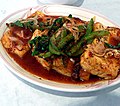
Andong jjimdak, a variety of jjim dish
Korean name
Hangul
RRjjim
MRtchim

Jjim (Korean; Korean pronunciation: [tɕ͈im]) is a Korean cuisine term referring to dishes made by steaming or boiling[1] meat, chicken, fish, or shellfish which have been marinated in a sauce or soup. The cooking technique originally referred to dishes cooked in a siru (시루, earthenware steamer mainly used for making tteok) by steaming. However, the name jjim has now come to imply a finished dish with a steamed appearance. The cooking method for most jjim dishes nowadays has changed to boiling the ingredients in broth and reducing the liquid.[2] Pressure cookers are popular for making jjim as well.[3]

Proteins galbi, beef shank or rump, chicken, fish, or shellfish are usually the main ingredients. The ingredients are marinated in a sauce, then put to a boil with a small amount of water. The liquid is then reduced. Various vegetables and other ingredients are added for enhanced flavor.[2]

Varieties

[edit]
[edit]

See also

[edit]

References

[edit]
[edit]
Revisions and contributorsEdit on WikipediaRead on Wikipedia
from Grokipedia
Jjim (Korean: 찜; literally "steamed" or "braised") is a traditional category of Korean dishes prepared by , , or stewing marinated ingredients, typically including , , , or vegetables, in a flavorful sauce or broth to achieve tender textures and infused seasonings. These dishes emphasize slow cooking methods that allow ingredients to absorb umami-rich flavors from , , , and other aromatics, distinguishing jjim from quicker stir-fries or soups in . Among the most notable varieties is (갈비찜), featuring beef short ribs braised with chestnuts, jujubes, mushrooms, and carrots in a sweet-savory soy-based , often prepared for holidays like or family gatherings due to its labor-intensive process and celebratory appeal. Another popular example, jjimdak (찜닭), originated in the city of and consists of bone-in chicken pieces braised with potatoes, carrots, glass noodles, and a mildly spicy made with black bean paste (chunjang), reflecting regional adaptations in Korean culinary traditions. Seafood-focused jjim, such as haemul-jjim with or ray , highlight Korea's coastal influences by incorporating fresh marine elements steamed to preserve natural juices. Jjim dishes are valued for their versatility and nutritional balance, combining proteins with seasonal and sometimes dried fruits for added and texture. They frequently appear in full-course Korean meals (hanjeongsik) and as home-cooked dishes in restaurants across .

Overview

Jjim (찜, pronounced [tɕ͈im]) refers to a category of Korean dishes prepared by , , or marinated ingredients such as proteins (, , , or ) or in a or until tender. The term derives from the verb jjimda (찌다), meaning to steam or braise. Key characteristics of jjim include the initial of ingredients in savory-sweet sauces, often soy-based and incorporating elements like , , and , followed by cooking that reduces the liquid to form a glossy glaze coating the proteins. This method contrasts with dry-heat techniques such as or , emphasizing moist, to achieve tenderness without excessive liquid retention. Jjim is distinct from related terms in Korean cuisine; unlike jjigae, which are stews characterized by abundant broth and quicker cooking with a higher proportion of liquid to solids, jjim focuses on sauce reduction to envelop the ingredients.

Culinary Significance

Jjim is a prominent (side dish) in Korean gastronomy, providing high levels of protein and contributing to a balanced diet alongside and other . The characteristic sauces often incorporate fermented ingredients for . In serving customs, jjim is traditionally presented communally with steamed rice.

Historical Development

Origins in Traditional Korean Cuisine

The steaming technique central to jjim originated in the Bronze Age (circa 2000 BCE), with the earthenware steamer known as siru used for cooking rice cakes (tteok) and other grains, as evidenced by archaeological finds across the Korean Peninsula. This vessel allowed for gentle cooking that preserved flavors and nutrients, reflecting early agrarian society's reliance on seasonal grains and harmony with nature. During the Goryeo (918–1392) and Joseon (1392–1910) dynasties, the method evolved into the formalized category of jjim, incorporating proteins alongside starches, adapting to available ingredients and dietary norms influenced by Confucian and Buddhist principles. In the era, while Neo-Confucian prohibitions on cattle slaughter limited legal consumption to protect agricultural labor, -based jjim such as precursors to (braised short ribs) was still prepared and consumed, particularly in elite and royal contexts, though commoners accessed it through unofficial channels. and variants became more routinely accessible to the general populace, often using locally sourced ingredients like pork ribs or fish marinated in soy-based broths. Buddhist influences from the period promoted vegetarian adaptations, leading to jjim dishes featuring mushrooms, , or seasonal vegetables steamed to highlight natural flavors, aligning with temple cuisine's emphasis on simplicity and non-violence. Detailed 19th-century cookbooks, such as Siuijeonseo, describe steaming and techniques for marinated meats over to create tender, flavorful dishes, underscoring jjim's role in elite banquets where it symbolized refinement and balance. Culturally, jjim was tied to harvest festivals like , where precursors to were prepared to celebrate abundance and ancestral reverence, using fall ingredients to foster communal bonds.

Evolution in the Modern Era

Following the in the 1950s, South Korea's rapid economic recovery and industrialization increased the availability and affordability of , transforming jjim from a dish often reserved for special occasions into a more widespread option. Per-capita consumption rose from 3.6 kg in 1961 to 11 kg by 1979, driven by agricultural reforms and imports that made jjim, such as , common in middle-class households. In the 1980s, as meat prices remained high, jjimdak emerged in as an economical chicken-based alternative to beef jjim, appealing to budget-conscious students and military personnel near Andong National University of Education. Developed in 1980 by vendors in the Andong Old Market's chicken alley, the dish combined braised chicken with vegetables, potatoes, rice cakes, and glass noodles in a soy-based sauce, gaining popularity during economic expansion. Twentieth-century urbanization shifted jjim preparation from labor-intensive steaming in earthenware to boiling and braising suited to urban kitchens. The adoption of pressure cookers in the late , including models like the aluminum Pungnyeon by Seogwang Aluminum, reduced cooking times for tough meats from hours to under one, making jjim an everyday home option. Economic liberalization in the 1990s grew street food culture in , adapting jjim into portable variants in markets and . Through the , jjim spread globally, with milder adaptations in the and . The 2013 UNESCO inscription of kimjang amplified interest in , including jjim. In , jjim variations persist using local proteins and , maintaining traditional methods amid resource constraints. As of 2025, global fusion versions, such as vegan jjim in Western restaurants, reflect ongoing evolution.

Preparation Techniques

Traditional Steaming and Boiling Methods

Traditional jjim preparation begins with soaking proteins in cold water for 30 minutes to 1 hour to remove blood and impurities, followed by blanching in water for 5-10 minutes and draining. The blanched proteins are then layered with in a steamer or pot and cooked either by over water or , or by , for 1 to 3 hours until the naturally reduces and thickens. Key tools in these methods include the siru, a traditional stackable steamer that allows for indirect , which helps preserve nutrients and delicate textures in the ingredients. For and variants, the gamasot, a heavy cast-iron , is essential, providing even heat distribution over prolonged cooking periods. In the approach, proteins are in a covered pot with minimal liquid to maintain moisture while concentrating flavors, and foam is regularly skimmed from the surface to ensure a clear . This variant is particularly suited to fish-based jjim, as the gentle prevents overcooking and maintains the integrity of the . Flavor development in traditional jjim relies on the natural reduction of the cooking liquid during or , which creates a glossy, adherent coating on the proteins without the use of added thickeners. This slow intensifies the savory and notes from the marinade and , resulting in a balanced, cohesive dish.

Modern and Pressure Cooking

In contemporary Korean cuisine, braising techniques for jjim have incorporated modern appliances and methods to streamline preparation while preserving the dish's tender texture and rich flavors, making it more accessible for home cooks and efficient for restaurant settings. The process emphasizes controlled heat and moisture to break down tough proteins, often adapting traditional principles to electric tools that reduce cooking time without compromising quality. Some modern braising preparations optionally begin with searing the proteins, such as or , over high heat to trigger the —a chemical process that browns the surface and imparts deep, savory notes—though traditional and many Korean methods start with blanching. After any initial step, the proteins are transferred to a or , covered with or a soy-based liquid, and cooked on low heat for 4-6 hours to allow to gelatinize and flavors to infuse evenly; stirring midway through prevents sticking and promotes uniform seasoning. This slow approach yields succulent results, particularly for denser cuts, by maintaining a gentle simmer that mimics heritage methods but with greater precision. Pressure cooking represents a significant modern adaptation, utilizing electric multi-cookers like the to accelerate the process while retaining moisture and tenderness. Proteins are placed in the cooker with seasonings and liquid, then pressurized on high for 30-45 minutes, depending on cut thickness; natural pressure release for 10-15 minutes follows, with quick release if needed, to avoid overcooking and preserve the meat's structure, making it ideal for tough that require extended breakdown. This technique cuts traditional time dramatically, appealing to busy households without sacrificing the dish's characteristic silkiness. Hybrid oven-braising combines stovetop preparation with low-temperature for consistent results across large batches. After initial steps, the mixture is covered and baked at 150°C (300°F) for even heat distribution, a method favored in professional kitchens for its reliability in producing uniformly tender jjim. Key safety practices enhance both flavor and technique: deglazing the pan with a splash of or wine loosens the caramelized —those browned bits rich in —to incorporate into the , preventing waste and flavor loss. Additionally, using enough to partially cover the ingredients ensures balanced reduction, avoiding excess dilution while allowing the sauce to thicken naturally as it simmers.

Varieties

Meat-Based Jjim

Meat-based jjim primarily features red meats such as and , braised or steamed in savory sauces to achieve tender textures and rich flavors. These dishes emphasize the natural marbling of the meats, which absorbs seasonings during prolonged cooking, resulting in a balance of and subtle sweetness. Common preparations involve marinating the meat in soy-based mixtures before slow-cooking with , distinguishing them from lighter or delicate variants through their heartier profiles and longer simmering times. Galbi-jjim, a quintessential beef jjim, utilizes short ribs marinated in a sauce of soy, sugar, and garlic, then braised with carrots, mushrooms, and chestnuts for approximately 1.5 to 2 hours until the meat achieves a fall-off-the-bone tenderness. The ribs are first blanched in boiling water for about 5 minutes to remove impurities and excess fat, ensuring a cleaner flavor. Vegetables like Korean radish are often added midway, contributing a mild sweetness that complements the savory braising liquid. This dish typically serves 4 to 6 people and pairs well with sticky rice to soak up the glossy sauce. Other beef variants include seonji-jjim, a traditional preparation incorporating blood and tender meat, where the ingredients are stir-fried briefly in , mixed with seasonings, and cooked until thickened for a cohesive texture. Pork-based jjim, such as dwaeji galbi-jjim, employs braised in a spicy-sweet with elements like , ginger, and soy, often alongside potatoes and carrots for added substance; the ribs are soaked initially to draw out , then slow-cooked for 4 to 6 hours in a cooker until fork-tender. These pork versions highlight the meat's affordability and compatibility with bold, red pepper seasonings. A key nuance in preparing meat-based jjim is the use of natural tenderizers like pear juice, which contains enzymes that break down proteins in the or , enhancing succulence without overpowering the dish's sweet-savory equilibrium. The overall flavor profile across these varieties centers on this harmony, with soy providing saltiness, sugar or fruits adding depth, and aromatics like ensuring aromatic richness, making the dishes staples for festive meals.

Poultry and Egg-Based Jjim

Poultry and egg-based jjim represent accessible and versatile variants in , often prepared with more affordable ingredients than red meat counterparts, making them suitable for everyday meals and family gatherings. These dishes emphasize gentle or to achieve tender textures, incorporating starches like glass noodles for added heartiness, where the noodles absorb the savory sauce during cooking. Chicken-based jjim, such as , highlight regional innovations from the late 20th century, while egg-based preparations like offer a quick, fluffy that pairs well with or other . Andong jjimdak, a signature jjim originating from in the 1980s, features thighs braised in a dark soy-chunjang with glass noodles, potatoes, carrots, onions, and mushrooms for a balanced, hearty dish. Developed in the Andong Old Market by merchants catering to budget-conscious students and military personnel, it adapts traditional techniques to whole chickens cut into pieces, simmered for 45-60 minutes until the thickens and flavors meld. The glass noodles absorb the umami-rich , contributing to the dish's filling quality, while optional elements like rice cakes or chili peppers add subtle heat. This modern invention reflects economic adaptations in post-war Korea, evolving from older recipes in 17th-century cookbooks like Eumsik Dimibang. Gyeran-jjim, a steamed , is prepared by whisking with , , and salt or salted , then gently in a or pot to yield a fluffy, silky texture from incorporated air and minimal liquid—typically a quarter per . The process avoids high heat to prevent rubberiness, resulting in a soft set after 5-12 minutes depending on the method, such as stovetop simmering or . As a popular , it provides a mild, savory complement to meals, with the enhancing the eggs' natural creaminess. Egg-based extensions of gyeran-jjim incorporate seafood bits, such as or pollack , added to the whisked mixture before to infuse subtle oceanic flavors without overpowering the custard's lightness. These adaptations maintain the core technique to preserve tenderness, distinguishing poultry and jjim as quicker, starch-integrated options for daily Korean tables.

Seafood-Based Jjim

Seafood-based jjim emphasizes the natural flavors and delicate textures of and , employing shorter cooking times compared to varieties to maintain tenderness and prevent overcooking. Freshness is paramount, with seafood often sourced seasonally to ensure optimal taste and nutritional integrity. Common techniques include scoring the surface of fillets to allow better absorption of seasonings while using minimal liquid in the or process to avoid sogginess. Saengseon jjim features white fish such as or braised or steamed in a spicy red pepper sauce made with , gochugaru, , and , accompanied by sliced , onions, and for added crunch and balance. The dish typically cooks for 20 to 30 minutes, the fish gently after the vegetables to infuse flavors without breaking down the fillets. This preparation highlights the flaky texture of the fish while the sauce provides a savory, slightly sweet profile from elements like or . Jeonbok-jjim is a luxurious steamed or braised dish rooted in royal , where fresh is simmered in a soy sauce-based often enhanced with , garlic, and sometimes for its reputed medicinal benefits in traditional Korean practices. It commonly includes mushrooms, carrots, and to complement the chewy, tender , cooking low and slow for tenderness while preserving its subtle oceanic essence. Valued for its rarity and health-promoting qualities, such as boosting vitality, this jjim is reserved for special occasions or as a restorative . Agwi-jjim, a regional specialty from the area in , showcases spicy braised angler fish (monkfish) in a robust and gochugaru-based , incorporating , soybean sprouts, and vegetables like and for contrasting textures. The fish is marinated briefly in salt and before for about 10 to 15 minutes, allowing the spicy, umami-rich to penetrate while keeping the firm. This hearty yet quick-cooking dish reflects coastal influences, often shared communally with to sop up the bold flavors. Shellfish variants of jjim, such as those featuring shrimp or oysters, fall under haemul jjim preparations, where these ingredients are braised briefly in a spicy soy-gochujang sauce with bean sprouts and greens to enhance their briny notes without overpowering delicacy. For instance, oyster jjim (gul jjim) steams fresh oysters with minari, peppers, and a light seasoned broth for under 10 minutes, focusing on minimal liquid to retain juiciness. Shrimp-inclusive versions similarly prioritize short simmering to avoid toughness, often layered over blanched sprouts for a crisp base.

Cultural and Regional Aspects

Role in Korean Traditions and Holidays

Jjim holds a prominent place in Korean ceremonial practices, particularly during major holidays and family rituals, where it serves as a symbol of prosperity, health, and communal harmony. One of the most cherished examples is , a braised short dish, which is traditionally prepared for , the autumn harvest festival. This elaborate preparation, involving marinated ribs simmered with vegetables like radish, carrots, chestnuts, and jujube in a sweet-savory sauce, embodies abundance and gratitude for the year's harvest, while its sharing among extended family reinforces bonds of unity and celebration during ancestral memorial rites known as charye. Similarly, during ancestral rites, jjim preparations like are presented on altars or shared post-ritual, representing respect for forebears and the continuity of family lineage through shared meals. Jjim also plays a role in , or hanbang, where certain versions promote vitality and recovery, especially for post-partum women seeking to restore energy and balance. For example, is used in postpartum care to aid tissue repair and energy restoration. Social customs further elevate jjim's significance, gathering relatives to pray for health and success while reinforcing family cohesion through collective dining.

Regional Variations and Influences

Jjim, a traditional Korean braised or steamed dish, displays distinct regional variations influenced by local geography, available ingredients, and historical exchanges with neighboring cultures. In , located in , jjimdak emerged as a local specialty in the 1980s, featuring braised chicken pieces combined with chewy glass noodles (dangmyeon) and a robust enriched by chunjang (Korean soybean paste), which imparts a bold, depth and a relatively drier consistency compared to saucier national versions. Jeolla Province, with its extensive coastline, emphasizes seafood-centric jjim preparations, incorporating fresh marine elements and fermented seasonings like alongside vegetables such as soybean sprouts to highlight the region's reliance on marine resources for intensified flavors. Urban adaptations in often blend traditional jjim with contemporary elements, as seen in where Western vegetables like carrots and potatoes are commonly added for texture and mild sweetness, while formulations reflect Japanese colonial-era introductions that popularized factory-produced varieties and altered profiles. Overseas Korean communities, particularly Korean-American ones, produce milder iterations of jjim that reduce spice levels and incorporate —a Japanese sweet —for subtle sweetness in liquids, adapting to broader palates. In northern border areas near , jjim techniques occasionally draw from Chinese red-braising methods, emphasizing prolonged simmering in soy-based broths to enhance tenderness. Pyongyang-style jjim from favors a simpler, less oily approach, as in northern variants of jjimdak slow-braised in clear broths for a cleaner profile, sometimes accented with to introduce tanginess and balance richness.

References

Add your contribution
Related Hubs
User Avatar
No comments yet.