


Community hub
Wikipedia
Kapurthala State
View on Wikipedia
Kapurthala State was a kingdom and later princely state of the Punjab Province of British India. Ruled by Ahluwalia Sikh rulers, spread across 510 square miles (1,300 km2). According to the 1901 census the state had a population of 314,341 and contained two towns and 167 villages.[1] In 1930, Kapurthala became part of the Punjab States Agency and acceded to the Union of India in 1947.
Key Information


_(cropped).jpg)


In colonial India, Kapurthala State was known for its communal harmony, with its Sikh ruler Jagatjit Singh building the Moorish Mosque for his Muslim subjects.[2] At the time of the Indian independence movement, the ruler of the Kapurthala State opposed the partition of India and advocated for a united, secular country.[3]
History
[edit]Origin
[edit]After the Muslim conquest of Punjab, his descendants migrated to the Jaisalmer area, where they came to be known as Kalal tribe. After Alauddin Khalji's conquest of Jaisalmer, some of the former ruling Kalchuri Kalal tribe people migrated to Tarn Taran district. In the 17th century, they joined Guru Hargobind's army. Ganda Singh of this family raided Lahore, whose governor Dilawar Khan persuaded him to join the Lahore army, and assigned him the fief of Ahlu and some other villages. Ganda Singh Kalal's son Sadhu (or Sadho) Singh Kalal lived in Ahlu, because of which the family came to be known as Ahluwalia. The descendants of Sadhu Singh Kalal through his son Gopal Singh Kalal (who was the grandfather of Jassa Singh Kalal) established the royal family of Kapurthala.[4] The British administrator Lepel Griffin (1873) dismissed this account as spurious.[4] The Sikh author Gian Singh, in his Twarikh Raj Khalsa (1894), wrote that the Ahluwalia family adopted the Kalal caste identity much before Sadhu Singh.[5]
The ruling dynasty of Kapurthala originated in the Ahluwalia misl. The Ahluwalia misl rose to prominence under Jassa Singh Ahluwalia,[6][7] who was the first person to use the name "Ahluwalia". Originally known as Jassa Singh Kalal, he styled himself as Ahluwalia after his ancestral village of Ahlu and belonged to the Kalal community.[8][9] He is regarded as the founder of the Kapurthala State.[10] The Kalals later underwent Sanskritisation and adopted the new term Ahluwalia for themselves and their low-caste origin became obscured.[8]
Establishment
[edit]In 1774, Jassa Singh Kalal conquered Kapurthala from Rai Ibrahim Bhatti, however the town had a different unrecorded name.[11][12] In December 1779, Jassa Singh embarked on a decisive campaign to assert his authority over Kapurthala. This strategic region, nestled along the left bank of the River Beas, had been under the control of Rae Ibrahim Bhatti. Rae Ibrahim's failure to pay the annual tribute of one lakh rupees, which had been overdue for some time, sparked Jassa Singh's action. Furthermore, Ibrahim's construction of 13 forts around the town, including the strategically located Rae-ka-kot near Afghan colonies, raised concerns about his growing power.[13]
Jassa Singh had previously demonstrated his military prowess by capturing Rae-ka-kot in 1770 with the help of Murar Singh and Shaikh Karimulilah. He then appointed Chait Singh as the thanadar of the region. However, tensions escalated in 1777 when Jassa Singh's son-in-law, Mohar Singh, was killed by a gunshot from one of the forts near Kapurthala. Despite Ibrahim's apologies and claims of innocence, Jassa Singh demanded justice and eventually decided to take over Kapurthala.[13]
Upon arriving at Kapurthala, Jassa Singh's forces clashed with Rae Ibrahim's, and the Bhatti chief retreated to the main fort. Jassa Singh set up camp at Shaikhpur village, while his cousin, Kanwar Bhag Singh, successfully captured several surrounding villages. These villages included: Andresa, Dialpur, Bholath, Bhoian, Bohal, Brahmwal, Chakoke, Dainwind, Dala, Dhaliwal, Dhilwan, Hamira, Karael, Khakhrain, Kularan, Lakhanki, Lohian, Mullanwal, Nadali, Parveznagar, Ramidi, Sidhwan, and Wadalli. Rae Ibrahim soon realized the futility of resistance and sued for peace. He sent a horse as a gift and dispatched his officials, Diwan Lahori Mal and Bora Mal, to negotiate terms.[13]
Jassa Singh agreed to let Rae Ibrahim leave safely with his family and belongings. He also provided him with a place to live and a fixed allowance, demonstrating his magnanimity. In the end, Jassa Singh Ahluwalia would rename the city Kapurthala after his predecessor Nawab Kapur Singh, who was an influential and respected Sikh leader at the time as well as a mentor to Jassa Singh Ahluwlia,[14] Kapurthala became the headquarters of Kanwar Bhag Singh and it would become the capital of the Ahluwalia misl. Jassa Singh continued to reside at Fatehabad, solidifying his leadership and the Ahluwalia misl's dominance in the region.[13]
Subjugation
[edit]_of_Punjab_Province,_British_India,_published_in_%27The_Panjab,_North-West_Frontier_Province_and_Kashmir%27_(1916).jpg)
Even after other misls lost their territories to Ranjit Singh's Sikh Empire, the emperor permitted the descendants of Jassa Singh to retain their estates. After the British took over the Sikh territories in 1846, Jassa Singh's descendants became the ruling family of the Kapurthala State.[15]
Demographics
[edit]| Religious group |
1881[16][17][18] | 1891[19] | 1901[20] | 1911[21][22] | 1921[23] | 1931[24] | 1941[25] | |||||||
|---|---|---|---|---|---|---|---|---|---|---|---|---|---|---|
| Pop. | % | Pop. | % | Pop. | % | Pop. | % | Pop. | % | Pop. | % | Pop. | % | |
Islam 
|
142,974 | 56.6% | 170,557 | 56.91% | 178,326 | 56.73% | 152,117 | 56.73% | 160,457 | 56.44% | 179,251 | 56.59% | 213,754 | 56.49% |
Hinduism  [a] [a]
|
82,900 | 32.82% | 89,463 | 29.85% | 93,652 | 29.79% | 61,426 | 22.91% | 58,412 | 20.55% | 64,319 | 20.31% | 61,546 | 16.27% |
Sikhism 
|
26,493 | 10.49% | 39,493 | 13.18% | 42,101 | 13.39% | 54,275 | 20.24% | 64,074 | 22.54% | 72,177 | 22.79% | 88,350 | 23.35% |
Jainism 
|
214 | 0.08% | 169 | 0.06% | 226 | 0.07% | 205 | 0.08% | 228 | 0.08% | 27 | 0.01% | 380 | 0.1% |
Christianity 
|
35 | 0.01% | 8 | 0% | 39 | 0.01% | 107 | 0.04% | 1,100 | 0.39% | 983 | 0.31% | 1,667 | 0.44% |
Buddhism .svg)
|
1 | 0% | 0 | 0% | 3 | 0% | 0 | 0% | 0 | 0% | 0 | 0% | 0 | 0% |
Zoroastrianism 
|
0 | 0% | 0 | 0% | 4 | 0% | 3 | 0% | 4 | 0% | 0 | 0% | 6 | 0% |
Judaism 
|
N/a | N/a | 0 | 0% | 0 | 0% | 0 | 0% | 0 | 0% | 0 | 0% | 0 | 0% |
| Others | 0 | 0% | 0 | 0% | 0 | 0% | 0 | 0% | 0 | 0% | 0 | 0% | 12,677 | 3.35% |
| Total population | 252,617 | 100% | 299,690 | 100% | 314,351 | 100% | 268,133 | 100% | 284,275 | 100% | 316,757 | 100% | 378,380 | 100% |
| Note: British Punjab province era district borders are not an exact match in the present-day due to various bifurcations to district borders — which since created new districts — throughout the historic Punjab Province region during the post-independence era that have taken into account population increases. | ||||||||||||||
Royal dynasty
[edit]List of rulers
[edit]| No. | Name
(Birth–Death) |
Portrait | Reign | Ref. |
|---|---|---|---|---|
| Sardars | ||||
| 1 | Jassa Singh Ahluwalia (1718–1783) |

|
1777 – 20 October 1783 | [26][27] |
| 2 | Bhag Singh Ahluwalia (1747–1801) |

|
20 October 1783 – 10 July 1801 | [citation needed] |
| Rajas | ||||
| 3 | Fateh Singh Ahluwalia (1784–1837) |

|
10 July 1801 – 20 October 1837 | [28][29][30] |
| 4 | Nihal Singh (1817–1852) |

|
20 October 1837 – 13 September 1852 | [citation needed] |
| 5 | Randhir Singh (1831–1870) |

|
13 September 1852 – 12 March 1861 | [27] |
| Raja-i Rajgan | ||||
| – | Randhir Singh (1831–1870) |
|
12 March 1861 – 2 April 1870 | [27] |
| 6 | Kharak Singh (1850–1877) |

|
2 April 1870 – 3 September 1877 | [citation needed] |
| 7 | Jagatjit Singh (1872–1949) |

|
3 September 1877 – 12 December 1911 | [27] |
| Maharajas | ||||
| – | Jagatjit Singh (1872–1949) |
|
12 December 1911 – 15 August 1947 | [27] |
| Titular | ||||
| – | Jagatjit Singh (1872–1949) |
|
15 August 1947 – 19 June 1949 | [27] |
| 8 | Paramjit Singh | _(cropped).jpg)
|
[citation needed] | |
| 9 | Sukhjit Singh | 
|
[citation needed] | |
Crown Princes
[edit]- Tikka Raja Shatrujit Singh[3]
Dewan / Ministers of Kapurthala State
[edit]- Dewan Banna Mal Gautam (Manager Of Oudh Estates of Maharaja Kapurthala)[citation needed]
- Dewan Mathra Dass (Private Secretary)[citation needed]
- Dewan Ramjas Dhir[citation needed]
- Dewan Acchru Mal Gautam (Revenue Minister) s/o Dewan Banna Mal[citation needed]
- Dewan Durga Dass Gautam[citation needed]
- Dewan Ambika Parshad Gautam (Accountant General)[citation needed]
- Dewan Mohabbat Rai[citation needed]
- Dewan Abdul Hamid (Prime Minister)[citation needed]
- Dewan Shiv Narayan Randev (Chief Secretary Of Kapurthala State)[citation needed]
- Sirdar Bhagat Ram Randev (Chief Judge)[citation needed]
- Sirdar Dwarka Dass Randev, Bar At Law S/O Dewan Shiv Narayan Randev (Assistant Manager Oudh and Last Chief Justice Of Kapurthala State)[citation needed]
- Dewan Hari Chand Chopra (Finance Minister)[citation needed]
- Dewan Saudagar Mal[citation needed]
- Dewan Badrinath[citation needed]
- Dewan Surendranath[citation needed]
- G.T Fisher (Chief Minister)[citation needed]
- Dewan Sureshwar Dass (Home Minister)[citation needed]
- Dewan Ajudhia Dass (Revenue Minister)[citation needed]
- Sirdar Suchet Singh[citation needed]
- Sirdar Kishan Singh[citation needed]
- Dewan Raj Kumar Chopra (Chief Justice)[citation needed]
- Dewan Jermany Dass[citation needed]
- Dewan Kuljass Rai[citation needed]
Orders of chivalry
[edit]The Royal House of Kapurthala awards three orders of chivalry; these knighthoods include:[citation needed]
- Nishan-i-Shahi, awarded in three classes (founded by Maharaja Jagatjit Singh Bahadur in 1898)[citation needed]
- Nishan-i-Iftikhar, awarded in three classes (founded by Maharaja Jagatjit Singh Bahadur in 1914)[citation needed]
- Nishan-i-Askari, awarded in three classes (founded by Maharaja Jagatjit Singh Bahadur in 1927)[citation needed]
The decoration of the Nishan-i-Iftikhar includes the coat of arms of Kapurthala State.[31]
Gallery
[edit]-
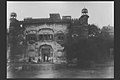 Qila Jallow Khana, Kapurthala State
 -
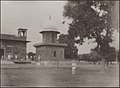 Old Baradari at Shalimar Garden, Kapurthala State
 -
 Photograph of the State Gurdwara of Kapurthala State during a thanksgiving service
 -
 Old court complex, Kapurthala State
 -
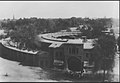 Photograph of Buggy Khana, Kapurthala State


See also
[edit]Notes
[edit]- ^ 1931-1941: Including Ad-Dharmis
References
[edit]- ^ Kapurthala state The Imperial Gazetteer of India, 1909, v. 14, p. 408.
- ^ Venkatesh, Karthik (16 January 2016). "Malerkotla, Where Tolerance is a Way of Life". The Wire. Retrieved 3 November 2020.
- ^ a b "An undivided India?". NDTV. 29 August 2009. Retrieved 19 October 2020.
- ^ a b Ganda Singh (1990). Sardar Jassa Singh Ahluwalia. Punjabi University. pp. 1–4.
- ^ M. L. Ahluwalia (1996). Land marks in Sikh history. Ashoka International. p. 37.
- ^ Kaushik Roy (2015). Military Manpower, Armies and Warfare in South Asia. Routledge. p. 88. ISBN 9781317321279.
- ^ Singhia, H.S. (2009). The encyclopedia of Sikhism. New Delhi: Hemkunt Press. p. 111. ISBN 978-81-7010-301-1.
- ^ a b Fenech, Louis E. Historical Dictionary of Sikhism. Bloomsbury Publishing. p. 21. ISBN 9798216256151.
AHLUVALIA. A small Sikh caste, originally Kalals, or brewers of country liquor. The Kalals were very close to being Outcastes in status. It was a small, tightly organized caste, and late in the 19th century its leaders decided to Sanskritize (i.e., adopt professions and a way of life that would result in an ascent in caste terms). They adopted for the caste the name of a famous Kalal, Jassa Singh Ahluvalia, and rigorously followed a lifestyle conspicuously higher than was required of a low caste. In adopting the name of a distinguished misldar, the Ahluvalias have been much more successful than the Ramgarhias, who adopted the name of Jassa Singh Ramgarhia. The change was aided by the fact that the ruling family of Kapurthala (the descendants of Jassa Singh Ahluvalia) was also Kalal. So successful have they been that today their Kalal antecedents have been largely forgotten, and the Ahluvalias rank with the Khatris in caste status. Most Ahluvalias are Sikhs.
- ^ Donald Anthony Low (1968). Soundings in Modern South Asian History. University of California Press. pp. 70–71. OCLC 612533097.
- ^ Sohan Singh Seetal (1981). The Sikh Misals and the Punjab States. Lahore Book Shop. p. 75.
- ^ Dogra, R. C.; Mansukhani, Gobind Singh (1995). Encyclopaedia of Sikh Religion and Culture. Vikas Publishing House. p. 249. ISBN 9780706983685.
- ^ Singh, Khushwant (1963). A History of the Sikhs: 1469-1839. Vol. 1. Princeton University Press. p. 123.
- ^ a b c d Hari Ram Gupta (October 2001). The Sikhs Commonwealth or Rise and Fall of the Sikh Misls. Munshilal Manoharlal Pvt.Ltd. ISBN 81-215-0165-2.
- ^ Prinsep, James (1846). History of the Punjab And of the Rise, Progress, & and Present Condition of the Sect and Nation of the Sikhs. London: W.H Allen. pp. 322, 353–355. ISBN 9781376424485.
{{cite book}}: ISBN / Date incompatibility (help) - ^ W. H. McLeod (2009). The A to Z of Sikhism. Scarecrow Press. p. 6. ISBN 978-0-8108-6344-6.
- ^ "Census of India, 1881 Report on the Census of the Panjáb Taken on the 17th of February 1881, vol. I." 1881. JSTOR saoa.crl.25057656. Retrieved 26 December 2024.
- ^ "Census of India, 1881 Report on the Census of the Panjáb Taken on the 17th of February 1881, vol. II". 1881. p. 14. JSTOR saoa.crl.25057657. Retrieved 26 December 2024.
- ^ "Census of India, 1881 Report on the Census of the Panjáb Taken on the 17th of February 1881, vol. III". 1881. p. 14. JSTOR saoa.crl.25057658. Retrieved 26 December 2024.
- ^ "The Punjab and its feudatories, part II--Imperial Tables and Supplementary Returns for the British Territory". 1891. p. 14. JSTOR saoa.crl.25318669. Retrieved 26 December 2024.
- ^ "Census of India 1901. [Vol. 17A]. Imperial tables, I-VIII, X-XV, XVII and XVIII for the Punjab, with the native states under the political control of the Punjab Government, and for the North-west Frontier Province". 1901. p. 34. JSTOR saoa.crl.25363739. Retrieved 30 March 2024.
- ^ "Census of India 1911. Vol. 14, Punjab. Pt. 2, Tables". 1911. p. 27. JSTOR saoa.crl.25393788. Retrieved 30 March 2024.
- ^ Kaul, Harikishan (1911). "Census Of India 1911 Punjab Vol XIV Part II". p. 27. Retrieved 30 March 2024.
- ^ "Census of India 1921. Vol. 15, Punjab and Delhi. Pt. 2, Tables". 1921. p. 29. JSTOR saoa.crl.25430165. Retrieved 30 March 2024.
- ^ "Census of India 1931. Vol. 17, Punjab. Pt. 2, Tables". 1931. p. 277. JSTOR saoa.crl.25793242. Retrieved 30 March 2024.
- ^ India Census Commissioner (1941). "Census of India, 1941. Vol. 6, Punjab". p. 42. JSTOR saoa.crl.28215541. Retrieved 30 March 2024.
- ^ "Kapurthala". Archived from the original on 8 August 2018. Retrieved 11 March 2019.
- ^ a b c d e f "KAPURTHALA". Royal Family of India. 12 April 2013. Retrieved 9 January 2018.
- ^ "History | Kapurthala Web Portal | India". Government of India. Retrieved 25 December 2020.
- ^ A history of the Sikhs, from the origin of the nation to the battles of the Sutlej. Cunningham, Joseph Davey, 1812-1851., Garrett, H. L. O. ed. (Herbert Leonard Offley), 1881-1941
- ^ Griffin, Lepel Henry (1892). Ranjit Singh. Oxford : Clarendon press.
{{cite book}}: CS1 maint: publisher location (link) - ^ Arora, A. C. (1982). British Policy Towards the Punjab States, 1858-1905. Export India Publications. p. 323.
External links
[edit] Media related to Kapurthala State at Wikimedia Commons
- Kapurthala at sikh-heritage.co.uk


Grokipedia
Kapurthala State
View on GrokipediaGeography and Environment
Territorial Extent and Borders
Kapurthala State encompassed an area of 510 square miles (1,320 km²) primarily in the Bist Doab region between the Beas and Sutlej rivers in Punjab.[9] The territory formed a elongated tract approximately 45 miles long from northeast to southwest, with a varying breadth of 7 to 20 miles.[9] To the north, the state bordered the Hoshiarpur district of British Punjab, while its southern boundary was defined by the Sutlej River. On the west and east, it adjoined British-administered districts including Jalandhar, reflecting its position as an enclave within the Punjab Province. The state's lands were largely contiguous in this core area, though the ruling Ahluwalia dynasty held additional jagirs elsewhere in Punjab.[9]Capital and Key Settlements
Kapurthala functioned as the capital of Kapurthala State from its establishment as the seat of the Ahluwalia rulers in the late 18th century, when Baba Jassa Singh Ahluwalia occupied the town and designated it as such.[4] The city, originally founded in the 11th century by Rana Kapur, developed into the political and administrative center under Sikh rule, encompassing royal palaces, administrative offices, and key infrastructure.[4] The state comprised three principal towns—Kapurthala, Sultanpur Lodhi, and Phagwara—alongside numerous villages, with Phagwara located in a detached enclave.[10] Administratively, it was organized into five tehsils: Kapurthala, Sultanpur, Phagwara, Bholath, and Bhunga, each managed by a tehsildar responsible for revenue and local governance.[11] Sultanpur Lodhi, situated along the Beas River, held historical significance as an early settlement within the state's core territory east of the river.[12] These settlements formed the urban nuclei amid a predominantly rural landscape of over 600 villages.[10]Climate and Natural Features
Kapurthala State occupied flat alluvial plains characteristic of the Doaba region between the Beas and Sutlej rivers, with terrain dominated by fertile silt deposits from these waterways supporting intensive agriculture.[13] The landscape included low-lying tracts prone to seasonal flooding, particularly in the 'Bet' area between the Beas and Black Bein rivers, where riverine soils facilitated rice and wheat cultivation but also posed risks of inundation during monsoons.[14] No significant elevations or forests marked the region, which remained predominantly agrarian with scattered wetlands and canals enhancing irrigation.[15] The climate was continental subtropical, transitioning from semiarid in the southwest to subhumid eastward, with extreme seasonal variations driven by the region's inland position.[13] Summers from April to June featured intense heat, with average highs reaching 40°C (104°F) in May, accompanied by low humidity and occasional dust storms. Winters from November to February brought cooler conditions, with average lows around 7°C (45°F) in January and occasional frost, though daytime highs seldom dropped below 20°C (68°F). Monsoon rains, primarily from July to September, delivered the bulk of annual precipitation, averaging 150-200 mm (6-8 inches) in peak months like July, sustaining the alluvial fertility but contributing to flood vulnerabilities in riverine zones. Annual totals ranged from 600-800 mm, concentrated in summer, with drier periods from October to March yielding minimal rainfall under 20 mm monthly. These patterns, influenced by the Himalayan barrier and western disturbances, supported a single cropping cycle reliant on river and canal systems rather than reliable distributed rain.[13]Historical Foundations
Origins of the Ahluwalia Dynasty
The Ahluwalia dynasty traces its origins to Sadhu Singh, an early Sikh who established the village of Ahlu near Lahore in the late 17th or early 18th century, from which the family name derives.[6][11] Sadhu Singh's descendants, initially of the Kalal caste traditionally associated with brewing and trade, adopted a martial Sikh identity amid the rising Khalsa movement following Guru Gobind Singh's formation of the Khalsa in 1699.[16] This shift from civilian occupations to warrior status was common among Sikh jathas during the 18th-century resistance against Mughal and Afghan invasions, driven by the need for self-defense and territorial control in Punjab.[11] Genealogical records list Sadhu Singh's lineage through several generations, including Gopai Singh, Dera Singh, Gurbaksh Singh, Kirpal Singh, Ladha Singh, and Badar Singh (died 1733), culminating in the leadership of Jassa Singh Ahluwalia (born 3 May 1718, died 23 October 1783).[11][17] Born as Jassa Singh Kalal in Ahlu, he succeeded his uncle Bhag Singh as head of the family band around 1730s and formalized the Ahluwalia Misl by the mid-18th century, organizing it into a structured military confederacy under the Dal Khalsa.[6][11] Jassa Singh's strategic acumen, evidenced by victories such as the 1743 ambush on Mughal minister Lakhpat Rai and the 1756 occupation of Lahore, elevated the misl's status, securing imperial firmans in 1753 from Mughal Emperor Alamgir II and in 1756 and 1774 from Ahmad Shah Durrani granting territories including Fatehabad.[11] While some dynastic claims assert Rajput or Bhatti tribal descent from Jaisalmer, displaced by Alauddin Khalji's 14th-century conquests, these lack independent corroboration beyond family records and armorial symbols like the lotus and sword, which may reflect aspirational alliances rather than direct lineage.[11] Empirical evidence from contemporary accounts prioritizes the Kalal-Sikh warrior trajectory, with intermarriages potentially incorporating Jat elements, as seen in varying scholarly attributions of Jat origins for Sadhu Singh himself.[16] The dynasty's foundation thus rests on the misl's coalescence around Jassa Singh, whose control of Kapurthala from 1774 onward laid the groundwork for the princely state's formal establishment under his successors.[6][11]Early Sikh Misl Period and Conflicts
The Ahluwalia misl emerged in the early 18th century from the village of Ahlu near Lahore, tracing its origins to Sadda Singh, a disciple of Guru Hargobind who established the clan's martial traditions.[17] Under the leadership of Jassa Singh Ahluwalia, born on May 3, 1718, in Ahlu, the misl gained prominence amid the Sikh Confederacy's formation.[18] Trained under Nawab Kapur Singh, Jassa Singh rose to command the misl following the reorganization of Sikh jathas into 11 misls by the Dal Khalsa in 1745.[18] Elected supreme commander of the Dal Khalsa on March 29, 1748, he coordinated Sikh forces against Mughal and Afghan threats, laying the groundwork for territorial control in the Jalandhar Doab region that would form the nucleus of Kapurthala State.[17] Early conflicts defined the misl's survival and expansion, beginning with the Chhota Ghalughara on May 7, 1746, where government forces under Yahiya Khan massacred 7,000 to 10,000 Sikhs, including members of emerging misls like Ahluwalia, in response to Sikh raids on Mughal territories.[17] Jassa Singh, sustaining severe wounds, exemplified the misl's resilience in guerrilla warfare against superior numbers.[18] The misl participated in broader Dal Khalsa campaigns, such as the raids following Nadir Shah's 1739 invasion, which weakened Mughal authority and enabled Sikh consolidation north of the Sutlej River.[18] These engagements, characterized by hit-and-run tactics, inflicted heavy casualties on Afghan invaders during Ahmad Shah Durrani's repeated incursions from 1748 onward.[17] The Wadda Ghalughara on February 5, 1762, marked a pivotal low point, with Ahmad Shah Abdali's forces slaughtering approximately 30,000 Sikhs near Kup Rahira; Jassa Singh survived with 64 wounds, rallying the remnants to rebuild within months.[18] In the ensuing Second Battle of Amritsar on October 17, 1762, Ahluwalia forces under Jassa Singh contributed to a decisive Sikh victory, capturing Afghan troops and compelling them to restore the Harmandir Sahib desecrated by the invaders.[17] Further clashes, including the defeat of Jahan Khan's 20,000-strong army at Amritsar in November 1766—resulting in 5,000 Afghan deaths—solidified the misl's defensive posture and tribute extraction from regional chiefs.[18] These victories, despite inter-misl rivalries, preserved Sikh sovereignty and positioned the Ahluwalia misl for later territorial gains.[17]Rise as a Principality
Establishment under Jassa Singh Ahluwalia
Jassa Singh Ahluwalia (1718–1783), as leader of the Ahluwalia misl—one of the twelve major Sikh confederacies—succeeded Nawab Kapur Singh in 1753 and assumed the title of Nawab granted by the Sikh confederation in 1754.[5][4] Following the power vacuum created by the death of Adina Beg Khan, the Mughal governor of Jullundur Doab, local usurper Ibrahim Khan seized Kapurthala.[5][4]In 1772, Jassa Singh defeated Ibrahim Khan and captured Kapurthala, establishing it as the capital of the emerging principality and marking the formal founding of Kapurthala State as a territorial entity distinct from the misl's earlier nomadic operations.[5][4] This conquest capitalized on the weakened Mughal and Afghan influence post-Ahmad Shah Abdali's invasions, enabling Sikh misls to consolidate control over the Doab region between the Beas and Sutlej rivers.[3] The strategic selection of Kapurthala, with its fertile lands and proximity to key trade routes, provided a defensible base for administration and military operations.[4]
Under Jassa Singh's rule from 1772 until his death in 1783, the state focused on fortification and revenue collection, transitioning the Ahluwalia misl into a dynastic principality that endured through subsequent rulers.[5][3] His leadership, characterized by alliances within the Sikh confederacy and resistance against external threats, laid the administrative and territorial foundations for Kapurthala's expansion in the late 18th century.[3]
Expansion and Relations with Regional Powers
Following the establishment of the Ahluwalia misl under Jassa Singh Ahluwalia's leadership as supreme commander of the Dal Khalsa on March 29, 1748, the misl pursued territorial expansion amid the power vacuum left by declining Mughal authority and Afghan incursions. Jassa Singh evicted the usurper Ibrahim Khan from Kapurthala after the death of Mughal governor Adina Beg, securing the town as an initial base in the Doaba region between the Satlej and Beas rivers.[4] By allying with Adina Beg against Afghan forces, the misl gained influence over parts of the Doaba, contributing to the expulsion of Afghan governors and the assertion of Sikh control in the area.[17] In 1774, Jassa Singh consolidated the misl's holdings by conquering Kapurthala from Rao Ibrahim Bhatti, designating it the permanent headquarters and expanding the misl's direct territory in the Jalandhar Doab.[17] The misl's forces participated in broader Dal Khalsa offensives, including the capture of Lahore on April 16, 1765, after defeating Afghan subedar Kabli Mal, which temporarily extended Sikh influence eastward.[17] These conquests were bolstered by victories over Afghan commanders, such as the defeat of Zain Khan at Harnaulgarh in 1762 and his subsequent killing near Sirhind, which weakened Afghan hold on Punjab and allowed the Ahluwalia misl to accept tributes from local chiefs in Malwa and the Punjab hills.[17] Relations with regional powers were marked by pragmatic alliances and persistent conflicts. Jassa Singh allied with Maratha forces in 1758 to expel Afghans from Lahore, demonstrating cooperative strategy against common threats despite underlying rivalries.[17] Against Afghan invaders under Ahmad Shah Abdali, the misl engaged in repeated defensive battles, rejecting offers of governorship in 1767 to maintain independence, and participated in rescues of captives during Abdali's retreats, enhancing Sikh prestige.[17] Conflicts with Mughal remnants involved ousting governors like Salabat Khan in Amritsar in 1747, while truces with figures like Zabita Khan temporarily stabilized borders against shared enemies.[17] Under successor Bhag Singh Ahluwalia (r. 1783–1801), expansion efforts stabilized existing territories rather than aggressive conquests, as the misl navigated internal Sikh confederacy dynamics and emerging threats from unified Sikh leadership. The state once encompassed areas from Jagraon to the Beas, reflecting cumulative gains from prior campaigns, though precise boundaries fluctuated with alliances.[3] Bhag Singh's rule maintained the misl's autonomy amid pressures from other misls, setting the stage for later pacts like the 1806 Treaty of Amritsar with Ranjit Singh and the British, which preserved Kapurthala's position against Maratha expansion.[3]British Suzerainty and Modernization
Alliance Formation and Loyalty to the Empire
In 1806, Sardar Fateh Singh Ahluwalia, ruler of Kapurthala since 1801, served as plenipotentiary for Maharaja Ranjit Singh and signed the Treaty of Friendship and Amity with the British East India Company under Governor-General Lord Lake, committing to mutual defense against Maratha incursions led by Jaswant Rao Holkar.[19] This pact, exchanged at Patiala on January 1, 1806, obliged the signatories to expel Holkar's forces and avoid alliances with British enemies, marking Kapurthala's initial alignment with British interests to counter regional threats including Ranjit Singh's expansionist ambitions.[20] Fateh Singh subsequently sought and received British protection, relocating temporarily to Jagraon to evade Sikh Empire pressures, which preserved Kapurthala's territorial integrity amid the turbulent Cis-Sutlej politics.[21] Following the Second Anglo-Sikh War and Punjab's annexation in 1849, Kapurthala formalized its status as a princely state under British suzerainty, transitioning from East India Company oversight (1846–1857) to direct Crown rule.[11] The state's rulers acknowledged British paramountcy through subsidiary alliances, paying no tribute but maintaining internal autonomy in exchange for military protection and non-interference, a arrangement solidified by consistent diplomatic deference.[3] The dynasty's loyalty reached a pivotal demonstration during the Indian Rebellion of 1857 under Raja Randhir Singh, who ascended in 1852. Randhir Singh mobilized Kapurthala's forces to safeguard British positions in the Jalandhar Doab, securing the civil station, treasury, and jail at Jalandhar, while his troops actively suppressed rebels in Delhi and Awadh campaigns.[22] This support, including personal command in key operations, earned imperial gratitude; Randhir Singh received the title of Raja-i-Rajagan and vast territorial grants, restoring and expanding the state's diminished holdings post-Sikh Empire era.[21] His fidelity contrasted with prior familial rebellions, such as under Nihal Singh, and underscored Kapurthala's strategic alignment with the Empire, yielding honors like the G.C.S.I. in 1861 and military accolades for state troops.[4]Reforms under Maharaja Jagatjit Singh
Maharaja Jagatjit Singh assumed full ruling powers over Kapurthala State on 24 November 1890, following a period of minority administration after ascending the throne in 1877 at age five.[6] His reforms drew inspiration from extensive travels, beginning with his first European visit in 1893, which facilitated the adoption of Western innovations in governance, infrastructure, and social services.[3] Administrative reorganization intensified in 1910 with the appointment of L. French as Chief Minister for five years to streamline operations and enhance efficiency, emphasizing local talent from loyal families.[11] A State Assembly was established in 1915, comprising 50 members plus three religious representatives, incorporating limited elective principles to foster community participation.[11] Judicial improvements followed in 1904, separating tehsildars' revenue roles from judicial duties, with munsiffs handling civil cases up to 1,000 rupees; panchayats were also formed for rural disputes up to 100 rupees.[6] Forced labor (begar) and customary dues on weddings and mourning were abolished in 1911.[11] Education saw significant advancement, with free primary instruction implemented from 1911 and made compulsory in 1918, supported by an annual expenditure of approximately 200,000 rupees.[11][6] The state maintained one college, three high schools, and 58 primary, secondary, and girls' schools, including co-education and Randhir College, which uniquely offered French courses.[23] Healthcare and infrastructure developments included well-equipped hospitals for males and females in the capital, dispensaries at each tehsil, and free medical relief; modern water supply and drainage systems were completed in the city.[11] A telephone network was installed in 1901, and modern sewage systems were introduced.[3] Agricultural modernization featured scientific farms, a dedicated Department of Agriculture and Industries, and cooperative credit societies from 1920, alongside industrial development at Hamira and Phagwara in the 1940s.[11][6] State forces and police were strengthened between 1906 and 1910.[6] These efforts reflected a commitment to progressive governance, earning imperial recognition such as the Maharaja title in 1911 and salute upgrades to 13 guns (permanent) and 15 guns (personal) by 1917-1918.[11]Military Contributions and Imperial Recognition
During the Indian Rebellion of 1857, Kapurthala's ruler provided military aid to British forces suppressing the uprising, marking an early alignment with imperial authority amid widespread princely state defections.[24] Under Maharaja Jagatjit Singh, who assumed full ruling powers in 1890, Kapurthala's military engagement intensified during World War I. The state was the first among Punjab's princely rulers to volunteer its forces for the British war effort on August 4, 1914, contributing personnel through the Imperial Service Troops, which included half-battalions drawn from Kapurthala alongside other states like Jind and Bharatpur.[23][25] Jagatjit Singh's third son, Kunwar Amarjit Singh, served on the Western Front in France, exemplifying elite family involvement. The state also donated Rs. 29,954 to imperial war funds, supporting recruitment and logistics for Punjab's overall contribution of approximately 50,000 troops from princely states like Patiala, Kapurthala, and Faridkot, with 18,500 deployed overseas.[26][27] Kapurthala maintained dedicated state forces, including the Kapurthala Lancers cavalry regiment and Jagatjit Infantry battalion, totaling around 800 infantry, 200 cavalry, and artillery elements, which bolstered British Indian Army detachments and internal security.[6] These units, while not fully integrated into the regular army, participated in imperial campaigns and post-war honors. In recognition of these services, the British Crown elevated Kapurthala's gun salute from 11 to 13 guns permanently in 1918, with a personal distinction of 15 guns for Jagatjit Singh. He received the Knight Grand Commander of the Order of the Star of India (G.C.S.I.) in 1911, upgrading from Knight Commander (K.C.S.I.) in 1897, and later Knight Grand Commander of the Order of the Indian Empire (G.C.I.E.) in 1942, alongside honorary colonelcy of the 45th Rattray's Sikhs. These awards underscored Kapurthala's strategic loyalty, securing territorial stability and administrative autonomy under British suzerainty.[4][28]Governance Structure
Ahluwalia Ruling Dynasty
The Ahluwalia dynasty served as the hereditary rulers of Kapurthala State, maintaining sovereignty from the late 18th century until the state's accession to India on 15 August 1947. Originating from the village of Ahlu near Lahore, the family rose through the ranks of Sikh military confederacies known as misls, with Jassa Singh Ahluwalia (1718–1783) establishing the dynasty's prominence by securing Kapurthala as a territorial base around 1772.[3] [29] As Sikhs adhering to the Khalsa tradition, the Ahluwalias initially bore titles such as Nawab, reflecting Mughal-era recognition of their martial authority, before adopting Raja and later Maharaja under British paramountcy.[29] Succession within the dynasty followed agnatic principles, passing through male kin due to Jassa Singh's lack of surviving sons, beginning with his relative Bhag Singh (r. 1783–1801) and continuing through descendants like Fateh Singh (r. 1801–1837). The rulers balanced autonomy with strategic alliances, allying with Maharaja Ranjit Singh's Sikh Empire in the early 19th century via treaties such as the 1806 Treaty of Amritsar, co-signed by Fateh Singh.[29] [3] Under British suzerainty from 1809 onward, the family demonstrated loyalty, notably during the 1857 Indian Rebellion, where Randhir Singh (r. 1849–1870) aided imperial forces, earning enhanced titles and honors.[3] The dynasty's governance emphasized military heritage alongside administrative reforms, with later maharajas like Jagatjit Singh (r. 1877–1947) introducing modernization efforts in infrastructure, education, and urban planning, including the construction of European-inspired palaces. Despite their Sikh roots from a Kalal (distilling) community background, the Ahluwalias cultivated a princely image, intermarrying with other Sikh and Rajput families while preserving Khalsa initiation rites among core members.[3] The lineage ended its ruling phase with India's independence, though titular descendants persisted.[5]Succession and List of Rulers
The succession in Kapurthala State followed hereditary patrilineal descent within the Ahluwalia dynasty, adhering to principles of male primogeniture among Sikh misl traditions, with deviations during minority reigns managed by regents or British administrators under paramountcy after 1809.[21][4] The dynasty traced its origins to Jassa Singh Ahluwalia, who consolidated power as misldar and established Kapurthala as the capital in 1777 by displacing local Bhatti rulers.[6] Upon a ruler's death, the title typically passed to the eldest legitimate son, though interregnums or disputes arose in the early chaotic period of Sikh confederacy rule before British stabilization.[5] Post-1837, British oversight ensured smoother transitions, including during the prolonged minority of Jagatjit Singh from 1877.[3] The following table enumerates the rulers, with reign dates reflecting effective control:| Ruler | Reign Period | Key Notes |
|---|---|---|
| Jassa Singh Ahluwalia | 1777–1783 | Founder; misldar of Ahluwalia Sikh confederate; died 20 October 1783.[6][21] |
| Bhag Singh Ahluwalia | 1783–1801 | Son of Jassa Singh; expanded territories amid Sikh wars.[5][6] |
| Fateh Singh Ahluwalia | 1801–1837 | Son of Bhag Singh; signed alliance with British in 1809; title elevated to Raja in 1811.[30][29] |
| Randhir Singh Ahluwalia | 1837–1870 | Son of Fateh Singh; knighted as Raja Sir in 1859 for loyalty during 1857 revolt; died 4 April 1870.[6][4] |
| Kharak Singh Ahluwalia | 1870–1877 | Son of Randhir Singh; brief reign ended by death on 16 August 1877 at age 17.[6] |
| Jagatjit Singh Ahluwalia | 1877–1947 (de jure to 1949) | Adopted nephew of Kharak Singh; ascended at age 5 under British regency; acceded to India on 15 August 1947; longest-reigning ruler.[3][4] |
| Sukhjit Singh Ahluwalia | 1949–present (titular) | Son of Jagatjit Singh; succeeded post-accession as 9th and last titular Maharaja.[4][1] |
Administrative Officials and Dewans
The Dewan, often equivalent to the Chief Minister or Prime Minister in princely states, served as the principal executive officer in Kapurthala State, advising the Maharaja on governance, revenue, and policy while managing daily administration under British suzerainty. This role was especially critical during rulers' minorities, travels, or reform periods, with the Dewan heading a cabinet that met regularly in the Diwan Khana palace annex. The state's bureaucracy included Tehsildars overseeing revenue and executive functions in each of the five tehsils (Kapurthala, Sultanpur, Phagwara, Bholath, and Bhunga), Munsiffs for civil and revenue cases up to 1,000 rupees, and a Chief Court of three judges for higher appeals, though the Maharaja retained authority over life and death sentences.[11] A State Council, chaired by the heir apparent with the Chief Minister as vice-president, provided advisory input on legislative and fiscal matters.[11] During Maharaja Kharak Singh's brief reign (1870–1877) and the subsequent minority of Jagatjit Singh (born 1872; assumed full powers 1890), a regency council led by Dewan Ramjas stabilized administration and defended the succession against collateral claims through litigation in England, culminating in a favorable 1868 ruling under Queen Victoria's influence.[31] Dewan Mathra Dass, son of Ramjas and serving as Revenue Minister, prosecuted the English appeal with substantial state funds and legal support, ensuring the Ahluwalia lineage's continuity.[31][32] Reforms intensified post-1910 under Jagatjit Singh, with British-assisted overhauls emphasizing efficiency; Mr. L. French, C.I.E., C.B.E., as Chief Minister from 1910 to 1915, restructured departments and integrated local talent with European oversight.[11] Later Dewans wielded significant autonomy, though internal rivalries and scandals occasionally disrupted governance, as noted in contemporary accounts. Khan Bahadur Abdul Hamid, O.B.E., advanced from Chief Secretary to Prime Minister, earning recognition for wartime administration and state duties.[11][33]| Official | Role | Key Contributions/Notes |
|---|---|---|
| Dewan Ramjas | Prime Minister and Regent | Led regency council (ca. 1877–1890); secured adoption and throne via English courts; rewarded with jewels and estates.[31] |
| Dewan Mathra Dass | Revenue Minister and Private Secretary | Prosecuted 1868 succession case in England; managed funds and diplomacy for Maharaja Jagatjit Singh.[31] |
| L. French | Chief Minister | Administrative reorganization (1910–1915); emphasized efficiency in revenue and departments.[11] |
| Abdul Hamid | Prime Minister/Chief Minister | Oversaw late-period duties, including war efforts; held plenary powers per British reports (ca. 1930s).[33][31] |
| Ghulam Gilani | Prime Minister | Conducted daily cabinets; dismissed and exiled following public revolt over administrative neglect and personal scandal (per Diwan Jarmani Dass).[31] |