Hubbry Logo
Karl DaneKarl DaneMain
Open search
Karl Dane
Community hub
Karl Dane
logo
8 pages, 0 posts
0 subscribers
Be the first to start a discussion here.
Karl Dane
Karl Dane
from Wikipedia

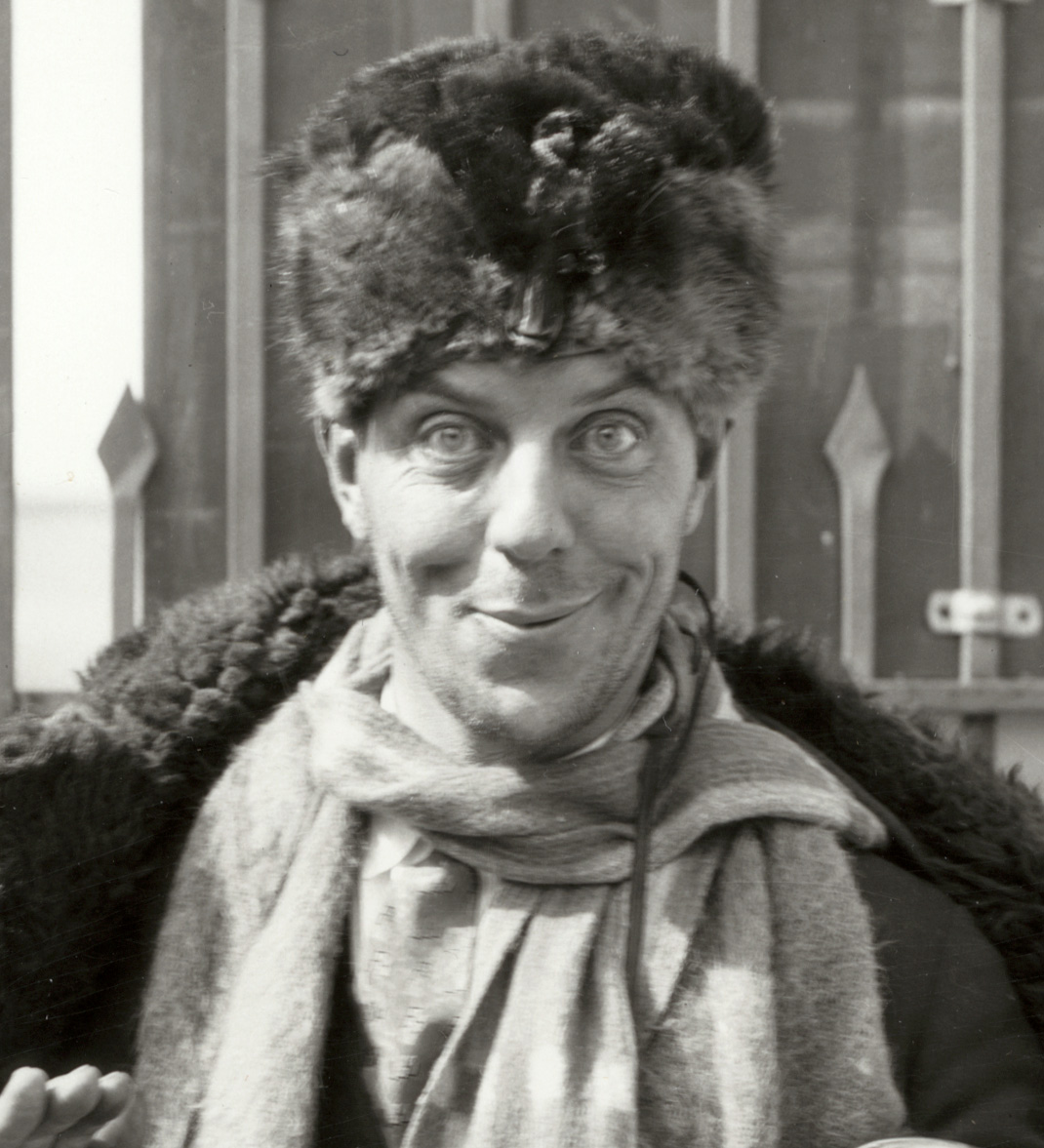
Karl Dane (born Rasmus Karl Therkelsen Gottlieb, 12 October 1886 – 14 April 1934)[2] was a Danish-American comedian and actor known for his work in American films, mainly of the silent film era. He became a star after portraying “Slim”, a supporting role in one of the most successful silent films of all time, The Big Parade (1925), directed by King Vidor and starring John Gilbert.

Key Information

After signing with MGM in 1926, he appeared in supporting roles in several popular silent films before teaming up with George K. Arthur to form the successful comedy duo Dane & Arthur. They appeared in a number of very successful silent comedy features. When sound films arrived, they made short-subject comedies and toured in vaudeville.[3] At the peak of his career, Dane earned $1,500 a week.[4] As the film industry transitioned from silent to sound films in the late 1920s, Dane's thick Danish accent became problematic. By 1930, Dane was relegated to less prominent roles, often with little to no dialogue. Later that year, MGM terminated his contract.[5] Dane attempted to pursue work in other fields but found no success. Broke and despondent, he died of a self-inflicted gunshot wound in April 1934.

Karl Dane's rapid career decline, depression, and subsequent death have been cited as an extreme example of the fate that befell many silent film stars who were unable to make the transition from silent to sound films.[6]

Early life

[edit]

Dane was born Rasmus Karl Therkelsen Gottlieb (not Karl Daen as sometimes reported)[7] in Turesensgade 23 in central Copenhagen, Denmark, to Rasmus Carl Marius Gottlieb and Anne Cathrine (née Simonsen) Gottlieb. He had two brothers: Reinald Marius and Viggo Eiler. His parents' marriage was apparently stormy, with his father having trouble with alcohol and money management. In 1903, Dane's parents divorced, leaving him in the custody of his mother. His father was a glove maker by trade but enjoyed the theatre. Around the start of the 20th century, he built a toy theatre which people began to pay to see; during this time, Dane and his brother Reinald would perform for the crowds. His father worked as a curtain puller at the local theatre, to which his two sons accompanied him. Dane later said this would inspire him to act. In 1900, Dane and his brother apprenticed as machinists, a job he would perform on and off throughout his life. In 1907, he began compulsory military service in the First Artillery Battalion. He was promoted to lance corporal in June 1908.[8] After being discharged from the military, he married dressmaker Carla Dagmar Hagen on 10 September 1910. The marriage produced two children: Ejlert Carl (born March 1911) and Ingeborg Helene (July 1912).[9] With the outbreak of World War I, Dane was recalled up to duty; he was stationed again at Trekroner Fort in August 1914. He was promoted to corporal in November 1915.[10]

On 25 January 1916, Dane headed for the United States alone. He intended to send for his family later. He boarded the SS Oscar II with $25 in his pocket and speaking no English. The ship arrived on 11 February 1916 at Ellis Island.[11] Dane passed immigrant inspection and moved to 345 Court Street in Brooklyn with a friend named Charles Lindgren. The same day, he found work in a foundry. Sometime in 1916 he moved to Lincoln, Nebraska, where he worked as an auto mechanic. By summer 1917, he returned to New York City where he again worked as a mechanic.

Career

[edit]

Early years

[edit]

In late 1917, Dane made his film début in a bit part in a Vitagraph Studios short filmed in Fort Lee, New Jersey. He made $3 a day (as a mechanic he had been making $3 a week) for his part. However, his scenes were cut and the title of this film is not known. Any footage is presumed lost. Dane then appeared in Warner Bros. anti-German sentiment film My Four Years in Germany as Chancellor von Bethmann-Hollweg.[12] This would be the first of many such roles for Dane in his early career. The film was released 29 April 1918 and was a success, earning an approximate $500,000 at the box office (the film had a budget of $50,000).[13] His next film was Wolves of Kultur which contained 15 chapters (running about three hours total). The film was released chapter by chapter between 1918 and 1919.[14] He then followed with the June Mathis-penned film To Hell with the Kaiser!, reprising his role as Chancellor von Bethmann-Hollweg. Dane completed two more anti-German propaganda style films, The Great Victory, Wilson or the Kaiser? The Fall of the Hohenzollerns and Daring Hearts, both released in 1919.[15] In 1920, Dane portrayed "The Wolf" in another 15-chapter serial The Whirlwind. That film is now presumed lost.[16]

In early 1921, Dane met a Swedish immigrant named Helen Benson. He then quit acting and moved with Benson to Van Nuys, California, where they opened a chicken farm.[17] They married on 15 June 1921. On 9 August 1923, Benson died in childbirth as did the couple's daughter. In December 1923, Dane ran into his old friend Charles Hutchison who convinced him to appear in a serial he was then producing.

Stardom

[edit]

In December 1924, MGM casting director Robert McIntyre — who had previously hired Dane back at Vitagraph — recommended the actor for a role in King Vidor's latest project, The Big Parade. Dane was selected to play the part of Slim, alongside John Gilbert and Renée Adorée. The movie was a major success, both critically and financially, becoming the second highest grossing silent film of all time, making almost $6.5 million (approximately $125,274,000 today).[18] As a consequence, Dane's career blossomed.[19]

In 1926, he co-starred with Rudolph Valentino and Vilma Bánky in The Son of the Sheik.[15] The film was released after Valentino's death in August 1926 and became a massive success.[20] It was re-released several more times well into the late 1930s.[21] After working on The Son of the Sheik, Dane signed a contract with MGM in June 1926. He began to appear in comic relief roles in several films including The Scarlet Letter (directed by Victor Sjöström and starring Lillian Gish), La Bohème (again directed by Vidor, and starring Gish, Gilbert and Adorée),[22] and Alias Jimmy Valentine with William Haines and Leila Hyams.[23]

Karl Dane, wearing a U.S. Army sergeant's costume for the 1927 film Rookies, demonstrates how he towers over four chorus girls in an MGM publicity still.

Dane & Arthur

[edit]

Soon after signing his MGM contract, Dane began work on the Vidor film, Bardelys the Magnificent. It was on this film that MGM executive Harry Rapf decided to pair the burly Dane with the slight English actor George K. Arthur. The new comedy team was dubbed Dane & Arthur. In May 1927, the duo's first film, Rookies, opened and was an instant success. In June 1927, MGM signed Dane to a long-term contract. He co-starred in the Dane & Arthur comedies and played character roles in dramatic films like The Trail of '98.

In April 1928, Dane broke his shoulder on the set. He developed a serious case of bronchial pneumonia but eventually recovered and went back to work.[24] At the peak of his success and popularity, Dane earned $1500 a week.[4]

Talkies and decline

[edit]

By 1929, sound films were rising in popularity and MGM was worried that actors with thick foreign accents would not be ideal for sound films. In his memoirs, George K. Arthur claimed that after MGM tested the duo for sound films, they felt his British accent was "more desirable" and thought Dane's thick Danish accent made his English difficult for audiences to understand. As a result, MGM discontinued the Dane & Arthur series after China Bound (1929) and began offering Dane fewer roles.[25] Dane & Arthur's only talking MGM credit was a brief guest appearance in the all-star musical comedy The Hollywood Revue of 1929, and their skit was staged with very little dialogue.

In 1930, Dane had a supporting role in Montana Moon, a musical Western starring Joan Crawford and Johnny Mack Brown. He followed with another supporting role (in which he had no dialogue) in the prison drama The Big House, starring Robert Montgomery, Wallace Beery and Chester Morris.[26] Later that year MGM terminated Dane's contract, citing his Danish accent.[27] In his final interview in September 1933, Dane claimed that MGM wanted to renew his contract but he declined as he had suffered a nervous breakdown. Dane admitted that he had found it difficult to transition from silent to sound films due to his accent, but also said that he was exhausted from years of constant filming and was grieving the death of his father who died in September 1930.[28]

Although the Dane & Arthur series had been terminated by MGM, they did star in 10 sound films, albeit less prestigious short subjects. In 1930, Dane & Arthur were signed by producer Larry Darmour[29] for six short-subject comedies, released through RKO Radio Pictures. In December 1930 Paramount Pictures' theater chain offered Dane & Arthur a 23-week vaudeville tour. In July 1931, Dane & Arthur were signed for four more shorts to be produced at Paramount's New York studio,[30] beginning with The Lease Breakers (released in September 1931). The final film, Summer Daze (1932), ended the series and the Dane-Arthur partnership.

In November 1931, Dane and some friends formed a mining corporation called Avelina Mines. The venture failed. By February 1932, Dane had returned to vaudeville, this time as a solo comedian. His act was panned by critics and apparently short-lived. Dane's final film appearance was a bit role as a dispatcher in the 1933 thriller The Whispering Shadow, starring Bela Lugosi.

Personal life

[edit]

Dane became an American citizen on 13 July 1928[1] and legally changed his name to Karl Dane.[31]

Marriages and relationships

[edit]

Dane's first marriage was to Carla Dagmar Hagen. The couple married 10 September 1910 at Saint Paul's Church in Copenhagen. Dane's only living children were born during this union; son Ejlert Carl, in 1911 and daughter Ingeborg Helene in 1912. When Dane immigrated to the US, in 1916, he intended to send for his family later. However, by the time his career became successful, Dane had begun to lose touch with his family. Carla no longer wanted to join him, as she was suffering from ill health. The pair separated in 1918 and divorced in 1919.

In early 1921, Dane met Swedish immigrant Helen Benson. It was then he quit films and moved to Van Nuys. The couple married on 15 June 1921. Benson died in childbirth 9 August 1923, as did the couple's daughter. Unable to cope with the loss of his wife and daughter, Dane rushed into a marriage with telephone operator supervisor Emma Awilda Peabody Sawyer, seven years his senior. The couple married on 8 March 1924, and separated on 30 September 1924.

In June 1928, Dane reportedly fell in love with a Russian dancer, Thais Valdemar. The couple began dating and eventually claimed to be married though they indeed never were (many sources incorrectly state that she was his legal wife). The couple lived together at Dane's Beverly Hills home, until November 1928, when Valdemar moved out. By December, she filed a breach of promise suit against Dane for $75,000, but the case was ultimately dropped in 1929.

Later years and death

[edit]

By the summer of 1933, Dane had given up on his film career and made a second attempt at mining. He spent three months driving up and down the West Coast trying to find a good mining deal. In September 1933, Dane lost $1,100 on a mining deal that failed to gain traction and advance. Deeply depressed by this lack of success, Dane subsequently worked as a mechanic and as a carpenter, but he was unable to stay employed for an extended period.

In 1933, Dane began working as a waiter in a "tiny cafe" in Westwood, Los Angeles. According to Dane's biographer, Laura Petersen Balough, oft-told accounts that Dane "bought stake in a hot dog stand outside the gates of MGM Studios" which was supposedly shunned by his former co-workers are likely false. The "hot dog stand" or "hot dog cart" that is often referred to was actually similar to a luncheonette, a small, permanent structure that had a counter and seating for patrons. Dane eventually bought a stake in the cafe after the owner thought that having a former film star as a co-owner would drum up business.[32] Dane's former comedy partner, George K. Arthur, mentioned Dane's final venture in his memoir:

Another man might have kidded and clowned and made a feature of being "mine host" in a restaurant, but when Karl opened his hot dog stand in Westwood his own feeling of despair must have been served across the counter with the hamburgers. People could not bear to watch it. So they didn't come to buy his hamburgers.[32]

By 1934, Dane's restaurant venture had failed and he was once again unemployed and broke. He then tried to seek work as carpenter or as an extra at MGM and Paramount Pictures. He was reportedly turned down for extra work because his body type and look were too distracting.[33]

On 13 April 1934, Dane was pickpocketed of all the money he had: $18. On 14 April, he was to meet his friend, Frances Leake, with whom he planned to see a movie. After he failed to show, Leake became worried.[34] She went to his apartment (at 626 South Burnside Avenue)[35] and with the assistance of the landlady, they were able to open the door. There they found Dane, dead of a self-inflicted gunshot wound to the head, in his chair with a gun at his feet. Leake fainted at the scene.[34] When she was revived, Leake found Dane's suicide note on a nearby table, next to a scrapbook filled with memorabilia, including photos, reviews and contracts, from his acting career.[4][31] The note read, "To Frances and all my friends-goodbye."[36]

Neither friends nor relatives came forward to claim Karl Dane's body.[31] Police tagged his body with the note, "May have relatives in Denmark. Hold for awhile." For the next few days, authorities attempted to find his family, even placing ads in major Copenhagen newspapers. However, the Gottliebs did not find out about Dane's death until weeks later. Fellow Danish actor Jean Hersholt stepped forward and insisted that MGM should pay for a funeral and burial. MGM agreed and, on 18 April, held a public funeral for Dane.[37] There were around fifty attendees. Hersholt was a pallbearer, as was Tom O'Brien. Dane was interred at the Hollywood Forever Cemetery.[38] At the time of his death, Dane's estate was valued at $197.[39]

Legacy

[edit]

Many of Dane's films still exist today and a few are available on DVD including Son of the Sheik, The Big Parade, and The Whispering Shadow. Bardelys the Magnificent was thought lost, but most of the film has been found. It has been restored and released on DVD. Of the 10 Dane & Arthur shorts, five still exist.[40] Producer Robert Youngson included a sampling of the Dane & Arthur silent comedies in his feature film M-G-M's Big Parade of Comedy (1964).

Dane received a star on the Hollywood Walk of Fame for his contributions to film, which is located at 6140 Hollywood Blvd (located in front of the Henry Fonda Music Box Theater).[3]

Renewed interest has been shown in Dane's career, especially in his native Denmark. On 12 October 2006, Danish weekly paper FOKUS published an article on Dane to commemorate what would have been his 120th birthday.[41] In February 2007, an issue of the monthly Classic Images (#380) included an article on Dane. In the July 2007 biannual publication The Bridge (Volume 30 Number 1 2007), published by the Danish American Heritage Society, featured an article on Dane.[42] In December 2007, the Danish Film Festival Kosmorama published an article about Dane in their newsletter.[43]

On 28 January 2008, the Danish Film Institute held a 'Karl Dane Retrospective' in Copenhagen, Denmark.[44] A speech was given by Laura Petersen Balogh and featured clips from Dane's films followed by a screening of one of his features.[45] The event was attended by some of Dane's descendants.[45] In 2009, a biography about Dane written by Balogh was released through McFarland & Company.[46][47]

Selected filmography

[edit]
Year Title Role Notes
1918 My Four Years in Germany Chancellor von Bethmana-Hollweg
1918 The Triumph of Venus Mars
1918 Her Final Reckoning Prince Tcheretoff
1918 To Hell with the Kaiser! Von Hollweg
1919 The Fall of the Hohenzollerns Von Bethmann Hollweg
1919 Daring Hearts Lieutenant Von Bergheim
1919 The Whirlwind The Wolf Lost film
1925 The Big Parade Slim
1925 Lights of Old Broadway Roosevelt's Father Alternative title: Little Old New York
1925 His Secretary Janitor
1926 La Bohème Benoit
1926 The Scarlet Letter Master Giles
1926 Bardelys the Magnificent Rodenard
1927 The Red Mill Captain Jacop Van Goop
1927 Slide, Kelly, Slide Swede Hansen
1927 Rookies Sgt. Diggs Dane & Arthur silent feature
1927 The Enemy Jan
1928 Baby Mine Oswald Hardy Dane & Arthur silent feature
1928 The Trail of '98 Lars Petersen
1928 Circus Rookies Oscar Thrust Dane & Arthur silent feature
1928 Detectives House Detective Dane & Arthur silent feature
1928 Alias Jimmy Valentine Swede
1928 Brotherly Love Oscar Dane & Arthur silent feature
1929 The Duke Steps Out Barney, Duke's Chauffeur
1929 China Bound Sharkey Nye Dane & Arthur silent feature
1929 Speedway Dugan
1929 Navy Blues Sven Swanson
1929 The Hollywood Revue of 1929 Himself Dane & Arthur guest appearance
1930 Montana Moon Hank
1930 The Big House Olsen
1930 Billy the Kid Swenson Alternative title: The Highwayman Rides
1931 A Put Up Job Dane & Arthur sound short
1931 Dumbbells in Derbies Dane & Arthur sound short
1931 Lime Juice Nights Dane & Arthur sound short
1932 Fast Life Olaf Uncredited
1933 The Whispering Shadow Sparks (dispatcher)

References

[edit]
[edit]
Revisions and contributorsEdit on WikipediaRead on Wikipedia
from Grokipedia
Karl Dane (October 12, 1886 – April 14, 1934) was a Danish-American actor and comedian best known for his roles in silent films during the , particularly as the tobacco-chewing "Slim" in the war epic (1925), which propelled him to stardom. Born Rasmus Karl Therkelsen Gottlieb in , , to a glove maker father, Dane endured a difficult childhood marked by his parents' in 1903 and apprenticed as a machinist alongside his brother, followed by compulsory military service in the Danish artillery from 1907 and during until his discharge in 1916, before emigrating to the in 1916, where he settled in and took up work as a carpenter and . Initially drawn to film through odd jobs and early stunt work, he began appearing in motion pictures around 1917, often in supporting roles and anti-German propaganda shorts during , before gaining traction at (MGM) with collaborations alongside stars like , John Gilbert, and in over 40 films. His breakthrough came with , directed by , after which he formed a popular comedy duo with George K. Arthur, producing a series of successful shorts that showcased his physical humor and expressive face, earning him up to $1,500 per week at his peak. Dane's career plummeted with the arrival of sound films in the late 1920s, as his thick Danish accent rendered him unsuitable for talkies, making him one of the most notable victims of Hollywood's transition era; by the early 1930s, he was destitute, operating a sandwich cart near the MGM lot where he once thrived. Personal tragedies compounded his woes, including the deaths of his second wife and daughter during childbirth, leading to his isolation during the Great Depression. On April 14, 1934, Dane died by suicide via gunshot in Los Angeles at age 47; MGM arranged his burial at Hollywood Forever Cemetery, with pallbearers including fellow actors Jean Hersholt and Tom O'Brien, and he was later honored with a star on the Hollywood Walk of Fame in the 6100 block of Hollywood Boulevard.

Early life

Birth and childhood

Karl Dane was born Rasmus Karl Therkelsen on October 12, 1886, in , . His father, a glovemaker, owned a that sparked young Gottlieb's interest in , as he and his elder brother Reinald often staged shows for family and friends. Gottlieb endured a difficult childhood marked by his father's , which contributed to family instability and socioeconomic challenges. His parents divorced in 1903, leaving him in his mother's custody. Amid 's high rates during the early , these hardships fostered his resilience through manual labor and self-reliance. At a young age, he apprenticed as a alongside his brother, gaining practical skills in a that reflected the era's economic pressures on working-class families. Upon pursuing acting later in life, Gottlieb adopted the stage name , drawing from his middle name and his Danish heritage to better suit his professional identity in the entertainment industry.

Military service and emigration

At the age of 21, Dane began compulsory in Denmark's First Battalion, stationed in , in 1907. He was promoted to in June 1908 and served until his discharge around 1910. With the outbreak of , despite Denmark's neutrality, Dane was recalled to and continued serving in the army until approximately 1916. Having endured a difficult childhood overshadowed by family struggles, including an alcoholic father, Dane was motivated to emigrate by the desire for improved economic prospects amid the war's trade disruptions in neutral . Dane arrived in the United States on February 11, 1916, passing through with limited funds and no command of English, before settling in , New York, at 345 Court Street with a friend. Upon arrival, Dane supported himself through skilled manual labor during the period, initially working as a machinist for the Robert Gair Company in and later as a carpenter and , including a stint in .

Career

Entry into acting

After immigrating to the in 1916, Karl Dane settled in , New York, where he supported himself through factory work while transitioning into the film industry as an extra and stuntman. Dane's entry into professional acting began with his screen debut in late 1917, portraying German Chancellor Theobald von Bethmann-Hollweg in the propaganda short , a film dramatizing U.S. Ambassador James W. Gerard's experiences. This role earned him $3 per day and marked his initial foray into bit parts during the silent era. Throughout the late 1910s, Dane secured supporting roles in several anti-German propaganda films fueled by sentiments, often cast as heavies due to his imposing 6-foot-3.5-inch frame and Nordic features. Notable appearances included the uncredited role of Carter in the 15-chapter serial Wolves of Kultur (1918) and the antagonist "The Wolf" in the lost Universal serial The Whirlwind (1919). These early opportunities allowed Dane, as an immigrant actor, to build experience without his thick Danish accent becoming an obstacle, though it would prove challenging in future sound productions. By the early , following a period of disillusionment and return to manual jobs, including chicken farming in , Dane relocated to Hollywood, where he continued taking minor roles in features.

Rise to stardom

Dane's breakthrough role came in 1925 when he was cast as "Slim," the burly construction worker and loyal comrade to John Gilbert's protagonist, in King Vidor's silent war drama . His performance, blending rough-hewn authenticity with subtle comic relief amid the film's harrowing depiction of , drew praise from critics for humanizing the ensemble cast and enhancing the story's emotional depth. The film's unprecedented commercial success—grossing over $5 million domestically and establishing it as MGM's biggest hit to date—catapulted Dane from obscurity to public recognition, marking his transition from bit player to prominent . Following this acclaim, Dane secured a long-term with in June 1926, which solidified his position in Hollywood and elevated him to leading comedic status within the studio's roster. At the height of his fame, he commanded peak weekly earnings of $1,500, reflecting his value as a reliable draw for audiences seeking lighthearted contrast in dramatic features. This financial peak underscored his rapid professional ascent, as leveraged his physical presence and on-screen charm in a series of high-budget productions. Central to Dane's stardom was his cultivated public persona as a jovial, burly Danish immigrant—often depicted with a thick accent, oversized frame, and infectious optimism—that resonated with American viewers during the post-war era. This character type, rooted in his real-life background as a native, allowed him to embody the era's immigrant success story while delivering reliable laughs, propelling his fame through fan magazines and theater posters. Early bit parts in lesser films had honed his skills, but it was this distinctive in major releases that cemented his status as a silent-era comedic mainstay at .

Dane and Arthur duo

In 1927, Metro-Goldwyn-Mayer (MGM) paired Karl Dane with British actor George K. Arthur to capitalize on Dane's rising popularity from his breakthrough role in The Big Parade (1925), forming the comedy duo Dane and Arthur. The partnership quickly proved successful, leading to the production of 10 two-reel comedy shorts under MGM, which showcased their contrasting physical appearances and comedic timing. The duo's style centered on slapstick humor, with Dane's towering 6-foot-3-inch frame and bumbling, physically comedic persona playing off Arthur's shorter, more refined and sophisticated demeanor, creating a dynamic reminiscent of Laurel and Hardy. Their routines often involved chaotic mishaps in everyday or adventurous settings, emphasizing visual gags and physical interplay that highlighted Dane's immigrant everyman charm and Arthur's quick-witted foil. Notable shorts included Detectives (1928), where they portrayed hapless hotel detectives entangled in romantic and criminal intrigue. This popularity extended to full-length features, such as the silent comedy China Bound (1929), in which the pair played American sailors on a misadventure in China, blending broad humor with exotic backdrops. The duo's output significantly boosted Dane's career during the late silent era, establishing them as MGM's resident comedy team and earning strong audience reception through repeated theatrical releases. However, the partnership began to wane around 1930 as MGM shifted priorities toward the advent of sound films, where Dane's thick Danish accent proved a liability, leading to the end of their collaborative series at the studio.

Decline with talkies

The transition to sound films in the late 1920s severely impacted Karl Dane's career, as his thick Danish accent rendered his dialogue difficult for audiences to understand in the new era of talkies. This vocal limitation led to typecasting in roles requiring minimal speech or rejection by major studios seeking performers with clear enunciation. In 1930, Metro-Goldwyn-Mayer (MGM) terminated Dane's contract explicitly due to his accent, ending his steady stream of leading and supporting roles at the studio. Following this, he secured only sporadic appearances in sound productions, including minor parts as Hank in Montana Moon (1930) and Olsen in The Big House (1930), where his characters often served comic relief with limited lines; these opportunities decreased in both prominence and number as the decade progressed. Dane's final screen role came as a bit player portraying Sparks the Dispatcher in the serial The Whispering Shadow (1933), after which he received no further offers. Across his career spanning 1918 to 1933, he appeared in approximately 48 films, with the overwhelming majority being silent-era productions that had capitalized on his and expressive presence. This professional erosion exemplified the broader "talkie revolution," which disproportionately hindered immigrant actors with foreign accents, as Hollywood studios shifted toward standardized American speech to maximize marketability and box-office returns. Dane's sharp downturn contrasted markedly with his earlier triumphs in silent cinema, where he had risen to stardom alongside partners like George K. Arthur.

Personal life

Marriages and family

Karl Dane's first marriage was to the dressmaker Carla Dagmar Hagen on September 10, 1910, in Copenhagen, Denmark. The couple had two children: a son, Ejlert Carl, born in 1911, and a daughter, Ingeborg Helene, born in 1912. Their marriage ended in divorce in 1919 following Dane's emigration to the United States two years earlier. In early 1921, Dane met Swedish immigrant Helen Benson, a seamstress who had arrived in the U.S. in 1913. She disapproved of his acting career, leading him to temporarily quit films. They married on June 15, 1921, and took up chicken farming in , . On August 9, 1923, Benson died in , as did their unnamed daughter, leaving Dane deeply distraught. Seeking solace amid this grief, Dane entered his third marriage to Emma Awilda Peabody Sawyer, a telephone operator supervisor seven years his senior, on March 8, 1924, in . The union was impulsive and short-lived, ending in separation after just six months on September 30, 1924, with no children born to the couple. In 1926, Sawyer filed a suit against Dane for support, reflecting ongoing tensions from the brief marriage. Dane's fourth significant relationship began in June 1928 with the Russian dancer and actress Georgina "Thais" Valdemar. The pair publicly claimed to have married secretly on May 4, 1928, as reported in contemporary accounts. However, no legal marriage record exists, indicating it was a common-law or pretended union rather than a formal one. They separated later in 1928, after which Valdemar sued Dane for $75,000 in damages. This relationship produced no children, and Dane had no further known marriages. His son Ejlert Carl remained in and did not join his father . Throughout his life, Dane's romantic partnerships were marked by brevity and upheaval, often aligning with the instability of his acting career's rise and early declines.

Citizenship and residences

Karl Dane, born Rasmus Karl Therkelsen Gottlieb in , , immigrated to the via on February 11, 1916, arriving with limited English and just $25 in his pocket. He settled initially in , New York, where he shared an apartment at 345 Court Street with a friend named Lindgren while taking manual labor jobs, including work in a local shipyard. After over a decade in the country, Dane pursued and became a U.S. citizen on July 13, 1928, legally changing his name from Rasmus Karl Therkelsen to Karl Dane during the process; this step may have been motivated in part by his recent , providing a sense of permanence in his adopted homeland. As his acting career flourished in the mid-1920s, Dane's rising income enabled a shift to more affluent residences in California, including a luxurious home in Beverly Hills and a custom-built Nordic-style house in Malibu that he designed and constructed himself using his carpentry skills. These properties reflected his peak stardom and attempts at property ownership, though he remained more attached to practical pursuits than Hollywood extravagance. Dane maintained ties to the Danish expatriate community in , a network of immigrants and professionals that offered cultural support amid his professional transitions. By the late and into , as his opportunities dwindled with the advent of sound, income fluctuations forced lifestyle adjustments, leading him to modest rentals in , including small apartments that marked a stark contrast to his earlier stability.

Later years and death

Post-career struggles

Following the advent of talkies, which ended his acting career due to his thick Danish accent, Karl Dane struggled to find stable employment in the early . He took on a series of menial jobs, including investing in a café in , where he worked as a waiter, and performing manual labor as a carpenter and . However, he was unable to secure stable employment in these roles or as a film extra, exacerbating his financial instability. Dane reportedly suffered from depression amid these setbacks, compounded by the barriers his accent posed to reviving his career in sound films and the loss of his previous high earnings. His health deteriorated further in isolation, as former colleagues distanced themselves and the supportive network of immigrant actors in Hollywood waned with the industry's shift away from silent cinema, leaving many European performers like Dane marginalized. This social withdrawal contributed to his profound personal hardships, with little aid from the studio that had profited immensely from his work. At the time of his death in 1934, Dane's poverty was starkly evident; his body lay unclaimed in the County morgue for days, and his estate was valued at just $197, reflecting a life reduced from stardom to destitution.

Suicide and aftermath

On April 14, 1934, Karl Dane died by at the age of 47 in his apartment in , , where he shot himself in the head with a . His body was discovered the following day by his girlfriend, Leake, slumped in a chair with a nearby. The act stemmed from deep despair over his prolonged , dire financial straits exacerbated by being robbed of his last $18 just days prior, and repeated failed attempts to revive his acting career in the sound era due to his heavy Danish accent. Dane's body initially lay unclaimed in the Los Angeles County morgue, facing the prospect of a pauper's burial. Fellow Danish actor intervened, urging (MGM) to cover the costs of a proper and interment, which the studio agreed to provide. A public service was held on April 18, 1934, attended by approximately 50 people, mostly of Scandinavian descent, that underscored his diminished fame, with pallbearers including and Tom O'Brien, after which Dane was buried at in Hollywood. The legal aftermath was straightforward and unremarkable, with no investigations or controversies arising from the suicide. Dane's estate was appraised at less than $200, reflecting his impoverished circumstances, and was handled with minimal proceedings among his few remaining family members.

Legacy

Cinematic influence

Karl Dane's portrayal of comic characters in the silent era established him as a key figure in , particularly through his embodiment of the tall, gangly "big lug" —a lovable, clumsy whose exaggerated movements and facial expressions elicited laughter through visual mishaps and heartfelt simplicity. This style, evident in roles like the bumbling riveter Slim in (1925), influenced the development of physical humor in Hollywood by emphasizing contrast and relatability in ensemble casts, where his 6-foot-4-inch frame amplified dynamics without relying on . Dane's approach contributed to the silent film's reliance on expressive , setting a template for later comedians who blended with pratfalls to humanize larger-than-life figures. In the war film genre, Dane's performance as Slim in played a pivotal role in advancing realistic depictions of soldiers, showcasing the camaraderie and vulnerabilities of American troops during . As the Scandinavian immigrant riveter who provides amid the film's harrowing sequences, Dane's character highlighted the diverse ethnic backgrounds of U.S. servicemen, adding authenticity to director King Vidor's groundbreaking anti-war narrative that eschewed glorification for gritty humanism. This portrayal helped elevate as a milestone, influencing subsequent war films by integrating humor to balance tragedy and underscore the everyday heroism of ordinary men from varied walks of life. Dane's partnership with George K. Arthur in MGM's short film series from 1927 onward further solidified his comedic legacy, producing a string of successful two-reelers that popularized the mismatched duo format—Dane as the towering, dim-witted foil to Arthur's shrewd, diminutive . These films, including (1927) and Brotherly Love (1928), exemplified MGM's investment in short-form comedy, bridging the gap between solo gag-driven shorts and structured team-based narratives that later defined acts like . Through this output, Dane helped refine the mechanics of visual timing and character interplay in studio comedy, fostering a blueprint for ensemble humor in the transition to sound. Dane's work also contributed to the representation of immigrant experiences in early Hollywood, often drawing from his own Danish background to portray characters navigating with wide-eyed enthusiasm and cultural awkwardness. In , his Slim embodies the immigrant soldier's integration into the U.S. military, using non-verbal cues like tobacco-chewing and exaggerated gestures to convey the challenges and loyalties of newcomers in wartime narratives. This approach enriched silent films' exploration of the American , providing audiences with relatable depictions of assimilation and resilience that mirrored the era's influx of European performers and stories.

Honors and modern recognition

In recognition of his contributions to early cinema, Karl Dane was posthumously awarded a star on the Hollywood Walk of Fame at 6140 Hollywood Boulevard on February 8, 1960. Several of Dane's films have been preserved by major archives, ensuring their availability for future generations. His breakthrough role in The Big Parade (1925) is included in the National Film Registry and has been restored using elements from the Library of Congress, UCLA Film & Television Archive, and other sources. Select shorts from his comedy duo with George K. Arthur, such as China Bound (1929), survive in archival prints held by the Library of Congress and other institutions. Dane's career received renewed attention in 2008 through a organized by the Danish Film Institute in , featuring screenings of his films and a discussion of his legacy. In the , interest has grown via social media discussions on platforms like , highlighting his tragic arc as a of the silent-to-sound transition in film histories. In 2023, a Danish-language podcast episode titled "141: Karl Dane - 1920'ernes " explored his life and career, comparing him to modern actor , as part of the American Days festival. A short documentary on his life, focusing on his star, was released on in late 2021.

Filmography

Silent films

Karl Dane appeared in approximately 30 silent films between 1918 and 1928, transitioning from small roles in wartime pictures to prominent supporting parts under his contract, where his tall, burly frame and Danish accent lent itself to and ethnic characterizations. His early work often featured him as a German or in anti-Kaiser productions, but his breakthrough came with comedic buddy roles that highlighted humor and camaraderie. Dane's notable silent-era roles began with uncredited appearances in 1918 films like To Hell with the Kaiser!, where he played a German soldier, capitalizing on during . By 1925, he gained acclaim as Slim, the tobacco-chewing riveter and loyal friend to John Gilbert's character in King Vidor's epic war drama , a massive box-office success that established Dane as a reliable in ensemble casts. In 1926, Dane continued his ascent with roles like Ramadan, a bandit henchman providing comic relief alongside in , and the janitor Benoit in , supporting in a period romance. He also appeared as a in the Bardelys the Magnificent and as the brewer in , both productions that showcased his versatility in historical settings. Dane's comedic peak arrived in 1927 with the formation of the Dane & Arthur comedy team alongside George K. Arthur, producing a series of shorts and features emphasizing their mismatched partnership in scenarios, such as Rookies where Dane played a hapless recruit. Highlights from this partnership included The Red Mill as the town boss, injecting broad humor into a vehicle, and The Enemy as Jan, a in an anti-war . The duo's silent output extended into 1928 with films like Circus Rookies (as Oscar, a clownish performer) and Detectives (as a house ), rounding out Dane's most prolific silent phase before the advent of talkies curtailed their series.

Sound films

Dane's entry into sound films coincided with the rapid transition from silent cinema in the late , but his heavy Danish accent posed significant barriers, limiting him to minor roles where was minimal or unnecessary. Despite his established comedic presence from the silent era, he appeared in roughly 10 sound productions between 1929 and 1933, often uncredited or in bit parts that downplayed his voice to accommodate pronunciation challenges. His early sound work included the comedy short Brotherly Love (1929), where he portrayed the tough prison guard Oscar opposite George K. Arthur's Jerry, a role that tested the duo's chemistry in dialogue-heavy scenes but highlighted concerns over Dane's accent during production. He followed with a guest appearance alongside Arthur in MGM's revue The Hollywood Revue of 1929 (1929), performing in the musical number "Your Mother and Mine" as part of a vaudeville-style skit. In 1930, Dane took on several supporting roles in feature talkies, such as Hank, a ranch hand, in the musical Western Montana Moon, starring Joan Crawford and John Mack Brown. He played the inmate Olsen in the acclaimed prison drama The Big House, directed by George Hill, contributing to the film's tense ensemble dynamic. Other bit parts that year included Swenson in the Western Billy the Kid, Sven Swanson in the naval comedy Navy Blues, and a caveman actor in the Buster Keaton vehicle Free and Easy, a verified cameo not always noted in earlier records. Dane's sound output dwindled further in the early , with roles like in the racing drama Fast Life (1932) and a Kirghiz soldier in New Moon (1930). His final screen appearance came in the 12-chapter serial The Whispering Shadow (1933), as Sparks the dispatcher, a small but pivotal role in the science-fiction thriller opposite . These sparse engagements underscored the irony of his silent-era stardom, as studios increasingly favored actors with clearer American diction amid the talkie revolution.

References

Add your contribution
Related Hubs
User Avatar
No comments yet.