Hubbry Logo
KiefKiefMain
Open search
Kief
Community hub
Kief
logo
8 pages, 0 posts
0 subscribers
Be the first to start a discussion here.
Kief
Kief
from Wikipedia

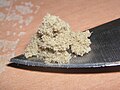
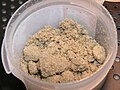
Kief (from Arabic: كيف kīf, "Joy, pleasure"[1][2]), sometimes transliterated as keef, also known as "Dust" and "Chief" a.k.a. cannabis crystals among other names, refers to the pure and clean collection of loose cannabis trichomes, which are accumulated by being sifted from cannabis flowers or buds with a mesh screen or sieve. Like some other cannabis concentrates, it contains a much higher concentration of THC and other psychoactive cannabinoids than that of the cannabis flower from which it is derived. Since it contains a higher level of THC, many consumers choose to add collected kief to their cannabis for a more intense "high"; by the same token, this preparation may induce unwelcome levels of intoxication.

Traditionally, kief has been pressed into cakes of hashish for convenience in storage, although it can be vaporized or smoked in either form.[3] After the kief is collected it is heated and pressurized, resulting in hashish.

In Morocco, kief also refers to a traditional mix of finely-chopped cannabis and indigenous tobacco, which is distinctly different from trichome powder. It is usually smoked in a long pipe called a sebsi.[4] In other countries, such as the US and those of Western Europe, kief is used to make products via infusions. Some examples are baked cookies, brownies or other edibles. Due to its potency, however, some users consume only a small quantity of kief in order to limit its effects.

[edit]

See also

[edit]

References

[edit]
Revisions and contributorsEdit on WikipediaRead on Wikipedia
from Grokipedia

Kief is a fine, powdery substance composed of the separated trichomes from cannabis flowers, which are the resinous glands responsible for producing cannabinoids and terpenes. These trichomes accumulate as a byproduct when cannabis buds are ground or sifted through mesh screens, yielding a sticky, golden-green powder distinct from the plant material. Kief's defining characteristic is its elevated potency, with tetrahydrocannabinol (THC) concentrations typically ranging from 50% to 80%, far exceeding the 12-25% found in average cannabis flower. This high cannabinoid density makes it a versatile concentrate for enhancing the effects of smoked or vaporized cannabis, such as by topping bowls or forming "moon rocks," or for infusing into edibles after decarboxylation to activate its compounds. While straightforward to collect using grinders with kief catchers or sieves, its purity and potency depend on the quality of the source material and sifting technique, avoiding contamination from plant debris.

Definition and Composition

Trichome Origin and Structure

Glandular in Cannabis sativa originate as epidermal outgrowths derived from protodermal cells, forming specialized secretory structures primarily on female reproductive tissues. These trichomes differentiate early in but mature extensively during flowering, with stalked forms predominating on bracts and calyces. Unlike non-glandular hairs or other epidermal features such as pistils and stems, glandular trichomes feature a distinct enabling accumulation, making their isolated heads the core component of kief. Structurally, cannabis glandular trichomes include bulbous, capitate-sessile, and capitate-stalked variants, though capitate-stalked types—characterized by a multicellular stalk and a bulbous head with 12–16 secretory disc cells—are most abundant on flowers and yield the highest volumes. The head forms a subcuticular secretory cavity where accumulates, supported by a stalk that facilitates precursor from the vasculature. Bulbous trichomes, smaller and often sessile-like with fewer cells, appear on leaves and sugar leaves but contribute less to overall due to their limited size and metabolite output. Kief consists predominantly of these detached trichome heads, particularly from capitate forms, representing a purified separation from stalk remnants or vegetative debris. These structures serve protective roles by secreting resinous that deters herbivores through physical and chemical repellence, while also shielding underlying tissues from via light-absorbing properties of the . Densities peak on inflorescences and adjacent sugar leaves, optimizing defense where is most vulnerable. This anatomical specialization underscores kief's purity as concentrated glandular material, free from the structural lignins or fibers found in stems and pistils.

Chemical Profile and Potency

Kief consists primarily of isolated cannabis trichomes, resulting in a concentrated cannabinoid profile dominated by delta-9-tetrahydrocannabinol (THC), typically ranging from 50% to 80% by dry weight, substantially higher than the 15-30% THC found in flower due to the removal of diluting material such as and fibers. This elevated potency arises from the biochemical purity of heads, which store cannabinoids in resinous glands, as verified through laboratory techniques like (HPLC). Cannabidiol (CBD) levels in kief vary by strain but are often low (under 5%) in THC-dominant varieties, while minor cannabinoids such as (CBG) and (CBN) may constitute 1-5% collectively, reflecting the genetic expression preserved in trichome isolation rather than extraction artifacts. In addition to cannabinoids, kief retains a rich fraction from , including dominant monoterpenes like β-myrcene (often the most abundant, contributing earthy aromas) and (citrus notes), alongside sesquiterpenes such as β-caryophyllene (spicy profile). These volatile compounds, quantified via gas chromatography-mass spectrometry (GC-MS) in lab analyses, mirror the strain-specific profiles of source flower but at higher relative concentrations due to enrichment, typically comprising 2-10% of kief's mass depending on and conditions. Empirical testing of high-quality kief confirms minimal adulteration, with terpene-to-cannabinoid ratios indicating intact glandular structures rather than degradation or contamination.

Historical Context

Ancient and Traditional Practices

The separation of cannabis trichomes through sieving, yielding early forms of kief, traces to traditional hashish production in and the , where was collected for medicinal and ritual purposes. Archaeological and textual evidence for sieving cannabis first emerges in 9th-century Islamic manuscripts, indicating a method of rubbing or sifting dried flowers over fine screens to isolate potent glandular heads. These practices built on millennia-old in the region, with psychoactive use documented among nomads by around 440 BCE, though their methods focused on vapor inhalation rather than isolated powders. In ancient , the Atharva Veda (c. 1500–1000 BCE) lists (referred to as vijaya or a sacred plant) among five revered herbs, praising it for alleviating anxiety, inducing joy, and treating ailments like pain and digestive issues through herbal preparations. While not explicitly describing sieved trichomes, these texts imply early pulverization of plant material—including flowers and leaves—to concentrate effects, a precursor to later resin-focused techniques in Ayurvedic traditions where ground mixtures were ingested or applied medicinally. Traditional sifting persisted in and Southwest Asia, notably in Morocco's region, where kif—a fine of sifted trichomes mixed with ground herbs—was smoked in long-stemmed sebsi pipes for recreational and therapeutic relief, predating widespread pressing in the 20th century. In and Himalayan areas, analogous dry-sieving methods produced loose powders or were pressed into rudimentary hash cakes, consumed via pipes, ingestion, or communal rituals, with techniques likely evolving from 19th-century local adaptations of older Central Asian hand-rubbing () practices. These methods emphasized manual separation using silk or hair sieves to minimize plant contaminants, prioritizing purity for potent effects in pre-industrial settings.

20th-Century Evolution and Modern Refinement

The imposed severe restrictions on possession and transfer in the United States, effectively driving cultivation and use underground for decades. Despite this federal prohibition, the and movements in Western countries popularized informal dry-sifting techniques for kief collection, adapting traditional sieving methods with rudimentary tools like grinders and fine screens to separate trichomes from flower material amid widespread recreational experimentation. These practices emphasized potency enhancement through isolation of resin glands, aligning with the era's rejection of mainstream norms and embrace of altered states, though production remained clandestine and inconsistent due to legal risks. California's Proposition 215, passed on November 5, 1996, legalized access, creating the first state-level framework that enabled semi-regulated cultivation and processing, including refined kief extraction for therapeutic concentrates. This shift spurred innovations in collection, such as multi-stage sieving setups to improve purity and yield, transitioning from ad-hoc home methods to more controlled operations in compassion clubs and early dispensaries, where kief served as a precursor for hash production. By fostering a nascent industry, the measure laid groundwork for quality standards, though federal illegality limited scalability until subsequent state reforms. Recreational legalization waves, starting with Colorado and Washington in 2012, integrated kief into commercial supply chains, with licensed processors adopting mechanical sifters and cryogenic separation for solventless refinement to meet demand for high-THC products. This era saw kief's role expand beyond raw powder to standardized inputs for isolates and full-spectrum extracts, driven by consumer preference for purity over solvent-based alternatives. In 2023, the global cannabis concentrate market, encompassing kief-derived solventless forms, reached USD 6.17 billion, underscoring the refinement's economic viability amid ongoing legalization.

Production Methods

Manual Collection Techniques

Dry sifting represents the primary manual technique for kief collection, involving the physical separation of trichomes from dried cannabis flower using fine mesh screens. The process begins with coarsely grinding or breaking apart mature, dried buds to expose surface trichomes without pulverizing plant material excessively. This material is then evenly spread over a screen with openings typically ranging from 100 to 150 microns, allowing intact trichome heads—averaging 25 to 100 microns in diameter—to pass through while retaining larger debris. Agitation is applied manually by gently rubbing the material across the screen with a , soft brush, or fingertips, or by light shaking, causing trichomes to dislodge and fall onto a collection surface below. Multiple screens of varying micron sizes may be stacked, with coarser meshes (e.g., 200 microns) on top to filter initial and finer ones below for purer kief. This method relies on gravitational and frictional forces for separation, yielding a powdery residue of isolated glandular heads. Yields from dry sifting typically range from 7 to 20 percent of the starting flower weight, with higher returns—up to 20 percent—achievable from high-resin strains such as indica-dominant hybrids that produce abundant glandular trichomes. Factors influencing yield include strain genetics, trichome density, drying quality, and sifting thoroughness, though excessive agitation risks contaminating kief with plant particulates. An alternative manual approach involves hand-rubbing fresh, unfrozen buds between clean palms to dislodge trichomes, forming a sticky that can be scraped and collected as rudimentary kief or precursor. This technique, applied immediately post-harvest, aims to preserve volatile present in "fresh frozen" style material but introduces contamination risks from skin oils and incomplete separation, resulting in lower purity compared to screened dry sift. Yields are generally lower and less quantifiable due to the adhesive nature of the product, necessitating subsequent drying for powder form.

Mechanical and Industrial Processes

Mechanical processes for kief production typically involve grinders equipped with kief catchers, which feature fine mesh screens in multi-chamber designs to separate trichomes from ground cannabis flower through friction and gravity. These devices, often made of aluminum or stainless steel, allow users to collect pure kief in a dedicated compartment after repeated grinding sessions, with yields increasing via manual agitation or vibration to dislodge additional trichomes. For higher-volume small-scale operations, tumblers—cylindrical machines that rotate or vibrate cannabis flower against screens—mechanically extract kief by agitating material at controlled speeds, typically processing several pounds per session without blades to minimize plant matter contamination. Industrial processes scale these methods using large-capacity tumblers and vibratory sieving equipment in licensed facilities, which emerged prominently following legalizations accelerating after 2018. Machines like the Tumbler 3000 can handle up to 50 pounds of dry material per hour, employing USDA-certified components for tumbling and sieving to isolate trichomes efficiently. Vibratory sifters from manufacturers such as HK Technologies or Kason further refine output by screening bulk flower or trim through micron-rated meshes, enhancing throughput in commercial settings while maintaining solventless production to avoid chemical residues. These mechanical and industrial approaches prioritize efficiency, with tumblers and sievers reducing labor compared to manual sifting, but they introduce trade-offs in quality if equipment is not meticulously cleaned, as residues from prior batches can contaminate kief with plant debris, mold, or heavy metals. Solventless kief from such processes is favored in regulated markets for its purity profile, lacking solvent extraction risks, though operators must adhere to rigorous sanitation protocols to mitigate microbial or particulate impurities.

Conversion to Concentrates

Kief, consisting primarily of glandular trichomes, serves as a primary feedstock for solventless production, where physical compression and controlled transform the loose into denser, more stable forms without chemical solvents. This process yields products such as pressed or , leveraging the natural resinous properties of the trichomes to bind material under pressure. One common method involves compressing kief into , including varieties like temple balls or full-melt hash, through manual or mechanical pressing. High-purity kief is first graded using micron filtration bags—typically 25 to 75 microns for dry sift—to separate intact heads from contaminants, ensuring the resulting hash achieves full-melt quality that vaporizes completely upon heating. The material is then hand-rolled or pressed at temperatures around 70-80°C (160-180°F) to form cohesive blocks, with pneumatic or hydraulic devices applying sustained to densify the product without excessive heat that could degrade volatiles. For rosin production, graded kief is enclosed in micron filter bags (often 36-90 microns) and subjected to higher heat and pressure in a press, extracting a golden, -rich oil. Optimal parameters include temperatures of 80-100°C (180-220°F) for 60-120 seconds under 1000-5000 psi, achievable via DIY tools like heated hair straighteners or industrial pneumatic presses, yielding up to 20-30% return by weight depending on kief quality. This solventless approach preserves the plant's native profile more effectively than hash oil (BHO) extraction, with rosin samples often exhibiting higher concentrations due to minimal thermal degradation and absence of solvent stripping. Empirical data from concentrate analyses indicate solventless derivatives like dry-sift maintain lower levels of residual contaminants compared to BHO, which risks remnants if purging is incomplete; for instance, industry testing shows free of traces while retaining over 5-10% versus BHO's typical 2-5% post-processing loss. These methods thus prioritize purity and flavor integrity, though yields vary with maturity and sifting precision.

Consumption and Applications

Smoking and Vaping Methods

Kief is frequently incorporated into smoking methods by sprinkling it atop flower in , bongs, or joints to amplify potency, as its THC content typically ranges from 50% to 60%, substantially exceeding that of flower at 15% to 30%. This technique, akin to preparing moon rocks—where flower is coated in and rolled in kief—results in products with THC levels up to 60-70%, delivering intensified exposure and denser smoke upon . Such enhancements stem from kief's isolation of glands, concentrating active compounds while minimizing plant material that dilutes effects in unprocessed flower. Vaping kief involves to circumvent byproducts like and carcinogens produced during . Users often press kief into a disc for dabbing on rigs or load it into vaporizers, targeting low temperatures of 400-550°F to efficiently release cannabinoids and without degradation. This method preserves flavor and potency, as higher temperatures above 600°F risk destroying volatile compounds, though they fully activate THC. Inhalation via or vaping kief yields rapid onset of psychoactive effects, with peak plasma THC concentrations reached in 3-10 minutes due to direct pulmonary absorption. for inhaled THC averages around 31%, potentially higher for kief's concentrated form owing to reduced interference from combusted , though variability arises from technique and individual factors. These attributes make kief suitable for users seeking efficient delivery, but its elevated potency demands precise dosing to mitigate overdose risks compared to flower alone.

Edible and Topical Uses

Kief intended for consumption must first undergo to convert inactive THCA into psychoactive THC, typically by spreading it thinly on a baking sheet and heating in an oven at 220-240°F (104-115°C) for 30-40 minutes, with periodic stirring to ensure even activation while preserving . Once decarboxylated, the kief is infused into lipid-based carriers such as , , or other fats through gentle , enabling its incorporation into baked goods, chocolates, or other recipes where water-soluble activation is unnecessary due to the fat-binding nature of cannabinoids. This method yields edibles with delayed onset (30-120 minutes) but prolonged effects lasting 4-8 hours, attributed to hepatic producing the more potent metabolite, in contrast to the 1-3 hour duration from methods. For topical applications, decarboxylated or raw kief can be infused into bases like , , or carrier oils to create balms, salves, or lotions, often by heating the mixture at low temperatures (around 160-180°F) to extract s without full if localized non-psychoactive effects are desired. These preparations are applied directly to the skin for targeted interaction with peripheral cannabinoid receptors, exhibiting low systemic absorption as the barrier limits penetration into the bloodstream and . The concentrated purity of kief—often exceeding 50% cannabinoids by weight—lends itself to in both and topical forms, permitting precise of small quantities (e.g., 1-5 mg THC equivalents) for controlled , which contrasts with the less granular dosing possible using intact flower. This approach supports incremental adjustments based on individual response, minimizing overconsumption risks inherent to bulk plant material.

Pharmacological Effects

Cannabinoid Interactions

Kief, consisting primarily of trichomes, is enriched in , with Δ⁹-tetrahydrocannabinol (THC) as the dominant psychoactive compound binding primarily to type 1 (CB1) in the brain and . This agonism inhibits GABA release from presynaptic terminals on neurons, disinhibiting projections in mesolimbic pathways and elevating levels, which underlies , reward processing, and cognitive alterations. CB1 receptors colocalize with dopamine D1 and D2 receptors in striatal medium spiny neurons, further facilitating THC's modulation of circuits involved in and . Cannabidiol (CBD), present in kief from certain strain variants, exhibits negligible direct binding to CB1 but modulates THC's effects through allosteric mechanisms and serotonin receptor interactions. Clinical trials indicate CBD can attenuate THC-induced anxiety; for example, a 2019 randomized study found oral CBD (300-600 mg) reduced subjective anxiety and salivary elevations provoked by THC inhalation in healthy participants. A 2022 analysis confirmed CBD's action against THC challenge, particularly at low baseline anxiety levels, via and modulation. Kief's trichome density yields THC concentrations of 50-70% by weight—equating to 500-700 mg per gram—far exceeding the 100-250 mg per gram in typical flower (10-25% THC), resulting in steeper dose-response curves for CB1-mediated effects and heightened risk of intoxication or tolerance upon equivalent mass consumption. This potency amplifies dysregulation compared to unprocessed , as verified in potency testing protocols.

Terpene Contributions and Entourage Effect

Kief, as a concentrated collection of cannabis trichomes, retains a diverse array of alongside cannabinoids, potentially contributing to pharmacological interactions distinct from isolated compounds. such as beta-caryophyllene, a prevalent in many varieties, exhibit selective at CB2 receptors, modulating immune responses and exerting effects independent of CB1-mediated psychoactivity. This interaction has been demonstrated in preclinical models where beta-caryophyllene reduced pro-inflammatory production and behaviors by suppressing microgliosis and astrocytosis via CB2 activation. The posits that in kief enhance or modulate efficacy through synergistic mechanisms, preserving native ratios from trichome isolation that may amplify therapeutic profiles compared to purified extracts. Proponents argue this synergy underlies observed variations in effects from full-spectrum preparations, with like beta-caryophyllene potentially potentiating outcomes beyond alone. However, human randomized controlled trials provide mixed empirical support; for instance, a 2023 analysis of CBD formulations found no superior efficacy for combinations over isolates, challenging broad entourage claims, while other studies indicate may selectively mitigate THC-induced anxiety without consistent enhancement of analgesia or anti-inflammation. Terpene volatility poses a practical limitation in kief production and storage, as monoterpenes and sesquiterpenes evaporate readily during mechanical sifting, drying, or aging, diminishing aroma and potentially altering entourage dynamics. Fresh-frozen methods yield higher retention of volatile compounds like compared to cured kief, where losses exceed 50% post-curing, reducing the fidelity of original chemovar profiles in prolonged storage.

Health Impacts

Claimed Therapeutic Benefits

Kief, consisting primarily of cannabis trichomes rich in cannabinoids such as THC and CBD, is claimed to provide therapeutic benefits through enhanced potency compared to whole flower, allowing for lower doses in potential applications. Proponents assert in , drawing from meta-analyses of cannabinoids showing moderate reductions in chronic non-cancer pain intensity, with effect sizes indicating subjective relief but limited long-term data. For , randomized controlled trials (RCTs) from the 2020s, including a 2024 phase II/III study, demonstrate that THC:CBD combinations—analogous to high-cannabinoid kief—reduce symptoms as an adjunct to standard antiemetics, though not superior to them in all cases. Appetite stimulation is another purported benefit, attributed to THC's activation of CB1 receptors in the , supported by preclinical and observational evidence in conditions like cancer and , yet confounded by variables such as psychological factors and lacking large-scale RCTs isolating causal effects. Sleep aid claims rely on cannabinoids' modulation of and pathways, with short-term RCTs showing decreased sleep latency but risks of tolerance and reduced total sleep time upon chronic use, per systematic reviews. Strain-specific applications highlight high-CBD kief for , inferred from FDA-approved Epidiolex (purified CBD) trials demonstrating reductions of up to 50% in Dravet and Lennox-Gastaut syndromes via RCTs, though kief's variable purity introduces unverified entourage effects without dedicated studies. Overall, while meta-analyses affirm modest benefits for certain symptoms, evidence for kief specifically remains extrapolated from broader research, with gaps in placebo-controlled trials addressing its powdered form and profiles.

Empirical Risks and Adverse Outcomes

Use of high-potency cannabis products like kief, which can contain THC concentrations exceeding 50%, has been associated with elevated risks of compared to lower-potency flower. A 2019 multinational case-control study across 11 European sites found that daily use increased the odds of first-episode psychosis by approximately three times, while use of high-potency varieties (defined as >10% THC) nearly doubled the risk independently, with combined daily high-potency use yielding odds ratios up to five times higher in certain urban areas like Amsterdam.30048-3/fulltext) These risks are particularly pronounced in adolescents and individuals with genetic predispositions, such as variants in the gene, where high-THC exposure may precipitate cannabis-induced psychosis that progresses to in nearly 50% of cases. Acute adverse effects from kief consumption, often via or vaping, include heightened , , and rapid onset of tolerance leading to dependency potential greater than with flower due to intensified delivery. High-THC concentrates exacerbate cardiovascular strain, with acute observed in users following , alongside psychological distress like acute anxiety or reported in settings. Tolerance develops swiftly with frequent high-dose exposure, increasing dependency rates, as chronic users require escalating amounts to achieve effects, with prevalence estimated at 9-30% among regular users but amplified by concentrate potency. Long-term kief use correlates with cognitive impairments, including deficits in verbal learning, , and executive function, persisting even after periods. Longitudinal data from midlife cohorts show average IQ declines of 5.5 points among persistent heavy users, with neuropsychological testing revealing slower processing speeds and reduced capacity. Exposure to cannabis concentrates specifically has been linked to permanent alterations in and cognitive domains, as evidenced by and behavioral studies on chronic users. Cannabis hyperemesis syndrome (CHS), characterized by cyclic , , and relieved only by hot bathing, has risen in incidence with the popularity of high-THC concentrates like kief, particularly among daily users consuming median doses equivalent to 4 grams of THC per day. Emergency department visits for CHS increased significantly from 2018 to 2021, with data through 2025 indicating over 90% of cases tied to frequent flower or concentrate use, and youth presentations surging amid higher-potency product availability. This syndrome underscores causal links between chronic high-dose THC accumulation in adipose tissues and paradoxical gastrointestinal dysregulation.

Regulatory Frameworks

In the United States, kief derived from marijuana plants exceeding 0.3% delta-9 THC remains classified as a Schedule I controlled substance under the Controlled Substances Act, prohibiting its federal cultivation, possession, distribution, and interstate commerce. This status persists despite the 2018 Farm Bill's legalization of hemp-derived products with less than 0.3% delta-9 THC, as marijuana kief typically originates from high-THC cultivars and thus falls outside hemp exemptions. However, in states with legalized recreational cannabis—24 states plus the District of Columbia as of 2025—kief is permissible for adults 21 and older under state-regulated dispensary sales or home production limits, subject to possession caps such as 1/8 ounce of concentrates in some jurisdictions. Medical cannabis programs in 40 states similarly authorize kief as a concentrate for qualified patients, often with physician recommendations and potency restrictions. The DEA's proposed rescheduling of marijuana from Schedule I to Schedule III, initiated following the 2023 HHS recommendation and advanced in through 2024, remains unresolved as of October 2025, with the process stalled amid administrative reviews and potential shifts under the incoming Trump administration. Even if enacted, Schedule III placement would acknowledge accepted use and lower abuse potential but maintain federal prohibitions on non-medical production and interstate transport of kief, limiting banking access and tax deductions only for compliant entities. In the , regulatory approaches to kief lack harmonization, with member states governing under national laws aligned to UN conventions restricting to and scientific purposes. Hemp-derived kief or isolates with THC below 0.2–0.3%—varying by country—are permissible in products like CBD extracts, as upheld by the , but high-THC kief from marijuana is classified as an illicit narcotic and banned for non- use across most nations. ’s 2024 Cannabis Act decriminalizes personal possession of up to 25 grams of flower (excluding concentrates) for adults, yet restricts commercial sales of high-THC kief to licensed channels, reflecting ongoing caution toward potent derivatives. Countries like the tolerate small-scale (a kief analog) in coffeeshops under policies, but formal pilots exclude unregulated concentrates, prioritizing controlled cultivation.

Commercial Production and Sales

In the United States, concentrates—including solventless varieties like kief—accounted for approximately 25% of total sales in a market exceeding $38 billion in 2024, with the extract segment alone valued at $9.55 billion. This share reflects consumer demand for high-potency products, where kief's purity and ease of production from separation contribute to its economic viability without solvents. Commercial kief sells at premium prices of $10 to $30 per gram in licensed dispensaries, driven by its concentrated content and artisanal appeal, though bulk wholesale values for raw kief have risen to around $1.91 CAD per gram as of recent exchanges. Producers achieve these margins through efficient dry-sifting or sieving techniques during post-harvest trimming, minimizing waste and enabling value extraction from otherwise discarded plant material. Solventless kief production necessitates specialized processing licenses under state frameworks, with 2025 regulations mandating third-party lab testing for microbial contaminants, , and residual solvents (even if none are used) to ensure product and compliance. These requirements, often integrated into broader permits costing $500,000 or more in startup expenses for and facilities, prioritize mechanical separation methods like micron-screen sifting over chemical extraction. The kief supply chain spans craft cultivation for trichome-rich strains, on-site collection during trimming, specialized processing facilities for purification, and wholesale distribution to retailers, where vertical integration—controlling multiple stages—has lowered operational costs by 20-30% in legalized markets through reduced intermediaries and streamlined inventory. Such models enhance quality control, enabling consistent grading by trichome purity and potency before retail packaging.

Controversies and Debates

Potency and Public Health Concerns

Kief's potency stems from its composition primarily of glandular trichomes, yielding THC concentrations typically between 50% and 70%, with some samples exceeding 80%. This surpasses the 12-25% THC in standard flower, facilitating rapid and intense psychoactive effects even in small doses. Public health data link the proliferation of such high-THC concentrates to escalating acute harms, including a with rising (ED) visits. Cannabis-involved ED visits increased among youths aged 0-14 years prior to 2019 as expanded, with overall cannabis-related cases reaching 896,418 in 2023, a 4.6% rise from 2022. High-potency products challenge harm-minimization narratives by promoting dose escalation, where users consume equivalent effects to flower but with exponentially higher THC exposure, heightening risks of hyperemesis, cardiovascular strain, and psychosis-like episodes. Adolescent vulnerability amplifies these concerns, as high-THC disrupts neurodevelopment, correlating with up to threefold increased risk for products exceeding 15% THC and fivefold with daily use. In post-2018 legalization, not otherwise specified incidence rose from 30.0 to 55.1 per 100,000, with attribution tripling in cases. Critics highlight causal pathways from accessible high-potency forms to psychiatric epidemics, contrasting pro-legalization emphasis on adult choice amid sparse long-term safeguards for youth. Empirical scrutiny reveals scant randomized controlled trials on high-potency safety beyond short durations, with most evidence from observational studies indicating persistent cognitive deficits and risks without establishing causality thresholds. This evidentiary gap underscores skepticism toward equating concentrate access with reduced harm, as first-order favor intensified saturation over moderated flower inhalation.

Industry Practices and Quality Control

In commercial kief production, solventless extraction methods such as dry sifting or grinding flower through micron screens are standard to isolate , but these processes do not eliminate contaminants inherent to the source material, including , , and molds that accumulate in glandular . typically involves third-party lab testing for microbial pathogens, residual solvents (minimal in solventless kief), and potency, yet lapses occur, as evidenced by California's 63 product recalls and 481 embargoes in 2024, many tied to residues in unremediated batches despite regulatory mandates for testing. concentration can amplify plant-borne toxins, undermining "pure" solventless claims when source flower lacks rigorous pre-harvest controls like . Debates over purity highlight disparities between regulated and illicit markets, with empirical data indicating higher contaminant levels—such as pesticides and microbes—in black-market high-potency products due to absent oversight, compared to legal channels where testing reduces but does not eradicate risks from lab inconsistencies or grower non-compliance. A 2024 analysis found legal outperforming illicit in contamination control, though both markets exhibit potency , prompting industry advocates to favor enhanced self-regulation over government caps. Stakeholders in the cannabis sector, including producers, emphasize voluntary lab certification and consumer education on verified testing labels to mitigate adulteration, contrasting with proposals for mandatory potency limits that failed legislative scrutiny, such as Colorado's 2020 bill to cap THC in concentrates at 10%, which was rejected amid arguments that such interventions infringe on adult autonomy without addressing root causes like inconsistent enforcement. This approach aligns with data showing regulated testing's efficacy in curbing excesses, prioritizing market-driven improvements over prescriptive restrictions that could drive consumers back to unregulated sources.

References

Add your contribution
Related Hubs
User Avatar
No comments yet.