


Community hub
Recent from talks
Contribute something
Nothing was collected or created yet.
Polyp (zoology)
View on Wikipedia
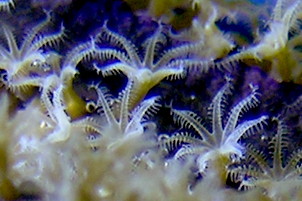
A polyp in zoology is one of two forms found in the phylum Cnidaria, the other being the medusa. Polyps are roughly cylindrical in shape and elongated at the axis of the vase-shaped body. In solitary polyps, the aboral (opposite to oral) end is attached to the substrate by means of a disc-like holdfast called a pedal disc, while in colonies of polyps it is connected to other polyps, either directly or indirectly. The oral end contains the mouth, and is surrounded by a circlet of tentacles.
Classes
[edit]In the class Anthozoa, comprising the sea anemones and corals, the individual is always a polyp; in the class Hydrozoa, however, the individual may be either a polyp or a medusa,[1] with most species undergoing a life cycle with both a polyp stage and a medusa stage.
In the class Scyphozoa, the medusa stage is dominant, and the polyp stage may or may not be present, depending on the family. In those scyphozoans that have the larval planula metamorphose into a polyp, the polyp, also called a "scyphistoma," grows until it develops a stack of plate-like medusae that pinch off and swim away in a process known as strobilation. Once strobilation is complete, the polyp may die, or regenerate itself to repeat the process again later. With cubozoans, the planula settles onto a suitable surface, and develops into a polyp. The cubozoan polyp then eventually metamorphoses directly into a medusa.[citation needed]
Anatomy
[edit]
 | This section relies largely or entirely on a single source. (January 2025) |
The body of the polyp may be roughly compared in a structure to a sac, the wall of which is composed of two layers of cells. The outer layer is known technically as the ectoderm, with the inner layer as the endoderm (or gastroderm). Between ectoderm and endoderm is a supporting layer of structureless gelatinous substance termed mesoglea, secreted by the cell layers of the body wall.[1] The mesoglea can be thinner than the endoderm or ectoderm or comprise the bulk of the body as in larger jellyfish. The mesoglea can contain skeletal elements derived from cells migrated from ectoderm.[citation needed]
The sac-like body built up in this way is attached usually to some firm object by its blind end, and bears at the upper end the mouth which is surrounded by a circle of tentacles which resemble glove fingers. The tentacles are organs which serve both for the tactile sense and for the capture of food.[1] Polyps extend their tentacles, particularly at night, containing coiled stinging nettle-like cells, or nematocysts, which pierce, poison, and firmly hold living prey paralysing or killing them. Polyp prey includes copepods and fish larvae.[2] Longitudinal muscular fibrils formed from the cells of the ectoderm allow tentacles to contract when conveying the food to the mouth. Similarly, circularly disposed muscular fibrils formed from the endoderm permit tentacles to be protract or thrust out once they are contracted. These muscle fibres belong to the same two systems, allowing the whole body to retract or protrude outwards.[1]
We can distinguish therefore in the body of a polyp the column, circular or oval in section, forming the trunk, resting on a base or foot and surmounted by the crown of tentacles, which enclose an area termed the peristome, in the centre of which again is the mouth. Generally, there is no other opening to the body except the mouth, but in some cases excretory pores are known to occur in the foot, and pores may occur at the tips of the tentacles. A polyp is an animal of very simple structure,[1] a living fossil that has not changed significantly for about half a billion years (per generally accepted dating of Cambrian sedimentary rock).[citation needed]
The external form of the polyp varies greatly in different cases. The column may be long and slender, or may be so short in the vertical direction that the body becomes disk-like. The tentacles may number many hundreds or may be very few, in rare cases only one or two. They may be long and filamentous, or short and reduced to mere knobs or warts. They may be simple and unbranched, or they may be feathery in pattern. The mouth may be level with the surface of the peristome, or may be projecting and trumpet-shaped. As regards internal structure, polyps exhibit two well-marked types of organization, each characteristic of one of the two classes, Hydrozoa and Anthozoa.[1]
In the class Hydrozoa, the polyps are indeed often very simple, like the common little fresh water species of the genus Hydra. Anthozoan polyps, including the corals and sea anemones, are much more complex due to the development of a tubular stomodaeum leading inward from the mouth and a series of radial partitions called mesenteries. Many of the mesenteries project into the enteric cavity but some extend from the body wall to the central stomodaeum.[citation needed]
Reproduction
[edit]It is an almost universal attribute of polyps to reproduce asexually by the method of budding. This mode of reproduction may be combined with sexual reproduction, or may be the sole method by which the polyp produces offspring, in which case the polyp is entirely without sexual organs.[1]
Asexual reproduction
[edit]In many cases the buds formed do not separate from the parent but remain in continuity with it, thus forming colonies or stocks, which may reach a great size and contain a vast number of individuals. Slight differences in the method of budding produce great variations in the form of the colonies. The reef-building corals are polyp-colonies, strengthened by the formation of a firm skeleton.[1]
Sexual reproduction
[edit]Among sea anemones, sexual plasticity may occur. That is, asexually produced clones derived from a single founder individual can contain both male and female individuals (ramets).[3] When eggs and sperm (gametes) are formed, they can produce zygotes derived from "selfing" (within the founding clone) or out-crossing, that then develop into swimming planula larvae.[4]

The overwhelming majority of stony coral (Scleractinia) taxa are hermaphroditic in their adult colonies.[5] In these species, there is ordinarily synchronized release of eggs and sperm into the water during brief spawning events.[6] Although some species are capable of self-fertilization to varying extents, cross-fertilization appears to be the dominant mating pattern.[5]
Etymology
[edit]The name polyp was given by René Antoine Ferchault de Réaumur[7] to these organisms from their superficial resemblance to an octopus (French: poulpe, ultimately from Ancient Greek adverb πολύ (poly, "much") + noun πούς (pous, "foot")), with its circle of writhing arms round the mouth. This comparison contrasts to the common name "coral-insects", applied to the polyps which form coral.[1]
Threats
[edit]75% of the world's corals are threatened[8] due to overfishing, destructive fishing, coastal development, pollution, thermal stress, ocean acidification, crown-of-thorns starfish, and introduced invasive species.[9]
In recent decades the conditions that corals and polyps have found themselves in have been changing, leading to new diseases being observed in corals in many parts of the world, posing even greater risk to an already pressured animal.[10] Aquatic life has been put under a substantial amount of stress because of the pollutants caused by land-based agriculture. Particularly, exposure to the insecticide profenofos and the fungicide MEMC have played a major part in polyp retraction and biomass decrease.[11][12]
There have been many experiments supporting the hypothesis that heat stress in Acropora tenuis juvenile polyps provokes an up-regulation of protein in the endoplasmic reticulum. The results vary based on the polyp characteristics such as age, type, and growth stage.[citation needed]
See also
[edit]Notes
[edit]- ^ a b c d e f g h i One or more of the preceding sentences incorporates text from a publication now in the public domain: Minchin, Edward Alfred (1911). "Polyp". In Chisholm, Hugh (ed.). Encyclopædia Britannica. Vol. 22 (11th ed.). Cambridge University Press. p. 37.
- ^ Chang, T.D. and Sullivan, J.M. "Temporal associations of coral and zooplankton activity on a Caribbean reef Archived 2011-06-06 at the Wayback Machine" Dartmouth Studies in Tropical Ecology. 2008. Accessed 2009-06-21.
- ^ Schlesinger A, Kramarsky-Winter E, Rosenfeld H, Armoza-Zvoloni R, Loya Y (2010). "Sexual plasticity and self-fertilization in the sea anemone Aiptasia diaphana". PLOS ONE. 5 (7) e11874. Bibcode:2010PLoSO...511874S. doi:10.1371/journal.pone.0011874. PMC 2912375. PMID 20686700.
- ^ Schlesinger, Ami; Kramarsky-Winter, Esti; Rosenfeld, Hanna; Armoza-Zvoloni, Rachel; Loya, Yossi (2010-07-29). Earley, Ryan L. (ed.). "Sexual Plasticity and Self-Fertilization in the Sea Anemone Aiptasia diaphana". PLOS ONE. 5 (7) e11874. Bibcode:2010PLoSO...511874S. doi:10.1371/journal.pone.0011874. ISSN 1932-6203. PMC 2912375. PMID 20686700.
- ^ a b Heyward AJ, Babcock, RC (1986). Self- and cross-fertilization in scleractinian corals. Marine Biology 90, 191–195
- ^ Harrison PL, Babcock RC, Bull GD, Oliver JK, Wallace CC, Willis BL (March 1984). "Mass spawning in tropical reef corals". Science. 223 (4641): 1186–9. Bibcode:1984Sci...223.1186H. doi:10.1126/science.223.4641.1186. PMID 17742935. S2CID 31244527.
- ^ Stott, Rebecca. "Darwin's ghosts: the secret history of evolution" New York, Spiegel & Grau (2012). ISBN 9781400069378
- ^ "NOAA's Coral Reef Conservation Program: New Analysis: 75% of Coral Reefs Under Threat". coralreef.noaa.gov. Retrieved 2015-06-08.
- ^ Burke, Reytar (2011). "Reefs at Risk Revisited" (Document). World Resources Institute.
- ^ Barrero-Canosa-1, Duenas-2, Sanchez-3, J.-1, L.F.-2, J.A.-3 (March 2013). "Isolation of potential fungal pathogens in gorgonian corals at the Tropical Eastern Pacific". Coral Reefs; Heidelberg. 32 (1): 35–41. Bibcode:2013CorRe..32...35B. doi:10.1007/s00338-012-0972-2. S2CID 17561903. ProQuest 1357199805.
{{cite journal}}: CS1 maint: multiple names: authors list (link) CS1 maint: numeric names: authors list (link) - ^ Markey, Kathryn L., Baird, Andrew H., Humphrey, Craig, and Negri, Andrew P (2007). "Insecticides and a fungicide affect multiple coral life stages" (PDF). Marine Ecology Progress Series. 330: 127–137. Bibcode:2007MEPS..330..127M. doi:10.3354/meps330127. Archived (PDF) from the original on 2022-10-09.
{{cite journal}}: CS1 maint: multiple names: authors list (link) - ^ Yuyama, Ikuko; Ito, Yoshihiko; Watanabe, Toshiki; Hidaka, Michio; Suzuki, Yoshimi; Nishida, Mutsumi (2012). "Differential gene expression in juvenile polyps of the coral Acropora tenuis exposed to thermal and chemical stresses". Journal of Experimental Marine Biology and Ecology. 430–431: 17–24. Bibcode:2012JEMBE.430...17Y. doi:10.1016/j.jembe.2012.06.020.

External links
[edit]
- "Hydroids from Reunion Island and the Indian Ocean". 8 December 2006. Archived from the original on 8 December 2006. Retrieved 5 June 2019.<
- "Corals and Coral Reefs". Smithsonian Ocean. Retrieved 5 June 2019.
- US Department of Commerce, National Oceanic and Atmospheric Administration. "NOAA's Coral Reef Information System (CoRIS) - What are Coral Reefs". www.coris.noaa.gov. Retrieved 5 June 2019.
- "Coral Polyps - Coral Reef Alliance". coral.org. Retrieved 5 June 2019.
- "What are corals? - International Coral Reef Initiative". www.icriforum.org. Retrieved 5 June 2019.
Polyp (zoology)
View on GrokipediaDefinition and Characteristics
General Morphology
Polyps exhibit a basic tubular or cylindrical body plan, attached to a substrate at the aboral end via a pedal disc or holdfast, with the oral end featuring a mouth surrounded by one or more whorls of tentacles.[5][8] The body forms a sac-like structure enclosing a gastrovascular cavity that functions in digestion, nutrient distribution, and gas exchange, lined internally by gastrodermis and externally by epidermis, with these layers separated by an acellular mesoglea.[9][2] This morphology confers sessile adaptation, enabling polyps to capture prey via nematocyst-armed tentacles that extend from the oral region, often retracting into a crown-like arrangement for protection.[5][8] Polyps display radial or biradial symmetry, facilitating omnidirectional environmental interaction, though specific features vary; for instance, hydrozoan polyps may include a hydrocaulus stem, while anthozoan polyps often possess septa partitioning the gastrovascular cavity.[6][10] In colonial species, individual polyps connect through shared tissues such as stolons or a coenenchyme, allowing resource sharing and division of labor, whereas solitary polyps like sea anemones maintain independence.[8][6] Dimensions typically range from less than 1 mm in hydroids to several centimeters in anemones, with skeletal elements like calcium carbonate in scleractinian corals reinforcing the structure.[2][5]Distinction from Medusa Stage
The polyp represents the sessile, benthic phase of many cnidarian life cycles, featuring a tubular or vase-shaped body with a basal attachment disc or peduncle anchoring it to substrates such as rocks or other organisms, in direct contrast to the free-swimming, pelagic medusa phase characterized by an inverted, umbrella- or bell-shaped body enabling active motility.[4] [5] Polyps orient their oral end upward, with a mouth surrounded by a crown of tentacles for capturing prey via nematocyst discharge, whereas medusae position their mouth on the concave underside of the bell, facilitating ingestion during undulating propulsion.[11] [12] Ecologically, polyps maintain a fixed position, relying on water currents for nutrient delivery and exhibiting minimal locomotion through muscular contractions of the body column, which supports colony formation via asexual budding in species like hydrozoans and scyphozoans; medusae, by comparison, achieve dispersal through rhythmic pulsations of the bell margin, often enhanced by trailing tentacles.[13] [3] This dichotomy reflects an alternation of generations, where the diploid polyp phase typically dominates in hydrozoans (e.g., Hydra spp.) for asexual proliferation and substrate colonization, while the medusa phase specializes in sexual reproduction and gene flow across populations.[14] [15] In anthozoans such as corals and sea anemones, the medusa stage is entirely absent, with the polyp serving as the sole adult form capable of both asexual (e.g., fission) and sexual reproduction, underscoring evolutionary divergence within Cnidaria where polyp dominance correlates with reef-building and symbiotic associations.[13] [16] Conversely, in medusozoans, the polyp's role as a transient, encysting stage during unfavorable conditions allows resilience, budding ephyrae (juvenile medusae) under optimal cues like temperature shifts, thus linking sessile persistence to motile expansion.[17] [18]Taxonomy and Classification
Taxonomic Placement in Cnidaria
Polyps constitute the sessile, tubular body plan characteristic of the phylum Cnidaria, one of two alternating morphological forms alongside the free-floating medusa, and are integral to the life cycles across all major cnidarian classes.[6] The phylum Cnidaria, comprising over 10,000 extant species, is subdivided into two primary clades: Anthozoa, where polyps represent the exclusive adult form without a medusa stage, and Medusozoa, encompassing Hydrozoa, Scyphozoa, Cubozoa, and Staurozoa, where polyps typically serve as the benthic, asexual phase preceding the dominant medusoid stage.[6] This dichotomy reflects evolutionary divergence, with anthozoans retaining a polyp-only lifecycle adapted for permanent attachment, while medusozoans exhibit metagenetic alternation between polyp and medusa for dispersal and reproduction./14:_Module_11-_Invertebrates/14.20:_Classes_in_the_Phylum_Cnidaria) Within Anthozoa, which includes orders such as Scleractinia (stony corals) and Actiniaria (sea anemones), the polyp is the definitive, often colonial form, featuring a basal pedal disc for attachment and a crown of tentacles surrounding the oral disc; this class accounts for roughly 7,500 species, emphasizing polypoid specialization without medusae./14:_Module_11-_Invertebrates/14.20:_Classes_in_the_Phylum_Cnidaria) In Hydrozoa, polyps form hydroid colonies or solitary individuals that bud medusae, with the polyp stage dominant in many taxa like Obelia and Hydra, comprising about 3,700 species where polyps exhibit modular growth via stolons.[19] Scyphozoa and Cubozoa, true jellyfish classes with around 200 and 50 species respectively, feature reduced polyps as ephyrae-producing strobilae attached to substrates, transitioning to large medusae; the polyp here is transient and morphologically simplified compared to anthozoan forms.[20] Staurozoa, stalked jellyfishes, maintain a polyp-like adult stage fused with medusoid traits, blurring boundaries but retaining sessile polypoid ancestry.[6] Taxonomic classifications of cnidarians, informed by molecular phylogenies since the 2000s, confirm polyps' basal role across Cnidaria, with fossil evidence from Ediacaran biotas (circa 570 million years ago) suggesting early polypoid diversification predating medusae.[6] However, polyps do not form a monophyletic taxon themselves, as their morphology converges evolutionarily rather than indicating shared descent exclusive to one clade; debates persist on whether medusozoan polyps derive independently or from anthozoan ancestors, supported by comparative developmental gene expression data.[6] This placement underscores Cnidaria's diploblastic organization, with polyps' cnidocyte-bearing tentacles enabling capture of prey in benthic niches./14:_Module_11-_Invertebrates/14.20:_Classes_in_the_Phylum_Cnidaria)Diversity and Examples Across Classes
Polyps exhibit considerable morphological and ecological diversity across the classes of Cnidaria, reflecting adaptations to varied habitats from freshwater to deep marine environments. In class Anthozoa, polyps represent the sole adult body plan, lacking a medusa stage, and display high structural complexity with a partitioned gastrovascular cavity and often symbiotic algae.[21] Anthozoan polyps include solitary forms like sea anemones (e.g., Actinia equina, which can reach diameters of up to 10 cm and inhabit intertidal zones) and colonial varieties such as stony corals (Scleractinia, with over 1,000 species forming calcium carbonate skeletons) and soft corals (Alcyonacea, featuring flexible, fleshy polyps).[22] Sea pens (Pennatulacea) exemplify elongated, burrowing polyps that form fan-like colonies in soft sediments.[23] Class Hydrozoa encompasses the most species-rich cnidarian group, with approximately 3,200 species, where polyps often form intricate colonies via asexual budding and include both marine and rare freshwater taxa.[20] Solitary polyps like Hydra (e.g., Hydra vulgaris, measuring 1-20 mm, capable of regenerating from fragments) inhabit freshwater ponds, while colonial hydrozoans such as Obelia feature specialized polyps for feeding, reproduction, and defense in branching hydroid structures.[24] Siphonophores, extreme colonial forms like the Portuguese man o' war (Physalia physalis), integrate polymorphic polyps into floating, venomous colonies spanning meters in length.[20] In classes Scyphozoa and Cubozoa, polyps serve as transient, benthic stages in metagenetic life cycles dominated by medusae, typically small (1-5 mm) and adapted for attachment and asexual proliferation via strobilation.[25] Scyphozoan scyphistomae, as in Aurelia aurita, attach to substrates and segment into ephyrae under environmental cues like temperature shifts.[17] Cubozoan polyps, such as those of Tripedalia cystophora, are creeping forms with 7-9 short tentacles, undergoing direct metamorphosis to medusae without strobilation.[26] This polyp diversity underscores cnidarian evolutionary flexibility, with anthozoan permanence contrasting medusozoan alternation.[6]Anatomy
External Features
The external morphology of a cnidarian polyp features a tubular or cylindrical body column that attaches to substrates at the aboral end via a pedal disc, enabling sessile existence. The pedal disc secretes adhesive mucus for firm anchorage, as observed in species like sea anemones.[28] At the oral end, an oral disc surrounds the central mouth, which opens into the gastrovascular cavity; this disc may bear a conical hypostome projecting upward in forms such as hydrozoans. A ring of tentacles extends from the oral disc, varying from 6 to hundreds in number, with simple hollow structures in hydrozoans and often pinnate or branched forms in anthozoans for enhanced prey capture. These tentacles are equipped with cnidocytes containing nematocysts, which deploy upon contact to sting prey or deter predators.[2] In colonial species, such as those in Hydrozoa and Anthozoa, polyps connect via stolons or a shared coenenchyme, exhibiting polymorphism where specialized polyps include feeding gastrozooids with prominent tentacles and defensive dactylozooids lacking mouths but bearing nematocyst-laden tentacles.[29] Solitary polyps, like hydras or anemones, maintain a vase-like shape up to several centimeters tall, with the column surface often smooth or ornamented by verrucae in some anthozoans for structural support. Variations in tentacle arrangement, such as six in hexacorallians versus multiples of six in octocorallians, reflect class-specific adaptations.[30]Internal Structure
The internal structure of a cnidarian polyp consists of two epithelial layers separated by an acellular or sparsely cellular mesoglea. The outer ectoderm (epidermis) and inner endoderm (gastrodermis) enclose a central gastrovascular cavity, known as the coelenteron, which functions in both digestion and nutrient distribution via diffusion.[14] [13] The mesoglea, a gelatinous matrix primarily composed of collagen fibers and hydrated proteins, provides structural support and buoyancy but lacks true connective tissue or blood vessels; in polyps, it is typically thin and flexible, contrasting with the thicker form in medusae.[14] [31] The gastrovascular cavity opens externally via a single mouth, serving as both intake and waste expulsion, with no dedicated anus or separate circulatory system. In hydrozoan polyps, such as hydroids, the cavity is undivided, relying on ciliary action and contractions for mixing and nutrient transport across the thin body wall.[5] [7] Anthozoan polyps, including sea anemones and corals, feature compartmentalization of the coelenteron by longitudinal mesenteries or septa—folds of gastrodermis that extend from the body wall, increasing surface area for absorption and housing gonads, retractor muscles, and digestive filaments.[32] [33] These septa typically occur in multiples of six, with complete (reaching the directive axis) and incomplete forms; in scleractinian corals, they align with skeletal elements for support.[34] Some anthozoans possess a pharynx, an eversible tubular extension of the cavity for food ingestion.[35] Cnidarian polyps lack specialized internal organs, with gas exchange, excretion, and coordination occurring via diffusion and simple nerve nets embedded in the epithelial layers.[13] The gastrodermis contains gland cells for mucus secretion and nutrient-storing amoebocytes that migrate through the mesoglea.[14]Specialized Cells and Tissues
The epidermis of cnidarian polyps consists primarily of epitheliomuscular cells, which integrate epithelial and contractile functions by extending basal myofibrils parallel to the body axis, enabling longitudinal contraction and retraction of the polyp body or tentacles.[36] These cells form a protective outer layer and are ubiquitous across cnidarian classes, with variations in myofibril density; for instance, in hydrozoan polyps like Hydra, they self-renew continuously as unipotent stem cells while maintaining muscular capability.[36] Embedded within the epidermis are cnidocytes, specialized stinging cells unique to Cnidaria, each containing a nematocyst—a Golgi-derived capsule housing a coiled, barbed tubule that everts explosively upon stimulation to inject venom, penetrate prey, or deter predators.[37] Nematocysts vary in form (e.g., penetrants for prey capture, holotrichs for defense) and are concentrated on tentacles, with each cnidocyte firing only once before replacement by new cells derived from interstitial progenitors in hydrozoans.[37] Mucous-secreting gland cells in the epidermis provide lubrication for prey handling and surface protection, while sensory cells, including mechanoreceptors and chemosensors, detect environmental stimuli and connect to the underlying nerve net.[38] The gastrodermis, lining the gastrovascular cavity, mirrors the epidermis in featuring epitheliomuscular cells that facilitate peristaltic movements for digestion and nutrient distribution, alongside nutritive cells specialized for intracellular digestion via phagocytosis of engulfed prey particles.[39] Glandular cells here secrete digestive enzymes, such as proteases and lipases, initiating extracellular breakdown of proteins and lipids in the cavity, a process enhanced in anthozoan polyps like sea anemones where pharyngeal gland cells aid in bolus processing.[40] Sensory and nerve cells are also present in the gastrodermis, contributing to a diffuse nerve net that coordinates feeding responses, though less densely than in the epidermis.[38] Interposed between the epidermal and gastrodermal layers is the mesoglea, an acellular or sparsely cellular gelatinous matrix composed of extracellular fibers (collagen-like and elastic) that imparts structural rigidity and elasticity to the polyp, allowing extension and resilience against mechanical stress.[41] In some polyps, such as those of hydrozoans, mesogleal amoebocytes or fixed cells may migrate through this layer for repair or transport, but it lacks true vascular or muscular tissues.[41] Interstitial cells, prominent in hydrozoan polyps, reside mainly in the ectodermal layer as multipotent stem cells capable of differentiating into cnidocytes, neurons, gland cells, or gametes, supporting asexual regeneration and colony growth.[36] Anthozoan polyps exhibit fewer free interstitial cells, relying more on epithelial proliferation for tissue maintenance.[39]Physiology
Feeding Mechanisms
Polyps capture prey primarily through tentacles encircling the oral disc, which are equipped with cnidocytes containing nematocysts that discharge upon contact to inject toxins and immobilize small organisms such as plankton, zooplankton, and microcrustaceans.[5][2] These sessile structures rely on passive encounter or gentle water currents to bring prey into range, as polyps lack active pursuit capabilities.[5] Once stung, prey is manipulated by tentacular flexion and ciliary action toward the central mouth, entering the pharynx and gastrovascular cavity for initial extracellular digestion via enzymes secreted from mesenterial filaments and gland cells.[2][5] Digestion proceeds with partial breakdown in the cavity, followed by phagocytosis of fragments by endodermal cells for intracellular completion, enabling nutrient absorption across the cavity walls, which are amplified by mesenteries in anthozoan polyps.[2][5] In colonial cnidarians like hydrozoans, specialized hydranths serve as dedicated feeding polyps, often protected within hydrothecae and supplemented by nematocyst-rich nematophores for prey defense and capture, while some taxa employ mucus secretion to entrap suspended particles alongside nematocyst action.[10] Although symbiotic dinoflagellates provide supplementary autotrophy in many anthozoan polyps, heterotrophic feeding via these mechanisms remains essential, particularly in nutrient-poor environments.[2]Attachment and Limited Locomotion
Cnidarian polyps primarily maintain a sessile lifestyle through attachment at their aboral end, forming a pedal disc or basal structure that adheres to substrates such as rocks, coral skeletons, or sediments. In solitary anthozoans like sea anemones (Actiniaria), the pedal disc functions as an adhesive organ, employing secreted mucus and mesogleal pressure for grip, with reattachment occurring within minutes upon substrate contact.[28][42] In colonial forms, such as scleractinian corals, polyps are integrated into a shared calcareous exoskeleton, where attachment is structurally enforced by the calyx, limiting individual mobility while permitting collective retraction for protection.[5][2] Limited locomotion in polyps contrasts their predominant immobility, enabling occasional relocation. Sea anemones demonstrate creeping via the pedal disc, where muscular waves propagate across the disc at rates of approximately 3 minutes per wave passage in larger specimens (e.g., Condylactis with a 130 by 80 mm disc), involving coordinated detachment of disc sectors followed by re-adhesion.[43][44] This process, driven by nervous coordination and environmental stimuli like nutrient gradients, allows displacement over centimeters daily, though speeds remain low (millimeters per minute). In hydrozoan polyps, limited substratum gliding occurs through ciliary or muscular action, budding mobile forms for colonization.[45] Such movements facilitate responses to predation, competition, or suboptimal conditions, with detachment often triggered by electrical or mechanical signals in the pedal musculature.[44] Colonial anthozoans exhibit even more restricted polyp-level locomotion, relying instead on colony-wide adjustments or asexual budding for spatial expansion.[46]Sensory and Nervous Systems
The nervous system of cnidarian polyps lacks a centralized brain and instead comprises a diffuse nerve net composed of interconnected neurons distributed across the ectodermal and endodermal layers of the body wall and tentacles.[47][48] This network facilitates basic coordination for behaviors such as body contraction, tentacle extension, and prey capture, with neurons including sensory, motor, and interneuronal types that form circuits specialized for distinct functions like feeding or locomotion.[48][49] In species like Hydra, the nerve net undergoes continuous replacement and regeneration, supporting homeostatic maintenance and responsiveness to environmental stimuli.[50] Sensory functions in polyps are decentralized, relying on epithelial sensory cells embedded within the nerve net rather than discrete organs. Mechanoreceptors, often featuring ciliary-microvillar structures, detect tactile stimuli and water vibrations on tentacles, triggering rapid nematocyst discharge for defense or predation.[47][51] Chemoreceptors sense chemical gradients in surrounding water, enabling detection of prey metabolites or environmental changes that influence feeding and attachment behaviors.[51] Unlike medusae, polyps generally lack advanced sensory structures such as ocelli or statocysts, with light sensitivity occurring via diffuse photoreceptive cells that mediate basic phototaxis without image formation.[38] Signal propagation in the polyp nerve net occurs through action potentials and synaptic transmission, including gap junctions via innexins that synchronize neuronal activity for coordinated contractions.[47] This system integrates sensory inputs directly with motor outputs, allowing polyps to exhibit reflexive responses like tentacle retraction upon mechanical disturbance, though behavioral complexity remains limited compared to more derived bilaterians.[52] Experimental ablation of neurons in Hydra polyps demonstrates the nerve net's essential role, resulting in immotile individuals incapable of prey ingestion.[49]Reproduction and Development
Asexual Reproduction
Asexual reproduction in cnidarian polyps enables clonal propagation, facilitating rapid colony expansion and population growth without genetic recombination.[54] The primary mechanisms include budding and fission, with variations across taxa such as Hydrozoa and Anthozoa.[4] Budding involves the development of a new polyp as an outgrowth from the parent's body wall, typically originating from the oral region or column, where the bud differentiates into a functional individual complete with tentacles, mouth, and gastrovascular cavity.[55] In hydrozoan polyps, budding often produces stolons or frustules, leading to modular colonies, while fission—either longitudinal splitting along the oral-aboral axis or transverse division—allows solitary polyps to divide into multiple clones.[56] For instance, species in the hydrozoan genus Cordylophora exhibit both budding and fission, enabling adaptation to environmental stresses through fragmentation and regeneration.[57] Anthozoan polyps, such as those in sea anemones (Actiniaria) and corals (Scleractinia), predominantly employ budding, classified as intratentacular (within the tentacle crown) or extratentacular (outside), resulting in genetically identical daughter polyps that remain attached in colonial forms.[23] Transverse fission occurs in certain anemones like Nematostella vectensis, where the physal region pinches off to form a new polyp, regulated by molecular pathways including Wnt signaling.[58] Additional modes in anthozoans include pedal laceration, observed in anemones where the pedal disc fragments during locomotion, regenerating into new individuals, and binary fission via constriction of the body column.[18] These processes contribute to the persistence of polyps in stable habitats, as clonal offspring inherit the parent's symbiotic associations and physiological adaptations, though they reduce genetic diversity compared to sexual reproduction.[59] Environmental factors, such as temperature and nutrient availability, modulate rates of asexual reproduction, with higher budding observed under favorable conditions to maximize resource exploitation.[60]Sexual Reproduction
In cnidarian polyps, particularly those of the class Anthozoa, sexual reproduction occurs within the polyp stage, where gametes are produced through gametogenesis in specialized gonadal tissues embedded in the mesenteries or mesoglea.[61][62] Oocytes and spermatocytes develop from interstitial cells or epithelial precursors, with spermatogenesis typically initiating earlier than oogenesis; for instance, in the temperate coral Astrangia danae, male gametogenesis precedes female by several months.[63][62] Polyps exhibit either gonochorism, with separate male and female colonies, or hermaphroditism, which may be simultaneous (producing both gametes concurrently) or sequential (alternating sexes).[61] In scleractinian corals, gonochoric species predominate, often synchronized by lunar cycles, temperature thresholds (e.g., rising seawater temperatures above 28°C), and photoperiod shifts to trigger mass spawning events.[64][61] Gamete release involves external broadcast spawning, where eggs and sperm are expelled into the water column for external fertilization, or brooding, where fertilization occurs internally within the polyp, and planula larvae develop protected until release.[5][65] The resulting zygote develops into a ciliated planula larva, which exhibits phototaxis and swims briefly before settling on a substrate to metamorphose into a juvenile polyp, completing the cycle.[61][5] This process enhances genetic diversity compared to asexual budding, though success rates vary with environmental factors like water flow and predation pressure on gametes.[64] In species like the sea anemone Nematostella vectensis, gametogenesis can be induced experimentally by combining increased feeding, dark-light cycles, and temperature elevation from 15°C to 22°C, highlighting physiological plasticity.[66]Life Cycle Patterns and Metamorphosis
In cnidarians, polyp life cycles exhibit metagenesis, an alternation of asexual polyp and sexual medusa generations, though this pattern is modified across classes, with polyps serving as the benthic, often colonial foundation. The cycle begins with a ciliated planula larva, derived from fertilized eggs produced by medusae or polyps, which settles on a substrate and undergoes metamorphosis into a primary polyp via cellular reorganization, including tentacle formation and basal disc development for attachment. This transformation, triggered by environmental cues like bacterial films or ionic changes, typically occurs within hours to days and establishes the sessile polyp as the dominant asexual phase capable of fission, budding, or longitudinal division to form colonies or new individuals.[67][68] Hydrozoan polyps exemplify a balanced alternation, where the post-larval polyp hydroid grows into stolonal or erect colonies, asexually budding gonangia that release medusae for gamete production; in some taxa like Hydractinia, polyps form frustules for slow dispersal before metamorphosis to medusae, while others reduce the medusa to a gonophore, retaining polyp dominance.[69] Scyphozoan polyps, known as scyphistomae, persist through winter as solitary or clonal forms before strobilation—a metamorphic segmentation of the oral end into a chain of saucer-shaped ephyrae—induced by temperature shifts or nutritional cues, with each ephyra developing into a sexually mature medusa that releases planulae to restart the cycle.[17][70] Anthozoan polyps deviate entirely, lacking a medusa stage and completing the cycle within the polyp form: planulae settle and metamorphose directly into juvenile polyps, which mature to produce gametes via internal fertilization or broadcast spawning, yielding new planulae; asexual propagation via pedal laceration or parthenogenesis further sustains populations without generational shift.[33][6] These patterns underscore polyps' adaptive versatility, with metamorphosis enabling transitions between dispersive larvae and attached adults, though environmental stressors like temperature extremes can disrupt strobilation or settlement, as observed in lab inductions using indoles for ephyra release.[71]Ecology and Distribution
Habitats and Global Range
Polyps, the sessile polypoid form characteristic of cnidarians such as anthozoans and hydrozoans, primarily inhabit marine environments worldwide, attaching to substrates like rocks, shells, and other sessile organisms via their basal disc or pedal structures.[5] They occupy a broad spectrum of marine habitats, from exposed intertidal zones and coastal shallows to deep-sea floors exceeding 4,000 meters in some hydrozoan species.[72] In tropical and subtropical regions, polyps form dense aggregations in coral reefs, which host exceptional biodiversity and cover approximately 0.1% of the ocean floor but support about 25% of marine species.[73] While most polyps are marine, a limited number of hydrozoan species, such as those in the genus Hydra, thrive in freshwater ecosystems including ponds, lakes, and slow-moving streams with clean, unpolluted water.[74] These freshwater polyps exhibit a cosmopolitan distribution, occurring across continents in temperate and tropical zones where suitable oligotrophic conditions persist.[6] Marine polyps demonstrate near-global ubiquity, spanning from polar Arctic and Antarctic waters to equatorial seas, though species diversity peaks in warm, oligotrophic tropical waters conducive to symbiotic associations with zooxanthellae.[19] Polyps adapt to varied ecological niches, with solitary forms like sea anemones dominating temperate rocky shores and colonial scleractinian corals building extensive frameworks in sunlit reef environments.[19] Their global range reflects cnidarian evolutionary success, with over 11,000 described species distributed across all major ocean basins, though endemicity increases in isolated regions like the Indo-Pacific biodiversity hotspot.[73]Symbiotic Interactions
Many anthozoan polyps, including those of scleractinian corals, zoanthids, and certain sea anemones, form a mutualistic endosymbiosis with dinoflagellate microalgae collectively termed zooxanthellae, predominantly from the genus Symbiodinium.[75] These unicellular algae inhabit the gastrodermal cells of the polyp, where they conduct photosynthesis to produce glycerol, glucose, and other organic compounds, supplying 50-90% of the host's energy requirements under optimal conditions.[76] [77] In exchange, the polyp furnishes the symbionts with carbon dioxide and inorganic nutrients such as nitrogen and phosphorus derived from host metabolism and waste, along with a sheltered microenvironment that facilitates access to light and protection from predation.[78] [75] This relationship enhances polyp survival and growth; for instance, in reef-building corals, photosynthates from zooxanthellae support elevated calcification rates, contributing to skeletal extension at rates of 0.3-3 cm per year in branching species.[79] Symbiont density typically ranges from 10^5 to 10^7 cells per square centimeter of polyp tissue, with establishment occurring early in larval or primary polyp stages via horizontal transmission from the environment or vertical inheritance.[80] [81] Specificity varies, as different Symbiodinium clades exhibit physiological adaptations to host taxa, depth, and temperature, influencing thermal tolerance and photosynthetic efficiency.[78] [82] Gorgonian polyps, such as those in sea fans, similarly host zooxanthellae, which promote vertical growth in primary polyps and overall colony architecture, though symbiont acquisition in settlers can involve diverse strains initially selected for compatibility.[79] [82] Not all polyps are symbiotic; azooxanthellate anthozoans, including deep-sea forms, depend entirely on heterotrophic feeding, highlighting the symbiosis as an adaptation to oligotrophic shallow waters.[76] Under environmental stress, such as temperatures exceeding 30°C for prolonged periods, the interaction may shift toward parasitism, with reactive oxygen species from algae damaging host cells and prompting expulsion (bleaching), which reduces polyp energy reserves by up to 70%.[83] [84] Additional microbial symbionts, including bacteria in the polyp microbiome, contribute to nitrogen fixation and pathogen resistance, though their roles are secondary to algal mutualism in photosynthetic polyps.[80] Commensal interactions occur with epibionts like sponges or bryozoans on polyp surfaces, but these rarely affect the host directly.Ecosystem Roles
Polyps of anthozoans, particularly scleractinian corals, serve as primary architects of coral reef ecosystems by secreting calcium carbonate exoskeletons that accumulate to form expansive reef structures. These reefs, constructed by colonial polyps, constitute the largest biological structures on Earth and support approximately 25% of all known marine species despite occupying less than 0.1% of the ocean floor.[75][85] The resulting habitats provide shelter, breeding grounds, and foraging areas for diverse taxa, including fish, invertebrates, and microorganisms, thereby fostering high levels of biodiversity comparable to or exceeding that of tropical rainforests.[86][87] In trophic dynamics, polyps function as suspension feeders, extending tentacles armed with nematocysts to capture plankton and particulate organic matter, which contributes to nutrient cycling and water clarification in reef environments.[88] Symbiotic relationships with dinoflagellate algae (zooxanthellae) within polyp tissues enhance primary productivity through photosynthesis, supplying polyps with organic compounds and enabling reef calcification under nutrient-limited conditions.[89] This mutualism not only sustains polyp colonies but also influences broader ecosystem carbon and nutrient fluxes.[90] Beyond reefs, solitary or colonial polyps such as sea anemones and deep-sea corals create microhabitats that support specialized communities, including commensal fish and crustaceans, while aiding in coastal protection by dissipating wave energy and reducing erosion.[91] In aggregate, these roles underscore polyps' foundational contributions to marine ecological stability and productivity.[92]Evolutionary History
Fossil Record and Origins
The origins of cnidarian polyps trace to the Neoproterozoic Era, likely during the Cryogenian Period around 720–635 million years ago, as diploblastic eumetazoans within the phylum Cnidaria diversified from earlier metazoan ancestors.[93] The polyp form, characterized by a cylindrical, sessile body with tentacles and a basal attachment, represents the basal life-history stage across Cnidaria, predating the derived medusa stage in medusozoans and persisting as the sole adult form in anthozoans such as sea anemones and corals.[94] Molecular and phylogenetic evidence supports polyps as ancestrally polypoid, with gene innovations enabling skeletal secretion and coloniality emerging later.[95] The fossil record of polyps remains sparse due to their predominantly soft-bodied nature, with preservation limited to exceptional Lagerstätten featuring phosphatized or carbonized traces. The earliest definitive crown-group cnidarian exhibiting polyp morphology is Auroralumina attenboroughii from the Ediacaran Period (approximately 562 million years ago) in Charnwood Forest, UK, featuring a rigid skeleton, bifurcating polyps, and simple tentacles.[96] Precambrian anthozoan origins are inferred from Vendian soft-bodied impressions, though equivocal, suggesting solitary or simple colonial polyps without calcification.[97] Cambrian diversification (541–485 million years ago) reveals greater polyp complexity, including anemone-like forms such as Nailiana elegans from the Chengjiang biota (ca. 518 million years ago), a predatory solitary polyp with preserved oral structures, and "feathered" polyps indicating early stem-group offshoots.[98][99] These early records predate widespread skeletonization, with anthozoan polyps achieving prominence in Paleozoic reefs via calcifying groups like tabulate and rugose corals from the Ordovician (ca. 485–443 million years ago), though modern scleractinians arose post-Permian extinction in the Triassic (ca. 240 million years ago).[34] The record underscores polyps' role in pioneering biomineralization among early metazoans, enabling ecosystem engineering despite preservation biases favoring mineralized taxa.[100]Phylogenetic Insights and Adaptations
Molecular phylogenomic analyses have established Cnidaria as a monophyletic phylum positioned basally within Metazoa, often as the sister group to Bilateria, providing critical insights into early animal body plan evolution.[40][41] Within Cnidaria, Anthozoa (including sea anemones and corals, which are exclusively polypoid) branches basally, sister to Medusozoa (encompassing Hydrozoa, Scyphozoa, Cubozoa, and Staurozoa, where polyps alternate with medusae).[101][102] This topology supports the polyp as the ancestral cnidarian life-history stage, with a single evolutionary origin inferred for the polyp body plan in the last common ancestor of extant cnidarians around 600-700 million years ago.[103][104] The medusa stage, by contrast, arose once within Medusozoa as a derived innovation for dispersal, highlighting polyps' primacy in cnidarian diversification.[105] The conserved polyp morphology—a sessile, cylindrical form with a basal pedal disk for substrate attachment, an oral crown of tentacles, and a central mouth opening into a branched gastrovascular cavity—facilitates adaptations to benthic, often low-flow environments.[5] This plan enables extracellular digestion and nutrient distribution via ciliary currents and tentacular entrapment, optimized for capturing planktonic prey.[40] Cnidocytes, specialized stinging cells unique to Cnidaria, equip polyps with nematocysts for prey immobilization and defense, a trait phylogenetically stable across the phylum and absent in outgroups, underscoring its role in enabling sessile predation.[38] Biradial symmetry in the polyp (radial around the oral-aboral axis with bilateral tentacle arrangements in some lineages) offers a phylogenetic bridge to bilaterian axis formation, suggesting an intermediate state in metazoan symmetry evolution.[106] Coloniality, prevalent in hydrozoan and anthozoan polyps, represents a derived adaptation amplifying individual polyp limitations through modular growth and functional specialization (e.g., feeding vs. defensive polyps in siphonophores).[107] This strategy, evolving post-basal splits, enhances resilience to predation and environmental stress via asexual budding, as evidenced by comparative phylogenies showing independent origins in multiple clades.[46] In Anthozoa, retention of the polyp-only cycle correlates with innovations like biomineralized skeletons in scleractinian corals (emerging ~540 million years ago), which structurally reinforce the body against wave action and support massive reef frameworks.[96] Polyp retraction mechanisms, involving longitudinal and circular musculature, have convergently evolved across anthozoan lineages for predator evasion, with genetic underpinnings conserved yet modified per clade-specific phylogenies.[46] These traits collectively illustrate how the foundational polyp architecture, refined through phylogenetic divergence, underpins cnidarian ecological success in marine habitats.[6]Human Interactions
Economic and Scientific Significance
Coral polyps, as the foundational units of reef-building scleractinian corals, underpin ecosystems that generate substantial economic value through fisheries, tourism, and coastal protection. Globally, coral reefs—constructed by the calcium carbonate skeletons secreted by these polyps—support fisheries yielding an estimated $5.7 billion annually by providing habitat for approximately 25% of marine fish species, sustaining protein sources for over 500 million people in coastal communities.[108] Tourism and recreation linked to reef visibility contribute $9.6 billion yearly, with dive and snorkel industries alone generating millions of jobs in regions like the Caribbean and Indo-Pacific, where healthy polyp colonies attract visitors and bolster local economies.[108] [109] Additionally, reefs formed by polyp accretion offer coastal protection valued at $9 billion per year by mitigating wave energy and erosion, reducing damage costs in vulnerable areas.[108] Bioactive compounds derived from coral polyps and associated organisms hold pharmaceutical potential, with extracts yielding anti-inflammatory agents and precursors to drugs like AZT from reef sponges, though sustainable harvesting remains limited.[110] [111] Cnidarian polyps serve as key model organisms in scientific research, particularly for studying symbiosis, regeneration, and evolutionary biology. In corals and sea anemones like Aiptasia, polyps host symbiotic dinoflagellates (zooxanthellae), enabling investigations into mutualistic nutrient exchange and bleaching mechanisms under environmental stress, which inform broader understanding of climate impacts on ecosystems.[112] Polyps exhibit remarkable regenerative capacity; for instance, Hydra polyps can fully reconstitute missing body parts after bisection, a process dating back to observations in 1744, providing insights into conserved genetic pathways like Wnt signaling that parallel vertebrate regeneration and hold promise for regenerative medicine.[113] [114] As basal metazoans, cnidarian polyps offer phylogenetic windows into axis formation and developmental plasticity, with transcriptomic studies revealing roles of genes like Notch in germ layer specification during regeneration, aiding reconstructions of early animal evolution.[115] [116] These traits position polyps as versatile subjects for dissecting wound healing and asexual reproduction, contrasting with less regenerative bilaterians.[117]Environmental Threats and Resilience
Coral polyps, as the foundational units of many cnidarian colonies, are highly susceptible to elevated sea surface temperatures driven by anthropogenic climate change, which trigger mass bleaching events wherein polyps expel their symbiotic zooxanthellae algae, disrupting photosynthesis and leading to tissue necrosis and colony mortality rates exceeding 90% in severe cases, as observed during the 2014-2017 global bleaching event.[118][119] Ocean acidification, caused by CO2 dissolution lowering seawater pH to levels projected at 7.8 by 2100 under high-emission scenarios, inhibits aragonite calcification in polyp skeletons, resulting in reduced growth rates by up to 40% and increased skeletal porosity, thereby compromising structural integrity against physical stressors like wave action.[120][121] Local pollutants, including nutrient runoff and microplastics, exacerbate these pressures by promoting bacterial overgrowth and elevating disease incidence; for instance, plastic contact has been linked to a 20-fold increase in polyp disease risk through pathogen vectoring.[122][123] Sedimentation from coastal development and overfishing of herbivorous fish further threaten polyp health by smothering tissues and disrupting grazing that prevents macroalgal overgrowth, with studies indicating up to 50% reductions in polyp recruitment in polluted reef zones.[124][118] Disease outbreaks, such as those caused by Vibrio species, are intensified under compounded stressors, leading to rapid polyp tissue degradation and colony-wide die-offs documented in reefs worldwide since the 1990s.[125] These threats collectively diminish polyp population densities and impair larval settlement, with empirical data from Pacific and Caribbean reefs showing net reef erosion rates surpassing accretion by 1-2 meters per decade in vulnerable areas.[122] Certain cnidarian polyps demonstrate resilience via physiological acclimatization, including rapid symbiont shuffling—wherein polyps acquire thermally tolerant algal strains post-bleaching—enabling recovery in populations exposed to prior heat stress, as evidenced by higher survival rates in acclimated colonies during subsequent events.[126] Genetic adaptations, such as enhanced expression of heat-shock proteins and antioxidant enzymes under stress, confer tolerance in select lineages, with genomic studies revealing heritable variations accounting for up to 30% differences in thermal thresholds across polyp populations.[127] Mucus production by polyps serves as an adaptive barrier, trapping pathogens and facilitating microbial community shifts that bolster immunity, though this mechanism's efficacy wanes under chronic acidification.[128] Phenotypic plasticity allows some polyps to modulate polyp retraction and feeding behaviors in response to fluctuating conditions, sustaining colony viability where environmental heterogeneity provides refugia, as quantified in resilient reef tracts with diurnal temperature reprieves mitigating bleaching severity.[129][130] However, these traits vary phylogenetically, with scleractinian polyps generally less resilient than azooxanthellate forms, underscoring the limits of natural adaptation against accelerating global stressors.[127]Conservation Strategies
Conservation strategies for polyps, primarily those forming coral reefs, emphasize habitat protection and active restoration to counter threats such as bleaching and habitat degradation. Marine protected areas (MPAs) designate ocean zones restricting extractive activities like fishing, fostering polyp recovery and biodiversity. For instance, effective MPAs recommend at least 20% no-take zones to safeguard reefs, enhancing fish stocks and ecosystem services including coastal protection.[131] In the Mesoamerican Reef System spanning Mexico, Belize, Guatemala, and Honduras, MPAs have demonstrated improved carbon sequestration and fisher incomes by reducing overfishing pressures on polyp communities.[132] Active restoration techniques target coral polyps through fragmentation and transplantation, where fragments containing polyps are grown in nurseries before outplanting to degraded reefs. Coral gardening involves collecting "corals of opportunity"—broken fragments—and culturing them in land- or water-based nurseries to accelerate colony growth and survival rates.[133] In Hawaii, initiatives like those at Ka‘ūpūlehu’s Kahuwai Bay employ epoxy stabilization to reattach fragments, monitored via standardized guides assessing growth and resilience post-bleaching.[133] The NOAA Coral Reef Conservation Program coordinates such efforts nationally, aiming to bolster reef resilience against climate stressors.[134] Emerging methods include cryopreservation of polyps using isochoric vitrification, which preserves genetic material in a glass-like state without ice crystal damage, enabling long-term banking for future restoration.[135] Broader strategies address local threats by minimizing land-based pollution, such as reducing fertilizer runoff to prevent algal overgrowth smothering polyps.[136] Global frameworks like the 30x30 initiative prioritize conserving 30% of oceans by 2030, focusing on climate-resilient reefs to protect polyp habitats amid warming oceans.[137] Organizations such as the Wildlife Conservation Society outline 2025–2030 plans to identify and safeguard resilient polyp populations in priority regions.[138]Terminology
Etymology and Historical Usage
The term polyp derives from Latin polypus, which in turn comes from Ancient Greek polýpous (πολύπους), meaning "many-footed" or "many-footed creature," alluding to the numerous appendages or tentacles that suggested multiple feet.[139] This etymology originally applied to the octopus (due to its arms) and later to nasal tumors resembling such forms, entering English via Old French polipe around 1400 for medical contexts before extending to zoological descriptions.[140] In biology, the word specifically denotes the tubular, sessile body plan of cnidarians, where the "feet" reference the crown of tentacles around the mouth, distinguishing it from the free-swimming medusa form.[141] The zoological usage of polyp emerged in the early 18th century, with the term first attested for these organisms around 1742 amid European naturalists' fascination with colonial and solitary aquatic invertebrates.[140] René Antoine Ferchault de Réaumur (1683–1757), a French naturalist, applied the name to freshwater polyps like Hydra species due to their superficial resemblance to an octopus (poulpe in French), highlighting the tentacular structure in his entomological and observational works that broadly encompassed arthropods and related forms.[142] This coincided with Abraham Trembley's 1740–1744 experiments on Hydra regeneration, which Réaumur encouraged and which popularized polyps as models for biological inquiry into asexual reproduction and tissue repair, shifting the term from mere descriptive analogy to a standard classificatory one in cnidarian taxonomy.[143] By the mid-18th century, polyp had become entrenched in scientific literature to describe both individual hydroid or anthozoan units and colonial aggregates, influencing Linnaean systematics where Hydra was classified under such forms.[144]References
- https://manoa.[hawaii](/page/Hawaii).edu/exploringourfluidearth/biological/invertebrates/phylum-cnidaria
- https://www.[sciencedirect](/page/ScienceDirect).com/science/article/pii/S0960982223004529