Hubbry Logo
Lemon basilLemon basilMain
Open search
Lemon basil
Community hub
Lemon basil
logo
8 pages, 0 posts
0 subscribers
Be the first to start a discussion here.
Lemon basil
Lemon basil
from Wikipedia

Lemon basil
Scientific classification Edit this classification
Kingdom: Plantae
Clade: Tracheophytes
Clade: Angiosperms
Clade: Eudicots
Clade: Asterids
Order: Lamiales
Family: Lamiaceae
Genus: Ocimum
Species:
O. × africanum
Binomial name
Ocimum × africanum
Synonyms[1]
  • Ocimum americanum var. pilosum (Willd.) A.J.Paton
  • Ocimum basilicum var. anisatum Benth.
  • Ocimum basilicum var. pilosum (Willd.) Benth.
  • Ocimum citriodorum Vis.
  • Ocimum graveolens A.Br.
  • Ocimum petitianum A.Rich.
  • Ocimum pilosum Willd.

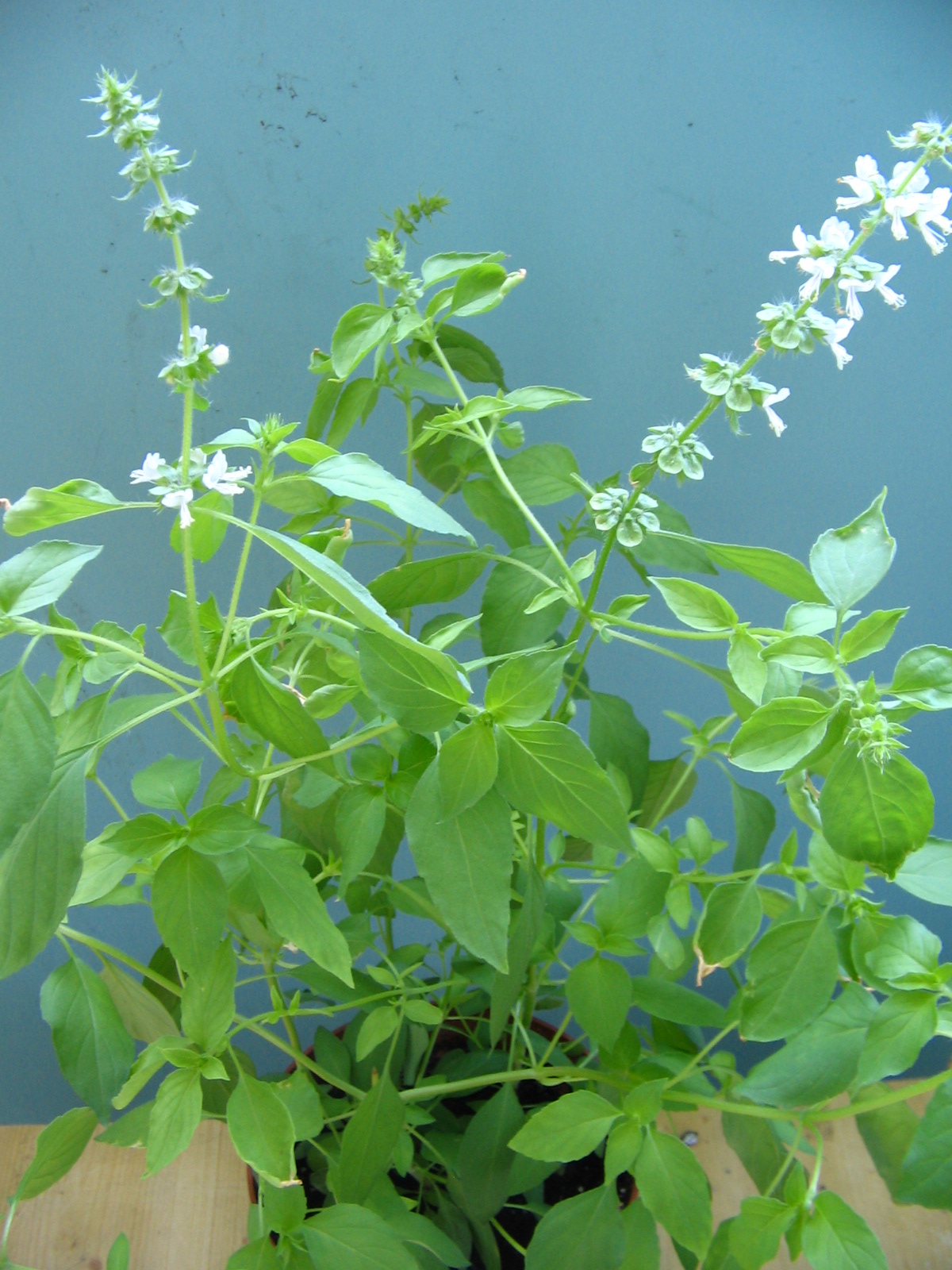
Lemon basil, hoary basil,[2] Thai lemon basil,[3] or Lao basil,[4] (Ocimum × africanum) is a hybrid between basil (Ocimum basilicum) and American basil (Ocimum americanum).[5][6][7] The herb is grown primarily in northeastern Africa and southern Asia for its fragrant lemon scent, and is used in cooking.

Lemon basil stems can grow to 20–40 cm (8–20 in) tall. It has white flowers in late summer to early fall. The leaves are similar to basil leaves, but tend to be narrower with slightly serrated edges. Seeds form on the plant after flowering and dry on the plant.

Lemon basil is a popular herb in Arab, Indonesian, Filipino, Lao, Malay, Indian, Persian and Thai cuisine.

Uses

[edit]

Culinary

[edit]

In Lao cuisine, (where it is called pak i tou,[4]) lemon basil is used extensively in soups, stews,[4] curries and stir-fried dishes as it is the most commonly used type of basil in Laos.[6] Many Lao stews require the use of lemon basil as no other basil varieties are acceptable as substitutes. The most popular Lao stew called or lam uses lemon basil as a key ingredient.

Lemon basil is used much in Indonesian cuisine, where it is called kemangi. It is often eaten raw with salad or lalap (raw vegetables) and accompanied by sambal. Lemon basil is often used to season certain Indonesian dishes, such as curries, soup, stew and steamed or grilled dishes. In Thailand, Lemon basil, called maenglak (Thai: แมงลัก), is one of several types of basil used in Thai cuisine. The leaves are used in certain Thai curries and it is also indispensable for the noodle dish khanom chin nam ya. In the Philippines, where it is called sangig, particularly in Cebu and parts of Mindanao, Lemon basil is used to add flavor to law-uy, which is an assortment of local greens in a vegetable-based soup. The seeds resemble chia seeds after they have been soaked in water and are used in sweet desserts. It is also used in North East part of India state Manipur. In Manipur, it is used in curry like pumpkin, used in singju (a form of salad), and in red or green chilli pickles. The Garo, Khasi and Jaintia tribe of Meghalaya also use it in their cuisine. The Garos call it panet (pronounced phanet). They use it to prepare cold sauce (Ind. Chutney) with added ingredients like fermented fish, chile, onions sometimes roasted tomatoes. In Tripura, it is known as banta, and is used by Tripuri community to make banta mosdeng, a fermented fish-based spicy chutney.

In Nigerian cuisine, lemon basil is referred to as partminger or curry leaf,[8] not to be confused with the unrelated curry tree Bergera koenigii cultivated in the Indian subcontinent.

Cultivation

[edit]

Lemon basil requires the same care as other basil varieties. It is a tropical plant, that should be in a spot receiving at least six hours of direct sunlight a day. It is actually quite hardy and can sometimes grow continuously given only water, but the flavor will be at risk if not given any fertilizer, chemical or organic. It can really grow in a matter of weeks. It should be watered whenever the topmost part of the soil is dry. At this time, the plant will wilt, but will be back to normal once watered.

Basil should never reach flowering during the harvesting periods. If given a chance to flower, its flavor will be sacrificed and the leaves become smaller, dry and leathery. Once the flower clusters form, they should be removed so the plant will continue its vegetative growth. It is, however, a good idea for it to be left to flower and set seeds that will be collected during fall, because the cold winter frosts will kill the basil plant anyway. Harvesting the seeds two weeks before the last frost, and sowing them indoors in the spring will provide next year's harvest.

Harvesting once a week for each plant will make it bushy due to the side shoots that will develop. The plant should never be completely defoliated. Propagation is achieved by sowing seeds and from stem cuttings. Seedlings will reach 150 mm (6 in) in 3–4 weeks and should be harvested at this time to let them branch out. Stem cuttings will gain roots after they have a week of being soaked in water. The setup is simply a Mason jar filled with water and a square of mesh with holes large enough to hold the plant in place while the roots grow. As many cuttings as the gardener wishes can be planted, preferably the most vigorous stems that can be found because they will root faster. The water should be changed every few days. After 2–3 weeks, the roots will be long enough for the cuttings to be transplanted into pots or planted in their permanent position to keep in the garden.

References

[edit]
[edit]
Revisions and contributorsEdit on WikipediaRead on Wikipedia
from Grokipedia
Lemon basil, also known as Thai lemon basil or hoary basil ( × africanum), is a tender annual herb in the (mint) family, distinguished by its refreshing lemon-like aroma and flavor derived from the essential oils in its narrow, light green leaves. This hybrid between sweet ( basilicum) and African () typically grows 20–60 cm (8–24 in) tall and 20–30 cm (8–12 in) wide, forming bushy, upright plants with small, elliptic to ovate leaves that are slightly serrated and pointed at the tips. Of tropical origin and widely cultivated in Mediterranean and Asian climates, lemon basil thrives in full sun and well-drained soil, requiring regular watering to maintain moist conditions without waterlogging. It produces spikes of small, inconspicuous flowers from mid-summer to early fall, which attract pollinators and can be pinched back to encourage leaf production for culinary harvest. Primarily valued as a culinary , its leaves impart a zesty, citrusy note to salads, teas, dishes, desserts, and vinegars, offering a milder alternative to traditional sweet . Beyond its gastronomic appeal, lemon basil is noted for its rich profile, including high levels of rosmarinic acid and , which contribute to , , and potential cytotoxic properties studied in hydroethanolic extracts. It is also grown ornamentally in herb gardens for its aromatic foliage and ease of from or cuttings, though it is sensitive to and best suited to warm-season cultivation in USDA zones 10–11 as a .

Description and taxonomy

Botanical classification

Lemon basil is scientifically classified as Ocimum × africanum Lour., the accepted name per (POWO), for this natural hybrid within the genus , with the common synonym Ocimum × citriodorum Vis. also widely used. It is regarded as a hybrid derived from sweet basil (Ocimum basilicum L.) and African basil ( L.), a parentage confirmed through comparative morphological traits such as leaf texture and structure, as well as chemical profiling of volatile compounds. This hybrid belongs to the family , the mint family, which encompasses a diverse group of aromatic herbs, shrubs, and trees known for their square stems and opposite leaves. Within the genus , lemon basil is one of approximately 65 accepted species of mostly annual or aromatic and shrubs, predominantly native to warm, tropical, and subtropical regions of , , and the . The varietal epithet "citriodorum" (or the species name component in the synonym) derives from the Latin citriodorus, meaning "lemon-scented," a descriptor that highlights the plant's characteristic citrus-like aroma arising from high concentrations of essential oils, including citral (a mixture of geranial and neral) and limonene. These compounds contribute to its distinct fragrance, setting it apart from other Ocimum species through both olfactory and chromatographic analyses.

Morphological characteristics

Lemon basil (Ocimum × africanum), a natural hybrid, typically grows to a height of 12-24 inches (30-60 cm), forming a bushy, upright with branching, square stems that are slightly fuzzy. The exhibits a compact, rounded growth pattern, making it suitable for container cultivation or garden borders. The leaves are small to medium in size, measuring 1-2 inches (2.5-5 cm) in length, with an ovate to lanceolate (elliptical to elongated oval) shape that tapers to a point. They are bright green, often with lightly serrated edges and distinct veining, arranged oppositely along the stems. When crushed, the leaves release a strong lemony fragrance attributed to high content in the essential oils, which can constitute up to 65% of the total oil composition. In summer, lemon basil produces small white flowers arranged in terminal spikes on light green bracts. These blooms are lemon-scented and attract pollinators. Following flowering, the plant develops small black nutlet seeds that remain viable for when collected and dried. The sensory profile of lemon basil features an aroma blending the clove-like notes typical of with a dominant () scent, resulting in a tangy flavor that is less sweet than that of standard sweet . Compared to Ocimum basilicum, lemon has narrower leaves and a brighter green coloration. Its composition prominently includes , , and β-caryophyllene alongside , contributing to its distinctive profile.

History and distribution

Origins and native range

Lemon basil (Ocimum × africanum Lour., also known as O. × citriodorum), a natural hybrid primarily between sweet basil (O. basilicum) and African basil (O. americanum), is believed to have originated in the tropical and subtropical regions of India, Southeast Asia, and northeastern Africa, within the diverse Ocimum genus complex. The hybrid's taxonomic origins remain somewhat ambiguous due to frequent interspecific crossing in the genus, but it is documented as occurring naturally in overlapping habitats of its parent species across these areas. In its natural habitat, lemon basil thrives in warm, humid environments, including riverbanks, disturbed soils, and open areas influenced by climates. Wild populations have been recorded in parts of , such as and , as well as in tropical African regions, where it grows as an annual or short-lived up to 80 cm tall. These settings provide the necessary full sun and moderate water conditions for its establishment, often at elevations up to 1,800 m. Evolutionarily, lemon basil emerged through natural hybridization in zones of between Ocimum species, contributing to the genus's high genetic variability driven by cross-pollination and environmental adaptation. is particularly pronounced among Asian wild relatives, reflecting the secondary center of Ocimum speciation in and , secondary to Africa's primary diversity hub. Historical evidence indicates that basil cultivation dates back over 3,000 years in , with references in ancient Vedic texts highlighting its cultural and medicinal significance.

Introduction to other regions

Lemon basil (Ocimum × africanum), a hybrid prized for its citrusy aroma, was introduced to in the by and Spanish explorers who sourced it from Asian and African regions during their voyages. These explorers facilitated the herb's dissemination through trade routes established in the Age of Discovery, bringing seeds and plants back to the and beyond. By the 1570s, lemon basil appeared in European herbal texts, such as those documenting its medicinal and culinary potential, marking its integration into Western horticulture. The herb's journey continued to the in the , carried by European colonists and integrated into the culinary traditions of , where its bright flavor complemented local dishes. In regions like and the , lemon basil found fertile ground and became a staple in home gardens, though it remained more of a specialty rather than a major commercial one. This adoption reflected broader patterns of colonial exchange, enhancing diverse regional flavors. In the , commercial cultivation of lemon basil expanded globally, particularly to Mediterranean countries like , , and , as well as and the , including , fueled by rising demand for ethnic and fusion cuisines. This growth was supported by favorable climates and increased interest in aromatic herbs for international markets. Meanwhile, by the , lemon basil had solidified its role in Thai and Vietnamese traditions, becoming a market staple in for its essential use in local recipes and herbal remedies.

Cultivation

Growing conditions

Lemon basil (Ocimum × citriodorum) thrives in warm climates, performing best as a tender annual in most regions or as a short-lived in USDA hardiness zones 10 to 11. It is sensitive to cold, with damage occurring below 50°F (10°C) and killed by frost, necessitating indoor overwintering or treatment as an annual in cooler zones. It requires full sun exposure of 6 to 8 hours per day to promote robust growth and enhance its citrusy flavor profile, though it benefits from afternoon shade in intensely hot regions to prevent scorching. Optimal growth occurs at daytime temperatures between 70°F and 85°F (21°C to 29°C). The prefers well-drained, fertile loamy enriched with such as to support uptake and , with a slightly acidic to neutral range of 6.0 to 7.5. It tolerates sandy soils that drain quickly but performs poorly in heavy clay or waterlogged conditions, which can lead to ; raised beds or containers are recommended for such sites to ensure proper . Moderate watering is essential, aiming to keep the consistently moist without sogginess—typically providing about 1 inch per week, adjusted for rainfall and —while high levels of 50% to 70% mimic its tropical origins and encourage lush foliage. For optimal spacing, plant lemon basil 12 to 18 inches apart to allow air circulation and prevent overcrowding, which can foster ; this applies to both beds and containers, where each plant needs at least 2 gallons of volume. It can be grown indoors under supplemental grow lights if natural is limited, maintaining the same and parameters. Seeds should be sown indoors 4 to 6 weeks before the last and transplanted outdoors only after warms to at least 60°F (16°C), with regular harvesting of leaves before flowering to sustain leaf production and throughout the .

Propagation and maintenance

Lemon basil (Ocimum × citriodorum) is typically propagated from seeds or stem cuttings, both of which are straightforward methods suitable for home gardeners. For seed propagation, sow seeds indoors 4-6 weeks before the last expected , planting them ¼ inch deep in a seed-starting mix and maintaining a temperature of around 70°F for , which usually occurs in 5-10 days. Alternatively, stem cuttings can be taken from healthy , selecting 4-6 inch non-flowering stems, removing the lower leaves, and rooting them in or moist ; roots typically develop in 1-2 weeks under bright, indirect . After , harden off seedlings by gradually exposing them to outdoor conditions over 7-10 days before transplanting outdoors following the last , spacing 12 to 18 inches apart in garden beds or in containers at least 6 inches deep to allow for development. Lemon basil thrives in the full sun and well-drained conditions outlined in cultivation guidelines, requiring consistent moisture without waterlogging during establishment. Ongoing maintenance involves pinching the growing tips when plants reach 6 inches tall to promote bushier growth and prevent legginess, along with regular of spent flowers to extend the productive period. Fertilize every 4-6 weeks with a balanced NPK , such as 10-10-10, diluted to half strength to support steady growth without excessive foliage at the expense of flavor. Water deeply but infrequently, aiming for 1 inch per week, and monitor for even to avoid stress. Harvest leaves starting when plants are 6-8 inches tall, ideally in the morning to preserve essential oils, by snipping individual leaves or clusters from the top down; consistent harvesting every 1-2 weeks can prolong the plant's life for 3-4 months in a single growing season. In colder climates, overwinter potted lemon basil by bringing it indoors to a sunny window or under grow lights before frost, treating it as an annual in temperate zones where it completes its lifecycle in one season.

Uses

Culinary applications

Lemon basil imparts a bright, citrusy tang to dishes without adding acidity, derived from its high content that gives it a lemon-like aroma. This flavor profile, combining sweet herbal notes with subtle and peppery undertones, makes it an excellent pairing for , , salads, , , and even desserts. In cooking, it enhances grilled or , fruit-based salads, and dishes, providing a fresh, tangy lift that distinguishes it from sweet . Preparation methods emphasize its fresh use to preserve volatile oils, as leads to significant flavor loss. Leaves are typically chopped or used whole as a garnish, added at the end of cooking to maintain aroma, or lightly torn for salads and soups. It infuses well into oils, vinegars, syrups, and teas, creating versatile bases for dressings or beverages like basil lemonade. In regional cuisines, lemon basil is essential in Southeast Asian recipes, such as Thai curries, stir-fries, soups, and salads where its notes balance spicy elements. It features prominently in Indonesian sambals served fresh alongside , , or , adding a zesty contrast. Variations include Italian-inspired lemon- pesto for and modern fusions like lemon sorbet or grilled with herb-infused marinades. Nutritionally, lemon basil is a low-calorie herb, with one cup of fresh leaves providing approximately 0.4 grams of dietary fiber and trace amounts of minerals like iron, calcium, and magnesium. It serves as a source of vitamins A, C, and K, along with antioxidants such as beta-carotene, contributing to its role as a healthful addition to meals. For storage, fresh lemon basil leaves should be refrigerated loosely wrapped in a damp cloth or with stems in covered by a , lasting up to 5 days. For longer preservation, freeze chopped leaves in trays with or , allowing easy portioning for future recipes without quality loss.

Medicinal and therapeutic properties

Lemon basil ( × citriodorum), a hybrid variety of , has been employed in systems, particularly in Southeast Asian practices, for alleviating digestive issues such as stomachache and , as well as serving as an agent. In regions like and parts of , it is used to treat coughs, fevers, and minor wounds, often through poultices or infusions, drawing from broader traditions in Ayurvedic for stress relief and effects. Leaves are commonly brewed into teas to ease symptoms of colds or , reflecting its and stomachic properties in folk remedies. The herb's therapeutic potential stems from its rich profile of bioactive compounds, notably high levels of (comprising geranial and neral isomers, often 20-68% of the ), which exhibits strong and activities by disrupting microbial cell membranes and scavenging free radicals, respectively. Other constituents, including , , rosmarinic acid, and , contribute to effects and potential modulation of the system, which may underlie its stress-relieving properties. These compounds are concentrated in the leaves and , with being particularly elevated in lemon basil compared to other varieties. Scientific investigations, though limited in human clinical trials, support several traditional claims. In vitro studies demonstrate lemon basil extracts' antibacterial efficacy against Streptococcus mutans, a key contributor to dental caries, with inhibition zones up to 10.26 mm at full concentration and enhanced to 16.75 mm when combined with key lime extract. Animal models indicate mild sedative and anxiolytic effects from Ocimum basilicum extracts, including reduced anxiety-like behaviors in mice via GABA receptor interactions, suggesting potential for stress management. Additionally, hydroethanolic extracts of O. basilicum exhibit anti-ulcer properties in mice with aspirin-induced gastric damage, reducing ulcer index through antioxidant and anti-inflammatory mechanisms. Lemon basil is typically consumed as an from 1-2 grams of dried leaves daily, providing a gentle therapeutic dose for digestive or respiratory support. , rich in , is used diluted (1-2% in ) for to promote relaxation, but ingestion requires professional guidance due to potency. Generally recognized as safe in culinary amounts, lemon basil poses low risk for most adults when used medicinally short-term, but pregnant individuals should avoid concentrated forms like due to potential uterine stimulation from volatile oils. Its high content may interact with blood-thinning medications, necessitating monitoring of intake.

Ornamental and other uses

Lemon basil (Ocimum × citriodorum), prized for its compact growth and lemon-scented foliage, serves as an attractive ornamental plant in herb gardens, borders, and containers, adding both visual appeal and fragrance to landscapes. Its bushy form, achieved through regular pinching, enhances its suitability for small spaces, while the small white flowers provide subtle color and draw pollinators such as bees. Additionally, the dried leaves contribute to potpourri and fresh floral arrangements, leveraging their citrusy aroma for decorative purposes. In organic gardening, lemon basil functions effectively in schemes, where it is positioned near crops like tomatoes or roses to deter such as mosquitoes and flies through its volatile oils, promoting natural pest management without synthetic interventions. This practice supports sustainable cultivation by reducing pest pressure in vegetable and flower beds. The derived from lemon basil finds application in industrial products, including perfumes and , where its high content imparts a fresh, citrus-like scent. It is also incorporated into soaps for its aromatic and qualities, enhancing fragrance while providing mild effects. Furthermore, the oil's profile suits use in candles, contributing to scented home products. Lemon basil supports environmental benefits in garden ecosystems, particularly by attracting pollinators like bees and butterflies to its nectar-rich flowers, thereby boosting biodiversity in pollinator-friendly landscapes. Once established, the plant exhibits drought tolerance, requiring minimal supplemental water in well-drained soils, which makes it a resilient choice for low-maintenance, eco-conscious gardening.

Pests and diseases

Common pests

Lemon basil, like other basil varieties, is susceptible to several common insect pests that can damage foliage and reduce plant vigor. These pests primarily include sap-feeding insects and chewing herbivores, which thrive in warm, humid conditions often associated with basil cultivation. Aphids are small, soft-bodied sap-suckers that cluster on new growth and leaf undersides, causing leaves to curl, yellow, and distort due to feeding damage and the transmission of plant viruses. Populations can explode rapidly in dry or stressed plants, leading to sticky honeydew excretion that promotes . Control involves spraying with insecticidal soaps or introducing natural predators such as ladybugs, which effectively reduce aphid numbers without harming beneficial insects. Spider mites, tiny arachnids not visible to the , feed on undersides, resulting in stippled, bronzed leaves and fine webbing in severe infestations; they proliferate in hot, dry environments. To manage them, increase humidity with regular water sprays to dislodge mites or apply , which disrupts their life cycle while being safe for edible crops. Whiteflies are small, winged insects that congregate on the undersides of leaves, sucking sap and excreting honeydew while potentially transmitting viral diseases that stunt growth. They are particularly problematic in greenhouses or crowded plantings. Effective controls include yellow sticky traps to capture adults and reflective mulches to deter landing, combined with insecticidal soaps for nymphs. Other notable pests include Japanese beetles, which chew irregular holes in leaves during summer months, and slugs, which rascal nocturnal feeders creating large, slimy holes in humid areas. Japanese beetles can be hand-picked early in the morning when they are less active, while slugs are best managed with physical barriers like copper tape or by hand-picking at night. To prevent pest infestations, maintain vigor by ensuring proper spacing for air circulation, which reduces humidity-favoring conditions, and introduce beneficial such as predatory mites for ongoing biological control. Regular scouting and sanitation, like removing debris, further minimize risks without relying on chemicals.

Common diseases

Lemon basil (Ocimum × citriodorum) is susceptible to several microbial diseases, primarily fungal, bacterial, and viral pathogens, which can reduce plant vigor, yield, and quality. These diseases often thrive in warm, humid conditions common to basil cultivation, leading to symptoms such as leaf discoloration, wilting, and necrosis. Effective management relies on cultural practices, sanitation, and targeted chemical controls where appropriate.

Downy Mildew

Downy mildew, caused by the oomycete Peronospora belbahrii, is one of the most destructive diseases of lemon basil, resulting in chlorotic (yellow) lesions on the upper leaf surfaces and purplish-gray sporulation on the lower surfaces under high humidity. Infected leaves may become necrotic and drop prematurely, severely impacting photosynthetic capacity and harvestable foliage. The pathogen spreads via airborne spores and contaminated seeds, favoring temperatures between 15–25°C (59–77°F) with leaf wetness exceeding 4 hours. Prevention involves selecting pathogen-free seeds, maintaining good airflow through adequate plant spacing (at least 30 cm between plants), and avoiding overhead irrigation to minimize leaf wetness. For control, apply copper-based fungicides such as copper hydroxide at the first sign of symptoms, following label rates and rotating with other fungicides to prevent resistance; these treatments can suppress disease when initiated early.

Fusarium Wilt

Fusarium wilt, incited by the soil-borne fungus Fusarium oxysporum f. sp. basilicum, causes vascular discoloration, wilting of lower leaves, and eventual in lemon basil, often leading to plant death within weeks of symptom onset. The fungus persists in for 8–12 years as chlamydospores, entering through roots and blocking water transport, with symptoms most severe at temperatures above 25°C (77°F). To manage, use certified disease-free or hot-water-treated seeds (soaked at 50°C for 10 minutes) and plant in sterile or pasteurized soilless media to eliminate inoculum. Where available, select resistant basil varieties, though few are specifically bred for lemon basil; with non-host plants (e.g., ) every 2–3 years further reduces inoculum levels. No effective chemical controls exist post-infection, emphasizing prevention through sanitation, such as discarding infected plants and sterilizing tools.

Bacterial Leaf Spot

Bacterial leaf spot, primarily caused by Pseudomonas cichorii, manifests as water-soaked, angular spots on lemon basil leaves that turn dark brown to black, often with yellow halos, exacerbated by wet foliage and temperatures of 24–30°C (75–86°F). Lesions may coalesce, leading to leaf blighting and defoliation, with bacteria splashing from soil or tools during rain or irrigation. Cultural practices are key: avoid overhead watering to keep foliage dry, space plants for air circulation, and remove and destroy infected leaves promptly to limit spread. In severe cases, apply copper-based bactericides (e.g., copper oxychloride) every 7–10 days during wet periods, which can suppress bacterial populations, though efficacy varies with environmental conditions.

Viral Infections

Viral diseases, such as (CMV), affect lemon basil by causing mosaic patterns of light and dark green mottling, leaf distortion, and stunted growth, often transmitted mechanically or by . Symptoms appear as irregular chlorotic spots and puckering, reducing content and overall plant productivity. No curative treatments exist for viral infections; management focuses on rogueing and destroying infected immediately to prevent spread, combined with . Use virus-free material and monitor for presence, as noted in pest management strategies.

General Management Approaches

Across these diseases, integrated practices enhance resilience in lemon basil cultivation: ensure well-drained soils to lower and root zone moisture, promoting aerobic conditions that deter proliferation. Rotate crops every 2–3 years with non-susceptible hosts to break disease cycles, and maintain strict by cleaning tools with 10% solution between uses. These strategies, when combined, can significantly reduce disease pressure in field and greenhouse settings, depending on adherence and local climate.

References

Add your contribution
Related Hubs
User Avatar
No comments yet.