Hubbry Logo
Loa loa filariasisLoa loa filariasisMain
Open search
Loa loa filariasis
Community hub
Loa loa filariasis
logo
8 pages, 0 posts
0 subscribers
Be the first to start a discussion here.
Loa loa filariasis
Loa loa filariasis
from Wikipedia
Loa loa filariasis
Other namesloiasis, loaiasis, Calabar swellings, fugitive swelling, tropical swelling,[1]: 439  African eyeworm
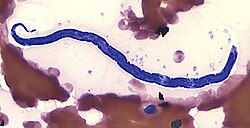
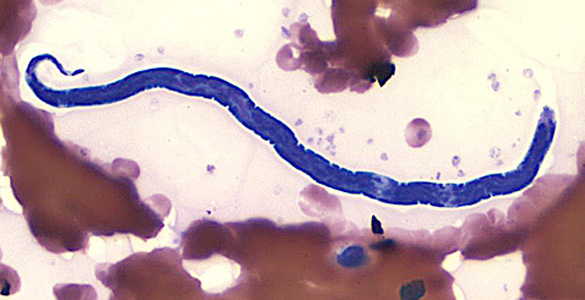
Loa loa microfilaria in thin blood smear (Giemsa stain)
SpecialtyInfectious diseases, tropical medicine Edit this on Wikidata

Loa loa filariasis, (Loiasis) is a skin and eye disease caused by the nematode worm Loa loa. Humans contract this disease through the bite of a deer fly (Chrysops spp.) or mango fly, the vectors for Loa loa. The adult Loa loa filarial worm can reach from three to seven centimetres long and migrates throughout the subcutaneous tissues of humans, occasionally crossing into subconjunctival tissues of the eye where it can be easily observed.[2] Loa loa does not normally affect vision but can be painful when moving about the eyeball or across the bridge of the nose.[3][4] Loiasis can cause red itchy swellings below the skin called "Calabar swellings". The disease is treated with the drug diethylcarbamazine (DEC), and when appropriate, surgical methods may be employed to remove adult worms from the conjunctiva. Loiasis belongs to the group of neglected tropical diseases, and there is a call for it to be included in the high-priority listing.[2]

Signs and symptoms

[edit]

A filariasis such as loiasis most often consists of asymptomatic microfilaremia. Some patients can develop lymphatic dysfunction causing lymphedema. Episodic angioedema (Calabar swellings) in the arms and legs, caused by immune reactions, are common. Calabar swellings are 3–10 cm (1.2–3.9 in) in surface area, sometimes erythematous, and not pitting. When chronic, they can form cyst-like enlargements of the connective tissue around the sheaths of muscle tendons, becoming very painful when moved. The swellings may last for one to three days and may be accompanied by localized urticaria (skin eruptions) and pruritus (itching). They reappear at referent locations at irregular time intervals. Subconjunctival migration of an adult worm to the eyes can also occur frequently, and this is the reason Loa loa is also called the "African eye worm". The passage over the eyeball can be sensed, but it usually takes less than 15 minutes. Eyeworms affect men and women equally, but advanced age is a risk factor. Eosinophilia is often prominent in filarial infections. Dead worms may cause chronic abscesses, which may lead to the formation of granulomatous reactions and fibrosis.[citation needed]

In the human host, Loa loa larvae migrate to the subcutaneous tissue, where they mature into adult worms in approximately one year, but sometimes up to four years. Adult worms migrate in the subcutaneous tissues at a speed of less than 1 cm/min, mating and producing more microfilariae. The adult worms can live up to 17 years in the human host.[5]

Cause

[edit]

Transmission

[edit]

Loa loa infective larvae (L3) are transmitted to humans by the deer fly vectors of the tabanid genus ChrysopsC. dimidiata and C. silacea. These carriers are blood-sucking and day-biting, and they are found in rainforest-like environments in western and central Africa. Infective larvae (L3) mature to adults (L5) in the subcutaneous tissues of the human host, after which the adult worms—assuming the presence of a male and female worm—mate and produce microfilariae. The cycle of infection continues when a non-infected mango or deer fly takes a blood meal from a microfilaremic human host, and this stage of the transmission is possible because of the combination of the diurnal periodicity of microfilariae and the day-biting tendencies of the Chrysops spp.[5]

Reservoir

[edit]

Humans are the primary reservoir for Loa loa. Other minor potential reservoirs have been indicated in various fly-biting habit studies, such as hippopotamuses, wild ruminants (e.g. buffalo), rodents, and lizards. A simian type of loiasis exists in monkeys and apes which is transmitted by the deer fly vector Chrysops langi. There is no crossover between the human and simian types of the disease.[6]

Vector

[edit]

Loa loa is transmitted by several species of tabanid flies. Although horseflies of the genus Tabanus are often mentioned as vectors, the two most prominent vectors are from the tabanid genus ChrysopsC. dimidiata and C. silacea. These species exist only in Africa and are popularly known as deer flies or mango flies.[7]

Chrysops spp. are small (5–20 mm, 0.20–0.79 in long) with a large head and downward-pointing mouthparts.[5][7] Their wings are clear or speckled brown. They are hematophagous and typically live in forested and muddy habitats like swamps, streams, reservoirs, and rotting vegetation. Female mango and deer flies require a blood meal for the production of a second batch of eggs. This batch is deposited near water, where the eggs hatch in 5–7 days. The larvae mature in water or soil,[5] where they feed on organic material such as decaying animal and vegetable products. Fly larvae are 1–6 cm (0.39–2.36 in) long and take 1–3 years to mature from egg to adult.[7] When fully mature, C. dimidiata and C. silacea assume the day-biting tendencies of all tabanids.[5]

The bite of the mango fly can be very painful, possibly because of the laceration style employed; rather than puncturing the skin as a mosquito does, the mango fly (and deer fly) makes a laceration in the skin and subsequently laps up the blood. Female flies require a fair amount of blood for their aforementioned reproductive purposes and thus may take multiple blood meals from the same host if disturbed during the first one.[5]

Although Chrysops dimidiata and C. silacea are attracted to canopied rainforests, they do not do their bite there. Instead, they leave the forest and take most blood meals in open areas. The flies are attracted to smoke from wood fires and they use visual cues and sensation of carbon dioxide plumes to find their preferred host, humans.[6]

A study of Chrysops spp. biting habits showed that C. dimidiata and C. silacea take human blood meals approximately 90% of the time, with hippopotamus, wild ruminant, rodent, and lizard blood meals making up the other 10%.[6]

Morphology

[edit]

Adult Loa worms are sexually dimorphic, with males considerably smaller than females at 30–34 mm long and 0.35–0.42 mm wide compared to 40–70 mm long and 0.5 mm wide. Adults live in the subcutaneous tissues of humans, where they mate and produce wormlike eggs called microfilariae. These microfilariae are 250–300 μm long, 6–8 μm wide, and can be distinguished morphologically from other filariae, as they are sheathed and contain body nuclei that extend to the tip of the tail.[4]

Lifecycle

[edit]
Loa loa life cycle. Source: CDC

During a blood meal, an infected Chrysops fly introduces third-stage filarial larvae onto the skin of the human host, where they penetrate the bite wound. The larvae develop into adults that commonly reside in subcutaneous tissue. The female worms measure 40 to 70 mm in length and 0.5 mm in diameter, while the males measure 30 to 34 mm in length and 0.35 to 0.43 mm in diameter. Adults produce microfilariae measuring 250 to 300 μm by 6 to 8 μm, which are sheathed and have diurnal periodicity. Microfilariae have been recovered from spinal fluids, urine and sputum. During the day, they are found in peripheral blood, but during the noncirculation phase, they are found in the lungs. The fly ingests microfilariae during a blood meal. After ingestion, the microfilariae lose their sheaths and migrate from the fly's midgut through the hemocoel to the thoracic muscles of the arthropod. There the microfilariae develop into first-stage larvae and subsequently into third-stage infective larvae. The third-stage infective larvae migrate to the fly's proboscis and can infect another human when the fly takes a blood meal.[citation needed]

Diagnosis

[edit]

Microscopic examination of microfilariae is a practical diagnostic procedure to find Loa loa. It is important to time the blood collection with the known periodicity of the microfilariae (between 10:00 a.m. and 2:00 p.m.).[8] The blood sample can be a thick smear, stained with Giemsa or haematoxylin and eosin. For increased sensitivity, concentration techniques can be used. These include centrifugation of the blood sample lyzed in 2% formalin (Knott's technique), or filtration through a nucleopore membrane.[citation needed]

Antigen detection using an immunoassay for circulating filarial antigens constitutes a useful diagnostic approach because microfilaremia can be low and variable. Though the Institute for Tropical Medicine reports that no serologic diagnostics are available,[9] tests that are highly specific to Loa loa have been developed in recent years. This is even though many recently developed methods of antibody detection are of limited value because substantial antigenic cross-reactivity exists between filaria and other parasitic worms (helminths), and a positive serologic test does not necessarily distinguish among infections. The new tests have not reached the point-of-care level yet, but show promise for highlighting high-risk areas and individuals with co-endemic loiasis and onchocerciasis. Specifically, Thomas Nutman and colleagues at the National Institutes of Health have described the a luciferase immunoprecipitation assay (LIPS) and the related QLIPS (quick version). Whereas a previously described LISXP-1 ELISA test had poor sensitivity (55%), the QLIPS test is practical, as it requires only a 15-minute incubation, while delivering high sensitivity (97%) and specificity (100%).[10] No report on the distribution status of LIPS or QLIPS testing is available, but these tests would help to limit complications derived from mass ivermectin treatment for onchocerciasis or dangerous strong doses of diethylcarbamazine for loiasis alone (as pertains to individual with high Loa loa microfilarial loads).[citation needed]

Calabar swellings are the primary tool for visual diagnosis. Identification of adult worms is possible from tissue samples collected during subcutaneous biopsies. Adult worms migrating across the eye are another potential diagnostic, but the short timeframe for the worm's passage through the conjunctiva makes this observation less common.[citation needed]

In the past, healthcare providers used a provocative injection of Dirofilaria immitis as a skin-test antigen for filariasis diagnosis. If the patient was infected, the extract would cause an artificial allergic reaction and associated Calabar swelling similar to that caused, in theory, by metabolic products of the worm or dead worms.[citation needed]

Blood tests to reveal microfilaremia are useful in many, but not all cases, as one-third of loiasis patients are amicrofilaremic. By contrast, eosinophilia is almost guaranteed in cases of loiasis, and blood testing for eosinophil fraction may be useful.[4]

Prevention

[edit]

Diethylcarbamazine has been shown as an effective prophylaxis for Loa loa infection. A study of Peace Corps volunteers in the highly Loa—endemic Gabon, for example, had the following results: 6 of 20 individuals in a placebo group contracted the disease, compared to 0 of 16 in the DEC-treated group. Seropositivity for antifilarial IgG antibody was also much higher in the placebo group. The recommended prophylactic dose is 300 mg DEC given orally once weekly. The only associated symptom in the Peace Corps study was nausea.[11][12]

Researchers believe that geo-mapping of appropriate habitat and human settlement patterns may, with the use of predictor variables such as forest, land cover, rainfall, temperature, and soil type, allow for estimation of Loa loa transmission in the absence of point-of-care diagnostic tests.[13] In addition to geo-mapping and chemoprophylaxis, the same preventative strategies used for malaria should be undertaken to avoid contraction of loiasis. Specifically, DEET-containing insect repellent, permethrin-soaked clothing, and thick, long-sleeved, and long-legged clothing ought to be worn to decrease susceptibility to the bite of the mango or deer fly vector. Mosquito nets do not help increase protection against vectors for loiasis as the vectors are day-biting species.[citation needed]

Vector elimination strategies have been researched. It has been shown that the Chrysops vector has a limited flying range,[14] but vector elimination efforts are not common, likely because the insects bite outdoors and have a diverse, if not long, range, living in the forest and biting in the open. No vaccine has been developed for loiasis and there is little report on this possibility.[citation needed]

Treatment

[edit]

Treatment of loiasis involves chemotherapy or, in some cases, surgical removal of adult worms followed by systemic treatment. The current drug of choice for therapy is diethylcarbamazine (DEC), with the recommended dosage of DEC for adults and pediatrics being 8–10 mg/kg/d taken three times daily for 21 days per the CDC. DEC is effective against microfilariae and somewhat effective against macrofilariae (adult worms).[15] Ivermectin use is another recommended drug, which can substantially reduce the microfilarial load but is not effective against macrofilariae. The recommended dosage of ivermectin is 150 μg/kg in patients with a low microfilaria load (with densities less than 8000 mf/mL).[citation needed]

In patients with high microfilaria load and/or the possibility of an onchocerciasis coinfection, treatment with DEC and/or ivermectin may be contraindicated or require a substantially lower initial dose, as the rapid microfilaricidal actions of the drugs can provoke encephalopathy. In these cases, initial albendazole administration has proved helpful and more effective than ivermectin, which can also be risky despite its slower-acting microfilaricidal effects over DEC.[15] The CDC recommended dosage for albendazole is 200 mg taken twice a day for 21 days. Also, in cases where two or more DEC treatments have failed to provide a cure, subsequent albendazole treatment can be administered.[citation needed]

Management of Loa loa infection in some instances can involve surgery, though the timeframe during which surgical removal of the worm must be carried out is very short. A detailed surgical strategy to remove an adult worm is as follows. The 2007 procedure to remove an adult worm from a male Gabonian immigrant employed proparacaine and povidone-iodine drops, a wire eyelid speculum, and 0.5 ml 2% lidocaine with epinephrine 1:100,000, injected superiorly. A 2-mm incision was made and the immobile worm was removed with forceps. Gatifloxacin drops and an eye-patch over ointment were utilized post surgery and there were no complications.[16]

Epidemiology

[edit]

As of 2009, loiasis is endemic to 11 countries, all in western or central Africa, and an estimated 12–13 million people have the disease. The highest incidence is seen in Cameroon, Republic of the Congo, Democratic Republic of Congo, Central African Republic, Nigeria, Gabon, and Equatorial Guinea. The rates of Loa loa infection are lower but it is still present in Angola, Benin, Chad, and Uganda. The disease was once endemic to the western African countries of Ghana, Guinea, Guinea Bissau, Ivory Coast and Mali but has since disappeared.[11]

Throughout Loa loa-endemic regions, infection rates vary from 9 to 70 percent of the population.[4] Areas at high risk of severe adverse reactions to mass treatment with ivermectin are at present determined by the prevalence in a population of >20% microfilaremia, which has been recently shown in eastern Cameroon, among other locales in the region.[11]

Endemicity is closely linked to the habitats of the two known human loiasis vectors, Chrysops dimidiata and C. silacea.[citation needed]

Cases have been reported on occasion in the United States but are restricted to travelers who have returned from endemic regions.[16][17]

In the 1990s, the only method of determining Loa loa intensity was with microscopic examination of standardized blood smears, which is not practical in endemic regions. Because mass diagnostic methods were not available, complications started to surface once mass ivermectin treatment programs started being carried out for onchocerciasis, another filariasis. Ivermectin, a microfilaricidal drug, may be contraindicated in patients who are co-infected with loiasis and have associated high microfilarial loads. The theory is that the killing of massive numbers of microfilaria, some of which may be near the ocular and brain region, can lead to encephalopathy. Cases of this have been documented so frequently over the last decade that a term has been given for this set of complications: neurologic serious adverse events (SAEs).[18]

Advanced diagnostic methods have been developed since the appearance of the SAEs, but more specific diagnostic tests that have been or are currently being developed must be supported and distributed if adequate loiasis surveillance is to be achieved.[citation needed]

There is much overlap between the endemicity of the two distinct filariases, which complicates mass treatment programs for onchocerciasis and necessitates the development of greater diagnostics for loiasis.[citation needed]

In Central and West Africa, initiatives to control onchocerciasis involve mass treatment with ivermectin. However, these regions typically have high rates of co-infection with both L. loa and O. volvulus, and mass treatment with ivermectin can have SAE. These include hemorrhage of the conjunctiva and retina, hematuria, and other encephalopathies that are all attributed to the initial L. loa microfilarial load in the patient before treatment. Studies have sought to delineate the sequence of events following ivermectin treatment that lead to neurologic SAE and sometimes death, while also trying to understand the mechanisms of adverse reactions to develop more appropriate treatments.[citation needed]

In a study looking at mass ivermectin treatment in Cameroon, one of the greatest endemic regions for both onchocerciasis and loiasis, a sequence of events in the clinical manifestation of adverse effects was outlined.[citation needed]

It was noted that the patients used in this study had a L. loa microfilarial load of greater than 3,000 per ml of blood.[citation needed]

Within 12–24 hours post-ivermectin treatment (D1), individuals complained of fatigue, anorexia, headache, joint, and lumbar pain—a bent forward walk was characteristic during this initial stage accompanied by fever. Stomach pain and diarrhea were also reported in several individuals.[citation needed]

By day 2 (D2), many patients experienced confusion, agitation, dysarthria, mutism and incontinence. Some cases of coma were reported as early as D2. The severity of adverse effects increased with higher microfilarial loads. Hemorrhaging of the eye, particularly the retinal and conjunctiva regions, is another common sign associated with SAE of ivermectin treatment in patients with L. loa infections and is observed between D2 and D5 post-treatment. This can be visible for up to 5 weeks following treatment and has increased severity with higher microfilarial loads.[citation needed]

Haematuria and proteinuria have also been observed following ivermectin treatment, but this is common when using ivermectin to treat onchocerciasis. The effect is exacerbated when there are high L. loa microfilarial loads, however, microfilariae can be observed in the urine occasionally. Generally, patients recovered from SAE within 6–7 months post-ivermectin treatment; however, when their complications were unmanaged and patients were left bedridden, death resulted due to gastrointestinal bleeding, septic shock, and large abscesses.[19]

Hypotheses for SAE have been proposed. Though microfilarial load is a major risk factor for post-ivermectin SAE, three main hypotheses have been proposed for the mechanisms.[citation needed] The first hypothesis suggests that ivermectin causes immobility in microfilariae, which then obstructs microcirculation in cerebral regions. This is supported by the retinal hemorrhaging seen in some patients, and is possibly responsible for the neurologic SAE reported.[citation needed] The second hypothesis suggests that microfilariae may try to escape drug treatment by migrating to brain capillaries and further into brain tissue; this is supported by pathology reports demonstrating a microfilarial presence in brain tissue post-ivermectin treatment.[citation needed] The third hypothesis attributes hypersensitivity and inflammation at the cerebral level to post-ivermectin treatment complications, and perhaps the release of bacteria from L. loa after treatment to SAE. This has been observed with the bacteria Wolbachia that live with O. volvulus.[citation needed]

More research into the mechanisms of post-ivermectin treatment SAE is needed to develop drugs that are appropriate for individuals with multiple parasitic infections.[19]

One drug that has been proposed for the treatment of onchocerciasis is doxycycline. This drug is effective in killing both the adult worm of O. volvulus and Wolbachia, the bacteria believed to play a major role in the onset of onchocerciasis while having no effect on the microfilariae of L. loa. In a study done at five different co-endemic regions for onchocerciasis and loiasis, doxycycline was shown to be effective in treating over 12,000 individuals infected with both parasites with minimal complications. Drawbacks to using doxycycline include bacterial resistance and patient compliance because of a longer treatment regimen and the emergence of doxycycline-resistant Wolbachia. However, in the study over 97% of the patients complied with treatment, so it poses as a promising treatment for onchocerciasis while avoiding complications associated with L. loa co-infections.[20]

An area of tremendous concern regarding loiasis is its co-endemicity with onchocerciasis in certain areas of west and central Africa, as mass ivermectin treatment of onchocerciasis can lead to SAEs in patients who have high Loa loa microfilarial densities, or loads. This fact necessitates the development of more specific diagnostics tests for Loa loa so that areas and individuals at a higher risk for neurologic consequences can be identified before microfilaricidal treatment. Additionally, the treatment of choice for loiasis, diethylcarbamazine, can lead to serious complications in and of itself when administered in standard doses to patients with high Loa loa microfilarial loads.[4]

History

[edit]

The first well-recorded case of Loa loa infection was noted in the Captaincy General of Santo Domingo in 1770. A French surgeon named Mongin tried but failed to remove a worm passing across a woman's eye. A few years later, in 1778, the surgeon François Guyot noted worms in the eyes of West African slaves on a French ship to America; he successfully removed a worm from one man's eye.[21]

The identification of microfilariae was made in 1890 by the ophthalmologist Stephen McKenzie. Localized angioedema, a common clinical presentation of loiasis, was observed in 1895 in the coastal Nigerian town of Calabar—hence the name "Calabar" swellings. This observation was made by a Scottish ophthalmologist named Douglas Argyll-Robertson, but the association between Loa loa and Calabar swellings was not realized until 1910 (by Patrick Manson). The determination of vector—Chrysops spp.—was made in 1912 by the British parasitologist Robert Thomson Leiper.[21]

Synonyms

[edit]

Synonyms for the disease include African eye worm, loaiasis, loaina, Loa loa filariasis, filaria loa, filaria lacrimalis, filaria subconjunctivalis, Calabar swellings, fugitive swellings, and microfilaria diurnal.[11] Loa loa, the scientific name for the infectious agent, is an Indigenous term itself and there are likely many other terms used from region to region.[citation needed]

References

[edit]
[edit]
Revisions and contributorsEdit on WikipediaRead on Wikipedia
from Grokipedia
filariasis, also known as loiasis or African eye worm disease, is a neglected caused by infection with the filarial Loa loa, a tissue-dwelling parasite endemic to the and savanna-forest transition zones of West and . The infection is transmitted to humans via the bites of hematophagous tabanid flies of the genus (primarily C. silacea and C. dimidiata), which serve as vectors by depositing infective third-stage larvae onto the skin during blood meals. worms, which can grow to 3–7 cm in length, migrate continuously through subcutaneous and subconjunctival tissues, often asymptomatically in low-intensity infections affecting an estimated 3–13 million people across countries including , Republic of Congo, , and . Characteristic clinical manifestations include episodic, non-painful angioedematous swellings ( swellings) due to inflammatory responses to dying worms, intense pruritus, and the dramatic visible migration of adult worms across the eye's , which can persist for minutes and prompt medical attention. While many infections remain subclinical, symptomatic cases may also feature arthralgias, myalgias, fatigue, and, rarely, serious complications such as renal damage, , or increased mortality risk, particularly in hypermicrofilaremic individuals. A defining challenge is the severe, potentially fatal adverse reactions—including and death—following ivermectin administration to patients with high Loa loa microfilarial densities (>30,000/mL), which has necessitated test-and-not-treat strategies and impeded mass drug administration campaigns for co-endemic and elimination. Diagnosis relies on microscopic identification of sheathed microfilariae in daytime peripheral smears (exhibiting diurnal periodicity peaking between 10 AM and 2 PM) or direct extraction of adult worms from the eye or skin. Treatment of choice is (DEC) at 8–10 mg/kg daily for 21 days, which kills both microfilariae and adults, though pre-treatment with or cautious dosing is recommended to mitigate Mazzotti-like reactions in high-burden cases; targets Wolbachia-free Loa loa less effectively than other filariae. Prevention emphasizes personal protective measures against fly bites, such as insecticide-treated clothing, repellents, and bed nets, with no currently available.

Etiology

Parasite Morphology

is a thread-like filarial belonging to the family Onchocercidae. Adult worms are elongated, cylindrical parasites that inhabit the subcutaneous tissues and occasionally migrate across the of the eye in humans. Females measure 40–70 mm in length and 0.45–0.60 mm in width, while males are smaller, ranging from 30–34 mm in length and 0.35–0.40 mm in width. The of adult L. loa lacks longitudinal ridging but features irregularly spaced bosses, which are small protuberances aiding in microscopic identification; the in females is positioned at the extreme anterior end. Microfilariae, the larval stage released by gravid females, are sheathed and exhibit diurnal periodicity, peaking in peripheral blood between 10:00 a.m. and 2:00 p.m. They measure 230–250 µm in length in stained blood films (or 270–300 µm in formalin-fixed specimens) and 6–8 µm in width, with a relatively dense nuclear column, short headspace, and nuclei extending irregularly to the tapered tip of the tail—distinguishing them from other filarial microfilariae like those of , where the tail lacks terminal nuclei. The sheath typically remains unstained or colorless with Giemsa, and microfilariae can also appear in spinal fluid, , or in heavy infections. These morphological traits enable differentiation via examination under .

Lifecycle

The life cycle of requires humans as the definitive host and hematophagous tabanid flies of the Chrysops—primarily C. silacea and C. dimidiata—as obligate intermediate vectors. Adult worms inhabit the subcutaneous connective tissues and deep fascial planes, where females attain lengths of 40–70 mm and diameters of 0.5 mm, and males reach 30–34 mm in length and 0.35–0.43 mm in diameter. Following mating, gravid females release sheathed microfilariae measuring 250–300 µm in length and 6–8 µm in width into the host's bloodstream; these exhibit strict diurnal periodicity, peaking in peripheral blood during daylight hours and otherwise residing in the lungs. During daytime blood meals, when microfilarial density is maximal, female flies ingest the parasites. Inside the vector, microfilariae exsheath and penetrate the gut to reach the hemocoel, then migrate to the thoracic muscles and fat body, where they undergo two molts: developing first into first-stage larvae (L1), then second-stage larvae (L2), and finally into infective third-stage larvae (L3) within the fly's tissues. The L3 larvae subsequently relocate to the fly's in preparation for transmission. Infective L3 larvae are deposited onto human skin adjacent to the fly bite site during subsequent feeding and actively burrow through the wound to invade subcutaneous tissues. The larvae then disseminate via lymphatic channels to deeper subcutaneous and fascial sites, maturing into sexually differentiated adults over approximately five months. Patency, marked by microfilaraemia, emerges after a prepatent period typically exceeding one year, though documented ranges span from several months to 15 years. Adult worms persist for up to 17 years, sustaining chronic production of microfilariae and perpetuating the cycle exclusively in human populations, with no known zoonotic reservoirs.

Transmission

Loa loa filariasis is transmitted exclusively through the bites of hematophagous tabanid flies of the genus , principally Chrysops silacea and C. dimidiata, which serve as vectors in endemic regions. These diurnal flies acquire the parasite by ingesting microfilariae circulating in the peripheral blood of infected humans during a . Microfilariae penetrate the fly's wall, enter the hemocoel, and undergo two molts to develop into third-stage infective larvae (L3) over a period that is temperature-dependent but typically spans 10 to 12 days in laboratory conditions. The L3 larvae migrate to the fly's , from where they are deposited onto during subsequent blood-feeding attempts. These larvae actively wriggle through the bite wound or skin puncture into the subcutaneous tissues, where they mature into adult worms over 6 to 12 months. Unlike mosquito-borne filariases, transmission does not involve injection via but rather mechanical deposition and penetration by the motile larvae. Transmission is confined to and ecosystems in 10 countries across West and , including , , Congo, Democratic Republic of Congo, , , , and parts of , , and , where vector breeding sites align with human activity. The vectors exhibit peak biting activity during daylight hours, particularly in the morning and late afternoon, facilitating repeated exposure in occupational settings like farming or forest work. Humans are the sole known reservoir, with no documented animal or , rendering vector control challenging due to the flies' wide host range and elusive breeding habits in swampy vegetation.

Vectors and Reservoirs

The vectors of Loa loa filariasis are hematophagous tabanid flies of the genus , principally Chrysops silacea and C. dimidiata. These diurnal biting flies inhabit the zones of West and , where they breed in moist, shaded environments near streams and vegetation. Transmission occurs when an infected fly deposits third-stage infective larvae onto the skin during a blood meal; the larvae penetrate the bite wound and migrate subcutaneously. Chrysops species exhibit host-seeking behavior during daylight hours, often biting the face, arms, and legs of humans in forested areas, which facilitates parasite dispersal in endemic regions. Humans serve as the primary for Loa loa, with microfilaremia persisting asymptomatically in many carriers, sustaining transmission cycles. Nonhuman , such as monkeys and apes, harbor morphologically similar but genetically distinct strains of Loa, though evidence indicates no significant zoonotic reservoir for infections. Occasional detections of L. loa-like parasites in wildlife blood meals suggest minor animal involvement, but human-to-human transmission via Chrysops vectors predominates without established animal amplification. Endemicity correlates with in rainforests, underscoring anthropophilic vector preferences.

Clinical Features

Signs and Symptoms

Many individuals infected with Loa loa remain , particularly those with low parasite burdens in endemic regions. The primary clinical manifestations, when present, are Calabar swellings—transient, localized episodes of nonerythematous subcutaneous , often accompanied by pruritus, that predominantly affect the extremities, face, or hands and typically resolve within 2–3 days. These swellings result from inflammatory responses to migrating adult worms and may recur episodically over years. A sign is the visible subconjunctival migration of an adult filarial worm across the eye, which can cause transient irritation, foreign body sensation, or lacrimation but seldom leads to permanent visual damage. This migration is observable to the patient or clinician and may last minutes to hours. Additional symptoms can include generalized pruritus, arthralgias, myalgias, fatigue, and urticaria, though these are less common and often nonspecific. In nonendemic travelers or those with hypermicrofilaremia, manifestations may be more severe or , potentially mimicking other filarial infections.

Pathogenesis

The pathogenesis of Loa loa filariasis primarily stems from the migratory behavior of adult worms in subcutaneous and connective tissues, coupled with host immune responses to the parasite's presence and antigens. Adult female worms, measuring 40–70 mm in length, and males, 30–34 mm, inhabit these tissues for up to 17 years, continuously migrating and releasing microfilariae into the bloodstream during daylight hours. This migration induces mechanical irritation and triggers localized inflammation, manifesting as transient subcutaneous swellings known as swellings, which affect up to 82% of symptomatic cases in endemic regions with high worm burdens. Calabar swellings arise from reactions—likely type I (immediate) or type III (immune complex-mediated)—to adult worm excretory-secretory products or dying parasites, leading to , pruritus, and eosinophilic infiltration without significant tissue necrosis. is a hallmark, with peripheral counts often exceeding 3,000 cells/μL in symptomatic individuals, reflecting Th2-biased immune activation involving elevated IgE and production such as IL-5. Subconjunctival migration of adults, visible as the "eye worm," causes transient discomfort but rarely permanent , attributable to direct mechanical passage across the ocular surface. Microfilariae, sheathed larvae circulating in peripheral , contribute minimally to direct in uncomplicated loiasis, as they evade robust immune clearance through mechanisms like antigenic variation and molecular mimicry, resulting in frequent infections. However, high microfilarial densities (>30,000/mL) can provoke severe upon treatment with microfilaricidal drugs like , due to massive inflammatory release of endosymbionts or parasite debris, causing and neurological sequelae in rare cases. Overall, disease severity correlates with worm burden and host immune status rather than direct , with many infections immunologically tolerated via parasite-induced anergy or regulatory T-cell modulation.

Complications

While many cases of loiasis remain or present with transient symptoms such as Calabar swellings and ocular worm migration, chronic infection can lead to more severe complications, particularly in individuals with high microfilarial loads. Renal involvement is documented, including , , , and, in rare instances, or renal failure, potentially mediated by immune complex deposition or direct microfilarial effects on glomerular structures. Studies have associated elevated microfilarial density with increased risk of and other markers of renal dysfunction, though causality remains inferred from observational data rather than definitive experimental proof. Neurological complications, though infrequent, include spontaneous or without antiparasitic treatment, with case reports describing altered consciousness, , or parkinsonism-like symptoms resolving variably over days. High hypereosinophilia and microfilaremia may contribute to neuropsychiatric manifestations or peripheral palsies, observed in over 50% of symptomatic cases with recurrent severe headaches. Cardiac and other systemic issues arise rarely, such as endomyocardial fibrosis linked to prolonged hypereosinophilia, alongside pleural effusions or in advanced infections. Fibrotic changes and nephropathy have been noted in cohort studies, challenging the view of loiasis as invariably benign and correlating with in endemic populations. These complications underscore the need for monitoring in hyperendemic areas, where immune-mediated pathology predominates over direct tissue invasion.

Diagnosis

Laboratory Methods

The primary laboratory method for diagnosing Loa loa filariasis involves microscopic examination of peripheral smears for microfilariae, collected during hours (typically 10:00 a.m. to 2:00 p.m.) to account for the parasite's diurnal periodicity, when microfilarial density peaks. Thin or thick films, stained with Giemsa, allow visualization of sheathed microfilariae distinguishable by their periodic nuclei extending to the tail tip and absence of caudal space. This approach detects microfilariae in approximately 30% of infected individuals, as many cases remain amicrofilaremic due to low parasite loads or host immune responses. For cases with suspected low microfilarial density, concentration techniques enhance sensitivity, including membrane filtration of 1-5 mL of blood or the Knott method, which lyses red blood cells to concentrate parasites for examination. Fresh blood samples may reveal motile microfilariae under low-power , aiding rapid provisional identification before staining. Definitive parasitological confirmation requires distinguishing L. loa from co-endemic filariae like Mansonella perstans (unsheathed, no periodicity) via morphological criteria. Molecular diagnostics, such as quantitative PCR (qPCR) targeting L. loa-specific genes (e.g., oxidase subunit I or repeat regions like LL2643), offer higher sensitivity for detecting DNA in blood or dried blood spots, particularly in amicrofilaremic infections or for quantifying load to assess treatment risks. (LAMP) provides a field-applicable alternative to PCR, amplifying L. loa DNA isothermally with reported sensitivity exceeding in resource-limited settings. Serological assays detecting IgG4 antibodies to L. loa recombinant antigens exist but lack specificity due to with other filarial infections and are not routinely recommended for primary diagnosis. Emerging methods for enumerating microfilariae show promise but remain investigational.

Diagnostic Challenges

The diagnosis of Loa loa filariasis, or loiasis, is primarily based on the detection of microfilariae in peripheral smears or the observation of adult worms migrating across the subconjunctiva, but these methods are limited by the high rate of amicrofilaremia, affecting approximately 70% of infected individuals who lack detectable microfilariae despite symptomatic infection. This occult loiasis, prevalent in 30–60% of cases, arises from immunological containment of parasites, single-sex infections, or low worm burdens, forcing reliance on nonspecific clinical features like swellings, , or travel history from endemic regions, which can mimic other conditions such as allergic reactions or other helminthiases. Microfilarial identification demands sampling during the parasite's diurnal periodicity, with peak densities occurring between 10:00 AM and 2:00 PM (extending to 4:00 PM in some reports), as levels drop sharply outside this window, leading to frequent false-negative results from mistimed collections. Even under optimal conditions, sparse microfilarial loads—often below 1–10 per milliliter—require labor-intensive concentration techniques, such as Knott's concentration ( with formalin) or Nucleopore , to achieve adequate sensitivity, particularly in early or light infections. Serological tests, including IgG4-based assays targeting recombinant antigens like Ll-SXP-1, demonstrate high sensitivity (up to 94%) and specificity (up to 100%) in non-endemic settings but exhibit cross-reactivity with co-circulating filariae such as or Mansonella perstans in Central African foci, undermining reliability where polyparasitism is common. , such as PCR or targeting Loa loa-specific genes, offer superior specificity and detection of submicroscopic infections but are restricted to well-equipped laboratories due to requirements for , equipment, and expertise, rendering them impractical for field use or resource-limited endemic areas. In imported cases outside endemic zones, diagnostic delays occur due to atypical manifestations, low parasite viability post-travel, or clinician unfamiliarity, with symptoms emerging months to years after exposure and often absent microfilariae further obscuring confirmation. The lack of validated point-of-care tests exacerbates challenges in mass screening for ivermectin-based programs, where undetected high Loa loa loads (>30,000 microfilariae per milliliter) risk severe encephalopathy, prioritizing indirect rapid assessments like history-based questionnaires over direct parasitological methods.

Management

Pharmacological Treatment

The primary pharmacological treatment for Loa loa filariasis, also known as loiasis, is (DEC), administered orally at a dose of 8–10 mg/kg/day in three divided doses for 21 days. This regimen targets both microfilariae and adult worms, achieving cure—defined as resolution of symptoms, microfilaraemia, and swellings—in most patients after one or two courses. Treatment initiation requires quantitative assessment of microfilarial load via blood smears, as DEC is contraindicated or requires modification if levels exceed 2,500–8,000 microfilariae per mL due to heightened risk of severe adverse reactions, including , renal failure, and potentially fatal outcomes from rapid microfilarial death (). For patients with high microfilarial loads (>8,000/mL), pretreatment with (200 mg orally twice daily for 21 days) is recommended to gradually reduce parasite density before proceeding to DEC, as exhibits slower microfilaricidal and limited macrofilaricidal activity on its own. In specialized settings, cytapheresis (therapeutic ) may be employed to mechanically lower microfilarial counts below the safe threshold prior to DEC administration, particularly for loads exceeding 30,000/mL or in symptomatic hypermicrofilaremic cases requiring inpatient monitoring. Gradual escalation of DEC dosing (e.g., starting at 50 mg/day and increasing over days) alongside supportive measures such as antihistamines or corticosteroids can mitigate early treatment reactions like pruritus, urticaria, and transient Calabar swellings. Ivermectin (150–200 µg/kg as a single oral dose) serves as an alternative microfilaricide but is not first-line for loiasis due to comparable risks of and other neurological events in high-burden infections, mirroring DEC's limitations; it is more commonly reserved for co-endemic with prior screening. may also be used adjunctively or in DEC-intolerant cases, though its efficacy is inferior without . Post-treatment follow-up includes repeat microfilarial quantification and clinical evaluation at 3–6 months to confirm clearance and guide retreatment if persistent infection occurs. No prophylactic pharmacological regimen is universally endorsed beyond DEC at 300 mg weekly in exposure-risk scenarios, pending further evidence.

Prevention Strategies

Prevention of Loa loa filariasis primarily relies on avoiding bites from vector deer flies ( silacea and C. dimidiata), which transmit the parasite during daytime in environments of Central and . Individuals in endemic areas or travelers should wear long-sleeved shirts, long pants, and light-colored clothing to reduce fly attraction and access to skin, while avoiding forested areas during peak fly activity from 10 a.m. to 4 p.m. Application of EPA-registered repellents containing (N,N-diethyl-meta-toluamide) or picaridin on exposed skin and clothing provides additional protection, as these flies are not deterred by bed nets alone due to their diurnal biting habits. For long-term travelers or expatriates in endemic regions, weekly prophylactic administration of (DEC) at 300 mg has shown efficacy in preventing , based on from clinical use without reported prophylactic failures in compliant individuals. This regimen targets microfilariae and adult worms but requires medical supervision due to potential side effects in those with pre-existing infections. No vaccines or approved population-wide chemoprophylaxis exist, as Loa loa is not targeted by standard mass drug administration programs for other filarioses owing to risks of severe adverse events like when co-administered with in high-prevalence areas. Vector control efforts, such as targeting Chrysops breeding sites in moist soil or using insecticides, have proven challenging and ineffective at scale due to the flies' wide dispersal and elusive larval habitats, with no established community-level interventions currently recommended. In regions co-endemic with , pre-treatment screening for high Loa loa microfilarial loads (>20,000–30,000 mf/mL) before distribution helps mitigate risks, though this addresses treatment safety rather than primary prevention of loiasis. Overall, personal protective measures remain the cornerstone, as systemic biases in priorities have limited dedicated research into scalable control tools for this neglected filariasis.

Treatment Risks and Controversies

Treatment of Loa loa filariasis primarily involves (DEC) or , but both carry significant risks of severe adverse reactions, particularly , in patients with high microfilarial densities (MfD). manifests as altered mental status, seizures, , or , resulting from rapid microfilarial killing and inflammatory responses. Since 1990, over 500 cases of post- have been documented in loiasis-endemic regions, with approximately 60 fatalities, predominantly in individuals with MfD exceeding 30,000 microfilariae per milliliter of blood. DEC poses similar risks, with severe reactions observed even at MfD above 8,000 mf/ml, including fatal outcomes despite adjunctive corticosteroids. Risk escalates nonlinearly with MfD; for , probabilities of severe events approach 1 in 60 for MfD over 50,000 mf/ml, based on empirical data from treated cohorts. In co-endemic areas for and loiasis, mass drug administration (MDA) of for onchocerciasis control has sparked controversies due to unpredictable SAEs, leading to program suspensions in high-loiasis zones across . Between 1989 and 2004, at least 18 clusters of neurologic SAEs were linked to ivermectin MDA in , Congo, and DRC, prompting WHO and Mectizan Donation Program guidelines for pre-treatment Loa screening or alternative strategies. Critics argue that blanket MDA without MfD testing exposes vulnerable populations unnecessarily, while proponents contend that halting programs perpetuates onchocerciasis morbidity; a 2017 test-and-not-treat in hypoendemic onchocerciasis areas demonstrated safe ivermectin resumption after excluding high-Loa individuals via rapid diagnostics, reducing SAEs without compromising efficacy. For loiasis-specific treatment, DEC's —fever, urticaria, and hypotension from dying microfilariae—necessitates low-dose initiation (e.g., 50 mg/day escalating over days), but efficacy data show incomplete clearance in hypermicrofilaremic cases, fueling debate over adjunctive or to precondition parasites. These risks underscore the need for individualized MfD assessment, as population-level interventions often overlook microheterogeneity in .

Epidemiology

Geographic Distribution

Loa loa filariasis, caused by the filarial nematode Loa loa, is endemic exclusively to the equatorial rainforest regions of Central and West Africa, where it is transmitted by tabanid flies of the genus Chrysops that breed in these humid forest environments. The parasite's distribution is largely confined to tropical rainforests and adjacent savannah-forest transition zones, with transmission limited by the ecological requirements of its vectors, which thrive in areas of high vegetation density and rainfall exceeding 1,500 mm annually. Historical surveys indicate the western boundary near Benin, eastern limits around Uganda, northern extent at approximately 10°N latitude, and southern reach toward Zambia, though prevalence drops sharply outside core Central African foci. The highest burdens occur in , the (DRC), the , , , the (CAR), and , where mapping efforts have identified extensive high-risk zones with microfilarial exceeding 40% in some communities. These seven countries account for the majority of the estimated 14.4 million individuals residing in high-risk areas as of surveys conducted up to 2011, with additional foci in , , and parts of and showing lower but notable transmission. More recent epidemiological assessments, incorporating rapid assessment methods like the LoaScope for microfilarial density, confirm that over 20 million people in rural forest-dwelling populations across these regions remain at risk, particularly in areas underserved by . Comprehensive mapping in five countries—, , DRC, , and —has revealed near-continuous endemicity in forested riverine valleys, underscoring the parasite's dependence on stable, undisturbed habitats. Transmission is hyperendemic in remote villages with limited mobility, where repeated exposure sustains high microfilarial loads, but urban and arid zones exhibit negligible due to vector absence. Environmental factors, including proximity to flowing streams and canopy cover, strongly correlate with distribution patterns, as modeled in geospatial analyses predicting hotspots within the and Nigeria-Cameroon border regions. Outside , cases are rare and importation-linked, with no established autochthonous transmission reported elsewhere as of 2023.

Prevalence and Risk Factors

Loa loa filariasis is endemic to the equatorial s of West and Central Africa, spanning six countries—, , Republic of Congo, Democratic Republic of Congo, , and —with sporadic occurrence in , , and . An estimated 3 to 13 million people are infected, primarily in rural communities where microfilarial prevalence can reach 20–40% or higher in high-risk zones. Approximately 14.4 million individuals reside in areas with a history of eye worm passage exceeding 40%, indicating intense transmission. Recent surveys in report village-level microfilaraemia prevalences ranging from 2.8% to 34.9%, with mean intensities of 8.3% in equatorial rainforest sites. The primary risk factor for is prolonged residence or occupational activity in endemic forested regions, where diurnal-biting tabanid flies of the genus (C. silacea and C. dimidiata) serve as vectors. These vectors thrive in humid environments with dense vegetation, high rainfall, and temperatures supporting breeding, correlating with elevated microfilarial loads. Forest workers, hunters, and agricultural laborers face heightened exposure due to frequent daytime outdoor activity aligning with vector peaks. Short-term travelers incur low , as requires multiple bites over extended periods to establish patency. Co-endemicity with other filarioses, such as , compounds risks in overlapping areas, though loiasis-specific transmission dynamics predominate.

History and Research

Discovery and Early Studies

The first documented encounter with Loa loa occurred in 1770, when French naval surgeon Simon Mongin observed and attempted to extract an adult worm from the subconjunctival space of a young enslaved girl in Maribou, (modern ), who had originated from . Mongin's description, published in the Gazette de Santé, noted the worm's serpentine movement across the eye, marking the initial European recognition of the parasite's distinctive ocular migration. Additional early reports followed, including a 1777 account by of a similar in a young girl from , . In 1778, French surgeon Jean-Baptiste Guyot provided one of the earliest descriptions from itself, documenting worm extractions in and adopting the indigenous Congolese term "loa" (meaning "worm") for the parasite, which later formed part of its . These observations, primarily from colonial medical contexts, emphasized the worm's visibility in affected tissues but lacked understanding of its filarial nature or transmission. Throughout the , cases proliferated in medical literature as European explorers, missionaries, and colonial officials in West and reported subcutaneous swellings ( swellings) and ocular passages, often self-treating via manual extraction.70139-X/fulltext) Pathological examinations, such as those by Scottish physician William Balfour in the 1860s, detailed adult worm morphology, with females measuring up to 70 mm in length and males around 35 mm, confirming its classification. The discovery of microfilariae in peripheral blood by in 1891 from a Congolese represented a pivotal advance, linking Loa loa to other filarial parasites and prompting initial inquiries into its periodicity and potential vectors. Early experimental efforts, including animal inoculations, yielded inconclusive results on transmission, setting the stage for 20th-century entomological studies.

Recent Developments

In 2024, researchers evaluated a biplex (RDT) utilizing lateral flow assay technology to detect IgG4 antibodies against Loa loa alongside Onchocerca volvulus markers, achieving a sensitivity of 84.1–88.6% for microfilaremic cases in Congolese samples but with specificity limitations around 47.6%, highlighting potential for improved mapping in co-endemic regions despite needs for further validation. The , a portable microfluidic device for quantifying L. loa microfilarial loads via smartphone integration, continued to advance risk stratification for ivermectin-related serious adverse events (SAEs), with 2024 studies affirming its role in reducing diagnostic burdens in field settings. Treatment research emphasized refined patient stratification by microfilarial density (MFD): occult (<8,000 mf/mL), microfilaremic, or hypermicrofilaremic (>8,000 mf/mL), guiding use of (DEC) as first-line for low loads (8–10 mg/kg daily for 21–28 days, 60–70% cure rate), (150–200 µg/kg) for moderate loads with ~90% MFD reduction, and (400–800 mg daily for extended courses) for high loads to mitigate risks, often with adjunct corticosteroids. No curative macrofilaricides emerged by 2025, but moxidectin entered Phase II trials for safety in loiasis, while proof-of-concept trials were slated for 2025–2026 targeting adult worms. A 2024 (NCT06194149) assessed treatment dynamics in microfilaremic cases, comparing DEC, , and efficacy. The German Society for Tropical Medicine issued the first evidence-based S1 guideline in May 2025, standardizing midday (Giemsa-stained smears) and PCR for , DEC chemoprophylaxis (300 mg weekly) for high-risk travelers, and hospitalization for high-MFD cases to avert SAEs. Epidemiologic studies in 2024 revealed MFD variability across successive smears, potentially affecting treatment allocation and underscoring needs for repeated testing in mass drug administration (MDA) strategies. WHO reported approximately 20 million infections persisting in as of January 2025, driving integrated district mapping to enable safer MDA amid loiasis co-endemicity.

Nomenclature

Loa loa is the binomial scientific name of the filarial nematode parasite responsible for loiasis, classified within the family Onchocercidae of the superfamily Filarioidea. The species was first described by Thomas Spencer Cobbold in 1864, with the basionym Dracunculus loa. Its full taxonomic hierarchy places it in Kingdom Animalia, Phylum Nematoda, Class Secernentea, Order Spirurida, and Genus Loa. The name Loa loa originates from indigenous Central African languages, literally translating to "worm worm," reflecting early local observations of the visible adult worms migrating subcutaneously. The disease caused by L. loa infection is termed loiasis, alternatively known as Loa loa filariasis or African eye worm disease, due to the characteristic subconjunctival migration of adult worms across the eye. Regional synonyms include terms like "Loaina" or "Filaria loa," while indigenous names vary by ethnic group, such as "yolo li" (worm-eye) among some Congolese peoples or "guildé guité" (worm-eye) in eastern . These local designations underscore the parasite's visibility and impact in endemic regions of West and .

References

Add your contribution
Related Hubs
User Avatar
No comments yet.