Hubbry Logo
Liver flukeLiver flukeMain
Open search
Liver fluke
Community hub
Liver fluke
logo
8 pages, 0 posts
0 subscribers
Be the first to start a discussion here.
Contribute something
Liver fluke
Liver fluke
from Wikipedia
Fasciola hepatica
Egg of Dicrocoelium sp.

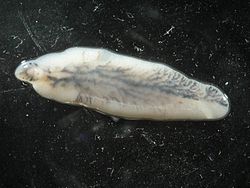
Liver fluke is a collective name of a polyphyletic group of parasitic trematodes under the phylum Platyhelminthes.[1] They are principally parasites of the liver of various mammals, including humans. Capable of moving along the blood circulation, they can occur also in bile ducts, gallbladder, and liver parenchyma. In these organs, they produce pathological lesions leading to parasitic diseases. They have complex life cycles requiring two or three different hosts, with free-living larval stages in water.[2]

Biology

[edit]

The body of liver flukes is leaf-like and flattened. The body is covered with a tegument. They are hermaphrodites having complete sets of both male and female reproductive systems. They have simple digestive systems and primarily feed on blood. The anterior end has the oral sucker opening into the mouth. Inside, the mouth leads to a small pharynx which is followed by an extended intestine that runs the entire length of the body. The intestine is heavily branched and the anus is absent. Instead, the intestine runs along an excretory canal that opens at the posterior end. Adult flukes produce eggs that are passed out through the excretory pore. The eggs infect different species of snails (as intermediate hosts) in which they grow into larvae. The larvae are released into the environment from which the definitive hosts (humans and other mammals) acquire the infection. In some species another intermediate host is required, generally a cyprinid fish, and the definitive hosts are infected from eating infected fish. Hence, these species are food-borne parasites.[3][4]

Pathogenicity

[edit]

Liver fluke infections cause serious medical and veterinary diseases. Fasciolosis of sheep, goats and cattle, is the major cause of economic losses in dairy and meat industry.[5] Fasciolosis of humans produces clinical symptoms such as fever, nausea, swollen liver, extreme abdominal pain, jaundice and anemia.[6]

Clonorchiasis and opisthorchiasis (due to Opisthorchis viverrini) are particularly dangerous. They can survive for several decades in humans causing chronic inflammation of the bile ducts, epithelial hyperplasia, periductal fibrosis and bile duct dilatation. In many infections these symptoms cause further complications such as stone formation, recurrent pyogenic cholangitis and cancer (cholangiocarcinoma).[7] Opisthorchiasis is the leading cause of cholangiocarcinoma in Thailand and Laos.[8] Clonorchis sinensis and Opisthorchis viverrini are both categorized by the International Agency for Research on Cancer (IARC) as Group 1 carcinogens.[9][10]

Species

[edit]

Species of liver fluke include:[11][12]

See also

[edit]

References

[edit]
Revisions and contributorsEdit on WikipediaRead on Wikipedia
from Grokipedia
Liver flukes are parasitic trematode flatworms belonging primarily to the families Fasciolidae and Opisthorchiidae that infect the livers and ducts of mammals, including humans and , leading to significant zoonotic diseases such as fascioliasis and . These parasites, notable species of which include (the common liver fluke), , (the Chinese liver fluke), and various Opisthorchis species, exhibit complex life cycles involving freshwater snails as intermediate hosts and transmission to definitive hosts through ingestion of metacercariae attached to aquatic vegetation or raw fish. Endemic in over 70 countries across all continents except , liver fluke infections affect an estimated 56 million people globally (as of 2012), with higher burdens in regions of , , , and the where raw or undercooked foods are consumed. Chronic infections can persist for years or the parasite's lifespan, causing hepatobiliary damage, , , , and an elevated risk of (bile duct cancer), resulting in substantial economic losses to livestock industries—estimated at €2.5 billion annually—and contributing to neglected burdens with around 619,000 disability-adjusted life years (DALYs) lost each year. The parasites evade host immune responses through excretory-secretory products like cathepsins, enabling tissue invasion and long-term survival in bile ducts.

Taxonomy and Classification

Definition

Liver flukes are parasitic trematodes, a class of flatworms, that primarily infect the and liver of mammals, including humans and . These parasites belong to families such as Fasciolidae and Opisthorchiidae, where adults reside in the bile ducts, feeding on host tissues and fluids. A defining feature of liver flukes is their hermaphroditic nature, allowing self-fertilization, combined with a digenetic life cycle that alternates between in a intermediate host and in definitive hosts. This complex cycle enables their persistence in endemic areas through environmental contamination with eggs. In human medicine, liver flukes cause significant diseases including fascioliasis from species, clonorchiasis from , and opisthorchiasis from Opisthorchis species, which can lead to chronic liver inflammation and increased cancer risk. In , liver flukes pose a major threat to , particularly sheep and , resulting in substantial economic losses through reduced milk and meat production, , and condemnation of infected livers at slaughter.

Major Groups

Liver flukes are parasitic flatworms classified within the phylum Platyhelminthes and class , specifically the subclass , which encompasses digenean trematodes with complex life cycles involving multiple hosts. The major groups relevant to liver infections are concentrated in three families: Fasciolidae, Opisthorchiidae, and Dicrocoeliidae, which together account for the primary species infecting the hepatic and biliary systems of mammals, including humans and . The Fasciolidae family comprises large, leaf-shaped flukes, with the genus Fasciola being prominent; key species include F. hepatica (sheep liver fluke) and F. gigantica (giant liver fluke), which migrate through the liver parenchyma. In contrast, the Opisthorchiidae family includes smaller, lanceolate flukes adapted to the bile ducts, featuring genera such as Clonorchis (e.g., C. sinensis, Chinese liver fluke) and Opisthorchis (e.g., O. viverrini from Southeast Asia and O. felineus from Europe and Asia). The Dicrocoeliidae family, less common in humans but significant in veterinary contexts, is represented by the genus Dicrocoelium, particularly D. dendriticum (lancet fluke), which inhabits the biliary tract of ruminants.

Biology

Anatomy and Physiology

Liver flukes are dorsoventrally flattened, leaf-like trematodes characterized by a spiny tegument that facilitates attachment to host tissues and provides protection against the host's immune responses. The body features two suckers: an anterior oral sucker for feeding and a larger ventral for adhesion to the walls. Adult liver flukes typically measure 1-3 cm in length, varying by species such as (2-3 cm) and (1-2 cm). The digestive system is simplified and incomplete, consisting of a muscular connected to a short and a bifurcated intestine that ends blindly without an ; ingested host tissues and blood are processed extracellularly via enzymes like proteases. Liver flukes are hermaphroditic, possessing both male and female reproductive organs, including two testes, an , a convoluted for egg storage, and a cirrus as the male copulatory organ, enabling self- or cross-fertilization. Physiologically, liver flukes maintain through a protonephridial system featuring flame cells that filter excess water and wastes via ciliary action. Nutrients, including glucose and , are absorbed directly through the syncytial tegument and the intestinal gastrodermis, supporting the parasite's energy needs in the nutrient-rich environment. For immune evasion, they produce antioxidant enzymes such as and glutathione peroxidases to neutralize host , alongside excretory-secretory products that modulate inflammatory responses.

Life Cycle

Liver flukes, such as those in the genera and Clonorchis, exhibit a complex digenetic life cycle involving in an intermediate host and in a definitive mammalian host. The cycle begins when adult flukes residing in the bile ducts of the definitive host release operculated eggs that are passed in feces. These eggs require freshwater environments to embryonate, typically hatching into free-swimming miracidia within 9-15 days at temperatures of 15-25°C. The miracidia, with a short lifespan of 8-24 hours, actively penetrate the soft tissues of compatible intermediate hosts, such as species in the family (e.g., Galba truncatula for Fasciola hepatica or Radix spp. for Fasciola gigantica). Inside the snail, asexual multiplication occurs: the miracidium transforms into a sporocyst, which produces rediae that in turn generate numerous cercariae over 4-7 weeks, depending on and snail species. These tailed cercariae emerge from the snail and encyst on aquatic , forming resilient metacercariae that can survive for months in cool, moist conditions. The definitive host, typically a herbivorous like sheep, , or humans, becomes infected by ingesting metacercariae-contaminated vegetation. In the host's , the metacercariae excyst, and the juveniles penetrate the intestinal wall, migrating through the and liver parenchyma to reach the ducts. There, they mature into egg-producing adults within 6-12 weeks, completing the cycle in approximately 3-4 months overall. This asexual amplification in the snail host significantly increases the potential for infection dissemination. Variations exist among major liver fluke groups. For Fasciola spp., metacercariae encyst directly on vegetation, and juveniles actively penetrate host tissues to reach the liver, thriving in temperate to subtropical freshwater habitats with optimal egg hatching at 20-25°C. In contrast, Clonorchis sinensis involves a second intermediate host: cercariae from snails (e.g., Parafossarulus manchouricus) penetrate cyprinid fish, encysting as metacercariae in muscle tissue, which are then ingested via undercooked fish; juveniles migrate passively up the biliary tract, maturing in about one month in warmer East Asian freshwater systems. These differences reflect adaptations to distinct ecological niches and transmission routes.

Transmission and Infection

Host Range and Vectors

Liver flukes, primarily species in the genera , Clonorchis, and Opisthorchis, exhibit a complex host range that includes definitive mammalian hosts where occurs and intermediate hosts essential for larval development. These parasites demonstrate zoonotic potential, with humans serving as incidental definitive hosts alongside natural reservoirs in domestic and wild animals. Definitive hosts for and F. gigantica are mainly domestic and wild ruminants, such as sheep, cattle, goats, buffalo, camelids, and cervids, though other mammals including equids, rodents, and lagomorphs can act as aberrant hosts. For and Opisthorchis species (O. viverrini and O. felineus), definitive hosts encompass humans, domestic and wild felids (e.g., cats), canids (e.g., dogs), swine, and other piscivorous mammals like mustelids. Fish-eating wildlife, including cats and dogs, play key reservoir roles in maintaining transmission cycles for Opisthorchis in endemic regions. Intermediate hosts are obligatory for the asexual stages of liver flukes. Fasciola species utilize freshwater snails of the family , including genera such as , , Fossaria, and Pseudosuccinea, with at least 20 snail species supporting development, though suitability varies between F. hepatica and F. gigantica. In contrast, Clonorchis sinensis and Opisthorchis species require two intermediate hosts: first, freshwater snails of genera or Parafossarulus; second, over 100 species of , predominantly (e.g., carps and minnows), where metacercariae encyst in muscles or under scales. Vectors facilitating transmission include aquatic vegetation for , where metacercariae encyst on plants like , enabling ingestion by grazing animals or humans consuming contaminated greens. For Clonorchis and Opisthorchis, undercooked or raw serve as the primary transmission vector, with some species acting as secondary intermediates in regions like . Wildlife reservoirs, such as piscivorous mammals, sustain environmental contamination of water bodies with eggs, supporting infection and perpetuating the cycle. Host specificity differs among liver fluke species, influencing their geographic distribution. Fasciola hepatica and F. gigantica are cosmopolitan, infecting a broad range of ruminants worldwide due to adaptable intermediate hosts and versatile transmission via vegetation. Conversely, is more restricted, primarily endemic to (e.g., , Korea, , , and far eastern ), tied to specific and hosts in those ecosystems. is confined to , particularly and , while O. felineus occurs in and , reflecting regional host availability.

Infection Pathways

Liver flukes primarily infect definitive hosts, including humans, through the ingestion of metacercariae, the encysted larval stage that develops following cercarial release from intermediate snail hosts. For Fasciola hepatica and Fasciola gigantica, infection occurs when metacercariae-contaminated freshwater plants, such as watercress, or untreated water are consumed, allowing the larvae to excyst in the intestine and migrate to the liver. In contrast, Clonorchis sinensis and species of Opisthorchis are transmitted via raw or undercooked freshwater fish harboring metacercariae in their muscles or scales, a common practice in endemic regions of Asia and Eastern Europe. Key risk factors for liver fluke infection include consumption of undercooked or raw aquatic foods in endemic areas, where farming and practices facilitate contamination of sources with animal feces. Poor exacerbates transmission by allowing eggs to contaminate freshwater bodies used for or drinking, particularly in rural settings with near plants. Occupational exposure, such as among fishers or farmers in regions like or , heightens vulnerability due to frequent contact with potentially infected or produce. Cultural traditions involving raw dishes, like in parts of or , further amplify infection rates among local populations. The dose-response relationship varies by species but generally correlates with the number of viable metacercariae ingested; low doses may result in subclinical infections, while higher burdens lead to symptomatic disease. The severity of fascioliasis correlates with the number of metacercariae ingested, with higher burdens more likely to cause acute symptoms due to increased larval migration and tissue damage. In clonorchiasis and opisthorchiasis, even small numbers of metacercariae from a single infected fish can initiate chronic biliary colonization, with worm burdens influencing long-term pathology. Natural barriers to infection include host innate immune responses, such as neutrophil and macrophage activity that can limit initial larval excystation and migration, though flukes employ evasion strategies like tegumental secretions to overcome these defenses. Effective physical barriers involve thorough cooking of fish to at least 63°C (145°F) or boiling water plants, which kills metacercariae, and freezing fish at -20°C for seven days as an alternative preventive measure.

Pathogenicity and Disease

Mechanisms of Damage

Liver flukes inflict damage to the host primarily through mechanical disruption, toxic secretions, nutritional exploitation, and elicited immune responses, targeting the liver parenchyma and biliary system. In species such as Fasciola hepatica, juvenile flukes migrating through the liver tissue create destructive tracts and abscesses by physically burrowing, leading to hemorrhage and necrosis in the hepatic parenchyma. Adult flukes, upon reaching the bile ducts, attach using oral and ventral suckers that erode the biliary epithelium, causing ulceration, hyperplasia, and dilatation of the ducts. This mechanical injury is exacerbated in infections with Opisthorchis viverrini and Clonorchis sinensis, where repeated sucker attachment induces chronic irritation and periductal inflammation. Beyond physical trauma, flukes release toxic metabolites and enzymes that amplify tissue damage. Proteolytic enzymes excreted by F. hepatica degrade host proteins, promoting and facilitating parasite migration while contributing to around affected areas. Excretory-secretory products from these parasites contain immunomodulatory molecules and proteases that trigger and cellular in biliary cells, further driving pathological remodeling. In C. sinensis infections, such secretions provoke and dysregulated epithelial proliferation in the biliary tree. Flukes also compete with the host for nutrients, absorbing glucose, , and other essentials from and , which depletes host resources and results in and . The feeding activity of large adult F. in bile ducts directly contributes to and reduced levels, particularly in chronic cases affecting and humans. This nutritional drain is evident in human fascioliasis, where infections correlate with and in children due to sustained parasite nutrient uptake. The host's immunological response to chronic liver fluke infection intensifies damage through a Th2-biased immune shift, promoting and potentially . In F. hepatica infections, early Th2 production (e.g., IL-4 and IL-13) recruits and fibroblasts, leading to excessive deposition and periportal that impairs liver function. Similarly, C. sinensis elicits a Th2-dominated response with elevated IL-4 and IgE, fostering chronic that evolves into biliary and increases the risk of via DNA damage and oncogenic signaling. This fibrotic cascade, observed in long-term , underscores the parasites' role in transforming acute injury into progressive hepatobiliary pathology.

Clinical Symptoms and Complications

Liver fluke infections in humans typically progress through acute and chronic phases, with symptoms varying by species such as , , and . In the acute phase of fascioliasis, caused by migrating juvenile flukes through the liver , patients often experience fever, , right upper quadrant , , vomiting, and approximately 4-6 weeks post-infection. These symptoms arise from and tissue damage during larval migration and may include and urticaria in some cases. During the chronic phase, adult flukes reside in the bile ducts, leading to symptoms such as intermittent , , cholangitis, and due to biliary obstruction and impaired nutrient absorption. In clonorchiasis and , chronic infections commonly manifest as , , , enlarged liver, and biliary issues including and recurrent pyogenic cholangitis from mechanical obstruction by the worms or associated stones. Heavy infections can exacerbate and across species. Long-term complications of chronic liver fluke infections include liver cirrhosis, hepatic abscesses, and significantly, (bile duct cancer). The International Agency for Research on Cancer (IARC) classifies chronic infections with Opisthorchis viverrini and Clonorchis sinensis as carcinogens, based on sufficient evidence of carcinogenicity in humans from epidemiological studies linking them to . While Fasciola infections are associated with similar biliary pathologies, they are not classified by IARC as carcinogenic to humans. In veterinary contexts, liver fluke infections in livestock such as sheep and cattle cause acute symptoms including anemia, lethargy, abdominal pain, and sudden death in severe cases, particularly with Fasciola hepatica. Chronic infections lead to ill-thrift, reduced body condition, and emaciation, with significant economic impacts including reductions of 9% in daily weight gain, 6% in live weight, and 0.6% in carcass weight, as well as decreased milk and meat production. These effects result in liver condemnation at slaughter and increased mortality rates in affected herds.

Diagnosis and Treatment

Diagnostic Techniques

Diagnosis of liver fluke infections primarily relies on parasitological, serological, imaging, and molecular techniques, each suited to different stages and burdens of infection. The choice of method depends on the fluke species, infection phase, and clinical context, with parasitological approaches serving as the traditional gold standard for confirming active infections through direct detection of eggs. Parasitological diagnosis involves microscopic examination of stool samples to detect characteristic eggs of liver flukes such as , , or . The Kato-Katz thick smear technique, recommended by the for helminth infections including liver flukes, concentrates eggs on a slide for quantification and is particularly useful in field settings due to its simplicity and ability to estimate egg burden. In cases where stool examination yields negative results, especially during early migration phases when eggs are not yet produced, or duodenal aspiration can recover eggs directly from the , providing a more invasive but confirmatory method. Serological tests detect host immune responses or parasite antigens, offering higher sensitivity for early or low-burden infections. for anti-fluke antibodies, often using excretory-secretory antigens, is widely employed and can identify infections as early as 2-4 weeks post-exposure, though with other trematodes may occur. For antigen detection, coproantigen targets circulating fluke proteins in , enabling during the pre-patent period before egg shedding begins and proving valuable for acute cases. Imaging modalities support diagnosis by visualizing pathological changes in the liver and biliary system, particularly when parasitological methods are inconclusive. is the initial imaging tool of choice, revealing bile duct dilation, wall thickening, or mobile echogenic structures indicative of flukes in the chronic phase. Computed tomography (CT) and (MRI) are used for advanced lesions, such as subcapsular tracks or clustered hypodense nodules in the acute hepatic phase of fascioliasis, with MRI offering superior contrast for hemorrhagic or necrotic areas. Molecular techniques, particularly (PCR), enhance species-specific identification, especially in low-burden or mixed infections where fails. Real-time PCR targeting mitochondrial or genes distinguishes between fluke species like and , with post-2020 advancements improving sensitivity for fecal samples and enabling detection at low egg counts. Recent advancements as of 2025 include immunomics-guided discovery for enhanced detection of human liver fluke infection and infection-associated . These methods are increasingly integrated into diagnostic protocols for precise epidemiological tracking and .

Therapeutic Approaches

The primary pharmacological treatment for infections caused by and is , a that targets both immature and adult flukes. Administered as two oral doses of 10 mg/kg body weight 12 hours apart with food, it achieves cure rates exceeding 90% in most cases, with some studies reporting up to 97.8% efficacy after repeated dosing. Common side effects include , , and , which are generally mild and self-limiting. For infections with or , is the drug of choice, given as 75 mg/kg/day orally divided into three doses for 1-2 days, with CDC recommending 2 days, yielding cure rates of 85-94% depending on the regimen and infection intensity. Side effects of praziquantel may include , , and transient abdominal discomfort, but it is well-tolerated overall. Supportive care plays a key role in managing acute symptoms of liver fluke infections, particularly during the migratory phase of fascioliasis, where analgesics and antiemetics are used to alleviate fever, , and ; hospitalization may be required in severe cases. For chronic complications such as biliary obstruction, (ERCP) can extract flukes and relieve blockages, while open surgery, including choledochotomy, is reserved for refractory cases. Diagnostic confirmation via imaging or is essential prior to initiating treatment to guide selection. Emerging challenges include resistance in Fasciola species, first reported in in the 1990s and in humans as early as 2012, with recent zoonotic transmission of resistant strains reported in in 2025 showing reduced efficacy. use in lacks sufficient data on fetal risks, warranting caution and consultation with specialists, though it is not strictly contraindicated. In veterinary medicine, triclabendazole is widely used for fascioliasis in livestock such as sheep and cattle, often administered via mass dosing at 10-12 mg/kg to control outbreaks in endemic areas, achieving near-100% efficacy against susceptible strains in herd settings. Similar drugs like albendazole serve as alternatives, though with lower efficacy against immature flukes.

Epidemiology and Prevention

Global Distribution and Prevalence

Liver flukes, primarily species of the genera Fasciola, Clonorchis, and Opisthorchis, exhibit distinct global distributions tied to environmental and cultural factors. Fasciola hepatica and F. gigantica are endemic in over 70 countries, with high prevalence in the Andean region of South America (particularly Bolivia and Peru, where rates exceed 20% in some communities), parts of Europe (including the United Kingdom, France, and Portugal), and Asia (such as Iran and Egypt). In contrast, Clonorchis sinensis is predominantly found in East Asia, affecting regions in China, South Korea, northern Vietnam, and eastern Russia, while Opisthorchis viverrini prevails in Southeast Asia, including Thailand, Laos, Cambodia, and the Mekong River basin, and O. felineus is endemic to parts of Eastern Europe and western Siberia (e.g., Russia and Ukraine). Prevalence varies widely, with an estimated 2.4 million human infections from Fasciola species globally, concentrated in livestock-rearing areas of and . For Clonorchis and Opisthorchis, approximately 12.4 million infections were reported in 2018 across East and Southeast , with over half in (6.7 million for O. viverrini) and significant burdens in (around 9.5 million for C. sinensis as of recent geospatial models). Recent data as of 2023-2024 indicate continued declines, such as Clonorchis sinensis prevalence in dropping below 3% and Opisthorchis viverrini in reducing through integrated control programs. Zoonotic hotspots include livestock farming communities in , where Fasciola transmission occurs via contaminated and aquatic plants, and fish-consuming populations in the River basin, where raw or undercooked cyprinid fish perpetuate Opisthorchis cycles. Prevalence trends show declines in some regions due to and control programs, such as in where Clonorchis rates have dropped below 3% through distribution and . However, is expanding intermediate host habitats, potentially increasing Fasciola transmission in temperate and high-altitude . Overall, foodborne trematodiases, dominated by liver flukes, imposed a global burden of nearly 1 million disability-adjusted life years (DALYs) in 2021, primarily in the Western Pacific and regions.

Control Measures

Control measures for liver fluke infections emphasize prevention at multiple levels to interrupt transmission cycles involving contaminated food, water, and intermediate hosts like snails. At the individual level, key strategies include avoiding consumption of raw or undercooked freshwater fish, aquatic plants such as watercress, and other potentially contaminated products from endemic areas. Thoroughly cooking these items to an internal temperature of at least 63°C (145°F) kills infective metacercariae, while freezing fish at -20°C (-4°F) for seven days or at -35°C (-31°F) for 15 hours provides an alternative inactivation method. Personal hygiene practices, such as washing hands after handling soil or water and using treated drinking water, further reduce risks from environmental contamination. Community-level interventions target environmental reservoirs and animal hosts to limit broader transmission. Snail control programs, essential for species like Fasciola hepatica that rely on amphibious snails as intermediate hosts, often employ molluscicides such as niclosamide to reduce snail populations in wetlands and irrigation systems, achieving up to 90% efficacy in treated areas. Livestock deworming initiatives, particularly in ruminants like cattle and sheep, use targeted anthelmintics such as triclabendazole administered seasonally to eliminate adult and immature flukes, thereby decreasing environmental contamination from feces. These efforts are typically integrated with habitat management, including drainage of wet pastures and fencing to restrict animal access to snail habitats. At the policy level, the World Health Organization's (WHO) Roadmap for 2021–2030 prioritizes foodborne trematodiases, including liver flukes, with targets to intensify control in 11 of 92 endemic countries by 2030, achieve morbidity control across all endemic areas, and provide preventive chemotherapy to 100% of at-risk populations. Integrated agriculture-health approaches under the framework promote coordinated actions across sectors, such as veterinary surveillance, sanitation improvements, and education campaigns to address zoonotic transmission from animal reservoirs. These policies support milestones like implementing intensified control in three countries by 2023 and six by 2025, emphasizing interventions alongside vector management. Challenges to effective control include , which expands suitable habitats for vectors through warmer temperatures and altered rainfall patterns, potentially increasing fascioliasis transmission in previously non-endemic regions. Cultural dietary practices, such as the tradition of consuming raw or fermented freshwater fish in , perpetuate high infection rates despite awareness efforts, as social norms around food sharing reinforce exposure risks. Addressing these requires tailored behavioral interventions and adaptive strategies to mitigate environmental shifts.

History and Research

Historical Context

The liver fluke Fasciola hepatica was first formally described in 1758 by the Swedish naturalist , marking one of the earliest scientific recognitions of a parasitic trematode as a cause of disease in ruminants, specifically "liver rot." This description built on ancient observations of liver parasites in , but Linnaeus's classification provided a foundational taxonomic framework for subsequent parasitological studies. Similarly, the human-infecting liver fluke was named in 1875 by British parasitologist Thomas Spencer Cobbold, based on specimens recovered from the bile ducts of a Chinese carpenter in , highlighting its association with East Asian populations consuming raw freshwater fish. In the , outbreaks of F. hepatica in sheep, known as liver rot, devastated livestock populations across , particularly in wet grazing regions of Britain and , leading to substantial economic losses and contributing to agricultural instability during periods of poor weather. These epidemics prompted early veterinary research into fluke control, influencing farming practices and the establishment of as a field. By the , human infections with C. sinensis emerged as a significant concern in , with high prevalence rates reported in endemic areas, linked to cultural dietary habits and inadequate sanitation. Key advancements in understanding liver flukes occurred in the late , when the complex life cycle of F. hepatica—involving freshwater s as intermediate hosts and metacercariae on vegetation—was fully elucidated in the 1880s through experimental work by European parasitologists such as Arthur P. Thomas, enabling targeted interventions against populations. A major therapeutic milestone came in the 1980s with the introduction of , initially developed for veterinary use against F. hepatica in livestock and first applied successfully to human fascioliasis cases in 1986, revolutionizing treatment efficacy against immature and adult flukes. Archaeological evidence underscores the ancient origins of liver fluke infections, with sp. eggs identified in Egyptian mummies and coprolites from sites like (circa 400–300 BCE), as confirmed by paleoparasitological analyses in recent studies, indicating human exposure dating back to pharaonic times through contaminated water and plants. These findings reveal the parasite's longstanding impact on human health in the Nile Valley, paralleling its effects on early and potentially influencing medical texts from ancient civilizations.

Ongoing Studies

Recent research into vaccine development for liver flukes, particularly , has focused on antigens such as L proteases, which play key roles in parasite migration and immune evasion. Studies have explored multi-epitope constructs incorporating cathepsin L-derived peptides to elicit protective immune responses in animal models, demonstrating enhanced production. For instance, immunoinformatics-driven designs targeting cathepsin L and glutathione transferase have shown promising and in preliminary validations, aiming to overcome challenges like antigenic variation. As of 2024, these efforts remain primarily in preclinical stages, with no human trials reported, but they represent a frontier in addressing in fascioliasis-endemic regions. Genomic studies on have advanced significantly since the initial draft genome assembly in 2012, with high-quality reference genomes and multi-omics updates facilitating the identification of drug targets. A 2021 refined genome annotation highlighted potential therapeutic candidates, including kinases and metabolic enzymes, through with related trematodes. Updates in 2023 incorporated transcriptomic and epigenomic data to reveal regulatory noncoding RNAs and accessibility patterns in infected hosts, aiding in pinpointing genes involved in parasite survival and oncogenesis. In 2025, multi-omics analyses of lactate metabolism pathways have further prioritized targets like transporters and dehydrogenases for novel anthelmintics, emphasizing the parasite's to host environments. Ecological modeling efforts have increasingly incorporated projections to forecast liver fluke range expansions, particularly for fascioliasis. Research from linked warming temperatures and altered precipitation to enhanced snail intermediate host habitats, predicting northward shifts in F. hepatica distribution in and emergence in previously non-endemic areas like . These models, aligned with IPCC assessments of vulnerabilities, indicate that a 2°C global temperature rise could double suitable transmission zones by 2050, exacerbating zoonotic risks in livestock-dependent regions. A 2024 study confirmed ongoing expansions in hyperendemic areas, driven by milder winters and flooding events, underscoring the need for adaptive surveillance. Post-2020 initiatives have emphasized frameworks to integrate human, animal, and environmental data for liver fluke control, targeting species like Opisthorchis viverrini and Clonorchis sinensis. In , a 2020–2022 multidisciplinary program (reported in 2024) combined community education, anthelminthic treatment, and biological control with ducks, reducing prevalence by 95% (from 6.0% to 0.3%) in pilot districts through cross-sectoral collaboration. WHO-guided efforts since 2021 promote these approaches for neglected zoonoses, incorporating genomic surveillance and climate data to preempt outbreaks, with scalable models tested in . A 2025 study on O. viverrini demonstrated that such integrated strategies lowered transmission by addressing reservoir hosts and contaminated water sources holistically.

References

Add your contribution
Related Hubs
Contribute something
User Avatar
No comments yet.