Hubbry Logo
Patrick MansonPatrick MansonMain
Open search
Patrick Manson
Community hub
Patrick Manson
logo
8 pages, 0 posts
0 subscribers
Be the first to start a discussion here.
Patrick Manson
Patrick Manson
from Wikipedia

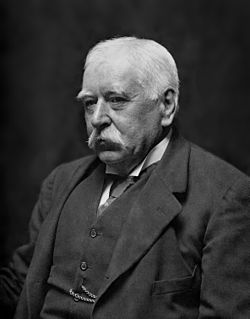
Sir Patrick Manson GCMG FRS (3 October 1844 – 9 April 1922) was a Scottish physician who made important discoveries in parasitology, and was a founder of the field of tropical medicine.

Key Information

He graduated from the University of Aberdeen with degrees in Master of Surgery, Doctor of Medicine and Doctor of Law. His medical career spanned mainland China, Hong Kong, Taiwan and London. He discovered that filariasis in humans is transmitted by mosquitoes. This is the foundation of modern tropical medicine, and he is recognized with an epithet "Father of Tropical Medicine". This also made him the first person to show pathogen transmission by a blood-feeding arthropod.[1] His discovery directly invoked the mosquito-malaria theory, which became the foundation in malariology. He eventually became the first President of the Royal Society of Tropical Medicine and Hygiene. He founded the Hong Kong College of Medicine for Chinese (subsequently absorbed into the University of Hong Kong) and the London School of Hygiene & Tropical Medicine.[2][3][4]

Manson was inflicted with gout during his service in China.[5] His recurring condition worsened with age. He died in 1922.[6]

Childhood and education

[edit]
Birthplace of Sir Patrick Manson

Patrick Manson was a son of Alexander Manson and Elizabeth Livingstone Blaikie, born at Oldmeldrum, eighteen miles north of Aberdeen. His father was manager of the local branch of the British Linen Bank and Laird of Fingask. His mother was distant relative of the famed Christian missionary-explorer David Livingstone. He was the second son of a family of three boys and four girls. He developed a childhood passion in natural history, fishing, shooting, carpentry, mechanics and cricket. Among his Presbyterian-Christian family, he showed excellent memory for memorising church sermons at the age of five years.[5]

In 1857 his family moved to Aberdeen, where he entered Gymnasium School. He later continued at West End Academy. In 1859 he was apprenticed to Blaikie Brothers, ironmasters based in Aberdeen. However, he was struck by a type of tuberculosis called Pott's disease of the spine which forced him to take rest. In 1860 he entered the University of Aberdeen from where he completed medicine course in 1865. He was only nineteen and was underage for graduation, so he visited hospitals, museums and medical schools in London. Finally of age he formally graduated in October 1865, and was appointed Medical Officer at Durham Lunatic Asylum, where he worked for seven months.[7] He performed 17 postmortem dissections on patients with psychiatric illnesses for his thesis. In 1866 he received the degrees of Master of Surgery, Doctor of Medicine and Doctor of Law.[8]

In China

[edit]
Patrick Manson

Patrick Manson was inspired by his elder brother, David Manson, who worked in Shanghai in medical service, to join medical officer post in the Customs Service of Formosa (now Taiwan). Manson traveled to Formosa in 1866 as a medical officer to the Chinese Imperial Maritime Customs, where he started a long career in the research of tropical medicine. His official daily duty involved inspecting ships docked at the port, check their crews and keep the meteorological record. He also attended to Chinese patients in a local missionary hospital where he was exposed to a wide variety of tropical diseases for his postgraduate training without any supervision. His only research tool was a combination of clinical skill, hand lens and good record keeping. He was in good terms with the native Chinese, learning Mandarin and befriending them. However, due to political conflict between China and Japan over the occupation of the island, he was advised by the British Consul to leave. After 5 years in Formosa, he was transferred to Amoy, on the Chinese coast where he worked for another 13 years. Once again he again served the local Chinese patients at the Baptist Missionary Society's Hospital and Dispensary for the Chinese. His brother David joined him for 2 years.[5][9][10]

Discovery

[edit]

He spent his early years researching filaria (a small worm that causes elephantiasis). Manson focused his time on searching for filaria in blood taken from his patients. From this he began to work out the life cycle of filaria and through painstaking observation discovered that the worms were only present in the blood during the night and were absent during the day.

He conducted experiments on his gardener, Hin Lo, who was infected with filaria. He would get mosquitoes to feed on his blood while he slept and then dissect the mosquitoes filled with Hin Lo's blood. "I shall not easily forget the first mosquito I dissected. I tore off its abdomen and succeeded in expressing the blood the stomach contained. Placing this under the microscope, I was gratified to find that, so far from killing the Filaria, the digestive juices of the mosquito seemed to have stimulated it to fresh activity."

Manson observed that filaria only developed as far as an embryo within the human blood and that the mosquito must have a role in the life cycle. Through these early experiments he started to hypothesise about the role of mosquitoes and the spread of disease. That the mosquito (Culex fatigans, now Culex quinquefasciatus) was the intermediate host of the filarial parasite (Wuchereria bancrofti) was a medical breakthrough in 1877. His experimental results were published in the China Customs Medical Report in 1878, and relayed by Spencer Cobbold to the Linnean Society in London.[6]

Out of this arose the mosquito-malaria theory, which suggested that the agent that causes malaria was also spread by a mosquito. In the British Medical Journal in 1894 he published 'On the Nature and Significance of The Crescentic and Flagellated bodies in Malarial Blood'.[11] In this article he states, "the mosquito, having been shown to be the agent by which the filaria is removed from the human blood vessels, this or similar suctorial agent must be the agent which removes from the human blood vessels those forms of the malaria organism which are destined to continue the existence of this organism outside the body." He then proposes, "the hypothesis I have ventured to formulate seems so well grounded that I for one, did circumstances permit, would approach its experimental demonstration with confidence. The necessary experiments cannot for obvious reasons be carried out in England, but I would commend my hypothesis to the attention of medical men in India and elsewhere, where malarial patients and suctorial insects abound." Sir Ronald Ross approached Manson in London and went on to prove this theory. The subsequent correspondence between Ross and Manson is documented as one of the most legendary collaborations in the history of medicine.

Manson's theory was finally proved by Ross in 1898 who described the full life cycle of the malarial parasite (of birds) inside the female mosquito. Ross won the Nobel Prize for Physiology or Medicine in 1902 for this discovery. Both Manson and Laveran were also nominated for the Nobel prize. During his acceptance speech, Ross controversially did not acknowledge Manson as his primary mentor. The subsequent fall out between these two great men is well documented in the book The Beast in the Mosquito: The Correspondence of Ronald Ross and Patrick Manson.[12]

Manson also demonstrated a new species of Schistosoma (Bilharzia) known as Schistosoma mansoni.[7][9][13] In 1882, he discovered sparganosis, a parasitic infection caused by the tapeworm Spirometra.[14][15]

In Hong Kong

[edit]

From 1883 to 1889, Manson worked in Hong Kong. He was the first to import cows from his native Scotland to Hong Kong and thus establish a dairy farm in Pok Fu Lam in 1885 and the company Dairy Farm in Hong Kong. However his most significant works are in medical education. He was the founder of the Hong Kong College of Medicine for Chinese, where Sun Yat-sen was one of his first pupils. In 1896, through his contacts at the Foreign Office, Manson managed to secure the release of Sun after he had been kidnapped in London by Chinese officials. Sun went on to become the first President of the Republic of China. In 1911 Hong Kong College of Medicine for Chinese became the University of Hong Kong.[5][6]

In London

[edit]

After 23 years in Southeast Asia, Manson had amassed considerable wealth from his medical practices. He returned to London in 1889, and settled at 21 Queen Anne Street, W1. In 1890 he qualified the Membership of the Royal College of Physicians. He became Physician at the Seamen's Hospital Society in 1892 and also Lecturer on Tropical Diseases in St George's Hospital. In July 1897 was appointed Chief Medical Officer to the Colonial Office. It was here that he used his influence to push for the foundation of a School of Tropical Medicine at the Albert Dock Seamen's Hospital.

In a speech in 1897, he endorsed a call by fellow Scottish physician Andrew Davidson for courses in tropical medicine at every British medical school.[16] The London School of Hygiene & Tropical Medicine was opened on 2 October 1899. He was appointed a Companion of the Order of St Michael and St George (CMG) in the 1900 New Year Honours list on 1 January 1900,[17][18] and was invested by Queen Victoria at Windsor Castle on 1 March 1900.[19] Manson was awarded the Cameron Prize for Therapeutics of the University of Edinburgh in this year. He retired from the Colonial Office in 1912.[7]

Manson teaching at the Albert Dock Seamen's Hospital 1901

Honours and recognitions

[edit]

Family

[edit]

In 1876, he married Henrietta Isabella Thurbun, with whom he had three sons and one daughter.

His daughter Edith Margaret Manson (1879–1948) married Philip Henry Bahr, one of Manson's pupils at the London School of Tropical medicine. Sir Philip Manson-Bahr CMG DSO MD FRCP (Lond) (1881–1966) became a leader in the field of tropical medicine in his own right.

In 1995 Manson's grandson, Dr (Philip Edmund) Clinton Manson-Bahr (1911–1996) won the Manson Medal. It is the Royal Society of Tropical Medicine's highest mark of distinction for contributions to tropical medicine, and is awarded triennially.

Manson's great-grandson Dr Gordon Manson-Bahr was a GP in Norfolk, UK for most of his medical career and his great-great grandson Dr David Manson-Bahr is a urologist in London.

Manson's grandfather (John Manson of Kilblean 1762–1838) and his great-uncle (Alexander Manson b. 1778) founded the Glen Garioch Whisky distillery in 1797, which still operates in Oldmeldrum to this day.

'Manson Road' in Oldmeldrum was named in his honour.

Death

[edit]
Patrick Manson's grave, Allenvale Cemetery, Aberdeen

He died on 9 April 1922 after having a heart attack.[7] Following a memorial service at St Paul's Cathedral in London, he was buried in Allenvale cemetery in Aberdeen.[7]

Publications

[edit]
  • Manson's Tropical Diseases : a Manual of the Diseases of Warm Climates (1898);[25] 7th edition. Cassell. 1921.
  • Lectures on Tropical Diseases (1905);
  • Diet in the Diseases of Hot Climates (1908), with Charles Wilberforce Daniels (1862–1927).

References

[edit]
[edit]
Revisions and contributorsEdit on WikipediaRead on Wikipedia
from Grokipedia

Sir Patrick Manson (3 October 1844 – 9 April 1922) was a Scottish physician and who founded the discipline of through pioneering research on vector-borne diseases. While serving as a medical officer in from 1866 to 1889, Manson conducted experiments demonstrating that act as intermediate hosts for the filarial parasites responsible for in humans, marking the first identification of an vector in human disease transmission. This discovery, achieved through dissection of fed on infected patients, established a causal mechanism linking insect vectors to tropical pathologies and inspired subsequent work, including Ronald Ross's proof of transmission of . Returning to , Manson advocated for specialized training in tropical diseases, leading to the establishment of the School of in 1899 under his direction, an institution that trained practitioners to combat colonial-era health challenges in tropical regions. His empirical approach emphasized direct observation and experimentation over prevailing miasmatic theories, earning him knighthoods and recognition as a foundational figure in despite limited formal mentorship in the emerging field.

Early Life and Education

Childhood and Family Background

Patrick Manson was born on 3 October 1844 in Oldmeldrum, a small market town in , , approximately eighteen miles north of . He was the second son in a family of eight children born to John Manson (1804–1877), a of Fingask and manager of the branch in Oldmeldrum, and Elizabeth Livingstone Blaikie (1822–1905), daughter of iron-founder John Blaikie. His mother was a distant relative of the explorer and missionary , which may have influenced the family's interest in global endeavors, though no direct childhood impact is documented. The Manson household, residing at The House of Fingask, reflected a prosperous middle-class background, with the 1851 census recording Patrick living there with his parents and siblings including John Blaikie Manson (born 1843), Forbes Manson, and others. Little is recorded of Manson's early childhood beyond his rural upbringing, but by his teenage years, he showed an initial inclination toward practical trades, being apprenticed briefly to an ironsmith before pursuing medical studies at the starting in 1860 at age sixteen.

Medical Training and Initial Influences

Manson commenced his at the in 1860, undertaking a that emphasized both theoretical instruction and practical clinical exposure. His studies incorporated visits to local hospitals and medical practices, providing hands-on experience in patient care and surgical procedures during an era when Scottish medical training balanced classical with emerging clinical methods. He completed the program ahead of the standard five-year schedule, earning his Bachelor of Medicine (M.B.) and (C.M.) degrees in April 1865 at age 20. The following year, in 1866, he obtained his (M.D.), submitting a titled "A peculiar affection of the in connection with ," which demonstrated an early interest in vascular and embolism mechanisms. Post-graduation, Manson encountered constrained professional prospects in , where an oversupply of physicians limited appointments in established institutions like the . This structural barrier, rather than specific mentors—none of whom are prominently recorded in biographical accounts—influenced his pivot toward international opportunities, culminating in his 1866 recruitment by the Imperial Chinese Maritime Customs Service for a medical officer role in Takao (modern , ). Such economic and logistical realities shaped his initial career trajectory, orienting him toward tropical environments where his subsequent parasitological insights would develop.

Career in Asia

Medical Practice in China

In 1871, Patrick Manson transferred from Formosa to Amoy (present-day ), China, as medical officer for the Chinese Imperial Maritime Customs Service, while also assuming responsibility for a missionary society's . His practice centered on serving the local Chinese population, addressing endemic tropical ailments such as , , and beriberi, alongside routine consultations and extensive surgical interventions including amputations and drainages necessitated by advanced infections. Manson's caseload reflected the harsh sanitary conditions of the port city, where , poor , and opium use exacerbated disease transmission among laborers and residents. He documented treating patients with lymphatic swellings characteristic of filarial , often performing dissections on excised tissues to study parasitic involvement, which blurred the lines between clinical duties and scientific . Despite constraints in a non-Western medical environment, Manson emphasized empirical observation, maintaining detailed records of symptoms, blood samples, and post-mortem findings from over 100 cases during his tenure. By 1883, after twelve years of intensive practice interrupted only by brief study leaves in , Manson relocated to for private practice, having established a reputation for competent and innovative diagnostics amid Amoy's burden.

Discovery of Filarial Transmission

While practicing medicine in Amoy, , Patrick Manson encountered a high prevalence of among patients, a characterized by lymphatic obstruction leading to , and identified thread-like microfilariae in their peripheral blood samples during microscopic examinations conducted in the mid-1870s. He observed that these Filaria sanguinis hominis (now classified as ) microfilariae exhibited nocturnal periodicity, appearing in the bloodstream primarily at night and vanishing during daylight hours, a pattern correlating with the biting activity of local mosquitoes. This periodicity suggested an intermediary host rather than direct environmental transmission, prompting Manson to hypothesize that mosquitoes ingested microfilariae during nocturnal feeds and served as vectors. In 1877, Manson initiated controlled experiments by feeding Culex fatigans (now ) mosquitoes on infected individuals, including his gardener and a servant named Huito who harbored the parasites. Dissecting the engorged mosquitoes at intervals post-feeding, he traced the developmental stages of the microfilariae: initial penetration of the mosquito's stomach wall, migration to the thoracic muscles, and transformation into elongated larvae over several days. These observations, detailed in over 100 dissections, demonstrated that the mosquito acted as an intermediate host where the parasite underwent essential , though Manson initially erred in proposing that mature larvae were released into water for ingestion by humans rather than direct via bite. Manson's findings were published in 1879 in the Journal of the Linnean Society, titled "On the Development of Filaria sanguinis hominis, and on a New Species of Filaria," establishing the first documented case of arthropod-mediated transmission of a and laying the groundwork for the vector theory of disease. This discovery, achieved through empirical and longitudinal without prior in , shifted understandings of etiology from vague notions of contagion to a specific biological cycle involving insect vectors. Subsequent validations corrected the final transmission mechanism but affirmed the mosquito's developmental role, influencing later research on diseases like .

Work and Contributions in Hong Kong

Manson arrived in in late 1883, where he established a private medical practice and focused on treating local populations afflicted by tropical diseases. During his residency until , he prioritized education and to address deficiencies in Western-style medical for Chinese practitioners, recognizing the need for localized expertise amid prevalent parasitic and infectious conditions. In 1887, Manson co-founded the College of Medicine for Chinese alongside Ho Kai and James Cantlie, serving as its inaugural dean and lecturer in medicine; this institution provided systematic training in Western medical principles to Chinese students, evolving into the medical faculty of the by 1911. He also spearheaded the establishment of the Alice Memorial Hospital, Hong Kong's first Western hospital, which integrated clinical practice with educational objectives to combat endemic illnesses like and beriberi. Complementing these efforts, Manson founded the Medical Society in 1886 to foster professional discourse and knowledge exchange among physicians in the colony. Manson's clinical observations in yielded significant insights, including the 1885 identification and detailed description of sprue (tropical ), a syndrome then poorly understood in , based on cases among European residents and locals. Additionally, he initiated measures such as importing Scottish cows to in the mid-1880s, establishing a dairy farm to supply pasteurized and reduce reliance on potentially contaminated local sources, thereby mitigating risks of and other milk-borne diseases in the urban population. These contributions underscored his emphasis on preventive strategies and empirical adaptation of medical practices to colonial environments.

Career in Britain

Establishment in London

After retiring from his position in in 1889, Patrick Manson initially returned to but relocated to in 1890 due to financial pressures, establishing a consulting practice specializing in tropical diseases at 21 Queen Anne Street. He equipped the upper floor of this residence with a modest to continue experimental work on parasites and vectors, enabling ongoing research amid clinical duties. Manson's practice quickly attracted patients with tropical ailments, including colonial officials and seafarers, leveraging his expertise from to fill a gap in British where such conditions were poorly understood. In 1892, he was appointed physician to the Seamen's Hospital Society at its Albert Dock branch, treating maritime workers exposed to endemic diseases and using the facility to observe and document cases of and other infections. Collaborating with colleagues like James Cantlie, another Aberdeen-trained physician, Manson began advocating for specialized training, laying groundwork for institutional reforms while maintaining a consultative role for returning expatriates. His base thus served as both a clinical hub and a nexus for disseminating knowledge on vector-borne pathologies, bridging empirical observations from the colonies to metropolitan practice.

Founding of Tropical Medicine Institutions

Upon returning to London in 1889 after decades in , Patrick Manson identified a critical gap in medical training for British colonial administrators and physicians encountering endemic diseases in tropical territories. He advocated persistently for dedicated instruction in and vector-borne illnesses, emphasizing practical skills over theoretical knowledge alone. His efforts targeted the , highlighting how unprepared doctors contributed to high mortality rates among expatriates and hindered imperial health initiatives. Manson's campaign culminated in the establishment of the London School of Tropical Medicine on October 2, 1899, the first institution worldwide focused exclusively on tropical diseases. Housed initially in the London Docks to facilitate hands-on examinations of arriving patients and specimens from infected regions, the school offered short, intensive courses tailored for serving medical officers. Manson served as its honorary dean, delivering lectures on and transmission while integrating laboratory work with clinical observation. The inaugural class in 1899 comprised 32 students, primarily from the Colonial Medical Service, underscoring the school's immediate alignment with Britain's overseas administrative needs. The founding reflected Manson's vision of tropical medicine as a distinct discipline grounded in empirical rather than , influencing subsequent institutions like the established the prior year. By 1900, the London school's model had proven effective, with graduates reporting reduced diagnostic errors in field settings, though funding remained precarious and reliant on colonial grants and private donations. Manson continued shaping its curriculum until health declined in the early 1900s, prioritizing mosquito dissection and parasite life-cycle studies to equip practitioners against diseases like and .

Scientific Contributions

Research on Parasitic Diseases

Manson's foundational research on parasitic diseases centered on , conducted primarily during his medical practice in from the 1870s onward. While examining patients with and related conditions in Amoy (present-day ), he identified microfilariae in peripheral blood and noted their nocturnal periodicity, correlating with activity patterns. Between 1877 and 1879, Manson dissected over 100 fed on infected individuals, observing filarial larvae (embryos of , then termed Filaria bancrofti or Filaria sanguinis hominis) migrating to the , thus demonstrating for the first time that an could serve as an intermediate host for a . In his 1883 monograph, The Filaria sanguinis hominis and certain new forms of in , , and warm countries, Manson detailed these observations, including larval development stages within the mosquito and initial hypotheses on transmission via contaminated water, later refined to direct through bites. This work extended to identifying novel filarial species, such as Filaria demarquayi (now Mansonella ozzardi) in the and Filaria diurna (now ), based on morphological distinctions in sheathless, sharp-tailed forms observed in human blood samples. Manson also advanced understanding of trematode parasites, discovering the lung fluke Paragonimus westermani in 1879 while investigating cases in Chinese patients and dogs, linking it to ingestion of infected freshwater and describing its migration to pulmonary tissue. His dissections revealed encysted metacercariae excysting in the host's intestines, establishing a foodborne cycle distinct from vector-mediated . These findings, grounded in direct microscopic examination and animal models, challenged prevailing notions of or direct contagion, emphasizing empirical life-cycle elucidation over speculative . Throughout his career, Manson integrated parasitological insights with clinical data from endemic regions, advocating for hygiene measures targeting reservoirs and hosts, though his early vector hypotheses faced skepticism until validated by contemporaries like for . His research output, spanning over 100 publications, prioritized verifiable morphology, periodicity, and host-parasite interactions, influencing subsequent eradication efforts against .

Vector Theory and Malaria Hypothesis

Manson's investigations into filariasis in Amoy, , from 1877 onward established the foundational principles of vector transmission for parasitic diseases. Observing that microfilariae in infected patients' blood were absent during daylight hours and reappeared nocturnally, he hypothesized that mosquitoes ingested the parasites during night bites, allowing developmental stages within the insect before potential re-entry into humans. Dissections of Culex mosquitoes fed on filariasis patients revealed larval forms migrating to the mosquito's proboscis, providing empirical evidence of an arthropod intermediate host. This 1879 publication marked the first documented case of a biological vector transmitting a , shifting paradigms from direct contagion to indirect, environment-dependent cycles reliant on warm-climate vectors. Building on this, Manson generalized a "vector theory" positing that many tropical parasites require extracorporeal development in blood-feeding arthropods, incompatible with temperate climates due to vector absence or developmental failure in cooler temperatures. His framework emphasized causal chains: parasite ingestion by vector, extrinsic incubation, and mechanical or biological transfer back to hosts, influencing subsequent research on diseases like onchocerciasis and trypanosomiasis. Initially, Manson proposed filarial transmission via contaminated water containing discharged larvae, but experiments by 1900, including those in observing mosquito bites on volunteers, confirmed bite-mediated inoculation, refining the theory to prioritize salivary gland extrusion over oral routes. Applying insights to , Manson hypothesized in 1892—upon encountering malarial parasite descriptions—that Plasmodium underwent similar mosquito-mediated cycles, with gametocytes ingested during bites developing into sporozoites for human reinfection. Presented formally in 1894 at the , this "mosquito theory" drew direct analogy to filariasis, predicting species as vectors based on geographic overlap with malaria endemicity and noting parasite visibility in cooling blood smears, suggestive of post-ingestion changes. Though unproven at the time, it spurred Ronald Ross's fieldwork; Ross credited Manson's guidance for his 1897 discovery of Plasmodium oocysts in Indian mosquitoes. Manson's 1900 experiments in and , infecting volunteers via caged mosquitoes, yielded partial successes—fever induction in some but not all—lending probabilistic support amid confounding variables like pre-existing immunity. This , empirically validated by Ross's Nobel-winning work, underscored Manson's in linking vectors to disease persistence in colonial tropics.

Influence on Colonial Health Policy

Role as Medical Advisor

In 1897, , for the Colonies, appointed Patrick Manson as Medical Adviser to the on 14 July, tasking him initially with examining candidates for the Colonial Medical Service and invalided personnel returning from service. Manson held this position until his retirement in due to declining health, during which he conducted approximately 12,000 medical examinations, averaging 2.2 per working day based on sampled records. He rejected 9.2% of new applicants for conditions such as and , and disqualified 24.4% of returnees citing issues like and sequelae. Manson's advisory duties extended to reforming colonial , including reorganizing medical reporting systems from overseas territories and coordinating sanitary policies. In collaboration with Chamberlain until the latter's tenure ended in 1903, he advocated for enhanced prevention, proposing expanded training in as early as 15 October 1897 and specific anti-malarial measures for on 4 December 1897. These efforts facilitated the establishment of research laboratories in colonies and improved on endemic diseases, emphasizing and protocols grounded in his parasitological expertise. A pivotal achievement was leveraging his influence to found the London School of Tropical Medicine in , integrating it with hospital practice to train colonial medical officers systematically. Manson served on committees, advising on outbreaks and personnel deployment, which contributed to a legacy of approximately 10,000 preserved medical case records that informed subsequent policy. His tenure marked a shift toward evidence-based colonial health strategies, prioritizing empirical interventions over ad hoc responses, though challenges included bureaucratic resistance and his own deteriorating eyesight.

Advocacy for Specialized Training

Manson recognized that conventional in Britain inadequately prepared physicians for the distinct etiologies and management of tropical diseases, such as and , which demanded specialized knowledge of , , and environmental factors prevalent in colonial settings. Drawing from his decades of practice in and , he contended that untrained practitioners often misdiagnosed or mishandled these conditions, resulting in elevated mortality rates among expatriates and inefficiencies in colonial . In a pivotal address titled "On the Necessity for in ," delivered at Medical School on October 2, 1897, Manson outlined the imperative for dedicated curricula emphasizing practical skills, including microscopic examination techniques for pathogens like filariae using low-power objectives. He stressed that constituted a discrete field requiring post-graduate instruction to mitigate diagnostic errors and enhance prophylactic measures, particularly for medical officers destined for overseas service. This presentation, published contemporaneously in , galvanized support among medical and colonial authorities for institutional reform.83285-2/fulltext) Manson's advocacy culminated in the establishment of the London School of Tropical Medicine in 1899, affiliated with the Seamen's Hospital at Albert Dock, where he served as the inaugural dean and lecturer. Appointed as the first Medical Adviser to the in 1897, he leveraged this position to advocate for mandatory specialized training for appointees, ensuring that prospective officers received instruction in vector-borne diseases and tailored to equatorial climates. The school's curriculum, which Manson helped design, focused on hands-on laboratory work and clinical exposure to imported cases, setting a precedent for professional specialization in the field.

Legacy and Recognition

Honours and Awards

Manson received the Companion of the Order of St Michael and St George (CMG) in the 1900 . He was elected a (FRS) the same year. In 1902, he was awarded the Fothergill Gold Medal by the Medical Society of for contributions to medical science. Manson was knighted as Knight Commander of the Order of St Michael and St George (KCMG) in 1903. The conferred an honorary degree upon him in 1904. That year, he also received the Bisset Hawkins Medal from the Royal College of Physicians and the Medal. In 1907, Manson became the first president of the Royal Society of Tropical Medicine and Hygiene. He was promoted to Knight Grand Cross of the Order of St Michael and St George (GCMG) in 1912, the same year he received the Jenner Medal. At the International Congress of Medicine in in , Manson was awarded a and commemorative plaque for his work on filarial parasites. He also received the Frink from the , recognizing his contributions to and .

Long-Term Impact on Parasitology and

Manson's elucidation of the mosquito's role as an intermediate host for the filarial parasite between 1877 and 1879 demonstrated for the first time that an could serve as a vector for a , establishing the vector paradigm that revolutionized . This discovery shifted research from to interrupting parasite life cycles, inspiring Ross's 1897 confirmation of transmission of and subsequent studies on diseases like and . By 1900, Manson's framework had informed early experiments in British colonies, reducing prevalence through habitat modification and screening. The institutionalization of under Manson's influence, particularly through his founding of the London School of Tropical Medicine in 1899, created a dedicated training ground for parasitologists and clinicians, producing over 1,000 graduates by 1922 who applied vector-focused diagnostics and interventions worldwide. This school's curriculum emphasized empirical dissection of parasite-vector interactions, fostering advancements in and that persist in modern laboratories studying in helminths. Its successor, the London School of Hygiene & Tropical Medicine, continues to lead genomic sequencing of vectors, contributing to hybrid control models integrating Manson's biological insights with contemporary insecticides. In global health, Manson's vector theory underpins strategies for , where integrated vector management—encompassing larviciding and environmental management—has averted millions of cases of since the 2000 Global Programme to Eliminate . These efforts, achieving 50% reduction in microfilaraemia prevalence in targeted populations by 2020, rely on the causal chain of transmission he first mapped, enabling cost-effective interventions that prioritize empirical vector over broad-spectrum alone.

Criticisms and Reassessments

Ethical Concerns in Colonial Practices

Manson's research on in colonial involved experiments that have drawn retrospective ethical scrutiny, particularly due to the involvement of local subordinates in potentially hazardous procedures without documented . In 1877, while practicing in (then Amoy), Manson arranged for his Chinese gardener and research subject, Hin-Lo, to be placed in a mosquito-proof where infected mosquitoes fed on his ; subsequent dissections of the mosquitoes revealed the development of filarial parasites, establishing the mosquito as an intermediate host. This demonstration advanced vector theory but occurred amid stark colonial power imbalances, with Hin-Lo—a servant under Manson's employ—lacking apparent agency or compensation records, and no of voluntary consent equivalent to modern standards. Such practices reflected broader ethical tensions in colonial medicine, where European physicians like Manson prioritized empirical gains for imperial sustainability over the autonomy and welfare of colonized subjects. Manson's advocacy for training emphasized reducing European invalidity rates—such as the 5.7% mortality among British officials in in 1896—to maintain administrative control, often sidelining indigenous health needs and diverting colonial taxes toward metropolitan institutions. This utilitarian focus, while yielding verifiable scientific progress, entrenched racial hierarchies, as seen in Manson's support for segregated medical staffing that barred non-Europeans from senior roles in colonial services. Pre-dating formal ethical frameworks like the of 1947, these methods relied on paternalistic assumptions of beneficiary outcomes, yet the absence of subject perspectives and potential for underscores exploitation inherent to the colonial research ecosystem. Historical reassessments, including commissioned reports on institutions Manson founded, highlight these concerns without alleging outright malfeasance, attributing them to the era's imperial imperatives rather than individual malice. The 's 2022 colonial history , for instance, notes the unacknowledged role of figures like Hin-Lo in foundational experiments, prompting calls for recognizing subject contributions amid efforts in narratives. Empirical data from colonial records affirm the efficacy of Manson's vector insights in curbing diseases like , but causal analysis reveals how unequal power dynamics facilitated research access, raising enduring questions about equity in scientific advancement.

Modern Historical Evaluations

Contemporary historians acclaim Patrick Manson's empirical contributions to , particularly his 1877-1879 observations in demonstrating mosquito-mediated transmission of , which established the vector paradigm for filarial diseases and inspired Ronald Ross's 1897 breakthrough. This framework underpins modern vector control strategies and epidemiological models for diseases like , influencing elimination programs that have reduced prevalence by over 50% in targeted regions since 2000. Scholars such as those in recent reviews emphasize his natural historical approach—dissecting over 100 mosquitoes from infected patients—as a rigorous, first-principles method that shifted from miasmatic theories to causal, organism-specific understandings, despite limited resources. Reassessments since the 2000s, however, critique Manson's practices within imperial structures, highlighting ethical lapses by contemporary standards. His 1877 experiment confining Chinese subject Hin-Lo—a servant or —in a mosquito-proof hut for studies exemplifies power imbalances, with no documented and exploitation of colonized laborers as research proxies, as detailed in the London School of Hygiene & Tropical Medicine's colonial history report. Historians like Douglas Haynes argue Manson's career advanced British imperial goals, prioritizing European settler health—evidenced by his advocacy for colonial medical training to sustain administration amid high expatriate mortality (e.g., 5.7% death rate in , 1896)—while treating colonies as "living laboratories" and neglecting indigenous welfare. Such views, informed by postcolonial analysis, portray his founding of the London School of Tropical Medicine in as reinforcing racial hierarchies, including specimen collection without native input. Overall, modern evaluations balance Manson's verifiable scientific advances—credited with enabling interventions that averted millions of cases—against contextual ethical oversights, urging decolonized curricula that acknowledge imperialism's role without retroactively invalidating empirical gains. Critics like those in LSHTM's note the absence of recognition for subjects like Hin-Lo, yet affirm that Manson's vector hypothesis remains causally robust, detached from ideological biases in its core mechanics. This reflects broader scrutiny of 19th-century , prioritizing over moralizing while documenting colonial enmeshment.

Personal Life and Death

Family and Private Relationships

Manson was born on 3 October 1844 in Oldmeldrum, , , as the second child in a family of nine to John Manson, a local bank manager and farmer of Norwegian descent, and Elizabeth Livingstone Blaikie, a distant relative of the explorer . On 21 December 1875, Manson married Henrietta Isabella Thurburn, the 18-year-old daughter of a captain, in ; he was 31 at the time. Henrietta accompanied Manson to Amoy (modern ), , where they resided during his early medical practice, sharing a life marked by frequent relocations due to his career in tropical regions. The couple had six children, though infant mortality reduced the surviving family: Alexander (born 1876, died 1877), Patrick Thurburn (1877–1902), Edith Margaret (1879–1948), (1881–1955), Violet (1883–1884), and Charles Livingstone (1885–1960). Sons Patrick Thurburn and pursued medical careers influenced by their father, while daughter Edith married (later adopting Manson-Bahr as surname upon joining the London School of Tropical Medicine), a protégé and colleague of Manson who became a prominent parasitologist. No records indicate extramarital relationships or significant private conflicts; Manson's correspondence and biographies portray a stable family unit supportive of his professional demands, with Henrietta managing household affairs amid expatriate postings in , , and later .

Final Years and Passing

In the years following his retirement from the Colonial Medical Service in 1912 and from teaching at the School of Tropical Medicine in 1914, Manson divided his time between and , where he pursued fishing on Lough Mask in . Despite his advancing age and persistent health challenges, he maintained a keen interest in tropical medicine, occasionally traveling and corresponding on scientific matters. Manson had suffered from since his time in China, a condition that intensified in later life, compounded by and limiting his mobility. By the early 1920s, these ailments had severely debilitated him, leading to his death on April 9, 1922, in at the age of 77. He was buried in the Beckenham Cemetery and Crematorium.

Key Publications

Manson's seminal contribution to parasitology was his 1878 paper detailing the role of mosquitoes as intermediate hosts for Filaria sanguinis hominis (now Wuchereria bancrofti), published initially in the Chinese Customs Gazette and subsequently in the Journal of the Linnean Society of London (Zoology), where he described the parasite's developmental stages within Culex mosquitoes, establishing the concept of arthropod vectors for human diseases. His most influential book, Tropical Diseases: A Manual of the Diseases of Warm Climates, first appeared in 1898, providing a comprehensive overview of etiology, symptoms, and treatment for , , and other infections prevalent in tropical regions, drawing on his clinical observations from and ; it underwent multiple editions and laid foundational principles for the emerging field of . In 1905, Manson delivered and published the Lane Lectures as Lectures on Tropical Diseases, expanding on vector-borne pathologies and preventive strategies, delivered at Cooper Medical College in and emphasizing empirical dissection techniques for parasite identification.

References

Add your contribution
Related Hubs
User Avatar
No comments yet.