


Community hub
Recent from talks
Contribute something
Nothing was collected or created yet.
Music of Austin, Texas
View on Wikipedia
 | This article has multiple issues. Please help improve it or discuss these issues on the talk page. (Learn how and when to remove these messages)
|


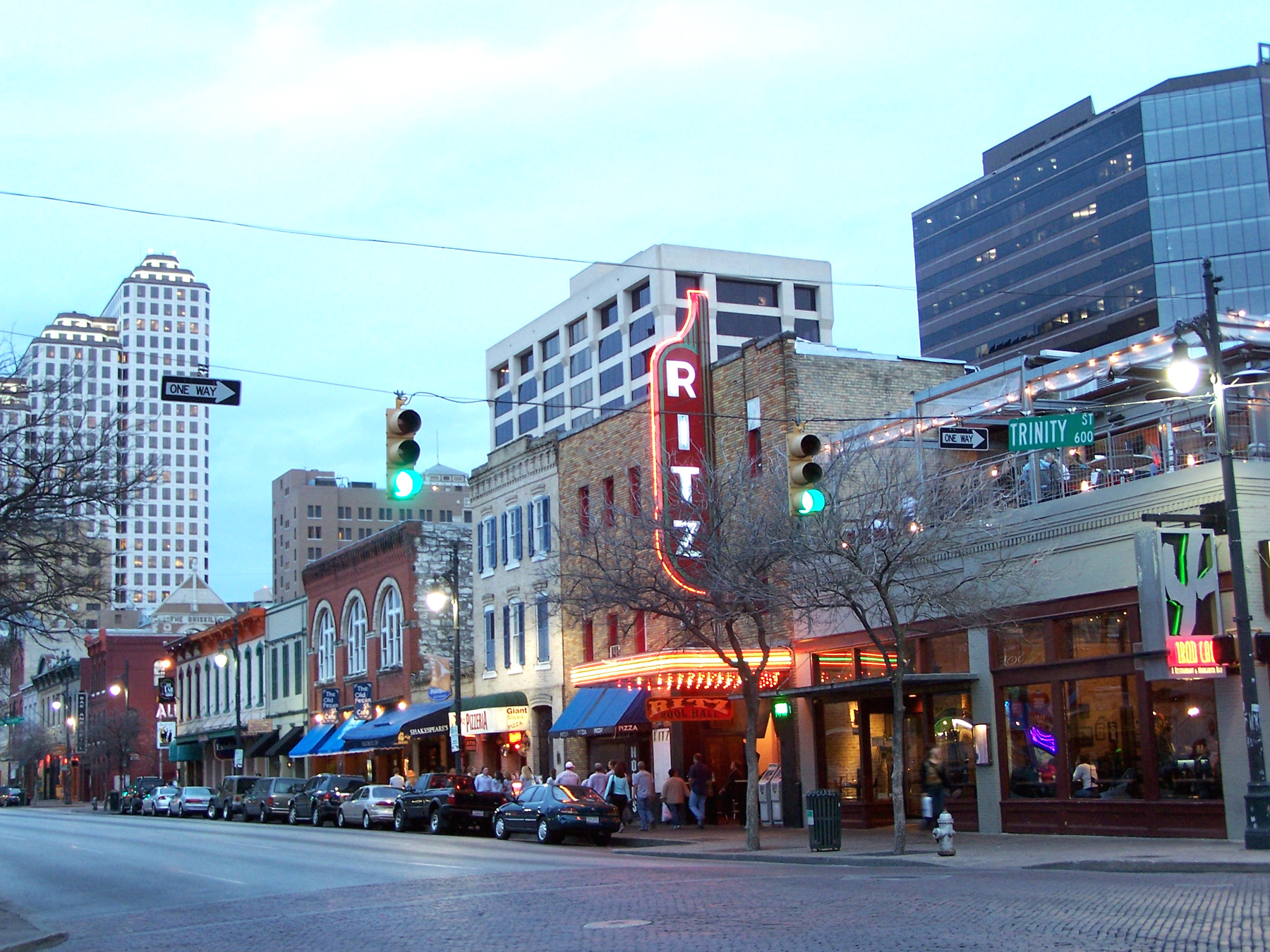
The official motto of Austin, Texas is the "Live Music Capital of the World" due to the high volume of live music venues in the city. Austin is known internationally for the South by Southwest (SXSW) and the Austin City Limits (ACL) Music Festivals which feature eclectic international lineups. The greatest concentrations of music venues in Austin are around 6th Street, Central East Austin, the Red River Cultural District, the Warehouse District, the University of Texas, South Congress, and South Lamar.
"Austin music" in its modern form emerged in 1972 when "a new form of country music exploded on the scene that turned its back on Nashville and embraced the counterculture",[1] much of it centered around the Armadillo World Headquarters music venue, which opened in 1970, alternating country and rock music shows.[2] In 1972, Willie Nelson left Nashville and moved to Austin.
Austin has become renowned as a haven for young innovative musicians who were drawn in by the creativity, liberal politics, and low cost-of-living. Austin's reputation continued to grow and become celebrated for its folk, blues, jazz, bluegrass, Tejano, zydeco, new wave, punk, and indie music scenes.
The City also hosts the Austin Symphony, Austin Civic Orchestras, Austin Opera, Austin Baroque Orchestra and La Folia Baroque.
History
[edit]
A large portion of Austin's early musical heritage began in the German Beer Gardens and Halls in the late 1800s, in places such as Scholz Garten and Hall (the hall later to become Saengerrunde Hall) and further up the road at Dessau Hall. Dessau Hall peaked in the 1940s and 1950s with acts as diverse as Glenn Miller, Hank Williams, and Elvis Presley.
Other major venues for country music included Big Gil's on South Congress and The Skyline on North Lamar. Local singer/yodeler Kenneth Threadgill opened Threadgill's in 1933 on North Lamar, a venue that later hosted Folk/Country jams where Janis Joplin participated in her early days. On the east side of town, which historically had a rich culture of African American heritage and influence, music venues such as the Victory Grill, Charlie's Playhouse, Big Mary's, Ernie's Chicken Shack, and Doris Miller Auditorium featured local and touring acts. These destinations, which were part of the "Chitlin' Circuit" featuring big bands, jazz and blues, became famous for later hosting musical legends including Duke Ellington, Ray Charles, Bobby Bland, B.B. King, Ike Turner and Tina Turner.
In 1964 the Broken Spoke opened, featuring country acts such as Bob Wills, Ernest Tubb, and the young Willie Nelson. The late-1960s and 1970s saw the country music popularized by Willie Nelson and others being joined by a host of other music brought by the more liberal inhabitants, who migrated to Austin during these two decades. Specifically, Roky Erickson and his 13th Floor Elevators helped bring in this psychedelic era.
In the 1960s in Austin, Texas, legendary music venues including the Vulcan Gas Company and the Armadillo World Headquarters and musical talent like Janis Joplin, the 13th Floor Elevators, (Johnny and Edgar) Winter brothers, Shiva's Headband and, later, Stevie Ray Vaughan. Austin was also home to a large New Left activist movement, one of the earliest underground papers, The Rag, and graphic artists like creator Gilbert Shelton, underground comix pioneer Jack Jackson (Jaxon), and surrealist armadillo artist Jim Franklin.[3]

The Vulcan morphed into the Armadillo World Headquarters in 1970 and for more than ten years featured music of all genres, from Bruce Springsteen to Bette Midler, as well as local ballet, blues and jazz. The artwork from this establishment was a part of the Austin scene and the Armadillo became the Austin city animal. Songs such as Gary P. Nunn's "London Homesick Blues" (which includes in the chorus "I want to go home with the armadillo") made this a staple of Austin. The artist who began the Armadillo logo was Jim Franklin, who is still working today.
"Austin music" in its modern form emerged in 1972 when "a new form of country music exploded on the scene that turned its back on Nashville and embraced the counterculture".[1] Eddie Wilson had opened the Armadillo World Headquarters music venue in 1970, alternating country and rock music shows,[4] but in 1972, Willie Nelson left Nashville and moved to Austin, following others including Michael Martin Murphey, Marcia Ball, Steve Earle, Gary P. Nunn, Jerry Jeff Walker, Ray Wylie Hubbard, and Waylon Jennings.
Willie Nelson's audiences at the Armadillo included both hippies and rednecks.[5] On New Year's Eve, Austin's local KOKE-FM radio station switched to a new programming format geared to mixed crowds first called "country rock", and later "progressive country".
By November of that year; the first pilot for the iconic Austin City Limits was being filmed with Willie Nelson, Billboard Magazine named KOKE “the most innovative radio station in the country," and Austin had a national reputation thanks largely to the reporting of Rolling Stone stringer Chet Flippo, who seemed to get a dispatch from the Armadillo into every issue."[1]
In the following years, Austin gained a reputation as a place where struggling musicians could launch their careers in front of receptive audiences, at informal live venues. A major influence during this time was Clifford Antone and the namesake blues club he founded in 1975, at the age of 25. Antone's located on Austin's 6th Street fostered the careers of a number of musicians, including Stevie Ray Vaughan.
Liberty Lunch was a live-music venue in Austin and during its heyday in the late 1970s and 1980s featured all kinds of music, including reggae and ska, punk, indie, country and rock. The venue was forced to close to make way for Austin's downtown redevelopment in the late 1990s. Since then, Liberty Lunch has attained a legendary status in the history of Austin music. Now-defunct Armadillo World Headquarters has attained a similar status.
Austin's live music scene has experienced a resurgence in the past few years after losing some of its best loved venues (Liberty Lunch, Armadillo and others), a host of new clubs have risen up to continue Austin's rich live music heritage. However, The Hole in the Wall, open since 1974 and a live music staple that lent a corner and then finally a stage to Doug Sahm and Blaze Foley, is still operating. Places such as the Skylark Lounge, Stubb's, Ginny's Little Longhorn, and a list of others have also become a stalwart of a new generation of live music venues throughout the city.
The punk/new wave era in Austin began in earnest in 1978. The Club Foot played an important role in hosting many of the local punk/new wave acts. The city's first two rock/new wave bands, the Skunks and the Violators, made their debut at a University-area club called Raul's in February.
The explosive show by the Sex Pistols in San Antonio the previous month helped build toward an excited reception for local purveyors of the style.[6] The Skunks' lineup consisted of Jesse Sublett on bass and vocals, Eddie Munoz on guitar and Bill Blackmon on drums. The Violators featured Kathy Valentine (later of The Go-Go's), Carla Olson (later of the Textones), Marilyn Dean and Sublett on the bass. The Violators were short-lived, as all the members except for Sublett moved to LA the following year. Margaret Moser, of the Austin Chronicle, later wrote that "The Skunks put Austin on the rock n' roll map."[7] Another influential band that led the punk scene in Austin was the Big Boys.
Austin became one of the important stops on every tour of important punk/new wave acts. Many of these bands, such as the Police, Joe Jackson, Blondie and Talking Heads, played at the Armadillo. A number of them, including the Clash, Elvis Costello and Blondie, would make appearances at gigs by the Skunks and take the opportunity to jam with the band.[7][8]
The 1980s and 1990s also helped shape Austin's music scene. Waterloo Records, which has been voted the best independent record store in the country and hosts live in-store shows, first opened in 1982. Austinite Stevie Ray Vaughan won a Grammy in 1990 for best contemporary blues album. After tragically dying in a helicopter crash, he was memorialized with a statue on the shores of Austin's Lady Bird Lake. Additionally in 1991,[9] Austin city leaders named Austin, "The Live Music Capital of the World", because of the number of live music venues.
Visitors and Austinites alike may notice the 10-foot guitars standing on the sides of the city's streets. In 2006, Gibson Guitar brought Guitar Town to Austin, placing 35 of these giant guitars around the city.
The Austin Music Foundation is one of several Austin groups that help independent artists further their music careers. Assisting musicians with medical needs are the SIMS Foundation and Health Alliance for Austin Musicians (HAAM). Promotion, preservation and education is the mission of the Austin Blues Society, formed in 2006 by Kaz Kazanoff and other blues community notables.
Helping to promote the $1 billion music industry in the city is the Austin Music Office. A department of the Austin Convention & Visitors Bureau, the Austin Music Office offers creative, personalized assistance in booking live music, discounted Austin Compilation CDs and mini-guides to the city's live music scene, assistance with utilization of live music venues for off-site events, and guidance with local music attractions and creation of music tours.[10]
Television
[edit]The PBS live music television show Austin City Limits began in 1974[11] and has featured, as of 2005[update], over 500 artists of various genres, including rock, folk, country, bluegrass and zydeco. Partly responsible for Austin's reputation as a live music hub, the show is broadcast worldwide and stands as the longest running music television program ever. On February 26, 2011, ACL held its first taping in its new purpose-built Moody Theater and studio in downtown Austin's W Austin Hotel and Residences. Despite a seating capacity of over 2,700, audiences will be limited to around 800 (the original total seating capacity of the old studio). The additional seating capacity will be used for the ACL Live concert series at the venue.
Austin was also home to the Austin Music Network (AMN), which broadcast from 1994 to 2005. AMN, featured on cable channel 15, proclaimed itself to be the only non-profit independent music television channel, and its programming was mostly music videos or recorded live sessions, interspersed with presenters. Although all musical tastes were broadcast, AMN emphasized non-mainstream music such as indie, punk, blues, country and jazz.
Channel 15 was a 24-hour music channel now run by Music and Entertainment Television (M*E). M*E launched October 1, 2005, and was broadcast to Austin and the 44 surrounding cities. M*E was a regional network dedicated to showcasing and providing television exposure for regional artists as well as the hundreds of touring groups that make up the vibrant Texas live music scene. Supporting established artists and promoting and discovering new talent is a priority. M*E represented different musical genres and areas of the arts community with numerous original programs highlighting everything from filmmakers to art galleries, and musicians to the ballet. In addition, M*E's mostly music lineup, spotlighted live performance footage, concept music videos as well as biographies, reviews, restaurant tours and more.[12]
Festivals
[edit].jpg)
Austin is the home of South by Southwest (SXSW), an annual music, film and interactive conference and festival, and the expanding number of fringe events that take place during the festival, at venues all over town. In the fall, Austin hosts the Austin City Limits Music Festival (ACL) and the Fun Fun Fun Fest.
In the spring, the long-running Old Settler's Music Festival takes place at the Salt Lick Pavilion & Camp Ben McCulloch just outside the city. Every summer, Austin City Limits Radio puts on a series of free blues shows in Zilker Park entitled "Blues on the Green.[13] "
Also in the summer, the City of Austin Parks and Recreation Department holds the Hillside Summer Concert Series music festival, throughout the month of July. This is held at the Pan American Recreation Center. This festival features popular local and national Tejano and Latin music performers. Jason Rubio, of Austin's Best DJs, was the first DJ to perform at the festival, in 2014.
Numerous other music festivals occur year-round. Other annual festivals include the "Keep Austin Weird Festival[14] " and the Heart of Texas Quadruple Bypass Music Festival a.k.a. The Texas Rockfest.
Austin is home to other large annual festivals including:[citation needed]
- Carnaval Brasileiro
- Eeyore's Birthday Party
- Levitation (formerly Austin Psych Fest)
- Oblivion Access Festival
- Old Pecan Street Festival
- Republic of Texas Biker Rally
Venues
[edit]The Austin Chronicle, Visit Austin,[15] Do512, and Phosphene Productions offer information on the most common venues that host local bands.
Below is a short list of notable venues:
- The 13th Floor
- Antone's (reopened in new location)
- B. D. Riley's (new location)
- The Backroom
- The Backyard
- Beerland[16]
- The Broken Spoke[16]
- C-Boy's Heart & Soul
- Cactus Cafe (UT campus)
- The Carousel Lounge
- Cedar Street Courtyard
- Central Market
- Central Presbyterian Church
- Cheer Up Charlies
- Come and Take It Live
- The Continental Club
- Dirty Dog Bar (formerly The Metro)
- Donn's Depot
- Ego's
- Elephant Room[16]
- Elysium Night Club
- Emo's[16]
- Empire Control Room and Garage
- Evangeline Café
- The Far Out Lounge
- Flamingo Cantina
- Friends
- Geraldine's
- Green Mesquite
- Guero's
- The Highball
- Hole in the Wall
- Hotel Vegas/The Volstead
- Icenhauer's
- The Little Longhorn Saloon
- Maggie Mae's
- The Mohawk (formerly The Caucus Club)
- Moody Center
- ACL Live at the Moody Theater
- Nutty Brown Café
- One-2-One Bar
- One World Theater
- The Parish
- The Parlor
- Poodies
- Red 7 (now Barracuda)
- The Sahara Lounge
- Saxon Pub
- Scoot Inn
- Skylark Lounge
- Shooters
- Speakeasy
- Spider House Cafe
- Steamboat
- Stubb's BBQ[16]
- Swan Dive
- Tellers
- Vulcan Gas Company
- The White Horse
In addition to the usual restaurant/bar venues listed above, Austin offers live music in unexpected places as well. These unique venues include:
- City Hall - Every Thursday, City Council honors a local musician at its council meeting. Also, the free concert series "Live from the Plaza" takes place at City Hall every Friday at noon from April to December.
- Austin-Bergstrom International Airport - Live music is featured 11 times a week at four locations.
- Grocery Stores - Central Market features live music three times a week, while Whole Foods Market hosts the "Music at the Market" music series every Thursday evening in the spring.
- Road Races - The Austin Marathon hosts more than 30 bands along the race course and the Capitol 10K features a band at every mile marker.
- House Concerts - Hosting a variety of genres, Austin locals often open their doors to both local and touring musicians, with audiences ranging from a few friends to up to 200.
Musical acts
[edit] | It has been suggested that this article be split out into a new article titled List of Austin musicians. (Discuss) (March 2022) |
Austin musicians:
- The Alice Rose
- Alpha Rev
- Alan Haynes
- The American Analog Set
- …And You Will Know Us by the Trail of Dead
- Arc Angels
- ArcAttack
- Asleep at the Wheel
- Asylum Street Spankers
- Austin Lounge Lizards
- Averse Sefira
- Balcones Fault
- Marcia Ball
- Balmorhea
- Band of Heathens
- Carpetbagger
- Lou Ann Barton
- Best Fwends
- Beto y los Fairlanes
- Big Boys
- The Black and White Years
- The Black Angels
- Black Heart Saints
- Black Joe Lewis and the Honeybears
- Black Pistol Fire
- Black Pumas
- The Boxing Lesson
- Blue Cartoon
- Blue October
- The Bright Light Social Hour
- Brobdingnagian Bards
- Doyle Bramhall II
- Butthole Surfers
- Ray Campi
- Cindy Cashdollar
- Chaski (Latin American folk music ensemble)
- Chingon
- Courtyard hounds
- Gina Chavez
- Gary Clark, Jr.
- Lakrea Clark
- W. C. Clark
- Slaid Cleaves
- Shawn Colvin
- Court Yard Hounds
- Kacy Crowley
- Dax Riggs
- Dangerous Toys
- Jesse Dayton
- Death is not a joyride
- Del Castillo
- The Derailers
- Dexter Freebish
- The Dicks
- The Dixie Chicks
- The Eastern Sea
- Electric Touch
- Joe Ely
- Alejandro Escovedo
- Esther's Follies
- Explosions in the Sky
- Dickins
- The Fabulous Thunderbirds
- David Persons
- Fastball
- Feathers
- Rosie Flores
- Michael Fracasso
- Max Frost
- Full Service
- Future Clouds and Radar
- Davíd Garza
- Larry Gatlin
- Ghostland Observatory
- Eliza Gilkyson
- Jimmie Dale Gilmore
- Golden Arm Trio
- Johnny Goudie
- The Gourds
- Slim Richey's Jitterbug Vipers
- Jon Dee Graham
- Kydd Jones
- Patty Griffin
- The Pictures
- Grupo Fantasma
- Harlem
- Roy Heinrich
- Tje Austin
- Terri Hendrix
- Sara Hickman
- Tish Hinojosa
- The Hot Club of Cowtown
- I Love You But I've Chosen Darkness
- Jack Ingram
- Eric Johnson
- River Jones
- Kaleo
- Robert Earl Keen
- Ben Kweller
- Jimmy LaFave
- The Lovely Sparrows
- Lower Class Brats
- The Lucky Strikes
- Lloyd Maines
- Julian Mandrake
- Matt the Electrician
- Carson McHone
- James McMurtry
- MDC
- Missio
- Mingo Fishtrap
- Monte Montgomery
- Mother Falcon
- Abra Moore
- Ian Moore
- Gurf Morlix
- Mothfight
- Trish Murphy
- Willie Nelson
- The Nightowls
- The Noise Revival Orchestra
- Matt Noveskey
- The Octopus Project
- The Offenders
- Okkervil River
- One-Eyed Doll
- Paul Oscher
- Ephraim Owens
- Patrice Pike
- Toni Price
- Pushmonkey
- Quiet Company
- Reckless Kelly
- Recover
- Redd Volkaert
- Luke Redfield
- The Reivers
- Riddlin' Kids
- Ringo Deathstarr
- Riverboat Gamblers
- The Rocketboys
- Carrie Rodriguez
- Bruce Robison
- Calvin Russell
- Bob Schneider
- Charlie Sexton
- Shakey Graves
- Shearwater
- Shinyribs
- Soul Track Mind
- Soulhat
- Spoon
- Stars of the Lid
- Storyville
- Sunny Sweeney
- The Sword
- Owen Temple
- Rick Trevino
- Kathy Valentine
- Vallejo
- Jimmie Vaughan
- Jackie Venson
- Patricia Vonne
- Voxtrot
- Jerry Jeff Walker
- Tank Washington
- Watchtower
- Dale Watson
- What Made Milwaukee Famous
- White Denim
- White Ghost Shivers
- Bobby Whitlock
- Kelly Willis
- The Wind and The Wave
- Wiretree
- Carolyn Wonderland
- The Yuppie Pricks


Musicians who previously contributed to the Austin music scene (including those who died, have broken up, or moved from the city):
- 13th Floor Elevators
- Angela Strehli
- Bad Livers
- Dynamite Hack
- Experimental Aircraft
- Gal's Panic
- Glass Eye
- Kellye Gray
- Greezy Wheels
- Nanci Griffith
- Marc Gunn
- The Impossibles
- Daniel Johnston
- Poi Dog Pondering
- Charlie Robison
- Scratch Acid
- Sound Team
- Shoulders
- The Sword
- Timbuk3
- Twang Twang Shock-A-Boom
- Two Nice Girls
- Uncle Walt's Band
- Ünloco
- Volcano, I'm Still Excited!!
- Wideawake
- Lucinda Williams
- 3D Friends
Deceased Austin musicians include:
- Stephen Bruton
- Janis Joplin
- Doug Sahm
- Randy Turner AKA Biscuit
- Stevie Ray Vaughan
- Calvin Russell
- Don Walser
- Gene Ramey
- Pee Wee Crayton
- Teddy Wilson
- Robert Shaw
- Keith Ferguson
- Bill Neely
- Grey Ghost
- Blaze Foley
- Townes Van Zandt
- Doyle Bramhall
- Bobby Doyle
- Walter Hyatt
- Rusty Wier
- Ian McLagan
- Jesse Taylor
- Pinetop Perkins
- Gary Primich
- Nick Curran
- Jody Payne
- Tony Campise
The Austin Music Memorial at the Joe and Teresa Long Center honors those who have contributed to the development of the Austin music community.
See also
[edit]
Notes
[edit]- ^ a b c "That 70's Show". Texasmonthly.com. June 6, 2017. Retrieved July 26, 2017.
- ^ "Armadillo World Headquarters Official Site". AWHQ. Archived from the original on March 14, 2016. Retrieved July 26, 2017.
- ^ Jim DeRogatis, Turn On Your Mind: Four Decades of Great Psychedelic Rock (Milwaukie, MI: Hal Leonard, 2003), ISBN 0-634-05548-8.
- ^ "Armadillo World Headquarters Official Site". AWHQ. Archived from the original on March 14, 2016. Retrieved July 26, 2017.
- ^ "Willie Nelson and the Birth of the Austin Music Scene". Texas Almanac. August 12, 1972. Retrieved July 26, 2017.
- ^ The Austin Chronicle:December 8, 2000
- ^ a b "Jesse Sublett." Austin Chronicle. Retrieved on August 3, 2016.
- ^ "Never the Same Again: A Rock N' Roll Gothic," memoir by Jesse Sublett, published 2004
- ^ Zeller, Tom (November 29, 2006). "Don't Mess With Austin's Music Moniker". The New York Times. Retrieved October 9, 2012.
- ^ Austin Convention & Visitors Bureau
- ^ "History of ACL | Austin City Limits". Acltv.com. October 17, 1974. Retrieved July 26, 2017.
- ^ Music and Entertainment Television
- ^ "Blues on the Green 2017 | 93.3 KGSR Radio Austin". Kgsr.com. Archived from the original on 2014-06-23. Retrieved 2017-07-26.
- ^ "We love you weirdos!". Keep Austin Weird Fest. Retrieved 2017-07-26.
- ^ "Austin Concerts and Music Scene | Find Live Shows, Bands and Venues".
- ^ a b c d e "The Best Live Music Venues in Austin – Yobored-Silicon Hills". Archived from the original on October 8, 2016. Retrieved July 11, 2016.
Further reading
[edit]- Gatchet, Roger Davis (2012). ""I've Got Some Antique in Me": The Discourse of Authenticity and Identity in the African American Blues Community in Austin, Texas". The Oral History Review. 39 (2): 207–229. doi:10.1093/ohr/ohs091.
External links
[edit]Music of Austin, Texas
View on GrokipediaHistorical Development
Origins in the 19th and Early 20th Centuries
Austin's musical origins in the 19th century derived from the folk traditions of Anglo-American settlers and the cultural imports of German immigrants. Anglo settlers, arriving primarily from the southern United States starting in the 1820s, brought string instruments such as fiddles, guitars, and banjos, employing them in home-based dances and social events with distinctive slow fiddle tempos and extended bow techniques that foreshadowed later Western swing styles.[11] German colonization in Central Texas after 1844 introduced organized musical societies, including the Austin Männerchor founded in 1852, and fostered events like Saengerfests—competitive singing festivals—that promoted choral works alongside folk dances such as polkas and schottisches. Instruments like accordions, violins, and pianos became staples, with these traditions integrating into local dance halls and influencing subsequent Tejano conjunto forms.[12] Venues epitomized by Scholz Garten, established on August 1, 1866, by German immigrant August Scholz, served as hubs for entertainment, hosting Sunday concerts from the 1880s featuring orchestras like George Herzog’s that performed selections from Verdi and Gilbert & Sullivan, alongside rehearsals for the Austin Saengerrunde singing society, which made it their exclusive venue by 1901.[13] In the early 20th century, African American migrants to Austin's East Side cultivated blues music, evolving from late-19th-century field hollers, work songs, and banjo traditions into a distinct urban style by the 1910s, with roots traceable to statewide precedents like the 1890 transcription of an early blues-like song.[14][15][16]Mid-20th Century Foundations: Big Band, Blues, and Post-War Growth
In the 1930s and early 1940s, Austin exhibited a pronounced preference for big band swing music, reflecting broader national trends tied to the Depression-era entertainment market and the rise of dance-oriented jazz ensembles.[17] This era saw strong institutional support at the University of Texas, where student dances and campus events featured prominent acts; for instance, Benny Goodman's band performed at Gregory Gymnasium in early 1936, coinciding with the initial surge of swing's popularity nationwide.[18] Local influences from Austin's East Side African-American community, including ragtime, blues riffs, and brass band traditions, contributed to the hybrid sounds of regional big bands, blending urban sophistication with rural Texas elements.[19] Native son Teddy Wilson, born in Austin in 1912, emerged as a pivotal figure in the swing era, pioneering integrated jazz groups as pianist with Benny Goodman and influencing combo formats that bridged big band orchestration with smaller improvisational settings.[20] Parallel to swing's dominance, blues music laid early foundations in Austin during the mid-20th century, primarily through East Side enclaves where rural migrants from Central Texas and beyond adapted Delta and country blues styles to urban contexts.[15] These performances, often in informal jukes and neighborhood halls, emphasized raw guitar work, harmonica, and vocal storytelling reflective of economic hardships and cultural displacement, with roots traceable to the early 1900s but gaining cohesion amid wartime mobility.[21] By the 1940s, East Austin's blues circuit intersected with jazz influences, fostering a gritty, electric sound that persisted in small clubs despite segregation limiting mainstream exposure.[14] Post-World War II demographic shifts catalyzed music growth in Austin, as the city's population swelled from 87,930 in 1940 to 132,459 by 1950, driven by returning veterans, University of Texas enrollment surges under the GI Bill, and industrial expansion.[22] This influx diversified audiences and venues, transitioning from cavernous ballrooms suited to big bands—such as Dessau Hall, which hosted acts like Glenn Miller in the 1940s—to proliferating honky-tonks accommodating intimate blues, Western swing, and nascent rockabilly ensembles.[23] The fragmented post-war market encouraged independent promoters and small labels, sustaining blues holdouts on the East Side while big band remnants adapted to combo formats amid economic pressures that curtailed large orchestras.[17] These changes entrenched live music as a staple of Austin's nightlife, with honky-tonks like those along East 6th Street drawing mixed crowds for blues-infused sets that prefigured the city's later genre fusions.[24]1970s Outlaw Country and Counterculture Convergence
In the 1970s, Austin emerged as a hub for Outlaw Country, a movement characterized by artists rejecting Nashville's commercial constraints in favor of raw, authentic expression influenced by rock, blues, and folk elements. This scene converged with the local counterculture, particularly through venues that hosted eclectic bills blending hippie rock acts with country performers, attracting diverse audiences of long-haired youth and traditional rural fans. The Armadillo World Headquarters, established in 1970 by Eddie Wilson, epitomized this fusion by featuring progressive rock bands alongside country shows, fostering a "cosmic cowboy" ethos that symbolized cultural reconciliation between countercultural ideals and working-class roots.[25] Willie Nelson's arrival in Austin in 1972 catalyzed the movement's growth; after growing disillusioned with Nashville's music industry, he relocated and debuted at the Armadillo on August 12, 1972, drawing a mixed crowd that cheered his outlaw persona, complete with braids and casual attire, thus bridging generational and stylistic divides.[25][26] Local radio station KVET amplified this scene by prioritizing Texas artists, including Outlaw pioneers like The Flatlanders and Billy Joe Shaver, which helped embed the genre within Austin's burgeoning live music ecosystem.[27] Key figures such as Jerry Jeff Walker, who based himself in Austin during the decade, further defined the convergence with songs like "Up Against the Wall, Redneck Mother" (1973), a satirical anthem performed at Armadillo shows that playfully mocked redneck stereotypes while appealing to countercultural audiences. This progressive country variant, also termed "redneck rock" or "Texas music," integrated psychedelic influences from Austin's earlier rock scene, exemplified by acts like the 13th Floor Elevators, creating a hybrid sound that prioritized artistic independence over mainstream conformity.[28][26] The movement's national breakthrough came with the 1976 compilation album Wanted! The Outlaws, featuring Nelson alongside Waylon Jennings, which sold over a million copies and certified platinum, underscoring Austin's role in reshaping country music's cultural landscape.[26]1980s-1990s Blues Revival, Punk, and Alternative Expansion
The blues revival in Austin during the 1980s was driven primarily by Stevie Ray Vaughan, whose high-energy guitar style and Double Trouble band reintroduced electric Texas blues to wider audiences after a period of decline following the 1970s. Vaughan's 1983 album Texas Flood, recorded with producer Jackson Browne and featuring tracks like "Pride and Joy," achieved commercial success and earned a Grammy nomination, marking a turning point that differentiated Texas blues from Chicago styles through its fusion of rock vigor and traditional forms.[29][30] This resurgence drew from East Austin's African American blues heritage, with venues like the Continental Club hosting performers such as T.D. Bell and Erbie Bowser, who maintained raw, unamplified traditions amid the electric wave.[15] Vaughan's death in a helicopter crash on August 27, 1990, near East Troy, Wisconsin, after performing at Alpine Valley Music Theatre, temporarily subdued the scene, but his influence persisted, inspiring acts like the Fabulous Thunderbirds, who toured extensively in the late 1980s blending blues with roots rock.[31] Parallel to the blues surge, Austin's punk scene exploded in the early 1980s as a reaction against the city's prevailing country and mainstream rock, fostering a raw, anti-establishment underground centered on venues like Raul's on Guadalupe Street and Liberty Lunch. Raul's, originally a Chicano music spot, pivoted to punk by 1978 and hosted seminal shows by local bands including the Big Boys, known for their ska-infused hardcore, and The Dicks, whose politically charged lyrics reflected queer and anti-racist themes atypical of broader U.S. hardcore.[32][33] The scene's DIY infrastructure—self-booked gigs, zines, and cassette releases—contrasted Austin's "cosmic cowboy" image, with Butthole Surfers emerging as a chaotic force, their 1983 debut Butthole Surfers EP capturing noise-punk experimentation that gained cult traction by mid-decade.[34] Photographer Pat Blashill documented over 200 events, highlighting the scene's diversity and tension with conservative Texas norms, as detailed in the 2020 book Texas Is the Reason: The Mavericks of Lone Star Punk.[35] By the 1990s, alternative rock expanded Austin's musical footprint, building on punk's foundations with indie and noise elements at clubs like Emo's, which opened in 1990 and became a hub for grunge-influenced acts amid the national alt-rock boom. Local bands such as Sixteen Deluxe and Sincola epitomized the era's lo-fi aesthetic, performing at house parties and defunct spots that nurtured a "curious mix" of experimental sounds outside commercial circuits.[36] Butthole Surfers achieved mainstream crossover with their 1996 album Electriclarryland, featuring the hit "Pepper" from Capitol Records, while emerging groups like Spoon—formed in 1993—blended post-punk with pop, releasing their debut Telephono in 1996 to critical acclaim.[37] This period solidified Austin's reputation for genre hybridization, with alternative acts drawing from earlier psych influences like Roky Erickson, whose 1980s reunions with the Explosives revived 1960s garage experimentation.[38] Venues such as the Back Room and Cavity sustained the momentum, hosting raw performances that prioritized artistic autonomy over polished production.[31]2000s-Present: Festival Dominance, Tech Boom, and Scene Evolution
The 2000s marked a surge in Austin's music festivals, solidifying the city's festival dominance. The Austin City Limits (ACL) Festival launched in 2002 at Zilker Park, initially expecting 25,000 attendees but drawing over 40,000, with attendance expanding annually to host more than 130 artists by the 2010s.[39][40] South by Southwest (SXSW), founded in 1987, experienced explosive growth, featuring 2,098 showcasing artists across 92 venues in 2011 and generating $355.9 million in economic impact with over 280,000 attendees by 2019.[41][42] These events drew global attention, boosting tourism and revenue but often prioritizing high-profile acts over local talent, as some musicians reported feeling overshadowed during SXSW.[42] Parallel to festival expansion, Austin's tech boom transformed the city's landscape, dubbing it "Silicon Hills" amid rapid high-tech employment growth, including a 125% increase from 1990 to 2000 driven by software and internet firms.[43] In the 2010s and 2020s, influxes from companies like Tesla, Apple, and Oracle accelerated population and economic shifts, fostering music-tech synergies such as digital platforms and startups but exacerbating gentrification.[44] Rising property values and development pressures led to venue closures, with iconic spots struggling against noise complaints and redevelopment, threatening the organic live music ecosystem that defined Austin.[45][46] The music scene evolved amid these pressures, diversifying beyond traditional country and blues into indie rock, electronic, and fusion genres while facing sustainability challenges. The 2023 Austin Music Census highlighted how rapid urbanization reshaped the ecosystem, with indie scenes persisting from psychedelic roots but contending with higher costs displacing artists.[47][48] Festivals and tech-driven globalization introduced broader influences, yet local venues in districts like Red River adapted through policy protections established in 2013, preserving a core of live performances despite economic strains.[45][49] This period balanced economic gains with risks to Austin's "Live Music Capital" identity, as tech prosperity funded innovations but fueled displacement of the grassroots community.[46]Musical Genres and Styles
Roots and Traditional Forms: Country, Blues, and Tejano
Austin's musical foundations rest on the convergence of Anglo-American folk traditions, African American spirituals and work songs, and Mexican border influences, which gave rise to country, blues, and Tejano as enduring forms. These genres emerged from the city's 19th-century settlement patterns, with European-derived fiddling and ballads among ranchers and farmers, blues precursors in Black labor communities, and accordion-based ensembles among Tejanos adapting polkas to ranchera rhythms. By the early 20th century, these traditions coalesced in rural halls, urban districts, and migrant gatherings, predating Austin's later fame for fusion styles.[11] Country music in Austin traces to the string bands and fiddling brought by Southern settlers in the 1820s, featuring guitars, banjos, and slow-bowed fiddle tunes reflective of British Isles and Appalachian repertoires. Early performances occurred at community dances and barns, evolving into hillbilly ensembles by the 1930s, as seen with Uncle Walt and His Rural Rhythm broadcasting from Dessau Hall. The 1940s marked a surge with western swing bands incorporating jazz and pop, led by groups like Jimmy Heap and the Melody Masters at venues such as The Barn, opened in 1940 north of the city, and Hank Thompson's 1948 hits like "Humpty Dumpty Heart." This era's honky-tonks catered to G.I.s and workers, blending rural fiddle roots with urban swing for a Texas-specific sound.[11][50] Blues took root in Austin's East Side among African American migrants from rural Central Texas and Louisiana during the Great Depression and World War II, drawing from field hollers, spirituals, and 12-bar structures with call-and-response patterns originating in post-Emancipation work songs. Influenced by polyrhythms, blue notes, and regional variants from Dallas and Chicago, the style featured melancholic vocals over guitar or piano, as in East Texas piano blues traditions. Unique to Austin was a gritty, boogie-infused tone from these rural transplants, setting the stage for later electric amplification, though early forms remained acoustic and community-based before mid-century recordings popularized Texas blues statewide.[15][11] Tejano music's traditional core, known as conjunto, formed in late-19th-century South and Central Texas from Mexican rancheras and corridos fused with German immigrant accordions introduced around the 1870s, yielding polkas, waltzes, and boleros played on button accordion and bajo sexto. Pioneered by figures like Narciso Martínez, whose 1930s recordings established the solo accordion lead, the form relied on inexpensive instruments for rural fandangos blending dance, storytelling, and European rhythms. In Austin, Tejanos adapted these at family gatherings and halls post-World War II, with Central Texas scenes emerging alongside San Antonio's dominance; by the 1950s, ensembles added electric bass and drums, though roots stayed tied to acoustic border traditions rather than orquesta winds.[51][11]Rock, Indie, Punk, and Garage Variants
Austin's rock music variants originated in the 1960s psychedelic garage rock movement, exemplified by the 13th Floor Elevators, whose frontman Roky Erickson fused raw garage riffs with hallucinogenic themes, influencing subsequent underground scenes.[38] This foundational psych-garage sound, characterized by distorted guitars and improvisational energy, laid groundwork for later rock evolutions amid the city's countercultural stirrings.[52] The punk scene surged in the late 1970s and early 1980s, catalyzed by Raul's club on the University of Texas Drag, which shifted from Tejano to hosting punk and new wave acts, birthing Texas punk as a distinct style marked by aggressive minimalism and social critique.[53] Key bands included the Big Boys, a high-energy funk-punk outfit fronted by Randy "Biscuit" Turner, and The Dicks, led by Gary Floyd, whose raw, queer-inflected fury defined Austin's hardcore edge from 1979 onward.[54] [33] The Offenders further intensified this era with blistering speedcore sets in the early 1980s, embodying the scene's DIY ethos amid regional hostility.[55] Indie rock built on these punk and psych foundations, thriving from the 1990s as Austin's clubs nurtured alternative acts blending melody with experimentation; the genre's history ties directly to the 1960s-1970s psych heyday, sustaining a vibrant ecosystem of indie labels and venues.[56] Post-punk influences persisted into indie variants, with bands like Explosions in the Sky pioneering instrumental post-rock swells since the late 1990s.[38] Garage rock variants revived in the 2000s and 2010s, channeling 1960s rawness through modern psych-punk hybrids; active bands such as Die Spitz and The Dead Coats deliver gritty, high-tempo sets, upholding Austin's tradition of lo-fi aggression at East Side spots like Hotel Vegas.[57][58] This garage resurgence intersects with indie and punk, fostering ongoing innovation in distorted, venue-driven performances.[59]Hip-Hop, Electronic, and Global Fusion Influences
Austin's hip-hop scene took root in the late 1970s and early 1980s, solidifying in the late 1980s with MC Overlord (Donnell Robinson) as a key figure who elevated local talent through performances and promotion at venues like Hip Hop City.[60] Early groups such as the Cooly Girls, formed in 1987 by Tracy and Erika Rogers alongside Nakia Stewart, expanded to 25 members and performed at prominent spots including Liberty Lunch, the Austin Opera House, and Aqua Fest.[61] DJ Cassanova produced Austin's first hip-hop vinyl album in 1988 with Project Crew and spun records on stations like KAZI 88.7 FM, while FLOMOB, founded in 1993 by Cedrick and Carnell Mason, achieved local chart success with their 1999 single "What You Know About That Wood?!" on KAZI.[61] Tee Double (Terrany Johnson) began freestyling in the mid-1980s, releasing albums like Lost Scriptures in 1999 and Texas Resident in 2000, and co-founding initiatives such as Hip-Hop Humpdays at the Mercury Lounge.[60][61] Venues like Catfish Station (1987–1995) and the Black Cat Lounge hosted early acts, with South by Southwest (SXSW) incorporating hip-hop showcases starting in 1994, which propelled artists like Erykah Badu.[60] Later developments include Hip Hop Mecca, established in 1997 by David Crump and Doug Mecca to book local and major acts, and Jump On It, founded the same year by Charles "Nook" Turner for community events at sites like Rosewood Park.[61] The electronic and dance music scene in Austin evolved from the post-punk movement of the late 1970s, with punk's emergence marked by the 1978 arrest of Huns singer Phil Tolstead at Raul's bar.[62] The 1980s saw the introduction of rave culture by DJ Kerry Jaggers at Club Iguana in mid-decade, alongside subgenres like house, goth, and industrial at clubs such as Carnaval and the Cave Club.[62] Roger Wilson has hosted the weekly Return to Planet 9 event since 1989, spanning venues from Planetarium to Ohms and earning recognition as Austin's top club DJ on multiple occasions.[62] Contemporary venues include Elysium, which has programmed alternative electronic music for over 20 years in the Red River Cultural District, and the Vulcan Gas Company, a 9,500-square-foot space on Dirty Sixth hosting EDM acts.[62] Events like the Edgar Allan Poe Ball at Elysium emphasize dark wave and goth influences, sustaining niche electronic communities amid the city's rock-dominated reputation.[62] Global fusion influences in Austin stem from immigrant traditions, blending elements like German polka, Latin conjunto and orquesta, jazz, blues, R&B, reggae, and Asian sounds into the local fabric since the 19th century, with "world beat" gaining traction in the 1980s via DJs Dan Del Santo and Joe Nick Patowski.[63] Reggae bands such as The Lotions formed in the late 1970s, followed by acts like Raggamassive, Mau Mau Chaplains, Wajumbe, and Killer Bees, who performed at the 1988 Reggae Sunsplash festival.[63] Beto and the Fairlanes fused world beat with Latin pop, jazz, and salsa, while venues like Liberty Lunch in the 1970s–1980s and Flamingo Cantina, opened in 1991, hosted reggae, ska, and Latin folk.[63] Events including the 1975-founded Carnaval Brasileiro, expanded under Mike Quinn in 1978, highlight Brazilian and broader Latin rhythms, contributing to hybrid styles that intersect with hip-hop and electronic through multicultural artist collaborations at festivals like SXSW.[63]Venues and Infrastructure
Historic and Iconic Venues
The Armadillo World Headquarters, established on August 7, 1970, by Eddie Wilson at 525½ Barton Springs Road, served as a pivotal venue in Austin's 1970s music renaissance, accommodating up to 1,500 patrons and hosting over 1,800 shows until its closure on New Year's Eve 1980 due to financial insolvency.[64] [65] It facilitated the convergence of outlaw country artists like Willie Nelson and Waylon Jennings with rock and psychedelic acts such as Frank Zappa and Bruce Springsteen, including AC/DC's debut U.S. performance on May 27, 1977, thereby challenging Nashville's dominance and attracting hippies to country music.[66] [67] The Continental Club, opened in February 1955 at 1315 South Congress Avenue as a swanky private supper club by Morin Scott, transitioned in the 1970s to a hub for roots rock, rockabilly, and blues, hosting early performances by Stevie Ray Vaughan and maintaining operations through diverse ownership changes.[68] [69] Designated a historic landmark by the City of Austin, it preserves 1950s decor and has influenced the South Congress music ecosystem, with capacity for about 200 and nightly shows emphasizing retro genres.[70] Scholz Garten, founded in 1866 by German immigrant August Scholz as a beer garden and cafe atop a former boardinghouse at 1607 San Jacinto Boulevard, stands as Austin's oldest operating business and an early site for live music amid German cultural events, predating formalized venues but contributing to the city's social fabric where professors and legislators mingled.[71] [13] While primarily a restaurant and bar, it hosted occasional musical performances, evolving into a consistent live music spot by the mid-20th century without the dedicated focus of later clubs.[72] Sixth Street, originally Pecan Street until renamed in 1884, transformed from a late-19th-century commercial corridor—featuring diverse ethnic businesses including Lebanese, Syrian, and Chinese establishments—into Austin's premier entertainment district by the 1970s, with clubs like the Ritz opening in 1975 to spotlight zydeco, punk, and emerging acts amid urban renewal.[73] [74] This evolution solidified the area's role in fostering the "Live Music Capital" moniker, though preservation efforts highlight tensions between historic architecture and modern nightlife pressures.[75] Liberty Lunch, launched in 1975 at 304 West Fourth Street with a Caribbean theme, emerged as an iconic outdoor venue for punk, alternative, and international acts through the 1980s and 1990s, booking over 2,000 shows including Oasis and R.E.M. before demolition in July 1999 for corporate development.[76] [77] Its closure marked a shift in Austin's venue landscape, underscoring the vulnerability of independent spaces to urban expansion.[78]Contemporary Venues and District Developments
Austin's contemporary music venues include large-scale arenas and amphitheaters built in the early 2020s to accommodate major touring acts amid the city's population growth and tech-driven economy. The Moody Center, a 15,000-seat indoor arena on the University of Texas campus, opened in April 2022 after a $375 million investment, hosting over 150 events annually including concerts by artists like George Strait and Justin Bieber.[79][80] Nearby, the Moody Amphitheater at Waterloo Park, an open-air venue with approximately 5,000 capacity, debuted in August 2021 as part of an 11-acre park redevelopment, featuring year-round programming from rock to cultural festivals.[81] Smaller, specialized spaces like the Concourse Project, established in 2021 near Austin-Bergstrom International Airport, emphasize electronic dance music with indoor-outdoor setups and advanced production capabilities.[82] District developments reflect urban expansion and zoning changes that have shifted residential areas into mixed-use entertainment hubs, often prioritizing live music alongside residential and commercial growth. Rainey Street, originally a working-class bungalow neighborhood, transformed in the 2000s and 2010s into a nightlife district with converted houses hosting bars and live music venues, further evolving by 2024 with high-rise apartments, condos, and enhanced pedestrian connections to downtown Austin.[83][84] On the East Side, gentrification has spurred venue proliferation in alternative scenes, exemplified by the 109-acre River Park project in southeast Austin, where groundbreaking occurred on September 24, 2025, for a 65,000-square-foot, 4,000-capacity indoor venue by AEG Presents, set to open in early 2027 amid apartments, hotels, and retail.[85] These expansions address capacity constraints from festival dominance while integrating music into broader economic development, though critics note displacement pressures on longstanding local acts.[86]Festivals and Events
South by Southwest (SXSW)
South by Southwest (SXSW) originated as a music-focused conference and festival in Austin, Texas, founded in 1987 by Roland Swenson, Louis Jay Meyers, Louis Black, and Nick Barbaro to highlight the city's burgeoning live music ecosystem and facilitate industry networking.[87][88] The event was conceived amid Austin's 1980s music revival, aiming to draw national attention to local acts through curated showcases rather than large-scale concerts, with initial attendance around 700 registrants.[89] The inaugural SXSW Music Festival ran from March 12 to 15, 1987, presenting 177 performing acts across 15 stages in downtown venues, emphasizing unsigned and independent artists from Texas and beyond.[42] Over subsequent decades, the music program expanded significantly, evolving into a week-long series of official showcases, panels, and networking sessions that by the 2010s featured over 2,000 acts at more than 100 venues citywide, including free day stages like Radio Day Stage for emerging talent.[5] Key milestones include the 1994 keynote by Johnny Cash, which elevated the event's profile and attracted broader industry scouts, leading to breakthroughs for Austin-based bands in genres like alternative rock and indie.[90] SXSW's music component has bolstered Austin's reputation as a music capital by enabling label deals, tours, and media exposure for local performers, with industry attendees historically discovering acts at informal showcases in clubs like those on Sixth Street.[91] In 2024, the full event generated $377.3 million in direct economic impact for Austin, including substantial spending on venue rentals, hospitality, and production that sustains the local music infrastructure year-round, though attendance and registrant numbers have fluctuated post-2020 due to hybrid formats and external factors.[92] While the festival's growth into film and technology tracks has diversified its scope, some Austin musicians contend that the influx of non-music participants during the event overshadows grassroots showcases and strains venue availability for locals.[42]Austin City Limits (ACL) Festival and Television Tie-In
The Austin City Limits (ACL) television series, produced by public television station KLRU in Austin, debuted on October 17, 1975, with episodes taped at the University of Texas at Austin's Studio 6A, capturing live performances to highlight regional and national musical talent.[93] Filmed without commercial interruptions, the program emphasized authentic concert experiences, initially focusing on Texas artists like Willie Nelson and Asleep at the Wheel before expanding to global acts.[94] By 2024, ACL entered its 50th season as the longest-running music concert series in American television history, broadcast on PBS stations nationwide and streamed online.[95] In 2003, it received the National Medal of the Arts from President George W. Bush, the sole television production to earn this presidential honor for cultural contributions.[94] Productions shifted in 2011 to the dedicated ACL Live at the Moody Theater, a 2,500-capacity venue in downtown Austin designed for both tapings and independent concerts.[96] The Austin City Limits Music Festival, established in 2002 by Capital Sports & Entertainment (now under C3 Presents), adopted the ACL name as a direct homage to the television show's role in elevating Austin's music profile, though operated as a distinct outdoor event rather than an extension of PBS programming.[97] Launched over two days in Zilker Park with 67 acts across five stages, organizers projected 25,000 attendees but recorded over 40,000, exceeding capacity and signaling immediate demand.[39] The event expanded to three days by 2004 and introduced a second weekend in 2013 to manage crowds, now drawing roughly 225,000 visitors per weekend—or 450,000 total—for lineups blending rock, hip-hop, country, and electronic acts on nine stages.[98] Economic analyses attribute millions in annual tourism revenue to the festival, with 2022 marking its 20th edition amid post-pandemic recovery.[99] The tie-in between the festival and television series centers on shared branding that amplifies Austin's "Live Music Capital of the World" moniker, with the festival licensing the ACL name to leverage the show's established prestige while providing a larger-scale platform for performers who often cross over to studio tapings.[100] Unlike the intimate, seated TV format, the festival emphasizes multi-stage immersion in a park setting, but both entities collaborate indirectly through artist bookings and promotional synergies, such as festival footage occasionally featured in ACL specials.[94] This symbiotic relationship has sustained ACL's influence, with the TV series maintaining editorial independence from commercial pressures inherent in large-scale festivals.[95]Other Key Festivals and Recurring Events
The Levitation Festival, formerly known as Austin Psych Fest, is an annual event celebrating psychedelic rock and related genres, held over three days in late September at the Palmer Event Center with additional nighttime shows in the Red River Cultural District.[101] Originating in 2008 as a single-day underground gathering, it expanded into a multi-stage festival attracting international attendees, with capacities supporting several thousand per day.[102] The 2025 edition is scheduled for September 25-28, featuring lineups that emphasize experimental and reverb-heavy acts central to Austin's indie and garage rock heritage.[103] The Austin Blues Festival, established in 1989 to honor the city's blues legacy tied to venues like Antone's, occurs over two days in late April at the Moody Amphitheater in Waterloo Park.[104] The 2025 event, set for April 26-27, showcases performers such as Jimmie Vaughan, Gary Clark Jr., and Mavis Staples across stages with food vendors, drawing crowds for its focus on traditional and contemporary blues.[105] [106] Country music events include the iHeartCountry Festival, an annual one-day showcase of major artists held in early May at the Moody Center since 2014, with the 2025 date on May 3 featuring acts like Brooks & Dunn and Cole Swindell.[107] [108] It complements Austin's growing country infrastructure, often paired with a free daytime show at the adjacent Dell Technologies Plaza.[109] Further afield but integral to the region's music ecosystem, the Old Settler's Music Festival in Dale, Texas—approximately 45 minutes southeast of Austin—has run annually since 1987 on a 145-acre ranch, emphasizing bluegrass, Americana, and roots music with camping options.[110] The spring event, such as the 2026 edition from April 17-19, features Grammy-winning artists and draws dedicated fans for its multi-day format.[111] Other recurring music events include the Austin Reggae Festival, a spring weekend staple since 1994 in downtown Austin dedicated to reggae performers, and the Two Step Inn, a two-day country festival in nearby Georgetown launched in recent years at the Circuit of the Americas.[8] These contribute to Austin's year-round calendar, supporting diverse genres beyond mainstream pop and rock.[8]Notable Musicians and Acts
Pioneering Figures from Early Eras
In the 1940s, Austin experienced a golden age for country music, particularly western swing and hillbilly styles, performed in emerging honky-tonks that drew diverse crowds.[112] Local acts like Dolores Fariss and the Bluebonnet Boys gained popularity, blending traditional country with swing influences during performances at venues such as the Skyline Club.[113][114] This era laid foundational infrastructure for live music, with bands providing entertainment amid post-World War II urbanization and venue proliferation.[115] The 1950s introduced rockabilly to Austin's evolving scene, exemplified by Ray Campi, who composed his first song on December 31, 1949, and performed energetically at high school dances and local spots until departing the city in 1959.[22] Campi's raw style, influenced by Little Richard and Chuck Berry, bridged country roots with emerging rock elements, contributing to the youth-driven energy that foreshadowed broader rock adoption.[116] Concurrently, jazz thrived on the East Side, where Ernie Mae Miller, born February 7, 1927, emerged as a key vocalist and pianist; starting her solo career in 1957, she performed swing, boogie-woogie, and pop at prominent hotels and events, becoming one of Austin's most sought-after musicians by the 1960s.[117][118] Her induction into the Austin Music Hall of Fame in 2013 recognized her enduring impact despite segregation-era constraints.[119] By the mid-1960s, psychedelic rock pioneers reshaped Austin's identity, led by Roky Erickson and the 13th Floor Elevators, formed in December 1965.[120] Erickson's intense vocals and the band's use of electric jug and amplified feedback on their 1966 debut album The Psychedelic Sounds of the 13th Floor Elevators positioned them as innovators, arguably inventing key aspects of the genre and drawing national attention to Austin's underground scene.[121][122] Emerging amid local garage bands, they influenced subsequent acts and helped establish Austin as a hub for experimental music before the outlaw country surge.[123]Modern and Emerging Artists
Gary Clark Jr., born February 15, 1984, in Austin, Texas, rose to prominence in the 2010s as a guitarist and singer fusing blues, rock, soul, and hip-hop elements. His major-label debut EP The Bright Lights arrived in 2011, followed by the album Blak and Blu in 2012, which peaked at number 82 on the Billboard 200 and showcased his raw guitar work.[124] He swept eight categories at the 2012–2013 Austin Music Awards, including Band of the Year and Musician of the Year, and secured Grammy wins, such as Best Traditional R&B Performance for "Please Come Home" in 2014 and three awards in 2020 for This Land, including Best Rock Song and Best Contemporary Blues Album.[125][126] Black Pumas, an Austin-based psychedelic soul duo formed in the late 2010s by vocalist Eric Burton and guitarist-producer Adrian Quesada, debuted with the single "Black Moon Rising" in 2018 and their self-titled album in 2019, which blended retro soul grooves with modern production. The band won Best New Band at the 2019 Austin Music Awards and received multiple Grammy nominations, including for Album of the Year and Record of the Year for "Colors" from their 2021 follow-up Chronicles of a Diamond.[127][128] The Austin music scene sustains a pipeline of emerging talent across genres, often propelled by platforms like SXSW, with 2025 showcases featuring local acts such as J'cuuzi, a transformative artist drawing on personal evolution themes in R&B and pop, and JaRon Marshall, whose heartfelt R&B has garnered regional buzz.[129] Other rising figures include FAARIS in hip-hop and Pedal Steel Noah in instrumental country fusion, reflecting the city's shift toward diverse, youth-driven sounds amid ongoing venue and festival exposure.[130][131]Media, Recording, and Broadcasting
Radio Stations and Recording Studios
KUTX 98.9 FM, launched in 2013 by the University of Texas-operated KUT as a full-time non-commercial music service, emphasizes Austin's local artists through 24-hour programming that has evolved to incorporate diverse genres including electronic, hip-hop, and metal alongside traditional rock and indie sounds.[132][133] This station, broadcasting from Austin and receivable in the greater area, prioritizes emerging and established local talent, contributing to the city's music ecosystem by providing airplay often absent from commercial formats.[134] KOOP 91.7 FM, established in 1994 as Austin's community radio outlet, delivers eclectic programming with a focus on underserved local musicians via hand-curated playlists and shows dedicated to Austin-area artists, operating weekdays from 9 a.m. to 7 p.m. and weekends until 10 p.m. while sharing its frequency with student station KVRX.[135][136] Its volunteer-driven model supports niche genres and community voices, fostering grassroots exposure for acts that might otherwise lack mainstream outlets.[137] Complementing these, KVRX 91.7 FM, the University of Texas student-run station, amplifies independent and local music through alternative programming, while commercial outlets like KROX 101X feature segments such as "Homegrown" for regional talent.[138] These stations collectively sustain Austin's "Live Music Capital" identity by countering Top 40 dominance with dedicated local content, though their reach is constrained by non-commercial funding and signal limitations.[139] Arlyn Studios, founded in 1984 within the historic Austin Opera House building, spans 7,000 square feet with three specialized rooms and has served as a central recording hub for Austin's music scene, hosting sessions by artists including Willie Nelson and Gary Clark Jr. over four decades.[140][141] Its design by Steve Durr & Associates and current operation by partners like the Fletcher family have attracted major productions, underscoring Austin's appeal for high-fidelity analog and digital recording amid the city's growth.[142] Pedernales Recording Studio, established in 1979 by Willie Nelson upon his purchase of the former Briarcliff Yacht and Golf Club approximately 30 miles northwest of Austin, converted the clubhouse into a professional facility that enabled on-site mixing during golf breaks, with its first released project marking an early example of artist-owned production independence.[143][144] Integrated with the site's nine-hole course and amenities, it exemplifies how personal infrastructure investments by figures like Nelson bolstered Austin's outlaw country and broader recording infrastructure in the late 20th century.[145] These facilities, alongside others like Cedar Creek, have historically drawn talent due to Austin's lower costs and creative environment compared to coastal hubs, though rising real estate pressures since the 2010s have challenged smaller operations' viability.[146] Their role in producing Grammy-winning albums and fostering collaborations reinforces the causal link between specialized infrastructure and the city's sustained musical output.[140]Television, Film, and Digital Media Presence
Austin City Limits (ACL), produced by Austin PBS, premiered its first episode on October 13, 1975, featuring Willie Nelson, and has since become the longest-running music concert program in American television history, with over 500 episodes broadcast across more than 50 seasons as of 2025.[94][147] The series, initially filmed at the KLRU-TV studios on the University of Texas at Austin campus, originated from a 1974 pilot aimed at capturing live performances to promote the city's burgeoning music scene, and it received the National Medal of Arts in 2003, the only television program to earn this distinction.[94][93] ACL has featured over 1,000 artists from diverse genres, including early appearances by local icons like Stevie Ray Vaughan and national acts such as Ray Charles, significantly elevating Austin's profile as a music hub by providing unedited, high-fidelity broadcasts that contrasted with more produced formats of the era.[94][148] Other television programs have further amplified Austin's music presence. The Texas Music Scene, a weekly half-hour series launched in 2010, showcases intimate performances and interviews with Texas artists, frequently highlighting Austin venues like Arlyn Studios and Emo's, with episodes distributed digitally via YouTube and the show's website.[149][150] In 2023, ATXN, Austin's public access network, introduced "Sound ON!", a program dedicated to live performances and interviews with emerging local musicians, underscoring the city's ongoing commitment to televised music exposure.[151] These shows, while more regionally focused than ACL, contribute to a ecosystem where Austin-based productions reach audiences beyond live events, often emphasizing Americana, alt-country, and indie genres rooted in the city's clubs.[150] In film, Austin's music scene has been depicted and integrated through productions tied to its festivals and cultural fabric. Terrence Malick's 2017 film Song to Song is set amid the Austin music industry during events resembling South by Southwest (SXSW), featuring actual performances at the now-defunct Fun Fun Fun Fest and portraying the romantic and professional entanglements of musicians, with cameos by artists like Patti Smith and Iggy Pop.[152] SXSW's annual Film & TV Festival, held concurrently with its music component since 1994, routinely premieres documentaries and features centered on music, such as those exploring indie labels or live scenes, fostering crossover visibility for Austin acts in cinematic narratives.[153] Additionally, films like Richard Linklater's Dazed and Confused (1993), set in 1976 Austin suburbs, incorporate period rock tracks emblematic of the city's emerging influences, though soundtracks prioritize national hits over local originals.[154] Digital media has expanded Austin music's reach through streaming, social platforms, and archival digitization. As of 2024, Austin PBS initiated a project to digitize all 50 seasons of ACL for online access, enabling global viewership of historic performances via platforms like PBS.org and YouTube, which has hosted full episodes and clips amassing millions of views.[155] Texas Music Scene episodes are available digitally on YouTube, providing on-demand exposure to Austin performances that supplement traditional broadcasts.[156] Social media and streaming services like Spotify and Instagram have facilitated discovery, with Austin artists leveraging festival tie-ins—such as SXSW's online panels and live streams—to build followings; for instance, the 2023 Austin Music Census noted increased digital engagement amid urban growth, though it highlighted challenges in monetization for local acts.[157][47] This digital footprint reinforces Austin's "Live Music Capital" branding, with platforms enabling real-time promotion of venues and events to international audiences.[158]Economic and Cultural Impact
Direct Economic Contributions and Data
Austin's music ecosystem generates direct economic value through venue operations, performer compensation, event production, and visitor expenditures on tickets and hospitality. The city supports more than 250 live music venues, which facilitate ongoing revenue from admissions, bar sales, and employment for musicians, sound technicians, and staff, contributing to the local creative economy beyond major events.[159][160] Major festivals provide quantifiable spikes in direct spending. The 2024 South by Southwest (SXSW) event, encompassing music showcases alongside interactive and film components, injected $377.3 million into Austin's economy via direct outlays on accommodations, dining, transportation, and festival participation by over 300,000 attendees.[161][92] The Austin City Limits (ACL) Music Festival that year drew comparable crowds over two weekends, yielding $534.8 million in total economic activity—supported by direct visitor spending on tickets averaging $300 per person, merchandise, and on-site concessions—while sustaining the equivalent of 3,607 full-time jobs through production, security, and vendor payments.[162][163] These festivals alone accounted for over $900 million in 2024 activity, with direct components including multimillion-dollar contracts for local artists and infrastructure.| Event | Year | Direct Economic Impact | Supported Jobs (FTE Equivalent) |
|---|---|---|---|
| South by Southwest | 2024 | $377.3 million | Not specified in reports |
| Austin City Limits | 2024 | $534.8 million | 3,607 |