Hubbry Logo
Longhouses of the Indigenous peoples of North AmericaLonghouses of the Indigenous peoples of North AmericaMain
Open search
Longhouses of the Indigenous peoples of North America
Community hub
Longhouses of the Indigenous peoples of North America
logo
8 pages, 0 posts
0 subscribers
Be the first to start a discussion here.
Longhouses of the Indigenous peoples of North America
from Wikipedia
Later day Iroquois longhouse (c.1885) 50–60 people
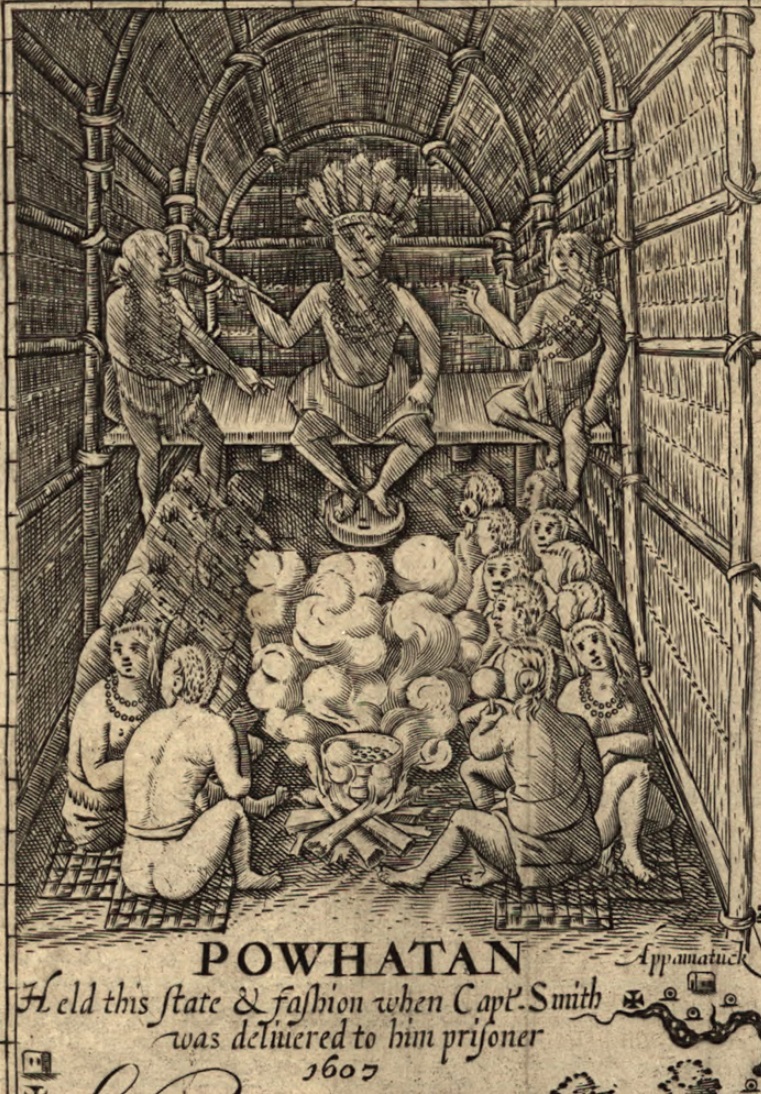
Interior of a longhouse with Chief Powhatan (detail of John Smith map, 1612)

Longhouses were a style of residential dwelling built by Native American and First Nations peoples in various parts of North America. Sometimes separate longhouses were built for community meetings.

Iroquois and the other East Coast longhouses

[edit]

The Iroquois (Haudenosaunee or "People of the Longhouses"), who reside in the Northeastern United States as well as Central Canada (Ontario and Quebec), built and inhabited longhouses. These were sometimes more than 75 m (246 ft) in length but generally around 5 to 7 m (16 to 23 ft) wide. Scholars believe walls were made of sharpened and fire-hardened poles (up to 1,000 saplings for a 50 m (160 ft) house) driven close together into the ground. Strips of bark were woven horizontally through the lines of poles to form more or less weatherproof walls. Poles were set in the ground and braced by horizontal poles along the walls. The roof is made by bending a series of poles, resulting in an arc-shaped roof. This was covered with leaves and grasses. The frame is covered by bark that is sewn in place and layered as shingles, and reinforced by light swag.

Iroquois longhouse replica in New York State Museum, Albany, NY

Doors were constructed at both ends and were covered with an animal hide to preserve interior warmth. Especially long longhouses had doors in the sidewalls as well. Longhouses featured fireplaces in the center for warmth. Holes were made above the hearth to let out smoke, but such smoke holes also let in rain and snow. Ventilation openings, later singly dubbed as a smoke pipe, were positioned at intervals, possibly totalling five to six along the roofing of the longhouse. Missionaries who visited these longhouses often wrote about their dark interiors.

On average a typical longhouse was about 24.4 by 5.5 by 5.5 m (80 by 18 by 18 ft) and was meant to house up to twenty or more families, most of whom were matrilineally related. The people had a matrilineal kinship system, with property and inheritance passed through the maternal line. Children were born into the mother's clan.

Protective palisades were built around the dwellings; these stood 4.3 to 4.9 m (14 to 16 ft) high, keeping the longhouse village safe.

Tribes or ethnic groups in northeast North America, south and east of Lake Ontario and Lake Erie, which had traditions of building longhouses include the Five Nations of the Iroquois Confederacy (Haudenosaunee): Seneca, Cayuga, Onondaga, Oneida and Mohawk. The Wyandot (also called Huron) and Erie people, both Iroquoian peoples, also built longhouses, as did the Algonquian peoples, such as the Lenni Lenape, who lived from western New England in Connecticut, in New Jersey along the lower Hudson River and along the Delaware River and both sides of the Delaware Bay. The Pamunkey of the Algonquian-speaking Powhatan Confederacy in Virginia also built longhouses.

Although the Shawnee were not known to build longhouses, colonist Christopher Gist describes how, during his visit to Lower Shawneetown in January 1751, he and Andrew Montour addressed a meeting of village leaders in a "Kind of State-House of about 90 Feet [27 m] long, with a light Cover of Bark in which they hold their Councils."[1]

Northwest Coast longhouses

[edit]
A Northwest Coast longhouse at the Museum of Anthropology at the University of British Columbia
Interior of a Salish Longhouse, British Columbia, 1864. Watercolour by Edward M. Richardson (1810–1874).

The indigenous peoples of the Pacific Northwest of North America also built a form of longhouse. Theirs were built with logs or split-log frame, and covered with split log planks, and sometimes an additional bark cover. Cedar is the preferred lumber. The wealthy built extraordinarily large longhouses. Old Man House, built by the Suquamish, at what became the Port Madison Squamish Reservation, was 152 by 12–18 m (500 by 40–60 ft), c. 1850.[2][3]

Usually one doorway faces the shore. Each longhouse contains a number of booths along both sides of the central hallway, separated by wooden containers (akin to modern drawers). Each booth has its own individual hearth and fire. Usually an extended family occupied one longhouse, and cooperated in obtaining food, building canoes, and other daily tasks. The gambrel roof was unique to the Coast Salish of Puget Sound.[2] The front is often very elaborately decorated with an integrated mural of numerous drawings of faces and heraldic crest icons of raven, bear, whale, etc. A totem pole often was erected outside the longhouse. The style varies greatly, and sometimes it became part of the entrance way.

Tribes or ethnic groups along the North American Pacific coast with some sort of longhouse building traditions include the Haida, Tsimshian, Tlingit Makah, Clatsop, Coast Salish and Multnomah.

Excavations at Ozette, Washington

[edit]

From beneath mudflows dating back to about 1700, archaeologists have recovered timbers and planks. In the part of one house where a woodworker lived, tools were found and also tools in all stages of manufacture. There were even wood chips. Where a whaler lived, there lay harpoons and also a wall screen carved with a whale. Benches and looms were inlaid with shell, and there were other indications of wealth.

A single house had five separate living areas centered on cooking hearths; each had artifacts that revealed aspects of the former occupants' lives. More bows and arrows were found at one living area than any of the others, an indication that hunters lived there. Another had more fishing gear than other subsistence equipment, and at another, more harpoon equipment. Some had everyday work gear, and few elaborately ornamented things. The whaler's corner was just the opposite.

The houses were built so that planks on the walls and roofs could be taken off and used at other places, as the people moved seasonally. Paired uprights supported rafters, which, in turn, held roof planks that overlapped like tiles. Wall planks were lashed between sets of poles. The position of these poles depended on the lengths of the boards they held, and they were evidently set and reset through the years the houses were occupied. Walls met at the corners by simply butting together. They stayed structurally independent, allowing for easy dismantling. There were no windows. Light and ventilation came by shifting the position of roof planks, which were simply weighted with rocks, not fastened in position.

Benches raised above the floor on stakes provided the main furniture of the houses. They were set near the walls. Cuts and puncture marks indicated they served as work platforms; mats rolled out onto them tie with elders' memories of such benches used as beds.

Storage was concentrated behind the benches, along the walls and in corners between benches. These locations within the houses have yielded the most artifacts. The rafters must have also provided storage, but the mudflow carried away this part of the houses.

Bibliography

[edit]

See also

[edit]

References

[edit]
[edit]

Further reading

[edit]
Revisions and contributorsEdit on WikipediaRead on Wikipedia
from Grokipedia
Longhouses of the of were traditional, multi-family dwellings primarily constructed and used by Iroquoian farming tribes in the Northeastern Woodlands region, such as the nations of the Haudenosaunee () Confederacy: the Mohawk, Oneida, Onondaga, Cayuga, and Seneca. These elongated, rectangular structures housed extended matrilineal families from the same , often accommodating 10 to 20 families or more, and served as central hubs for social, economic, and ceremonial life within villages protected by palisades. Symbolizing unity and cooperation, the design reflected the communal organization of these societies, with the Haudenosaunee Confederacy itself metaphorically referred to as a great uniting its member nations. Typically ranging from 30 to over 400 feet in length, about 20 to 25 feet in width, and 12 to 20 feet in , longhouses featured a symmetrical layout with rounded or pitched roofs, two doors at opposite ends, and a central running the length of the interior. Construction involved a framework of upright posts, horizontal poles, and flexible saplings lashed together with bark fibers or ropes, then covered with overlapping sheets of or for weatherproofing; doors were often made of animal hides, and smoke holes pierced the roof above fire pits. Inside, the space was divided into family compartments approximately 20 feet long, each with raised platforms or bunks along the walls for sleeping and storage, while pairs of families shared a central for cooking and warmth. This adaptable was well-suited to the region's forests, providing durable shelter that could be expanded as clans grew. Archaeological evidence indicates longhouses were in use among Iroquoian peoples as early as the 15th century, with European accounts from the early 1600s, such as those by Samuel de Champlain, describing large longhouses in Huron villages housing dozens of residents. They remained central to village life through the 17th and into the 18th centuries, though their prevalence declined with European colonization, displacement, and the adoption of log cabins or other housing forms by the mid-1700s. Today, reconstructed longhouses at historic sites, such as Ganondagan State Historic Site in New York, preserve these architectural traditions and educate on Haudenosaunee history, including the Confederacy's formation around A.D. 1200 and its role in fostering peace among nations. Beyond the Northeast, similar longhouse styles appeared in other regions, such as among Pacific Northwest tribes like the Coast Salish, but the term most commonly refers to the Woodland variants; longhouses encompassed varied designs across regions, with bark longhouses in the East and plank longhouses on the Northwest Coast, each reflecting local materials and cultures.

Definition and Overview

General Characteristics

Longhouses of the of were elongated, multi-family dwellings designed to house extended families or clans, typically measuring 40 to 200 feet in length, with some examples extending up to 400 feet or more. These structures accommodated 20 to 100 individuals, fostering communal living among related kin groups who shared resources and responsibilities within a single residence. Key physical characteristics included a rectangular frame constructed from poles or beams, often sourced from local timber, which supported walls covered in bark slabs, wooden planks, or woven mats for weatherproofing. Roofs were typically arched or gabled to shed rain and snow, with smoke holes or vents positioned above central hearths to allow for ventilation during cooking and heating. Interiors featured a long central aisle flanked by partitioned sleeping and storage areas, including raised platforms for beds and shelves for goods, centered around one or more fire pits that served as focal points for daily activities. Functionally, longhouses acted as primary residences that integrated living spaces with storage for food, tools, and ceremonial items, supporting the of extended families as the basic unit of . They emphasized permanence and scale, distinguishing them from more portable or smaller Indigenous dwellings such as tipis, which were conical and suited for nomadic Plains groups, or wigwams, which were dome-shaped and typically housed nuclear families in the Northeast. While shared traits like multi-family use persisted across regions, variations in size and covering materials reflected local environments, such as bark in the Eastern Woodlands and planks in the Northwest Coast.

Historical Context

The longhouses of in the Northeast of emerged during the Late , approximately between 1000 and 1400 CE, evolving from earlier semi-permanent oval or round structures associated with mobile societies. This transition coincided with significant agricultural shifts, particularly the intensification of cultivation, which became a dietary staple comprising 50-60% of caloric intake by the late 13th to early 14th century, alongside beans and squash in the "Three Sisters" system. Archaeological evidence indicates that the adoption of this agricultural complex, dated to around 1070 CE in the Northeast, supported and , enabling the construction of larger, multi-family longhouses that housed extended matrilineal kin groups. These developments were most pronounced among proto-Iroquoian groups in regions like and , where villages began to form on fertile riverine floodplains, marking a shift toward more permanent settlements. Prior to European contact, longhouses were prevalent among Iroquoian-speaking peoples in the Northeast from roughly 1000 CE onward, with earlier precursors traceable to the Middle Woodland period around 500 BCE, though fully developed rectangular forms solidified later. On the Northwest Coast, plank houses—often referred to as longhouses—exhibited a longer continuity, serving as the primary dwelling type for groups like the Coast Salish and for over 2,500 years, from circa 500 BCE until the late , reflecting adaptations to abundant marine and resources rather than . These structures supported clan-based communal living across diverse environmental contexts, with Iroquoian longhouses typically 20-100 meters in length by the and Northwest Coast variants emphasizing elaborately carved cedar planks for multi-family use. European contact in the precipitated a rapid decline in use among both Iroquoian and Northwest Coast peoples, driven by devastating epidemics, intensified warfare, and . In the Northeast, Iroquoian populations suffered severe losses from diseases like starting in the 1630s, compounded by the (mid-1600s), which involved intertribal conflicts fueled by European alliances, leading to village abandonments and migrations; by the late 17th century, many Haudenosaunee groups had coalesced into fewer, fortified settlements before shifting to European-style housing. On the Northwest Coast, epidemics from the 1770s onward, including , caused population declines of up to 30-50% in some communities, while colonial policies of reservation confinement and resource loss in the 1800s prompted the abandonment of traditional plank houses in favor of smaller, imposed dwellings. By the early , construction had largely ceased in both regions due to these intersecting pressures. Archaeological evidence underscores the historical significance of longhouse villages, particularly in the Northeast, where palisaded settlements from 1000-1500 CE reveal organized clusters of 10-50 s enclosing 1-4 hectares, often surrounded by wooden stockades for defense against raids. Sites in , such as the Draper and Mantle villages (ca. 1450-1500 CE), excavated in the 1950s-1970s, show post molds delineating longhouse outlines, communal storage pits for agricultural surplus, and evidence of periodic relocations every 20-40 years due to depletion and social factors. These findings, corroborated by and artifact assemblages, illustrate the evolution from dispersed hamlets to fortified proto-urban centers, highlighting longhouses' role in fostering before contact disruptions.

Construction and Design

Materials and Building Techniques

The construction of longhouses among of relied on renewable, locally sourced materials that emphasized sustainability and adaptability to regional environments. Primary framing elements consisted of flexible saplings, poles, or posts harvested from second-growth forests, such as cedar, , or trees, which provided the necessary strength and pliability for erecting durable structures. Walls and roofs were typically covered with large slabs of bark, including in the Eastern Woodlands or cedar in the , often layered and secured seasonally to withstand weather variations. In some cases, these coverings were reinforced with clay, , or additional bark strips to enhance insulation and stability. Building techniques involved erecting a framework by setting vertical posts into the ground, lashing horizontal poles and arched or straight rafters with flexible bark strips or ropes, and then attaching bark coverings secured by outer poles to resist and elements. This process was carried out through organized communal efforts, with of a typical estimated to take several weeks, depending on size and labor availability— for instance, around 42 days for a mid-sized Northwest Coast plankhouse using about 50 workers. In the Northwest Coast, modular plank designs allowed for easier assembly and disassembly, using overlapping cedar planks for walls and roofs fastened with wedges and secured by rocks against environmental pressures. Eastern examples, like Iroquoian longhouses, featured more arched pole frames bent into shape while green, tightening upon drying for added rigidity. Traditional tools were crafted from natural materials, including stone axes and adzes for felling trees, shaping bark, and smoothing wood, as well as bone awls for piercing and bark elements. These implements reflected a commitment to resource renewability, as materials were selected from abundant, regrowing forests, minimizing long-term ecological impact. Climate adaptations were integral to the design, such as adjustable smoke holes in the roof for ventilation and smoke escape from central hearths, which could be closed during inclement weather. In wetter regions like the Northwest Coast, floors were often raised on pilings or earthen mounds to prevent flooding and dampness, enhancing habitability in rainy environments.

Interior Layout and Features

The interior of longhouses among of , particularly in the Eastern Woodlands and Northwest Coast regions, was organized to support communal living for multiple families while providing semi-private spaces for daily activities. Typically, the space was divided along a central running the length of the structure, with family compartments flanking both sides; these compartments were separated by partitions made of bark, woven mats, or wooden screens to offer without fully enclosing areas. Raised platforms or benches lined the walls of each compartment, serving dual purposes as sleeping areas and storage spaces; these were often covered with mats or furs for comfort and elevated about one foot off the earthen floor to protect against dampness and pests. A key feature was the central fire aisle, where hearths—ranging from 2 to 20 in number depending on the 's size—provided heat, light, and cooking facilities shared among families; each was typically associated with one or two families and positioned to allow to rise toward adjustable openings. Ventilation relied primarily on holes in the gabled or arched , with minimal windows to retain warmth; additional insulation came from inner layers of rush mats, hides, or cedar planks hung along walls during colder seasons. Entry was facilitated by doors or porches at one or both ends of the , often framed with hides or mats for weather protection, leading directly into the main . Storage was integrated throughout the interior, with lofts or shelves overhead for , tools, and belongings, and spaces beneath platforms for or less frequently used items; in larger examples, end sections served as communal storage for bulk goods like corn casks. Designs emphasized , allowing families to expand the structure by adding modular sections without major reconstruction, accommodating 5 to 20 families or more based on length—such as 100 to 300 feet in Northwest Coast examples or up to 400 feet in Eastern Woodlands ones. pits along the central aisle also functioned briefly as communal gathering points for shared meals and .

Eastern Woodlands Longhouses

Iroquoian Longhouses

Iroquoian longhouses, used by peoples such as the Haudenosaunee (also known as the ) and the Huron-Wendat, were elongated, rectangular structures typically measuring 80 to 120 feet in length for Huron-Wendat variants, though Haudenosaunee examples often extended to 180-220 feet or more, with widths of about 20 feet and heights reaching 20 feet. These dwellings featured a framework of bent saplings and poles forming an arched or rounded roof covered in large sheets of or cedar bark, which provided waterproofing and durability, lasting up to 15-20 years before requiring replacement. Entry was through two doors, one at each end, often symbolizing the matrilineal clan structure, with the interior divided by a central aisle lined with raised platforms for sleeping and storage; multiple hearths—typically one every 20 feet along the aisle—served 6 to 12 families, each pair sharing a for cooking and warmth. All residents in a single longhouse belonged to the same matrilineal clan, such as the or among the Haudenosaunee, fostering communal family units centered on maternal lineages. Historical villages exemplified these structures' scale and defensive integration, as seen in Onondaga settlements where over 20 longhouses were enclosed within wooden palisades for protection against raids, forming compact communities that supported populations of several hundred. These longhouses played a pivotal role in the formation of the Haudenosaunee Confederacy, according to oral tradition around 1142 CE, serving as a metaphor for unity: the five (later six) nations were envisioned as families dwelling together in one vast longhouse, with the Onondaga at the central hearth as "Keepers of the Fire," symbolizing shared governance under the Great Law of Peace. Huron-Wendat villages, such as the 16th-century Mantle site, similarly featured clusters of longhouses amid palisades, reflecting organized agrarian societies. Adaptations enhanced habitability in the cold Northeastern climates, including double-layered walls with an inner lining of woven reed mats or furs for insulation against winter temperatures, while exterior bark sheathing trapped heat from the hearths. Longhouses were strategically sited near cleared cornfields, integrating domestic life with the "Three Sisters" agriculture of corn, beans, and squash, which sustained the multi-family households within. The decline of traditional Iroquoian longhouses accelerated in the 1600s due to widespread destruction during the , when Haudenosaunee forces razed Huron-Wendat villages, including their longhouses, to control routes and absorb survivors. Additionally, European-introduced epidemics, such as outbreaks in the 1630s and 1640s, decimated populations, further disrupting traditional communal living. For the Haudenosaunee, missionary influences from Jesuit and other European agents further eroded longhouse use by promoting individual log cabins and Christian models, leading to a shift toward European-style by the late 17th and 18th centuries.

Other Northeastern Groups

Other Northeastern groups, including additional Iroquoian-speaking peoples such as the and Neutral Nation, as well as Algonquian-speaking groups like the , utilized variations of longhouse architecture. The , also known as the Tobacco Nation or Tionontati, inhabited regions south of and built rectangular bark longhouses with gabled roofs, akin to those of neighboring groups, from approximately 1300 to 1650 CE. These longhouses supported tobacco-farming communities, where extended families shared spaces divided by sleeping platforms and hearths, reflecting a matrilineal integrated with intensive , corn, and beans. Archaeological evidence from Petun sites indicates villages of 20 to 30 such structures, often fortified, underscoring their role in sustaining populations through specialized agriculture in hilly terrains. Similarly, the Neutral Nation, or Attawandaron, utilized rectangular longhouses covered in elm or basswood bark with gabled roofs in their settlements across from around 1300 to 1650 CE, accommodating multiple related families in tobacco-centric communities. These dwellings, typically 60 to 100 feet long, featured central fire pits and partitioned interiors, and were clustered in over 40 villages that balanced farming with and trade, as evidenced by palisaded enclosures protecting agricultural fields. In transitional areas of the Northeast, Algonquian-speaking groups like the exhibited influences blending semi-permanent longhouse elements with traditional s, allowing single-family dome-shaped structures to expand into multi-family rectangular forms using bark coverings and pole frameworks for seasonal mobility. This hybrid adaptation supported mixed subsistence in riverine zones, where wigwam bases could incorporate longhouse-like extensions for larger kin groups during farming periods, differing from the more static Iroquoian villages.

Northwest Coast Longhouses

Architectural Variations

The plank-house style of longhouses among Northwest Coast , such as the , , , and Kwakwaka'wakw, was characterized by the use of massive red cedar planks for walls and roofs, split from large trees and fitted horizontally into a robust post-and-beam framework. These structures typically measured up to 100 feet in length, with rectangular or near-square floor plans that accommodated extended families, supported by heavy cedar posts and beams for stability in the region's seismic and climatic conditions. Roof designs varied regionally, featuring gabled forms with a single central ridge beam among northern groups like the and northern , or shed roofs sloping to one side in southern variants among the Coast Salish and southern ; these roofs were often crowned with carved totems or painted crests representing clan lineages and spiritual motifs. In coastal settings prone to tidal surges and flooding, many longhouses were elevated on wooden pilings driven into the ground or beachfront, raising floors several feet above the for protection. Interiors were divided into multiple family apartments along the length, each with partitioned sleeping platforms, storage areas, and separate plank doorways facing the village pathway, centered around one or more communal fire pits. Representative examples include Nuu-chah-nulth villages on Vancouver Island's west coast, where broadside-oriented longhouses up to 30 meters long formed clusters adapted to heavy rainfall and marine influences, and Kwakwaka'wakw settlements along the central coast, featuring 10 to 20 square or rectangular plank houses—typically 12 to 18 meters per side—arranged in rows by social rank and facing the sea. The design's emphasis on durability and reuse enhanced longevity, as wall and roof planks were lashed rather than nailed, allowing for disassembly during or of individual planks, with planks lasting decades and entire structures enduring for generations through periodic renewals.

Ozette Excavations and Discoveries

The Ozette archaeological site, an ancient Makah village on the northwestern Olympic Peninsula in Washington state, was abruptly buried by a massive mudslide in the early 18th century (circa 1700–1750 CE), which sealed its longhouses and contents beneath layers of clay and sand. This event rendered the village uninhabitable but preserved its organic materials in a waterlogged, anaerobic environment that inhibited bacterial decay, acting as a natural time capsule. In the winter of 1969–1970, severe storms caused tidal erosion along the beachfront, exposing cedar planks and artifacts from the buried structures, which prompted systematic excavations beginning in 1970 and continuing through 1981 under the direction of archaeologists from Washington State University and the National Park Service. Over the 11-year effort, teams recovered more than 55,000 artifacts from the remains of six longhouses, offering unprecedented insights into pre-contact Northwest Coast Indigenous life. Among the most significant discoveries were the well-preserved interiors of the plank longhouses, which evidenced multi-family dwellings typically housing three to four extended families, with spaces partitioned by elaborately carved wooden screens depicting clan crests and supernatural beings. Elevated box beds, constructed from split cedar planks and often lined with woven mats, lined the walls, while central hearths and storage areas highlighted communal living arrangements. Accompanying artifacts included a diverse array of stone and bone tools for woodworking and hunting, tightly woven baskets for storage and fishing, and fragments of seaworthy canoes crafted from red cedar, all found in situ to reconstruct everyday routines. These findings illuminated the Makah's pre-contact daily life, revealing a sophisticated culture sustained by the sea, with abundant bones and points underscoring and economic importance. Evidence of broad trade networks emerged through artifacts traced to sources in the Cascade Mountains and beyond, demonstrating exchange of materials like for coastal goods such as shells and with inland and distant groups. The site's preservation conditions—saturated soils devoid of oxygen—allowed for the survival of perishable items like cedar ropes and bark capes that rarely endure in other archaeological contexts. In the years following the excavations, the artifacts underwent conservation and were repatriated to the Makah Tribe under federal legislation, including the Native American Graves Protection and Repatriation Act, and are now stewarded at the Makah Cultural and Research Center in Neah Bay, where they inform tribal education and cultural revitalization programs.

Cultural and Social Role

Communal Living and Social Structure

Longhouses among the of , particularly in the Eastern Woodlands and Northwest Coast regions, served as central hubs for matrilineal , where residence was matrilocal and women held ownership of the structures. In Haudenosaunee () society, extended families belonging to the same matrilineal —such as the , or clans—occupied specific ends or sections of the , reinforcing clan identity and inheritance through the mother's line. Similarly, among Northwest Coast groups like the , housed matrilineal kin groups, with descent traced through women and affiliations determining spatial arrangements within the dwelling. This matrilocal system ensured that children and husbands joined the wife's clan household, promoting stability and continuity in family lineages. Daily life in these longhouses emphasized communal activities and shared responsibilities, accommodating 40 to 100 individuals in a single structure divided into compartments. Cooking and food preparation were collective endeavors, often centered around shared hearths where women prepared meals from the Three Sisters crops (corn, beans, and squash), while child-rearing involved extended kin contributing to and care. Gender roles were distinctly divided yet interdependent: men typically handled , , and , while women managed , resource distribution, and household , fostering a dynamic despite these divisions. Communal occurred in informal gatherings within the longhouse, addressing and matters through consensus, which extended to broader village affairs. The longhouse's design and capacity for large-scale habitation symbolized unity and alliance, most notably in Haudenosaunee culture where the term "Haudenosaunee" translates to "People of the Longhouse," metaphorically representing the confederacy as a single protective dwelling with each nation as an extended family under one roof. This metaphor underscored the political solidarity of the Haudenosaunee Confederacy, where the longhouse's linear layout mirrored the alliance's structure, from the Mohawk at one end to the Seneca at the other, with the Onondaga as the central "firekeepers." In terms of gender aspects, women's councils convened in or near longhouses to oversee clan welfare, nominate male leaders (hoyaneh or sachems), and even remove them if they failed to serve communal interests, thereby influencing governance at both local and confederacy levels. This authority highlighted women's pivotal role in maintaining social harmony and political balance within the matrilineal framework.

Ceremonial and Symbolic Importance

Longhouses served as vital centers for ceremonial activities among of , particularly in the Eastern Woodlands and Northwest Coast regions. In Haudenosaunee () communities, longhouses hosted condolence ceremonies, which were essential rituals for leadership transitions and mourning the deceased, originating from the figure of Hayo’wetha who used beads to console grief and record ethical codes of peace. These ceremonies reinforced social continuity by clearing minds and re-establishing communication channels among clan members. On the Northwest Coast, longhouses were primary venues for potlatches, elaborate gift-giving festivals that included feasts, dances, and songs to honor the dead, validate inherited privileges, and affirm chiefly status through displays of generosity. Symbolically, the longhouse embodied profound cultural and governance principles. For the Haudenosaunee, it represented the extended family clan structure and matrilineal unity, serving as a model for the —a foundational established by the Peacemaker that united the Six Nations through consensus, righteousness, justice, and health, symbolized by the with its roots extending in four directions. In Northwest Coast societies, longhouses functioned as spirit houses, their exterior and interior crest carvings depicting ancestral crests, supernatural beings, and family histories to invoke protection and prestige during rituals. These symbols extended beyond physical shelter, representing the interconnectedness of community, land, and cosmic order. Art and artifacts within longhouses amplified their ceremonial depth, with items stored, displayed, and used in seasonal dances around central fires. Haudenosaunee longhouses featured wampum belts as sacred records of treaties and laws, integral to rituals that preserved oral traditions and spiritual narratives. Northwest Coast examples included intricately carved cedar masks, regalia such as button blankets and copper shields, and rattles depicting spiritual entities, all employed in potlatch performances to recount ancestral encounters and maintain cultural protocols. These elements, often created by hereditary artists, transformed the longhouse into a living gallery of heritage during all-night events. The spiritual significance of longhouses tied communities to ancestors and emphasized land stewardship. In Haudenosaunee tradition, as the "People of the Longhouse," these structures linked generations through ceremonies that honored ancestral guidance and the ethical imperatives of the Great Law, fostering a of harmony with the . Northwest Coast longhouses similarly connected inhabitants to spiritual forces and forebears via crest carvings and sacred at.oow objects, which were believed to carry ancestral power and obligations to protect familial territories and resources. This spiritual framework underscored longhouses as enduring symbols of resilience and reciprocal relationships with the land.

Preservation and Modern Adaptations

Archaeological Efforts

Archaeological investigations into longhouses of Indigenous North American peoples have increasingly employed non-invasive methods such as geophysical surveys to map subsurface features without extensive excavation, particularly at Iroquoian village sites in where longhouses, palisades, and middens are detectable through magnetic and resistivity data. has been utilized to date wooden structural elements from longhouse remains, providing precise timelines for construction and abandonment in regions where suitable tree-ring samples, such as from cedar or , are preserved. Since the enactment of the Native American Graves Protection and Repatriation Act (NAGPRA) in 1990, collaborative digs with tribal communities have become standard, ensuring compliance through consultation, of human remains and cultural items, and shared decision-making on site stewardship. Key projects in the Northeast include the 1990s excavations at the Lawson site, a Neutral (Attawandaron) village in , where archaeologists uncovered multiple outlines through systematic trenching and feature mapping, revealing a planned settlement. In the Northwest, the site on , associated with the , has yielded evidence of plank-house villages through stratigraphic analysis of deposits spanning thousands of years, including structural remnants and associated artifacts from multi-occupation layers. These efforts build on model sites like Ozette, emphasizing preservation techniques for waterlogged wood. Challenges in these studies include site , which has damaged undocumented longhouse locations through illegal artifact removal, and climate change-induced erosion, such as rising sea levels and thaw threatening coastal and northern sites with structural exposure and degradation. Ethical under NAGPRA adds complexity, requiring institutions to return sacred items like longhouse-related ceremonial objects to descendant communities, often halting or redirecting ongoing research. Such archaeological work has contributed to reconstructing village layouts, as seen in detailed post-mold patterns from Iroquoian sites that illustrate clustered around central plazas, indicating and defensive strategies. Analyses of trade patterns have also advanced, with artifact distributions from contexts revealing networks for shell beads, , and ceramics across the Northeast and Northwest, linking villages to broader economic exchanges.

Contemporary Revivals

In the late 20th and early 21st centuries, Indigenous communities across have undertaken significant efforts to reconstruct longhouses as symbols of cultural continuity and resurgence. A prominent example is the Seneca Bark Longhouse at Ganondagan State Historic Site in , where construction began in spring 1997 and was dedicated on July 25, 1998; this full-scale , built with elm bark and traditional framing techniques, serves as a centerpiece for Haudenosaunee . Similarly, the Cultural and Research Center in , features a full-sized as part of its permanent exhibits, drawing on artifacts from the Ozette site to showcase pre-contact life; the facility reopened to visitors in 2022 following closures, enhancing its role in community-led preservation post-2000. In , the Huron-Wendat Nation's Ekionkiestha' National Longhouse in provides an authentic pre-contact reconstruction, integrated into the Musée Huron-Wendat, while the nearby Onhoüa Chetek8e Traditional Site recreates a full Wendat village with longhouses to immerse visitors in ancestral practices. These revived longhouses function as multifaceted spaces for , ceremonies, and eco-tourism, often blending traditional designs with modern principles. At Ganondagan, the longhouse hosts interpretive programs on Haudenosaunee daily life, including demonstrations of clan-based communal activities, and accommodates ceremonies that reinforce social structures. The Makah replica supports cultural through guided tours and exhibits on and traditions, while also serving as a venue for tribal ceremonies and attracting eco-tourists interested in sustainable Indigenous practices. In Wendake, the longhouses facilitate interactive storytelling sessions and group events, promoting eco-tourism that highlights Huron-Wendat ; these structures increasingly incorporate elements compliant with contemporary sustainable building codes, such as energy-efficient materials and local sourcing, to align with tribal green initiatives. Such adaptations allow longhouses to model resilient, low-impact architecture amid climate challenges. Reviving these structures presents notable challenges, particularly in material sourcing and . Traditional materials like cedar planks and bark are difficult to obtain sustainably due to forest regulations, overharvesting concerns, and the need for culturally appropriate harvesting protocols that respect tree health and spiritual protocols, as seen in communities where Western redcedar access is limited. often relies on inconsistent and tribal resources, compounded by bureaucratic hurdles in federal support for cultural projects, delaying constructions like those at cultural centers. Despite these obstacles, the cultural impact of longhouse revivals is profound, aiding the revitalization of Indigenous languages and traditions in urbanizing contexts. For instance, gatherings in longhouses, such as those hosted by the shíshálh Nation, foster global dialogues on and cultural , while projects like the Chemakum for the integrate spaces for language classes, songs, and dances to counter urban disconnection and preserve oral histories. These efforts strengthen identity, transmitting across generations and resisting assimilation pressures.

References

Add your contribution
Related Hubs
User Avatar
No comments yet.