Hubbry Logo
Protective equipment in gridiron footballProtective equipment in gridiron footballMain
Open search
Protective equipment in gridiron football
Community hub
Protective equipment in gridiron football
logo
8 pages, 0 posts
0 subscribers
Be the first to start a discussion here.
Protective equipment in gridiron football
from Wikipedia

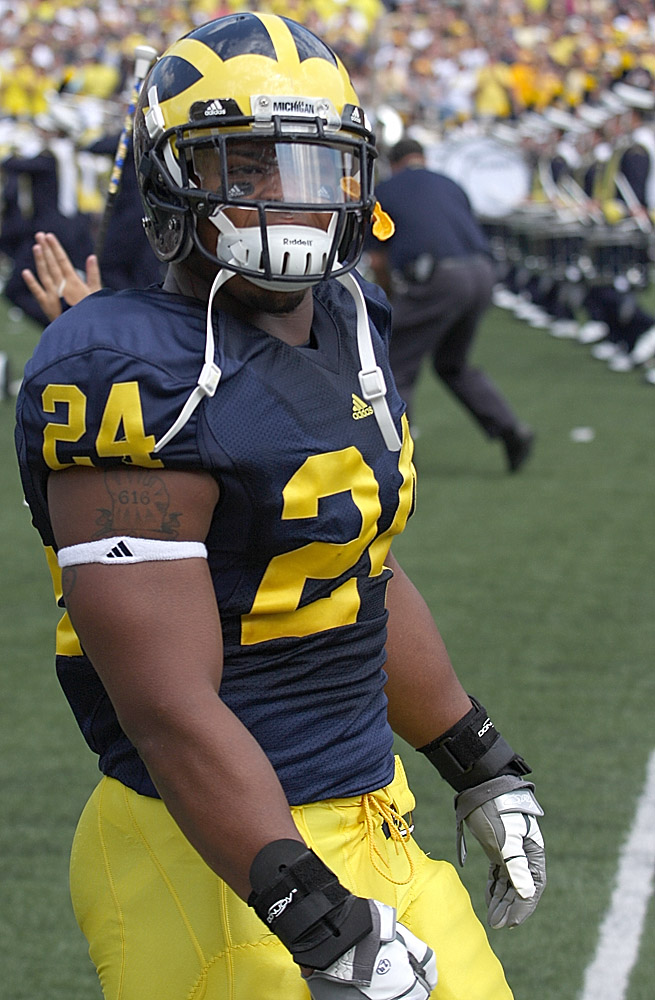
Kevin Grady wearing a winged football helmet with a clear visor and a mouthguard

Gridiron football players wear various pieces of equipment for the protection of the body during the course of a football game. Basic equipment worn by most football players include a helmet, shoulder pads, gloves, shoes, and thigh and knee pads, a mouthguard, and a jockstrap or compression shorts with or without a protective cup. Neck rolls, elbow pads, hip pads, tailbone pads, rib pads, and other equipment may be worn in addition to the aforementioned basics. Football protective equipment is made of synthetic materials: foam rubbers, elastics, and durable, shock-resistant, molded plastic. Football protective equipment has remained consistent in use for decades with some slight modifications made over the years in design and materials. The assignment and maintenance of football gear belongs to the team equipment manager.

Helmet

[edit]
American football helmet

The professional football helmet consists of several distinct parts: the shell, jaw pads and abdomen bladders, face mask, chin strap, and mouth guard. The shell is constructed of hard plastic with thick padding on the inside, a face mask made of two or more metal bars (usually two spaced far apart and a third close to the middle), and a chinstrap used to secure the helmet. Helmets are a requirement at all levels of organized football, except for non-tackle variations such as flag football. Although they are protective, players can and do still suffer head injuries such as concussion. Football helmets bear the logo of the team and the team colors. By the mid-1980s, the football helmet had become a complex, highly engineered piece of equipment. The inside of the helmets was lined with foam padding and plastic pods, or an inflatable layer designed to absorb the shock of impact and create as tight as fit as possible. In 1995. the football helmet went high-tech, when a new rule permitted quarterbacks to have a radio transmitter in their helmets, making it possible for a team’s coach to call in plays without the need for elaborate sideline semaphore.[1]

There are several styles of face masks and chin straps available. The selection is left to the player, with quarterbacks generally selecting more open masks with maximum visibility. Each position has a different type of face mask to balance protection and visibility. There are at least 15 different facemask styles. New design for the helmet includes an integrated faceguard featuring shock absorbing "Energy Wedges" that reduce the force of impacts to the faceguard.

A recent addition to the football helmet is a visor or eye shield, traditionally used to protect players from eye injuries or glare. Former Chicago Bears quarterback Jim McMahon was the first to wear a visor/shield. The visors started out as clear or smoked, but now come in colors ranging from blue, gold, black, rainbow, silver, or amber. The clear visor/shield is used at the player's discretion. The NFL requires medical clearance related to migraines and sun sensitivity for tinted, sunglass like, visors.[2] An exception has been made for players with Oakley sponsorships: The company's light pink tinted "Prizm Shield" visors may be worn. [3]

The helmet fitting process starts by measuring the player's head with calipers. Based on measurements taken, a helmet shell of the appropriate size and style is chosen. Then, padding is added to ensure that the helmet fits the player's head. Padding consists of both foam rubber pads and inflatable (air) pads. Both the top and side padding include inflatable bladders that customize the fit. Once the helmet is in place on the player's head, the inflator bulb is applied to two points on the outside of the helmet. The jaw pads are fitted to ensure that the lower part of the helmet is snug against the player's face. The helmets that most NFL teams use are remarkably light, and once the pads are in place, there is no movement or shifting on the player's head.

Radio

[edit]

The first in-helmet radio transmitter was invented in 1956 by John Campbell and George Sarles, who approached then-Cleveland Browns owner Paul Brown to install a radio inside quarterback George Ratterman's helmet. It only resulted in game time interference, and was outlawed by then-NFL commissioner Bert Bell after only three preseason games.[4] The NFL allowed dummy communication in regular-season games in 1994, 38 years after the Browns' experiment. Rather than coaches calling a time-out in order to give a play to a quarterback, many of today's teams have opted for radios inside their quarterback's helmet. The helmets are set up with a small speaker in each ear hole. Quarterback coaches or offensive coordinators on the sidelines talk to the quarterback with a radio, giving him specific plays and options. Players from the "old school" might argue that this creates an unfair advantage, but proponents say that the radio helmets make for clear coach-to-player communication, even in large, noisy games like the Super Bowl.

NFL rules state that all helmets with a headset in them must have a visible green dot on the back. Since only the quarterback can have a wired helmet, it stops other players using the quarterback's helmet. A few times in 2006 the holder on the field goal attempt was told to pull up and throw or run at the last second because of a change the coaches saw on the field. This gave teams an "unfair advantage" in the eyes of the NFL. The new rules let each team know who is wearing a headset and who is hearing the plays being called.

In 2008 the NFL changed the rules to allow one player for the defense, usually a linebacker, but sometimes a defensive back, to wear a radio helmet with a green dot.[5]

In 2024 the NCAA updated rules to allow one player on the offense and one player on the defense to wear a radio helmet, following rules similar to the NFL's with one major exemption, the radio is cut off when there are 15 seconds remaining on the play clock or when the ball is snapped, whichever comes first. The radio is not re-enabled until the end of that play.[6]

There are limitations to the radio helmet though since it can be distracting for players who are not used to them. Additionally helmets with speakers are generally more expensive than traditional helmets, and they require additional maintenance and care to ensure that the speakers and microphone are working properly.[7]

Shoulder pads

[edit]
Shoulder pads

The shoulder pads consist of a hard plastic outer shell with shock-absorbing foam padding underneath. The pads fit over the shoulders and the chest and rib area, and are secured with various snaps and buckles. Shoulder pads give football players their typical "broad-shouldered" look, and are fitted to an adult player by measuring across the player's back from shoulder blade to shoulder blade with a soft cloth measuring tape and then adding 1/2 inch. For comfort, shoulder pads are sometimes worn in conjunction with a shoulder pads cushion of foam rubber over a cotton half-tee.

Shoulder pads accomplish two things for a football player: (1) they absorb some of the shock of impact through deformation. The pads at the shoulders are strung on tight webbing and deform on impact, and (2) they distribute the shock through a larger pad that is designed to regulate players' body temperatures during games and practices and also protects against injury.

Jockstrap, or athletic supporter

[edit]
Protective cup

A typical jockstrap used in football is constructed of a wide elastic waistband with a support pouch of cotton/elastic to contain the genitals. Two wide elastic straps affixed to the base of the pouch and to the left and right sides of the waistband at the hip complete the jock. The pouch, in some varieties, may be fitted with a pocket to hold an impact resistant cup (protective cup) to protect the testicles and penis from injury. Many youth football players, such as the Pop Warner leagues, are often required to wear a protective cup. However, they are now not worn as often at the high school, college, and peewee level, although still highly recommended.[8] The jockstrap is the one piece of equipment used in football that predates the sport itself. In 1874, Charles Bennett of the Chicago sporting goods company, Sharp & Smith, created the "bicycle jockey strap" for bicycle riders (or, bicycle jockeys as they were then known). Other athletes adopted the jockey strap in their sports. A mass marketing in 1902 claimed the garment, now termed a "small comforter" was "medically installed" for all males that engaged in sports or harmful activity.

Jerseys and pants

[edit]

The main purpose of these two garments is to identify the player by name and number, and by his team colors.

Jerseys. The front and back of the jersey are usually nylon, with spandex side panels to keep it taut. The goal is to make it difficult for an opposing player to grab hold of the jersey and use it for leverage. To help this process: Jerseys have an extension at the bottom that wraps around from front to back to keep the jersey tucked in. Jerseys have a wide strip of Velcro at the rear that mates with Velcro inside the waistband of the pants. Many players apply two-sided carpet tape to their shoulder pads so that the jersey sticks to the pads. The players individually choose which of these features (if any) they will use. Each professional football player is usually equipped with a set of practice jerseys as well as four-game jerseys. Players will change jerseys at half time if it is raining. Jerseys will usually have a variety of patches affixed to the shoulders or other parts of the garment. Patches may depict the American flag, the team logo, or other significant information.

Pants. Pants are manufactured in nylon and mesh (for hot weather practices), and nylon and spandex for a tight fit (with team colors) for games. Most pants are manufactured with the traditional lace-up fly as a zippered fly is impractical and subject to damage due to stress in the rough and tumble of the game. The interior sides of the pants legs contain four individual pockets to hold two thigh pads (one for each leg) and two knee pads. The pads are placed in the pockets before the pants are put on in the locker room. The pants are secured with a belt, sometimes with a traditional metal buckle or with several rings. Game-used jerseys and pants are sports collectibles, with those of celebrity athletes realizing high sums.

Footwear

[edit]

Similar to soccer cleats, gridiron football shoewear have soles that consist of spikes called "cleats" purposefully designed for games on grass. Some cleats have removable cleats that can be screwed into specific holes. Cleat sizes are changed, depending on the conditions of the field (longer cleats provide better traction on a wet field, shorter cleats provide greater speed on a dry field). Flat bottomed shoes, called "turf shoes," are worn on artificial turf (specifically AstroTurf due to the lack of soil that causes friction and grip in artificial fields.

Other

[edit]

Hip, tail, thigh, and knee pads

[edit]

Quilted hip pads date to the 1890s and are one of the earliest pieces of protective football gear known. Today, hip and tailbone pads are made of plastic and protect the hips, pelvis, and coccyx or tailbone. The pads are inserted into the pockets of a girdle worn under the football pants. Thigh and knee pads are made of plastics and inserted into pockets constructed inside the football pants.

Nose guard

[edit]

Football nose armor as depicted in The Daily Review (Decatur, Illinois) of December 4, 1892

In the days before helmets, players often wore nose guards or "nose masks" or "nose armor".[9] Football was a brutal sport before the introduction of helmets and other protective gear. Serious injuries and even deaths were common occurrences in the game. Harvard's All-American center, John Cranston, was the first player to wear equipment to protect his face during an American football game. In order to protect Cranston's "weak nose," Harvard captain and 1889 All-American Arthur Cumnock invented a device that he called "nose armor."[10] Cumnock's invention gained popularity, and in 1892, a newspaper article described the growing popularity of the device:

"By the invention of nose armor football players who have been hitherto barred from the field because of broken or weak noses are now able to thrust an armor protected nose (even though it be broken) into the center of the roughest scrimmage without danger to the sensitive nasal organ. The armor is made of fine rubber and protects both the nose and teeth."[10]

Percy Langdon Wendell later invented the most commonly used version of the nose mask.[9]

Gloves

[edit]

Many receivers wear gloves that have sticky rubber palms, called tack gloves. Spray on sticky substances (such as Stick 'em) have been illegal since the 1980s. Linemen also wear gloves, for using their hands to fight off opposing linemen. The gloves worn by linemen usually are lined with very thick padding to better protect fingers and hands, which sometimes are caught in an opponent's face mask or are stepped on. Players are not permitted to put gels or "stick 'ems" on their gloves.

Equipment management

[edit]

The role of an equipment manager has become an important one for football teams. The equipment manager has two main areas of responsibility: first, fitting each player on the team with a customized array of equipment that will provide maximum protection against injury, and, secondly, being responsible for the logistics of handling many pieces of equipment on a daily basis—keeping it repaired and in stock, and moving the equipment for road games.

References

[edit]
[edit]
Revisions and contributorsEdit on WikipediaRead on Wikipedia
from Grokipedia
Protective equipment in gridiron football consists of specialized gear worn by players to mitigate injuries from the sport's high-impact collisions and tackles. Essential items include helmets to shield the head from concussions and fractures, shoulder pads to absorb shocks to the upper body and sternum, and lower-body pads such as , , , and tailbone protectors integrated into compression shorts or girdles for safeguarding joints and soft tissues. Mouthguards are also standard to prevent dental and orofacial trauma. The development of this equipment began in the late amid growing concerns over football's violence, with the first documented helmets appearing in 1893 as basic leather headgear during an Army-Navy game to cushion blows. By 1939, helmets were mandatory in and by 1943 in the professional game, evolving to hard shells with internal padding by the mid-20th century. Shoulder pads emerged around the same era, initially as and felt constructions before advancing to foam-lined for better impact distribution. Lower-body protections like and pads gained prominence in the , driven by rule changes emphasizing player safety. Regulations governing equipment vary by level but prioritize certified standards to ensure efficacy. In the , players must wear thigh and knee pads during games, with tested annually by biomechanical engineers; non-compliant gear can lead to fines or , as seen with three helmet models banned in for inadequate performance. The NCAA requires full lower-body padding including tailbone, hip, thigh, and knee coverage at least ½-inch thick, while mouthguards became mandatory across most leagues in the and . Innovations like sensor-embedded pads and Guardian Caps—soft shell overlays on that work by deforming and dissipating energy on contact—continue to refine protection, informed by ongoing research into impact reduction. Lab testing, including from Virginia Tech, shows reductions in STAR scores and impact severity metrics, with NFL data indicating 11-12% force absorption if one player wears it and up to 20% if both. As of 2025, Guardian Caps are permitted in regular-season games for certain positions and have been worn by players, though independent research has found uncertain evidence for prevention, and potential limitations include risk compensation (Peltzman effect) where players may engage in riskier behavior due to perceived added protection.

Overview and History

Purpose and Importance

Protective equipment in gridiron football encompasses specialized gear worn by players to absorb high-impact forces, minimize during contact, and safeguard critical body areas including the head, spine, , shoulders, and joints from trauma. This equipment plays a central role in mitigating the inherent risks of the sport, where collisions occur at speeds exceeding 20 miles per hour and generate accelerations up to 100 g (about 100 times the force of ), enabling athletes to compete while reducing the likelihood of debilitating injuries. The primary purpose of this gear is to address prevalent injuries such as concussions, fractures, lacerations, contusions, sprains, and strains, which collectively account for the majority of football-related medical issues. For instance, helmets significantly decrease the rate of catastrophic , with studies indicating they can reduce the risk of fractures by 60-70% and focal contusions by 70-80% through absorption and impact dispersion. Similarly, shoulder pads help mitigate fractures and other upper-body traumas, which comprise 10 to 20 percent of all football injuries, by distributing collision forces across the and . Overall, biomechanical analyses demonstrate that properly fitted protective equipment lowers injury severity, with examples like thigh and pads reducing leg contusions and fractures during tackles and blocks. The evolution of protective equipment underscores its growing importance in prioritizing safety, transitioning from rudimentary leather helmets introduced in the —initially optional and offering minimal cushioning—to advanced designs using composites by the late . This progression accelerated post-1970s NFL rule changes, such as the 1976 ban on spearing (using the crown to initiate contact) and subsequent mandates for enhanced padding, which emphasized injury prevention and spurred innovations in materials like polycarbonate shells and foam liners to better absorb impacts. These developments have transformed equipment from basic safeguards into engineered systems that balance protection with performance, reflecting ongoing commitments by leagues like the and NCAA to player health.

Historical Development

The origins of protective equipment in gridiron football trace back to the late , when the sport's increasing physicality prompted rudimentary innovations. In 1894, George Barclay, a for , introduced the first —a leather "head harness" made from three thick straps sewn together by an Easton saddlemaker to protect his ears from injuries. These early helmets offered minimal cushioning and were primarily used to prevent abrasions rather than absorb impacts. Concurrently, basic upper body protection emerged, with shoulder pads in the constructed from canvas exteriors lined with felt, wool, or horsehair for lightweight padding against collisions. These materials were sewn directly into uniforms or worn as separate pieces, marking the shift from unprotected play to organized gear amid rising injury concerns in college and professional leagues. Mid-20th-century advancements revolutionized helmet design, transitioning from to more durable synthetics. In 1940, John T. Riddell patented the first , featuring a molded phenolic shell that provided better rigidity and weather resistance than leather predecessors. By the 1950s, suspension systems—consisting of adjustable or straps that held the shell away from the head—became standard in these plastic helmets, distributing impact forces and reducing direct contact. These innovations coincided with broader equipment refinements, including enhanced shoulder pads with layered foam inserts, driven by post-World War II material availability and growing awareness of head trauma. The marked a pivotal of in response to a surge in football fatalities, particularly from head and injuries, prompting regulatory changes and material upgrades. In 1976, the NCAA implemented rules mandating four-point chin straps on all helmets and banning spearing techniques that used the head as the primary contact point, effectively requiring face masks for broader adoption to stabilize equipment during play. Helmet construction advanced with shells introduced in the 1980s, offering superior impact resistance and lightness compared to earlier plastics, paired with foam liners—such as vinyl nitrile—that absorbed shocks more effectively. These developments were bolstered by the establishment of the National Operating Committee on Standards for Athletic Equipment (NOCSAE) in , which began certifying helmets in 1973 to ensure minimum safety thresholds. Into the 21st century, protective equipment evolved toward integrated technology and advanced materials for enhanced performance and safety. Helmet radios, first experimentally used in 1956 by the with a receiver embedded in quarterback George Ratterman's helmet, saw expanded adoption in the 2000s, allowing coaches to communicate plays directly to quarterbacks and select players via wireless transmitters. Material innovations included thermoplastic urethanes (TPU) for liners and padding, introduced in the early 2000s by manufacturers like Schutt Sports, which provided superior energy absorption and reduced weight while maintaining flexibility under repeated impacts. In the 2020s, innovations like Guardian Caps—padded helmet covers—were mandated in training camps starting in 2020 to reduce impacts by up to 50 percent, reflecting continued emphasis on prevention. These shifts reflected ongoing efforts to balance protection with mobility, culminating in NOCSAE's rigorous testing standards that continue to drive equipment certification today.

Head and Facial Protection

Helmets

Helmets serve as the primary protective gear for the head in gridiron football, designed to mitigate the risk of traumatic brain injuries from high-impact collisions. Designed to mitigate accelerations exceeding 100 g from high-impact collisions, limiting transmitted forces to reduce traumatic brain injury risk, modern helmets distribute impact energy across their structure while maintaining visibility and fit for players at all levels, from youth to professional. The core components of a football helmet include a hard outer shell, multi-layer inner , and chin strap system. The outer shell is typically made from or ABS plastic, materials chosen for their high strength-to-weight ratio and ability to deflect glancing blows without shattering. Inner padding consists of foam layers, such as vinyl nitrile (VNXL) for energy absorption or (TPU) for consistent cushioning that conforms to the wearer's head over time. Chin straps, often featuring four-point attachments with padded cups, secure the helmet to prevent liftoff during impacts, ensuring the padding remains in contact with the for optimal protection. Impact absorption occurs primarily through the deformation and compression of the inner liners, which convert into heat and elastic rebound, reducing transmitted forces to the . Helmets are certified by the National Operating Committee on Standards for Athletic Equipment (NOCSAE) based on tests measuring the (HIC), where scores must remain below 1200 across multiple impact sites and velocities up to 7.0 m/s to simulate game conditions. These mechanics prioritize linear and rotational force mitigation, with liners engineered to crush progressively under load. Face masks attach to the helmet shell to enhance overall cranial stability but are not integral to core impact absorption. Position-specific variations adapt helmets to unique demands, such as quarterback models integrating radio communication systems. The first such system was tested in 1956 by the , featuring an earpiece receiver in the helmet for direct play calls from the sideline, though the banned it until approving one-way communication for s league-wide in 1994. These integrations, now standard for , include a speaker but no , allowing coaches to relay audible instructions without . Recent innovations incorporate sensor technology for real-time impact monitoring, with systems like Riddell's embedding accelerometers in the lining to measure linear and rotational accelerations during play. from these sensors, collected via transmission, enables medical staff to assess risks immediately and refine designs based on empirical field . In , NOCSAE finalized its first performance standard for youth football , incorporating impact from accelerometers to enhance for younger players. Complementing this, the mandated Guardian Caps—soft-shell padded covers worn over —starting in the 2022 preseason practices for non-quarterbacks (offensive and defensive linemen, tight ends, and linebackers), with the policy expanding to allow optional use in regular-season games as of 2024 and mandating them in contact practices as of , reducing by over 50% in mandated periods per .

Face Masks and Nose Guards

Face masks attach to football helmets to shield the face from impacts while allowing necessary visibility for gameplay. These structures evolved from simple wire frames in the mid-20th century to more complex designs that prioritize both and , often adding 0.5 to 1 pound to the helmet's overall weight. The can influence head acceleration during collisions, but it significantly reduces the risk of facial injuries such as orbital fractures by absorbing and distributing forces across the bars. Common types include single-bar face masks, which feature a solitary horizontal bar across the upper face for maximal visibility; these were particularly favored by offensive linemen but were officially banned by the NFL in 2004 due to inadequate protection against direct blows, though existing users were grandfathered in until retirement. Multi-bar designs, such as four- or five-bar configurations, offer enhanced coverage with vertical and horizontal wires forming a cage-like barrier; these are standard for defensive players and linemen requiring greater fortification against helmet-to-helmet contact. Clear plastic shields, typically clip-on visors made of polycarbonate, provide additional eye protection against debris and UV rays while maintaining transparency; modern tinted or clear visors remain approved for use if they meet league standards for shatter resistance and anti-fog properties. Nose guards emerged as specialized attachments to safeguard the nasal area from fractures, with early versions dating to the late as standalone or metal pieces worn before widespread adoption. Independent or metal nose guards gained popularity in the 1980s as customizable add-ons that clip onto existing face masks, allowing players recovering from injuries to target protection without compromising overall visibility. Regulatory developments have shaped face mask usage, with the requiring face masks starting in (with limited exceptions), and introducing penalties for grasping them in to further enforce compliance and curb severe . This evolution reflects ongoing trade-offs between protection and playability, as heavier multi-bar masks reduce orbital and nasal injury rates but can slightly hinder peripheral vision and increase rotational forces on the head. Modern face masks are constructed from durable materials like , , or lightweight bars coated in plastic to prevent cuts and snags, then bolted or clipped securely to the helmet's shell using specialized hardware for stability during high-impact plays. , often or rubber, lines the interior bars to cushion the face and minimize lacerations, ensuring compliance with and NCAA safety standards that emphasize both impact absorption and unobstructed sightlines.

Upper Body Protection

Shoulder Pads

Shoulder pads are a critical component of protective equipment in gridiron football, designed primarily to shield the shoulders, clavicles, upper torso, and upper back from the high-impact collisions inherent to the sport. They consist of a structured assembly that distributes and absorbs force during tackles and blocks, thereby minimizing the risk of injuries such as fractures, dislocations, and contusions to the acromioclavicular (AC) joint and surrounding areas. Modern designs prioritize a balance between robust protection and mobility, allowing players to maintain agility while engaging in physical contact. The anatomy of shoulder pads includes several key elements tailored for comprehensive coverage. The epaulets form arches over the shoulders to protect the deltoid muscles and process, while the caps provide targeted padding over the deltoids for impact deflection. A plate safeguards the front of the chest and collarbone, and spine or back padding extends coverage to the posterior upper . These components are layered with high-impact plastic outer shells—often made from materials like or —for rigidity, combined with inner cushioning of closed-cell foams such as to absorb and dissipate energy. Rivets and straps secure the assembly, ensuring it remains in place during play. Shoulder pads must meet NOCSAE standards for impact protection. Sizing and fit are determined primarily by chest circumference and shoulder width measurements, with adjustments for player position to optimize without restricting movement. For instance, pads for linemen are typically larger and more extensive to cover a broader area of the upper body, accommodating their role in sustained blocking, whereas players receive slimmer profiles for enhanced . Youth players benefit from low-profile, recreational/entry-level models that prioritize minimal bulk and simpler materials over maximum coverage, enhancing mobility and reducing fatigue for developing athletes. In terms of impact protection, shoulder pads function by spreading collision forces across a wider surface area, reducing peak loads transmitted to the body and thereby lowering the incidence of injuries. Laboratory evaluations demonstrate that contemporary pads can attenuate forces effectively, with designs incorporating advanced foam layers to manage impacts typical of football contacts. Historically, shoulder pads originated in the late , with the first versions invented in by Princeton player L.P. Smock using and for basic cushioning. They evolved significantly in the and with the introduction of synthetic foams and plastic shells, transitioning from heavy, bulky constructions weighing around 6-8 pounds in the late to modern lightweight models under 4 pounds, improving player speed and comfort without compromising safety.

Jerseys and Chest/Rib Protectors

Jerseys in function as the primary outer garment, offering player identification while incorporating materials that enhance comfort and minor abrasion resistance. Contemporary jerseys are typically crafted from lightweight, moisture-wicking polyester-nylon blends, often featuring Nike's Dri-FIT technology, which draws sweat away from the skin to maintain dryness and temperature regulation during intense play. These fabrics provide and durability, allowing for full without restricting performance. The development of jerseys traces back to the early 1900s, when uniforms consisted of heavy or sweaters that absorbed moisture and added weight, exacerbating fatigue in wet conditions. By the , the shift to synthetic materials like and introduced ventilation and quick-drying properties, significantly improving player mobility and reducing injury risk from chafing. NFL regulations, formalized since the , mandate that jerseys display clearly visible numbers in contrasting colors—8 inches high on the front and 10 inches high on the back—for officiating and purposes, with position-specific numbering ranges established in 1952 to standardize identification. These rules were expanded in 2021 to provide more flexibility, allowing defensive backs, linebackers, and other positions to wear numbers outside traditional ranges. Chest and rib protectors provide targeted safeguarding for the , worn beneath the jersey to mitigate impacts that could cause rib fractures or trauma. These devices consist of thin, flexible plates made from materials like EVA or NOCSAE-approved hard plastic, either sewn into compression shirts or used as standalone inserts, dispersing force across the chest and sides and helping prevent . In NFL play, such protectors are optional but must be league-approved and properly fitted to avoid hindering movement. Protective enhancements in jerseys include integrated padding pockets for elbows and chest, often accommodating foam inserts to cushion falls and tackles, alongside anti-abrasion reinforcements at high-contact areas like elbows to prevent turf burns. Position-specific adaptations, such as additional chest padding for quarterbacks, offer reinforced sternum protection during scrambles and ball-carrying scenarios to reduce fumble risks from direct hits. These elements complement underlying shoulder pads, ensuring layered defense for the upper body.

Core and Lower Body Protection

Hip, Tail, Thigh, and Knee Pads

Hip, tail, thigh, and knee pads form a critical component of lower body protection in , typically integrated into compression shorts known as girdles or inserted into dedicated pockets within game pants. These pads are designed to shield bony prominences and muscle groups from impacts, with pads covering the iliac crests to absorb lateral blows, pads safeguarding the against direct falls or tackles, pads protecting the along the front and sides of the upper legs, and pads encasing the and surrounding ligaments. Modern girdles, often made from poly/ blends for a four-way stretch fit, secure these pads in place using elastic waistbands and built-in pockets, allowing for mobility while distributing force across the lower and legs. The primary materials for these pads include closed-cell foams for cushioning and lightweight shells for durability, with variations tailored to specific areas. Hip pads often feature hard cups to prevent trochanteric belt bruises from equipment straps or opponent contact, while thigh and knee pads utilize high-density EVA foam or gel-infused inserts to conform to the body and reduce pressure points. Tailbone protection typically employs contoured foam within a rigid shell to handle compressive forces without restricting hip flexion. These materials have evolved since the , when early girdles replaced sewn-in pads, prioritizing moisture resistance and breathability through ventilation grooves in contemporary designs. Detachable options, such as pocketed inserts, enable customization for player position—linemen may opt for bulkier 12- to 16-inch thigh pads, while skill players prefer slimmer profiles for speed. NCAA regulations, established by the 1970s, mandate that all players wear , tailbone, , and pads, with pads required to be at least one-half inch thick and fully covered by pants to ensure they protect the joint without exposure. guards have no specific size or thickness requirements but must be worn to guard against contusions, and the ensemble must not alter the uniform's appearance unduly. These rules, codified in the NCAA Football Rules Book, aim to standardize protection across amateur levels, with enforcement varying by conference but generally involving pre-game inspections. In professional leagues like the , similar mandates were briefly relaxed before reinstatement in 2013, emphasizing padded coverage for thighs and knees. These pads significantly mitigate lower body injuries, particularly contusions and hyperextension in the and , which are among the most common in football. Biomechanical testing shows that foam-based knee pads can limit peak impact forces to approximately 24 g in drop tests. and pads help prevent strains and pelvic bruises during blocking or tackling, with integrated girdles offering superior stability compared to loose inserts. Despite these benefits, player surveys indicate about 40% modify or minimize pads for comfort and performance, underscoring ongoing innovations like VAPPR knee designs that match unpadded without compromising protection.

Athletic Supporters and Compression Gear

Athletic supporters, commonly known as , are essential undergarments designed to protect the male genitals during and other contact sports. Originating in as a supportive device for messengers navigating Boston's cobblestone streets, the jockstrap evolved from a simple "bike jockey strap" to a specialized piece of athletic gear adapted for football by the early . The core components include a front pouch to securely hold the genitals, an elastic waistband for stability, and two elastic straps that extend rearward to encircle the , leaving the area exposed for ventilation. An optional hard protective , typically made of impact-resistant , can be inserted into a dedicated pocket within the pouch to shield against direct blows. In , the jockstrap's primary protective role is to safeguard the testicles from trauma caused by kicks, falls, or collisions, which can lead to severe injuries such as rupture or contusion. Studies indicate that approximately 17.8% of young male football players experience testicular injuries, yet only about 12.9% consistently wear protective cups, highlighting a gap in adoption despite their effectiveness in mitigating impact forces. In the (), protective cups remain optional equipment, with no mandate for their use, though they are permitted under league rules without restriction on materials like plastic. Jockstraps are typically worn beneath hip pads, which provide outer layering for additional lower body protection. Compression shorts have emerged as modern alternatives to traditional jockstraps since the , offering integrated support without separate straps. Constructed from spandex-polyester blends, these shorts apply graduated pressure to the and muscles, enhancing circulation, reducing muscle fatigue, and preventing chafing during prolonged play. By enveloping the lower core, they provide subtle protection against minor impacts while promoting recovery, though they lack the rigid option of jockstraps for high-velocity strikes. Proper fit and hygiene are critical for both jockstraps and compression shorts to ensure comfort and injury prevention. Sizing is determined by waist measurement, typically ranging from 28 to 44 inches across small to extra-large options, allowing for a snug yet non-restrictive fit. Contemporary designs incorporate breathable mesh fabrics and moisture-wicking materials to facilitate air circulation, minimize sweat accumulation, and reduce the risk of bacterial growth or skin irritation during games. Regular washing and prompt replacement after wear are recommended to maintain hygiene standards.

Extremity Protection

Gloves

Gloves in serve primarily to enhance grip for ball handling while providing against impacts, abrasions, and joint hyperextension during play. Originally adopted for warmth in cold weather during the mid-20th century, football gloves evolved significantly after the banned the use of —a sticky substance—in 1981, shifting focus toward integrated grip technologies in the gloves themselves. By the , synthetic materials replaced basic leather designs from the and , introducing ventilated synthetics with treatments to improve and . Modern gloves typically feature padded palms made from synthetic leather or combined with grips for superior traction, reinforced knuckles using padding such as EVA for impact absorption, and adjustable wrist straps to ensure stability and prevent hyperextension injuries. These elements collectively reduce abrasions from turf contact and shield hands from blocking or tackling forces. Football gloves are categorized into distinct types tailored to positional demands, with receiver gloves emphasizing tacky palms for secure ball catching and lineman gloves prioritizing extra padding for blocking impacts. Receiver gloves, often lightweight and flexible, incorporate or treatments on the palms that provide up to 20% greater stickiness than bare hands, enabling precise control in wet or high-speed scenarios without leaving residue on the ball. In contrast, lineman gloves feature thicker padding across the back of the hand and fingers, along with reinforced wrist supports to limit motion and protect against compressive forces during line play. Hybrid padded receiver gloves bridge these needs for versatile positions like running backs, offering moderate protection without sacrificing grip. NFL regulations permit gloves since the league's early professional era but formalized standards in the to address grip enhancements following the ban, requiring that any tackified surfaces do not adhere to the football or create unfair advantages. Under Rule 5, Section 4, Article 4, Item 7 of the Rulebook, gloves must meet equipment guidelines for , including against hyperextension and abrasions, while prohibiting excessive adhesives that could transfer to the ball. These rules ensure gloves contribute to without compromising game integrity, with similar standards adopted in NCAA and other amateur leagues to promote consistent .

Footwear

Football footwear, commonly known as cleats, plays a crucial role in providing traction, stability, and protection for the feet and ankles during gridiron play. These specialized shoes are designed to enhance on various field surfaces while minimizing risk through structured support and cushioning. Unlike standard athletic shoes, cleats feature aggressive outsoles that grip the turf or grass, allowing players to execute quick cuts, sprints, and blocks effectively. The primary components of football cleats include the upper, midsole, and outsole, each engineered for specific protective and functional purposes. The upper, typically constructed from durable or synthetic materials like and , envelops the foot to offer lateral support and prevent excessive twisting that could lead to ankle injuries. The midsole, often made from (EVA) foam, provides essential cushioning and shock absorption to reduce impact forces on the foot during high-intensity movements. The outsole consists of molded or detachable rubber cleats that protrude from the base; in the , cleat designs balance traction with , with molded outsoles typically featuring shorter protrusions to prevent excessive digging into the field that might cause instability. Football cleats are categorized by cut and to suit different positions, prioritizing either speed or stability. Speed cleats, characterized by their low-cut or mid-cut profiles and lightweight construction, are favored by players such as wide receivers and running backs, enabling agile footwork and rapid acceleration. In contrast, trainer cuts—also known as cleats—feature extended ankle collars for enhanced support, making them ideal for linemen who require robust protection against lateral forces and collisions in the trenches. Protective elements in modern cleats extend beyond the core structure, with many incorporating orthotic inserts for targeted foot support. These removable insoles, often featuring rigid arch supports and cups, help distribute pressure evenly across the foot, improving alignment and reducing the strain on ankles and lower legs during play. Clinical evaluations of such inserts indicate they enhance foot stability, potentially lowering the incidence of common injuries like sprains by promoting better . has evolved significantly since the late , when players initially adapted leather cleats for gridiron use, progressing through early 20th-century molded designs to today's advanced models from brands like Nike, such as the Vapor Edge series, which integrate synthetic uppers and responsive cushioning for superior performance. Traction in football cleats is achieved through strategic outsole patterns tailored to field conditions, ensuring reliable grip without compromising mobility. Molded cleats with conical or blade-like configurations provide multidirectional traction on natural grass, while denser, shorter studs optimize performance on artificial turf by preventing sinkage and slippage. Replaceable cleats, using detachable studs in lengths like 3/8 inch or 1/2 inch, allow players to customize traction for varying surfaces, such as switching to longer studs for wet grass to maintain footing during pivotal plays.

Supplementary Equipment

Mouthguards and Oral Protection

Mouthguards, also known as mouthpieces or oral protectors, are a fundamental piece of protective equipment in gridiron football, designed to safeguard the teeth, lips, tongue, and from impacts during play. These devices fit over the upper teeth and are worn by players to absorb and distribute forces from collisions, preventing dental fractures, lacerations, and more severe injuries like jaw dislocations. Their use has significantly reduced the incidence of oral trauma in the sport, dropping from approximately 50% of players sustaining such injuries in the early to under 5% today, thanks to widespread adoption alongside other protective gear. There are three primary types of mouthguards used in football: stock, boil-and-bite, and lab-fabricated custom models. Stock mouthguards are pre-formed and ready-to-use, offering basic protection but often providing a poor fit that can lead to discomfort or slippage during play. Boil-and-bite mouthguards, the most common type, are made from materials like (EVA), which are softened in boiling water and then molded by the user to the teeth for a semi-custom fit; they balance affordability and protection while allowing for customization in thickness, typically 3-4 mm for optimal energy absorption. Lab-fabricated mouthguards, created by dental professionals using impressions or digital scans, provide the best fit and superior shock absorption through multi-layered EVA construction, often in thicknesses up to 5 mm, and are preferred for high-level play due to their durability and comfort. In football, mouthguards must often be brightly colored—such as white, blue, green, orange, or purple—for visibility under league rules, and many include a or to attach to the , preventing loss on the field without restricting movement. The protective function of mouthguards centers on their ability to cushion impacts and stabilize the , thereby reducing the of dental and oral as well as potentially mitigating severity. By absorbing shock through their resilient EVA composition, mouthguards redistribute forces away from the teeth and , preventing fractures and avulsions that were common before their mandate; studies show they decrease oral rates by up to 82% in contact sports like football. For , evidence indicates that properly fitted mouthguards can lower force transmission to the by stabilizing the against the base, with some research suggesting a 20-50% reduction in impact acceleration depending on the design, though results remain mixed and they are not a complete preventive measure. This dual role underscores their importance in football, where high-speed collisions frequently involve facial contact. Regulations for mouthguards in gridiron football emphasize mandatory use at amateur levels to promote safety. The National Federation of State High School Associations (NFHS) required them for all high school football players starting in the 1962 season, a rule driven by advocacy from the American Dental Association following rising dental injury reports. The National Collegiate Athletic Association (NCAA) followed suit in 1973, mandating intraoral mouthguards that are visible and securely fitted, with penalties for non-compliance including fines or removal from play. In the National Football League (NFL), mouthguards are not strictly required but are strongly recommended and widely used, with equipment rules prohibiting alterations that compromise protection; players must ensure they do not contain non-functional attachments starting in 2027 under updated NFHS guidelines that influence professional standards. Materials must be durable and non-toxic, with EVA being the standard due to its flexibility and energy-dissipating properties. Innovations in technology have focused on integrating sensors for real-time impact monitoring, enhancing player safety beyond basic protection. Smart s, such as those developed by Prevent Biometrics in the mid-2010s, embed accelerometers and gyroscopes within the EVA structure to detect head impacts, transmitting data via to coaches or apps for immediate assessment of force, location, and severity. Adopted by the in partnerships with universities starting around 2021, these devices have collected data from thousands of impacts, aiding in protocol refinements and reducing response times to potential injuries. Similar systems, like Sport mouthguard, also track and movement, but Prevent's model stands out for its validation in football-specific studies showing accurate measurement of peak accelerations comparable to sensors. These advancements represent a shift toward data-driven prevention, with ongoing prioritizing seamless integration without hindering performance.

Neck Rolls and Additional Padding

Neck rolls are supplementary cylinders, typically 4 to 6 inches in and 1.5 to 2 inches thick, designed to attach to the upper portion of shoulder pads via loops, strings, clips, or screws, providing a cushion that wraps around the for added stability. These devices limit excessive head and motion during impacts, particularly by cradling the to prevent snapping or whiplash-like forces that could lead to cervical spine injuries such as stingers or burners. A 2003 study evaluating various football collars, including traditional rolls, found that they significantly reduced active cervical hyperextension compared to shoulder pads alone (P < .05), with the roll limiting motion by stabilizing the relative to the torso, though passive overpressure still permitted about 18.9 degrees of additional extension. Originally popularized in the and peaking through the early , neck rolls were a staple for players seeking enhanced cervical protection, often seen on defensive linemen and linebackers who faced frequent high-impact collisions. Their usage, while still optional across all levels of play, has declined since the and is now less common, though some linemen continue to use them for mitigating neck strain during blocks and tackles. Over time, designs have evolved from basic foam models to ventilated versions incorporating moisture-wicking materials and airflow channels to reduce sweat buildup and improve comfort during extended play. Many modern neck rolls offer customizable firmness through varying foam densities, allowing players to adjust support based on position demands and personal fit. A more recent innovation in neck protection is the Q-Collar, a lightweight, non-invasive device worn around the that applies mild compression to increase intracranial , potentially reducing shear forces and risk during impacts. Developed by Q30 Innovations and approved for use in the as of 2023, it has been adopted by numerous players, including during the 2024 and 2025 seasons. Beyond neck rolls, additional padding includes bicep guards, which are lightweight pads integrated into arm sleeves to shield the upper arm from abrasions and impacts during tackles or falls. Elbow sleeves, often made from for therapeutic compression, provide joint warmth and stability to prevent hyperextension while promoting blood flow and reducing inflammation from repetitive strain. Thigh sleeves, featuring elastic compression fabrics, target the and hamstrings to minimize muscle strains by limiting excessive vibration and displacement during sprints and cuts, with studies showing such garments reduce oscillations associated with impact forces. These accessories attach via shoulder pads for neck rolls or slip on independently, enhancing overall mobility without restricting performance.

Standards, Regulations, and Management

Safety Standards and Certifications

The National Operating Committee on Standards for Athletic Equipment (NOCSAE), formed in 1970, developed the first performance standard in 1973 to address risks through rigorous testing protocols. These standards evaluate helmets for impact using linear and rotational force measurements, ensuring equipment reduces to the below thresholds associated with severe injury. The () and (NCAA) require all helmets used in their leagues to comply with NOCSAE standards, serving as a baseline for approval in professional and collegiate play. NOCSAE testing methods include drop tests on hybrid headforms equipped with accelerometers to measure linear impacts at velocities ranging from 11.34 ft/s to 17.94 ft/s (equivalent to drops from approximately 2 to 5 feet), across six specified locations (front, side, front boss, rear boss, rear, and top) plus a random site. Performance is assessed via the Severity Index (SI), with a maximum limit of 1200—corresponding to peak g-forces below 300g for high-severity impacts—to mitigate and risks. Rotational simulations, incorporated via pneumatic ram tests at up to 19.7 ft/s, limit peak rotational to 6,000 rad/s² on medium headforms, addressing angular forces linked to traumatic injuries. These protocols use at least four sample helmets per model and size, conditioned at ambient and elevated temperatures (up to 100°F), to simulate real-world wear. Certifications ensure compliance through independent verification: the Safety Equipment Institute (SEI), an ANSI-accredited body, issues seals for helmets meeting NOCSAE ND002 standards, confirming third-party testing for newly manufactured models. For protective pads, ASTM International standards like F429 evaluate impact resistance and energy absorption in materials such as closed-cell foams used in shoulder, thigh, and knee pads. In 2020, the NFL initiated testing of Guardian Caps—soft-shell helmet covers that reduce impact forces by deforming and dissipating energy on contact, with lab testing showing at least a 10% reduction in impact severity if one player wears it and at least 20% if both do; Virginia Tech testing indicates average reductions in STAR scores of up to 73.8% and HARM values of 9-25% in certain configurations—leading to mandatory practice use for contact positions starting in 2022. As of 2025, use is mandatory for additional positions (including receivers and defensive backs) in practices and optional in games for players using 10 approved "Guardian Cap Optional" helmets, though a 2025 study notes concussion reduction benefits as uncertain, potentially due to risk compensation (Peltzman effect) where players may engage in riskier behavior. In youth football, the primary protective equipment governed by NOCSAE standards is the helmet. On February 7, 2025, the NOCSAE Standards Committee finalized ND006, the first performance standard specifically for newly manufactured youth football helmets, tailored to players below the high school level to address their unique head impact risks, including differences in frequency, type, location, and magnitude of impacts due to age, size, speed, and coordination. The standard becomes effective on September 1, 2027, after which new youth helmets must comply with ND006 rather than the general football helmet standard ND002. Certified youth helmets must bear the NOCSAE certification seal and warning label. Key requirements include a rotational acceleration limit of 5,000 rad/s² during testing and a maximum helmet mass of 3.5 pounds (including facemask and all attachments) for those tested on small headforms. NOCSAE also has performance standards for related equipment, including football faceguards (ND087) and players' hand coverings such as gloves (ND019). In contrast, other common youth football gear such as shoulder pads, knee pads, and thigh pads is recommended for safety but is not governed by specific NOCSAE standards. Material specifications emphasize durability and safety, including flame resistance for components like fabrics and pad coverings, tested to self-extinguish within 12 seconds under vertical burn methods to prevent ignition spread during play. Antimicrobial treatments, often silver-ion based, are integrated into pad foams and liners to inhibit and , tested per methods like ASTM E2149 for efficacy against microbes common in athletic environments. These features align with league enforcement of certified to uphold player safety.

Rules in Professional and Amateur Leagues

In professional leagues like the National Football League (NFL), protective equipment regulations emphasize mandatory gear to ensure player safety and uniformity. All players must wear helmets, shoulder pads, thigh pads, knee pads, jerseys, pants, socks, and approved footwear, with the jersey required to fully cover pads and other protective equipment on the torso and upper arms. Helmet communication systems, which allow coaches to relay plays, are restricted to one offensive player—typically the quarterback—and one defensive player, a feature introduced for quarterbacks in 1994 and expanded to include a defensive counterpart in 2008. Jewelry is permitted on the field provided it consists of soft materials and does not present a safety hazard, such as hard or protruding objects that could cause injury during play. Non-compliance, including the use of illegal cleats that violate material or design standards, incurs fines; for instance, players have been fined around $5,600 for wearing unapproved footwear. In amateur leagues, such as those governed by the (NCAA) and the National Federation of State High School Associations (NFHS), rules prioritize accessible protective gear while adapting to developmental levels. NCAA regulations mandate mouthguards for all players, along with hip pads that include tailbone protectors, thigh pads, and knee pads covered by pants; hard or unyielding equipment is prohibited unless fully padded and approved by officials. Helmet-based coach-to-player radio communication became optional in the Football Bowl Subdivision in 2024, expanded to the Football Championship Subdivision in 2025, and to Divisions II and III in 2026. High school rules under the NFHS similarly require mouthguards, hip pads with tailbone protection, and knee pads that must be worn and covered, with 2025 updates allowing additional colored mouthguard options and specifying arm sleeve materials for improved fit and safety; tooth and mouth protectors must be free of prohibited attachments starting in 2026 to prevent injury risks. The evolution of these rules reflects ongoing efforts to balance safety and gameplay dynamics. The legalization of the forward pass in 1906 opened the game and indirectly spurred advancements in hand protection, as improved gloves became essential for quarterbacks and receivers to securely grip and throw the ball under the new passing rules. More recently, 2023 updates in NCAA and NFHS guidelines reinforced bans on hard, abrasive, or unyielding plastics and materials in equipment unless completely covered with padding, aiming to reduce impact forces while building on earlier prohibitions against dangerous substances. Enforcement mechanisms vary by level but center on pre-game inspections to verify compliance. In the , uniform inspectors check before games, barring non-compliant players from the field and issuing fines for violations. leagues conduct similar official reviews, with high school and umpires empowered to approve or reject gear on-site. programs, often aligned with NFHS or local associations, incorporate variations such as mandatory softer materials—like padded soft-shell helmets or less rigid —to accommodate younger athletes and minimize severe injury risks.

Fitting, Maintenance, and Innovations

The fitting process for protective equipment in gridiron football emphasizes professional sizing to ensure optimal and , with helmets positioned such that the front edge sits approximately one inch above the eyebrows to allow clear while minimizing movement. Adjustments involve custom molding techniques, such as heat-forming shoulder pads to conform to the player's torso, and position-specific modifications—for instance, linemen often require bulkier shoulder pads for enhanced upper-body protection compared to players who prioritize mobility. These fittings are typically conducted by certified equipment staff using measurements of the head, chest, and extremities to achieve a snug fit without gaps exceeding one inch, preventing slippage during play. Maintenance protocols focus on regular cleaning and inspections to preserve equipment integrity and hygiene, with helmets and pads wiped down using mild soap solutions or antibacterial wipes after each use, followed by air drying to avoid material degradation. Annual inspections are essential to detect cracks, worn padding, or structural weaknesses, particularly in high-impact areas like helmet shells and shoulder pad arches, as undetected damage can compromise protection. Helmets generally have a lifespan of 5 to 10 years, contingent on biennial reconditioning and adherence to manufacturer guidelines, after which they must be retired to maintain safety standards. Team equipment staff play a pivotal role in management, overseeing inventory, custom fittings, and compliance with reconditioning programs like the NOCSAE RECERT initiative, which verifies equipment against performance standards through authorized facilities. These professionals conduct pre-season audits, repair minor damages in-house, and coordinate off-season overhauls to extend gear usability while ensuring all items meet league safety requirements before issuance to players. Innovations in the 2020s have introduced 3D-printed custom pads, enabling lattice-structured liners that better absorb rotational forces than traditional foam, with over 240 NFL players adopting guardian-cap-optional helmets featuring such technology, including models like the VICIS Zero2-R, as of 2024. Guardian Caps, soft-shell helmet covers made of closed-cell foam, reduce impact forces by deforming on impact to absorb energy. Laboratory testing by Virginia Tech shows significant reductions in STAR scores, up to 72% on models like the Riddell SpeedFlex with the Guardian Cap NXT, and up to 73.8% improvement in double add-on configurations. A study reported reductions in HARM values by 25% at low speeds (3.5 m/s), 18% at medium (5.5 m/s), and 10% at high (7.4 m/s). NFL data from 2022 indicates 10-12% force absorption when one player wears a Guardian Cap and up to 20% when both do in helmet-to-helmet contact. However, potential limitations include risk compensation, where players may engage in riskier behaviors due to perceived added protection, as observed in a 2025 University of Georgia and University of North Carolina study and discussed in analyses invoking the Peltzman effect. As of 2025, the NFL approved seven new helmets, all ranking in the top-performing category for impact protection. AI-assisted fitting tools, incorporating , allow for precise personalization of gear to individual , reducing fitting errors and enhancing comfort for diverse body types. Sustainable materials, such as recycled derived from plastic bottles, are increasingly integrated into pads and compression gear, as seen in Nike's 2024 apparel lines that incorporate at least 20% recycled content to minimize environmental impact without sacrificing durability.

References

Add your contribution
Related Hubs
User Avatar
No comments yet.