


Community hub
Recent from talks
Contribute something
Nothing was collected or created yet.
Fouquieria splendens
View on Wikipedia
| Ocotillo | |
|---|---|

| |
| Ocotillo near Gila Bend, Arizona | |
Scientific classification 
| |
| Kingdom: | Plantae |
| Clade: | Tracheophytes |
| Clade: | Angiosperms |
| Clade: | Eudicots |
| Clade: | Asterids |
| Order: | Ericales |
| Family: | Fouquieriaceae |
| Genus: | Fouquieria |
| Species: | F. splendens
|
| Binomial name | |
| Fouquieria splendens | |
| Synonyms[2] | |
|
Fouquieria spinosa Torr. | |


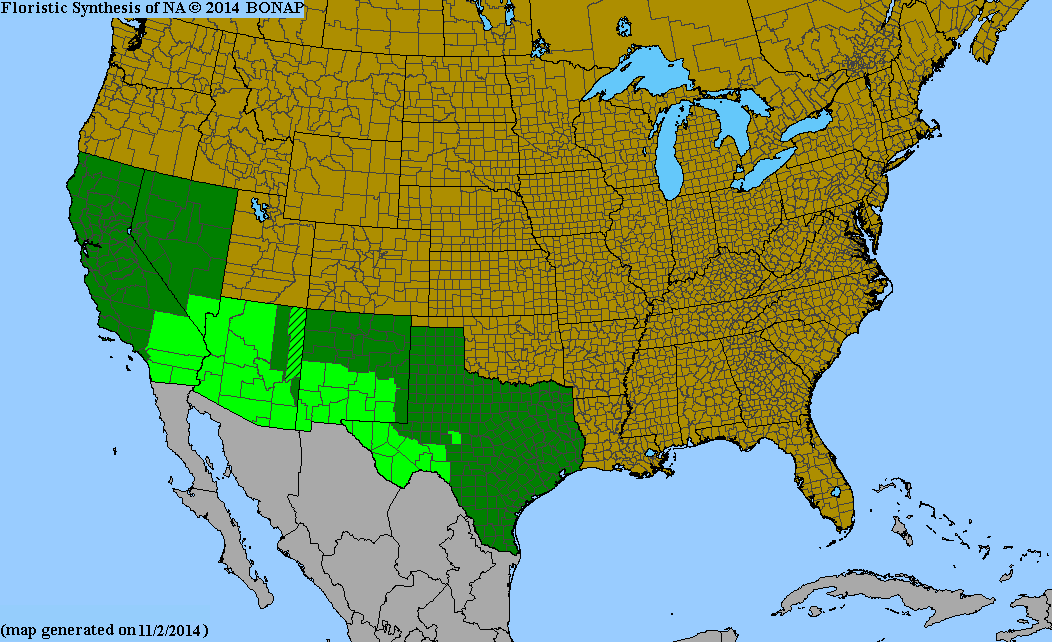
Fouquieria splendens, commonly known as ocotillo,[a] is a plant indigenous to the Mojave, Sonoran, Chihuahuan and Colorado deserts in the Southwestern United States (southern California, southern Nevada, Arizona, New Mexico, Texas), and northern Mexico (as far south as Hidalgo and Guerrero).[3][4]
Ocotillos look desiccated on the outside, but they are semi-succulent; it is more closely related to the tea plant and blueberries than to cactuses. It regenerates leaves after rainfall. They can be planted as garden ornamentals.
Names
[edit]The name ocotillo comes from the Nahuatl word ocotl meaning "torch".[5]
It is also known as buggywhip, coachwhip, candlewood, slimwood, desert coral, Jacob's staff, Jacob cactus, and vine cactus.[5]
Botany
[edit]
It grows in dry, generally rocky desert soils.[6]
An ocotillo plant reaches maturity at 60–100 years,[7]: 320 it grows to a maximum height of 10–15 feet (3.0–4.6 m). It consists of a clump of 40–75 straight and slender greenish branches covered with thorns;[7]: 310 each stem may reach a diameter of 6 cm at the base.[8]: 104 The branches have a rough bark,[8]: 102 they produce small, ovate leaves 2–4 cm long directly from their sides.[7] With rainfall, the plant quickly becomes lush with which may remain for weeks or even months. Specimens in cultivation may not exhibit any secondary branches. The leaf stalks harden into blunt spines, and new leaves sprout from the base of the spine.[citation needed]
-
 Ocotillo plant in Joshua Tree National Park
 -
 Closeup of leaves
 -
 Closeup of thorns in Anza-Borrego Desert State Park


Bright crimson flowers appear especially on mature plants after rainfall in spring, summer, and occasionally fall; they are clustered indeterminately at the tips of each stem.[7]: 321 Individual flowers are mildly zygomorphic and are pollinated by hummingbirds[5] and native carpenter bees.[citation needed] The flowers last for a period of between one and a half to 2 months.[5]
-
 Ocotillo in full bloom near Lookout Mountain, Phoenix, Arizona
 -
 An ocotillo flower with visible needles
 -
 Closeup of ocotillo flowers in Anza-Borrego Desert State Park


Cultivation
[edit]
Ocotillo can be planted year-round with care. Ideal plants have been grown in pots from stem cuttings and from seed. Transplanting large bare-root plants has marginal success. They should be planted to the original growing depth and, as with cacti, in their original directional orientation: the original south side of the plant, which has become more heat- and sunlight-resistant, should again face the brighter, hotter southern direction. If their direction is not marked, success is again limited.[9]
Uses
[edit]- Individual ocotillo stems are sometimes used as poles as a fencing material in their native region, and often take root to form a living fence.
- Due to their light weight and interesting pattern, ocotillo branches have been used for canes or walking sticks.
- Fresh flowers are sometimes used in salads and have a tangy flavor.
- Flowers are collected, dried, and used for tisanes.
- According to Medicinal Plants of the Desert and Canyon West (a book published in 1989 by Museum of New Mexico Press), a fresh bark tincture can be made by chopping or snipping freshly removed bark into 1/2-inch pieces. It is said to be useful for those symptoms that arise due to fluid congestion and to be absorbed from the intestines into the mesenteric lymph system by way of the lacteals of the small intestinal lining. This is believed to stimulate better visceral lymph drainage into the thoracic duct and improve dietary fat absorption into the lymph system.[10]
- Bathing in water that contains crushed flowers or roots has been used to relieve fatigue.[10]
- Native Americans place the flowers and roots of ocotillo over fresh wounds to slow bleeding.[10]
- Ocotillo is also used to alleviate coughing, achy limbs, varicose veins, urinary tract infections, cervical varicosities, and benign prostate growths.[10]
Subspecies
[edit]The three subspecies are:
Gallery
[edit]-
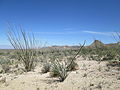 Ocotillo forest in the Santa Rita Mountains of Arizona
 -
 Ocotillo covered with rare snow in Tucson, Arizona
 -
 Ocotillo flower with a bee above — Tucson
 -
 Ocotillo with leaves outside Tucson Mountains after a rainfall event
 -
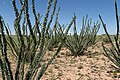 Ocotillo in the City of Rocks State Park's desert botanical garden


Note
[edit]- ^ /ɒkəˈtiːjoʊ/, Latin American Spanish: [okoˈtiʝo]
References
[edit]- ^ "NatureServe Explorer 2.0". explorer.natureserve.org. Retrieved 5 May 2023.
- ^ "Fouquieria splendens Engelm". World Flora Online. World Flora Online Consortium. 2025. Retrieved 21 March 2025.
- ^ Biota of North America Program 2014 county distribution map
- ^ McVaugh, R. 2001. Ochnaceae to Loasaceae. 3: 9–751. In R. McVaugh (ed.) Flora Novo-Galiciana. The University of Michigan, Ann Arbor
- ^ a b c d Austin, Daniel F. (2010). Baboquivari Mountain Plants: Identification, Ecology, and Ethnobotany. Tucson, Arizona, USA: University of Arizona Press. pp. 152–153. ISBN 978-0-8165-2837-0.
- ^ Schultheis, Lisa M.; Stone, William J. (2012). "Fouquieria splendens subsp. splendens". Jepson eFlora. University of California, Berkeley. Retrieved January 10, 2021.
- ^ a b c d Darrow, Robert A. (July 1943). "Vegetative and Floral Growth of Fouquieria Splendens". Ecology. 24 (3): 310–322. doi:10.2307/1930533.
- ^ a b Henrickson, James (April 1969). "Anatomy of periderm and cortex of Fouquieriaceae" (PDF). Aliso. 7: 97–126.
- ^ Soule, Jacqueline (2010-08-31). "Soule Garden: Ocotillo, singular desert plants with striking look". Tucson Local Media. Retrieved 2024-11-07.
- ^ a b c d Maya Strunk (Spring 2001 Independent study) at Medicinal Plants of the Southwest
The Splendid Ocotillo, Cornett, J. W., published by Nature Trails Press, 2018.
External links
[edit]Fouquieria splendens
View on GrokipediaTaxonomy
Scientific classification
Fouquieria splendens is a species within the family Fouquieriaceae, classified under the following taxonomic hierarchy according to the APG IV system: Kingdom: Plantae; Phylum: Tracheophyta; Class: Magnoliopsida; Order: Ericales; Family: Fouquieriaceae; Genus: Fouquieria; Species: F. splendens.[4] The species was first described by George Engelmann in 1848, based on specimens collected during Friedrich A. Wislizenus's expedition to northern Mexico.[4] The type specimen was collected in northern Mexico.[5] The family Fouquieriaceae, which contains the single genus Fouquieria, was established by Augustin Pyramus de Candolle in 1828 and is distinguished by unique anatomical features, including the presence of vessel elements in the xylem, contributing to its placement in Ericales.[6] Historical synonyms include Fouquieria spinosa Torr..[7] The species includes three accepted subspecies: Fouquieria splendens subsp. splendens, subsp. breviflora, and subsp. campanulata (see Subspecies section).[4]Etymology and common names
The genus name Fouquieria honors Pierre Éloi Fouquier (1776–1850), a French physician and professor of medicine who contributed to botanical nomenclature.[8] The specific epithet splendens derives from the Latin word meaning "shining" or "brilliant," alluding to the plant's vivid scarlet flowers that cluster at the tips of its stems.[9] The most widespread common name, ocotillo, originates from the Nahuatl word ocotl, meaning "torch" or "pine torch," a reference to the plant's striking red blooms that evoke flames atop its upright branches; this name entered Spanish usage in Mexico and spread northward.[10] Other English common names include coachwhip and buggywhip, which describe the plant's slender, flexible, and spiny stems resembling the long whips used by stagecoach drivers in the American Southwest.[1] Additional names such as candlewood (for the resinous, flammable wood), Jacob's staff (evoking a biblical shepherd's staff), vine cactus, desert coral, and slimwood further highlight the plant's wiry form and desert adaptations, though none are cacti despite superficial similarities.[1] These names predominantly appear in the southwestern United States and northern Mexico, where ocotillo is most common, reflecting both Indigenous Nahuatl influences and Anglo-American settler observations of the plant's torch-like appearance and whip-like structure in arid landscapes.[3]Description
Stems and growth habit
_Fouquieria splendens produces numerous erect, wand-like stems that arise from a short, central trunk or root crown, typically numbering between 6 and 100 per plant. These stems are unbranched, grayish in color, and measure 3 to 6 cm in diameter at the base, tapering to approximately 1 cm at the tips. They are armed with straight spines up to 4 cm long along their length.[2][1][11] The plant exhibits a distinctive upright, vase-shaped growth habit as a drought-deciduous shrub, reaching heights of 3 to 9 m (10 to 30 ft) at maturity after 60 to 100 years. Growth is slow to moderate, and in favorable conditions, individuals can form dense thickets through clonal propagation. Mature plants branch minimally, directing energy primarily toward vertical elongation of the main stems.[1][12] Longevity is notable, with an annual adult survival probability of 0.986, leading to a median lifespan exceeding 51 years for plants entering adulthood; some individuals reach 107 years. Stems demonstrate resilience, with 92% of marked stems persisting over 19 years in monitored populations.[13][12] Seedlings establish successfully under the protection of nurse plants or rocks, which provide shade and moisture retention during early development. Cut stems readily root when inserted into the soil, a trait exploited in traditional living fences that can develop into new plants.[14]Leaves, spines, and seasonal changes
The leaves of Fouquieria splendens are small, simple, and alternate along the stems, typically ovate to obovate in shape and measuring 2–5 cm in length and 1–2 cm in width.[15][2] These leaves are thick and fleshy, with a leathery texture that aids in water retention during brief periods of availability, allowing the plant to maximize photosynthetic efficiency when foliage is present.[16][1] At each leaf node, paired petiolar spines emerge, measuring 1–4 cm long and derived from the hardened remnants of leaf stalks after abscission.[17][2] These spines serve a primary defensive role, deterring herbivores by armoring the stems, and become more prominent as leaves drop, leaving the plant with a thorny, cane-like appearance.[1] Seasonal changes in F. splendens are driven by rainfall patterns, with leaves emerging rapidly—often within 2–3 days—following precipitation events, enabling quick exploitation of moist conditions for growth and photosynthesis.[15] These leaves persist for weeks to months if moisture remains adequate but abscise during droughts to minimize water loss through transpiration, causing the plant to appear barren and "dead" while remaining viable.[18][19] In the leafless state, which predominates for much of the year, the green stems take over photosynthetic functions via chlorenchyma tissue, contributing up to 48% of the total plant carbon gain under water stress.[20][3] This stem-based photosynthesis sustains the plant through extended dry periods, with new leaf cohorts potentially regenerating multiple times per year in response to erratic desert rains.[12][21]Flowers and fruits
The flowers of Fouquieria splendens are bisexual and characterized by a tubular, scarlet corolla measuring approximately 2 to 2.5 cm in length, formed by five fused petals that create a slightly zygomorphic tube, accompanied by five overlapping sepals. These vibrant crimson-red blooms are nectar-rich, with extrafloral nectaries present on the flower buds that produce a sugary secretion to attract pollinators. The flowers cluster in terminal panicles at the tips of the stems, forming dense, spike-like inflorescences that range from 10 to 30 cm long.[1][2][23] Flowering typically occurs from March to July, depending on rainfall, with the overall display lasting 50 to 60 days per event in regions like southern Arizona, though individual plants may rebloom multiple times annually after sufficient precipitation. The inflorescences emerge before or alongside new leaves, creating a striking visual contrast against the plant's spiny stems.[1][24] Following pollination, the plant develops ellipsoid capsules as its fruit, measuring 1 to 2 cm in length, which mature from May to mid-June in many areas. Each capsule splits open along three valves upon drying, releasing numerous small, flattened, blackish winged seeds adapted for wind dispersal. A single mature plant can produce up to a few hundred such seeds annually, with viability rates around 90 percent under suitable conditions.[1][25][2]Distribution and habitat
Geographic range
Fouquieria splendens is native to the southwestern United States, where it occurs in southern Nevada, southeastern California, Arizona, New Mexico, and western Texas.[1] In Mexico, its range extends into the northern states including Baja California (Norte and Sur), Sonora, Chihuahua, Coahuila, Nuevo León, Durango, Sinaloa, Zacatecas, San Luis Potosí, and Hidalgo.[1][26] This distribution reflects its adaptation to arid environments across the U.S.-Mexico border, with populations concentrated in desert lowlands and foothills. Distribution varies slightly among subspecies, with details in the Subspecies section.[27] The species is associated with the Mojave, Sonoran (including the Colorado Desert subset), and Chihuahuan Deserts, where it inhabits rocky slopes, washes, and plains.[1] Elevations typically range from near sea level to 1,600 meters (5,200 feet), though it occasionally reaches up to 2,050 meters (6,700 feet) in suitable habitats such as the Guadalupe and Del Norte mountains.[1][26] Within these deserts, it is most abundant on the lower slopes of the Sonoran Desert, forming characteristic stands in open, well-drained areas.[24] The overall range of Fouquieria splendens spans an extensive area across these interconnected desert systems, with a range extent of 20,000 to 2,500,000 square kilometers.[26] Historically, its distribution has remained stable, with no major range contractions documented.[26]Environmental preferences
Fouquieria splendens thrives in well-drained, rocky or gravelly soils, including sandy loams and limestone-based substrates with low organic matter content. These soils are typically shallow and derived from limestone or granitic origins, often underlain by caliche layers that prevent waterlogging. The plant prefers a soil pH range of 7.0 to 9.0, tolerating alkaline conditions with high calcium carbonate content.[1][24][10] The species is adapted to arid to semi-arid climates characteristic of the Sonoran and Chihuahuan Deserts, where annual rainfall ranges from less than 100 mm to 300 mm, predominantly occurring during summer monsoons with occasional winter precipitation. Temperature extremes in its habitat span 5°C to 45°C, with the plant exhibiting frost tolerance down to -12°C once established. It requires full sun exposure and low humidity to prevent root rot.[1][28][29] In terms of topography, Fouquieria splendens favors slopes, mesas, and bajadas that promote rapid drainage and reduce flood risk, while generally avoiding flat valleys where water accumulation can occur. Elevations range from sea level to 1,600 m, occasionally reaching 2,050 m on limestone formations.[1] Microhabitats often include upper bajadas with coarse, rocky soils that enhance moisture retention, as well as areas near rocky outcrops that provide some shelter and facilitate water catchment during infrequent rains.[1]Ecology
Physiological adaptations
_Fouquieria splendens exhibits succulent stems composed of extensive parenchyma tissue that serves as a primary water storage mechanism, allowing the plant to retain moisture absorbed during infrequent rains. These large parenchyma cells expand to accommodate water, enabling the stems to function as a reservoir that supports metabolic processes during prolonged dry spells. This adaptation is crucial in arid environments where rainfall is erratic, with the plant capable of storing sufficient water to sustain basic functions for extended periods.[30][31] The species employs a drought-deciduous strategy, rapidly shedding leaves in response to water stress to minimize transpiration losses, while relying on C3 photosynthesis conducted by chlorophyll-containing stem tissue when leafless. Stomata on the leaves close during drought conditions to further conserve water, and the impermeable cork layer on stems limits evaporative loss. Stem capacitance from stored water allows continued growth and even reproductive efforts, such as flowering, during dry seasons and in dry years using reserves from previous rainfall, highlighting the plant's resilience to extreme aridity.[1][32][33][34] Heat tolerance is facilitated by the plant's structural features, including spines derived from leaf petioles that provide shading and reduce direct solar exposure on the stems, thereby lowering surface temperatures. Additionally, F. splendens demonstrates photosynthetic thermal tolerance, with leaves enduring high temperatures exceeding 40°C without irreversible damage, supported by the induction of heat-shock proteins that protect cellular functions under high thermal stress. This enables survival in hot desert climates where daytime temperatures often exceed 40°C.[1] Nutrient efficiency is achieved through associations with arbuscular mycorrhizal fungi, such as Glomus epigaeum, which enhance phosphorus uptake from nutrient-poor desert soils. The plant's slow growth rate further aids resource conservation by reducing metabolic demands, complemented by efficient nutrient resorption from senescing leaves to recycle essential elements like nitrogen and minimize losses in oligotrophic habitats.[35][36][26]Interactions with wildlife
_Fouquieria splendens engages in several key interactions with wildlife that shape its role in desert ecosystems. The plant's vibrant red tubular flowers primarily attract hummingbirds and carpenter bees as pollinators, which access nectar rewards while transferring pollen between blooms. Hummingbirds, such as Anna's (Calypte anna) and Costa's (Calypte costae), time their migrations to coincide with the plant's spring flowering, enhancing cross-pollination efficiency in arid environments. Carpenter bees (Xylocopa spp.), including the flower-piercing X. californica arizonensis, form mutualistic relationships by collecting pollen and nectar, contributing to the plant's reproductive success despite occasional nectar robbing behaviors. Butterflies occasionally visit the flowers, adding to the diversity of pollinators, though they play a secondary role.[1][37][38] Antagonistic interactions with herbivores are moderated by the plant's structural defenses. Dense spines along the stems deter browsing by larger mammals like deer and rabbits, though white-tailed deer (Odocoileus virginianus) and mule deer (O. hemionus) occasionally consume foliage, comprising 1-5% of their rumen content during non-drought periods. Flowers may be browsed by jackrabbits (Lepus spp.), but overall herbivory remains low due to tannin production, which further discourages consumption. Seeds face predation from ants and rodents; small mammals such as antelope ground squirrels (Ammospermophilus harrisi) and seed-harvesting ants consume the winged capsules, limiting recruitment but also aiding dispersal when uneaten seeds are cached.[1][39][40] Mutualistic relationships further support F. splendens survival and establishment. Seedlings benefit from shade provided by nurse plants like creosote bush (Larrea tridentata) and triangle bursage (Ambrosia deltoidea), which protect young growth from intense sunlight and desiccation in open desert scrub. Roots form symbiotic associations with mycorrhizal fungi, such as Glomus epigaeum and other Glomus species, enhancing nutrient uptake in nutrient-poor soils. The thorny thickets offer protective nesting and roosting sites for birds, including species that forage among the branches when leaves emerge post-rain, providing shelter from predators. Extrafloral nectaries on flower buds attract predatory insects, reducing herbivore damage through indirect defense.[1][41][42] In broader ecosystem dynamics, F. splendens serves as a critical resource following rainfall events, rapidly producing leaves and flowers that supply nectar and pollen to wildlife during brief wet periods in otherwise resource-scarce deserts. Its deep root system contributes to soil stabilization on slopes and eroded sites, preventing runoff and maintaining habitat integrity in arid landscapes dominated by creosotebush scrub and mixed succulent associations. These interactions underscore the plant's integral role in supporting biodiversity and resilience within Sonoran and Chihuahuan Desert communities.[1]Reproduction
Flowering triggers
Flowering in Fouquieria splendens is primarily triggered by rainfall, enabling the plant to synchronize reproduction with brief periods of moisture in its arid environment. The main blooming period occurs in spring, typically from March to June depending on latitude and elevation, with additional sporadic cycles possible in summer and occasionally fall following monsoon rains. These multiple flowering events allow the plant to exploit unpredictable precipitation patterns common in the Sonoran and Chihuahuan Deserts.[3][21][40] Bloom initiation occurs shortly after significant rainfall to trigger leafing and subsequent flower development. Leaves emerge rapidly, within 24 to 72 hours of a soaking rain, providing the photosynthetic support needed for bud formation and flowering, which follows within one to three weeks. This rapid response is facilitated by the plant's shallow root system, which efficiently captures surface water during storms. In drier years, reduced rainfall leads to fewer and sparser inflorescences, while wetter conditions promote denser flowering on branches.[43][10][44][45] Temperature and photoperiod also influence flowering cues, with cool nights and shorter days in late winter enhancing bud initiation for the spring bloom, while extreme heat above 35°C (95°F) or sudden cold snaps below 0°C can delay or damage developing buds. F. splendens first flowers after several years of growth, after which established plants produce blooms annually in response to suitable rainfall.[46][47][13]Pollination and seed dispersal
Fouquieria splendens exhibits both entomophilous and ornithophilous pollination, with primary pollinators including carpenter bees (Xylocopa californica) and various hummingbird species that transfer pollen between flowers.[13] The plant is largely self-incompatible, requiring cross-pollination from genetically distinct individuals for successful fertilization and seed set.[13] This reproductive strategy promotes genetic diversity in arid environments where pollinator availability can vary seasonally.[48] Following pollination, mature flowers develop into three-parted capsules that contain numerous small, white, winged seeds, typically measuring 7–13 mm in length.[49] A single mature plant can produce thousands of seeds annually, with fruit output exceeding 1,000 capsules per individual in favorable years.[50] Seed viability remains high under moist conditions but declines rapidly in dry soil, limiting long-term persistence in the seed bank.[1] Seed dispersal in F. splendens is primarily anemochorous, facilitated by the papery wings on the seeds that enable wind transport across desert landscapes.[1] This mechanism allows seeds to reach suitable microhabitats, often associating positively with nurse plants like triangle bursage for establishment.[1] Germination occurs after exposure to sufficient moisture, typically following seasonal rains, and is enhanced under shaded conditions provided by nurse plants or rocks that reduce evaporation and protect seedlings.[51] Local water accumulation is critical for initial establishment, as seedlings are vulnerable to desiccation in open, sun-exposed areas.[51]Cultivation
Growing requirements
Fouquieria splendens thrives in full sun exposure, requiring at least six to eight hours of direct sunlight daily to promote healthy growth and flowering.[10] Ideal site selection involves locations with well-drained, gravel-amended soils that mimic its native desert environment, such as sandy or rocky loams, to prevent water accumulation around the roots.[29] This plant is suited to USDA hardiness zones 8 through 11 (average annual extreme minimum temperatures ranging from 10°F to above 40°F [-12°C to >4°C]), allowing it to endure the hot, arid conditions it prefers.[39][2] Watering should be deep and infrequent to replicate natural rainfall patterns, with established plants receiving supplemental water approximately once a month during the summer growing season and none during winter dormancy.[39] During the initial establishment period, which can last 6 to 24 months, more frequent irrigation—such as weekly in summer and twice monthly in winter—may be necessary to encourage root development, but overwatering must be avoided to prevent root rot.[29] The preferred soil pH is neutral to slightly alkaline (7.0 to 9.0), with low fertility levels that support its adaptation to nutrient-poor desert substrates; amending heavy soils with coarse sand or gravel (up to 30% by volume) enhances drainage.[10] Fertilizers are generally unnecessary and can harm the plant if nitrogen-rich, as excess nutrients promote soft growth susceptible to rot; if applied, use a low-nitrogen, desert-specific formula sparingly in early spring.[39] Fouquieria splendens tolerates light frost down to 10°F once mature but benefits from protection against prolonged extreme cold or high winds, particularly for young plants, which may require mulching or windbreaks in marginal zone areas.[29]Propagation methods
Fouquieria splendens, commonly known as ocotillo, can be propagated through several methods, though success varies due to its adaptations to arid environments and sensitivity to overwatering. Seed propagation begins with collecting ripe seed capsules, which split open to release numerous small, flat, white, and fluffy seeds typically in late spring or early summer. These seeds should be sown promptly in a sterile, well-drained medium such as a sandy or peat-based mix to prevent rot, at depths of about 1 inch (2.5 cm), under warm conditions with daytime temperatures around 95°F (35°C) and nighttime around 70°F (21°C), often aided by bottom heat and bright light. Germination usually occurs within 1-2 weeks, but overall success rates range from 10-70% depending on conditions, with seedlings requiring careful watering to keep the top inch of soil moist while avoiding saturation; maturity to a flowering plant can take several years.[52][53] Stem cuttings offer a more reliable alternative for propagation, particularly for horticultural purposes. Select healthy, flexible wands 30-60 cm long in spring or autumn, ensuring they are well-lignified but not woody; cut cleanly and allow the base to callus for a week in a dry, shaded spot to reduce rot risk. Plant the cuttings upright (maintaining polarity) in coarse sand or a gritty, fast-draining mix, burying them 4-6 inches deep, and position in full sun with minimal initial watering to encourage rooting, which typically takes 3-6 months. Success rates for rooting are generally 50-70%, higher than seeds in controlled settings, though new growth may appear only after the first rainy season; no rooting hormones are necessary, as the plant's natural auxins promote adventitious roots effectively.[52][53] Transplanting established plants, especially bare-root specimens from the wild, is riskier and best attempted during the dormant season (late fall to early spring) to minimize stress. Collecting from the wild requires permits in jurisdictions such as Arizona (from the Department of Agriculture) to comply with regulations protecting native plants.[29] Dig a wide hole matching the root spread without deepening it, incorporate 30% coarse sand if needed for drainage, and orient the plant with its original south-facing side southward; inoculating with mycorrhizal fungi can enhance root establishment in poor soils. Bare-root large plants have survival rates of 20-40%, improved by pruning damaged roots, soaking in water (optionally with rooting hormone), and providing support like stakes or rocks against wind; container-grown plants fare better, often establishing within 6-24 months with weekly summer watering tapering to minimal.[29][54] Common challenges in propagating Fouquieria splendens include slow rooting times of 3-6 months, vulnerability to root rot from excess moisture, and low initial vigor, necessitating well-drained substrates and sparse irrigation. Pests like aphids may affect young plants in protected environments, and overall patience is required, as full adaptation mirrors the plant's wild growth patterns following seed dispersal by wind.[53][52]Uses
Traditional and medicinal applications
Indigenous peoples of the southwestern United States and northern Mexico have long utilized Fouquieria splendens, known as ocotillo, for various medicinal purposes. The Mahuna people employed the plant as a blood purifier, specific remedy, and general tonic to promote vitality.[55] Similarly, the Apache ground ocotillo roots into a powder mixed with water to alleviate fatigue, reduce swelling, and treat wounds or painful swellings.[1][56] Teas prepared from the flowers and roots have been traditionally used to relieve fatigue and spasmodic coughs, while a beverage made from the flowers served as a cough medicine among some groups.[57][1] Fresh flowers or roots were applied directly to wounds to slow bleeding and promote healing.[58] A tincture derived from the fresh bark has been employed to address fluid congestion, stimulate circulation, and ease symptoms like achy limbs and coughs, reflecting its broader role in respiratory remedies.[25] These applications are documented in early 20th-century ethnobotanical records, such as those compiled by John Bruno Romero in 1954, drawing from observations of 19th-century indigenous practices among California tribes.[59] No clinical trials have validated these uses, though the plant contains phenolic compounds, including flavonoids, which exhibit antioxidant and potential anti-inflammatory properties in laboratory studies that may underlie anecdotal benefits.[60][61] Precautions are necessary due to the plant's sharp spines, which can cause physical injury, and its sap, which may irritate skin upon contact. While toxicological assessments indicate low acute oral toxicity, ocotillo is not approved by the FDA for medicinal use, and excessive consumption should be avoided.[62][63]Ornamental and practical uses
Fouquieria splendens, commonly known as ocotillo, is widely valued in ornamental landscaping for its striking sculptural form and vibrant red tubular flowers that bloom in clusters atop long, wand-like stems.[39][64] Its unique, spiny architecture adds dramatic height and texture to desert-themed gardens, often reaching 15-20 feet tall, making it an ideal focal point or backdrop.[3] Due to its extreme drought tolerance and minimal water needs, ocotillo is a staple in xeriscaping projects, where it thrives in full sun with well-drained, rocky soils, reducing irrigation demands in arid regions.[63] It is commonly planted in borders, accents, and low-maintenance desert gardens to enhance visual interest while supporting water-wise design principles.[65][42] In practical applications, ocotillo stems are harvested and planted closely to form living fences, leveraging their ability to root readily from cuttings and create impenetrable barriers with their sharp spines.[3][2] The lightweight yet durable canes are also crafted into walking sticks or canes, valued for their ergonomic shape and distinctive patterns.[63] Additionally, the dense wood of mature stems serves as effective firewood, providing a reliable fuel source in desert communities.[66] On slopes, ocotillo plantings help stabilize soil and prevent erosion through their extensive shallow root systems.[67][39] Commercially, ocotillo is propagated and sold by nurseries as potted plants or cuttings for residential and public landscaping, with outlets specializing in native desert species offering specimens up to 15 feet tall.[68][69] Native seeds are collected for ecological restoration efforts.[70] In modern sustainable architecture, ocotillo branches are integrated into ramada structures—traditional open-air shade shelters—providing natural cooling and aesthetic harmony with desert environments.[71][72] These designs stack stems overhead to create dappled shade while promoting airflow, and the plant's form enhances wildlife habitat by attracting hummingbirds, bees, and birds to its nectar-rich flowers and offering nesting shelter.[39][57][24]Conservation
Status and population trends
Fouquieria splendens is assessed as globally secure, with a NatureServe rank of G5, indicating it is a common species throughout its range in the southwestern United States and northern Mexico. In the United States, it holds no federal listing under the Endangered Species Act, though it is considered a sensitive species by the Bureau of Land Management in certain areas due to localized management concerns. The national rank is N4?, reflecting apparent security but with some uncertainty.[26][1] Population trends for F. splendens are stable, with no significant declines observed prior to 2025. A long-term study spanning 33 years in Texas documented an annual adult survival probability of 98.6%, projecting a median lifespan of 51 additional years for mature plants, alongside consistent annual flowering across all monitored individuals. Subnational ranks in U.S. states underscore this security, with S4 or S5 (secure) implied in unranked states like Arizona, California, New Mexico, and Texas (SNR), though it is imperiled (S2) in Nevada due to limited distribution. In Mexico, populations remain generally secure but are vulnerable in areas adjacent to urban development, where habitat fragmentation poses risks.[26][13] Monitoring efforts incorporate F. splendens into broader desert habitat models, which project stable to increasing habitat suitability through 2099 under moderate climate scenarios (e.g., IPCC B1 and A1B emissions pathways). These models indicate net gains in suitable area despite some localized losses, supporting long-term population persistence in core desert regions.[73]Threats and protection efforts
Fouquieria splendens populations face multiple anthropogenic and environmental threats across their range in the southwestern United States and northern Mexico. Urbanization and agricultural development have fragmented habitats, particularly in expanding areas of the Southwest, leading to direct loss of suitable arid landscapes for this slow-growing shrub. Illegal collection for landscaping and ornamental trade exacerbates pressure, with documented cases of large-scale smuggling, such as the 1999 conviction of individuals for transporting 21,000 wild ocotillo plants across the U.S.-Mexico border.[74] Off-road vehicle use in desert regions further damages root systems and soil stability, compacting arid soils and hindering regeneration in the Sonoran Desert ecoregion where the plant is prevalent. Climate change poses additional risks through altered rainfall patterns and increased aridity, potentially disrupting the plant's drought-deciduous adaptations and seedling establishment, which relies on episodic moisture from nurse plants or rocky microhabitats. Groundwater depletion in overexploited basins, such as those in southern California and Arizona, reduces available soil moisture critical for young plants, compounding establishment challenges in water-scarce environments. Wildfires, intensified since 2020 due to invasive non-native grasses like buffelgrass fueling higher-intensity burns, threaten mature individuals; ocotillo exhibits moderate fire sensitivity, with severe reductions observed post-fire in historical events, and recent desert megafires have accelerated habitat conversion in the Sonoran and Mojave regions. Protection efforts for Fouquieria splendens are integrated into broader desert conservation initiatives, given its secure global status but localized vulnerabilities. The plant is safeguarded within national parks such as Saguaro National Park in Arizona and Big Bend National Park in Texas, where federal regulations prohibit collection and habitat alteration, preserving dense stands in protected arid ecosystems. The U.S. Bureau of Land Management's 2022 native seed collection program in the Sonoran Desert supports habitat restoration by gathering seeds from resilient populations, aiding revegetation projects to counteract development and fire impacts, though not exclusively targeting ocotillo. While Fouquieria splendens itself is not listed under CITES, enforcement against illegal trade draws from regulations addressing similar desert species, with community education campaigns in border regions aimed at reducing poaching through awareness of smuggling penalties. Ongoing research informs adaptive strategies, including habitat suitability modeling that projects potential shifts in distribution under moderate emissions scenarios for 2070-2099, indicating resilience in warmer-wetter conditions but contraction in drier projections, guiding targeted restoration in vulnerable southwestern habitats.Subspecies
Fouquieria splendens subsp. splendens
_Fouquieria splendens subsp. splendens is the nominate subspecies of the ocotillo, representing the typical form of the species with robust, candelabraform growth consisting of 6 to 100 erect to ascending stems arising from a basal diameter of 2 to 12 cm. The stems are characterized by a bronze to dull yellow periderm and young branches measuring 3 to 6.5 mm in diameter, providing structural support in arid environments. Flowers feature elongated corolla tubes measuring (6.5-)11-18(-22) mm in length, typically bright scarlet to strong reddish orange, which attract pollinators such as hummingbirds.[75] This subspecies is the most widespread and common variant, accounting for the majority of Fouquieria splendens populations across its range. It was originally described as part of the species by George Engelmann in 1852, with the subspecies designation reflecting the standard morphology.[4][76] The distribution of Fouquieria splendens subsp. splendens spans the Sonoran and Chihuahuan Deserts, extending from southern California, Arizona, and Nevada in the United States through Baja California, Sonora, and into Texas, New Mexico, Zacatecas, and northern San Luis Potosí in Mexico. It thrives in habitats such as rocky slopes, outwash plains, and areas with fine-textured soils or sand, often in association with species like Larrea tridentata, Ambrosia deltoidea, and Prosopis spp., at elevations typically from 500 to 1,200 m, though it can occur from sea level to 2,100 m. Unlike other subspecies, it exhibits no unique adaptations beyond the general drought-deciduous and succulent stem traits of the species.[75][7]Fouquieria splendens subsp. breviflora
_Fouquieria splendens subsp. breviflora is a subspecies of the ocotillo distinguished by its shorter corolla tubes measuring 6.5–10 mm in length, compared to the longer tubes in other subspecies, and featuring reddish-orange to yellowish-pink flowers that pale with age.[77] The inflorescences are narrowly conical to cylindrical and paniculate, typically 3–28 cm long, contributing to a more compact appearance.[77] These traits, along with 15–20 stamens and a style 12–14 mm long, were key in its taxonomic delineation.[77] This subspecies is endemic to central Mexico, with scattered disjunct populations occurring in the states of San Luis Potosí, Tamaulipas, Hidalgo, and Querétaro.[78] It grows at elevations of 750–2100 m, reflecting a limited but defined range within arid tropical scrub regions.[77] Locally, populations can be abundant on suitable sites, though overall distribution remains restricted.[77] In its habitat, Fouquieria splendens subsp. breviflora occupies arid rocky south-facing slopes and hillsides, often in well-drained soils associated with species like Yucca, Agave, and Opuntia.[77] Annual rainfall ranges from 280–450 mm, primarily during the June–October wet season, suggesting potential adaptations to slightly higher humidity levels than those in more xeric parts of the species' range.[77] It was formally recognized and described as a new subspecies by James Henrickson in 1972, based on specimens from Hidalgo, Mexico, in a comprehensive taxonomic revision of the Fouquieriaceae family.[77]Fouquieria splendens subsp. campanulata
Fouquieria splendens subsp. campanulata is distinguished by its campanulate corollas, which are purple-pink to white and measure approximately 11.5-15.5 mm in length, with a tube 7-10 mm long and lacking the orange tinge typical of other subspecies at maturity. The petals are broader relative to the tube, contributing to the bell-shaped appearance, and the overall flower structure is narrowly conical in inflorescences 6-14 cm long. This subspecies exhibits a candelabraform growth habit, with erect to widely spreading branches that are thin (3-5 mm diameter when young) and often pendulous in older plants, reaching heights of 2-10 m.[79] Endemic to the state of Durango in north-central Mexico, this subspecies is restricted to the eastern Sierra Madre Occidental, from Santiago Papasquiaro northward to Inde and eastward to the Rio Nazas Basin near Rodeo. It inhabits well-drained rocky slopes of basalt to limestone at elevations of 1200-2000 m, within grama grasslands and xerophytic scrub in the Chihuahuan Desert region, where annual precipitation ranges from 400-500 mm, primarily during summer rains. Flowering occurs from March to May when the plant is leafless, with small, linear-spatulate leaves (17-27 mm long, 3.5-8 mm wide) appearing only after rainfall. The habitat includes calcareous soils of limestone or granite origin, often supported by caliche layers, suggesting potential specificity to certain pollinators adapted to these arid, rocky environments.[79][80][81] Originally described as Fouquieria campanulata by George Valentine Nash in 1903 based on collections from Durango, it was later recognized as a subspecies of F. splendens by James Henrickson in his 1972 taxonomic revision of the Fouquieriaceae, emphasizing floral and vegetative distinctions from the nominate subspecies. As the rarest and least widespread of the three subspecies, F. splendens subsp. campanulata has a narrow endemic range.[79][82]References
- https://www.[researchgate](/page/ResearchGate).net/publication/272594009_Comparative_Floral_Structure_and_Systematics_of_Fouquieriaceae_and_Polemoniaceae_Ericales