


Community hub
Recent from talks
Contribute something
Nothing was collected or created yet.
Salty liquorice
View on Wikipedia
 | |
| Alternative names | salmiak or salmiac liquorice |
|---|---|
| Type | confectionery |
| Course | Food |
| Place of origin | Northern Europe |
| Main ingredients | liquorice-root extract, salmiak salt (sal ammoniac; ammonium chloride), sugar, glucose syrup, modified starch, brown sugar syrup, maltodextrin, sometimes anise oil |


Salty liquorice,[a] also known as salmiak liquorice, salmiac liquorice or (in Finland) salmiakki,[1] is a variety of liquorice flavoured with salmiak salt (sal ammoniac; ammonium chloride), and is a common confection found in the Nordic countries, Benelux, and northern Germany.[2]
Salmiak salt gives salty liquorice an astringent, salty taste,[3] akin to that of tannins—a characteristic of red wines, which adds bitterness and astringency to the flavour. Consuming salmiak liquorice can stimulate either a savoury or non-savoury palate and response.[2] Anise oil can also be added to salty liquorice. Extra-salty liquorice is coated with salmiak salt or salmiak powder, or sometimes table salt.
Salty liquorice candy and pastilles are almost always black or very dark brown and can range from soft candy to hard pastille, and sometimes brittle. The other colours used are white and variants of grey. Salty liquorice or salmiak is used to flavour products such as ice creams, syrups, chewing gum, snus and alcoholic beverages.
History
[edit]Sal ammoniac (ammonium chloride) has a history of being used as a cough medicine, as it works as an expectorant.[4] Finnish author Jukka Annala speculates that salty liquorice has its origins in pharmacy stores that manufactured their own cough medicine.[5] Where and when ammonium chloride and liquorice were first combined to produce salty liquorice is unclear,[6] but by the 1930s it was produced in Finland, Norway, Denmark, Sweden and the Netherlands as a pastille.[5]
Types
[edit]Different languages often refer to salty liquorice as either "salmiak liquorice" (Swedish: Salmiaklakrits; Danish: Salmiaklakrids), or simply "salt liquorice" (Swedish: Saltlakrits; Danish: Saltlakrids). The Dutch refer to it as "zoute drop" or "dubbelzoute drop" (double salted liquorice). In Germany, they are commonly known as salt liquorice (Salzlakritz) candy and salmiak pastilles (Salmiakpastillen) or simply Salmiak, in contrast to sweet liquorice (Süßlakritz) candy. A traditional shape for salty liquorice pastilles is a black diamond-shaped lozenge. In Finnish, it is known as salmiakki.
The strength of the confectionery depends on the amount of food grade ammonium chloride (salmiak salt) used, which varies by country and what's considered a safe amount. In Sweden, for example, the most popular types of salty liquorice contain an average of 7% of ammonium chloride. In 2012, there was a European Union proposal to limit the amount to 0.3%, which was met with wide opposition.[7] Although the European Union now regulates the use of ammonium chloride to 0.3% in most foodstuffs, there is no specific restriction for it in liquorice or ice cream.[8] At a level of up to 7.99% ammonium chloride, salmiak pastilles are considered a "traditionally-applied medicine to assist expectoration in the airways".
An antibacterial effect can be attributed to the neutralization of the slightly acidic ammonium chloride (pH about 5.5) by the relatively alkaline saliva (pH about 7),[9] whereby ammonia is released, which has a disinfecting effect:
- Reaction of (ammonium)-ions in base solution to ammonia and water.

Health and safety
[edit]Germany and European Union
[edit]Before implementation of the current European Union community-wide list of permitted flavouring substances used in food, national food legislation in Germany required that a content from above 2% ammonium chloride (salmiak salt) in salty liquorice was required to carry the label "Adult Liquorice – Not Children's Liquorice" (Erwachsenenlakritz – Kein Kinderlakritz) on packaging.[10][9] When the ingredient content of ammonium chloride (salmiak salt) was between 4.49% and 7.99%, the declaration "extra strong" (extra stark) was also required on packaging. More than 7.99% of ammonium chloride (salmiak salt) was not permitted in Germany at that point. Since then, the upper limit on ammonium chloride has been lifted.[9]
Other uses
[edit]In addition to being used in candy, salmiak is also used to flavour vodka, chocolate, distilled rye brandy, ice cream, cola drinks, snus, and meat.
Products
[edit]- Apteekin Salmiakki, a Finnish brand of salty liquorice candy
- Lakrisal, a salty salmiak candy
- Pantteri/Katten, a Finnish gummy salmiak candy
- Pirate coins Parate or "Piratos" coins, a salty liquorice shaped like coins with pirate motifs
- Salzige Heringe (Salty Herrings), a popular German brand of salmiak liquorice candy shaped like herring, produced by the German candy manufacturer Katjes, currently containing 1.8% salmiak salt and 6% liquorice root extract.
- Salmiakki Koskenkorva, a Finnish salmiak-flavoured vodka brand
- Tyrkisk Peber (Turkish pepper), a popular brand of salmiak candy
Gallery
[edit]-
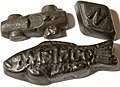 Salmiak liquorice candy produced in various shapes.
 -
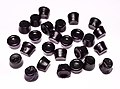
-
 "Noitapilli" (Finnish for "Hexes' Whistle")
 -
 Royal Salmiakki, a salty liquorice flavoured liqueur
 -

-
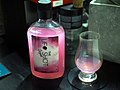 "The UFO Shot" is a berry liqueur flavoured with salmiak
 -
 Salmiakki ice cream
 -
 Salmiakki filled Tupla (chocolate bar)


Notes
[edit]References
[edit]- ^ https://www.bbc.com/news/magazine-24303423.amp
- ^ a b Binelli, Mark (24 October 2018). "The Candy Issue: Salty Tooth". Proquest Digital Microfilm New York Times. The New York Times Magazine. ISSN 0362-4331.
- ^ "Salammoniac: Salammoniac mineral information and data". Mindat.org. Hudson Institute of Mineralogy.
- ^ "Winter Hazards". Hennepin County Medical Center. 2004. Archived from the original on 4 March 2012.
- ^ a b "Mistä johtuu, että salmiakki on herkkua vain Pohjoismaissa?". Kysy.fi (in Finnish). Helsinki City Library. 17 October 2008. Archived from the original on 4 May 2012.
- ^ "Minun kuuluisi tehdä esitelmä Ranskassa salmiakista, enkä ole löytänyt tietoja..." Kysy.fi (in Finnish). Helsinki City Library. 25 October 2008. Archived from the original on 4 May 2012.
- ^ Forsberg, Oskar (12 October 2012). "Saltlakritsen räddad efter beslut i EU". Aftonbladet (in Swedish).
- ^ "Commission implementing regulation (EU) No 872/2012 of 1 October 2012 adopting the list of flavouring substances provided for by Regulation (EC) No 2232/96 of the European Parliament and of the Council". Official Journal of the European Union. L267. 2 October 2012.
In category 5 [confectionery] – quantum satis
- ^ a b c "Salmiak-Pastillen: Salzig und gesund?" [Salmiak lozenges: salty and healthy?]. Norddeutscher Rundfunk (in German). Berlin. 10 March 2014.
- ^ "Erwachsenenlakritz – kein Kinderlakritz" [Adult Liquorice - Not Children's Liquorice] (in German). Berlin: Verbraucherzentrale, Lebensmittelklarheit: Internetportal gefördert im Rahmen der Initiative "Klarheit und Wahrheit" des Bundesministeriums für Ernährung und Landwirtschaft. 14 July 2017.
Books
[edit]- Annala, Jukka (2001). Salmiakki. ISBN 952-5180-27-1.
Further reading
[edit]- Binelli, Mark (24 October 2018). "The Candy Issue: Salty Tooth". Proquest Digital Microfilm New York Times. The New York Times Magazine. ISSN 0362-4331.
External links
[edit]


- The Finnish Salmiakki Association (in Finnish)
- Descriptions and reviews of many Danish liquorice products (in Danish)
- Mark Bosworth (4 October 2013). "Salty liquorice: The not-so-sweet sweet". BBC News. Retrieved 4 October 2013.
Salty liquorice
View on GrokipediaTerminology and Origins
Etymology and Regional Names
The term "salty liquorice" denotes a confection flavored with liquorice extract and ammonium chloride, imparting a distinctive salty, pungent taste distinct from sodium chloride.[2] The "salty" descriptor arises from the ammonium chloride component, known historically as sal ammoniac, rather than conventional salt.[10] "Salmiak," a core term for the ammonium chloride flavoring, derives from the Latin sal ammoniacum, where sal signifies salt and ammoniacum refers to ammonia, tracing back to ancient associations with the Temple of Ammon in Egypt where the compound was reportedly collected from camel dung or volcanic sources.[11] This evolved through medieval European languages, entering Swedish as salmiak before borrowing into Finnish as salmiakki, reflecting the confection's Nordic prominence.[12] Liquorice itself stems from the Old French licorece, adapted from Late Latin liquiritia, ultimately from Greek glykyrrhiza meaning "sweet root," referring to the Glycyrrhiza glabra plant's natural sweetness that contrasts the added salinity. Regionally, nomenclature varies by linguistic and cultural context in Northern Europe, where the candy thrives. In Finland, it is predominantly salmiakki; in Sweden, salmiaklakrits; in Denmark, salmiaklakrids; and in Norway, salmiakk or saltlakris.[5] Dutch speakers use salmiakdrop for versions high in ammonium chloride, while Germans favor Salmiakpastillen or Salzlakritz.[10] These terms underscore the shared etymological root in salmiak across Germanic and Finnic languages, emphasizing the chemical's role over the base liquorice.[1]Historical Roots in Pharmacy
The medicinal use of liquorice root (Glycyrrhiza glabra) dates to ancient civilizations, including the Egyptians and Greeks, who employed it as a demulcent for soothing irritated mucous membranes and treating respiratory ailments such as coughs and sore throats.[13] In Europe, apothecaries continued this tradition through the Middle Ages and into the modern era, incorporating liquorice extracts into lozenges and syrups to mask bitter tastes and provide expectorant effects.[14] Ammonium chloride (sal ammoniac), independently valued since antiquity for its diuretic and mucolytic properties, was similarly utilized in pharmaceutical preparations to loosen phlegm and aid expectoration in bronchial conditions.[13] The combination of liquorice with ammonium chloride emerged in the 19th century among Scandinavian pharmacists seeking to enhance the palatability and efficacy of cough remedies. This innovation likely arose from individual apothecaries experimenting with liquorice's natural sweetness to counter the sharp, salty bitterness of ammonium chloride, creating throat lozenges that served dual purposes as demulcents and expectorants.[15] Historical accounts suggest early production by figures such as Heinrich von Gimborn, a German-Dutch apothecary active from the mid-1800s, who manufactured similar confections blending these ingredients for medicinal distribution.[16] By the late 19th or early 20th century, such formulations had become staples in Nordic pharmacies, where they were sold as over-the-counter aids for colds and respiratory irritation rather than mere confections. This pharmaceutical foundation underscores the causal role of ammonium chloride's pharmacological action—promoting bronchial secretion without the sedative effects of opiates—alongside liquorice's glycyrrhizin content, which contributed anti-inflammatory benefits verifiable through empirical use in traditional formularies.[14] While exact invention dates remain uncertain due to localized, non-standardized production, the practice reflects a pragmatic synthesis of empirical herbalism and inorganic chemistry tailored to prevalent ailments like tuberculosis and influenza in industrial-era Europe.[1] Transition to commercial candy occurred later, but the core recipe retained its roots in these apothecary lozenges, prioritizing therapeutic utility over gustatory appeal.[3]Historical Development
Early Medicinal Use (19th Century)
In the 19th century, European pharmacies began incorporating ammonium chloride—known as sal ammoniac or salmiak—into liquorice root extract to create medicinal preparations valued for their expectorant properties, primarily to treat coughs, bronchitis, and other respiratory conditions by promoting mucus clearance from the airways.[1] Ammonium chloride stimulates bronchial secretions, facilitating expectoration, while liquorice root provided a soothing, demulcent effect on irritated throats and digestive linings.[13] These combinations marked an early form of what would later become salty liquorice confections, transitioning from apothecary remedies to palatable lozenges or pastilles. In Finland, salmiakki preparations were commonly dispensed in pharmacies as powders, pastilles, or liquids to alleviate a range of ailments, including respiratory infections and hunger pangs, reflecting liquorice's dual role as both therapeutic agent and nutrient supplement during periods of scarcity.[17] Pharmacists compounded these mixtures on demand, leveraging ammonium chloride's historical use in medicine dating back centuries but newly adapted with liquorice for improved tolerability and flavor masking of the compound's bitter, salty profile.[7] A documented example appears in the 1851 Dutch national pharmacopeia, which prescribed Trochisci Chloreti Ammonici—lozenges blending ammonium chloride with liquorice extract—for throat and chest complaints, standardizing the formulation across apothecaries and underscoring its efficacy in clinical practice of the era.[16] Such remedies were not without risks; excessive ammonium chloride intake could lead to metabolic acidosis, though 19th-century dosages remained conservative and targeted short-term use under professional guidance.[18] This pharmaceutical foundation laid the groundwork for salty liquorice's evolution into a commercial candy by the early 20th century, retaining its medicinal heritage in milder forms.Commercial Expansion in Europe (20th Century)
In the early 20th century, salty liquorice shifted from primarily medicinal lozenges produced in pharmacies to commercial confectionery, as Scandinavian chemists adapted pharmaceutical formulas for broader candy markets amid growing recreational demand.[19] This transition facilitated initial scaling in Finland and neighboring Nordic regions, where small-scale manufacturers began industrializing production processes to meet consumer preferences for the ammonium chloride-infused variant.[20] By the 1930s, commercial manufacturing of salty liquorice had expanded across Finland, Denmark, and other Northern European countries, with factories producing it as a distinct candy category rather than solely a remedy.[1] Denmark positioned itself as a key production hub, exemplified by companies like Galle & Jessen, which specialized in liquorice pastilles incorporating salmiak flavors.[3] In Finland, Fazer initiated salmiakki production in 1938, integrating it into mass-market lines that boosted availability and variety.[19] Concurrently, Dutch firms such as Venco, operational since the late 19th century, ramped up output of salty variants during the interwar period, capitalizing on domestic enthusiasm that positioned liquorice—often salted—as over 20% of national candy consumption by mid-century.[21][22] Post-World War II economic recovery further propelled expansion, with Northern German producers like Katjes introducing branded salty liquorice products shaped as herrings, extending market reach into Central Europe while adhering to regional tastes in the Low Countries and Baltics.[15] This era saw output volumes increase through mechanized extrusion and molding techniques, enabling exports within Europe and solidifying salty liquorice's niche as an acquired-taste staple, though penetration remained limited outside Nordic, Dutch, and adjacent markets due to its polarizing salinity.[1] Iceland's entry lagged, with its first dedicated liquorice factory, Sambó Kólus, established in 1962 to produce local salty variants.[23]Composition and Production
Key Ingredients and Chemical Basis
Salty liquorice confectionery is formulated from a base of liquorice root extract derived from Glycyrrhiza glabra, combined with sweeteners like sugar and glucose-fructose syrup, structural agents such as wheat flour or modified starches (from maize, wheat, or potato), and the defining additive ammonium chloride.[24][25] Additional components may include molasses for depth, vegetable fats like coconut or palm oil for texture, and flavor enhancers such as anise oil, with colorants like vegetable carbon for appearance.[26] The liquorice extract provides the core aromatic profile through glycyrrhizin, a triterpenoid saponin glycoside that imparts sweetness approximately 30-50 times greater than sucrose, alongside minor flavonoids and polysaccharides contributing to bitterness and body.[5] The hallmark "salty" quality stems from ammonium chloride (NH₄Cl), an inorganic salt incorporated at levels typically ranging from 2% in standard liquorice to 7-8% in intensely flavored variants, beyond which regulatory limits apply in regions like Germany.[27] This white, crystalline compound dissociates in aqueous media into ammonium (NH₄⁺) and chloride (Cl⁻) ions, with the ammonium cation undergoing hydrolysis: NH₄⁺ + H₂O ⇌ NH₃ + H₃O⁺, yielding mildly acidic solutions (pH around 5) that evoke a pungent ammonia note alongside chloride's saltiness.[28] The resulting sensory effect is astringent and tingling, distinct from sodium chloride's pure saltiness, akin to tannins in evoking mouth-puckering dryness due to interactions with salivary proteins.[4] Perception of ammonium chloride's taste involves specialized gustatory mechanisms; a 2023 study identified activation of the OTOP1 proton channel in type I taste receptor cells, previously associated with sour detection, suggesting it may constitute a sixth basic taste category beyond sweet, sour, salty, bitter, and umami, evolved possibly for sensing environmental ammonium ions in decaying matter.[29] This channel's response to NH₄⁺ distinguishes it from other salts, as ammonium ions traverse the channel, altering intracellular pH and triggering neural signals for the candy's polarizing intensity.[30] In production, food-grade ammonium chloride ensures safety, though excessive intake can lead to metabolic acidosis from chloride overload and ammonia release.[8]Manufacturing Techniques
The production of salty liquorice begins with the extraction of liquorice root essence from the Glycyrrhiza glabra plant, harvested primarily from Mediterranean regions such as Greece, Spain, and Italy after four years of growth. Roots are dug up, cleaned, cut into pieces, and pulped with water to release the glycyrrhizin compound, which is then filtered and evaporated into a concentrated block extract.[31] This extract provides the base flavor and natural black color, with glycyrrhizin contributing sweetness approximately 50 times greater than sucrose.[32] The extract is dissolved and combined with sweeteners like sugar, glucose syrup, or molasses, along with binders such as wheat flour, corn starch, or gelatin to achieve a dough-like consistency. Ammonium chloride, known as salmiak, is incorporated at concentrations typically ranging from 2% to 8% to impart the distinctive salty and slightly bitter taste, with higher levels used for more intense variants; in Denmark, products exceeding 5% must be labeled for adult consumption.[33][32] Additional flavorings, such as aniseed oil, may be added, and the mixture is cooked at temperatures around 135°C to form a semi-solid paste, ensuring even distribution of ingredients including the ammonium chloride.[31] The hot paste is extruded through specialized nozzles or dies to shape it into ropes, strands, or molded forms, then passed through cooling tunnels to solidify and reduce moisture content.[33] The cooled licorice is cut into individual pieces using guillotine cutters, often coated with vegetable oil or wax to enhance shine and prevent adhesion, before packaging.[33] Industrial processes emphasize precise temperature control during extrusion and cooling to maintain texture, with variations in ammonium chloride dosing allowing for graded saltiness levels in commercial products.[32]Varieties
Classification by Ammonium Chloride Intensity
Salty liquorice is classified primarily by the concentration of ammonium chloride, known as salmiak, which imparts its distinctive salty, bitter, and astringent qualities; higher levels correlate directly with greater intensity.[1] Mild varieties feature lower concentrations, typically starting above the 2% found in regular liquorice but below those of stronger types, offering a gentler entry for those unaccustomed to the flavor.[27] Strong, double-strong, and extra-strong designations indicate escalating ammonium chloride content, often reaching up to 8%, which intensifies the sensory experience and appeals to enthusiasts who prefer a more pungent profile.[34] Manufacturers in Nordic countries, such as Finland and Sweden, commonly label products with terms like mieto (mild), vahva (strong), or tuplavahva (double strong) to guide consumer selection based on tolerance, akin to spiciness gradations in other confections.[1] These categories lack a universal regulatory standard but reflect practical variations in formulation, with stronger variants dominating markets where salty liquorice consumption is culturally entrenched.[27] Regulatory limits in some European countries cap non-medicinal concentrations at around 8% to balance palatability and safety.[34]Forms, Shapes, and Flavors
Salty liquorice is manufactured in diverse forms, ranging from soft, chewy candies to firm hard pastilles and lozenges.[35][34] Soft varieties often feature a pliable texture suitable for chewing, while harder types provide a longer-lasting dissolution in the mouth.[5] Shapes vary widely to appeal to regional preferences and novelty, including traditional diamond-shaped lozenges, cylindrical sticks, and elongated pipes.[36][35] Novelty forms encompass animal figures such as zebras, elephants, lions, and kangaroos, as well as themed items like boats, starfish, tire tracks, skulls, and herring-inspired "salt sild."[37][38][39] Alphabets and other molded letters also appear, particularly in Nordic markets.[4] The primary flavor profile derives from ammonium chloride, imparting a distinctive salty, bitter, and slightly medicinal taste, often balanced with licorice root extract for sweetness and anise-like notes.[5][40] Some variants feature an external coating of salmiak powder or additional salt to intensify the savoriness, while others incorporate white candy coatings on shapes like chalk sticks for contrast.[34][4] Though predominantly black or dark brown in color, certain productions yield lighter hues or combined textures for varied sensory experiences.[34][41]Notable Brands and Regional Products
In Finland, salty liquorice, termed salmiakki, features prominently among brands like Fazer, which produces Salmiakki Mix—a assortment including Vahva Ruutusalmiakki and Super Salmiakki pastilles noted for their intense ammonium chloride content.[42] Halva offers X-Salt Salmiakki, an extra-strong variant in bite-sized pieces combining chili, salt, and soft forms.[43] Panda contributes with Pepe Salmiakki sticks, providing a soft texture with pronounced salty flavor.[44] Regional extensions include Koskenkorva Salmiakki vodka, a 20% ABV spirit infused with salmiak, reflecting salmiakki's integration into beverages since its market introduction.[20] Denmark hosts innovative producers such as Lakrids by Bülow, specializing in gourmet salty liquorice like their No. 2 variant, which pairs black liquorice with sea salt and emphasizes vegan, gluten-free formulations.[45] Traditional brands include Ga-Jol from Galle & Jessen, established pastilles with salty profiles dating to early 20th-century production, and Piratos/Super Piratos, favored for extreme saltiness in hard candy forms.[3][6] Swedish offerings emphasize premium and extreme varieties, with Cloetta's Djungelvrål delivering chewy, salty pieces in original formulations, and Haupt Lakrits' Svenskjävlar claiming the title of world's saltiest liquorice through its salmiak-salted exterior.[6][3] Lakritsfabriken produces Ramlösa salty liquorice, a juicy, vegan option highlighting regional gluten-free standards.[46] In Norway, IFA's Salt Lakris represents a longstanding product since 1930, offering moderately salty chews less aggressive than Finnish counterparts.[35] The Netherlands favors zoute drop, with Venco's Boerderijdrop providing firm, farm-shaped salty pieces, and traditional dubbel zoute driehoekjes—double-salted triangles—for a harder, throat-soothing texture.[47][48] These reflect Benelux preferences for varied salt intensities in drop assortments.[49]Cultural and Social Impact
Popularity in Nordic and Low Countries
Salty liquorice, known regionally as salmiakki in Finland and salmiak in the Netherlands, commands strong cultural affinity in the Nordic countries—Finland, Sweden, Norway, Denmark, and Iceland—and the Netherlands, where it constitutes a core element of everyday confectionery alongside more conventional sweets.[3][1] These six nations represent the near-exclusive global strongholds for the treat, driven by a tolerance for its ammonium chloride-induced sharpness that contrasts sharply with aversion elsewhere.[3][50] In Finland, it holds near-national status, with enthusiasts forming dedicated groups like the Salmiakki Association to promote its appreciation, reflecting a historical medicinal legacy evolving into recreational staple by the early 20th century.[20][19] Per capita consumption underscores this regional dominance, with the Netherlands leading globally at over 2,000 grams of liquorice annually per person, including substantial salty variants like salmiak drops that trace roots to 17th-century apothecary remedies.[51][21][52] Nordic demand collectively absorbs 80-90% of worldwide liquorice output, disproportionately favoring salty forms amid broader candy intake; Finland, for instance, ranks fifth globally in per capita confectionery consumption, with salmiakki variants dominating local preferences.[19] By the 1930s, production surges had entrenched its availability across these areas, from Swedish lakrits to Dutch zoute drop, often packaged in shapes like coins or pipes that evoke playful, everyday snacking.[4][5] While Belgium, as part of the Low Countries, shares some Benelux exposure to liquorice imports, its uptake lags behind the Netherlands' entrenched market, with salty types remaining niche compared to milder alternatives.[41] This geographic clustering ties to historical trade routes and flavor acclimation, fostering variants integrated into ice creams, liqueurs, and even nicotine products in Finland and Sweden, yet the core appeal persists in pure candy form as a polarizing yet cherished regional identity marker.[53][54][18]Consumption Patterns and Identity
Salty liquorice consumption is predominantly regional, with the highest per capita intake in the Netherlands, Finland, Sweden, and Norway. In the Netherlands, annual consumption averages 1.8 kilograms per person, the highest globally, accounting for over 20% of all candy sales.[55][21] Total national intake exceeds 32 million kilograms yearly.[52] Nordic countries collectively consume 80-90% of worldwide liquorice production, driven by demand for salty variants.[3] Finns and Dutch favor strong ammonium chloride intensities, often integrating it into daily snacking, beverages, and even ice cream, with varieties ranging from mild pastilles to intense hard candies.[20] In Finland, salmiakki transcends mere confectionery to embody cultural resilience, with its polarizing bitterness seen as a marker of national fortitude and everyday tradition.[56] Consumption spans all ages, from children encountering mild forms to adults preferring potent salmiakki liqueurs like Salmiakki Koskenkorva, reinforcing communal bonds through shared tolerance for its sharp profile.[57] Dutch zoute drop similarly ties to identity, symbolizing a preference for unadulterated, savory indulgences over sweeter alternatives, with historical roots in medicinal use evolving into a hallmark of straightforward culinary ethos. In both regions, affinity for salty liquorice correlates with high national happiness rankings, as noted in analyses linking such acquired tastes to adaptive cultural outlooks, though causation remains unproven.[19] Outside these areas, adoption is limited, often viewed as an acquired taste requiring repeated exposure.[5]Health Effects
Physiological Impacts of Ammonium Chloride
Ammonium chloride, the primary source of the distinctive salty and bitter flavor in salty liquorice, dissociates into ammonium (NH₄⁺) and chloride (Cl⁻) ions upon ingestion and is readily absorbed in the small intestine. The ammonium ions are transported to the liver, where they enter the urea cycle and are converted to urea, a process that generates hydrogen ions (H⁺) and imposes an acid load on the body's buffering systems.[58][59] The chloride ions contribute to extracellular fluid balance but can indirectly promote bicarbonate loss via renal mechanisms. This metabolism results in a net acidification of the blood and tissues, potentially lowering plasma pH and bicarbonate concentrations even at moderate doses.[60] In the context of salty liquorice, which typically contains 1-8% ammonium chloride by weight, acute consumption leads to transient metabolic acidosis in susceptible individuals, manifesting as hyperventilation, fatigue, or headache due to the disruption of acid-base homeostasis.[61][27] The kidneys respond by increasing ammonium excretion to restore balance, which may enhance urinary acidification and act as a mild diuretic, potentially elevating urine output and altering electrolyte handling, including potassium and sodium.[62] Studies on induced acidosis via ammonium chloride administration demonstrate elevated protein catabolism and amino acid oxidation, suggesting a catabolic shift under prolonged acid stress, though such effects are dose-dependent and reversible in healthy adults.[63] Adverse gastrointestinal impacts include mucosal irritation, nausea, vomiting, and abdominal discomfort, attributed to the compound's mildly corrosive nature at higher concentrations; these symptoms arise from direct contact and osmotic effects in the stomach.[64] Systemic risks intensify with overconsumption, potentially causing hypokalemia, hypocalcemia, or neurological symptoms like confusion from severe acidosis, particularly in those with compromised liver or kidney function.[65] Despite these mechanisms, ammonium chloride is affirmed as generally recognized as safe (GRAS) for direct addition to human food at levels consistent with good manufacturing practices, reflecting minimal risk from typical dietary exposure in salty liquorice.[66]Risks from Glycyrrhizin and Overconsumption
Glycyrrhizin, a triterpenoid saponin derived from licorice root extract used in salty liquorice production, can accumulate in the body upon excessive consumption, mimicking mineralocorticoid excess by inhibiting the enzyme 11β-hydroxysteroid dehydrogenase type 2.[67] This leads to increased cortisol activity at mineralocorticoid receptors, resulting in sodium retention, potassium excretion, and subsequent hypokalemia, hypertension, and metabolic alkalosis.[68] Symptoms often include edema, muscle weakness, lethargy, and in severe cases, cardiac arrhythmias or rhabdomyolysis.[69] Health authorities recommend limiting glycyrrhizin intake to avoid these effects, with a provisional upper limit of 100 mg per day for adults, equivalent to approximately 50 grams of typical licorice sweets containing standard levels of the compound.[70] The U.S. Food and Drug Administration has issued warnings against consuming more than 2 ounces (about 57 grams) of black licorice daily, particularly for individuals over age 40, those with hypertension, or heart conditions, as even moderate overconsumption can provoke acute episodes.[68] Salty liquorice variants, which incorporate licorice extract alongside ammonium chloride, carry comparable glycyrrhizin loads per gram, amplifying risks when intake exceeds these thresholds through habitual or binge consumption.[71] Documented cases illustrate these hazards; for instance, a 49-year-old woman developed peripheral edema, weight gain, and relative hypertension after consuming licorice candy cigars containing glycyrrhizin, resolving upon cessation.[72] A review of 104 liquorice toxicity incidents linked excessive candy intake to pseudohyperaldosteronism, with some progressing to hypertensive encephalopathy or cardiac arrest.[73] Vulnerable populations, including pregnant individuals, face heightened risks such as elevated blood pressure and preterm birth associations from glycyrrhizin exposure via salty liquorice.[9] Overconsumption beyond safe limits thus demands moderation, especially in products like salty liquorice where flavor intensity may encourage larger portions.[74]Empirical Studies and Case Reports
A case report described a patient developing latent pseudohyperaldosteronism unmasked by high-dose ibuprofen use, attributed to chronic consumption of salty liquorice containing glycyrrhizin, which inhibits 11β-hydroxysteroid dehydrogenase type 2, leading to cortisol accumulation and mineralocorticoid excess with hypokalemia and hypertension.[75] In this instance, the patient's condition manifested as severe hypokalemia (potassium 2.1 mmol/L) and elevated blood pressure after years of daily salty liquorice intake, resolving upon cessation.[75] Multiple case reports document licorice-induced pseudohyperaldosteronism from excessive confectionary consumption, including salty varieties, presenting with the triad of hypertension, hypokalemia, and metabolic alkalosis; one involved a 71-year-old man ingesting licorice candies over six weeks, resulting in potassium levels of 1.6 mmol/L requiring intensive care admission and electrolyte correction.[76] Another report detailed life-threatening hypokalemic paralysis in a patient consuming licorice as a tea sweetener atop chronic intake, with serum potassium dropping to 1.6 mmol/L and rhabdomyolysis, linked to glycyrrhizin metabolites suppressing renin and aldosterone while mimicking mineralocorticoid activity.[77] A comprehensive review identified 104 cases of liquorice toxicity, predominantly from confectionery, with symptoms including severe hypokalemia (often below 2.5 mmol/L), edema, and cardiac arrhythmias, emphasizing glycyrrhizin's role in 11β-hydroxysteroid dehydrogenase inhibition as the causal mechanism.[73] Empirical studies confirm glycyrrhizin's cardiovascular effects relevant to salty liquorice, which typically contains 0.5-2% glycyrrhizin by weight. A randomized controlled trial involving 22 healthy volunteers found that daily ingestion of 100 mg glycyrrhizic acid (equivalent to about 20-50 g of moderate-strength licorice candy) for four weeks significantly elevated systolic blood pressure by 3.5 mmHg, suppressed renin and aldosterone, and increased urinary cortisol metabolites, indicating pseudoaldosteronism even at low doses previously considered safe.[78] Another intervention study reported acute blood pressure rises and endothelial dysfunction after single doses of licorice extract, attributing effects to glycyrrhizin's inhibition of vascular 11β-hydroxysteroid dehydrogenase, with implications for habitual consumers of salty liquorice in high-intake regions.[79] Ammonium chloride in salty liquorice, while contributing to its sensory profile, shows limited evidence of toxicity in empirical data at typical doses (0.5-5% by weight); no dedicated case reports link candy-derived ammonium chloride to systemic ammonium toxicity, unlike high-dose pharmaceutical uses, though it may exacerbate gastrointestinal irritation in sensitive individuals.[80] Overall, glycyrrhizin remains the primary agent in documented adverse events, with risks amplified by chronic overconsumption exceeding 50 g daily of strong varieties.[73]Regulation and Controversies
EU Restrictions and Nordic Exemptions
In the European Union, ammonium chloride (E510) is approved as a food additive under Regulation (EC) No 1333/2008 for use as an acidity regulator and firming agent, permitted quantum satis (as needed for technological function) in food categories such as confectionery (category 05), without a fixed maximum level specified for liquorice products. However, health concerns over high intake—potentially causing metabolic acidosis, gastrointestinal irritation, or electrolyte imbalances—have prompted scrutiny, particularly for salty liquorice where concentrations can reach 2–8% by weight. The European Food Safety Authority (EFSA) and predecessor Scientific Committee on Food (SCF) have evaluated its safety, noting tolerable daily intakes but recommending caution for vulnerable groups like children and those with respiratory conditions.[81][82] A notable regulatory flashpoint occurred in 2012, when the European Commission proposed capping ammonium chloride at 3 grams per kilogram in foodstuffs, including liquorice, to align with broader additive safety standards amid rising consumption data from northern Europe. This would have effectively banned many traditional salty liquorice variants exceeding 30 g/kg, prompting industry and consumer backlash over cultural staples. The proposal was ultimately shelved following lobbying, preserving quantum satis authorization without a hard cap for confectionery, though some member states like Germany impose national labeling requirements (e.g., warnings for products over 2% ammonium chloride).[83][8] Nordic countries—Sweden, Finland, Denmark, and to a lesser extent Norway—secured effective exemptions through EU derogations for traditional foods, allowing higher ammonium chloride levels in salty liquorice (salmiakki or lakrids) without reclassification as medicinal products. These exemptions stem from Article 13 of Regulation 1333/2008, which permits temporary or product-specific variances for longstanding regional practices where safety data supports continued use, as evidenced by low incidence of acute toxicities despite high per capita consumption (e.g., Finns average over 1 kg annually). This framework balances harmonized EU rules with cultural exceptions, though periodic EFSA reviews could tighten limits if new exposure assessments indicate risks.[3][84]Debates on Bans and Consumer Freedom
In 2012, the European Union proposed restricting ammonium chloride in foodstuffs to no more than 3 grams per kilogram, a limit that would have effectively banned strong varieties of salty liquorice containing up to 70 grams per kilogram, prompting significant opposition from Nordic countries, confectionery manufacturers, and industry groups who argued that such measures overlooked the candy's established safety profile in moderate consumption and its deep cultural roots.[5][83] Proponents of the restriction cited potential health risks from ammonium chloride, including gastrointestinal irritation and, in excessive amounts, metabolic disturbances like acidosis, though empirical data on population-level harm from typical salty liquorice intake remained limited, with most adverse effects linked to overconsumption rather than standard servings.[8] Opponents emphasized consumer freedom and the precautionary principle's overreach, contending that adults possess the autonomy to assess personal risks from a traditional product consumed for centuries without widespread documented epidemics of toxicity, and that regulatory bans could erode cultural practices without proportionate evidence of benefit.[19] Nordic stakeholders, including Swedish producers, highlighted the candy's role in national identity and economy, leading to protests that influenced EU member states to withdraw the proposal by October 2012, preserving higher levels specifically in liquorice products.[83] This episode underscored tensions between harmonized food safety standards and regional tolerances for mildly irritant flavors, with subsequent EU rules capping ammonium chloride at 0.3% in most foods but exempting liquorice, reflecting a compromise favoring empirical tradition over uniform caution.[5] The debate extended to broader questions of paternalism in regulation, where critics of bans argued that warning labels—already common in some markets for high-glycyrrhizin liquorice—sufficiently inform consumers without prohibiting access, aligning with causal evidence that informed choice mitigates risks more effectively than prohibitions, particularly for non-essential foods lacking acute toxicity at cultural norms.[85] No subsequent EU-wide ban has materialized, though analogous discussions in non-EU contexts, such as U.S. state-level additive restrictions, have invoked similar freedom arguments against preemptively limiting niche products based on outlier health scenarios.[86]Recent Market and Product Developments
Manufacturers of salty liquorice have expanded product lines with innovative flavor combinations and formats in recent years. Danish brand Lakrids by Bülow introduced seasonal variants such as the Lemon edition in summer 2025, featuring salty liquorice cores coated in white chocolate and lemon for a contrasting citrus note.[87] Similarly, the LOVE collection, including peach and strawberry-cream flavors infused with salty liquorice elements, returned to market in October 2025, targeting fruity-salty hybrids.[88] Finnish producers like Fazer have popularized mix assortments, with products such as Remix Salmiakki and Salmiakki Mix offering blends of strong, sweet, and sour salmiak intensities in gelatin-free formats since at least 2023, facilitating broader appeal among varying tolerance levels.[89] Extensions beyond traditional candies include filled varieties, like fondant-centered salty liquorice from Porvoon Lakritsi, enhancing texture diversity.[90] Beverage adaptations persist, with salty liquorice liqueurs such as Koskenkorva Salmiakki available in portable PET bottles, maintaining popularity in Nordic markets.[91] Seasonal innovations, including 2025 salty liquorice advent calendars from specialty importers, underscore growing international gifting demand.[92] While specific market data for salty liquorice remains niche, the broader licorice sector exhibits steady expansion, with global sales forecasted to reach USD 2.155 billion by 2028 at a 4.6% CAGR, driven partly by natural confection preferences in regions like the Nordics where salty variants dominate consumption.[55] Finnish food exports, encompassing confectionery, rose 5% in value to €2.3 billion in 2024, reflecting sustained regional strength.[93]References
- https://en.wiktionary.org/wiki/salmiak
- https://en.wiktionary.org/wiki/salmiakki