


Community hub
Recent from talks
Contribute something
Nothing was collected or created yet.
Pototan
View on Wikipedia | This article needs additional citations for verification. (March 2013) |
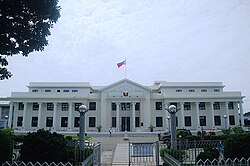
Pototan (Kinaray-a: Banwa ka Pototan, Hiligaynon: Banwa sang Pototan, Tagalog: Bayan ng Pototan), is a 1st class municipality in the province of Iloilo, Philippines. According to the 2024 census, it has a population of 78,919 people.[5]
Key Information


.svg)

In December 1997, it was declared as the "Christmas Capital of Western Visayas" because of its famed Christmas Festival of Lights.
History
[edit]Early history
[edit]The first people of Pototan were the family of Datu Ramon, grandson of Datu Puti, a Malay from the town of Dumangas.[dubious – discuss] They first settled at Barangay Naslo, which was formerly the poblacion (town center). In that place was found a luxuriant growth of trees called "putat", after which the place was subsequently called "Kaputatan" or "place of many Putat trees." However, due to its hilly terrain and poor water supply, they decided to move nearer the bank of the Suage River, now called Pototan.
In the middle of the 16th century, the Chinese traders arrived in Pototan.
Spanish era
[edit]


The arrival of the Spaniards in 1593 sparked new changes in the socio-economic and political life of the natives. It was the start of a new era, the natives were converted to Catholicism through the efforts of Augustinian Friars. The settlement was subsequently made into a Parish. Education, though at the onset only for the privileged few, was introduced. The name "Kaputatan", which the Spanish have difficulty pronouncing, was changed to "Pototan".
The Spanish built roads and bridges. Don Tomas Sajen and Don Escribano supervised the construction of the Tribunal (municipal hall) with the natives contributing the labor. The Tribunal withstood World War II and in the early 50s was modified into what is now the Western Visayas Hospital.
In 1874, Pototanons began to run their own political affairs with the appointment of Don Juan Marcelo as the first Capitan Municipal. This form of government continued until the arrival of the Americans.
During the incumbency of Capitan Municipal Braulio Peñaranda in 1891, there was a cholera outbreak.
During the Philippine Revolution, Pototanons such as Teresa Magbanua (known as the Joan of arc of the Visayas[6]) and her two brothers, Elias and Pascual Magbanua took up arms and joined the revolution.
The Americans arrived after Spain ceded Philippines to the United States in 1898. The remaining Spanish population fled to the hills together with many Filipinos including the last Gobernadorcillio, Don Maurilio Mendoza. He was later held prisoner by the Americans but subsequently named the first Municipal President.
American era
[edit]Under the Americans, the natives were granted the freedom of speech and worship. Education was liberalized; more and better roads and bridges were constructed. Improvements were also noticed in the economic, social and cultural life of the people.
During the incumbency of Mun. President Maurillo Mendoza, the Pototanons again witnessed another unforgettable event: the burning of the entire half of the poblacion in November 1914. The cause of the fire is unknown.
When the Philippine Constitution was ratified in 1935, another change in the town's local governance was introduced: the title of Municipal President was changed to Municipal Mayor. Santiago Puig was the first Municipal Mayor. He was succeeded by Mariano Peñaflorida in 1940. Peñaflorida served until September 16, 1942.
World War II
[edit]The coming of the Japanese during World War II spread chaos and fear among Pototanons. Mayor Peñaflorida continued to act as Mayor under the Free Revolutionary Government of Tomas Confesor while the Japanese Imperial Forces designated Tomas Ferrariz as Puppet Mayor.
Geography
[edit]Pototan lies on the banks of the Suage River, 30 kilometres (19 mi) from Iloilo City and 16 kilometres (9.9 mi) from Janiuay. The town has an area of 94 km2, 85% of which is agricultural land.
Considered the rice granary of Panay, the town is bordered by Dingle to the north, Zarraga to the south, Barotac Nuevo to the east, New Lucena and Mina to the west.
Barangays
[edit]Pototan is politically subdivided into 50 barangays. [7] Each barangay consists of puroks and some have sitios.
- Abangay
- Amamaros
- Bagacay
- Barasan
- Batuan
- Bongco
- Cahaguikican
- Callan
- Cansilayan
- Casalsagan
- Cato-ogan
- Cau-ayan
- Culob
- Danao
- Dapitan
- Dawis
- Dongsol
- Fundacion
- Guinacas
- Guibuangan
- Igang
- Intaluan
- Iwa Ilaud
- Iwa Ilaya
- Jamabalud
- Jebioc
- Lay-ahan
- Primitivo Ledesma Ward (Pob.
- Lopez Jaena Ward (Poblacion)
- Lumbo
- Macatol
- Malusgod
- Naslo
- Nabitasan
- Naga
- Nanga
- Pajo
- Palanguia
- Fernando Parcon Ward (Poblacion)
- Pitogo
- Polot-an
- Purog
- Rumbang
- San Jose Ward (Poblacion)
- Sinuagan
- Tuburan
- Tumcon Ilaya
- Tumcon Ilaud
- Ubang
- Zarrague
Climate
[edit]| Climate data for Pototan, Iloilo | |||||||||||||
|---|---|---|---|---|---|---|---|---|---|---|---|---|---|
| Month | Jan | Feb | Mar | Apr | May | Jun | Jul | Aug | Sep | Oct | Nov | Dec | Year |
| Mean daily maximum °C (°F) | 28 (82) |
29 (84) |
30 (86) |
32 (90) |
32 (90) |
30 (86) |
29 (84) |
29 (84) |
29 (84) |
29 (84) |
29 (84) |
28 (82) |
30 (85) |
| Mean daily minimum °C (°F) | 23 (73) |
22 (72) |
23 (73) |
23 (73) |
25 (77) |
25 (77) |
24 (75) |
24 (75) |
24 (75) |
24 (75) |
24 (75) |
23 (73) |
24 (74) |
| Average precipitation mm (inches) | 57 (2.2) |
37 (1.5) |
41 (1.6) |
42 (1.7) |
98 (3.9) |
155 (6.1) |
187 (7.4) |
162 (6.4) |
179 (7.0) |
188 (7.4) |
114 (4.5) |
78 (3.1) |
1,338 (52.8) |
| Average rainy days | 12.0 | 7.7 | 9.2 | 10.2 | 19.5 | 24.6 | 26.9 | 25.1 | 25.5 | 25.2 | 18.0 | 13.0 | 216.9 |
| Source: Meteoblue (modeled/calculated data, not measured locally)[8] | |||||||||||||
Demographics
[edit]
|
|
| |||||||||||||||||||||||||||||||||||||||||||||||||||||||||
| Source: Philippine Statistics Authority[9][10][11][12][13] | |||||||||||||||||||||||||||||||||||||||||||||||||||||||||||
In the 2020 census, the population of Pototan, Iloilo, was 78,298 people,[14] with a density of 810 inhabitants per square kilometre or 2,100 inhabitants per square mile. Karay·a is the primary language in the municipality.[15]
Economy
[edit]Poverty incidence of Pototan
10
20
30
40
2000
35.15 2003
29.02 2006
18.80 2009
17.31 2012
18.90 2015
21.24 2018
15.35 2021
14.99 Source: Philippine Statistics Authority[16][17][18][19][20][21][22][23] |
Education
[edit]Private Schools
[edit]- Adventist Academy - Iloilo, Inc. (West Visayan Academy)
- Colegio de la Inmaculada Concepción - Hijas de Jesús
- EXEL Montessori de Pototan
- First Bible Baptist Academy
- Pototan Baptist Church Learning Center
- Pototan Christian Learning Center
- The Integrated Academy School System, Inc.
Tertiary
[edit]Secondary
[edit]- Alberto Sorongon Sr. Memorial NHS
- Pototan National Comprehensive HS
- Jamabalud NHS
- Jose Facultad Memorial NHS
- Palanguia NHS
Primary
[edit]- Barasan ES
- Batuan ES
- Cahaguikican ES
- Cansilayan ES
- Casalsagan ES
- Danao ES
- Dapitan ES
- Doña Trinidad ES
- Dolores P. Tirador ES
- Edmundo Dayot Memorial ES
- Guibuangan ES
- Guinacas ES
- Igang ES
- Iwa-Macatol ES
- Jamabalud ES
- Juana Bolivar Peñaflorida ES (Amamaros ES)
- Lay-ahan ES
- Lumbo ES
- Maravilla ES
- Matias Yusay Memorial ES
- Nabitasan ES
- Naslo ES
- Palanguia ES
- Pototan Pilot ES
- Rizal ES
- San Juan ES
- Sinuagan ES
- Tuburan ES
- Ubang ES
Government
[edit]
List of chief executives
[edit]Gobernadorcillos
[edit]| Order | Name | Years in Office |
|---|---|---|
| 1 | Juan Marcelo | 1774 |
| 2 | Juan Dato-on | 1775 |
| 3 | ? Mangungud | 1776 |
| 4 | Tomás Codese | 1777 |
| 5 | Esteban Balas | 1778 |
| 6 | Juan Figueroa | 1779 |
| 7 | Juan Marcelo | 1780 |
| 8 | Agustín Diego | 1781 |
| 9 | Pedro Suganag | 1782 |
| 10 | Diego Magbanua | 1783 |
| 11 | Juan Figueroa | 1784 |
| 12 | Salvador Fiharon | 1785 |
| 13 | Francisco Zabia | 1786 |
| 14 | Juan Figueroa | 1787 |
| Juan Figueroa | 1788 | |
| 15 | Agustín Aliso | 1789 |
| 16 | Miguel Pérez | 1790 |
| 17 | Tomás Antesa | 1791 |
| 18 | Juan Figueroa | 1792 |
| 19 | Juan Cordero | 1793 |
| 20 | Silvestre Feliciano | 1794 |
| 21 | Antonio Mosquera | 1795 |
| 22 | Juan Faustino | 1796 |
| 23 | Miguel Jacinto | 1797 |
| 24 | José Amador | 1798 |
| 25 | Juan Macario | 1799 |
| 26 | Fulgencio Felipe | 1800 |
| 27 | Juan Miguel | 1801 |
| 28 | Alejandro Tingson | 1802 |
| 29 | Agustín Bolívar | 1803 |
| 30 | Nicolás Oberio | 1804 |
| 31 | Gregorio Mariano | 1805 |
| 32 | Julián Narciso | 1806 |
| 33 | Fernando Casumpang | 1807 |
| 34 | Fernando Macario | 1808 |
| 35 | José Belarmino | 1809 |
| 36 | Fulgencio Bernardo | 1810 |
| 37 | Mariano Fausto | 1811 |
| 38 | Miguel Jacinto | 1812 |
| 39 | Fernando Casumpang | 1813 |
| 40 | Fernando Macario | 1814 |
| 41 | Francisco Samas | 1815 |
| 42 | José Ynocencio | 1816 |
| 43 | Juan Faustino | 1817 |
| 44 | Juan Dionisio | 1818 |
| 45 | Juan Domingo | 1819 |
| 46 | Juan Faustino | 1820 |
| 47 | Juan Apolinario Delgado | 1821 |
| 48 | Juan Felipe Álvarez | 1822 |
| 49 | Francisco Pedro | 1823 |
| 50 | Francisco Luciano | 1824 |
| 51 | Mariano de la Cruz | 1825 |
| 52 | Juan Francisco | 1826 |
| 53 | Domingo Tecson | 1827 |
| 54 | Mariano de la Cruz | 1828 |
| 55 | Bernardo Macario | 1829 |
| 56 | Fernando Faustino | 1830 |
| 57 | Antonio Bolívar | 1831 |
| 58 | Agustín Bostrano | 1832 |
| 59 | Juan Bartolomé | 1833 |
| 60 | Francisco Luciano | 1834 |
| 61 | Castro Bolívar | 1835 |
| 62 | Domingo Nerio | 1836 |
| 63 | Lucas Bolívar | 1837 |
| 64 | Salvador Ortega | 1838 |
| 65 | Gregorio Marcelo | 1839 |
| 66 | Antonio de Padua | 1840 |
| 67 | Juan Ilisan | 1841 |
| 68 | Juan Franco | 1842 |
| 69 | Gregorio Casimero | 1843 |
| 70 | Juan Hipólito | 1844 |
| 71 | Mateo Remigio | 1845 |
| 72 | Fernando Casumpang | 1846 |
| 73 | ? Peñafort | 1847 |
| 74 | Blas ? | 1848 |
| 75 | Fernando Felipe | 1849 |
| 76 | Manuel Erarco | 1850 |
| 77 | José Tecson | 1851 |
| José Tecson | 1852 | |
| 78 | Ambrosio Cordero | 1853 |
| 79 | Francisco Catequista | 1854 |
| 80 | Juan Apolinario | 1855 |
| 81 | Domingo Prudente | 1856 |
| 82 | Benito Ferrariz | 1857 |
| 83 | Nicolás Casumpang | 1858 |
| 84 | Antonio Tingson | 1859 |
| 85 | Bartolomé Magbanua | 1860 |
| 86 | Antonio Peremne | 1861 |
| 87 | Benito Ferrariz | 1862-1863 |
| 88 | Borromeo Penero | 1864-1865 |
| 89 | Esteban Peñaranda | 1866 |
| 90 | Dámaso Pineda | 1867-1868 |
| Dámaso Pineda | 1869 | |
| 91 | Benito Ferrariz | 1870-1871 |
| 92 | Alejo Pineda | 1872-1873 |
| 93 | Nicolasito Paranga | 1874-1875 |
| 94 | Felipe Parreño | 1876-1877 |
| 95 | José Mendoza | 1878 |
| 96 | Cayetano Bolívar | 1879 |
| 97 | León Fernando Nograles | 1880-1881 |
| 98 | Vicente Parreñas | 1882 |
| 99 | Justo Nograles | 1883 |
| 100 | Barcelio Peñaranda | 1884 |
| 101 | Pedro Belasa | 1885 |
| 102 | Cayetano Bolívar | 1886-1887 |
| 103 | Vicente Peñaflorida | 1888 |
| 104 | Tomás Pulmones | 1889 |
| 105 | Cayetano Bolívar | 1890-1891 |
| 106 | Hilario Magbanua | 1892-1893 |
Capitán municipal
[edit]In 1893, the Maura Law was passed to reorganize town governments with the aim of making them more effective and autonomous. The law changed the title of chief executive of the town from gobernadorcillo to capitán municipal.[24]
| Order | Name | Years in Office |
|---|---|---|
| 107 | Julián Ubaldo | 1894 |
| 108 | Maurilio Mendoza | 1895-1900 |
Presidentes & vice presidentes municipal
[edit]| Order | Presidente municipal | Years in Office | Order | Vice presidente municipal | Years in Office |
|---|---|---|---|---|---|
| 109 | Mariano Peñaflorida | 1900-1904 | 1 | ||
| 110 | Rafael Parcon | 1904-1906 | |||
| 111 | Magdaleno Silva | 1906-1907 | |||
| 112 | Ceferino Palabrica | 1907-1908 | |||
| 113 | Matias Yusay | 1908-1909 | |||
| 114 | Ceferino Palabrica | 1909-1913 | |||
| 115 | Generoso Solinap | 1913-1916 | |||
| 116 | Tomás Peñaflorida | 1916-1919 | |||
| 117 | Primitivo Ledesma | 1919-1922 | Paulino Pérez | ||
| 118 | Manuel Mendoza | 1922-1925 | |||
| 119 | Generoso Solinap | 1925-1928 | |||
| 120 | Sofronio Daguay | 1928-1931 | |||
| 121 | Nemesio Cordero | 1931-1933 |
Municipal Mayors
[edit]| Order | Mayor | Years in Office | Order | Vice-mayor | Years in Office |
|---|---|---|---|---|---|
| 122 | Fernando Parcon | 1933-1936 | Silverio Quesaba | ||
| 123 | Mariano Peñaflorida | 1936-1945 | |||
| Tomás Ferrariz (Japanese Puppet Mayor) | 1942-1945 | ||||
| 124 | Fortunato Camarista | 1946-1951 | |||
| 125 | Roque Mosquera | 1951 | |||
| 126 | Fortunato Camarista | 1952-1955 | |||
| 127 | Florentino Perez | 1956-1960 | |||
| 128 | Santiago Puig | 1960-1962 | |||
| 129 | Manuel Parcon | 1963-1998 | |||
| 130 | Licurgo Tirador | 1998-2001 | Peter Parcon | ||
| 131 | Manuel Parcon | 2001-2002 | Pablo Perez | ||
| 132 | Pablo Perez | 2002-2013 | |||
| 133 | Tomas Peñaflorida | 2013-2019 | Joselito Romualdo Ilisan | ||
| 134 | Rafael Enrique Lazaro | 2019–present |
Municipal officials
[edit]The elected municipal officials of the local government unit of Pototan, Iloilo for 2022-2025.
 | |||||
|---|---|---|---|---|---|
| Representative | |||||
| Lorenz R. Defensor (NUP) | |||||
| Mayor | |||||
| Rafael Enrique P. Lazaro (NUP) | |||||
| Vice Mayor | |||||
| Tomas M. Peñaflorida (NUP) | |||||
| Sangguniang Bayan Members | |||||
| Paolo Lorenzo L. Tirador (NUP) | Donnabelle S. Mendoza (AKSYON) | ||||
| Romualdo Joselito M. Ilisan (AKSYON) | Ma. Concepcion Q. Dayot-Sumergido (NUP) | ||||
| Kirk P. Pedrajas (AKSYON) | Nonito Q. Pasuelo Jr. (AKSYON) | ||||
| Grace P. Abul-Lim (AKSYON) | Eugenio Rodrigo J. Palu-ay (NUP) | ||||
| ABC President | |||||
| Sherwin S. Peñaranda | |||||
| SK Federation President | |||||
| Verna Angelique G. Pastolero | |||||
Notable personalities
[edit]- Espiridion Guanco – first President pro tempore of the Senate of the Philippines and Secretary to Senate President Manuel L. Quezon.[25][26]
References
[edit]- ^ [1] | (DILG)
- ^ "2015 Census of Population, Report No. 3 – Population, Land Area, and Population Density" (PDF). Philippine Statistics Authority. Quezon City, Philippines. August 2016. ISSN 0117-1453. Archived (PDF) from the original on May 25, 2021. Retrieved July 16, 2021.
- ^ "2024 Census of Population (POPCEN) Population Counts Declared Official by the President". Philippine Statistics Authority. 17 July 2025. Retrieved 18 July 2025.
- ^ "PSA Releases the 2021 City and Municipal Level Poverty Estimates". Philippine Statistics Authority. 2 April 2024. Retrieved 28 April 2024.
- ^ "2024 Census of Population (POPCEN) Population Counts Declared Official by the President". Philippine Statistics Authority. 17 July 2025. Retrieved 18 July 2025.
- ^ Cook, Bernard A. (2006). Women and War: A Historical Encyclopedia from Antiquity to the Present. ABC-CLIO. p. 465. ISBN 978-1-85109-770-8.
- ^ "Province: Iloilo". PSGC Interactive. Quezon City, Philippines: Philippine Statistics Authority. Retrieved 25 August 2025.
- ^ "Pototan: Average Temperatures and Rainfall". Meteoblue. Retrieved 3 May 2020.
- ^ "2024 Census of Population (POPCEN) Population Counts Declared Official by the President". Philippine Statistics Authority. 17 July 2025. Retrieved 18 July 2025.
- ^ Census of Population (2015). "Region VI (Western Visayas)". Total Population by Province, City, Municipality and Barangay. Philippine Statistics Authority. Retrieved 20 June 2016.
- ^ Census of Population and Housing (2010). "Region VI (Western Visayas)" (PDF). Total Population by Province, City, Municipality and Barangay. National Statistics Office. Retrieved 29 June 2016.
- ^ Censuses of Population (1903–2007). "Region VI (Western Visayas)". Table 1. Population Enumerated in Various Censuses by Province/Highly Urbanized City: 1903 to 2007. National Statistics Office.
- ^ "Province of Iloilo". Municipality Population Data. Local Water Utilities Administration Research Division. Retrieved 17 December 2016.
- ^ "2024 Census of Population (POPCEN) Population Counts Declared Official by the President". Philippine Statistics Authority. 17 July 2025. Retrieved 18 July 2025.
- ^ Sosa Peña, Andrew Rey (2019). "Aspect in Pototan Kinaray-a". doi:10.13140/RG.2.2.31348.91520.
{{cite journal}}: Cite journal requires|journal=(help) - ^ "Poverty incidence (PI):". Philippine Statistics Authority. Retrieved December 28, 2020.
- ^ "Estimation of Local Poverty in the Philippines" (PDF). Philippine Statistics Authority. 29 November 2005.
- ^ "2003 City and Municipal Level Poverty Estimates" (PDF). Philippine Statistics Authority. 23 March 2009.
- ^ "City and Municipal Level Poverty Estimates; 2006 and 2009" (PDF). Philippine Statistics Authority. 3 August 2012.
- ^ "2012 Municipal and City Level Poverty Estimates" (PDF). Philippine Statistics Authority. 31 May 2016.
- ^ "Municipal and City Level Small Area Poverty Estimates; 2009, 2012 and 2015". Philippine Statistics Authority. 10 July 2019.
- ^ "PSA Releases the 2018 Municipal and City Level Poverty Estimates". Philippine Statistics Authority. 15 December 2021. Retrieved 22 January 2022.
- ^ "PSA Releases the 2021 City and Municipal Level Poverty Estimates". Philippine Statistics Authority. 2 April 2024. Retrieved 28 April 2024.
- ^ Laurel, José (1926). Local government in the Philippine Islands. Manila: La Pilarica Press. pp. 30, 36–37.
{{cite book}}: CS1 maint: publisher location (link) - ^ "List of Previous Senators - Senate of the Philippines". legacy.senate.gov.ph. Retrieved 2024-12-31.
- ^ Philippines (1917). Official Gazette (Republic of the Philippines).
External links
[edit]
- Philippine Standard Geographic Code
- Philippine Census Information
- Local Governance Performance Management System
Places adjacent to Pototan | |
|---|---|


 Province of Iloilo Province of Iloilo | |
|---|---|
Iloilo City (capital and largest city) | |
| Municipalities |
|
| Component city | |
| Highly urbanized city |
|
| International | |
|---|---|
| National | |
| Other | |

Pototan
View on GrokipediaPototan is a first-class landlocked municipality in the province of Iloilo, Western Visayas region of the Philippines, situated approximately 30 kilometers north of Iloilo City and covering an area of 97.10 square kilometers with a population of 78,298 as of the 2020 census.[1][2] Known locally as the "Rice Granary of Iloilo" due to its extensive agricultural lands dedicated to rice production, the municipality derives its economy primarily from farming, with 85% of its territory oriented toward agriculture.[3][4] The town's historical roots trace back to pre-colonial times, with the first settlers believed to be the family of Datu Ramon, a grandson of the legendary Datu Puti who migrated from Borneo, establishing Pototan—originally called Kaputatan—as a settlement that evolved into a formal municipality by 1863 during the Spanish colonial era.[5][6] Pototan's cultural prominence is highlighted by its designation as the "Christmas Capital of Western Visayas," stemming from the annual IWAG Festival, a dazzling display of lights in the grand Pototan Plaza featuring an obelisk, lagoon, and skating rink, which draws visitors during the holiday season.[3][4] Additionally, the Parayan Festival celebrates the rice harvest, underscoring the community's agricultural heritage through traditional rituals and festivities.[7] Governed by Mayor Rafael Enrique P. Lazaro, Pototan comprises 50 barangays and maintains infrastructure supporting its role as a regional hub, including the notable St. Joseph's Parish Church and proximity to key facilities like the Iloilo Provincial Hospital outpost, while ongoing developments focus on enhancing local services amid its steady population growth.[1][8]
Geography
Location and Administrative Divisions
Pototan is a landlocked municipality located in Iloilo Province, Western Visayas region, on Panay Island in the Philippines, with geographic coordinates of approximately 10°57′N 122°38′E.[1] Positioned about 30 kilometers north of Iloilo City, it serves as an inland hub accessible via major roads connecting to the provincial capital.[1] The municipality shares boundaries with Mina to the west, Dingle to the north, Barotac Nuevo to the east, and Zarraga to the south, delineating its territorial extent within the province's central plains.[4] Pototan covers a total land area of 97.10 square kilometers, predominantly flat terrain suitable for agricultural expansion but constrained by its inland position without direct coastal access.[1] Administratively, it is divided into 50 barangays, the smallest local government units, which manage community-level affairs and reflect the municipality's decentralized structure for governance and service delivery.[1] This subdivision supports localized administration over its expanse, with barangays varying in size and population density based on proximity to the town center.[1]
Topography and Hydrology
Pototan exhibits predominantly flat to gently sloping terrain, with some portions featuring rolling hills, facilitating widespread rice paddy cultivation across its 94.15 square kilometers. Elevations in the municipality average around 27 meters above sea level, with variations typically modest and ranging up to approximately 50 meters in higher areas, promoting alluvial soil deposition that enhances agricultural productivity.[2][9] Hydrologically, Pototan is positioned along the banks of the Suage River, a key waterway that traverses the area and supports irrigation systems critical for local farming. This river functions as a significant tributary to the larger Jalaur River system, channeling surface runoff and groundwater that sustain the flat lowlands but also create floodplain dynamics influencing land use patterns.[10][11] The interplay of gentle topography and riverine hydrology results in fertile, sediment-rich soils along the Suage's course, though low-elevation zones near the river remain vulnerable to overflow from upstream drainage, underscoring the causal link between water flow and terrain stability for empirical agricultural planning.[12][6]Climate and Natural Hazards
Pototan experiences a tropical monsoon climate (Köppen classification Am), characterized by high year-round temperatures, elevated humidity, and abundant precipitation without a pronounced dry season. Average annual temperatures range from lows of approximately 23°C in January and February to highs exceeding 32°C in May, with an overall annual mean around 27-28°C.[13][14] Annual rainfall totals approximately 2,000 mm, distributed relatively evenly but peaking during the wet season from June to October, when monthly averages can reach 250 mm or more in August.[15][16] The municipality faces significant vulnerability to tropical cyclones and associated flooding, exacerbated by its topography as a catch basin for the Jalaur and Suage river systems. The Philippines averages 20 typhoons annually, with Western Visayas including Iloilo frequently in their path, leading to heavy rainfall that overwhelms local drainage.[17][18] Notable events include Typhoon Frank in June 2008, which devastated Iloilo province with extreme winds and flooding, and multiple 2023 incidents where Pototan declared a state of calamity: in May due to river overflows affecting agricultural lands, and in September when 19 of 50 barangays flooded, impacting over 3,000 families.[19][18][20] Southwest monsoon (habagat) rains compound these risks, contributing to prolonged inundation even outside peak typhoon months, as seen in July 2025 when widespread flooding persisted across low-lying areas. Local government assessments classify Pototan as highly vulnerable to cyclones and floods, with historical data indicating recurrent disruptions to rice production and infrastructure from water levels rising rapidly during intense events.[21][22]History
Pre-Colonial and Early Settlement
The pre-colonial settlement of Pototan traces its origins to the family of Datu Ramon, identified in local historical accounts as a grandson of the legendary Datu Puti, a Malay chieftain associated with the ancient migration of ten datus from Borneo to Panay Island around the 13th century.[5][23] Datu Ramon established the initial habitation in an area corresponding to present-day Barangay Naslo, drawn by the fertile lands and abundant resources suitable for early Visayan communities.[23] These settlers, part of the broader Austronesian Visayan groups, relied on subsistence agriculture, fishing, and riverine trade along waterways like the nearby Jalaud River, which facilitated sustenance and exchange with neighboring settlements.[24] The name "Pototan" derives from the proliferation of putat trees (Reutealis trisperma), noted for their dense growth in the settlement area upon Datu Ramon's arrival, reflecting the natural environment that supported early habitation.[23][5] This period predates Spanish contact, with communities organized under datu leadership, practicing animistic beliefs and inter-island commerce typical of pre-Hispanic Visayan society.[24] Archaeological evidence specific to Pototan remains sparse, but regional patterns indicate continuous indigenous occupation since the medieval era, grounded in oral traditions and migration sagas preserved in ethnolinguistic records.[25]Spanish Colonial Era
Pototan was formally established as a pueblo (municipality) in 1863 under Spanish colonial administration, marking its transition from a mere settlement to an organized local government unit within the province of Iloilo.[6] This formalization aligned with broader Spanish efforts to consolidate control over Visayan territories through structured pueblos, each governed by a gobernadorcillo selected from the local principalía—the elite class of native landowners and former datus.[26] The gobernadorcillo handled municipal administration, including tax collection via the tributo system, maintenance of public works, and enforcement of Spanish laws, while remaining subordinate to the provincial alcalde mayor.[26] The Catholic Church exerted substantial influence over Pototan's social fabric, with friars from the Augustinian or Recollect orders establishing a parish dedicated to Saint Joseph, which served as the community's moral and educational hub.[23] Religious conversion campaigns integrated native practices with Catholic rituals, fostering community cohesion but also enabling clerical oversight of daily life, including land disputes and moral conduct.[27] Education, initially limited to elite boys in doctrina cristiana, was introduced through the parish, emphasizing literacy in Spanish and catechism to support administrative needs.[23] Agriculturally, Spanish rule reinforced Pototan's reliance on rice as the primary crop, with policies encouraging intensified wet-rice (palay) cultivation via communal labor drafts (polo y servicio) and basic irrigation improvements, though large-scale haciendas were less prevalent in this inland area compared to coastal Iloilo's sugar estates.[6] New introductions like maize and tobacco supplemented traditional farming, but subsistence rice production dominated, sustaining the tributary economy that funneled resources to Manila.[28]American Colonial Era
Following the Spanish-American War and the Treaty of Paris in 1898, American forces assumed control over the Philippines, with their arrival in Pototan documented in 1899.[5] This marked the transition from Spanish to American administration in the municipality, which was integrated into the broader U.S. colonial framework for Iloilo province. Local governance saw the appointment of Tan Anoy as the first presidente municipal, reflecting early efforts to incorporate Filipino elites into the administrative structure while maintaining oversight through American officials.[5] Key reforms emphasized civil liberties and modernization. Natives were granted freedoms of speech and worship, diverging from prior Spanish restrictions and fostering greater local participation in public life.[5] Education was liberalized under the U.S. system, which prioritized public schooling in English to promote assimilation and practical skills, though specific enrollment data for Pototan remains limited; this aligned with provincial trends where primary instruction expanded post-1899.[5] Infrastructure development accelerated, with construction of improved roads and bridges enhancing connectivity to Iloilo City and facilitating agricultural transport, contributing to economic uplift in rice-producing areas.[5] These changes yielded measurable advancements in Pototan's economic, social, and cultural spheres by the early 20th century, though challenges persisted, including a major fire in November 1914 that destroyed half of the poblacion under presidente Primitivo Ledesma.[5] Administrative evolution continued, with the position retitled municipal mayor in 1935 following the Philippine Constitution's ratification; Fernando Parcon served as the first such mayor, succeeded by Mariano Penaflorida in 1940.[5] Local responses varied, with elite cooperation aiding integration into export-oriented markets, but underlying resistance to full colonial dependency echoed broader Visayan sentiments.[5]World War II and Japanese Occupation
Japanese forces occupied Iloilo Province, including Pototan, in early 1942 as part of the broader invasion of the Philippines, following the fall of American-Filipino defenses on Panay Island.[29] Local administration shifted under Japanese control, with Fermin Caram replacing the retreating Governor Jose Maria Confesor, leading to disruptions in governance and economy amid forced resource extraction and conscription.[29] Pototan hosted a Japanese garrison staffed by the Tanabe Platoon of the Fukutome Unit's 1st Company, which faced repeated guerrilla attacks starting in mid-1942, contributing to ongoing low-intensity conflict in the region.[30] Guerrilla forces, drawing from local Filipino units, ambushed Japanese patrols approximately five to six kilometers east of Pototan, employing hit-and-run tactics amid forested terrain to harass supply lines and outposts.[30] Teresa Magbanua, a native of Pototan known for prior revolutionary activities, supported resistance efforts against the occupiers through non-combat means, such as aiding insurgents despite her advanced age.[31] From July to December 1943, Japanese anti-guerrilla campaigns across Panay escalated into widespread atrocities targeting civilians suspected of collaboration, resulting in mass killings and village burnings to suppress support for insurgents; these operations, documented in military records, aimed to dismantle local networks but fueled further resistance.[32] By late 1944, organized guerrilla elements under the 6th Military District relocated their headquarters to Pototan, approximately 34 kilometers northeast of Iloilo City, where they constructed an airfield to facilitate Allied coordination.[33] Liberation began on March 18, 1945, when the U.S. 40th Infantry Division, led by the 185th Infantry Regiment, landed at Parara Beach in nearby Tigbauan, Iloilo, overcoming Japanese defenses within two weeks of preliminary aerial bombardments; this advance, supported by Panay guerrillas, extended to Pototan and facilitated the rapid collapse of remaining occupation forces in the province.[29] Post-liberation, Pototan experienced initial recovery challenges from wartime destruction, including infrastructure damage and population displacement, though guerrilla-held areas minimized some Japanese reprisals compared to more contested zones.[29]Post-Independence and Modern Era
Following Philippine independence in 1946, Pototan underwent rapid reconstruction from World War II damages concentrated in the poblacion area, with residents promptly resuming rice cultivation and establishing small-scale enterprises in sugarcane, fruits, vegetables, and cottage industries like pottery and weaving, bolstered by national government rehabilitation programs aimed at restoring agricultural productivity.[5] This recovery effort aligned with broader nation-building initiatives, leveraging the municipality's fertile Jalaud River valley to contribute to regional food security amid postwar shortages. Educational institutions also rebounded swiftly; for instance, religious schools such as the Hijas de Jesus institution resumed operations in temporary nipa-bamboo structures by 1945, transitioning to permanent concrete buildings by 1947, reflecting a commitment to human capital development in the new republic.[34] Administrative adjustments marked the mid-20th century, including the 1968 separation of Mina as an independent municipality under Republic Act No. 5345, which carved out former barrios from Pototan and reduced its land area while spurring localized governance focus on remaining 26 barangays.[35] These changes facilitated more targeted development, as Pototan's retained core supported expanding non-farm activities tied to its agrarian roots, such as trading hubs along improved post-independence road networks. Into the late 20th and early 21st centuries, Pototan embraced cultural initiatives to foster community cohesion and attract visitors, earning designation as the "Christmas Capital of Western Visayas" in December 1997 for its Festival of Lights, an annual event originating from local traditions that evolved into a major regional draw by integrating illuminations with religious processions.[5] This milestone underscored a shift toward service-oriented growth, with population expansion—evidenced by steady increases documented in national censuses—indicating gradual urbanization through poblacion densification and commuter ties to Iloilo City, 30 kilometers south, without displacing the causal primacy of agriculture in sustaining livelihoods.Demographics
Population Statistics
According to the 2020 Census of Population and Housing by the Philippine Statistics Authority, Pototan recorded a total population of 78,298 persons. This figure reflected a growth from 70,955 in the 2010 census and 61,206 in 2000, indicating steady demographic expansion driven by natural increase and limited migration patterns typical of rural municipalities in Iloilo province.[36] The annual population growth rate between 2015 and 2020 was 0.89 percent, lower than the provincial average, suggesting moderating fertility rates and some out-migration to urban centers like Iloilo City.[36] Historical census data illustrate long-term trends:| Year | Population |
|---|---|
| 1903 | 20,964 |
| 2000 | 61,206 |
| 2010 | 70,955 |
| 2020 | 78,298 |
Ethnic and Linguistic Composition
The population of Pototan is predominantly composed of Ilonggo people, an ethnolinguistic subgroup of the Visayans native to Iloilo province and surrounding areas in the Western Visayas.[39] This group traces its origins to Malay settlers, with minor historical admixtures from Spanish, Chinese, and other influences in small segments of the population.[40] A minor indigenous presence exists in the form of the Ati (Negrito) tribe, primarily in Barangay Ubang, though their numbers remain limited relative to the overall municipal population of 78,298 as of the 2020 census.[41][2] Hiligaynon serves as the dominant native language, aligning with the Ilonggo ethnic majority and standard usage across northern and eastern Iloilo.[42] Some residents may also speak Kinaray-a, a related Visayan language with variants documented in Pototan, particularly in transitional areas between Hiligaynon and Kinaray-a speaking zones.[43] Filipino (standardized Tagalog) functions as the national language for official and educational purposes, while English is employed in government, commerce, and schooling, consistent with national bilingual policy.[44]Religion and Social Structure
The religious landscape of Pototan is dominated by Roman Catholicism, reflecting the broader patterns in Iloilo province and the Philippines, where approximately 78.8% of the national household population identified as Roman Catholic in the 2020 Census of Population and Housing.[45] The Patronage of St. Joseph Parish serves as the central religious institution, operating under the Roman Catholic Archdiocese of Jaro and facilitating community worship, sacraments, and festivals tied to Catholic traditions.[46] Catholicism was introduced during the Spanish colonial period, integrating with local practices and solidifying its role in social cohesion.[5] Minority religious groups exist but constitute a small fraction, consistent with national figures showing Protestants at around 10% and Muslims at 6.4%, though these are less prevalent in rural Visayan areas like Pototan.[45] Local parishes, such as Our Lady of Lourdes, indicate additional Catholic foci, with no significant reports of large non-Catholic communities.[47] Social structure in Pototan aligns with the bilateral kinship system characteristic of Ilonggo (Hiligaynon) society, tracing descent and obligations through both paternal and maternal lines using a generational terminology framework.[24] This system emphasizes extended family networks, including grandparents, aunts, uncles, and cousins, which provide mutual support in agricultural communities and enhance resilience against economic or environmental challenges. The compadrazgo (godparenthood) practice further expands kinship ties beyond blood relations, incorporating ritual kin into daily social and economic exchanges, thereby strengthening communal bonds.[48] Historical clans, descending from early datus like Datu Ramon, continue to influence local leadership and land tenure, though modern structures prioritize nuclear families within broader clan affiliations for decision-making and dispute resolution.[5] This kinship-oriented framework promotes collective labor in rice farming—Pototan's economic mainstay—and fosters informal welfare systems amid limited formal safety nets.Economy
Agricultural Base
Pototan's agricultural sector is predominantly rice-oriented, forming the foundational economic activity with paddy fields occupying the majority of its arable land across 58 barangays. The municipality's flat topography facilitates extensive cultivation, with approximately 85% of its 9,710-hectare land area—equating to over 8,000 hectares—dedicated to farming, primarily rice.[2][23] This land use pattern reflects the causal primacy of rice as a staple crop, driven by soil suitability, historical planting traditions, and market demand in Iloilo Province. Irrigation infrastructure, managed by the National Irrigation Administration via the Jalaur-Suague River Irrigation System, is critical for productivity, covering a Pototan-inclusive district of 14,600 hectares and enabling two annual croppings in serviced areas versus one in rain-fed zones. Water control mitigates drought risks, which otherwise constrain yields through reduced cropping intensity (historically around 130%) and variability in rain-fed output. Dependence on such systems underscores vulnerabilities to supply disruptions, as evidenced by yield gaps between irrigated (2.4–2.7 tons per hectare historically) and non-irrigated fields (1.8 tons per hectare).[10][49] In top rice-producing barangays, farmers typically manage plots under 1 hectare, employing direct seeding of varieties like RC 222, hand tractors for land preparation, and inorganic inputs for fertilization and pest control, yielding over 100 sacks (approximately 5 metric tons of palay) per hectare per season. Provincial initiatives, such as the 2023 distribution of 970 bags of hybrid seeds to Pototan beneficiaries, target yield enhancements to 6 tons per hectare, building on the area's reputation for leading Iloilo outputs despite a 2023 provincial average of 3.4 tons—below the national 4.2 tons—due to input and water constraints.[50][51][52][53]Commerce, Industry, and Services
Pototan's commerce primarily revolves around local retail trade facilitated by the Old Public Market, a key commercial hub situated along T. Magbanua Street in Barangay San Jose, where vendors offer fresh agricultural produce, meat, fish, and essential household goods to residents and surrounding communities. This market serves as the central venue for daily transactions, supporting small-scale traders and contributing to the municipality's economic circulation, though it remains traditional in structure without noted large-scale expansions as of 2025.[54] Small industries in Pototan are limited and largely informal, with no major manufacturing or processing facilities documented beyond ancillary activities tied to agriculture, such as basic rice milling or handicrafts, reflecting the municipality's rural character and focus on trade over heavy industrialization. The local government's vision positions Pototan as an emerging center for industry, but concrete developments in this area remain aspirational, as evidenced by modest rankings in national competitiveness indices; for instance, in the 2022 Cities and Municipalities Competitive Index by the Department of Trade and Industry, Pototan scored 355th in cost of doing business and 31st in financial deepening, suggesting potential for growth in micro-enterprises but highlighting constraints in productivity (ranked 346th).[55][56] Services in Pototan encompass basic retail, administrative, and community-based offerings, including market supervision and municipal business permitting, with post-2020 trends showing gradual adaptation to regional pushes for MSME resilience amid economic recovery, though specific local innovations like digital services or expanded remittances channeling remain underdeveloped compared to urban Iloilo centers. Remittances from overseas Filipino workers play a supplementary role in household economies, aligning with provincial patterns where such inflows bolster consumption in trade sectors, but Pototan lacks dedicated data on their volume or impact on services expansion.[57][56]Economic Challenges and Growth Initiatives
Pototan's economy remains heavily reliant on agriculture, particularly rice production, rendering it susceptible to environmental disruptions such as flooding from the southwest monsoon and typhoons, which have repeatedly damaged crops and reduced yields in rice farming communities.[58] In July 2025, enhanced monsoon rains and tropical cyclones inflicted over ₱2.2 million in agricultural losses across Iloilo Province, including impacts on Pototan's low-lying farmlands, exacerbating income instability for farmers dependent on rain-fed cultivation.[59] Similarly, Typhoon Odette in December 2021 caused ₱14.5 million in provincial crop damages, with rice fields in areas like Pototan suffering siltation and erosion that diminished soil productivity.[60] These recurrent disasters contribute to broader economic vulnerabilities, including limited diversification beyond agriculture and challenges in sustaining household incomes amid seasonal droughts and floods affecting up to 65% of arable land during rainy periods.[61] Local efforts to mitigate such risks include community-based adaptation strategies, though persistent data gaps on flood mapping hinder effective planning and insurance uptake.[62] To counter these challenges, the Pototan local government unit (LGU) has pursued infrastructure-led growth initiatives, such as the July 2025 groundbreaking of a ₱49 million bridge linking Barangays Cato-ogan and Cau-ayan to enhance farm-to-market access and reduce post-harvest losses.[63] Complementing this, a ₱2 billion water supply project by MacroAsia Corporation, announced in October 2025, aims to improve irrigation reliability and sanitation, supporting agricultural resilience and broader economic activities in Pototan.[64] Poverty alleviation features prominently in development plans, with the LGU's donation of 21,684 square meters of land in Barangay Batuan for the 4PH Housing Project, targeting over 1,200 affordable units for low-income families to stabilize labor mobility and reduce vulnerability to disaster-induced displacement.[65] These initiatives, funded partly through national appropriations and public-private partnerships, seek to foster non-agricultural employment opportunities, though their long-term impact depends on integration with provincial climate adaptation measures like crop insurance promotion.[59]Government and Administration
Local Governance Structure
Pototan functions as a first-class municipality under the Local Government Code of 1991 (Republic Act No. 7160), which establishes the framework for local governance in the Philippines.[66] This classification, based on average annual income exceeding PHP 50 million, grants Pototan enhanced fiscal capacity and administrative autonomy compared to lower-class municipalities.[1][8] The local government unit (LGU) comprises the executive branch led by the municipal mayor and the legislative branch, the Sangguniang Bayan.[66] The Sangguniang Bayan serves as the legislative body, responsible for enacting municipal ordinances, approving the annual budget, and reviewing executive actions to ensure alignment with local needs and national laws.[66] It consists of eight regularly elected councilors, with additional ex-officio members including the president of the Association of Barangay Captains and the Sangguniang Kabataan federation president, facilitating representation from the 58 barangays.[67][66] The vice mayor presides over sessions and assumes the mayor's duties in cases of vacancy or incapacity, promoting checks and balances within the structure.[66] Elections for the mayor, vice mayor, and Sangguniang Bayan members occur every three years during synchronized national and local polls, overseen by the Commission on Elections (COMELEC).[68] The process adheres to the Omnibus Election Code and related laws, with the most recent held on May 9, 2022, and the next on May 12, 2025.[69][66] Terms are limited to three consecutive years, barring recall or impeachment mechanisms to maintain accountability.[66]Historical Chief Executives
The governance of Pototan evolved from Spanish colonial structures, where local leaders known as cabezas de barangay managed barangays, transitioning to appointed capitan municipales by the late 19th century. Juan Marcelo served as the first recorded capitan municipal, appointed in 1874, initiating formal local political administration under Spanish rule.[5] Braulio Peñaranda later held the position of capitan municipal and oversaw the municipal response to the devastating cholera outbreak of 1891, which severely impacted the population.[5] Following the American occupation after 1899, the title shifted to presidente municipal. Tan Anoy was the first to hold this office, reflecting the new administrative framework emphasizing elected local officials.[5] Primitivo Ledesma succeeded in the role during the American era and managed recovery efforts after the November 1914 fire that destroyed half of the poblacion.[5] The 1935 Philippine Constitution formalized the position as municipal mayor. Fernando Parcon became the inaugural holder, serving from 1935 and marking the transition to constitutional local governance.[5] [70] He was succeeded by Mariano Peñaflorida in 1940, who led under the Free Revolutionary Government until September 16, 1942.[5] During World War II, Japanese Imperial Forces designated Tomas Ferraris as mayor in the puppet administration, paralleling Peñaflorida's resistance-aligned leadership.[5]| Leader | Title | Tenure | Notable Actions |
|---|---|---|---|
| Juan Marcelo | Capitan Municipal | 1874 | First formal local executive under Spanish rule, establishing political autonomy for Pototan.[5] [70] |
| Braulio Peñaranda | Capitan Municipal | Spanish era (late 19th century) | Directed response to 1891 cholera epidemic.[5] |
| Tan Anoy | Presidente Municipal | Post-1899 (American era) | Inaugural leader under U.S. administration.[5] |
| Primitivo Ledesma | Presidente Municipal | American era (early 20th century) | Oversaw rebuilding after 1914 poblacion fire.[5] |
| Fernando Parcon | Municipal Mayor | 1935–1940 | First mayor under 1935 Constitution.[5] |
| Mariano Peñaflorida | Municipal Mayor | 1940–1942 | Served amid wartime transitions.[5] |
| Tomas Ferraris | Municipal Mayor (Japanese appointee) | 1942–1945 | Administered under occupation forces.[5] |