Hubbry Logo
Power take-offPower take-offMain
Open search
Power take-off
Community hub
Power take-off
logo
8 pages, 0 posts
0 subscribers
Be the first to start a discussion here.
Power take-off
Power take-off
from Wikipedia
A PTO at the rear end of a farm tractor
A PTO (in the box at the bottom) in the center of the three-point hitch of a tractor

A power take-off or power takeoff (PTO) is one of several methods for taking power from a power source, such as a running engine, and transmitting it to an application such as an attached implement or separate machine.

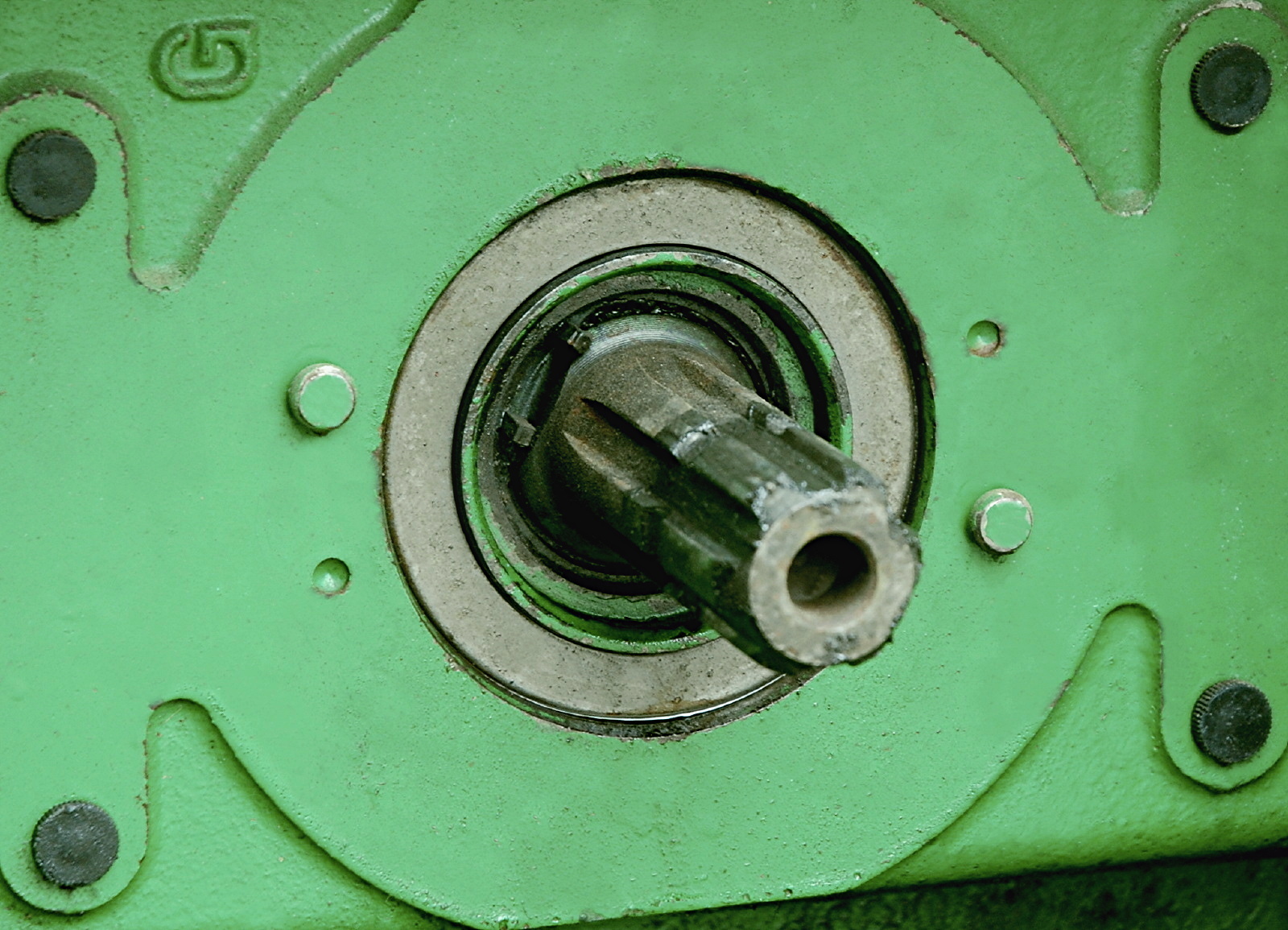
Most commonly, it is a splined drive shaft installed on a tractor or truck allowing implements with mating fittings to be powered directly by the engine.

Semi-permanently mounted power take-offs can also be found on industrial and marine engines. These applications typically use a drive shaft and bolted joint to transmit power to a secondary implement or accessory. In the case of a marine application, such as shafts may be used to power fire pumps.

In aircraft applications, such an accessory drive may be used in conjunction with a constant speed drive. Jet aircraft have four types of PTO units: internal gearbox, external gearbox, radial drive shaft, and bleed air, which are used to power engine accessories. In some cases, aircraft power take-off systems also provide for putting power into the engine during engine start.[1] See also Coffman starter.

History

[edit]
Yellow shaft provides PTO drive to a flail mower on this International Harvester tractor

Various power transmission methods were available before power take-offs became common, but there were applications which would benefit more from some of the attributes that PTOs would provide. Flat belts were generally only useful for applications where the engine was stationary, such as factory steam engines, portable stationary engines, or traction engines parked in front of the work. For moving vehicles such as a traction engine or early tractor towing a farm implement, the implement could receive rotary power by taking it from one of its own wheels (whose turning was imparted by the towing) and distributing it via roller chains (to a sickle bar's crank, for example), but such a transmission ceases if the vehicle stops traveling, and the workload's resistance tends to make the wheel skid rather than turn, even if cleated. The concept of a shaft drive with easily connected and disconnected couplings, and flexibility for driving at changing angles (such as when an articulated tractor-and-trailer combination turns), was a goal to pursue.

Experimental power take-offs were tried as early as 1878, and various homemade versions were constructed over the subsequent decades.[2]  International Harvester Company (IHC) was first to market with a PTO on a production tractor, with its model 8-16, introduced in 1918.[3] Edward A. Johnston, an IHC engineer, had been impressed by a homemade PTO that he saw in France about a decade before, improvised by a French farmer and mechanic surnamed Gougis.[3] He and his IHC colleagues incorporated the idea into the 8-16, and designed a family of implements to take advantage of the feature. IHC was not alone in the market for long, as within a year PTOs were appearing on other production tractors, such as some Case models. In 1920, IHC offered the PTO option on their 15-30 tractor, and it was the first PTO-equipped tractor to be submitted for a Nebraska tractor test. The PTO was a competitive advantage for IHC in the 1920s, and other companies eventually caught up with PTO implementation.

Inside the transmission, the exact point along the gear train where the power is taken off determines whether the PTO can be run independently of vehicle travel (ground speed). Early PTOs were often taken off the main output shaft, meaning that the vehicle had to be "in gear" in order to run the PTO. Later this was improved by so-called live PTO (LPTO) designs, which allow control of the PTO rotation independently of the tractor motion. This is an advantage when the load driven by the PTO requires the tractor motion to slow or stop running to allow the PTO driven equipment to catch up. It also allows operations where the tractor remains parked, such as silo-filling or unloading a manure spreader to a pile or lagoon rather than across a field. In 1945, Cockshutt Farm Equipment Ltd of Brantford, Ontario, Canada, introduced the Cockshutt Model 30 tractor with LPTO. Live PTOs eventually became a widespread norm for new equipment; in modern tractors, LPTO is often controlled by push-button or selector switch. This increases safety of operators who need to get close to the PTO shaft.

Safety

[edit]
Protective plastic sheath enshrouding a PTO shaft

The PTO, as well as its associated shafts and universal joints, are a common cause of incidents and injury in farming and industry. According to the National Safety Council, six percent of tractor related fatalities in 1997 in the United States involved the PTO. Incidents can occur when loose clothing is pulled into the shaft, often resulting in bone fractures, loss of limbs, other permanent disabilities, or death to its wearer. On April 13, 2009, former Major League Baseball star Mark Fidrych died as a result of a PTO related accident; "He appeared to have been working on his truck when his clothes became tangled in the truck's power take-off shaft", District Attorney Joseph Early Jr. said in a statement.[4] Despite much work to reduce the frequency and severity of agricultural injuries, these events still occur.[5]

Some implements employ light free-spinning protective plastic guards to enshroud the PTO shaft;[6][7] these are mandatory in some countries. [citation needed] In the UK, Health and Safety Executive guidance is contained in a leaflet.[8]

Technical standardization

[edit]

Agricultural PTOs are standardized in dimensions and speed. The ISO standard for PTOs is ISO 500,[9] which as of the 2004 edition was split into three parts:

  1. ISO 500-1 General specifications, safety requirements, dimensions for master shield and clearance zone
  2. ISO 500-2 Narrow-track tractors, dimensions for master shield and clearance zone
  3. ISO 500-3 Main PTO dimensions and spline dimensions, location of PTO.

The original type (designated as Type 1) calls for operation at 540 revolutions per minute (rpm). A shaft that rotates at 540 rpm has six splines on it, and a diameter of 1+38 inches (35 mm).[10]

Two newer types, supporting higher power applications, operate at 1000 rpm and differ in shaft size.[10] Farmers typically differentiate these two types by calling them "large 1000" or "small 1000" as compared to the Type 1 which is commonly referred to as the "540". All new types (2, 3, and 4) use involute splines, whereas Type 1 uses straight splines.[9]

Inch-denominated shafts are round, rectangular, square, or splined; metric shafts are star, bell, or football-shaped.[11]

Type RPM Diameter Splines
1 540 1+38 in or 35 mm 6 straight
2 1,000 1+38 in or 35 mm 21 involute
3 1,000 1+34 in or 44 mm 20 involute
4 1,300 57.5 millimetres (2.26 in) 22 involute

[10][9]

Due to ever-increasing horsepower requirements from farm implements, and higher horsepower engines being installed in farm tractors, a still larger type (designated as Type 4) has been added to ISO 500. It operates at a higher rotational speed of 1300 rpm in order to allow for power transfer at reduced levels of torque. The shaft has 22 splines with a major diameter of 57.5 millimeters (mm). It is meant to handle PTO powers up to 450 kilowatts (kW), or roughly 600 horsepower (hp).

All four types rotate counterclockwise when viewed looking back from inside the tractor's cab; when standing behind the tractor and looking directly at the shaft, it turns clockwise.[10]

A 10-spline type was used with some early equipment such as the 1948 Land Rover. A six-spline adapter was usually supplied. It is customary for agricultural machines manufacturers to provide the nominal PTO power specification, an indication of the available instantaneous power at the shaft. Newer tractors may come equipped with 540/540E and/or 1000/1000E options that allow the tractor to power certain low-power-demand implements like hay rakes or tedders using lower engine speeds to maintain the revolutions per minute needed, using less fuel and placing less stress on the engine – thereby improving efficiency and reducing costs.

The first industry standard for PTO design was adopted by ASAE (the American Society of Agricultural Engineers) in April 1927. The PTO rotational speed was specified as 536 ± 10 rpm; the direction was clockwise. The speed was later changed to 540 rpm.[12]

Use on commercial vehicles

[edit]
A hydraulic PTO mounted on a truck gearbox
Rear crossbar with PTO hydraulic connectors and coupling on a Unimog 421

Truck transmissions have one or more locations which allow for a PTO to be mounted. The PTO must be purchased separately and care is required to match the physical interface of the transmission with a compatible PTO. PTO suppliers will usually require details of the make, model and even serial number of the transmission. Care is also needed to ensure that the physical space around the transmission allows for installation of the PTO. The PTO is engaged and disengaged using the main transmission clutch and a remote control mechanism which operates on the PTO itself. Typically, an air valve is used to engage the PTO, but a mechanical linkage, electric or hydraulic mechanism are also options.

Most Unimogs come with front and/or rear PTOs and hydraulics as well as three point hitch systems.

Units will be rated according to the continuous and intermittent torque that can be applied through them and different models will offer different "PTO shaft rotation to engine RPM" ratios.

In the majority of cases, the PTO will connect directly to a hydraulic pump. This allows for transmission of mechanical force through the hydraulic fluid system to any location around the vehicle where a hydraulic motor will convert it back into rotary or linear mechanical force. Typical applications include:

  • Running a water pump on a fire engine or water truck
  • Running a truck mounted hot water extraction machine for carpet cleaning (driving vacuum blower and high-pressure solution pumps)
  • Powering a blower system used to move dry materials such as cement
  • Powering a vehicle-integrated air compressor system[13]
  • Raising a dump truck bed
  • Operating the mechanical arm on a bucket truck used by electrical maintenance personnel or cable TV maintenance crews
  • Operating a winch on a tow truck
  • Operating the compactor on a garbage truck
  • Operating a Boom/Grapple truck
  • Operating a truck mounted tree spade and lift-mast assembly

Split shaft

[edit]

A split shaft PTO is mounted to the truck's drive shaft to provide power to the PTO. Such a unit is an additional gearbox that separates the vehicle's drive shaft into two parts:

  • The gearbox-facing shaft which will transmit the power of the engine to the split shaft PTO;
  • The axle-facing shaft which transmit the propelling power to the axle.

The unit itself is designed to independently divert the engine's power to either the axle-facing shaft or the additional PTO output shaft. This is done by two independent clutches like tooth or dog clutches, which can be operated at total driveline standstill only. Because the main gearbox changes the rotation speed by selection of a gear, the PTO cannot be operated while the vehicle is moving.

On 4x4 vehicles, only the rear drive shaft is used by the split shaft PTO gearbox, requiring the vehicle's 4x4 drive scheme to be of the selectable 4WD type to keep the front axle drive shaft completely decoupled during PTO operation.

It is also possible to connect something other than a hydraulic pump directly to the PTO: for example, fire truck pumps.

"Sandwich" split shaft

[edit]

A "sandwich" type split shaft unit is mounted between engine and transmission and used on road maintenance vehicles, fire fighting vehicles and off-road vehicles. This unit gets the drive directly from the engine shaft and can be capable of delivering up to the complete engine power to the PTO. Usually these units come with their own lubricating system. Due to the sandwich mounting style, the gearbox will be moved away from the engine, requiring the driveline to accommodate the installation.

See also

[edit]

References

[edit]

Bibliography

[edit]
Revisions and contributorsEdit on WikipediaRead on Wikipedia
from Grokipedia
A power take-off (PTO) is a mechanical device that transfers rotational power from an —typically in vehicles like trucks or tractors—to auxiliary equipment, such as hydraulic pumps, generators, or implements, enabling the operation of secondary functions without requiring a separate power source. These devices are commonly mounted on the transmission or housing and engage via clutches or gears to convert engine into usable for external applications. The concept of the PTO originated in the early , with the first documented use in 1919 for inflating tires on vehicles, and it became standardized on trucks by as a reliable method for powering onboard machinery. Manufacturers like Muncie Power Products, established in , played a key role in advancing PTO technology, expanding its use to heavy-duty applications by the mid-20th century and integrating it with modern hydraulic and electric systems. Today, PTOs are essential in industries requiring versatile power transfer, contributing to by eliminating the need for auxiliary engines and reducing fuel consumption. PTOs are categorized by their actuation method, mounting position, and gear configuration, with mechanical types—such as transmission-mounted or split-shaft designs—being the most common for direct power transfer through clutches or . Hydraulic PTOs offer smoother engagement for transmissions, while electric PTOs (ePTOs) use motors and inverters for emission reductions and quieter operation, though they involve higher initial costs. As of 2024, hybrid and electric PTOs account for approximately 25% of new PTO system installations globally.

Definition and Fundamentals

Definition and Purpose

A (PTO) is a mechanical device, typically consisting of a gearbox or , that transfers from a primary power source—such as an or transmission—to auxiliary . This transfer occurs through meshing gears that engage with the power source's output, directing via shafts to drive secondary systems independently of the vehicle's primary motion. The basic mechanics rely on the principles of torque transmission, where rotational force from the is converted and output at variable speeds and levels to match the needs of attached implements. The primary purpose of a PTO is to enable the operation of attachments, such as pumps, winches, or agricultural implements, either while the is stationary or in motion, without relying on the 's . By providing adjustable speed and torque output, it allows for efficient power utilization from the main , decoupling auxiliary functions from vehicle speed. This capability was first demonstrated in practical applications on tractors in , when equipped models with early PTO . PTOs offer key benefits by enhancing versatility, eliminating the need for dedicated auxiliary engines, and supporting demanding applications with power outputs up to approximately 300 kW in heavy-duty configurations. These advantages reduce operational costs, save space, and improve overall efficiency in mobile machinery.

Basic Components and Operation

A power take-off (PTO) system consists of several essential components that facilitate the transfer of mechanical power from a vehicle's or transmission to auxiliary equipment. The input shaft connects directly to the engine's flywheel housing or the transmission's PTO drive gear, meshing with internal gears to receive rotational power. The gearbox, housed within the PTO unit, incorporates gears—often helical or spur types—that adjust the speed and by providing specific ratios, such as 0.361:1 to 1.720:1, to match the requirements of the driven equipment. The output shaft, typically splined with 6 to 21 teeth for compatibility with standard driveshafts and attachments, extends from the gearbox to deliver power to external devices like hydraulic pumps. A mechanism, which may use discs or sliding gears, enables safe engagement and disengagement of the power flow, preventing engine stalling during startup under load. The entire assembly is enclosed in a protective , often conforming to SAE standards like 6-, 8-, or 10-bolt mounting patterns, which safeguards the internals from contaminants and ensures structural integrity. In operation, power enters the PTO via the input shaft, driven by the or transmission at high speeds often exceeding 2000 RPM. The gearbox then modulates this input by reducing RPM—commonly to standardized outputs like 540 or 1000 RPM—while increasing to suit the auxiliary load, ensuring efficient transfer without overloading . The clutch engages once the system is synchronized, typically at low speeds under 1000 RPM for safety, allowing smooth power delivery to the output shaft and connected attachment; disengagement reverses this process to halt auxiliary operation. The PTO's effectiveness in power transfer relies on the fundamental relationship between torque, speed, and power, governed by the P=T×ωP = T \times \omega, where PP is power in kilowatts (kW), TT is in newton-meters (Nm), and ω\omega is angular speed in radians per second (ω=2π×RPM60\omega = 2\pi \times \frac{\text{RPM}}{60}). This underscores the PTO's role in balancing output—high RPM, lower —with the attachment's needs, such as higher at reduced speeds for tasks like pumping or lifting, thereby optimizing overall system efficiency. Control of the PTO is achieved through various methods to ensure precise . Manual levers or cables shift mechanical types by sliding into place, while air or hydraulic systems actuate clutch-shift models, applying pressure to discs for operation even under motion. These controls allow operators to modulate power delivery, with hydraulic shifts providing smoother for heavy-duty applications.

Historical Development

Early Innovations

The concept of the power take-off (PTO) has precursors in the late 19th century with experimental power transmission in steam-powered agricultural equipment, such as chain-driven systems on traction engines. Early patents and mechanisms for power transfer in agricultural machinery laid the groundwork, enabling mechanical power from engines to implements through rotating shafts, though these were initially rudimentary and limited to stationary or low-mobility setups. The first mass-produced featuring a PTO was the Model 8-16, introduced in 1918, which standardized a 540 RPM output driven by the transmission countershaft to power external implements like mowers and binders. This innovation marked a shift from belt-driven systems to direct shaft coupling, allowing for more efficient and versatile operation in field conditions, with initial production limited to about 50 units before wider adoption. By the early , ground-speed dependent PTOs became common, where output speed varied with the tractor's transmission gears and forward motion, as seen in models like the International 15-30, which was among the first tested under formal standards. A significant advancement came in 1945 with the Cockshutt Model 30 tractor, which introduced the live PTO (LPTO), featuring an independent that maintained constant implement speed regardless of the tractor's ground speed or transmission status, revolutionizing tasks like mowing and plowing. This design addressed limitations of earlier transmission-linked systems, providing operators greater control during variable work. However, early PTOs faced notable challenges, including excessive from unbalanced shafts and gears, which could lead to mechanical wear, and risks associated with manual engagement, such as sudden starts causing entanglement injuries if guards were absent or clothing caught in rotating components. These issues prompted initial concerns and calls for better shielding in agricultural operations.

Standardization and Modern Evolution

Following , the American Society of Agricultural Engineers (ASAE) standard for tractor power take-off (PTO), initially adopted in 1927, evolved toward broader industry adoption to ensure compatibility and safety in . By 1947, major manufacturers like were producing farm tractors convertible to these ASAE standards, facilitating widespread integration of PTO systems in efforts. In the 1960s, advancements shifted toward hydraulic and air-shift PTOs for smoother engagement and reduced mechanical stress. Companies such as Muncie Power Products expanded PTO production during this period, introducing clutch-shift designs that allowed safe engagement while the vehicle was in motion (under 1,000 RPM), minimizing gear clash and spikes compared to earlier mechanical systems. Entering the 2000s, PTO technology incorporated electronic controls for enhanced precision and . A notable 2005 innovation involved computer-controlled hydraulic PTO systems, which adjusted speeds to match implement loads, maintaining optimal PTO output while potentially matching or increasing compared to mechanical PTOs for loads up to about 40% of rated output, particularly at low power demands. For emissions compliance, hybrid PTOs emerged, combining mechanical drives with electric assists; introduced such systems in 6-compliant trucks starting in 2014, enabling PTO operation in full electric mode with up to 40% urban fuel savings through integration with biodiesel-compatible engines. Efficiency gains have been driven by pumps in PTO-driven hydraulic systems, which adjust flow to demand and achieve 20-30% energy savings over fixed-displacement alternatives by minimizing excess power consumption. , including carbon-fiber and hemp-reinforced composites for PTO shafts, provide up to 80% weight reduction relative to while maintaining torsional strength, promoting and reduced vehicle fuel use in agricultural applications. As of 2025, PTO adaptations for electric vehicles, such as PTO-alternator hybrids in heavy-duty trucks, are gaining traction to power auxiliary systems without relying solely on batteries, aligning with the mainstreaming of electric and hybrid PTO solutions. The global PTO market is experiencing growth, supporting expansions in autonomous machinery and trends.

Types of Power Take-Offs

Mounting Configurations

Power take-off (PTO) mounting configurations determine how the unit interfaces with the vehicle's or to extract rotational power for auxiliary equipment, with options varying by application demands such as mobility, torque capacity, and spatial constraints. These configurations prioritize compatibility with the host machinery while minimizing modifications to core components. Transmission-mounted PTOs represent the most prevalent setup, bolting directly to the transmission housing to harness through the vehicle's gearing. This approach supports ratios up to 1:1, enabling efficient power transfer for on-the-move operations in trucks and similar vehicles. Common subtypes include side-mount, which attaches laterally for versatile access; top-mount, positioned above the transmission for overhead equipment clearance; and rear-mount (or countershaft), at the transmission's rear via the countershaft gear for direct drive. These are ideal for standard commercial applications where is routed without interrupting . Engine-mounted PTOs connect straight to the , typically through the housing or a dedicated side , bypassing the transmission for unmediated power delivery. This configuration excels in high-torque scenarios, such as stationary machinery in high-power applications, as it avoids gear reductions and maximizes output fidelity. However, the direct linkage imposes additional stress on bearings and mounts, limiting its use primarily to fixed installations. Transfer case or split-shaft PTOs integrate into the driveline to apportion power between drive wheels and accessories, often via a "sandwich" gearbox inserted between the transmission output and driveshaft. Designed for severe-duty needs, this setup handles elevated horsepower and torque beyond typical transmission limits, suiting all-wheel-drive or high-mobility vehicles like fire trucks. Remote-mounted PTOs address tight spaces by locating the unit apart from the or transmission, linked through extended driveshafts for flexible positioning in custom builds. In marine environments, PTOs adapt via SAE-standard pads on the or direct coupling to propeller shafts, ensuring reliable auxiliary drive amid demands. Factors guiding configuration selection include vehicle , power thresholds (e.g., -mounted for extreme ), and layout, ensuring optimal integration without compromising drivability.

Shift and Drive Mechanisms

Power take-off (PTO) shift mechanisms are designed to engage and disengage the PTO from the vehicle's , ensuring safe and efficient power transfer to auxiliary . Clutch-shift PTOs utilize a mechanical dog-clutch for engagement, where sliding mesh directly to transmit power. This type requires the vehicle to come to a complete stop and the transmission to be in neutral before shifting, as engaging while in motion can cause gear and damage. Commonly found in older trucks and manual transmissions, clutch-shift mechanisms offer simplicity and low cost but limit operational flexibility due to the need for stationary engagement. In contrast, hot-shift PTOs enable engagement and disengagement on the go, typically through air or hydraulic actuation that applies pressure to an internal clutch pack, synchronizing speeds to prevent gear clash. These systems use pneumatic valves connected to the vehicle's air supply or hydraulic lines from the transmission , activated by an electrical signal or . Hot-shift PTOs are prevalent in refuse collection vehicles and utility trucks, where frequent stops and starts demand quick power activation without halting operations. While they reduce downtime by allowing shifts at low speeds (under 1,000 RPM), hot-shift designs introduce greater complexity, potential for higher wear on components, and dependency on auxiliary systems like air compressors. PTO drive mechanisms determine how power is delivered from the to the output shaft. Mechanically driven PTOs rely on direct gear meshing with the transmission, providing a rigid connection for high-torque applications like winches or crushers, though they offer limited speed variability. PTOs that drive hydraulic systems, often integrated with pumps, convert mechanical input to flow for variable speed and precise control, ideal for implements requiring adjustable output such as hydraulic lifts in dump trucks; this setup enhances adaptability but necessitates regular to avoid losses. Electric PTOs (ePTOs) use electric motors powered by batteries or the vehicle's electrical system to deliver power to auxiliary , independent of the main . They provide smoother, quieter operation with zero emissions during use and are increasingly adopted in electric and hybrid vehicles for applications like construction and refuse trucks. As of 2024, ePTO technology is advancing with improved battery integration, enabling higher capacities up to 500 Nm in commercial applications. Electrically assisted drives incorporate solenoids for shift control, facilitating remote or automated engagement in environments lacking air or hydraulic , such as certain construction . The capacity of -based clutches in these systems, which limits the maximum load the PTO can handle, is governed by the equation Tmax=μ×[F](/page/Force)×rT_{\max} = \mu \times [F](/page/Force) \times r, where μ\mu is the coefficient of , FF is the normal applied by the actuating mechanism, and rr is the effective radius of the friction surfaces. This ensures the clutch can transmit without slipping, with design margins often exceeding rated horsepower to accommodate peak loads. For instance, in hot-shift PTOs, hydraulic or air pressure directly influences FF, allowing engineers to size systems for specific applications while balancing engagement smoothness against overload risks.

Applications

In Agricultural Machinery

In agricultural machinery, the power take-off (PTO) primarily serves to drive a variety of implements attached to tractors, such as mowers, balers, tillers, and harvesters, by transferring mechanical power from the tractor's engine to these devices. This enables efficient field operations without requiring separate engines on each implement. Standard PTO operating speeds of 540 RPM for smaller to medium-duty equipment and 1000 RPM for larger, high-power applications ensure compatibility across a wide range of machinery, allowing farmers to match tractor output to implement requirements seamlessly. Rear-mounted PTO shafts adhere to ISO 500 standards, which specify dimensions and spline configurations to promote interchangeability and safety in agricultural use. The evolution of PTO in agriculture began with the transition from belt-driven systems to direct shaft connections in the early , marking a pivotal shift toward mechanized farming. Prior to , power transfer relied on inefficient belts and pulleys connected to stationary engines or early , limiting mobility and scalability in field work. The introduction of the shaft-style PTO on International Harvester's Model 8-16 in revolutionized operations by allowing the tractor engine to directly power rotating implements, significantly expanding the scope of mechanized tasks like plowing, harvesting, and hay processing. This innovation facilitated the widespread adoption of , transforming labor-intensive manual farming into more productive, engine-driven processes. Tractor-specific PTO features, such as independent systems mounted at the front or rear, support multi-implement setups by enabling simultaneous operation of attachments without interrupting movement. Independent PTOs use separate clutches for engagement, distinct from the main transmission, allowing precise control over power delivery to front-end loaders or rear-mounted tools. Power requirements for these PTOs typically range from 20 kW for compact tractors handling tasks to 200 kW for high-capacity models powering demanding implements like large balers or harvesters. Modern adaptations integrate PTO with precision agriculture technologies, such as GPS guidance systems that link positioning to implement operation for accurate planting and variable-rate applications. These systems ensure PTO-powered seeders or planters follow optimized paths, reducing overlap and input waste during precision planting. Additionally, PTO-equipped are compatible with biofuel engines, supporting sustainable operations by utilizing renewable fuels like without compromising power transfer efficiency. The economic impact of PTO in is profound, as it boosts in tasks like haying by enabling faster, more efficient implement operation compared to manual or animal-powered methods. through PTO has contributed to overall increases in output by streamlining workflows and reducing labor needs.

In Commercial and Industrial Vehicles

In commercial and industrial , power take-offs (PTOs) are essential for powering auxiliary directly from the 's , enabling efficient operation without additional prime movers. These systems are commonly integrated into trucks for applications such as hydraulic cranes, dump bodies, fire pumps, and winches, where the PTO transfers to drive hydraulic pumps or mechanical components. For instance, in dump trucks, PTOs activate hydraulic cylinders to raise and lower the bed, while in fire apparatus, they power high-volume pumps for water delivery. Split-shaft PTOs enhance versatility by allowing simultaneous of the and auxiliary , routing full power to either the driveline or PTO output as needed, which is particularly useful in heavy-duty operations requiring uninterrupted mobility. In industrial settings, PTOs support stationary applications during construction or maintenance tasks, such as driving air compressors for pneumatic tools or generators for on-site power, often while the vehicle remains parked with the engine running. These configurations typically deliver torque ratings up to 500 ft-lbs (678 Nm) to meet demanding loads, though continuous duty cycles require de-rating by 30% to prevent overload. Transmission-mounted PTOs facilitate this by engaging directly with the vehicle's drivetrain, providing a compact integration for such equipment. Vehicle integration of PTOs is prominent in refuse collection trucks, where they power hydraulic systems for , with hot-shift (clutch-shift) mechanisms preferred for transmissions to enable engagement without stopping the vehicle. PTO governors further optimize fleet by maintaining consistent engine speeds during auxiliary operation, reducing fuel consumption and extending component life through automated RPM control. PTOs are standard in Class 8 trucks used for , such as delivery and bulk transport, where they support onboard for loading/unloading, contributing to operational reliability in high-mileage fleets. Post-2020 advancements in diesel-electric hybrid trucks have incorporated electric PTOs, which draw from battery packs to power auxiliaries, achieving fuel reductions of over 30% by minimizing engine idling compared to traditional mechanical PTOs. A key challenge in prolonged PTO use is heat buildup from friction and load stress, which can degrade lubricants and components in commercial vehicles; involves integrated cooling systems, such as oil coolers or enhanced transmission fluid circulation, to sustain during extended operations.

Specialized and Emerging Uses

Power take-off (PTO) systems find specialized applications in marine environments, where they drive onboard generators and auxiliary equipment from propeller shafts. In ships and boats, hydraulic PTOs convert shaft rotation into power for winches, pumps, and units, enabling without additional engines. These systems are designed to withstand high vibrations and , often operating at speeds up to 2000 RPM in rough seas, as specified in standards for propulsion-integrated drives. In , particularly helicopters, PTOs serve as accessory drives for hydraulic systems that power flight controls, , and rotor braking. These compact, high-reliability units are integrated into the main gearbox, providing to actuators without compromising performance. and vehicles employ PTOs for critical, non-propulsive functions. In vehicles like ambulances, PTO-driven generators support life-support equipment such as ventilators and defibrillators during transport, ensuring uninterrupted power without excessive engine idling. These applications prioritize ruggedness and quick engagement, with PTOs rated for intermittent high-torque demands up to 500 hp. Emerging uses of PTOs are expanding into electrification and renewable energy sectors. In electric vehicles (EVs), electric PTOs (ePTOs) draw power from the battery or high-voltage bus to operate auxiliaries like hydraulic lifts or compressors, avoiding the energy drain of traditional engine-based systems. This shift enhances efficiency in heavy-duty EVs, such as electric refuse trucks, where ePTOs reduce emissions and maintenance needs by up to 30% compared to mechanical PTOs. In offshore wind farms, hybrid PTO setups combine diesel drives with hydraulic storage for reliable startup, improving overall system uptime. Such innovations highlight PTOs' role in enabling sustainable operations across industries.

Safety and Hazards

Common Risks and Injury Statistics

The primary risks associated with power take-off (PTO) systems stem from entanglement in unguarded rotating shafts, where loose clothing, hair, or limbs can become caught at operational speeds of up to 540 revolutions per minute, resulting in rapid wrapping and severe trauma. Additional hazards include pinch points that occur during shaft engagement or disengagement, leading to crushing injuries, and sudden ejections caused by equipment overload, which can propel operators or nearby individuals. These risks are exacerbated in high-speed applications common to agricultural and commercial settings. Common injury types from PTO incidents encompass a range of severe outcomes, including contusions, lacerations, amputations, spinal and neck injuries, dislocations, broken bones, , and fatalities due to full-body wrapping around the shaft. , the National Institute for Occupational Safety and Health (NIOSH) estimated as of 2004 that PTO driveline entanglements cause approximately 10 fatalities annually, with hundreds of serious nonfatal injuries reported each year. Historical data from the indicate that in 1997, PTO-related incidents accounted for about 6% of all tractor-related fatalities in the US, a figure that has shown a general downward trend amid broader improvements in farm safety. Overall U.S. agricultural fatalities have continued to decline, with 133 reported in 2021. Contributing factors to these incidents often include inadequate operator training, worn or absent protective guards, and operations at elevated speeds without proper precautions. Vulnerable populations primarily consist of agricultural operators, who represent the majority of cases, along with mechanics performing maintenance on PTO-equipped machinery. Globally, the UK Health and Safety Executive (HSE) reports ongoing PTO-related deaths and serious injuries each year.

Mitigation Measures and Regulations

To mitigate the risks associated with power take-off (PTO) systems, particularly entanglement from rotating shafts, mandatory safety measures include the use of shaft guards made from durable materials such as metal or high-strength , providing full coverage over the driveline to prevent contact with moving parts. Master shields on are required to enclose the PTO stub shaft, extending over three sides to protect operators during connection and disconnection, and must withstand forces up to 250 pounds without deforming. Additionally, slow-engagement clutches or practices that initiate PTO operation at low engine RPMs help reduce sudden jerks that could dislodge guards or cause instability in attached implements. Best practices for PTO operation emphasize pre-operation inspections to verify that all guards are intact, securely fastened, and free of damage, with driveline guards tested by manual rotation to ensure they pivot freely. Operators should avoid loose clothing, jewelry, or that could catch in rotating components, and always utilize emergency shutoff mechanisms, such as kill switches, to immediately disengage power. Training programs aligned with OSHA guidelines are essential, covering safe engagement procedures, hazard recognition, and maintenance routines to foster compliance among agricultural and industrial workers. In the United States, OSHA standard 29 CFR 1928.57 mandates guarding for PTO shafts on agricultural equipment, requiring master shields or equivalent protective devices on tractors and driven machinery, while 29 CFR 1926.602 addresses earthmoving equipment by incorporating general principles to prevent contact hazards. In the , the 2006/42/EC imposes essential health and requirements, including comprehensive risk assessments for PTO systems and the design of guards that fully enclose moving transmission parts, with to harmonized standards like EN ISO 5674 for drivelines. These regulations ensure that manufacturers provide CE-marked components and detailed instructions, promoting uniform across member states. Technological aids in 2020s models include operator presence systems that automatically disengage the PTO if the seat is vacated, integrated with electronic controls for smoother engagement and reduced shock loading. Retrofits for older , such as aftermarket guards and kits for monitoring shaft speed, are widely available to legacy systems without full replacement. Proper of these measures, including guarding, has demonstrated in preventing entanglements by blocking access to rotating elements, with studies indicating cost-effective reductions in severe farm injuries when combined with regular compliance audits in fleet operations.

Technical Standards and Specifications

Key International Standards

The (ISO) has established key benchmarks for power take-off (PTO) systems in agricultural through the ISO 500 series, originally published in 1979 and revised in 1991, with the multi-part structure introduced in 2004 and revised in 2014 across multiple parts. ISO 500-1:2014 provides general specifications for rear-mounted PTOs of types 1, 2, 3, and 4, including operational speeds such as 540 rpm for type 1 shafts, safety requirements like mandatory guarding and labeling to prevent entanglement hazards, and clearance zones around the PTO to ensure operator safety. ISO 500-3:2014 details main PTO dimensions and spline configurations, specifying type 1 as a 1-3/8-inch shaft with 6 splines operating at 540 rpm, while type 3 uses a larger 1-3/4-inch with 20 splines at 1000 rpm for higher-power applications. In the United States, the American Society of Agricultural and Biological Engineers (ASABE), formerly ASAE, laid foundational PTO standards dating back to , when the first ASAE PTO standard was published to define basic speed (approximately 536-540 rpm), spline dimensions, and stub shaft location for agricultural tractors, promoting uniformity in implement compatibility. This evolved with the 1958 introduction of a 1000 rpm PTO shaft standard for larger tractors, now incorporated into ASABE S203 series for driveline components, which aligns closely with ISO 500 for spline counts and shaft sizes in 1000 rpm variants (e.g., 21 splines on 1-3/4-inch shafts). For hydraulic PTO interfaces, particularly in commercial vehicles, the Society of Automotive Engineers (SAE) J744 standard, revised in 2021, defines mounting and drive dimensions for pumps and motors, including flange sizes (e.g., SAE A, B, C) that enable direct PTO-to-pump connections, ensuring transmission up to 600 Nm without adapters. In Europe, the (CEN) addresses truck PTOs through EN 12965:2019, which governs safety for agricultural and machinery, mandating entanglement tests, non-exposed locking components, and protective guards to mitigate risks in PTO transmission systems. PTO standards have evolved from the 1927 ASAE focus on basic rotational speeds and mechanical interfaces to contemporary frameworks incorporating electric compatibility, as seen in the 2023 ACEA ePTO Specification, which defines physical and logical interfaces for battery-electric vehicle PTOs to ensure interoperability with auxiliary systems like hydraulic pumps. Compliance with these standards facilitates global interchangeability of PTO components, minimizing custom adaptations and associated engineering costs for manufacturers and end-users.

Performance Ratings and Compatibility

Performance ratings for power take-offs (PTOs) specify the maximum power output and capacities, which are critical for ensuring safe and efficient operation across various applications. These ratings depend on factors such as rotational speed, shaft configuration, and intended . For instance, a standard Type 1 PTO operating at 540 RPM typically supports a maximum power capacity of up to 65 kW (87 hp), suitable for medium-duty tasks in agricultural and commercial vehicles. limits are often determined by spline count, with higher spline configurations enabling greater load handling; for example, a 22-spline shaft with a 57.5 mm major diameter can accommodate corresponding to up to 450 kW, primarily for heavy industrial uses. Compatibility in PTO systems hinges on matching physical and operational parameters to prevent mismatches that could lead to failure or reduced performance. Shaft diameters commonly range from 35 mm to 57.5 mm to align with different equipment sizes, while RPM standards include 540 and 1000, with economy variants such as 540E at lower engine speeds (e.g., around 1300 RPM engine for 540 PTO) to suit varying implement requirements—540 RPM for general farming tools and 1000 RPM for high-power demands. Gear ratios play a key role in load adaptation, with reduction gears often employed to convert high-torque, low-speed engine output to optimal PTO speeds, enhancing versatility in hybrid or variable-load scenarios. Testing protocols ensure PTO durability and reliability under real-world conditions, with manufacturer endurance tests, such as those requiring components to withstand of continuous operation at rated loads. tolerance is evaluated per SAE J1455, which outlines environmental profiles for components to mitigate fatigue from road and operational stresses. Interoperability between differing PTO standards is facilitated by adapters that bridge regional variations, such as converting 1-3/8 inch 6-spline shafts to equivalents for cross-market equipment use. In modern electronic PTO systems, software integration allows for precise tuning of engagement speed and torque via vehicle ECUs, optimizing performance in trucks and . As of 2025, updates to standards like SAE J3253 address hybrid and electric PTO interfaces, emphasizing efficiency improvements with targets for up to 95% power transfer rates in integrated systems to support trends in commercial vehicles. These build on foundational specifications such as ISO 500 for PTO dimensions and performance baselines.

References

Add your contribution
Related Hubs
User Avatar
No comments yet.