Hubbry Logo
Robert StackRobert StackMain
Open search
Robert Stack
Community hub
Robert Stack
logo
8 pages, 0 posts
0 subscribers
Be the first to start a discussion here.
Contribute something
Robert Stack
Robert Stack
from Wikipedia

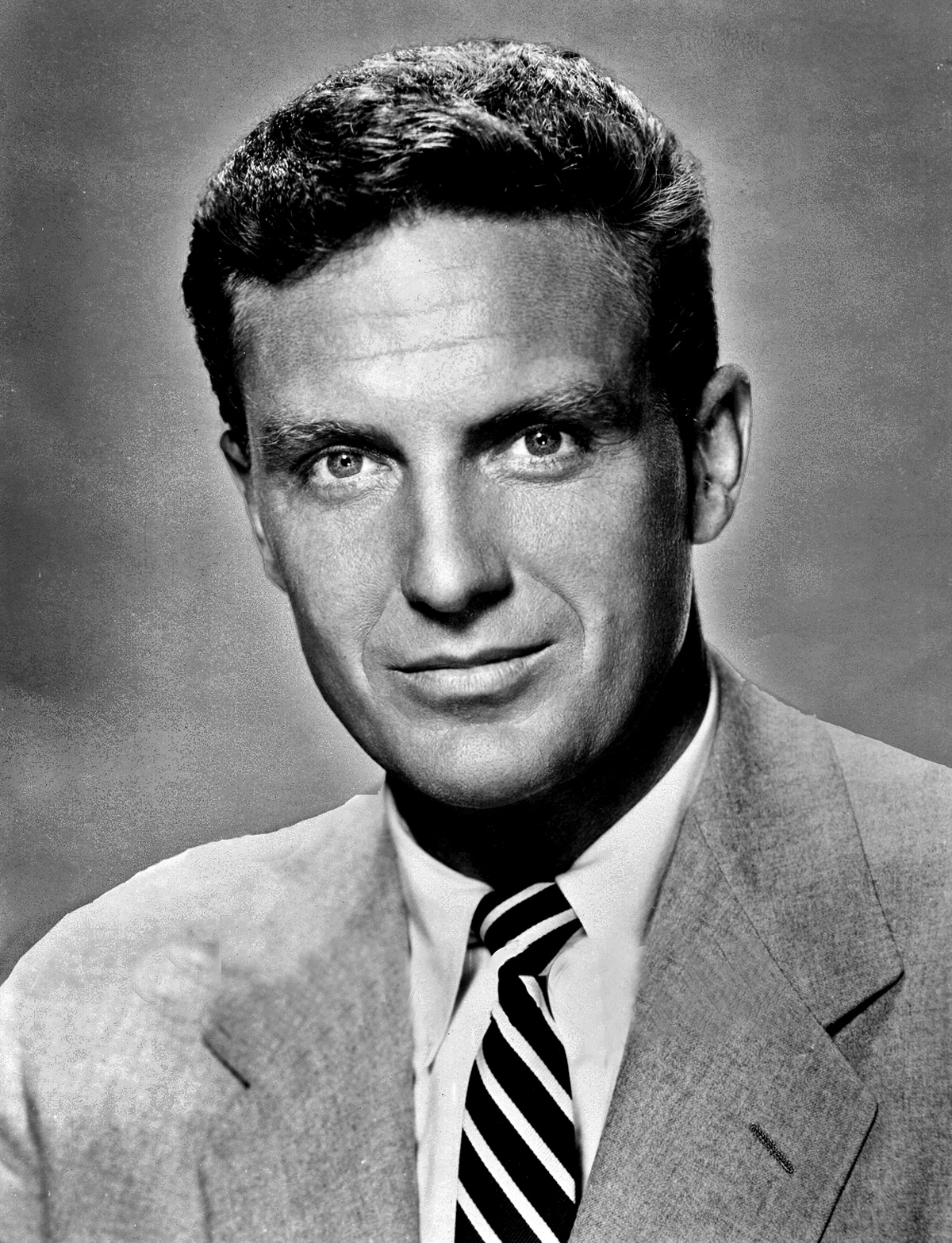
Robert Stack (born Charles Langford Modini Stack; January 13, 1919 – May 14, 2003)[1][2][3] was an American actor and television host. Known for his deep voice and commanding presence, he appeared in over forty feature films. He starred in the ABC television series The Untouchables (1959–1963), for which he won the 1960 Primetime Emmy Award for Outstanding Performance by an Actor in a Series, and later hosted/narrated the true-crime series Unsolved Mysteries (1987–2002). He was also nominated for an Academy Award for Best Supporting Actor for his role in the film Written on the Wind (1956). Later in his career, Stack was known for his deadpan comedy roles that lampooned his dramatic on-screen persona, most notably as Captain Rex Kramer in Airplane! (1980).

Key Information

Early life

[edit]

He was born Charles Langford Modini Stack in Los Angeles, California,[4] but his first name, selected by his mother, was changed to Robert by his father. He spent his early childhood in Adria and Rome, becoming fluent in French and Italian at an early age, and did not learn English until returning to Los Angeles when he was seven.[5][6]

His parents divorced when he was a year old, and he was raised by his mother, Mary Elizabeth (née Wood). His father, James Langford Stack, a wealthy advertising agency owner, later remarried his ex-wife, but died when Stack was 10.[7]

He always spoke of his mother with the greatest respect and love. When he collaborated with Mark Evans on his autobiography, Straight Shooting, he included a picture of himself and his mother that he captioned "Me and my best girl". His maternal grandfather, opera singer Charles Wood, studied voice in Italy and performed there under the name "Carlo Modini." Stack had another opera-singer relative: American baritone Richard Bonelli (born George Richard Bunn), who was his uncle.

Stack took some drama courses at the University of Southern California, where he played on the polo team. Clark Gable was a family friend.[6]

By the time he was 20, Stack had achieved minor fame as a sportsman. He was an avid polo player and shooter. His brother and he won the International Outboard Motor Championships, in Venice, Italy, and at age 16, he became a member of the All-American Skeet Team.[5] He set two world records in skeet shooting and became national champion. In 1971, he was inducted into the National Skeet Shooting Hall of Fame.[8][9] He was a Republican.[10]

The Piikani Nation of the Blackfoot Confederacy, which was known as the Peigan Nation before the 1990s, honored him by inducting him into their chieftainship in 1953 (July 2, 1953, Newspaper) as Chief Crow Flag. In 1962, Stack received the Golden Plate Award of the American Academy of Achievement.[11]

Career

[edit]

Stack took drama courses at Bridgewater State University, a mid-sized liberal-arts school located 25 miles southeast of Boston. His deep voice and good looks attracted the attention of producers in Hollywood. When Stack visited the lot of Universal Studios at age 20, producer Joe Pasternak offered him an opportunity to enter the business. Recalled Stack, "He said, 'How'd you like to be in pictures? We'll make a test with Helen Parrish, a little love scene.' Helen Parrish was a beautiful girl. 'Gee, that sounds keen,' I told him. I got the part."[12]

Stack's first film, which teamed him with Deanna Durbin, was First Love (1939), produced by Pasternak. This film was considered controversial at the time, as he was the first actor to give Durbin an on-screen kiss.[13][14] Stack won critical acclaim for his next role, The Mortal Storm (1940) starring Margaret Sullavan and James Stewart, and directed by Frank Borzage at Metro-Goldwyn-Mayer. He played a young man who joins the Nazi party.

Back at Universal, Stack was in Pasternak's A Little Bit of Heaven (1940), starring Gloria Jean, who was that studio's back-up for Deanna Durbin. Stack was reunited with Durbin in Pasternak's Nice Girl? (1941). Stack then starred in a Western, Badlands of Dakota (1941), co-starring Richard Dix and Frances Farmer.[15]

Stack, c. 1940

United Artists borrowed him to play a Polish Air Force pilot in To Be or Not to Be (1942), alongside Jack Benny and Carole Lombard. Stack admitted he was terrified going into this role, but he credited Lombard, whom he had known personally for several years, with giving him many tips on acting and with being his mentor. Lombard was killed in a plane crash shortly before the film was released. Stack played another pilot in Eagle Squadron (1942), a huge hit. He then made a Western, Men of Texas (1942).[16] During World War II, Stack served as an officer in the United States Navy. He worked as an aerial gunnery instructor and rose to the rank of lieutenant.[17][18]

Stack resumed his career after the war with roles in such films as Fighter Squadron (1948) at Warner Bros. with Edmond O'Brien, playing a pilot; A Date with Judy (1948) at MGM, with Wallace Beery and Elizabeth Taylor. He made two films at Paramount: Miss Tatlock's Millions (1948) and Mr. Music (1950). He had an excellent role in Bullfighter and the Lady (1951), a passion project of Budd Boetticher for John Wayne's company. He later said this was the first time he liked himself on screen.[19]

Stack supported Mickey Rooney in My Outlaw Brother (1951) and had the lead in the adventure epic Bwana Devil (1952), considered the first color, American 3-D feature film. It was released by United Artists, which also put Stack in a Western, War Paint (1953). He continued making similar low-budget action fare: Conquest of Cochise (1953) for Sam Katzman; Sabre Jet (1953), playing another pilot, this time in the Korean War; The Iron Glove (1954), a swashbuckler where Stack played Charles Wogan, for Katzman.

Stack was back in "A" pictures when he appeared opposite John Wayne in The High and the Mighty (1954), playing the pilot of an airliner who comes apart under stress after the airliner encounters engine trouble. The film was a hit, and Stack received good reviews. In 1954, he signed a seven-year contract with Fox.[20] Sam Fuller cast him in the lead of House of Bamboo (1955), shot in Japan for 20th Century Fox. He supported Jennifer Jones in Good Morning, Miss Dove (1955), also at Fox, and starred in Great Day in the Morning (1956) at RKO, directed by Jacques Tourneur.

Stack in Written on the Wind (1956)

Stack was then given a role in Written on the Wind (1956), directed by Douglas Sirk and produced by Albert Zugsmith. Stack played another pilot, the son of a rich man who marries Lauren Bacall, who in turn falls for his best friend, played by Rock Hudson. The film was a massive success and Stack was nominated for an Academy Award for Best Supporting Actor; Dorothy Malone, who played Stack's sister, was nominated for Best Supporting Actress. Malone won, but Stack lost, to Anthony Quinn. Stack felt that the primary reason he lost to Quinn was that 20th Century Fox, which had lent him to Universal-International, organized block voting against him to prevent one of their contract players from winning an Academy Award while working at another studio.[21] Stack was reunited with Hudson, Malone, Zugsmith, and Sirk on The Tarnished Angels (1957), once more playing a pilot. At Fox, he was in The Gift of Love (1958) with Bacall. Stack then was given a real star role, playing the title part in John Farrow's biopic, John Paul Jones (1959). Despite a large budget and an appearance by Bette Davis, it was not a success.

Stack portraying prohibition agent Eliot Ness in the series The Untouchables (1959)

Stack portrayed the crimefighting Eliot Ness in the ABC television drama series The Untouchables (1959–1963) produced by Desilu Productions, in association with Stack's Langford Productions. The show portrayed the ongoing battle between gangsters and a special squad of federal agents in prohibition-era Chicago. "No one thought it was going to be a series," Stack once said, "When you tell the same story every week, it seemed like a vendetta between Ness and the Italians."[6] The show won Stack the Primetime Emmy Award for Outstanding Lead Actor in a Drama Series at the 12th Primetime Emmy Awards in 1960.[22]

During the series' run, Stack starred in a disaster film, The Last Voyage (1960), appearing opposite Malone. At Fox, he was in The Caretakers (1963) with Joan Crawford and he appeared in a special on hunting, The American Sportsman.[23] He owned 25% of The Untouchables and The Caretaker.[19] Stack worked in Europe for Is Paris Burning? (1966), The Peking Medallion (1967), Action Man (1967), and Story of a Woman (1970). He also appeared in Laura (1967).[24]

Stack starred in a new drama series, rotating the lead with Tony Franciosa and Gene Barry in the lavish The Name of the Game (1968–1971). He played a former federal agent turned true-crime journalist, evoking memories of his role as Ness. In 1971, he sued CBS for $25 million for appearing in the documentary The Selling of the Pentagon, saying that the company had falsely portrayed him as doing propaganda to sell the Vietnam War, while in fact he'd been opposed from the start.[25]

Stack played a pilot in the TV film Murder on Flight 502 (1975) and was the lead in the series Most Wanted (1976), playing a tough, incorruptible police captain commanding an elite squad of special investigators, also evoking the Ness role. He later played a similar role in the series Strike Force (1981).[26] He also starred in a French film, Second Wind, in 1978.

Stack at the 60th Academy Awards in 1988

Stack parodied his own persona in the comedy 1941 (1979). His performance was well received and Stack became a comic actor, appearing in Airplane! (1980), Big Trouble (1986), Plain Clothes (1988), Caddyshack II (1988), Joe Versus the Volcano (1990), Beavis and Butt-Head Do America (1996), and BASEketball (1998). He also provided the voice for the character Ultra Magnus in The Transformers: The Movie (1986). In a more serious vein, he appeared in the action film Uncommon Valor (1983), the television miniseries George Washington (1984), and Hollywood Wives (1985), and appeared in several episodes of the primetime soap opera Falcon Crest in 1986. Stack's series Strike Force was scheduled opposite Falcon Crest, where it quickly folded.[citation needed]

He began hosting Unsolved Mysteries in 1987. He thought very highly of the interactive nature of the show, saying that it created a "symbiotic" relationship between viewer and program, and that the hotline was a great crime-solving tool. Unsolved Mysteries aired from 1987 to 2002, first as specials in 1987 (Stack did not host all the specials, which were previously hosted by Raymond Burr and Karl Malden), then as a regular series on NBC (1988–1997), then on CBS (1997–1999) and Lifetime (2001–2002). Stack served as the show's host during its entire original series run.[27]

In 1991, Stack voiced the main police officer Lt. Littleboy (who is also the main protagonist and narrator) in The Real Story of Baa Baa Black Sheep. In 1996, a Golden Palm Star on the Palm Springs, California, Walk of Stars was dedicated to him.[28]

Personal life and death

[edit]
Robert and Rosemarie Stack in 1961

Stack was married to actress Rosemarie Bowe from 1956 until his death. They had two children, a son, Charles, and a daughter, Elizabeth.

He underwent radiation therapy for prostate cancer in October 2002, and died of heart failure at his home in Bel Air, Los Angeles,[29] on May 14, 2003, at the age of 84.[6][4][30]

Filmography

[edit]

Film

[edit]
Year Title Role Notes
1939 First Love Ted Drake
1940 The Mortal Storm Otto Von Rohn
A Little Bit of Heaven Bob Terry
1941 Nice Girl? Don Webb
Badlands of Dakota Jim Holliday
1942 To Be or Not to Be Lieutenant Stanislav Sobinski
Eagle Squadron Chuck S. Brewer
Men of Texas Barry Conovan
1948 A Date with Judy Stephen I. Andrews
Fighter Squadron Captain Stuart L. Hamilton
Miss Tatlock's Millions Nickey Van Alen
1950 Mr. Music Jefferson 'Jeff' Blake
1951 Bullfighter and the Lady Johnny Regan
My Outlaw Brother Patrick O'Moore
1952 Bwana Devil Bob Hayward
1953 War Paint Lieutenant Billings
Conquest of Cochise Major Tom Burke
Sabre Jet Colonel Gil Manton
1954 The Iron Glove Captain Charles Wogan
The High and the Mighty Captain John Sullivan
1955 House of Bamboo Eddie Kenner
Good Morning, Miss Dove Dr. Tommy Baker
1956 Great Day in the Morning Owen Pentecost
Written on the Wind Kyle Hadley Nominated – Academy Award for Best Supporting Actor
1957 The Tarnished Angels Roger Shumann
1958 The Gift of Love Bill Beck
1959 John Paul Jones John Paul Jones
1960 The Last Voyage Cliff Henderson
1963 The Caretakers Dr. Donovan MacLeod
1966 Is Paris Burning? Brigadier General Edwin L. Sibert
1967 Sail to Glory Narrator
The Peking Medallion Cliff Wilder
Action Man Jim Beckley
1970 Story of a Woman David Frasier
1978 Second Wind François Davis
1979 1941 Major General Joseph W. Stilwell
1980 Airplane! Captain Rex Kramer
1983 Uncommon Valor Harry MacGregor
1986 Big Trouble Winslow
The Transformers: The Movie Ultra Magnus Voice[31]
1987 Plain Clothes Mr. Gardner
1988 Caddyshack II Chandler Young
Dangerous Curves Louis Faciano
1990 Joe Versus the Volcano Dr. Ellison
1996 Beavis and Butt-Head Do America ATF Agent Flemming Voice[31]
1998 BASEketball Himself
1999 Hercules: Zero to Hero Narrator Voice
Mumford Himself
2001 Recess: School's Out Superintendent Voice[31]
Killer Bud The Gooch

Television

[edit]
Year Title Role Notes
1951 Pulitzer Prize Playhouse Unknown Episode: "Broken Dishes"
1955 The 20th Century Fox Hour Mark MacPherson Episode: "A Portrait of Murder"
1956 Producers' Showcase Unknown Episode: "The Lords Don't Play Favorites"
1959–1963 The Untouchables Eliot Ness 119 episodes
Primetime Emmy Award for Outstanding Lead Actor in a Drama Series (1960)
1964 Bob Hope Presents the Chrysler Theatre Major Morgan Episode: "The Command"
1965 Memorandum for a Spy James Andrew Congers Television film
1967 Sail to Glory Narrator
1968–1971 The Name of the Game Dan Farrell 26 episodes
1974 The Strange and Deadly Occurrence Michael Rhodes Television film
1975 The Honorable Sam Houston Sam Houston
Adventures of the Queen Captain James Morgan
Murder on Flight 502 Captain Larkin
1976 Police Story Sergeant Dave Stoddard Episodes: "Odyssey of Death"
1976–1977 Most Wanted Captain Lincoln "Linc" Evers 23 episodes
1978 The Adventurous Rangers of the Jungle Charles Cross Television film
1979 The Muppets Go Hollywood Himself Television special
Undercover with the KKK Narrator Television film
1980 The Love Boat Bret Garrett Episode: "The Horse Lover/Secretary to the Stars/Julie's Decision/Gopher and Isaac Buy a Horse/Village People Ride Again"
1981–1982 Strike Force Captain Frank Murphy 20 episodes
1984 Hotel Lewis Blackwood Episode: "The Wedding"
George Washington General Stark 3 episodes
Television miniseries
1985 Brothers Russell Maltby Episode: "Donald's Dad"
Hotel Charles Vandoor Episode: "New Beginnings"
Hollywood Wives George Lancaster 3 episodes,
Television miniseries
Midas Valley Drew Hammond Television film
1986 Murder, She Wrote Chester Harrison Episode: "Christopher Bundy – Died on Sunday"
1987 Falcon Crest Roland Saunders 5 episodes
1987–2002 Unsolved Mysteries Host 292 episodes
1987 Perry Mason: The Case of the Sinister Spirit Jordan White Television film
Korea: The Forgotten War Narrator
1990 The Fanelli Boys Kyle Hadley Episode: "A Very Fanelli Christmas"
1991 The Real Story of... Lt. Littleboy / Narrator Voice, episode: "Baa Baa Black Sheep"[31]
The Return of Eliot Ness Eliot Ness Television film
1993 Blossom Robert Stack Episode: "Sitcom"
1995 The Pinocchio Shop George Washington Episode: "Patriots and Apples"
1996 JAG TV Host Episode: "Sightings"
1997 Diagnosis Murder Peter McReynolds Episode: "Open and Shut"
1998–1999 Hercules Bob the Narrator Voice, 30 episodes
1999 Recess General Voice, episode: "A Genius Among Us"
Sealed with a Kiss Sumner Ethridge Television film
2000 Star Trek: Voyager Eliot Ness Episode: "Memorial"
The Lords of the Mafia Himself Documentary
The Angry Beavers Narrator Voice, episode: "Home Loners"
H.U.D. Deep Throat Man Television film
2001–2003 Butt-Ugly Martians Stoat Muldoon Voice, main role
2001 King of the Hill Reynolds Penland Voice, episode: "The Trouble with Gribbles"; uncredited
2002 Teamo Supremo Gordon / The Silver Shield Voice, episode: "The Grandfather Show"

Radio appearances

[edit]
Year Program Episode/source
1953 Family Theater The Indispensable Man[32]
1950 Lux Radio Theatre Mr Belvedere Goes To College

Books

[edit]
  • Straight Shooting (with Mark Evans) (1980); ISBN 0-02-613320-2
  • Shotgun Digest (Jack Lewis, Editor) (1974); ISBN 978-0695804978

See also

[edit]

References

[edit]
[edit]
Revisions and contributorsEdit on WikipediaRead on Wikipedia
from Grokipedia
Robert Stack (January 13, 1919 – May 14, 2003) was an American actor, television host, and competitive skeet shooter best known for his portrayal of Treasury agent Eliot Ness in the crime drama series The Untouchables (1959–1963). His performance in the role, which depicted the real-life enforcement of Prohibition-era laws against organized crime, earned him the Primetime Emmy Award for Outstanding Performance by an Actor in a Series (Lead or Single Performance) in 1960. Stack appeared in over 40 feature films, including a supporting role in Written on the Wind (1956) that garnered him an Academy Award nomination for Best Actor in a Supporting Role. A champion skeet shooter inducted into the National Skeet Shooting Hall of Fame in 1971, Stack's marksmanship expertise led to his commissioning as a in the U.S. during , where he instructed aerial gunnery for three and a half years. Following his military service, he transitioned to , gaining prominence in films like The High and the Mighty (1954) alongside . In later years, Stack hosted the anthology series (1987–2002), narrating real-life cases of crimes and events with his distinctive voice. His career spanned decades, marked by a commanding screen presence that defined tough-guy archetypes in both cinema and television.

Early Life

Family Background and Childhood

Robert Stack was born Charles Langford Modini Stack on January 13, 1919, in , , the younger of two sons to James Langford Stack Sr. (1860–1928), owner of a prosperous , and Mary Elizabeth Modini Wood (1891–1975). His father, overriding the mother's choice, promptly changed the infant's first name to Robert. The family represented a fifth-generation Californian lineage, with Stack's forebears among the state's early settlers. Stack's parents divorced when he was one year old in , leaving him raised primarily by his mother while his older brother, James Langford Stack Jr., stayed in with their father. At age three, Stack relocated with his mother to , initially to , , before moving to and the nearby town of in . This expatriate period, extending until he was about six years old circa 1925, immersed him in continental culture. In , Stack attended local schools, achieving fluency in Italian and French during these formative years, though he acquired English proficiency only upon returning to . His parents reconciled and remarried in 1928, coinciding with his father's death that year.

Education and Early Influences

Stack briefly attended the (USC) in 1937, where he distinguished himself on the team and engaged in other athletics. During his second year at USC, he took drama classes and began pursuing acting seriously. He ultimately abandoned formal higher education to focus on his emerging career in film. Prior to university, Stack's early years included time living in and with his mother, an aspiring singer, which resulted in his fluency in French and Italian before he returned to the at age seven and learned English. This multilingual upbringing provided early exposure to European culture and performing arts environments. His athletic pursuits during high school and at USC, including membership on the All-American Skeet Rifle Team at age 16—where he set two world records and became the National Skeet Champion—highlighted a competitive discipline that paralleled the physical demands of on-screen roles. Stack also competed in speedboat racing, winning championships in America for three years and international events with his brother. These experiences influenced his entry into ; after studying and for six months, he was spotted by a Universal Studios talent scout during an amateur stage production or talent show, leading to a contract and his debut in First Love (). An encounter with producer and observation of further inspired his professional ambitions.

Military Service

World War II Contributions

Stack enlisted in the United States Naval Reserve in 1942 following the American entry into , leveraging his pre-war expertise as a national champion to qualify for specialized roles in training. Assigned as an aerial gunnery officer and instructor, he trained Navy pilots and aircrew in air-to-air and anti-aircraft gunnery techniques over the course of three and a half years, emphasizing precision marksmanship derived from his competitive shooting background. In 1944, Stack served aboard the Essex-class aircraft carrier USS Hancock (CV-19) in the Pacific Theater, contributing to carrier operations amid intense naval engagements against Japanese forces. The following year, he transferred to the escort carrier USS Sitkoh Bay (CVE-86), supporting amphibious assaults and air cover missions as Allied forces advanced toward Japan's home islands. His service on these vessels exposed him to combat conditions, though his primary duties remained instructional and operational gunnery oversight rather than direct combat piloting. Stack rose to the rank of during his tenure and received several commendations recognizing his marksmanship proficiency, including the Asiatic-Pacific Campaign Medal, , , Expert Pistol Ribbon, and Expert Rifle Ribbon. He was honorably discharged in 1945 as a full , having completed without reported disciplinary issues or notable personal incidents.

Professional Career

Entry into Film and Early Roles

Following his education, including drama courses at the , Robert Stack entered the film industry through a screen test at Universal Studios arranged by producer . At age 20, Stack made his screen debut in the romantic comedy First Love (1939), directed by , portraying Ted Drake, the love interest of teenage star . The film featured Durbin's first onscreen kiss, which drew controversy due to her youth and the studio's efforts to maintain her wholesome image. Stack's early roles capitalized on his athletic build and good looks, often casting him in supporting parts in dramas and comedies. In 1940, he appeared in , playing a young Nazi sympathizer in Frank Borzage's anti-fascist film, earning critical notice for his performance amid the ensemble cast including and . He reunited with Durbin in Nice Girl? (1941), a light musical comedy, before starring as a frontiersman in the Western Badlands of Dakota (1941) alongside and . These pre-war films established Stack as a versatile newcomer, though his career was soon interrupted by military service.

Post-War Film Successes and Challenges

Following his discharge from the U.S. Navy in 1946 after over three years of service, Robert Stack encountered difficulties reestablishing his pre-war momentum in Hollywood, where he had been a contract player but not yet a major star. His early post-war roles included the war drama (1948), in which he portrayed a pilot alongside Edmond O'Brien, and the musical comedy A Date with Judy (1948), featuring and a young . These films helped him transition into more prominent parts, evolving his screen persona from romantic leads to gritty, taciturn heroes. Stack achieved a notable success with (1952), starring as big-game hunter Bob Hayward in the first full-color, feature-length , which sparked a short-lived but intense Hollywood fad for the format amid competition from television. Later that decade, he co-starred as John Sullivan in the ensemble disaster thriller The High and the Mighty (1954), opposite , contributing to its commercial viability as an early prototype for airborne suspense narratives. His portrayal of alcoholic playboy Kyle Hadley in Douglas Sirk's melodrama (1956) earned him an Academy Award nomination for Best Supporting Actor, marking a career highlight amid critical praise for the film's exploration of family dysfunction and excess. Despite these accomplishments, Stack's film career faced ongoing challenges, including in stoic authority figures and a perceived stiffness in delivery that limited versatility, as his momentum waned by the late amid industry shifts toward television and broader star competition. Roles in films like (1955) and The Gift of Love (1958) provided steady work but did not elevate him to status, underscoring the hurdles of sustaining post-war prominence without a defining blockbuster.

Transition to Television and Iconic Roles

Following the conclusion of his exclusive contract with 20th Century Fox in the mid-1950s, Robert Stack shifted focus to television, debuting in the lead role of Eliot Ness in the ABC crime drama series The Untouchables. The program, produced by Desilu Productions, premiered on October 15, 1959, and ran for four seasons until May 30, 1963, depicting Ness's efforts to combat organized crime during Prohibition through a team of incorruptible federal agents. Stack's portrayal of the stoic, determined Treasury agent garnered significant acclaim, solidifying his status as a television star. Stack continued with leading roles in subsequent series, including investigative reporter Jeff Cable in 's The Name of the Game from 1968 to 1971, Lt. Frank Quaid in ABC's Most Wanted during 1976–1977, and Captain Frank Strike in ABC's Strike Force from 1981 to 1982. These roles showcased his versatility in action-oriented and procedural formats, though none achieved the cultural impact of The Untouchables. In the late 1980s, he took on a hosting role in , an anthology series that aired initially as specials in 1987 before becoming a weekly program in 1988, continuing under his narration until 2002 across networks including and Lifetime. Stack's resonant voice and unflinching delivery of eerie case summaries became emblematic of the show's blend of , mysteries, and segments, attracting millions of viewers and prompting viewer tips that resolved numerous cases.

Personal Life

Marriage and Family

Stack married actress and model Rosemarie Bowe on January 23, 1956, in Beverly Hills, California. The couple's union lasted 47 years until Stack's death in 2003, marked by mutual interests in skeet shooting and equestrian activities. Prior to the marriage, Stack had been known as a perennial bachelor. The Stacks had two children: a daughter, Elizabeth Langford Stack, born on January 20, 1957, and a son, Charles Robert Stack. Elizabeth pursued a career in the entertainment industry, while Charles maintained a lower public profile. The family resided primarily in Los Angeles, with the parents occasionally appearing together at public events.

Health Habits and Lifestyle

Stack engaged in sports from an early age, including during his school years and , in which he became a national champion and member of the Santa Monica team that set a of 493 out of 500 targets in 1935. These activities contributed to his lifelong emphasis on , viewing the body as "a " that requires to avoid malfunction. His daily exercise routine in later years included morning sessions of sit-ups focused on core strength, 30 finger push-ups, and cardiovascular work on a Versiclimber, rowing machine, and treadmill. Stack played at least weekly and took regular walks with his Rosemarie and their , while limiting to light practice. Stack followed a , starting with breakfasts of grains, nonfat , fruit such as raspberries or bananas, occasional , and decaffeinated . Lunches featured salads or with fish, , , skim , and ample water, while dinners allowed indulgences like chops or cream-free soups prepared with . He ceased smoking following contracted during the filming of The High and the Mighty in 1954, resuming only briefly for The Untouchables (1959–1963) at the insistence of sponsors.

Political Views and Public Engagements

Stances on Key Issues

Stack identified as a Republican and actively supported conservative candidates, including Barry Goldwater's 1964 presidential campaign and Ronald Reagan's gubernatorial and presidential bids, to which he made monetary contributions. He participated in events honoring Reagan, such as the 1985 "All Star Tribute to Dutch Reagan" at Studios. Despite perceptions of him as a "right-wing Republican," Stack expressed discomfort with the label, indicating a less ideological approach. His friendship with , with whom he shared an apartment in during the 1940s, underscored a non-dogmatic stance within the party. On foreign policy, Stack opposed U.S. military involvement in Vietnam, a position he clarified in a 1971 lawsuit against CBS, alleging the documentary The Selling of the Pentagon falsely portrayed him as a war supporter and implied he profited from defense contracts for pro-war advocacy. He undertook a three-week tour of Vietnam hospitals in the late 1960s to visit wounded personnel, reflecting support for troops amid his broader anti-war views. Later, in 1988, he narrated the Time-Life Vietnam Experience book series, providing historical context on the conflict without endorsing its prosecution. In 1971, Stack filed a $25 million libel lawsuit against CBS in New York State Supreme Court over the network's documentary The Selling of the Pentagon, which criticized U.S. military public relations efforts and spending during the Vietnam War era. The suit alleged that the program misrepresented Stack's interview comments to falsely depict him as a proponent of escalated U.S. military involvement in Vietnam, while also implying he had received substantial fees for pro-military speaking engagements, portraying him as a "warmonger." Represented by attorney Edward Bennett Williams, Stack contended that CBS's editing of his footage created a deceptive narrative inconsistent with his actual statements, which did not endorse the war or disclose any such payments. The documentary, directed by Peter Davis and aired on February 23, 1971, featured Stack among celebrities like and to illustrate alleged recruitment of Hollywood figures for public support, sparking broader congressional scrutiny and defenses of military information programs. Stack's action highlighted tensions between media portrayals of public figures and editorial practices in , though no public record details a final resolution, such as dismissal, settlement terms, or court ruling. No other verified legal actions or significant media disputes involving Stack were documented in primary sources, distinguishing his career from peers facing frequent litigation over image rights or endorsements.

Later Years and Legacy

Final Projects and Retirement

In the final phase of his career, Robert Stack primarily focused on television hosting, serving as the narrator for from its pilot specials in 1987 through the series' conclusion in 2002 across networks including and . The anthology program examined real-life cases of unsolved crimes, disappearances, and unexplained events, with Stack's gravelly, unflinching style becoming synonymous with the show's eerie tone and viewer engagement. He contributed to over 300 episodes during his tenure, often appearing on-screen to introduce segments, though the series experienced declining ratings in its later seasons. Stack's feature film work tapered off but included comedic and voice roles that parodied his dramatic persona, such as in BASEketball (1998), Mumford (1999), and Sealed with a Kiss (1999). His last on-screen appearances came in 2001 with supporting parts in View from the Top, the animated Recess: School's Out (providing voice work), and Killer Bud, after which no further acting credits are recorded. These projects reflected a shift toward lighter, ensemble fare rather than leads, aligning with his post-Untouchables pivot to humor seen in earlier films like Airplane! (1980). Stack never formally retired, maintaining selective involvement in entertainment until health complications intervened; he died of on May 14, 2003, at age 84 in , while receiving treatment for . His final Unsolved Mysteries episode aired in 2002, with Stack narrating cases up to approximately one year before his death, underscoring his commitment to the medium despite advancing age and illness.

Death and Posthumous Recognition

Stack died of on May 14, 2003, at his home in the Bel Air section of , at the age of 84. He had undergone for in October 2002 but appeared to be recovering at the time of his death, according to his wife, Stack, who discovered him collapsed around 5 p.m. Stack was interred at Westwood Village Memorial Park Cemetery in . Following his death, Stack received no major new awards or inductions, though his portrayal of Eliot Ness in The Untouchables (1959–1963) remained a benchmark for television tough-guy archetypes, with the series' influence cited in retrospectives on crime drama genres. Reruns of Unsolved Mysteries, which he hosted from 1987 until 2002, continued airing on various networks, sustaining public familiarity with his distinctive voice and demeanor into the mid-2000s and beyond via streaming platforms. His earlier induction into the National Skeet Shooting Hall of Fame in 1971 underscored a facet of his legacy tied to pre-acting athletic achievements, though this predated his passing. Obituaries emphasized his Emmy-winning performance and Oscar-nominated role in Written on the Wind (1956) as enduring contributions to American entertainment.

Additional Works

Radio Credits

Robert Stack appeared in several radio anthology dramas during the early 1950s, primarily adapting literary works or film stories for broadcast. His voice work capitalized on his emerging screen presence, delivering dramatic portrayals in family-oriented and suspenseful narratives. In Family Theater, a series emphasizing moral and historical themes, Stack starred in multiple episodes. He portrayed in "The Indispensable Man," aired on February 11, 1953, a story highlighting the Founding Father's role in American independence and his photographic memory amid threats. He also featured in "Round Trip," broadcast on March 25, 1953, alongside supporting cast including Martha Wilkerson. Additional appearances included "The Spy," an adaptation of James Fenimore Cooper's novel, with broadcasts noted in 1950 and 1957. Stack also performed on , CBS's prestigious adaptation program sponsored by . On January 16, 1950, he starred in "," recreating elements from the 1949 film with a focus on intellectual . Later, in "So Big," aired September 21, 1954, he co-starred with in the dramatic tale of ambition and hardship in 19th-century America, drawing from Edna Ferber's novel. These episodes showcased his delivery suited to period pieces and tense confrontations.

Authored Books

Straight Shooting, co-authored with Mark Evans and published by Macmillan in 1980, serves as Stack's autobiography detailing his Hollywood career from early film roles to television stardom. The memoir offers candid reflections on industry dynamics, including interactions with studio executives and fellow actors, presented in a humorous and nostalgic tone without sensationalism. It covers pivotal experiences such as his portrayal of Eliot Ness in The Untouchables, emphasizing professional challenges and personal insights gained over decades in acting. No other books are attributed to Stack as primary author.

References

Add your contribution
Related Hubs
Contribute something
User Avatar
No comments yet.