Hubbry Logo
search
logo
1345652

Roses rivalry

logo
Community Hub0 Subscribers
Read side by side
from Wikipedia

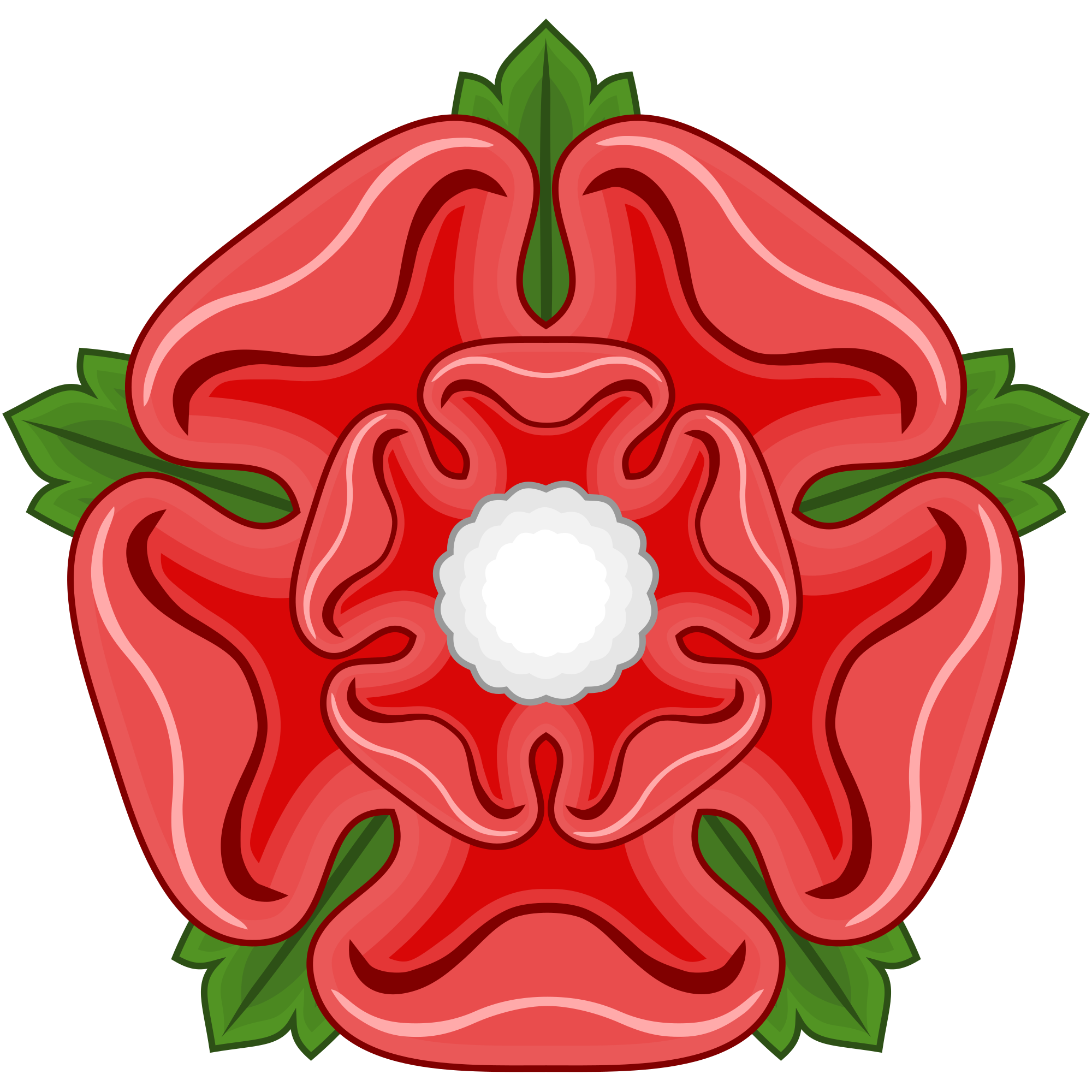
The red rose of Lancaster and the white rose of York
This map of Northern England shows the historic boundaries of the counties of Lancashire (centre-left) and Yorkshire (centre-right)

The term "Roses rivalry" refers to the rivalry between the English counties of Lancashire and Yorkshire. The rivalry originated in the aftermath of the Wars of the Roses (1455–1487) which was fought between the House of Lancaster and the House of York.[1] The roses rivalry is still present to this day.

In culture

[edit]

While the rivalry is more subtle in day to day life than in the past, it still remains strong in the population.[2][3][4][5]

British tea companies Yorkshire Tea and Lancashire Tea have been compared as "arch rivals".[6]

Glyn Hughes wrote in 1975: "Frequently Lancashire people find Yorkshire people unfriendly or Yorkshire people find Lancashire people so. 'Yorkshire is all hills and moors; Lancashire is all mills and whores' is one definition of the differences between the counties".[7]

In sport

[edit]

The term is also used to describe various sporting fixtures competed by representatives of the two sides:

Inspirations

[edit]

The closely located American cities of Lancaster and York in Pennsylvania share a rivalry of the same name. Both cities are named after their British counterparts, and share sporting rivalries in baseball (in the Atlantic League of Professional Baseball) and in high school American football.

See also

[edit]

References

[edit]
Revisions and contributorsEdit on WikipediaRead on Wikipedia
from Grokipedia
The Roses rivalry refers to the historic antagonism between the English counties of Lancashire and Yorkshire, originating from the Wars of the Roses—a series of civil wars (1455–1487) between the rival royal houses of Lancaster (symbolized by a red rose) and York (symbolized by a white rose) for control of the English throne.[1] This medieval conflict, which began on May 22, 1455, has left a lasting cultural imprint, evolving into a modern rivalry characterized by intense regional pride and competition, particularly in sports.[1] In cricket, the rivalry is most prominently embodied by the annual Roses Matches between Yorkshire County Cricket Club and Lancashire County Cricket Club, which officially began in 1867 with a Yorkshire victory at Whalley, near Blackburn.[2] These fixtures, spanning over 150 years, have produced memorable moments of trans-Pennine tension, including dour defensive displays like Winston Place and Phil King's four-hour centuries in the mid-20th century, and have featured legendary players such as Yorkshire's Geoffrey Boycott and Joe Root alongside Lancashire's Clive Lloyd and Farokh Engineer.[2] Yorkshire has claimed the County Championship 33 times since 1890, often at Lancashire's expense, underscoring the rivalry's role in shaping English domestic cricket's competitive landscape.[2] The rivalry extends beyond cricket to other sports, including rugby league—where the War of the Roses series ran from 1895 to 1991 and was briefly revived in the early 2000s—and association football, notably the fierce contests between Leeds United and Manchester United, which draw on the same historical divide.[1] Additional manifestations include the Roses Tournament, Europe's largest inter-university sporting event between Lancaster University and the University of York since 1965, and cultural debates over regional specialties like Yorkshire pudding versus Lancashire's rag pudding.[1] Though softened by post-World War II inclusivity and modern professionalism, the Roses rivalry remains a vibrant symbol of northern English identity and camaraderie.[2]

Historical Origins

The Wars of the Roses

The Wars of the Roses were a series of civil wars in England from 1455 to 1487, pitting the House of Lancaster, represented by the red rose, against the House of York, symbolized by the white rose, in a struggle for control of the English throne. The conflict arose from dynastic claims tracing back to Edward III's sons: the Lancastrians descended from John of Gaunt, while the Yorkists claimed descent from Edmund of Langley, arguing a stronger line of succession. King Henry VI's weak rule, marked by mental instability and military failures in France, exacerbated noble rivalries, leading Richard, Duke of York, to challenge the throne as protector in 1453. Powerful noble families, such as the Nevilles under the Earl of Warwick (known as the "Kingmaker"), played pivotal roles by shifting alliances and providing military support, turning the dispute into a broader power struggle among the aristocracy.[3][4] The wars began with the First Battle of St Albans on May 22, 1455, where Yorkist forces under Richard of York and the Earl of Warwick defeated Lancastrians, killing key figures like the Duke of Somerset and securing temporary control over the captive Henry VI. Escalation followed in 1460 with the Lancastrian victory at the Battle of Wakefield on December 30, where Richard of York was killed, prompting his son Edward, Earl of March, to lead Yorkists to a decisive win at the Battle of Towton on March 29, 1461—the bloodiest battle on English soil, with around 28,000 deaths—allowing Edward to claim the throne as Edward IV. Yorkist fortunes wavered in 1470 when Warwick defected, briefly restoring Henry VI, but Edward IV reclaimed power in 1471 through victories at Barnet on April 14 (killing Warwick) and Tewkesbury on May 4, where Henry VI's son, Edward of Lancaster, was slain and Margaret of Anjou captured. Henry VI himself was murdered in the Tower of London later that year.[5][3][4] The conflict's final phase saw Edward IV's brother Richard, Duke of Gloucester, usurp the throne as Richard III in 1483 after the death of Edward's young sons, the "Princes in the Tower." Henry Tudor, a Lancastrian claimant through his mother Margaret Beaufort, invaded from exile and defeated Richard III at the Battle of Bosworth Field on August 22, 1485, where Richard was killed in combat, ending Yorkist rule. A final Yorkist uprising was crushed at the Battle of Stoke Field on June 16, 1487, solidifying Tudor control. Henry VII's marriage to Elizabeth of York in 1486 united the rival houses, and he adopted the Tudor rose—a combined red and white emblem—as a symbol of reconciliation and national unity.[5][4][3]

County-Level Adoption

Following the unification under the Tudor dynasty, the red rose of Lancaster and the white rose of York, originally royal emblems from the 14th and 15th centuries, were later adopted as symbols of regional identity in Lancashire and Yorkshire, respectively, particularly during the 19th century. While the houses took their names from regional earldoms, the wars themselves were dynastic conflicts with no direct county-level involvement, and the modern inter-county rivalry emerged as a cultural construct in the industrial era. Local governance entities began incorporating these emblems into heraldic devices, such as civic seals and arms, to evoke historical ties and foster regional identity. For instance, the red rose appeared in early Lancashire municipal heraldry, reflecting the county's Lancastrian heritage, while the white rose similarly adorned Yorkshire's local insignia.[6][7][8] The 19th-century Industrial Revolution strengthened distinct regional identities in both counties amid rapid urbanization and economic growth. In Lancashire, centers like Manchester became hubs of textile production, while Yorkshire's cities such as Leeds and Sheffield developed strong manufacturing sectors.[9] The passage of the 1832 Reform Act redefined parliamentary boundaries and enfranchised industrial towns, creating new boroughs in Lancashire (e.g., Manchester and Bolton) and Yorkshire (e.g., Leeds and Bradford).[10] By the early 20th century, these symbols achieved greater formalization in official county iconography. Lancashire County Council, for example, integrated the red rose into its granted coat of arms in 1903, featuring three golden piles each charged with a red rose, which became a staple in seals, mottos, and administrative documents. Yorkshire followed suit with the white rose prominently displayed in the arms of its ridings' councils, such as the West Riding's 1927 grant, embedding the emblems in flags and crests to embody enduring regional heritage.[11][12]

Symbolism and Emblems

Red Rose of Lancaster

The Red Rose of Lancaster is heraldically described as a five-petaled rose gules, or red, typically shown affronty with green sepals and a barbed center, serving as the badge of the royal House of Lancaster since the 14th century.[13][14] This emblem, thought to represent the species Rosa gallica officinalis, emerged during the medieval period as a symbol of Lancastrian identity, with early uses appearing on seals and badges associated with the house's members.[15] From its medieval roots, the red rose evolved into a broader emblem of Lancashire, gaining prominence in the 19th century through its inclusion in the county's coat of arms granted in 1903, where it appeared alongside other regional symbols in the shields of numerous Lancashire towns.[6] By the 20th century, it had become a staple in local heraldry and civic devices, reflecting the county's enduring cultural ties to the symbol. In modern times, the red rose achieved official status on the Lancashire county flag, registered on November 20, 2008, by the Flag Institute; the design features a stylized red rose—complete with white-edged petals, green sepals, and a yellow center—set on a yellow field, using the county's traditional livery colors to proclaim Lancashire's unique historic identity.[16][17] The red rose carries symbolic associations with passion, drawn from its deep crimson hue evoking love and vitality, as well as resilience, mirroring the flower's ability to thrive in harsh conditions and the county's historical endurance through economic shifts.[18][19] These qualities tie into Lancashire's industrial heritage, particularly its role as the heart of Britain's cotton industry during the 19th-century Industrial Revolution, where Manchester's mills—earning the city the nickname "Cottonopolis"—produced vast quantities of textiles, with the rose emblem coming to represent the hardworking spirit of the region's workforce.[20][21] A notable instance of the red rose's prominence occurred during World War I, when it featured in recruitment posters for the Lancashire Fusiliers, symbolizing the regiment's deep ties to the county and encouraging enlistment among local men, with the flower's yellow background reflecting the unit's traditional facings.[22] This usage underscored the emblem's role in fostering regional pride amid national crisis. In contemporary rivalry banter, the red rose's bold color often contrasts with the white rose of York to highlight Lancashire's spirited identity.[23]

White Rose of York

The White Rose of York serves as the primary heraldic emblem of Yorkshire, depicted as an open white rose with five petals, barbed and seeded in natural colors, derived from the 14th-century badge of the House of York adopted by Edmund of Langley, the first Duke of York.[24] In county heraldry, it is frequently rendered as a double rose on a blue field, symbolizing the region's unified identity, though variations appear in local arms and flags.[25] This stylized form emphasizes simplicity and elegance, distinguishing it from other floral badges through its argent (silver-white) hue and natural detailing. Over centuries, the emblem evolved from a dynastic symbol into a broader marker of Yorkshire pride, particularly amid administrative changes. Following the 1974 local government reorganization that abolished the historic Ridings—North, East, and West—as administrative divisions, the white rose gained renewed prominence to preserve cultural continuity across the fragmented county.[24] The Yorkshire flag, featuring the white double heraldic rose with green sepals and a gold center on a blue background, was designed in the 1960s and formally adopted by the Yorkshire Ridings Society in 1975, with official registration in 2008, reinforcing ties to the pre-1974 Ridings structure.[25] The white rose embodies layered symbolism rooted in Yorkshire's character, representing purity and innocence with religious undertones linked to the Virgin Mary as the "Mystical Rose."[24] It also evokes stubbornness and resilience, mirroring the tenacious spirit of Yorkshire people, as well as rural heritage tied to the Yorkshire Dales' landscapes and former mining communities that shaped the county's industrious yet pastoral identity.[26] These attributes foster a sense of hope and unity, often sparking rivalry when contrasted with the red rose of neighboring Lancashire.[24]

Sporting Rivalries

Cricket Matches

The cricket rivalry between Lancashire and Yorkshire, known as the Roses Match, originated in the mid-19th century alongside the formal establishment of county cricket in England. Yorkshire County Cricket Club was founded on 8 January 1863 by members of the Sheffield Cricket Club, marking the beginning of organized representative play for the county.[27] Lancashire County Cricket Club followed shortly after, formed on 12 January 1864 at a meeting in Manchester attended by representatives from 13 local clubs, enabling structured inter-county competition.[28] The first official Roses encounter occurred in 1867, with Yorkshire defeating Lancashire at Whalley near Blackburn, setting the stage for a fixture that would embody regional pride and competition.[2] Over the subsequent decades, the Roses series evolved into one of English cricket's most storied rivalries, played annually in formats ranging from first-class County Championship games to limited-overs contests. By 1890, with the official inception of the County Championship, the fixture had become a cornerstone of the domestic calendar, contested over more than 300 matches across all formats as of 2025. In the County Championship alone, Yorkshire hold a slight edge with 84 victories to Lancashire's 56, from 274 completed games, though numerous draws—nearly half the total—reflect the often tense, attritional nature of these encounters.[29] This statistical balance underscores the competitiveness, with Yorkshire's overall lead in first-class meetings maintained through dominant periods, such as their 33 County Championship titles compared to Lancashire's 9.[27] Key matches have amplified the rivalry's intensity and cultural resonance. In the 1926 County Championship fixture at Horton Park Avenue in Bradford, Yorkshire secured a resounding victory by an innings and 94 runs, dismissing Lancashire twice for modest totals after posting 326 in their first innings, a result that highlighted Yorkshire's preeminence during the inter-war era. Decades later, the shorter formats brought fresh drama; the 2011 Friends Life t20 North Group match at Old Trafford saw Yorkshire chase down Lancashire's 122 for 6 with two wickets and two balls to spare, thanks to a gritty 46 not out from Herschelle Gibbs and three wickets from Azeem Rafiq, electrifying T20 audiences and reinforcing the fixture's appeal in modern cricket.[30] Beyond the pitch, the Roses rivalry permeates cricket culture through fervent supporter engagement, including chants and banter that echo the historical divide between the counties. Fans often trade taunts referencing regional stereotypes—Yorkshire supporters mocking Lancashire's industrial heritage, and vice versa—creating an electric atmosphere at venues like Headingley and Old Trafford.[31] This tradition extends to international stages, where "Roses Day" at Lord's informally celebrates Test matches featuring prominent players from both counties, such as during England selections heavy with Lancashire and Yorkshire talent, blending county loyalty with national pride. The teams' emblems—a red rose for Lancashire and white for Yorkshire—further symbolize this heritage, adorning kits and flags waved by crowds during high-stakes clashes.[2]

Football and Rugby

The Roses rivalry manifests prominently in football through club-level derbies, particularly the longstanding contest between Manchester United, representing Lancashire, and Leeds United, representing Yorkshire, often dubbed the War of the Roses derby. This fixture traces its origins to the early professionalization of association football in northern England during the late 19th century, with inter-county tensions emerging as clubs from the two regions began competing in national leagues and cups from the 1870s onward, fueled by regional pride and industrial competition. The first league encounter between Manchester United and Leeds United took place on 15 January 1906 in the Second Division at Manchester's Bank Street ground, where Leeds secured a 3-0 victory, setting the tone for a heated rivalry marked by physical play and passionate support. Over more than a century, the teams have met over 100 times, with Manchester United holding a historical edge, winning 47 matches to Leeds's 27 as of 2020, though the encounters remain fiercely contested and emblematic of the broader Lancashire-Yorkshire divide.[32] Memorable clashes have amplified the rivalry's intensity, notably the 1965 FA Cup semi-final between the two sides, which ended in a 0-0 draw at Hillsborough before Leeds triumphed 1-0 in the replay at Nottingham's City Ground on 31 March, courtesy of a Billy Bremner goal, propelling Leeds to their first Wembley appearance and underscoring the era's brutal competitiveness under managers Matt Busby and Don Revie. Fan culture in these matches often invokes the historical emblems, with supporters exchanging taunts referencing "Yorkshire's white rose" and "Lancashire's red rose" to stoke regional animosity, evident in stadium chants and banners that blend medieval symbolism with modern banter.[33] In rugby, the rivalry finds deeper roots in the sport's northern evolution, particularly through rugby league, where the 1895 schism from rugby union—driven by disputes over broken-time payments in Lancashire and Yorkshire—led to the formation of the Northern Rugby Football Union and the inaugural inter-county match on 7 December 1895 at Watersheddings in Oldham, won 8-0 by Yorkshire over Lancashire. This fixture, known as the Rugby League War of the Roses, became an annual tradition from 1895 to 1991, contested 87 times, with Lancashire securing 37 victories to Yorkshire's 43 and 7 draws, serving as a showcase for regional talent and pride amid the sport's professional heartland in the industrial North. The matches often drew massive crowds, exceeding 30,000 in peak years like 1954, and highlighted the counties' dominance in producing international players, though the series waned in the 1980s due to the rise of club professionalism and Super League structures.[34] Rugby union's expression of the rivalry has been less formalized at the county level but no less intense, originating with high-profile matches like the 1894 encounter at Fallowfield in Manchester, depicted in William Barnes Wollen's painting The Battle of the Roses, which captured Yorkshire's 16-0 win and symbolized the pre-schism unity and tension between the regions. Club rivalries persist with fervor, such as those involving Lancashire's Sale Sharks against Yorkshire sides like the now-defunct Leeds Carnegie, where matches in competitions like the Premiership or Championship evoke the Roses theme through fan displays and media narratives, though without the structured annual county format of league. Recent efforts to revive county representation, including a 2025 Lancashire vs. Yorkshire union match organized by the RFU—in which Yorkshire defeated Lancashire 28-24 on 31 May at Fylde RFC—aim to rekindle this heritage amid ongoing debates about regional identity in the sport.[35] The 2022 Rugby League World Cup (postponed from 2021), hosted across England with strong northern participation, indirectly bolstered regional pride by showcasing Lancashire and Yorkshire players in England's triumphant campaign, including key contributions from Leeds Rhinos' Lachlan Miller and Wigan Warriors' Liam Marshall, reigniting calls for a War of the Roses revival and amplifying fan discussions on the counties' sporting legacy. In both codes, fan culture thrives on emblematic references, with stadium chants and merchandise frequently pitting "Yorkshire's white rose" against "Lancashire's red" to embody the enduring historical and cultural schism.[36]

Cultural and Social Dimensions

Regional Identity and Stereotypes

The Roses rivalry has long influenced the perception of regional accents in northern England, accentuating linguistic distinctions that reinforce county identities. In Lancashire, speakers typically feature softer "oo" sounds and rhoticity, pronouncing words like "bath" with a short, open-mouthed /æ/ as "baff," shaped by the noisy environments of 19th-century cotton mills that favored clear, pursed vowel articulation.[37] In contrast, Yorkshire accents often employ a sharper, more fronted "ah" vowel, rendering "bath" as "baath," with softer overall pronunciation and retention of dialectal forms like "thee" and "thou," reflecting less industrial noise in wool and steel regions.[37] These accent variations underpin broader stereotypes that the rivalry perpetuates, portraying Yorkshire folk as blunt, dour, and parsimonious—traits linked to a historical image of tight-fisted stubbornness in heavy industry like steel production.[38] In the 19th century, Lancashire dominated cotton weaving, contrasting with Yorkshire's focus on wool textiles and Sheffield steelworks.[39] The rivalry manifests in social tensions along county borders, notably in Saddleworth, where residents have contested their 1974 reassignment from Yorkshire's West Riding to Greater Manchester's Oldham district, viewing it as an administrative theft of identity.[40] Many older Saddleworth locals, born pre-1974, proudly display Yorkshire birth certificates and celebrate Yorkshire Day on August 1, while younger generations show mixed allegiance, though the dispute underscores enduring border frictions.[40] In the 2020s, the rivalry continues to bolster local pride, with community voices emphasizing its role in fostering unity and banter across the Pennines, often reinforced by the emblematic red rose of Lancashire and white rose of Yorkshire.[41]

Literature and Media Representations

The Wars of the Roses, the historical conflict between the Houses of Lancaster and York that inspired the enduring rivalry between the English counties of Lancashire and Yorkshire, have been prominently depicted in literature as a symbol of regional strife and dynastic ambition. William Shakespeare's Henry VI trilogy (parts 1–3) and Richard III, written in the late 1590s, dramatize the civil wars as a chaotic struggle marked by betrayal, violence, and the symbolic clash of red and white roses, thereby popularizing the "Wars of the Roses" nomenclature and embedding the rivalry in English cultural memory.[42] These plays portray the Lancastrian and Yorkist factions as embodying broader regional tensions, with characters like Queen Margaret of Anjou representing fierce Lancastrian resolve and Richard, Duke of York, asserting Yorkshire's claims, influencing later interpretations of county-based loyalties.[43] In film and television, adaptations of Shakespeare's works have reinforced the rivalry's dramatic legacy, often highlighting its roots in medieval power struggles that echo modern regional identities. The BBC's landmark 1965 miniseries The Wars of the Roses, directed by Peter Hall and John Barton, condensed the Henry VI plays and Richard III into a three-part production starring Peggy Ashcroft as Margaret and Donald Sinden as York, emphasizing the brutal familial and territorial conflicts that underpin the Lancashire-Yorkshire divide.[44] Later adaptations, such as the 2013 miniseries The White Queen—based on Philippa Gregory's novel and focusing on the women behind the wars—portray the rivalry through personal vendettas and strategic marriages, with Lancastrian and Yorkist allegiances symbolizing enduring county pride. These productions underscore the wars' inspirational role in the contemporary Roses rivalry without delving into modern sporting contexts. Musical representations of the Roses rivalry often draw on folk traditions to evoke light-hearted yet pointed county banter, blending historical symbolism with regional pride. The folk song "Red and White Rose," composed by John Dean with lyrics by Joan Waidson in the late 20th century, celebrates the intertwined yet competitive identities of Yorkshire and Lancashire through verses that reference the historic houses and their emblems, performed in traditional styles to highlight trans-Pennine cultural exchanges.[45] Similarly, collections like Trans Pennine: Songs of Lancashire and Yorkshire (1979), compiled by Harry Boardman, include tunes such as adaptations of "The Pannier Man" that nod to industrial-era rivalries between the counties, using music to satirize and commemorate the ongoing Roses tension.[46] Print media in the 19th century captured the rivalry through satirical illustrations that amplified county jealousies, often tying back to the Wars of the Roses symbolism. Punch magazine's "County Songs" series, written by E. V. Lucas and illustrated by E. H. Shepard in the early 1900s (building on 19th-century traditions), featured caricatures of Yorkshire and Lancashire figures in humorous conflict, such as yokels debating regional superiority with rose emblems, poking fun at the persistent post-medieval animosities.[47] These cartoons, appearing in issues from the Victorian era onward, portrayed the rivalry as a comedic extension of historical divides, influencing public perceptions of Lancashire-Yorkshire relations as both rivalrous and affectionately parochial.[48]

Modern Manifestations

University Tournaments

The Roses Tournament originated as a student-led initiative inspired by the historic Wars of the Roses, with the first official competition held on 15 May 1965 between the University of York and Lancaster University, initially focusing on a boat race that York won convincingly.[49][50] By the late 1960s and into the 1970s, the event expanded from this single sport to encompass a broader range of athletic contests, reflecting the growing student populations and enthusiasm at both institutions.[51] The tournament follows an annual structure held over a weekend in early May, alternating hosting duties between the two universities, and now features over 50 sports including rowing, hockey, football, netball, and equestrian events, among others.[52][53] Points are awarded based on match outcomes to determine the overall winner of the Roses Trophy, with Lancaster holding a narrow lead of 30 victories to York's 28 as of the 2025 edition, which Lancaster won 184-160.[54] Rowing remains a flagship event as one of the originals, while hockey and football often draw significant crowds and contribute key points, with both universities securing notable successes in these disciplines over the years.[55][56] Beyond the competitions, the Roses Tournament fosters a vibrant cultural dimension through student-led initiatives, with university students' unions organizing themed parties, fan zones, and "win or lose, let's party" events to amplify the rivalry's spirit.[57] These activities are supported by rose-themed merchandise, such as official red (Lancaster) and white (York) T-shirts, hoodies, and accessories sold on campus and online to rally supporters and commemorate the event.[58] This blend of sport and social engagement has solidified the tournament as Europe's largest inter-university varsity, drawing thousands of participants and spectators annually.[59]

Contemporary Events and Banter

In the 21st century, the Roses rivalry has manifested through light-hearted festivals that playfully reenact historical tensions between Lancashire and Yorkshire. The annual World Black Pudding Throwing Championships, revived in Ramsbottom in the 1980s but gaining prominence in recent decades, draws hundreds of participants and spectators to commemorate the Wars of the Roses by hurling Lancashire black puddings at stacks of Yorkshire puddings mounted on a wall.[60] This quirky event, rooted in legends of rival forces resorting to food as ammunition when munitions ran low, peaked in popularity around its 2025 iteration on September 14, fostering camaraderie amid competitive throws limited to three attempts per entrant, with women's tights used to contain the projectiles for accuracy.[61] Similarly, county pride days amplify the banter: Lancashire Day on November 27 features parades and cultural events celebrating Red Rose heritage, often with jabs at Yorkshire's "God's Own County" moniker, while Yorkshire Day on August 1 counters with parades in York and Leeds highlighting White Rose symbols.[62] Online culture has amplified the rivalry through viral social media challenges and polls, particularly in the 2020s. TikTok videos comparing regional staples, such as Lancashire hotpot versus Yorkshire pudding or black pudding versus yorkshire sauce preferences, have garnered millions of views, with users staging mock "battles" using filters and duets to declare county superiority—exemplified by a 2023 clip framing the feud as a "modern-day War of the Roses." On X (formerly Twitter), polls frequently ignite debates, like a 2024 survey on the "best county cricket team" where Lancashire edged Yorkshire 73.4% to 26.6%, or broader "best county" queries that spark threads on accents, weather, and stereotypes.[63] These digital exchanges, often timed to county days or sports fixtures, blend humor with regional loyalty, evolving the rivalry into meme-driven entertainment accessible to global audiences. Economic jabs underscore the rivalry's contemporary edge, with debates centering on Manchester (in historic Lancashire) and Leeds (in Yorkshire) as competing hubs of the Northern Powerhouse initiative. In 2025, Greater Manchester's economy demonstrated a slight edge, boasting productivity at 97% of the UK average and projected annual growth of 2.1% through 2028—outpacing the national 1.6%—driven by sectors like tech and construction, while West Yorkshire's Leeds trailed in GVA per head despite strong business formation rates.[64][65] This disparity fuels online and media spats, positioning Manchester as the "King in the North" against Leeds' collaborative growth efforts.[66] Public figures occasionally stoke the banter with proud declarations of county allegiance. Yorkshire native Sean Bean, known for his Sheffield roots, has repeatedly affirmed his loyalty in interviews, once humorously blending his broad accent with tales of regional pride during a 2019 discussion on Yorkshire culture.[67] Conversely, Lancashire's Ricky Tomlinson, a Liverpool-born actor, embodies Red Rose spirit through his Scouse heritage, though direct spats remain rare; their contrasting personas—Bean's stoic Yorkshire grit versus Tomlinson's affable northern wit—serve as symbolic fuel for fan-driven light-hearted rivalries on social platforms.[68]

References

User Avatar
No comments yet.