



Community hub
Recent from talks
Contribute something
Nothing was collected or created yet.
Royal dukedoms in the United Kingdom
View on WikipediaIn the British peerage, a royal duke is a member of the British royal family, entitled to the titular dignity of prince and the style of His Royal Highness, who holds a dukedom. Dukedoms are the highest titles in the British roll of peerage, and the holders of these particular dukedoms are princes of the blood royal. The holders of the dukedoms are royal, not the titles themselves. They are titles created and bestowed on legitimate sons and male-line grandsons of the British monarch, usually upon reaching their majority or marriage.[1] The titles can be inherited but cease to be called "royal" once they pass beyond the grandsons of a monarch. As with any peerage, once the title becomes extinct, it may subsequently be recreated by the reigning monarch at any time.
Royal status of dukedoms
[edit]In the United Kingdom, there is nothing intrinsic to any dukedom that makes it "royal". Rather, these peerages are called royal dukedoms because they are created for, and held by, members of the royal family who are entitled to the titular dignity of prince and the style Royal Highness. Although the term "royal duke", therefore, has no official meaning per se, the category "Duke of the Blood Royal" was acknowledged as a rank conferring special precedence at court in the unrevoked 20th clause of the Lord Chamberlain's order of 1520.[2][3] This decree accorded precedence to any peer related by blood to the sovereign above all others of the same degree within the peerage. The order did not apply within Parliament, nor did it grant precedence above the archbishop of Canterbury or other Great Officers of State such as is now enjoyed by royal dukes. But it placed junior "Dukes of the Blood Royal" above the most senior non-royal duke, junior "Earls of the Blood Royal" above the most senior non-royal earl (cf. Earldom of Wessex), etc. It did not matter how distantly related to the monarch the peers might be (presumably they ranked among each other in order of succession to the Crown). Although the 1520 order is theoretically still in effect, in fact the "Blood Royal" clause seems to have fallen into desuetude by 1917 when King George V limited the style of Royal Highness to children and male-line grandchildren of the sovereign. Thus peers of the blood royal who are neither sons nor grandsons of a sovereign are no longer accorded precedence above other peers.
When the present Duke of Gloucester and Duke of Kent are succeeded by their heirs (currently Alexander Windsor, Earl of Ulster and George Windsor, Earl of St Andrews, respectively) their peerages (as created in 1928 and 1934) will cease to be royal dukedoms; instead their holders will become "ordinary" dukes.[4] The third dukes of Gloucester and Kent will each be styled His Grace because, as great-grandsons of King George V (or more distant relations, if the present Dukes outlive their sons), they are not princes and are not styled HRH. Similarly, upon the death of Prince Arthur, Duke of Connaught and Strathearn (1850–1942) (the third son of Queen Victoria), his only male-line grandson, Alastair, Earl of Macduff (1914–43), briefly succeeded to his peerages and was styled His Grace. Before the 1917 changes, his style had been His Highness Prince Alastair of Connaught.
Current royal dukedoms
[edit]The current royal dukedoms, in order of precedence, are:
| Dukedom | Holder | Year created | Subsidiary titles |
|---|---|---|---|
| Duke of Cornwall | William, Prince of Wales | 1460 | Duke of Rothesay:
Duke of Cambridge: |
| Duke of Rothesay | 1398 | ||
| Duke of Cambridge | 2011 | ||
| Duke of Sussex | Prince Harry | 2018 | Earl of Dumbarton Baron Kilkeel |
| Duke of York | Prince Andrew | 1986 | Earl of Inverness Baron Killyleagh |
| Duke of Edinburgh | Prince Edward | 2023 | Earl of Wessex Earl of Forfar Viscount Severn |
| Duke of Gloucester | Prince Richard | 1928 | Earl of Ulster Baron Culloden |
| Duke of Kent | Prince Edward | 1934 | Earl of St Andrews Baron Downpatrick |
The Dukedoms of Cambridge, Sussex, York, Gloucester, and Kent are hereditary according to the letters patent that created them.[1] Those patents contain the standard remainder to "heirs male of his body". However, if Prince William outlives his father and becomes King, the Dukedom of Cambridge will merge with the crown at that time and not be inherited by his son.
The Dukedom of Edinburgh is a life peerage and will become extinct on the death of the current Duke.[5]
Duke of Cornwall is a title automatically held by the Sovereign's eldest son in England.[1][6] In addition to the dukedom of Cornwall, a peerage, the holder also enjoys a life interest in the Duchy of Cornwall. Duke of Rothesay is a title automatically held by the Sovereign's heir apparent in Scotland,[1] who is properly called "HRH The Prince William, Duke of Rothesay" (rather than "HRH The Prince of Wales") in Scotland.
By law the British monarch also holds, and is entitled to the revenues of, the Duchy of Lancaster. Within the borders of the County Palatine of Lancashire, therefore, the monarch is hailed as "The King/Queen, The Duke of Lancaster" (even when the monarch is a queen regnant, by tradition she does not use the title Duchess).[1] However, legally the monarch is not the Duke of Lancaster: peerages are in origin held feudally of the sovereign who, as the fount of honour, cannot hold a peerage of him- or herself. The situation is similar in the Channel Islands, where the monarch is addressed as Duke of Normandy (even when the monarch is a queen regnant, she does not use the title Duchess), but only in accordance with tradition. He or she does not hold the legal title of Duke of Normandy.
Former royal dukedoms
[edit]The following is a list of dukedoms previously created for members of the royal family, but which have subsequently merged in the crown, become extinct or have otherwise ceased to be royal dukedoms.
Extinct dukedoms
[edit]| Title | Status | Notes |
|---|---|---|
| Duke of Albemarle | Deprived in 1399 | Non-royal dukedom created in 1660 (extinct 1688); non-royal Earldom of Albemarle (created 1697) is extant |
| Duke of Clarence[1] | Forfeit in 1478 | Earldom of Clarence (created 1881) is a subsidiary title of the suspended Dukedom of Albany |
| Duke of Clarence and Avondale | Extinct in 1892 | |
| Duke of Clarence and St Andrews | Merged in the crown in 1830 | Earldom of St Andrews (created 1934) is a subsidiary title of the extant Dukedom of Kent |
| Duke of Connaught and Strathearn[1] | Extinct in 1943 | Earldom of Strathearn (created 2011) is a subsidiary title of the extant Dukedom of Cambridge |
| Duke of Cumberland[1] | Extinct in 1765 | |
| Duke of Cumberland and Strathearn | Extinct in 1790 | |
| Duke of Gloucester and Edinburgh | Extinct in 1834 | Separate Dukedoms of Gloucester and Edinburgh are extant. |
| Duke of Hereford | Merged in the crown in 1399 | Non-royal Viscountcy of Hereford (created 1550) is extant |
| Duke of Kendal[1] | Extinct in 1667 | Non-royal dukedom created in 1719 (extinct 1743). |
| Duke of Kent and Strathearn | Extinct in 1820 | Earldom of Strathearn (created 2011) is a subsidiary title of the extant Dukedom of Cambridge. |
| Duke of Kintyre and Lorne | Extinct in 1602 | Non-royal Marquessate of Kintyre and Lorne (created 1701) is a subsidiary title of the extant Dukedom of Argyll |
| Duke of Ross | Extinct in 1515 | |
| Duke of Windsor | Extinct in 1972 | The title that was given to King Edward VIII after his abdication. Non-royal Barony (created 1529) and Viscountcy of Windsor (created 1905) are subsidiary titles of the extant Earldom of Plymouth. Non-royal Earldom of Windsor (created 1796) is a subsidiary title of the extant Marquessate of Bute. |
| Duke of York and Albany | Extinct in 1827 |
Extinct as royal dukedoms
[edit]| Title | Royal creation | Current status |
|---|---|---|
| Duke of Bedford | Extinct in 1495 | Non-royal dukedom created in 1694 is extant |
| Duke of Norfolk | Extinct in 1483 | Non-royal dukedom created in 1483 is extant |
| Duke of Somerset | Extinct in 1500 | Non-royal dukedom created in 1547 is extant |
Suspended dukedoms
[edit]Under the Titles Deprivation Act 1917 the holders of the following dukedoms, who were simultaneously British princes and members of royal and princely families of Germany, were deprived of their British titles, having sided with Germany during the First World War. The Act provides that a successor of a person thus deprived of a peerage can petition the Crown for revival of the title. No such descendant has done so.
| Title | Created | Deprived holder | Current claimant |
|---|---|---|---|
| Duke of Albany[1] | 1881 | Charles Edward, Duke of Saxe-Coburg and Gotha | Prince Hubertus of Saxe Coburg and Gotha |
| Duke of Cumberland and Teviotdale | 1799 | Ernest Augustus, Crown Prince of Hanover | Prince Ernst August of Hanover |
Royal dukedoms created since 1726
[edit].svg)


Forms of address
[edit]- Address: His/Her Royal Highness The Duke/Duchess of (X)
- Speak to as: Your Royal Highness
- After: Sir/Madam
Coronet
[edit]While non-royal dukes are entitled to a coronet of eight strawberry leaves, to bear at a coronation and on his coat of arms, royal dukes are entitled to princely coronets (four cross pattées alternating with four strawberry leaves). The coronets of the royal family are dictated by letters patent. The Dukes of Sussex, of York and of Edinburgh bear by letters patent the coronet of a child of the sovereign (four crosses patées alternating with four fleurs-de-lis), while the Duke of Cornwall, Rothesay and Cambridge has use of the Prince of Wales' coronet, and the current dukes of Gloucester and of Kent, as grandsons of a sovereign bear the corresponding coronet of a royal duke.
At coronations, apart from the differentiation of princely coronets from ducal coronets, a royal duke is also entitled to six rows of ermine spots on his mantle, as opposed to the four rows borne by an "ordinary" duke.
-
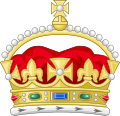 Coronet of the Duke of Cornwall, Rothesay and Cambridge.
 -
 Coronet of the dukes of Sussex, of York and of Edinburgh.
 -
 Coronet of the dukes of Gloucester and of Kent.


Family tree
[edit]| Family tree of Royal dukes in the United Kingdom | |||||||||||||||||||||||||||||||||||||||||||||||||||||||||||||||||||||||||||||||||||||||||||||||||||||||||||||||||||||||||||||||||||||||||||||||||||||||||||||||||||||||||||||||||||||||||||||||||||||||||||||||||||||||||||||||||||||||||||||||||||||||||||||||||||||||||||||||||||||||||||||||||||||||||||||||||||||||||||||||||||||||||||||||||||||||||||||||||||||||||||||||||||||||||||||||||||||||||||||||||||||||||||||||||||||||||||||||||||||||||||||||||||||||||||||||||||||||||||||||||||||||||||||||||||||||||||||||||||||||||||||||||||||||||||||||||||||||||||||||||||||||||||||||||||||||||||||||||||||||||||||||||||||||||||||||||||||||||||||||||||||||||||||||||||||||||||||||||||||||||||||||||||||||||||||||||||||||||||||||||||||||||||||||||||||||||||||||||||||||||||||||||||||||||||||||||||||||||||||||||||||||||||||||||||||||||||||||||||||||||||||||||||||||||||||||||||||||||||||||||||||||||||||||||||||||||||||||||||||||||||||||||||||||||||||||||||||||||||||||||||||||||||||||||||||||||||||||||||||||
|---|---|---|---|---|---|---|---|---|---|---|---|---|---|---|---|---|---|---|---|---|---|---|---|---|---|---|---|---|---|---|---|---|---|---|---|---|---|---|---|---|---|---|---|---|---|---|---|---|---|---|---|---|---|---|---|---|---|---|---|---|---|---|---|---|---|---|---|---|---|---|---|---|---|---|---|---|---|---|---|---|---|---|---|---|---|---|---|---|---|---|---|---|---|---|---|---|---|---|---|---|---|---|---|---|---|---|---|---|---|---|---|---|---|---|---|---|---|---|---|---|---|---|---|---|---|---|---|---|---|---|---|---|---|---|---|---|---|---|---|---|---|---|---|---|---|---|---|---|---|---|---|---|---|---|---|---|---|---|---|---|---|---|---|---|---|---|---|---|---|---|---|---|---|---|---|---|---|---|---|---|---|---|---|---|---|---|---|---|---|---|---|---|---|---|---|---|---|---|---|---|---|---|---|---|---|---|---|---|---|---|---|---|---|---|---|---|---|---|---|---|---|---|---|---|---|---|---|---|---|---|---|---|---|---|---|---|---|---|---|---|---|---|---|---|---|---|---|---|---|---|---|---|---|---|---|---|---|---|---|---|---|---|---|---|---|---|---|---|---|---|---|---|---|---|---|---|---|---|---|---|---|---|---|---|---|---|---|---|---|---|---|---|---|---|---|---|---|---|---|---|---|---|---|---|---|---|---|---|---|---|---|---|---|---|---|---|---|---|---|---|---|---|---|---|---|---|---|---|---|---|---|---|---|---|---|---|---|---|---|---|---|---|---|---|---|---|---|---|---|---|---|---|---|---|---|---|---|---|---|---|---|---|---|---|---|---|---|---|---|---|---|---|---|---|---|---|---|---|---|---|---|---|---|---|---|---|---|---|---|---|---|---|---|---|---|---|---|---|---|---|---|---|---|---|---|---|---|---|---|---|---|---|---|---|---|---|---|---|---|---|---|---|---|---|---|---|---|---|---|---|---|---|---|---|---|---|---|---|---|---|---|---|---|---|---|---|---|---|---|---|---|---|---|---|---|---|---|---|---|---|---|---|---|---|---|---|---|---|---|---|---|---|---|---|---|---|---|---|---|---|---|---|---|---|---|---|---|---|---|---|---|---|---|---|---|---|---|---|---|---|---|---|---|---|---|---|---|---|---|---|---|---|---|---|---|---|---|---|---|---|---|---|---|---|---|---|---|---|---|---|---|---|---|---|---|---|---|---|---|---|---|---|---|---|---|---|---|---|---|---|---|---|---|---|---|---|---|---|---|---|---|---|---|---|---|---|---|---|---|---|---|---|---|---|---|---|---|---|---|---|---|---|---|---|---|---|---|---|---|---|---|---|---|---|---|---|---|---|---|---|---|---|---|---|---|---|---|---|---|---|---|---|---|---|---|---|---|---|---|---|---|---|---|---|---|---|---|---|---|---|---|---|---|---|---|---|---|---|---|---|---|---|---|---|---|---|---|---|---|---|---|---|---|---|---|---|---|---|---|---|---|---|---|---|---|---|---|---|---|---|---|---|---|---|---|---|---|---|---|---|---|---|---|---|---|---|---|---|---|---|---|---|---|---|---|---|---|---|---|---|---|---|---|---|---|---|---|---|---|---|---|---|---|---|---|---|---|---|---|---|---|---|---|---|---|---|---|---|---|---|---|---|---|---|---|---|---|---|---|---|---|---|---|---|---|---|---|---|---|---|---|---|---|---|---|---|---|---|---|---|---|---|---|---|---|---|---|---|---|---|---|---|---|---|---|---|---|---|---|---|---|---|---|---|---|---|---|---|---|---|---|---|---|---|---|---|---|---|---|---|---|---|---|---|---|---|---|---|---|---|---|---|---|---|---|---|---|---|---|---|---|---|---|---|---|---|---|---|---|---|---|---|---|---|---|---|---|---|---|---|---|---|---|---|---|---|---|---|---|---|---|---|---|---|---|---|---|---|---|---|---|---|---|---|---|---|---|---|---|---|---|---|---|---|---|---|---|---|---|---|---|---|---|---|---|---|---|---|---|---|---|---|---|---|---|---|---|---|---|---|---|---|---|---|---|---|---|---|---|---|---|---|---|---|---|---|---|---|---|---|---|---|---|---|---|---|---|---|---|---|---|---|---|---|---|---|---|---|---|---|---|---|---|---|---|---|---|---|---|---|---|---|---|---|---|---|---|---|---|---|---|---|---|---|---|---|---|---|---|---|---|---|---|---|---|---|---|---|---|---|---|---|---|---|---|---|---|---|---|---|---|---|---|---|---|---|---|---|---|
|
Includes dukes of: Albany, Albemarle, Bedford, Cambridge, Clarence, Connaught and Strathearn, Cumberland, Edinburgh, Gloucester, Gloucester and Edinburgh, Hereford, Kent, Kintyre and Lorne, Norfolk, Ross, Somerset, Sussex, Windsor, and York, but only when royally. Non-royal dukes are not included; see Royal dukedoms in the United Kingdom.
| |||||||||||||||||||||||||||||||||||||||||||||||||||||||||||||||||||||||||||||||||||||||||||||||||||||||||||||||||||||||||||||||||||||||||||||||||||||||||||||||||||||||||||||||||||||||||||||||||||||||||||||||||||||||||||||||||||||||||||||||||||||||||||||||||||||||||||||||||||||||||||||||||||||||||||||||||||||||||||||||||||||||||||||||||||||||||||||||||||||||||||||||||||||||||||||||||||||||||||||||||||||||||||||||||||||||||||||||||||||||||||||||||||||||||||||||||||||||||||||||||||||||||||||||||||||||||||||||||||||||||||||||||||||||||||||||||||||||||||||||||||||||||||||||||||||||||||||||||||||||||||||||||||||||||||||||||||||||||||||||||||||||||||||||||||||||||||||||||||||||||||||||||||||||||||||||||||||||||||||||||||||||||||||||||||||||||||||||||||||||||||||||||||||||||||||||||||||||||||||||||||||||||||||||||||||||||||||||||||||||||||||||||||||||||||||||||||||||||||||||||||||||||||||||||||||||||||||||||||||||||||||||||||||||||||||||||||||||||||||||||||||||||||||||||||||||||||||||||||||||
See also
[edit]


- Substantive title
- Dukes in the United Kingdom
- List of dukedoms in the peerages of Britain and Ireland
- List of dukes in the peerages of Britain and Ireland
- Duchies in England
- List of peerages created for British princes
- Princess Royal
- Duke of Fife, Dukedom held by Princess Alexandra, 2nd Duchess of Fife
Notes
[edit]- ^ a b c d e f g h i Died without legitimate male heirs.
- ^ The 2nd Duke died without legitimate male heirs.
- ^ The 2nd Duke died without legitimate male heirs.
- ^ The 2nd Duke died without legitimate male heirs.
- ^ a b Will cease to be a Royal dukedom on the death of the current Duke, but will continue as an "ordinary" dukedom.
- ^ There are currently no legitimate male heirs, so the peerage will become extinct on the death of the current Duke.
- ^ Dukedom was conferred as a life peerage and will become extinct on the death of the current Duke.
References
[edit]- ^ a b c d e f g h i j Montgomery-Massingberd, Hugh, ed. (1973). "Appendix C: Titles Traditionally Associated with the Royal Family". Burke's Guide to the Royal Family. London: Burke's Peerage Ltd/Shaw Publishing Co. pp. 183, 336–337. ISBN 0-220-66222-3.
- ^ Velde, Francois. "Order of Precedence in England and Wales". Heraldica.org. Retrieved 17 November 2010.
- ^ Squibb, G.D. (1981). "The Lord Chamberlain's Order of 1520, as amended in 1595". Order of Precedence in England and Wales. Oxford, England: Clarendon Press. pp. 99–101.
- ^ Eilers, Marlene. Queen Victoria's Descendants. Rosvall Royal Books, Falkoping, Sweden, 1997. p. 45. ISBN 91-630-5964-9
- ^ Coughlan, Sean (10 March 2023). "King Charles grants Prince Edward Duke of Edinburgh title". BBC News. Retrieved 10 March 2023.
- ^ "The Prince of Wales: styles and titles".
- ^ "No. 9987". The London Gazette. 29 March 1760. p. 1.
- ^ "No. 10470". The London Gazette. 13 November 1764. p. 1.
- ^ "No. 12598". The London Gazette. 23 November 1784. p. 2.
- ^ "No. 13097". The London Gazette. 16 May 1789. p. 377.
- ^ "No. 15126". The London Gazette. 20 April 1799. p. 372.
- ^ "No. 15429". The London Gazette. 21 November 1801. p. 1.
- ^ "No. 23119". The London Gazette. 25 May 1866. p. 3127.
- ^ "No. 24098". The London Gazette. 26 May 1874. p. 1.
- ^ "No. 24977". The London Gazette. 24 May 1881. p. 1.
- ^ "No. 26055". The London Gazette. 24 May 1890. p. 1.
- ^ "No. 26291". The London Gazette. 25 May 1892. p. 1.
- ^ "No. 31931". The London Gazette. 4 June 1920. p. 6313.
- ^ "No. 33371". The London Gazette. 30 March 1928. p. 2321.
- ^ "No. 34904". The London Gazette. 9 October 1934. p. 6365.
- ^ "No. 34350". The London Gazette. 15 November 1936. p. 8115.
- ^ "No. 38128". The London Gazette. 20 November 1947. pp. 5495–5496.
- ^ "No. 50606". The London Gazette (Supplement). 23 July 1986. p. 1.
- ^ "No. 59798". The London Gazette. 1 June 2011. p. 10297.
- ^ Prince Harry and Ms. Meghan Markle: Announcement of Titles, 19 May 2018
- ^ "Crown Office | the Gazette".
- ^ "Crown Office | the Gazette".
Royal dukedoms in the United Kingdom
View on GrokipediaDefinition and Royal Status
Distinction from Non-Royal Dukedoms
Royal dukedoms in the United Kingdom are held exclusively by members of the British royal family, typically the sovereign's sons, brothers, or grandsons in the male line, whereas non-royal dukedoms form part of the hereditary peerage and are granted to individuals outside the immediate royal lineage.[6] As of 2021, there were 24 non-royal dukedoms extant, held by peers such as the Duke of Norfolk (premier duke of England since 1483) and the Duke of Westminster, compared to seven royal dukedoms including those of Cambridge, Sussex, York, Edinburgh, Gloucester, Kent, and Cornwall.[7][6] A primary distinction lies in styling and dignity: holders of royal dukedoms bear the prefix "His Royal Highness" (or "Her Royal Highness") and the title of prince or princess by virtue of their blood relation to the sovereign, entitling them to royal precedence that supersedes the peerage hierarchy.[7] Non-royal dukes, by contrast, lack this royal appellation and are styled simply "The Most High and Mighty Prince, His Grace [Name], Duke of [Place]," addressed as "Your Grace," with precedence determined by the date of creation within the five peerage ranks (duke, marquess, earl, viscount, baron).[6] This separation underscores that royal dukedoms derive prestige from monarchical bloodline rather than mere peerage elevation, as the first non-royal dukedom was not created until 1448 (Duke of Suffolk), long after royal precedents like Cornwall in 1337.[6] In heraldry, royal dukes differenciate the royal arms with specific cadency labels—such as white labels with red crosses or anchors for sons and grandsons of the sovereign—surmounted by a coronet alternating crosses patée and strawberry leaves, reflecting their proximity to the throne.[8] Non-royal dukes, however, employ personal or familial arms encircled by a plain ducal coronet of eight strawberry leaves, without royal differencing or the enhanced coronet variants reserved for blood royals.[6] Parliamentary privileges further delineate the two: non-royal hereditary dukes historically received writs of summons to the House of Lords as peers of the realm, a right curtailed by the House of Lords Act 1999 to 92 elected hereditaries, whereas royal dukes have never sat by virtue of their titles, as their precedence stems from royal status rather than peerage, and the royal family relinquished any formal Lords entitlement under reform.[9][6] Royal dukedoms are often created with tailored letters patent, sometimes limiting succession to preserve royal control (e.g., merging with the Crown upon extinction without male heirs), unlike the standard hereditary transmission of non-royal titles.[6]Criteria for Conferral as Royal
A royal dukedom is conferred exclusively by the reigning sovereign through letters patent upon male members of the British royal family who hold the style of His Royal Highness and the rank of prince, distinguishing such titles from those granted to non-royal subjects.[10] This status arises because the holder is a member of the royal family, typically legitimate sons, brothers, or close male relatives of the sovereign, rather than any inherent legal attribute of the title itself.[1][10] There are no statutory criteria mandating conferral; it remains a matter of royal prerogative, exercised at the monarch's discretion to recognize lineage and status within the House of Windsor or its predecessors.[11] Conventions dictate that royal dukedoms are usually granted to princes in the direct male line upon significant milestones, such as reaching the age of majority or marriage, ensuring the title aligns with the recipient's elevated position and responsibilities.[11] For example, male sons and grandsons of the sovereign have historically received them to formalize their precedence, while spouses of a female monarch—such as Prince Philip, created Duke of Edinburgh on November 19, 1947, prior to his marriage to Princess Elizabeth—may also be elevated to underscore alliance with the Crown.[10] The eldest son of the sovereign automatically inherits the Dukedom of Cornwall upon his parent's accession, as it is attached to the heir apparent, but additional peerages for younger royals are selectively created from extinct or available titles to avoid proliferation.[1] Once conferred, the dukedom is hereditary in the male line, but its royal designation persists only while held by descendants entitled to princely status; it reverts to an ordinary peerage if passing beyond the monarch's grandson or to non-royal branches, at which point the Crown may reclaim or recreate it.[10] This practice reflects a balance between tradition and restraint, limiting royal dukedoms to approximately six extant at any time in recent history, such as those of Cambridge, Sussex, and York under King Charles III as of 2023.[1]Historical Origins and Evolution
Medieval and Early Modern Foundations
The title of duke was introduced into the English peerage by Edward III on 17 March 1337, when he created his eldest surviving son, Edward (known as the Black Prince), as Duke of Cornwall; this marked the first creation of a dukedom in England and was explicitly modeled on the French precedent, where King Philip VI had elevated his son John in 1332.[1][10] The Duchy of Cornwall, attached to the title, provided the duke with substantial estates in southwest England, serving as an appanage to endow royal heirs with independent revenue and administrative authority without fragmenting the core royal domain.[1] This innovation elevated the status of royal sons beyond traditional earldoms, aligning English practice with continental feudal hierarchies where dukes held near-sovereign powers over duchies. Subsequent medieval creations reinforced the association of dukedoms with the blood royal, as Edward III granted the title to several younger sons to secure loyalty and provide territorial bases amid dynastic rivalries. In 1362, Lionel of Antwerp received the Dukedom of Clarence, while John of Gaunt inherited the Dukedom of Lancaster (originally created non-royally in 1351 for Henry of Grosmont but transferred to Gaunt, Edward III's son, upon Grosmont's death).[10] By 1385, under Richard II, Edmund of Langley was made Duke of York and Thomas of Woodstock Duke of Gloucester, both grandsons and sons of Edward III respectively; these titles often merged with the crown upon the holder's accession or extinction through lack of male heirs, as seen in the Wars of the Roses when Plantagenet dukedoms like York and Clarence fueled claims to the throne.[12] Lancastrian and Yorkist kings continued the pattern, with Henry V creating his brother John as Duke of Bedford in 1414 and his brother Humphrey as Duke of Gloucester in 1414, emphasizing dukedoms' role in binding royal kin to the regime through land grants exceeding 100,000 acres in some cases.[10] In the early modern period, from the Tudor accession in 1485 onward, royal dukedoms became sparser due to smaller royal families and a shift toward non-royal peerage elevations, though the medieval precedent of reserving the highest non-princely titles for blood relatives persisted. Henry VIII created his acknowledged illegitimate son, Henry FitzRoy, as Duke of Richmond and Somerset on 23 June 1525, granting him northern estates as a quasi-appanage despite his non-legitimacy, but no legitimate royal sons received dukedoms during the Tudor era owing to limited male progeny.[13] Under the Stuarts, the practice revived with James VI and I's second son, James (later James II), formally invested as Duke of York in 1644—though retroactively from birth in 1633—pairing the title with Scottish holdings to affirm union-era loyalties; this creation underscored dukedoms' enduring function in distinguishing second sons, who lacked the automatic Prince of Wales designation reserved for heirs apparent.[14][15] Extinctions remained common, as York merged into the crown upon James's accession in 1685, perpetuating the cycle of recreation for subsequent generations and embedding dukedoms as transient markers of royal favor rather than permanent patrimonies.[16]Developments After the Acts of Union
Following the Acts of Union of 1707, which merged the kingdoms of England and Scotland into Great Britain, and the 1800 Act that united Great Britain with Ireland in 1801 to form the United Kingdom, royal dukedoms increasingly incorporated territorial designations from across the realms to symbolize political integration and unity. This marked a shift from predominantly English-focused titles in earlier periods, with new creations often pairing an English dukedom with a Scottish marquessate, earldom, or other subsidiary title, or later including Irish elements. The practice aimed to acknowledge the expanded kingdom's composite nature, though it was not universally applied and became more prominent under the Hanoverian monarchs.[1][17] The first notable example of this compounded style appeared in 1764, when King George III granted his brother Prince William Henry the titles of Duke of Gloucester and Edinburgh, combining an English duchy with a Scottish one; the creation occurred on 19 November 1764. This was followed in 1766 by the Dukedom of Cumberland and Strathearn for another brother, Prince Henry Frederick, again blending English and Scottish designations on 18 May 1766. Subsequent grants, such as the Dukedom of York and Albany to Prince Frederick Augustus in 1784, continued the pattern, with Albany referring to a Scottish lordship. These dual titles reflected deliberate efforts to distribute royal honors geographically, fostering loyalty in the northern and later western parts of the kingdom, though they remained personal to the holder and reverted to the Crown upon extinction in the male line.[17][1] After the 1801 union, the convention extended to Irish territories, as seen in the Dukedom of Connaught and Strathearn created in 1874 for Prince Arthur, son of Queen Victoria, pairing an Irish province with a Scottish earldom on 24 May 1874. While not all post-union royal dukedoms adopted dual forms—such as the single Dukedom of Sussex granted to Prince Augustus Frederick in 1801 on 24 December 1801—the compounded style became a recurring feature for distinguishing royal peers from non-royal ones and reinforcing the monarchy's supranational role. This evolution standardized the granting of dukedoms to sons of the sovereign upon reaching adulthood or marriage, with subsidiary titles often elevating existing Scottish or Irish peerages to underscore the unions' enduring framework.[1][17]Royal Dukedoms Created Since the Hanoverian Succession
Reign of George I
During the reign of George I from 1 August 1714 to 11 June 1727, two royal dukedoms were created in the Peerage of Great Britain for his grandsons, the sons of his heir apparent, George Augustus, Prince of Wales.[18] These grants established precedents for titular distinctions among Hanoverian royals, emphasizing lineage and proximity to the throne.[1] On 26 July 1726, George I bestowed the dukedom of Edinburgh upon Prince Frederick Louis, born 6 January 1707, the eldest son of the Prince of Wales.[19] The title, named after the Scottish city, included subsidiary honors: Marquess of the Isle of Ely, Earl of Eltham, and Viscount Snowdon.[1] This elevation recognized Frederick's position as grandson and potential heir, though he had resided primarily in Hanover until then.[20] The next day, 27 July 1726, the king created the dukedom of Cumberland for Prince William Augustus, born 15 April 1721 (or 26 April New Style), the second surviving son of the Prince of Wales and aged five at the time.[21] Accompanying titles were Marquess of Berkhampstead, Earl of Kennington, Viscount Trematon, and Baron Alderney.[21] Cumberland, referencing the northern English county, secured precedence for the young prince amid the court's dynastic arrangements.[22] No further royal dukedoms were conferred by George I before his death, reflecting a restrained approach to peerage expansions early in the Hanoverian era compared to later reigns.[1] Both titles lapsed upon the recipients' deaths without male heirs in the direct line, reverting to the Crown for recreation.[19][22]Reign of George II
During the reign of George II, which spanned from 11 June 1727 to 25 October 1760, no new royal dukedoms were created for members of the royal family. George II's male heirs consisted of his eldest son, Frederick Louis, who was invested as Prince of Wales on 8 January 1729 but received no ducal title, and his second son, William Augustus, who had already been elevated to the dukedom of Cumberland on 27 May 1726 by his grandfather, George I, at the age of four.[23][21] The absence of new creations reflected the limited number of eligible male relatives and the established practice of reserving certain titles, such as Prince of Wales, for the heir apparent rather than conferring additional dukedoms during this period. William Augustus, Duke of Cumberland, remained the sole royal duke throughout George II's reign, gaining prominence as a military commander, notably at the Battle of Culloden in 1746, though his title predated the king's accession.[24] No grandsons or other kin were granted ducal peerages by George II, as his grandchildren through Frederick were either female or not yet of an age for such honors during his lifetime.Reign of George III
During the reign of George III, which spanned from 25 October 1760 to 29 January 1820, eight royal dukedoms were created in the Peerage of Great Britain, reflecting the monarch's practice of granting high peerages to surviving younger brothers and adult sons to ensure their precedence, financial support via parliamentary grants, and roles in military or diplomatic service. These creations followed precedents from earlier Hanoverian reigns but increased in number due to George III's large family, with his 15 children including nine sons, though only seven received dukedoms as the two youngest died in infancy. The titles often paired an English or Scottish locality with an Irish or additional subsidiary earldom or barony, and recipients typically held military commissions, with grants averaging £12,000–£25,000 annually from Parliament to supplement revenues from the titles' associated lands or sinecures.[1] The first two dukedoms honored George III's younger brothers. On 19 November 1764, Prince William Henry, third son of Frederick, Prince of Wales, was created Duke of Gloucester and Edinburgh, with the subsidiary title Earl of Connaught, shortly after George III's accession to provide his sibling with independent status amid family tensions over marriages and influence.[25] On 22 October 1766, Prince Henry Frederick, fourth son of Frederick, was created Duke of Cumberland and Strathearn, with the subsidiary Earl of Dublin, just before his 21st birthday, evoking the earlier Cumberland title held by their uncle William Augustus while granting Irish precedence.[26] Subsequent creations focused on George III's sons, beginning after the eldest, the Prince of Wales (future George IV), had established precedence. On 27 November 1784, the second son, Prince Frederick Augustus, was created Duke of York and Albany, with Earl of Ulster, upon returning from Hanoverian education and military training, positioning him as heir presumptive after the Prince of Wales and commander-in-chief of the army from 1795.[27] The third son, Prince William Henry, received the dukedom of Clarence and St Andrews, with Earl of Munster, on 16 May 1789, following his naval service, though "St Andrews" was later omitted in usage; he later became William IV.[28] In 1799, amid European wars requiring royal military leadership, two more sons were elevated: the fourth son, Prince Edward Augustus, as Duke of Kent and Strathearn with Earl of Dublin on 24 April, after service as governor of Gibraltar; and the fifth son, Prince Ernest Augustus, as Duke of Cumberland and Teviotdale with Earl of Armagh on 27 April, reflecting his army career despite later controversies.[29] The final pair came on 24 November 1801: the sixth son, Prince Augustus Frederick, as Duke of Sussex with Earl of Inverness and Baron Arklow, amid his separation from an unauthorized marriage; and the seventh son, Prince Adolphus Frederick, as Duke of Cambridge with Earl of Tipperary and Baron Culloden, after Hanoverian command.[1] These later grants coincided with the 1801 Act of Union, incorporating Irish elements, and provided stability for princes often involved in scandals or continental duties. No further royal dukedoms were created before George III's death, as his regency from 1811 limited such actions.| Dukedom | Recipient (Relation) | Creation Date | Subsidiary Titles |
|---|---|---|---|
| Gloucester and Edinburgh | Prince William Henry (brother) | 19 November 1764 | Earl of Connaught |
| Cumberland and Strathearn | Prince Henry Frederick (brother) | 22 October 1766 | Earl of Dublin |
| York and Albany | Prince Frederick Augustus (second son) | 27 November 1784 | Earl of Ulster |
| Clarence and St Andrews | Prince William Henry (third son) | 16 May 1789 | Earl of Munster |
| Kent and Strathearn | Prince Edward Augustus (fourth son) | 24 April 1799 | Earl of Dublin |
| Cumberland and Teviotdale | Prince Ernest Augustus (fifth son) | 27 April 1799 | Earl of Armagh |
| Sussex | Prince Augustus Frederick (sixth son) | 24 November 1801 | Earl of Inverness, Baron Arklow |
| Cambridge | Prince Adolphus Frederick (seventh son) | 24 November 1801 | Earl of Tipperary, Baron Culloden |
Reign of Queen Victoria
Queen Victoria created four royal dukedoms during her reign from 1837 to 1901, conferring them on three of her sons and one grandson as marks of distinction upon reaching adulthood or significant milestones such as naval commands or engagements. These titles followed the tradition of granting territorial designations from regions across the United Kingdom, often in combination, and were typically announced on her birthday, 24 May, as part of the annual honours list. Unlike non-royal dukedoms, these were reserved for close male relatives of the sovereign to signify their position in the line of succession while providing parliamentary grants for their maintenance.[1] The first such creation occurred on 24 May 1866, when Victoria elevated her second son, Prince Alfred (1844–1900), to the peerage as Duke of Edinburgh, Earl of Ulster, and Earl of Kent, shortly after his return from a global naval voyage aboard HMS Galatea, during which he had commanded the ship as a captain despite his youth. Alfred, who had entered the Royal Navy in 1858, received the titles in recognition of his service and to formalize his independent establishment; the dukedom referenced the city of Edinburgh in Scotland, Ulster in Ireland, and Kent in England. The title became extinct upon Alfred's death on 30 July 1900 at Schloss Rosenau, as his elder son, Prince Alfred (1874–1899), had predeceased him without legitimate male issue, and the younger son, Prince Arthur (1883–1933), inherited the Dukedom of Saxe-Coburg and Gotha through his mother's line instead.[30] On 24 May 1874, Victoria created her third son, Prince Arthur (1850–1942), as Duke of Connaught and Strathearn, with the subsidiary titles Marquess of Kintire and Earl of Sussex, honoring his birth at Dublin Castle and his military inclinations from a young age. Connaught drew from the Irish province, while Strathearn referenced a Perthshire district in Scotland; Arthur, who pursued a distinguished army career rising to field marshal, used the titles actively until his death, passing the dukedom to his son, Prince Arthur (1883–1938), who died without male heirs, leading to its extinction in 1943. This creation underscored Victoria's preference for dual territorial names to balance representation across the realms.[1][10] The Duke of Albany title was granted on 24 May 1881 to Victoria's youngest son, Prince Leopold (1853–1884), who suffered from hemophilia, limiting his active duties; he received accompanying titles as Earl of Clarence and Baron Arklow. Albany evoked the historic Scottish duchy associated with royal heirs, and the creation coincided with his marriage to Princess Helena of Waldeck and Pyrmont, providing financial support through a parliamentary annuity. Leopold died less than three years later on 28 March 1884 from injuries sustained in a fall, but the dukedom passed to his son, Charles Edward (1884–1954), who later lost British honors due to Nazi affiliations, with the title lapsing without further legitimate male-line heirs.[31][32] Victoria's final royal dukedom creation came on 24 May 1890 for her grandson, Prince Albert Victor (1864–1892), eldest son of the Prince of Wales (later Edward VII), who was elevated as Duke of Clarence and Avondale and Earl of Athlone to commemorate his engagement to Princess Mary of Teck and his impending maturity. Clarence referenced the earlier royal dukedom held by uncles and ancestors, while Avondale drew from a Welsh valley; the titles extinguished upon Albert Victor's untimely death from influenza-related pneumonia on 14 January 1892 at the age of 28, without issue. These creations reflected Victoria's strategy to distinguish junior royals amid a growing family, though all but Connaught ultimately failed for lack of surviving male heirs, highlighting the precariousness of peerage inheritance in the male line.[1]Reign of George V
During the reign of George V, which spanned from 6 May 1910 to 20 January 1936, three royal dukedoms were created in the Peerage of the United Kingdom for his younger sons, following the tradition of conferring such titles upon princes reaching adulthood or in anticipation of marriage to distinguish their status and provide estates or symbolic ties to regions of the realm. These creations revived historic titles: York for the second son, Gloucester for the third, and Kent for the fourth. The eldest son, Edward, held the title Prince of Wales and received no dukedom during his father's lifetime, while the fifth son, John, died in 1919 at age 13 without one. No dukedoms were granted to other royals, such as uncles or cousins, during this period, reflecting George V's selective approach amid post-World War I economic constraints and a preference for limiting hereditary peerages.[1] The dukedom of York was revived on 3 June 1920 for Prince Albert (1895–1952), George V's second son, with subsidiary titles Earl of Inverness and Baron Killarney, evoking Scottish and Irish connections.[33] This title had lapsed upon George V's accession in 1910, having been held by him from 1892. Prince Albert, a naval officer who served in World War I, received the dukedom at age 25, three years before his marriage to Lady Elizabeth Bowes-Lyon; it merged with the Crown upon his accession as George VI in 1936. On 31 March 1928, Prince Henry (1900–1974), the third son, was created Duke of Gloucester, Earl of Ulster, and Baron Culloden, titles referencing historic English, Northern Irish, and Scottish locales to underscore unity across the United Kingdom.[34] Aged 28 and a career army officer who had joined the 10th Royal Hussars in 1921, Prince Henry held the dukedom until his death; it passed to his son and remains extant.[35] The final creation occurred on 12 October 1934 for Prince George (1902–1942), the fourth son, as Duke of Kent, Earl of St Andrews, and Baron Downpatrick, shortly before his November marriage to Princess Marina of Greece and Denmark.[36] These titles revived the Kent peerage, extinct since 1901, and linked to Scottish and Irish heritage. A diplomat and civil servant who worked in the Foreign Office and Factory Inspectorate, Prince George died in a 1942 air crash; the dukedom endures through his descendants.[37]| Dukedom | Creation Date | Recipient | Subsidiary Titles | Fate |
|---|---|---|---|---|
| York | 3 June 1920 | Prince Albert | Earl of Inverness, Baron Killarney | Merged with Crown (1936); no male heirs, extinct |
| Gloucester | 31 March 1928 | Prince Henry | Earl of Ulster, Baron Culloden | Extant |
| Kent | 12 October 1934 | Prince George | Earl of St Andrews, Baron Downpatrick | Extant |
Reign of George VI
During the reign of King George VI (1936–1952), two royal dukedoms were conferred, both reflecting personal and dynastic circumstances rather than routine succession practices. The Dukedom of Windsor was granted to the former king, Edward VIII, following his abdication, while the Dukedom of Edinburgh marked the elevation of Philip Mountbatten upon his marriage to Princess Elizabeth, the heir presumptive. These creations adhered to precedents of awarding high peerages to close royal kin, with remainders limited to male heirs to preserve patrilineal inheritance.[38] The Dukedom of Windsor was created for Edward, Prince of Wales and briefly Edward VIII, after his abdication on 11 December 1936 to marry Wallis Simpson. George VI announced the peerage on 12 December 1936, with formal letters patent issued on 8 March 1937, granting the title Duke of Windsor in the Peerage of the United Kingdom, with remainder to heirs male of the body. This peerage allowed Edward a seat in the House of Lords but excluded him from succession rights or regnal privileges, reflecting the government's insistence on limiting his status post-abdication. Edward, who died childless on 28 May 1972, held the dukedom until its extinction.[38][39] The Dukedom of Edinburgh was conferred on Lieutenant Philip Mountbatten, formerly Prince of Greece and Denmark, on 19 November 1947, immediately prior to his marriage to Princess Elizabeth on 20 November. George VI elevated Philip to royal highness and created him Duke of Edinburgh, Earl of Merioneth, and Baron Greenwich of Greenwich in the Peerage of the United Kingdom, with special remainder to heirs male of the body, permitting inheritance by sons of the marriage despite Philip's non-royal birth line. This title underscored Philip's role as consort to the future queen, drawing on the revived name of a prior dukedom held by figures like Prince Alfred (1874–1900). Philip retained the dukedom until his death in 2021, when it passed to Prince Charles (later Charles III) per Queen Elizabeth II's wishes, though initially intended for Philip's sons.[40][41] No additional royal dukedoms were created during George VI's reign, as his surviving brothers—Henry (Duke of Gloucester since 1928) and the widowed Duchess of Kent after Prince George's death in 1942—retained existing titles without new conferrals. These limited grants aligned with George VI's restrained approach amid wartime austerity and post-war recovery, prioritizing stability over prolific titular expansions.Reign of Elizabeth II
During her 70-year reign from 6 February 1952 to 8 September 2022, Queen Elizabeth II created three royal dukedoms, all granted to male members of her immediate family on the eve of or day of their weddings, in line with longstanding precedent for elevating princes with territorial titles and subsidiary peerages. These were the Dukedom of York for Prince Andrew (her second son, born 19 February 1960), the Dukedom of Cambridge for Prince William (her grandson and eldest son of the heir apparent, born 21 June 1982), and the Dukedom of Sussex for Prince Harry (her younger grandson, born 15 September 1984). No other royal dukedoms were newly created, though existing ones such as Edinburgh (held by Prince Philip since 1947 until his death on 9 April 2021) and the inherited Dukedoms of Gloucester and Kent continued in use by working royals.[42] The Dukedom of York, the eighth creation of the title, was conferred on Prince Andrew by letters patent dated 23 July 1986, the day before his marriage to Sarah Ferguson at Westminster Abbey. Accompanying titles included Earl of Inverness and Baron Killyleagh, all in the Peerage of the United Kingdom with standard remainder to male heirs. The title revived a historic designation traditionally associated with the sovereign's second son, previously held by figures like Prince Albert Victor (1892–1892) and Prince George (later George V, 1892–1901). Prince Andrew and Ferguson had two daughters, Princess Beatrice (born 8 August 1988) and Princess Eugenie (born 23 March 1990), but no sons; thus, the dukedom is destined to become extinct upon the prince's death absent further royal intervention. The couple divorced in 1996 after a decade of marriage.[42] Prince William received the Dukedom of Cambridge, a new creation, via letters patent issued on 29 April 2011, immediately prior to his wedding to Catherine Middleton at Westminster Abbey. Subsidiary titles were Earl of Strathearn and Baron Carrickfergus, reflecting Scottish and Northern Irish territorial elements. The dukedom honors the historic county of Cambridge and echoes prior royal uses, such as Adolphus Frederick (1760–1790) and the brief 1801 grant to the future William IV. Upon the death of Queen Elizabeth II, Prince William automatically succeeded to the Dukedom of Cornwall (created by Edward III in 1337) as Duke of Cornwall and Duke of Rothesay, rendering Cambridge a lesser title thereafter; he has three sons—Prince George (born 22 July 2013), Prince Louis (born 23 April 2018), and an earlier daughter Princess Charlotte (born 2 May 2015)—ensuring the dukedom's potential heritability in the male line.[43] The Dukedom of Sussex, the second creation after the 1801 grant to Prince Augustus Frederick (extinct 1843), was bestowed on Prince Harry by letters patent dated 19 May 2018, the day of his marriage to Rachel Meghan Markle (formerly actress Meghan Markle) at St George's Chapel, Windsor Castle. Subsidiary titles included Earl of Dumbarton and Baron Kilkeel. The choice revived a title linked to Sussex county, previously fallen into disuse for nearly two centuries due to the first duke's controversial morganatic marriage. The Sussexes have one son, Prince Archie (born 6 May 2019), positioning him as heir presumptive; a daughter, Princess Lilibet (born 4 June 2021), does not inherit under male-preference primogeniture rules applicable at creation. The couple stepped back from senior royal duties in 2020 and relocated to the United States.[44] These creations maintained the convention of limiting royal dukedoms to direct descendants, with peerages designed for life or limited succession rather than broad distribution, reflecting the sovereign's prerogative under the royal prerogative of creation. Unlike earlier reigns with multiple grants to siblings, Elizabeth II's were sparse, aligning with a streamlined monarchy emphasizing fewer working royals. The Dukedom of Edinburgh, while not newly created, was surrendered by Prince Philip upon his death and held in abeyance by the Crown until its regrant in 2023.[44]Reign of Charles III
The only royal dukedom created during the reign of Charles III, which began on 8 September 2022, is the Dukedom of Edinburgh, granted to his youngest brother, Prince Edward, on 10 March 2023.[45] This recreation followed the merger of the previous creation with the Crown upon Charles's accession to the throne.[46] The title had been held by their father, Prince Philip, Duke of Edinburgh, who died on 9 April 2021, after which it passed to Charles as Prince of Wales before reverting upon his becoming sovereign.[47] The new Dukedom of Edinburgh was conferred via letters patent on Prince Edward's 59th birthday, elevating him from the Earldom of Wessex, which he had held since his 1999 marriage.[45] Buckingham Palace stated that the grant fulfilled the wishes of Queen Elizabeth II and Prince Philip, who had expressed their desire for Edward to succeed to the dukedom, reflecting his long-term commitment to the Duke of Edinburgh's Award scheme, founded by Philip in 1956.[5] The title includes the subsidiary titles Earl of Forfar and Baron Snowdon, though the latter is not used.[45] Unlike standard hereditary peerages, this creation is limited such that the dukedom will revert to the Crown upon Edward's death rather than passing to his son, James, Viscount Severn, allowing future monarchs the option to regrant it to another royal.[46] No other royal dukedoms have been created by Charles III as of October 2025.[2]Current Royal Dukedoms
List of Current Holders
The current royal dukedoms are held by six male members of the British royal family, who collectively possess eight such titles; the Prince of Wales holds three, while the others each hold one. These dukedoms are typically created by letters patent from the sovereign for royal princes, often upon marriage or significant life events, and may be hereditary or held for life depending on the grant. The holders are entitled to use the style "Royal Highness" and precedence above non-royal dukes.| Dukedom | Holder | Granted to Current Holder |
|---|---|---|
| Cornwall | William, Prince of Wales | 8 September 2022 (automatic upon accession of father as sovereign)[48] |
| Rothesay | William, Prince of Wales | 8 September 2022 (Scottish title automatic for heir apparent)[49] |
| Cambridge | William, Prince of Wales | 29 April 2011 (upon marriage)[50] |
| York | Prince Andrew | 23 July 1986 (upon marriage)[51] |
| Edinburgh | Prince Edward | 10 March 2023 (upon brother's accession)[52] |
| Gloucester | Prince Richard | 10 June 1974 (inherited from father)[53] |
| Kent | Prince Edward | 25 August 1942 (inherited from father at age seven)[54] |
| Sussex | Prince Harry | 19 May 2018 (upon marriage)[55] |
Heirs and Associated Titles
The subsidiary titles associated with current royal dukedoms are lesser peerages created concurrently to provide courtesy titles for heirs apparent and to extend the dukedom's scope across the United Kingdom's realms. These titles follow the holder in precedence but are not independently heritable unless specified. Heirs to royal dukedoms, being members of the royal family, typically receive styles such as "Prince" or "HRH," with courtesy use of a subsidiary title until they inherit or receive their own peerage.[55] For the Duke of Cambridge, held by William, Prince of Wales, the associated titles are Earl of Strathearn and Baron Carrickfergus, created in 2011. The heir apparent is Prince George of Wales, who does not yet use a courtesy title.[57] The Duke of Sussex, held by Prince Harry, includes subsidiary titles of Earl of Dumbarton and Baron Kilkeel, granted in 2018. The heir apparent, Archie Mountbatten-Windsor, is styled Earl of Dumbarton as a courtesy title.[55] The Duke of York, held by Prince Andrew, encompasses Earl of Inverness and Baron Killyleagh, created in 1986; however, as of October 17, 2025, Prince Andrew has ceased using the Duke of York title and associated honours following discussions with King Charles III. There is no heir apparent, as the dukedom was created with remainder to heirs male of the body, and Prince Andrew has no surviving sons; it will become extinct upon his death unless otherwise altered.[58][59] Prince Edward, Duke of Edinburgh, holds the title recreated in 2023, with prior titles including Earl of Wessex (from 1999), Earl of Forfar (from 2019), and Viscount Severn as a subsidiary. The heir apparent is James Mountbatten-Windsor, styled Earl of Wessex since his father's elevation to the dukedom.[60] The Duke of Gloucester, held by Prince Richard, features subsidiary titles Earl of Ulster and Baron Culloden, from 1928. The heir apparent is Alexander Windsor, styled Earl of Ulster.[61] For the Duke of Kent, held by Prince Edward, the associated titles are Earl of St Andrews and Baron Downpatrick, created in 1934. The heir apparent is George Windsor, styled Earl of St Andrews, though his succession is complicated by his 1988 marriage to a Roman Catholic, which under the Succession to the Crown Act 2013 affects only the throne, not the dukedom's peerage succession.[62]| Dukedom | Holder | Heir Apparent | Courtesy Title Used by Heir | Subsidiary Titles |
|---|---|---|---|---|
| Cambridge | William, Prince of Wales | Prince George of Wales | None | Earl of Strathearn; Baron Carrickfergus |
| Sussex | Prince Harry | Archie Mountbatten-Windsor | Earl of Dumbarton | Earl of Dumbarton; Baron Kilkeel |
| York | Prince Andrew (use ceased 2025) | None | N/A | Earl of Inverness; Baron Killyleagh |
| Edinburgh | Prince Edward | James Mountbatten-Windsor | Earl of Wessex | Earl of Wessex; Earl of Forfar; Viscount Severn |
| Gloucester | Prince Richard | Alexander Windsor | Earl of Ulster | Earl of Ulster; Baron Culloden |
| Kent | Prince Edward | George Windsor | Earl of St Andrews | Earl of St Andrews; Baron Downpatrick |
Former Royal Dukedoms
Extinct Royal Dukedoms
Royal dukedoms granted to members of the British royal family become extinct when the last holder dies without legitimate male heirs entitled to succeed under the terms of the patent, typically limited to heirs male of the body of the grantee. Unlike non-royal peerages, royal dukedoms are often not recreated if extinct, preserving the title for potential future royal use, though some like Sussex and Cambridge have been revived for new grantees. Historical examples span from the medieval period to the 20th century, reflecting the practice of bestowing subsidiary titles on princes to denote precedence and lineage.[1] Key extinct royal dukedoms include those held by sons and grandsons of monarchs, such as the Dukedom of Sussex created in 1801 for Prince Augustus Frederick, sixth son of George III, which expired in 1843 upon his death without surviving legitimate issue. Similarly, the Dukedom of Connaught and Strathearn, granted in 1874 to Prince Arthur, third son of Queen Victoria, became extinct in 1943 following the death without male heirs of his grandson, Alastair Windsor, 2nd Duke. The Dukedom of Cambridge, created in 1801 for Prince Adolphus, seventh son of George III, ended in 1904 with the demise of the 2nd Duke, Prince George, who left no sons.[1][43] The Dukedom of Edinburgh, first bestowed in 1726 on Prince Frederick, grandson of George I, saw its initial creation merge with the Crown but a later 1866 grant to Prince Alfred, second son of Queen Victoria, extinct in 1900 on his death without surviving sons. The Dukedom of Windsor, uniquely created in 1937 for former King Edward VIII after his abdication, terminated in 1972 with his death, childless from his second marriage. Earlier instances include the Dukedom of Cumberland, multiple creations such as 1799 for Prince Ernest Augustus, which expired in 1851 upon his accession as King of Hanover, severing the British line due to Salic law differences.[1][33]| Dukedom | Creation Year | Extinction Year | Principal Holder(s) | Notes |
|---|---|---|---|---|
| Sussex | 1801 | 1843 | Prince Augustus Frederick | No legitimate male heirs; title recreated in 2018 for new grantee. |
| Connaught and Strathearn | 1874 | 1943 | Prince Arthur; Alastair, 2nd Duke | Extinct on death of heir without sons. |
| Cambridge | 1801 | 1904 | Prince Adolphus; Prince George, 2nd | No surviving male issue from 2nd Duke; recreated in 2011. |
| Edinburgh (second royal) | 1866 | 1900 | Prince Alfred | Died without surviving sons; recreated multiple times since. |
| Windsor | 1937 | 1972 | Edward, former King Edward VIII | No heirs from post-abdication marriage. |
| Kent and Strathearn | 1799 | 1820 | Prince Edward | Holder died; title merged with Crown upon his son’s accession as William IV; recreated later. |
| Clarence and Avondale | 1890 | 1892 | Prince Albert Victor | Holder predeceased father without issue; part of Clarence revivals. |
Dukedoms That Ceased to Be Royal
The Dukedom of Cumberland and Teviotdale, created on 27 November 1799 for Prince Ernest Augustus, the fifth son of King George III, transitioned out of direct British royal control after the personal union between Great Britain and Hanover ended in 1837.[43] Ernest Augustus ascended as King of Hanover that year, establishing a separate Hanoverian royal line; he retained the British dukedom until his death on 18 November 1851.[33] His son, George V of Hanover, succeeded as the 2nd Duke of Cumberland and Teviotdale, followed in 1878 by his son Ernest Augustus, 3rd Duke, whose lineage prioritized Hanoverian interests over British royal ties.[33] This divergence marked the dukedom's cessation as a British royal title, though it persisted as a peerage until formal deprivation in 1917 due to the holders' allegiance to Germany during World War I.[33][42] Similarly, the Dukedom of Albany, conferred on 24 May 1850 upon Prince Leopold, the youngest son of Queen Victoria, left immediate British royal stewardship upon Leopold's death on 28 March 1884.[43] His posthumously born son, Charles Edward, became the 2nd Duke at 21 days old but succeeded in 1900 to the Duchy of Saxe-Coburg and Gotha after his cousin, Alfred, Duke of Edinburgh, died without surviving male heirs.[33] Charles Edward's relocation to Germany and assumption of German ducal responsibilities effectively detached the Albany title from British royal usage, rendering it non-royal in practice as he aligned with German imperial interests.[33] The dukedom's status ended with deprivation under the Titles Deprivation Act 1917, prompted by Charles Edward's support for Germany in the war.[33][42] These instances illustrate how royal dukedoms, initially tied to the sovereign's immediate family, could devolve from British royal association through dynastic unions or successions to foreign crowns, prior to legislative intervention.[33] No other royal dukedoms have followed this path without subsequent extinction or recreation within the British line.[33]Suspended or Disused Dukedoms
The suspended royal dukedoms in the United Kingdom primarily arise from the Titles Deprivation Act 1917, enacted to address peers who supported the Central Powers during the First World War. This legislation targeted individuals holding British titles who were deemed to have aided the enemy, resulting in the suspension rather than outright extinction of their peerages. The Act allowed for potential restoration through petition to the Committee for Privileges of the House of Lords, but no such revivals have occurred for the affected royal dukedoms.[63][64] Two royal dukedoms were suspended under this Act: the Dukedom of Cumberland and Teviotdale, held by Ernst August, 3rd Duke of Cumberland and Teviotdale (1845–1923), and the Dukedom of Albany, held by Charles Edward, Duke of Albany (1884–1953). Ernst August, a grandson of King George III and the last Crown Prince of Hanover, inherited the British dukedom in 1878 but resided primarily in Germany and aligned with Kaiser Wilhelm II, prompting his deprivation on March 28, 1919. Similarly, Charles Edward, son of Prince Leopold, Duke of Albany (youngest son of Queen Victoria), succeeded to the dukedom in 1884 and later became Duke of Saxe-Coburg and Gotha in 1900; his pro-German activities, including military service for Germany, led to suspension of his British titles on the same date. These dukes retained their princely status under the British crown until the Titles Deprivation Act, after which the titles entered suspension without legal extinction.[65] Descendants of both dukes have existed but have not successfully petitioned for restoration, partly due to ongoing German ties and lack of political will in Britain to reinstate titles linked to wartime adversaries. The Dukedom of Cumberland and Teviotdale remains suspended, with potential heirs in the House of Hanover barred by the Act's conditions and the Sovereign's prerogative. The Dukedom of Albany's suspension persists similarly, as claimants would need to prove loyalty and eligibility, a process unattempted amid post-war sentiments and the titles' association with figures who later engaged in Nazi activities—Charles Edward joined the Nazi Party in 1937. These cases illustrate the rare invocation of statutory suspension for royal peerages, preserving the titles in legal limbo rather than allowing recreation or outright forfeiture.[66] Disused royal dukedoms refer to those not actively held or invoked by the royal family despite historical precedent for their use, often awaiting recreation upon the Sovereign's discretion. The Dukedom of York, traditionally bestowed on the monarch's second-eldest son, became disused in practice following Prince Andrew's announcement on October 17, 2025, to cease using the title amid ongoing scandals related to his associations with Jeffrey Epstein and subsequent legal settlements. While not formally suspended or revoked—requiring parliamentary action akin to the 1917 Act—the title reverts to the Crown upon the holder's death without male heirs, rendering it unavailable until regrant. This development marks a temporary disuse, echoing periods when royal dukedoms like Sussex lay dormant for over a century before recreation in 2018. Such disuse reflects the Sovereign's flexibility in title allocation, prioritizing active service and public perception over rigid tradition.[58][59]Rules of Creation, Inheritance, and Revocation
Sovereign's Prerogative in Creation
The creation of royal dukedoms is exercised through the sovereign's royal prerogative, enabling the monarch to confer hereditary titles on close family members, such as sons and male-line grandsons, via Letters Patent without requiring parliamentary consent or statutory authority.[42][67] This prerogative distinguishes royal dukedoms from non-royal hereditary peerages, which have not been created since 1964, with modern peerage elevations limited to life peerages under the Life Peerages Act 1958.[68] The process originates from the monarch's historical role as fount of honour, allowing unilateral grants to reinforce dynastic structure and precedence within the royal family.[42] Historically, the first royal dukedom was granted by Edward III in 1337, establishing the Dukedom of Cornwall for his eldest son as a hereditary appanage tied to the heir apparent.[69] Subsequent creations, such as those under the House of Stuart and Hanover, followed similar patterns, often aligning with milestones like marriage or military service to legitimize succession and allocate estates.[67] In the 20th century, George V created the Dukedom of York for his second son Albert in 1920, while Elizabeth II granted the Dukedom of Edinburgh to Prince Philip on November 19, 1947, their wedding day, and the Dukedom of York to Prince Andrew on July 23, 1986.[42] These acts underscore the prerogative's flexibility, with titles typically limited to extant or extinct Scottish, Irish, or English territorial designations to avoid diluting symbolic associations.[69] The sovereign retains discretion in selecting names and conditions, though conventions limit new inventions to preserve heraldic and historical continuity; for example, revivals like the Dukedom of Cambridge in 2011 for Prince William drew from precedents dating to 1706.[67] Unlike broader honours, royal dukedom grants do not necessitate ministerial advice, reflecting the personal nature of intra-family elevations, though they may incorporate privy council warrants for formal proclamation.[42] This prerogative ensures dukedoms remain tools for monarchical stability, merging inheritance with symbolic authority, but it is constrained by practical factors such as available titles and family size, with no creations under Charles III as of 2025.[68]Succession Mechanisms
Succession to royal dukedoms is governed exclusively by the terms specified in the Letters Patent that create the title, issued under the sovereign's prerogative. These patents typically employ the standard formula granting the dukedom "to the grantee and the heirs male of his body lawfully begotten, forever," establishing agnatic primogeniture as the mode of inheritance. Under this arrangement, the title descends first to the eldest legitimate son of the duke, then to that son's eldest legitimate son, and so on through unbroken male lines, with no provision for female heirs or female-line collaterals unless explicitly stated otherwise—a rarity in royal creations.[2][70] Absence of surviving heirs male in the designated line results in the dukedom's extinction upon the holder's death, as the title does not revert to the Crown for automatic reassignment but ceases to exist until potentially recreated by a future sovereign. This mechanism has led to the frequent lapse of royal dukedoms, particularly those bestowed on childless princes or those with only daughters, necessitating new grants to maintain titular distinctions within the family. For example, the Dukedom of York, created for Prince Andrew on July 23, 1986, follows the conventional heirs-male remainder but lacks provision for his daughters, ensuring its extinction without male issue.[71][72] Certain dukedoms exhibit tailored successions reflecting sovereign intent. The Dukedom of Cambridge, granted to Prince William on April 29, 2011, adheres to the heirs-male formula, positioning Prince George as presumptive heir, who would accede upon his father's death prior to William's own succession to the throne. In contrast, the 2023 recreation of the Dukedom of Edinburgh for Prince Edward incorporates limitations, such that it reverts to the Crown upon his death without passing to his son, James, Viscount Severn, diverging from standard hereditary practice to align with dynastic planning.[33] The Dukedom of Cornwall operates distinctly, vesting automatically in the sovereign's eldest son as heir apparent by statute from 1337, with succession tied directly to the line of throne rather than personal Letters Patent, and passing via the Duchy of Cornwall's ancient remainders.[73] Historical precedents, such as the Dukedom of Gloucester (1928) and Kent (1934), demonstrate longevity through male-line transmission: Gloucester passed from Prince Henry to grandson Prince Richard in 1974 after an intermediate holder's childless death, while Kent similarly endures via strict patrilineal descent. These cases underscore that while mechanisms prioritize male primogeniture for continuity, extinctions prompt sovereign recreation, preserving the system's flexibility without statutory override.[6]Historical and Potential Revocations
Revocations of royal dukedoms have historically been rare, typically effected through parliamentary attainder for high treason or specific deprivation acts, rather than unilateral royal prerogative. In such cases, the titles were forfeited, rendering them extinct or suspended pending potential reversal. One prominent example is George Plantagenet, 1st Duke of Clarence (created 1461), brother of King Edward IV, who was attainted by Parliament for treason in January 1478, leading to his private execution on February 18, 1478, and the forfeiture of his dukedom.[74] Similarly, James Scott, 1st Duke of Monmouth (created 1663), the illegitimate son of King Charles II, faced attainder following his failed rebellion against King James II; he was captured, tried under an Act of Attainder, and executed on July 15, 1685, extinguishing the title.[75] A more recent instance involved the Titles Deprivation Act 1917, which attainted certain Hanoverian royal dukedoms due to their holders' allegiance to Germany during World War I. Specifically, the Dukedom of Cumberland and Teviotdale, held by Ernst August, 3rd Duke of Cumberland (a great-grandson of King George III), and the Dukedom of Albany, held by his son Charles Edward, Duke of Albany (grandson of Queen Victoria), were deprived of their British peerages for bearing arms against the United Kingdom, though the titles technically remain unclaimed rather than formally extinct.[33] These cases underscore that revocation required legislative action, often tied to threats against the state, with no recorded instances of dukedoms being surrendered or revoked solely by letters patent in royal contexts.[76] In modern times, potential revocations have been discussed amid personal scandals, but none have materialized through formal means. For Prince Andrew, Duke of York (title created November 23, 1986), public and parliamentary pressure mounted following his association with Jeffrey Epstein and related allegations, culminating in his agreement on October 17, 2025, to cease using the Duke of York title and other military honors after consultations with King Charles III.[58][59] However, this represents a voluntary cessation rather than revocation; stripping the peerage outright would necessitate an Act of Parliament, as the sovereign lacks prerogative power to unilaterally revoke hereditary titles once granted, absent extraordinary circumstances like treason.[64] Discussions regarding the Dukedom of Sussex (created May 19, 2018, for Prince Harry) have similarly arisen over the duke and duchess's public criticisms of the royal family and relocation to the United States, with some commentators and lawmakers advocating deprivation to align with their non-working royal status, but no legislative or prerogative action has been pursued as of October 2025.[42] These contemporary cases highlight the procedural hurdles to revocation, preserving titles unless overridden by statute, and reflect evolving norms without precedent for non-treasonous removal.[77]Formal Privileges and Symbols
Forms of Address and Precedence
Royal dukes, as male members of the British royal family bearing the title of duke, are styled "His Royal Highness The Duke of [Place]" (HRH), with the prefix "His Royal Highness" denoting their status as princes of the blood royal.[5] Duchesses, when royal, receive the corresponding style "Her Royal Highness The Duchess of [Place]". This style is granted by letters patent or tradition to sons, brothers, uncles, and certain cousins of the sovereign who hold peerages, distinguishing them from non-royal dukes who use "His Grace". In written forms such as envelopes or formal lists, the full style is employed, e.g., "His Royal Highness The Duke of York, KG, KCVO, ADC". Verbally, royal dukes are addressed as "Your Royal Highness" on first and formal occasions, thereafter as "Sir"; duchesses as "Your Royal Highness" initially, then "Ma'am".[78] In the United Kingdom's order of precedence, royal dukes rank according to their genealogical proximity to the reigning sovereign, superseding the general peerage hierarchy based on title creation dates.[79] The sovereign's sons (after the heir apparent) and brothers precede all non-royal dukes, followed by the sovereign's uncles and nephews in line of succession who hold dukedoms. For instance, as of 2025, the Duke of Edinburgh (sovereign's brother) ranks above the Dukes of Gloucester and Kent (sovereign's cousins), who in turn outrank non-royal dukes such as the Duke of Norfolk, regardless of the antiquity of the latter's title (created 1483).[79] This royal precedence applies in ceremonial contexts like state processions, levées, and court functions, where royal dukes also take priority over marquesses and lower peers unless displaced by specific royal warrant or event protocol. Among themselves, royal dukes observe seniority by birth or creation, ensuring the heir's dukedom (e.g., Cambridge) holds the highest position after the Prince of Wales.[79] Non-royal dukedoms follow in a separate sequence ordered by the date of creation within their jurisdictional origin (England, Scotland, Great Britain, or United Kingdom).[6]Coronets and Heraldic Distinctions
The coronet denoting the rank of duke comprises a circlet of gold rising to eight strawberry leaves. This design, uniform for all dukes regardless of royal status, appears in heraldic achievements above the shield and is worn ceremonially by peers, including royal dukes, during events such as coronations. Unlike the coronet of the Prince of Wales, which incorporates crosses patée and fleurs-de-lys, the ducal coronet lacks such elements, emphasizing the peerage rank beneath immediate heirship. Heraldic distinctions for royal dukes primarily involve differencing the royal arms—quarterly, first and fourth gules three lions passant guardant in pale or armed and langued azure; second or a lion rampant within a double tressure flory-counterflory gules; third azure a harp or stringed argent—with a label of cadency to denote lineage position.[80] Children of the sovereign bear a three-point label argent, frequently charged with unique devices for individual identification, such as ermine spots for James, Duke of York (1633–1701), or red anchors for later Dukes of York reflecting naval associations.[80] Grandchildren of the sovereign employ a five-point label argent, as seen in the arms of the second Duke of Kent (1763–1820).[80] These labels, governed by royal warrant rather than standard peerage cadency, became hereditary for certain descendants following a 1975 clarification.[80] Additional elements include crowned supporters—the dexter a lion rampant guardant or imperially crowned per pale azure and gules, the sinister a unicorn argent armed, crined and unguled or, gorged with a coronet composed of crosses patée and fleurs-de-lys, with chains attached reflexed lying over the shoulders—mirroring those of the sovereign to underscore royal proximity.[81] Royal dukes' achievements may incorporate territorial quarterings for specific dukedoms, such as Ireland for the Duke of Cambridge, though most rely on the differenced royal arms alone.[82] The College of Arms records these grants, ensuring descent to legitimate heirs with continued differencing to avoid impaling or confusion with the undifferenced royal arms reserved for the sovereign.[81]Genealogical and Lineage Aspects
Key Family Trees
The proliferation of royal dukedoms within the British monarchy is evident in the lineages of monarchs with multiple surviving sons, who were often elevated to ducal rank upon reaching adulthood, reflecting the sovereign's prerogative to provide for siblings outside the direct succession. These family trees highlight patterns of title creation, inheritance challenges due to limited male heirs, and mergers with the Crown upon accession. Key examples span the Houses of Hanover and Windsor, where dukedoms such as York, Clarence, Kent, Cambridge, Edinburgh, Gloucester, and Connaught were recurrently bestowed.[1] A foundational lineage is that of King George III (1738–1820) and Queen Charlotte (1744–1818), who produced fifteen children, with nine sons reaching maturity; six of these younger sons received dukedoms between 1784 and 1801, underscoring the era's emphasis on securing noble status amid political and dynastic pressures. The tree branches as follows from George III:- George Augustus Frederick (1762–1830), Prince Regent from 1811, succeeded as George IV; no separate dukedom prior to accession.
- Frederick Augustus (1763–1827), Duke of York and Albany from 1784; childless, title extinct.[1]
- William Henry (1765–1837), Duke of Clarence and St Andrews from 1789, later William IV; succeeded George IV.
- Edward Augustus (1767–1820), Duke of Kent and Strathearn from 1799; father of Queen Victoria, died before her birth; title extinct.
- Ernest Augustus (1771–1851), Duke of Cumberland and Teviotdale from 1799; succeeded in Hanover under Salic law, title extinct in UK.[1]
- Augustus Frederick (1773–1843), Duke of Sussex from 1801; morganatic marriage invalidated heirs, title extinct.
- Adolphus Frederick (1774–1850), Duke of Cambridge from 1801; line continued through grandson George V of Hanover, but UK title extinct.[1]
- Albert Edward (1841–1910), Prince of Wales, succeeded as Edward VII; held subsidiary dukedoms like Cornwall.
- Alfred Ernest Albert (1844–1900), Duke of Edinburgh from 1866, later Duke of Saxe-Coburg and Gotha; title extinct on death without surviving sons.[1]
- Arthur William Patrick Albert (1850–1942), Duke of Connaught and Strathearn from 1874; eldest son survived as Governor-General of Canada, but title extinct in 1943.[84]
- Leopold George Duncan Albert (1853–1884), Duke of Albany from 1881; hemophiliac, died young; son succeeded briefly in Albany before title extinction.[1]
- Edward Albert Christian George Andrew Patrick David (1894–1972), Prince of Wales, briefly Edward VIII, created Duke of Windsor in 1937 post-abdication; title extinct.[1]
- Albert Frederick Arthur George (1895–1952), Duke of York from 1920, succeeded as George VI.
- Henry William Frederick Albert (1900–1974), Duke of Gloucester from 1928; title passed to son but extinct in direct male line.[1]
- George Edward Alexander Edmund (1902–1942), Duke of Kent from 1934; died in air crash, title to son but extinct.
- John Charles Francis (1905–1919), no dukedom; died of epilepsy.