
.svg/250px-Coat_of_Arms_of_Prince_Edward,_Duke_of_Edinburgh_(Scotland).svg.png)


.svg/2000px-Coat_of_Arms_of_Prince_Edward,_Duke_of_Edinburgh_(Scotland).svg.png)
Community hub
Recent from talks
Contribute something
Nothing was collected or created yet.
Duke of Edinburgh
View on Wikipedia
Duke of Edinburgh, named after the capital city of Scotland, Edinburgh, is a substantive title that has been created four times since 1726 for members of the British royal family. It does not include any territorial landholdings and does not produce any revenue for the title-holder.
Key Information

The current holder, Prince Edward, was created duke in 2023 on his 59th birthday by his eldest brother, King Charles III. The dukedom had previously been granted to their father, then Philip Mountbatten, on the day of his marriage to then-Princess Elizabeth, the future Queen Elizabeth II. Upon Philip's death, the title was inherited by Charles and held by him until Elizabeth died and Charles became king, at which time the title reverted to the Crown.
1726 creation
[edit]
The title was first created in the Peerage of Great Britain on 26 July 1726 by King George I, who bestowed it on his grandson, Prince Frederick, who subsequently became Prince of Wales in 1728. The subsidiary titles of the dukedom were Marquess of the Isle of Ely;[3] Earl of Eltham, in the County of Kent;[4] Viscount of Launceston, in the County of Cornwall; and Baron of Snowdon, in the County of Caernarvon, all of which were also in the Peerage of Great Britain. The marquessate was gazetted as Marquess of the Isle of Wight,[4] apparently erroneously. In later editions of the London Gazette the Duke is referred to as the Marquess of the Isle of Ely.[5][6] Upon Frederick's death, the titles were inherited by his son Prince George. When Prince George became King George III in 1760, the titles merged in the Crown and ceased to exist.[3]
1866 creation
[edit]Queen Victoria re-created the title, this time in the Peerage of the United Kingdom, on 24 May 1866 for her second son Prince Alfred, instead of Duke of York, the traditional title of the second son of the monarch. The subsidiary titles of the dukedom were Earl of Kent and Earl of Ulster, also in the Peerage of the United Kingdom.[7] When Alfred became the Duke of Saxe-Coburg and Gotha in 1893, he retained his British titles. His only son who survived birth, Alfred, Hereditary Prince of Saxe-Coburg and Gotha, committed suicide in 1899, so the Dukedom of Edinburgh and subsidiary titles became extinct upon the elder Alfred's death in 1900.[3]
1947 creation
[edit]The title was created for a third time on 19 November 1947 by King George VI,[8] who bestowed it on his future son-in-law Philip Mountbatten, shortly before he married Princess Elizabeth. Subsequently, Elizabeth was styled "HRH The Princess Elizabeth, Duchess of Edinburgh" until her accession in 1952.[9] The subsidiary titles of the dukedom were Earl of Merioneth and Baron Greenwich, of Greenwich in the County of London; all these titles were in the Peerage of the United Kingdom.[10] Earlier that year, Philip had renounced his Greek and Danish royal titles (he was born a prince of Greece and Denmark, being a male-line grandson of King George I of Greece and male-line great-grandson of King Christian IX of Denmark) along with his rights to the Greek throne. In 1957, Philip became a prince of the United Kingdom.[11]
Upon Philip's death on 9 April 2021, his eldest son, Charles, Prince of Wales, succeeded to all of his hereditary titles.[12] Upon Charles's accession to the throne on 8 September 2022, the peerages merged in the Crown and ceased to exist.[13]
2023 creation
[edit]It was announced in 1999, at the time of his wedding, that Prince Edward would eventually be granted the Dukedom of Edinburgh.[14] The idea came from Prince Philip, who unexpectedly conveyed his wish to Edward and his fiancée, Sophie Rhys-Jones, only days before their wedding. Edward, then seventh in the line of succession to the British throne, had expected the dukedom to be granted to Prince Andrew, his older brother.[15]
Prince Philip died in April 2021. His dukedom was inherited by his eldest son, Prince Charles, before it merged in the Crown when Charles became king. Edward, who had by then dropped to the 14th place in the line of succession because of births of those higher in line, said in June that his being granted such a prestigious title was "a pipe dream of my father's".[15] In July, The Times reported that Charles had decided not to give the title to his brother.[16] Clarence House did not deny the reports, which were met with disapproval by commentators in light of Edward and Sophie's increased role in the monarchy after Andrew withdrew from public life and Charles's son Prince Harry and daughter-in-law Meghan quit royal duties.[15]
It was suggested in November 2022, shortly after Charles III ascended the throne, that Buckingham Palace was considering saving the dukedom for the new king's granddaughter Princess Charlotte of Wales in recognition of her high place in the line of succession and her being the first female member of the royal family whose place in the line of succession cannot be superseded by a younger brother.[15]
The dukedom was bestowed on Prince Edward on the occasion of his 59th birthday on 10 March 2023.[17][18][1] This fourth creation of the title is a life peerage, meaning that Edward's son, James, will not inherit the dukedom (unlike Edward's other peerages). This allows Charles to honour his father's wish and reward his brother and sister-in-law while making it possible for Charles's heir apparent, Prince William, to confer it on one of his children. According to Camilla Tominey of The Daily Telegraph, there had been concerns about the effect that "giv(ing) the Edinburgh dukedom to someone descending fast down the royal ranking" would have on the Scottish independence debate. She proposes that "the prospect of Scottish independence now looking less likely" in the light of Nicola Sturgeon's resignation made the conferral less of a risk.[15]
Dukes of Edinburgh
[edit]First creation, 1726
[edit]Also: Marquess of the Isle of Ely, Earl of Eltham, Viscount Launceston and Baron Snowdon.
| Duke | Portrait | Birth | Marriage(s) | Death | Arms |
|---|---|---|---|---|---|
| Prince Frederick House of Hanover 1726–1751 also: Prince of Wales (1728), Duke of Cornwall (1727, created 1337), Duke of Rothesay (1727, created 1469) |

|
1 February 1707 Leineschloss, Hanover son of King George II and Queen Caroline |
Princess Augusta of Saxe-Gotha 17 April 1736 9 children |
31 March 1751 Leicester House, Leicester Square, London aged 44 |

|
| Prince George House of Hanover 1751–1760 also: Prince of Wales (1751) |

|
4 June 1738 Norfolk House, London son of Prince Frederick and Princess Augusta |
Princess Charlotte of Mecklenburg-Strelitz 8 September 1761 15 children |
29 January 1820 Windsor Castle, Windsor aged 81 |

|
| Prince George succeeded as George III in 1760 upon his grandfather's death, and his titles merged in the Crown. | |||||
Second creation, 1866
[edit]Also: Earl of Kent and Earl of Ulster.
| Duke | Portrait | Birth | Marriage(s) | Death | Arms |
|---|---|---|---|---|---|
| Prince Alfred House of Saxe-Coburg and Gotha 1866–1900 also Duke of Saxe-Coburg and Gotha (1893) |

|
6 August 1844 Windsor Castle, Windsor son of Queen Victoria and Prince Albert |
Grand Duchess Maria Alexandrovna of Russia 23 January 1874 6 children |
30 July 1900 Schloss Rosenau, Coburg aged 55 |

|
| Prince Alfred and Grand Duchess Maria had two sons, one stillborn, one who predeceased him; and his British ducal title became extinct on his death. | |||||
Third creation, 1947
[edit]Also: Earl of Merioneth and Baron Greenwich.
| Duke | Portrait | Birth | Marriage(s) | Death | Arms |
|---|---|---|---|---|---|
| Prince Philip Mountbatten family/House of Glücksburg (by birth) 1947–2021 |

|
10 June 1921 Mon Repos, Corfu son of Prince Andrew of Greece and Denmark and Princess Alice of Battenberg |
Princess Elizabeth 20 November 1947 4 children |
9 April 2021 Windsor Castle, Windsor aged 99 |
.svg)
|
| Prince Charles House of Windsor 2021–2022 also: Prince of Wales (1958), Duke of Cornwall (1952, created 1337), Duke of Rothesay (1952, created 1469) |
_(3).jpg)
|
14 November 1948 Buckingham Palace, London son of Prince Philip and Queen Elizabeth II |
Lady Diana Spencer 29 July 1981 2 children Divorced 28 August 1996 |
Living | 
|
| Camilla Parker Bowles 9 April 2005 No issue | |||||
| Prince Charles succeeded as Charles III in 2022 upon his mother's death, and his inheritable titles merged in the Crown. | |||||
Fourth creation, 2023
[edit]| Duke | Portrait | Birth | Marriage(s) | Death | Arms |
|---|---|---|---|---|---|
| Prince Edward House of Windsor 2023–present also: Earl of Wessex (1999), Earl of Forfar (2019), Viscount Severn (1999) |

|
10 March 1964 Buckingham Palace, London son of Queen Elizabeth II and Prince Philip |
Sophie Rhys-Jones 19 June 1999 2 children |
Living | .svg)
|
| The dukedom will be held for Prince Edward's lifetime as a life peerage. | |||||
Family trees
[edit]| Family tree of the Dukes of Gloucester, Dukes of Edinburgh, the Dukes of Gloucester and Edinburgh, and the Earls of Ulster (UK creation) | |||||||||||||||||||||||||||||||||||||||||||||||||||||||||||||||||||||||||||||||||||||||||||||||||||||||||||||||||||||||||||||||||||||||||||||||||||||||||||||||||||||||||||||||||||||||||||||||||||||||||||||||||||||||||||||||||||||||||||||||||||||||||||||||||||||||||||||||||||||||||||||||||||||||||||||||||||||||||||||||||||||||||||||||||||||||||||||||||||||||||||||||||||||||||||||||||||||||||||||||||||||||||||||||||||||||||||||||||||||||||||||||||||||||||||||||||||||||||||||||||||||||||||||||||||||||||||||||||||||||||||||||||||||||||||||||||||||||||||||||||||||||||||||||||||||||||||||||||||||||||||||||||||||||||||||||||||||||||||||||||||||||||||||||||||||||||||||||||||||||||||||||||||||||||||||||||||||||||||||||||||||||||||||||||||||||||||||||||||||||||||||||||||||||||||||||||||||||||||||||||||||||||||||||||||||||||||||||||||||||||||||||||||||||||||||||||||||||||||||||||||||||||||||||||||||||||||||||||||||||||||||||||||||||||||||||||||||||||||||||||||||||||||||||||||||||||||||||||||||||
|---|---|---|---|---|---|---|---|---|---|---|---|---|---|---|---|---|---|---|---|---|---|---|---|---|---|---|---|---|---|---|---|---|---|---|---|---|---|---|---|---|---|---|---|---|---|---|---|---|---|---|---|---|---|---|---|---|---|---|---|---|---|---|---|---|---|---|---|---|---|---|---|---|---|---|---|---|---|---|---|---|---|---|---|---|---|---|---|---|---|---|---|---|---|---|---|---|---|---|---|---|---|---|---|---|---|---|---|---|---|---|---|---|---|---|---|---|---|---|---|---|---|---|---|---|---|---|---|---|---|---|---|---|---|---|---|---|---|---|---|---|---|---|---|---|---|---|---|---|---|---|---|---|---|---|---|---|---|---|---|---|---|---|---|---|---|---|---|---|---|---|---|---|---|---|---|---|---|---|---|---|---|---|---|---|---|---|---|---|---|---|---|---|---|---|---|---|---|---|---|---|---|---|---|---|---|---|---|---|---|---|---|---|---|---|---|---|---|---|---|---|---|---|---|---|---|---|---|---|---|---|---|---|---|---|---|---|---|---|---|---|---|---|---|---|---|---|---|---|---|---|---|---|---|---|---|---|---|---|---|---|---|---|---|---|---|---|---|---|---|---|---|---|---|---|---|---|---|---|---|---|---|---|---|---|---|---|---|---|---|---|---|---|---|---|---|---|---|---|---|---|---|---|---|---|---|---|---|---|---|---|---|---|---|---|---|---|---|---|---|---|---|---|---|---|---|---|---|---|---|---|---|---|---|---|---|---|---|---|---|---|---|---|---|---|---|---|---|---|---|---|---|---|---|---|---|---|---|---|---|---|---|---|---|---|---|---|---|---|---|---|---|---|---|---|---|---|---|---|---|---|---|---|---|---|---|---|---|---|---|---|---|---|---|---|---|---|---|---|---|---|---|---|---|---|---|---|---|---|---|---|---|---|---|---|---|---|---|---|---|---|---|---|---|---|---|---|---|---|---|---|---|---|---|---|---|---|---|---|---|---|---|---|---|---|---|---|---|---|---|---|---|---|---|---|---|---|---|---|---|---|---|---|---|---|---|---|---|---|---|---|---|---|---|---|---|---|---|---|---|---|---|---|---|---|---|---|---|---|---|---|---|---|---|---|---|---|---|---|---|---|---|---|---|---|---|---|---|---|---|---|---|---|---|---|---|---|---|---|---|---|---|---|---|---|---|---|---|---|---|---|---|---|---|---|---|---|---|---|---|---|---|---|---|---|---|---|---|---|---|---|---|---|---|---|---|---|---|---|---|---|---|---|---|---|---|---|---|---|---|---|---|---|---|---|---|---|---|---|---|---|---|---|---|---|---|---|---|---|---|---|---|---|---|---|---|---|---|---|---|---|---|---|---|---|---|---|---|---|---|---|---|---|---|---|---|---|---|---|---|---|---|---|---|---|---|---|---|---|---|---|---|---|---|---|---|---|---|---|---|---|---|---|---|---|---|---|---|---|---|---|---|---|---|---|---|---|---|---|---|---|---|---|---|---|---|---|---|---|---|---|---|---|---|---|---|---|---|---|---|---|---|---|---|---|---|---|---|---|---|---|---|---|---|---|---|---|---|---|---|---|---|---|---|---|---|---|---|---|---|---|---|---|---|---|---|---|---|---|---|---|---|---|---|---|---|---|---|---|---|---|---|---|---|---|---|---|---|---|---|---|---|---|---|---|---|---|---|---|---|---|---|---|---|---|---|---|---|---|---|---|---|---|---|---|---|---|---|---|---|---|---|---|---|---|---|---|---|---|---|---|---|---|---|---|---|---|---|---|---|---|---|---|---|---|---|---|---|---|---|---|---|---|---|---|---|---|---|---|---|---|---|---|---|---|---|---|---|---|---|---|---|---|---|---|---|---|---|---|---|---|---|---|---|---|---|---|---|---|---|---|---|---|---|---|---|---|---|---|---|---|---|---|---|---|---|---|---|---|---|---|---|---|---|---|---|---|---|---|---|---|---|---|---|---|---|---|---|---|---|---|---|---|---|---|---|---|---|---|---|---|---|---|---|---|---|---|---|---|---|---|---|---|---|---|---|---|---|---|---|---|---|---|---|---|---|---|---|---|---|---|---|---|---|---|---|---|---|---|---|---|---|---|---|---|---|---|---|---|---|---|---|---|---|---|---|---|---|---|---|---|---|---|---|---|---|---|---|---|---|---|---|---|---|---|---|---|---|---|---|---|---|---|---|---|---|---|---|---|---|---|---|---|---|---|---|---|---|---|---|---|---|---|---|---|---|---|---|---|---|
| |||||||||||||||||||||||||||||||||||||||||||||||||||||||||||||||||||||||||||||||||||||||||||||||||||||||||||||||||||||||||||||||||||||||||||||||||||||||||||||||||||||||||||||||||||||||||||||||||||||||||||||||||||||||||||||||||||||||||||||||||||||||||||||||||||||||||||||||||||||||||||||||||||||||||||||||||||||||||||||||||||||||||||||||||||||||||||||||||||||||||||||||||||||||||||||||||||||||||||||||||||||||||||||||||||||||||||||||||||||||||||||||||||||||||||||||||||||||||||||||||||||||||||||||||||||||||||||||||||||||||||||||||||||||||||||||||||||||||||||||||||||||||||||||||||||||||||||||||||||||||||||||||||||||||||||||||||||||||||||||||||||||||||||||||||||||||||||||||||||||||||||||||||||||||||||||||||||||||||||||||||||||||||||||||||||||||||||||||||||||||||||||||||||||||||||||||||||||||||||||||||||||||||||||||||||||||||||||||||||||||||||||||||||||||||||||||||||||||||||||||||||||||||||||||||||||||||||||||||||||||||||||||||||||||||||||||||||||||||||||||||||||||||||||||||||||||||||||||||||||
| Family tree of Royal dukes in the United Kingdom | |||||||||||||||||||||||||||||||||||||||||||||||||||||||||||||||||||||||||||||||||||||||||||||||||||||||||||||||||||||||||||||||||||||||||||||||||||||||||||||||||||||||||||||||||||||||||||||||||||||||||||||||||||||||||||||||||||||||||||||||||||||||||||||||||||||||||||||||||||||||||||||||||||||||||||||||||||||||||||||||||||||||||||||||||||||||||||||||||||||||||||||||||||||||||||||||||||||||||||||||||||||||||||||||||||||||||||||||||||||||||||||||||||||||||||||||||||||||||||||||||||||||||||||||||||||||||||||||||||||||||||||||||||||||||||||||||||||||||||||||||||||||||||||||||||||||||||||||||||||||||||||||||||||||||||||||||||||||||||||||||||||||||||||||||||||||||||||||||||||||||||||||||||||||||||||||||||||||||||||||||||||||||||||||||||||||||||||||||||||||||||||||||||||||||||||||||||||||||||||||||||||||||||||||||||||||||||||||||||||||||||||||||||||||||||||||||||||||||||||||||||||||||||||||||||||||||||||||||||||||||||||||||||||||||||||||||||||||||||||||||||||||||||||||||||||||||||||||||||||||
|---|---|---|---|---|---|---|---|---|---|---|---|---|---|---|---|---|---|---|---|---|---|---|---|---|---|---|---|---|---|---|---|---|---|---|---|---|---|---|---|---|---|---|---|---|---|---|---|---|---|---|---|---|---|---|---|---|---|---|---|---|---|---|---|---|---|---|---|---|---|---|---|---|---|---|---|---|---|---|---|---|---|---|---|---|---|---|---|---|---|---|---|---|---|---|---|---|---|---|---|---|---|---|---|---|---|---|---|---|---|---|---|---|---|---|---|---|---|---|---|---|---|---|---|---|---|---|---|---|---|---|---|---|---|---|---|---|---|---|---|---|---|---|---|---|---|---|---|---|---|---|---|---|---|---|---|---|---|---|---|---|---|---|---|---|---|---|---|---|---|---|---|---|---|---|---|---|---|---|---|---|---|---|---|---|---|---|---|---|---|---|---|---|---|---|---|---|---|---|---|---|---|---|---|---|---|---|---|---|---|---|---|---|---|---|---|---|---|---|---|---|---|---|---|---|---|---|---|---|---|---|---|---|---|---|---|---|---|---|---|---|---|---|---|---|---|---|---|---|---|---|---|---|---|---|---|---|---|---|---|---|---|---|---|---|---|---|---|---|---|---|---|---|---|---|---|---|---|---|---|---|---|---|---|---|---|---|---|---|---|---|---|---|---|---|---|---|---|---|---|---|---|---|---|---|---|---|---|---|---|---|---|---|---|---|---|---|---|---|---|---|---|---|---|---|---|---|---|---|---|---|---|---|---|---|---|---|---|---|---|---|---|---|---|---|---|---|---|---|---|---|---|---|---|---|---|---|---|---|---|---|---|---|---|---|---|---|---|---|---|---|---|---|---|---|---|---|---|---|---|---|---|---|---|---|---|---|---|---|---|---|---|---|---|---|---|---|---|---|---|---|---|---|---|---|---|---|---|---|---|---|---|---|---|---|---|---|---|---|---|---|---|---|---|---|---|---|---|---|---|---|---|---|---|---|---|---|---|---|---|---|---|---|---|---|---|---|---|---|---|---|---|---|---|---|---|---|---|---|---|---|---|---|---|---|---|---|---|---|---|---|---|---|---|---|---|---|---|---|---|---|---|---|---|---|---|---|---|---|---|---|---|---|---|---|---|---|---|---|---|---|---|---|---|---|---|---|---|---|---|---|---|---|---|---|---|---|---|---|---|---|---|---|---|---|---|---|---|---|---|---|---|---|---|---|---|---|---|---|---|---|---|---|---|---|---|---|---|---|---|---|---|---|---|---|---|---|---|---|---|---|---|---|---|---|---|---|---|---|---|---|---|---|---|---|---|---|---|---|---|---|---|---|---|---|---|---|---|---|---|---|---|---|---|---|---|---|---|---|---|---|---|---|---|---|---|---|---|---|---|---|---|---|---|---|---|---|---|---|---|---|---|---|---|---|---|---|---|---|---|---|---|---|---|---|---|---|---|---|---|---|---|---|---|---|---|---|---|---|---|---|---|---|---|---|---|---|---|---|---|---|---|---|---|---|---|---|---|---|---|---|---|---|---|---|---|---|---|---|---|---|---|---|---|---|---|---|---|---|---|---|---|---|---|---|---|---|---|---|---|---|---|---|---|---|---|---|---|---|---|---|---|---|---|---|---|---|---|---|---|---|---|---|---|---|---|---|---|---|---|---|---|---|---|---|---|---|---|---|---|---|---|---|---|---|---|---|---|---|---|---|---|---|---|---|---|---|---|---|---|---|---|---|---|---|---|---|---|---|---|---|---|---|---|---|---|---|---|---|---|---|---|---|---|---|---|---|---|---|---|---|---|---|---|---|---|---|---|---|---|---|---|---|---|---|---|---|---|---|---|---|---|---|---|---|---|---|---|---|---|---|---|---|---|---|---|---|---|---|---|---|---|---|---|---|---|---|---|---|---|---|---|---|---|---|---|---|---|---|---|---|---|---|---|---|---|---|---|---|---|---|---|---|---|---|---|---|---|---|---|---|---|---|---|---|---|---|---|---|---|---|---|---|---|---|---|---|---|---|---|---|---|---|---|---|---|---|---|---|---|---|---|---|---|---|---|---|---|---|---|---|---|---|---|---|---|---|---|---|---|---|---|---|---|---|---|---|---|---|---|---|---|---|---|---|---|---|---|---|---|---|---|---|---|---|---|---|---|---|---|---|---|---|---|---|---|---|---|---|---|---|---|---|---|---|---|---|---|---|---|---|---|---|---|---|---|---|---|---|---|---|---|---|---|---|---|---|---|---|---|---|---|---|---|---|---|---|---|---|---|
|
Includes dukes of: Albany, Albemarle, Bedford, Cambridge, Clarence, Connaught and Strathearn, Cumberland, Edinburgh, Gloucester, Gloucester and Edinburgh, Hereford, Kent, Kintyre and Lorne, Norfolk, Ross, Somerset, Sussex, Windsor, and York, but only when royally. Non-royal dukes are not included; see Royal dukedoms in the United Kingdom.
| |||||||||||||||||||||||||||||||||||||||||||||||||||||||||||||||||||||||||||||||||||||||||||||||||||||||||||||||||||||||||||||||||||||||||||||||||||||||||||||||||||||||||||||||||||||||||||||||||||||||||||||||||||||||||||||||||||||||||||||||||||||||||||||||||||||||||||||||||||||||||||||||||||||||||||||||||||||||||||||||||||||||||||||||||||||||||||||||||||||||||||||||||||||||||||||||||||||||||||||||||||||||||||||||||||||||||||||||||||||||||||||||||||||||||||||||||||||||||||||||||||||||||||||||||||||||||||||||||||||||||||||||||||||||||||||||||||||||||||||||||||||||||||||||||||||||||||||||||||||||||||||||||||||||||||||||||||||||||||||||||||||||||||||||||||||||||||||||||||||||||||||||||||||||||||||||||||||||||||||||||||||||||||||||||||||||||||||||||||||||||||||||||||||||||||||||||||||||||||||||||||||||||||||||||||||||||||||||||||||||||||||||||||||||||||||||||||||||||||||||||||||||||||||||||||||||||||||||||||||||||||||||||||||||||||||||||||||||||||||||||||||||||||||||||||||||||||||||||||||||
Heraldry
[edit]Here are the achievements of the various Dukes of Edinburgh:
-
 Coat of arms of Prince Frederick as Duke of Edinburgh
 -
 Coat of arms of George III as Duke of Edinburgh
 -
 Coat of arms of Prince Alfred as Duke of Edinburgh
 -
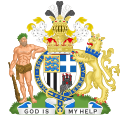 Coat of arms of Prince Philip, Duke of Edinburgh
 -
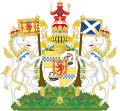 Coat of arms of Charles III as Duke of Edinburgh
 -
 Coat of arms of Prince Edward, Duke of Edinburgh

In media
[edit]A fictional Duke of Edinburgh appears in the 1983 sitcom The Black Adder. Rowan Atkinson plays the title character, Prince Edmund, who is granted the title Duke of Edinburgh by his father, a fictitious King Richard IV.[19]
See also
[edit]References
[edit]- ^ a b Coughlan, Sean (10 March 2023). "King Charles grants Prince Edward Duke of Edinburgh title". BBC News. Retrieved 10 March 2023.
- ^ "No. 64022". The London Gazette. 6 April 2023. p. 7074.
- ^ a b c Cokayne, G. E. (1926). Gibbs, Vicary; Doubleday, H. A. (eds.). The Complete Peerage. Vol. 5: Eardley of Spalding to Goojerat (2nd ed.). London: St. Catherine Press. pp. 6–8.
- ^ a b "No. 6494". The London Gazette. 12 July 1726. p. 1.
- ^ "No. 6741". The London Gazette. 4 January 1728. p. 2.
- ^ "No. 9050". The London Gazette. 16 April 1751. p. 1.
- ^ "No. 23119". The London Gazette. 25 May 1866. p. 3127.
- ^ "No. 38128". The London Gazette. 21 November 1947. p. 5495.
- ^ "Kate to become Duchess of Cambridge". The Sydney Morning Herald. 29 April 2011. Retrieved 11 May 2023.
- ^ "No. 38128". The London Gazette. 21 November 1947. p. 5496.
- ^ "No. 41009". The London Gazette. 22 February 1957. p. 1209.
- ^ "HRH The Duke of Edinburgh". College of Arms. 9 April 2021. Archived from the original on 11 April 2021. Retrieved 9 April 2021.
- ^ "Who is the Duke of Edinburgh now?". Evening Standard. 15 September 2022. Retrieved 12 March 2023.
- ^ "The Earl of Wessex". Royal.gov.uk. Archived from the original on 3 December 2010. Retrieved 30 October 2010.
- ^ a b c d e Tominey, Camilla (10 March 2023). "Prince Edward may have the Duke of Edinburgh title – but getting it wasn't easy". The Telegraph. Retrieved 10 March 2023.
- ^ Nikkhah, Roya (11 July 2021). "Edward wants to be Duke of Edinburgh but his brother is not on his side". The Times. Archived from the original on 12 July 2021. Retrieved 13 July 2021.
- ^ "No. 63995". The London Gazette. 15 March 2023. p. 4994.
- ^ "The King confers The Dukedom of Edinburgh upon The Prince Edward". The Royal Family. 10 March 2023. Archived from the original on 10 March 2023. Retrieved 10 March 2023.
- ^ "Blackadder Characters". British Comedy Guide. Retrieved 6 March 2023.
| Royal dukedoms |  | |
|---|---|---|
England  | ||
Scotland  | ||
Great Britain  | ||
Ireland  | ||
United Kingdom  | ||
Italics: This title is held by a peer who holds another of higher precedence. *This title is no longer used due to the holder ceasing its use in October 2025 | ||
Duke of Edinburgh
View on GrokipediaThe Duke of Edinburgh is a title in the Peerage of Great Britain (later the United Kingdom), named after the Scottish capital and first created on 26 July 1726 by King George I for his grandson, Prince Frederick Lewis, eldest son of the future George II and Prince of Wales.[1][2] The dukedom became extinct upon Frederick's death in 1751 without surviving male issue, but was recreated in 1766 for Prince George William Frederick (later King George III), who held it prior to his accession in 1760.[3] A third creation occurred in 1866 for Prince Alfred, second son of Queen Victoria, who served as Duke of Saxe-Coburg and Gotha after 1893.[1] The title's fourth creation took place on 19 November 1947, when King George VI granted it to Prince Philip of Greece and Denmark upon his marriage to Princess Elizabeth (later Queen Elizabeth II), with remainder to the heirs male of his body; Philip retained the dukedom until his death in 2021, after which it passed to his eldest son, the then-Prince Charles (now King Charles III).[1][4] As Prince Philip, he founded the Duke of Edinburgh's Award in 1956, an international youth self-development program emphasizing physical recreation, skills training, voluntary service, and expeditions, which has engaged millions worldwide.[5] In 2023, King Charles III conferred the Dukedom of Edinburgh upon his brother Prince Edward as a life peerage on the occasion of Edward's 59th birthday, fulfilling a promise made by their late father to make Edward the next holder after Charles's accession.[2][6] Each iteration of the title has included subsidiary peerages such as marquessates and earldoms, reflecting its status as a high-ranking royal honor typically reserved for those close to the throne.[4]
Peerage Overview
Definition and Historical Context
The Duke of Edinburgh is a title in the British peerage denoting the rank of duke, the highest degree of nobility below the sovereign, derived from the Latin dux meaning "leader." Created exclusively for male members of the royal family, the title has been conferred four times since 1726 and is named after Edinburgh, the historic capital of Scotland, reflecting the integration of Scottish heritage into British royal nomenclature following the 1707 Acts of Union.[7][2][1] Historically, the dukedom emerged in the Peerage of Great Britain during the early Hanoverian era as a means to honor royal heirs and princes, often with subsidiary titles such as marquessates or earldoms to bolster precedence and estates. The first creation on 26 July 1726 by King George I granted the title to his grandson Prince Frederick Louis, eldest son of the future George II, alongside the titles Marquess of the Isle of Wight and Earl of Eltham; it became extinct in 1751 upon Frederick's death without surviving male issue. Subsequent grants maintained this royal exclusivity, with Queen Victoria's 1866 creation for her second son Prince Alfred (extinct 1900) and King George VI's 1947 bestowal on Prince Philip Mountbatten (extinct 2021), each tied to significant dynastic events like marriages or accessions.[1][8][9] The title's repeated recreation underscores its role in reinforcing monarchical continuity rather than territorial governance, as it carries no associated duchy or feudal lands yielding income, unlike some ancient English dukedoms. While traditionally hereditary, the 2023 creation by King Charles III for his brother Prince Edward was explicitly a life peerage, limiting its duration to the holder's lifetime and preventing automatic inheritance by his son, the Earl of Wessex, to preserve future royal flexibility. This evolution aligns with modern adjustments in peerage law, where life peerages—introduced under the Life Peerages Act 1958—have occasionally elevated ranks without perpetuating them hereditarily.[6][8][7]Rank, Precedence, and Privileges
The dukedom of Edinburgh confers the rank of duke, the highest degree below royal titles in the Peerage of the United Kingdom, superior to marquess, earl, viscount, and baron.[7] This rank originated in England with Edward III's creation of the first non-royal dukedom in 1337, though subsequent creations like Edinburgh's have been reserved for the royal family.[10] In the order of precedence, dukes generally rank after members of the royal family holding higher titles or precedence by blood, such as the sovereign's sons and brothers, followed by non-royal dukes ordered by seniority of creation.[11] Holders of the Duke of Edinburgh title, invariably royal princes, thus derive primary precedence from their position in the line of succession or relation to the sovereign rather than the dukedom alone; for instance, the current duke, Prince Edward, as the sovereign's brother, precedes non-royal dukes.[5] The title's creations—1726, 1866, 1947, and 2023—establish its seniority among dukedoms accordingly, with earlier ones granting higher standing if active.[7] Privileges associated with the rank include the style "His Grace" for non-royals, though royal holders use "His Royal Highness"; entitlement to a ducal coronet of gold adorned with eight strawberry leaves and eight silver balls; and heraldic rights to supporters on the coat of arms, as granted in letters patent.[7] Until the House of Lords Act 1999, hereditary peers including dukes held an automatic right to sit and vote in the House of Lords, a privilege now limited to 92 elected hereditary peers, though royal dukes have never exercised parliamentary seats.[7] Additional ceremonial privileges encompass precedence at court, state occasions, and levées, as well as the use of ducal robes of crimson velvet edged with ermine in formal settings.[7] For royal dukedoms like Edinburgh, these are augmented by the bearer's princely status, including personal standards and military uniform allowances, but confer no unique financial or legal immunities beyond general peerage freedoms, such as parliamentary privilege for speech when applicable.[12]Creations of the Dukedom
First Creation (1726–1751)
The Dukedom of Edinburgh was first created on 26 July 1726 in the Peerage of Great Britain by King George I, who bestowed it upon his grandson Prince Frederick Lewis, the eldest son of George, Prince of Wales (later George II).[4][13] The creation included subsidiary titles: Marquess of the Isle of Ely, Earl of Eltham, Viscount Launceston, and Baron Snowdon.[14] Prince Frederick, born on 1 February 1707 in Hanover, Germany, was at that time residing in Hanover as the heir presumptive's son, reflecting George I's intent to honor and integrate the young prince into the British nobility ahead of potential succession.[13] Frederick held the dukedom until his death on 31 March 1751 at Leicester House in London, aged 44, following a pulmonary injury from a cricket or squash game.[15] During this period, he was elevated further: upon his father's accession as George II in 1727, Frederick became Duke of Cornwall and Prince of Wales on 8 January 1729, though the Edinburgh title remained distinct.[14] His tenure as Duke of Edinburgh coincided with his establishment in England after arriving in 1728, amid growing estrangement from his parents over financial and political matters, including disputes with Parliament regarding his allowance.[16] Frederick married Augusta of Saxe-Gotha on 17 April 1736, producing nine children, including the future George III.[17] Upon Frederick's death, the dukedom passed to his eldest surviving son, Prince George William Frederick, who held it from 1751 until his accession as George III in 1760, at which point the title merged with the Crown and became extinct.[13][18] The creation's limited duration underscored the Hanoverian practice of granting peerages to royal heirs, often with remainders to male descendants, but subject to extinction upon royal merger.[4]Second Creation (1866–1900)
The second creation of the dukedom of Edinburgh occurred on 24 May 1866, when Queen Victoria granted the titles Duke of Edinburgh, Earl of Ulster, and Earl of Kent in the Peerage of the United Kingdom to her second son, Prince Alfred Ernest Albert, born 6 August 1844.[19][20] Alfred, who had entered the Royal Navy in 1858 and risen to the rank of captain by 1866, received the peerage as part of the Queen's Birthday Honours, recognizing his naval service and position in the line of succession.[19][21] Following the creation, Alfred continued his naval duties, assuming command of HMS Galatea in 1867 for an extended voyage that circumnavigated the globe, visiting ports in Australia, New Zealand, and Hawaii among others, until returning to Britain in 1871.[21] During this tour, on 12 March 1868, he survived an assassination attempt in Sydney, Australia, when Henry James O'Farrell shot him at a picnic; the wound was non-fatal, and O'Farrell was executed shortly thereafter.[22] In 1874, Alfred married Grand Duchess Maria Alexandrovna of Russia, daughter of Tsar Alexander II; the couple had five children, including one son, Prince Alfred, who died of typhoid fever on 6 February 1899 at the age of 24.[19] Alfred succeeded his uncle Ernest II as Duke of Saxe-Coburg and Gotha in 1893, reigning over the German duchy until his death, though the British dukedom of Edinburgh remained a separate United Kingdom peerage.[19] He died of throat cancer on 30 July 1900 at Schloss Rosenau near Coburg, Germany, aged 55, and was buried at the Friedhof am Glockenberg in Coburg.[23][24] With no surviving legitimate male heirs, the dukedom of Edinburgh became extinct upon his death.[19]Third Creation (1947–2021)
The third creation of the dukedom of Edinburgh occurred on 19 November 1947, when King George VI granted the titles Duke of Edinburgh, Earl of Merioneth, and Baron Greenwich in the Peerage of the United Kingdom to Philip Mountbatten.[25] This peerage was bestowed immediately prior to his marriage to Princess Elizabeth on 20 November 1947 at Westminster Abbey.[25] Philip, born on 10 June 1921 at Mon Repos on the island of Corfu as Prince Philip of Greece and Denmark, had renounced his hereditary titles and adopted the anglicized name Mountbatten upon becoming a naturalized British subject on 18 February 1947.[26] His naval career, which began in 1939 as a cadet at the Royal Naval College, Dartmouth, included active service during the Second World War aboard ships such as HMS Valiant and HMS Whelp, where he rose to the rank of lieutenant.[27] He continued in the Royal Navy until 1951, commanding the frigate HMS Magpie before relinquishing active duty upon the impending birth of his son, Charles.[27] Following the death of King George VI and the accession of Queen Elizabeth II on 6 February 1952, the Duke of Edinburgh became consort to the sovereign, a role he fulfilled for over 69 years, the longest tenure of any royal consort in British history.[28] In this capacity, he accompanied the Queen on all 251 of her official overseas state visits and undertook extensive independent duties, including patronage of over 780 organizations focused on scientific research, industry, sport, and conservation.[29] Notably, in 1956, he founded the Duke of Edinburgh's Award scheme to encourage physical, practical, and personal development among young people aged 14 to 24, which has since expanded internationally to reach millions.[5] The Duke maintained a strong connection to the military throughout his life, serving as Admiral of the Fleet, Field Marshal, and Marshal of the Royal Air Force, and he remained actively interested in the armed forces even after retiring from public duties in 2017.[30] The Duke of Edinburgh died on 9 April 2021 at Windsor Castle, aged 99.[28] His funeral, held on 17 April 2021 at St George's Chapel, Windsor, was conducted in accordance with his wishes for a military-style service adapted for COVID-19 restrictions, with the Duke having personally planned many elements.[27] Upon his death, the dukedom passed by special remainder to his eldest son, then the Prince of Wales.[25]Fourth Creation (2023–present)
Following the death of Prince Philip, Duke of Edinburgh, on 9 April 2021, the dukedom merged with the Crown as Philip had no surviving male heirs eligible to inherit it under the terms of its 1947 creation.[8] On 10 March 2023, coinciding with Prince Edward's 59th birthday, King Charles III issued new letters patent creating the Dukedom of Edinburgh for the third time in the peerage of the United Kingdom, granting it to his youngest brother, Edward, previously styled Earl of Wessex.[8][31] This conferral fulfilled Prince Philip's expressed intention, announced by Queen Elizabeth II in 1999, that Edward would eventually succeed to the title upon its reversion to the Crown.[8] Edward, born on 10 March 1964 as the third son of Queen Elizabeth II and Prince Philip, thereby became His Royal Highness The Duke of Edinburgh, with his wife Sophie assuming the style of Duchess of Edinburgh.[8][32] The new creation includes subsidiary titles: Earl of Wessex and Baron Severn, which Edward had held since 1999, ensuring continuity in his nomenclature.[31] As of 2025, Edward continues to undertake official duties, particularly supporting the Duke of Edinburgh's Award scheme, which his father founded in 1956 and to which Edward has been patron since 1987.[33] The dukedom remains a personal appanage of Edward during his lifetime, with no immediate succession specified beyond potential heirs male per standard royal practice.[34] , grandson of King George I and eldest son of the future George II, was created Duke of Edinburgh on 26 July 1726 in the Peerage of Great Britain as part of honours marking his arrival in England; the title became extinct upon his death without surviving issue eligible to inherit under the patent.[35][2]
- Prince Alfred (6 August 1844 – 30 July 1900), second son of Queen Victoria, was created Duke of Edinburgh, Earl of Ulster, and Earl of Kent on 24 May 1866 in the Peerage of the United Kingdom following his survival of an assassination attempt in Australia; the dukedom expired without legitimate male heirs upon his death.[36][37]
- Prince Philip (10 June 1921 – 9 April 2021), consort to Queen Elizabeth II, was created Duke of Edinburgh, Earl of Merioneth, and Baron Greenwich of Greenwich in the County of London on 19 November 1947 in the Peerage of the United Kingdom shortly before his wedding; the title merged with the Crown upon his death as he left no eligible male heirs.[38][5]
- Prince Edward (born 10 March 1964), youngest son of Queen Elizabeth II and Prince Philip, was created Duke of Edinburgh, Earl of Edinburgh, and Baron Edinburgh of Ridgewell in the County of Essex on 10 March 2023 in the Peerage of the United Kingdom by his brother King Charles III, fulfilling a promise made by the late Queen; he remains the incumbent holder.[8][5]
| Creation | Holder | Lifespan | Held Title | Extinction |
|---|---|---|---|---|
| First (1726) | Frederick | 1707–1751 | 1726–1751 | 1751 (no eligible heirs) |
| Second (1866) | Alfred | 1844–1900 | 1866–1900 | 1900 (no legitimate male heirs) |
| Third (1947) | Philip | 1921–2021 | 1947–2021 | 2021 (reverted to Crown) |
| Fourth (2023) | Edward | 1964–present | 2023–present | Incumbent |
Legacy and Institutions
The Duke of Edinburgh's Award
The Duke of Edinburgh's Award is a youth achievement programme established in 1956 by Prince Philip, Duke of Edinburgh, in partnership with educator Kurt Hahn to foster self-reliance, perseverance, and community responsibility among participants aged 14 to 24.[33][39] The scheme emphasizes non-competitive personal challenge through structured activities, initially launched in the United Kingdom as a national initiative to address perceived declines in youth fitness and initiative post-World War II.[40] It has since grown into an international framework, recognized in over 140 countries via the Duke of Edinburgh's International Award Foundation, with operations coordinated by independent operating authorities. Participants progress through three levels—Bronze (minimum age 14), Silver (15), and Gold (16)—each demanding completion of four core sections: Volunteering (community service), Physical (sport or fitness), Skills (hobby or vocational development), and Expedition (planning and executing a journey in a team).[41][42] The Gold level adds a fifth Residential section requiring a shared living experience to build interpersonal skills.[41] Time commitments vary by level and prior experience, ranging from 3 months for Bronze to 18 months for Gold (excluding the Residential Project), with expeditions involving assessed practice and qualifying ventures under supervision to ensure safety and self-sufficiency.[43] The programme's design draws from Hahn's educational philosophy, prioritizing experiential learning over formal certification, and has demonstrated measurable outcomes in participant resilience and employability.[44] In the UK, where it originated, over 342,000 young people commenced Awards in the 2024-25 cycle, logging 5.2 million volunteering hours and achieving a collective social value of £684 million in 2023-24 through enhanced youth contributions to society.[45][44] Globally, the International Award reports participation across diverse socioeconomic groups, with independent evaluations attributing benefits such as improved teamwork and leadership to its rigorous, participant-led structure.[46] Following Prince Philip's death on 9 April 2021, the Award sustains its mission under continued royal oversight, including by Prince Edward, Duke of Edinburgh.[33]Broader Impacts and Associations
The dukedom of Edinburgh has historically been linked to British naval traditions and imperial outreach, exemplified by Prince Alfred, second duke (created 1866), who as a serving naval officer became the first member of the British royal family to circumnavigate the globe aboard HMS Galatea from 1867 to 1868, visiting ports in South Africa, Australia, and Asia to strengthen colonial ties.[47] An assassination attempt on Alfred in Sydney on 12 March 1868 by Irish nationalist Henry O'Farrell heightened awareness of Fenian threats in the empire, prompting loyalty demonstrations across Australia and underscoring the duke's role in fostering imperial sentiment.[48] His later commands of the Channel Fleet (1883–1884) and Mediterranean Fleet (1886–1889) reinforced the title's association with maritime power projection.[49] Prince Philip, third duke (created 1947), extended the title's influence into environmental conservation and scientific inquiry, serving as president of the World Wildlife Fund (WWF) from 1981 to 1996 and advocating for wildlife protection through initiatives like the 1986 WWF conference on sustainable development.[50] His wartime naval service, including command of HMS Wallace during the 1943 Sicily landings, and postwar patronage of over 780 organizations tied the dukedom to technological innovation and Commonwealth diplomacy, where he undertook more than 637 overseas visits to promote British interests.[50] These efforts positioned the title as a conduit for pragmatic, evidence-based advocacy on global challenges like overpopulation and resource management. In its fourth creation (2023), held by Prince Edward, the dukedom aligns with contemporary patronage in the arts, disability sports, and recreation, including roles as patron of the British Paralympic Association and president of the Sport & Recreation Alliance, supporting over 70 charities focused on youth empowerment and cultural access.[5] Edward's 2025 appointment as a Royal Honorary Fellow of the Royal Society of Edinburgh further associates the title with Scottish intellectual traditions and interdisciplinary collaboration.[51] Across creations, the dukedom symbolizes auxiliary royal service, often bestowed on figures aiding monarchical stability without direct succession, as with Frederick, first duke (created 1726), whose cultural patronage of immigrant artists influenced Hanoverian artistic circles amid political tensions with George II.[1]Heraldry
Arms and Insignia of the Dukedom
The Dukedom of Edinburgh lacks a fixed coat of arms, as British peerage titles do not possess independent heraldry; instead, each holder employs personal arms derived from their royal heritage, typically featuring differenced versions of the Royal Arms of the United Kingdom or, in exceptional cases, quartered foreign elements. These arms are surmounted by the coronet of a duke, a gold circlet ornamented with eight strawberry leaves rising from the rim.[52] For the first creation, Prince Frederick (created 1726) bore the Royal Arms—quarterly, first and fourth gules three lions passant guardant in pale or armed and langued azure (England), second or a lion rampant gules within a double tressure flory-counterflory of the second (Scotland), third azure a harp or stringed argent (Ireland)—differenced by a label of three points argent, the centre point charged with a cross gules of St George to denote his position as grandson of the sovereign in the male line.[53] Prince Alfred, second duke (created 1866), used the Royal Arms similarly differenced by a label of three points argent, reflecting his status as a son of Queen Victoria; specific charges on the label varied to distinguish siblings, though documentation emphasizes the standard royal differencing for British princes.[54] Prince Philip, third duke (created 1947), was granted unique arms in 1947 by King George VI, quarterly representing his lineage: first and fourth the arms of Denmark (or, three lions passant azure crowned or armed and langued gules), second the arms of Greece (azure, a cross argent between five escutcheons or each charged with the arms of George I of the Hellenes), and third the arms of the House of Mountbatten (a simplified Battenberg escutcheon of argent a cross engrailed gules); his coronet over the shield alternated crosses pattée and fleurs-de-lys, adapting the standard ducal form to his Danish-Greek heritage.[25][55] The current duke, Prince Edward (created 2023), bears the Royal Arms differenced by a label of three points argent, adopted from his earlier grant as Earl of Wessex in 1999, with the shield supported by a dexter lion or imperially crowned and a sinister wyvern vert armed and langued gules; the crest includes a demi-lion or holding a sword, all within the standard ducal coronet.[56]Genealogy
Key Lineages and Family Trees
The first creation of the Dukedom of Edinburgh in 1726 was granted to Frederick Lewis (1707–1751), eldest son of King George II (1683–1760) and Queen Caroline of Ansbach (1683–1737), tracing descent from the House of Hanover through George I (1660–1727).[13][16] Frederick married Augusta of Saxe-Gotha (1719–1772) in 1736, producing nine children, including George III (1738–1820), who succeeded to the throne in 1760 after Frederick's death in 1751 rendered the title extinct, as it could not pass to the reigning sovereign.[57][58] The lineage emphasized Hanoverian consolidation of British monarchy, with Frederick's issue forming the core of George III's family, though the dukedom itself lapsed without further grant in this branch. The second creation occurred in 1866 for Prince Alfred Ernest Albert (1844–1900), second surviving son of Queen Victoria (1819–1901) and Prince Albert of Saxe-Coburg and Gotha (1819–1861), linking the title to the House of Saxe-Coburg and Gotha via Albert's ducal heritage from Ernest I, Duke of Saxe-Coburg-Saalfeld (1784–1844).[9][18] Alfred wed Grand Duchess Maria Alexandrovna of Russia (1853–1920), daughter of Tsar Alexander II (1818–1881), in 1874; their children included Alfred, Hereditary Prince of Saxe-Coburg and Gotha (1874–1899), who predeceased him without legitimate issue, and four daughters, notably Princess Marie (1875–1938), who married King Ferdinand I of Romania (1865–1927).[20] The title merged into the Duchy of Saxe-Coburg and Gotha upon Alfred's succession there in 1893 after his uncle Ernest II (1818–1893), becoming extinct in the British peerage in 1900 due to the lack of surviving male heirs.[59] The third creation in 1947 went to Prince Philip (1921–2021), only son of Prince Andrew of Greece and Denmark (1882–1944) and Princess Alice of Battenberg (1885–1969), with patrilineal roots in the House of Glücksburg via King Christian IX of Denmark (1818–1908) and maternal ties to Queen Victoria through Alice's mother, Princess Victoria of Hesse and by Rhine (1863–1950).[60][61] Philip married Princess Elizabeth (later Queen Elizabeth II, 1926–2022) in 1947, fathering four children: Charles III (b. 1948), Anne (b. 1950), Andrew (b. 1960), and Edward (b. 1964), thus integrating the dukedom into the House of Windsor upon Elizabeth's accession in 1952, though Philip held it as consort without succession rights until its reversion to the Crown in 2021.[62] The fourth and current creation in 2023 was bestowed on Prince Edward (b. 1964), youngest child of Queen Elizabeth II and Prince Philip, directly descending from the third duke's lineage within the Windsor house.[5] Edward married Sophie Helen Rhys-Jones (b. 1965) in 1999; their issue comprises Lady Louise Windsor (b. 2003) and James, Earl of Wessex (b. 2007), with the title's future potentially passing to James under male-preference primogeniture rules applicable at creation.[63][64] Unlike prior creations, this one revives the title within a single familial continuum from the 1947 grant, underscoring continuity in the post-Philip royal structure.| Creation | Duke | Parents | Spouse | Key Issue |
|---|---|---|---|---|
| First (1726) | Frederick Lewis (1707–1751) | George II & Caroline of Ansbach | Augusta of Saxe-Gotha | George III; Augusta, Duchess of Brunswick; Elizabeth, Landgravine of Hesse-Homburg; William Henry, Duke of Gloucester; Henry, Duke of Cumberland; others[14][57] |
| Second (1866) | Alfred (1844–1900) | Victoria & Albert of Saxe-Coburg-Gotha | Maria Alexandrovna of Russia | Alfred (Hereditary Prince); Marie, Queen of Romania; Victoria Melita, Grand Duchess of Russia; Alexandra, Princess of Hohenlohe-Langenburg; Beatrice, Duchess of Oldenburg[65][20] |
| Third (1947) | Philip (1921–2021) | Andrew of Greece & Alice of Battenberg | Elizabeth II | Charles III; Anne, Princess Royal; Andrew, Duke of York; Edward, Duke of Edinburgh[60][61] |
| Fourth (2023) | Edward (b. 1964) | Elizabeth II & Philip | Sophie Rhys-Jones | Louise Windsor; James, Earl of Wessex[5][63] |
References
- https://commons.wikimedia.org/wiki/File:Coat_of_Arms_of_Alfred%2C_Duke_of_Edinburgh.svg
- https://commons.wikimedia.org/wiki/File:Coat_of_Arms_of_Philip%2C_Duke_of_Edinburgh.svg
- https://commons.wikimedia.org/wiki/File:Coat_of_Arms_of_Edward%2C_Duke_of_Edinburgh.svg