Hubbry Logo
SamastipurSamastipurMain
Open search
Samastipur
Community hub
Samastipur
logo
8 pages, 0 posts
0 subscribers
Be the first to start a discussion here.
Samastipur
Samastipur
from Wikipedia

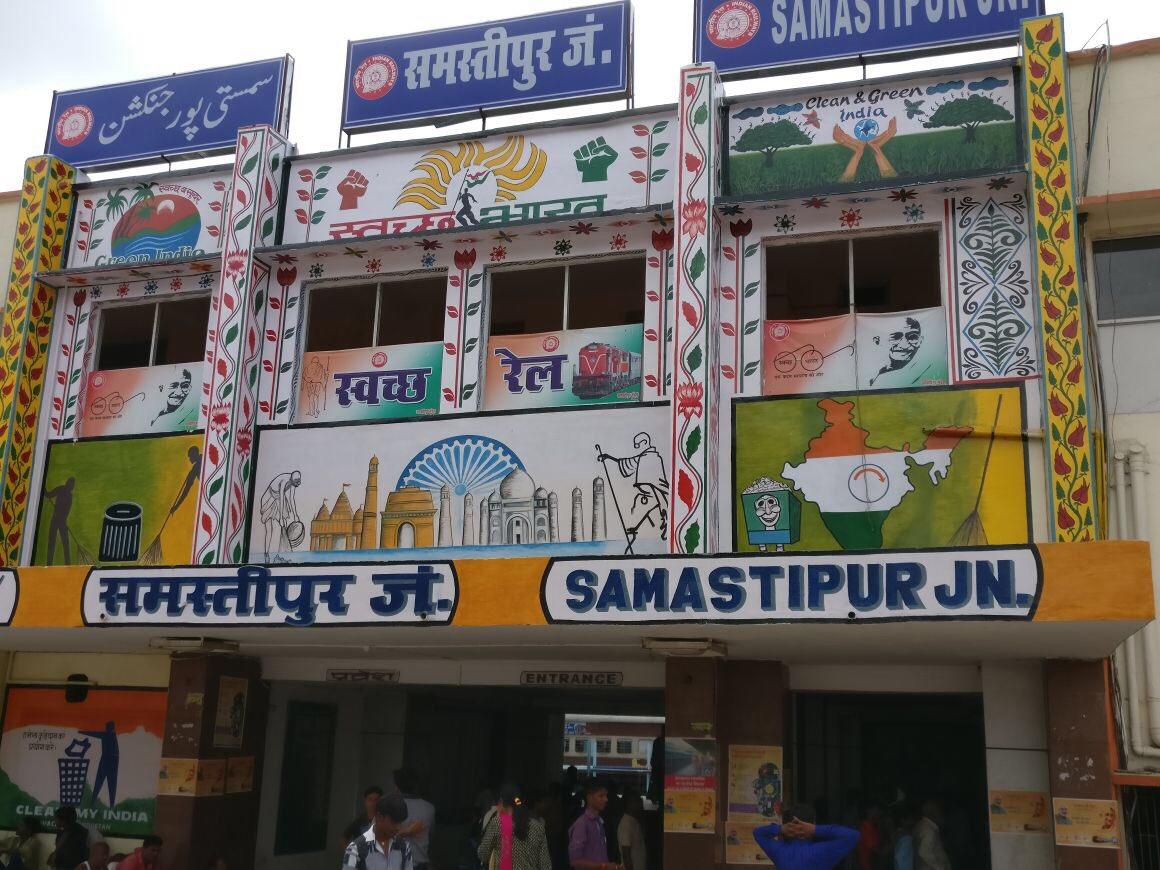
Samastipur is a City and Municipal Corporation in Bihar, India. It is the headquarter of Samastipur district and comes under Darbhanga division. The Burhi Gandak River flows through the city. It is one of the five railway divisions of ECR, Hajipur. The Samastipur junction is one of the busiest stations in North Bihar after Patna and Katihar.[5]

Key Information

Demographics

[edit]

As of 2011 Indian Census, Samastipur had a total population of 62,935, of which 33,025 were males and 29,910 were females. Population within the age group of 0 to 6 years was 8,252. The total number of literates in Samastipur was 46,416, which constituted 73.8% of the population with male literacy of 77.2% and female literacy of 69.9%. The effective literacy rate of 7+ population of Samastipur was 84.9%, of which male literacy rate was 88.9% and female literacy rate was 80.4%. The Scheduled Castes and Scheduled Tribes population was 9,219 and 249 respectively. Samastipur had 12062 households in 2011.[2]

Education

[edit]

Samastipur has several schools and colleges. Most of the colleges are affiliated to the Lalit Narayan Mithila University, Darbhanga.

The Dr. Rajendra Prasad Central Agriculture University, is located near the town, in Pusa. This university was constructed in 1970 near the ruins of Pusa Institute which was the Indian Agricultural Research Institute built during the British regime.

AHS Nursing College & Hospital is a nursing college established in 2023, situated in Tajpur Road, Sub Division Samastipur, affiliated with the Bihar University of Health Sciences and Bihar Nurses Registration Council.[6][7][8]

IGNOU has several study centres in Samastipur.[9]

Transport

[edit]

Road

[edit]

Bihar State Road Transport Corporation (B.S.R.T.C) operates bus services to the neighbouring states of Jharkhand, West Bengal and Uttar Pradesh.

Rail

[edit]

Samastipur Junction railway station lies in the East Central Railway zone of the Indian Railway network and provides connectivity to most of the regions of India.

Notable people

[edit]

Villages

[edit]

References

[edit]
Revisions and contributorsEdit on WikipediaRead on Wikipedia
from Grokipedia
Samastipur (समस्तीपुर) is a in the north-central part of , , spanning 2,904 s and encompassing a population of 4.25 million as per the 2011 census, with a density of 1,465 persons per . Bordered by the to the north, the to the south, and districts including , Vaishali, , , and , it features fertile alluvial plains conducive to agriculture but vulnerable to seasonal flooding from rivers such as the Burhi Gandak. The , established in 1972 by carving out territory from , is administratively divided into four sub-divisions, 20 community development blocks, and includes urban centers like Samastipur municipality, Dalsinghsarai, and Rosera. The economy of Samastipur revolves primarily around agriculture, with paddy, wheat, maize, sugarcane, and vegetables as staple crops, supported by irrigation from canals and tube wells, though recurrent floods pose significant challenges to productivity and livelihoods. It hosts the Dr. Rajendra Prasad Central Agricultural University at Pusa, a premier institution for agricultural research and education originally established as part of the Indian Agricultural Research Institute in the early 20th century, contributing to advancements in crop breeding and flood-resistant varieties. Infrastructure highlights include the Samastipur Junction as the divisional headquarters of East Central Railway, facilitating connectivity to major cities like Patna, Delhi, and Kolkata via National Highway 28, alongside industrial pockets in sugar milling and small-scale manufacturing. The district's cultural landscape reflects Maithili and Hindi influences, with Hindi as the predominant language, and it grapples with issues like high population density and flood mitigation, underscoring the need for resilient farming practices amid Bihar's variable climate.

Geography

Location and Boundaries

Samastipur district covers an area of 2,904 square kilometres in north-central Bihar, India, with its administrative headquarters situated at coordinates approximately 25.86°N 85.78°E. The district lies within the cultural and historical Mithila region, which spans parts of northern Bihar and southern Nepal, characterized by shared Maithili linguistic and traditional influences. The district is bounded on the north by the , which separates it from ; on the east by and portions of ; on the south by the River; and on the west by and parts of . This positioning places Samastipur in a strategic transitional zone between the upland terrains to the north and the expansive Gangetic plains, facilitating connectivity via major roadways and rail links to neighboring regions.

Topography and Hydrology

Samastipur district features predominantly low-lying alluvial plains, shaped by sediment deposition from tributaries of the River, falling within Bihar's North-West Alluvial Plains agro-ecological zone. The terrain consists mainly of flat to gently undulating lands, with alluvial soils dominated by clay textures that support intensive but exhibit high water retention due to inherent drainage limitations. General across the district ranges from 40 to 42 meters above mean , rarely surpassing 50 meters, contributing to a uniform prone to inundation from fluvial processes. Hydrologically, the district is traversed centrally by the Budhi Gandak River, a key tributary originating from the , while the demarcates its northern boundary with . These rivers display dynamic behaviors including frequent meandering and deposition, which elevate waterlogging risks in depressions by altering channel morphology and reducing natural drainage capacity over time. flow is predominantly monsoon-driven, with river gradients fostering lateral migration that redistributes sediments and influences local landform evolution. Groundwater resources in Samastipur are hosted in porous alluvial aquifers, with depth to water levels varying seasonally; post-monsoon depths typically range from 2 to 10 meters below ground level based on monitoring data. The Central Ground Water Board assesses the district's stage of development at approximately 70-80% overall, with block-specific variations indicating in areas like Rosera and Singhia due to intensive withdrawals exceeding recharge rates from rainfall and river seepage. Such disparities arise from uneven extraction patterns, where shallow aquifers in flood-prone zones replenish more readily than deeper confined layers elsewhere.

Climate Patterns

Samastipur exhibits a , marked by distinct seasonal variations in temperature and . Average annual rainfall measures approximately 1,142 mm, with over 80% concentrated during the southwest period from to . Summer months, peaking in May, feature high temperatures averaging 37°C during the day, with extremes reaching up to 40°C. Winters are mild, with daytime averages around 22°C and nighttime lows dipping to about 10°C. Pre-monsoon showers begin sporadically in , transitioning into heavy downpours that sustain the region's hydrological patterns. Historical data from local stations, such as in , indicate July as the wettest month, often contributing 300-400 mm, while post-monsoon rains taper off by . Temperature gradients show a sharp rise from winter minima to pre-monsoon maxima, with relative exceeding 80% during the rainy season. Rainfall variability is pronounced, with empirical records revealing fluctuations that correlate with onset and duration; for instance, delayed or deficient disrupt the temporal alignment of peaks with critical agricultural phenological stages like . In 2024, Samastipur recorded a 59% rainfall deficit from June 1 to July 30 relative to long-term normals, exemplifying such intra-seasonal anomalies observed at district weather stations. Statewide data for the same period underscore similar deficits, with historical trends showing episodic shortfalls of 20-30% in multiple years.

History

Pre-Colonial and Colonial Eras

The region encompassing modern Samastipur formed part of the ancient kingdom, synonymous with Mithila, whose existence is attested in Vedic texts such as the Yajurveda Samhita and later epics like the , where it is associated with King and cultural centers of learning. Epigraphic evidence, including unpublished inscriptions from Mithila sites spanning districts like Samastipur, confirms Indo-Aryan settlement and political organization from the through the period, with archaeological finds indicating continuity in Maithili cultural practices tied to agrarian societies. From the 11th to 14th centuries, the area fell under the Karnata dynasty, founded in 1097 CE by Nanyadeva, who established control over Tirhut and Mithila from Simraongarh, promoting administrative stability and the patronage of Maithili scholarship amid regional power shifts following decline. The dynasty's rule ended with incursions from Bengal sultans, leading to fragmented governance under local Oiniwar rulers who navigated suzerainty from figures like the Tughlaqs until the early . Mughal consolidation after 1526 integrated Mithila into Bihar suba, where zamindars like those of the Darbhanga Raj exercised semi-autonomous authority under imperial oversight, preserving Maithili legal and cultural systems like the vivada chintamani while collecting revenue for the empire. Akbar's grant of Mithila territories to in the late formalized this structure, emphasizing hereditary land control amid broader Mughal agrarian reforms. British control began with the East India Company's diwani acquisition of , , and Orissa in 1765 following the (1764), incorporating the Samastipur area into the Bengal Presidency's territories under permanent zamindari settlements formalized in 1793, which fixed at approximately 89% of gross in some districts, prioritizing fiscal extraction over local . The 1873–1874 famine, triggered by failure reducing rainfall to 70% of normal and crop yields by up to 50% in northern , caused over 1.2 million deaths across the province—including Tirhut precursors to Samastipur—due to combined effects and unyielding demands that prevented distress sales exemptions until late 1874. efforts, involving imported grain and work programs, mitigated some but highlighted systemic vulnerabilities from export-oriented cash crops and absentee landlordism.

District Formation and Post-Independence Developments

Samastipur district was established on November 14, 1972, through a Bihar government notification that carved it out from the larger , primarily to enhance administrative oversight and efficiency over a densely populated and agriculturally intensive area previously burdened by centralized governance from . The bifurcation addressed logistical challenges in managing subdivisions that had existed since the early under the structure established in 1908, allowing for more localized decision-making in revenue collection, , and public services. Post-independence land reforms profoundly reshaped agrarian structures in the region, with the Bihar Land Reforms Act of 1950 abolishing the zamindari system that had dominated under colonial rule, thereby vesting occupancy rights directly with cultivators and redistributing surplus land from intermediaries. Implementation during the 1950s and 1960s involved vesting over 20 million acres statewide, though in northern districts like (encompassing pre-1972 Samastipur), progress was uneven due to legal disputes and evasion tactics by erstwhile landlords, resulting in only partial redistribution of holdings exceeding ceilings fixed at 30-45 acres per family. These reforms laid a foundation for tenant empowerment but fell short of fully eradicating tenancy exploitation, as empirical records show persistent smallholdings averaging under 2 acres, constraining . The Green Revolution's introduction of high-yielding and varieties from the mid-1960s onward spurred modest yield gains in Samastipur's fertile alluvial soils, with Bihar's output rising from 0.2 million tons in 1960-61 to over 4 million tons by the through adoption of hybrid seeds and fertilizers. However, causal factors tied to the region's flood-prone —dominated by the Bagmati and Burhi Gandak rivers—limited broader transformative effects, as recurrent inundations eroded and disrupted , with Bihar's flood-affected area expanding from 2.5 million hectares in 1954 to over 6.8 million by the 1970s. This terrain-induced vulnerability contributed to early post-1947 developmental disparities, evidenced by lower investment in flood control compared to non-flood-prone states, perpetuating lags in agricultural intensification and rates below the national average through the 1970s.

Governance and Administration

Administrative Divisions

Samastipur district is divided into four subdivisions—Samastipur, Rosera, Dalsinghsarai, and Patori—for administrative oversight and coordination of development activities. These subdivisions collectively comprise 20 community development blocks: Bibhutpur, Bithan, Dalsinghsarai, Hasanpur, Kalyanpur, Khanpur, Mohiuddinagar, Morwa, Patori, Pusa, Rosera, Samastipur, Sarairanjan, Shivajinagar, Singhiya, Tajpur, Ujiyarpur, Vidyapatinagar, Warisnagar, and one additional block under Mohanpur. Among these, the Pusa block hosts key agricultural research institutions, including facilities affiliated with Dr. Rajendra Prasad Central Agricultural University, supporting regional farming advancements. Urban areas are governed separately through one nagar nigam () in Samastipur, four nagar parishads (municipal councils) in Rosera, Dalsinghsarai, Tajpur, and Shahpur Patori, and three nagar panchayats (town councils) in Musrigharari, Sarairanjan, and Singhiya, handling distinct from rural jurisdictions. The rural framework includes 1,260 revenue villages, managed via institutions for local , , and resource allocation. At the district level, the zila parishad oversees planning and implementation of rural schemes, while 343 gram panchayats at the village cluster level execute grassroots governance, all structured under the Bihar Act, 2006, which mandates three-tier for elected local bodies to promote self-reliant village administration.

Political Landscape and Representation

Samastipur district contributes to the Samastipur (SC) constituency, which encompasses six assembly segments: Sarairanjan, , Chapra, Parihar, Sonbarsa, and Samastipur. In the 2024 general election, Shambhavi Choudhary of the Lok Janshakti Party (Ram Vilas), allied with the (NDA), secured victory with 494,929 votes against the (RJD)-backed candidate Sunny Hazra's 367,634 votes, reflecting NDA's dominance in the reserved seat. This outcome mirrors the 2019 result, where Choudhary also won for the Lok Jan Shakti Party, defeating the RJD candidate by over 100,000 votes, amid Bihar's bipolar contests between NDA and the Mahagathbandhan alliance. At the state level, the district's assembly constituencies have seen alternating victories between RJD and Janata Dal (United) (JD(U)), underscoring Bihar's fragmented politics driven by coalition shifts. In the 2020 Bihar Legislative Assembly elections, RJD's Akhtarul Islam Shahin retained the Samastipur seat with 68,507 votes, defeating JD(U)'s Ashwamedh Devi by 4,714 votes in a Muslim-dominated segment. Other segments like Sarairanjan went to JD(U), while RJD prevailed in areas with strong Yadav support, such as parts of Ujiarpur; overall, the district recorded voter turnout around 60% in 2020, consistent with Bihar's average but below national figures, influenced by logistical challenges in rural polling. Caste dynamics heavily dictate outcomes, with Yadavs (approximately 14% statewide, prominent locally) and Koeris backing RJD-JD(U) alliances, while Extremely Backward Classes (EBCs, 36% per 2023 caste survey) and Scheduled Castes (16% in the constituency) enable NDA gains through targeted reservations and patronage appeals. Electoral politics in Samastipur emphasize caste-based mobilization over policy delivery, fostering networks that prioritize short-term benefits like job quotas over long-term development. This has correlated with shortfalls, including neglect; a 2025 Comptroller and Auditor General (CAG) report highlighted Bihar's Rs 70,877 crore in untracked expenditures, with procedural lapses enabling fund diversion in districts like Samastipur, where rural road and projects often lag despite allocations. Voter preferences, shaped by identity rather than audit-verified outcomes, perpetuate cycles of alliance-switching, as seen in JD(U)'s 2015-2020 tenure yielding uneven progress in flood-prone areas despite promises.

Economy

Agricultural Dependence

Agriculture constitutes the primary economic activity in Samastipur district, employing nearly 83% of the working population. The district's alluvial soils, derived from sediments, provide inherent conducive to intensive cropping, though status varies with organic carbon levels ranging from 0.29% to 0.72% across land uses. Major kharif crops include paddy and , while rabi seasons feature , , and pulses such as lentils and gram, with cropping systems dominated by rice- rotations. Sugarcane serves as a key , with cultivation costs averaging Rs. 154,969 per in the district, underscoring its role in local agro-economies despite variable yields influenced by and conditions. Low exacerbates constraints, as Bihar's overall farm power availability stands at approximately 2 hp/ha, limiting efficient preparation, sowing, and harvesting in Samastipur's fragmented holdings. This under-, coupled with reliance on manual labor, results in suboptimal yields compared to potential outputs from the fertile base. Recurrent waterlogging from flood-prone causes empirical yield reductions, with paddy outputs dropping to as low as 3 quintals per in affected areas due to prolonged submergence, fostering dependency on subsistence farming and impeding escape from without structural interventions like improved drainage. Such losses highlight the causal tension between advantages and hydrological vulnerabilities, where unmitigated inundation disrupts cropping cycles and erodes economic resilience.

Industrial and Commercial Activities

Samastipur's industrial sector remains underdeveloped, with a sparse concentration of medium-scale units and a predominance of micro and small enterprises focused on basic processing and repair services. Key establishments include the Sugar Mills, a operational facility processing into and byproducts with co-generation capabilities, located approximately 48 km from the district headquarters. The Rameshwara Jute Mills at Muktapur, established in 1922 and once Bihar's largest with a 20,000 MT annual capacity employing around 3,000 workers, specializes in bags, , and fabrics, though it has faced operational disruptions and labor dependencies exacerbating regional economic vulnerabilities. The Mechanical Workshop at Samastipur, under East Central Railway and dating to , conducts periodic overhauls (POH) of coaches, wagons, and formerly , contributing to minor through wheelset repairs and component fabrication, supporting rail-dependent but limited to rather than expansive production. Small-scale industries number around 1,278 units as per surveys, with notable segments in metal-based fabrication (124 units), ready-made garments (48 units), and repairing services (124 units), generating approximately 1,589 daily jobs but hampered by inadequate finance access, marketing constraints, and absence of industry associations. No formal MSME clusters have been identified, and the single industrial estate spans 17.566 hectares with only 32 operational units, reflecting low overall output estimated at Rs. 54.17 investment across MSMEs. Commercial activities center on informal trade networks in local markets, facilitating exchange of processed goods, textiles, and repair services, which dominate non-agricultural transactions but expose the economy to disruptions from interruptions and lack of formal . Power shortages and uneven connectivity, despite rail and highway presence, further constrain scaling, with total MSME employment at about 5,931 workers underscoring reliance on subsistence-level operations over diversified growth.

Demographics

Population Dynamics

According to the , had a total of 4,261,566, reflecting a decadal growth rate of 25.53% from the 3,394,793 recorded in 2001. This growth outpaced the state average for but aligned with regional patterns of high fertility and limited mortality decline. Urban stood at 147,797 persons, or 3.47% of the total, with the majority residing in at 67,925 inhabitants. The district's age structure in 2011 showed a youth bulge, with children aged 0-6 years numbering approximately 797,000, comprising 18.7% of the population—a figure indicative of sustained high birth rates. Migration patterns from the same census reveal substantial outflows, particularly among males of working age, as individuals sought employment in urban centers outside Bihar, contributing to a net loss in the prime labor demographic. Population projections, derived from linear extrapolations of census trends and corroborated by indicators of declining but elevated total fertility rates around 3.0 in recent cycles, estimate the district's residents exceeding 5.3 million by 2025. These figures account for moderated growth amid ongoing out-migration but remain tentative pending the next national census, delayed beyond 2021.

Socio-Economic Indicators

Samastipur district exhibits significant disparities in rates, with an overall rate of 61.86% as per the , where male stands at 71.25% and at 51.51%, reflecting persistent gaps in educational access particularly for and rural populations. These differences stem from inadequate infrastructure and governance priorities favoring urban areas, resulting in lower enrollment and retention among marginalized groups, including , whose rates lag substantially below the district average at around 50%. Multidimensional poverty remains elevated, with a headcount ratio of 36.36% in 2019-21, surpassing Bihar's state average of 33.76% and indicating deprivations in , and living standards exacerbated by agrarian dependence and limited diversification. The district's (HDI) of approximately 0.54 underscores these lags, attributable to stagnant and insufficient investment in , positioning Samastipur below national benchmarks. Health metrics reveal ongoing challenges, including an rate (IMR) around 50 per 1,000 live births and a (TFR) of about 3.5, as derived from District Level Household Surveys (DLHS), which highlight causal factors such as poor , nutritional deficiencies, and neglect in primary healthcare delivery amid recurrent floods disrupting services. These indicators correlate with broader governance shortcomings, including delayed responses to environmental vulnerabilities that compound socio-economic vulnerabilities without equitable .

Infrastructure

Transportation Systems

Samastipur functions as a key railway junction in northern , with Samastipur Junction serving as the primary hub that links the district to via the southbound line through Dalsinghsarai and , and to via the northbound route passing through stations such as Muktapur and Kishanpur. This connectivity supports both passenger and freight movement, positioning the junction as a vital node for regional trade and travel within the . Rail operations, however, face recurrent interruptions from seasonal flooding, particularly on the Samastipur-Darbhanga section, where water levels rising near bridges have led to suspensions, as documented in events during 2021 when downline traffic was halted as a precaution. Such disruptions compound logistical challenges in an agrarian economy reliant on timely transport. Road infrastructure lags, with Bihar's overall road density at approximately 0.77 kilometers per square kilometer reflecting underdevelopment that extends to Samastipur's rural expanses. passes through the district, providing essential linkage to and , yet inadequate rural roads hinder market access and perpetuate isolation, causally driving out-migration as residents seek opportunities in better-connected urban areas.

Road Networks

National Highway 322 traverses , linking it to via the Samastipur-Darbhanga Road and supporting regional connectivity, with ongoing upgrades funded at ₹225.66 as of September 2025 to improve safety and economic links. Previously known as NH-28, this route has historically facilitated access to and other areas. The district features three state highways totaling 194 km as recorded in 2015, forming a core network alongside national routes for intra-district travel. Rural road infrastructure under the (PMGSY) aims to deliver all-weather connectivity to eligible habitations, with prioritizing those over 500 persons in non-integrated districts like Samastipur, excluding smaller clusters unless in special categories. The program has constructed extensive rural links, though specific completion rates for Samastipur remain tied to state progress reports emphasizing quality control and funding splits of 60:40 between center and state since 2015-16. Road maintenance faces challenges from potholes and seasonal flooding, with 2024 floods impacting Samastipur among 13 districts, causing embankment breaches, widespread inundation, and temporary inaccessibility that exacerbates transport disruptions during monsoons. department efforts focus on repairs, but empirical highlight recurrent damage from high water flows in rivers like the Bagmati, leading to periodic closures. Private vehicle ownership remains limited in rural Samastipur, reflecting broader patterns where bicycles dominate household transport (approximately 90% ownership in baseline surveys), supplemented by minimal bullock cart usage (1-8%), while motorized two-wheelers range from 13-35% amid low penetration due to economic constraints and terrain. This reliance underscores dependence on non-motorized modes for village-level mobility, with cycles enabling short-haul agricultural and daily needs despite infrastructure vulnerabilities.

Rail Connectivity

serves as a critical railway hub in the , with approximately 136 trains passing through daily, facilitating connectivity to major cities across and beyond. The station handles both passenger and freight traffic, underscoring its role as an economic lifeline for the region's agricultural by enabling the transport of goods such as foodgrains and other produce. The Samastipur Carriage and Wagon Workshop, established in 1881, originally focused on overhauling and performing periodic overhauls (POH) of coaches and wagons, predating India's and contributing to the that supports ongoing operations. This facility has evolved to handle modern repairs, bolstering the reliability of rail services vital for freight movement of agricultural commodities from Samastipur's fertile districts. Railway electrification in , including lines through Samastipur, advanced significantly, achieving 100% completion across the state by April 2025, with substantial progress by 2023 enabling electric traction for enhanced efficiency and capacity. However, operations face recurrent disruptions from flooding, such as those in 2024 when overflows from the Budhi Gandak River halted services on the Samastipur-Darbhanga line after waters approached rail bridges, impacting freight and passenger schedules. These events highlight vulnerabilities in flood-prone areas, where submersion of tracks periodically constrains the network's capacity for agricultural freight.

Educational Institutions

Samastipur district operates approximately 2,588 schools, including 2,555 rural and 33 urban institutions, encompassing primary through secondary levels as of recent assessments. This network provides broad access to , but pupil-teacher ratios average around 52:1 across primary and upper primary stages, calculated from 644,802 enrolled students against 12,314 s, indicating overcrowded classrooms and potential deficits in instructional attention. Such ratios, higher than national norms, correlate with suboptimal learning outcomes, as empirical studies link elevated pupil loads to reduced and student engagement in resource-constrained settings. At the secondary level, dropout rates hover near 20%, per District Information for Education System-equivalent data, often driven by economic pressures including family labor demands in agriculture-dominated households, thereby entrenching intergenerational cycles through truncated skill acquisition. These rates exceed primary-level figures, reflecting cumulative quality shortfalls like inadequate and teacher absenteeism reported in Bihar's rural districts. Vocational training remains underdeveloped, with minimal specialized programs addressing local needs in farming and allied sectors, exacerbating gaps post-schooling. Higher education options include constituent colleges affiliated with , such as Samastipur College, established in 1947 and offering undergraduate degrees in arts, , and to support regional access. Specialized agricultural education centers at , under Dr. Central Agricultural University—tracing origins to 1905—focus on research and degrees in , crop , and related fields, serving as a key affiliate for applied studies amid the district's agrarian economy. However, gross enrollment ratios in higher education lag at about 15-17% for the 18-23 age cohort, mirroring Bihar's statewide figure of 17.1% in 2021-22, constrained by limited seats, migration for opportunities, and persistent secondary attrition. This low participation underscores systemic barriers to advanced skill-building, prioritizing empirical expansion of quality over mere institutional proliferation.

Healthcare Facilities

Samastipur district's principal public healthcare institution is Sadar Hospital, a 100-bed facility designed to serve a population exceeding 4.26 million residents. This results in a severe bed-to-population ratio of approximately 0.23 beds per 1,000 people at the district hospital level alone, contributing to broader shortages across , where the state average stands at 0.55 beds per 1,000 population—one of the lowest in . Community health centres (CHCs) and primary health centres (PHCs) supplement this infrastructure, but persistent understaffing and inadequate maintenance limit their operational capacity, with many facilities failing to meet Indian Standards for specialist services. Waterborne diseases, including , , and skin infections, impose a heavy morbidity burden, particularly during annual floods that contaminate water sources and disrupt supply chains. These events exacerbate vulnerabilities in a flood-prone , where stagnant water fosters pathogen proliferation and overwhelms limited sanitation infrastructure. reflects these systemic strains, with Bihar's rate at 47 deaths per 1,000 live births under NFHS-5 (2019-21), driven by factors such as poor antenatal care access and neonatal complications linked to contaminated environments. Rural healthcare access falls below 50% for formal services, stemming from chronic underfunding— allocates the lowest health expenditure nationally—and geographic barriers that hinder timely interventions. This gap fosters reliance on unqualified practitioners, or quacks, who handle up to 80% of rural cases in due to their proximity and low costs, despite risks of misdiagnosis, antibiotic overuse, and . Accredited Social Health Activists (ASHAs) aim to bridge community-level gaps through preventive outreach, but incomplete deployment and incentive shortfalls undermine full coverage across the district's 20 blocks.

Environmental Challenges

Flood Vulnerability

Samastipur district is situated in the alluvial floodplains of , rendering approximately 70% of its area susceptible to inundation from the Burhi Gandak and Bagmati rivers, which originate in the and drain vast catchments spanning and . These rivers frequently spill over due to their meandering courses, flat gradients, and high loads from upstream , amplifying flood risks through natural geophysical instability rather than solely local precipitation. The district's , characterized by low-lying terrain with elevations rarely exceeding 50 meters above , facilitates rapid water spread during surges, even when regional rainfall is moderate. Siltation exacerbates vulnerability by elevating riverbeds relative to surrounding lands, promoting frequent breaches and backflow into adjacent lowlands; studies indicate deposition rates in Bihar's Himalayan-fed rivers contribute to this , heightening overflow propensity without adequate . Human factors, including in Nepalese catchments and intensive upstream , intensify influx, while local patterns—such as paddy cultivation on marginal embankments—concentrate exposure in densely populated rural blocks. vulnerability indices for Samastipur rank it among Bihar's highest-risk zones, reflecting compounded exposure from hydrological overflow and socio-economic dependencies on . This inherent fragility manifests in submergence of riverine ghats and croplands during events like those in 2024, where district-wide rainfall deficits exceeded 40% yet upstream spills from Bagmati and Burhi Gandak inundated low-lying areas, underscoring reliance on external catchment dynamics over local meteorology. Similar patterns persisted into 2025, with hydrological data revealing that reduced in-situ precipitation does not mitigate risks when transboundary flows overwhelm containment thresholds.

Historical Flood Events and Impacts

The floods, triggered by breaches in the Kosi and Gandak river systems, inflicted the heaviest crop damage on among all districts, contributing to statewide agricultural losses valued at Rs. 76,837.82 lakh across 1.06 million hectares, alongside 83,144.52 lakh in house damages. The disaster claimed at least 84 lives in Samastipur, ranking second highest in the state after , amid total statewide fatalities of 1,287. Widespread inundation disrupted transportation, including rail links, and submerged large swathes of farmland, exacerbating immediate food shortages. In 2017, spates from the Budhi Gandak river, which traverses Samastipur, submerged significant portions of as part of a broader event affecting 19 districts—roughly half of Bihar's total—and 2,371 panchayats, resulting in 815 deaths statewide. Crop damages reached Rs. 68,587 across the state, with rail operations halted on critical lines like Samastipur-Darbhanga due to flooding near bridges. The 2004 Kosi floods exerted proxy effects in Samastipur through overflow from adjacent systems, impacting 20 districts and 21.3 million people, with 885 deaths and crop losses of Rs. 52,205.64 statewide. More recent Budhi Gandak flooding in 2024 damaged standing paddy and other kharif crops in low-lying areas of Samastipur, aligning with statewide losses estimated at Rs. 490 crore, including destruction of seeds and fields that curtailed subsequent yields. Cumulatively, these events have caused hundreds of deaths, recurrent crop shortfalls disrupting staple production like paddy, and driven seasonal out-migration of a substantial share of the agricultural workforce—often exceeding half of migrants in affected North Bihar areas—to urban centers, thereby entrenching poverty through lost productivity and fragmented rural economies. This cycle hinders capital accumulation in farming, as repeated inundations erode soil fertility and force reliance on low-skill labor remittances.

Management Strategies and Shortcomings

Flood management in Samastipur district primarily relies on embankment construction along rivers such as the Bagmati and Burhi Gandak, a initiated in during the 1950s to confine floodwaters and protect agricultural lands. By 2020, had constructed approximately 3,800 kilometers of such embankments statewide, with significant portions in districts including Samastipur, funded through central initiatives like the Flood Management Programme (FMP). These structures aim to handle peak discharges but have proven inadequate, as riverbed from sediment-laden Himalayan inflows raises channel beds over time, reducing storage capacity and increasing breach risks. Empirical evidence reveals systemic shortcomings in design and execution, including frequent breaches attributable to substandard materials, inadequate height relative to aggrading beds, and in and contracts. For instance, embankments often fail at discharge levels well below their engineered thresholds—such as one case at 166,000 cusecs against a 950,000 cusec design—exacerbating inundation when breaches occur, as trapped and narrowed channels amplify downstream flooding. State-level implementation of central FMP funding, which released over Rs. 7,260 by 2025, suffers from gaps like delayed repairs and poor monitoring, perpetuating a cycle of reactive patching rather than proactive reinforcement. Transboundary cooperation with Nepal on rivers like the Bagmati remains limited, despite historical joint efforts on similar systems since the 1950s; recent 2024 floods originating in Nepal underscore unresolved issues in data sharing and upstream interventions, with no substantive bilateral progress on joint dredging or barrage construction reported. Alternatives such as channel dredging to restore cross-sections or boulder spurs to curb bank erosion—options that address root causes like sediment dynamics without inducing silt entrapment—are underutilized, as policy prioritizes embankment expansion over integrated basin management. This reliance fosters aid dependency, eroding pre-embankment community adaptations like elevated settlements and diversified cropping, while empirical analyses indicate that such structural overemphasis has intensified flood severity compared to historical norms.

Culture and Society

Traditional Practices and Festivals

Chhath Puja holds central importance in Samastipur's traditional observances, observed annually over four days from Kartik Shashthi to Kartik Navami according to the Hindu lunar calendar, with rituals including ritual bathing in rivers or ponds on Nahay Khay, fasting without water on Kharna, and offerings of fruits, sugarcane, and sweets to the rising and setting sun on Sandhya Arghya and Usha Arghya. In 2025, celebrations were disrupted when floods from the Budhi Gandak River submerged most ghats in just days before the festival on October 25–28, forcing alternative arrangements for devotees. These practices emphasize agricultural gratitude, as offerings feature seasonal harvests like bananas and rice-based sweets, reflecting the region's agrarian dependence without invoking efficacy beyond observed communal participation. Folk arts integral to festivals include the Jhijhiya dance, a performance by women in the Mithila cultural belt encompassing Samastipur, typically during Dusshera to honor , involving synchronized movements with brass pots balanced on heads and accompanied by Maithili folk songs. This dance, documented in local events like those at Patel Field in Samastipur, preserves ethnographic elements of Mithila traditions influenced by Maithili literature, which shapes lyrical content drawing from epics like the for narrative continuity in rituals. Harvest-linked customs extend to dietary rituals such as the Lavan or Nawann observance in Mithila households, marking the introduction of new grains post-monsoon with simple vegetarian feasts avoiding meat and alcohol to align with purity norms during festivals. Social practices tied to these events include historically early marriages, which persist in rural areas despite legal prohibitions; National Family Health Survey-5 data for indicate 40.8% of women aged 20–24 were married before age 18, with rural rates exceeding urban figures due to entrenched familial arrangements, though incidence has declined from 52.4% in NFHS-4. These norms, while diminishing under and enforcement pressures, continue to intersect with festival preparations in rural Samastipur through matchmaking discussions.

Notable Figures

Karpoori Thakur (24 January 1924 – 17 October 1988), born in Pitaunjhia village (now ) in , served as Chief Minister of Bihar for two terms: from 22 December 1970 to 2 June 1971 and from 24 June 1977 to 21 April 1979. A member of the Nai community, he advocated for reservations for Other Backward Classes (OBCs) in government jobs and education, implementing a 26% quota in 1978 that influenced later recommendations, though his policies faced opposition from upper castes leading to social unrest. Thakur began his political career as an independence activist, joining the in the 1940s, and won multiple elections to the starting in 1952. Harischandra Prasad Singh (born 2 July 1950), an agricultural scientist born in Mahmada village, , , specialized in and . Educated at local schools and later at universities including GB Pant University, he contributed to crop improvement and was elected Fellow of the National Academy of Agricultural Sciences in 1998 and the Indian Society of Plant Genetic Resources in 2007. Singh held positions such as Director at the National Bureau of Plant Genetic Resources and advanced research on climate-resilient , authoring works on adaptation strategies for fruits and vegetables amid environmental challenges. (born 12 December 1968), born in Buzurgdoar village, , is a (BJP) politician who served as Union Minister of Civil Aviation (2001–2004) and Textiles (2004). Holding a in electronics engineering, he entered politics in the 1990s, representing in the multiple times (1998–2009) and acting as national spokesperson, focusing on minority outreach within the BJP.

References

Add your contribution
Related Hubs
User Avatar
No comments yet.