Hubbry Logo
Single-stage-to-orbitSingle-stage-to-orbitMain
Open search
Single-stage-to-orbit
Community hub
Single-stage-to-orbit
logo
8 pages, 0 posts
0 subscribers
Be the first to start a discussion here.
Single-stage-to-orbit
from Wikipedia

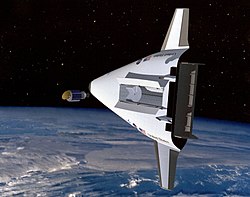
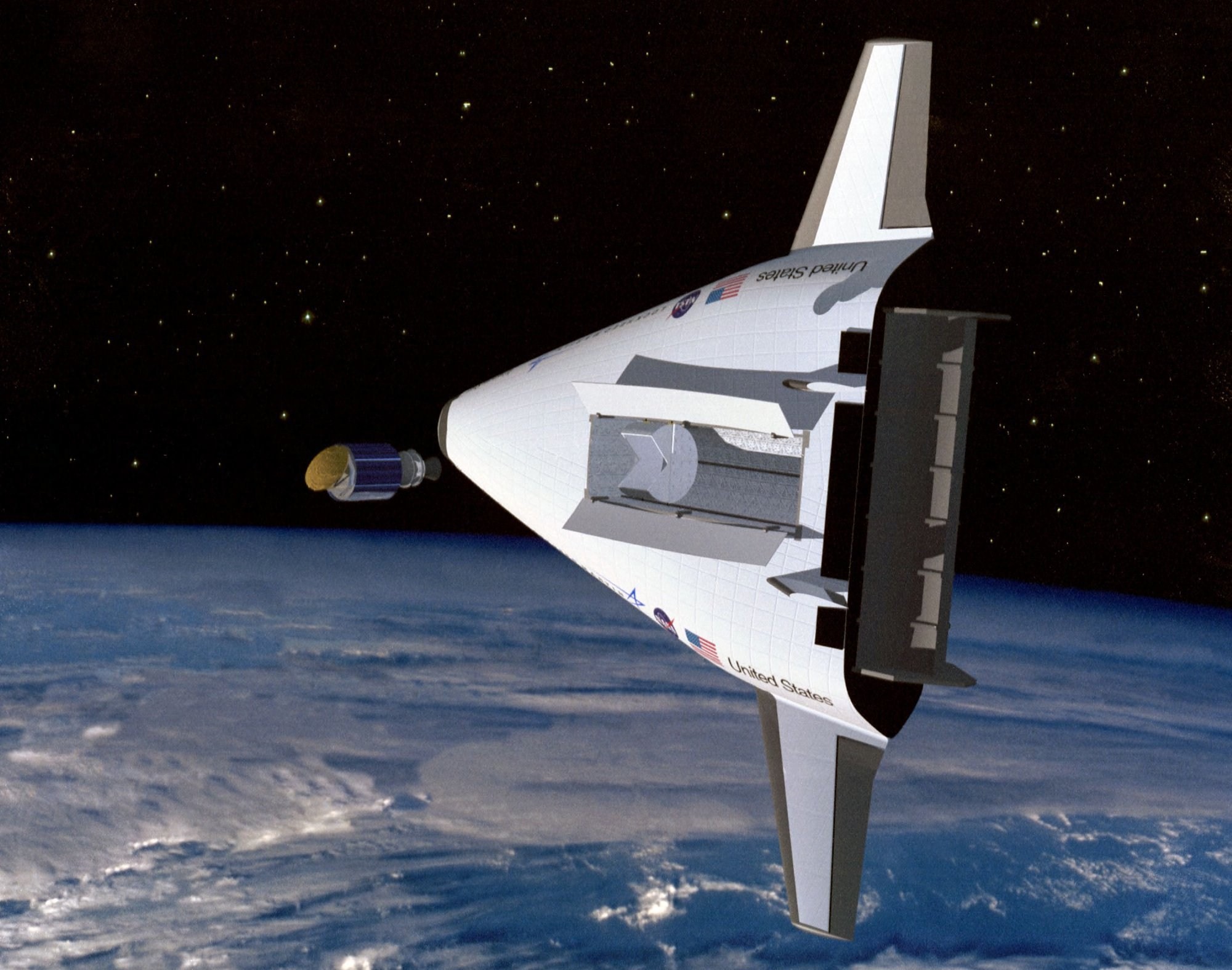
The VentureStar was a proposed SSTO spaceplane.

A single-stage-to-orbit (SSTO) vehicle reaches orbit from the surface of a body using only propellants and fluids and without expending tanks, engines, or other major hardware. The term usually, but not exclusively refers to reusable vehicles.[1] To date, no Earth-launched SSTO launch vehicles have ever been flown; orbital launches from Earth have been performed by multi-stage rockets, either fully or partially expendable.

The main projected advantage of the SSTO concept is elimination of the hardware replacement inherent in expendable launch systems. However, the non-recurring costs associated with design, development, research and engineering (DDR&E) of reusable SSTO systems are much higher than expendable systems due to the substantial technical challenges of SSTO, assuming that those technical issues can in fact be solved.[2] SSTO vehicles may also require a significantly higher degree of regular maintenance.[3]

It is considered to be marginally possible to launch a single-stage-to-orbit chemically fueled spacecraft from Earth. The principal complicating factors for SSTO from Earth are: high orbital velocity of over 7,400 metres per second (27,000 km/h; 17,000 mph); the need to overcome Earth's gravity, especially in the early stages of flight; and flight within Earth's atmosphere, which limits speed in the early stages of flight due to drag, and influences engine performance.[4]

Advances in rocketry in the 21st century have resulted in a substantial fall in the cost to launch a kilogram of payload to either low Earth orbit or the International Space Station,[5] reducing the main projected advantage of the SSTO concept.

Notable single stage to orbit concepts include Skylon, which used the hybrid-cycle SABRE engine that can use oxygen from the atmosphere when it is at low altitude, and then use onboard liquid oxygen after switching to the closed cycle rocket engine at high altitude, the McDonnell Douglas DC-X, the Lockheed Martin X-33 and VentureStar which was intended to replace the Space Shuttle, and the Roton SSTO, which is a helicopter that can get to orbit. However, despite showing some promise, none of them have come close to achieving orbit yet due to problems with finding a sufficiently efficient propulsion system and discontinued development.[1]

Single-stage-to-orbit is much easier to achieve on extraterrestrial bodies that have weaker gravitational fields and lower atmospheric pressure than Earth, such as the Moon and Mars, and has been achieved from the Moon by the Apollo program's Lunar Module, by several robotic spacecraft of the Soviet Luna program, and by China's Chang'e 5 and Chang'e 6 lunar sample return missions.

History

[edit]

Early concepts

[edit]
ROMBUS concept art

Before the second half of the twentieth century, very little research was conducted into space travel. During the 1960s, some of the first concept designs for this kind of craft began to emerge.[6]

One of the earliest SSTO concepts was the expendable One stage Orbital Space Truck (OOST) proposed by Philip Bono,[7] an engineer for Douglas Aircraft Company.[8] A reusable version named ROOST was also proposed.

Another early SSTO concept was a reusable launch vehicle named NEXUS which was proposed by Krafft Arnold Ehricke in the early 1960s. It was one of the largest spacecraft ever conceptualized with a diameter of over 50 metres and the capability to lift up to 2000 short tons into Earth orbit, intended for missions to further out locations in the Solar System such as Mars.[9][10]

The North American Air Augmented VTOVL from 1963 was a similarly large craft which would have used ramjets to decrease the liftoff mass of the vehicle by removing the need for large amounts of liquid oxygen while traveling through the atmosphere.[11]

From 1965, Robert Salkeld investigated various single stage to orbit winged spaceplane concepts. He proposed a vehicle which would burn hydrocarbon fuel while in the atmosphere and then switch to hydrogen fuel for increasing efficiency once in space.[12][13][14]

Further examples of Bono's early concepts (prior to the 1990s) which were never constructed include:

  • ROMBUS (Reusable Orbital Module, Booster, and Utility Shuttle), another design from Philip Bono.[15][16] This was not technically single stage since it dropped some of its initial hydrogen tanks, but it came very close.
  • Ithacus, an adapted ROMBUS concept which was designed to carry soldiers and military equipment to other continents via a sub-orbital trajectory.[17][18]
  • Pegasus, another adapted ROMBUS concept designed to carry passengers and payloads long distances in short amounts of time via space.[19]
  • Douglas SASSTO, a 1967 launch vehicle concept.[20]
  • Hyperion, yet another Philip Bono concept which used a sled to build up speed before liftoff to save on the amount of fuel which had to be lifted into the air.[21]

Star-raker: In 1979, Rockwell International unveiled a concept for a 100-ton payload heavy-lift multicycle airbreather ramjet/cryogenic rocket engine, horizontal takeoff/horizontal landing single-stage-to-orbit spaceplane named Star-Raker, designed to launch heavy Space-based solar power satellites into a 300 nautical mile Earth orbit.[22][23][24] Star-raker would have had 3 x LOX/LH2 rocket engines (based on the SSME) + 10 x turboramjets.[22]

Around 1985 the NASP project was intended to launch a scramjet vehicle into orbit, but funding was stopped and the project cancelled.[25] At around the same time, the HOTOL tried to use precooled jet engine technology, but failed to show significant advantages over rocket technology.[26]

DC-X technology

[edit]
The maiden flight of the DC-X

The DC-X, short for Delta Clipper Experimental, was an uncrewed one-third scale vertical takeoff and landing demonstrator for a proposed SSTO. It is one of only a few prototype SSTO vehicles ever built. Several other prototypes were intended, including the DC-X2 (a half-scale prototype) and the DC-Y, a full-scale vehicle which would be capable of single stage insertion into orbit. Neither of these were built, but the project was taken over by NASA in 1995, and they built the DC-XA, an upgraded one-third scale prototype. This vehicle was lost when it landed with only three of its four landing pads deployed, which caused it to tip over on its side and explode. The project has not been continued since.[citation needed]

Roton

[edit]

From 1999 to 2001 Rotary Rocket attempted to build a SSTO vehicle called the Roton. It received a large amount of media attention and a working sub-scale prototype was completed, but the design was largely impractical.[27]

Approaches

[edit]

There have been various approaches to SSTO vehicles including: pure rockets that are launched and land vertically, air-breathing scramjet-powered vehicles that are launched and land horizontally, nuclear-powered vehicles, and even jet-engine-powered vehicles that can fly into orbit and return landing like an airliner, completely intact.

For rocket-powered SSTO, the main challenge is achieving a high enough mass-ratio to carry sufficient propellant to achieve orbit, plus a meaningful payload weight. One possibility is to give the rocket an initial speed with a space gun, as planned in the Quicklaunch project.[28]

For air-breathing SSTO, the main challenges are system complexity and associated research and development costs, material science, construction techniques necessary for surviving sustained high-speed flight within the atmosphere, and achieving a high enough mass-ratio to carry sufficient propellant to achieve orbit, plus a meaningful payload weight. Air-breathing designs typically fly at supersonic or hypersonic speeds and usually include a rocket engine for the final burn for orbit.[1]

Whether rocket-powered or air-breathing, a reusable vehicle must be rugged enough to survive multiple round trips into space without adding excessive weight or maintenance. In addition, a reusable vehicle must be able to reenter without damage and land safely.[citation needed]

While single-stage rockets were once thought to be beyond reach, advances in materials technology and construction techniques have shown them to be possible. For example, calculations show that the Titan II first stage, launched on its own, would have a 25-to-1 ratio of fuel to vehicle hardware.[29] It has a sufficiently efficient engine to achieve orbit, but without carrying much payload.[30]

Dense versus hydrogen fuels

[edit]

Hydrogen fuel might seem the obvious fuel for SSTO vehicles. When burned with oxygen, hydrogen gives the highest specific impulse of any commonly used fuel: around 450 seconds,[31] compared with up to 350 seconds[32] for kerosene.

Hydrogen has the following advantages:[citation needed]

  • Hydrogen has nearly 30% higher specific impulse (about 450 seconds vs. 350 seconds) than most dense fuels.
  • Hydrogen is an excellent coolant.
  • The gross mass of hydrogen stages is lower than dense-fuelled stages for the same payload.
  • Hydrogen is environmentally friendly.

However, hydrogen also has these disadvantages:[citation needed]

  • Very low density (about 17 of the density of kerosene) – requiring a very large tank
  • Deeply cryogenic – must be stored at very low temperatures and thus needs heavy insulation
  • Escapes very easily from the smallest gap
  • Wide combustible range – easily ignited and burns with a dangerously invisible flame
  • Tends to condense oxygen which can cause flammability problems
  • Has a large coefficient of expansion for even small heat leaks.

These issues can be dealt with, but at extra cost.[citation needed]

While kerosene tanks can be 1% of the weight of their contents, hydrogen tanks often must weigh 10% of their contents. This is because of both the low density and the additional insulation required to minimize boiloff (a problem which does not occur with kerosene and many other fuels). The low density of hydrogen further affects the design of the rest of the vehicle: pumps and pipework need to be much larger in order to pump the fuel to the engine. The result is the thrust/weight ratio of hydrogen-fueled engines is 30–50% lower than comparable engines using denser fuels.[citation needed]

This inefficiency indirectly affects gravity losses as well; the vehicle has to hold itself up on rocket power until it reaches orbit. The lower excess thrust of the hydrogen engines due to the lower thrust/weight ratio means that the vehicle must ascend more steeply, and so less thrust acts horizontally. Less horizontal thrust results in taking longer to reach orbit, and gravity losses are increased by at least 300 metres per second (1,100 km/h; 670 mph). While not appearing large, the mass ratio to delta-v curve is very steep to reach orbit in a single stage, and this makes a 10% difference to the mass ratio on top of the tankage and pump savings.[citation needed]

The overall effect is that there is surprisingly little difference in overall performance between SSTOs that use hydrogen and those that use denser fuels, except that hydrogen vehicles may be rather more expensive to develop and buy. Careful studies have shown that some dense fuels (for example liquid propane) exceed the performance of hydrogen fuel when used in an SSTO launch vehicle by 10% for the same dry weight.[33]

In the 1960s Philip Bono investigated single-stage, VTVL tripropellant rockets, and showed that it could improve payload size by around 30%.[34]

Operational experience with the DC-X experimental rocket has caused a number of SSTO advocates to reconsider hydrogen as a satisfactory fuel. The late Max Hunter, while employing hydrogen fuel in the DC-X, often said that he thought the first successful orbital SSTO would more likely be fueled by propane.[citation needed]

One engine for all altitudes

[edit]

Some SSTO concepts use the same engine for all altitudes, which is a problem for traditional engines with a bell-shaped nozzle. Depending on the atmospheric pressure, different bell shapes are required. Engines designed to operate in a vacuum have large bells, allowing the exhaust gasses to expand to near vacuum pressures, thereby raising efficiency.[35] Due to an effect known as Flow separation, using a vacuum bell in atmosphere would have disastrous consequences for the engine. Engines designed to fire in atmosphere therefore have to shorten the nozzle, only expanding the gasses to atmospheric pressure. The efficiency losses due to the smaller bell are usually mitigated via staging, as upper stage engines such as the Rocketdyne J-2 do not have to fire until atmospheric pressure is negligible, and can therefore use the larger bell.

One possible solution would be to use an aerospike engine, which can be effective in a wide range of ambient pressures. In fact, a linear aerospike engine was to be used in the X-33 design.[36]

Other solutions involve using multiple engines and other altitude adapting designs such as double-mu bells or extensible bell sections.[citation needed]

Still, at very high altitudes, the extremely large engine bells tend to expand the exhaust gases down to near vacuum pressures. As a result, these engine bells are counterproductive[dubiousdiscuss] due to their excess weight. Some SSTO concepts use very high pressure engines which permit high ratios to be used from ground level. This gives good performance, negating the need for more complex solutions.[citation needed]

Airbreathing SSTO

[edit]
Skylon spaceplane

Some designs for SSTO attempt to use airbreathing jet engines that collect oxidizer and reaction mass from the atmosphere to reduce the take-off weight of the vehicle.[37]

Some of the issues with this approach are:[citation needed]

  • No known air breathing engine is capable of operating at orbital speed within the atmosphere (for example hydrogen fueled scramjets seem to have a top speed of about Mach 17).[38] This means that rockets must be used for the final orbital insertion.
  • Rocket thrust needs the orbital mass to be as small as possible to minimize propellant weight.
  • The thrust-to-weight ratio of rockets that rely on on-board oxygen increases dramatically as fuel is expended, because the oxidizer fuel tank has about 1% of the mass as the oxidizer it carries, whereas air-breathing engines traditionally have a poor thrust/weight ratio which is relatively fixed during the air-breathing ascent.
  • Very high speeds in the atmosphere necessitate very heavy thermal protection systems, which makes reaching orbit even harder.
  • While at lower speeds, air-breathing engines are very efficient, but the efficiency (Isp) and thrust levels of air-breathing jet engines drop considerably at high speed (above Mach 5–10 depending on the engine) and begin to approach that of rocket engines or worse.
  • Lift to drag ratios of vehicles at hypersonic speeds are poor, however the effective lift to drag ratios of rocket vehicles at high g is not dissimilar.

Thus with for example scramjet designs (e.g. X-43) the mass budgets do not seem to close for orbital launch.[citation needed]

Similar issues occur with single-stage vehicles attempting to carry conventional jet engines to orbit—the weight of the jet engines is not compensated sufficiently by the reduction in propellant.[39]

On the other hand, LACE-like precooled airbreathing designs such as the Skylon spaceplane (and ATREX) which transition to rocket thrust at rather lower speeds (Mach 5.5) do seem to give, on paper at least, an improved orbital mass fraction over pure rockets (even multistage rockets) sufficiently to hold out the possibility of full reusability with better payload fraction.[40]

It is important to note that mass fraction is an important concept in the engineering of a rocket. However, mass fraction may have little to do with the costs of a rocket, as the costs of fuel are very small when compared to the costs of the engineering program as a whole. As a result, a cheap rocket with a poor mass fraction may be able to deliver more payload to orbit with a given amount of money than a more complicated, more efficient rocket.[citation needed]

Launch assists

[edit]

Many vehicles are only narrowly suborbital, so practically anything that gives a relatively small delta-v increase can be helpful, and outside assistance for a vehicle is therefore desirable.[citation needed]

Proposed launch assists include:[citation needed]

And on-orbit resources such as:[citation needed]

Nuclear propulsion

[edit]

Due to weight issues such as shielding, many nuclear propulsion systems are unable to lift their own weight, and hence are unsuitable for launching to orbit. However, some designs such as the Orion project and some nuclear thermal designs do have a thrust to weight ratio in excess of 1, enabling them to lift off. Clearly, one of the main issues with nuclear propulsion would be safety, both during a launch for the passengers, but also in case of a failure during launch. As of February 2024, no current program is attempting nuclear propulsion from Earth's surface.[citation needed]

Beam-powered propulsion

[edit]

Because they can be more energetic than the potential energy that chemical fuel allows for, some laser or microwave powered rocket concepts have the potential to launch vehicles into orbit, single stage. In practice, this area is not possible with current technology.[citation needed]

Design challenges inherent in SSTO

[edit]

The design space constraints of SSTO vehicles were described by rocket design engineer Robert Truax:

Using similar technologies (i.e., the same propellants and structural fraction), a two-stage-to-orbit vehicle will always have a better payload-to-weight ratio than a single stage designed for the same mission, in most cases, a very much better [payload-to-weight ratio]. Only when the structural factor approaches zero [very little vehicle structure weight] does the payload/weight ratio of a single-stage rocket approach that of a two-stage. A slight miscalculation and the single-stage rocket winds up with no payload. To get any at all, technology needs to be stretched to the limit. Squeezing out the last drop of specific impulse, and shaving off the last pound, costs money and/or reduces reliability.[42]

The Tsiolkovsky rocket equation expresses the maximum change in velocity any single rocket stage can achieve:

where:

(delta-v) is the maximum change of velocity of the vehicle,
is the propellant specific impulse,
is the standard gravity,
is the vehicle mass ratio,
refers to the natural logarithm function.

The mass ratio of a vehicle is defined as a ratio the initial vehicle mass when fully loaded with propellants to the final vehicle mass after the burn:

where:

is the initial vehicle mass or the gross liftoff weight ,
is the final vehicle mass after the burn,
is the structural mass of vehicle,
is the propellant mass,
is the payload mass.

The propellant mass fraction () of a vehicle can be expressed solely as a function of the mass ratio:


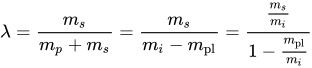
The structural coefficient () is a critical parameter in SSTO vehicle design.[43] Structural efficiency of a vehicle is maximized as the structural coefficient approaches zero. The structural coefficient is defined as:

Plot of GLOW vs Structural Coefficient for LEO mission profile.
Comparison of growth factor sensitivity for Single-Stage-to-Orbit (SSTO) and restricted stage Two-Stage-to-Orbit (TSTO) vehicles. Based on a LEO mission of Delta v = 9.1 km/s and payload mass = 4500 kg for range of propellant Isp.

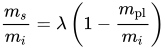
The overall structural mass fraction can be expressed in terms of the structural coefficient:

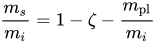
An additional expression for the overall structural mass fraction can be found by noting that the payload mass fraction , propellant mass fraction and structural mass fraction sum to one:


Equating the expressions for structural mass fraction and solving for the initial vehicle mass yields:
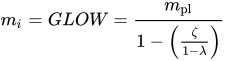
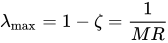
This expression shows how the size of a SSTO vehicle is dependent on its structural efficiency. Given a mission profile and propellant type , the size of a vehicle increases with an increasing structural coefficient.[44] This growth factor sensitivity is shown parametrically for both SSTO and two-stage-to-orbit (TSTO) vehicles for a standard LEO mission.[45] The curves vertically asymptote at the maximum structural coefficient limit where mission criteria can no longer be met:

In comparison to a non-optimized TSTO vehicle using restricted staging, a SSTO rocket launching an identical payload mass and using the same propellants will always require a substantially smaller structural coefficient to achieve the same delta-v. Given that current materials technology places a lower limit of approximately 0.1 on the smallest structural coefficients attainable,[46] reusable SSTO vehicles are typically an impractical choice even when using the highest performance propellants available.

Examples

[edit]

It is easier to achieve SSTO from a body with lower gravitational pull than Earth, such as the Moon or Mars. The Apollo Lunar Module ascended from the lunar surface to lunar orbit in a single stage.[47]

A detailed study into SSTO vehicles was prepared by Chrysler Corporation's Space Division in 1970–1971 under NASA contract NAS8-26341. Their proposal (Shuttle SERV) was an enormous vehicle with more than 50,000 kilograms (110,000 lb) of payload, utilizing jet engines for (vertical) landing.[48] While the technical problems seemed to be solvable, the USAF required a winged design that led to the Shuttle as we know it today.

The uncrewed DC-X technology demonstrator, originally developed by McDonnell Douglas for the Strategic Defense Initiative (SDI) program office, was an attempt to build a vehicle that could lead to an SSTO vehicle. The one-third-size test craft was operated and maintained by a small team of three people based out of a trailer, and the craft was once relaunched less than 24 hours after landing. Although the test program was not without mishap (including a minor explosion), the DC-X demonstrated that the maintenance aspects of the concept were sound. That project was cancelled when it landed with three of four legs deployed, tipped over, and exploded on the fourth flight after transferring management from the Strategic Defense Initiative Organization to NASA.[citation needed]

The Aquarius Launch Vehicle was designed to bring bulk materials to orbit as cheaply as possible.[citation needed]

Current development

[edit]

Current and previous SSTO projects include the Japanese Kankoh-maru project, ARCA Haas 2C, Radian One and the Indian Avatar spaceplane.[citation needed]

Skylon

[edit]

The British Government partnered with the ESA in 2010 to promote a single-stage to orbit spaceplane concept called Skylon.[49] This design was pioneered by Reaction Engines Limited (REL),[50][51] a company founded by Alan Bond after HOTOL was canceled.[52] The Skylon spaceplane has been positively received by the British government, and the British Interplanetary Society.[53] Following a successful propulsion system test that was audited by ESA's propulsion division in mid-2012, REL announced that it would begin a three-and-a-half-year project to develop and build a test jig of the Sabre engine to prove the engines performance across its air-breathing and rocket modes.[54] In November 2012, it was announced that a key test of the engine precooler had been successfully completed, and that ESA had verified the precooler's design. The project's development is now allowed to advance to its next phase, which involves the construction and testing of a full-scale prototype engine.[54][55]

Alternative approaches to inexpensive spaceflight

[edit]

Many studies have shown that regardless of selected technology, the most effective cost reduction technique is economies of scale.[citation needed] Merely launching a large total number reduces the manufacturing costs per vehicle, similar to how the mass production of automobiles brought about great increases in affordability.[citation needed]

Using this concept, some aerospace analysts believe the way to lower launch costs is the exact opposite of SSTO. Whereas reusable SSTOs would reduce per launch costs by making a reusable high-tech vehicle that launches frequently with low maintenance, the "mass production" approach views the technical advances as a source of the cost problem in the first place. By simply building and launching large quantities of rockets, and hence launching a large volume of payload, costs can be brought down. This approach was attempted in the late 1970s, early 1980s in West Germany with the Democratic Republic of the Congo-based OTRAG rocket.[56]

This is somewhat similar to the approach some previous systems have taken, using simple engine systems with "low-tech" fuels, as the Russian and Chinese space programs still do.[citation needed]

An alternative to scale is to make the discarded stages practically reusable: this was the original design goal of the Space Shuttle phase B studies, and is currently pursued by the SpaceX reusable launch system development program with their Falcon 9, Falcon Heavy, and Starship, and Blue Origin using New Glenn.

See also

[edit]

Further reading

[edit]

References

[edit]
[edit]
Revisions and contributorsEdit on WikipediaRead on Wikipedia
from Grokipedia
Single-stage-to-orbit (SSTO) refers to a or capable of reaching without discarding any structural components or stages during ascent, relying on a single system to achieve the necessary of approximately 7.8 km/s and altitude above 100 km. This design contrasts with multi-stage rockets, which jettison empty stages to reduce mass, and aims to enable full reusability through horizontal similar to conventional , potentially lowering operational costs and needs. The concept of SSTO has been explored since the mid-20th century, with early theoretical studies in the examining the feasibility of all-rocket or combined-cycle systems. By the 1970s, initiated detailed assessments of SSTO as a potential successor to the , evaluating vertical takeoff (VTO) and horizontal takeoff (HTO) configurations with projected gross lift-off weights exceeding 1.9 million kg for VTO designs. Development efforts peaked in the through programs like the Access to Space initiative, which funded subscale demonstrators such as the , a suborbital VTO vehicle that successfully demonstrated rapid reusability with hydrogen-oxygen rockets. Key challenges in realizing SSTO vehicles include achieving a high —typically over 90%—to overcome the rocket equation's limitations, necessitating advanced lightweight materials such as composites and high-strength alloys for cryogenic tanks. Propulsion systems must deliver specific impulses exceeding 450 seconds in , often requiring innovative approaches such as air-breathing engines for the atmospheric phase or tripropellant cycles to optimize efficiency across flight regimes. Aerodynamic and thermal management issues, including drag penalties and reusable thermal protection systems enduring hundreds of reentries, further complicate design closure. Notable SSTO concepts include NASA's Trailblazer, a 1990s air-breathing design with ramjet-scramjet-rocket modes capable of delivering 136 kg payloads to from a 59,000 kg gross weight vehicle. Other proposals, such as Lockheed Martin's , aimed for all-rocket reusability but were canceled in 2001 due to technical and funding hurdles. Despite no operational SSTO systems as of 2025, ongoing research focuses on hybrid propulsion and advanced manufacturing to address remaining barriers, including private initiatives such as Radian Aerospace's proposed sled-launched concept announced in 2024.

Fundamentals

Definition and Requirements

Single-stage-to-orbit (SSTO) refers to a capable of reaching (LEO) from the surface of using a single propulsion stage, without discarding any structural components, tanks, or engines during ascent, thereby employing one integral structure from liftoff to orbit insertion. This approach contrasts with traditional multi-stage rockets by eliminating the need for separation events, potentially simplifying operations and enabling full reusability if structural margins allow. The primary physical requirement for an SSTO vehicle is to achieve a total delta-v of approximately 9.4 km/s, which accounts for the ideal orbital velocity of about 7.8 km/s at LEO altitudes (typically 200-300 km), plus additional losses from atmospheric drag (around 0.2 km/s) and (about 1.5 km/s during vertical ascent phases). For chemical propulsion systems, this demanding results in a payload fraction— mass relative to gross liftoff mass—typically limited to under 1-3%, as the majority of the vehicle's mass must be dedicated to propellants to overcome these losses. From an perspective, SSTO feasibility hinges on propulsion efficiency, quantified by (Isp), which measures per unit of consumed. For hydrogen-oxygen engines, commonly considered for SSTO due to their high , Isp values exceeding 450 seconds are essential to provide sufficient exhaust velocity for the required delta-v while maintaining structural integrity. Lower Isp would necessitate even higher fractions, exacerbating design challenges. The Tsiolkovsky rocket equation governs these constraints: Δv=Ispg0ln(m0mf)\Delta v = I_{sp} \, g_0 \, \ln \left( \frac{m_0}{m_f} \right) where Δv\Delta v is the change in velocity, IspI_{sp} is the specific impulse, g0g_0 is standard gravity (9.81 m/s²), m0m_0 is the initial mass, and mfm_f is the final mass after propellant expenditure (dry mass plus payload). For SSTO vehicles using chemical propulsion, this equation implies the need for mass ratios (m0/mfm_0 / m_f) of around 10:1 or higher, depending on structural efficiency, to achieve the 9.4 km/s delta-v with realistic Isp values around 450 seconds, as lower ratios would leave insufficient margin for payload or reusability.

Comparison to Multi-Stage Systems

Multi-stage systems improve by sequentially discarding depleted tanks and associated structures, thereby reducing the mass that subsequent stages must accelerate. This staging process allows for optimized mass ratios per stage, enabling higher overall fractions compared to single-stage designs. For instance, two-stage rockets can achieve payload fractions of up to 4-5% of the gross liftoff mass to (), significantly outperforming typical single-stage-to-orbit (SSTO) vehicles, which struggle to exceed 1-2% under similar chemical constraints. A key trade-off between SSTO and multi-stage architectures lies in reusability and operational . SSTO designs offer the potential for complete and without the need for stage separation or individual stage retrieval, simplifying and enabling higher launch cadences that could amortize development costs over many flights. In contrast, multi-stage systems, while achieving superior performance margins, introduce greater through multiple vehicle components, increasing manufacturing, integration, and refurbishment demands, which can elevate per-launch costs despite established reliability from decades of operational use. Performance-wise, multi-stage rockets apportion the total delta-v requirement—approximately 9.4 km/s to LEO, including gravity and drag losses—across stages for better optimization. The first stage typically provides 3-4 km/s to reach high suborbital altitudes, while upper stages deliver the remaining 5-6 km/s in conditions with higher . SSTO vehicles, by comparison, must generate the full delta-v from a single propulsion system and structure, necessitating either advanced high-specific-impulse engines or extreme mass ratios that challenge current materials and design limits. Economically, multi-stage launches as of 2023 range from about $2,000 to $10,000 per kg to LEO, reflecting costs for vehicles like the , which benefits from partial reusability but still incurs stage production expenses. Theoretical analyses project significantly lower costs for fully reusable SSTO systems, such as around $1,300 per kg in some concepts, driven by elimination of staging hardware, simplified recovery, and rapid reuse cycles that minimize operational overhead, though achieving this requires breakthroughs in and thermal management.

Historical Development

Early Concepts

The foundational theoretical work on single-stage-to-orbit (SSTO) vehicles traces back to early 20th-century rocketry pioneers who grappled with the limitations imposed by the rocket equation, which highlights the extreme requirements for achieving orbital in a single stage. Konstantin Tsiolkovsky's 1903 formulation of the rocket equation and his subsequent writings in the 1920s on space travel emphasized that single-stage designs would demand impractically high ratios, influencing later adaptations that sought to optimize for orbital insertion without staging. Similarly, Robert H. 's 1919 monograph A Method of Reaching Extreme Altitudes included sketches of liquid-fueled rocket configurations capable of significant vertical ascent, laying groundwork for conceptual single-stage vehicles aimed at high-altitude sounding, though ultimately advocated multi-stage approaches for greater . In the 1930s, Austrian aerospace engineer advanced suborbital concepts that foreshadowed SSTO possibilities, most notably his ("Silver Bird") design—a rocket-powered, winged glider intended for skip-glide trajectories across the atmosphere to reach near-space altitudes for long-range bombing. This suborbital vehicle, developed with Irene Bredt and detailed in Sänger's 1933 dissertation, relied on a engine and atmospheric skipping to extend range without full orbital insertion, but its hypersonic and reentry concepts influenced later orbital ambitions. , Sänger's ideas evolved in as he relocated to France and later , contributing to propulsion research and orbital transport studies; by the early , he proposed theoretical frameworks for photon-based propulsion to enable interplanetary flights, while his work inspired broader European efforts toward winged orbital vehicles. During the 1950s and 1960s, and emerging European space organizations conducted feasibility studies on minimum-stage vehicles, focusing on reducing launch complexity through advanced propulsion and materials. 's early investigations, initiated in the mid-1950s under programs like the Advanced Research Projects Agency () collaborations, explored chemical SSTO configurations to assess fractions and reusability, often concluding that high engines were essential to overcome barriers. In , the European Launcher Development Organisation (ELDO) and precursors to the (ESRO, founded 1964) examined single-stage concepts, including air-breathing hybrids; a key 1962 study by British and French engineers laid groundwork for horizontal-takeoff vehicles using turboramjets, serving as a conceptual precursor to the later HOTOL design by integrating atmospheric propulsion for initial ascent phases. Philip Bono, an engineer at , emerged as a prominent advocate for reusable SSTO in the , proposing designs that balanced nuclear and chemical propulsion for cost-effective orbital access. His ROMBUS (Reusable Orbital Module-Booster and Utility Shuttle) concept, developed in 1963–1964 under contracts, envisioned a vertical-takeoff, vertical-landing using conventional liquid hydrogen/ engines to deliver up to 450 metric tons to , emphasizing rapid turnaround and minimal ground support. Bono also explored nuclear variants, such as adaptations of the Orion pulse propulsion system for SSTO, which promised higher exhaust velocities to achieve viable mass ratios, though these faced safety and treaty constraints; his iteration refined chemical-only reusability for post-Apollo missions, influencing subsequent heavy-lift studies.

Key Prototypes and Projects

One of the earliest practical demonstrations of single-stage-to-orbit (SSTO) concepts was the , developed from 1991 to 1996 under initial funding from the U.S. Department of Defense's Strategic Defense Initiative Organization (SDIO). This one-third-scale suborbital prototype, also known as Delta Clipper Experimental, focused on vertical takeoff and landing (VTOL) operations using four RL-10A-5 engines fueled by and hydrogen. The program conducted 12 successful flights between 1993 and 1996, with the DC-X achieving altitudes up to 2.7 km and the upgraded DC-XA variant reaching 3.2 km during its tests at . These hops validated key SSTO elements, including composite graphite-epoxy cryogenic tanks, differential engine throttling for attitude control, and rapid turnaround operations with a small ground crew, all while demonstrating reusability after minimal refurbishment. The DC-X program paved the way for the full-scale Delta Clipper (DC-Y) SSTO design, though it ended after the DC-XA's destruction in a 1996 landing gear failure. In 1999, pursued an innovative SSTO approach with the , a vertical takeoff and helicopter-like autorotating landing vehicle powered by a pressure-fed and featuring a rotary pump for centrifugal fuel transfer from the rotor tip to eliminate turbopumps. Ground tests successfully validated the centrifugal pumping mechanism, which used the rotor's spin to pressurize and feed s, aiming to simplify engine design and reduce costs for orbital missions. However, three low-altitude atmospheric test flights of the full-scale vehicle in 1999 demonstrated stability and control challenges during low-speed maneuvers, with the final flight terminated early due to drift off the centerline, highlighting challenges in balancing the rotor dynamics with rocket . The project exhausted funding shortly thereafter, leading to the company's closure in without achieving suborbital or orbital flights, though it demonstrated the feasibility of novel propellant handling for potential SSTO applications. NASA's X-33 VentureStar program, launched in 1996 as part of the initiative, represented a major government-backed effort to develop an SSTO demonstrator with . The half-scale X-33 was designed for vertical takeoff and horizontal landing, incorporating seven linear aerospike engines tested extensively on the ground for throttleable performance and efficiency across altitudes. Component tests, including thrusters and powerpacks, confirmed the aerospike's potential for SSTO mass fractions, but the program relied heavily on metallic-composite structures for the tanks to achieve the required lightweight design. Development faced critical setbacks from failures, including and rupture of the multi-lobed hydrogen tank during pressure tests in 1998 and 1999, which exposed vulnerabilities in cryogenic fabrication and structural integrity under repeated thermal cycles. These issues, compounded by weight growth and cost overruns exceeding $1 billion, led to the program's cancellation in March 2001, underscoring the technical hurdles in scaling composite technologies for operational SSTO vehicles.

Modern Initiatives

In the , renewed interest in single-stage-to-orbit (SSTO) systems has been spurred by the success of reusable launch vehicles, particularly SpaceX's and programs, which demonstrated rapid reusability and cost reductions that have inspired developers to revisit fully integrated SSTO architectures for simplified operations. This post-2020 surge has prompted international space agencies to explore advanced and recovery technologies, aiming to achieve orbital access without staging while leveraging lessons from iterative testing and vertical . A key example is the Skylon project by , initiated in the 2000s to develop the Synergetic Air-Breathing Rocket Engine () for a horizontal takeoff and landing SSTO capable of reaching in a single stage. Development milestones include the successful demonstration of the precooler technology in 2019, which validated the engine's ability to handle hypersonic airflow by cooling incoming air from over 1,000°C to -100°C in 1/100th of a second, enabling air-breathing mode up to Mach 5.5 before switching to mode. This achievement was supported by UK government funding, including commitments from the and partnerships with entities like , totaling over £60 million by the late 2010s to advance engine prototyping. However, entered administration in October 2024 after failing to secure additional £20 million in funding, halting further and Skylon development as of 2025, though administrators are seeking buyers for the intellectual property. The influence of SpaceX's reusability has extended to European efforts, with the (ESA) initiating studies and contracts from 2023 to 2025 focused on reusable propulsion systems that align with SSTO principles, such as in-orbit recovery and high-efficiency engines. In 2025, ESA signed a €40 million contract with to develop a reusable upper stage demonstrator for the launcher family, incorporating cryogenic propulsion and autonomous landing capabilities inspired by Starship's full reusability goals, marking a step toward integrated single-vehicle orbital operations despite not being a pure SSTO design. These initiatives build on ESA's broader Future Launchers Preparatory Programme, emphasizing rapid turnaround and cost parity with commercial reusable systems. Internationally, India's and pursued SSTO concepts in the 2010s through the Avatar project, a robotic, horizontally launched powered by a variable-cycle engine combining for atmospheric flight and semi-cryogenic rockets for space, targeting low-Earth missions with minimal ground infrastructure. While Avatar remains a without confirmed progression to flight prototypes by 2025, it has informed ISRO's ongoing technology demonstrator (RLV-TD) program, including successful autonomous landing tests of the Pushpak orbiter in 2024, advancing air-breathing and recovery technologies central to SSTO viability. In the , Aerospace advanced its One SSTO in 2024, completing ground taxi tests of a sub-scale to validate rail-accelerated horizontal takeoff and reusable cryogenic for orbital insertion and return. The company, having raised approximately $32 million in total funding by mid-2024 from investors including Fine Structure Ventures, plans for the full-scale vehicle to achieve 100 flights per vehicle through rapid refurbishment. By April 2025, unveiled the R3V reusable test platform to iterate on thermal protection and under hypersonic conditions, alongside a partnership with for integrated systems, positioning it as a contender in reusable SSTO amid the reusability boom.

Design Challenges

Mass Fraction Limitations

The primary challenge in achieving single-stage-to-orbit (SSTO) capability lies in the stringent requirements for fractions, particularly the dry fraction, which represents the ratio of the vehicle's structural (excluding and ) to its gross liftoff . For practical viability, this fraction must be kept below 10% to enable sufficient delivery to while accounting for operational margins and reusability elements. However, contemporary large-scale structures using advanced composites typically achieve dry fractions of only 12-15%, limiting capacities and highlighting the narrow performance envelope for SSTO designs. A key contributor to these constraints is the immense load required, which for / (/LH2) systems must constitute 85-90% of the gross liftoff to provide the necessary delta-v of approximately 9 km/s for insertion. This high propellant fraction leaves minimal allowance for structural, , and elements, exacerbating sensitivity to any growth. Additionally, LH2's cryogenic nature, with a of 20 K, results in significant boil-off during extended ground holds or delays, potentially losing several percent of per day without advanced insulation, thus demanding oversized tanks or frequent replenishment to maintain mission reliability. The interplay of these mass fractions is captured by the , Δv=Ispg0ln(m0mf)\Delta v = I_\text{sp} g_0 \ln \left( \frac{m_0}{m_f} \right), where the is 1exp(ΔvIspg0)1 - \exp\left( -\frac{\Delta v}{I_\text{sp} g_0} \right). For SSTO, the payload fraction pfpf approximates exp(ΔvIspg0)mstructurem0\exp\left( -\frac{\Delta v}{I_\text{sp} g_0} \right) - \frac{m_\text{structure}}{m_0}, assuming small payloads where mfmstructure+mpayloadm_f \approx m_\text{structure} + m_\text{payload}. This relation underscores SSTO's acute sensitivity: even minor inefficiencies, such as a 1-2% increase in dry mass fraction, can reduce to negligible levels due to the exponential term, as the required approaches 10:1 or higher. Efforts to mitigate these limitations include material innovations like carbon fiber reinforced polymers, which offer densities as low as 1.5 g/cm³—about half that of traditional aluminum alloys—enabling lighter propellant tanks and airframes. Despite these gains, such composites are prone to under the axial accelerations exceeding 3-5 g during ascent, often requiring conservative reinforcements or sandwich constructions that partially counteract the mass reductions and maintain structural integrity.

Propulsion Demands

Single-stage-to-orbit (SSTO) vehicles impose stringent requirements due to the need to deliver the entire delta-v of approximately 9.3 km/s from ground to using a single system, necessitating engines capable of operating efficiently across all flight phases from liftoff to insertion. High-thrust engines are essential to overcome losses and achieve rapid , with thrust-to-weight s typically exceeding 1.2 at to ensure positive initial . Deep throttlability, often requiring a 10:1 , is critical for trajectory control, allowing the engine to modulate from maximum for launch to lower levels for precise orbital insertion and potential deorbit maneuvers, as demonstrated in NASA's Common Extensible Cryogenic Engine (CECE) program targeting such ratios for ascent vehicles. This capability minimizes propellant waste and enables stable flight through varying dynamic pressures, a key enabler for reusable SSTO designs. Specific impulse (Isp) trade-offs represent a core challenge, as SSTO engines must balance performance at , where reduces , against conditions where expansion is optimal. Conventional bell-nozzle engines for / propellants achieve around 300-370 seconds at but climb to 440-460 seconds in , reflecting the nozzle's fixed that underperforms in dense atmosphere. The engine, used as a benchmark for high-performance cryogenic , delivers 366 seconds at and 452 seconds in at 109% power level, highlighting the potential for LOX/LH2 systems but also the limitations for SSTO without optimization. Aerospike engines address this by providing altitude-compensating exhaust expansion, yielding an average Isp gain of 10-15% over the ascent trajectory compared to equivalent bell-nozzle designs, as analyzed in parametric models for SSTO applications. These gains stem from the aerospike's ability to maintain near-ideal expansion from to , though practical implementations like the XRS-2200 linear aerospike achieved 339 seconds at and 436 seconds in during tests. Restartability and reliability are paramount for SSTO, as the propulsion system must support multiple ignitions—typically at least two to three per mission—for initial ascent, orbital circularization, and deorbit, without the redundancy of staging. Cryogenic engines like the incorporate torch igniters for reliable relights, but SSTO demands enhanced durability to handle thermal cycling and propellant management across restarts, with failure rates below 1 in 1,000 to ensure mission success. Integrated single-engine designs are preferred to reduce complexity and , as multiple engines increase vulnerability; however, this necessitates robust subsystems for fault-tolerant operation, drawing from evolutionary technologies in NASA's Advanced Manned Launch System studies. Low Isp at exacerbates fraction challenges by requiring higher propellant loads, further straining structural limits.

Aerodynamic and Thermal Constraints

Single-stage-to-orbit (SSTO) vehicles face significant aerodynamic challenges during atmospheric ascent due to their unified structural design, which lacks the staging options available to multi-stage rockets for optimizing performance at varying altitudes. Aerodynamic drag imposes velocity losses typically ranging from 0.1 to 0.3 km/s, depending on trajectory and vehicle shape, as the vehicle must push through dense lower atmosphere layers without discarding mass. These losses are exacerbated in SSTO configurations, where the fixed geometry must balance lift, drag, and structural integrity across a wide speed range. To address this, designs often incorporate lifting-body shapes, which generate aerodynamic lift to enable a more efficient gravity-turn trajectory, reducing both drag and gravity losses—collectively up to 1.5 km/s in the overall delta-v budget. Stability issues further complicate ascent, particularly in the regime (Mach 0.8–1.2), where buffet phenomena arise from shock-induced , leading to unsteady aerodynamic loads that can induce vibrations and structural . Unlike multi-stage vehicles, SSTO systems cannot jettison components to alter , necessitating robust control surfaces and active stabilization to maintain attitude control. At hypersonic speeds (Mach >5), control challenges intensify due to low and aeroelastic interactions, requiring advanced aeroservoelastic techniques to ensure stability without compromising the single-body integrity. Reentry presents equally demanding thermal constraints, with SSTO profiles often resulting in peak heat fluxes of 0.5–1.5 MW/m² at leading edges and stagnation points, driven by the vehicle's need to decelerate from orbital velocity in a single pass through the atmosphere. These fluxes demand sophisticated thermal protection systems (TPS), including active cooling methods like transpiration cooling, where a (such as remnants) is metered through porous walls to create a that reduces surface temperatures by up to 50%. Passive TPS options, such as metallic panels or reinforced carbon-carbon, complement this but are limited by material endurance. Material limitations are critical, as SSTO TPS must withstand sustained temperatures exceeding 1,600°C while maintaining reusability across multiple missions. Traditional ceramic tiles, similar to those used in the , provide insulation up to 1,650°C but add and complexity. For high-heat areas, alloys offer durability to 1,800°C due to their high (3,422°C) and conductivity. Advances in the 2020s have focused on ultra-high temperature ceramics (UHTCs), such as diboride (HfB₂) and diboride (ZrB₂) composites, which resist oxidation and at over 2,000°C, enabling thinner, lighter TPS for reusable SSTO vehicles.

Approaches

Chemical Rocket Variants

Chemical rocket variants for single-stage-to-orbit (SSTO) systems primarily revolve around optimizing propellant combinations to balance high (Isp) with structural efficiency, given the stringent mass fraction requirements of SSTO designs. Dense fuels such as kerosene-liquid oxygen (kerolox) and methane-liquid oxygen (methalox) offer bulk densities of 0.8-1.0 g/cm³, significantly higher than the approximately 0.3 g/cm³ of hydrogen-liquid oxygen (hydrolox), which reduces tank volume by about 40% and allows for more compact vehicle structures. These dense propellants, however, come with performance trade-offs compared to hydrolox. Kerolox achieves a vacuum Isp of around 310 seconds, while hydrolox reaches up to 450 seconds, reflecting the higher exhaust velocity of hydrogen-based combustion. To evaluate overall efficiency for SSTO applications, where both impulse and packaging matter, the density-impulse metric (Isp multiplied by ) is used; kerolox yields approximately 250-310 g/cm³·s, methalox around 280 g/cm³·s, and hydrolox only about 135 g/cm³·s, highlighting the volumetric advantages of denser combinations despite lower Isp. Engine adaptations draw from established designs to suit SSTO demands for high thrust-to-weight ratios and throttleability. The , a kerolox with a Isp of 338 seconds and dual chambers for efficient dense-propellant operation, has been considered in SSTO concepts for its proven reliability and power density, potentially scaled or clustered to meet vertical takeoff needs. In contrast, the , a hydrolox delivering up to 465 seconds Isp in , supports SSTO studies through its efficiency and restart capability, often proposed in combined-cycle or upper-stage-like configurations adapted for full-vehicle ascent. By 2025, methalox variants emphasize reusability advantages, inspired by development, due to methane's clean combustion that minimizes engine coking and residue buildup, facilitating rapid turnaround and multiple flights with minimal refurbishment compared to kerolox. This trend supports SSTO concepts by improving operational economics through higher cycle life and simpler cryogenic handling, aligning with broader goals for sustainable .

Air-Breathing Engines

Air-breathing engines represent a promising approach for single-stage-to-orbit (SSTO) vehicles by leveraging atmospheric oxygen as an oxidizer during the initial ascent phase, thereby eliminating the need to carry substantial onboard oxidizer mass and improving overall propellant efficiency compared to pure chemical s, which typically achieve specific impulses around seconds in . These hybrid systems operate in air-breathing mode at lower altitudes and speeds, transitioning to mode for the upper atmosphere and orbital insertion, which addresses the high mass fraction demands of SSTO designs. The Synergetic Air-Breathing Rocket Engine (), developed by Limited until the company's bankruptcy in 2024, exemplifies this hybrid propulsion strategy. In its air-breathing mode, SABRE utilizes atmospheric air up to an altitude of 26 km and speeds of Mach 5, equivalent to approximately 3.3 km/s, where it ingests and processes incoming air through a precooler before with onboard . Above Mach 5, the engine seamlessly switches to rocket mode, using stored to achieve orbital velocity. This dual-mode operation enables sustained while minimizing requirements during the atmospheric phase, though advancement has been limited post-bankruptcy despite some technology demonstrations and potential licensing efforts. Scramjet integration offers another avenue for air-breathing in SSTO concepts, particularly for sustaining speeds from Mach 6 to 12 in the upper atmosphere. These supersonic combustion ramjets provide thrust by compressing incoming air via vehicle speed alone, without moving parts, but their contribution to total delta-v is typically limited to 20-30% of the required orbital velocity increment, necessitating a subsequent phase for the remaining acceleration. For instance, in combined-cycle designs, scramjets handle the mid-ascent hypersonic regime from Mach 5-6 to around Mach 10, after which takes over for about 60% of the velocity gain. A primary challenge for these engines is managing the extreme heat from high-speed atmospheric intake air, which can exceed 1,000°C at Mach 5 conditions. addresses this through its precooler technology, a compact that rapidly cools incoming air using as a in a counter-flow configuration, handling temperatures over 1,000 K and pressures above 200 bar while maintaining low pressure losses. In 2019 ground tests, demonstrated the precooler's capability to quench airflow exceeding 1,000°C in less than 0.05 seconds under simulated Mach 5 conditions, validating its performance for hypersonic applications without frost buildup or structural failure. By reducing the onboard oxidizer mass, air-breathing engines can decrease overall requirements by 25-30% relative to pure rocket SSTO systems, enabling more favorable mass fractions around 70-80% and potentially making orbital access viable with a single stage. This efficiency stems from the higher effective during the air-breathing phase, which leverages free atmospheric oxygen to boost performance before the oxygen-starved upper atmosphere demands full operation.

Launch Assistance and Exotic Methods

Ground-based launch assistance systems, such as electromagnetic (EM) rails and (maglev) tracks, aim to impart initial velocity to SSTO , thereby reducing the onboard required for the ascent by providing 1-2 km/s of delta-v without expending . These systems leverage ground-based electrical power to accelerate the vehicle along an evacuated tube or rail, minimizing atmospheric drag and enabling horizontal takeoff configurations that lower structural penalties. For instance, the MagLifter concept proposes accelerating an SSTO to approximately 300 m/s using a 1.5 km track, which could translate to a 10-20% reduction in overall for chemical SSTO designs. The project extends this to longer, elevated vacuum tubes capable of higher speeds, though practical implementations remain challenged by infrastructure costs and limits on payloads. Nuclear thermal propulsion (NTP) represents an exotic onboard augmentation for SSTO, where a heats to achieve specific impulses (Isp) of around 850-900 seconds, roughly double that of conventional chemical rockets, potentially enabling SSTO mass fractions closer to feasibility. Developed under the program in the , NTP engines demonstrated ground tests with thrust levels up to 334 kN and Isp exceeding 800 seconds, but faced significant hurdles from shielding requirements that added substantial dry mass and environmental concerns over reactor activation and exhaust radioactivity. The program was terminated in 1973 amid budget cuts and shifting priorities post-Apollo, halting further SSTO-specific adaptations despite theoretical potential to cut delta-v demands by 20-30% compared to chemical systems. Recent revivals, such as NASA's initiative, focus on in-space applications rather than launch due to persistent and regulatory barriers. Beam-powered propulsion employs external energy sources like lasers or microwaves to heat onboard propellants or ablate surfaces, drastically reducing carried by up to 50% for SSTO trajectories through continuous energy transfer during ascent. In laser thermal systems, a ground- or beam targets a vehicle's to superheat , achieving Isp values of 800-2000 seconds while minimizing onboard power systems. beaming concepts, explored in the , use phased-array antennas to deliver gigawatt-level power to a rectenna-equipped , enabling ramjet-like augmentation in the atmosphere and potential SSTO for payloads under 100 kg. These methods address SSTO's limits by offloading propulsion power to reusable ground infrastructure, though challenges include beam over distance and atmospheric absorption, limiting effective range to low orbits. As of 2025, emerging initiatives like Radian Aerospace's Radian One project integrate rail-assisted launch with SSTO spaceplanes for small payloads, using a 3.2 km rocket-powered to reach Mach 0.7 before engine ignition, potentially reducing fuel needs by 15-20% and enabling rapid reusability; the project has advanced with subscale sled demonstrators, prototype flight tests starting in , and partnerships such as with for integration in March 2025. Similarly, Auriga Space is developing an electromagnetic launch track to accelerate vehicles to hypersonic speeds with minimal onboard propellant, having raised $6 million in July 2025 and targeting suborbital tests by late 2025 for eventual SSTO applications in deployment. These concepts build on historical proposals by emphasizing modular, electrified assists to bridge the gap toward viable SSTO operations.

Examples

Historical Vehicles

The Delta Clipper program, initiated by McDonnell Douglas in the early , aimed to develop a fully reusable single-stage-to-orbit (SSTO) vehicle using vertical takeoff and landing () technology. The experimental subscale demonstrator, known as DC-X, measured approximately 12 meters in height with a base diameter of 4.1 meters and a gross liftoff mass of around 16,300 kg when fueled with and . Powered by four throttleable RL-10A-5 engines, the DC-X successfully completed 12 suborbital flights between 1993 and 1996, demonstrating rapid turnaround times of under 26 hours and precise operations up to altitudes of 2.5 km. Despite these achievements, the program never progressed to orbital flight, as the DC-X was designed solely as a technology validator rather than an orbital , and the full-scale Delta Clipper concept—envisioning a larger with a gross mass exceeding 80,000 kg—was abandoned following the 1996 destruction of the upgraded DC-XA in a ground fire and subsequent funding cuts by . In 1999, pursued the , a piloted SSTO design incorporating a novel to pump propellants via , eliminating traditional turbopumps for potential reliability gains. The proposed orbital vehicle featured a gross mass of approximately 180,000 kg, a length of 20 meters, and a diameter of 6.7 meters, with capacity for 3,200 kg of payload to using and . An atmospheric test vehicle (ATV), scaled at about one-third size, underwent tethered hover tests and limited free-flight trials to validate the helicopter-style recovery system, while ground tests confirmed the rotary pump's functionality up to partial levels. However, persistent technical challenges with the engine's efficiency and scaling, coupled with insufficient , led to the company's in 2001 after only preliminary pump demonstrations, halting all development without any suborbital or orbital flights. The Horizontal Take-Off and Landing (HOTOL) project, a British SSTO initiative from the 1980s led by and Rolls-Royce, sought to achieve using an air-breathing/ hybrid system for horizontal launches. The baseline utilized the RB545 , which precools incoming air to enable efficient ascent before switching to mode, targeting a gross mass of around 250,000 kg and payload of 7,000 kg to . Despite promising wind tunnel tests and conceptual advancements, the program encountered significant hurdles with integration and aerodynamic stability, resulting in projected dry mass fractions that exceeded budgets by 10-20%, rendering orbital performance marginal. Funding was withdrawn by the government in 1988, canceling the effort before hardware fabrication; this failure prompted the formation of Reaction Engines Limited in 1989, evolving the concepts into the Skylon with refined . Overall, these historical SSTO vehicles highlighted persistent challenges in achieving the requisite fractions above 90% for orbital , with iterations often incurring 10-20% dry growth from unforeseen engineering trades, leading to widespread cancellations in the pre-2000 era.

Current and Proposed Projects

Radian Aerospace is advancing the Radian One, a horizontal takeoff and landing single-stage-to-orbit spaceplane designed as the world's first fully reusable vehicle capable of operating in . The vehicle employs methalox propulsion from a third-party supplier to enable rapid reusability and high-cadence missions. In April 2025, the company unveiled the R3V reusable test platform to validate key technologies, including propulsion integration and thermal protection systems, as a stepping stone toward the Radian One's operational deployment. Earlier, in March 2025, Radian introduced Dur-E-Therm, a novel engineered to endure the extreme of SSTO ascent profiles. The Skylon spaceplane, developed by , envisions a reusable SSTO using the Synergetic Air-Breathing Rocket Engine () to deliver up to 15 tonnes of payload to by combining air-breathing and rocket modes. However, the project encountered major setbacks when entered administration in November 2024 due to funding shortfalls, effectively halting Skylon development and leading to the company's cessation of trading by December 2024. Despite this, -derived hypersonic propulsion technology found new life in July 2025 through the program, which integrates elements of the engine into a Mach 5 spaceplane demonstrator focused on blended air-breathing and rocket operations for suborbital and potential orbital applications. ARCA Space continues work on the Haas 2CA, a compact single-stage-to-orbit rocket featuring a linear for efficient altitude compensation and lightweight composite structures, aimed at launches of around 100 kg to at a target cost of $1 million per mission. As of May 2025, the company's EcoRocket project—a sea-launched reusable —remains in active development to enhance accessibility and reduce infrastructure needs. The design emphasizes high mass fractions through and to overcome traditional SSTO challenges. Among other initiatives, India's (DRDO) has pursued the Avatar concept for a horizontal takeoff as a long-term SSTO demonstrator, though recent progress includes only foundational studies without confirmed 2025 wind tunnel testing milestones. Separately, Sirius Technologies, a U.S. subsidiary of Japan's Innovative Space Carriers, secured a lease at in May 2025 to test a small optimized for deployment, focusing initially on vertical techniques to validate reusability before orbital attempts.

Broader Implications

Economic and Operational Advantages

Single-stage-to-orbit (SSTO) vehicles offer substantial economic benefits primarily through full reusability, which eliminates the need to manufacture and discard stages after each flight, potentially driving down the cost of access to (LEO) to $368–$776 per kilogram for mature systems like the proposed , compared to over $1,000 per kilogram for partially reusable expendable launchers. With projected high flight rates of dozens of missions per year per vehicle, advanced SSTO designs could further reduce costs to $100–300 per kilogram by amortizing fixed expenses across numerous operations and minimizing and refurbishment needs. These projections assume aircraft-like reusability, where the vehicle returns intact for rapid reuse, contrasting with multi-stage systems that incur additional integration and separation costs. Operationally, SSTO simplifies by requiring only one per mission, enabling turnaround times as short as 7 days between flights through streamlined servicing akin to , which reduces requirements to approximately 350 man-days per turnaround—over 50% less than the thousands of man-days typical for partially reusable multi-stage vehicles like the . This efficiency stems from , avoiding stage separation complexities and allowing routine in standard hangars rather than specialized cleanrooms, thereby lowering overall operational overhead and enabling higher launch cadences without proportional increases in personnel or infrastructure. The market impacts of SSTO are profound, as drastically reduced launch costs would democratize access to , facilitating the deployment of large satellite constellations for global communications and —potentially supporting thousands of small satellites annually—and spurring by making orbital flights economically viable for private passengers at prices below $1,000 per kilogram. Studies indicate that such cost thresholds could exponentially expand demand, with projections for reusable systems enabling annual savings in the billions for access compared to current architectures, driven by increased mission volumes in commercial sectors. Despite these advantages, a key barrier to SSTO adoption remains the high upfront investment, estimated at $5–10 billion per project to mature technologies like advanced and materials, as exemplified by NASA's X-33 program, which cost approximately $1 billion, plus about $60 million for the DC-X precursor.

Role in Reusable Spaceflight

Single-stage-to-orbit (SSTO) vehicles align closely with vertical takeoff, vertical landing () reusability trends pioneered by systems like 's and , which demonstrate propulsive landings for rapid turnaround and high flight rates. Historical SSTO concepts, such as the Delta Clipper, employed to enable precise, powered recoveries on minimal infrastructure, a technique that enhances operational flexibility and reduces refurbishment needs compared to or runway-based systems. This synergy positions SSTO as a natural evolution toward fully reusable launch architectures, where minimizes downtime and supports aircraft-like operations. As of 2025, private initiatives like Radian Aerospace's Radian One are advancing reusable SSTO designs for orbital access. Suborbital variants of SSTO extend this reusability to point-to-point travel, enabling global flights in under one hour by leveraging ballistic trajectories for without full orbital insertion. Such systems could deliver payloads or passengers across continents with high efficiency, building on for both ascent and descent phases to achieve frequent, on-demand mobility. By 2025, SSTO concepts are envisioned to complement two-stage reusable vehicles in niche, high-cadence missions, such as responsive deployment or tactical , where their simplicity offers advantages in scenarios requiring minimal staging. Integrated into a broader spacelift ecosystem, SSTO multipurpose transatmospheric vehicles (MTVs) would handle light-to-medium payloads to , pairing with orbital transfer vehicles for extended reach while leveraging advancements in and materials from ongoing reusable programs. In the long-term vision toward the 2040s, SSTO vehicles could enable sustainable lunar and Mars operations by facilitating depots in , allowing in-situ utilization and reducing Earth-launch dependencies for deep-space missions. On Mars, where lower eases ascent, SSTO designs would support global from orbital depots, extending human presence through repeated, reusable hops.

References

Add your contribution
Related Hubs
User Avatar
No comments yet.