


Community hub
Recent from talks
Contribute something
Nothing was collected or created yet.
Talkeetna, Alaska
View on Wikipedia
Talkeetna (Dena'ina: K'dalkitnu) is an unincorporated small village in Matanuska-Susitna Borough, Alaska, United States. For statistical purposes, the United States Census Bureau has defined a larger area as a census-designated place (CDP) which may not correspond with the local understanding of the community. At the 2020 census the population for the entire CDP was 1,055, up from 876 in 2010.[3]
Key Information


Geography
[edit]
Talkeetna is located at the confluence of three rivers, the Susitna, Chulitna, and Talkeetna. Talkeetna began in 1916 when the area was chosen as a district headquarters for the Alaska Railroad. A post office opened as well as a sawmill, trading post, cigar and donkey store and other businesses as well as many cabins. In 1917, the residents encouraged the government to survey the lots on which their homes stood. In 1919, the railroad surveyed and auctioned eighty lots, 41 of which already had permanent structures on them. The average price at the sale was $14.25.[4]
Flightseeing, rafting, mountain biking, homestead tours, hiking, camping, fishing and hunting make up a large portion of the local economy. Talkeetna is a 2½-hour drive from Anchorage, the largest city in Alaska. The core downtown area (Talkeetna Historic District) is on the register of National Historic Places, with buildings dating from the early 1900s including Nagley's General Store,[5] Fairview Inn and the Talkeetna Roadhouse.[6]
According to the United States Census Bureau, the CDP has a total area of 42.9 square miles (111 km2), of which, 41.6 square miles (108 km2) of it is land and 1.4 square miles (3.6 km2) of it (3.19%) is water.
Climate
[edit]_-_Talkeetna_Area,_AK(ThreadEx).svg)
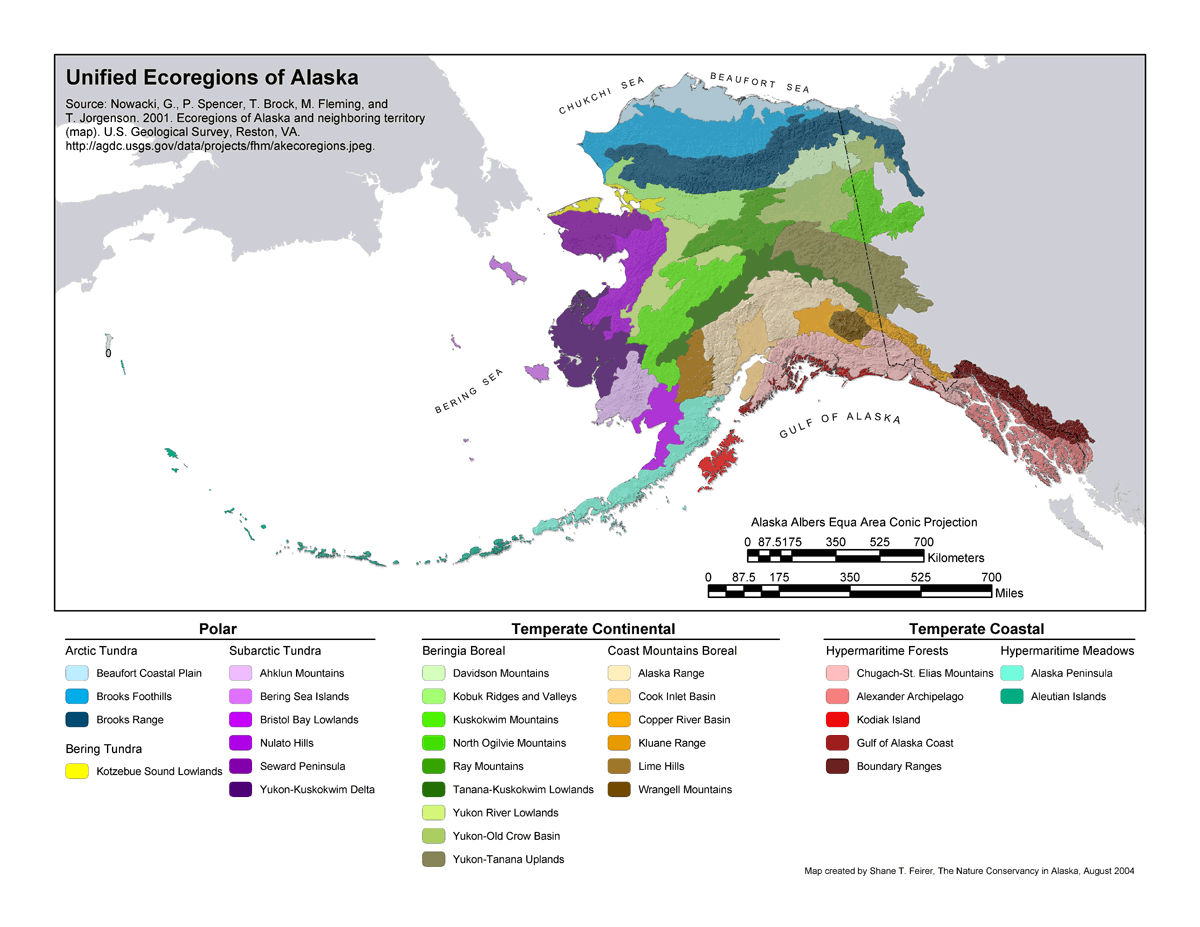
The climate is continental subarctic (Köppen: Dfc), but the short duration of the warm season and long winters give the town boreal features and in terms of vegetation is composed of taiga (Cook Inlet Basin[7]), different from the southcentral coastal more diversified.[8][9][10] Even though the cold, dry air comes from the north, the moisture acquired comes from the Gulf of Alaska.[11] That is, summers are between a short duration and an average duration. It is lighter than Yellowknife, Canada at similar latitudes due to the moderating effect of the Pacific Ocean and the adiabatic warming of the descending air from the surrounding mountains. The average annual temperature is 0.8 °C, the average precipitation is not as high but relatively well distributed during the year, about 686 mm on average.[12]
| Climate data for Talkeetna Airport, Alaska (1991–2020 normals,[a] extremes 1918–present) | |||||||||||||
|---|---|---|---|---|---|---|---|---|---|---|---|---|---|
| Month | Jan | Feb | Mar | Apr | May | Jun | Jul | Aug | Sep | Oct | Nov | Dec | Year |
| Record high °F (°C) | 47 (8) |
52 (11) |
55 (13) |
77 (25) |
87 (31) |
96 (36) |
93 (34) |
89 (32) |
78 (26) |
68 (20) |
52 (11) |
49 (9) |
96 (36) |
| Mean maximum °F (°C) | 39.4 (4.1) |
41.9 (5.5) |
48.5 (9.2) |
58.6 (14.8) |
74.4 (23.6) |
81.5 (27.5) |
81.6 (27.6) |
77.3 (25.2) |
67.5 (19.7) |
55.9 (13.3) |
41.6 (5.3) |
39.6 (4.2) |
84.3 (29.1) |
| Mean daily maximum °F (°C) | 21.8 (−5.7) |
28.2 (−2.1) |
34.6 (1.4) |
46.6 (8.1) |
58.7 (14.8) |
67.1 (19.5) |
68.7 (20.4) |
65.1 (18.4) |
56.0 (13.3) |
41.8 (5.4) |
27.9 (−2.3) |
23.4 (−4.8) |
45.0 (7.2) |
| Daily mean °F (°C) | 13.6 (−10.2) |
18.8 (−7.3) |
23.5 (−4.7) |
36.2 (2.3) |
47.7 (8.7) |
57.0 (13.9) |
60.1 (15.6) |
56.5 (13.6) |
47.5 (8.6) |
34.2 (1.2) |
20.6 (−6.3) |
15.6 (−9.1) |
35.9 (2.2) |
| Mean daily minimum °F (°C) | 5.4 (−14.8) |
9.4 (−12.6) |
12.4 (−10.9) |
25.8 (−3.4) |
36.7 (2.6) |
47.0 (8.3) |
51.4 (10.8) |
47.9 (8.8) |
39.0 (3.9) |
26.5 (−3.1) |
13.2 (−10.4) |
7.8 (−13.4) |
26.9 (−2.8) |
| Mean minimum °F (°C) | −23.7 (−30.9) |
−17.1 (−27.3) |
−11.7 (−24.3) |
8.9 (−12.8) |
26.7 (−2.9) |
37.0 (2.8) |
43.3 (6.3) |
37.1 (2.8) |
26.0 (−3.3) |
8.9 (−12.8) |
−9.9 (−23.3) |
−19.1 (−28.4) |
−28.2 (−33.4) |
| Record low °F (°C) | −48 (−44) |
−46 (−43) |
−43 (−42) |
−37 (−38) |
8 (−13) |
24 (−4) |
26 (−3) |
25 (−4) |
11 (−12) |
−21 (−29) |
−41 (−41) |
−53 (−47) |
−53 (−47) |
| Average precipitation inches (mm) | 1.34 (34) |
1.24 (31) |
1.08 (27) |
1.32 (34) |
1.56 (40) |
1.71 (43) |
2.87 (73) |
4.70 (119) |
4.48 (114) |
2.78 (71) |
1.77 (45) |
1.66 (42) |
26.51 (673) |
| Average snowfall inches (cm) | 22.3 (57) |
22.1 (56) |
15.0 (38) |
7.7 (20) |
1.0 (2.5) |
0.0 (0.0) |
0.0 (0.0) |
0.0 (0.0) |
0.7 (1.8) |
13.3 (34) |
23.3 (59) |
31.7 (81) |
137.1 (348) |
| Average precipitation days (≥ 0.01 inch) | 9.4 | 9.1 | 8.1 | 8.2 | 11.0 | 12.4 | 14.5 | 16.8 | 16.4 | 12.5 | 9.9 | 11.3 | 139.6 |
| Average snowy days (≥ 0.1 inch) | 10.3 | 9.5 | 8.0 | 3.8 | 0.5 | 0.0 | 0.0 | 0.0 | 0.5 | 5.6 | 11.6 | 13.0 | 62.8 |
| Average relative humidity (%) | 72.2 | 72.6 | 70.2 | 69.6 | 66.8 | 71.0 | 75.9 | 79.6 | 81.2 | 80.9 | 76.1 | 73.0 | 74.1 |
| Average dew point °F (°C) | 5.2 (−14.9) |
9.9 (−12.3) |
14.7 (−9.6) |
24.1 (−4.4) |
33.3 (0.7) |
44.1 (6.7) |
50.2 (10.1) |
47.8 (8.8) |
39.7 (4.3) |
27.0 (−2.8) |
11.5 (−11.4) |
3.9 (−15.6) |
26.0 (−3.4) |
| Source: NOAA (relative humidity and dew point 1961-1990, average snowfall/snow days 1981–2010)[13][14][15][16] | |||||||||||||
- Notes
- ^ Mean monthly maxima and minima (i.e., the highest and lowest temperature readings during an entire month or year) calculated based on data at said location from 1991 to 2020.
Demographics
[edit]| Census | Pop. | Note | %± |
|---|---|---|---|
| 1920 | 70 | — | |
| 1930 | 89 | 27.1% | |
| 1940 | 136 | 52.8% | |
| 1950 | 106 | −22.1% | |
| 1960 | 76 | −28.3% | |
| 1970 | 182 | 139.5% | |
| 1980 | 264 | 45.1% | |
| 1990 | 250 | −5.3% | |
| 2000 | 772 | 208.8% | |
| 2010 | 876 | 13.5% | |
| 2020 | 1,055 | 20.4% | |
| U.S. Decennial Census[17] | |||
Talkeetna originally appeared on the U.S. Census as a discreet village in 1920. Its population was included by the Census Bureau within the much-larger census-designated place (CDP) after 1990.
The 2020 population of the entire CDP (not just the village proper) was 1,055.[3] As of the census[18] of 2000, there were 772 people, 358 households, and 181 families residing in the CDP. The population density was 18.6 inhabitants per square mile (7.2/km2). There were 528 housing units at an average density of 12.7 per square mile (4.9/km2). The racial makeup of the CDP was 87.95% White, 3.76% Native American, 0.13% Asian, 1.30% from African American, and 6.87% from two or more races. 1.04% of the population were Hispanic or Latino of any race.
There were 358 households, out of which 28.2% had children under the age of 18 living with them, 38.0% were married couples living together, 7.3% had a female householder with no husband present, and 49.4% were non-families. Thirty-eight percent of all households were made up of individuals, and 6.7% had someone living alone who was 65 years of age or older. The average household size was 2.16 and the average family size was 2.92.
In the CDP, the population was spread out, with 23.3% under the age of 18, 5.8% from 18 to 24, 35.4% from 25 to 44, 29.4% from 45 to 64, and 6.1% who were 65 years of age or older. The median age was 39 years. For every 100 females, there were 113.3 males. For every 100 females age 18 and over, there were 114.5 males.
The median income for a household in the CDP was $38,289, and the median income for a family was $46,818. Males had a median income of $34,732 versus $26,250 for females. The per capita income for the CDP was $23,695. About 7.2% of families and 10.8% of the population were below the poverty line, including 8.8% of those under age 18 and none of those age 65 or over.
Economy
[edit]

Talkeetna is the base for expeditions to Denali.[19] The Denali National Park's Walter Harper Talkeetna Ranger Station is located in Talkeetna. Tourists travel to Talkeetna each summer to fish salmon, raft and go flightseeing.[20] Products by local artists, musicians and craftspeople are available in area stores.[21]
Susitna Dam
[edit]The Susitna Dam is a proposed hydroelectricity plan from the State of Alaska. On July 25, 2011, the Governor of Alaska signed a bill to construct the dam on the glacier-fed Susitna River.[22] The dam, if built to its full design height, would become the fifth-tallest of the nearly 850,000 dams on Earth. The Susitna River, America's 15th-largest by volume, flows unimpeded for 300 miles (480 km) from glacial mountains through one of the planet's last wild landscapes to meet the Pacific near Anchorage.
Soon after the dam's construction was announced, the Coalition for Susitna Dam Alternatives was formed to fight its construction. It is their argument that recreation, nature and the town would be severely threatened by the dam, and have compared it to the Three Gorges Dam in China.
Events
[edit]
Every March, the Oosik Classic Ski Race is organized by the Denali Nordic Ski Club. Distances are approximate and trail conditions are variable.
The Moose Dropping Festival, a two-day celebration held each July to raise funds for the Talkeetna Historical Society, came to an end with the announcement on August 21, 2009, by the organization that the festival had been canceled.[23][24] The 2009 event had drawn record crowds, resulting in multiple arrests and injuries, including one death.[25][24] The event was named after a lottery in which participants bet on numbered, varnished pieces of moose feces, or "moose droppings" dropped from a helicopter onto a target.
In December, the Wilderness Woman and Bachelor Auction & Ball takes place.[26]
Talkeetna's largest celebration of the winter, called Winterfest, takes place during the entire month of December, and features a motorized Parade of Lights, a Christmas tree in the Village Park, a Taste of Talkeetna, and numerous special events hosted by local businesses and special events at Talkeetna Public Library.
Clothing company Carhartt sponsors an event in Talkeetna every winter. The attendees tell stories about the mechanical, animal, and other encounters their Carhartt clothes have survived.[27][28]
Government
[edit]
Since Talkeetna is only a census-designated place, it is unincorporated.[30] Talkeetna has a Community Council[31] and its mayor was a cat named Stubbs from 1997 until his death in 2017.[32][33] It is located in Matanuska-Susitna Borough's District 7, which is represented by Assembly Member Vern Halter,[34] who succeeded borough mayor Larry DeVilbiss.[35]

A popular rumor states Stubbs was elected following a successful write-in campaign by voters who opposed the human candidates.[36] However, according to NPR, the cat could not have been elected as a write-in candidate because "The tiny town has no real mayor, so there was no election".[32] Stubbs' position is honorary as the town is unincorporated.[37] On August 31, 2013, Stubbs was attacked and mauled by a dog while roaming the streets and after treatment at the local veterinarian returned home on September 9.[38] Stubbs died on July 21, 2017, at the age of 20 years and 3 months.[39] A cat named Aurora has been the unofficial mayor of Talkeetna since 2017, succeeding Stubbs.[40]
Legislative representation
[edit]
The area-based apportionment scheme, established in the Alaska Constitution, was abolished following the decision of the U.S. Supreme Court in Reynolds v. Sims, affirmed by the Alaska Supreme Court in its decision in Nolan v. Wade. Both houses of the legislature were apportioned based strictly on population from this point forward.
Subsequent redistrictings created 40 House districts and 20 Senate districts. This was included with the redistricting amendments to the Alaska Constitution ratified by voters in 1998, which means that future redistricting boards are compelled to follow the same scheme.
|
Subsequent redistrictings created 40 House districts and 20 Senate districts. This was included with the redistricting amendments to the Alaska Constitution ratified by voters in 1998, which means that future redistricting boards are compelled to follow the same scheme.
|
Education
[edit]Talkeetna Elementary School is located near the heart of downtown. Grades K–6 are taught at this location. The mascot of Talkeetna Elementary School is the Timber Wolf.
A new Susitna Valley Junior-Senior High School opened in January 2010, replacing the one that burned to the ground in June 2007 while repairs were being made to the roof.[41] In the interim, classes were held in portables on the grounds of the Upper Susitna Senior Center. The mascot of Susitna Valley Junior-Senior High School is the Ram.
Media
[edit]Talkeetna has a community radio station, 88.9 KTNA, with locally hosted shows and NPR programming. Talkeetna has a local newspaper, the Good Times, which has a distribution of 7,500 year-round and serves the communities of Talkeetna, Trapper Creek, Willow, Houston and Big Lake, with additional distribution along the Parks Highway as far north as Nenana during the summer months. The Good Times is currently published every other week in print.[42] Publishers of the Good Times also publish a local area phone book and an annual visitors’ guide. Another newspaper, The Alaska Pioneer Press, which was under different ownership and was published monthly, ceased publication in January 2011, after its owners moved out of the area. Whole Wheat Radio, an independent webcast, began broadcast in 2002, which was relatively early, and ceased in 2010.[43][44]
Transportation
[edit]Talkeetna is served by Talkeetna Airport, which is home to several air taxi companies that provide flightseeing trips and support for mountain climbers. Many of the air taxi companies were started to ferry climbers from Talkeetna to Denali, as Talkeetna has the easiest access to the south side of the mountain where the main base camp is located. Legendary bush pilots such as Don Sheldon and Cliff Hudson, both based out of Talkeetna, pioneered glacier flying on Denali (formerly Mount McKinley). Their companies, Talkeetna Air Taxi and Hudson Air Service (now operating as Sheldon Air Service), respectively, are still in operation.[45]
The Talkeetna Airstrip is a restricted use airstrip and on the list of National Historic Places also.
Talkeetna Depot is a stop on the Denali Star, Aurora Winter Train, and Hurricane Turn trains of the Alaska Railroad.
Sunshine Transit provides public transit for the Upper Susitna Valley runs five days a week along the Talkeetna Spur Road. It serves the communities of Talkeetna, Trapper Creek, Willow and Houston[46]
In popular culture
[edit]The town of Talkeetna was mentioned in Travel Channel's Man v. Food. In season 2 episode 16, the host travels to the Roadhouse, a restaurant in Talkeetna, to sample their unique breakfast dishes.[47] Also featured is West Rib Pub & Cafe.
The town of Cicely from the television series Northern Exposure has been said that it could be patterned after Talkeetna by a journalist,[48] but it has not been confirmed by any cast member. Filming actually took place in Roslyn, Washington.[49]
Talkeetna features heavily in Railroad Alaska[50] on Discovery Channel. The show has three seasons and deals with the lives of people who work the railway, and off-the-grid residents who depend on the railroad for supplies and access to medical facilities.[50]
References
[edit]- ^ "2020 U.S. Gazetteer Files". United States Census Bureau. Archived from the original on March 18, 2021. Retrieved October 29, 2021.
- ^ "Talkeetna". Geographic Names Information System. United States Geological Survey, United States Department of the Interior. Retrieved July 7, 2025.
- ^ a b "2020 Census Data - Cities and Census Designated Places". State of Alaska, Department of Labor and Workforce Development. Archived from the original on August 13, 2021. Retrieved October 31, 2021.
- ^ "Talkeetna history". Talkeetna Chamber of Commerce. Archived from the original on May 12, 2008. Retrieved June 15, 2009.
- ^ "Nagley's Store history". Archived from the original on June 17, 2009. Retrieved June 19, 2009.
- ^ "Talkeetna Roadhouse history". Archived from the original on December 22, 2012. Retrieved June 19, 2009.
- ^ Feirer, Shane T. (August 2004). "Ecorregions of the Alaska". Alaska Department of Fish and Game. The Nature Conservancy in Alaska. Archived from the original on May 2, 2018. Retrieved March 4, 2019.
- ^ "Talkeetna, Alaska Travel Weather Averages (Weatherbase)". Weatherbase. Archived from the original on October 11, 2021. Retrieved March 4, 2019.
- ^ Gates, Nancy (November 2006). The Alaska Almanac: Facts about Alaska. Graphic Arts Center Publishing Co. ISBN 9780882406527.
- ^ Ring of Fire, Resource Management Plan: Environmental Impact Statement. 2006.
- ^ "An Ecological Overview of Denali National Park and Preserve (U.S. National Park Service)". www.nps.gov. Archived from the original on March 6, 2019. Retrieved March 4, 2019.
- ^ "Climate Talkeetna: Temperature, Climograph, Climate table for Talkeetna - Climate-Data.org". en.climate-data.org. Archived from the original on July 27, 2018. Retrieved July 27, 2018.
- ^ "NOWData – NOAA Online Weather Data". noaa. Archived from the original on February 16, 2022. Retrieved March 15, 2018.
- ^ "U.S. Climate Normals Quick Access (1991–2020)". National Oceanic and Atmospheric Administration. Archived from the original on September 11, 2022. Retrieved September 11, 2022.
- ^ "U.S. Climate Normals Quick Access (1981–2010)". National Oceanic and Atmospheric Administration. Archived from the original on September 11, 2022. Retrieved September 11, 2022.
- ^ "WMO Climate Normals for TALKEETNA, AK 1961–1990". National Oceanic and Atmospheric Administration. Archived from the original on September 3, 2023. Retrieved September 3, 2020.
- ^ "Census of Population and Housing". Census.gov. Archived from the original on September 19, 2018. Retrieved June 4, 2016.
- ^ "U.S. Census website". United States Census Bureau. Archived from the original on July 9, 2021. Retrieved January 31, 2008.
- ^ "Alaska rescue helicopter crash kills all three onboard - Yahoo! News". Archived from the original on April 3, 2013. Retrieved April 2, 2013.
- ^ "Denali Flightseeing". The Anchorage Daily News. Archived from the original on June 17, 2009. Retrieved June 19, 2009.
- ^ Thiessen, Mark (June 22, 2020). "Quirky Alaska town struggles for survival amid coronavirus tourism fallout". USA TODAY. Archived from the original on June 23, 2020. Retrieved June 23, 2020.
- ^ "Susitna-Watana Dam Project". Talkeetna Community Council, Inc. September 7, 2011. Archived from the original on November 5, 2013. Retrieved June 22, 2013.
- ^ "Talkeetna Moose Dropping Festival". Talkeetna Historical Society. Archived from the original on July 1, 2009. Retrieved June 19, 2009.
- ^ a b Yack, Patrick (August 25, 2009). "Moose Dropping Festival Dropped". Alaska Public Media. Retrieved June 25, 2023.
- ^ Holland, Megan; Hopkins, Kyle (July 13, 2009). "Talkeetna Moose Dropping Festival turns to mayhem (7/13/09)". Anchorage Daily News. Archived from the original on February 1, 2023. Retrieved June 25, 2023.
- ^ "Talkeetna Bachelors are back on the market". Talkeetna Bachelor Society. Archived from the original on May 15, 2013. Retrieved June 19, 2009. Talkeetna's biggest annual winter celebration, known as Winterfest, takes place throughout the entire month of December.
- ^ Singer, Natasha (October 1, 2002). "In Alaska, These Pants Save Lives. Do You Own a Pair?". Outside Online. Retrieved October 7, 2024.
- ^ Stowe, Jay (October 4, 2024). "How I Discovered the Story of Alaska's Lifesaving Pants". Outside Online. Retrieved October 7, 2024.
- ^ "Talkeetna, AK - Cat Mayor". RoadsideAmerica.com. Retrieved June 30, 2023.
- ^ "Archived copy". Archived from the original on October 17, 2012. Retrieved July 27, 2012.
{{cite web}}: CS1 maint: archived copy as title (link) - ^ "TKA Community Council". www.tkacouncil.org. Archived from the original on October 22, 2020. Retrieved July 27, 2012.
- ^ a b "Following Up On Tuesday's Feline Mayor Story". Morning Edition. NPR. July 18, 2012. Archived from the original on May 20, 2013. Retrieved April 5, 2018.
The tiny town has no real mayor"
- ^ "100 Awesome Facts About Everything". MSN. Archived from the original on March 6, 2019. Retrieved February 20, 2020.
- ^ "District 7". Matanuska-Susitna Borough. Archived from the original on March 6, 2019. Retrieved July 17, 2012.
- ^ "Matanuska-Susitna Borough Mayor". Archived from the original on July 28, 2012. Retrieved July 27, 2012.
- ^ "Alaska town: Feline mayor is the cat's pajamas". Houston Chronicle. July 15, 2012. Archived from the original on October 22, 2012. Retrieved July 15, 2012.
- ^ Friedman, Amy (July 17, 2012). "Cat Marks 15 Years as Mayor of Alaska Town". Time. Archived from the original on July 20, 2012. Retrieved July 18, 2012.
- ^ "Alaska town's honorary cat mayor goes home after dog attack". Fox News. Archived from the original on September 24, 2015. Retrieved September 23, 2013.
- ^ Stubbs, Talkeetna’s honorary cat mayor, dies Archived July 23, 2017, at the Wayback Machine, by Chris Klint, at KTVA; published July 23, 2017; retrieved July 23, 2017
- ^ Schreck, Carly; Allgood, Dave (May 28, 2024). "Roadtrippin' 2024: Seeing Aurora in Talkeetna". Alaska's News Source. Retrieved November 26, 2024.
- ^ Moses, John (June 7, 2007). "Su Valley Jr./Sr. High burns; Talkeetna school a total loss". Mat-Su Valley Frontiersman. Archived from the original on January 14, 2011. Retrieved June 19, 2009.
- ^ "Talkeetnatimes.com". Talkeetnatimes.com. Archived from the original on April 25, 2017. Retrieved July 23, 2017.
- ^ News-Matsu Archived December 26, 2013, at the Wayback Machine, an online news source covering the Mat-Su Borough, was launched in 2013.
- ^ Deyoe, Sue (October 26, 2010). "Whole Wheat Radio ends its 8 year run". KTNA. Archived from the original on December 18, 2010. Retrieved June 9, 2011.
[...] announced the end of his website [...] unique online radio station over 8 years ago, which might have been a first for Alaska in the online world.
- ^ "Denali Park Transportation and Support Services". National Park Service. Archived from the original on July 15, 2012. Retrieved July 16, 2012.
- ^ Welcome to Sunshine Transit! Accessible Transportation for Everyone!
- ^ KTNA Staff (October 5, 2009). "Man V. Food comes to Talkeetna". KTNA 88.9 FM. Retrieved January 10, 2024.
- ^ Woodmancy, Don (January 16, 2003). "Talkeetna, Alaska". Roadtrip America. Archived from the original on April 4, 2013. Retrieved June 19, 2009.
- ^ "A Town Goes Alaskan for 'Northern Exposure'". The New York Times. June 17, 1991. Retrieved June 19, 2009.
- ^ a b "Railroad Alaska (TV Series 2013– )". IMDb. November 16, 2013. Archived from the original on February 12, 2017. Retrieved July 1, 2018.
External links
[edit] Media related to Talkeetna, Alaska at Wikimedia Commons
- The Talkeetna Chamber of Commerce
- newsmatsu.com, online news for Talkeetna and the Mat-Su
- Talkeetna Historical Society
- Denali NPS Ranger Station Talkeetna

Municipalities and communities of Matanuska-Susitna Borough, Alaska, United States | ||
|---|---|---|
| Cities | 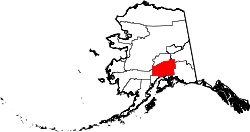 | |
| CDPs |
| |
| Former CDPs | ||
| Unincorporated communities |
| |


| International | |
|---|---|
| National | |
| Geographic | |
| Other | |


Talkeetna, Alaska
View on GrokipediaTalkeetna is an unincorporated census-designated place in the Matanuska-Susitna Borough of south-central Alaska, United States.[1]
Located at the confluence of the Susitna, Chulitna, and Talkeetna rivers, it serves as the primary gateway community for access to Denali National Park and Preserve, facilitating mountaineering expeditions and flightseeing tours to Denali, North America's highest peak.[1][2]
The community originated in 1916 when the Alaska Engineering Commission selected the site as a district headquarters for constructing the Alaska Railroad northward from Anchorage.[3]
As of the 2020 United States census, Talkeetna had a population of 1,055 residents, with its economy reliant on tourism, aviation services, and support for outdoor recreation in the surrounding wilderness.[1][4]
History
Founding and Early Settlement
The area now known as Talkeetna was utilized by Dena'ina Athabascan people for seasonal fishing, trading, and summer camps dating back 4,000 to 6,000 years, with the site referred to as K'dalkitnu, meaning "food-is-stored river" or denoting the confluence of the Talkeetna, Susitna, and Chulitna rivers.[3][5] European prospecting began with a gold strike on the Susitna River in 1896, establishing Talkeetna as a mining town and supply point for riverboat traffic, supplemented by an Alaska Commercial Company trading post; further discoveries at Cache Creek in 1905–1906 drew additional miners, though early settlement efforts largely failed and the site was considered abandoned by 1910.[5][6][7] Permanent settlement coalesced in 1915 when the Alaska Engineering Commission selected Talkeetna as the district headquarters for the Seward-to-Fairbanks segment of the Alaska Railroad, spurring construction and population growth to over 1,000 residents by 1917.[3][6][7] A post office opened in 1916–1917 under postmaster Charles A. Anderson, followed by H.W. Nagley's general store in 1917 and the town's formal survey in 1918; on October 16, 1919, railroad surveyors auctioned 80 lots, 41 with existing structures, formalizing the community amid railroad tracks extending from milepost 209 to 227.[6][5] Early infrastructure included a sawmill, cigar shop, and cabins, supporting miners and railroad workers, though growth stalled post-1919 due to the Spanish flu epidemic, World War I demobilization, and railroad completion shifting activity northward.[3][7]Railroad Development and Economic Expansion
In 1915, Talkeetna was designated as a district headquarters for the construction of the Alaska Railroad's Seward-to-Fairbanks line, transforming the small mining settlement into a logistical hub for the federally funded project authorized by Congress that year.[7] Railroad crews advanced tracks northward from Anchorage, reaching Talkeetna by November 1916, which established the community as a critical supply and construction base amid the challenging terrain of the Susitna River valley.[8] This development integrated Talkeetna into the broader Alaska Railroad system, which aimed to connect coastal ports with interior resources and was completed to Fairbanks in 1923.[9] The railroad's arrival catalyzed economic expansion by enabling efficient freight and passenger transport, which lowered costs and expanded access to markets for local resources. Sawmills proliferated to produce railroad ties from nearby timber, while trading posts and supply depots catered to construction workers, prospectors, and trappers, fostering a cash-based economy in place of prior subsistence patterns.[10] Gold mining in the Talkeetna Mountains and Willow Creek district benefited directly, as rail lines facilitated shipment of equipment and ore, with Talkeetna serving as an outfitting point for claims along the Susitna River that dated to the 1890s gold rush but scaled up post-1916.[11] This influx supported ancillary businesses, including a post office opened in 1916 and general stores stocking imported goods, drawing settlers and boosting transient employment tied to railroad maintenance and seasonal mining.[8] By the early 1920s, the railroad had solidified Talkeetna's role as a regional economic node, with spur lines and section houses sustaining operations and indirectly promoting agricultural settlement in the Matanuska Valley through improved connectivity.[12] However, economic volatility persisted, as mining output fluctuated with gold prices and labor demands waned after mainline completion, though the infrastructure laid the foundation for sustained commerce in freight handling and resource extraction.[13] The railroad's emphasis on practical utility over speculative ventures underscored causal links between transport infrastructure and localized growth, prioritizing verifiable resource flows over unsubstantiated booms.[14]Post-War Changes and Historic Preservation
Following World War II, Talkeetna experienced continued population decline from its early 20th-century peak of over 1,000 residents during the Alaska Railroad construction, stabilizing at 136 by 1940 as mining and rail activities waned.[3] In the 1950s, renewed efforts expanded the local airport, facilitating air access that supported emerging aviation-based economies, while Alaska's 1959 statehood introduced broader infrastructure improvements, including highway extensions that indirectly enhanced regional connectivity without fully integrating Talkeetna into road networks.[3] By 1971, federal "open to entry" land sales in the area doubled the population from approximately 150 to 300 residents, prompting construction of new schools and the closure of the original territorial schoolhouse built in 1936-37.[3] Census data reflect gradual growth thereafter, reaching 264 by 1980.[3] Economically, the post-war period marked a transition from reliance on railroad supply services and seasonal gold mining—activities that had sustained the town through the 1930s—to aviation-supported mountaineering and tourism centered on Denali access.[3] Bush pilots increasingly used Talkeetna as a base for expeditions starting in the mid-20th century, capitalizing on the town's proximity to the Alaska Range and the decline of rail dominance after highway and air travel advancements.[15] This shift accelerated in the 1990s with tourism growth, driven by international climbers and visitors drawn to Denali's prominence, generating jobs in guiding, lodging, and related services while population rose to 772 by 2000.[3] Historic preservation efforts gained momentum through the Talkeetna Historical Society, which collects, researches, and interprets local heritage to maintain the area's character via artifacts, stories, and structures.[16] The society's museum, housed in the repurposed 1936-37 territorial school building, opened to showcase native, mining, railroad, aviation, and climbing history, including a detailed Denali model.[3] Culminating these initiatives, in 1993 a 2-by-3-block downtown district—featuring early 20th-century buildings like stores and inns from the railroad era—was listed on the National Register of Historic Places, recognizing its role in Alaska's gold rush and transportation development.[3] These measures have preserved architectural remnants of Talkeetna's founding industries amid modern tourism pressures, ensuring continuity of its unincorporated village identity.[17]Geography
Location and Physical Features
Talkeetna is situated in the Matanuska-Susitna Borough in south-central Alaska, approximately 115 miles north of Anchorage along the George Parks Highway (Alaska Route 3).[11] Its geographic coordinates are approximately 62.32°N latitude and 150.11°W longitude.[18] The community lies within the broader Cook Inlet region, which encompasses parts of the Talkeetna Mountains and adjacent lowlands.[19] The town occupies a low-elevation site at about 341 feet (104 meters) above sea level, positioned at the junction of the Talkeetna River and the Susitna River, with the Chulitna River converging nearby upstream on the Susitna.[18][11][20] The Talkeetna River, originating in the Talkeetna Mountains, flows 85 miles (137 km) to its confluence with the Susitna at an elevation of roughly 331 feet (101 meters).[21] These rivers form a braided, sediment-laden network typical of glacial outwash plains in the region, supporting a valley floor of taiga forests, wetlands, and meandering channels. To the east rise the Talkeetna Mountains, a rugged range spanning about 100 miles north-south and 70 miles east-west, with peaks exceeding 5,000 feet (1,524 meters) and featuring alpine terrain, glaciers, and fault systems like the Caribou Fault.[22][23] Westward, the Alaska Range looms, including Denali at 20,310 feet (6,190 meters), visible from Talkeetna on clear days and influencing local hydrology through glacial melt contributions to the rivers.[23] The local terrain consists of glacial till, outwash deposits, and boreal woodland, shaped by Pleistocene glaciation and ongoing fluvial processes in the Susitna basin.[19]Climate and Environmental Conditions
Talkeetna features a cold, continental subarctic climate (Köppen Dfc), marked by significant seasonal temperature variations, low humidity relative to coastal Alaska, and moderate precipitation dominated by winter snowfall.[24] Average annual temperatures hover around 36°F, with extremes ranging from below -17°F in winter to above 79°F in summer, though such outliers are infrequent.[25] Winters, spanning roughly November to March, bring average January highs of 20°F and lows near 2°F, accompanied by persistent snow cover that accumulates to about 110 inches annually.[26] [27] Summers are short and mild, peaking in July with average highs of 68°F and lows of 51°F, supporting brief periods of continuous daylight near the summer solstice.[24] Annual precipitation measures approximately 26 inches in liquid equivalent, distributed relatively evenly but with peaks in late summer from convective rains and spring snowmelt; snowfall accounts for the majority of winter totals.[28] [26] The region experiences about 114 rainy or snowy days per year, contributing to a landscape shaped by freeze-thaw cycles rather than persistent maritime influences.[25] Environmentally, Talkeetna lies within the taiga biome of interior Alaska's boreal forest, characterized by coniferous stands of black and white spruce interspersed with deciduous birch and aspen in riparian zones along the Susitna and Talkeetna Rivers.[29] These forests support wildlife including moose, black and grizzly bears, wolves, and caribou, with ecosystems adapted to acidic soils, permafrost pockets, and short growing seasons.[30] Natural hazards include riverine flooding from ice jams and rapid snowmelt, affecting up to 675 properties over 30-year projections, as well as occasional wildfires fueled by dry continental summers.[31] Seismic activity from nearby faults poses earthquake risks, while broader Alaska trends of permafrost degradation and warming—evident in reduced snow persistence—exacerbate erosion and alter hydrologic patterns, though local data show contained impacts compared to Arctic or coastal zones.[32] [33]Demographics
Population Dynamics
The population of Talkeetna, a census-designated place in the Matanuska-Susitna Borough, has exhibited modest growth over the long term, driven primarily by in-migration attracted to its remote natural setting and tourism-related opportunities near Denali National Park. According to U.S. Census data, the population stood at 772 in 2000, increasing to 876 by 2010—a 13.5% rise over the decade, reflecting broader regional expansion in the borough fueled by affordable housing relative to Anchorage and appeal to outdoor enthusiasts.[34] [35] By the 2020 Census, the figure reached 1,055, marking an additional 20.4% growth from 2010, consistent with net domestic migration patterns in southcentral Alaska where economic factors like resource industries and recreation draw residents from urban centers.[35]| Year | Population | Percent Change from Prior Decade |
|---|---|---|
| 2000 | 772 | — |
| 2010 | 876 | +13.1% |
| 2020 | 1,055 | +20.4% |