Recent from talks
Nothing was collected or created yet.
Tanta
View on WikipediaTanta[a] is a city in Egypt. The city has a population of 597,694 in 2023, making it the fifth most populous city in Egypt.[3] Tanta is located between Cairo and Alexandria: 94 km (58 mi) north of Cairo and 130 km (81 mi) southeast of Alexandria. The capital of Gharbia Governorate,[4] it is a center for the cotton-ginning industry.[5]
Key Information
A key city in Egypt, Tanta is both a major commercial hub and a significant cultural center. One of the major railway lines in Egypt passes through Tanta, enhancing its connectivity and importance.[6][7] Tanta is also famed for its sweet shops and snack industry, particularly for its roasted chickpeas and confections like Hab El-Aziz.[8] In addition to food production, the city is known for its oil, soap, flax, and textile industries. It hosts both Tanta University and a branch of Al-Azhar University, the only two universities in the governorate, offering diverse academic disciplines. The city also includes the historic Ahmadi Mosque, a long-standing center for Islamic scholarship.
Historically, Tanta dates back to the Late Period of ancient Egypt and has gone by several names over time, such as Tanitad, Tantathna, and Tantata. It witnessed massive urban expansion, especially during the reign of Isma'il Pasha and later between the 1950s and 1970s, absorbing farmland and neighboring villages like Qaffaha, Sejer, and Satouta, and connecting with villages such as Sibrbay, Mahalla Marhom, Meet Habeesh El-Bahareya, and Kafr Essam.
Etymology
[edit]The current name of the city, Tanta, is a modified form of its ancient Coptic name Tanitad (Tantant).[b][9] Over time, the name underwent several transformations before reaching its present form. The geographer Ibn Hawqal (d. 380 AH) referred to it as "Tantata" in his book Ṣūrat al-ʾArḍ.[10] Al-Idrisi (d. 560 AH) mentioned it as "Tantana" in his work Nuzhat al-Mushtāq fī Ikhtirāq al-Āfāq.[11]
Al-As'ad ibn Mamati (d. 606 AH) recorded the name as "Tandata" in his book Qawānīn al-Dawāwīn.[12] Ibn Jubayr (d. 614 AH) referred to it as "Tandata" in his travelogue Riḥlat Ibn Jubayr.[13] Yaqut al-Hamawi (d. 626 AH) cited the name as "Tantathna",[14] and Ibn Duqmaq (d. 709 AH) used the form "Tandata".[15]
Tanta is also known as the "City of Shaykh al-Arab" and the "City of al-Badawi".[16]
History
[edit]Archaeological evidence indicates that the area of present‑day Tanta was inhabited as early as the reign of Egypt’s 26th Dynasty. A red granite block bearing the name of Pharaoh Ahmose II (570–526 BCE) was discovered near the Ahmad al‑Badawi Mosque, suggesting the settlement may have been known in antiquity as *Tanasu* or *Tanaso*. During the 4th century BCE, Greek sources referred to the town as “Tanitad,” and in the Roman period it was known as “Tantathna,” where it also maintained a local council of elders. The French Egyptologist Georges Daressy proposed that in the Greek period the settlement may have been called *Tawa*, *Tawwa*, or *Tafa* in Latin. In the Byzantine era, it appeared as *Tou* and was the seat of a significant bishopric.
During the Muslim conquest of Egypt, the settlement retained the name “Tanitad,” which later evolved into “Tantada.” It remained a small village until the 11th century CE, when it became the capital of the Tandtawi district under the Fatimid Caliph Al‑Mustansir Billah, who appointed a governor to administer it. Subsequently, the administrative structure changed, and Tantada became part of the larger Gharbia Governorate with its capital at Mahalla. Under the rule of Saladin, the village expanded to cover about 100 feddans.
Tanta regained prominence in the 13th century with the arrival of the Sufi figure Ahmad al‑Badawi, who settled there circa 634–637 AH. His annual birthday festival transformed the town into a major commercial hub and attracted the attention and patronage of local rulers and leaders of the Badawiyyah Sufi order. The celebration is still held at the Ahmad al‑Badawi Mosque, the city’s most significant religious monument.
The city’s development continued under Ali Bey al‑Kabir, who initiated construction of the present Ahmad al‑Badawi Mosque, funded salaries for teachers and students, and established commercial infrastructure including shops and caravanserais. During this period, goods such as Indian textiles and Yemeni coffee became common in local markets.
Following the French invasion of Egypt in 1798, a French battalion under General Le Fèvre reached Tanta on 7 October, at a time when pilgrims were gathered for the annual festival. Encouraged by the local governor, Salim al‑Shurbagi, worshippers resisted the French, briefly forcing their retreat. This popular uprising later became commemorated as the national day of Gharbia Governorate. The French returned three days later, besieged the town, shelled it, and captured it. They arrested the custodians of the Ahmad al‑Badawi shrine and imposed heavy fines on both the shrine and the population. During the occupation, the French administration reassigned Tanta to the Monufia Governorate.
Scholars of the French campaign estimated Tanta’s population at around 10,000 and noted the presence of 12 commercial agencies. The Ottoman traveler Evliya Çelebi later described the town as having 1,500 houses, eight large mosques, 32 smaller mosques, seven schools, and seven caravanserais, and also noted the tomb of Ahmad al‑Badawi.
In 1813, Muhammad Ali Pasha reorganized the Nile Delta, restoring Tanta to Gharbia province, which then comprised two‑thirds of the Delta’s land. Tanta became the capital of a district that included 12 villages. It officially replaced Mahalla as the capital of Gharbia Governorate in 1836 and, between 1856 and 1874, served at intervals as the capital of the province of Rawdat al‑Bahrayn, which encompassed much of the Delta except Damietta.
Tanta flourished during the 19th‑century cotton export boom, becoming a regional industrial and commercial center and attracting migrants from across Egypt and abroad, including Levantines, Jews, British, Italians, and French.
In 1888, Ali Mubarak Pasha described Tanta as an overcrowded city with narrow streets and poorly constructed buildings. Under Khedive Ismail, however, the town underwent significant urban development, including wider avenues, a municipal engineer, and a health director. By that period it extended over approximately 180 feddans. Several educational institutions were established, including the Saint Louis School, a convent school, an American missionary school, and Tanta Secondary School. The Alliance Israélite Universelle opened a school in 1905 that enrolled 220 students in its first year.
During the 1919 Revolution, Tanta experienced frequent disruptions to railway and telegraph lines. On 12 March, British forces fired on unarmed demonstrators, killing 16 and injuring 49. On 18 November, some 40,000 people marched in protest, prompting the authorities to require passports for entry into the city.
In 1921, following a decree by Sultan Hussein Kamel establishing a delegation led by Adly Yakan to negotiate with the British, local residents protested, demanding that Saad Zaghloul lead the talks. Demonstrations spread, leading to closures of shops, factories, and cafés, and telegrams were sent to the government expressing local demands.
Tanta was among the cities involved in the 1935 Egyptian protests, which sought restoration of the 1923 Constitution and an end to British occupation. Students from the Ahmadi Institute led protests beginning on 13 November, resulting in clashes with police; one demonstrator was killed and dozens were wounded. A large peaceful march followed on 18 November, and the city observed strikes and school closures until the constitution was reinstated. Further unrest in January 1936 led to the temporary closure of Tanta Secondary School and the Ahmadi Institute, with continued disturbances until the formation of the first government under Ali Mahir Pasha.
In 1960, the villages of Qaffaha and Kafr Sejer were annexed to the city as part of its urban expansion. Tanta also played a role in the Egyptian revolution of 2011, witnessing large demonstrations. In 2013, the city hosted both pro‑ and anti‑Mohamed Morsi protests, reflecting its continued political significance.
Geography
[edit]
Tanta is located in the center of the Nile Delta in northern Egypt, in the southern part of the Gharbia Governorate. It occupies a central position relative to Cairo, Alexandria, and most other cities of the Delta. Like the rest of the Delta, the city’s soil is black, alluvial, and formed from Nile silt. This fertile and flat terrain facilitated the city’s urban expansion and its integration with surrounding villages. The city is bordered to the north and east by the Qasr Drain, and to the west and south by the Tanta Canal. In the past, various canals such as the Ja'fariyya Canal ran through what is now the urban area.
Tanta experienced a major wave of urban expansion between 1947 and 1976, marked by the spread of informal housing on its agricultural outskirts. This was driven by rural-to-urban migration, increased job opportunities, and the development of modern roads and transportation. Most of the growth occurred to the north and west, near the Cairo–Alexandria agricultural road, and extended southward, leading to the expansion of areas like Kafrat Satouta and Kafrat Al-Ajezi. These areas eventually connected with Kafr Sejer, prompting their incorporation into the city, along with Qaffaha, in 1960.
The southeastern expansion was limited due to poor services, proximity to cemeteries, and the presence of railway workshops, which hindered development. However, the area later attracted industrial activity because of cheap land prices, drawing both migrants from rural areas and residents displaced from the Suez Canal region after the 1967 war.
Between 1976 and 1986, the city expanded further to reach Sibrbay, where a campus for Tanta University, branches of Al-Azhar University, and a broadcasting center were established. It also extended toward Mahalla Marhom and Meet Habeesh El-Bahareya, separated from the city only by the Qasr Drain. This expansion was fueled by population growth, rising living standards, and the economic influence of Egyptian expatriates in the Gulf region. These surrounding villages continue to attract people for work or residence and serve as hubs for commercial and educational activities.
Tanta faces several urban challenges, including encroachment on fertile farmland, the deterioration of the old city center, lack of public services, and environmental pollution. These issues are compounded by the governorate’s lack of a desert hinterland, weak oversight of urban development, and poor coordination among local authorities.
Old Core
[edit]
The heart of the city sits approximately three meters above the surrounding agricultural lands, as it was built atop ancient mounds. In the Middle Ages, the city was limited to the area around the Ahmadi Mosque, surrounded by canals to the east and south and enclosed by high walls. During the reign of Isma'il Pasha, Tanta expanded beyond these walls, with a new district established to the west of the old core. This district housed the headquarters of Gharbia Governorate, several government buildings, palaces, and four foreign consulates (Italian, French, Persian, and Greek). Cotton ginneries and storage facilities were later built to the north of the old city center.
Today, the population of this old core is declining due to higher commercial land values, prompting residents to move toward the city’s outskirts. Urban sprawl extended eastward in an unplanned manner to areas like Al-Kafra Al-Sharqiya and Kafr El-Qurashi, and northward to areas such as Kafr El-Kurdi (also known as Kafr Ali Agha El-Kurdi), Kafr Taher, and Kafr Gharib. West of the old city, Kafrat al-Bahariya emerged, while to the south, neighborhoods like Kafrat Sheikh Salim and Kafrat Ibrahim El-Masry appeared near the site of present-day Kafr Satouta.
Area Expansion
[edit]Estimates of the city’s size vary depending on the source. The Central Agency for Public Mobilization and Statistics (CAPMAS) reported that Tanta covered 909 feddans in 1937, growing to 1,515 feddans by 1970, and reaching 8.81 km² in 1976. In 2007, the city’s area was estimated at approximately 3,604 feddans, including about 1,258.57 feddans for residential use, 547.31 feddans for public services, and 181.52 feddans for economic activities.
By 2006, the area was estimated at 19.04 km², and by 2013, it had grown to 23.26 km². In 2019, Tanta's area was measured at 20.2 km², representing 6.1% of the total area of the Tanta district. Of this, residential zones made up 30.8%, agricultural land 23.6%, educational use 3.5%, and health services 0.7%.
Divisions
[edit]

Tanta is divided into 27 shiakhas (neighborhood units), with 10 located in the First District and 17 in the Second District. Additionally, there are 6 shiakhas under the jurisdiction of the Third Police Division. Historically, the city was divided into 15 shiakhas—seven in the First District (including Al-Borsa, Al-Dawawin, Sejer, Al-Muhatta, Marzouk, Al-Saa'a, and Wabor El-Nour) and eight in the Second District (including Al-Salkhana, Al-Omari, Al-Kafra Al-Sharqiya, Al-Malga, Sabry, Ali Agha, Qaffaha, and Khareg Al-Kordon).
Demographics
[edit]Population
[edit]Tanta is a densely populated city; it is the third-largest city in the Nile Delta and the ninth-largest in Egypt. As of January 2025, its population was estimated at 604,653. This large population is primarily due to two main factors: natural population growth and rural-to-urban migration, as Tanta is one of the main destinations for migrants within the Delta.
Due to this population increase, Tanta’s urban sprawl has merged with the nearby villages and hamlets of Qaffaha, Kafr Essam, Sibrbay, Kafr Sejer, Kafr Satouta, and El-Agaizi.
The city’s population growth rate between 1996 and 2006 was 1.2653 (approximately 1.29% annually). The average household size was 3.7, and the infant mortality rate stood at 19.81 per 1,000 live births in 2006. The significant population increase in Tanta is mainly attributed to migration, which accounted for 89.1% of the city's population growth between 1986 and 1996, and 93.1% between 1996 and 2006.
To help accommodate this demographic expansion, the government has developed several public housing projects in areas such as Al-Salam, Shawqi Housing, Al-Tabari, Corniche Street (Tanta), New Qaffaha, Al-Sarie Housing, Al-Omari, Rat’at Al-Dafraweya, Al-Janabeya, New Stables, and the Youth City.
Religion
[edit]
The majority of Tanta’s population are Sunni Muslims, with a Christian minority—primarily Coptic Orthodox Christians—similar to most other Egyptian cities. The city is home to the headquarters of the Ahmadiyya Sufi order, located at the Ahmadi Mosque.
According to the 1986 census, the number of Muslims in the city was 311,516, while Christians numbered 24,982, out of a total population of 336,517 at the time. The Coptic Orthodox Church in Tanta is headed by Anba Boula, the Metropolitan of Tanta and its surrounding areas.
In the past, the city was home to a small Jewish community, which numbered 943 people in the 1926 census. This community had a lodge called Ohel Moshe, and three synagogues: the Magrabi Synagogue (the oldest), one established by Bekhor Mouton in 1908, and another built by Luna Bouton in 1924.
Economy
[edit]The city's central location has contributed to the growth of industrial settlement within it. As the capital of the Gharbia Governorate, it has become a hub for industries and services that cater to other cities in the region. Its position amid agricultural lands has also made it a center for the trade of agricultural products. In 2019, the city's labor force reached 143,060—a 24.2% increase from 115,226 in 1996.

The largest segment of the population works in the services sector, which employed 85,316 people in 2019, representing 59.6% of the workforce. Although the number of service workers rose compared to 2017, their percentage of the total workforce slightly declined from 59.9%.
Industry
[edit]Historically, sources mention that Tanta’s traditional industry was the production of karaka linen, which was exported to Syria. Today, the city hosts an industrial zone along Galaa Street, which includes the Delta Spinning and Weaving Company, Misr Dairy Company, and the Tanta Oil and Soap Company. In addition, there are many private sector factories engaged in a variety of light industries, such as fertilizers, sweets, agricultural pesticides, and food products, as well as rice mills and cotton ginneries.
Tourism
[edit]The birthday celebration festival of al-Badawi is considered one of the most famous religious festivals in Egypt, with its prominence dating back to the Mamluk era. It is said that around 150,000 people visited during the French campaign, and that number rose to 100,000 in the early 19th century. By the 1860s, after Tanta was connected by rail, attendance reached nearly one million. Today, it is estimated that between one and three million people attend the festival.
The celebration lasts for one week each October under tight security and draws thousands of Sufi followers from all across Egypt. It is also an important commercial season, attracting vendors who sell sugarcane, rice pudding, koshary, flags, and other goods to visitors. During this time, sweet shops, cafés, and restaurants experience a significant economic boom.
The city's most prominent Christian landmark is the St. George Coptic Orthodox Church, which was established by a royal decree from King Fuad I in 1934 and completed in 1939. It is the largest church in Tanta. The church was the target of a terrorist attack during the Palm Sunday church bombings in which 27 people were killed and 176 injured.
Culture
[edit]Tanta is home to two prominent libraries. The first is the Ahmadi Library, which is attached to the Ahmadi Mosque. It was established in 1898 during the reign of Khedive Abbas Helmy II and was initially based on the book collections of the mosque’s teachers. By 1955, the library housed 10,200 books and 11,700 volumes, including 1,500 manuscripts.
The second is the Dar Al-Kutub (House of Books), founded in 1913 and later relocated to its current site on Geesh Street in 1960. This library holds a collection of 292 manuscripts.
Tanta Museum
[edit]
Tanta Museum was first established in 1913 in a room within the Tanta City Council to display a small collection of antiquities. In 1957, it was relocated to the entrance of the Municipal Cinema. The current building was constructed by the Supreme Council of Antiquities in 1981 and officially opened in 1990.
The museum consists of five floors:
The first floor is dedicated to Islamic antiquities. The second holds manuscripts. The third contains antiquities from the Greco-Roman and Coptic periods. The fourth showcases ancient Egyptian artifacts. The fifth houses administrative offices, a storage room, and a conference hall. The museum is located at the beginning of Mohib Street, off Bahr Street. It contains artifacts from local excavations as well as items from other governorates and museums. The museum was closed in 2000 due to various issues but reopened in 2019 with a collection of 2,000 artifacts.
Tanta Cultural Center
[edit]Tanta Theater was inaugurated in 1936 by then-Prime Minister Mostafa El-Nahas under the name "Tanta Municipality Theater." Built in the Italian style, it served as a central venue for cultural dissemination in the governorate. The theater was renovated over eight years starting in 2010 by the National Service Projects Organization, at a cost of 50 million EGP. After the renovation, it was reopened as the Tanta Cultural Center by Culture Minister Inas Abdel Dayem and Gharbia Governor Ahmed Sakr.
Located in Republic Square, the theater spans 1,500 square meters and seats 450 people. It includes halls for information technology, VIP lounges, artist dressing rooms, rehearsal spaces, and rooms for cultural and artistic activities. The stage measures 12 meters in length, 20 meters in width, and 20 meters in height.
Infrastructure
[edit]Education
[edit]The enrollment rate for students across all educational levels in Tanta reached 92.6%, and the literacy rate stood at 83.3% in 2005. According to the 2017 census, the number of illiterate individuals in the city was 47,500, while 28,408 held a high school diploma and 117,385 held a university degree. Tanta has a diverse range of private and public schools, Al-Azhar institutes, and technical schools, totaling 254 schools with 3,284 classrooms.
Universities
[edit]
Tanta University is one of the prominent universities in the Nile Delta region, offering a wide range of academic disciplines. It began as a branch of Alexandria University in 1962 before becoming an independent institution under the name "Middle Delta University" in 1972. Its name was changed to Tanta University in 1973. The university currently includes 16 faculties: Medicine, Science, Education, Commerce, Pharmacy, Dentistry, Arts, Law, Nursing, Engineering, Agriculture, Physical Education, Specific Education, Computer and Information Sciences, Applied Arts, and a Technical Nursing Institute. As of 2020, the university is headed by Dr. Mahmoud Ahmed Zaki Mohamed.
Tanta also hosts a campus of Al-Azhar University that includes three colleges: the Faculty of Fundamentals of Religion and Islamic Preaching (established in 1976), the Faculty of Sharia and Law (established in 1978), and the Faculty of the Quranic Sciences and Readings (established on September 30, 1991).
Health
[edit]
Among the public hospitals in Tanta are:
- Tanta General Hospital
- 57357 Hospital
- El-Menshawy General Hospital
- Tanta University Hospital
- El-Mabara Health Insurance Hospital
- Tanta Chest Hospital
- Tanta Fever Hospital
- Tanta Military Hospital
- Tanta Ophthalmology Hospital
Sports
[edit]Tanta Sporting Club was founded in 1932, making it the oldest sports club in the city. It currently plays in the Egyptian Second Division and has previously competed in the Egyptian Premier League for several seasons.
Drinking Water
[edit]Tanta’s water network is among the oldest in Egypt, established in 1907. However, it has not kept pace with the city’s urban expansion and growing population. The primary source of the city’s water supply is groundwater, drawn from 12 groundwater stations. The secondary source is water from the Qasr Canal, which is treated at the Galaa Water Station on Galaa Street, the New Tanta Station in the southeast of the city, and the Filter Station in the First District.
Landmarks
[edit]Ahmad al-Badawi Mosque
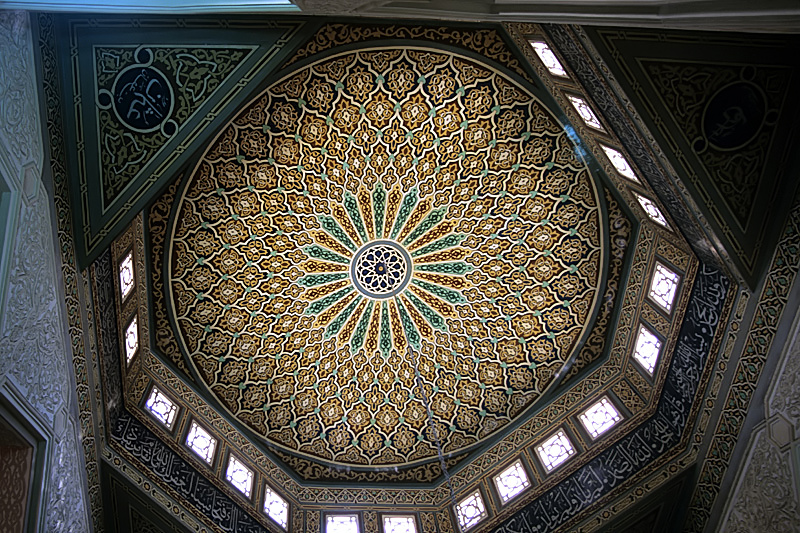
[edit]The Ahmad al-Badawi Mosque is the most famous mosque in Tanta and all of Gharbia Governorate, and among the most renowned in the Nile Delta. It covers an area of one and a half feddans. The mosque is square-shaped, featuring a domed courtyard surrounded by four arcades. The tombs of Ahmad al-Badawi, his disciple Abdul-Mutal, and Sheikh Mujahid are located on the southern side. The mosque has seven entrances—four on the western side and one on each of the remaining sides.
The mosque was originally a small zawiya (Sufi lodge) for the Ahmadiyya order in the 13th century CE. Later, the Mamluk Sultan Qaitbay built a minaret and a dome over it. The current mosque was built by Ali Bey al-Kabir in the 18th century, along with a sabil (public water fountain) and a school for orphans. He also installed a copper enclosure around the tomb and endowed the mosque with agricultural land and real estate to support scholars, the poor, students, and followers of the Ahmadiyya order.
The mosque became a center of Islamic studies in the 18th century, similar to Al-Azhar, with over 2,000 students and a sheikh equivalent to the Sheikh of Al-Azhar. It reached the peak of its prestige in the 19th century. The mosque was renovated and expanded during the reigns of Abbas I of Egypt, Muhammad Sa'id, Isma'il Pasha, Abbas Helmy II, and King Fuad I, with the latest renovation completed in 2024. The annual celebration of Al-Badawi is celebrated at the mosque, accompanied by fairs, dhikr gatherings, and tents set up for visitors in the Sejer area south of the city.
Other Mosques
[edit]Tanta has many mosques and shrines. The oldest is the Al-Borsa Mosque, said to have been established by a companion of the Prophet during the Rashidun Caliphate. It is now known as the Muhammad Al-Bahi Mosque, where he is buried. The second-oldest is the Marzouk Al-Ghazi Mosque, built at the end of the Umayyad period and known as the Umayyad Mosque until Marzouk Al-Ghazi settled there and was buried during the Mamluk era. The current structure was built in 1578 CE and renovated in 1927 CE. Another well-known mosque is the Izz Al-Rijal Mosque, named after the Sufi figure Muhammad Izz Al-Din. Built in the iwan style but without a courtyard, it was restored in 1894 CE.
Sabils
[edit]Ali Bey al-Kabir, the Mamluk ruler of Egypt, built a sabil near the Ahmad al-Badawi Mosque in 1770 during the Ottoman era. It was later relocated in 1962 to its current site on Galaa Street. The sabil is constructed in Islamic architectural style, featuring traditional carvings and decorations, as well as ornate windows and doors. The area around it was renovated in 2011. Another newer sabil, the Ahmadi Sabil, is located on the mosque’s southwestern side.
Palaces
[edit]The Princess Feryal Palace was built in 1909 by Ibrahim Bahgat in the Khedivial area of Tanta. It features a unique baroque architectural style unlike other buildings in the city. It was initially a private residence, then served as a school for 70 years before being abandoned. The Ministry of Public Education rented it from its owner and turned it into a school named after Princess Feryal, daughter of King Farouk I. It was later renamed Al-Zuhour School, after the palace's large flower-filled garden.
Another palace is the Cohen Palace (also known as the Villa of Mohamed Bey Asaad), located on Tutankhamun Street off Bahr Street. It was built by the Jewish Cohen family in the early 20th century. The family later raffled the palace via lottery, which was won by Mohamed Bey Asaad, the current owner.
-
Tanta's city center, Elgeish street.
-
Tanta Station at Night
-
Ahmad al-Badawi Mosque
-
Saint George Cathedral
-
palace in Tanta which was used as a primary school named flowers school
-
Tanta Montaza park
-
Tanta Museum
-
Tanta University
Transportation
[edit]
As of 2019, Tanta had a road network spanning 508.8 kilometers, with 27 main streets such as Elmodiriyya, El-Geish Street, Elnahhas, Taha El-Hakim, Al-Borsa, Ahmed Maher, Alexandria, Saeed Street, El-Helou Street, and Mohib Street. These roads are vital due to the buildings they contain or their connections to major squares like Republic, Al-Hekma, Al-Saa'a, and Alexandria. The city has six tunnels under railway lines: Segar (Satouta), Al-Khadem, El-Maqaber, El-Orashi, El-Ganabiyya, and El-Agaizi (market).
Traffic congestion is common, especially in the mornings and afternoons. Problems include pedestrian and vehicle traffic mixing, bottlenecks near tunnels, the growing number of cars exceeding the capacity of the city’s roads, and ineffective traffic management.
Public transportation includes buses operated by the Gharbia Governorate, cooperative buses, microbuses, and taxis. These systems are often overcrowded due to the city’s population density, narrow streets, and poor road conditions. Rail lines divide the city, causing disconnection and congestion.
Tanta is a central transportation hub for the Nile Delta and a strategic crossroads for Egypt as a whole. It is served by the Cairo–Alexandria agricultural road and another route connecting it to the Port of Damietta via Mahalla, Samannoud, and Mansoura. Other roads link Tanta to Shibin El Kom and other towns in the governorate.
The city is also home to Tanta railway station, the largest in the Delta and the second oldest in Egypt after Misr Station in Cairo. Opened in 1856 on the Cairo–Alexandria railway, it serves 203 trains. Major lines passing through include the Cairo–Alexandria line (via Berket El Sab), the Tanta–Mansoura–Damietta line, the Tanta–Zagazig line, the Tanta–Menouf–Qalyub line, and the Tanta–Kafr El Sheikh line (via Qutour).
Until the late 19th century, the Qasr Canal was a major transportation route. In the 18th century, it reportedly held about 10,000 boats during the birthday celebration of al-Badawi. Its significance declined with the arrival of railways in the 1850s, and its original course (now El-Galaa Street and El-Bahr street was filled in. The canal now runs through northern Tanta, measuring 6.3 km in length and 34 meters in width. The Tanta Navigation Canal lies south of the city, extending 4.9 km in length and 29 meters in width, connecting Tanta to Shibin El Kom and Kafr El Zayat.
Climate
[edit]Tanta has a warm winter and hot summer climate, and is relatively moderate throughout the year. The most significant weather phenomena affecting the city are winter and spring low-pressure systems, which are the main cause of rainfall and the occurrence of the Khamsin winds.
The average annual precipitation in the city is 4.39 mm. The average annual relative humidity was recorded at 66.0% in 2023.
The lowest temperature ever recorded in the city was −2°C (28°F), on January 4, 1937, and again on February 9, 1950. The highest recorded temperature was 46.8°C (116.2°F), on May 10, 1942, when the temperature rose by 15°C (59°F) within hours due to a passing low-pressure system over the city.
For most of the year, the weather in Tanta is calm. When winds do occur, they are usually from the north or west.
| Climate data for Tanta, Egypt (1961–1990) | |||||||||||||
|---|---|---|---|---|---|---|---|---|---|---|---|---|---|
| Month | Jan | Feb | Mar | Apr | May | Jun | Jul | Aug | Sep | Oct | Nov | Dec | Year |
| Record high °C (°F) | 29.2 (84.6) |
32.0 (89.6) |
36.8 (98.2) |
41.6 (106.9) |
45.3 (113.5) |
44.7 (112.5) |
41.5 (106.7) |
42.5 (108.5) |
41.2 (106.2) |
38.7 (101.7) |
35.6 (96.1) |
28.2 (82.8) |
45.3 (113.5) |
| Mean daily maximum °C (°F) | 18.7 (65.7) |
19.4 (66.9) |
22.1 (71.8) |
27.1 (80.8) |
31.0 (87.8) |
33.6 (92.5) |
33.1 (91.6) |
32.7 (90.9) |
31.6 (88.9) |
29.2 (84.6) |
24.2 (75.6) |
20.3 (68.5) |
26.9 (80.4) |
| Daily mean °C (°F) | 12.0 (53.6) |
12.8 (55.0) |
14.5 (58.1) |
18.4 (65.1) |
22.1 (71.8) |
25.4 (77.7) |
26.0 (78.8) |
25.8 (78.4) |
24.2 (75.6) |
21.6 (70.9) |
17.5 (63.5) |
13.5 (56.3) |
19.5 (67.1) |
| Mean daily minimum °C (°F) | 6.5 (43.7) |
6.6 (43.9) |
7.8 (46.0) |
11.2 (52.2) |
14.3 (57.7) |
17.3 (63.1) |
19.7 (67.5) |
19.7 (67.5) |
17.8 (64.0) |
15.3 (59.5) |
11.5 (52.7) |
8.0 (46.4) |
13.0 (55.4) |
| Record low °C (°F) | 0.2 (32.4) |
0.4 (32.7) |
0.8 (33.4) |
4.6 (40.3) |
8.3 (46.9) |
12.0 (53.6) |
14.8 (58.6) |
16.4 (61.5) |
13.7 (56.7) |
9.1 (48.4) |
5.0 (41.0) |
1.6 (34.9) |
0.2 (32.4) |
| Average precipitation mm (inches) | 13 (0.5) |
8 (0.3) |
7 (0.3) |
3 (0.1) |
2 (0.1) |
0 (0) |
0 (0) |
0 (0) |
0 (0) |
2 (0.1) |
4 (0.2) |
12 (0.5) |
51 (2.1) |
| Average precipitation days (≥ 1.0 mm) | 1.7 | 0.9 | 0.9 | 0.5 | 0.2 | 0.0 | 0.0 | 0.0 | 0.0 | 0.3 | 0.6 | 1.5 | 6.6 |
| Average relative humidity (%) | 72 | 69 | 68 | 60 | 57 | 58 | 66 | 71 | 69 | 67 | 70 | 71 | 66.5 |
| Average dew point °C (°F) | 6.6 (43.9) |
6.5 (43.7) |
8.0 (46.4) |
9.8 (49.6) |
11.7 (53.1) |
15.3 (59.5) |
18.8 (65.8) |
19.4 (66.9) |
17.4 (63.3) |
14.3 (57.7) |
10.7 (51.3) |
7.9 (46.2) |
12.2 (54.0) |
| Mean monthly sunshine hours | 205.6 | 198.8 | 256.7 | 280.3 | 325.1 | 357.9 | 332.6 | 342.8 | 280.5 | 278.0 | 229.7 | 205.3 | 3,293.3 |
| Source: NOAA[17] | |||||||||||||
Notable people
[edit]- Adel Esmat, Novelist
- Magda al-Sabahi or Magda Sabbahi = Magda (1931–2020), actress
- Huda Sultan (1925–2006) singer and actress
- Kamal Amin (1923–1979), artist[18]
- Mahmoud Zulfikar (1914–1970), Film director
- Khairy Beshara, film director
- Abdu al-Hamuli (Egyptian Arabic: عبده الحامولى) (1836–1901), singer
- Mahmoud Khalil Al-Hussary, (1917–1980) reciter of the Qur'an[19]
- Mohamed Fawzi (1918–1966), composer, singer, and actor[20]
- Naima Akef (1929–1966), actress and circus player
- Doria Shafik (1908–1975), leader of the Women's Liberation Movement in the early 1950s[21]
- Ahmad Hegazi (cartoonist) (1936–2011), known as "Hegazi", a caricature artist[22]
- Nasr Abu Zayd (1943–2010), thinker and liberal theologian [23]
- Ahmed Khaled Tawfik (1962–2018), author[24]
- Amina Rizk (1910–2003), actress
- El-Sayed Nosseir (1905–1977), Olympic Gold medal winner in weightlifting[25]
- Hilana Sedarous (1904-1998), first female Egyptian doctor and first female Egyptian gynaecologist
- Maximos V Hakim (1908-2001), Melkite Greek Catholic Patriarch[26]
- Nabil Farouk (1956-2020), novelist[27][28]
See also
[edit]Notes
[edit]- ^ Arabic: طنطا, romanized: Ṭanṭa; pronounced [ˈtˤɑntˤɑ]
- ^ Peust 2010
References
[edit]- ^ a b c "Egypt: Governorates, Major Cities & Towns - Population Statistics, Maps, Charts, Weather and Web Information". www.citypopulation.de. Retrieved 17 June 2023.
- ^ "TelluBase—Egypt Fact Sheet (Tellusant Public Service Series)" (PDF). Tellusant. Retrieved 2025-07-11.
- ^ World Gazetteer. "Statistical information on Tanta, Egypt". Archived from the original on 8 December 2012. Retrieved 2016-11-14.
- ^ Raafat, Shaimaa (October 21, 2014). "Tanta receives 3 million visitors participating in Moulid Al-Sayed Al-Badawy festival". Daily News Egypt. Archived from the original on 17 November 2016. Retrieved 17 November 2016.
- ^ Chaichian, Mohammad A. (2009). Town and Country in the Middle East: Iran and Egypt in the Transition to Globalization, 1800–1970. Lexington Books. ISBN 9780739126776. Retrieved 17 November 2016.
- ^ Ayyad, Mohamed (July 27, 2015). "Siemens, Egyptian Railway sign MoU to develop major lines' sign lighting". Daily News Egypt. Archived from the original on 17 November 2016. Retrieved 17 November 2016.
- ^ Seif, Ola R (October 12, 2015). "Train of thoughts". ahram online. Retrieved 17 November 2016.
- ^ Dan, Richardson; Jacobs, Daniel (February 1, 2013). The Rough Guide to Egypt. Penguin. ISBN 9781409324263. Retrieved 17 November 2016.
- ^ رمزي 1994
- ^ ابن حوقل 1938
- ^ الإدريسي 1409
- ^ ابن مماتي 1943
- ^ ابن جبير 1981
- ^ الحموي 1977
- ^ ابن دقماق 1892
- ^ العشري 1981
- ^ "Tanta Climate Normals 1961–1990". National Oceanic and Atmospheric Administration. Archived from the original on October 4, 2023. Retrieved October 4, 2023.
- ^ "Kamal Amien Bio". Fine Art Gov Egypt. Retrieved 17 November 2016.
- ^ "Mahmoud Khalil Al Hussary". Assabile. Archived from the original on 19 November 2016. Retrieved 17 November 2016.
- ^ "Mohamed Fawzy (1918–1966) محمد فوزي". El Cinema. Archived from the original on 16 November 2016. Retrieved 15 November 2016.
- ^ Smith, Bonnie G. (2008). The Oxford Encyclopedia of Women in World History: 4 Volume Set. Oxford University Press, USA. p. 27. ISBN 9780195148909.
- ^ Mahmoud, Sayed (October 24, 2011). "Hegazy, Master of Egyptian cartoons". ahram online. Archived from the original on 16 November 2016. Retrieved 15 November 2016.
- ^ "Professor Nasr Hamid Abu Zayd". Philosophers of the Arabs. Archived from the original on 17 November 2016. Retrieved 17 November 2016.
- ^ Yaqoob, Tahira (March 16, 2012). "Ahmed Khaled Towfik, Egypt's doctor of escapism". Archived from the original on 17 November 2016. Retrieved 17 November 2016.
- ^ "Sayed Nossier". SR / Olympic Sports. Archived from the original on 2015-02-20.
- ^ "Patriarch Maximos V (George) Hakim †". Catholic Hierarchy. Retrieved 17 November 2016.
- ^ "Dr. Nabil Farouk Biography". Rewayat Club. Retrieved 15 November 2016.
- ^ Almazroui, Ayesha (March 8, 2015). "If we want to keep Arabic alive, don't blame English". The National. Archived from the original on 16 November 2016. Retrieved 15 November 2016.
External links
[edit]- Egypt: Handbook for Travellers : Part First, Lower Egypt, with the Fayum and the Peninsula of Sinai by Karl Baedeker (1885)
- Families as We are: Conversations from Around the World by Perdita Huston, 2001
- The Encyclopædia Britannica: a dictionary of arts, sciences, literature and general information by Hugh Chisholm, 1910
- The Coptic Diocese of Tanta
Tanta
View on GrokipediaGeography
Location and Topography
Tanta serves as the capital of Gharbia Governorate in northern Egypt, positioned in the central portion of the Nile Delta.[9][10] The city lies approximately 94 kilometers north of Cairo and 130 kilometers southeast of Alexandria, at coordinates 30°47′N 31°00′E.[11][12] This strategic placement facilitates its role as a key transportation and agricultural hub within the densely populated delta region.[6] The topography of Tanta consists of a low-lying, flat alluvial plain formed by Nile River sediments, characteristic of the broader Nile Delta landscape.[13] Elevations in the area average around 10 meters (33 feet) above sea level, with minimal variation ranging from near sea level in low-lying zones to a maximum of approximately 26 meters.[14][12] The surrounding terrain supports extensive irrigation via canals branching from the Nile, enabling fertile agricultural activity on the predominantly silt-rich soils, though subsidence and sea-level influences pose long-term risks to the delta's stability.[15][16]Climate and Environment
Tanta has a hot desert climate classified as BWh under the Köppen-Geiger system, featuring scorching summers, mild winters, and minimal rainfall throughout the year.[17] Average annual temperatures hover around 19.5 °C (67.1 °F), with daily maximums peaking at approximately 35 °C (95 °F) in August and minimums dipping to about 9 °C (49 °F) in January.[18] [17] Precipitation is scarce, totaling roughly 46–51 mm annually, concentrated in sporadic winter showers; February records the highest monthly average at 9.8 mm over about 5 days, while summer months like June see nearly none at 0.2 mm. As a key urban center in the Nile Delta's Gharbia Governorate, Tanta's environment reflects intensive agriculture, industrial activity, and rapid urbanization, exacerbating issues like water contamination and air quality degradation. Potable water in the region often shows elevated levels of bacterial pathogens, protozoa, and heavy metals, posing health risks.[19] Decades of land-use conversion to urban areas have directly worsened local air pollution through increased emissions and reduced green spaces.[20] Broader Delta dynamics, including groundwater salinization from over-irrigation and vulnerability to sea-level rise-induced subsidence, indirectly affect Tanta despite its inland position at 18 meters above sea level.[21] [18] These pressures, compounded by climate warming trends, threaten agricultural productivity in the surrounding fertile lowlands reliant on Nile irrigation.[22]Urban Expansion and Divisions
Tanta's urban expansion accelerated in the 19th century as the city became a hub for Egypt's cotton industry, fostering rapid population influx and infrastructural buildup along irrigation canals and trade routes.[6] This growth transformed Tanta from a modest settlement into a key Nile Delta center, with built-up areas extending outward from the historic core around the Al-Badawi Mosque.[23] Between 1996 and 2020, the city's urban footprint increased from 10.9 km² to 15.5 km², reflecting patterns of scattered development and encroachment on surrounding agricultural lands.[23] Projections indicate further expansion to 20.1 km² by 2027, accompanied by the loss of roughly 10 km² of farmland over the preceding half-century, driven by residential and commercial densification.[23] Population density reached 23,475 inhabitants per km² by 2017, underscoring pressures for sustainable infill strategies over peripheral sprawl.[23] Administratively, Tanta functions as the capital of Gharbia Governorate and is structured into two districts, each subdivided into seven sheikhas for localized administration, service delivery, and urban planning.[10] These divisions support management of the city's estimated 505,000 residents as of 2017, with growth rates averaging around 1.3% annually in prior decades.[23] Such organization aids in addressing expansion challenges, including vertical development potentials identified in recent studies to accommodate up to 428% of projected population increases without additional land consumption.[23]History
Pre-Modern Foundations
The region encompassing modern Tanta has roots in ancient Egyptian settlements within the Nile Delta, with historical records suggesting the area was known as Tanaso during the Pharaonic period, serving as an agricultural locale amid the fertile lowlands.[24] Limited archaeological findings indicate continuous habitation from the Late Period onward, though specific monumental structures at the site remain undocumented, distinguishing it from more prominent Delta centers like Tanis.[25] Under early Islamic rule, Tanta functioned as a minor village in the densely populated Delta countryside, benefiting from the region's agricultural productivity and proximity to trade routes linking Cairo and Alexandria. During the Fatimid Caliphate (969–1171 CE), the locality gained administrative recognition as part of the province of El-Tantawiya, derived from Tantada, where caliphal authorities installed governors to oversee tax collection and maintain order.[26] This period marked Tanta's integration into the broader Fatimid economic network, though it remained overshadowed by larger urban hubs. The establishment of Tanta's enduring religious and cultural foundations occurred in the 13th century during the Ayyubid era. In 1236 CE, the Moroccan-born Sufi Ahmad al-Badawi (c. 1199–1276 CE), after spiritual visions and travels through Mecca and Iraq, settled permanently in Tanta, drawn by divine command to propagate his teachings there.[27] Al-Badawi's ascetic lifestyle, reputed miracles, and formation of the Badawiyya Sufi order attracted devotees, transforming the village into a nascent spiritual hub. Following his death on 26 Rabi' al-Awwal 675 AH (October 1276 CE), his tomb—later expanded into a grand mosque complex—became a pilgrimage site, fostering annual mulids that solidified Tanta's pre-modern identity as a center of popular Sufism under the subsequent Mamluk Sultanate.[28] This development, independent of state patronage initially, relied on local endowments and drew from the Delta's Coptic and Muslim agrarian communities, embedding Tanta in Egypt's devotional landscape.[8]Ottoman Period and Early Modern Developments
After the Ottoman Empire's conquest of Mamluk Egypt in 1517, Tanta integrated into the administrative structure of the Eyalet of Egypt, functioning as a key settlement in the Nile Delta's Gharbia region.[29] The city's prominence derived primarily from the shrine of the 13th-century Sufi saint Ahmad al-Badawi, whose tomb served as Egypt's most revered pilgrimage site, attracting devotees during annual mulids that reinforced its religious and economic significance.[30] Ottoman authorities and local elites frequently invoked oaths at the shrine to affirm loyalties amid factional conflicts, underscoring its role in stabilizing provincial power dynamics.[31] The Badawiyya Sufi order, established by al-Badawi, sustained widespread popularity under Ottoman governance, with sultans and governors patronizing elaborate mawlid celebrations that drew thousands, fostering trade in surrounding markets.[32] Tanta developed as an educational center, receiving endowments of books and resources from Cairo's scholarly networks to support local madrasas and Sufi institutions.[29] Agricultural commerce in cotton and grains bolstered its status as a regional marketplace, though administrative oversight remained decentralized through Mamluk beys operating under nominal Ottoman suzerainty.[33] In the late 18th century, amid weakening central control, figures like Ali Bey al-Kabir, a powerful Mamluk leader, constructed a sabil (public fountain) adjacent to the al-Badawi Mosque in 1770, enhancing the complex's infrastructure and reflecting ongoing investment in Tanta's sacred landscape.[27] These developments positioned Tanta as a nexus of piety, commerce, and local autonomy, setting the stage for 19th-century transformations while navigating the interplay of Ottoman imperial policies and indigenous Sufi traditions.[34]19th-Century Industrialization and Growth
Tanta experienced significant economic expansion in the 19th century, primarily driven by the global cotton export boom, particularly during the American Civil War (1861–1865), which elevated Egypt's cotton production and positioned Tanta as a key commercial hub in the Nile Delta. The city's markets facilitated trade in cotton, rice, fabrics, and other goods, attracting merchants and pilgrims to the annual mulid festival of Sayyid Ahmad al-Badawi, which drew over 100,000 visitors and generated substantial revenue through donations and sales. This period saw Tanta emerge as the capital of Gharbiyya province in 1836, enhancing its administrative and economic role, with local elites benefiting from land sales, such as the 16,449 feddans auctioned by Khedive Ismail's family between 1873 and 1874.[32] Infrastructure developments further spurred growth, including the arrival of the railway in 1856, which connected Tanta to Cairo and Alexandria, streamlining the transport of cotton and other agricultural products to export ports and fostering urbanization. Population figures reflect this expansion: approximately 10,000 residents in 1821 grew to 19,500 by 1846, reaching 28,500 in 1872 and peaking at 57,289 in 1897, fueled by migration from rural areas and diverse groups including Sa'idi laborers and Greek merchants who established shops like the Hotel Belle Grece. The railway integration into Egypt's expanding network, which totaled 1,590 kilometers by 1875, amplified Tanta's connectivity as a junction serving the fertile Delta governorate.[32][35] Industrialization remained limited, centered on an agro-industrial complex rather than large-scale factories, with economic vitality tied to cotton processing and trade financed by European bankers; however, events like the 1882 'Urabi Revolution riots, which targeted European-owned facilities, underscored tensions amid this growth. By the late 19th century, Tanta had become one of the largest provincial cities in the Delta, supported by public works under Khedive Ismail, including his 1878 visit that highlighted the city's prominence through infrastructure like the Khedive's Kiosk. This era laid the foundation for Tanta's role as a regional center, though dependent on agricultural exports and pilgrimage economy rather than diversified manufacturing.[32]20th-Century Modernization and Post-Independence Era
In the early 20th century, Tanta experienced incremental modernization as a commercial and agricultural center in Egypt's Nile Delta, leveraging its position on the Cairo-Alexandria railway line, which had been extended in the late 19th century to enhance cotton trade and market access.[36] This infrastructure supported steady urban growth amid the British protectorate period (1914–1922) and subsequent monarchy, with the city serving as a key hub for Delta farmers despite limited large-scale industrial projects.[32] Following Egypt's 1952 Revolution and the establishment of the republic, Tanta benefited from national policies emphasizing state-directed development, including land reforms that redistributed estates from large landowners to smallholders, reshaping local agrarian economies in Gharbia Governorate.[37] These reforms, implemented primarily between 1952 and 1961, reduced feudal structures but introduced inefficiencies in productivity due to fragmented holdings, affecting Tanta's role as a cotton processing and trading node. Industrialization efforts under Gamal Abdel Nasser in the 1960s included modest expansions in food processing and textiles, though Tanta remained predominantly agricultural-service oriented compared to Cairo or Alexandria.[38] A pivotal advancement occurred in education with the founding of Tanta's Faculty of Medicine in 1962 via Republican Decree No. 1468, initially as a branch of Alexandria University to address regional healthcare needs.[1] This evolved into the independent Tanta University in 1972, which expanded to encompass 16 faculties by the late 20th century, fostering scientific research, workforce training, and demographic influx that accelerated urbanization and service-sector growth.[39] Under Anwar Sadat's 1974 infitah economic liberalization, private investments spurred commercial expansion, including retail and light manufacturing, while infrastructure upgrades like road widening and electrification improved connectivity, though challenges such as informal settlements persisted into the Mubarak era (1981–2011).[40]Demographics
Population Trends and Statistics
The urban population of Tanta was estimated at 504,855 in the 2017 census, encompassing the city's two main districts and reflecting dense settlement in the Nile Delta.[23] By 2024, metro area estimates had risen to 531,000, with projections for 2025 reaching 541,000, driven by natural increase and limited rural-to-urban migration within Gharbia Governorate.[2] [41] Historical trends indicate consistent expansion from a base of approximately 149,600 in 1950, when Tanta served primarily as an agricultural hub, to over 368,000 by 1995 amid post-war economic shifts and improved infrastructure.[42] Annual growth rates have averaged 1.5-2% in recent decades, aligning with Egypt's national rate of 1.73% in 2024, though constrained by high density—exceeding 27,000 persons per square kilometer in core areas—and emigration pressures.[2] [43] [44]| Year | Estimated Urban/Metro Population | Annual Growth Rate (Prior Year) |
|---|---|---|
| 1950 | 149,600 | - |
| 1995 | 368,000 | ~2.0% |
| 2017 | 504,855 (census) | ~1.5% |
| 2020 | 501,000 | 1.55% |
| 2023 | 523,000 | 1.55% |
| 2024 | 531,000 | 1.53% |
Ethnic Composition
The population of Tanta consists almost entirely of ethnic Egyptians, who form the predominant Arabized group in the Nile Delta region. These residents are descendants of ancient Egyptian populations with admixtures from Arab migrations following the 7th-century Islamic conquests, Levantine influences, and minor contributions from other historical groups such as Greeks and Ottomans, resulting in a largely homogeneous ethnic profile characterized by Arabic language, shared folklore, and cultural practices tied to Delta agrarian life.[46] No official Egyptian census data tracks ethnicity explicitly, as the Central Agency for Public Mobilization and Statistics (CAPMAS) prioritizes metrics like religion and urban-rural distribution, but regional analyses confirm the absence of distinct ethnic clusters like Nubians (prevalent in southern Egypt) or Berbers (confined to Siwa Oasis).[47] Historical communities, such as a small Jewish population of North African origin that peaked in the early 20th century with synagogues and schools, have since dwindled to negligible numbers amid mid-20th-century emigration waves, leaving no measurable ethnic footprint today.[48] Genetic studies of Delta Egyptians, including those from Tanta, typically show 70-80% continuity with Bronze Age Levantine and ancient Egyptian ancestries, alongside 10-20% North African and sub-Saharan components, underscoring uniformity rather than diversity.[49] This ethnic cohesion contrasts with more heterogeneous areas like Cairo, where transient migrant labor from Upper Egypt introduces limited Nubian elements, but Tanta remains emblematic of Delta Arab Egyptian identity.Religious Demographics and Sectarian Dynamics
Tanta's residents are predominantly Sunni Muslims, aligning with Egypt's national religious composition where experts estimate approximately 90 percent of the population follows Sunni Islam.[50] The city's religious landscape is heavily influenced by Sufism, centered on the veneration of Ahmad al-Badawi, a 13th-century Moroccan saint who settled in Tanta and founded the Badawiyya Sufi order, which maintains a significant following today.[27] His mosque serves as a pilgrimage site, drawing millions during the annual Mawlid al-Badawi festival, underscoring Tanta's role as a hub for popular Sufi practices including dhikr rituals and saint intercession.[27] A Coptic Orthodox Christian minority resides in Tanta, as indicated by the establishment of a local diocese and churches such as St. George's Coptic Orthodox Church.[51] This community mirrors Egypt's estimated 10 percent Christian population, primarily Coptic Orthodox, though specific proportions for Tanta remain undocumented in official censuses.[50] Other religious groups, including Shia Muslims (nationally about 1 percent) and historical Jewish communities, are negligible or absent in contemporary demographics.[50][48] Sectarian dynamics in Tanta reflect broader Egyptian tensions, particularly between Sufi adherents and Salafi currents that denounce shrine veneration and mystical practices as bid'ah (innovation) deviating from strict scripturalism.[52] Post-2011, Sufi sites nationwide faced attacks by Islamist extremists, though Tanta's prominent Badawi mosque has largely been protected due to its cultural significance and state oversight during festivals.[53] The Christian community has experienced targeted violence, exemplified by the April 9, 2017, ISIS-claimed suicide bombing at St. George's Church during Palm Sunday services, which killed 27 worshippers and injured dozens more.[54] Such incidents highlight vulnerabilities for minorities amid Egypt's sectarian undercurrents, where Islamist groups have historically assaulted both Sufi and Coptic targets.[55] Despite these challenges, local intercommunal relations often remain functional outside episodic flare-ups, with government interventions aimed at containing unrest.[56]Government and Administration
Administrative Structure
Tanta operates as the administrative headquarters of Gharbia Governorate, where the governor, appointed by the President of Egypt, oversees regional policies and coordination with national authorities.[57] [58] The city's internal structure consists of two urban qisms (districts)—Tanta First Qism and Tanta Second Qism—each encompassing seven sheikhas, the smallest administrative subunits tasked with managing neighborhood-level services such as sanitation, licensing, and community policing.[10] Governance at the local level adheres to Egypt's framework of dual councils: elected people's assemblies for legislative oversight and appointed executive bodies for implementation, addressing urban challenges like infrastructure and public utilities within Tanta's densely populated areas.[58] These units report to the governorate administration, ensuring alignment with national directives while handling city-specific operations, including coordination during major events like the annual Mawlid festival.[59]Local Governance and Challenges
Tanta's local governance is embedded in Egypt's hierarchical administrative system, with the city functioning as the capital of Gharbia Governorate. The governor, appointed by the president, holds primary executive authority over the province, delegating to local units in Tanta, which is subdivided into two municipal districts (qism al-awwal and qism ath-thani), each encompassing seven sheikhas or neighborhoods responsible for basic service delivery such as sanitation and minor infrastructure maintenance.[10] Elected local popular councils exist at the district and sheikha levels to provide input on budgets and development plans, but executive councils are appointed, ensuring alignment with national priorities under Law No. 43 of 1979 as amended.[60] This structure emphasizes central oversight, with local units lacking independent fiscal powers. Key challenges stem from financial dependency on the central government, which constrains Tanta's ability to fund urban projects independently and respond agilely to local needs like road repairs or waste management.[10] Administrative centralization further impedes efficiency, as decisions on major investments require Cairo's approval, delaying responses to rapid population growth—exacerbated by the city's role as a regional hub drawing migrants for employment and the annual Mawlid festival. Tribal social dynamics, prevalent in Delta communities, resist modern zoning and building upgrades, complicating efforts to formalize informal areas and expand housing amid high density, where many older structures lack space for vertical or backyard development.[61] [23] These issues manifest in strained public services, including overburdened utilities and traffic congestion, with local authorities struggling to balance cultural events' economic benefits against logistical overloads. Limited local revenue generation, reliant on modest fees rather than property taxes, perpetuates underinvestment, while broader Egyptian decentralization reforms have yet to substantially empower cities like Tanta.[60]Economy
Agricultural and Industrial Base
Tanta's agricultural base is anchored in the fertile soils of the Nile Delta, where the city's surrounding regions in Gharbia Governorate support intensive cultivation of staple crops such as cotton, rice, wheat, and flax.[62] Cotton ginning has historically been a central activity, leveraging the Delta's position as a primary production hub, while rice cultivation benefits from the governorate's contribution of approximately 14% to Egypt's national rice output, which originates predominantly from the Delta region comprising 80% of the country's total.[63] Flax production is particularly prominent, with local farms supplying raw materials for export-oriented processing, underscoring the area's role in cash crop diversification amid challenges like urban encroachment on arable land.[64] Livestock and poultry breeding further bolster the sector, positioning Gharbia as a leading governorate in animal husbandry.[62] The industrial base in Tanta has developed synergistically from its agricultural strengths, focusing on agro-processing and light manufacturing. Key facilities include the Tanta Flax and Oil Company, a major producer and exporter of flax fibers for spinning and other sectors, operating as a subsidiary of state-owned entities with efforts underway to revive domestic flax utilization for local textile manufacturing.[65] Spinning and weaving industries dominate, transforming cotton and flax into yarns and fabrics, exemplified by operations like those of yarn manufacturers located along key access routes such as the Cairo-Alexandria Agricultural Road.[66] Food and beverage processing adds diversity, with the Tanta Plant of Coca-Cola Hellenic Bottling Company—established in 1979—producing and distributing soft drinks to regional markets, alongside dairy and oil extraction tied to agricultural inputs.[67] Smaller-scale manufacturing, including plastics and chemicals, supports ancillary needs but remains secondary to agro-industrial activities.[68] This structure reflects a reliance on primary resource processing, with limited heavy industry, contributing to Gharbia's economic profile amid national pushes for value-added production.[69]Services, Trade, and Tourism
Tanta functions as a key commercial hub in Egypt's Nile Delta, with active markets specializing in textiles, handicrafts, spices, and agricultural goods that draw regional traders and consumers.[70][36] Local enterprises, including Tanta Motors established in 1950, contribute to the automotive trade and services sector by distributing vehicles and parts across Egypt.[71] The Tanta International Trade Point, located on El-Guish Street, facilitates import-export activities and commercial agencies, enhancing the city's role in broader economic exchanges.[72] The annual Mawlid festival honoring Ahmad al-Badawi significantly bolsters trade and tourism, attracting approximately 3 million visitors in events such as those in 2014 and anticipated for 2017, who engage in purchasing festival-specific items like sugar candies and crafts from local vendors.[73][5] This influx stimulates short-term economic activity for artisans, shops, and service providers, connecting northern and southern Egypt through pilgrim and trader movements.[74][8] Beyond the festival, tourism remains limited, primarily religious in nature, with the event serving as the primary draw for visitors from across the Muslim world and beyond.[8]Recent Developments and Economic Pressures
In 2024 and 2025, Tanta benefited from national infrastructure initiatives aimed at enhancing regional connectivity and logistics, particularly through upgrades to the Tanta-Mansoura-Damietta railway corridor, which supports agricultural exports and industrial zones in the Nile Delta. The project involves doubling tracks and modernizing signaling over 54 kilometers from Tanta to Mansoura, with international bids awarded in August 2025 to improve freight efficiency for Delta produce like cotton and rice. Complementing this, the Tanta Logistics Zone, established in 2020 with EGP 6 billion in investments across 83 acres, has continued to facilitate trade serving over 42 million people in the region, though expansion has been tempered by broader fiscal constraints.[75][76][77] These developments align with Egypt's macroeconomic rebound, where GDP grew 4.5% in fiscal year 2024/25 following a 2.4% slump in 2023/24, driven by currency devaluation in March 2024, interest rate hikes, and IMF-supported reforms that stabilized foreign exchange reserves. In Gharbia Governorate, encompassing Tanta, agricultural output—dominated by cotton, vegetables, and grains—has seen modest gains from improved export channels, with national non-oil manufacturing expanding amid rising FDI. However, local industries like textiles in Tanta face competition from cheaper imports, limiting job creation despite the logistics push.[78][79] Persistent economic pressures include elevated input costs from prior inflation peaks of 38% in 2023, which raised fertilizer and pesticide prices, squeezing smallholder farmers in Tanta's cotton sector where productivity per feddan has declined due to fragmented landholdings and rising expenses. Water scarcity exacerbates agricultural challenges, with Nile Delta salinity intrusion and urban sprawl converting arable land—Gharbia lost significant farmland to expansion between 2000 and 2020—threatening long-term yields amid Egypt's overall arable land constraints under 3% of total territory. Unemployment remains acute at around 7.4% nationally in 2023, higher among Delta youth, compounded by dependence on central subsidies vulnerable to austerity measures.[80][81][82]Culture and Religion
Traditional Society and Customs
Traditional society in Tanta has been characterized by patriarchal extended family structures, where loyalty to family overrides individual preferences and the eldest male typically holds decision-making authority. Families often include nuclear and extended kin living in close proximity, providing mutual support in an agrarian economy dominated by cotton and rice cultivation. In Gharbia Governorate, encompassing Tanta, social hierarchies historically featured landed elites, merchants, religious scholars, and peasants, with elites influencing local governance through councils like the Majlis Shuwrat al-Nuwwab established in 1866.[32] Women in elite families engaged in significant economic activities, such as land transactions; for instance, in 1873, Khedive Isma'il's mother sold 2,803 feddans via legal channels.[32] Marriage customs emphasize family alliances over romantic choice, with arranged unions common, particularly among lower and middle classes, and parental consent decisive. In urban and rural Gharbia, a 2022 study reported 36.7% of women married before age 20, with rates higher in rural areas (45.5%) than urban (27.8%), attributed to low parental education, economic pressures, and cultural norms favoring early unions to preserve family honor and reduce financial burdens.[83] Gender roles traditionally position men as breadwinners and women as primary caregivers, though women have participated in informal economies like healing practices, including zar rituals led by female practitioners to address infertility and mental health issues. Inheritance disputes, such as those among Sayyid Bey Ali's daughters challenging brothers over 1,045 feddans from 1890 to 1921, highlight tensions under Shari'a law favoring male heirs.[32][84] Daily customs reflect conservative Islamic influences, with respect for elders, hospitality toward guests—often involving offers of tea or meals—and modest dress like galabiyas for men in traditional settings. Social interactions maintain gender segregation outside family circles, and community life centers on markets and mosques, fostering trade and kinship networks amid historical urbanization from 19,500 residents in 1848 to 54,437 by 1907. Folk healing and ascetic figures, such as the mystic Shaykha Sabah (born 1828), who rejected marriage for spiritual pursuits and established a takiyya in 1904, underscore enduring roles for women in non-formal spheres.[32][85][86]Sufi Heritage and Ahmad al-Badawi Veneration
Tanta's Sufi heritage is predominantly anchored in the legacy of Ahmad al-Badawi, a 13th-century mystic who established the city as a key center for Sufi devotion in Egypt. Born in Fes, Morocco, around 1199–1200 CE to a family tracing descent from Imam al-Husayn, al-Badawi migrated eastward, eventually settling permanently in Tanta in 1236 CE after periods in Mecca and other regions.[87][27] There, he attracted followers through his ascetic practices, emphasis on spiritual purity, and reputed miracles, fostering a community that revered him as a saintly figure known as "Shaykh of the Arabs."[88][27] Al-Badawi founded the Badawiyya tariqa, one of Egypt's most influential Sufi orders, which prioritizes devotion, humility, and direct experiential knowledge of the divine while integrating elements of local folk traditions.[27][8] The order, formalized after his death in 1276 CE, grew rapidly in the Nile Delta, with Tanta serving as its spiritual epicenter due to the presence of his mausoleum within the Ahmad al-Badawi Mosque complex.[27][89] This shrine, expanded over centuries, remains a focal point for pilgrims seeking intercession, healing, and blessings, reflecting the tariqa's enduring appeal among rural and urban Egyptians.[27][8] Veneration of al-Badawi manifests in widespread practices such as dhikr gatherings, oaths sworn in his name, and attribution of supernatural protections to his baraka (spiritual blessing), particularly among the Badawiyya's adherents who number in the hundreds of thousands across Egypt.[89][27] The order's significance lies in its role as Egypt's largest Sufi brotherhood, blending orthodox Sunni elements with popular piety, though it has faced critiques from Salafi and reformist scholars for practices deemed innovations.[89][27] Despite such debates, al-Badawi's cult has sustained Tanta's identity as a bastion of Sufism, influencing local customs and drawing devotees who view him as a protector against adversity.[8][27]Mawlid Festival: Practices and Significance
The Mawlid of Sayyid Ahmad al-Badawi occurs annually in Tanta during the Islamic month of Rabi' al-Thani, corresponding to October in the Gregorian calendar, commemorating the birth of the 13th-century Sufi saint Ahmad al-Badawi (d. 1276 CE), founder of the Badawiyya order.[90] As Egypt's preeminent mulid, it attracts up to three million pilgrims over several days, centered on the saint's mosque where devotees seek intercession for healing, protection, and baraka (spiritual blessing).[5][8] The event coincides with the post-harvest season, blending religious observance with rural festivities that have persisted since the saint's era.[8] Key practices encompass devotional rituals such as dhikr (collective chanting of divine names), sama' (Sufi musical performances with hymns and poetry), and ecstatic dances by brotherhood members around the mausoleum under colored lights at night.[8][91] Pilgrims recite the Qur'an, participate in processions, and engage in acts of piety including animal sacrifices with meat distributed to the poor, symbolizing charity and communal sharing.[91] A traditional trade fair, established by the 15th century, accompanies the spiritual activities, offering goods and fostering economic exchange amid mixed-gender gatherings that emphasize bodily and spiritual renewal.[8] The festival's significance lies in its role as a cornerstone of Egyptian Sufism, perpetuating veneration of al-Badawi as a miraculous intercessor tied to legends of virility and divine favor, which sustain popular piety despite theological scrutiny.[8] Historically flourishing under Mamluk patronage from the 14th century, it once drew international pilgrims rivaling Mecca's Hajj, symbolizing rural Egyptian religious identity and social cohesion through ecstatic worship and miracle-seeking.[90][8] Today, while attendance is predominantly local from the Nile Delta and Sufi centers, it reinforces communal ties, provides spiritual solace, and boosts Tanta's economy via tourism and trade, maintaining its status as a vital expression of folk Islam.[5][8]Criticisms and Theological Debates
The veneration of Ahmad al-Badawi and the associated Mawlid festival in Tanta have faced significant opposition from Salafi scholars, who classify practices such as seeking intercession (tawassul) through the saint's grave and celebratory rituals as forms of shirk (associating partners with God) and bid'ah (religious innovations lacking basis in the Quran or Sunnah).[92][93] Salafis argue that these customs deviate from the monotheistic purity of early Islam, citing historical precedents like the critiques of Muhammad ibn Abd al-Wahhab, who condemned saint cults for promoting superstition over direct reliance on God.[94] Theological debates center on the permissibility of mawlid observances, with critics maintaining that no evidence exists in prophetic traditions for annual saint commemorations, viewing them instead as imitations of pre-Islamic or Christian festivals that introduce polytheistic elements.[95][96] Proponents, often from Sufi or Ash'ari backgrounds like those affiliated with Al-Azhar, counter that such events foster communal piety and love for saints as intermediaries, labeling them bid'ah hasanah (praiseworthy innovation), though Salafis reject this distinction as unsubstantiated rationalization.[97] In Egypt, this rift has manifested in physical confrontations, including Salafi attacks on Sufi sites, underscoring broader tensions between literalist interpretations and mystical traditions.[98] Beyond doctrinal concerns, modern Egyptian reformers and Islamists have criticized the Tanta Mawlid for blending religious devotion with profane activities, such as music, dancing, and reported instances of moral laxity, which they deem incompatible with Islamic decorum and conducive to social disorder.[8][99] These critiques gained traction in the 19th and 20th centuries amid modernization efforts, portraying the festival as a vestige of medieval mysticism hindering rational progress, though empirical attendance figures—estimated at two million visitors annually—highlight its enduring popular appeal despite the opposition.[27][100]Infrastructure and Services
Transportation Networks
Tanta's transportation networks primarily revolve around rail connectivity, with supplementary road links and informal public transit systems characteristic of Egyptian Delta cities. The city lacks an international airport, relying instead on regional highways for road access to major hubs like Cairo and Alexandria, approximately 90 km and 120 km away, respectively. Local mobility depends on microbuses and shared taxis, which operate extensively but without centralized regulation.[101] The Tanta railway station, built in 1954 in neo-Mamluk style, serves as the largest rail hub in the central Nile Delta and anchors the city's connectivity. Positioned 86 km along the Cairo-Alexandria main line, it handles approximately 203 trains daily, facilitating passenger and freight movement across the governorates.[102] In May 2022, Thales Group completed modernization of the station, including enhanced signaling and passenger facilities, as part of Egyptian National Railways' broader infrastructure upgrades.[103] Further improvements target the 118 km Tanta-El Mansoura-Damietta line, with track doubling between El Mansoura and Damietta, full re-signaling, and electrification to boost capacity and safety, financed by the European Investment Bank.[104] Road infrastructure integrates Tanta into Egypt's national network via secondary highways linking to the Cairo-Alexandria Desert Road, though urban congestion and seasonal festival traffic strain these routes. Intercity bus services, operated by companies like Go Bus from a terminal on Abdel Wahab Street near Souq Al Gomhuria, provide scheduled links to Alexandria (2 hours, fares around EGP 293 as of October 2025) and other Delta cities.[105] Within Tanta, microbuses form the backbone of public transport, serving dense residential areas and markets without fixed routes or timetables, while taxis offer on-demand rides but face competition from unregulated motorcycle taxis.[101] These systems support the city's role as a commercial node, though upgrades lag behind rail developments amid Egypt's focus on integrated logistics corridors.[106]Education System
The education system in Tanta aligns with Egypt's national framework, comprising basic education from ages 4 to 14, including two years of kindergarten, six years of primary school starting at age six, and three years of preparatory school.[107] Secondary education follows for three years, divided into general academic, technical, or vocational tracks, with completion marked by the Thanaweya Amma examinations for university admission.[107] Public schools predominate, supplemented by private institutions such as Tanta Royal Schools, which offer American and British curricula including IGCSE and AP programs, and Tanta Modern School, emphasizing British standards since 2015.[108] Higher education is anchored by Tanta University, established in 1972 after originating as a 1962 branch of Alexandria University focused on medicine.[1] It encompasses 16 faculties, including medicine, engineering, agriculture, and sciences, alongside 160 master's programs and significant research output with over 27,000 publications and 400,000 citations.[1][109] Enrollment exceeds 128,000 students served by approximately 6,450 academic staff.[110] Al-Azhar University maintains a presence through branches and institutes in Tanta, such as the Al-Ahmadi Azhar Institute and faculties like home economics for girls, specializing in Islamic theology, dawah, and related disciplines.[111] Tanta University also contributes to adult literacy initiatives, contributing to a reported one-third reduction in Gharbia Governorate's illiteracy rate over three years as of recent assessments.[112] These efforts align with national goals, though specific local literacy metrics remain integrated into broader Egyptian trends around 74% adult literacy.[113]Healthcare and Public Utilities
Tanta's healthcare infrastructure is anchored by Tanta University Hospitals, which include specialized facilities such as the New Surgical Hospital, a 900-bed general hospital, and the Tanta University Cancer Hospital featuring 109 inpatient beds, 27 chemotherapy beds, and four modern operating theaters.[114][115] The university's Faculty of Medicine supports clinical training across departments including general and specialized surgery, internal medicine, pediatrics, and radiology.[116] Additional public and private providers include the 60-bed Hospital 57357 Tanta Branch, established in 2015 to serve Delta region cancer patients and alleviate pressure on Cairo facilities; the American Hospital of Tanta with 85 beds, a 13-bed ICU/CCU, and dialysis for 36 patients; and the Tanta Military Hospital, emphasizing disciplined care with modern equipment.[117][118][119] In Gharbia Governorate, encompassing Tanta, over 9 million medical services were delivered in 2024 via hospitals and primary care units under the Ministry of Health.[120] Emergency care faces challenges, including prolonged waiting times and patient flow barriers in Tanta's main facilities, contributing to dissatisfaction with service quality.[121] Tanta University provides comprehensive care to its personnel through affiliated hospitals, centers, and labs, issuing over 12,600 medical cards.[122] Specialized outpatient services are available at centers like Dar El Shefaa Tanta Hospital, which operates 24/7 emergency and inpatient units alongside neurocare for stroke and brain conditions.[123] Public utilities in Tanta, reliant on national grids, encounter uneven provision, particularly in nine identified slums and informal areas marked by inadequate solid waste disposal, substandard potable water quantity and quality, and sanitation gaps.[124] Water supply draws from the Nile Delta system managed by the Holding Company for Water and Wastewater, but broader Egyptian challenges include intermittent outages and rising tariffs, with bills doubling since 2024 amid scarcity pressures from upstream dams.[125] Sanitation coverage in rural Gharbia areas lags, with national efforts like decentralized treatment pilots addressing only partial needs as of 2021, where 47% of rural households had improved access.[126] Electricity distribution, handled by the Egyptian Electricity Holding Company, supports urban demands but is prone to national shortages, though Tanta-specific data on reliability remains limited.Sports and Public Recreation
Tanta's primary sports institution is Tanta Sports Club (Tanta SC), a multi-sport entity centered on football, established in 1928 and competing in Egypt's Second Division. The club's home venue, Tanta Club Stadium, accommodates 8,000 spectators and hosts local matches alongside community events.[127] Tanta SC maintains a modest competitive record, with participation in lower-tier leagues and occasional promotions, reflecting the city's role in regional Egyptian football without national prominence. Beyond football, Tanta Sporting Club offers diverse facilities including a soccer field, tennis court, and swimming pools across 10.9 acres, supporting walking paths and casual athletics for residents.[128] These amenities cater to public fitness and youth training, though infrastructure limitations, such as variable maintenance, constrain broader elite development.[129] Public recreation emphasizes accessible green spaces amid urban density. El-Tahrir Garden provides a central oasis for relaxation and light exercise, featuring greenery suitable for family outings.[130] Tanta Memorial Park serves as a commemorative site with serene pathways, blending reflection and informal recreation.[131] Amusement options include La La Land, an entertainment park in Tanta's logistical zone offering rides and family activities, though it prioritizes leisure over structured sports.[132] Overall, recreation relies on club grounds and modest parks, with limited large-scale venues reflecting economic priorities in Gharbia Governorate.Landmarks and Heritage
Religious Landmarks
The Ahmad al-Badawi Mosque stands as Tanta's preeminent religious landmark, housing the mausoleum of the 13th-century Sufi saint Ahmad al-Badawi, founder of the Badawiyya order, whose tomb draws millions of pilgrims annually.[133] [27] Initial construction traces to the saint's death around 1276 CE, with his disciple Abd al-Rahim al-Qusayri overseeing early expansions, though the extant complex largely dates to 19th-century renovations under Khedive Abbas Helmy I (r. 1848–1854).[133] [134] Architecturally, it exemplifies Mamluk influences with a hypostyle prayer hall, prominent minarets, ornate tilework, and expansive courtyards accommodating large congregations.[27] [135] [136] Adjacent religious structures include the Al-Ahmadi Azhar Institute, a branch of Cairo's Al-Azhar University dedicated to Islamic scholarship, featuring mosque facilities that integrate education with worship in a traditional madrasa layout.[137] This institute, established as part of Al-Azhar's provincial network, supports Quranic studies and jurisprudence training for local scholars.[138] Tanta's Coptic Christian community maintains the Church of St. George (Mar Girgis), a significant Orthodox site serving Delta-region faithful, though it endured a suicide bombing on April 9, 2017, during Palm Sunday liturgy, claiming 29 lives and injuring over 70 in an ISIS-claimed attack.[54] The church, predating the incident by decades, reflects enduring minority religious presence amid the city's Muslim majority.[139]Historical and Cultural Sites
The Tanta Museum, established in 1913 within the city's former town hall, serves as the primary repository for artifacts illustrating the historical development of the Nile Delta region around Tanta across multiple eras of Egyptian civilization, including Pharaonic, Greco-Roman, Coptic, and Islamic periods.[140] The collection encompasses coins, pottery, and other items unearthed locally, offering evidence of continuous settlement from ancient times through the Ottoman era, though the museum was closed for 19 years before reopening in 2019 as part of national efforts to restore regional cultural institutions.[141][142] Tanta's historic center features buildings with distinctive architectural characteristics from the late 19th and early 20th centuries, reflecting influences of Ottoman and European styles amid urban expansion tied to agricultural trade and railway development.[143] The traditional souq, or market, remains a cultural hub where commercial practices echo centuries-old Delta trading patterns, as documented in 19th-century illustrations of crowded marketplaces central to local economy and social life.[6] Cultural venues such as the Tanta Cultural Palace and El-Gharbia Cultural Centre host exhibitions and events preserving local heritage, though detailed records of their founding and collections are limited in public sources.[70] These sites underscore Tanta's role as a regional center for non-religious cultural expression, distinct from its prominent Sufi traditions.Notable Individuals
Ahmad al-Badawi (c. 1199–1276), a Sufi mystic born in Fez, Morocco, settled in Tanta in the 13th century, where he established the Badawiyya Sufi order and died; his mosque and tomb remain central to the city's religious and cultural identity as a major pilgrimage site.[27] Ahmed Khaled Tawfik (1962–2018), a prolific Egyptian author known for pioneering Arabic horror, science fiction, and medical thrillers with over 500 works, was born in Tanta and graduated from its university medical school in 1985 before earning a PhD in 1997.[144][145] Naima Akef (1929–1966), an acclaimed Egyptian dancer, singer, and actress who starred in over 30 films during the golden age of cinema, was born in Tanta to a family of circus performers and began her career performing acrobatics and dance from childhood.[146][147] Amina Rizk (1910–2003), a trailblazing actress who appeared in more than 280 films and stage productions, debuted in the 1920s and became one of Egypt's most respected performers; she was born in Tanta and moved to Cairo as a child to pursue acting alongside her aunt.[148][149]References
- https://populationstat.com/[egypt](/page/Egypt)/tanta
